CAUTION: Technology!

In the myriad debates surrounding implementation of Common Core and the concurrent tests, the sheer costs of this process tends to be ignored. Another issue related to both CC and the related costs is yet another series of commitments to technology as a part of the perpetual education reform process. Here is a reposting of a presentation [see Note below] I gave offering a stern caution about our repeated rush to embrace technology:

Author Kurt Vonnegut quipped, “Novels that leave out technology misrepresent life as badly as Victorians misrepresented life by leaving out sex.” As with novels, so with schools, I believe, but we must take one step beyond “whether schools should address technology” to “how.”

In Walden, Henry David Thoreau offered two warnings that should guide how we approach technology: “We are in great haste to construct a magnetic telegraph from Maine to Texas; but Maine and Texas, it may be, have nothing important to communicate,” and, “We do not ride on the railroad; it rides upon us.”

It’s a Book, Lane Smith [VIDEO]

Shifting from seeking technology for technology’s sake to critical technological awareness

  • Caution: Inflated costs (market forces) in state-of-the-art technology
  • Caution: Pursuing state-of-the-art technology is self-defeating since “state-of-the-art” is a moving target; teaching students to use state-of-the-art technology fails to recognize that it will be “old” technology once students leave school. Also, state-of-the-art technology has a high risk/reward factor since many “new” gadgets fail and many “new” upgrades fizzle. Consider the storage facilities at schools filled with cables, software, out-dated hardware, and the LaserDisk players that never caught on.
  • Caution: New technology has inflated costs AND embedded costs related to repair and upgrades.
  • Caution: Adding new technology or upgrading existing technology requires added time spent for teachers (in-service) and students to learn the technology itself, draining time better served on teaching and learning themselves.
  • Caution: Research base, although sparse, does not support a positive role for technology in improving teaching/learning, and evidence we have shows teachers rarely use technology provided (EdWeek synthesis of research on technology):

That study found that most of the schools that have integrated laptops and other digital tools into learning are not maximizing the use of those devices in ways that best make use of their potential.

From “Who really benefits from putting high-tech gadgets in classrooms?” (Los Angeles Times, February 4, 2012):

Almost every generation has been subjected in its formative years to some “groundbreaking” pedagogical technology. In the ’60s and ’70s, “instructional TV was going to revolutionize everything,” recalls Thomas C. Reeves, an instructional technology expert at the University of Georgia. “But the notion that a good teacher would be just as effective on videotape is not the case.”

Many would-be educational innovators treat technology as an end-all and be-all, making no effort to figure out how to integrate it into the classroom. “Computers, in and of themselves, do very little to aid learning,” Gavriel Salomon of the University of Haifa and David Perkins of Harvard observed in 1996. Placing them in the classroom “does not automatically inspire teachers to rethink their teaching or students to adopt new modes of learning.”

…In 2009, the Education Department released a study of whether math and reading software helped student achievement in first, fourth, and sixth grades, based on testing in hundreds of classrooms. The study found that the difference in test scores between the software-using classes and the control group was “not statistically different from zero.“In sixth-grade math, students who used software got lower test scores — and the effect got significantly worse in the second year of use.

  • CautionSeeking to close GAPS (equity, achievement, technology) found in the lives of children (children in poverty, disadvantaged; children in affluence, privileged) through education presents a paradox: As Walt Gardner has succinctly explained: “Don’t forget that advantaged children are not standing still in the interim. They continue to benefit from travel and other enriching learning experiences. As a result, the gap will persist.”
  • Caution: Begin with educational (teaching/learning) NEEDS, not the allure of new technology.

References

Thomas, P. L. (2012, January 3). A misguided use of money. Room for Debate. The New York Times.

—–. (2011, December 2). No. At Issue in CQ Researcher, p. 1017.

http://library.cqpress.com/cqresearcher/ and http://wrestlingwithwriting.blogspot.com/2011/12/cq-researcher-online.html

NOTE: This originally was a presentation, as below:

CEFPI/SC Annual Conference

March 8-9, 2012

9:30-10:15

CAUTION!: Technology

P. L. Thomas, EdD

Associate Professor of Education

Furman University

UPDATE:

Larry Cuban, Answering the Big Question on New Technology in Schools: Does It Work? (Part 1) 

See related: Technology In Education: An Answer In Search Of A Problem?

Are Common Core and Testing Debates “Two Different Matters”?

A comment posted on my blog about union support for Common Core (CC)—which parallels my blog post about Secretary Duncan and the Obama administration’s support for CC—represents a typical response coming from standards advocates in the CC debate: “You can’t combine the issue of high stakes testing with the common core [sic] they are two different matters.”

Alfie Kohn in January 2010 argued against national standards in Education Week; I then offered a direct rejection of CC in the same publication in August of 2010. A few others took early stances against CC, such as Susan Ohanian (whose work is impressive and certainly well before most people raised any concerns) and Stephen Krashen.

Diane Ravitch and Carol Burris have taken stances opposing CC more recently, and they represent thoughtful and patient considerations of the exact issue raised by the comment quoted above. At first, Ravitch and Burris appeared willing to consider that CC could prove to be an effective reform mechanism. But both of their explanations for deciding to oppose CC are windows into my initial and continuing stance against the expensive and unnecessary venture into what for most states will be the third or fourth set of standards and high-stakes tests in about thirty years.

I have been a teacher for those thirty years, in fact—the first 18 years spent as a public school teacher in the rural South and the last 13 years as a teacher educator in the same region.

My work as a classroom teacher in the 1980s and 1990s was characterized by quarterly multiple-choice benchmark tests of reading and quarterly writing samples from my students that asked them to write one of four types of writing: description, narration, persuasion, or exposition (types that do not exist as stand-alone forms in the real world, by the way, but exist only in a world where standards and testing rule).

During those years also, state standards changed three times, and concurrent with those changes, we adopted new textbooks and sat through hours and hours of in-service, handed over more and more class time to test-prep, and implemented SAT courses during the school day (ones for which students received credit toward graduation) that required huge investments in hardware and software, which mostly never worked (my home state of SC has a history of so-called low SAT scores so our 1990s approach to addressing that was to encourage more students to take the SAT).

Eventually, the entire state of SC became invested in MAP testing while students at the high school where I taught were assigned two ELA and two math courses as sophomores if they had 8th-grade test data suggesting they would struggle with the state high-stakes tests. Our administration assigned as many as half our sophomores in double ELA and math courses, in fact.

One legacy of this test-mania was that many sophomores in our school wrote only 3-5-3 essays (3-sentence introduction, 5-sentence body paragraph, 3-sentence conclusion) because that was how they were trained to answer on the state writing test—a strategy that did increase how many passed but also ignored good writing pedagogy and mis-educated those students severely.

In the 1980s and 1990s, my high school became a master of doing the wrong thing the right way as we were regularly the top-scoring school in the state on the state’s high-stakes tests.

Once at higher education, I watched my teacher candidates and teachers in the surrounding public schools suffer under yet more revisions to the standards and two different versions of high-stakes tests (since the mid-1980s, SC has implemented BSAP and then PACT and then PASS); now the entire state is implementing CC and poised for the CC-based and once again new set of high-stakes test.

All of this is to say: If you have ever taught in public schools during the past three decades you know that the comment quoted at the beginning is patently false. In fact, if you have taught in public schools during the past three decades you know that CC cannot be separated from highs-stakes testing.

In 2013, with almost all states in the U.S. committed to CC, with the U.S. Department of Education supporting CC, with teachers’ unions supporting CC, with textbook and testing companies supporting CC, and with professional teacher organizations supporting CC, there is a deafening silence about a few facts that must be confronted if anyone or any organization wishes to make this claim: “You can’t combine the issue of high stakes testing with the common core [sic] they are two different matters”:

  • Name a state in the U.S. that implemented state standards since 1980 without also implementing high-stakes tests.
  • Name a state in the U.S. that has adopted CC and has not adopted some form of high-stakes testing related to CC.
  • Name a state that does not have high-stakes accountability mechanisms in place—as a legacy of state legislation and/or as a result of complying with federal mandates within policy such as Race to the Top or opting out of NCLB.
  • Name a school (especially a high-poverty school) where “what is tested is what is taught” does not drive most of what occurs in that school.
  • Name a state that is not spending tax payer money (totaling in the 10s if not 100s of millions of dollars nationally) on CC resources and technology, CC-aligned text books, CC testing, and CC teacher in-service.
  • Name a strong CC advocate who isn’t making money and/or gaining political advantage by endorsing CC.

My doctorate is in curriculum and instruction. A foundational part of my doctoral study and dissertation research, then, explored the century-old debate about what content matters, what should be taught in public schools. Any standards movement is a direct descendent of the larger curriculum debate.

While John Dewey and even Joseph Schwab provide engaging and powerful places upon which Eliot Eisner and others have the luxury of thinking deeply about esoteric things (issues that I too find fascinating), in the real world of day-to-day K-12 teaching, it is pure delusion and myopic idealism to make claims that CC and high-stakes testing debates are “two different matters.”

Around 2000 when my daughter was 11 and attending a public middle school, she came out to the car one day leaning against the weight of her giant backpack, slid into my car, and then said: “All they care about is the PACT test [SC’s high-stakes test at the time]; they don’t care if we learn anything.” [1] She never once as a student mentioned the standards. And in many ways as a child of the accountability era, I think she learned to hate school. She loved her friends and loved many of her teachers, but she hated what school had become throughout the 1990s—which pales to what school has become in the twenty-first century.

Thus, address the bullet points above if you don’t believe me, or better yet, ask a classroom teacher—not a union leader, not a politician, not a representative of Pearson, not a consultant.

[1] See “Standards, Standards Everywhere, and Not a Spot to Think,” English Journal (2001, September).

Rising Weight of Poverty on Public Schools

[This ran without hyperlinks at The Greenville News (November 1, 2013) and The Charleston Post & Courier (November 4, 2013)]

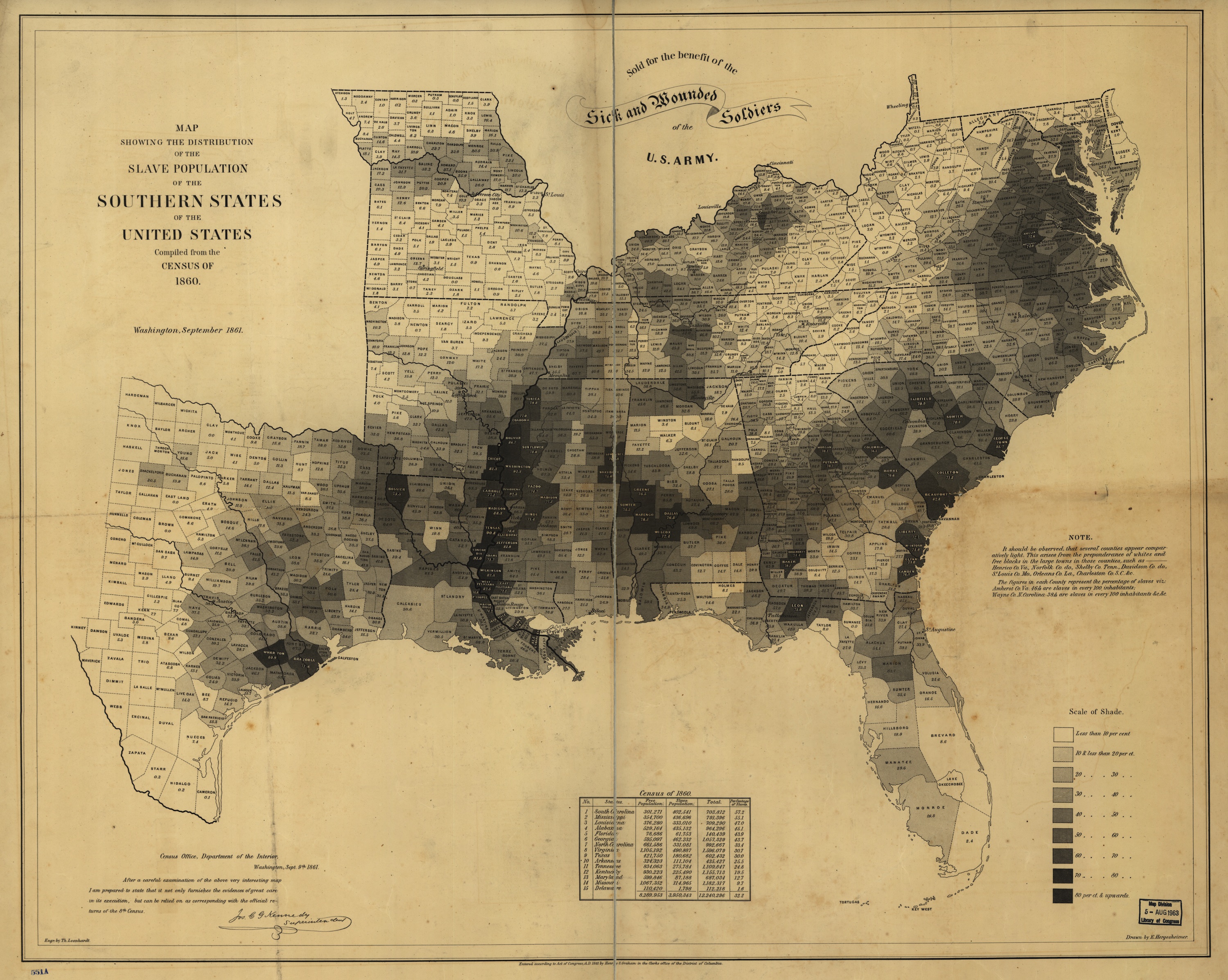
According to 1860 census data, South Carolina had the highest percentage (57.2%) of its population as slaves in the U.S. Beaufort County (82.8%) and Georgetown County (85.7%) represented the significant impact of slave populations along the coast.

The legacy of the scar of slavery in SC remains in the form of I-95 and what is now recognized as the “Corridor of Shame”—a collection of public schools bordering that interstate highway and serving in some of the highest poverty areas of SC.

Another legacy of the South is school segregation. A 2012 report from The Civil Rights project detailed the rise of re-segregated schools across the South:

Black and Latino students in the South attend schools defined by double isolation by both race and poverty. The South reports high overall shares of students living in poverty, but students of different racial backgrounds are not exposed equally to existing poverty. The typical black and Latino student in the region goes to a school with far higher concentrations of low-income students than the typical white or Asian student.

The South, the report explained, has become a majority-minority region of the U.S.; however, “Since 1991, black students in the South have become increasingly concentrated in intensely segregated minority schools (90-100% minority students).”

In SC, for example, only 38.5% of white students attend majority-minority, high-poverty schools—a slight decrease when compared to 1970 (41.2%), 1980 (42.7%), and 1991 (41.8%). For African American students, however, majority-minority, high-poverty schools are the norm.

An October 2013 study from the Southern Education Foundation has revealed that the “new majority” of students in U.S. public schools are high-poverty. For SC, that means that 54.7% of public school students are living in poverty. This ranking places SC in the bottom quartile of the U.S.—approximately where many of the indicators used to compare the state’s education system rank the state.

The overwhelming evidence now shows that SC is experiencing the same social dynamics that characterize the U.S.—an increase in child and family poverty, a widen gap between the affluent and the working poor and poor, and a slow recognition that public schools tend to reflect and perpetuate those inequities instead of helping children overcome them.

For SC, these messages about re-segregating schools, increasing populations of impoverished students, and rising numbers of English Language learners should signal an end to current public discourse and policy related to education reform.

Many of the policies currently endorsed and poised to be implemented in SC are either not designed to address the poverty problem or are certain to increase the problems students bring to our schools.

For example, charter schools in SC and across the U.S. are not producing student achievement distinguishable from public schools, but charter schools are strongly associated with segregating students by race and class.

As well, redesigning teacher evaluation and pay based on student test scores is guaranteed to discourage SC’s best and brightest teachers from teaching in our high-poverty schools, increasing the historical failure to provide our high-poverty and ELL students with certified and experienced teachers. This same failure is repeated by increasing our commitments to Teach for America, which places uncertified and inexperienced teachers with high-poverty students.

One of most damaging policies being endorsed in SC is the call to retain third graders based on test scores. Retention research for the past forty years shows that retention does not improve achievement but does increase dropping out of school. A test-based retention policy, then, will disproportionately and negatively impact high-poverty and ELL students in our state.

A final, but indirect failure of current education reform is the adoption of Common Core and the related high-stakes tests.

SC’s education problems have nothing to do with our curriculum or our testing. Investing tax payers’ dollars and educators’ time to yet again changing our standards and tests is a tremendous failure of leadership in a state now facing that new majority of high-poverty students.

Saying poverty doesn’t matter appears to be a popular and even effective political ploy, but such baseless claims do nothing to end the weight of poverty on our students, our schools, and our state.

The first step to ending a problem is facing that problem: SC has a poverty problem, and to overcome that, we must make tough political decisions about social and educational policy that current education reform plans fail to address.

Zombies, “Scarcity,” and Understanding Poverty

The original comic book series The Walking Dead opens with “This is not good” in the panel depicting police officers pinned behind their patrol car by gun fire. The page ends with officer Rick Grimes being shot, followed by a full-page panel on the next page of Rick waking with a gasp in the hospital. Zombies are soon to follow.

Preceding this first story is an introduction from creator Robert Kirkman, who explains:

I’m not trying to scare anybody….

With The Walking Dead, I want to explore how people deal with the extreme situations and how these events change [emphasis in original] them. I’m in this for the long haul.

While the AMC television series is an adaptation of the comic book (and not bound to Kirkman’s graphic narrative), this central premise tends to remain true in both the comic book and the TV series, notably in the “Isolation” episode (October 27, 2013):

AMC’s The Walking Dead picked up right where it left off, exploring the mental and emotional toll Karen’s and David’s deaths has had on the group and specifically Tyreese, who experienced the loss of someone close to him for the first time in this new world….

The biggest reveal of the hour, however, came in the final moments after Rick (Andrew Lincoln) uses his sheriff skills and pieces together that it was Carol (Melissa McBride) who was the one who killed Karen and David in a bid to contain the deadly illness threatening the group’s safe haven.

When asked by Rick and with a calm matter-of-fact detachment, Carol confesses to killing, dragging outside, and then setting on fire Karen and David. While there is certainly tension and shock created by this confession, the more powerful point may be that Carol has acted in a way that she feels is justified by the shared human condition: the pervasive threat of zombies surrounding the prison along with that anybody who dies, including those living in close quarters with Carol and the others, will reanimate as a zombie.

Two of the most compelling aspects of the AMC series are that zombies are omnipresent and that every human is a walking potential for becoming a zombie. Now that the main characters have positioned themselves in a prison behind two layers of fences, viewers watch as the characters go about their reduced lives (sometimes casually hoeing the garden) with zombies always moaning and clawing at the fence.

There is only one world for these characters—a world saturated with zombies. And a world defined by zombies is a world that has redefined the nature of human free will and choice.

On Rationality and Free Will (Choice)

Western culture honors rational behavior above emotional responses, and particularly in the U.S., choice is a nearly sacred value. That prejudice for rationality tends to normalize rational behavior creating the appearance that rationality is objective. Yet, in fact, rationality is always bound by context.

Consider the hiker, Aron Ralston, who would not have been rational for amputating a limb in his day-to-day life, but once Ralston was confronted with being trapped by a boulder while hiking, amputating a limb became not only rational, but also life-saving. The context changes and so does rationality.

In The Walking Dead TV series narrative, Carol’s murderous acts raise the same sort of debate about her behavior: Considering the threat of the newly spreading flu in the prison, is Carol’s behavior rational?

Certainly in a world without zombies, Carol has no justification for murder and burning the corpses, but in the realities of The Walking Dead, context dictates behaviors—and colors our judgment of those behaviors.

While rationality is contextual and subjective, choice as a sacred value in the U.S. is popularly idealized and misrepresented.

Choice is not a foundational aspect of being human. In fact, being human is about basic behaviors about which humans have no choice: breathing, eating, seeking shelter, attending to ones health. And broadly, survival (think Ralston).

Zombie narratives are speculative stories of humans reduced to a single basic human necessity, consumption. Zombies are perpetual and relentless consumers—to the extreme that renders them simultaneously campy and terrifying.

The Western fetish for choice is an exaggeration of a great human hope or quest: The human faith in free will, the human faith that our free will lifts us above the rest of the earth’s beasts.

“So it goes” is the now-iconic phrase that provides Kurt Vonnegut’s Slaughterhouse-Five the coherence of a refrain against the staccato of Vonnegut’s time-traveling narrative.

At its essence “So it goes” is an acknowledgement of the human condition, one in which humans cling to a belief in free will that doesn’t exist. When a Tralfamadorian explains to Billy Pilgrim that Pilgrim is on the planet Tralfamadore, the conversation turns to free will:

“Where am I?” said Billy Pilgrim.

“Trapped in another blob of amber, Mr. Pilgrim….”

“How—how did I get here?”

“It would take another Earthling to explain it to you. Earthlings are the great explainers, explaining why this event is structured as it is, telling how other events may be achieved or avoided. I am a Tralfamadorian, seeing all time as you might see a stretch of the Rocky Mountains. All time is all time. It does not change. It does not lend itself to warnings or explanations. It simply is. Take it moment by moment, and you will find that we are all, as I’ve said before, bugs in amber.”

“You sound to me as though you don’t believe in free will,” said Billy Pilgrim.

•••

“If I hadn’t spent so much time studying Earthlings,” said the Tralfamadorian, “I wouldn’t have any idea what was meant by ‘free will.’ I’ve visited thirty-one inhabited planets in the universe, and I have studied reports on one hundred more. Only on Earth is there any talk of free will.”

Do the characters in The Walking Dead have the choice to live as if zombies do not exist?

Do people living in poverty have the choice to live as if they are not in poverty?

Free will and choice—like rationality—are bound by context. But neither free will nor choice is basic to being human since our basic human nature consists of those thing about which we have no real choice.

Choice, in fact, is not an essential aspect of a free people. Choice is the result of a free people collectively insuring that all people have the essentials of life protected so that the human longing to choose becomes possible and even ethical.

Simply stated, choice and being free are luxuries that exist toward the top of the triangle representing Maslow’s hierarchy of needs: choosing between a Camry and an Accord is of little importance to a person starving. If nothing else, The Walking Dead highlights how trivial our choices about materialistic lives become once the human condition is reduced to survival within an ever-present threat.

Before Free Will: Zombies and Understanding Poverty

Sendhil Mullainathan and Eldar Shafir in Scarcity: Why Having Too Little Means So Much explain:

Poverty is surely the most widespread and important example of scarcity….

One cannot take a vacation from poverty [emphasis added]. Simply deciding not to be poor—even for a bit—is never an option….Our data suggest causality runs at least as strongly in the other direction: that poverty—the scarcity mindset—causes failure.

In other words, poverty is as omnipresent for the poor as the threat of zombies is for the characters in The Walking Dead. Just as the threat of zombies and reanimation into zombies weigh on the characters’ minds and drive their actions 24 hours a day and every day of their lives, poverty too dictates who poor people are and what they do.

Living in constant vigilance against the threat of zombies, ironically, reduces all living humans to their basic compulsions, rendering even living humans more zombie-like than they would want to admit: zombies are only consumers, and humans living under the threat of zombies are primarily survivors.

Living under the weight of poverty is a very real condition that zombie narratives represent in metaphor.

Human behavior, then, is likely a window into larger social contexts and less a reflection of individual strengths and weaknesses.

Because of cultural stereotypes that marginalize and even demonize people in poverty, Mullainathan and Shafir caution against drawing conclusions from observable behaviors by people living in poverty:

Given that we hold highly negative stereotypes about the poor, essentially defined by a failure (they are poor!), it is natural to attribute personal failure to them….Accidents of birth—such as what continent you are born on—have a large effect on your chance of being poor….The failures of the poor are part and parcel of the misfortune of being poor in the first place. Under these conditions, we all would have (and have!) failed.

In The Walking Dead, Carol-as-killer is a consequence of the existence of zombies in the same way people in poverty have their mental capacities drained by the state of poverty in which they are trapped. As well, poverty may be as unavoidable as zombies for people who find themselves born into impoverished homes (considering that in the U.S., affluence and poverty are highly “sticky”—most people remain in the social class into which they are born, especially at the extreme ends of the class spectrum).

The Walking Dead‘s central relevance as it speaks to the power of poverty is that becoming a zombie in this narrative is simply the result of dying; everyone is a potential zombie (unlike the traditional need to be bitten by a zombie). Zombies in The Walking Dead and poverty, then, are unavoidable and pervasive.

Depending on evidence instead of metaphor, with unintended zombie flair, Mullainathan and Shafir argue, “Scarcity captures the mind.”

For example, Carol’s entire existence now tunnels (Mullainathan and Shafir’s term for an intense form of focus) on surviving zombies. For example before she kills Karen and David, she offers the children in the prison covert lessons on killing zombies swiftly by using knives and weapons to execute effective blows to the brain.

In a world devoid of zombies, Carol’s behavior would be warped. In her previous life, in fact, Carol has been a different person.

Zombie narratives as well as Mullainathan and Shafir’s work on scarcity help highlight an understanding of poverty that rejects stereotypes as well as what people and children living and learning in poverty need: Their state of scarcity must be alleviated.

Until we alleviate poverty, however, we must be vigilant not to increase the consequences of scarcity (such as artificially ramping up stress for teachers and students) and we can no longer ask children and their teachers to work as if poverty doesn’t exist.

Social programs addressing poverty and education reform targeting the achievement gap must begin with embracing a closing claim from Mullainathan and Shafir: “We can go some way toward ‘scarcity proofing’ our environment.”

But that goal cannot be achieved within a deforming idealism that asks impoverished people to live as if poverty doesn’t exist, that asks children living in poverty to pretend they are not impoverished during the school day. It deserves repeating: “One cannot take a vacation from poverty.”