The Socialist Objective: “I can see the dawn of the better day for humanity”

Under a pen-name for a newspaper in 1943, George Orwell wrote about Christmas, veering into a declaration of the Socialist objective, predating by many decades Kurt Vonnegut’s career of making similar and powerful claims about the need for human kindness:

The Socialist objective is not a society where everything comes right in the end, because kind old gentlemen give away turkeys. What are we aiming at, if not a society in which ‘charity’ would be unnecessary? We want a world where Scrooge, with his dividends, and Tiny Tim, with his tuberculous leg, would both be unthinkable. But does that mean we are aiming at some painless, effortless Utopia? At the risk of saying something which the editors of Tribune may not endorse, I suggest that the real objective of Socialism is not happiness. Happiness hitherto has been a by-product, and for all we know it may always remain so. The real objective of Socialism is human brotherhood. This is widely felt to be the case, though it is not usually said, or not said loudly enough. Men use up their lives in heart-breaking political struggles, or get themselves killed in civil wars, or tortured in the secret prisons of the Gestapo, not in order to establish some central-heated, air-conditioned, strip-lighted Paradise, but because they want a world in which human beings love one another instead of swindling and murdering one another. And they want that world as a first step. Where they go from there is not so certain, and the attempt to foresee it in detail merely confuses the issue.

Eliot Rosewater in Kurt Vonnegut’s God Bless You, Mr. Rosewater implores:

Go over to her shack, I guess. Sprinkles some water on the babies, say, “Hello, babies. Welcome to Earth. It’s hot in the summer and cold in the winter. It’s round and wet and crowded. At the outside, babies, you’ve got about a hundred years here. There’s only one rule that I know of, babies—:

“God damn it, you’ve got to be kind.” (p. 129)

With both Orwell and Vonnegut, we should hear echoing behind their words, Eugene V. Debs, from his Statement to the Court (September 18, 1918):

Your Honor, years ago I recognized my kinship with all living beings, and I made up my mind that I was not one bit better than the meanest on earth. I said then, and I say now, that while there is a lower class, I am in it, and while there is a criminal element I am of it, and while there is a soul in prison, I am not free….

I believe, Your Honor, in common with all Socialists, that this nation ought to own and control its own industries. I believe, as all Socialists do, that all things that are jointly needed and used ought to be jointly owned—that industry, the basis of our social life, instead of being the private property of a few and operated for their enrichment, ought to be the common property of all, democratically administered in the interest of all…

I am opposing a social order in which it is possible for one man who does absolutely nothing that is useful to amass a fortune of hundreds of millions of dollars, while millions of men and women who work all the days of their lives secure barely enough for a wretched existence….

I can see the dawn of the better day for humanity. The people are awakening. In due time they will and must come to their own.

When the mariner, sailing over tropic seas, looks for relief from his weary watch, he turns his eyes toward the southern cross, burning luridly above the tempest-vexed ocean. As the midnight approaches, the southern cross begins to bend, the whirling worlds change their places, and with starry finger-points the Almighty marks the passage of time upon the dial of the universe, and though no bell may beat the glad tidings, the lookout knows that the midnight is passing and that relief and rest are close at hand. Let the people everywhere take heart of hope, for the cross is bending, the midnight is passing, and joy cometh with the morning.
Top Posts of 2013, and Thank You

This year, 2013, is when I took the plunge and began blogging at my own site—despite trepidation about “who was I..” and “who would bother….”

Because of the kindness of my fellow educators, bloggers, and Twitter-friends, I am very pleased with how many read and share my work. It is something I value as someone driven to write.

I am now tiptoeing into another commitment that started this month, but will blur into 2014—another writer urge, and thus a renewed anxiety. I am hopeful it can be even partially as fulfilling as committing to this blog.

And thus, thank you, thank you all deeply …

As a teacher and university academic/scholar perched among those who still expect academics/scholars to prepare peer-reviewed articles for journals almost no one will read and to take a nonpolitical pose, I have offered and will continue to offer this blog as an argument that our public work, our open-access work, our political voices are what truly matters most.

And thus, my top posts of 2013, those with 1000 views or more:

The Poverty Trap: Slack, Not Grit, Creates Achievement 4,643
What We Know Now (and How It Doesn’t Matter) 3,462
Neil Gaiman Should Be U.S. Secretary of Education: “Things can be different” 1,929
Secretary Duncan and the Politics of White Outrage 1,920
A Call for Non-Cooperation: So that Teachers Are Not Foreigners in Their Own Profession 1,649
Just Say No to Just Read, Florida, South Carolina 1,558
Kids Count on Public Education, Not Grit or “No Excuses” 1,549
The Unintended Lessons from Florida: Class Grades, pt. 2 1,527
“Fahrenheit 451″ 60 Years Later: “Why do we need the things in books?” 1,481
Unmasking the Meritocracy Myth 1,471
The (Lingering) Bill Gates Problem in School Reform 1,259
IN-PRESS: James Baldwin: Challenging Authors (Sense Publishers) 1,169
Tim Tebow and the “Hard Work” Myth: No Excuses? 1,141
Teacher Quality, Wiggins and Hattie: More Doing the Wrong Things the Right Ways 1,130
Contemporary Education Reform and “A Cult of Ignorance” 995

Faces of Free Speech

The controversy over comments by Phil Robertson in GQ has become a public (although jumbled) debate about free speech.

Matt Bruenig has done a valuable job highlighting how that public discourse has ignored a much more complicated admission, by comparing how the Right has responded to Robertson as that contrasts with the Right’s reaction to the 2003 Dixie Chicks controversy:

It is not mysterious why conservatives think the Phil Robertson disciplining is rights-infringing but think the Dixie Chicks disciplining was not. They support what Phil Robertson had to say, but oppose what the Dixie Chicks had to say. Despite their pretensions to the contrary, conservatives, and most people in general for that matter, do not care about content-neutral procedural fairness. They care about winning their stuff and beating the other’s side stuff.

Bruenig is right; the Robertson controversy so far in the U.S. is about many things, but it isn’t about free speech (and it hasn’t confronted the danger of masking at least hateful if not hate-speech behind calls for religious tolerance and free speech—an act repeated in U.S. history when the Bible served as a defense of slavery and keeping women second-class citizens).

The whole thing could, however, lead to a valuable discussion of free speech—placing what Robertson said and what consequences he faced against free speech and its consequences in contemporary Russia.

In the summer of 2013, I watch a documentary on the Russian musical act Pussy Riot and then examined their political acts and imprisonment in the context of the Dixie Chicks’ controversy.

While Robertson and his controversy dominate the U.S. pop media, Pussy Riot members were released from prison in Russia.

In the U.S., this is the face of free speech:

In Russia, this is the face of free speech.

In the U.S., a reality-TV star making millions of dollars freely offered his ideas in a magazine people are free to buy or not. The business for whom the reality-TV star works freely made decisions and viewers in the U.S. were free to respond as they wished.

Free speech in the U.S. is about the freedom of expression, not the freedom from the consequences of that expression. We have freedom of speech (freedom comes with consequences), not license.

In Russia, young women used their art to make political statements calling for freedom and equity among all people in their home country. They were imprisoned for “hooliganism motivated by religious hatred.”

There are lessons here about freedom of speech, but I have seen little evidence we are taking the opportunity to examine much less learn them.

Teachers of Conscience and the Common Core Scylla and Charybdis

In our popular discourse, we are prone to say we are caught between a rock and a hard place, a veiled allusion to Homer’s Scylla and Charybdis.

For K-12 public school teachers over the past thirty years, our Scylla and Charybdis have been federal, state, district, and school mandates on one side and our own professional expertise and autonomy on the other as we navigate the rough waters of serving our students.

When Diane Ravitch spoke at my home university, she offered a talk to a small group in the afternoon and then attended an informal gathering before her main speech. Since she and I had become virtual friends through email and Twitter, this was the first time we met in person. I took that opportunity to introduce Diane to a former graduate student of mine who at the time was struggling in a “no excuses” environment at the high-poverty, majority-minority public school where she taught.

I explained this as I introduced the early-career teacher to Diane, who immediately looked up from signing her book to say, “Don’t lose your job. We need you in the classroom.”

Those of us at the university level—especially emeriti and tenured professors—have positions that are unlike those of K-12 teachers, especially K-12 teachers in Southern states that are right-to-work (non-tenure).

Having taught in public school in SC for 18 years before entering higher education for the last 13 years, I know those worlds well.

And so I immediately thought of Diane’s comment when Katie posted on my blog post, Supporting Common Core Is Supporting Entire Reform Machine:

What suggestions do you have for productive resistance for those of us who have no choice but to work with it?

I also was forced to confront a hard lesson I learned when I was a co-instructor in the Spartanburg Writing Project. A new teacher, Dawn Mitchell, was in our summer institute, and once we confronted her with the tension between her first-year practices and best practice in literacy, she became the personification for me of the potential paralysis classroom practitioners face because of the Scylla and Charybdis of mandates and best practice—as well as the weight of teaching and blogging that is passionate and demanding themselves.

Dawn taught me that my role is to help teachers navigate the Scylla and Charybdis—not to reinforce the hard place of best practice. I now (thank you, Dawn) try to emphasize that teachers need to seek ways to incorporate one new best practice on Monday, but not to feel obligated to reinvent their classrooms wholesale tomorrow, and above all else, not to sacrifice themselves on the alter of nonconformity.

Now Katie has joined a long list of others who have taught me. As an apology (I should not be blogging in ways that contribute to the anxiety and pressure that K-12 teachers already feel) and an act of good faith to do better, let me answer her question:

  • First, let’s all start with do not harm to children and students. If we start here, we can evaluate better how to navigate our practices under the stress of mandates and best practice.
  • Be professional. K-12 teachers must be diligent about their professionalism when interacting with administration, colleagues, parents, and students. Part of that professionalism is knowing our fields. Let’s start with a powerful knowledge base of best practice, and then be prepared to show how mandates do and do not reflect that best practice. Too often, we start with the mandates; let’s flip that paradigm.
  • Find or create a community of professionals, preferably within our schools but including wider communities such as forming a Facebook group, joining state and national professional organizations, committing or recommitting to graduate degrees or graduate courses. One of the most corrosive aspects of teaching is isolation. Isolation erodes your professionalism and feeds your anxiety as well as your distrust in yourself.
  • Once you’ve found or created that community, take the time to do a careful and honest appraisal of what mandates are genuinely beyond your control to change and what mandates are open for how they are fulfilled. Start your efforts for reform with the latter. Few things are as harmful to our field of teaching than a misguided fatalism about what things we perceive as requirements of our teaching.
  • Seek ways to communicate with your administration that are professional and evidence-based. Share articles that highlight the need for best practice and the problems with mandates. Discussions with administration are best when they are between you and the administrator(s)—in other words, not public and not unannounced—allowing those with authority to consider your points without feeling as if that authority is being challenged. Begin to build a collegial atmosphere in your school, among teachers and among teachers and administrators.
  • Be political in ways that will not jeopardize your job. Share research and best practice with parents and state-level representatives, especially those directly involved in education committees. Share that research with school board members. Teachers are our best hope for teaching everyone, not just the students in our classes.
  • Create a public voice for yourself by blogging, Tweeting, and/or writing Op-Eds for local, state, and regional publications. With this, I urge caution. All K-12 teachers run some degree of risk by becoming a public voice, but I remain convinced that we must speak publicly. The challenge for each teachers is learning what works, what is safe, and then what you can do to increase the safe space for teachers’ public voices. Teachers need also to consider how to join the scholarly community by conducting classroom-based research and submitting work to scholarly journals—often a less dangerous avenue to creating a public voice.
  • Offer alternatives to the practices you feel are misguided. Since mandates are the given in the field of teaching, we are not served well by simply discounting what is being done (even when we are right). What should we do instead and how will that be better? Can you share with colleagues and administration models of the alternatives you have implemented in your classroom, highlighting how those practices serve both best practice and mandates?

In short, Katie’s question leads to ways in which all teachers can establish themselves as knowledgable, proactive, and professional.

Few things will deteriorate a teacher’s passion more than the fatalism of conforming to mandates she/he feels are misguided. As with students, teachers need and deserve autonomy, voice, and action.

As a final real-world point: Some Common Core advocates have responded to me by stating that the math CC standards are better than what the state had before. My argument is that instead of advocating for CC, all teachers should be advocating for teacher autonomy and thus the professional embracing of best practice identified by our perspective fields—not mandated in public policy by non-teachers, and not linked to highs-stakes testing.

Education certainly needs reform, but that reform must come from the professionals and for the good of our students.

We don’t need standards to teach, we need students. And we don’t need test scores to know how we have done, we need the faces and voices of each child we teach.

Katie, be true to your students, be true to yourself, and walk forward with patience and confidence. As Henry David Thoreau reminds us: “One is not born into the world to do everything but to do something.”

Choose your something with care, and don’t let it be a burden, but a call.

I Don’t Need Standards To Teach, I Need Students

Just days ago, I completed my twenty-eighth year as a teacher [1]—eighteen as a high school teacher of English followed by ten years as a professor of education.

And I am excited about the coming semesters because, as I have felt every year of my teaching life, I know I failed in some ways this past academic year and I am confident I will be better in my next opportunities to teach.

As a teacher, I am far from finished—and I never will be.

On this Mother’s Day*, I want to make a statement to the many and powerful leaders in education reform, all of whom have either no experience or expertise, or very little, as teachers:

I don’t need standards to teach, I need students.

If You Have Never Taught, You Simply Don’t Understand

Governors, policy wonks, and think tanks, I don’t need the Common Core State Standards (CCSS).

Secretary Duncan, I have no interest in racing to the top, when that means the top of the pile of my fellow teachers trampled by the policies you have created and promoted.

Bill Gates, I don’t want a dime of your billions; in fact, I am not even interested in what you do (I have always used Apple products) as long as you drop education as your hobby.

Michelle Rhee, I have no interest in my students having mouths forcibly shut by me. I am here to hear their open minds and mouths.

Pearson, Macmillan/McGraw-Hill, and every company seeking to sell me anything to support my implementing CCSS or preparing my students for NAEP, state high-stakes tests, or the SAT, I am not interested in buying anything. No software, no hardware, no textbooks, no worksheets. Nothing.

Professional organizations and unions, I need you to stop racing for a place at the table with the reformers and corporations noted above, and instead, to seek ways to support my autonomy and agency as a professional so that the autonomy and agency of the children in our schools can become the primary focus of universal public education for free people.

And, finally, to anyone who thinks you know what I should teach and how, please seek a place at the front of a classroom filled with other people’s children, teach for a few years, and then let’s get together and talk. I am eager to be collegial in the pursuit of community as a key part of teaching and learning.

Then What?

Becoming and being a teacher is a constant state of becoming. A teacher must be always a student and scholar of her/his field(s), her/his pedagogy, and her/his students.

What the people and groups identified above seem not to understand is that for my eighteen years of teaching high school English, I probably taught about 2000 students; thus, I taught about 2000 different classes. And not a single measurable outcome of any of those students predicts much of anything about my effectiveness or if I’ll succeed with any future student. Some of the students who appear successful did so in spite of my failures. Some of the students who appear to have failed were provided my very best as a teacher. Almost all of the good and bad I have created as a teacher are not measurable or apparent in manageable ways.

I wasn’t concerned about meeting anyone’s standards or preparing any student for a test or making sure any student was prepared for the next grade, college, or the workforce.

And I never will be.

Instead of standards, testing, competition, labeling, ranking, and sorting (all the cancerous elements of traditional schooling and the current accountability era), as a teacher, I need to offer my students authentic learning opportunities in which they produce artifacts of their understanding and expertise. My students need from me my authoritative feedback to those authentic artifacts.

I have no interest in competing with my fellow teachers for whose students score highest on tests so I can earn more money than my colleagues. I don’t, either, want to join forces with my in-school colleagues to outperform other schools in order to compete for their customers. I couldn’t care less how my state’s schools compare with other states or how U.S. schools compare on international tests.

Absolutely none of that matters.

While not unique to Howard Gardner, we have a very clear idea of what it is teachers should do in the pursuit of learning. Gardner’s The Disciplined Mind examines a conception of education not distracted by accountability.

Teaching and learning must be primarily collaborative, a community of learners.

The goals of learning must be the broad and clear—although always evolving—defining qualities of the fields of knowledge we honor in academia.

Every history course, for example, would pursue, What does it mean to be a historian? Every science class, What does it mean to be a scientist? Every writing class, What does it mean to be a writer?

Teaching and learning are the collaborative pursuit of questions. Anything else is indoctrination, dehumanizing, and antithetical to democratic ideals and human agency.

Humans never will—and never should—learn the same box of knowledge. Humans never will—and never should—learn in linear, sequential ways.

And there is no need for any of that anyway as long as we seek to be a community instead of barbaric individuals committed to the conquest of goods at the expense of others.

There, I think, is the harsh and ugly fact. Those privileged elites—again the people and groups noted above—have acquired their status on the backs of others, corrosive evidence for them that they somehow deserve that and that it all is the way things should be. It is theirs then to perpetuate dehumanizing ways of being—labeling, sorting, ranking against the rules that gave them their power.

I choose otherwise.

I don’t need standards to teach, I need students.

* My becoming a teacher can be traced directly to the wonderful and rich influence of my mother, and that influence is inextricable from the powerful and enduring influence of my father.

[1] Originally posted at Daily Kos (May 13, 2012), and re-posted at The Answer Sheet (May 17, 2012)

Supporting Common Core Is Supporting Entire Reform Machine

Supporting Common Core is supporting either an increase or diversion of education tax dollars for funding CC-aligned textbooks, CC-aligned materials, CC-based high-stakes tests, CC-related teacher inservice and workshops, and expanded analysis of CC-based test data.

Supporting Common Core is supporting a continuation (at least) or an expansion (likely) of high-stakes testing for children, despite standardized testing negatively impacting the schooling and futures of African American, Latino/a, high-poverty, ELL, and special needs students—as standardized testing remains class, gender, and race biased and overwhelmingly a reflection of out-of-school factors.

Supporting Common Core is supporting the move to VAM-style teacher evaluations and merit pay.

Supporting Common Core is supporting the belief that teachers are inadequate, both lacking and not deserving professional autonomy.

Supporting Common Core is supporting Arne Duncan, Bill Gates, Michelle Rhee, and edu-governors across the U.S.

Ultimately supporting Common Core is a concession, an abdication to the education is in “crisis” rhetoric reaching back to the mid-twentieth century, built on claims that standards are low, schools are failing, teachers have low expectations, and everyone is depending on excuses.

If you remain committed to Common Core, I invite you to read and respond to the following:

Corporations Are Behind The Common Core State Standards — And That’s Why They’ll Never Work

Are Common Core and Testing Debates “Two Different Matters”?

Faith-Based Education Reform: Common Core as Standards-and-Testing Redux

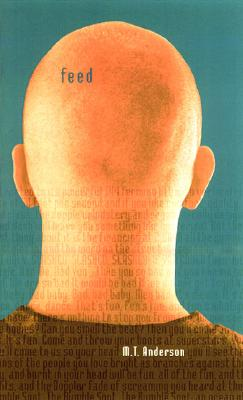
Our Dystopia Is Now: The Circle (Eggers) and Feed (Anderson)

For twenty-first century readers and students, George Orwell’s dystopian novel 1984 poses, I think, a temporal paradox.

1984, George Orwell

Orwell’s “other world” appears simultaneously a horrifying totalitarian future possibility for humanity as well as a technological mutt of what someone in the past speculated about the future (consider the pneumatic tubes).

As I read The Circle by Dave Eggers, I began to imagine that my experience with this novel published and read in 2013 was repeating what readers during the late 1940s and early 1950s (especially British readers) may have felt turning the pages of Orwell’s Big Brother nightmare, a Kafkan dark satire of their lived England.

The Circle, Dave Eggers

My reading experience with The Circle has at least two problematic elements.

First, I read about a third of the novel before I lost interest and picked up Feed by M.T. Anderson, which I read completely before returning to and finishing The Circle.

And second, I never felt fully engaged with The Circle because I couldn’t shake the feeling that the novel details that our dystopia is now.

Both The Circle and Feed provide readers with a genre carnival of sorts—dystopia fiction, young adult fiction, science fiction, and speculative fiction. But I struggled with The Circle in ways that I did not with Feed, despite my usual measured disappointment with many young adult novels.

Since Adam Bessie has explored the importance of Feed, especially as it informs education reform, I want to examine more closely The Circle in the context of Feed as well as my struggles to engage fully with Eggers’s important novel.

Just past the middle of The Circle, I began to see that Eggers’s dystopia is a contemporary 1984. When the main character, Mae, serves the will of the Circle by producing three slogan (Secrets Are Lies, Sharing Is Caring, Privacy Is Theft), Orwell’s “War Is Peace, Freedom Is Slavery, Ignorance Is Strength” echoed in my mind’s ear.

I feel compelled to place The Circle, then, within a dystopian tradition including 1984 and Margaret Atwood’s The Handmaid’s Tale—speculative works that weave contemporary social satire (albeit very dark satire) with imaginative logical extensions of what if that holds up one possible future for humankind. [1]

The Handmaid’s Tale, Margaret Atwood

While The Circle reminds me of 1984 and The Handmaid’s Tale [2]—including the slogans above alluding to 1984 and elements of zealotry along with totalitarianism’s dependency on currency manipulation (Atwood’s prescience about debit cards) shared with The Handmaid’s Tale—Eggers’s other world is not removed nearly as far from the reader as in Orwell’s and Atwood’s novels.

Since I use and know a great deal about google, Twitter, and Facebook, the Circle as a speculative logical extension of our real-world social media feels less speculative than our dystopia is now.

For the privileged in 2013—and those on the edge of privilege wanting in—smartphones, tablets, and computers connected through the Internet have blurred almost every aspect of the human condition—social with professional, entertainment with commerce, etc.

We don’t flinch when google completes our typing as we search the web or when gmail reads our emails in order to push product banners. We reduce our conversations to 140 letters with glee and among hundreds, even thousands of people we have never met in person. We retweet, favorite, and like (verbing all the way) while double posting on Twitter and Facebook—even clicking “like” under a Facebook post about the death of a dog, or a grandmother.

So when Eggers introduces the more fantastical elements of the novel, and there are some, I remained fixated on my lack of compassion for Mae and my inability to shake the feeling that Eggers is simply cataloguing the world the privileged have created, the lived world of the privileged in 2013. (I must add that The Circle and Feed focus on main characters who are compliant “insiders” of the dystopia, and both have sacrificial radical characters. I found Mae in The Circle really hard to embrace, but did feel compelled by Titus in Feed. I had the same bland response to the radical in The Circle, while caring deeply for Feed‘s Violet, my favorite character of the two novels.)

So far, I suspect, my view of The Circle may feel like less than a ringing endorsement; however, I do believe The Circle is a 1984 for our time, an important and insightful work. Let me, then, offer a few reasons why.

At its essence, The Circle is the fictionalizing of concepts explored in Michel Foucault and Gilles Deleuze: surveillance, “infinite examination,” “societies of control.” While Foucault and Deleuze are inaccessible in many ways for the general public, Eggers’s other world, even as close as it is to now, is stark in its clarity. At times, The Circle reads with the same sort of dispassionate camera feel that Ernest Hemingway uses in “Hills Like White Elephants.” In both works, there lies the danger that readers will fail to confront what has been placed before them—that the dispassion will read as endorsement or at least could be embraced by the readers.

While true of any artwork, Eggers allows readers to close The Circle in much the same mindset as Mae (Book III is a mere three-pages long in its twist-style ending).

As with Feed, The Circle also speaks directly to education reform, particularly as that overlaps with our current era of mass incarceration (see Education Reform in the New Jim Crow Era):

  • With fervor, the possibility of the Circle’s role in education is championed—and the discussion sounds eerily close to home:

“That’s the idea,” Jackie said. “…[S]oon we’ll be able to know at any given moment where our sons and daughters stand against the rest of American students, and then against the world’s students.”

“That sounds very helpful,” Mae said. “And would eliminate a lot of doubt and stress out there.”…  “And it’ll be updated how often?”

“Oh, daily. Once we get full participation from all schools and districts, we’ll be able to keep daily rankings, with every test, every pop quiz incorporated instantly. And of course these can be broken up between public and private, regional, and the rankings can be merged, weighted, and analyzed to see trends among various other factors—socioeconomic, race, ethnicity, everything.” (p. 341)

  • In possibly the most disturbing section of the novel, the Circle is characterized as a potential law enforcement tool that can erase crime and racial profiling, by color-coding everyone on the ubiquitous monitors invented by the Circle: “The three men you see in orange and red are repeat offenders” (p. 418). This plan, however, works under the assumption that previous arrests are fair, themselves not the result of race or class bias.

In the end, The Circle is a warning shot about the end of privacy, universal surveillance. If readers feel uncomfortable while reading with their smartphone dinging nearby, it is likely because our dystopia is now, and The Circle is a nearly 500-page pamphlet saying, Welcome to the Machine:

[1] I highly recommend Atwood’s essays—”Writing Utopia” and “George Orwell: Some Personal Connections”—in Writing with Intent and In Other Worlds for Atwood’s brilliant confrontations of science fiction and speculative fiction genre(s). See also Science Fiction and Speculative Fiction: Challenging Genres.

[2] I wonder what the fascination is with red covers and dystopian literature…

Fahrenheit 451, Ray Bradbury