
Monthly Archives: March 2014
Writing Is a Journey: Thoughts on Writing, College, and the SAT
A writer’s writer often ignored is James Baldwin, who examines his drive to write in the context of race:
INTERVIEWER
If you felt that it was a white man’s world, what made you think that there was any point in writing? And why is writing a white man’s world?
BALDWIN
Because they own the business. Well, in retrospect, what it came down to was that I would not allow myself to be defined by other people, white or black. It was beneath me to blame anybody for what happened to me. What happened to me was my responsibility. I didn’t want any pity. “Leave me alone, I’ll figure it out.” I was very wounded and I was very dangerous because you become what you hate. It’s what happened to my father and I didn’t want it to happen to me. His hatred was suppressed and turned against himself. He couldn’t let it out—he could only let it out in the house with rage, and I found it happening to myself as well. And after my best friend jumped off the bridge, I knew that I was next. So—Paris. With forty dollars and a one-way ticket. (The Paris Review interview)
•
Prompted by the announcement from the College Board that the SAT would be revamped in 2016, including dropping the writing section added in 2005, The New York Times has included a Room for Debate on Can Writing Be Assessed?
So, unlike the moment when the SAT added writing (one that heralded only doom for the field of composition), I want to take this moment to examine writing and the teaching of writing because dropping writing from the SAT may prove to be a positive watershed moment for both.
First, let me offer a few points of context.
I am 53 and have been teaching for 31 years, most of that life and career dedicated to writing and teaching writing. I read and write every day—much of that reading and writing is serious in that it is connected to my professional work. But I also read and write extensively for pleasure, including my life as a poet.
Two facts about my writing life: (1) I write because I must, not because I choose to, and (2) I am always learning to write because writing is a journey, not something one can acquire fully or finish.
As well, I strongly embrace the foundational belief that writing is an essential aspect of human liberty, autonomy, agency, and dignity; this is part of the grounding of my work as a critical educator. Living and learning must necessarily include reading, re-reading, writing, and re-writing the world (see Paulo Freire, bell hooks, and Maxine Greene, just to mention a few).
Writing is also integral to academics, in terms of learning and scholarship. Writing is part of the learning process, but it is also a primary vehicle for scholarly expression.
Next, considering the importance of writing in human agency and education, any effort to standardized the assessment of writing or to use writing assessments as gatekeepers for any child’s access to further education are essentially corrupt and corrupting.
Adding writing to the SAT in 2005, then, was one of several powerful contexts that have seriously crippled the teaching of writing in formal education; those forces include also:
- A historical and lingering conflating of “teaching grammar” (teaching correctness) with teaching writing.
- The entire accountability era begun in the early 1980s (see Applebee and Langer and Why Are We (Still) Failing Writing Instruction?).
All three of the above fail the fundamental value in writing because they distract from the process and act of writing as well as misread writing a a fixed skill that can be attained at some designated point along the formal education continuum.
As the Faculty Director of First Year Seminars at my university, I focus primarily on how we address the teaching of writing in those seminars (and throughout the curriculum). That role has highlighted for me a lesson I also learned while teaching high school English for 18 years: Many teachers, including English teachers, do not see themselves as writing teachers and often expect that students should come to their courses already proficient writers.
Essentially, then, using a writing assessment of some sort to identify students as college-ready as writers perpetuates the idea that we can and should have students demonstrating some fixed writing outcomes before we allow them access to higher education; this presumes in some ways that college will not be a place where people can and should learn to write.
In much the same way that the accountability paradigm is misguided in fixating on outcomes over conditions, seeing writing as a measurable skill useful for gatekeeping college entrance shifts our focus away from what experiences students need so that their continual learning to write in college can be better supported.
Yes, student outcomes matter, and samples of student writing in the right contexts may provide some powerful evidence of what students know as writers and what students need as writers. But something in the addition of writing to the 2005 SAT must not be forgotten: One-draft, timed, and prompted writing scored by rubrics, and even by computers, works against the important goals of writing [1].
Just as grading should be shunned for feedback when teaching writing (see my chapter here), the question is not if writing can be assessed, but how do we insure that all students have access to the common experiences necessary at all point along the formal education experience?
What, then, are those common experiences—and once we implement those, how do we document those experiences in order to support both students having equitable access to higher education and to the continual learning to write that must be central throughout higher education?
Some thoughts on common experiences:
- Rich and multi-genre/media reading experiences that include choice and assigned reading. Students need to develop genre awareness and discipline-specific awareness as readers.
- Rich and multi-genre/media writing experiences that include the following: choice and assigned writing, peer and teacher feedback and conferences, workshop experiences drafting short and extended multi-draft compositions, and discipline-specific writing experiences.
- Analysis of and experiences with a wide range of citation and documentation style sheets for integrating primary and secondary sources in original writing.
- Continual consideration of expectations for writing both in academic/school settings and real world settings—challenging school-based norms such as thesis sentences and template essay formats.
While this isn’t meant to be exhaustive, the point is that instead of seeking ways in which we can assess well test-based writing or continuing to explore tests and metrics that correlate strongly with actual writing proficiencies, we must commit ourselves to all students having the sorts of common experiences with writing necessary to grow as writers—both for their own agency and their academic pursuits.
Finally, if we can commit to these conditions of learning instead of outcomes, we should then find ways to gather artifacts of these common experiences to use instead of metrics as we guide students through—and not gatekeep them from—formal education.
•
INTERVIEWER
Did what you wanted to write about come easily to you from the start?
BALDWIN
I had to be released from a terrible shyness—an illusion that I could hide anything from anybody. (The Paris Review interview)
[1] See The New Writing Assessments: Where Are They Leading Us? (Newkirk), From Failing to Killing Writing: Computer-Based Grading, and More on Failing Writing, and Students.
NOTE: For a historical perspective on teaching writing see selected works by Lou LaBrant.
James Baldwin, The Art of Fiction No. 78
James Baldwin, The Art of Fiction No. 78
INTERVIEWER
Do you think painters would help a fledgling writer more than another writer might? Did you read a great deal?
BALDWIN
I read everything. I read my way out of the two libraries in Harlem by the time I was thirteen. One does learn a great deal about writing this way. First of all, you learn how little you know. It is true that the more one learns the less one knows. I’m still learning how to write. I don’t know what technique is. All I know is that you have to make the reader see it. This I learned from Dostoyevsky, from Balzac. I’m sure that my life in France would have been very different had I not met Balzac. Even though I hadn’t experienced it yet, I understood something about the concierge, all the French institutions and personalities. The way that country and its society works. How to find my way around in it, not get lost in it, and not feel rejected by it. The French gave me what I could not get in America, which was a sense of “If I can do it, I may do it.” I won’t generalize, but in the years I grew up in the U.S., I could not do that. I’d already been defined.
American Hustle: Ignoring Poverty in U.S. Needs More than 50-Year Anniversary
It is 2014, and publications such as Education Week are offering 50th-year anniversary looks at the War on Poverty.
It is 2014, and race and racism remain words that shall not be spoken, lingering scars on the American character [1] that are routinely concealed beneath a heavy foundation (something in a Caucasian, please) and a bold but not too flashy shade of red lipstick.
It is 2014, and almost everyone will say poverty, but the great irony is that this American Hustle is achieved through constantly mentioning poverty in order to ignore it.
The trick is to keep the public gaze in the U.S. transfixed on people trapped in poverty, to reinforce the myth that poverty is the result of individual weaknesses (a lack of “grit,” for example), and to perpetuate the idea that the wealthy and privileged have earned that wealth and privilege.
This American Hustle allows politicians, the media, and the public to wash their collective hands of actually doing anything except demanding that the lazy poor step up to the American Dream home plate and take their swings like everyone else.
And our literature, for example, has ample evidence that being poor in the U.S. is above all other things embarrassing—see works from The Great Gatsby to eleanor & park.
Finger pointing, ignoring systemic inequity, and embarrassment—these are the crucibles in which inequity and privilege thrive, and these are the crucibles that must be confronted in ways that rise above 50th anniversaries.
Since education, privilege, poverty, and race are inextricably interrelated, we must confront some real lessons gained during the 50 years we now associate with a War on Poverty [2]:
- Poverty/affluence and race remain nearly indistinguishable factors at a system level driving the opportunity gaps for people in the U.S. However, poverty and race can and must be addressed both as related markers for inequity/privilege as well as separately. Gender adds another axis of complexity, and thus must be viewed in conjunction with socioeconomic status and race as well as separately.
- Affluence is the U.S. is gained primarily through privilege and slack—not through the superior personal characteristics of those experiencing wealth. Poverty is the result primarily of scarcity [3].
- The two evidence-based failures of K-12 public schools in the U.S. include (1) that schools often reflect the inequities found in the communities those schools serve and (2) that schools often perpetuate the inequities found in the communities those schools serve [4].
- Calls for in-school-only education reform as the sole mechanism for overcoming social inequity have never worked and cannot work. The evidence is clear that the accountability paradigm built on standards and high-stakes testing hasn’t address inequity (closing the so-called and misleading “achievement gap”) and cannot address inequity [5].
As each of us considers this American Hustle, let me recommend a series of readings that I think help reframe how we view poverty and how we view the role education plays against poverty:
- On the Front Lines in the War on Poverty, Deborah Meier
- Poor Teaching for Poor Children…in the Name of Reform, Alfie Kohn
- The Pedagogy of Poverty Versus Good Teaching, Martin Haberman
But there is another step beyond dialogue, reading, thinking, and writing about the War on Poverty as the American Hustle.
We must act, we must do something directly about inequity while naming poverty, racism, and sexism as very real and not merely as token political discourse in order to mask those realities.
As Haberman implores: “Before we can make workers, we must first make people. But people are not made—they are conserved and grown” (p. 294).
—
[1] Please see Denying Racism Has an Evidence Problem and The Mistrial of Jordan Davis: More Evidence Problems for Denying Racism.
[2] Please see Ending Poverty Requires Community, Not War.
[3] Please see Learning and Teaching in Scarcity: How High-Stakes ‘Accountability’ Cultivates Failure.
[4] Please see Studies Suggest Economic Inequity Is Built Into, and Worsened by, School Systems, Schools Can’t Do It Alone: Why ‘Doubly Disadvantaged’ Kids Continue to Struggle Academically, and Education Reform in the New Jim Crow Era.
[5] Please see What We Know (and Ignore) about Standards, Achievement, and Equity.
Teaching Students, Missionary Zeal, and the Cult of Personality
As a teacher educator, I now spend much of my spring visiting schools and observing my seniors who are learning to teach in extended field experiences (my university’s version of student teaching).
What I have learned over more than a decade of making these visits and providing new teachers productive feedback is that one aspect of becoming and being a teacher is a complex but clear combination of teacher persona/presence, teacher awareness of students, and teacher engagement with those students during the flow of instruction.
My most direct and simple way to share this with my teachers-to-be is to note that they appear to be teaching the lesson and not their students. I have seen this phenomenon as I walk the halls of my university where professors are prone to lecture, and have noted on some occasions, I fear that if all the students were to leave the class, the professor would simply continue to hold forth.
Central to this aspect of teaching for me is the problem with lesson planning as it contrasts with being prepared to teach. I have noticed that the traditional emphasis on lesson planning and the older god of behavioral objectives (how I was trained to teach) and the newer god of backward design (teaching with the assessment in mind) both fail many teachers by forcing so much investment in planning that teachers feel consciously and unconsciously obligated to implement the plan and assessments prepared regardless of what learning is taking place. (The last thirty years’ focus on high-stakes standards-based teaching has only intensified this problem of teacher time inappropriately invested in planning and aligning and not preparing the what and how of each day’s lesson based in part on all the lessons that have come before.)
The result is lesson plans and tests done to students with the outcomes often misleading and counter-educational (this rigid and mechanical process can raise test scores and mask that learning never occurred).
Plans, tests, and all sorts of prescriptions of learning and teaching are far less important, I believe, than teacher expertise (yes, a teacher must know everything about which she/he is to teach, and then almost everything else—this is the critical authoritative imperative) and teacher awareness of her/his teacher persona as well as engagement with students during the flow of instruction.
This in-class concern about teaching is a subset of a larger problem related to missionary zeal and the cult of personality.
Often when I am teaching graduate courses in education, veteran teachers will respond to questions about their teaching by simply saying “I teach four block” or “I use Marzano”—programs and education gurus.
While “missionary zeal” is often invoked about and as a positive aspect of Teach for America and its recruits, “missionary zeal” can be seen in nearly blind commitments to phonics instruction, group work, Nancie Atwell’s workshop method, literature circles, understanding by design, and a list too long to identify here and not bound to any end of the ideological spectrum.
I’ve written about this before, and while it is a personal anecdote, I argue this is representative of the problem.
My daughter worshipped her second-grade teacher and my wife taught at the primary school my daughter attended. One day my wife and my daughter’s teacher were talking, and that teacher noted that my daughter had been making really high grades on her spelling tests, until the class began some direct phonics instruction marking my daughter’s grades dropping.
When we teach a lesson, a plan, or a program, and when we become so narrowly focused on the cult of personality behind what we teach and how, students are often lost in that missionary zeal, often mis-served.
As a literacy educator for over thirty years, I watch and hear the exhausting grammar and phonics debates refuse to die. These debates are exhausting because they often rest on a false premise, the straw man—that there are teachers who are against teaching grammar and phonics (none exist, by the way)—and devolve into what is most wrong with teaching, the missionary zeal to teach a skill as if it is the ends desired.
Grammar and phonemic awareness are aspects of composing/writing and reading, but when we become bound and determined to teach grammar and phonics without regard to a student’s writing or reading as well as that student’s developing eagerness to write and read, we are no longer teaching students, but appeasing our petty agendas to prove that our way is right and someone else is wrong.
That, simply put, is not teaching.
Teaching must begin in the classroom with what students know, what students don’t know, and what students misunderstand, placing all of that in the context of what students are interested in and what students need.
Teachers then must be prepared to implement a wide array of strategies to foster the outcomes that fulfill those student interests and needs.
If teaching grammar directly and in isolated ways raises student test scores on isolated grammar tests, but students write rarely and many come to hate writing, we have slain the authentic need of students on the alter of teaching grammar for grammar’s sake.
If conducting literature circles creates a well managed classroom, but students come to hate reading and have almost no opportunities to read by choice, we have slain the authentic need of students on the alter of teaching literature circles for literature circles’ sake.
We teach students—not lesson plans, not skills, not programs, not to-the-test, not Common Core or any standards of the moment, not flipped classrooms, not Core Knowledge or cultural literacy, not the teaching bible of the day or the teaching guru of the moment.
We teach students.
David Coleman’s Latest Khan
Maybe we need a Khan Academy video series to help the public in the U.S. understand the term “free.”
When you are driving late at night, and you are in unfamiliar rural America in need of a hotel, you see a relatively rundown hotel with a sign announcing “FREE CABLE!”
Well, of course, if you stop and pay for the room, that cable is not “free” (the honest term would be “included”); the cost of that cable is included in the hotel’s operating expenses, which are covered by the rates charged customers.
You see, nothing is free in the consumer culture of the United States—even for those people who have been demonized as “freeloaders,” those receiving welfare or disability or some other access to funds that the U.S. public has deemed unfair (oddly, that doesn’t seem to apply to the uber-wealthy and their trust funds or inheritances, hmmm). If someone acquires anything in the good ol’ USA, somebody is paying for it (and somebody is profiting), and it is often the person who is told she/he is receiving it for “free.”
So we must be quite concerned about this: College Board Enlists Khan Academy to Provide Free Online SAT Prep.
Which is the Cool Whip on the dung pie being offered by the College Board—and led by David Coleman: New SAT To Bring Back 1600-Point Scale — With Optional Essay.
In short, don’t buy it, and especially important, don’t swallow it.
The 2016 SAT reboot is all nonsense, but as disturbing is the monstrosity that is forming as Common Core (another Coleman creation), the SAT and presumably other parts of the College Board (President and CEO Coleman), Pearson, and Sal Khan join forces like a really bad Hollywood production of Marvel’s The Avengers (wait, that has already happened).
Lest we forget, below are some reminders about Khan Academy, and I can recycle from my latest post on the SAT reboot: “No, it’s all nonsense, believe me. I had no idea how much nonsense it was, but nonsense it all is.”
Part I: [From Schools Matter, March 12, 2012]
Ever wonder how you can become an educator, education expert, or education reformer?
Well, since 60 Minutes has bought into the most recent con-du-jour, the Khan Academy, let’s consider how people become educators.
How about Secretary of Education Arne Duncan?
Peter Smagorinsky puts it best:
“Let’s trace his path to the presidential Cabinet. One of Duncan’s childhood friends, John Rogers, appointed Duncan director of the Ariel Education Initiative in Chicago. Duncan’s directorship led to Ariel’s reincarnation as a charter school, following which Duncan was advanced in the Chicago Public School system from deputy chief of staff to chief executive officer. Note that he worked exclusively at the executive level, never stooping to teach classes or learn about schools except from an operational perspective.”
Or how about Bill Gates? This one is easy, to become an education expert or education reformer, amass billions of dollars.
And Michelle Rhee? Bypass the education establishment by not receiving any degrees in education, become a leader by entering the classroom through TFA, teach three years, and then attain your credibility by firing teachers and creating an education system built on fraudulent test data.
This brings us back to Sal Khan—whose wikipedia page identifies him as an “American educator.”
Pretty impressive considering he, like Rhee, Duncan, and Gates, has no degrees in education, and like Duncan and Gates, has no experience teaching.
But he got tired of his day job, started tutoring his relatives, made some videos, and now is a full-fledged educator. And according to CBS, he may be the future of education.
I don’t see myself grabbing billions any time soon, or having the connections Duncan and Rhee have to get on the appointment train.
So like Khan, I think I’ll just announce what I am and go from there…
I am a nuclear physicist…
[waits patiently for CBS to call]
Reconsidering the Khan Academy
The Best Posts About The Khan Academy
This Khan Academy History Video Is Just Awful
Khan Academy: It’s Different This Time
Finally, More Criticism of the Khan Academy
The Wrath Against Khan: Why Some Educators Are Questioning Khan Academy
Khan Academy: Improving school by changing nothing
Part II: Why All the Khan-troversy? [Schools Matter, July 26, 2012]
At The Answer Sheet, Valerie Strauss has spurred a debate over the definition of slope—not exactly the sort of detailed intellectual stuff we might expect in a newspaper.
The discussion of the finer points of mathematics is more akin to the nuanced conversations you may find in a university math department or a scholarly journal. But the source of this controversy is Sal Khan and his Khan Academy—which leads us to our need to pull back from the slope debate and address just why is there a controversy about Khan?
I don’t know Sal Khan, and I recognize the inherent danger in making claims about anyone’s intent. On the surface, Khan’s drive to make educational videos accessible to more people has some elements of equity and social justice that I share, but those stated goals are deeply marred by the fact that the equity gap embedded in all technology appears likely to wipe out any access advantage Khan claims his academy offers.
This leads to one very important point about the Khan Academy: The problems with the Khan Academy are primarily couched in the many distorted and corrosive messages and assumptions that the Khan Academy perpetuates as well as how political, popular, and media responses to the Khan Academy deform the education reform debate. Here are the reasons for the controversy:
• Sal Khan directly and indirectly (through media messages about him and his videos) perpetuates a popular and flawed assumption that effective teaching is a direct and singular extension of content expertise. Khan’s allure is in part built on the misguided view in the U.S. that anyone who can do, can also teach. Khan has neither the expertise nor experience as a teacher to justify the praise and claims made about him or his academy. Khan is a celebrity entrepreneur, not an educator. [If Khan had created a series of free videos showing people how to do surgery, I suspect the response would be different, although the essence of the venture is little different.]
• The videos themselves are nothing more than textbooks, static containers of fixed content. Learning, then, is reduced to the acquisition of static knowledge. The videos reinforce that content is value-neutral (it isn’t), and the videos allow teaching and learning to remain within a transmissional paradigm that is neither new nor what is best for the purposes of universal public education in a free society. Whether a video, a textbook, or a set of standards, fixed content removes the agency from the teacher and the learner about what content matters. While the videos are offered as substitutes for lectures, Khan and those who support the academy appear unaware that even lectures in classrooms are reinforced by discussions—content is presented and then negotiated among teachers and students.
• Inherent in the allure of the Khan Academy is the naive faith that technology is somehow offering teaching and learning something new, something revolutionary. The blunt truth, however, is that technology has been heralded for that quality for a century now, and it simply isn’t all it is cracked up to be. Khan’s videos are no more revolutionary than the radio, TV, VHS player, or the laser disc. Technology is often, as with the Khan Academy, a tragic waste of time and energy that misleads us away from the very human endeavors of teaching and learning. Technology at its worst is when it further isolates the learner and learning—already a central problem with traditional classroom practices.
• Sal Khan as a celebrity and self-proclaimed educator feeds into and perpetuates the cultural belief that education is somehow not a scholarly field and that education is a failure because of the entrenched nature of the “education establishment.” Khan as an outsider hasn’t thought of anything that hasn’t already been considered by the many and varied scholars and practitioners in education. Does any field benefit from ideas and practices outside that field? Yes, that is not the issue. But Khan is but one of many of the leading voices heralded as educational revolutionaries (think Gates ad Rhee) who have either no or very little experience or expertise in education. The ugly truth is that if education is failing, that failure is likely because the scholars and practitioners in education have never had the primary voice in how education should be implemented. The great irony is that education scholars and practitioners (notably critical ones) are the true outsiders of the “education establishment.” If you want to know something about math and how to teach it, talk with my high school math teacher first, and then you may be able to decide how valuable Khan’s work is.
• The Khan Academy reinforces the misguided faith we have in a silver-bullet answer to complex educational problems. Education in the U.S. is not suffering from a lack of packaged content (in fact, our commitment to textbooks is one of the major problems in public education); education is burdened by social and education inequities that are far more complex than substituting classroom lectures with videos anyone can access (if that person has internet access and the hardware to view the videos). It is easier and less painful to praise the essentially empty solution Khan is offering than to confront the serious failures of inequity remaining in U.S. society and public education.
Without the fanfare and hyperbole, Khan’s quest to make content accessible online may have some real value—if Khan is willing to bring into that plan the expertise of education scholars and practitioners. Khan’s plan would certainly benefit from a strong dose of humility; a first step to real learning is to acknowledge what one does not know.
But Khan and his academy are likely doomed because of the feeding frenzy around him. The public and media have an unquenchable thirst for rugged individualism, a thirst that is blind, deaf, and ultimately corrosive; and Khan appears to present a simplistic message about how to save a very important but complicated public institution.
The controversy about Khan isn’t about the definition of slope, but the slippery slope of believing the hype because that is easier to swallow than the truth.
Note: See the critique by Christopher Danielson and Michael Paul Goldenberg for a more detailed explanation of problems I have identified above.
REVIEW: eleanor & park
children guessed(but only a few
and down they forgot as up they grew
“[anyone lived in a pretty how town],” e. e. cummings
I cried on the first page of eleanor & park by Rainbow Rowell.
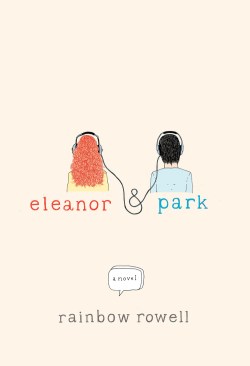
But to be perfectly honest, I am a crier, and that may not be my most compelling argument for this disturbingly beautiful novel. I agree, however, with John Green:
But I have never seen anything quite like “Eleanor & Park.”…
“Eleanor & Park” reminded me not just what it’s like to be young and in love with a girl, but also what it’s like to be young and in love with a book.
Before discussing the novel more directly, I want to offer a few points of context.
First, I am a strong advocate of young adult literature, but must confess, I also tend to be disappointed by young adult literature. Too often, I believe, young adult novels ask too little of readers, slip into simplistic language and ideas, and drift into condescension. I must stress strongly here that eleanor & park is not one of those novels.
Second, quite by accident, I read eleanor & park immediately after reading Jeffrey Eugenides’s The Virgin Suicides. I will examine this further below, but both novels are powerful works that ask the reader to consider the fragility of adolescence and the often dangerous conditions in which adolescents and children live—both physically and psychologically dangerous.
And third, I knew I had fallen in love with eleanor & park when it immediately reminded me of Notting Hill (which oddly began running on cable just as I started reading Rowell’s novel; karma, I suppose). Eleanor and Park are fearful, hesitant to wade into love, similar to William and Anna in the film. And the first page of the novel describes a broken Park, confirming William’s fear:
William: The thing is, with you I’m in real danger. It seems like a perfect situation, apart from that foul temper of yours, but my relatively inexperienced heart would I fear not recover if I was, once again, cast aside as I would absolutely expect to be. There’s just too many pictures of you, too many films. You know, you’d go and I’d be… uh, well buggered basically.
I cannot say more emphatically or directly that I believe everyone should read eleanor & park; it is equally a novel for adolescents and adults. And for that reason I cannot separate my reasons why so I’ll simply offer here my arguments for dedicating some of your reading life, your heart, and your tears to this novel.
Rowell beautifully and elegantly frames scene by scene the budding and doomed love between Eleanor and Park, two adolescents joined by qualities that Rowell examines without romanticizing, without condescending. Eleanor and Park represent and share both gender-based and universal characteristics: low self-esteem and self-consciousness related to body image; nerdom linked to comic books, music, social awkwardness and anxieties, and fashion; and navigating the painful transition from childhood to adulthood that includes hurdles related to peer groups, family dynamics, and social institutions such as school.
And while I anticipate everyone crying while reading this novel, I can assure you that spontaneous laughter comes about in an equal amount. Rowell is perceptive and empathetic as a writer, but she is also damned funny: “It was the nicest thing she could imagine. It made her want to have his babies and give him both her kidneys” (p. 93).
Again, I think anyone who loves to read, who loves novels will love eleanor & park, but I also have some more targeted suggestions.
If you are a parent (or expect to be some day) or a teacher (or expect to be some day), Rowell reminds us about the power—both positive and negative—of the adults in the lives of children and adolescents. As I noted above, The Virgin Suicides is a disturbing portrait of the tragic consequences of the misguided home, the overbearing parents.
While Eugenides’s novel is focused, Rowell invites the reader into two homes that serve as complex and nuanced narratives about how difficult parenting is—especially for Eleanor’s family because of the weight of poverty and the frailties of her mother joined with the inexcusable terror of her mother’s second husband. Park’s family is also complex, but there are moments of real kindness, change, and just-plain-real-life in Park’s home that serve to put Eleanor’s challenges in stark relief.
Rarely are things or people all evil or all angel (think about Tina in the novel when you read), but the impact of parents on their children is central to why parents and teachers must read this novel.
And while the school is somewhat less defined or fully developed in the novel, school and teachers share another burden along with the parents. Yes, there is terror and cruelty in school for Eleanor, but there are moments of real tenderness and kindness (DeNice and Beebi are wonderful friends for Eleanor) that serve to avoid the typical portrayal of schools in young adult works (think Ferris Bueller’s Day Off).
•
“Damn, damn, damn,” [Eleanor] said. “I never said why I like you, and now I have to go.”
“That’s okay,” [Park] said.
“It’s because you’re kind,” she said. “And because you get all my jokes…” (p. 113)
My second targeted suggestion is nearly impossible to express so I am likely to wander.
When my daughter was a child, sleeping each night upstairs in a child’s daybed, I would often tip-toe up the stairs and into her room to stand next to her sleeping like a stone.
Like me, she radiates heat while sleeping, but my nighttime ventures were to take her tiny warm foot in my hand, squeezing it slightly, feeling the softest skin and the curve of her arch.
That is the only other experience for me that compares to holding the hand of the one you love. And that is the only way I can come close to my broad second recommendation.
If you love holding hands, you should read this book.
If you have the sort of anxiety that creeps into self-loathing and the fear that you are unlovable, you should read this book.
If you believe in or want to believe in soul-mates, you should read this book.
If your heart breaks at the sign of human kindness, you should read this book.
If you love adolescents and realize that some of being an adolescent is always with us (and should be) and that some of being a child is always with us (and should be)—if you regret that for most people “down they forgot as up they grew,” you should read this book.
She would never belong in Park’s living room. She never felt like she belonged anywhere, except for when she was lying on her bed, pretending to be somewhere else. (p. 127)
I suppose in the end what I want to say is that if you are fully aware of what it means to be a human and you are determined to cling to the dignity of being fully human for yourself and everyone else, you should read this book because it is a beautiful reminder, a powerful confirmation that creeps into you bone-deep like the love you have for that one person who also resides there in your bones forever.
See Also
Review: Eleanor & Park by Rainbow Rowell
—
SAT Reboot 2016: “Nonsense It All Is”
In the often cited scene near the end of Notting Hill when Anna Scott stands in William Thacker’s shabby book store and asks him to love her, few are likely to recall a key point made by Anna.
But let’s imagine for a moment that instead of trying to save her relationship with William, Anna returns to the store to talk to him about the plan to reboot the SAT in 2016, and instead of the “I’m just a girl” bit, we focus on this from Anna:
“No, it’s all nonsense, believe me. I had no idea how much nonsense it was, but nonsense it all is.”
And there you have it, neatly dressed in Hollywood garb, but essentially how we must all respond to the David Coleman-led charge to merge the Common Core (the newest education scam) with the SAT (possibly the oldest and longest running education scam).
Not long ago, I reasserted about the SAT: What is the SAT Good For? Absolutely Nothing, noting in part:
- The College Board itself cautions against using the SAT for any comparative purposes: “Educators, the media and others should…not rank or rate teachers, educational institutions, districts or states solely on the basis of aggregate scores derived from tests that are intended primarily as a measure of individual students.” Average SAT scores for any state reflect the affluence of the test takers and the relative percentage of test takes—but certainly not the quality of the schools or the teachers.
- The College Board’s own research repeatedly confirms that SAT scores are less predictive of freshman college success than GPA. (See Table 5, p. 5)
- SAT scores historically and currently are most strongly correlated with parental income and level of education for parents. Select any year from the archived data, and these facts are confirmed. In short, the SAT is a metric that confirms privilege more so than identifying academic achievement or academic readiness for college (except in which ways those are inextricably tied to privilege).
I cannot fathom any reason to believe this 2016 reboot will create changes to draw a different conclusion. In fact, this reboot is just another publicity move by the College Board/SAT that falls in line with recent history: the mid-1990s re-centering (scores were dropping due to the testing pool changing and thus the SAT was getting bad press), the expansion in 2005 (the University of California caused a stir by calling for opting out of the SAT and thus the SAT was getting bad press), and now the 2016 reboot (the ACT surpassed the SAT in number of students taking the exam and thus the SAT was getting bad press).
There simply has never been and will never be a way to justify the time and expense needed to implement single-sitting standardized tests in pursuit of doing something for which we already have rich, credible, and free data (GPA) to guide decisions about students entering higher education.
The relentless faith in the SAT (and ACT) in the U.S. is trapped inside a misguided belief in objectivity—even though standardized tests have been shown repeatedly to perpetuate biases related to class, race, and gender.
This is the third major time the SAT has opened the door to reconsidering the test. The first two times, we mostly just walked in and sat right back at the table that was not really different at all except for the table cloth.
This third time, now that the SAT has opened the door again, we must kick it out, and ask Coleman and company to take the Common Core with them.
The 2016 reboot of the SAT is nonsense, “it’s all nonsense, believe me.”
And just as William did (briefly) when Anna came calling once again, we must take a stand and tell the College Board: “Can I just say no to your kind request?”
—
Please considering the following as well:
“New” SAT Plan Fails to Address Exam’s Major Flaws
FairTest Questions the College Board on Plans for “New” SAT
The key problem the SAT changes won’t fix
At The Onion: Changes To The SAT
Thomas: Don’t link teacher pay to student test scores
Thomas: Don’t link teacher pay to student test scores
Linking teacher evaluations to student standardized test scores is a bad idea that will not die.
The S.C. League of Women Voters issued a report in 2013 endorsing a plan to include what are called value-added methods in teacher evaluations, despite the overwhelming evidence that they are unreliable in high-stakes policies.
H.4419, sponsored by Rep. Andy Patrick, requires that half of teacher evaluations must be based on “evidence of growth in student achievement using a student growth model as determined by the department for grade levels and subjects for which student standardized assessment data is available.”
These teacher evaluation methods join grade retention, charter schools and Common Core as bad policies that are refuted by the research base — resulting in a tremendous waste of time and funding that could be better spent for our students and our state.
For example, Edward H. Haertel’s Reliability and validity of inferences about teachers based on student test scores (ETS, 2013) offers yet another analysis that details how value-added methods fail as a credible policy initiative.
Haertel refutes the popular and misguided perception that teacher quality is a primary influence on student test scores. As many researchers have detailed, teachers account for about 10 percent to 15 percent of student test scores. While teacher quality matters, access to experienced and certified teachers as well as addressing out-of-school factors dwarf narrow measurements of teacher quality.
He also concludes that standardized tests create a “bias against those teachers working with the lowest performing or the highest performing classes,” which makes it hard to justify using student test scores as anything more than a modest factor in teacher-evaluation systems.
Instead, Haertel calls for teacher evaluations grounded in three evidence-based “common features”:
“First, they attend to what teachers actually do — someone with training looks directly at classroom practice or at records of classroom practice such as teaching portfolios. Second, they are grounded in the substantial research literature, refined over decades of research, that specifies effective teaching practices…. Third, because sound teacher evaluation systems examine what teachers actually do in the light of best practices, they provide constructive feedback to enable improvement.”
Haertel concedes that value-added methods may have a “modest” place in teacher evaluation. That’s no ringing endorsement, and it certainly refutes the primary — and expensive — role that they play in proposals to reform teacher evaluation in South Carolina and across the country.
Would South Carolina benefit from focusing on teacher quality — as well as ensuring that all children have equitable access to experienced and certified teachers? Absolutely. Teacher effectiveness is strongly connected to the conditions of teaching, however, and value-added-method evaluations promise to erode, not enhance, those conditions.
Linking teacher evaluation in any way to test scores will force teachers to teach to the tests (and thus ask less of all students), expand an already expensive testing regime and discourage teachers from working in the most challenging schools and communities.
The calls to implement policy that is contradicted by a growing body of research are not only misguided but also likely to cause far more harm than good — and drain valuable time and resources from our schools.
Our students, teachers and schools cannot afford doubling down on a failed test-based education culture.
Dr. Thomas is an associate professor at Furman University and a former high school English teacher; contact him at Paul.Thomas@furman.edu or follow him on Twitter @plthomasEdD.
 dr. p.l. (paul) thomas