Two Bad Options Justify Neither: MLK 2015

Whether on the day of his birth (January 15) or the national holiday date, taking special time to recall and honor Martin Luther King Jr. remains vital in the U.S. since we continue to be trapped in the swamp of racial inequity as well as the fog of denying racism.

However, along with remembering and praising, we must also protect against continuing to reduce King to the stereotype of the passive radical, a characterization that serves the ineffective status quo of the politics of privilege in this so-called land of the free and home of the brave.

“In the treatment of poverty nationally, one fact stands out,” King notes in Where Do We Go From Here?, “there are twice as many white poor as Negro poor in the United States,” continuing:

Therefore I will not dwell on the experiences of poverty that derive from racial discrimination, but will discuss the poverty that affects white and Negro alike….

At no time has a total, coordinated and fully adequate program been conceived. As a consequence, fragmentary and spasmodic reforms have failed to reach down to the profoundest needs of the poor.

In addition to the absence of coordination and sufficiency, the programs of the past all have another common failing — they are indirect. Each seeks to solve poverty by first solving something else.

I am now convinced that the simplest approach will prove to be the most effective — the solution to poverty is to abolish it directly by a now widely discussed measure: the guaranteed income.

Earlier in this century this proposal would have been greeted with ridicule and denunciation as destructive of initiative and responsibility. At that time economic status was considered the measure of the individual’s abilities and talents. In the simplistic thinking of that day the absence of worldly goods indicated a want of industrious habits and moral fiber.

In 2015, we are likely served well to be guided by the radical King who rejected the status quo, particularly the status quo of reform (poverty, education, etc.) bound to dualistic thinking and indirect approaches.

This is profoundly important in the context of how we are perversely dedicated to accountability-based education reform that is heralded as the primary mechanism for eradicating poverty—despite both accountability and education’s ability to erase poverty being demonstrably false promises.

For example, let’s consider the charter school formula:

Since public school X is failing to address the needs of high-poverty and minority students, we must embrace charter school Y.

Step one, which I suggest we rarely do, is to examine the initial premise: Is public school X failing to serve those students or is public school X unable to achieve utopian goals in overwhelming circumstances that are not being addressed?

Step two, if we determine that initial premise is true, is then to examine the validity of the effectiveness of charter school Y.

Since a great deal of the charter school movement is both targeting high-poverty/minority students and embracing “no excuses” ideologies and practices for those students, this second step must include considerations of not only credible claims of “serving better” but also at what costs to the dignity and humanity of the students.

Complicating this process is that high-poverty/minority parents often appear to choose charter schools over their apparently failing assigned public schools.

As I have examined before, here is what I believe we should confront when facing the fabricated choice between a failing public school and a “no excuses” charter schools:

[Michelle] Alexander [in The New Jim Crow] explains about the effectiveness of the war on drugs: “Conservatives could point to black support for highly punitive approaches to dealing with the problems of the urban poor as ‘proof’ that race had nothing to do with their ‘law and order’ agenda” (p. 42).

This last point – that African Americans seem to support both the war on crime and “no excuses” charter schools – presents the most problematic aspect of charges that mass incarceration and education reform are ultimately racist, significant contributions to the New Jim Crow.

For example, [Sarah] Carr [in Hope Against Hope] reports that African American parents not only choose “no excuses” charter schools in New Orleans, but also actively cheer and encourage the authoritarian policies voiced by the schools’ administrators. But Alexander states, “Given the dilemma facing poor black communities, it is inaccurate to say that black people ‘support’ mass incarceration or ‘get-tough’ policies” because “if the only choice that is offered blacks is rampant crime or more prisons, the predictable (and understandable) answer will be ‘more prisons'” (p. 210).

New Orleans serves as a stark example of how this dynamic works in education reform: Given the choice between segregated, underfunded and deteriorating public schools and “no excuses” charters – and not the choice of the school environments and offerings found in many elite private schools – the predictable answer is “no excuses” charters.

The radical King who rejected the status quo of racism as well as the status quo of political thought and practice, I believe, would also reject the false duality of “segregated, underfunded and deteriorating public schools and ‘no excuses’ charters,” would reject the hollow claim that continuing to dig the same school accountability hole is the best way to eradicate poverty.

Two bad options justify neither.

The U.S. has a moral obligation to do public education right—for the good of all—and to end poverty and racism, as King demanded, directly.

Rank (adjective) – having a strong, unpleasant smell

For many years, the College Board would release average SAT scores with the states ranked by those averages. While the media would rush to make claims about those rankings as well as how average SAT scores changed from one year to the next, educational researchers and scholars often fought a losing battle trying to explain the flaws with such rankings and with making many of the claims about relative educational quality the media, politicians, and the public embraced.

More recently, however, even the College Board warns that no one “[should] rank or rate teachers, educational institutions, districts or states solely on the basis of aggregate scores derived from tests that are intended primarily as a measure of individual students.” [1]

Yet, many continue to rank and draw rash conclusions despite that warning because in the U.S. rankings of all kinds are extremely popular—from our sports to our schools and then almost everything else.

The U.S. obsession with ranking seems as much a love/hate relationship as anything; notably how we both seek always a better way to rank sports teams (consider the new playoff format for college football) and constantly argue and complain about those rankings.

What we tend to fail to do is question the act of ranking itself or acknowledge what it is that rankings do reveal—the latter being that any ranking reveals more about who is doing the ranking and why than what the ranking claims to accomplish.

Researcher Gerald Bracey has warned about ranking:

In any ranking, while someone gets to rank first, someone must rank last….In order to properly judge a rank, you need to know something about the context in which it occurs. (p. 59)

A key point here is that ranking imposes a judgment of relative quality on people and situations even though such judgments may be either irrelevant or terribly misleading. To explain this, Bracey refers to Olympic athletic events (placing fourth in an Olympic event is losing, although that athlete may be fourth best in the world at the sport), but with my methods students, while addressing assessment, I discuss identifying the top runners out of a group of students.

Unlike administering selected-response testing, identifying the best (and worst) runners can be accomplished under ideally authentic conditions—running a race. But to return to Bracey’s point about “context,” even though determining the best and worst runners can be authentic doesn’t mean that the process is without bias that impacts directly the resulting rankings.

If we take 30 runners, and ask them to run the 40-yard dash we are likely to get a much different ranking than if we ask them to run a marathon. In other words, who decides and what conditions create the metrics used for ranking render all attempts at ranking deeply biased and relative to a certain setting, and in many ways less useful than they appear.

By changing the parameters of determining “best runner,” we change who ranks where, and we must also acknowledge that a runner who places first in one class (and labeled “best”) may place last if moved to another class.

Concurrent with the newly formed college football national championship playoffs (resulting from decades of using a variety of systems to rank and determine only two teams to play for that championship each year—a deeply unsatisfying process), Education Week released its annual Quality Counts ranking of state educational quality and a edu-scholar public influence ranking first offered in 2010.

At the risk of sounding petty [2], I want to note that although I do not appear on the edu-scholar ranking and since the metrics for that ranking are made public, I would easily rank in the second 100 due to my Klout score, google Scholar metric, book publications, and frequent publishing and citing in international, national, state, and local media.

While I am not lobbying here, my own case highlights that it is likely dozens of other scholars have the same situation, and that despite the intent behind the rankings (to recognize often ignored within the academy public work by academics), the act of reducing people or work to metrics and then ranking is often counter-productive to the intended goals.

Should we increase the value placed on public work by academics and scholars? Yes. But labeling and ranking public work by scholars does more harm than good.

Should we shine a bright light on educational quality of schools and states in order to improve that quality? Yes. But labeling and ranking schools and states does more harm than good.

Just as we need to set aside accountability, standards, and high-stakes testing as our only approach to education reform, we need to stop our incessant race to rank in all educational contexts.

Rankings (labeling in order to sort), I contend, are not only poor ways to accomplish those goals, but the act of ranking itself is likely harmful to those goals—much in the same way SAT data have been misinterpreted for years, not because of the data but because of the urge to use that data to rank.

The urge to rank NCAA college basketball teams and then funnel all that into March Madness may in fact be a vibrant and mostly harmless way to do sport and entertainment.

But as Gerald Bracey (as an active researcher and public scholar) warned over and over, ranking is mostly a harmful and flawed exercise in the world of education. And since much of education in the U.S. is publicly funded and necessarily a part of the political process, many times rankings are more about political agendas than genuinely seeking to recognize accomplishments or prompt reform.

Ranking, as I noted about grades in education, are almost always accomplishing more harm than good, and thus, ranking is the worst possible process to advocate for or achieve laudable goals, especially in the context of education and scholarship.

[1] Gerald Bracey often stressed that we must never use an assessment or data set for purposes other than the ones for which they were designed.

[2] To clarify and for full disclosure, I do not need the edu-scholar ranking since I am an associate professor with tenure currently applying for full professor at my university. My university recognition and status are unlikely to be impacted by the ranking, although many of us on the faculty are currently calling for greater acknowledgment of public work by professors. My reason for using myself as an example is because I have the metrics and because a large number of junior faculty not as secure as I am are the ones likely being mis-served by rankings.

USDOE: When in a Hole, Keep Digging

The U.S. Department of Education ended 2014 with another (and predictable) reach into education reform, proposing new policy for teacher education.

Reviewing the reform initiative for NEPCKevin K. Kumashiro has drawn several disturbing (and predictable) conclusions:

This review considers the evidentiary support for the proposed regulations and identifies seven concerns: (1) an underestimation of what could be a quite high and unnecessary cost and burden; (2) an unfounded attribution of educational inequities to individual teachers rather than to root systemic causes; (3) an improperly narrow definition of teacher classroom readiness; (4) a reliance on scientifically discredited processes of test-based accountability and value-added measures for data analysis; (5) inaccurate causal explanations that will put into place a disincentive for teachers to work in high-needs schools; (6) a restriction on the accessibility of federal student financial aid and thus a limiting of pathways into the teaching profession; and (7) an unwarranted, narrow, and harmful view of the very purposes of education.

While acknowledging the nearly complete failure of this new USDOE proposal to reform teacher education is crucial, that may not be as important as also highlighting the pattern of ineptitude now shaping the Obama education legacy.

The elements of that legacy share several qualities that confirm my call for invoking the Reagan directive to abolish the USDOE:

  • Using federal initiatives and funding to leverage policy and practices in K-12 and higher education: Race to the Top, opting out of NCLB, tuition-free community college.
  • Endorsing, funding, and imposing policies, practices, and organizations that significant bodies of research either refute or reveal to be mostly speculative or no more effective than existing practices or structures: value-added methods of evaluating teachers, schools, or programs; new standards; new high-stakes tests; charter schools (and other choice mechanisms); Teach for America; third-grade retention based on high-stakes tests.
  • Masking social and educational root problems as well as “scientifically discredited” policy commitments behind Orwellian political discourse (utopian claims about teacher impact and educational attainment, parental choice; framing racist and classist structures [charter schools] and ideologies [‘no excuses,” “grit”] as “the civil rights issue of our time”).

Instead of identifying and confronting the social and educational inequity overburdening K-12 public education, schools, teachers, and students—and then promoting research-based policy addressing those inequities—the USDOE is content with maintaining the status quo of keeping the Obama education legacy at the bottom of a very deep hole begun by others and doggedly continuing to dig.

These facts have now existed well beyond a decade, and thus, are not about individual people (elected or appointed) or a political party.

This is a failed approach to government mandated instead of publicly funded universal public education.

The burden now facing the public is about both triggering the democratic process and embracing publicly funded universal public education as central to preserving that democracy.

The rhetoric and policy flowing from the USDOE are in the service of something other than either education in the name of democracy or the public good.

We all must shine light on those facts and demand different.

Schools as Prisons, a Weekend Reader

While many have highlighted the school-to-prison pipeline phenomenon, we are less likely to confront the schools-as-prisons reality many high-poverty and minority children suffer; and thus, a reader:

When High School Students Are Treated Like Prisoners

Education Reform in the New Jim Crow Era

Review: Police in the Hallways: Confronting the “Culture of Control”

Authoritarian Schools, Authoritarian State in the Service of Privilege

Publicly Funded, Not Free

Between two versions of libertarian ideology, I think, many in the U.S. have committed to the wrong one: childish Ayn Rand libertarianism instead of the child-like (idealistic) Henry David Thoreau libertarianism found in the opening of his “Civil Disobedience”:

I heartily accept the motto, — “That government is best which governs least”; and I should like to see it acted up to more rapidly and systematically. Carried out, it finally amounts to this, which also I believe, — “That government is best which governs not at all”; and when men are prepared for it, that will be the kind of government which they will have. Government is at best but an expedient; but most governments are usually, and all governments are sometimes, inexpedient….

But, to speak practically and as a citizen, unlike those who call themselves no-government men, I ask for, not at once no government, but at once a better government. Let every man make known what kind of government would command his respect, and that will be one step toward obtaining it.

While I find the rugged individualism and self-defeating as well as heartless selfishness of Rand libertarianism ethically repulsive, the tension offered in Thoreau’s quest for no government strikes me as a practical mechanism for maintaining democracy against the threat of totalitarianism.

And it is at his “better government” call that I think we can look to something such as the roads and highways in the U.S. for a template.

While we may quibble over road conditions near our homes or on our commute to work, I think we must all acknowledge in the U.S. that the publicly funded infrastructure is foundational for market success in the nation. As well, while we have depended on the political system to approve and fund those roads, highways, and bridges, we have not then turned over the design and construction of that system to politicians, but to engineers and construction experts.

That distinct line, however, has not been nearly as sacred in public education, where political leaders and appointees have far too much direct influence not only on the funding but also on the actually policy—the result being that we have far less to be proud of from our public schools than our public highway/road system—the former still much further from achieving the original intent than the latter.

I was reminded of all this once the social media frenzy began about President Barack Obama’s plan to “mak[e] two years of community college free for students,” as reported in Politico. That news prompted #FreeCommunityCollege on Twitter as well.

Against the Obama administration’s abysmal record on public education, this plan certainly sounds encouraging, but the media and public response highlights a serious problem beyond the usual concern about clamoring to score partisan political points: Obama’s plan if approved would create fully publicly funded and no-tuition community college, not free community college.

As well, this plan is a pale version of what Germany has recently re-embraced, as explained by Barbara Kehm:

From this semester, all higher education will be free for both Germans and international students at universities across the country, after Lower Saxony became the final state to abolish tuition fees….

It’s important to be aware of two things when it comes to understanding how German higher education is funded and how the country got to this point. First, Germany is a federal country with 16 autonomous states responsible for education, higher education and cultural affairs. Second, the German higher education system – consisting of 379 higher education institutions with about 2.4m students – is a public system which is publicly funded. There are a number of small private institutions but they enroll less than 5% of the total student body.

This is not a matter of mere semantics, but the German commitment and Obama’s community college proposal are about not charging students (a user fee similar to toll highways in the U.S.), but instead making a social commitment to fully publicly fund all or some of any person’s higher education (an education version of our public highway system).

“Free” is not only factually inaccurate, but the implication detracts from the exact concept that needs our support now more than ever: “publicly funded” is a necessary and rightful commitment by a people that builds the foundation upon which all else exists—life, liberty, and the pursuits of happiness as well as the glorified free market in the U.S.

To return to my example above, try building your company yourself without the publicly funded roads and highways, without the publicly funded judicial system, just to start. Yes, our publicly funded institutions in the U.S. have many problems and flaws, but the one aspect about them that isn’t flawed is that they are publicly funded.

While I am deeply skeptical of our partisan political system masquerading as democracy in the U.S., I certainly join those cheering Obama’s plan for no-tuition community college; however, my guarded optimism has strings attached, requiring that this proposal is the first step toward addressing several issues related to education:

  • Two years of no-tuition community college means little in the wake of dismantling K-12 public education, which is the ugly legacy of the Obama administration. The era of accountability-based education reform must end immediately, and then a new era of fully funding and supporting universal public education must begin—one that rejects market forces and political overstep.
  • Two years of no-tuition community college means little in the wake of the massive debt being incurred by college students in the U.S. The existing debt must be addressed (eradicated where possible), and then a system that greatly lessens college-related debt must be established while we work toward a model of universal no-tuition higher education.
  • Two years of no-tuition community college means little in the context of a depressed job market in which recent college graduates do not find full-time, stable work that matches their degrees. A college degree and enormous debt with no prospect of work is a nightmare, but a college degree without debt and no prospect of work isn’t much better. We must recognize that education policy cannot be separated from work policy.
  • Two years of no-tuition community college means little in the context of the harsh reality that educational attainment does not lessen the powerful and corrupting influence of racism and classism in the U.S. The cultural myth that education is the great equalizer is currently a false promiseBlacks with some college have about the same employment prospects as white high school drop-outs, and educational attainment is valuable within ones race, but doesn’t erase inequities among races.

Instead of rushing to promote misleading hastags or to prop up a political candidate along partisan lines, we should see Obama’s proposal for no-tuition community college as an opportunity to “make known what kind of government would command [our] respect,” to emphasize the essential nature of publicly funded institutions that constitute “better government.”

Authoritarian Schools, Authoritarian State in the Service of Privilege

The fruits of the Reagan Era are proving to be mostly poison apples.

Both begun under Reagan, mass incarceration and high-stakes education reform have escalated the rise of the authoritarian school and the authoritarian state in the service of privilege.

During the past few years, teachers and police are coming under increased scrutiny in the wake of disaster capitalism’s influence how we do school and how we enforce law—significantly at the expense of children living in poverty, black and brown children, and children speaking home languages other than English.

Jose Vilson has offered a bold and critical examination of how political and public calls for greater teacher and police quality and oversight intersect, revealing, I think, that these are not simple black and white issues. Bad teachers and bad police there certainly are, but to play the flawed individual game feeds into the central problem in the U.S.: We refuse to acknowledge systemic causes (racism, sexism, homophobia) for individual situations.

Vilson builds to what I think is the crux of the matter: “To protect and to serve, and that’s something we can never turn our backs to.” Teachers and police are public servants, embodying the will of the people. As public servants, teachers and police fail their charge when they twist their service into authority over the public, instead of from or in service of.

Authoritarian (and thus “bad”) teachers and authoritarian (and thus “bad”) police are consequences of a larger reality: The U.S. is a racist and sexist nation functioning as an authoritarian state, and most of our structures serve that status quo as well as the interests of the privileged.

Democracy and meritocracy along with the ideals of life, liberty and the pursuit of happiness for everyone remain worthy of a people, but those are not what our public institutions serve in the U.S. today.

Sacrificing Democracy and “Other People’s Children” at the Alter of Authority

Well before Bill Ayers was demonized during Barack Obama’s run for president or before Ayers’s radical past was more widely recognized after his memoir in 2001, I was introduced to his wonderful To Teach while in my doctoral program in the mid-1990s.

Ayers offers characterizations of traditional schooling that resonated with me then and do also now:

There are a lot of quiet, passive classrooms where not much learning is taking place, and others where children’s hearts, souls, and minds are being silently destroyed in the name of good management….

In school, a high value is placed on quiet: “Is everything quiet?” the superintendent asks the principal, and the principal asks the teacher, and the teacher asks the child. If everything is quiet, it is assumed all is well. This is why many normal children—considering what kind of intelligence is expected and what will be rewarded here—become passive, quiet, obedient, dull. The environment practically demands it. (pp. 23, 64)

At nearly every level of considering education, we always come back to classroom management and discipline. And it is here I want to ask two genuinely important questions:

  1. Why do we persist at accountability-based education reform driven by standards and high-stakes tests even though that approach has never worked over 100+ years?
  2. Why do we persist with harsh policies such as police in schools, zero-tolerance, “no excuses,” grade retention, and corporal punishment even though they are ineffective and even do more harm? [1]

Because all of these commitments do accomplish one thing that is actually the sacred element in formal schooling—authoritarian environments.

As long as we remain trapped in accountability reform and in-school authoritarian practices, we are admitting that we are not seeking universal public education in the service of life, liberty, and the pursuit of happiness—individual freedom and democracy.

Authoritarian schools feed an authoritarian state (where, for example, police are feared and teachers are disrespected).

Democracy must be fertilized with schools that practice community and collaboration.

So in our necessary and important rush to honor good teachers and good police, let’s be careful about our accusatory gazes because when teachers and police are bad, it may well be that their behavior reflects a failed system, an authoritarian system that serves the status quo and the interests of the privileged.

We need to lift our eyes and look closely at who supports accountability-based education reform and harsh in-school policies—and why.

There is the place to start toward better teachers and police who honor, as Vilson noted, their need to serve and protect as agents of the public good.

[1] I think in the context of these two questions, we must ask, Why are reformers convinced class size doesn’t matter (despite many enrolling their children in private schools with very low class sizes)? The answer is likely that large class size forces teachers to focus primarily on classroom management/discipline and consequently accomplishes again the main objective: authoritarian classrooms.

NOTE: HT to David Kaib for a series of Tweets recently.

Grades Fail Student Engagement with Learning

Possibly my greatest commitment while teaching public school English in a rural SC high school for 18 years was listening to my students, and by that, I do not mean listening to them during class discussions or in conferences (I did that also).

I mean listening to students when they didn’t know an adult was listening.

Some of those moments that have shaped my teaching include the following:

  • Student comment: A student walking into class told a friend that she had just failed a pop quiz in the previous class after studying all night, and from then on, she wasn’t going to waste her time studying. My lesson: Pop quizzes often taught students the exact wrong lessons intended; thus, I very early on never gave pop quizzes (leading eventually to giving no tests, for similar reasons).
  • Student comment: Two students were leaving my class once at the end of the school day. One asked the other if they had any homework in another class; the friend replied, “No, we just have to read.” My lesson: Students did not see reading as homework, and after I asked what the students meant, I discovered that students had learned they did not need to read since teachers told them everything they needed in class the next day. This profoundly impacted how I invited and required student reading in my classes, including offering adequate time in class for them to read, increasing choice in their reading, and adding an artifact of reading (response journals, annotating text, notes to classmates, etc.) to any out-of-school reading expectations.

Some of the listening I did, however, took much more time and required inference on my part. But it is that sort of listening that ultimately shaped my understanding that grades, averaging grades, rubrics, and grading policies contribute significantly to student opportunities to avoid being engaged with learning.

Let me explain.

Over a long period of time, and while carefully listening and even asking questions, I learned that many students gamed their math classes so that they passed math courses while never passing a single math test or exam.

Students had discovered that playing the game of averaging grades and manipulating the impact of non-test assignments (homework, projects, class participation, extra credit) on those averages allowed students to pass the course with a minimum of studying or learning the material for quizzes, tests, and exams. And, yes, the irony here is that students used math to avoid being engaged in actually learning math.

Since students were armed with detailed grading policies, many would keep a running record of their averages, weigh that against the extra credit and non-test grades they could compile, and then maintain cumulative averages just at the passing barrier (often something they learned they could negotiate near the end of the course, as well).

This is just one example of “school-only” practices and “student” behaviors that have guided my own teaching policies that seek ways to end both: I don’t want my class to be “playing school,” and I don’t want the young people in my classes to behave as students.

This came to mind as I exchanged emails with Peter Smagorinsky about a recent post of mine, Email to My Students: “the luxury of being thankful,” lamenting giving grades at the end of the semester.

I want to clarify what I do and why, but also add how I have course policies that delay traditional grading but are driven instead by minimum requirements for course credit that support engagement.

First, some may have assumed that my non-grading practices are somehow related to my teaching at a selective university where that is possible. But I must emphasize that I started de-grading my classes early in my career while teaching in a rural SC public high school, and I did so with all levels of students.

My practices are not about idealized students or settings.

Next, de-grading a class is not about being soft, or easy, or asking less of students. De-grading is about demanding more from students, notably more engagement.

In my courses (then and now), students had/have to participate fully in all activities and assignments [1]. To put this in traditional contexts, students are not allow to “take a zero” on an assignment and then just pass by on the resulting average.

There is no, “I just took zeros on my papers last year and still passed English.” (And, again, many students told me that when I was teaching public school.)

Again, then and now, when students are required to write four original and drafted essays over a grading period or during a course, that means several minimum requirements: initial submission of each drafted original essay (made directly observable during writing workshop in class), required conferences with me after each initial essay submission, and required essay revision meeting minimum expectations of revision (a detailed revision plan we created in each conference).

Don’t fulfill minimum requirements, and you do not receive credit for the grading period or the course (and, yes, I did this during my public school teaching career).

I balance those demands with other important policies: (i) students are allowed to continue revising their work as much as they want and time allows, and (ii) late work is not only accepted, but necessary.

The de-graded classroom is about engagement in the learning process and artifacts of learning. There is nothing soft or easy about any of this, and these are not practices suitable for only some students.

And students are not allowed the manipulation of grades and averages that I have witnessed and continue to witness in traditionally grade-driven courses where students focus on the grades or passing and not engaging with learning.

Minimum observable requirements for student participation trump significantly traditionally graded and averaged testing in terms of creating genuine student engagement in learning.

I want to end by emphasizing , again, that these are not idealistic practices or claims; I also practice concessions to the reality of grades in formal schooling.

The “de-” in de-grading of my classes is best framed as “delayed” because I do invite students to discuss the grades their works-in-progress deserve throughout the process and, of course, I do assign grades at the end of each course.

While delaying grades, however, I am increasing the quality and quantity of feedback my students receive and of student engagement in learning for the sake and advantages of learning.

[1] As an example, here is my minimum requirement statement from a first-year writing seminar:

Minimum Requirements for course credit:

  • Submit all essays in MULTIPLE DRAFTS before the last day of the course; initial drafts and subsequent drafts should be submitted with great care, as if each is the final submission, but students are expected to participate in process writing throughout the entire semester as a minimum requirement of this course—including a minimum of ONE conference per major essay.
  • Demonstrate adequate understanding of proper documentation and citation of sources through a single well-cited essay or several well-cited essays. A cited essay MUST be included in your final portfolio.

A Call for Social Media Solidarity: “This Is Our House”

Let me start with an image.

Whether you have witnessed this in person or on TV, picture a college football stadium during a special event game when the fans organize a “white out” (or other appropriate color). The effect is impressive with the stadium almost entirely one color, a statement by the fans that “this is our house.”

Now, let me make a case about creating that same sort of solidarity among educators and public education advocates through social media.

Historically and significantly during the last three decades, U.S. public education policy and public discourse have been dominated by politicians, political appointees, billionaire hobbyists, pundits, and self-appointed entrepreneurs—most of whom having no or little experience or expertise in the field of education or education scholarship.

In fact, the “white out” in the media is inversely proportional to the expertise in the field:

Across MSNBC, CNN, And Fox, Only 9 Percent Of Guests In Education Segments Were Educators. On segments in which there was a substantial discussion of domestic education policy between January 1, 2014, and October 31, 2014, there were 185 guests total on CNN, MSNBC, and Fox, only 16 of whom were educators, or 9 percent. Media Matters

Next, allow me to chase what may appear to be a brief tangent.

While teaching high school English in rural SC for 18 years, I always enjoyed my U.S. literature unit on Arthur Miller’s The Crucible. One of the lines from the play was particularly enjoyable—when Tituba exclaims, “No, no, sir, I don’t truck with no Devil!”

Having grown up in the 1960s and 1970s, my mind always goes to this [1]:

Art and property of Robert Crumb.

But students often found the phrasing odd, despite my affinity for the metaphor and power of Tituba’s language.

To this day, I am apt to adopt Tituba’s stance when expressing my allegiances, and that brings me back to the point of this call for social media solidarity among educators and public education advocates.

Over about two years of blogging at my own site and engaging regularly on Twitter and other social media platforms, I have gradually adopted a stance that I do not truck with those who are disproportionately dominating the field of and public discourse about education.

Yes, I have done my share of calling out, discrediting, and arguing with, but except on rare occasions, I am done with that. Those who have tried to include me in the “@” wars on Twitter may have noticed my silence when the other side is added.

Each time we invoke their names, their flawed ideas, or their policies, we are joining the tables they have set. Once again, look at the chart above.

Also, don’t forget the Oliver Rule in which one-on-one debates imply for the public equal credibility between two people debating. As well, to debate implies that a position is debatable [2], and some issues simply aren’t up for debate.

Therefore, I am now asking that educators, scholars, and public education advocates who are active on social media (blogging, Tweeting, etc.) to make an effort to dedicate a day, a week, a month, or as I have done, a policy to creating our own educators’ “white out” on social media—establishing our place for our voices as a model against the mainstream media dedicated to those with authority (elections, appointments, wealth) but without credibility.

Don’t spend blogs rejecting their public claims and education policy.

Don’t engage them on Twitter, or “@” them into a Twitter exchange.

Symbolic messages matter, and the strongest message we can send about those who shall not be named is exactly that: erase them from the spaces they have dominated without deserving that space.

And in that open arena, let us raise our voices.

Our cases about what is not working and why, our evidence-based proposals for reform, our struggles in the classroom, our successes with students, our recognition of social and educational inequity, our commitment to social justice driven by educational equity—and all on our terms, not theirs.

This is our house.

See Also

Claiming the Education Reform Narrative

Whose Reform?: Claiming the Education Reform Narrative, pt. 2

[1] The term “keep on truckin'” likely reaches back to at least early twentieth century Jazz musicians; Robert Crumb popularized this in the late 1960s, however.

[2] Please examine how anti-evolution forces have “won” in the public arena by making teaching an evolution a debate, notably detailed in the documentary Flock of Dodos.

Three Eyes: Writer, Editor, Teacher

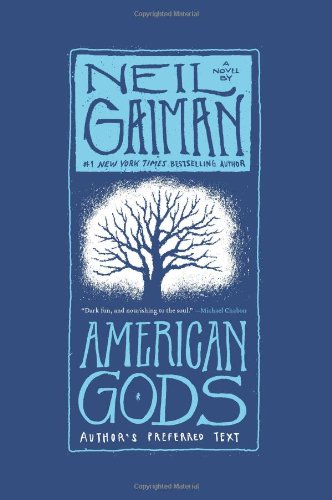
Note: My 2014 end-of-year, holiday gift to myself has been re-reading Neil Gaiman’s American Gods (author’s preferred edition). While considering a post about advice to teachers and professors as scholarly and public writers, I came across a post from a smaller blog of mine, DISCOURSE as quilting from 16 June 2013: remnant 21: “I began feeling more and more uncomfortable with the text that they would be using.” This piece, I think, touches on many things I want to share with readers of my main blog so I am reposting below with small revisions.

remnant 21: “I began feeling more and more uncomfortable with the text that they would be using.”

This is the story of one narrator with three eyes: writer, editor, teacher.

No, not three physical eyes, but ways of seeing writing.

It starts (the story, not the chronology of what actually happened) in a bookstore.

I must admit (shame on me) that I order a great deal of books online. I am still a hard-copy sort who loves the cover and texture and weight of books—although I recognize the possible need to shift into the virtual world.

I also must add that my book fetish overrides my concern about BIG online sellers and chain bookstores. Somehow my moral compass is skewed enough to forgive almost anything as long as the sanctity of the book is honored. (I hasten to add, not much here in my soul to respect, by the way; no delusions on my end about that—although I do love children quite deeply and genuinely because I hold out a tiny speck of hope for the future inside a very dark cloud of certainty it’s not going to happen.)

So I was at the chain bookstore to grab a few Haruki Murakami volumes, I hoped. I had plowed through in about a year all his English-language novels, but had yet to venture into his short stories and non-fiction. I expected a chain store had at least some of what I didn’t yet own, and although I had promised myself not to buy any more books until after I received the then soon-to-be-released Neil Gaiman, and read that, I was jonesing for some Murakami and I gave in like a heroine addict—or worse, like someone who loves to read.

I pulled two collections of Murakami short stories off the shelf and touched the covers, testing their weight, and felt suddenly happier than normal. The store was well air conditioned, and I had spent most of the day doing a somewhat hellish bicycling ride with four friends—75 miles into the North Carolina mountains during a warm, almost-summer day in South Carolina.

The bookstore and holding two new books had brought me some calm so I just began to look around, touching and holding books I’d never read, glancing over displays of “Summer Reading” (mostly the sorts of books we cram down children’s throats in school) and noticing that I had read just about all of them.

Then I saw this:

My first thought was how beautiful the cover is, followed quickly by: This is not the cover of the copy I own. I reached for it, touched the cover, tested the weight, and then noticed: “American Gods, author’s preferred text.”

The comic book industry discovered that powerful nerd instinct (something akin to OCD, or simply OCD) that compels some of us to own multiple versions of the same thing. An episode of The Big Bang Theory, “The 21-Second Excitation,” centers on a new cut of Raiders of the Lost Ark containing, yep, 21 more seconds.

I understand this because I was a comic book collector throughout adolescence, I still hoard some comics and many books, and I own the DVD of the multitude of versions of Blade Runner—noting to a friend recently when lending him the set that he should watch only the Final Cut.

Thus, I slipped this version of Gaiman’s novel into my hand with the two Murakamis, but this was more than the careless hoarding of a nerd. This story is about Gaiman’s “A Note on the Text”:

The book you’re holding is slightly different from the version of the book that was previously published….

As they told me about the wonderful treats they had planned for the limited edition—something they planned to be a miracle of the bookmaker’s art—I began to feel more and more uncomfortable with the text that they would be using.

Would they, I inquired rather diffidently, be willing to use my original, untrimmed text?

Now the story loops backward in time.

Maybe a couple of months ago and then a few weeks ago (at the time this post was originally written).

I have been teaching writing in a variety of ways (high school students, graduate students, undergraduate students) for almost thirty years now. I have been a writer (or better phrased, I should note the amount of time that has passed since I realized I am a writer) since a spring day in 1980 when I sat in my third-story dorm room writing what I consider “my first poem,” an e.e. cummings homage about throwing a Frisbee. And I have been an editor of columns and books for several years now, close to a decade, I believe.

As a scholar, I often submit work and have essentially the same sorts of responses from the editors in charge of my work, responses that rise above the essential and welcomed editing that all writing needs and deserves.

Often, the editor doesn’t want my work; the editor wants the piece s/he would have written.

Now back to Gaiman’s “author’s preferred text.”

I looked at that marvelous blue cover, and thought, What? Neil Gaiman had a text published that he didn’t quite want?

So buying this edition of American Gods, first, was to appease my own psychoses. Next, it was a political act to honor Gaiman’s “preferred text,” a political act from a not-really-very-important writer (but a damned loyal reader) to a real-honest-to-god writer. A deposit in the intersection of karmas among writers, readers, lovers of art.

But all of this leaves me sad ultimately, sad in a way that will from this moment on inform me as a writer, editor, and teacher.

When I was younger (not much) and couldn’t get anyone to publish my work, I dutifully worked through the nearly-all-red track changes of edited submissions. Like the mother’s boy I am, I wanted so badly to please—and be published.

Over the last several years, however, I have gained the luxury of being well published, and despite my eternal quest to be wanted, to have others say my writing matters, I have twice now pulled scholarly pieces from projects after the editors and I spent a great deal of time revising my initial pieces.

And sitting there with Gaiman’s “preferred text” beside the computer, I was working toward being at peace with this idea:

Once a piece of my writing stops being mine, and starts being yours, I have to say with all due respect that maybe you should just write the piece yourself.

Although I am not completely sure this is true, I used to share with students that Ernest Hemingway wrote The Sun Also Rises to show he could write a better The Great Gatsby. (And he did, I think.) All in all, seems the right thing to do. We are the richer for it, and what a shame if one had simply edited the other into writing only the one book?

And since I have ignored all conventions of chronology here, let me slip again to a moment when I had to make that decision.

An editor (a kind and careful soul) had heavily edited a piece, moving large sections of text, and then noting (and this will seem quite trivial) that she had changed my final subhead to “Conclusion.”

The straw that broke the camel’s back—I couldn’t allow a piece published with my name have a subhead I have been urging my students and works under my editorship to avoid. Conclusion?

Is there anything more lifeless than that? Anything that tells the reader that this writer doesn’t really have anything to offer? That this writer is just getting on with it, getting this thing over?

Writing is collaboration, and so is reading.

As writer, editor, and teacher, however, I must respect the piece the writer wants to share, lest we all sit alone talking to ourselves.

The story ended there. I had to work on a poem about lavender silk monkeys and continued to avoid working on three chapters due for scholarly books in a few months.