Birth Lottery Winners Expect “Character and Values” Litmus Test for the Poor

Before examining President Barack Obama’s recent—and some suggest promising—willingness to address poverty, in the wake of a similar slow-to-wake concern for racism, we must clarify who are the poor. As Matt Bruenig explains, and presents in graphic form (below):

who are the poor

As you can see, more than 80% of the officially poor are either children, elderly, disabled, students, or the involuntarily unemployed (while the majority of the remaining officially poor are carers or working people who didn’t face an unemployment spell). I bring up these 80%+ because these are the classic categories of people that are considered vulnerable populations in capitalist economies. These are the categories of people that all welfare states target resources to in one form or another, the good ones very heavily.

Now, as we are clear that the largest single group of poor are children and the vast majority of poor are “vulnerable populations,” let’s consider the qualified comments by President Obama on poverty:

In Tuesday’s discussion with Robert D. Putnam, a Harvard professor, and Arthur C. Brooks, the president of the American Enterprise Institute, Mr. Obama said it was important for liberals to accept the importance of character and values in confronting the poverty and violence in some of America’s communities.

“I am a black man who grew up without a father, and I know the costs that I paid for that,” Mr. Obama said. But he blamed Republicans for suggesting that a focus on values means that government does not have to invest in public institutions like early childhood education, job training or public infrastructure that could benefit the poor.

And he chided religious organizations for sometimes focusing too heavily on issues like abortion rather than keeping the pressure on politicians to confront poverty.

While Obama wades into the Conservative call for having a character and values litmus test for the poor, as Charles Blow examines, Obama also confronts the popular and media efforts to demonize the poor as inherently lazy, and thus deserving their poverty:

This week, during a panel discussion on poverty at Georgetown University, President Obama lambasted the media, and in particular Fox News, for creating false, destructive narratives about the poor that paint them broadly as indolent and pathological.

The president said:

“Over the last 40 years, sadly, I think there’s been an effort to either make folks mad at folks at the top, or to be mad at folks at the bottom. And I think the effort to suggest that the poor are sponges, leeches, don’t want to work, are lazy, are undeserving, got traction.”

Ultimately, however, a character and values litmus test for the poor as a condition for addressing poverty proves to be inexcusable in the context of no such litmus test exists for the wealthy; in fact, being wealthy facilitates avoiding the consequences of having low character and flawed values.

The selective and biased demand that the poor have character and values not required of other social classes is paralleled by the political, popular, and media concern about “giving money to the (undeserving) poor“—although there seems little concern about the wealthy giving money (inheritance) to people who haven’t earned that money.

To address the plague of poverty without conditions is an act of high character and values by a people; to demand something of the powerless that we do not demand of the powerful as a condition of addressing inequity is the lowest sort of character and values.

As well, however, we must be willing to confront that the “character and values” mantra of the elite Right (since those on the Right do not embody either but maintain their wealth and power) is code for valuing property over human dignity, and even human life—disturbingly reflected in the discourse from the Right about Baltimore’s uprising.

Privilege and disadvantage driven by racism and classism trump all consequences of character and values in the U.S.

Demanding a character and values litmus test for the poor as a condition for addressing social inequity is a veneer for those who have won the birth lottery but either believe themselves or want others to believe that their lot in life has been earned, is deserved.

It is the mantra of those born on third base who think they hit a triple.

CFM: Unheard Learners: Children and Youth Experiences in Neoliberal Schools

Unheard Learners: Children and Youth Experiences in Neoliberal Schools

Call for Manuscripts

The Journal of Critical Education Policy Studies 
Special Issue: December 2015

Guest Editors: Debbie Sonu, Hunter College, City University of New York & Julie Gorlewski, State University of New York at New Paltz

Chief and Managing Editor: Professor Dave Hill, Research Professor of Education at Anglia Ruskin University, Chelmsford, England

The Journal of Critical Education Policy Studies (JCEPS) and guest editors Debbie Sonu and Julie Gorlewski are seeking manuscripts for a special issue that is scheduled for publication in December 2015.

This special issue, entitled “Unheard Learners: Children and Youth Experiences in Neoliberal Schools,” aims to feature the work of established and emerging scholars from a variety of disciplines who explore school reform and schooling experiences from the standpoint of children and youth in public and private K-12 institutions from any socio-economic, cultural, or geographic location within the United States.

We invite research articles that draw from empirical work, as well as conceptual or theoretical papers that use in some form the direct perspectives of children and youth as learners in the current context of neoliberal school cultures, including but not limited to issues of testing, discipline, relationships, authority, states of being, curriculum, and pedagogy. Contributors may take up a wide range of theoretical frameworks, including feminist, Marxist, postcolonial, poststructural, psychoanalytic, critical, and historical lenses to present divergent perspectives that link children and youth with the urgent and immediate changes that are impacting schools today.

Full manuscripts of 6000-8000 words are expected for submission.

Timeline:

Submission Deadline: October 1, 2015

Notification by October 15

Reviews returned by October 15

Final Revisions due November 1

Publication date December 7

All submissions must strictly adhere to JCEPS style guidelines: www.jceps.com/submissions. Manuscripts must have a title, name of author(s), university/institutional affiliation including city, state (if USA), country, abstract (150 words), key words (5-7), main document, references, and at the end of the manuscript, author/writer details, and correspondence information.

All inquiries can be made to either dsonu@hunter.cuny.edu or gorlewsj@newpaltz.edu

Public Schools Provide Market Pressure for Charter, Private Schools to Improve

Decades of research now reveal that charter and private schools do not produce student achievement superior to existing public schools.

Since politicians and education reformers are fully committed to charter and private schools, we have reason to be optimistic that existing public schools now provide the market pressure necessary for charter and private schools to improve:

  • Public school provide community-based education guaranteed to all students in that community, rendering the need to choose or wait for that choice to create the sort of education children deserve unnecessary.
  • Public schools by law fully serve English language learners, high-poverty students, minority students, and special needs students—those students under-served and even denied access to charter and private schools.
  • Public schools seek and foster experienced and certified teachers.
  • Public schools respond to local control and directly to tax-payers those schools serve.
  • Public schools are committed for decades to the communities they serve.
  • Despite often being underfunded and demonized in the mainstream media, public school students’ achievement is about the same as charter and private school students who attend better funded and highly praised schools.
  • Exceptional public schools should serve as models for the performance of all charter and private schools—without regard for students served and without any review of the data supporting that exceptional status.

In the coming years, we must call for adequate and robust research on the market pressure public schools are creating for improving our stagnant charter and private schools.

Quality of So-Called “Education” Journalism Actually Low

In both my May Experience course on education documentaries and my foundations in education course, we view and discuss the 2008 HBO documentary Hard Times at Douglass High:

Shot in classic cinema verité style, the film captures the complex realities of life at Douglass, and provides a context for the national debate over the controversial No Child Left Behind Act, focusing on the brutal inequalities of American minority education, considered an American tragedy by many.

Although many scenes are powerful, one in particular remains disturbingly relevant in 2015: The camera captures with a voice-over students taking the standardized test that is being field-tested for students (no stakes), but will be high-stakes for the school and teachers; many of the students are shown with their heads down, essentially making no effort on the test.

Hard Times ends by noting that the administration has been replaced and Douglass High (Baltimore, MD) joins one of many narratives that too often we read about in the on-going era of high-stakes accountability: failed schools, schools “taken over” by the state, closed schools.

A few years ago, I was working on an Op-Ed for The State (Columbia, SC), but I was challenged about my outline of the accountability movement in South Carolina by the editor. Just for context, I began teaching in SC in 1984, when the first implementation of accountability began, linked to higher teacher pay, greater educational funding, and the start of the standards/high-stakes testing movement.

The editor insisted that accountability was a child of the late 1990s, but I was able to send her links to the first SC laws in the late 1970s and explained my own life as a teacher at a school where we were actively teaching to the exit exam in the early and mid-1980s (including double-tracking students in math and ELA courses as tenth graders to help them pass the tests to graduate).

What do these two topics above have to do with each other?

For thirty years, journalism addressing education and more specifically education reform has been inadequate to the point of being a huge part of the education reform problem.

Take for yet another example this piece from The Hechinger Report (and a repost in Education Week): Stakes for “high-stakes” tests are actually pretty low.

The maps, data, and serious tone are likely to have masked the flippant headline as well as terse “gotcha” lede: “It turns out that the stakes for this spring’s Common Core-aligned tests are not quite as high as they might seem.”

Seems all that opt-out nonsense and teacher caterwauling has been for naught, right?

Just as I suspected. As the article clarifies early, “both sides” are truly out-of-bounds:

“I think the stakes are either overstated or understated depending on which side of the argument you’re on,” said Chris Minnich, executive director of the Council of Chief State School Officers. “Both sides need to take a step back and just take a look at this map.”

As one point of concern, however, let’s consider another piece in the same publication: More than 5,000 Mississippi third-graders could be held back this year for low reading scores:

Results of the new third-grade reading test announced Thursday that aimed to make it tougher for students to advance if they don’t read at grade level could mean 15 percent of the test-takers will repeat third grade.

Some 38,000 public school students took the Third-Grade Reading Summative Assessment, widely known as the “third-grade gate,” created under state law to address lagging reading skills and prevent the practice of “social promotions.”

I wonder how these children being mis-served by callous legislation refuted by decades of research on grade retention and rejected by the National Council of Teachers of English feel about flippant and misleading journalism? [1]

Where has the mainstream press examined that grade retention doesn’t have “two sides,” but one very clear position supported by evidence?

Where has the mainstream press examined that standardized testing remains biased against racial minorities, the impoverished, English language learners, special needs students, and females?

Where has the mainstream press exposed that the entire accountability era has failed?

Don’t bother looking, the mainstream media is too busy being snarking, inadequate, and lead by the nose in the era of press-release journalism that has coincided with educational accountability.

The press is a willing participant in the “miracle” school lies, as long as they are about charter schools [2], but quick to vilify teachers who cheat.

Journalists serve as bridges between a more technical and complex world (political, academic, etc.) and the general public, many of whom spend little time beyond the headlines and a few sentences at the beginning and maybe the handy-dandy charts, graphs, and maps.

So let me return to the claim that “both sides” are misrepresenting the stakes surrounding the on-going accountability/standards/testing game that has now lingered for thirty years in the U.S.

Please, mainstream media, identify for me and your audience any states in which accountability/standards/testing are not ultimately geared toward high-stakes for students, teachers, and schools? (Note: That data point, by the way, would be 0).

And since all aspects of accountability are linked ultimately to high-stakes, in what way is this incomplete, misleading, and snarking “report” helping anyone—especially the children who have been and are now having their lives irrevocably changed due to inexcusable legislation with no basis in solid research?

The original breezy piece now includes an UPDATE, but even so, the essential problem remains that most people will see only the headline, maybe the lede, and then the maps. The conversation has been established by this piece even to its shoddy conclusion that includes a convenient Oliver North passive voice evasion:

All of which is to say, yes, the tests are important. Decisions will be made based on how students perform on them [emphasis added]. But the vast majority of states will use the scores only as one measure in a web of other factors when making staffing decisions. And most states have no plans to use the scores to make student advancement decisions.

Although the process would probably be pointless since journalists are trained to chase “both sides” (which tends to be one side that is credible and then another that is not), this piece could have been saved to some degree by talking with educators and assessment experts who could share that in the evidence around exit exams, grade retention, and teacher evaluations linked to test scores, a clear pattern has emerged: even when test scores are “one measure in a web of other factors,” those scores either distort that “web” or ultimately become the determining factor in that “web.”

As I have detailed before, at universities that use a “web” of factors to determine college admission, the SAT, even when weighted low, serves as a gatekeeper as those “other factors” cancel each other out. In other words, “one measure in a web of other factors” is a political scam being perpetuated by a non-critical press.

In the accountability game, this reality is even uglier since there is only one constant in the standards/testing movement: the standards and tests are constantly changing.

If anyone wants to begin to understand the dual disasters which are the accountability movement of recent history and the historical failure of providing children of color and impoverished children the educational opportunities they deserve, I suggest avoiding the mainstream press and simply spending some time with Hard Times at Douglass High.

The documentary is a hard watch, but its stark and complex examination rises above simplistic and breezy claims that trivialize children and educators in ways that occur daily in mainstream education journalism.

[1] See Retaining 3rd Graders: Child Abuse, Mississippi Style and Mississippi Reader.

[2] See Bruce Baker’s excellent The Willful Ignorance of the NJ Star Ledger.

Kurt Vonnegut: “What other advice can I give you?”

After surviving the firebombing of Dresden during World War II and then decades as a chain-smoker, U.S. author Kurt Vonnegut’s death in 2007 felt tragi-comic since it came from tripping while walking down stairs.

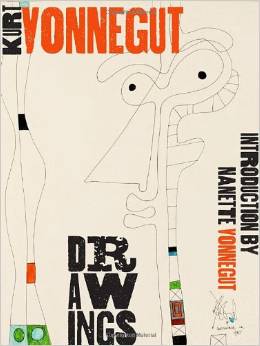
In the wake of his death, the world has been offered an expanding universe of Vonnegut including an authorized biography and greater attention paid to his visual artwork, first offered as comic doodles in his novels such as Breakfast of Champions.

Shields KV bio
KV drawings
Breakfast of Champions KV

Vonnegut’s fame came relatively late in the 1960s and 1970s and was spurred in part because of his popularity with college students, who gravitated to his dark humor and counter-culture messages in Slaughterhouse-Five. But Vonnegut also built a career as a public speaker, notably at college graduations.

SlaughterhouseFive KV

As an avid reader and occasional Vonnegut scholar, I continue to understand better the complexities of Vonnegut the person and the persona, indistinguishable in his novels and his public talks, but remain drawn to his enduring messages of love, kindness, and hope.

“You will find no lies in Vonnegut’s words of advice,” explains Dan Wakefield, writer and lifelong friend of Vonnegut, adding in his introduction to a collection of Vonnegut’s graduation speeches: “He is one of the truth tellers of our time.”

Nice KV

Vonnegut excelled in bending and blending genres, and in his graduation speeches, he both paid tribute to the form, mocked it, and gave it a new life, one only possible from the creator of Kilgore Trout, himself the embodiment and personified satire of pulp science fiction writers.

Sumner KV

“If this isn’t nice, what is?”

As a writer, Vonnegut bristled at being labeled a science fiction writer, argued that no one could teach someone to write (while working at the famed University of Iowa Writer’s Workshop), and explained that he wrote by crafting a series of jokes, having developed as a child an enduring love for his sister and slapstick.

Slapstick KV

Vonnegut’s contradictions and mis-directions are on full display in his graduation speeches, where he often began by addressing directly both the purpose of commencement talks (giving advice) and the futility of such ceremonies.

“We love you, are proud of you, expect good things from you, and wish you well,” Vonnegut began at Agnes Scott College in Decatur, Georgia on May 15, 1999:

This is a long-delayed puberty ceremony. You are at last officially full-grown women—what you were biologically by the age of 15 or so. I am as sorry as I can be that it took so much time and money before you could at last be licensed as grown-ups.

If graduation speeches are meant to punctuate ceremony, then Vonnegut was going to throw cold water on ceremony.

If graduation speeches offer one last moment for sage advice from elders to the young, Vonnegut was going to say something to displease adults and disorient the young.

But always wrapped inside his curmudgeon paper was a recurring gift, one that tied all of his work together: Vonnegut was tragically optimistic and even gleeful about this world.

On cue, then, at Agnes Scott, Vonnegut rejected the Code of Hammurabi, revenge, and admitted he was a humanist, not a Christian, adding:

If Christ hadn’t delivered the Sermon on the Mount, with its message of mercy and pity, I wouldn’t want to be a human being.

I would just as soon be a rattlesnake.

Finally, to those young women, Vonnegut concluded:

I’ll want a show of hands after I ask this question.

How many of you have had a teacher at any level of your education who made you more excited to be alive, prouder to be alive, than you had previously believed possible?

Hold up your hands, please.

Now take down your hands and say the name of that teacher to someone else and tell them what that teacher did for you.

All done?

If this isn’t nice, what is?

A Socialist Non-believer Preaching Love

If Vonnegut was anything, he was a proud Midwesterner, haling from Indiana, who reveled in invoking the name of Eugene V. Debs, a rarely acknowledged voice for workers throughout the late 1800s and into the early 20th century and central inspiration for Hocus Pocus.

Hocusa Pocus KV

Vonnegut as freethinker, then, always stood before graduation audiences, disheveled and wild-haired in the tradition of Mark Twain, the embodiment of the tensions created by college education—where young people often discovered everything their parents feared young people would discover.

The great irony of Vonnegut as graduation speaker was that his perch as counter-culture icon provided him the opportunity to express the central beliefs that, in fact, were what the adult world should want from the young.

Vonnegut thanked graduates for pursuing education, but then apologized for the mess adults had left them to face.

At Butler University in Indiana on May 11, 1996, Vonnegut celebrated his homeland, where he witnessed:

People so smart you can’t believe it, and people so dumb you can’t believe it.

People so nice you can’t believe it, and people so mean you can’t believe it.

And as was typical of his joke making, Vonnegut, acknowledged atheist, turned to the Bible at the end: “As I read the book of Genesis, God didn’t give Adam and Eve a whole planet.”

He lamented, then: “There’s a lot of cleaning up to do,” and “[t]here’s a lot of rebuilding to do, both spiritual and physical.” But out of this mess, Vonnegut reminded the graduates: “And, again, there’s going to be a lot of happiness. Don’t forget to notice!”

One cannot help hearing always in the background of Vonnegut as public speaker, Eliot Rosewater from God Bless You, Mr. Rosewater imploring:

“Go over to her shack, I guess. Sprinkles some water on the babies, say, ‘Hello, babies. Welcome to Earth. It’s hot in the summer and cold in the winter. It’s round and wet and crowded. At the outside, babies, you’ve got about a hundred years here. There’s only one rule that I know of, babies—:

“‘God damn it, you’ve got to be kind.'”

God Bless You KV

Vonnegut as a graduation speaker implored us all to pay attention to the things that matter. These moments are ceremonies, yes, but important reminders in these times we agree to pause before moving on.

See Also

“reading a biography (in the absence of you)”

Thomas, P. L. (2013, April). Looking for Vonnegut: Confronting genre and the author/narrator divide. In R. T. Tally, ed., Critical insights: Kurt Vonnegut (pp. 118-140). Ipswich, MA: Salem Press.

—–. (2013, January). 21st century “Children’s Crusade”: A curriculum of peace driven by critical literacy. Peace Studies Journal, 6(1), 15-30.

—–. (2012, Fall). Lost in adaptation: Kurt Vonnegut’s radical humor in film and print. Studies in American Humor, 3(26), 85-101.

—–. (2009). “No damn cat, and no damn cradle”: The fundamental flaws in fundamentalism according to Vonnegut. In D. Simmons (Ed.), New critical essays on Kurt Vonnegut (pp. 27-45). New York: Palgrave.

—–. (2006). Reading, learning, teaching Kurt Vonnegut. New York: Peter Lang USA.

In-Press: Pedagogies of Kindness and Respect (Peter Lang USA)

In-Press: Pedagogies of Kindness and Respect: On the Lives and Education of Children (Peter Lang USA)

P.L. Thomas, Paul R. Carr, Julie Gorlewski, and Brad J. Porfilio, eds.

[Draft cover, original artwork by A. Scott Henderson]

cover

Table of Contents

Introduction: “God damn it, you’ve got to be kind.”

P. L. Thomas, Paul R. Carr, Julie Gorlewski, and Brad J. Porfilio, editors

Section One: Theoretical Framework

Chapter One: Public Education and the Ethics of Care: Toward a Politics of Kindness?

Rachel K. Brickner

Chapter Two: Are We Educating Our Children Within a Culture of Care?

Michael Burger

Chapter Three: No Excuses for “No Excuses”: Counternarratives and Student Agency

Sharon M. Chubbuck and Brandon Buck

Chapter Four: Empathic Education for a Compassionate Nation: A Pedagogy of Kindness and Respect for Healing Educational Trauma

Lee-Anne Gray

Section 2: Pedagogies of Kindness and Children 

Chapter Five: Renewing the Confucian Tradition: Kindness and Respect in Children’s Everyday Schooling

Jiacheng Li and Mei Ni

Chapter Six: “When I explain it, you’ll understand”: Children’s Voices on Educational Care

Maria K. McKenna

Chapter Seven: Prekindergarten Policy and Politics: Discursive (Inter)play on Readying the Ideal Learner

Angela C. Passero, Carrie L. Gentner, and Vonzell Agosto

Chapter Eight: Nurtured Nature: The Connection Between Care for Children and Care for the Environment

Chiara D’Amore and Denise Mitten

Section Three: Curricular Dimensions of the Pedagogies of Kindness

Chapter Nine: Love, Learning, and the Arts

Jane Dalton

Chapter Ten: Aesthetic Reading and Historical Empathy: Humanizing Approaches to “Letter From Birmingham Jail”

Jason L. Endacott, Christian Z. Goering, and Joseph E. O’Brien

Chapter Eleven: Re-Storying “Progress” Through Familial Curriculum Making: Toward a Husbandry of Rooted Lives

Sarah Fischer

Chapter Twelve: Music Education, Character Development, and Advocacy: The Philosophy of Shinichi Suzuki

Karin S. Hendricks

Chapter Thirteen: Tough Kindness: Reconciling Student Needs and Interests in 1940s Black Progressive High Schools

Craig Kridel

Chapter Fourteen: Doodles, Birds, and Abstract Words: The Experience of Caring

Karinna Riddett-Moore

Chapter Fifteen: No More Disrespect: Teaching All Students to Question Right and Wrong in History

Laura J. Dull and Diana B. Turk

Section Four: The Political Economy of the Pedagogies of Kindness

Chapter Sixteen: Peace Education About the Lives of Children

Candice C. Carter

Chapter Seventeen: Acknowledging and Validating LGBT Identities: Toward a Pedagogy of Compassion

A. Scott Henderson

Chapter Eighteen: Reclaiming Kindness, Courage, and Compassionate Justice in Difficult Educational Times

Ursula A. Kelly

Chapter Nineteen: A Critical Pedagogy of Care and Respect: What Queer Literacy Pedagogy Can Teach Us About Education for Freedom

Cammie Kim Lin

Chapter Twenty: Toward Pedagogies of “Senseless Kindness” in Critical Education

Michalinos Zembylas, Robert Hattam, and Maija Lanas

Author Biographies

Charter Scam Week 2015

It’s Charter Scam Week again, and we can conclude that charter advocacy has revealed itself in the following ways:

  • Charter advocacy cannot be about improving student achievement since charter school consistently have a range of outcomes similar to public and even private schools once student populations are considered.
  • Charter advocacy cannot be concerned about resegregation of schools by race and class since charter schools are significantly segregated.
  • Charter advocacy is a thinly veiled attempt to introduce school choice as “parental choice” despite the U.S. public mostly being against school choice.
  • Charter advocacy is tolerating at best and perpetuating at worst schools for “other people’s children”—a system that subjects minority and high-poverty children to limited learning experiences, extensive test-prep, and authoritarian/abusive disciplinary policies.
  • Charter advocacy chooses to ignore that charters underserve some the most challenging students, ELL and special needs students.
  • Charter advocacy also ignores that nothing about “charterness” distinguishes charter from public schools.
  • Charter advocacy has committed to the (dishonest) “miracle” approach to demonizing public schools, and abandoned the original ideal of charter schools as pockets of experimentation (means and not ends) for the improvement of the public school system.

The problem for charter advocacy is that the evidence is overwhelmingly counter to nearly every claim in favor of charter schools.

Charter Scam Week 2015: A Reader

What, Exactly, Are We Celebrating About Charter Schools?

Conservative Talking Points Wrong for SC Education

Should SC Increase Charter School Investment?

Public School, Charter Choice: More Segregation by Design

Don’t Buy School Choice Week

No Excuses for Advocacy Masquerading as Research

Idealizing, Misreading Impoverished and Minority Parental Choice

NPR Whitewashes Charter Schools and Disaster Capitalism in New Orleans

“Other People’s Children” v. “They’re All Our Children”

The Charter Sham Formula: Billionaires + Flawed “Reports” + Press Release Media = Misled Public

Twitter Truth (and The Onion Gets It Again)

Listening to a Teacher from a “No Excuses” Charter School

Endgame: Disaster Capitalism, New Orleans, and the Charter Scam

Segregation and Charter Schools: A Reader

Pulling a Greene: Why Advocacy and Market Forces Fail Education Reform [Redux]

Anatomy of Charter School Advocacy

On Children and Kindness: A Principled Rejection of “No Excuses”

It’s Time to Stop Treating Black and Brown Kids Like ‘Other People’s Children’

Racial Segregation Returns to US Schools, 60 Years After the Supreme Court Banned It

Why Charter Schools Are Foolish Investments for States Facing Economic Challenges

The Similarities Between the Charter School Movement and the War on Drugs

Why Sending Your Child to a Charter School Hurts Other Children

“No Excuses” and the Culture of Shame: The Miseducation of Our Nation’s Children

Anatomy of a Political/Personal Poem

Politics, succinctly stated, is the negotiation of power among agents (humans, mostly, but one could argue along literary lines, humans versus nature, etc.). As a critical educator, I argue we cannot avoid being political; to claim you are not being political is being political—as expressed in Howard Zinn’s observation that you cannot be neutral on a moving train.

Below, I want to annotate a new poem of mine, as it represents the inescapable intersection of the political and the personal. As a writer, I occasionally bring my own writing into the classroom in order to be a witness to investigating a text.

My high school English students always felt very skeptical of English-teacher-as-text-authority holding forth about Writer X or Writer Y using this metaphor or symbol. Students often asked, How do you know Writer X did that on purpose?

So with my own work, I can truly reveal what is beneath a poem (the iceberg metaphor about art is useful here, but inadequate, I think, because I want something more organic such as a huge root system beneath a tree that continues to spread). I can help a student tease through my intent as well as how meaning may spring from those places where my conscious intent was lacking in the original writing.

On a companion blog, I have discussed this more broadly before, but my Poet Self is a different beast than my prose self. Poetry tends to come to me (often the first lines simply ask/demand to be written, feeling mostly not of my making but more that I have received them), and then I typically compose the full poem over several recursive hours of writing, reading, reading aloud, and re-shaping as I discover what the poem is intending to say.

What films I am watching, what books I am reading, what music I am listening to—these all become dialogues with my Poet Self, many times fueling the initial inspiration to write (and thus, many of my poems have quotes at the beginning, as below).

In an effort to avoid the cumbersome (and possibly slipping directly into the cumbersome), I am using bracketed notation, including the notations first, and then including the entire poem last—as I am not completely sure how best to format all this on a blog.

Anatomy of a Political/Personal Poem

[1] After talking to a friend who also loves The National, I have been listening to several of their albums over and over while driving to work. I love “Slipped” and noticed its use of season and that overlapped my spring motif for this piece. These lines also speak to the central two repeated lines about the inadequacy of making guarantees.

[2] One Monday, two hail storms pelted my university, the first during the morning while I sat in my office. That day was eerie in the changing weather patterns and this opening did just come to me, the first line and then I began to play with radar representations of storms, which established “screen” and “color” motifs for the poem.

[3] Pollock, O’Keefe, and cummings helped me think about representation of reality through art (what is True versus what is true/fact). The poem (as are many of my poems) is a not-so-subtle tribute to cummings in the lower-case versus uppercase as well as the use of & to suggest two/multiple things as one.

[4] Since #BaltimoreUprising has emerged as the shorthand for the current unrest in Baltimore, I have not been able to shake the power of “rising”—I think of The Dark Knight Rises, Phoenix/Jean Grey from the X-Men, and the enduring myths of rebirth.

[5] Although ending the first section, I came back to these lines over and over until I recognized the need to emphasize this poem is about calls to notice what we ignore, miss—on both personal and political levels. Nature demands we pay attention to our puniness, but humans fail again and again due to our arrogance. Humility comes from looking up and then really looking.

[6] Yes, literally I sat through two hail storms, and yes, literally, I am addressing my granddaughter. Throughout my poetry, I have examined the weight of not noticing until too late “the last time,” but with my granddaughter, I have become more aware of “first times.” The hyperlink is to my first poem about my granddaughter, written before she was born and even before we knew her gender. I use “sky” in poems about her as her name is Skylar.

[7] As I continued to shape and re-shape the poem—polish, prune, and always choosing the right (only?) word—I recognized that the piece demanded a “mother” motif—one I allowed to remain fairly hidden or mostly implied. In a blog post, I have examined more directly the Western/Christian use of Nature to mythologize human ideas about evil/good (specifically with snakes), and those ideas are suggested here.

[8] Storytelling, mythologizing—what story does weather radar tell? What about mainstream cable news? I am almost always thinking about Margaret Atwood’s examination of telling and retelling (notably in The Handmaid’s Tale). As I was coming to see the poem as “finished,” I realized the power of repeating these lines in both the context of my granddaughter (the personal) and the uprising in Baltimore (the political). I hope the “we” and “you” are both necessarily ambiguous and directly evocative of real people in real situations of passion and human frailty.

[9] Although this section, I feel, pulls together central motifs about “motherhood,” “Nature,” and storytelling/mythologizing, I must again confess this actually happened. People have been telling my daughter this “story” about snakes in springtime, and she paused sharing this with me one morning on her way out to work as I was there to provide care for my granddaughter. My daughter and I are worriers, anxious souls. We don’t need to hear such things. Here I also decided to use italics to offer some sense of discourse, some agents of actual telling. Again, as part of my visual self (cummings, comic books, films), I feel the poem sporadically zooming in and then pulling back—both the writer telling a story but also the camera capturing the story.

[10] The cable news section builds and then extends the motifs, but I struggled with how to blend this element with the personal sections that were much easier, natural to compose. I watched the Baltimore coverage as it happened, mostly flipping between CNN and MSNBC, using Twitter to guide me—experiencing how an event unfolding in real time is shaped by who and how the story if composed.

[11] My poem titles tend to include a main and then parenthetical title. Typically, as I start a poem I have only the main title and then a parenthetical reveals itself. “Baltimore is burning” was that organic element here, simple and alliterative as well as disturbing.

[12] These two lines echo and reinforce the first two lines with the “screen” and “color” motifs. The use of “yellow” and “black” also carry layers of connotation. The “yellow” of literal fire on the TV screen but “yellow” carries both “cowardice” and “caution” while “black” captures the literal night as well as race. “Blossom” also is central to the concepts of spring (as seasonal and as political renewal) while adding some tension to images that are positive and negative, sometimes simultaneously (flowers and fires can blossom).

[13] The hardest and slowest developing lines of the poem are these four. I struggled against slipping into mere commentary (losing the poetic), but I also wrestled with my urge to confront “minstrel show” and “black face” as part of the unmasking of racist mainstream media coverage while striking an objective pose of presenting both sides. The allusion to Fox News remains, but I never fully formed the thought of MSNBC being “Minstrel Show NBC.” The puppeteering and make-up (masking) felt necessary, but not satisfying until I placed this section as parenthetical, a bit of mechanical cloaking to reinforce the masking motif.

[14] The Baltimore refrains originally were all “is” sentences, but despite the importance of “Baltimore is burning,” I moved toward “Baltimore [verb]” and played with quite a number of combinations of verbs. “Witnesses” is a very subtle allusion to James Baldwin, and more directly, “explodes” (as I hyperlink) is an allusion to Langston Hughes’ “Harlem.” The natural and human-made storms are blended by the last section, framing the poem with storm, hail, and wind.

[15] I return to italics to suggest someone is speaking to some audience, but here the ambiguity is much more significant and purposefully broad. I like the rhythm of the “if” statements, and one of the best edits of the poem, I think, was being drawn to one of my favorite R.E.M. songs, “The Flowers of Guatemala,” a beautiful and powerful political song about Central America/U.S. politics. I lift almost directly “The flowers cover everything,” and share the song’s focus on paying attention to the masked, invisible: “There’s something here I find hard to ignore.”

[16] Completing the news image earlier of “minstrel show,” I return to the soot of the Baltimore fires turning everyone black, in black face, as a plea to “If everyone looked the same, would we do better?” The repetition of “recognize” also links back to the parenthetical commentary on the news media and reinforces the tension between paying attention and masking.

[17] Especially in poems, but essays as well, I seek always to frame so I had to return to “Baltimore is rising” even though I had elected to use the “Baltimore [verb]” constructions to open the last section. I was stuck for a while with “Baltimore is Phoenix,” which seemed both to work and falter. Here is where my revision strategy of reading aloud over and over was key. “Baltimore is burning/ Phoenix rising” sounded right aloud. Alluding to Harlem, directly addressing Baltimore, and Phoenix as a city name felt suggestive as well.

[18] I liked these lines as a bit of sincere resignation of grandparent/parent to child when I first wrote them (never edited, and felt right immediately). In the context of Baltimore and the ambiguity of that last section about “we” and “you,” I think, the lines work well to pull most of the key motifs and themes together, specifically the idea of “story telling” as both seeking and blurring Truth/truth.

first spring (Baltimore is burning)

“It’ll be summer in Dallas/ Before you realize/ That I’ll never be/ Anything you ever want me to be”
“Slipped,” The National [1]

thunderstorms blossom on the radar
green yellow red maroon [2]

like animated flower bouquets created by
Jackson Pollock Georgia O’Keefe & e.e. cummings [3]

because springtime is rising again [4]

hail taps my office window
rattled by wind gusts in shared rhythm

this season demands i pay attention
this building storm lifts my eyes [5]

/

precious child of my child
this is your first spring [6]

your first angry sky
your first thunder&lightning

we will hold&comfort you
but only you can understand Mother Nature [7]

we can tell you stories in soothing tones
but we cannot guarantee anything [8]

except our hearts are filled with you
etched forever into the bones of us

/

this is the story they are telling my daughter

snakes can smell when you are nursing
slithering into your house for the milk

snakes will strangle nursing babies
sleeping&dreaming in their cribs alone

my child who is a mother tells me this
her eyes&voice beg of me a mother’s plea

what is a mother to do what is a mother to do
if even Nature conspires against her baby [9]

/

the news tells me this story in the last days of April [10]

Baltimore is burning [11]
thugs rioting&looting

flames blossom on the TV screen
yellow black yellow black [12]

(if you look close enough you can recognize
the strings&make-up but not the puppeteers

performing this 21st-century minstrel show
masquerading as fair&balanced reality TV) [13]

/

Baltimore cries
Baltimore witnesses

like the first thunderstorm of spring
tossing hail&wind against your window

Baltimore shouts
Baltimore explodes [14]

if the fires are large enough
if the fires burn long enough

if the soot covers over everything [15]
painting every single face black

will you listen will you look
will you recognize will you act [16]

Baltimore is burning
Phoenix rising [17]

we can tell you stories in soothing tones
but we cannot guarantee anything [18]

—P.L. Thomas