Arrogance: Service, Not Saviors

Beyond the obvious—that they are all joined by the field of education—what links the National Reading Panel (NRP) and No Child Left Behind, the edureform documentary propaganda Waiting for “Superman,” Teach For America, and edusavior Steve Perry?

Arrogance.

While I count myself among English language arts (ELA) teachers who are skeptical of the Great Books mindset—that we have essential books all children must read—I am moved today to endorse how many of those works remind we puny humans about the folly of pride. Not the “I am proud of you daughter/son” pride, but the arrogance pride.

The “‘My name is Ozymandias, King of Kings;/ Look on my Works, ye Mighty, and despair!'” kind of pride.

What on earth possessed politicians to form the NRP to find out what we know about teaching children to read? Did anyone point out that we have had a vibrant field of literacy in the U.S. for a good century? Isn’t it sort of obvious that we have dozens upon dozens of people across the U.S. who know exactly how to teach children to read (and have known for decades)?

But it isn’t just the teaching of reading.

Naive experts, often journalists, every week roll out yet another book in which she or he researches a field in which real experts in that field have been doing authentic work for decades—the history of teaching!, how to teach poor children!, the glory of 10,000 hours of practice!

Paternalistic, self-important, blowhard politicians daily puff up in front of the public to be that “Superman” at the center of the great lie documentary noted above that ironically serves as a perfect representation of everything that is wrong with education reform.

But one need not go back to that complete failure of film making. Try within the last week.

Educators and activists Andre Perry and Jose Vilson (see also) have assumed the mantle of speaking truth to the cult of personality that is Steve Perry.

I consider myself a student of Andre Perry and Vilson, as I work to navigate my own white male privilege in a way that serves others—specifically those marginalized by race and class.

I am a product of white privilege and colonialism, and therefore, must not serve those corrosive forces.

Here, I urge you to read Andre Perry and Vilson, but also to act upon their messages.

And I want to offer a tentative framing informed by their charges.

First, I am compelled by the new 30 for 30 series on O.J. Simpson to suggest that Simpson himself is a cautionary tale about the dangers of white privilege and the costs of whitewashing blacks in order for them to be allowed into mainstream society.

Next, I find troubling parallels in the work of Steve Perry with powerful blacks (Bill Cosby, Clarence Thomas, and Simpson) who negotiate the whitewashing in their favor at the expense of all other people of color.

The demonizing of dreadlocks, the finger-pointing at sagging pants, the judgmental finger-wagging at black English—yes, these are the tools of white privilege, but they also serve the cult of personality unmasked in Steve Perry, for example, by Andre Perry and Vilson.

Finally, although specific people have to be addressed when confronting the cult of personality, the problem is that those people are serving larger forces that are driving education reform, a movement that uses “civil rights” as a mask to implement policies that are perpetuating colonialism and whitewashing.

“No excuses” charter schools committed to “grit” are about “fixing” black, brown, and poor children.

Zero tolerance policies and grade retention policies disproportionately turn black, brown, and poor children into criminals and drop-outs.

High-stakes testing and accountability produce and perpetuate so-called achievement gaps among race and social class—as well as gate-keep in order to keep “other people’s children” in their place.

Teach For America fuels the historical inequity of access to experienced and certified teachers: White Students Get Experienced Teachers, While Black Students Get Police In School.

Whether the face of education reform is Bill Gates, Michelle Rhee, Arne Duncan, Geoffrey Canada, or Steve Perry (or the long list of celebrities who decide education is their hobby), and while we must necessarily confront each person as we confront what they represent, the ultimate challenge in rejecting edureform while also calling for building public education as a vehicle for equity and liberation is to call colonialism “colonialism,” to just say no to policies and practices designed to erase who children are so that they can be assimilated into society.

There are profound and significant differences in Andre Perry’s work, Vilson’s daily classroom teaching, and Steve Perry’s bloviating (think Donald Trump).

Andre Perry, Vilson, and Chris Emdin, for example, celebrate black students, their humanity as inseparable from their blackness—while Steve Perry celebrates Steve Perry as one who erases the black from children in the service of white privilege.

We are way past time to stop believing in and listening to these false idols, self-proclaimed “Super(wo)men.”

Ozymandias, please recall, was a fool in king’s clothing whose words mocked him:

Nothing beside remains. Round the decay
Of that colossal Wreck, boundless and bare
The lone and level sands stretch far away.

Let’s not form any more panels, let’s not crown any more edusaviors, let’s not print and/or buy any more bestselling books by educelebrities (who have never been teachers), let’s not worship at the altar of hollow Ted Talks.

Just as we didn’t need the NRP to “know how to teach children to read,” we have ample knowledge right now how to eradicate racism and classism in our society and our schools.

Edureformers, edusaviors, and educelebrities are in the service of keeping us from that vital work.

As Andre Perry asserts:

Let’s be clear: Belt wearing isn’t the reason white children are educated in wealthier schools. Haircuts and etiquette classes don’t lead to the technological innovations of Silicon Valley. Lower incarceration rates aren’t because whites use drugs less often. The wage gap isn’t caused by white men’s hard work ethic.

But social and educational inequity is the consequence of white privilege.

So I ask now that you listen to carefully and then act upon Chris Emdin‘s confrontation of edureform as colonialism and what choices lie before teachers:

What I am suggesting is that it is possible for people of all racial and ethnic backgrounds to take on approaches to teaching that hurt youth of color….

I argue that there must be a concerted effort…to challenge the “white folks’ pedagogy” that is being practiced by teachers of all ethnic and racial backgrounds….

The time will always come when teachers must ask themselves if they will follow the mold or blaze a new trail. There are serious risks that come with this decision. It essentially boils down to whether one chooses to do damage to the system or to the student [bold emphasis added]. (pp. viii-ix, 206)

Especially in our schools, and especially among our most vulnerable students, we need service, not saviors.
Call for Manuscripts: Strangers in Academia: Teaching and Scholarship at the Margins

Call for Manuscripts

Strangers in Academia: Teaching and Scholarship at the Margins

Christian Z. Goering, University of Arkansas; Angela Dye, PBS Development, LLC; and P.L. Thomas, Furman University, editors

This volume seeks to collect contributions from authors across the spectrum of academe who, for one reason or another, feel as if they are strangers at their own universities and/or in K-12 education.

In the background of this project, we are confronting the mainstream idea that formal education is somehow revolutionary, for both individuals and the larger society. Therefore, this volume is a testament to how all levels of academia are too often reflect and perpetuate the society the schools/universities serve.

Specifically, we are seeking to include the experience, thinking, and scholarly perspective of those who feel othered, ostracized, pushed out, relegated, or marginalized because of your status (race, class, gender, sexual orientation, etc.) or your professional and/or ideological stances through experiences working in higher education or K-12. While it’s the ideal of the academy to consider all warranted perspectives perhaps there are elements of your status, practice, or philosophy that is being undermined by your administrators and/or colleagues. Insidious attacks, comments in the hall, or cultural norms have left you and/or your work feeling less than welcome.

Contributions should range between 3000 and 4000 words and explore the complex nature of working in K-12 or higher education and feeling less-than-welcome. What was the experience like? How did you address it? What were the consequences? Two-page chapter proposals are due on September 30, 2016, with complete chapters due December 1, 2016.

Submit all proposals as Word attachments to paul.thomas@furman.edu

The blog post below serves as an invitation to begin considering contributing to this volume.

No, there was no way out, and no one can imagine what nights in prison are like.

Meursault, The Stranger, Albert Camus

I left public education after an 18-year career as a high school English teacher and coach. The exit had its symbolism because at that time I was wearing a wrist brace on my right hand from overuse after almost two decades of responding to about 4000 essays and 6000 journal entries per year; in other words, I left public education broken.

A former student of mine on the cusp of becoming a first-year English teacher asked me recently what my first years were like, and I had to confess that from day one, my career as an educator has always been at the margins, a stranger at all levels of formal schooling and academia.

Yes, my hand was exhausted from marking essays, but I was broken as a public school teacher by administrators and in a bit of not so hyperbolic science fiction, The System.

Every single day of my life as a public school teacher, I worked against the system—but I did so with my door open because I believed (and still believe) my defiance was for The Cause.

I was never defiant for my own benefit, but resistant to the structures, policies, and practices that I believed dehumanized teachers and students, that worked against formal education as liberation.

I didn’t punish students for being a few seconds late to class, for asking to go to the restroom. I didn’t stand guard at the doorway or in the hallways as if we were surveilling a criminal population of teens.

We laughed and moved around in my room, played music and even danced during breaks. Students ate candy, food, sneaking in drinks occasionally.

And to a fault, I was friendly with my students—a friend to my students. In the perfect sort of irony or symmetry, many of those students are today my friends on Facebook.

But toward the end, after year upon year of wrestling with administration and finding little collegiality or camaraderie among my colleagues, I found my breaking point when I took off days to present at a national conference—one I was afforded through my doctoral program, which I completed while a full-time high school teachers—and returned to work to discover I was docked pay for those days and even the substitute fee.

Public education, I learned, had no room for teachers who were also scholars.

Because the opportunity presented itself, I begrudgingly applied for, was offered, and then accepted (at a significant reduction in pay) a position in higher education as a teacher educator.

I entered the role as tenure track assistant professor very naive (even in my early 40s) and so deluded by public education that I also idealized higher education: my land of milk and honey where my full self as educator, writer, and scholar would be not only welcomed, but also encouraged.

After 14 years at the university level, making my way through tenure to full professor, let me offer the short version: more delusion.

“Don’t be so political.” “I never published an Op-Ed until I had tenure.” “Dressing awfully casually for a junior faculty member.”

Yes, my university is in many ways a very wonderful place, and my colleagues are brilliant and supportive.

But the old patterns recurred in higher education that had run me out of public education: critical pedagogy isn’t welcomed, scholarly activity creates as much friction as it receives praise, wading into public intellectual work creates even more friction, and even well-educated people can be prejudiced and petty.

Department politics and dynamics have proven to be as frustrating (for me and other professors) as my experiences with administration while I was a public school teacher.

As one example, my university has recently conducted a gender equity study because the playing field isn’t level here. Professors of color and LGBT professors will also note significant inequities as well.

Higher education has revealed itself to be in many ways as flawed as public education because even in our systems of formal education, we are apt to replicate the society we serve instead of being a working model of how things could be, how things should be.

Race, class, gender, sexual identification, and ideology—these all even in higher education create those of us who are strangers in academia; we are forced to teach, conduct scholarship, and write at the margins.

Just making this claim, I know, pushes me further to the margins, boundaries possibly well secured by the statuses I have attained despite being a stranger in academia.

Yet, I am not yet willing to throw up my hands and simply accept that we cannot be otherwise—because if the most well educated cannot set aside our biases, what hope for all of humanity?

In Albert Camus’s The Stranger, the allegory reveals the existential message that we are all prisoners. Meursault, after being literally imprisoned, confesses, “Afterwards my only thoughts were those of a prisoner.”

But readers are cautioned to note that Meursault also makes the case that his new situation in a physical prison is no different than his life as a so-called free man.

As academics, I think, it is ours to resist the same dynamic between the so-called real world and academia in which there is essentially no difference.

Academia need not be the pejorative “Ivory Tower,” suggesting we are above it all, but academia sure as hell could be, should be a model of how to honor and celebrate the human dignity of everyone.

Bigotry, George Carlin, and My Critical Journey

As I have noted many times, George Carlin and Richard Pryor were instrumental in saving me from my redneck past.

As a frail, anxious, and highly insecure teen, I sat in my room alone listening to their comedy albums over and over—memorizing, yes, but listening very carefully because I wanted to understand what these men were saying.

These were revolutionary ideas to a redneck in South Carolina in the 1970s.

With the death of Muhammad Ali, I have been drawn back to my Classic Gold collection of Carlin’s first three albums, anchored for me by his “Muhammad Ali – America the Beautiful” on Class Clown:

But as I have been listening, my recognition that Carlin and Pryor are foundational to my critical journey—especially as an educator—has been shaken by coming back to Carlin as I sit in my mid fifties.

Two routines—”White Harlem” and “Black Consciousness” on Occupation: Foole—have pushed me even further into the tension that exists in pop culture, a tension I have examined regarding Marvel Comics Captain America:

And as I have been contemplating these routines, mostly about race and the politics of race, the Orlando massacre has forced me to highlight what is possibly the most important joke from Carlin for me in terms of everything it represents about why I was drawn to his work, why it still speaks to me, and why I am deeply concerned about both of those.

Carlin was born a couple years before my father and we are separated significantly by regional and religious backgrounds; however, we still share some commonalities that distinguish us from younger generations.

During Carlin’s riff on his old neighborhood—Morningside Heights bounded by Columbia University and Harlem, and labeled as “White Harlem”—he offers his sharp observation about language, noting that in his time, the words “fag” and “queer” meant different things: A fag, Carlin explains, is someone who wouldn’t go down town with you to beat up queers.

The audience roars on the albums—and I am forced to contemplate the ugliness beneath the laughter.

Carlin as social critic and master wordsmith always laid the world before us—and in his routines, characters, and rants, I believed him to be critical of that world he portrayed.

But just as Captain America’s popularity reveals the very worst of mainstream U.S. bigotry (regardless of the creators’ and many writers’ and artists’ since intentions), I see beneath Carlin’s routine that the audience response is about laughing at marginalized people due to sex or sexual identification.

Carlin’s race riffs seem to be as problematic. White Harlem? Really?

Carlin also explains that if you put five really white guys with black dudes for a while, the white guys will start to talk, act, and walk as the black guys do.

I think Carlin genuinely valued his growing up close to and in black culture, but I am not sure he understood appropriation—and I am certain his audience did not.

When a Sport Illustrated article repeated praises a female Olympic swimmer by framing her as “like a man” (at the subtle and seemingly harmless-but-not end of the scale) and when fifty people are slaughtered for being in a gay nightclub just a year after nine people were slaughtered in a church for being black, I have to ask are these routines by Carlin funny? Were they ever funny?

And, for me this is important, how complicit is Carlin in perpetuating the horrors of homophobia, sexism, misogyny, and racism?

It seems a very privileged thing to sit in a theater and laugh at a man, self-proclaimed foole, telling jokes and using dirty words:

I memorized Carlin and Pryor—and I took their routines to school everyday as a shield against getting beat up, probably not against the threat of physical abuse but getting beat up socially and psychologically because I was skinny and insecure—I simply was not man enough, I feared.

In the late 1970s, I was entirely unaware that I was already shielded from those threats in most ways, being white, male, and heterosexual.

I was entirely unaware of how cruel and wrong this world was and is, even though Carlin and Pryor had opened the door for me to discover all that in the coming years of college.

My critical journey has been a tremendously privileged one—one in which I have been afforded the role of witness, informed by James Baldwin and many others who have been passengers.

Just as Kurt Vonnegut taught me the sacred value of kindness, Carlin and Pryor proved to me that words matter—but our critical journey must step beyond words even as we correct them.

In a year, we have placed at our feet the Charleston Massacre and the Orlando Massacre. I find little joy in listening to Carlin because I must ask: What are we going to fucking do?

U.S. Education Reform: A Snapshot

Cycle has happened often, and now poised to happen again.

Common Core

For #3 (where we are now before jumping back to #1), see Common Core isn’t preparing students very well for college or career, new report says.

HINT:

As the absence or presence of rigorous or national standards says nothing about equity, educational quality, or the provision of adequate educational services, there is no reason to expect CCSS or any other standards initiative to be an effective educational reform by itself. (Mathis, 2012)

On Bravado: “He Was Willing to Speak His Mind”

Why did you listen to that man, that man’s a balloon

“Friend of Mine,” The National

Some day soon, we will be able to look back at 2016 through the more nuanced lens of history, and part of that re-creation must include the recurring praise “He was willing to speak his mind.”

A coincidence of history, in fact, has brought us this refrain for two men: Donald Trump and the recently deceased Muhammad Ali.

Right-wing apologist and commentator Cal Thomas has equated Trump and Ali, mostly as an attempt to mask Trump’s racism and all-around bigotry as part of his political appeal:

If there is one explanation for Donald Trump’s success it is this: Unlike most Republicans, he fights back. He may not have the late Muhammad Ali’s finesse, but he sees himself as more than capable of dealing a “knockout” punch to Hillary Clinton in November. That ought to be the goal of any GOP presidential nominee.

Even among Ali’s most ardent supporters—former combatants in boxing, major sports figures, friends, and relatives—Ali’s brashness, bravado is highlighted as a central reason for his greatness (praise that sounds a great deal like why supporters of Trump explain his appeal as a presidential candidate):

“Ali was one of the first athletes to speak his mind, and that opened the door for the many who do so today. … He freed us all in that way.” The man who sang those praises for Ali was Derek Jeter, the retired Yankee shortstop who never uttered a controversial, or even particularly interesting, statement his entire career. And why would he? His sponsors — Nike, Gatorade, Ford, Movado, Gillette, Visa — would not look kindly on, or write checks to, a rabble-rouser.

In a country where free speech is mostly protected, “speaking one’s mind” doesn’t really rise to the level of why we should praise anyone.

To be blunt, any fool can speak her/his mind—and Trump is showing us how this can generate great wealth and popularity.

Although this is an urgent distinction now, I hope with the passing of time, we can come to see that bravado is not a simple thing.

Trump’s bravado is all show; he is a balloon—air puffing up a thin veneer. As a business man—his signature bloviating about Success!—he came from wealth and privilege (not self-made, our greatest myth in the U.S.), has run multiple businesses into bankruptcy (a cowardly way to function for such a bully), and would have earned far more money investing instead of his business ventures.

Trump is all false bravado. His bluster is irony.

Trump is a shell game best represented by his Trump University. In short, he is the personification of everything that is wrong with capitalism.

Muhammad Ali is the bravado of substance. When he told us he was pretty, he was pretty. When he told us he was The Greatest, he was The Greatest.

Ali was more genuine, more successful, and more dignified in one thirty-minute interview than Trump has been in his entire cartoon life:

https://youtu.be/G3r56hv3jCU

But even at that, Muhammad Ali is not a major figure in human history because of his bravado—not because he was willing to speak his mind.

Again, any fool can do that.

Muhammad Ali is The Greatest because of what he said, and the moral stand that he took at great personal sacrifice.

Muhammad Ali was on the right side of racism and militarism (Vietnam specifically) when few others were, and he was willing to take that action even as a significantly marginalized human in a country begrudgingly confronting its de jure racism.

Muhammad Ali lived his ethics before himself, and we must not allow his public persona, a purposeful mask of his making, to distract us from his substance.

Trump is all Self, to the detriment of others, any others. He is a buffoon, as his ridiculous hair, facial gestures, and clown suits literally reveal to us.

Bravado is neither inherently good or bad. But we must resist to praise anyone for “speaking her/his mind.”

Trump’s hollow bravado is an embarrassment to humanity, and it is upon us now to embrace with ample apologies the genuine bravado of Muhammad Ali who never rose to perfection but lived on the right side of history regardless of the costs to his own Self.

9 June 2016 Reader: School Choice, GPA v. SAT/ACT

I. School Choice, Charter Choice

Choosing a School for My Daughter in a Segregated City, Nikole Hannah-Jones

When the New York City Public Schools catalog arrived in the mail one day that spring, with information about Mayor Bill de Blasio’s new universal prekindergarten program, I told Faraji that I wanted to enroll Najya in a segregated, low-income school. Faraji’s eyes widened as I explained that if we removed Najya, whose name we chose because it means “liberated” and “free” in Swahili, from the experience of most black and Latino children, we would be part of the problem. Saying my child deserved access to “good” public schools felt like implying that children in “bad” schools deserved the schools they got, too. I understood that so much of school segregation is structural — a result of decades of housing discrimination, of political calculations and the machinations of policy makers, of simple inertia. But I also believed that it is the choices of individual parents that uphold the system, and I was determined not to do what I’d seen so many others do when their values about integration collided with the reality of where to send their own children to school.

One family, or even a few families, cannot transform a segregated school, but if none of us were willing to go into them, nothing would change. Putting our child into a segregated school would not integrate it racially, but we are middle-class and would, at least, help to integrate it economically. As a reporter, I’d witnessed how the presence of even a handful of middle-class families made it less likely that a school would be neglected. I also knew that we would be able to make up for Najya anything the school was lacking.

As I told Faraji my plan, he slowly shook his head no. He wanted to look into parochial schools, or one of the “good” public schools, or even private schools. So we argued, pleading our cases from the living room, up the steps to our office lined with books on slavery and civil rights, and back down, before we came to an impasse and retreated to our respective corners. There is nothing harder than navigating our nation’s racial legacy in this country, and the problem was that we each knew the other was right and wrong at the same time. Faraji couldn’t believe that I was asking him to expose our child to the type of education that the two of us had managed to avoid. He worried that we would be hurting Najya if we put her in a high-poverty, all-black school. “Are we experimenting with our child based on our idealism about public schools?” he asked. “Are we putting her at a disadvantage?”

See Also

Why Sending Your Child to a Charter School Hurts Other Children

Education Reform in the New Jim Crow Era

Just as mass incarceration from the war on drugs continues institutional racism once found in slavery and Jim Crow, education reform, especially the “no excuses” charter school movement, resurrects a separate but equal education system that is separate, but certainly isn’t equal. The masked racism of mass incarceration and education reform share many parallels, including the following:

  • Both depend on “racially sanitized rhetoric,” according to Alexander, that thinly masks racism. “Getting tough on crime” justifies disproportional arrests, convictions and sentencing for African Americans; “no excuses” and “zero tolerance” justify highly authoritarian and punitive schools disproportionally serving high-poverty children of color.
  • Both depend on claims of objective mechanisms – laws for the war on drugs and test scores for education reform – to deflect charges of racism. Alexander recognizes “this system is better designed to create [emphasis in original] crime and a perpetual class of people labeled criminals, rather than to eliminate crime or reduce the number of criminals,” (p. 236) just as test-based education reform creates and does not address the achievement gap.  
  • Both depend on racialized fears among poor and working-class whites, which Alexander identifies in the Reagan drug war agenda: “In his campaign for the presidency, Reagan mastered the ‘excision of the language of race from conservative public discourse’ and thus built on the success of the earlier conservatives who developed a strategy of exploiting racial hostility or resentment for political gain without making explicit reference to race” (p. 48). The charter school movement masks segregation within a progressive-friendly public school choice.  
  • Both depend on either current claims of post-racial America or the goal of a post-racial society: “This system of control depends far more on racial indifference [emphasis in original] . . . than racial hostility,” Alexander notes. (p. 203)
  • Both depend on a bipartisan and popular commitment to seemingly obvious goals of crime eradication and world-class schools.
  • Both depend on the appearance of African American support. Alexander explains about the effectiveness of the war on drugs: “Conservatives could point to black support for highly punitive approaches to dealing with the problems of the urban poor as ‘proof’ that race had nothing to do with their ‘law and order’ agenda” (p. 42).

This last point – that African Americans seem to support both the war on crime and “no excuses” charter schools – presents the most problematic aspect of charges that mass incarceration and education reform are ultimately racist, significant contributions to the New Jim Crow.

For example, Carr reports that African American parents not only choose “no excuses” charter schools in New Orleans, but also actively cheer and encourage the authoritarian policies voiced by the schools’ administrators. But Alexander states, “Given the dilemma facing poor black communities, it is inaccurate to say that black people ‘support’ mass incarceration or ‘get-tough’ policies” because “if the only choice that is offered blacks is rampant crime or more prisons, the predictable (and understandable) answer will be ‘more prisons.’ ” (p. 210)

New Orleans serves as a stark example of how this dynamic works in education reform: Given the choice between segregated, underfunded and deteriorating public schools and “no excuses” charters – and not the choice of the school environments and offerings found in many elite private schools – the predictable answer is “no excuses” charters.

II. GPA v. SAT/ACT

Study: Colleges Put Students Into Remedial Classes Who Don’t Need Them

The Alaska study, conducted by a regional research laboratory funded by the U.S. Department of Education, found that SATs, ACTs and the placement tests used by the University of Alaska were all poor predictors of how a student might do in a college-level math or English class. Many students who did well on these exams bombed their college classes, and vice versa. Instead, the researchers found that if college administrators had simply looked at the students’ high school GPAs, they would have done a much better job at figuring out who needs to relearn high school material and who doesn’t.

“We definitely should be including GPAs when assessing college readiness,” said Michelle Hodara, the lead author of the study and a senior researcher at Education Northwest. “We found the same thing that community college researchers and practitioners are finding, that high school GPA is a really powerful measure of college readiness, even for students who want to earn a four-year degree.”

Developmental education and college readiness at the University of Alaska

This study examines the postsecondary readiness of first-time students who enrolled in the University of Alaska system over a four-year period. The study calculates the proportion of students considered academically underprepared for college and how placement rates for developmental education (that is, non–credit-bearing courses) vary for different groups of students. The study also determines the proportion of students placed in developmental education who eventually enrolled in and passed college English and math. Finally, the analysis looks at whether high school grades, rather than exam performance, are a better predictor of success in college-level courses.

Results show that developmental education rates were higher in math than English for students pursuing any degree type and increased as the gap between high school exit and college entry grew. Among students pursuing a bachelor’s degree, developmental placement rates were highest for Black students from urban areas of the state (in math) and Alaska Native students from rural areas (in English) compared to all other student groups. Almost half (47 percent) of students placed in developmental courses eventually passed college English and almost a quarter (23 percent) passed college math. For students who enrolled directly in college, high school grade point average was a stronger predictor of college-level English and math performance than were SAT, ACT, and ACCUPLACER scores. Secondary and postsecondary stakeholders can use the findings to help identify students in need of support to be college-ready and to consider further conversation and additional research regarding whether and how to use high school grade point average as part of the placement process.

Former College Board Exec: New SAT Hastily Thrown Together; Students: March SAT Recycled in June

Manuel Alfaro is the former executive director of assessment design and development at the College Board.

Beginning on May 15, 2016, Alfaro has published a series of posts on Linkedin in an apparent effort to reveal the haphazard construction of the new SAT, released and first administered in March 2016 and again, in June. (He is also posting info on Twitter: @SATinsider.)

Below are excerpts from Alfaro’s Linkedin posts, all of which provide an enlightening read concerning the sham Coleman has thrown together and labeled the “new SAT.”

Drowning

The boot in the face, the brute
Brute heart of a brute like you.

“Daddy,” Sylvia Plath

When people declare “He literally lost his mind” or when TV and radio ad after ad announces “Not available in all states,” I cringe because the chosen phrasing makes a claim that is opposite of what is intended.

As a writer and English teacher, I am possibly more attuned to language than the average person, but I also recognize that careless language is often related to careless thinking—the words and phrasings we choose and use have a symbiotic relationship with how we frame and view the world.

As a chronically anxious person, I recognize that language is one way in which I can negotiate with my anxiety—write about it or simply have someone with whom I can share the intricate details of my irrational self.

Writing and talk—language—help me recognize through naming what I am facing; language is liberating, I believe, because it is essentially human.

Without language, with our language monitored, or with our language censored, our voices silenced, we are rendered less human; as Arundhati Roy has explained, “We know of course there’s really no such thing as the ‘voiceless’. There are only the deliberately silenced, or the preferably unheard.”

And so I find myself turning to language—reading, writing, and talking—when faced with the monstrosity of the Brock Turner rape case, a calloused boot in the face once again entrenching the power of privilege over basic human dignity—both racialized and genderized.

The most powerful words I have found about this act of violence and miscarriage of justice have been about words themselves:

rape

From this, my mind raced to Stevie Smith’s poem “Not Waving but Drowning,” in part:

Nobody heard him, the dead man,
But still he lay moaning:
I was much further out than you thought
And not waving but drowning.

The coincidence of the word “drowning” is bolstered by this poem’s message about communication; this is a darkly ironic poem, prompting an uncomfortable smile about the dire consequences of misreading a desperate person’s efforts to be heard, to be recognized.

Codified by the criminal justice system, represented by a judge, Turner’s raping of an unconscious woman has been deemed about how this act of violence impact’s Turner’s privileged life.

His rape victim conveniently marginalized—she is a real-world parallel of the dead man in Smith’s poem, her humanity resting on her own words of rebuttal to the miscarriage of justice spawned by the fraternal bond between two Stanford males.

Like the rape victim in Adrienne Rich’s poem, Turner’s victim has been assaulted twice; Rich’s victim realizes the assault has rendered her victim and criminal:

…You have to confess
to him, you are guilty of the crime
of having been forced.

Turner’s victim has been pronounced less than Turner—the consequences of his violence more important for him than for her, the judgment asserted.

Sexism, like racism, is systemic—both the result of individuals and an essential element of the collective, how the system works.

So it may appear merely academic to focus on words, how we talk about this world.

But it isn’t trivial at all.

We must begin to dismantle a dehumanizing culture by naming that which is dehumanizing. We are confronted by the fact that there is only sex or rape just as we know there is only swimming or drowning.

Words matter, and basic human dignity is not waving to us on the shore; it is drowning, and we aren’t paying attention.

Doubling Down (Again) on the White Man’s World

A decade ago, I was confronted with an incredibly uncomfortable situation when my first-year English class overwhelmingly believed the Duke lacrosse team was innocent and the woman accusing them of sexual assault was fraudulent.

There was a significant mixture of irony in the tension resulting from my trusting that the class—atypically majority male at a university consisting of mostly privileged and white students—was biased by their collective and individual privilege as that conflicted with the eventual revealing that the Duke lacrosse team was in most ways innocent (although I would argue that is a simplistic conclusion supported by technicalities of law): the irony, of course, being that I—white, male, and privileged—was proven wrong about my claims of the U.S. being, in the language of today, a country in which white male lives matter most.

Just this May, another class included, again atypically, about a third black students, some of whom were eager to argue for corporal punishment and then several of the black male students felt compelled to speak up for males wrongly accused of sexual assault.

At that, I asserted that in the U.S. today it remains easier to be a male wrongly accused of sexual assault than to be a woman actually raped or sexually assaulted.

But I could not have anticipated both the Baylor University scandal and then the Brock Turner rape judgment and sentence, which has been followed by a disturbing pair of commentaries by Turner’s father and a female childhood friend.

The light sentence of Turner, by a judge who like Turner attended Stanford University, was justified because of the consequences this rape would have on Turner’s life. Turner’s victim has rebuked this decision in her own statement.

Both the Turner sentence and the Baylor scandal returned me to my examination of The Martian, an unintended allegory of the hyperbolic concern in the U.S. for the white male at the expense of women and people of color.

Having been raised in the sexist and racist South, I have spent my adult life—going on four decades—working against my privilege and learned bigotries.

I am aware of and fearful of whitesplaining and mansplaining, the white gaze and the male gaze in every interaction I have in both the real and virtual worlds. I shudder to think, on social media especially, how often I creep toward the line crossed by vicious male trolls, how often women and people of color see in my words the very things I abhor.

As a writer, I am hyper-aware that my one-more-white-man’s voice is crowding out space for women and people of color; we simply do not need more white male perspectives.

As a scholar and academic, now full professor and tenured with a significant body of published works, I am equally hyper-aware I continue to do the same in academia.

Much of my work has been devoted to calling out racism, but I have also addressed misogyny and mansplaining often. In both cases, I have tried to confront the inevitable “yes, but” from men and whites.

But I look at the one picture of Turner, and I see me—white male. I think about the judge in the case, and I am among the disproportionate number of white males in power in the U.S.

What woman would trust me, especially from a distance? Why would black and brown people believe my solidarity?

And while I am writing about me, this is not about me; this is about the daily doubling down in the U.S., proving that white male lives matter most—and the corrosive consequences for everyone.

That fact—the light sentence for Turner, the failure to hold police officers accountable for taking black lives—sustains a hostile world for everyone; we are pitted daily against each other because the greatest threat to power is solidarity.

I will continue to name misogynyracism, and child abuse—even as that work pushes my voice farther the margins.

As a privileged white male, I am insulated enough that I can offer these observations that remain mostly about my own minor inconveniences that are devastating realities for vulnerable populations and people oppressed because of race, gender, sexuality, or age. As a privileged white male, I seek to use my privilege to eradicate privilege.

But most of all, my greatest act of solidarity remains my role as a student—I listen, I read, I heed.

And even then, I fall short.

I have failed enough women, children, and people of color to last a dozen life times—and “I’m sorry” seems trivial against that.

White male privilege has created a vicious world that needs to be dismantled, and in its place, we must imagine something better, a world brought forth from the mouths and minds of those rendered less human and thus more aware of the beauty and grandeur of being human.

As Adrienne Rich offers, “the sea is another story/ the sea is not a question of power.”

Most people know “Power tends to corrupt and absolute power corrupts absolutely,” but the Turner verdict and sentencing remind us of what Lord Acton offered next: “Great men are almost always bad men.”

Daily, this is proven true as we watch white males double down again and again on white male lives mattering most.

Defund the “Grit” Industry: Alternatives to Tough and Duckworth

Once edujournalist Paul Tough and “grit”-genius Angela Duckworth realized their significant contributions to the “grit” industry were gradually being unmasked, they discovered ways to cash in on backpedalling (slightly) to keep the train rolling.

Regretfully, many very good people have praised Tough and Duckworth for their much-too-late and way-too-little—somehow ignoring the incredible damage that has been done to vulnerable populations of students—and even recommend Tough and Duckworth’s “new” books.

Please, I beg of you, do not forgive and forget, and especially do not fund further the “grit” industry.

Let me offer instead a few alternatives:

Scarcity: The New Science of Having Less and How It Defines Our Lives, Sendhil Mullainathan and Eldar Shafir

9781250056115

[See also George Saunders’s Allegory of Scarcity and Slack]

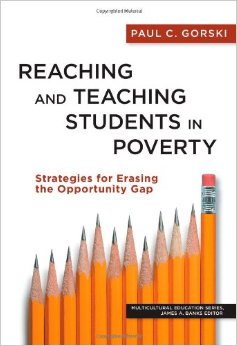
Reaching and Teaching Students in Poverty: Strategies for Erasing the Opportunity Gap, Paul Gorski

51w731ediwl-_sy344_bo1204203200_

[See also Recommended: Reaching and Teaching Students in Poverty, Paul C. Gorski]

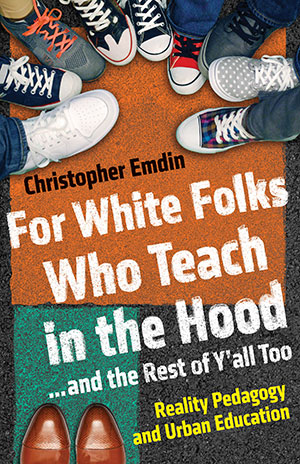
For White Folks Who Teach in the Hood…and the Rest of Y’all Too, Christopher Emdin

978-080700640-5

[See also Christopher Emdin Confronts “White Folks’ Pedagogy”: “whether one chooses to do damage to the system or to the student”]

6 June 2016 Reader: Mythbuster Edition

In the spirit that feels appropriate in the wake of the death of Muhammad Ali—and the concurrent failure of mainstream reflections ignoring or whitewashing the real history of his life—I offer below a collection of education-related links that can serve as powerful mythbusters for the ongoing false claims common in the mainstream media and among political leaders as well as edureformers.

Charter Schools

Failing The Test Series

Regardless of motives, the charter initiatives in Oakland and Los Angeles together signal a significant watershed in the growth of a statewide movement that was birthed by California’s Charter Schools Act of 1992 to create classroom laboratories that might develop the dynamic new curricula and teaching methods needed to reinvigorate schools that were failing the state’s most underserved and disadvantaged children.

How that modest experiment in fixing neighborhood public schools could morph in less than 25 years into the replacement of public schools with an unproven parallel system of privately run, taxpayer-funded academies is only half the story of California’s education wars that will be examined in this series, much of which is based on conversations with both sides of the charter school debate. Over the next few days Capital & Main will also look at:

  • The influence wielded by libertarian philanthropists who bankroll the 50-50 takeovers.
  • How charter schools spend less time and money on students with learning disabilities.
  • The lack of charter school transparency and accountability.
  • How charter expansion is pushing Oakland’s public school district toward a fateful tipping point.
  • The success of less radical yet more effective reforms that get scant media coverage.
  • Nine solution takeaways for struggling schools.

(from Failing the Test: A New Series Examines Charter Schools, Bill Raden)

Charters and Access: Here is Evidence, Julian Vasquez Helig

No, Eva, You Can’t Do Whatever You Want, Jersey Jazzman

Teacher Effectiveness/Experience

Does Teaching Experience Increase Teacher Effectiveness?: A Review of the Research, Tara Kini and Anne Podolsky

Based on our review of 30 studies published within the last 15 years that analyze the effect of teaching experience on student outcomes in the United States and met our methodological criteria, we find that:

  1. Teaching experience is positively associated with student achievement gains throughout a teacher’s career. Gains in teacher effectiveness associated with experience are most steep in teachers’ initial years, but continue to be significant as teachers reach the second, and often third, decades of their careers.
  2. As teachers gain experience, their students not only learn more, as measured by standardized tests, they are also more likely to do better on other measures of success, such as school attendance.
  3. Teachers’ effectiveness increases at a greater rate when they teach in a supportive and collegial working environment, and when they accumulate experience in the same grade level, subject, or district.
  4. More experienced teachers support greater student learning for their colleagues and the school as a whole, as well as for their own students.

Vouchers

On negative effects of vouchers, Mark Dynarski

Recent research on statewide voucher programs in Louisiana and Indiana has found that public school students that received vouchers to attend private schools subsequently scored lower on reading and math tests compared to similar students that remained in public schools. The magnitudes of the negative impacts were large. These studies used rigorous research designs that allow for strong causal conclusions. And they showed that the results were not explained by the particular tests that were used or the possibility that students receiving vouchers transferred out of above-average public schools.

Another explanation is that our historical understanding of the superior performance of private schools is no longer accurate. Since the nineties, public schools have been under heavy pressure to improve test scores. Private schools were exempt from these accountability requirements. A recent study showed that public schools closed the score gap with private schools. That study did not look specifically at Louisiana and Indiana, but trends in scores on the National Assessment of Educational Progress for public school students in those states are similar to national trends.

In education as in medicine, ‘first, do no harm’ is a powerful guiding principle. A case to use taxpayer funds to send children of low-income parents to private schools is based on an expectation that the outcome will be positive. These recent findings point in the other direction. More needs to be known about long-term outcomes from these recently implemented voucher programs to make the case that they are a good investment of public funds. As well, we need to know if private schools would up their game in a scenario in which their performance with voucher students is reported publicly and subject to both regulatory and market accountability.

School Discipline, Race, and Gender

Black Girls and School Discipline: Four Researchers Unpack K-12’s Racial Bias

* Please note the disturbing series of comments at the end.

Most of the discussion around the disproportionality of black students’ suspension or expulsion from K-12 schools has focused on boys. Only more recently have researchers begun to surface the numbers of black girls who are subject to severe disciplinary measures in schools, including by school resource officers.

According to federal data, black girls are suspended from school at a rate that is six times higher than that of their white female peers. In New York City and Boston, black girls represented 56 percent and 61 percent, respectively, of all girls disciplined in those cities’ K-12 schools, even as incidents of discipline against black girls go underreported. Black girls receive harsher criminal sentences than their white female peers do in the juvenile-justice system, and they also represent its fastest-growing population.

For this special Commentary package, Education Week Commentary sat down with researchers Adrienne D. Dixson, Shaun R. Harper, Bettina L. Love, and Terri N. Watson at this spring’s American Educational Research Association conference to discuss their perspectives on this crisis.

School Funding

New Study Connects the Dots Between School Funding Choices and Student Achievement, Highlighting the Dangers of Retrenchment in Courts, Derek Black

Mind the Gap: 20 Years of Progress and Retrenchment in School Funding and Achievement Gaps, Bruce D. BakerDanielle Farrie, and David G. Sciarra

Although there has been significant progress in the long term, achievement gaps among the nation’s students persist. Many factors have contributed to the disparities in outcomes, and societal changes can explain progress, or lack thereof, over the past few decades. This is well documented in the 2010 Educational Testing Service (ETS) report Black–White Achievement Gaps: When Progress Stopped, which explored achievement gap trends and identified the changing conditions that may have influenced those trends. In this report, we extend that work by focusing on the relationship between school funding, resource allocation, and achievement among students from low-income families. We tackle the assumption that greater resources, delivered through fair and equitable school funding systems, could help raise academic outcomes and reduce the achievement gap. The goal is to provide convincing evidence that state finance policies have consequences in terms of the level and distribution of resources, here limited to staffing characteristics, and that the resulting allocation of resources is also associated with changes in both the level of academic achievement and achievement gaps between low-income children and their peers. Using more than 20 years of revenue and expenditure data for schools, we empirically test the idea that increasing investments in schools generally is associated with greater access to resources as measured by staffing ratios, class sizes, and the competitiveness of teacher wages. When the findings presented here are considered with the strong body of academic literature on the positive relationship between substantive and sustained state school finance reforms and improved student outcomes, a strong case can be made that state and federal policy focused on improving state finance systems to ensure equitable funding and improving access to resources for children from low-income families is a key strategy to improve outcomes and close achievement gaps.

Portfolio/Takeover Districts

The “Portfolio” Approach to School District Governance, William J. Mathis and Kevin G. Welner

Beneath the abundant and vigorous advocacy lies a very limited body of generally accepted research. Understanding the effects of “portfolio district reform” is hampered by messy reform contexts, where portfolios are only one of several major ongoing reforms, thus weakening causal inferences. Understanding these effects is also hampered by definitional problems—elastic labels with different components and different names being applied in different places.12 Further, the school cultural changes are often massive, interactions are complex, and politicization generates a great deal of noise. This renders the isolation of specific facets enormously difficult.13 Yet amidst the claims and counterclaims,14 several findings are clear:

  1. Charter schools do not appear to have much impact on test scores, but they do have some negative unintended consequences.15
  2. Similarly, school closures may have some positive or negative impact, but they certainly result in instability.16
  3. School turnaround approaches have, in general, been very disappointing, in large part because of the problems with closures and charter schools.17 The churn in the system, loss of institutional knowledge and loss of culture results in community and school disturbance and instability. Closing even low-performing schools can prove disruptive as community support dissipates, particularly if higher performing schools are not readily available.
  4. Research on mayoral control shows mixed evidence concerning effects on test scores.18

We would not be surprised to see some “portfolio districts” see some benefits, while others will see primarily detriments. Governance changes—particularly those aimed at decentralization and deregulation—tend to involve complex trade-offs. Opponents will be able to point to failures; advocates will be able to point to successes. In the end, though, student outcomes in under-resourced urban districts will continue to be driven by larger societal inequities.