Mainstream Media and the Rise of Fake News

In response to my Crass Edupolitics, Failed Mainstream Media in South Carolina, Paul Bowers, education reporter at The Post and Courier, and Jason Emory Park, Interactive Editor at the P&C, offered a few key entry points into unpacking how mainstream media norms have contributed significantly to the rise of fake news and post-truth public discourse:

These challenges from Bowers and Parker—to a position I believe has been best examined by Chris Hedges, with whom I mostly agree on this analysis—present several key dynamics associated with understanding how media present facts and truth, and then how the public consumes and often misreads facts and truth:

  • Mainstream media and journalists are entrenched in a “both sides” mentality that they continue to defend as objective and fair.
  • As Hedges confronts, mainstream media have blurred divisions of media (such as the loss of the clear line between the news and entertainment divisions) and have suffered contractions as businesses that have weakened investigative journalism; and thus, “press release journalism” and business interests trumping the ethical grounding of the free press have come to characterize mainstream media.
  • Yes, as Parker argues, mainstream journalism, fake news, and post-truth discourse are distinct from each other, but my point is that they are subsets of the same problem and they each feed the other: a traditional and so-called objective mainstream news story provides the environment in which fake news thrives.

My blogging has catalogued for years how edujournalism represents the larger mainstream media failures (such as failing to refute Donald Trump) and how all of mainstream journalism has birthed fake news and post-truth discourse.

Consider these examples from edujournalism:

  • Search Education Week for hundreds of articles including something such as “teacher quality is the most important element in student achievement.” These stories depend on the fact that SOE Duncan or NCTQ or Michelle Rhee or Bill Gates or someone with implied authority makes that statement.
  • While these articles (to Bowers’s point above) are being factual about Person X or Y making the claim, they are using mainstream norms of journalism to abdicate the journalists’ professional obligation to identify the source’s credibility and the credibility of the claim itself.
  • A critical free press would have covered these years focusing on teacher quality differently by noting, for example, that when SOE Duncan claims teacher quality is the most important element in student achievement, Duncan was exposing his own lack of expertise and making a false claim since teacher quality accounts for only about 10-15% of student achievement; out -of-school factors remain the overwhelmingly largest factor in student achievement (60% or more), and even if we focus on in-school factors, teacher quality is no more important than other school factors and unexplained influences.

This same careless but normal process characterized the rise and fall of Common Core: advocates for new standards were allowed the prominent stage with edujournalists reporting that they were making Claims X, Y, and Z (again it was true they were making the claims), but those same journalists made little to no effort to report that research has shown that there is no correlation between the quality or even existence of standards and student achievement.

In other words, Common Core advocacy was much ado about nothing, expect wasted money.

Now, on the national stage, the parallel media pattern in terms of Trump is undeniable:

  • In his TV ads and speeches, Trump repeatedly claimed higher crime rates and unemployment—both refuted by facts.
  • The media, however, mostly reported the fact that Trump made the claims without challenging either Trump or the claims.
  • A critical free press would have reported Trump’s lies as a fact.

If we return to Parker’s insistence that we make fine distinctions about terms, then, we can agree that fake news and mainstream journalism are not exactly the same, but I must stress that as long as journalists refuse to see how they are culpable for fake news and post-truth discourse, as I have shown above, that distinction is merely academic.

For traditional journalists to use “we are not fake news” as a shield for refusing to investigate how they are failing their ethical responsibility as a free press is inexcusable.

As my blog post that prompted this exchange exposed, two major newspapers in South Carolina continue to give a primary stage to a bogus education organization and bogus leaders of that organization because the media remains mired in press-release journalism—reporting on what advocates feed them.

Trump has acquired the ultimate podium and will now garner a primary stage simply because he is president, not because he is credible, not because his claims are factual.

Will it be fake news to report the new SOE endorsing school choice? Will it be fake news to report President Trump taking credit for a booming economy before any of his policies have been implemented?

Well, let’s go back in time a bit: Then-SOE Margaret Spellings announced that NCLB had worked because test scores had increased; however, all the score increases for NAEP between 1999-2005 occurred before NCLB was implemented.

Thus, the press reporting on Spellings announcing NCLB’s success was factual. The rise in scores from 1999-2005 was factual.

However, press-release journalism allowed Spellings’s essential argument to slip by without noting it was a lie, a political lie.

So was that fake news? And does it matter what we call it?

I say it doesn’t matter because, to return to Bowers’s “I fail to see how reporting on the lobbying activity of charter advocates constitutes ‘fake news,'” media coverage of charter school advocacy perpetuates several false narratives about public schools, why student achievement remains inadequate, and the effectiveness of charter schools.

This coverage is not fake, but it is just as corrosive as if it were fake because it is misleading and misguided.

There was a time when The National Enquirer ran story after story about Bigfoot. To report that a person claimed to see Bigfoot while camping was not fake news if the person made these claims to the journalist.

In other words, it was a fact the person claimed to see Bigfoot.

There was a time when mainstream media drew a line at such stories because of the essential lack of credibility in the person making such claims and no evidence of Bigfoot existing.

Call it what you will, but that line no longer exists.
Dear Readers and 2016

Dear readers, I’m not sure where I’m headed
I’ve gotten lost before
I’ve woke up stone drunk
Face down in the floor

“Sad Professor,” R.E.M.

The last week of 2016 has literally kicked my ass—since I lie here only slightly less immobile than I was on Christmas Eve after being hit while cycling by a car.

The year is ending with serious physical pain and the expected depression of being injured and facing an uncertain future as a cyclist.

Even the accident, however, has found its way into my enduring life as a writer through my blog post Rage.

There is much in common between being an aging athlete and a writer—the constant fear of the end: What if I can never ride my bicycle again (which has actually confronted me now)? And, what if I never have anything to write again (the immediate fear after every single thing I write)?

This blog, however, is a most wonderful thing where being a writer has immediate feedback that confirms what every writer adores: readers.

My 2016 includes over 185,000 views, 116,000 visitors (readers), and 9400 followers.

As a writer, I marvel at the kindness of strangers, but I also struggle to recognize when a piece will work and when others seem to fade away.

Although not perfect science, there is something to end-of-year top-ten lists to highlight what has resonated, although my precious ignored babies remain ignored (yes, I do write pieces and believe they are wonderful only to watch as nearly no one reads them).

Here are my top ten blog posts from 2016, ones written in 2016 (top two were from previous years, actually), and listing them is just to say “thank you” and “with love”:

  1. Dear Journalists Covering Education, Let Me Explain
  2. “Out of Time” in Post-Truth Trumplandia
  3. To High School English Teachers (and All Teachers)
  4. Student Choice, Engagement Keys to Higher Quality Writing
  5. More Thoughts on Feedback, Grades, and Late Work
  6. Not How to Enjoy Grading But Why to Stop Grading
  7. Navigating a “No Zero” Policy
  8. How the 5-Paragraph Essay Fails as Warranted Practice
  9. Teacher Education and A Call to Activism
  10. Teaching Literacy, Not Literacy Skills

And here are the next five, just because:

While the numbers are much smaller, I want to give a nod also to the very kind souls who read my poetry so here are my top five most viewed/read poems written in 2016:

  1. Meditation 512: The you in the space we call awake
  2. 55 in third person: a space odyssey
  3. chrysalis (i hold my words in awe)
  4. just you (superhero jesus ®)
  5. lives, eyes, & faces (these obligations)

A bit broken and hobbled, and one never prone to optimism, I am buoyed by my dear readers, and I am hopeful with words there can be action—and tomorrow will be better.

Crass Edupolitics, Failed Mainstream Media in South Carolina

An Op-Ed in The State and Paul Bower’s Charter school advocates shifting gears in South Carolina (The Post and Courier) inadvertently reveal the same message: South Carolina remains mired in crass edupolitics.

StudentsFirst and 50CAN have become SouthCarolinaCAN, but the merging and renaming hasn’t changed a truly ugly fact: these education advocacy groups across the US have no credibility and are created to provide individuals political platforms that benefit the so-called leaders and the pro-privatization forces funding and supporting these constantly morphing organizations.

Yet mainstream media continues to allow these groups and their leaders significant platforms for their misleading propaganda while educators are nearly absent from the public debate.

Crass edupolitical organizations are a sham, but as long as mainstream media continues to shirk their responsibility to support credible sources, it is the media who are at fault here.

Edujournalism has been and continues to be one of the elements contributing to post-truth fake news.

The crass edupolitics infecting SC remains committed to failed policies such as takeover districts, charter schools, and school choice because these organizations and their leaders are not concerned about education, but about their own political agendas.

Since I have addressed these issues repeatedly, I offer here a few posts below:

The Zombie Politics of School Choice: A Reader

Resisting Fatalism in Post-Truth Trumplandia: Charter Schools and the End of Accountability

The Post and Courier: Beware of ‘turnaround’ school districts

The media must choose credibility over press-release journalism if our public institutions, such as public schools, and our democracy has a chance to recover from post-truth fake news.


For Further Reading

‘Fake News’ in America: Homegrown, and Far From New

Rage

Do not go gentle into that good night,
Old age should burn and rave at close of day;
Rage, rage against the dying of the light.

“Do not go gentle into that good night,” Dylan Thomas

More than 27 years ago, when I was 28 and my daughter, only three months old, a drunk driver hit me while I was cycling with a friend.

The impact broke my ankle bone, leading to a long 10-week recovery over that summer. But as I lay in bed when my parents visited me after I was released from the ER, when my mother said certainly I was done cycling, my dad rejected the idea, knowing I was already planning how and when to ride again.

I have been an avid recreational and competitive cyclist for about thirty years now, completing a significant number of challenging 100-mile and 200-plus-mile cycling events and rides.

Yesterday morning, Christmas Eve 2016, as I found myself trying to stand up from the pavement on the highway passing in front of my subdivision, my sight was blurred and my left hand was bloodied; my pinkie appeared as if someone had bashed it with a hammer.

I had just watched three of my cycling companions flipping and tumbling from the impact of the car that hit me and them from behind. Another five in the group were spared.

This morning, Christmas 2016, I suspect my life as road cyclist is over.

As I have aged, this moment has been one of the things I have anticipated and feared most because it had to happen; our physical selves inevitably decline and the athlete becomes who we were and not who we are.

Now, I don’t want to sound melodramatic because I plan to continue and increase my mountain biking as soon as my broken hip allows (sooner even).

I likely will still occasionally take the road bicycle on rail trails, and have thought about using some of the insurance settlement to buy a smart trainer so my second road bicycle (now the only) has a purpose.

But I don’t want to understate either that this accident in the wake of what seems to be a year of far too many other car/bicycle accidents and dog/bicycle accidents has left me broken—yes, my hip, but also my spirit.

I am afraid.

Among our nine yesterday were 20-somethings and the older crowd in our 50s and 60s; we, the cycling community, are good people, professionals and those who wish to enjoy life.

We were riding legally 2-abreast in the far right lane of a four-lane highway. The motorist was negligent, completely at fault.

But none of that matters to the cyclist airlifted to the ER and who now lies in ICU. Another close friend and I suffered significant injuries, and several very expensive bicycles were destroyed or damaged.

Even when we road cyclists are in the right, we lose versus cars.

The human body doesn’t just wither with age; the human body is quite frail against a ton of metal traveling 40 or 50 miles per hour.

Setting aside for a moment Dylan Thomas’s sexism, I am drawn to “Though wise men at their end know dark is right” because choosing to stop road cycling is wise but not acquiescence, not meekly choosing life over living.

Being human is in fact our mortality, our mutability—but being human is also having the capacity for fear.

As someone paralyzed my whole life with anxiety, I am acutely aware of irrational and rational fear.

Fear is not universally a negative emotion since it is grounded in, ironically, survival instincts— it can be our tool to “[r]age, rage against the dying of the light.”

These things can live with us in the sort of pseudo-movie slow motion of being a witness and a victim simultaneously.

As I rose out of the shock of being hit, I became aware of three other cyclists down, two appeared to be in critical situations.

We were just going out for a recreational 30 miles before spending time with families for the holiday. This is a hobby among friends.

That all seems quite trivial in the desperate moments of an accident.

Thomas ends his poem making his refrain-as-plea to his father, and as I lay in the ER, I saw my father’s hand when I looked at mine; when I tried to stand to leave, I saw my father in a hospital gown, older, struggling to dress as I was then.

So when I was home yesterday and we turned the DVR to Little Einsteins for my granddaughter, she came to me as she always does so she can hold my index finger as she twirls and dances to the opening theme.

My first response was to tell her I was hurt, but then I stood so she could dance before as she always does taking both hands and pushing me back to sitting so I can watch her watch the show.

I am already upset about the road cycling events I will miss now; this has been so much of my life.

But as I stood through the pain and watched my granddaughter twirl, I thought “rage, rage,” and know that missing those rides are pale things compared to that hand.

Rethinking “A monolithic and stereotypical understanding of rural identity” (Melissa Range, poet)

Separated by about a 2-3 hour drive on I-26 through South Carolina, North Carolina, and Tennessee, but also by about 10 years, Joe Kincheloe and I were born in the rural South, both destined to become aliens in our home land.

Joe proved to be a key person in my scholarly life quite by accident when a colleague at the university where I found myself after almost twenty years teaching high school English was working on a book for Joe and asked me to write a response for her to include.

From that, Joe offered me my first academic book contract, leading to co-authoring a volume with Joe as well as a now-long list of scholarly books and a career as a writer I was certain would never happen for me.

My relationship with Joe is bittersweet since we never crossed paths in person and had only a few phone calls, the first of which elicited from Joe when I spoke, “Why you are from the South, aren’t you!”

Laughing his words revealed a joy and kindness that were who Joe was in his soul, in his bones.

I recalled this phone call as I was reading On Poverty, Justice, and Writing Sonnets of the South, an interview with poet Melissa Range:

This sudden interest in so-called “rural identity” is amusing and frustrating to me, honestly, because I don’t think most of the country actually has much real interest in rural people. They just are horrified (as am I, as are more than a few rural people I know) about the election results. Had the election gone another way, would the non-rural parts of the country be seeking to know the “rural mind”—whatever that is? I don’t think so.

I say this as a card-carrying bleeding heart pacifist leftie socialist who comes from working class white rural people who didn’t have the opportunity to go to college, most of whom have always voted for Democrats, or not voted at all. Yes, my dad voted for Trump. He always votes Republican no matter how I try to convince him to do otherwise. My old aunts and my mom have been stumping for Clinton since 2008. My brother-in-law, another one of those “white males without a college degree,” is repulsed by Trump, is on disability, has PTSD from his time in Bosnia, is an accomplished cook, hunts and gardens, and reads the Qur’an in his free time. My sister, who is 41 years old, never went to college, and has lived in the same place her whole life, doesn’t understand what the big deal is about transgender bathrooms in North Carolina. We were driving around in Boone, NC, this past spring when I was visiting her, and I remember her exclaiming, “Why can’t those who make the law just let people do as they please? Who cares what bathroom anybody uses? They ought to be ashamed for passing that law.” You can find rural people with these beliefs, with sophisticated conspiracy theories about UFOs, with unexamined beliefs about race and gender, with a passionate commitment to union organizing and to environmental activism. You can find rural people who are passionately pro-life and just as passionately pro-choice, who love their guns and who don’t believe in guns. In other words, rural perspectives are diverse, like perspectives of people everywhere. There are so many kinds of rural people. And I would like to add that they’re not all white and not all poor and not all working-class and not all intolerant. Of course some are intolerant. Of course some are resistant to change—like people everywhere. There are a lot of rural spaces in America, and everyone who lives outside of cities isn’t the same. A monolithic and stereotypical understanding of rural identity is nothing new, but it’s as false now as it ever was.

I can’t and don’t want to speak for all rural people, but my people, at least, in East Tennessee, don’t expect the government to care about them and don’t expect the rest of the country to care about them, either. What they expect, and what they typically get, is either derision or dismissal. I’ve been hearing educated, liberal people throw around terms like “white trash” and “redneck” and “hillbilly” ever since I left East Tennessee. They say these words to my face as if they are not insulting my people and me. How can liberals and progressives forget that class exists? Maybe they just like having someone else to foist some blame on. I will say that my part of the country (I call it that even though I haven’t lived there in 25 years) has an inordinate number of people who are truly beaten down. In my hometown, there used to be textile factories that employed hundreds of people, and now there aren’t. One shut down in the 1970s, another in the 90s. Nothing much has come in to replace them except meth and other drugs, so there’s a lot of poverty and a lot of substance abuse and not much industry. Poverty and despair go hand in hand; it’s not hard to imagine this (and obviously this isn’t just a rural phenomenon). And when you see yourself on television and in movies being stereotyped and mocked, well, it doesn’t make you feel any better.

I can imagine Range joining in with Joe and me—aliens of academia and the literary world. Also reading Range’s comments, I thought about how often we Southerners are stereotyped as illiterate, in many ways because of how we sound (which is what tipped Joe off to my Southern roots).

The South is, from my lived experience, a heaping mess of social class, race, and god-awful mangling of the English language—all wrapped in the flag and lots of bible thumping.

But none of that is as simple as people want to believe, want to claim.

As Ralph Ellison confronted in 1963 when speaking to teachers:

Some of us look at the Negro community in the South and say that these kids have no capacity to manipulate language. Well, these are not the Negroes I know. Because I know that the wordplay of Negro kids in the South would make the experimental poets, the modern poets, green with envy. I don’t mean that these kids possess broad dictionary knowledge, but within the bounds of their familiar environment and within the bounds of their rich oral culture, they possess a great virtuosity with the music and poetry of words. The question is how can you get this skill into the mainstream of the language, because it is without doubt there. And much of it finds its way into the broader language. Now I know this just as William Faulkner knew it. This does not require a lot of testing; all you have to do is to walk into a Negro church.

But if you want to feel particularly out of place, out of kilter, academia can be that for you if you are working class or from the working poor. As Vitale and Hurst explain [1]:

Both academia and the DNC have a class problem. They don’t know anything about the working class because they have isolated themselves from working-class people. We have been struggling for years to change this within academia….

Discussion of social class has always been relegated to the margins of academia. In turn, public discourse about class is muted. By denying the opportunity for social class to be a valid academic subject in itself, or to be considered an authentic form of social identity, educated folks (academics, pundits, campaign managers, and journalists) didn’t just silence the voices of the poor and working-class, they also denied the possibility of critically engaging the problem of affluence.

Rurality, being working class or working poor—these have become another form of marginalization in many contexts, and with the rise of Trumplandia, the mischaracterization and fetishizing of working class/working poor whites have accelerated, as noted by Range and seen in the popularity of J.D. Vance’s Hillbilly Elegy.

However, the mainstream media’s misreading working class/working poor white angst is ironically reflected in Vance’s deeply flawed work, as noted by Sarah Jones:

Elegy is little more than a list of myths about welfare queens repackaged as a primer on the white working class. Vance’s central argument is that hillbillies themselves are to blame for their troubles. “Our religion has changed,” he laments, to a version “heavy on emotional rhetoric” and “light on the kind of social support” that he needed as a child. He also faults “a peculiar crisis of masculinity.” This brave new world, in sore need of that old time religion and manly men, is apparently to blame for everything from his mother’s drug addiction to the region’s economic crisis.

Vance’s thinly veiled conservatism and simplistic “aw shucks” cashing in on his background feels very similar to an experience I had years ago when my university chose Timothy B. Tyson’s Blood Done Sign My Name as the incoming first-year students’ common book, which faculty also read to discuss with those students.

From Tyson’s work to Vance’s and currently with all the bluster about working class whites across the rural U.S., I cringe at the ways in which many people treat any sort of Other as if they are visiting a zoo—oh-ing and ah-ing at the exotic, but keeping their distance all the while.

There is an insensitivity of distance that Henry Giroux, an academic from a working class background, has identified:

Being an academic from the working class is, of course, impacted by many registers, extending from ideology and cultural capital to politics….

My father had just died of a heart attack, and I had returned to the campus after attending his funeral. My Dean at the time was a guy named Bob Dentler, an Ivy-League educated scholar. I ran into him on the street shortly after my father’s death and he said to me, “I am sorry to hear about your father. It must have been difficult settling his estate?” Estate? My father left a hundred dollars in an envelope taped behind a mirror. That was his estate. I was immediately struck by how out of touch so many academics are with respect to those others who are not replicas of themselves. But as I began to understand how class was mapped onto academia, I was determined not to play the role of the subservient, aspiring-to-be-middle-class professional. I had no intention of letting myself morph into a golf-playing suburbanite living a politically irrelevant academic life. I viewed myself as being on the left, and my politics provided me with the tools to be not only self-reflective but also critical of the cultural capital that dominated the academy and passed itself off as entirely normalized. I had no interest in narrowly-defined, almost-choking specializations, stifling forms of professionalism, appeals to positivism or a politics that largely removed the university from the broader society.

But just as academia as well as mainstream media, politicians, and the public have garbled a romanticizing of working class whites, there are in these dynamics much uglier problems concerning stigmatizing and reducing any Other.

Political hand wringing about working class whites has, once again, ignored black and brown marginalization—including excluding working class black and brown people from that debate.

But the most corrosive aspect of the rush to appease working class whites is that the carelessness of this discussion has served only to further divide through race those among whom race is a commonality.

Recognizing that the poor, the working poor, and the working class have more interests in common than differences due to race is actively muted by those sharing class and race privilege.

We need ways to reject “monolithic and stereotypical understanding of rural identity,” as Range notes.

But that is a public and political conversation too often ignored in academia (increasingly as we seek ways not to upset students-as-customers) and possibly too complicated for the world beyond the walls of the Ivory Tower.

Yes, white working class and working poor angst is real, but those groups still benefit from white privilege—and many white working class/poor do not want to hear that while they are suffering.

And too often, among these groups of whites racism, sexism, and xenophobia remain too common, too powerful, and working class/poor whites certainly do not want to hear any of that.

Let us, then, not fetishize working class/poor whites, and not demonize black and brown people; let us not romanticize rurality or poverty, and not ignore the very real plight of rurality and poverty.

When Range writes about “our kind/of people,” I hear and see from my lived experience in an often self-defeating South.

It’s a complicated mix of love and embarrassment that Joe and I shared—one echoed in Range and Giroux.

I remain troubled, then, by how we can see and how we can listen, without the poisoned ways that have gotten us where we are now.


[1] See also A.L. Hurst & S.K. Nenga (Eds.), Working in class: recognizing how social class shapes our academic work.

On Lies, Bullying, and America’s Greatness: “the true horror of lost status”

When Nora experiences her existential epiphany and decides to be no longer a doll in Torvald Helmer’s house, it is Torvald’s response that has always fascinated me.

“Oh, you think and talk like a heedless child,” Torvald responds before becoming desperate: “But can’t we live here like brother and sister–?”

A Norwegian playwright dramatizing well over a century ago the sexism and misogyny inherent in social norms such as marriage—what could this possibly have to do with the U.S. in 2016?

Torvald, in fact, is a dramatization of what Toni Morrison recognizes in the rise of Trumplandia; Morrison’s confrontation of racism speaks as well to sexism: “These sacrifices, made by supposedly tough white men, who are prepared to abandon their humanity out of fear of black men and women, suggest the true horror of lost status.”

We see in Torvald the embodiment of “the true horror of lost status.”

Teaching A Doll’s House was challenging in the rural conservative South, but so was asking my students to confront Thomas Jefferson, whose letters reveal a past president of the U.S. who rejected:

The immaculate conception of Jesus, His deification, the creation of the world by Him, His miraculous powers, His resurrection and visible ascension, His corporeal presence in the Eucharist, the Trinity, original sin, atonement, regeneration, election, orders of Hierarchy, etc. (letter to William Short, 31 October 1819) [1]

These central beliefs of Christians, Jefferson labeled “artificial systems,” and my students were usually stunned because their upbringing had mostly idealized the Founding Fathers as traditional Christians who formed the U.S. as a Christian nation.

The general public is often as misinformed about presidential elections, which have historically been nasty. Jefferson was often vilified in his presidential campaigns, but we can imagine that he could have never been elected president if his beliefs noted above had been common knowledge.

The irony, of course, is that few could value Jesus as a mere human as they could as a fabricated son of God—just as the public must believe political leaders are larger and even better than real life.

The rise of Trump revealed many who refused to acknowledge the truth about Trump but readily embraced provably false claims about Hillary Clinton and Barack Obama.

And while tracing from the Founding Fathers to Trump may seem a stretch, we should consider a much more recent harbinger of the U.S. fascination with lies, bullying, and the false narrative of U.S. greatness—Lance Armstrong.

Few examples better represent right-wing mainstream U.S. politics, superficial patriotism, and total bullshit than Bush’s man-crush on Armstrong—one of the most discredited and dishonest athletes in the history of competitive sport.

Armstrong’s success as a professional cyclist—in a European sport—stretched all credulity, but his very long scam worked because he wrapped himself in the flag and became U.S. Greatness, which again ironically once the truth was exposed, like Trump, is the perfect commentary on U.S. Greatness as total bullshit.

But Armstrong as harbinger of Trump is more than the lies; Armstrong was a bully of a magnitude only equaled by Trump himself.

Trump and Armstrong are bullies who are exclusively self-serving, who have destroyed innocent people’s lives and will continue to do if given any opportunity.

Armstrong won as a doper, a fake, just as Trump is a false success, a sham of a business man, a con artist.

And they use every means necessary to maintain their false statuses—Armstrong manipulating his cancer survival and the cancer community in ways that are as disgusting as Trump manipulating poor and working-class whites through nods and winks to racism, xenophobia, and sexism.

The U.S. has a long and troubling history of clinging to lies, but now we seem equally enamored with bullies.

Armstrong and Trump are who we are—all lies and bullying—and it is deplorable.

At the end of Ibsen’s play, Nora confesses, “I don’t believe any longer in wonderful things happening.”

However, we are left with Torvald unwavering, “But I will believe in it.”

And again, this play lays before us the delusion of false belief, comforted by privilege.

Might we be able to do better?


[1] See also Jefferson’s Religious Beliefs and The Religious Opinions of Thomas Jefferson, J. Lesslie Hall.

On Kafka, Misreading Postmodernism, and Giving Up

In 2008, through a Republican connection with then-governor of South Carolina, Mark Sanford, a graduate of the university, President George W. Bush gave the primary commencement address at Furman University, sparking a faculty protest and a student push-back to that protest.

Once Bush being the speaker was announced, the days and weeks leading up to commencement were characterized by several media reports on the controversy, including some Op-Eds in the local paper by professors—one of which was by two neoliberal professors from one of the most conservative departments on campus chastising the protesting professors and characterizing them as postmodern.

Looking back through the rise of Trumplandia and the current focus on fake news and post-truth politics, this misreading of postmodernism is worth revisiting.

First, the protesting professors immediately balked at being labeled postmodern because most (if not all) were taking an ethical stand, counter to the postmodern questioning of objective or universal moral imperatives.

The neoliberal professors represented, even as elites, a cartoonish and dismissive lens for the public about nuanced and complex bodies of knowledge, ways of navigating the world.

By the twenty-first century, postmodernism was recognized as a moment in the twentieth century when modernism was unmasked, but that term and body of thought had mostly helped shape movements that many academics and scholars embraced (see this as one example of how complex postmodernism is as a term).

Postmodernism spurred many “post” ideologies, in fact—postcolonialism, poststructuralism, and others that, in fact, re-imagined how to reclaim the ethics and moral imperatives that postmodernism seemed to reject.

The key here is “seemed” since just as the neoliberal professors misrepresented the protesting professors as postmodern, they also grossly reduced postmodernism to something that may sound familiar today: there are no facts, no truths.

Once the province of liberatory academics—those seeking a dismantling of white/male privilege as the default norm, the universal—postmodernism as an argument about how controlling what counts as facts and truth is the province of who has power has today become a bastardized and politicized paradox in that partisan politics in the U.S. (and across Europe) has reached the logical evolution into nothing more than reality TV in the hands of the far Right—neoliberals, neoconservatives, white supremacists, misogynists, and neoNazis.

Toni Morrison’s Making America White Again details how this has come to fruition in the U.S.

First, she confronts how post-truth Trumplandia looks:

In order to limit the possibility of this untenable change, and restore whiteness to its former status as a marker of national identity, a number of white Americans are sacrificing themselves. They have begun to do things they clearly don’t really want to be doing, and, to do so, they are (1) abandoning their sense of human dignity and (2) risking the appearance of cowardice. Much as they may hate their behavior, and know full well how craven it is, they are willing to kill small children attending Sunday school and slaughter churchgoers who invite a white boy to pray. Embarrassing as the obvious display of cowardice must be, they are willing to set fire to churches, and to start firing in them while the members are at prayer. And, shameful as such demonstrations of weakness are, they are willing to shoot black children in the street.

To keep alive the perception of white superiority, these white Americans tuck their heads under cone-shaped hats and American flags and deny themselves the dignity of face-to-face confrontation, training their guns on the unarmed, the innocent, the scared, on subjects who are running away, exposing their unthreatening backs to bullets. Surely, shooting a fleeing man in the back hurts the presumption of white strength? The sad plight of grown white men, crouching beneath their (better) selves, to slaughter the innocent during traffic stops, to push black women’s faces into the dirt, to handcuff black children. Only the frightened would do that. Right?

The debasing of the current U.S. reflects, as Morrison notes, “the true horror of lost status” among whites. And thus:

The comfort of being “naturally better than,” of not having to struggle or demand civil treatment, is hard to give up. The confidence that you will not be watched in a department store, that you are the preferred customer in high-end restaurants—these social inflections, belonging to whiteness, are greedily relished.

So scary are the consequences of a collapse of white privilege that many Americans have flocked to a political platform that supports and translates violence against the defenseless as strength. These people are not so much angry as terrified, with the kind of terror that makes knees tremble.

Post-truth as a sort of mainstream faux-postmodernism and as fodder for political tyranny (fascism, authoritarianism, totalitarianism—real -isms to be feared) has already metastasized throughout Europe, as witnessed by Ece Temelkuran in Turkey:

This refashioning of a post-truth, post-fact Turkey has not happened overnight. The process has involved the skilful and wilful manipulation of narratives. We gave up asking the astonished questions “How can they say or do that?” some time ago. Truth is a lost game in my country. In Europe and America, you still have time to rescue it – but you must learn from Turkey how easily it can be lost.

It started 15 years ago, with a phenomenon that will now be familiar to you, when intellectuals and journalists reacted to a nascent populism with the self-critical question: “Are we out of touch?” To counter that possibility, they widened the parameters of public debate to include those who were said to be representatives of “real people”. We thought our own tool, the ability to question and establish truth, would be adequate to keep the discourse safe. It wasn’t. Soon we were paralysed by the lies of populism, which always sounded more attractive than our boring facts.

In the U.S., white authority barely batted an eye at a black child being shot dead by a policeman, Tamir Rice, but how much different is that callousness than what Temelkuran reveals about Turkey?:

What is the practical effect of this new truth on everyday life? Well, consider one example. In Turkey today, we are obliged to indulge a debate about whether minors should be married to their rapists. It is predicated on the “real people’s” truth that in rural areas girls get married even when they are just 13, and thus have sexual maturity. It is, we are told, a thoroughly elitist argument to insist that a minor cannot give consent.

The faux-postmodernism of post-truth normalcy erases ethical ways of being and enables a crass Social Darwinism and consumerism—about which Temelkuran warns:

An analogy came to mind: that this is like trying to play chess with a pigeon. Even if you win within the rules, the pigeon will clutter up the pieces, and finally it will shit on the chessboard, leaving you to deal with the mess. Farage, having told us to “cheer up”, and that this was “not a funeral”, did exactly that. Having dumbfounded the audience, he announced – as if fleeing a boring party – that he was off to meet Donald Trump in Washington.

Be warned. For 15 years we played chess with the pigeon in Turkey, but now we don’t even have the chessboard. Some of you still have time to shape your future. Use it.

As I read Temelkuran’s account of a people who appear to have willingly abandoned their moral core, I was haunted by his “We gave up,” reminding me of Franz Kafka’s Give It Up!:

It was very early in the morning, the streets clean and deserted, I was walking to the station. As I compared the tower clock with my watch I realized that it was already much later than I had thought, I had to hurry, the shock of this discovery made me unsure of the way, I did not yet know my way very well in this town; luckily, a policeman was nearby, I ran up to him and breathlessly asked him the way. He smiled and said: “From me you want to know the way?” “Yes,” I said, “since I cannot find it myself.” “Give it up! Give it up,” he said, and turned away with a sudden jerk, like people who want to be alone with their laughter.

Kafka’s dark surrealism, at once comic and tragic, presents the human condition through two clocks being out of kilter.

The existential angst of modernism has survived postmodern revolts as Kafka’s work from a century ago rings true today for those of us surviving capitalism—the relentless call to consume, the never-ending burden of debt, and the terror of being late imprinted on us by formal schooling.

From Kafka to Czech writers like Milan Kundera and Bohumil Hrabal and to Morrison, the message remains bleak about the power of authority to erase the humanity of the individual.

In Kafka’s sparse narrative, the tower clock and policeman as Authority combine to invoke anxiety and despair in the unnamed narrator, only “I.”

A century ago, Kafka imagined the state’s blunt indoctrination—”Give it up!”—and then today, Temelkuran admits that in Turkey, “We gave up.”

It seems that in these there are hard and undeniable truths.

The Unbearable Lightness of Lying: Renaming What We Value, Fear

“Who is more to be pitied,” muses artist and main character Rabo Karabekian in Kurt Vonnegut’s Bluebeard, “a writer bound and gagged by policemen or one living in perfect freedom who has nothing more to say?”

As in most of Vonnegut’s fiction, there is a tension of tone between the narration and the weight of the circumstances—a tug-of-war between light and dark, or better phrased Light and Dark.

Karabekian’s failed autobiography is an adventure in What is art? with the specters of Nazi Germany, fascism, and World War II as well as the rise and fall of the U.S.S.R. (the novel was published in 1987) lurking forever in the background.

“The history of writers working under tyranny or in exile is long, and each example involves its own particular cruelties,” writes Nathan Scott McNamara, adding:

From 1968 until 1989, Czech writers like Milan Kundera and Bohumil Hrabal were put in a particularly impossible position. They spoke and wrote in Czech, a language limited to a very small part of Central Europe—and a language that had fallen under the control of a sensitive and authoritarian government….

One of the major successes of the Soviet regime’s control of Czechoslovakia was the creation of a generalized fear, making the Czech people suspicious of each other. Kundera has been largely disavowed by his native land, and in 2008, he was dubiously accused of once working with the Communist Police. Toward the end of his life, Hrabal came to see himself as a coward. At the age of 82, he jumped from the fifth story window of a hospital and died.

In the very real world, Kundera and Hrabal represent what Vonnegut fictionalizes, but struggled against in some ways himself as a writer.

Also as McNamara recognizes, the terrors found in Vonnegut’s novel as well as Kundera and Hrabal’s lives and careers are not something of history:

The survival of the writer under an unpredictable government is no less a serious concern today….

Warning flares are going up in the United States, too, where our President-elect threatens his competitors, intimidates private citizens, and warns that he’ll alter libel laws so journalists can be “sued like they’ve never been sued before.” This past week brought us another painful parallel between the 2016 US Presidential Election and the 1968 invasion of Czechoslovakia: the role of Russia. We don’t have tanks rolling through our streets, but a digital hack and a manipulated election nonetheless feel like a kind of 21st-century echo. It’s almost Hrabalesque in its absurdity. It’s almost darkly comic.

Yes, in some ways, Trumplandia feels too much like a black comedy penned by Vonnegut, even more absurd than the political theater and political-religious propaganda in Cat’s Cradle.

2016 in the U.S. has become not just reality TV as politics but a thin and distracting public debate about fake news and post-truth America—as Sarah Kendzior explains:

“Fake news” is a term that entered the vernacular following the election of Donald Trump. Allegedly coined to bemoan the terrible reporting that helped facilitate Mr. Trump’s rise, it actually serves to stabilize his rule. “Fake news” poses a false binary, blurring the distinction between political propaganda, intentional disinformation, attention-seeking click-bait, conspiracy theories, and sloppy reporting.

When the United States elects a man who peddles falsehoods, obfuscates critical information about his business transactions and foreign relationships, and relies on both mass media outlets and untraditional venues like conspiracy websites to maintain his power, the manifold ways he lies are as important as the lies themselves.

Kendzior recognizes, however, that naming fake news and post-truth actual works—as McNamara notes (“the creation of a generalized fear, making the Czech people suspicious of each other”)—to further solidify Trump:

However, Mr. Trump’s most powerful lies contain a grain of truth that plays to the preconceptions of his audience. When Mr. Trump lies about the conditions of inner cities, about the economy, or about Hillary Clinton, he exploits the vulnerability of some citizens while telling others what they want to hear. These lies are propaganda: false information with a political purpose, tailored to incite.

The mostly unspoken problems facing the U.S. include the fact that the country has always been post-truth, mostly mythology and narrative bluster, and has always mis-named what we value and what we fear.

For example, considered the jumbled responses to healthcare in the U.S., as unpacked by Robert H. Frank:

The same logic explains why private/government hybrid programs — like Obamacare, and its predecessor in Massachusetts, Romneycare — include an individual mandate. Opponents of the mandate argue that it limits individual freedom, which of course it does. But traffic lights and homicide laws also limit individual freedom; everyone celebrates liberty, but sometimes we must choose among competing freedoms. Failure to include a mandate would eliminate the freedom of citizens to purchase affordable health insurance. In such cases, we must decide which of the competing freedoms is more important.

If we frame the overly simplistic embracing of “individual freedom” that is central to the American Myth against McNamara’s consideration of Soviet communism as totalitarianism, there appears to be a powerful space for renaming what we value and what we fear.

And our fears, in fact, have little to do with communism or socialism—but everything to do with totalitarianism, authoritarianism, and fascism. The Soviet labeled their totalitarianism “communism,” but as critical educators know, institutions of a free people (such as formal education and the judicial system) “can operate even in the name of democracy and justice to be totalitarian and oppressive.”

Like “communism” and “socialism,” “democracy” and “capitalism” can be veneers for totalitarianism and oppression; and in the U.S., that “can be” often proves to be “is.”

The nastiness of “Make America Great Again” reflects and then seeps into the fabric of a people without real moral grounding, and with a superficial faith in freedom tinted with a cartoonish fear of the Other.

Renaming, we must call for making America great for everyone, finally.

Renaming, we must reject totalitarianism and authoritarianism.

If we return to Vonnegut-as-Karabekian, we in the U.S. are confronted with neither a formal police state nor “perfect freedom,” but none the less, we are unwilling and unable to say unvarnished what we value and what we fear so that we can gain the former and cast out the latter.

Edujournalism and the Continuing Adventures in Post-Truth: Technology Edition

Mainstream America appears, as usual, to be a bit behind the times, but in Trumplandia, there is a sort of shallow postmodernism going on (although postmodernism has been supplanted by post-postmodernism and a slew of other -isms since its heyday).

The media is, in fact, nearly consumed with a meta-analysis of itself as almost everyone has now confronted that the U.S. is a post-truth nation.

The handwringing is mostly shallow, mired in the false claims that post-truth is something new (the U.S. has always been post-truth) and that there are some fringe faux-news outlets (spurred by the evils of Social Media) that are spoiling the game for mainstream media (which ignores that mainstream media are just as complicit in post-truth as the extremes).

A subset of the failures of mainstream media is edujournalism, trapped in a both-sides mentality that masks its essential nature as press-release journalism.

Think tanks and entrepreneurs feed edujournalism, and edujournalism simply passes on the propaganda.

In post-truth Trumplandia, then, we now are confronted with what passes as credible edujournalism, an Orwellian formula that defies logic:

Earlier this week, Khan Academy, the College Board, and Turnitin released tools to give all students the chance to practice for the SAT without having to drop hundreds or even thousands of dollars to get the kind of relevant practice required. The companies have combined their technology tools to bring free Official SAT Practice to Khan Academy with added writing instructional tools provided by Turnitin. Read more details about the news here on The Tech Edvocate.

That’s right three discredited organizations—Khan Academy, the College Board/SAT, and Turnitin—have combined, according to Education Week to create equity because:

I’ve long been an outspoken advocate of technology tools for education. Technology can break down barriers, bring new materials and relevancy to instruction. It can excite students with its interactivity. It can help the teacher cut down on busy work and get right to the act of teaching and guiding students. And as in this case, technology–pretty exciting technology– is leveling the playing field for every student willing to invest their time in preparing for the SAT.

The basis for these grand, but false, promises is what can fairly be called post-truth—all belief not grounded in credible evidence.

Technology has been idealized for decades in education and has never fulfilled the educational promises, but has filled the coffers of technology commerce.

Edujournalists as willing propagandists for entrepreneurs fail education and equity, actually.

We would be much better served to listen to experts, such as Audrey Watters, who confronts the conventional wisdom:

And yet the dominant narrative – the gospel, if you will – about education and, increasingly education technology, is that it absolutely is “the fix.”

Education technology will close the achievement gap; education technology will close the opportunity gap. Education technology will revolutionize; education technology will democratize. Or so we are told. That’s the big message at this week’s ASU-GSV Summit, where education technology investors and entrepreneurs and politicians have gathered (registration: $2995) to talk about “equity.” (Equity and civil rights, that is; not equity as investing in exchange for stock options and a seat on the Board of Directors, I should be clear. Although I’m guessing most of the conversations there were actually about the latter.)

Watters, in fact, pulls the curtain back on the grand pronouncements of the Wizard:

Anyon’s work is critical as it highlights how students’ relationship to “the system of ownership of symbolic and physical capital, to authority and control, and to their own productive activity” are developed differently in working class, middle class, and elite schools. Her work helps us to see too how the traditional practices of school might be reinforced, re-inscribed by technology – not, as some like to argue, magically disrupted, with these hierarchies magically flattened. Menial tasks are still menial if done on a computer. To argue otherwise is ed-tech solutionism – dangerous and wrong.

And thus:

Despite all the hype and hope about revolution and access and opportunity that these new technologies are supposed to provide us, they do not negate hierarchy, history, privilege, power. They reflect those. They channel it. They concentrate it, in new ways and in old.

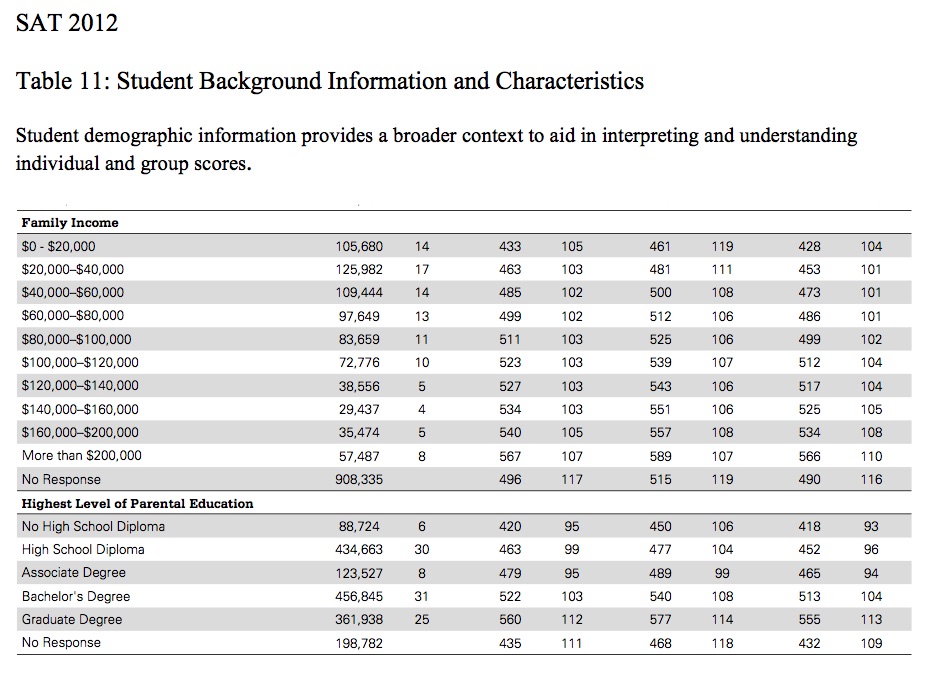
For example, we must ask, how will combining these forces eradicate the current and historical fact that the SAT reflects and perpetuates privilege, that the SAT is the antithesis of equity? (Hint: It will not and cannot):

Technology and edupreneurs as mechanisms for equity are post-truth mythologies, and edujournalism remains a willing accomplice in the sham propagated by the combined forces of the Khan Academy, the College Board/SAT, and Turnitin—none of which should be endorsed alone, much less heralded in combination as forces for equity.


Please read in full Ed-Tech’s Inequalities, Audrey Watters