From Sports Fanaticism to Plagiarism: This Week in What Is Wrong with Education

In the fall of 1984, I entered the field of education as a high school English teacher, assigned the exact room in which I had been a student and where my mentor, Lynn Harrill, had taught before moving on to a district-level job.

Oddly, 18 years later, I transitioned to higher education after completing the same doctoral program as Lynn; the odd part is that I again filled the position Lynn left to return to public education. My office then and now was designed by Lynn as the education department was moving into a new building just as he left and I was hired.

Over my 33 years as an educator, I have acquired expertise and experience in two fields, education and English, and in two levels of formal education, K-12 public and university/college.

I entered education because I recognized early that although I excelled in and benefitted greatly from education, formal education was deeply flawed. Most of the good in formal education survived in spite of the system—because of wonderful teachers who somehow rose above the system and because some of us had privileges that allowed us to excel, again, in spite of not because of.

From about the fall of my junior year of college on, however, I knew that formal schooling tended to reflect and perpetuate the very worst of our society; that although education could be revolutionary and transformational, it often was not.

My career as an educator also began almost exactly at the genesis of the accountability era that has been an epic failure because the political prognosis of educational failure was completely wrong and thus the cures have all been disastrous.

Formal education at all levels in the U.S. suffers from the corrosive influences of privilege and inequity, and since those with power benefit mightily from that privilege and inequity, they will never (and probably are not able to) address those genuine failures—what I would phrase as: We have failed formal education; formal education has not failed us.

The week leading up to Martin Luther King Jr. Day 2017 has been illustrative of the kinds of problems with education that the powers-that-be are apt to ignore and reject, and these examples have come in an unlikely pair: Clemson University head football coach Dabo Swinney and Monica Crowley, who is poised to serve in the Trump administration.

Swinney, as Dave Zirin unmasks, represents an “obscene amount of entitlement” because in the U.S. scholastic sports and coaches enjoy a perverse and warped degree of fanaticism; Zirin continues:

Here is someone working on a refurbished plantation who makes millions of dollars off the sweat and head injuries of overwhelmingly black, unpaid labor, and yet when asked about the Black Lives Matter movement in September, he said, ”Some of these people need to move to another country.”…

College football is a septic tank of entitlement. It’s a fungal culture created by the head coaches of Big Football. Dabo Swinney is the very embodiment of that culture: adrift, clueless, and filthy rich.

Quoted in Zirin’s piece, Clemson assistant professor Chenjerai Kumanyika has confronted his university, the football program at Clemson, and Swinney; as well, Kumanyika has a unique perspective he has shared on Facebook:

Clemson University as a public institution founded in and remaining mostly resistant to moving beyond its racist roots (see AD Carson and Clemson’s Tillman Hall and the Tragedy of Southern Tradition), the National Champion Clemson football team, and Swinney are all powerful examples of the veneers that exist to mask what the powers-that-be claim to be about and what they truly are about.

Let me stress here that Clemson University, Clemson football, and Swinney are not unique, not the worst, and certainly not outliers. The point here is that this is what education is in the U.S.

Hypocrisy is rampant not only in claims about student-athletes but also in the unholy alliance between athletics/coaches and Christianity.

From Zirin to Kumanyika to professor Louis Moore (and many others), scholastic sports has been confronted as a contemporary obscenity in which mostly white men accumulate great wealth and power on the backs of mostly black males—only a very few of which ever gain access to some of that wealth, too few are afforded the educations they are guaranteed, and way too many suffer great physical injury.

Coaches like Swinney and Nick Saban are multi-millionaires, and are allowed to hide behind sanctimonious rhetoric about grooming young men, offering educational opportunities to disadvantaged athletes, and instilling moral fiber through (as Swinney does) coercing players to be baptized and attend church services (again in the context of a public university).

I grew up in a small rural town in the South where the head football coach was God, and a truly despicable person. Decades before the Joe Paterno/Jerry Sandusky revelation, I witnessed and lived how a person can be lionized and simultaneously daily behaving in ways that were inexcusable around young people.

Scholastic sports at all levels, “septic tank[s] of entitlement,” are systemic problems that create and enable people such as Swinney—again as a notable representative of the systemic inequity, not as the only one, not as a person to be vilified solely for who he is and what he reaps.

The sacred coach dynamic ultimately exposes how those in power live by one set of rules even as they impose upon those beneath them a much more stringent code.

And in that context we have the new brazenness of Trumplandia that flaunts that fact in the faces of everyone throughout the U.S.—personified recently by Monica Crowley who continues to succeed and looks to be a part of a presidential administration even though she is a serial plagiarist.

The Melania Trump speech has already contributed to the new normal that ethical boundaries do not matter to Trump, the Republican party, or his supporters.

Trump embracing Crowley, defending her against “fake news,” and the high likelihood she will not suffer much for these transgressions are no longer surprising.

As with Rand Paul and Joe Biden, the real world’s response to plagiarism is more about privilege than about any real ethical code—one that academics at all levels claim.

More urgent and more telling from the Crowley story are that a major publisher and a major university failed to catch her plagiarism.

Andrew Kaczynski, Chris Massie, and Nathan McDermott’s Trump aide Monica Crowley plagiarized thousands of words in Ph.D. dissertation is particularly damning—but again, not really about Crowley or Trump or the complete lack of ethical grounding in the U.S.

This is a parallel and ugly narrative about privilege and inequity, parallel to the fanaticism about scholastic sports.

Higher education often wraps itself in claims of academic and ethical rigor, but Crowley’s dissertation and the ability of CNN to detail it when the awarding university did not are where we should be focusing now.

From student-athletes to amateurism to academic integrity (do not forget the University of North Carolina)—there is a colloquial way to explain how Swinney and Crowley reveal what is wrong with education: it is all bullshit.

Bullshit shoveled by the powers-that-be who are created by and profit from the privilege and inequity built into and perpetuated by institutions such as formal education.
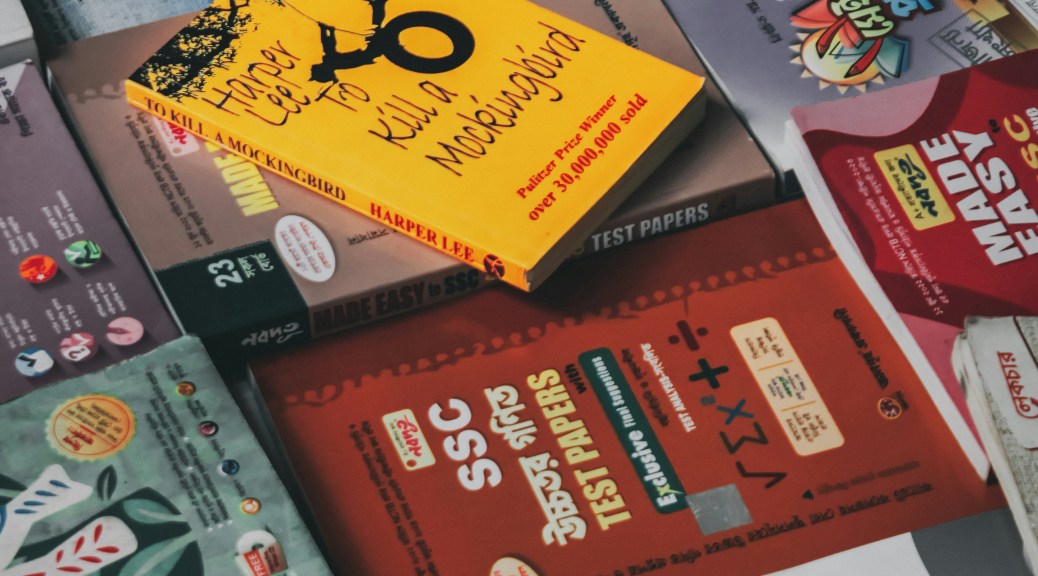
To Kill a Mockingbird, White Saviors, and the Paradox of Obama and Race

[Header Photo by Kabiur Rahman Riyad on Unsplash]

White progressives, academics, and book lovers were all atwitter on social media because in his farewell address, Barack Obama quoted from literature:

obama-af-tkam

Similar to my concern about Michelle Obama’s recent comments on education and teachers, my response to this excitement was tempered:

Obama quoting Finch/TKAM (white savior “race” novel) proves he remains anchored to appeals to white privilege, not dismantling it

— Paul Thomas (@plthomasEdD) January 11, 2017

During the praise tour for the Obamas, I have taken this stance on social media:

Praise for Michelle and Barack Obama has begun as Obama’s presidency comes to an end. That praise poses a few problems:

Praise is warranted, must be supported against the inherent racism that demands perfection from minorities and not from white males.

However Michelle and Barack have allowed, supported policies that contradict the often wonderful rhetoric, notably about education.

Michelle’s recent praise of teachers and the power of education is hard to let lie since Obama’s 8 years have been horrible for education.

The policies and rhetoric from the DOE/SOE have been horrible for black, brown, poor students since they have fed deficit ideology.

Let us be careful to honor but not idealize, not gloss over the failure of policy beneath the veneer of rhetoric.

Here, I want to deal directly with the paradox of race surrounding Obama’s presidency as that is reflected in Obama’s choice to quote Atticus Finch and not, for example, the essays of James Baldwin or the literature and public commentary of Toni Morrison.

This is offered specifically to white people, in the context of my awareness and rejecting of whitesplaining, and as an ally to all people seeking racial equity in a country that denies its racism daily.

Also this is informed by the wide spectrum of reactions to Obama and his role in confronting racism in the U.S. Black academics and intellectuals are not uniform in how to assess Obama, not uniform in either praise or criticism of Obama.

A powerful touchstone for Obama and race/racism in the U.S. has been Ta-Nehisi Coates’s My President Was Black.

Tressie McMillan Cottom and William A. Darity Jr. have challenged both Coates and Obama.

Cottom offers a wonderful and nuanced response, but concludes:

The essay is also infuriating. It attributes so much of Obama’s improbable presidency to his inimitable faith in white Americans’ higher self, something I can only describe as Obama’s painful rejection of black folks’ agency. The theory that Obama could be elected president because his white family had imbued him with an authentic love for and faith in white people that the typical black American does not have is intuitive but wrong. I suspect, given Obama’s own words over hours of conversations with Coates, that he believes he really does have some special insight into white people’s better angels. Nothing is more emblematic of the problem with this theory than Obama’s assessment of Donald Trump’s election chances to Coates: “He couldn’t win.” Obama’s faith in white Americans is not better insight into their soul where, presumably the mythical “racist bones” can be found. Obama’s faith, like the theory that it made Obama’s presidency possible, misunderstands race as something black folks can choose without white folks’ assent. White voters allowed Barack Obama because they allowed him to exist as a projection of themselves. It is seductive to believe Obama could shape that in some way, much less control and direct it. But, as Coates details in painful case after case of political obstructionism among Democrats and Republicans during the first black president’s terms, Obama never had the ability to shape white people’s attitudes. White people’s attitudes, the contradictions of their racial identities and class consciousness, made Obama. Obama did not make them.

But Darity is more pointed:

I had a queasy feeling about Barack Obama’s candidacy from the moment I heard his 2004 Democratic National Convention speech that lifted him into national prominence, a speech that Coates summarizes in the profile. Toward the end of the speech Obama observed that black families in urban centers realized “that government alone can’t teach our kids to learn … that children can’t achieve unless we raise their expectations and turn off the television sets and eradicate the slander that says a black youth with a book is acting white.” “The acting white” libel—a myth that will not die—argues that low school performance for black students is a product of a culturally based black opposition to high academic achievement.

Among these many diverse and brilliant voices—and the rhetorical legacy of Obama—I feel both nervous about expressing and compelled to address how Obama choosing Finch and To Kill a Mockingbird to quote offers yet another reason to believe Cottom’s “White people’s attitudes, the contradictions of their racial identities and class consciousness, made Obama. Obama did not make them.”

My short response is Obama has been successful and effective (admitting reasonable people may disagree about what “effective” means) because he is the type of person who knows to quote TKAM when trying to persuade whites about the need to overcome racism.

My longer response must address why white people are so enamored with Finch and TKAM: Like Obama, it is a middle-class and respectable way to confront something very ugly and likely not to be changed by that politeness.

With the controversial posthumous publishing of Harper Lee’s Go Set a Watchman, most people fell prey to the debate about Finch as a racist in that pre-quel and ignored the long critical examination of TKAM and Finch as a failed work on race and racism that is enduring because white privilege loves the white savior narrative, which is the foundational element of TKAM (see Katie Rose Guest Pryal’s Walking in Another’s Skin: Failure of Empathy in To Kill a Mockingbird).

“In many ways, Atticus’s subtle racism in Mockingbird is the story’s brilliance,” explains Catherine Nicols.

That “subtle racism,” notes Jennifer Polish, appeals to the Left:

“To Kill a Mockingbird” is widely valorized as a “progressive” book. And this is the larger problem with the book and with Atticus’s character and racism—Atticus was always positioned as a white savior.

And Osamudia R. James adds the need to re-consider TKAM (a call that may be equally relevant to how we praise and critique Obama):

Atticus Finch presented an enduring model to which many white liberals still cling. But besides being a fictional character, Atticus Finch is a myth. And a dangerous myth because he keeps good white liberals from reconsidering the fact that they live in white neighborhoods; from challenging administrators about the racial segregation of their children’s schools or white supremacy advanced in the curriculum; or from acknowledging how they benefit from a system that keeps people of color laboring in their homes but excluded from their social and professional spaces. Like Finch, it is sufficient that they simply “do their best to love everybody.”

James concludes then:

It would be easier to ignore “Watchman” and stick to white saviors and the triumph of individual values over structural oppression. But if we choose this account, racism is not overcome, black children still encounter anti-blackness at their schools, and whites – despite their individual goodness – remain complicit in it all.

Ironically, I guess, the debate around Lee’s Watchmen failed to prompt either an impactful reconsideration of TKAM or race/racism/white privilege (see here and here also).

It now seems unlikely that Obama’s presidency (at least a significant symbolic moment in race for the U.S.) or the rise of Trump and the concurrent normalization of white supremacy will prompt an impactful reconsideration of race/racism in the country either.

In fact, it seems that the circumstances have been reduced so that we must cling with glee in some way to Obama’s anemic confrontation of race tempered by the conventional expectations of respectability governed by white privilege.

Just as the white savior myth needs to be retired from literature and pop culture, the role of white privilege must be eradicated, allowing the equity of all spaces for everyone.

I am skeptical that appeasing white privilege is the course needed for that to occur.

I am nervous about incrementalism—the belief that Obama is a necessity along the path to racial equity.

I am fearful that Obama’s symbolic and rhetorical moment in history has spawned the worst sort of backlash, one we could not have imagined—or one that whites were unable to imagine while mired in the white savior myth, the lie of post-racial America, and the delusion that systemic racism is not fed by virtually every single white person.

Despite the good that Michelle and Barack Obama have fostered for this country, today we are still being asked to tip-toe around the sensibilities of racists—not to call racism “racism,” racists “racists.

This I am certain is not progress.

On Writing Workshop, Cognitive Overload, and Creative Writing

“The cause for my wrath is not new or single,” wrote Lou LaBrant in 1931, targeting how too often the project method engaged students in activities other than literacy.

This sharp critique by LaBrant has always resonated with me because even though I am now a teacher educator and have been a teacher for well over thirty years, I have always balked at pedagogy, instructional practices of any kind but especially those driven by technocratic zeal.

As one example, literature circles as an instructional structure represents the essential problems confronted by LaBrant about 86 years ago: the instructional practice itself requires time to teach students how to do the practice properly, and thus, “doing literature circles” becomes a goal unto itself and as a consequence subsumes and/or replaces the authentic literacy goals it claims to seek.

Further, many instructional practices border on being gimmicky because they are constructed in such a way to facilitate that anyone (regardless of expertise and experience) can implement them in the role of “teacher.”

For a while now, I have been contemplating the tension within teaching writing (composition) between those who teach writing as teachers and those who teach writing as writers.

I certainly default to the latter, and am drawn often to John Warner‘s public examinations of his teaching of writing (see below) because he also teaches writing as a writer.

Warner’s pieces about grading contracts and de-grading his first-year writing course have come when I am beginning my English/ELA methods seminar and wading into how my candidate must navigate ways to seek authentic practices in the context of the real world of teaching that often models for her teaching writing as a teacher, as a technocrat.

Here, then, I want to pull together a few concepts that I think are at their core related to LaBrant’s “wrath” and my rejecting of technocratic instruction—writing workshop, cognitive overload, and creative writing.

Warner in blog posts and on Twitter questions his commitment to writing workshop, and offered that he has abandoned the term “workshop” for “laboratory.”

In one response, I mused that this all depends on what we mean by “writing workshop.”

Teaching about and practicing writing workshop for me have always been grounded in Nancie Atwell’s use of Giacobbe—that writing workshop incorporates time, ownership, and response.

Of course, writing workshop also typically involved peer and teacher-student conferencing as well as a number of other strategies such as read alouds and examining model texts.

So, although I do not wish to put words in Warner’s mouth, I believe he and I share a skepticism about writing workshop when “doing workshop” becomes so time consuming and complex that the pursuit of workshop replaces students actually doing the very messy and unpredictable task of writing, composing.

This is again the technocratic trap of instructional strategies of all kinds.

For the teaching of writing, something Kurt Vonnegut claimed could not be done, this trap is more common than not, particularly because teachers are often under-prepared as teachers of writing and teachers who are not writers (most ELA/English teachers, I would suspect) dominate who is charged with teaching writing.

Technocrats have ruined concepts such as the writing process, conferencing, and workshop by scripting and work-sheeting them into practices anyone can implement.

The teaching of writing requires teacher expertise and a high level of teaching as a craft—but fastidious attention to doing workshop or intricate peer-conferencing or mandating students demonstrate the writing process or essay templates ultimately fails fostering young writers.

Concurrent with the problems inherent in technocratic pedagogy is failing to consider the importance of cognitive overload when students are developing complex behaviors such as writing or reading.

Each of us has a limited amount of cognition we can devote to behaviors. When something becomes “second nature,” we then free cognition space. For me in the past year or so, returning to mountain biking has exposed this dynamic since road cycling had become “natural” to me, but mountain biking demanded so much purposeful thinking, I was constantly bumbling and frustrated.

Few truisms mean more to me as a teacher of writing than paying attention to (thus, avoiding) cognitive overload when your main instructional goal is fostering students as writers.

For example, if the topic or writing form is too demanding for students, they will often devote less or nearly no energy to writing itself. Many of us as teachers have read garbled essays by students, blaming the students instead of recognizing that we have asked them to do more than they were capable of doing concurrently.

For this reason, I stress the need to use personal narrative (because the content of the writing is an area of student expertise) as one foundational way to help students focus on craft and authentic writing forms.

K-12 students and first-year undergraduates, I think, need some careful consideration of cognitive overload as they acquire writing craft, and for first-year undergraduates, as they become more adept at the nuances of disciplinary writing in academia.

Avoiding technocratic pedagogy and cognitive overload, then, share the need for the teacher to keep primary the goals of learning; if we are fostering writers, we need to be sure time and effort are mostly spent on writing—not doing a pet instructional practice, not acquiring some disciplinary knowledge.

Finally, as I was discussing avoiding cognitive overload with my ELA/English methods student, I had her reconsider her plan to have students write short stories as the composition element in her short story unit this coming spring.

Just as I balk at technocratic pedagogy, I struggle with asking K-12 students to write fiction and poetry—primarily because these are very demanding forms of writing that encroach on my concern about cognitive overload; student must have both high levels of writing craft and the ability to fabricate narratives in order, for example, to write short stories.

As a high school English teacher, I found that students often reached for derivatives of derivative fiction in order to have something for characters and plot in their original short stories; for example, a student would write about an ER doctor as a main character (he or she always committed suicide at the end), drawing from almost entirely what the student knew about ERs from the TV show ER.

I made my case about cognitive overload, and then, she and I brainstormed what to have students write instead of their own short stories during her short story unit.

First, I asked her to reconsider her definition of “creative writing” being limited to fiction and poetry. I prefer LaBrant’s definition:

For in truth every new sentence is a creation, a very intricate and remarkable product. By the term “creative writing” we are, however, emphasizing the degree to which an individual has contributed his personal feeling or thinking to the sentence or paragraph. This emphasis has been necessary because too frequently the school has set up a series of directions, to this extent limiting what we may think of as the creative contribution: the teacher names the topic, determines the length of the paper, and even sometimes assigns the form. For the purposes of this paper I shall, perhaps arbitrarily, use the term “creative writing” to include only that written composition for which the writer has determined his own subject, the form in which he presents it, and the length of the product. (p. 293)

This pulls us back to honoring the broad concepts of writing workshop above, focusing here on “creative” being linked to student choice (ownership) over what s/he writes about and what form that writing takes.

Next, we brainstormed the possibility of asking students to write personal narratives while also emphasizing that their original personal narratives would have in common with the short stories they are studying—craft elements.

Students could focus on organizational techniques in narratives, for example, while reading fiction, and then, incorporate that craft in their own personal narratives.

I have examined here ways to rethink writing workshop, cognitive overload, and creative writing so that we forefront our writing goals when teaching writing and guard against technocratic and reductive instructional strategies that can mask our own expertise and experience as writers.

From LaBrant to Warner, we can unpack that teachers of writing are often working from places of fear—fear about losing control, fear of not being adequately prepared to teach writing, fear students will not write if given choice and freedom.

However, “I have heard many teachers argue that, given a free hand, pupils will write very little,” LaBrant explained. “I can only say that has not been my observation nor my teaching experience…” (p. 299).

And then Warner: “With the de-graded contract, students are writing more, and more importantly feel free to take risks in their writing.”

Our antidote to these fears is trust, and then the willingness to honor for ourselves and our students the value in risk.

Teaching writing like writing itself is fraught with fits and starts as well as failure. Trying to control those realities results in either masking them or destroying the greater goal of fostering writers.


For Further Reading

Grading Contract Journey Part I: First-Year Writing | Just Visiting, John Warner

Grading Contract Journey Part II: Fiction Writing | Just Visiting, John Warner

Thinking Context: No More Writing, John Warner

LaBrant, L. (1931, March). Masquerading. The English Journal, 20(3), 244-246.

LaBrant, L. (1936, April). The psychological basis for creative writingThe English Journal, 25(4), 292-301.

“How can anybody know/How they got to be this way?”

How can anybody know
How they got to be this way?

“Daughters of the Soho Riots,” The National

It’s 7 January 2017, Zore Neale Hurston‘s birth day; Hurston passed away 28 January 1960, a couple days short of one year before my birth 26 January 1961.

So my 56th birth day looms fewer than 3 weeks away.

Today, the world looks unusual for us in South Carolina:

snow-2
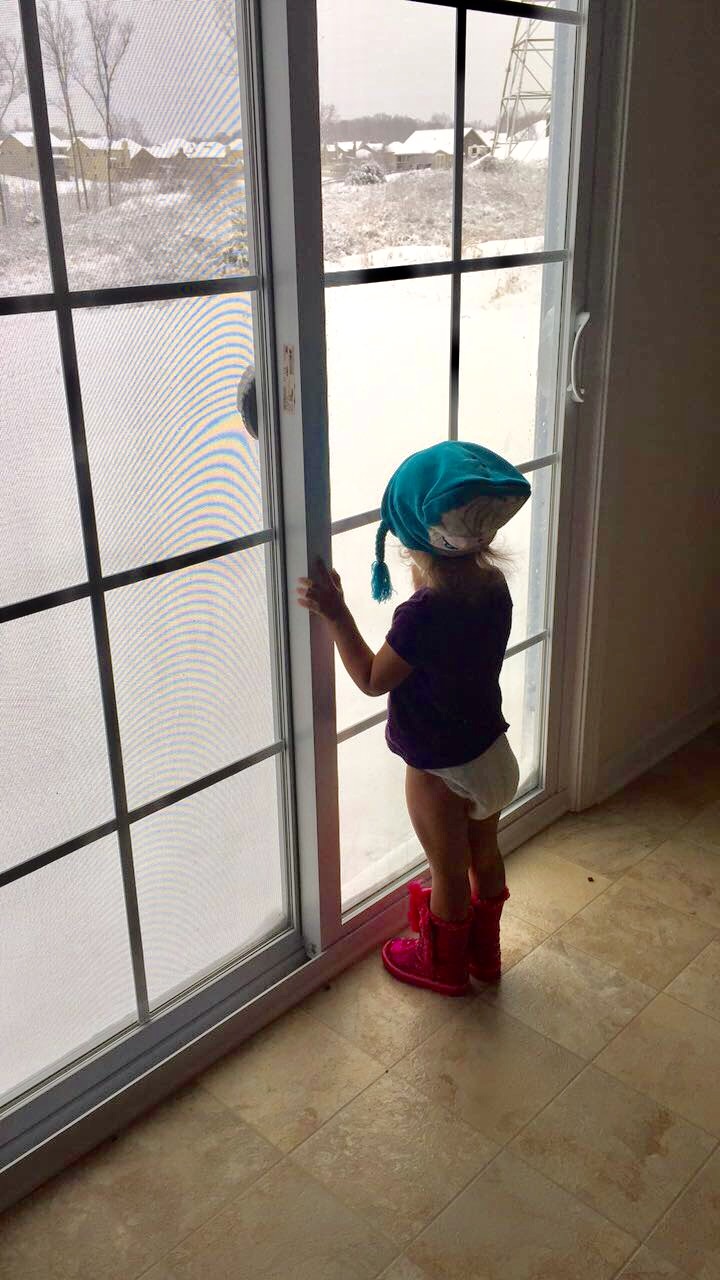
Skylar contemplates the necessity of pants for her snow adventure at the new home.

snow-1
The view from my back door for Flurrypocalypse 2017. Throughout the area, grocery stores have no bread or milk.

New years are arbitrary measures of time, and we humans seek any ways possible to understand and control the human condition. The calendar and holidays are some ways we have manufactured to name, organize, and maintain our grip.

As I have detailed lately, today also marks two weeks since I and several other cyclists were struck by a motorist. Writing this now, I notice in just a few minutes, the time will be about exactly when that happened on the morning of Christmas Eve 2016.

I have also confessed that my life has changed. Over the past week, I must admit that it has changed even more than I thought.

Without cycling, I have way too much time, but I also have found it difficult to commit to things the same way I have before. Pain is a problem—distracting and the most potent fertilizer possible for my chronic anxiety and occasional depression.

Yesterday, I finally had a visit with the orthopedist who viewed my x-rays at the emergency room, and almost immediately, I felt better just knowing more from someone with the sort of expertise I do not have.

My medication ran out a few days before this appointment, and along with the increased pain, my fretting was nearly debilitating.

It is embarrassing, but when the anxiety increases, my life is significantly reduced. I worry, and worrying is a very deep well I have trouble climbing out, a very deep well from which I fear I can never climb out.

I have confronted that my life as a road cyclist is likely over; a decision made for me, and a consequence of the accident about which I may be the most viscerally angry.

Anxiety for me is also fed by not knowing—the lowest pit of hell. And I am now swamped by not knowing how the insurance will work out (except to know this is going to be problematic), and not really knowing how soon I will be physically 100% again (I mean as 100% as a 56-year-old man can be).

Just normal aging has always terrified me in terms of the specter of knowing that human behaviors of many kinds will end, and likely without warning. Many things I love to do will no longer be possible just because that is one fact of the human condition.

I have a plan—a way to be hopeful: climbing on the dreaded cycling trainer by week 3 or 4 of the recovery, and as my orthopedist offered without me having to ask, being back on the MTB in 6 weeks or less.

Being mostly immobile and mostly inside has not helped any of this. A huge part of my cycling addiction is connected to constant and extended movement while being outside in the sunshine.

Most bicycle rides are 1.5 hours to 3-4 hours—even once a year, 11-12 hours of riding over 220 miles.

In 2016, I did 246 rides in 365 days, basically riding 2 of every 3 days. There simply is no physical activity possible to replace that.

For two weeks now, I have ridden only the couch.

radical eyes for equity: “Reality bites”

This has been a long build up to explaining why I renamed and chose a different template for this blog.

Blogging, I have discovered, is a powerful way for a writer to gain some of that understanding and control at the center of the human urge.

I started blogging at established but open sites many years ago, and then committed to this WordPress blog four years ago—completely unsure if or why anyone would read my work.

At the beginning, I already had come to terms with rejecting the liberal (versus conservative) tag too strongly anchored in partisan politics, and fully embraced Howard Zinn’s reclaiming the term “radical.” [1]

Naming my blog “the becoming radical” sought to acknowledge being a writer and being a critical educator were always a journey, not a destination, not static—again speaking to Zinn’s “moving train” metaphor.

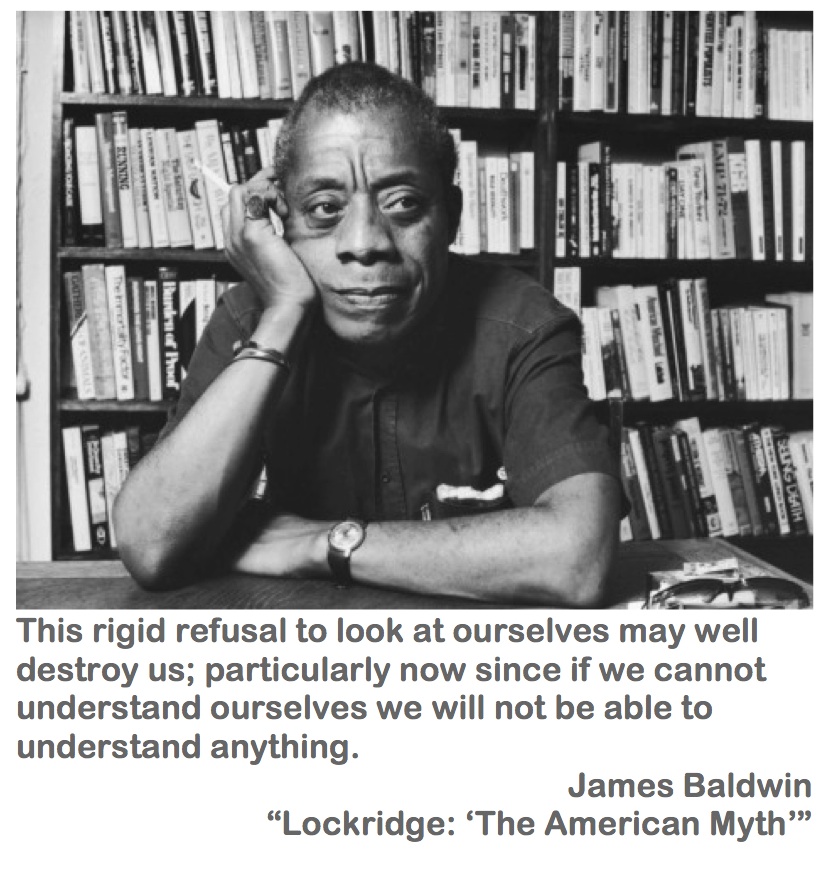
Especially after working on a volume about James Baldwin in 2014, my focus, my refrain has shifted strongly toward Baldwin:

rigid refusal

As I noted in the prolonged opening, naming and organizing are efforts to understand and control; therefore, as I have changed—and as some of that has been against my will, not of my design—this new year and the horror of Trump before us (just when you think things cannot be worse) have converged with my personal development and my evolution as a writer/thinker/educator.

First, the new template.

I have always wanted a blog that doesn’t look like the stereotype of a blog as something not serious or possibly scholarly (since many people, especially in the academy, don’t value blogging), and I have distinct color and font proclivities.

Immobile and in pain (a dear friend quipped, “You have too much time on your hands”), I searched the free WordPress templates and found what you see now. The green, lower-case lettering of the header, font choices, and ability to control a sidebar all clicked with me. This seems relatively clean and accessible.

I hope my blog readers agree.

But all of that is cosmetic. The main shift has been the new title—radical eyes for equity—which incorporates word play (“radical eyes” = “radicalize”), an allusion to Baldwin’s “rigid refusal to look at ourselves,” and a more clear statement about my grounding in the pursuit of equity—race, class, gender, and sexuality equity.

I cannot explain how I got here, or even fully who I am or what “here” is, but I am here, and this is now, and this is all I can do.

I sit here ending this blog and the sun is shining while it continues to snow in South Carolina, where the temperature is still below freezing.

“What the hell” seems to have become my standard response to this world, but there is work to be done, living to be lived.

I hope you reading and even more will be willing, even eager, to join me here as I try my best to understand and control this thing called the human condition with radical eyes for equity.

And if you join this adventure, I think this from Haruki Murakami’s Sputnik Sweetheart deserves our attention, and it weighs particularly heavy on me now:

hm-ss-reality


[1] From You Can’t Be Neutral on a Moving Train, Howard Zinn (1994):

When I became a teacher I could not possibly keep out of the classroom my own experiences. . . .Does not the very fact of that concealment teach something terrible—that you can separate the study of literature, history, philosophy, politics, the arts, from your own life, your deepest convictions about right and wrong?. . .In my teaching I never concealed my political views. . . .I made clear my abhorrence of any kind of bullying, whether by powerful nations over weaker ones, governments over their citizens, employers over employees, or by anyone, on the Right or the Left, who thinks they have a monopoly on the truth. . . .From that moment on, I was no longer a liberal, a believer in the self-correcting character of American democracy. I was a radical, believing that something fundamental was wrong in this country—not just the existence of poverty amidst great wealth, not just the horrible treatment of black people, but something rotten at the root. The situation required not just a new president or new laws, but an uprooting of the old order, the introduction of a new kind of society—cooperative, peaceful, egalitarian. (pp. 7, 173)


You Don’t Know Nothing: U.S. Has Always Shunned the Expert

Why did you listen to that man, that man’s a balloon

“Friend of Mine,” The National

My redneck past includes a childhood steeped, like the family formula for making sweet tea, in a demand that children respect authority—authority-for-authority’s sake, the status of authority despite the credibility of the person in that status.

And is typical in the South, these lessons were punctuated with refrains such as the one my mother launched at us often: “He’s a know-it-all that don’t know nothing.”

But the best laid plans of parents often go awry, and they certainly did for me because this aspect of my redneck past backfired big time, resulting in a life-long skepticism of authority as well as my own pursuit of expertise trumping status.

Among my most irritating qualities, I suspect, is I work very hard not to hold forth until I am well informed, but when I do hold forth, I am passionate and that passion often comes off as arrogance.

I have little patience with debating when the other side lacks credibility, and I also balk at the silliest of all—”We will agree to disagree, then.”

Well, no, since your position has no credibility.

So I am particularly fascinated with what I consider a parallel interest currently with fake news and post-truth, what Tom Nichols calls The Death of Expertise.

Nichols and his argument, coming from his conservative perspective, represent, I think, why expertise currently and historically has been marginalized in the U.S.

Pop culture, in fact, has documented well how the so-called average American finds expertise and being educated mockable—think Fonzie on Happy Days and Ross on Friends.

Uneducated Fonzie is always smarter than the educated, and Ross is a laughing stock among his friends, notably often one-upped by the very anti-intellectual Phoebe and Joey (I discuss the latter more fully in Belief Culture).

Nichols and I share a concern about how little expertise matters in political and public discourse as well as policy, but while he and I share some elements of being experts, we are divided by our essential ideologies.

This presents a paradox: The U.S. rejects a cartoonish and monolithic “expert class,” but most fields/disciplines have a fairly wide spectrum of stances within them (in other words, the “expert class” rejected by the U.S. simply doesn’t exist).

But even that is oversimplified. Let me return to my redneck past.

In the South specifically, rejecting expertise is often about traditional views of respecting authority, best captured, I think, in how Huck Finn’s father shames Huck for his book learning. Huck even confesses: “I didn’t want to go to school much, before, but I reckoned I’d go now to spite papa.”

One of my former colleagues recounted often that his own father identified sending my friend to college was the worst mistake his father ever made.

Perversely, many see being informed, knowledgeable as rudeness, disrespectful.

A better recent confrontation of expertise than Nichols’s, I think, is Freddie deBoer’s What Is Aleppo?, focusing on Gary Johnson:

I would like to nominate Gary Johnson’s infamous “What is Aleppo?” gaffe as the moment which, for me, most typifies 2016, at least as far as our intellectual culture goes.

Predictably, and deservedly, Johnson was raked over the coals for this. A major presidential candidate — one who had far more electoral impact than Jill Stein, for instance — not knowing about this important foreign policy issue was disturbing. But it’s essential to recognize what he actually got in trouble for. Johnson’s great failure, what actually fed his public humiliation, was not a lack of knowledge. It was a lack of knowingness. 

deBoer argues: “Ours is a culture of cleverness, not of knowledge, one that is far more comfortable in assessing wit than in assessing evidence.”

And here we may have a more accurate window into why someone who is not really an expert, such as Donald Trump, but is smug and cavalier about being smart, is more compelling in the U.S. than actual experts. Trump passes deBoer’s test:

That kind of thing: obviously smart but not, like, all tryhard about it. You are expected to work out relentlessly to train your body and to show everyone that effort, but your intelligence must be effortless, even accidental.

As I have argued, this is a very high-school popularity kind of dynamic in which bravado trumps credibility; again, think Fonzie’s allure in pop culture: “See, the drop-out is smarter than all those teachers!”

My own career as an educator has highlighted these exact patterns.

As a teacher of English, I am not credible in the field of English because I am just a teacher with an undergraduate, Master’s, and Doctorate in education (not English). However, to politicians and the public, I am routinely rejected in debates about education because my experience and expertise lie in education.

As a prelude to the rise of Trump, consider Arne Duncan, who has no degree in education and who has only experience in eduction as a political appointee.

Who do you think has more public and political influence on education—Duncan because of his statuses of authority or me with 33 years in education, an advanced degree, and a substantial publication history?

That question is nearly laughable in the U.S.

Let me end with a couple examples that are useful for a more nuanced consideration of the role of experts, grounded, I think, in deBoer’s discussion.

First, consider Joseph R. Teller’s Are We Teaching Composition All Wrong? and Doug Hesse’s We Know What Works in Teaching Composition, both published in The Chronicle of Higher Education.

I immediately blogged a rebuttal to Teller, and discovered through responses to my concerns that Teller has greater expertise in literature than composition (which I suspected).

Hesse’s rebuttal is grounded in his expertise in composition, his status of authority (president of NCTE), and his appeal to disciplinary authority (citing ample research that accurately reflects the field of composition).

None the less, Teller’s piece speaks to both an uniformed public and a click-bait culture, and it is likely, as John Warner mused, that Hesse’s better piece will not garner as many views or as much commentary as Teller’s.

This debate between experts serves to highlight, again, the failure of media in terms of honoring expertise, but it also demonstrates that expertise is often narrow and that disciplines are more often contentious than monolithic (although there are some things that are essentially settled and no longer debatable).

Bluntly, we must admit that simplistic resonates more than complex—and expertise is not only narrow but also complex.

Finally, to highlight that expertise is as much about wrestling with knowledge as having knowledge, I offer a debate in a guest co-edited volume of English Journal, centered on The Adventures of Huckleberry Finn:

At one level, the experts included in this debate, in my informed opinion, are far more likely to have credible positions about the topic than people without degrees and experience in literature, the canon, race/racism, and teaching.

Yet, among these articles, you will find pointed disagreement—and as someone with expertise in these areas, I find myself siding with some, rejecting others, even as I respect the basic expertise among them all.

So in 2016, we are faced with a historical and immediate problem, one that could be solved if we reconsidered our cultural antagonism toward expertise and embraced a greater appreciation for informed stances, the realm of the expert.

As a critical pedagogue, I appease my skepticism about authority and quest for expertise by honoring being authoritative over authoritarian (see Paulo Freire).

It is ours to resist extremes, neither ignoring experts nor abdicating all authority to experts.

As cumbersome as it may seem, democracy that honors all voices works well only when we start with the most informed voices and then allow “all voices” to occur in an educated space.

Currently, we are prisoners to bravado drowning out expertise, and in that echo chamber, freedom cannot survive.

Don’t Count on Grading, Ranking Educational Quality

Having been a long-time advocate for and practitioner of de-testing and de-grading the classroom, I also reject the relentless obsession of mainstream media to grade and rank educational quality among states as well as internationally (see Bracey and Kohn).

As Kohn recognizes: “Beliefs that are debatable or even patently false may be repeated so often that at some point they come to be accepted as fact.”

And thus, with the monotonous regularity and mechanical lack of imagination of a dripping faucet, Education Week once again trumpets Quality Counts.

Like a college course no one wants to register for, Quality Counts 2017 gives the nation a C while no state makes an A or an F.

The appeal of all this much ado about nothing includes:

  • The U.S. has a perverse obsession with quantification that is contradicted by a people who are equally resistant to science and expertise.
  • People love the overly simplistic use of charts and interactive maps.
  • These grades and rankings always confirm the enduring narrative that public schools are failing.

However, the real problem is not how states and the nation rank, but that we persist at the grading and ranking as if that process reveals something of importance (it doesn’t) or as if that process somehow is curative (it isn’t).

How, then, does grading and ranking educational quality fail us?

  • As with regularly changing standards and high-stakes testing as part of accountability, grading and ranking educational quality is part of the larger failure of imagination, a belief in doing the same thing over and over while expecting different results. Media have been grading and ranking for decades, and the narrative of failing schools has continued; in other words, this process has no positive impact on education reform—but it feeds a media and social need to bash public schooling.
  • Anything can be quantified and ranked, and the statistics needed to quantify and rank are necessarily what drive both; thus, A-F grades and then extending the measurements so that ranking is possible become goals of the process that often distort the message of that process. For a simple analogy, in the 400-meter dash at the Olympics, the event creates finishers ranked 1-10; however, all of them are world-class and the distinction among them is minuscule, for all practical purposes irrelevant except for the need to declare winners and losers.
  • Grades and rankings of all kinds in education focus almost entirely on observable and measurable outcomes, glossing over or ignoring powerful influences on measurable student outcomes. Decades of research show that out-of-school factors account for 60-80+% of those measurable outcomes; and thus, outcome-based data of educational quality are more likely a reflection of social conditions than school-based quality. The inherent problem with using test scores, for example, for ranking and determining educational quality has been disputed by the College Board for years (see page 13).
  • Grades and rankings feed into a competition model as well as deficit ideology. These are both harmful in education because collaboration is more effective than competition and because our focus is on flaws (deficits) that we associate primarily with schools, teachers, and students, perpetuating a “blame the victim” mentality that ignores (as noted above) factors beyond the control of schools, teachers, and students (such as poverty, racism, sexism, etc.,—all of which significantly impact measurable learning outcomes).
  • And finally, grading and ranking fail because of a common misunderstanding about statistical facts as they contradict political and public expectations: large populations of humans (90% of students attend public schools) will always have a range of measurable outcomes (height, 40-yard dash times, test scores)—although also misunderstood, think the bell-shaped curve—which will appear to be a “failure” when posed against the political/public call for 100% proficiency by students. In other words, the U.S. demands that everyone be above average and then is disappointed when statistics show a range of human outcomes.

Since the mid-1800s, fueled by the Catholic church’s market fears, there has existed a media, political, and public obsession with bashing public education.

In this era of fake news and post-truth debate, as I have noted over and over, mainstream media are as culpable—if not exactly the same—as fake news and click-bait because practices such as Quality Counts by EdWeek are lazy and misleading, enduring, as Kohn noted, mostly because it is something media have always done and because these rankings feed into confirmation bias.

If quality counts, beating the grades-and-rankings drums is a sure way to insure that it will never be obtained.

If truth matters, a first step in that direction would include resisting the failed practice of grading and ranking educational quality.

Anything

I am exceedingly over-educated, well-read to an absurd extreme.

I am also too self-aware, introspective to the point of near paralysis.

And my fortune of privilege and leisure leaves me too much time to think about everything.

Broken, I lie here writing after having been handed an entirely new life not of my choosing, an accident in the first week of my holiday break probably redirecting a significant part of my life as a recreational cyclist.

That first week of recovery was consumed by pain and immobility, but I was not able to relax and read, although I thought that would be one positive to the situation.

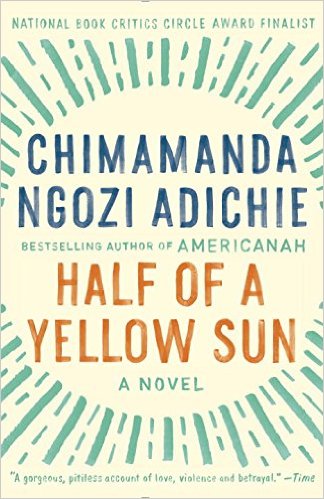
This week, however, as most everyone has now returned to work, I find myself entirely alone. I resumed reading Chimamanda Ngozi Adichie’s Half a Yellow Sun, a 2006 novel focusing on Nigeria during the 1960s.

51f6pkicndl-_sx322_bo1204203200_
Chimamanda Ngozi Adichie’s Half a Yellow Sun

Reading this essentially political novel in 2016-2017 has been chillingly prescient about the current U.S., and while I balk at the use of the term “universal” since it tends to be a veneer for normalizing privilege, Adichie’s narrative often exposes the enduring.

In Part Two: The Late Sixties, the section opens as the novel does with Ugwu, an Opi village boy who is a servant for a Nsukka University professor, Odenigbo.

Several years have passed in the story, and Ugwu is temporarily back in his village:

His visit home suddenly seemed much longer than a week, perhaps because of the endless grassy churning in his stomach from eating only fruits and nuts. His mother’s food was unpalatable. The vegetables were overcooked, the cornmeal was too lumpy, the soup was too watery, and the yam slices coarse from being boiled without a dollop of butter. He could not wait to get back to Nsukka and finally eat a real meal. (p. 151)

This is a powerful scene in the context of the first paragraphs of the novel as Ugwa walks to Odenigbo’s house to become his houseboy. Ugwa’s aunt tells the boy, “‘You will eat meat every day'”:

Ugwu did not believe that anybody, not even this master he was going to live with, ate meat every day. He did not disagree with his aunty, though, because he was too choked with expectation, too busy imagining his new life away from the village. (p. 3)

So as I was reading Adichie’s dramatization of politics, privilege, and what is and becomes normal for anyone, I was reminded of Albert Camus’s The Stranger and Meursault’s thoughts from prison:

Afterwards my only thoughts were those of a prisoner….At the time, I often thought that if I had had to live in the trunk of a dead tree, with nothing to do but look up at the sky flowering overhead, little by little I would have gotten used to it. I would have waited for birds to fly by or clouds to mingle, just as here I waited to see my lawyer’s ties, and just as, in another world, I used to wait patiently until Saturday to hold Marie’s body in my arms. Now, as I think back on it, I wasn’t in a hollow tree trunk. There were others worse off than me. Anyway, it was one of Maman’s ideas, and she often repeated it, that after a while you could get used to anything. (p. 77)

Much of my undergraduate time spent as a student-by-choice focused on existential philosophy and literature, leading eventually to my discovering and embracing the educational writing of Maxine Greene.

So as I recover in the weeks leading to my 56th birthday—a new year, a new age, and this new existence forced onto me—I am deeply moved by “you could get used to anything.”

Anything?

What an ugly thing to be human and having the capacity to get used to anything.

But there was a time in the U.S. when slavery was perfectly normal. There was a time in the world when the Holocaust was perfectly normal.

Because normal, like history, is the province of those with power, a way to render some Others “deliberately silenced,…preferably unheard.”

And today the U.S. is eagerly normalizing a person and ideologies that would have seemed illegitimate just months ago.

As happened to Ugwu, will we in a few short years have our tastes so dramatically transformed that this bitter dish being served to us now will become what sates our hunger?

Franz Kafka’s A Hunger Artist is a brief parable about the “art of fasting”—in which the artist becomes so transformed that he fasts himself to death, explaining:

“Because I have to fast. I can’t do anything else,” said the hunger artist. “Just look at you,” said the supervisor, “why can’t you do anything else?” “Because,” said the hunger artist, lifting his head a little and, with his lips pursed as if for a kiss, speaking right into the supervisor’s ear so that he wouldn’t miss anything, “because I couldn’t find a food that tasted good to me. If had found that, believe me, I would not have made a spectacle of myself and would have eaten to my heart’s content, like you and everyone else.” Those were his last words, but in his failing eyes there was still the firm, if no longer proud, conviction that he was continuing to fast.

A gift of Kafka comes in the final paragraph when he offers the briefest of parables within a parable:

“All right, tidy this up now,” said the supervisor. And they buried the hunger artist along with the straw. But in his cage they put a young panther. Even for a person with the dullest mind it was clearly refreshing to see this wild animal prowling around in this cage, which had been dreary for such a long time. It lacked nothing. Without having to think much about it, the guards brought the animal food whose taste it enjoyed. It never seemed once to miss its freedom. This noble body, equipped with everything necessary, almost to the point of bursting, even appeared to carry freedom around with it. That seemed to be located somewhere or other in its teeth, and its joy in living came with such strong passion from its throat that it was not easy for spectators to keep watching. But they controlled themselves, kept pressing around the cage, and had no desire at all to move on.

Like Ugwu,Meursault, the hunger artist—the panther “get[s] used to anything.”

Kurt Vonnegut’s Introduction to Mother Night, a work confronting a Nazi reality now again before humanity, begins:

This is the only story of mine whose moral I know. I don’t think it’s a marvelous moral; I simply happen to know what it is: We are what we pretend to be, so we must be careful about what we pretend to be. (p. v)

I am exceedingly over-educated, well-read to an absurd extreme.

I am also too self-aware, introspective to the point of near paralysis.

And my fortune of privilege and leisure leaves me too much time to think about everything.

I am afraid of who I have become, who I pretend to be, and if I too can “get used to anything.”

And I am near to terrified of the same for the world around me.

When Fake Is Real and Real Is Fake: More on Crossing the Bigfoot Line

Soon after the accident when a car struck a pack of cyclists in which I was riding, the ride leader and another cyclist, both of whom were on the front of the pack and heard the crash unfold behind them, sent out emails to seek how we could reconstruct the events as soon as possible for insurance and any litigation.

What is disturbing about recreating the accident is that many of us share a distinct and common memory of noise. As both a victim and witness of the accident, I can offer two perspectives, but I share with everyone the anger and fear.

Concurrent with seeking reality among victims and witnesses, I saw on the news over the next few days several mainstream media stories about the accident, many of which were factually inaccurate, and several of which that spoke authoritatively about the victims—although not a single news outlet has ever spoken with me about the accident or my condition.

With the current focus on fake news and post-truth public discourse, and the renewed interest in postmodernism, this real-life experience for me has been and continues to be a cruel and painful example of that debate—notably how it reflects a basic tenet of postmodernism about the relative and power-based nature of reality, truth, and facts.

Human reality and facts are far more tenuous than we tend to admit in our day-to-day lives. 2+ 2 = 4 seems obvious and above any politics, but this formula is, in fact, relative to a base-10 math system, and that system has to be instilled and preserved by some power structure.

Yet, as some of the garbled efforts to co-opt postmodernism has shown, while truth and facts are bound and controlled by power, while truth and facts are often contestable, we are certainly not served well as a people to make wild claims that no facts can ever exist.

Like my accident and the all-too-slow recovery, the U.S. coming to terms with fake news and the post-truth debate is painful, and not easy.

And apparently, we continue to move in the wrong direction.

Crossing the Bigfoot Line

Consider these comments from journalists, one Tweet from 2014 and then one current news article directly about Trump:

Asked by host Chuck Todd whether he’d be willing to call out a falsehood as a “lie” like some other news outlets have done, [Wall Street Journal editor Gerard] Baker demurred, saying it was up to the newspaper to just present the set of facts and let the reader determine how to classify a statement.

“I’d be careful about using the word, ‘lie.’ ‘Lie’ implies much more than just saying something that’s false. It implies a deliberate intent to mislead,” Baker said, noting that when Trump claimed “thousands” of Muslims were celebrating on rooftops in New Jersey on 9/11, the Journal investigated and reported that they found no evidence of a claim.

Keeping these traditional and current standards of mainstream journalism in mind, now consider how the mainstream media are addressing fake news directly:

Established news organizations usually own their domains and they have a standard look that you are probably familiar with. Sites with such endings like .com.co should make you raise your eyebrows and tip you off that you need to dig around more to see if they can be trusted. This is true even when the site looks professional and has semi-recognizable logos. For example, abcnews.com is a legitimate news source, but abcnews.com.co is not, despite its similar appearance.

To be blunt, helping consumers of media distinguish between the reality of fake news (abcnews.com.co) and “a legitimate news source” (abcnews.com) fails miserably because in essence these two present us with a very dangerous paradox: fake news is real and real news is fake (with the WSJ’s odd twist on the false history of George Washington: “We cannot call a lie ‘a lie!'”).

Two ways this manifests itself are (1) mainstream media is rushing to cover fake news, but only to distinguish it from “legitimate” news, and (2) mainstream media’s refusal to take a stand on credible sources, warranted claims, and naming lies as “lies.”

In popular media, a phenomenon exists that speaks to what we are witnessing in mainstream journalism:

Jumping the Shark is the moment when an established long-running series changes in a significant manner in an attempt to stay fresh. Ironically, that moment makes the viewers realize that the show’s finally run out of ideas. It’s reached its peak, it’ll never be the same again, and from now on it’s all downhill.

However, in mainstream journalism we have crossing the Bigfoot line.

In other words, and as I have been documenting for years in edujournalism, mainstream journalism has adopted and embraced a pose that allows them to report on a real event without taking any stance on the finer elements of the event being reported.

As I noted before, just a few decades ago, tabloid journalism was distinct from mainstream journalism because tabloids used the “just reporting what we are being told” defense.

If a person came to a tabloid with images or video and a wild story about Bigfoot ransacking their camp site, the tabloid eagerly and with outlandish headlines reported the fact that this person told them the story—while taking the pose I shared above: “I’m not sure it’s my place to say whether the [story] is credible.”

There was a time when mainstream media balked at just reporting as fact that source A made claim X if the journalists found claim X to be lacking in credibility.

Political scandal from John F. Kennedy until Richard Nixon, in fact, was allowed to remain mostly hidden because the bar for credibility was so high that sources were routinely ignored, marginalized, and even victimized.

And while online click-bait has supplanted the outlandish grocery store tabloid in our increasingly virtual avenues for news and information, what is more troubling is that mainstream journalism has callously crossed the Bigfoot line, now brazenly using click-bait headline techniques and remaining entrenched in their “rigid refusal” to verify the claims of those about whom they are reporting.

While there exists a great deal of fretting about the future of the free press under Trump, we have ample evidence that mainstream media and journalists had cross the Bigfoot line long ago, and not at the hands of rising fascism, but willingly as a natural development of capitalism and consumerism.

The public in the U.S. and many voters hold provably false beliefs that guide how they live their lives and how they vote; this was pre-Trump, and this was in the context of how the media carelessly feed the masses.

Now that the Bigfoot line has been crossed by mainstream media, we have a troubling challenge before us.

Yes, the public needs much greater skills in critical media literacy, but those skills will mean little if we are left without a critical free press as an option.

As it stands, on the other side of the Bigfoot line is the new mantra of mainstream journalism: “We are not fake news.”

This is a mighty low and ultimately irrelevant bar.


See Also

How to Become a Famous Media Scholar: The Case of Marshall McLuhanJefferson Pooley

A Peek Inside the Strange World of Fake Academia, Kevin Carey

New York Times, Wall Street Journal editors take on Trump and the media, Hadas Gold

“Fake News” And How The Washington Post Rewrote Its Story On Russian Hacking Of The Power Grid, Kalev Leetaru