The Dancing Comma, and Other Punctuation High Jinx

Social media are filled with bad political takes and far too much sexism and racism passed off as “It was a joke!”

Often in the same post.

But none of that can stand in the way of some good ol’ grammar, mechanics, and usage snark. Let’s take for example Benjamin Dreyer‘s interactions over Rob Lowe making a multi-level fool of himself on Twitter:

This Twitter discussion fits well into Dreyer’s recent release of Dreyer’s English and the perennial grammar wars (a bit of a misnomer since these wars between prescriptivists and descriptivists span across grammar, mechanics, and usage).
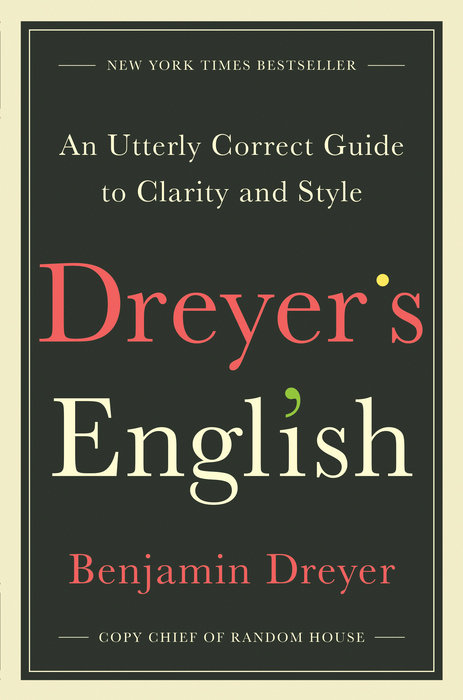
As Dreyer explains, punctuation placement in relationship to quote marks has different conventions in American and British usage:

  • I recommend that students avoid making adverbs into adverbs, such as using “secondly” instead of “second.” (American convention of period inside the closing quote mark.)
  • I recommend that students avoid making adverbs into adverbs, such as using “secondly” instead of “second”. (British convention of period outside the closing quote mark.)

These differences, I think, are excellent entry points into helping students copyedit their own work better, but also into fostering conventional awareness of language use (instead of a rules-based approach).
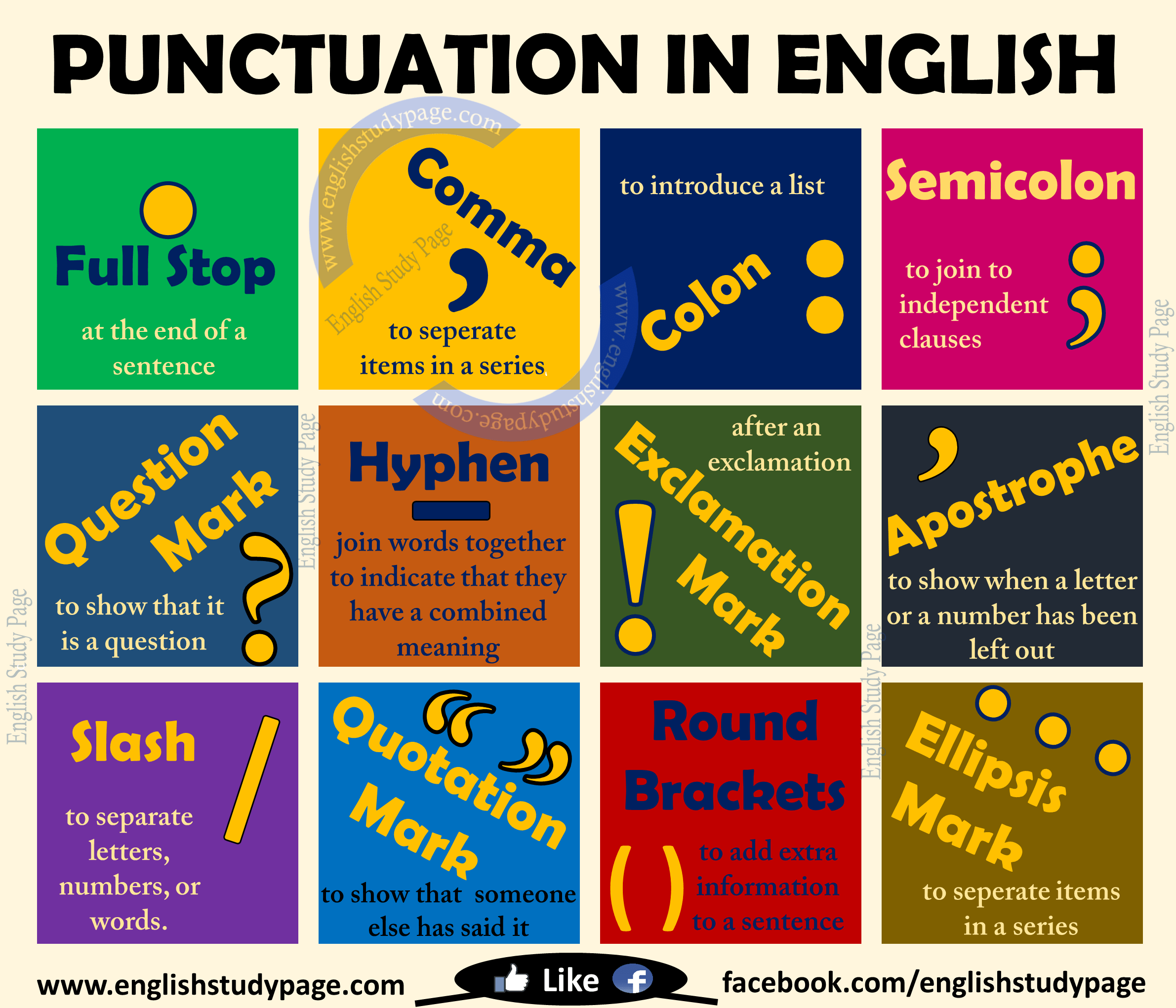
Image result for punctuation

I typically discuss the American/British difference before moving to the placement of punctuation in the context of quote marks as an issue of meaning, for example:

  • Standard English includes puzzling constructions such as, “I am being clear, aren’t I?”
  • Did you say, “My preferred name is Stephen”?

The question mark should remain, as in the first example, inside the closing quote mark to reflect that the quote itself is the question. In the second example, the entire sentence is the question, and the quote a statement; thus the question mark remains outside the closing quote mark.

All in all, these adventures in prescriptive versus descriptive approaches to language conventions may still feel like much ado about nothing to students, who often write because they are required to write and who simply don’t find the distinctions all that important.

The general public communicates moment by moment aloud and in text littered with so-called mistakes while also having almost no loss of communication.

And to be blunt, Rob Lowe’s problems in his Tweets are far less about his lack of understanding punctuation placement—and trying to show off about the Oxford comma but falling flat—and far more about his glib racism.

We descriptivists tend to argue that language conventions are a secondary issue to expression, although, as I explain below, it is nearly impossible to separate expression from conventions.

And so, this Twitter flurry over punctuation and quote marks provides another excellent entry point into helping students understand the role of conventional and purposeful language in establishing your credibility and authority as a writer.

As I have expressed before, some of the best lessons I ever learned about responding to student writing have been grounded in understanding how Advanced Placement graders are trained when scoring written responses.

One convention of writing about the action of fiction is to use present tense verbs—a contrast to using past tense verbs in detailing history.

However, at an AP training session, we were encouraged not to focus on the convention but to look for students being consistent. In other words, verb tense shift (dancing around from present to past without purpose or control) was a reason to lower a score, to identify the writing as less sophisticated.

I thought about this when I read Dreyer’s responses on Twitter because I still stress to my students that understanding punctuation placement in relationship to quote marks is mostly a problem for their credibility and authority as writers when the final punctuation dances around throughout the essay—some times inside, some times outside, with no rhyme or reason.

As a writing teacher who seeks ways to foster my students as autonomous and eager writers who also have a healthy attitude about language (an inclusive and historical awareness of conventions), I seek opportunities like Dreyer’s chastising Lowe as entry points into exploring conventional awareness and how language use cannot be disentangled from writer credibility and authority.

I often come back to again and again to making the case that credibility and authority are driven by writer control and purpose.

The dancing comma implies a lack of control, or purpose.

My argument, then, is not to browbeat students into being correct, but to encourage them to find ways to make their voices heard and appreciated.

And maybe to avoid being called out on social media, and to avoid stepping in the original mess again over and over.

My Journey with the Essay

I believe in coyotes and time as an abstract
Explain the change, the difference between
What you want and what you need, there’s the key

“I Believe,” R.E.M.

I am a writer.

I am a teacher—often and maybe essentially a teacher of writing.

Through no real singular decision, I have become mostly a writer of essays and a poet, and concurrently, when I teach writing, almost exclusively a teacher of essays.

In May of 2018, I submitted a manuscript of a book on teaching writing. Recently, I have been compulsively checking the publisher’s web site because that book has been listed as “in press” for several weeks now.

Today, I checked and saw “published”—somewhat symbolically, I suppose, about a nine-month journey to its born-on date.

Those intervening months mean, as I argue in this collection of essays drawn from several years of blogging about teaching writing, that today I am a different writer and teacher of writing than when that manuscript was compiled and submitted.

Writing and teaching writing as journey, not destination, remains a powerful metaphor that grounds me because both avocations spark powerful and nearly debilitating anxiety in me.

As a regular blogger, I have become more and more skeptical of and terrified by the fixity of published works, especially books.

I like hyperlinks and being my own editor and publisher (although I often fumble these roles quite badly); I feel as if the blog posts are more living documents (I can and do copyedit them whenever I find mistakes or am prompted by a kind reader). And I have some concrete recognition of readers, a readership quantified and displayed daily for me by WordPress.

Yet, to paraphrase Robert Frost, something there is that doesn’t love a book.

books

Frost’s ode to a wall, I think, captures a similar ambiguity about books, especially for those of us enamored by them and for those who spend their lives critiquing and even criticizing them.

For the past nine months, I have been wading deeply into books about teaching writing—the production of my own book of essays and then reading and reviewing two published volumes by John Warner, Why They Can’t Write and  The Writer’s Practice.

This wading and mulling, nearly constantly thinking and rethinking, however, are nothing new because I exist in a permanent state of feeling compelled to write and teach writing along with being terrified I have no idea how to write or teach writing.

At the center of my compulsions and insecurities lies the essay.

Poets Write Beautiful Essays: On “Coyote” by Chloe Garcia Roberts

Like Warner, as a writer and a teacher of writing, I struggle with how to provide students some structure and guidelines for writing, and specifically writing essays, without reducing their task to templates, prescriptions, and rules that prove often to be false.

This morning as I saw that my book is now published, I read Chloe Garcia Roberts’s “Coyote,” and searched her book title, discovering that she is a poet.

And as I teach my students, I tend to read as a writer.

The essay “Coyote” opens with narrative, immediately engaging the reader with character, plot, and setting. While the first paragraph reads nothing like the introduction/thesis often prescribed to students, it does end by focusing the reader: “But actually what was happening here when the coyote was being seen as a dog was not passing, it was shifting.”

Soon, we realizing that Roberts is exploring ideas and words, “passing,” “shifting,” among others. But this isn’t some simplistic “definition essay” that may be assigned to high school students.

This essay by a poet is a testament to the power of mode—narration, description, exposition, persuasion—and a model of craft; Roberts offers historical references and literary allusions, and she breaks the narrator/reader wall.

What becomes compelling to me, however, is her diction, this essay as tour de force of seeking not a good word, but the right word, pushing me to google some along the way: liminal, thaumatrope, oscillation, crepuscular, rife.

The voice of the essayist, the poet-as-essayist, speaks through science, through history, through literature; layers here, I think, at the core of the essay speak about being an essayist like a coyote:

The ferryman is never the hero. He is always heartless. If your family cannot pay, you cannot pass. Reviled by both sides, his only purpose, his only function, is to change people from one side to the other. In Western myths, the ferryman sometimes rows alone and sometimes is accompanied by Hermes the trickster, the guider of souls. In American mythology, Coyóte plays all the roles. He is not a note in a larger spiritual pantheon but a full revolution of unraveling and creation, of journey and return.

The essay itself is a journey, and the essayist, then, is the ferryman.

“Coyote” is beautiful, and it meets the broad characteristics I often share with students: essays start somehow, develop some focus briefly and somehow, and then ends somehow—hopefully always compelling.

Now, with my teaching writing book published, I have come yet again to something new, something that will not be in that book about the essay itself as a journey, captured with poetic shape in the last paragraph of “Coyote,” again nothing like a traditional conclusion guided by the worst writing advice ever (restate the introduction in different words):

In English, a siren song is another way to say an alluring deception, a seductive lie. But I ask you: how can a song be deceptive if it is a matter of life or death that it be sung? If our very existence depends on it being sung? And in case you cannot see it, I should inform you I am singing right now.

Roberts ends with questions and her own alluring image of essayist singing, embracing the complexities she has drawn for us and drawn us into.

I, a fellow essayist and poet on a much less successful level, am further ferried along in my journey as writer and writing teacher, awaiting my copies of a book of essays, themselves fixed but just markers in my rearview mirror as I continue on my way.


Published

Teaching Writing as Journey, Not Destination: Essays Exploring What “Teaching Writing” Means (IAP)

RECOMMENDED: John Warner’s “The Writer’s Practice”

One of the most valuable habits I have cultivated as a teacher for 35-plus years is listening to my students in the spaces before and after class time. This is a kind of professional eavesdropping not intended to pry on my students personally but to hear who they are as students when they are relaxed and speaking with each other (not under the teacher’s gaze).

Before class during the start of this semester, I saw one of my students diligently reading and then talking with other students near her. She was reading “They Say/ I Say” for her first-year writing (FYW) seminar.

When I asked her about the text and the course, a floodgate opened; she and other students in the class truly dislike the text and the course using it.

Since I teach two sections of FYW each fall, and held a small administrative role for a few years over our retooled first-year seminar program, I often ask students to talk to me about their FYW experiences. Too often, I continue to hear that our students are in seminars that put writing instruction secondary, although writing is the primary purpose of the courses.

First-year writing for many students remains drudgery, repeating the experiences they have had in high school and throughout their K-12 courses.

As a teacher of writing, first at the secondary level for 18 years before teaching college writing currently, I have fought a long and discouraging battle against template approaches to writing instruction (typified by “They Say/I Say”), the five-paragraph essay, and rubrics.

Seeking authentic practices and teaching writing as a writer have been my guiding principles, but too often, that journey has been over rocky terrain and decidedly uphill. Writing prompts, templates, and rubrics are powerful and often necessary tools for teachers of writing with little or no experiences as writers, and these artificial tools also facilitate some of the most entrenched, and worst, practices in traditional schools—grades, testing, and accountability.

Fortunately, I have discovered an important and engaging (mostly virtual) colleague in the pursuit of effective and authentic writing instruction—writer, public intellectual, and teacher John Warner.

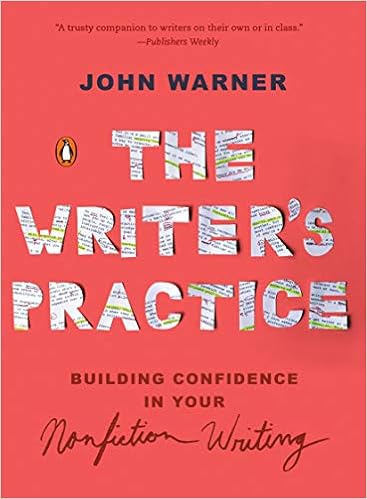
Quickly in the wake of his excellent Why They Can’t Write (see my review here), Warner now offers The Writer’s Practice: Building Confidence in Your Nonfiction Writing.

In the former volume, Warner takes solid aim at the five-paragraph essay and this work appeals primarily to teachers of writing, I think. His Practice serves more as an authoritative guide for anyone who wants to be or grow as a writer.

While I think the title offers an excellent focus for the book and how to become a writer, or better writer, “practice,” Warner’s opening framing is also extremely important: “In this book, rather than ‘assignments’ or ‘essays,’ I want us to consider what we’re doing in terms of ‘experiences.'”

This past Friday and Saturday, I attended the annual convention of the South Carolina Council of Teachers of English (SCCTE). Throughout the sessions, keynotes, and conversations among teachers, I witnessed why Warner’s newest book is so valuable.

Many who teach literacy struggle with the tension between being authoritarian and being authoritative—a foundational teaching decision emphasized in Paulo Freire’s critical pedagogy.

Writing and writing instruction driven by prompts, templates, and rubrics are authoritarian, thus simultaneously inauthentic and effective for control. Writing and writing instruction driven by structure (negotiated between teachers and students) and committed to providing students with many varied opportunities to make and practice the decisions writers make are authoritative, thus authentic but prone to uncertainty and unpredictability.

The authoritative teacher must have expertise and the ability to teach on the fly, regardless of the lesson plan.

Formal schooling tends toward the former because of the perceived need for control. However, writing is a complex behavior, and teaching writing often requires a teacher who is also a writer, who can guide novice writers through practiced experiences.

Practice, then, Warner explains, offers an authoritative text:

The goal is to provide a non-prescriptive alternative to a text like They Say/I Say while still honoring the kind of critical thinking we’re supposed to value in academia. I want that thinking to be fun, and engaging, and empowering, rather than intimidating, or something performed by rote to please a disembodied authority like a teacher, or worse, a faceless, unknowable “assessor.”

As I listened and discussed with friends and others at SCCTE, I once again recognized how many of us have failed writing instruction, allowed writing workshop and student choice to flounder because these practices have been confused with class time and student assignments devolving into unstructured and unguided license.

Writing workshop and student choice, however, are not about allowing students (who have little experience or expertise as writers) to do anything they please, but about an expert teacher providing purposeful structures within which students as novices can practice, revise, and grow as writers against their rich reading lives.

And thus, Warner’s Practice, which offers excellent opportunities for writers and teachers of writing to experiment with his framing in search of the practice that works best for them.

The volumes sections—skills drills, analytical writing, research and argument, other writing experiences (including a broad range from jokes to thinking about sentences)—are ideal for K-12 and post-secondary writing instruction that is primarily aimed at all students (not just those who want to be writers) and seeks a variety of essay writing grounded in the academic disciplines (more so than writing fiction and poetry).

Finally, a real gift of this volume is the Appendix where Warner offers some possible weekly structures for using this as a text in first-year writing.

As I did with Why They Can’t Write, I highly recommend Practice, especially for those who teach writing. It is a needed and compelling argument that writing requires structure and practice, but too often is muted by prompts, templates, and rubrics that serve an authoritarian goal but not the needs of students who could be writers.


Coming Soon (Shameless Plug Edition)

Teaching Writing as Journey, Not Destination: Essays Exploring What “Teaching Writing” Means (IAP), P.L. Thomas

The NFL and the Politics of Lies

Much Gesture, from the Pulpit –
Strong Hallelujahs roll –

“This World is not Conclusion” (373), Emily Dickinson

I taught throughout the 1980s and 1990s in my small rural hometown in Upstate South Carolina. That town literally had a railroad track separating the black and white sides of town.

The very small school district includes only four schools—primary, elementary, middle (junior, when I attended), and high—that encircled the largest church in town, Woodruff First Baptist, its steeple looming prominently over the schools and the town.

white church near trees at daytime
Photo by Aaron Burden on Unsplash

Many of my students attended that church, and for a time, virginity pledges became a thing. Sunday morning services included girls and young women coming forward to pledge their virginity until marriage.

These young women received praise and recognition throughout the town and at school. At one point when this trend was at a peak, a group of young women came to me upset that, as they explained, most of their peers taking the virginity pledge were far from virgins, before the pledge or after.

These young women taking the pledge were playing a powerful game of making public displays that gave them social capital but required in no way that they practice what they proclaimed.

The young women who had not pledged, were mostly not sexually active, and felt a great deal of resentment also informed me that one of the young women who had recently been praised in front of the student body, and was also a very popular student and cheerleader, was among a secret group of young women who helped each other pay for and acquire abortions.

I have dozens and dozens of these stories, since I grew up in the deep South and am well acquainted with the power and hypocrisy of the Christian veneer.

While I have mostly stopped watching all organized sports, college or professional, I was wrangled last night into viewing the 2019 Super Bowl. What resonated with me above the lackluster game itself and the disappointment of another success story for the New England Patriots (with a coach and quarterback who personify all that is wrong with the NFL and the U.S.) was the clear drumbeat throughout the event by the NFL that the organization is deeply committed to social justice.

Over the past few years, the NFL has ostracized Colin Kaepernick for political protests and perpetuated the vapid notion that some of the athletes have sullied the game with their politics.

This same NFL began the most recent Super Bowl, as usual, with nothing except politics, the National Anthem and a military flyover. But most disgusting of all was the use of Martin Luther King Jr., ostensibly since the game was played in Atlanta, GA, to associate billionaire owners and the league with social justice.

I have never seen anyone look more out of place than the images of Commissioner Roger Goodell touring Atlanta and marking great places and moments in civil rights.

The NFL is a master of the politics of lies, playing up its own brand while simultaneously beating down any millionaire worker who has the audacity to be anything other than a player-drone for the billionaires who own them.

I understand how many NFL players feel compelled to remain stooges for the corporation that pays many of them well, even as the evidence is mounting that almost all of them are being physically and mentally maimed, that virtually all of them are just cogs, expendable. None the less, I cringed when Marshawn Lynch showed up in one of the most popular feel-good spots portraying the NFL as all that is good and happy:

There is a world unlike this one in which I imagine Marshawn Lynch as the hero and not bent by the great burdening weight of the NFL.

But that is not this world.

Concurrent with the Super Bowl has been a brewing controversy about the governor of Virginia, which Chris Emdin confronts broadly:

Today, as everyone indicts the governor for his racism and everyone professes to stew in anger at how he has let down his constituents, I am most disturbed by the ways that we allow folks to construct progressive public personas that are allowed to mask a problematic past even as the country endorses the past and the masking. WE have allowed people to use buzzwords like equity and social justice to mask their racism. WE have allowed sitting next to the right people or hanging the right painting to erase things they have done that cause pain. WE have failed to allow folks to face their history and the part they play in what they profess to fight against. It is easy to advocate for something without acknowledging that you are part of what caused it. It is easy for the governor to denounce the hatred in Charlottesville without acknowledging that he is a branch of the tree that the hate there grew from.

Emdin unmasks the progressive veneer that works like the Christian veneer—for some. Mostly for the privileged who use that veneer to maintain a death-grip on their unearned power.

In this age of Trump politics, we must recognize that billionaire NFL owners are no more committed to social justice than Trump is to Christianity.

Billionaires have been afforded their billions because of inequity, and the only real threat to their egregious wealth is equity, the cleansing sunshine of social justice.

The NFL exists on lies, it needs lies. The NFL is a microcosm of U.S. capitalism that exists on poverty, that needs poverty.

Kaepernick was sacrificed exactly because he was the Truth, unadulterated because the banishment was swift and seemingly invisible, silent. Allowed to return to the NFL, like Lynch, Kapernick likely and excusably would have merged into the fold in some uncomfortable way—like Jim Brown’s face if the commercial above is paused just right.

The NFL’s lie is just another Great America Myth, another cultural lie. The Super Bowl was its crowning act of this year’s season of lies.

The perfect team, the Patriots, now sit on that throne of duplicity like an arrogant middle finger to all that is decent and humane.

Like the church steeple ringed by my home town’s only schools.