Shame in the Time of Covid-19

Almost immediately, I noticed some disturbing patterns on social media when the U.S. began directly responding to the Covid-19 pandemic several weeks ago.

The “Covid-19 is a hoax” and “Covid-19 is no worse than the flu” posts on Facebook immediately appeared (and have mostly disappeared), but what is more concerning is that very garbled and oversimplified posts also appeared and continue to flourish.

Ground Zero of garbled and oversimplified social media posts, I think, was arguments over the danger of Covid-19 that focused on death rates (percentage of deaths among those testing positive for the virus). Focusing on this one stat (a complicated data point because it is skewed by if and when people are tested, a serious failure of this pandemic event) greatly misrepresented the why of the unique danger Covid-19 presents.

Most people missed the “novel” terminology (many corona viruses exist, but a “novel,” thus new, version distinguishes Covid-19) and subsequently rushed past the very complex set of reasons this pandemic is not like the flu or other reasons people die daily in the U.S. and throughout the world.

The real threats posed by Covid-19 include the unknown (death rates, who is at-risk, etc.), but also some very significant knowns—likelihood that medical facilities will be overwhelmed, creating greater death rates for Covid-19, the flu, and other situations that normally could be addressed; the complicated and difficult to manage spread of the virus (by asymptomatic people); strategies that work such as “flattening the curve.”

As the U.S. moves into a second month of social distancing, there is more known each day about the virus, and subsequently, there are also more data on how we are managing the virus as well.

Changing information has always been a feature of science and of being evidence-driven. Changing information has always deterred many people from listening to science and evidence-driven policy.

This is a deadly paradox for dealing with a pandemic.

It seems reasonable to acknowledge that science/evidence-denial is incredibly dangerous and inexcusable in a well-informed and so-called advanced society (recognizing that the idealism about the U.S. is not well supported by evidence on lingering inequities).

But a potentially as harmful dynamic is science/evidence evangelism, which is quickly becoming forms of shaming. Two of the most recent forms of shaming concern social distancing and wearing face masks.

As with Covid-19 broadly, the science/evidence on social distancing and face masks is complicated, but slightly different.

Data drawn from cell phones has created a state-by-state and city-by-city ranking of who is practicing social distancing and who isn’t. However, that data exist doesn’t mean that any data set proves what people immediately assume.

Raw movement data by cell phone use doesn’t control for rural versus urban settings, doesn’t control for socioeconomic status of the users (who can and cannot “choose” not to work), and doesn’t control for essential versus nonessential movement.

A common problem in science/evidence is that data can be less valid and credible depending on how that data are interpreted and displayed; also, when messages are made public is incredibly important.

Cell data were immediately used to rank and shame states and cities (thus, this message will likely endure), but once the data and messages gained traction, a more nuanced and less shaming message has emerged:

In cities across America, many lower-income workers continue to move around, while those who make more money are staying home and limiting their exposure to the coronavirus, according to smartphone location data analyzed by The New York Times.

Although people in all income groups are moving less than they did before the crisis, wealthier people are staying home the most, especially during the workweek. Not only that, but in nearly every state, they began doing so days before the poor, giving them a head start on social distancing as the virus spread, according to aggregated data from the location analysis company Cuebiq, which tracks about 15 million cellphone users nationwide daily.

Jennifer Valentino-DeVriesDenise Lu and 

The data offers [sic] real-time evidence of a divide laid bare by the coronavirus pandemic — one in which wealthier people not only have more job security and benefits but also may be better able to avoid becoming sick. The outbreak is so new that the relationship between socioeconomic status and infection rates cannot be determined, but other data, including recent statistics released by public health officials in New York City, suggests [sic] that the coronavirus is hitting low-income neighborhoods the hardest.

The data are less about compliance and more about socioeconomic inequity and the false (idealized) myth of “choice” in the U.S. That choice is less about inherent character in people and more about privilege and anyone’s birth lottery.

Soon, we will have to confront that race/racism also pervades nearly every aspect of this pandemic, as Michael Harriot outlines on Twitter.

Social distance shaming is rooted in misunderstanding and oversimplifying data as well as careless data displays, such as charts and graphs.

More recently, since WHO and the CDC have begun to re-address guidelines on wearing masks, there is more mask shaming, which demonstrates once again that science and evidence are often complicated, but the media and lay people are apt to rush to oversimplifications, especially those who are science/evidence evangelists.

Similar to the initial message about the dangers of Covid-19 examined in the opening, what I understood about wearing face masks as the pandemic spread in the U.S. was not what most people said then or now; whether or not healthy or asymptomatic people (no evidence of exposure) should wear surgical masks or N95 masks was based on supply (low) and ranking who needed those most (medical workers), not about the effectiveness of wearing the masks.

People who interpreted the initial message as “masks do not protect healthy people” (an oversimplification grounded in truth) eventually recognized the contradiction as that sat against “healthcare workers need masks.”

The shift is now occurring whereby officials appear to be suggesting that everyone wear surgical masks, even prompting guides for making them at home. But the original science/evidence is not being honored in this either, especially as people begin to mask shame in the same ways that they are social distance shaming.

Seeking out the evidence on wearing masks is walking into a topic that may be even more complicated than a pandemic itself, but there is one really sobering fact that gets glossed over time and again:

Surgical Masks

Surgical masks (see Image 1) are loose, single use cloth masks designed to provide protection against large droplets, splashes or sprays of bodily or other hazardous fluids. These types of masks experience leakage around the edges when the user inhales, and do not provide a reliable level of respiratory protection against smaller airborne particles. The primary recommended medical function of these types of disposable masks is for infected individuals who want to decrease the risk of transmitting the disease to others in their vicinity, and they are not a substitute for a respirator mask and their primary function is not to protect the wearer of the mask [emphasis added].
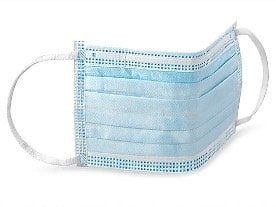
Surgical Mask

Since the U.S. has made no effort to address the supply/need element in access to masks, and since the evidence on wearing basic masks is complicated (above), the move to mask shaming may have very negative consequences such as a false sense of security (prompting more socializing and working against social distancing) and stimulating unhealthy behavior (more face touching, reusing unsanitary masks).

Science and evidence are powerful and essential parts of creating public policy and especially of mandated and voluntary human behavior during a health crisis.

Yet, once again, we have ample evidence that neither the fatalism of denial nor the evangelism of shaming is the proper way to navigate science and evidence because science/evidence is more often than not very complicated and always in a state of evolution.


See Also

No need for healthy to wear face masks, says WHO after review

Heymann said masks could create a false sense of security that could end up putting people at greater risk. Even with the mouth and nose fully covered, the virus can still enter through the eyes.

“People think they are protected when they are not,” he said. “Healthcare workers, in addition to the masks, wear visors too, to protect the eyes.”

Another concern is that people may contaminate themselves when they adjust, remove and dispose of their masks.

COMMENTARY: Masks-for-all for COVID-19 not based on sound data
Better Call Saul: On the High Art of Centering Whiteness

Among the pantheon of white-man art, including the Coen brothers and David Lynch for me, the creators of Better Call Saul offer a finely crafted and deeply flawed series that is really hard not to look at and enjoy.

This prequel to Breaking Bad shares many of the strengths (beautifully and finely filmed, nuanced and morally ambiguous characters) and most of the flaws (centering whiteness, ignoring or running roughshod over brown and black characters) with its source. As I am nearing the end of the series on Netflix (with the newest season on AMC), I often find Saul better than the original, in part because I think it unpacks extremely well being a lawyer against the moral ambiguity of many compelling characters (even as I have no real expertise in whether or not the series captures the law in any sort of valid way).

Saul fits into my fascination with moral ambiguity, notably Andy Sipowicz in NYPD Blue as one example. But I have to admit that I am primarily drawn to how well made the series is; as TV, it is just damned compelling to look at. (I often find myself seeing comic book panels, still camera shots that do as much as the acting or dialogue.)

As I noted above, I have this affection for Lynch and the Coen brothers, although I would put the creators of Saul closer to the latter.

Well into my 20s and my young teaching and writing career, I was an uncritical (and self-contradictory) devotee of a sort of John Gardner “craft idealism” that had too much grounding in modernism and white-man art arguments that posed craft over (for example) diversity of characters and voices in the name of “universal”—a humanities/fine art veneer like “objectivity” to protect the status of white men.

In those formative years, I wasn’t paying very close attention to the tension among my love and admiration for Ernest Hemingway, Alice Walker, John Gardner, Ralph Ellison, e.e. cummings, Langston Hughes, and Adrienne Rich (just to offer a brief array).

I recognized some of that tension directly, then, in Season 3, Episode 10, Lantern, of Saul, when Kim Wexler, hyper-ambitious romantic partner of Jimmy/Saul, is left injured after a car accident.

Wexler, distracted by her newest client’s case while driving on a dangerous highway, crosses three lanes of traffic and crashes into rocks on an embankment. After returning home battered and with a broken right arm, the law office assistant, Francesca, brings Wexler her law files and has rearranged her schedule so that Wexler can salvage a deadline with the new client and maintain her commitment to her main client.

We watch as Wexler immediately drops into her Type A self-sacrificing persona. But Wexler pauses, freezes in fact, before telling Francesca to cancel the new client rescheduling and push forward her commitments with her main client.

The next time we see them together, Francesca is on her cell talking to the new client, and recommending a different law firm, while Wexler grabs a couple handfuls of DVDs.

Later when Jimmy/Saul returns to the newly relaxed Wexler on her couch, Kim asks Jimmy what he wants to watch next, handing him Monty Python before musing about watching To Kill a Mockingbird, “again.”

Jimmy and Kim then have what I imagine to be a conversation with a much different meaning than intended.

In the popular consciousness, the film Mockingbird is an iconic moment for the actor Gregory Peck but also a window (like the novel it is based on) into the white savior narrative that few in the U.S. are willing or able to confront.

There is much to unpack in Wexler saying she was motivated as a child to be Atticus Finch, but to the show’s credit, Kim does make fun of her idealism when she responds to Jimmy’s dig about becoming a lawyer to change the world; she acknowledges she is working herself almost literally to death to make a successful local bank into a successful regional bank.

Again, where I think Saul excels is in the many types of lawyers the show explores, knocking the sort of idealistic and hokey shine off the Finch iconic lawyer myth.

Yet, Saul for all the craft and care isn’t much different than Mockingbird for its inability to avoid possibly the most common flaw in pop culture in the U.S., centering whiteness.

While Walter White in Break Bad can be seen as something of a twisted Finch white savior, Jimmy/Saul is certainly not that, but remains the center of a morally ambiguous and morally corrupt world where lawyers, police, and the Mexican cartel all intersect in ways that do not leave anyone in the best of light—even Jimmy/Saul’s Finch-like brother, Chuck.

By comparison, Saul is far more aware of and attentive to black and brown characters; on balance, characterization, along with camera work, is an admirable craft in both series, I think.

The Salamanca/Fring dichotomy is fascinating and tense even as those who watched Break Bad know where these men’s lives are leading.

Saul is rich with allusion and references as yet another hallmark of craft-focused art; yet, even as we may enjoy and value this craft, I think we must remain vigilant to set that aside and recognize that while care is taken in many of the elements of making a series, there is enough carelessness to take the series to task.

Mike and Nacho are fascinating ancillary characters (although many of these types of characters often feel as important as Jimmy/Saul)—the former yet another centered white man and the latter, a powerful example of the type of diversity that deserves more than it receives.

With Saul, I am torn, but I think it unintentionally makes a case against itself (the use of Mockingbird, for example) that suggests centering whiteness is a feature and a flaw of this sort of film-making craft, but to acknowledge that doesn’t mean this flaw has to be fatal.

What the Covid-19 Pandemic Should Teach Us about “Science”

RWE speak today

Ralph Waldo Emerson, “Self-Reliance”

For nearly twenty years now, I have been examining misconceptions about and misrepresentations of “scientific” as it relates to what evidence supports teaching practices and school policy. The problem that I confront over and over is complicated since scientific evidence absolutely does matter in making large and small educational decisions, and educators and policy-makers must remain vigilant in monitoring who determines what “science” matters in those processes.

For example in the early 2000s, the National Reading Panel as a major component of No Child Left Behind was charged with examining the scientific evidence behind how to teach reading. Along with the problems exposed after NRP released their findings, I raised red flags about handing over what science matters from disciplinary structures to bureaucratic/political mandates.

At least one concern raised about the conclusions of NRP is that this bureaucratic body made a contested decision about which studies met the bar of “scientific,” a debate that has existed for some time in academia and research broadly as well as in each discipline.

For the most part, NRP’s decision does reflect a traditional bias for quantitative research and experimental/quasi-experimental methods, but that decision effectively erased a huge body of evidence about how to teach reading.

However, from NCLB and NRP to the failed implementation of Common Core standards and the concurrent high-stakes tests, the irony is that bureaucratically determined and mandated “science” tends to work in significantly unscientific ways—and also tends to fail.

More recently, I have confronted a similar dynamic in the “science of reading” movement. With the release of a policy statement attempting to call for resisting the problems with both the media narrative and the state-level reading policies that narrative is driving, many of the challenges to the policy reflect why debates around “science” are doomed regardless of anyone’s intent.

First, “science” is a term used in many different ways, particularly important is to recognize that scholars and scientists often mean something quite different than the general public, the media, or political leaders.

I show students the documentary Flock of Dodos, a rambling film that explores the incessant debate over teaching evolution in public schools that does an excellent job exposing the really jumbled communication among evolutionary scientists, the media, and the public.

For students, I ask them to consider people who say they do not “believe” in evolution because it is “just a theory.” We unpack both the inappropriate verb (“believe” is incompatible with science; faith v. empirical evidence) but also that the general public confuses “theory” with “hypothesis,” which is an important distinction for scientists (similar to the correlation/cause confusion).

In the documentary, in fact, the scientists admit that “fact” is a better word than “theory” for discussing evolution with the lay public because a scientific theory is the conclusion made from the scientific process and the accumulation of evidence, proof.

Next, however, much that humans know about the world and human experience is still being examined; therefore, most scientists see “facts” as ways to guide us in any moment while also leaving the door open for more evidence, some supporting what we know or some that may change our knowledge base in small or even significant ways.

Evolutionary science and climate change science are extremely compelling bodies of science, but neither is likely finished, or settled. Science, in fact, is buoyed in great part by those who are willing to continue to test and replicate the science most of them are comfortable with extolling as “fact.”

This nuance is typically too complicated for the lay public, resulting in some who see science as the fist of God and some who think “you can make research mean anything.” Both extremes are harmful for science and humanity.

My concerns about the “science of reading” narrative and the resulting reading policy being considered and adopted by states are that the narrative itself makes a case for a far too narrow view of “science” (similar to NRP, which advocates and the media routinely cite) and wield “settled” in ways that remind me of how people in the South reference God and the Bible to shut down anyone challenging authority.

One aspect of the current Covid-19 pandemic, then, that I have been following is how the media, political leaders, and the public have interacted with the science of medicine during the U.S.’s response to this health crisis.

Not insignificant, as one example, in this situation is the governor of Georgia two months into the spread of the pandemic in the U.S. saying that he just learned in the last 24 hours that people who are asymptomatic can spread Covid-19, something that has been widely reported in media.

Here are some ways that the Covid-19 pandemic offers lessons on “science”:

  • The evolving official messages (WHO, CDC) on people wearing face masks reflect that science is often complicated, but that the media and political leaders rush to oversimplify. With face masks in short supply in the U.S., the initial message suggesting that healthy people not wear masks reflected making decisions based on the relationship between supply and demand—not that masks made no difference for healthy people (although if you read carefully, the evidence about face mask effectiveness is far from settled and often contradictory). As WHO and the CDC change their recommendations, people, I think, will see “science” as arbitrary, missing the context for the initial and revised recommendations.
  • State and international comparisons of data have been a powerful lesson about how data are gathered, how any statistic is calculated and defined, and how data are displayed on charts and graphs. Rates and percentages have been tossed around in ways that are mind boggling and disorienting. I highly recommend this tutorial for navigating statistics and graphic representations of that data. I also suggest taking a critical view of the recent cell phone data used to identify which states are complying with social distancing. Pappas warns “the numbers should be taken with a grain of salt,” after sharing: “‘Travel distance is one aspect, but of course people can travel far without meeting a soul or travel 50 feet and end up in a crowd — so we know that the real world picture can be quite complex,'” Waller noted.”
  • How Covid-19 is spread, how vaccines and tests to detect viruses are created and implemented, how different viruses can or cannot be compared, and how any virus remains active on surfaces and in changing weather have all been very complex and much debated topics in the media—reflecting the importance of how the media report complicated scientific information. Science is often held hostage to the quality of the reporting, and journalists tend to be ill equipped to understand any and all complex fields of specialization.
  • Nothing new, of course, but the Covid-19 pandemic emphasizes the importance of relying on credible sources and information outlets and also the problem with social media and meme culture that allows the spread of easily disputed false information. With the rise of Trump and this health crisis, however, at least there are far more opportunities for people accessing fact-checking web sites.

In real time, we are witnessing where compelling science intersects with science that is in-process, nowhere close to settled. The Covid-19 pandemic should teach us that science is incredibly important while also being imperfect and often inadequate. Nothing, not tests or vaccines, is 100% despite some wanting science to be black-and-white in its conclusions.

Another lesson is that the relationship between experts (academics, scientists, doctors) and the lay public as that is facilitated by the media often works in ways that detract from the potential for science to serve us all well.

Covid-19 is a life-or-death matter, yet even with that urgency, ultimately we must acknowledge that science is not a hammer, but given the skeptical respect and space it deserves, science could be our best opportunity for a better world.

The Things Schools Ruin: Poetry Edition

[Header Photo by Kristin O Karlsen on Unsplash]

When I posted two of my favorite lines of poetry to highlight our human failures, I received a poetic reply:

funny, I posted the Wasteland today.
You know, ‘April is the cruelest month’ and all that.

— oTTo & Nairb (@NairbOtto) April 2, 2020

While this poetry exchange remains anchored to the dead-white-man problem with the canon many of us have experienced in formal schooling, I think it also speaks to, when allowed, that poetry is a genuinely powerful and relevant human form of expression that is more often than not harmed by traditional teaching.

National Poetry Month, April 2020, falls in the midst of a world-wide pandemic that has disrupted almost all formal schooling across the U.S. and much of the world, but social media suggests that poetry not only persists, it thrives.

Poet Tara Skurtu, for example, launched the International Poetry Circle through her Twitter account, and the response from poets video recording poetry readings has accelerated beyond her capacity to manage them.

When given the opportunity, poetry is its own best teacher, and when readers are allowed, poetry matters.

Even though I came to recognize my own calling and journey as a poet during my first year of college, I was during that same period having a terrible experience with Emily Dickinson, who I loathed because of formal schooling but came to love many years later as a teacher while exploring her life and work on my own.

By my junior year of college, I had made the transition from considering a major in physics or architecture to committing to English education. It was a hard and long journey for me to find my life in words because schooling was often in my way.

I entered teaching high school English determined to teach well, but also determined to open the door to literature and writing for my students in ways that weren’t often allowed for me (except for the occasional teacher who was working against the traditions of schooling).

The two seemingly endless challenges I faced, however, were that my own early efforts at teaching well proved to be as counter-productive to fostering a love of reading and writing as so-called traditional methods and that students hated, for example, writing and poetry so deeply because of their experiences over nine or ten years I was facing the most uphill of uphill battles.

I taught Albert Camus’s “The Myth of Sisyphus” for many years in conjunction with his The Stranger; I also had a poster of Sisyphus hanging on my classroom wall.

Like Sisyphus I taught poetry each year with good intentions and great care, only to have the students remain stoically anti-poetry.

Teaching poetry was my rock, but I was not happy.

Then on Twitter this morning, I was reminded of when my teaching poetry turned a corner:

— Paul Thomas (@plthomasEdD) April 2, 2020

Eventually, I shifted my entire poetry unit, spanning a quarter of the academic year, to a series of lessons grounded in the lyrics and music of the Athens, Georgia based alternative band R.E.M. And I discovered that my students were drawn to the poetry of James Dickey, who at the time taught at the University of South Carolina.

In the late 1980s, our high school was destroyed by arson, and once the school was rebuilt, we made a large print of Dickey’s “For the Last Wolverine,” had Dickey sign it, and hung it prominently in the entrance of our new library.

Dickey himself was from Georgia, and I think students found his rural poetry set in nature and dealing with animals concrete and accessible. He was very readable and students tended to feel a sense of comfort with their understanding of these poems.

Although Dickey, like many white men of the twentieth century, poses problems as a flawed man, I will always have a warm place in my teacher heart for how my students embraced these poems; we had many good days reading and discussing these poems by Dickey (along with “Deer among Cattle” and “For the Last Wolverine”):

There is a complicated paradox to formal schooling since the structure is an ideal way to bring young people into the beauty and wonder of language, but the demands of mass education for structured outcomes tend to ruin those experiences with beauty and wonder.

Poetry worked with my students when we allowed ourselves to experience poetry for poetry’s sake, when we set aside the insidious urge to analyze and reduce any poem to a neat theme.

And despite having similar problems as the dead-white-man tradition of schooling, social media shows us that poetry links us, poetry can stabilize and soothe us when the world is too much with us.

If and when we return to some brave new world on the other side of the Covid-19 pandemic, something we will then call “normal,” I hope those of us who are charged with teaching language and poetry will be able to hold onto the beauty and wonder of poetry in ways that guide us as we invite students to join in.

No literary technique hunt. No multiple-choice questions.

I think that when I read Dickey’s poems aloud—”I wave, like a man catching fire”—just as when I read Faulkner aloud, there was something about my deeply Southern voice and Dickey’s very Southern poetry that resonated with my Southern students.

Poetry as us, us as poetry.

I miss those days, and regret it took me several years to allow those times that now sit in my heart fondly.