

[Header Photo by S O C I A L . C U T on Unsplash]
My father wasn’t a reader or very well educated, but he loved telling stories. Mostly about his growing up and then his courtship and marriage of my mother.
Born and raised in rural South Carolina with one set of grandparents in rural North Carolina, I was repeatedly warned as a child not to “tell stories.”
My father’s storytelling and those warnings never confused me as a child because I knew this about “telling stories”:
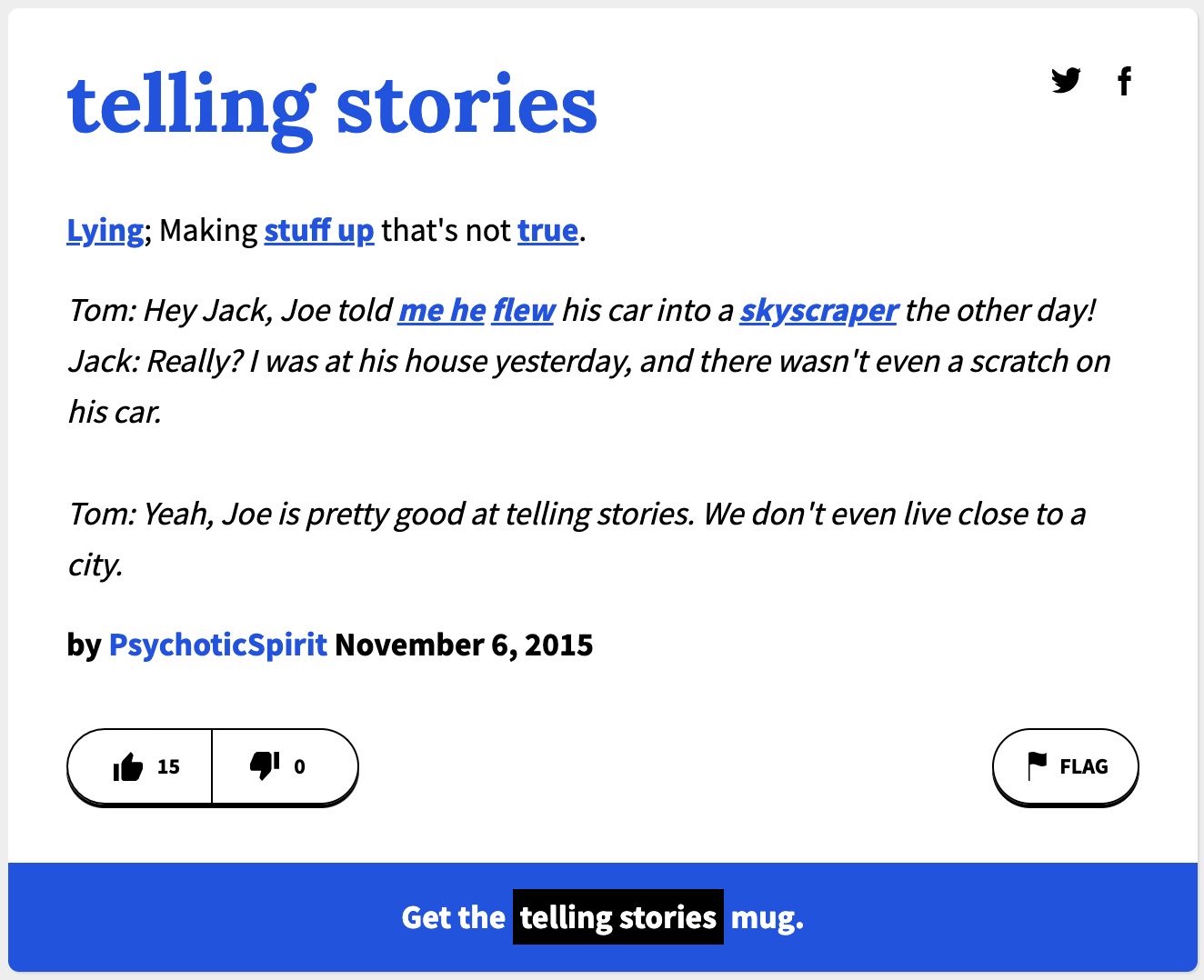
That I became an avid (even voracious) reader and writer is easily traced back to my father’s oral storytelling. But as I evolved from a writer of fiction and poetry into being mostly an academic writer (although still a poet), I remained grounded in narrative.
While it has been a struggle, as my status as a scholar has grown, I became more assertive when editors asked me to cut narrative openings from my academic submissions. I stood by print it as is or don’t print it at all, and mostly, that has worked.
Over 40 years of teaching students to write, I have also remained committed to fostering students as effective and compelling writers. Specifically I urge that openings be narrative even as I caution students that academia shuns anecdotes and narrative writing.
The academic rejection of anecdote and the narrative mode is simplistic, I think. Writers should not avoid anecdotes and narrative mode (both of which are very compelling), but must use them ethically, making sure the anecdote and narrative reflect valid claims supported by empirical evidence.
For example, scholars and students as writers should never start with the anecdote or narrative since they can (and often are) outliers that do not support making valid and generalizable claims.
Instead, I teach students to do their research first, and once they have a credible literature review, to seek out anecdotes and narratives that fairly represent that data set.
Scholarly claims can often be abstract or complex, but giving readers what those claims look like in reality—real people doing real things—provides a concrete basis for reader understanding.
As a concrete example, if a student, journalist, or scholar were writing a piece on police in the US shooting and killing citizens, there are options for writing compelling openings.
A retelling of George Floyd’s death would be a valid opening for a piece making the claim that police shoot and kill Black people at about a 2.5 times greater rate than white people.
This narrative opening is both compelling and valid because the data supports that this narrative is representative of a supportable generalization.
However, opening with a narrative about police shooting and killing a white person to make the claim that police shootings of citizens is not racist is a not a valid opening because white people are underrepresented in police killings by rate.
This is a brief but specific example of why anecdotes or narrative mode is not the problem. The problem—one that is persistent in mainstream journalism—is that relying on compelling narratives that are not representative of valid generalizations is an ethical failure of writers.
Over the years I have interacted with many journalists, and their pursuit of stories is vivid. In recent years, the media obsession with reading has been hyper-focused on stories, grounded in a podcast titled Sold a Story.
The problem with the “science of reading” (SOR) movement is ironically grounded in telling stories.
The stories of parents and students trapped in situations where children are not progressing as readers are very compelling and likely credible individual stories. Some documentaries include equally compelling stories of adults who struggled in life due to low literacy.
Again, individual stories are deeply moving and are themselves mostly credible anecdotes.
But the SOR movement’s reliance on stories has two essential problems: First, those stories are paired with false definitions and misleading claims without taking any scientific effort to match the stories in causal ways to the claims; and second, the SOR movement (notably in the media) is calling for a narrow application of “scientific” in reading instruction while relying on non-scientific claims based on stories.
In short, journalists are telling stories that are also breaking the rule I warned about as a child—telling stories.
Yes, anecdotes and narrative mode are compelling ways to communicate, and I strongly endorse those approaches.
However, what is too often missing in mainstream media is a rich and nuanced understanding of education and literacy that must inform what stories are told and what claims those stories can offer valid evidence for.
Mainstream media fails the ethical standard of using narrative because of a nearly all-consuming pursuit of stories that will grab readers, listeners, and viewers.
Yet, as my grandparents and parents warned me, we shouldn’t be telling stories, especially at other people’s expense.
Recommended
The NY Times Again Goes After Public Schools, Susan Ohanian
Telling the Truth in a Story-Haunted South
 dr. p.l. (paul) thomas