Lost in Translation: Science of Reading Edition

When Anders Ericsson, an internationally renowned cognitive psychologist, died in 2020, a New York Times article included as a subhead: “His research helped inspire ‘Outliers,’ Malcolm Gladwell’s best-selling book on the keys to excelling.”

In short, the general public was more aware of Gladwell’s popularized version of Ericsson’s work than Ericsson, and likely, nearly no one in the general public had read Ericsson’s scholarship.

As a result, Ericsson penned a clarification that includes a key point:

Although I accept that the process of writing an engaging popular article requires considerable simplification, I think it is essential that the article does not contain incorrect statements and misinformation. My primary goal with this review is to describe several claims in Jaffe’s article that were simply false or clearly misleading and then discuss how APS might successfully develop successful methods for providing research summaries for non-specialists that are informative and accurately presents the major views of APS members and FellowsAt the very least they should not contain factually incorrect statements and avoid reinforcing existing misconceptions in the popular media.

The Danger of Delegating Education to Journalists: Why the APS Observer Needs Peer Review When Summarizing New Scientific Developments

Ericsson is confronting an essential problem when journalists and mainstream media seek ways to translate scholarship, research, and science into accessible and engaging media for the public. Journalists prioritize narratives, stories, as the primary mode to accomplish that translation.

Several months ago, I thought again about Ericsson’s valid concerns about Gladwell’s very popular but reductive Outliers:

[An article by Jaffe] goes on to state that “Ericsson and his colleagues found in a 1993 study that professional musicians had accumulated about 10,000 hours of deliberate practice over the course of a decade. The results became the basis of Ericsson’s deliberate practice theory of elite performance, also called the 10,000 hour rule” (Jaffe, 2012, p. 13). With these two sentences Jaffe reinforces misconceptions in some popularized books and internet blogs that incorrectly infer a close connection between deliberate practice and the “10,000 hour rule”.  In fact, the 10,000 hour rule was invented by Malcolm Gladwell (2008, p. 40) who stated that “researchers have settled on what they believe is the magic number for true expertise: ten thousand hours.” Gladwell cited our research on expert musicians as a stimulus for his provocative generalization to a magical number. 

The Danger of Delegating Education to Journalists: Why the APS Observer Needs Peer Review When Summarizing New Scientific Developments

Ericsson came to mind as I was having an extended phone conversation with a producer at 60 Minutes about the current “science of reading” (SOR) movement and the significant amount of misinformation being presented in mainstream media and then driving state-level reading legislation (now in about 47 states).

While the producer was thoughtful and receptive to my concerns about media misrepresenting NAEP data, student reading proficiency, and the so-called failure of popular reading programs and balanced literacy, he ultimately concluded after we talked almost two hours, that there is no story in the truth, thus he would not be able to produce a story about that truth.

As Ericsson’s career demonstrates, the public finds misinformation in the form of simplistic stories more compelling than nuanced and messy research; further, most people, including politicians, have read or viewed the journalism, but not the actual research (notably because too much research is behind a pay wall and/or nearly impossible for the average person to comprehend).

The Ericsson/Gladwell/”grit” dynamic is now being replicated with even greater consequence in the SOR movement that has been codified in legislation banning and mandating programs and practices primarily or even exclusively grounded in media misinformation, and not the full reading science.

For example, the recent controversy about a co-authored article in The Reading Teacher perfectly highlights the essential problem.

Let’s do a thought experiment for a moment: Which do you think the general public and political leaders are more familiar with (or familiar with at all), Emily Hanford’s Sold a Story or Nell Duke’s (with colleagues) work on the active view of reading?

And, importantly, which of those two do you think is a better representation of the current state of reading science (or full body of research on reading and teaching reading)?

Now let’s explore some artifacts to answer those questions.

First, Hanford in her journalism has repeated that SOR is “settled science” called the simple view of reading (SVR):

Covering How Students Learn to Read: Tips to Get Started
There Is a Right Way to Teach Reading, and Mississippi Knows It

The “simple and settled” mantra has been a central part of Hanford’s print journalism and her more popular podcast.

But that same mantra is central to the claims made by The Reading League, likely the leading organization promoting SOR:
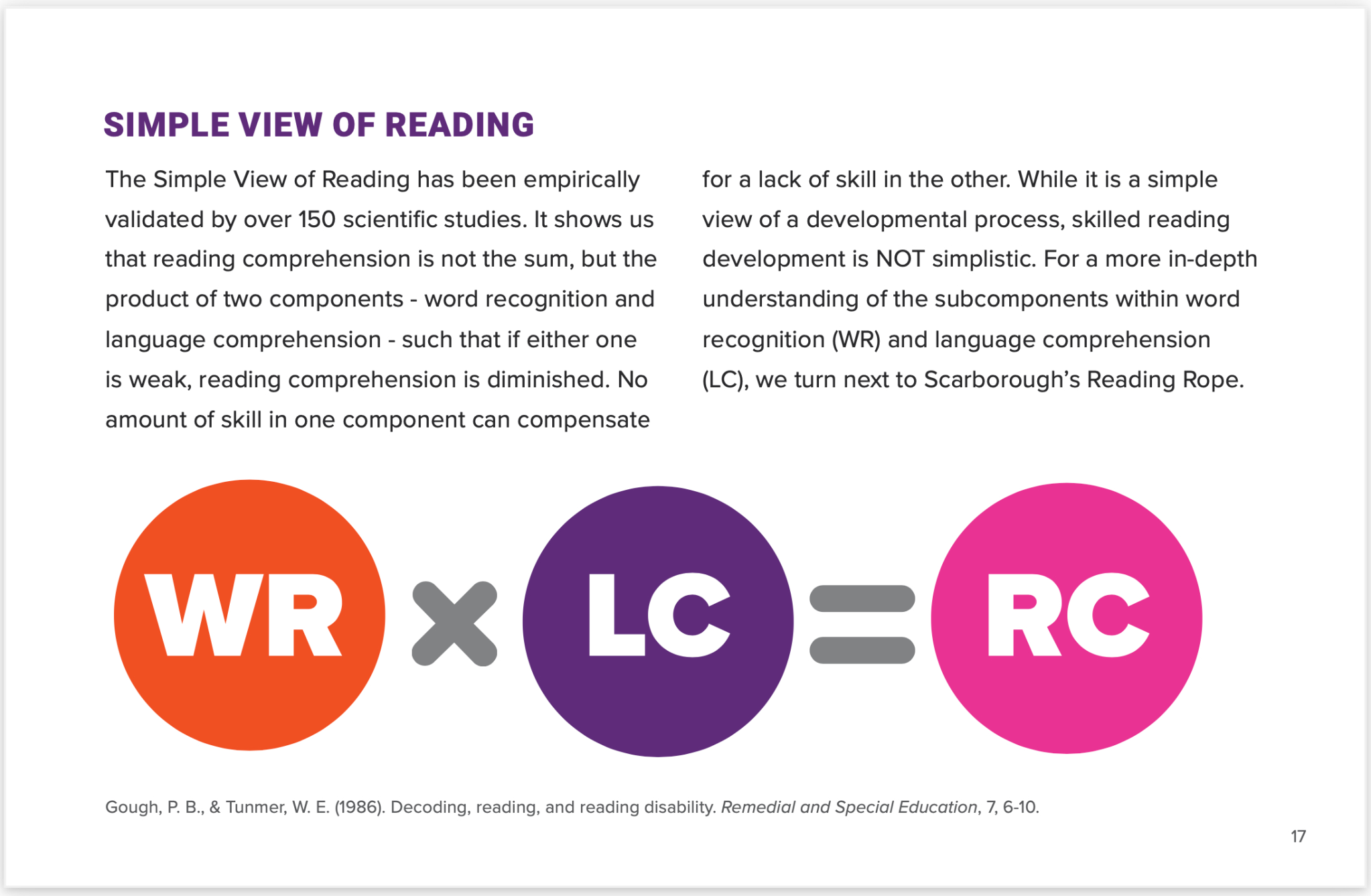
Science of Reading: Defining Guide

Now let’s note how these misleading and oversimplified claims about reading science have manifested themselves in political rhetoric and then state legislation:
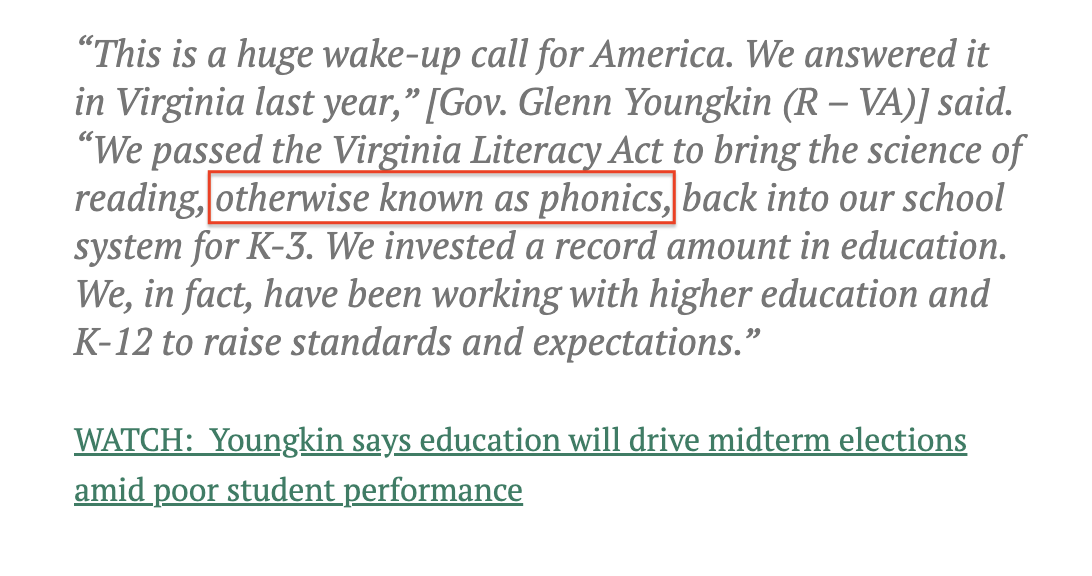
WATCH:  Youngkin says education will drive midterm elections amid poor student performance
‘The evidence is clear’: DeWine pushes for ‘Science of Reading’ as only approach in Ohio classrooms

While this is only one example [1] of the caution Ericsson raised, the misrepresentation of reading science as “simple and settled” has become holy text and then spurred misguided reading legislation and policy.

The more nuanced and on-going body of reading science is much better represented by the research from literacy scholars:
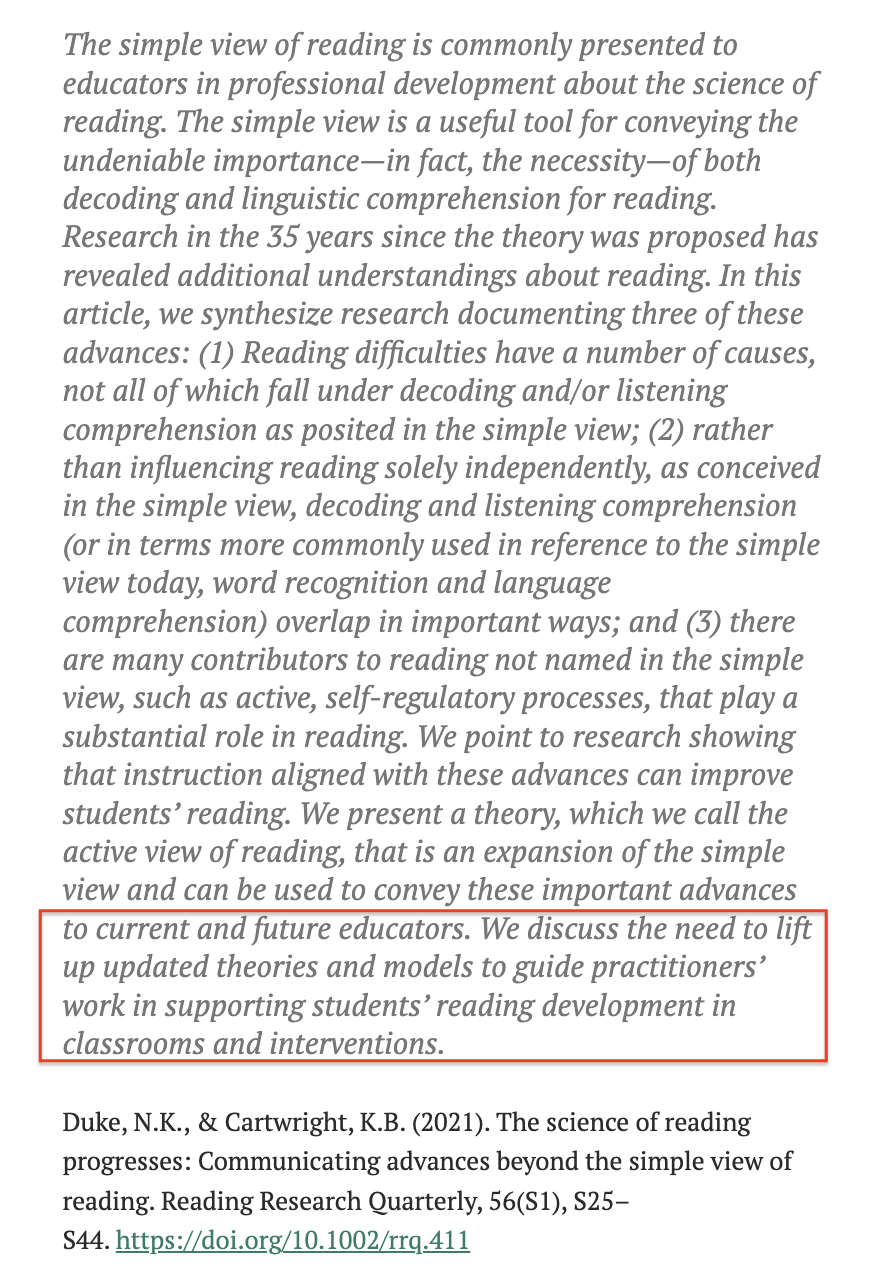
Duke, N.K., & Cartwright, K.B. (2021). The science of reading progresses: Communicating advances beyond the simple view of reading. Reading Research Quarterly, 56(S1), S25–S44. https://doi.org/10.1002/rrq.411

From Arkansas to New York City, political leaders have misrepresented dyslexia, reading proficiency, reading instruction, and reading programs in ways that parallel the stories found in mainstream media.

Like Gladwell, Hanford and dozens of mainstream journalists are reaping the rewards of compelling stories that misinform while also feeding commercial and political interests that are mis-serving students, teachers, and public education.

Once again, we find ourselves not only in the tired and false rhetoric of reading crisis but also lost in translation because a sensationalistic podcast tells a melodramatic story that runs roughshod over anything resembling a fair representation of student reading proficiency, teacher expertise, or our obsession with finding the next reading program.


Note

[1] For a more detailed examination of the misinformation in media, see the following:

Recommended

The Danger of Delegating Education to Journalists: Why the APS Observer Needs Peer Review When Summarizing New Scientific Developments, K. Anders Ericsson 

Reading Educational Research: How to Avoid Getting Statistically Snookered, Gerald Bracey

Setting the Record Straight: Responses to Misconceptions About Public Education in the U.S., Gerald Bracey

Oat Milk: The Further Adventures of a Redneck Academic

A thread I posted on the Social Media Site Formerly Known as Twitter seems to have resonated so I am posting here along with a bit more redneck content after the thread.

If this resonates with you, bless you (and I mean that sincerely, not the Southern “Well, bless your heart,” which means something entirely different).


More Redneck Content

My Redneck Past: A Brief Memoir of Two’s

Rednecks, Hillbillies, and Crackers

Reading Programs Always Fail Students and Teachers

[Header Photo by Nappy on Unsplash]

Despite growing up in a working-class family with two parents who never finished college, I entered formal schooling with a turboboost provided primarily by my mom.

I was a reader, and by traditional school norms, I was a reader way above grade level.

Both my mother and my teachers taught me to read through whole-word methods that were popular in the 1960s. I am of the Dick and Jane reader generation.

I always tested in the 99th-percentile and made As and Bs, but I found school only mildly tolerable, at best; I did, however, love my teachers.

It was a jumbled journey that led to me being a high school English teacher. I recognize now that the foundation of that path included my high level of literacy that eventually drew me to literature, a love of reading, and being a writer.

When I entered the classroom in the fall of 1984, I soon realized that I was not prepared to teach. Almost all of the literature I had studied in college was not or could not be taught in public high school; I also was almost completely ill-equipped to teach adolescents to write.

My first years included what I now perceive as the fatal flaw of teaching—seeking The Way to teach students to read and write.

My saving grace came in the late 1980s and early 1990s, significantly because I entered the regional National Writing Project summer workshop (Spartanburg Writing Project) and was introduced to the workshop model.

Two books and two people were foundational for my journey into workshop teaching—Nancie Atwell’s reading workshop and Lucy Calkins’s writing workshop.

Atwell and Calkins offered a great deal of practices and structures in their seminal works, but, honestly, I paid little attention to the details—fortunately.

I did take away a philosophical structure that included a frame for teaching—time, ownership, and response—and a nearly compulsive commitment to be a student-centered teacher.

Over my 40 years as a teacher, I have witnessed wonderful concepts, theories, and philosophies in education gradually be reduced to programs, structures, and scripts that necessarily fail students and teachers.

Throughout my career, I have resisted and challenged all programs and templates for teaching and learning.

By the 1990s, I had more opportunities to publish and present as a practitioner-scholar, and then after I completed my doctorate in 1998, that credential further reinforced my ability to advocate against programs and, worst of all, educational faddism.

For many years, I had to caution teachers and administrators about the missionary zeal around Four Blocks® and 6+1 Traits of Writing.

In traditional schooling, we lack the political will to provide students and teachers with the learning/teaching conditions that could support best practice and thriving students. Instead, we remain committed to in-school only reductive practices such as adopting new standards, implementing new standardized tests, and shuffling through an ever-revolving series of reading programs.

Here’s the problem: All reading programs fail students and teachers because when we center reading programs, we de-center the individual needs of students and the professional autonomy of teachers.

Let me be very clear: All reading programs fail students and teachers.

During my teaching career across five decades, I have watched as advocates scapegoat X and promise the success of Y—whether the scapegoat is whole language or balanced literacy (the two favorites over those years).

The “science of reading” movement fits into the manufactured reading crisis cycles that have occurred in the US for a century; almost nothing new is being claimed or promised, but the outsized attack on specific reading programs (Fountas and Pinnell, Calkins’s Units of Study) does represent a disturbing lack of logic (across the US dozens of different reading programs have been implemented over decades with reading proficiency remaining stable) and another fatal mistake of centering reading programs.

To be blunt, reading programs labeled as whole language, balanced reading, or structured literacy carry no guarantee that those programs or the implementation of the program does in fact reflect the theory/philosophy of the label.

One marketed, theory/philosophy is corrupted or erased.

But more importantly, all centering of reading programs is a distraction because teachers are held accountable for teaching with fidelity to the program and students are reduced to mere metrics of that fidelity.

I have remained outside the ideology and program game for 40 years (that’s what critical pedagogy is), but all those trapped inside that game cannot hear my persistent message: Don’t depend on reading programs and reading theories to teach children to read.

I do not support or adhere to whole language, balanced literacy, or structured literacy; I do not endorse (and certainly would never create) any reading program.

As a critical scholar and educator, i recognize that the moment we reduce philosophical structures to scripts or programs, both the ideologies and the humans impacted (students and teachers) are erased.

Most literacy instruction I do these days is with college students and adults, who are still learning to read and learning to write.

I remain guided by time, ownership, and response as my philosophical structures, but I always start with and center who each student is and where is student is.

I have a teaching tool kit that is incredibly full and diverse from my many years as a practitioner, yet I continue to seek new and different ways to teach because each student is a new challenge and a new possibility.

The current media, market, and political story that Reading Program X has failed children but Reading Program Y will save those children is a lazy argument that lacks logic or evidence.

If anyone can step off the reading program merry-go round, they could see that if there was a problem with Units of Study it was that teachers were held accountable for fidelity to that program and not provided the teaching conditions to serve the needs of individual students.

If anyone can step off the reading program merry-go round, they could see that banning some scapegoated reading programs and mandating new structured literacy programs that are scripted (thus erasing teacher autonomy and individual needs of students) is jumping out of the reading program frying pan into the fire.

The rhetoric of missionary zeal exposes the failure of centering when we argue about “teaching phonics” or “teaching comprehension” or “teaching fluency,” for example, because our goal should never be a so-called reading skill, but teaching children how to be eager and critical readers.

In formal schooling we have for decades and currently are failing disproportionately marginalized and minoritized students who are over-represented in those students identified as below proficiency in reading.

As long as we center reading ideologies and reading programs, we are de-centering those students’ individual needs and de-centering the autonomy of their teachers to serve those neglected children.

Reading programs are the folly of petty adult allegiances that are manipulated for political and market purposes.

Reading and writing like teaching reading and writing are complex and unpredictable journeys that are ultimately human behaviors that should be the center of all we do—not beliefs, practices, or, especially, yet another false promise packaged as a silver-bullet reading program.

Open Clarification on Recent Publication for The Reading Teacher (ILA)

This is an open clarification to set the record straight about a recent co-authored article in The Reading Teacher (ILA): Stories Grounded in Decades of Research: What We Truly Know about the Teaching of Reading.

This clarification is being made in my name only and reflects only my perspective.

After the piece was posted online for early access, Nell Duke requested that her name be removed from a table in the article:

Since the term “science of reading” has a variety of contexts and meanings as I have documented in my own work, I appreciate any concern raised about misunderstandings or misrepresentations.

First, then, let me clarify that the intent of the “challenges” is grounded in the SOR movement making claims through journalists, such as Emily Hanford, and high-profile organizations, such as The Reading League, that the simple view of reading is “settled science”; see for example, the following:

To understand what the science says, a good place to start is with something called the “simple view of reading.” It’s a model that was first proposed by researchers in 1986 to clarify the role of decoding in reading comprehension. Everyone agrees the goal of reading is to comprehend text, but back in the 1980s there was a big fight going on over whether children should be taught how to decode words — in other words, phonics.

The simple view says that reading comprehension is the product of two things. One is your ability to decode words: Can you identify the word a string of letters represents? For example, you see the letter string “l-a-s-s” and you are able to sound it out and say the word….

The simple view is an equation that looks like this:

decoding ability x language comprehension = reading comprehension

The simple view model was proposed more than 30 years ago and has been confirmed over and over again by research.

There Is a Right Way to Teach Reading, and Mississippi Knows It

Science of Reading: Defining Guide

To be brief, current research, including work by Duke on the active view of reading, challenges the claim that SVR is settled science:

The simple view of reading is commonly presented to educators in professional development about the science of reading. The simple view is a useful tool for conveying the undeniable importance—in fact, the necessity—of both decoding and linguistic comprehension for reading. Research in the 35 years since the theory was proposed has revealed additional understandings about reading. In this article, we synthesize research documenting three of these advances: (1) Reading difficulties have a number of causes, not all of which fall under decoding and/or listening comprehension as posited in the simple view; (2) rather than influencing reading solely independently, as conceived in the simple view, decoding and listening comprehension (or in terms more commonly used in reference to the simple view today, word recognition and language comprehension) overlap in important ways; and (3) there are many contributors to reading not named in the simple view, such as active, self-regulatory processes, that play a substantial role in reading. We point to research showing that instruction aligned with these advances can improve students’ reading. We present a theory, which we call the active view of reading, that is an expansion of the simple view and can be used to convey these important advances to current and future educators. We discuss the need to lift up updated theories and models to guide practitioners’ work in supporting students’ reading development in classrooms and interventions.

Duke, N.K., & Cartwright, K.B. (2021). The science of reading progresses: Communicating advances beyond the simple view of reading. Reading Research Quarterly, 56(S1), S25–S44. https://doi.org/10.1002/rrq.411

Other scholars have also challenged SVR as settled or adequate:

Theoretical models, such as the simple view of reading (Gough & Tunmer, 1986), the direct and inferential mediation (DIME) model (Cromley et al., 2010; Cromley & Azevedo, 2007), and the cognitive model (McKenna & Stahl, 2009) inform the constructs and skills that contribute to reading comprehension. The simple view of reading (Gough & Tunmer, 1986) describes reading comprehension as the product of decoding and language comprehension. The simple view of reading is often used to underscore the critical importance of decoding on reading comprehension; however, evidence suggests that the relative importance of decoding and language comprehension changes based on students’ level of reading development and text complexity (Lonigan et al., 2018). Cross-sectional and longitudinal studies demonstrate that decoding has the largest influence on reading comprehension for novice readers, whereas language comprehension becomes increasingly important as students’ decoding skills develop and text becomes more complex (e.g., Catts et al., 2005; Gough et al., 1996; Hoover & Gough, 1990; Proctor et al., 2005; Tilstra et al., 2009). However, the simple view of reading does not comprehensively explain all skills that influence reading comprehension, nor does it inform what comprehension instruction requires. 

Filderman, M. J., Austin, C. R., Boucher, A. N., O’Donnell, K., & Swanson, E. A. (2022). A meta-analysis of the effects of reading comprehension interventions on the reading comprehension outcomes of struggling readers in third through 12th grades. Exceptional Children88(2), 163–184. https://doi.org/10.1177/00144029211050860

In that context, I think including those scholars neither misrepresents their work nor misrepresents reading science.

As such, ILA’s statement seems to be a dangerous precedent for policing scholars and for eroding scholarship in the context of media, political, and market forces.

I remain convinced the work scholars are doing on the active view of reading is not only important for understanding reading science but for understanding that science is often a conversation and an on-going evolution, not something settled and not something to be wielded like a hammer.

Ironically, I have been advocating for the voices and work of those scholars in the removed table be given greater weight and time than journalists, politicians, and commercial interests. So I regret that they are no longer being highlighted.

Finally, I recognize that it takes more nuance and care than is often afforded on social media to acknowledge that the robust and on-going body of reading science, in fact, contradicts the stories being told under the label SOR in the media and by political and market interests.

But if you genuinely engage with the science, that is all the article is seeking to address.

Revisiting the SOR Multiverse

Although I have made the distinction many times, the “science of reading” (SOR) as a term denotes three distinct meanings simultaneously:

  1. SOR as a movement, grounded in a pervasive yet misleading media narrative primarily associated with the journalism of Emily Hanford and then the manifestation of the narrative in political rhetoric and legislation/policy.
  2. SOR as marketing and branding, a concurrent flood of reading programs and materials (very similar to the branding of materials during the Common Core era).
  3. SOR as a blanket term for the broad and deep research base on reading than spans at least a century.

I have been contesting the most problematic aspects of SOR—the movement and the marketing/branding—because the misinformation has gained a status as “holy text”; more troubling is that nearly every state has now passed legislation and implemented SOR policy and practice.

In no uncertain terms, there is no longer a debate about the credibility of SOR because that credibility is its own odd multiverse—the movement claims are simultaneously false or misleading while existing in the real world as fact and narrow mandates (for example, structured literacy as the newest reading theory is often packaged as scripted curriculum).

The SOR movement has been driven primarily by people with no expertise or historical context for the narrative established in “Hard Words” and then amplified by “Sold a Story.”

Journalists, politicians, parents, and think tanks/advocacy groups have created a nearly unstoppable force because of a series of beliefs that have been perpetuated in the US for decades: public schools are failing, teachers are failing, and students are failing.

The SOR movement is little different than any other education movement in the US since the template is well established in crisis/miracle rhetoric that appeals to cultural and public beliefs.

Also the SOR movement has weaponized a reductive use of the term “science,” which shields the movement from criticism.

Anyone who dares to criticize—even with evidence—the SOR narrative is discounted as being against “science,” particularly effective in the wake of Covid era fraught with public and political debates about masking and vaccinations.

The missionary zeal of the SOR movement combined with market interests has erased all nuance and complexity from discussions of or implementing the broad and deep body of research on reading that is still evolving and better characterized by debate than being “simple and settled” (the earliest mantra driving the SOR movement in the media).

Over the past decades, SOR advocacy has made any criticism or debate come with great costs to the critics because of the zeal and even anger among SOR advocates on social media, a network of stake holders associated with dyslexia, phonics, and mainstream education reform (such as Jeb Bush’s ExcelinEd).

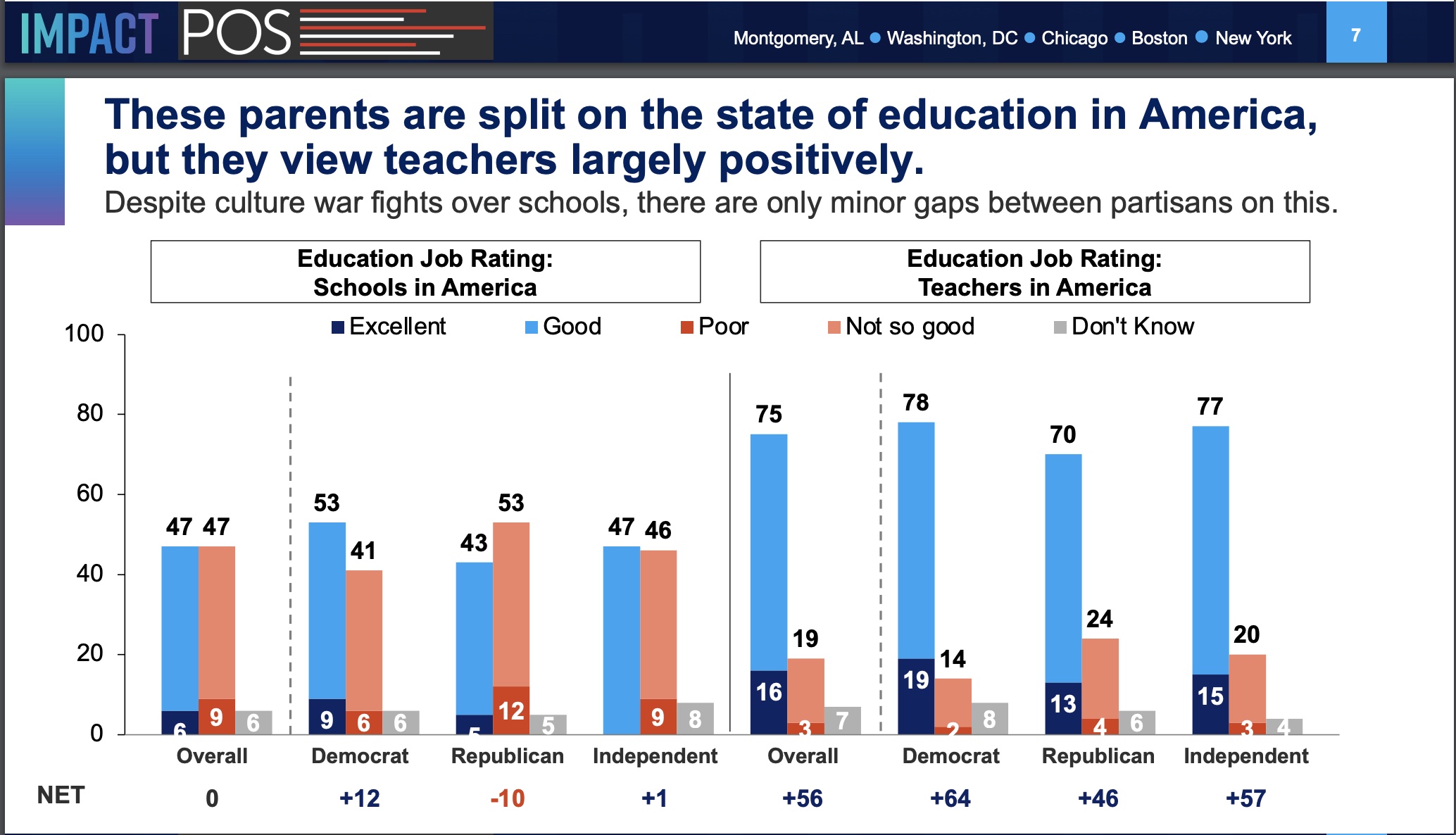
As I just recently posted, a survey of parents demonstrates the effectiveness of the SOR movement to turn false narratives into holy text.

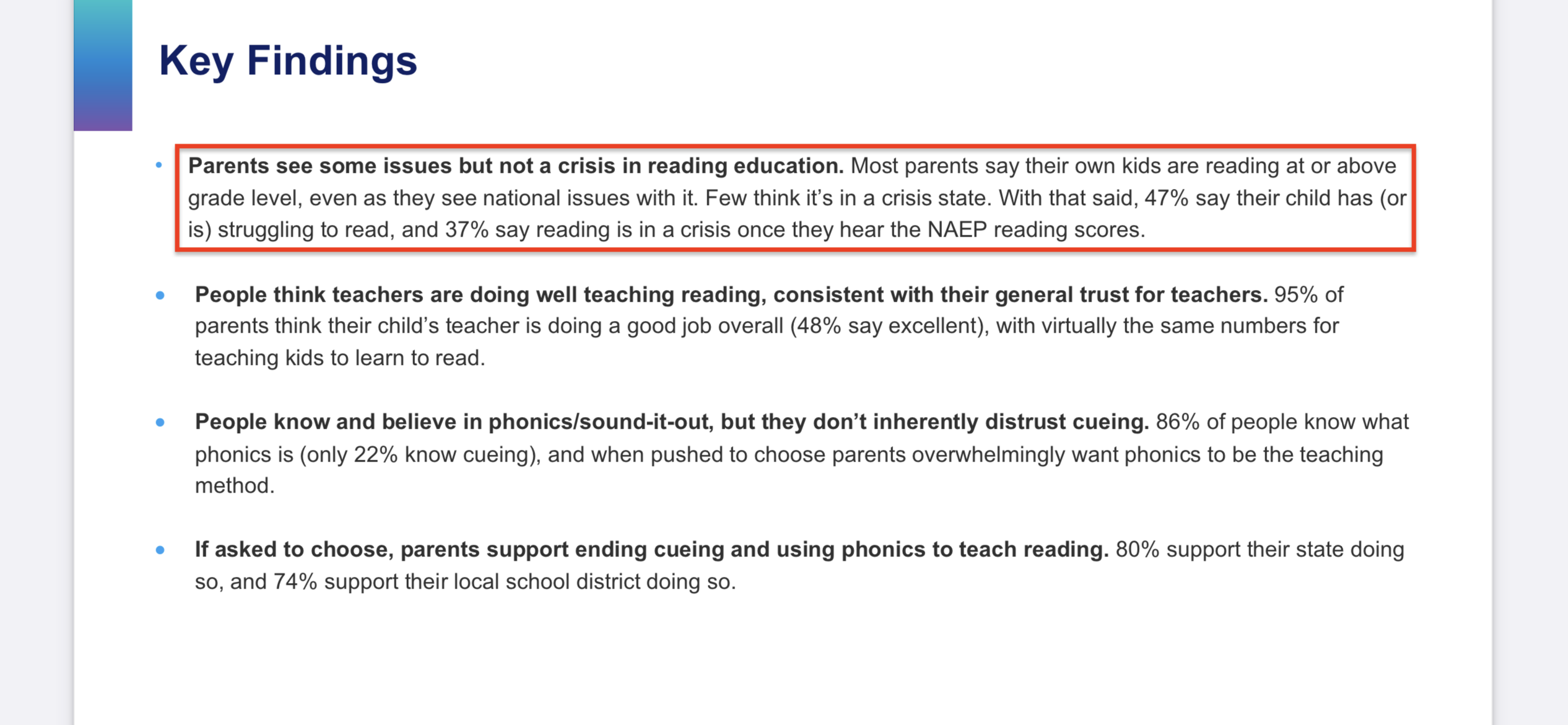
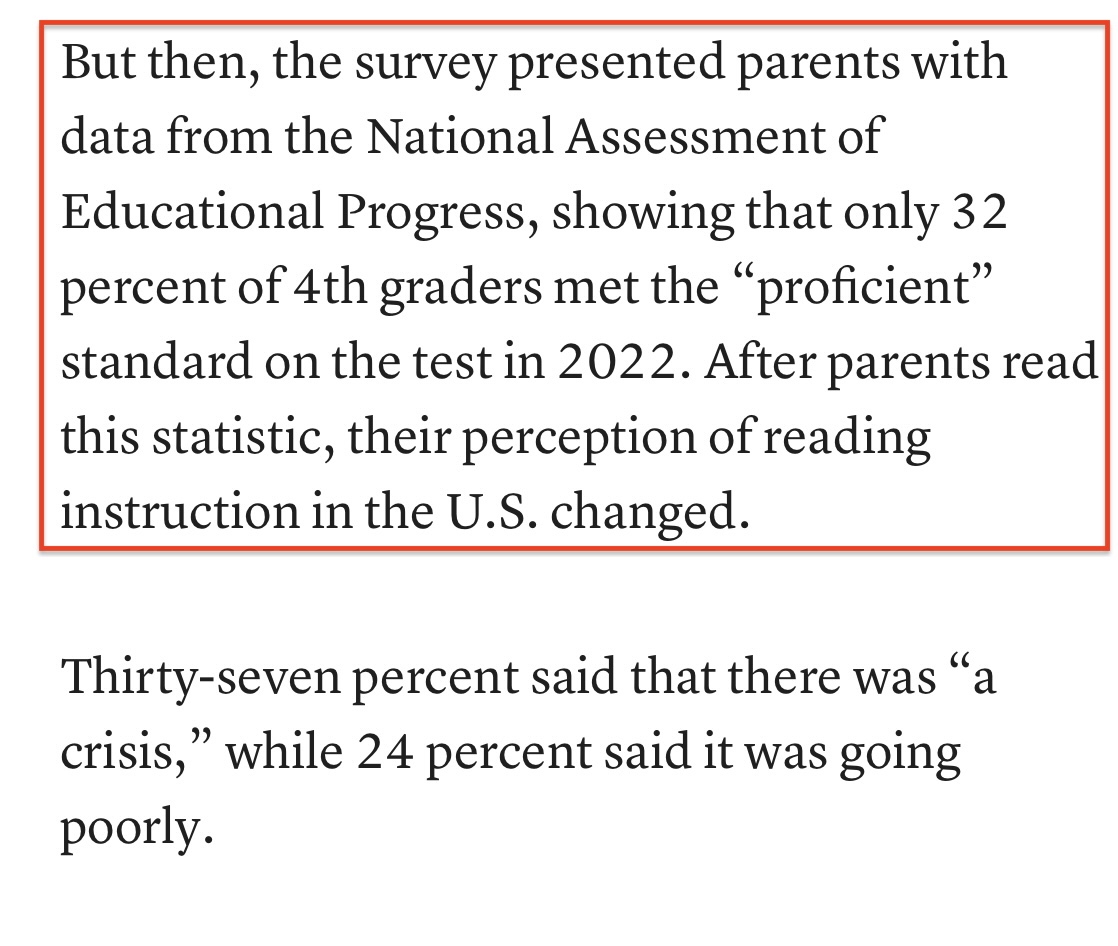
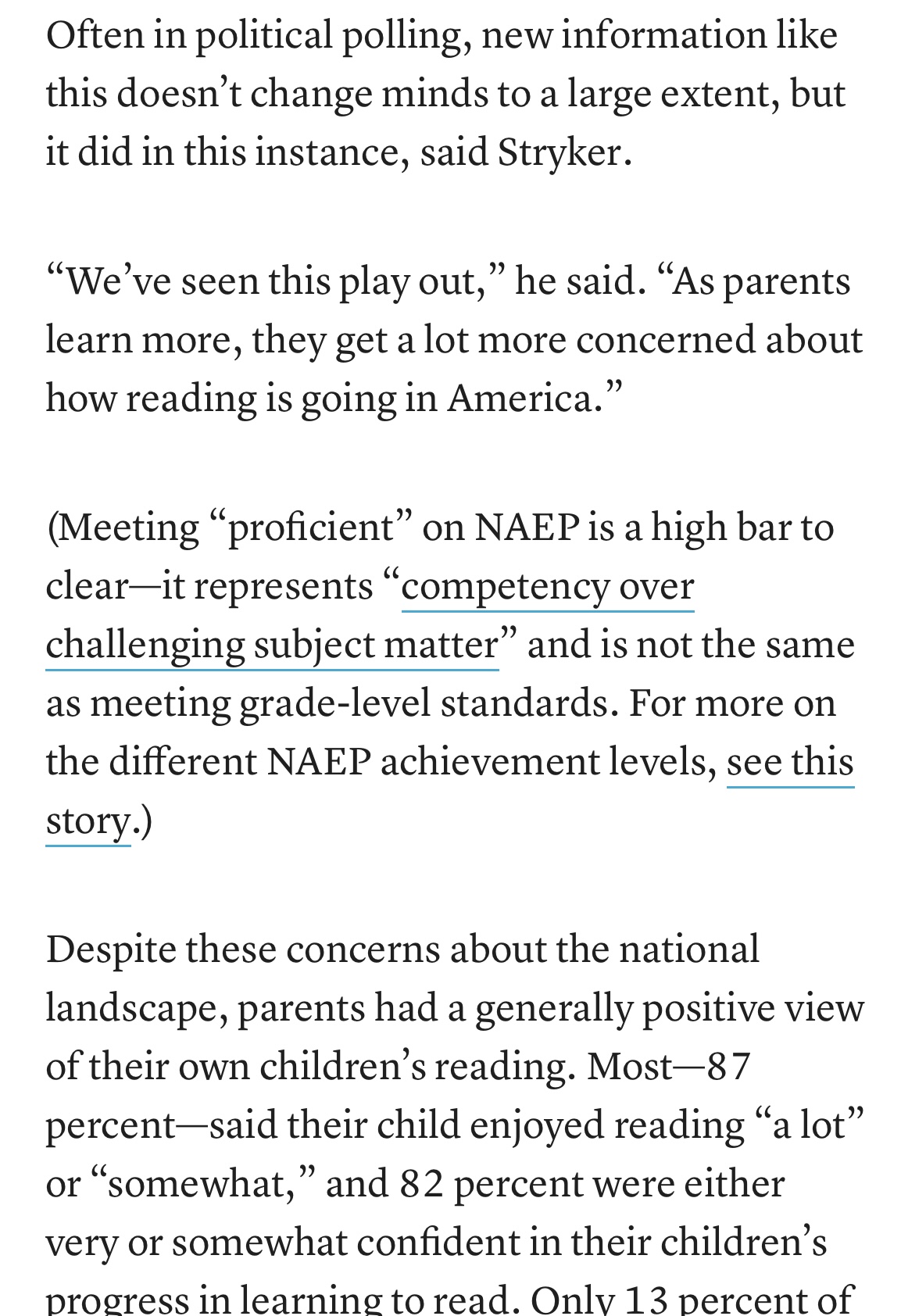
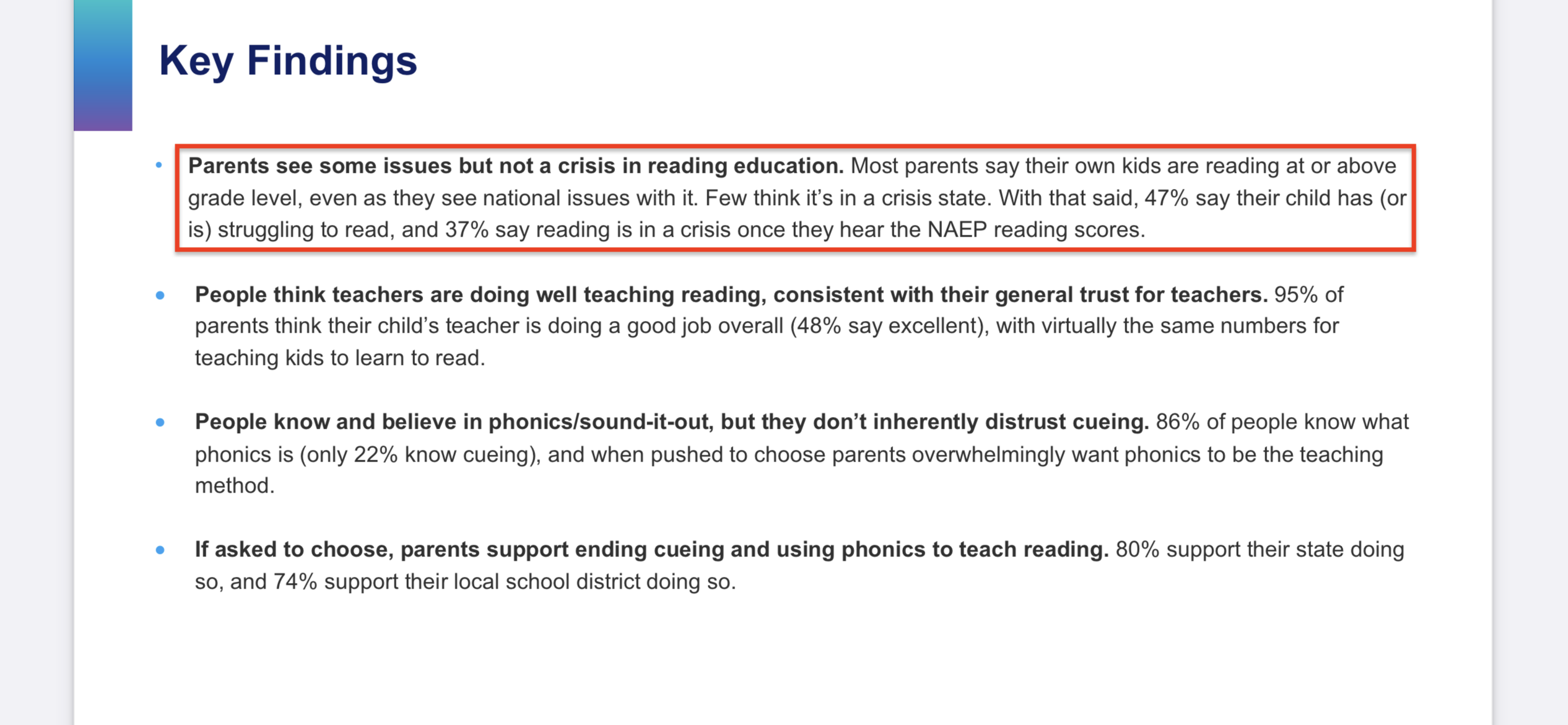
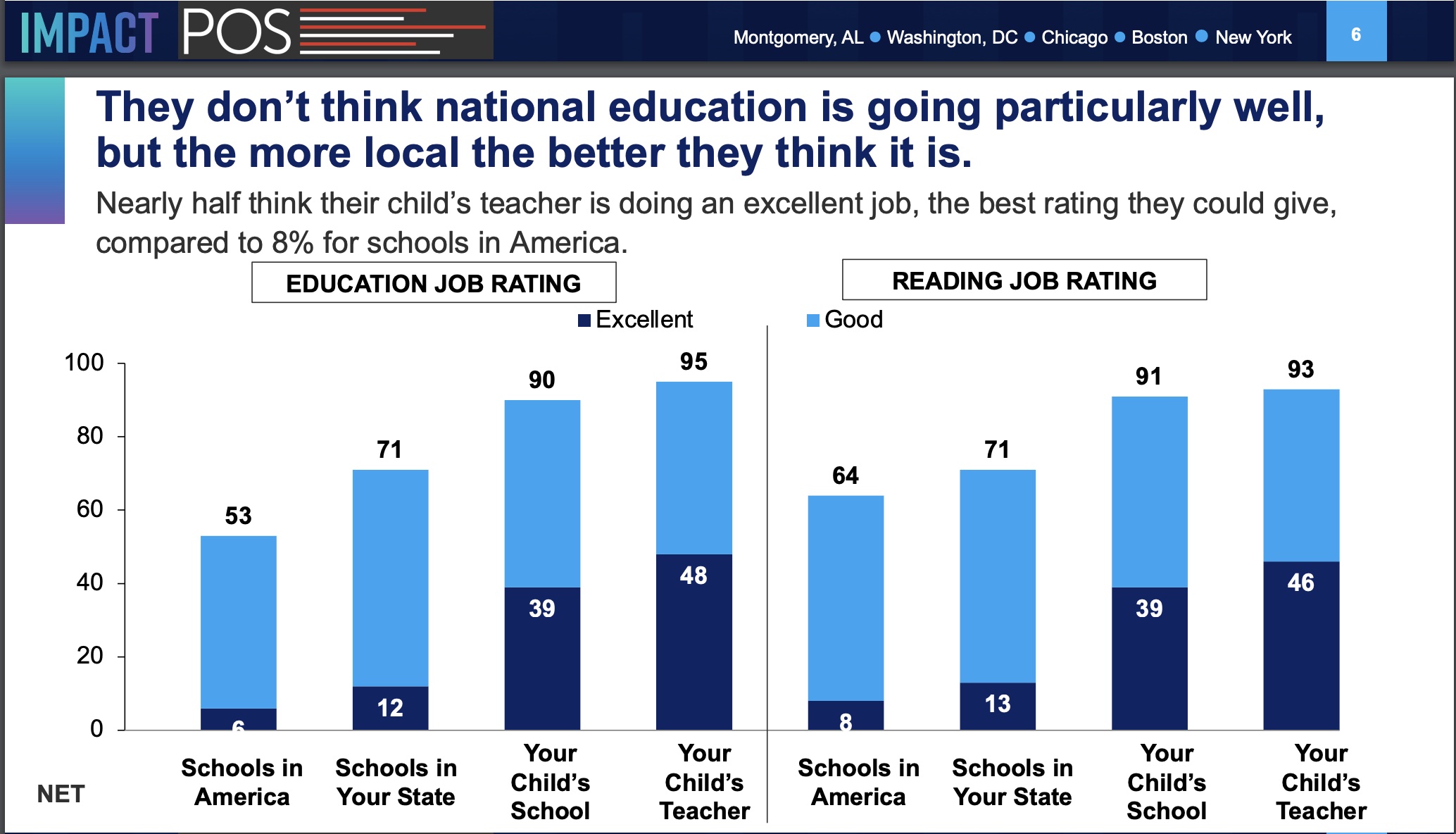
The survey shows both that parents held relatively positive views of their children’s reading achievement and their teachers. But once those parents were exposed to the false narrative of SOR, their opinions were more negative. The misrepresentation of NAEP data and cueing/guessing was presented to parents as facts, and the change in opinions confirmed that the SOR false information is incredibly effective and mostly embraced uncritically:

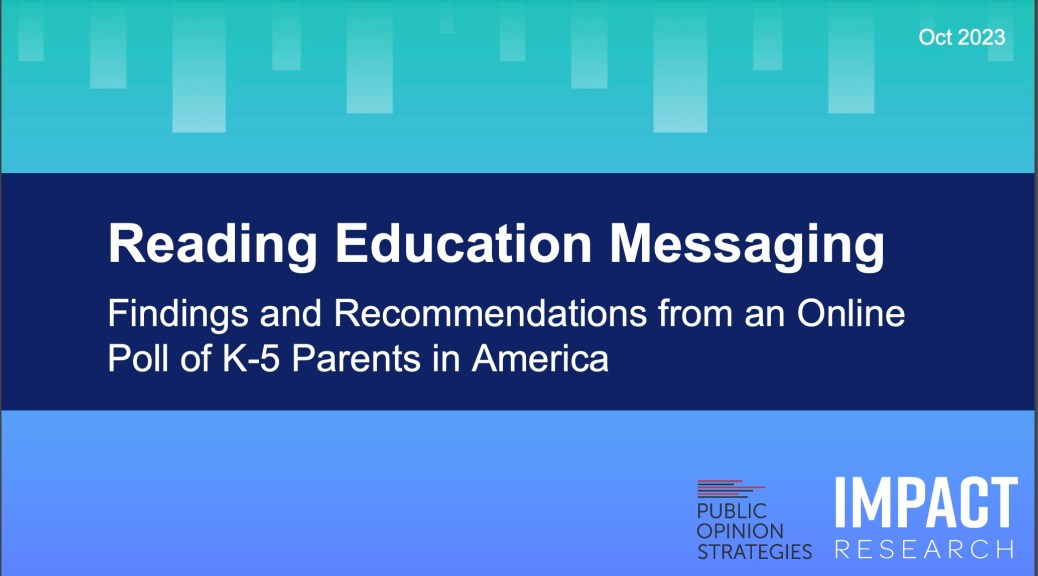
Reading Education Messaging: Findings and Recommendations from an Online Poll of K-5 Parents in America

The most shocking aspect of the developing SOR multiverse is that journalists, the public, and political leaders believe that 2/3 of students are not proficient readers and that same NAEP data show that 2/3 of students are reading at grade level or above—inverse “facts” simultaneously “true.”

Nearly as stunning is the Urban Legend around cueing and guessing that, again, simultaneously is believed by almost everyone while not existing in reality:

Narratives that speak into cultural beliefs are incredibly powerful, and bandwagons are difficult to slow down or reroute.

As a consequence truth and nuance are lost.

In a recent co-authored scholarly piece, colleagues and I confront the imbalance between the SOR movement/marketing and the full body of research on reading.

The responses to that article on social media and even among literacy scholars reflect the same problematic dynamic exposed in the survey of parents; nuance struggles to keep its head above water during a tidal wave.

I am currently at the annual NCTE convention and will present on a panel tomorrow about SOR; however, even at a professional conference, being critical of SOR is an outlier stance.

The SOR misinformation has won—at least for now.

In 5 or 10 years, the next reading crisis will somehow overwrite this one—simultaneously all of the century’s worth of reading crises existing and never having happened.

Just like now.

Now seems impossible, in fact, since “kids today” (no matter when “today” is) have never been proficient readers.

Yet, here we are, inexplicably harder to believe than Bigfoot.

NAEP, Media Fuel Manufactured Reading Crisis

Consider how people would respond to the two following statements for a survey:

  1. About 2/3 of US students read below “proficient” on national testing.
  2. About 2/3 of US students read at or above “grade level” on national testing.

We don’t need to imagine, however.

Coverage in Education Week of a new survey on parents’ perceptions of reading reveals incredibly damning findings—damning not about reading achievement or teaching but about NAEP and media:

The survey’s findings reflect that damning dynamic:

Yet, despite the misinformation about NAEP, these survey findings reflect decades of surveys showing parents generally have positive views of their children’s schools and teachers but believe public education nationally is failing:

This survey, though, exposes the source of that disconnect—media coverage of NAEP data, which seems to be designed more to manufacture a crisis than to assess student reading achievement.

The opening two hypothetical statements show where the problem lies because the first is an accurate statement about NAEP and the second is an accurate statement about reading at grade level.

As NAEP explains and others have addressed for years (see below), NAEP “proficiency” is well above grade level and “basic” represents something close to grade-level proficiency. However, the larger problem is the US has no standard criteria for “grade-level proficiency” and states set their own levels with NAEP using terminology that is at least confusing if not intentionally misleading.

Another problem, as I have argued, is that “grade level” is likely a worse metric than “age level” since many states now implement grade 3 retention based on reading tests, corrupting populations of students being assessed since data show that student scores on early reading are strongly correlated with birth month.

See the following to better understand NAEP and media misinformation about reading proficiency:

The US has a long and troubling history of media and political leaders being more invested in a manufactured education crisis than actually investing in better public education.

As a result, parents and students are trapped between their own genuine appreciation and need for effective, responsive reading instruction and a media-fueled political campaign to misinform the public because a constant state of reading crisis benefits a contracting media and generates political capital.

The reading crisis in the US is that the public is reading misinformation about reading and teachers, grounded in a national testing program designed to manufacture crisis.


NOTE

The survey also shows how misinformation about three cueing and phonics misleads parents and distorts their perception of reading instruction:

The framing of the survey misrepresents both cueing and guessing; see the following:

ILEC Response: Sold a Story: How Teaching Kids to Read Went So Wrong

International Literacy Educators Coalition

ILEC Vision: To promote literacy learning practices that enable all children and youth to realize their full potential as literate, thinking human beings.

Download a PDF of the response.


ILEC Response: Sold a Story: How Teaching Kids to Read Went So Wrong

In 2017, Emily Hanford wrote a piece about dyslexia. In it, she concludes that “This is for all kids, not just those with dyslexia.” In 2022, her podcast, Sold a Story continues a theme in her 2018 “Hard Words.”[1] Her journalistic efforts since then have remained unchanged with the underlying message described by Hanford about Sold a Story:

It’s an exposé of how educators came to believe in something that isn’t true and are now reckoning with the consequences — children harmed, money wasted, an education system upended.

A critical read of  the segment titles highlights the biased, binary, and productionist view of this podcast: The Problem; The  Idea; The  Battle; The  Superstar; The  Company; The  Reckoning.

Positive Aspects of the podcast:

  1. Brings attention to the importance of early screening of reading.
  2. Highlights that students benefit from direct, explicit instruction in reading.
  3. Attempts to bridge research to practice.
  4. Allows consideration of race/social class inequities of student reading proficiency.

ILEC Concerns:

  1. The reporting relies heavily on sensational anecdotes from parents and teachers, and uses dramatic phrases, such as “children harmed” and “money wasted” instead of citing representative research.
  2. The reporting misrepresents many practices, people, and organizations as well as oversimplifies key issues and ignores nuance. 
  3. It perpetuates misunderstandings such as Balanced Literacy is the same as Whole Language and the three cueing system teaches students to “guess.”
  4. The podcast focuses on small pieces of information taken out of context such as old audio recordings of Marie Clay. This shows the author’s lack of awareness that education research and resulting practices constantly grow and change (not simple, not settled).
  5. Hanford’s conclusion is that there is one way to teach reading that works for all students. This conclusion is unsubstantiated and not based on current research.
  6. The claims are grounded in a fundamental misunderstanding of NAEP data[2], using this to consistently perpetuate a manufactured reading crisis.

[1] See How Media Misinformation Became “Holy Text”: The Anatomy of the SOR Movement

[2] See Loveless, T. (2016, June 13). The NAEP proficiency myth. Brookings. https://www.brookings.edu/blog/brown-center-chalkboard/2016/06/13/the-naep-proficiency-myth/ and Loveless, T. (2023, June 11). Literacy and NAEP proficient (Web log). https://tomloveless.com/posts/literacy-and-naep-proficient/; also Scale Scores and NAEP Achievement Levels

Why I Support Universal Body Autonomy

[Header Photo by Alexander Krivitskiy on Unsplash]

Today is election day, and we should all take time to recognize what we believe, and why, especially as that informs how we vote, and again, why.

I am ideologically realistic. In fact, my stoic realism is off-putting to many people who perceive it as confrontational, arrogant.

However, here is an ideal I find very compelling: A free people committed to a democracy insuring for all life, liberty, and the pursuit of happiness.

The United States of America began at least rhetorically along this path, but has fulfilled that ideal only sporadically and often begrudgingly.

The country began in slavery, took a century and a half to allow women to vote, and another four decades to begin to acknowledge racial equality.

In my lifetime, states had to be compelled by the Supreme Court to allow interracial marriage and gay marriage, and of course, a woman’s right to reproductive rights were granted and then stripped away.

Here at what is reductively called the abortion debate is where I see an essential right that cannot be separated from anyone’s full humanity, and of course, the right to life, liberty, and the pursuit of happiness—universal body autonomy.

Universal body autonomy includes reproductive rights and access to abortion, but our public debates would better serve our ideals if we focused on universal body autonomy.

Since no man is ever compelled to carry a pregnancy to full term, no woman should be compelled to carry an unwanted or medically dangerous pregnancy to full term.

To me, it is that simple in terms of political and cultural ideology—that clear if we as a people do genuinely believe in human freedom and autonomy and that elusive right to life, liberty, and the pursuit of happiness.

Focusing narrowly on abortion is reductive, but that element of body autonomy and reproductive rights can be navigated along the same lines.

First, claims that life begins at conception is a belief, not a medical fact. Among a free people who honor religious freedom, anyone has the right to hold and practice that belief.

However, no one has the right to compel others to conform to their beliefs.

I fully support those who want to advocate for fewer or even no abortions, but again, that is a reductive stance. Abortion is the consequence of unwanted pregnancy and medical danger.

To reduce abortion, we should advocate for practices that reduce unwanted pregnancy (universal access to contraception, comprehensive sex education) and support universal healthcare.

Historically and currently, though, adult men are by default more free than women and children, the latter two experiencing reduced body autonomy by law, compelled or neglected by government policy.

This brings me back to election day, voting, how we vote and why.

Increasingly in my lifetime, Republicans have used religion to justify government restricting basic human autonomy—ignoring religious freedom, individual freedom, and the ideal of universal life, liberty, and the pursuit of happiness.

Whether an elected official is openly religious or not is irrelevant; when an elected official chooses to use government to impose beliefs of a few onto everyone, then we no longer find ourselves in a democracy seeking the ideal that should ground us.

Abortion access and reproductive rights are subsets of universal body autonomy, and until we guarantee everyone universal body autonomy, we remain no better than our founders who used “life, liberty, and the pursuit of happiness” as mere rhetoric for anyone not like them.

Wonder Woman Historia: “The Alchemy of Collaboration”

“What would I write if I could write literally anything in the DC Universe?” writes Kelly Sue DeConnick in her preface to The Pitch for Wonder Woman Historia (the hardback collecting the three volume series), adding, “What was the comic I had always wanted to read?”

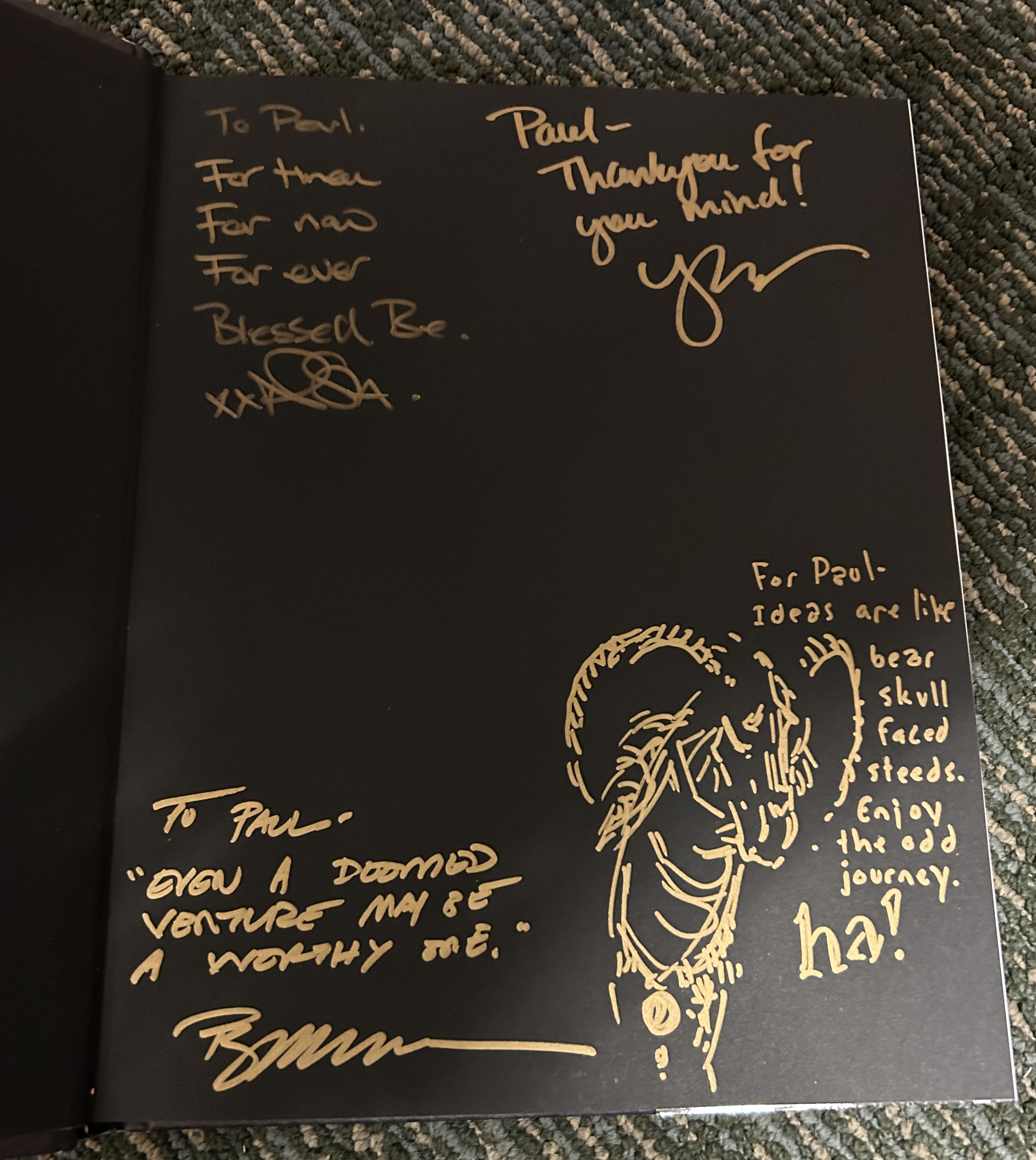
A very fortunate 62-year-old reader and collector of comic books, I am reading a copy signed by the wonderful creative team including DeConnick, Phil Jimenez, Gene Ha, and Nicola Scott:

In the second point DeConnick makes about The Pitch, she focuses on what I think must be acknowledged about this thoughtful interrogation of the Wonder Woman myth as well as much of what makes us human (especially issues related to gender):

I honestly don’t think any of my favorite moments appear in the pitch—they were all discovered later, in the writing, the rewriting, or the alchemy of collaboration.

Wonder Woman Historia

As an avid reader, a writer, and a teacher of writing, I wish I could bottle that thought and pour it into my students—and anyone who seeks to be a writer, to be creative.

That’s it, that’s the path to the beautiful that is Wonder Woman Historia, a work that she be read and reread, a work that should be careful savored by looking carefully at the stunning artwork at both the close-up and at the widest possible angels that reveal some of the best work ever done in comic books.

I cannot recommend this work enough, both for readers but also for anyone who has the opportunity to bring this text into a classroom.

There isn’t much new I can offer so I collect below the four posts I have written already hoping you find a moment to read—but after you read, and reread Wonder Woman Historia.

Enjoy.


Wonder Woman Historia: A Reader