That is an inevitable consequence of living into your 60s, and hopefully beyond.
I received a text message that my high school math teacher and later teaching colleague had informed a group of people that my high school English teacher, Lynn Harrill, passed away yesterday.
He had been suffering from Alzheimer’s—something I found out about second hand, explaining several months of fruitless phone calls from him when he never spoke—but the end came quite awfully after Covid prompted a stroke.
I sat on the couch with my partner, and there was nothing I could do except a sudden and deep burst of crying.
This reminds me too much of my mother’s death—a sudden stroke and then dying of cancer a few months later—and my father dying sitting beside my mother right after that stroke.
The end is always too, too awful, and humans, we are too, too frail.
Lynn was a wonderful human and a life-changing teacher who willed me to be a teacher and a reader and a writer.
No one had a greater impact on who I am than Lynn, and as he would attest, that is what teachers do.
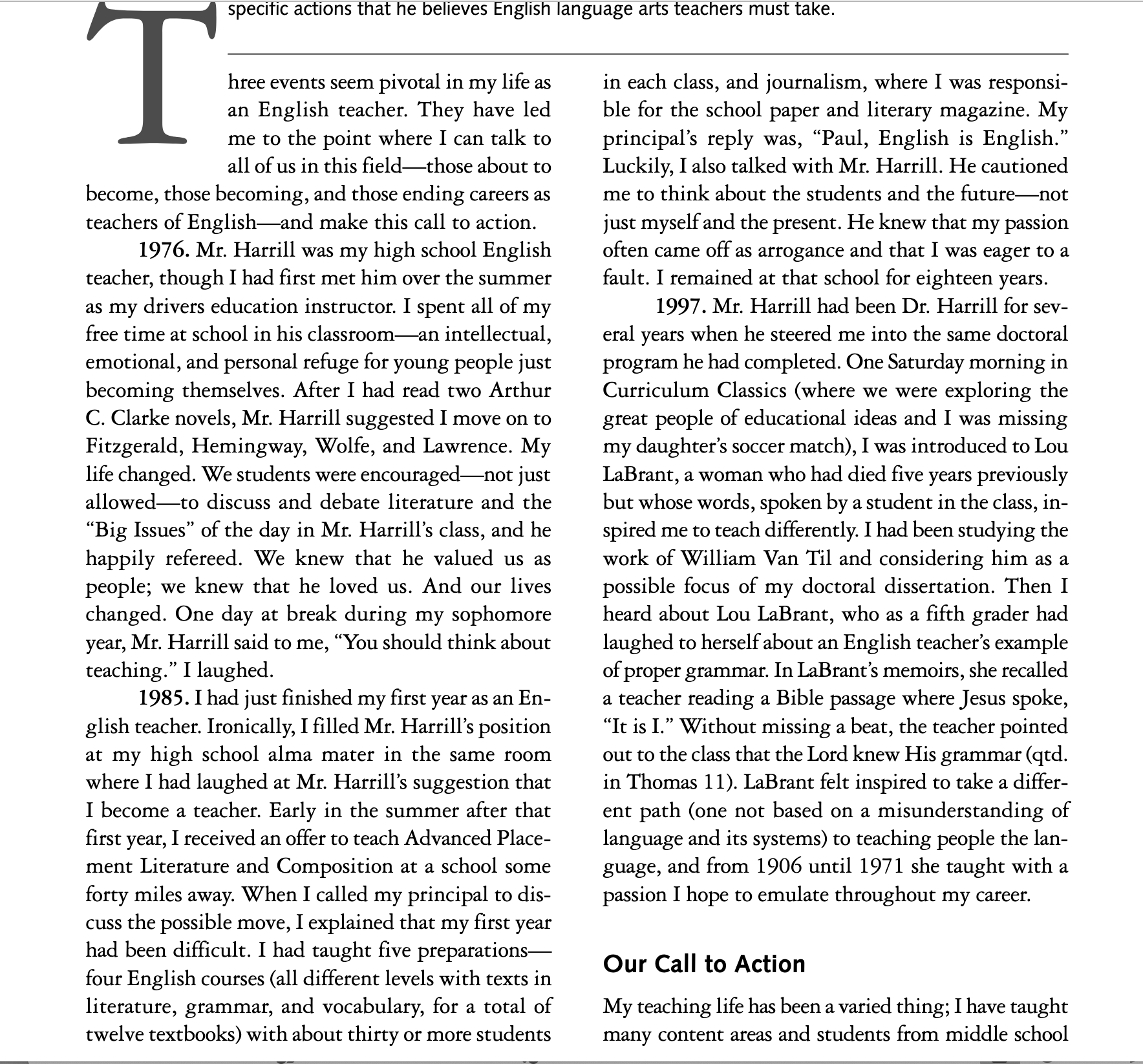
I wrote about Lynn in English Journal in 2003; this opening covers our journey, which includes the odd details of my taking his ELA high school teaching position in 1984 and then his professor position in 2002:
In 2022, I was kindly given the opportunity to record a brief video honoring Lynn as well:
Like Kurt Vonnegut, I am not religious, but I remain hopeful there is something better for us here on earth and maybe even once we draw our last breaths.
And, so it goes.
RIP, Lynn Harrill.
With love and my deepest gratitude.
P.S.
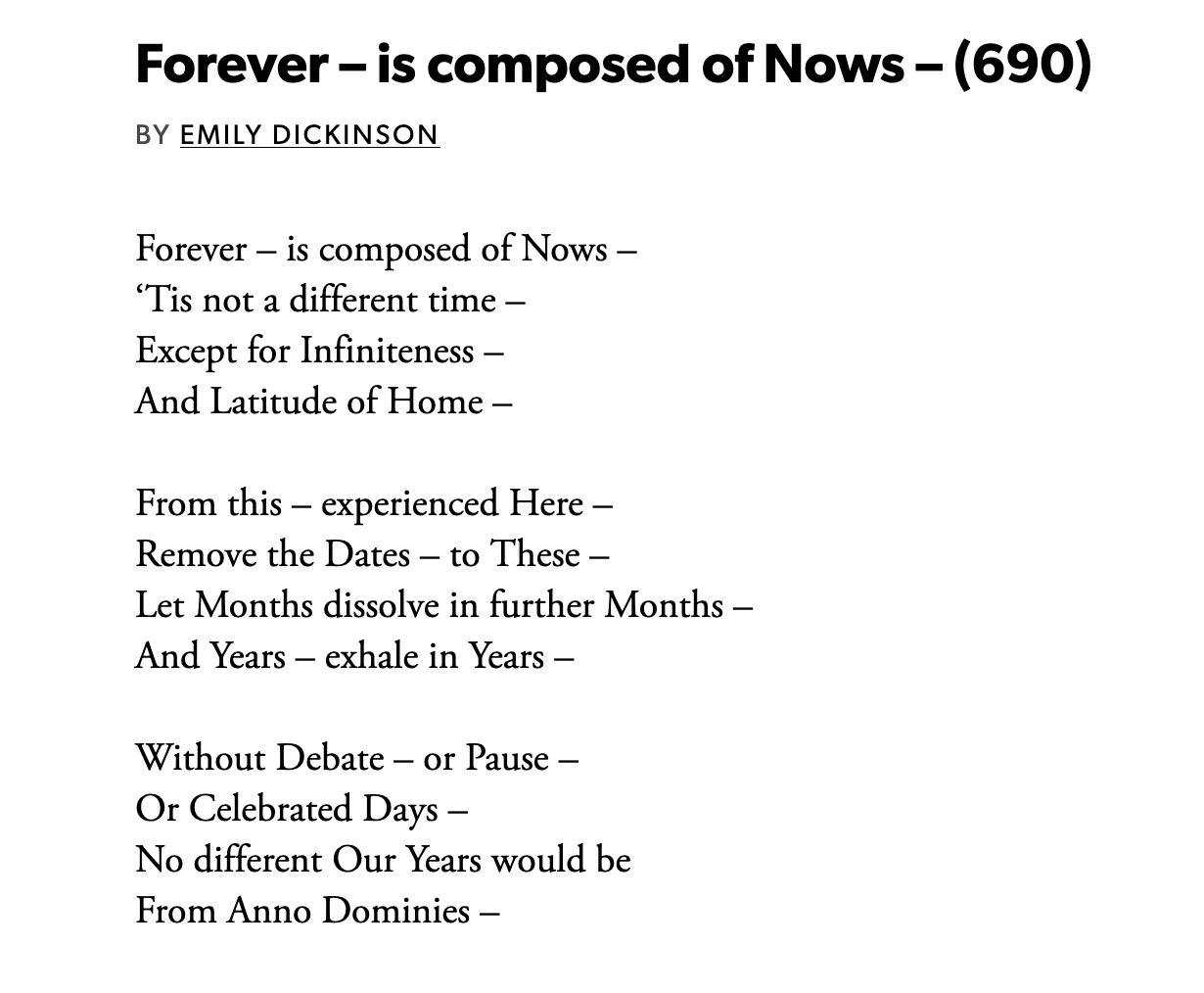
I will always associate Lynn with the poetry of Emily Dickinson; he continued to teach me about her poetry even once I was a teacher. I cannot think of a better thing than asking others to read a bit of Dickinson with Lynn in your heart or thoughts:
brown men and women in hard hats neon yellow and orange shirts and mud-caked work boots build apartments along the rail trail where i ride my bicycle for recreation and exercise
i know they are brown and i have heard them speaking spanish but i cannot say they are mexican or south american i have seen them smile and heard them laughing i don’t know if they are citizens i don’t know their politics but i know they are brown
one day i pass them during lunch playing soccer in those mud-caked work boots on the new asphalt parking lot as if playing soccer is the most normal thing to do in south carolina in late july 2024 when the whole world is going to hell around us
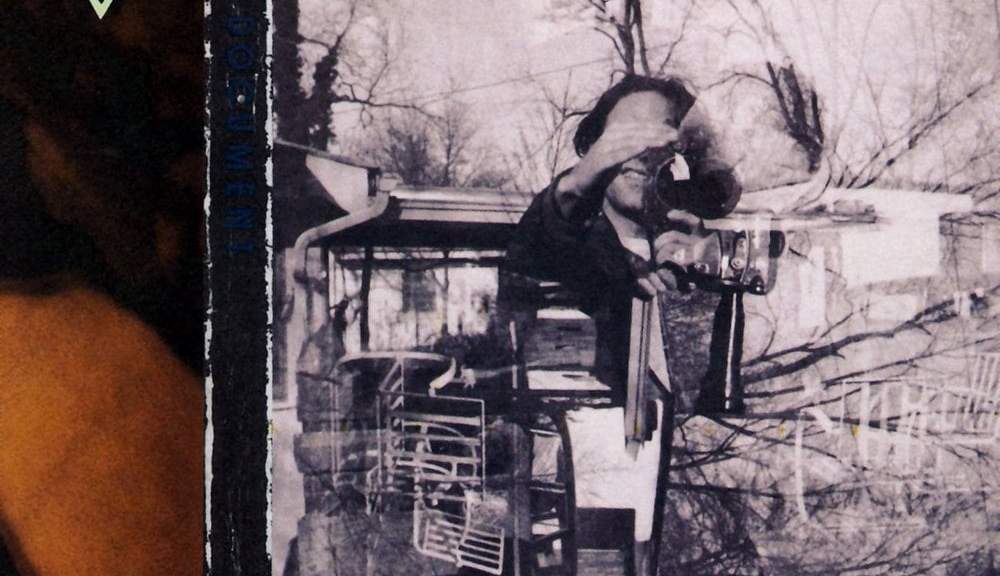
I just finished my fortieth year as a teacher, spending the first 18 years as a high school English teacher in my hometown. As an English teacher, my favorite unit was teaching poetry grounded in the music catalogue of alternative rock group REM, based in Athens, GA, only a few hours from that high school.
Partly as a reference to REM’s song and partly as a bit of a play on words, “Welcome to the Occupation” was posted on my door—both as a reference to occupied territory and to “occupation” also meaning “job.”
And as you enter my class in this course, I think you may be initially disoriented because I practice my job of “teacher” and have expectations for your job as “student” in ways that you likely have not experienced before.
Your job as a student, I believe, is to learn, and my job as a teacher is to create the best opportunities for you to learn.
What that means is that you must do the work—not me—in order to learn at the highest level possible.
I have a doctorate, called a “terminal” degree; in other words, I am finished being a students. Thus, I do not want or need to do your assignments for you.
While I will provide a great deal of guidance, feedback, and opportunities to revise and resubmit your major assignments (often essays), I will be adamant that you do the work. I resist hand-holding and making your assignment decisions for you.
That environment, I understand, can be stressful; therefore, I do not grade your work, and you are not at risk of losing points or receiving a low grade simply for making your best effort and occasionally falling short of expectations.
If your work isn’t what is expected or required, you simply must try again—nothing lost except a bit of time.
In fact, since you are learning, I expect you to not quite yet know what to do or how.
If you could do all the work of the course perfectly on the first try, there would be no point for you being in the course, right?
I must also stress that my feedback is never in anger, with disappointment, or offered in any context except hoping I can help you be successful.
That I am demanding or have a high bar for submitting work that I will accept and respond to is a compliment, not a criticism. I truly trust you will succeed and often excel giving the support and expectations I provide.
You may or will struggle mostly not because of something lacking or “wrong” with you, but because this is a new kind of expectations, a new kind of occupation for you as students.
That different expectation is that you are doing the work and learning for you, and not me.
One thing we will work to avoid is you behaving like a student. In other words, when you have an essay to work on, I want you to think and act like a writer, not a student turning in a paper to the teacher for a grade.
I try, then, to make sure the writing assignments are the sort of writing real writers write (not research papers, for example, because that isn’t something writers do).
So what are the habits you have developed, actually learned, over years of formally schooling that I want you to resist and change?
First, I want you to set aside the deficit ideology you have been taught. Making mistakes, or errors, and the need to correct your work—these are deficit views of your job as a learner.
In other words, you will not be correcting your writing. I want you to do what writers do—revise and edit. And those revisions and edits are your decisions in the context of the assignment and the expectations of the type of writing you are drafting.
Next, I want you to take ownership of your learning and work. I often have students ask me what to do or how to do something that they can, and should, simply explore on their own.
For example, when students are working on a cited essay, they often ask how to cite a specific type of source (for example, a YouTube video or a Kindle book). Instead of asking me to do that work, a student can, and should, simply do an internet search for how to cite that source in the format required.
These shifts are broadly about shifting the center of power from the teacher/professor to the learner.
This is your learning, and your work. You will gain more and value the work more as you begin to have accountability for that work instead of shifting the responsibility to your teacher or professor.
I don’t see the occupations of teacher and student as games, or some sort of tug-of-war between competing forces.
Teaching and learning are collaborations that should be grounded in the experiences that create learning.
Doing work for a grade under the authority of a teacher is the experience most of you have had, but I think that is asking way too little of either the teacher or the students.
What we will do in here is messy, unpredictable, frustrating at times, but highly rewarding when we simply run out of time for this experience and must move on.
It is best not to fret, trust yourself and me, and then also trust that you will learn even though you have much more to learn.
And that is fine.
The day we stop learning is a kind of end to be fully human.
Humans fall a bit short, learn, and continue toward the next things that make us the new person we continue to become to be.






 dr. p.l. (paul) thomas