

i am riding laps
on my bicycle
a bright saturday morning
just a few days before halloween
i turn onto cemetery hill
and see an older black man
pausing beside his truck
smiling widely at me
“jealous of you” he says
as i am passing
without looking back
i say “it’s nice!”
over my shoulder
i hear “i know it is”
joy in his drawl we share
as i pedal up the hill
in an alternate universe
i u-turn and coast back
we shake hands
and nod as men do
in reality i ride on
my chest filled
with the thing he gave me
trying not to cry as men do
—P.L. Thomas
Monthly Archives: October 2024

Almost Story: Normal (Fiction)
[Header Photo by Mike Benna on Unsplash]
“I’m okay. My son’s on his way.”
Joyen heard his father say as he walked up behind him sitting on a bench beside the rail trail he walked every late morning before having an early lunch.
Chicken salad sandwich and fruit. Or twice baked potato soup. When it was colder he’d order decaf and off the brunch menu. Minus any bacon with a soft grunt.
“Race?” The officer was a short, very round Black woman leaning forward and trying to determine if his father was, in fact, okay.
“No race. He was normal.”
Joyen thought the officer’s vest and gun were a bit much for the type of policing she did. He couldn’t stop staring at the gun.
The three of them were still and silent for several moments.
“No. Race.” The officer was tapping her stylus on her tablet when Joyen realized what his father said.
“Dad. Was he white?”
“He was white,” his father said as if Joyen had been there the entire time.
Joyen’s eyes drifted back to the gun as his father gave more description and the officer’s stylus tapped across the screen.
Dark orange hoodie. Black sweat pants. Dirty canvas shoes. The bicycle was way too small for the person who knocked his father down.
His father said that as he was falling he heard the person yell, laughing, “Fuck you, old man!”
“Well, I think I know this person, Mr.—” The officer tapped the tablet screen to scroll up on her form. “King. Mr. King. I’m afraid that’s everything she owns. It was a woman. She has problems.”
Joyen forced himself to look away from the gun. He stepped more to his father’s side and noticed the small knot forming on his father’s temple. Turning purple.
The scrape was glistening. Bloody. A red trickle zigzagged down the wrinkles around his father’s eye.
Joyen turned back to the officer still tapping on her tablet. Over her shoulder, he saw his father’s red ball cap in the grass by the trail.
Neither the officer nor his father had mentioned it.
A crow was pecking through the grass just past the hat.
“Dad.” Joyen rested two fingers on the bone joint of his father’s slumped shoulder. “I don’t think you are okay.”
See Also

Recreation
In the wake of Helene a few weeks ago, Western North Carolina and the Upstate of South Carolina continue to recover and rebuild.
Entire businesses and even towns in WNC were washed away in the flooding. My home in the Upstate of SC experienced a great deal of loss as well, but often many magnitudes less than nearby WNC.
My own experience was mostly inconvenience and throwing everything from our refrigerator in the apartment dumpster. But the greatest loss for me has been emotional, my family connections to Asheville NC as well as the loss of cherished businesses and places around Asheville and Chimney Rock, one of the towns essentially swept away in the historic flooding near Lake Lure.
I am compelled again to attempt recreation, a way to remember as well as a way to preserve things that are both gone and precious.
Chimney Rock
When I was a child, my parents loved to simply drive into the mountains, sometimes to Asheville to see my mother’s family but often up the Saluda Grade or to the tourist town Chimney Rock.
In January 2022, we went with friends to hike near Lake Lure. Afterward we drove into Chimney Rock to eat and have a few beers at Chimney Rock Brewing Company, a small, quaint facility right on the Broad River and in the shadow of Chimney Rock.
We sat outside on the deck by the river, freezing and huddled near the fire pit with the locally famous mountain and US flag just above us.


Where we were sitting, laughing and shivering, has all been washed away with most everything along the Broad River—a name now eerily horrifying in the wake of its power.
Zillicoah Beer Company
In late January 2021, I invited friends to one of our favorite places and breweries, Zillicoah, right beside the French Broad River.
For people who hadn’t been there, I would always add that the facility was rustic, but beautiful, and the beer was wonderful.
That day was a celebration of my turning 60, although we often found ourselves at this brewery close to West Asheville because we could sit in the chairs or at picnic tables near the river with our dog, Ren, and simply enjoy the sunshine and soft sounds of that flowing water.
January 2021 was bitterly cold, however, so we huddled for a while under the awning and close to the gas heaters that did little to ease the frigid wind.
None the less, we laughed and we had a few proper pints and we had no idea that almost the entire place would eventually be swept away by the very river we have found calming and beautiful.
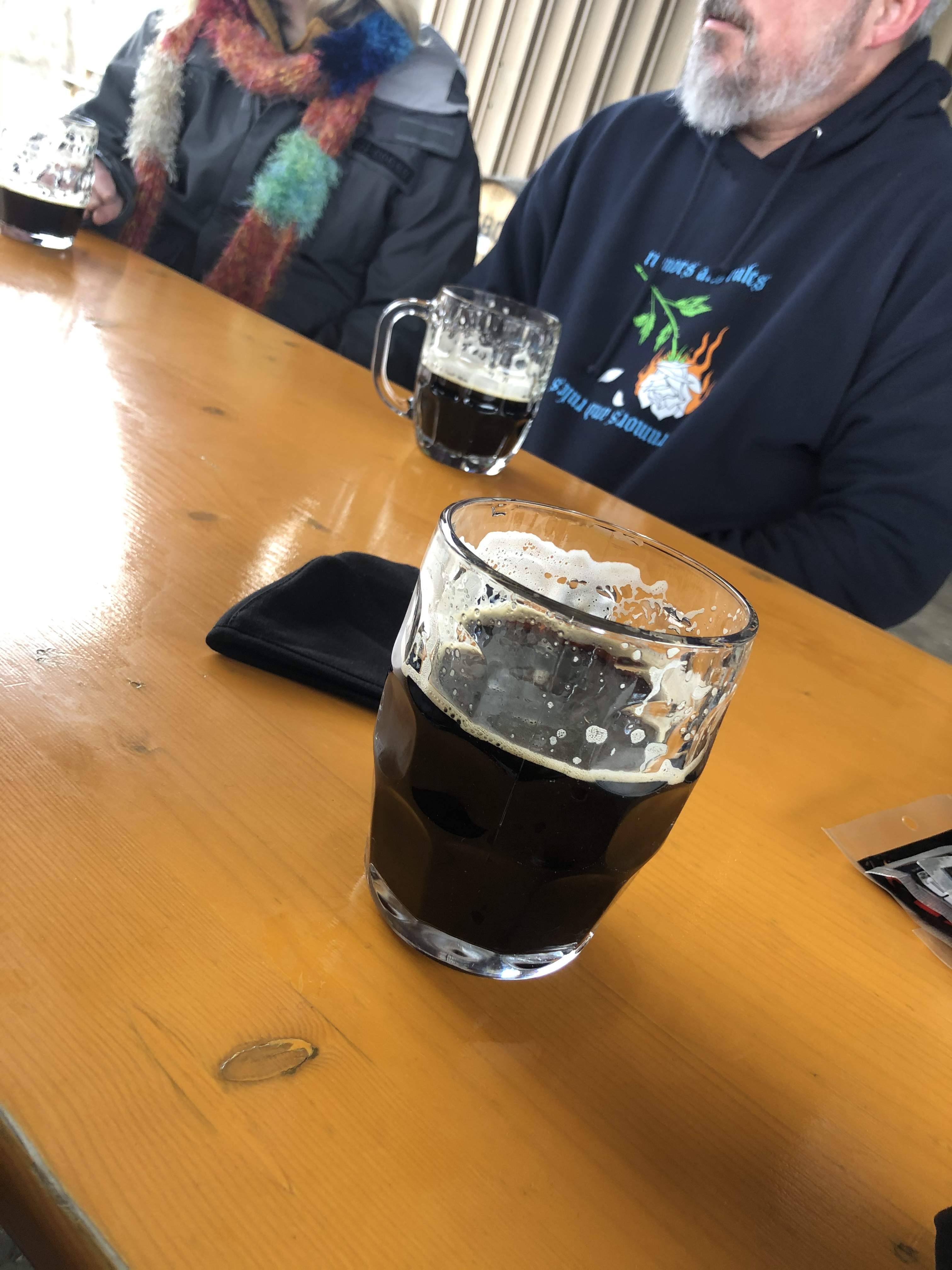


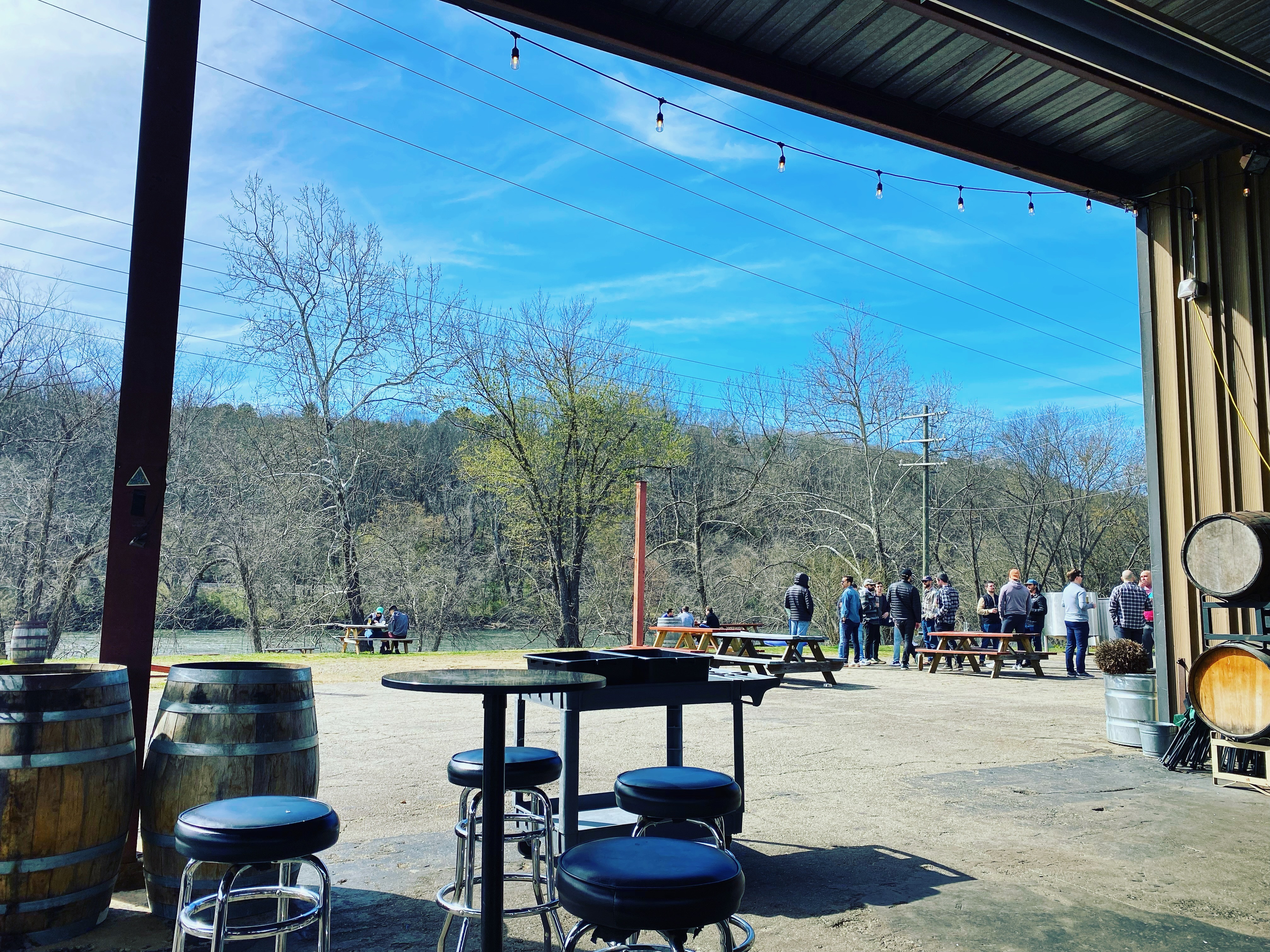


Once the devastation of Helene was revealed, I wasn’t sure if Zillicoah would survive, could survive. But within days, the owners were accepting donation—one of my first gestures for helping—and now are themselves attempting to recreate their business, their livelihood.
Pleb Urban Winery
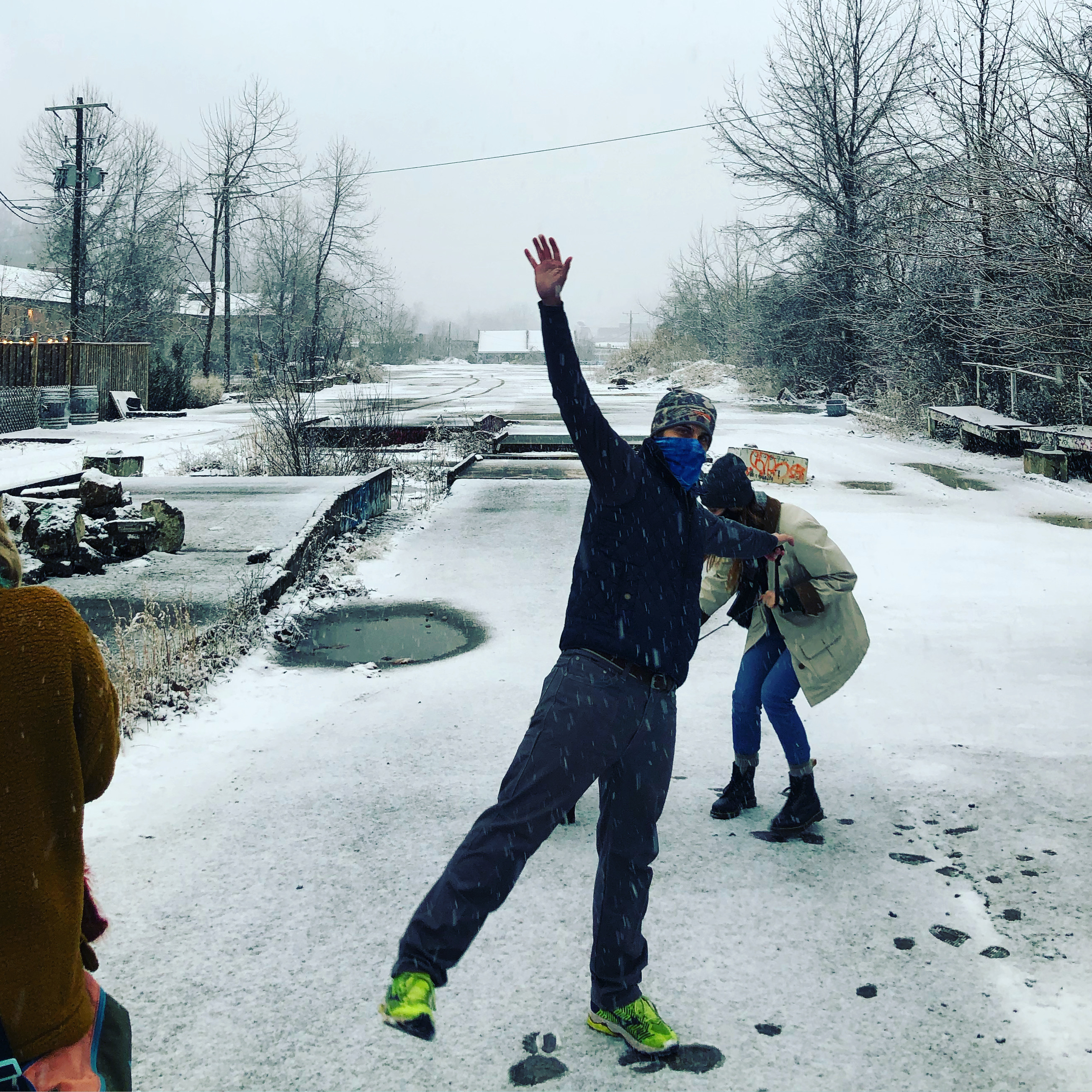
Also near West Asheville at one end of the River Art District (RAD) in Asheville, Pleb Urban Winery lives very warmly in my heart. Our last stop on my 60th birthday in 2021 was at their beautiful facility where it began to snow.
I am not a wine person, but we have always loved the place. And that day was childlike and magical. A birthday, mull wine, and snow.

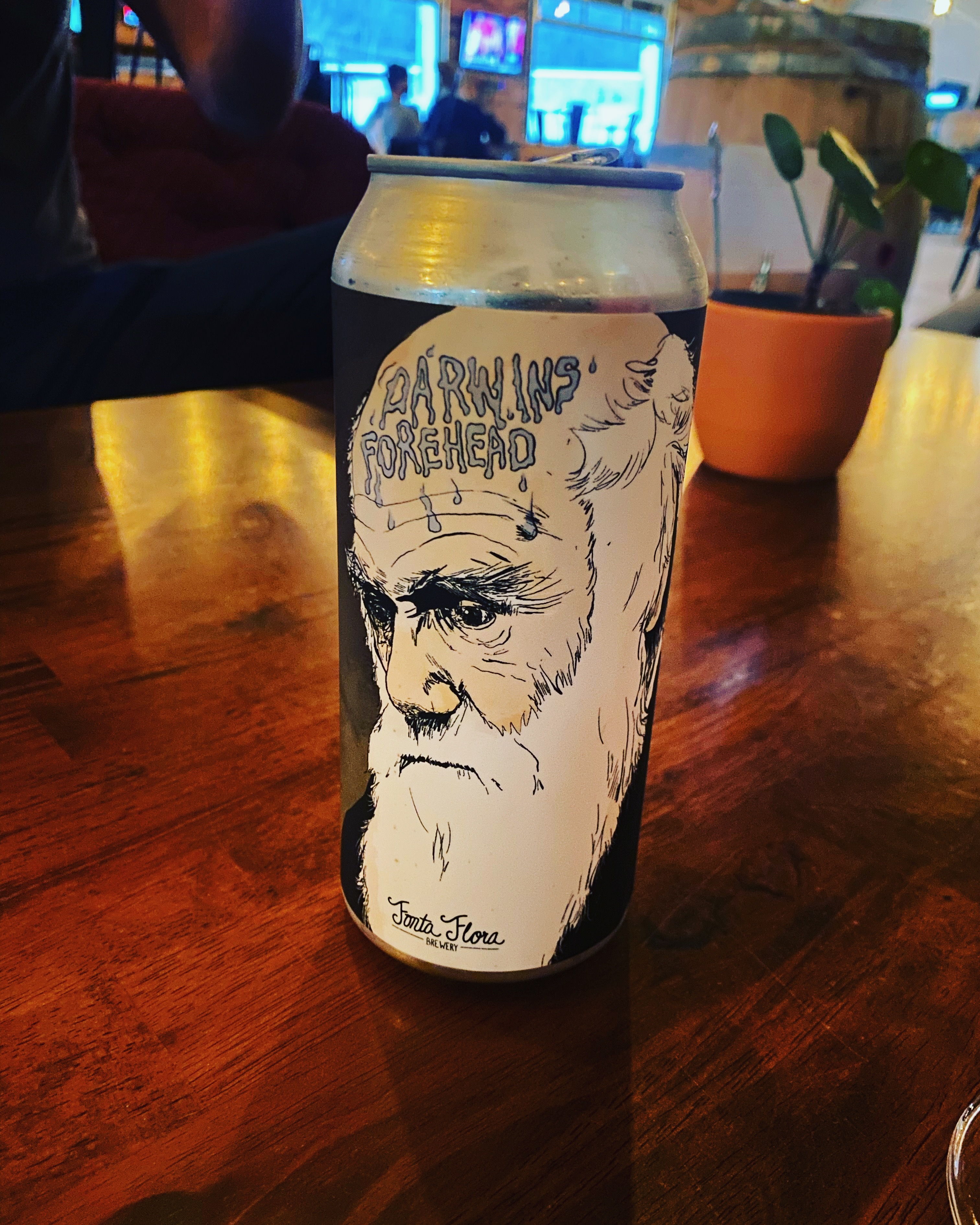




When we brought home our poodle, Ren (short for Karen, named for The National’s “Karen”), she was dark red and only 3 pounds. One of our first places we took Ren was our local brewery, Rockers.
Since she was tiny, I would hold her in my lap. She gradually developed a habit of resting the front half of her body on tables as visiting breweries and taphouses was a regular outing.
She is two now and almost 50 pounds so this is something we have lost as well.
River Arts District
One of the most wonderful and recently revitalized areas of Asheville was the River Arts District (RAD). Helene’s impact there is very hard to comprehend since it is not just huge loses of buildings but of peoples’ businesses and art.
Weaving through the artists’ workshops was calming and peaceful. We often simply walked around as part of our days in Asheville, a perfect counterbalance to the tourists crowding the South Slope or downtown.
Since I have done a great deal of work on James Baldwin, the mural outside one building was always a moment to pause.


As artists do, despite the tragic losses, they have begun to salvage and resurrect artwork feared gone.
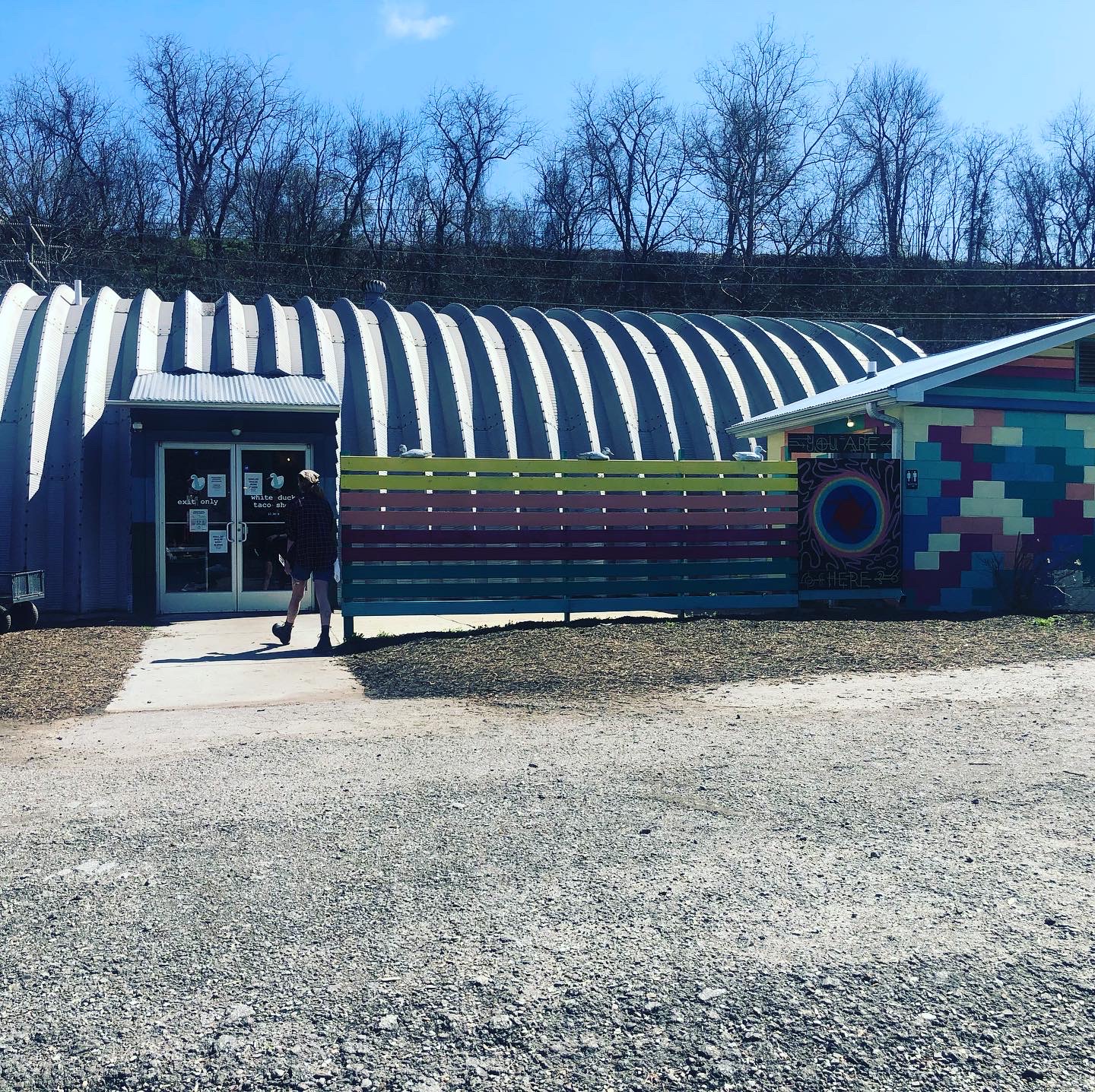
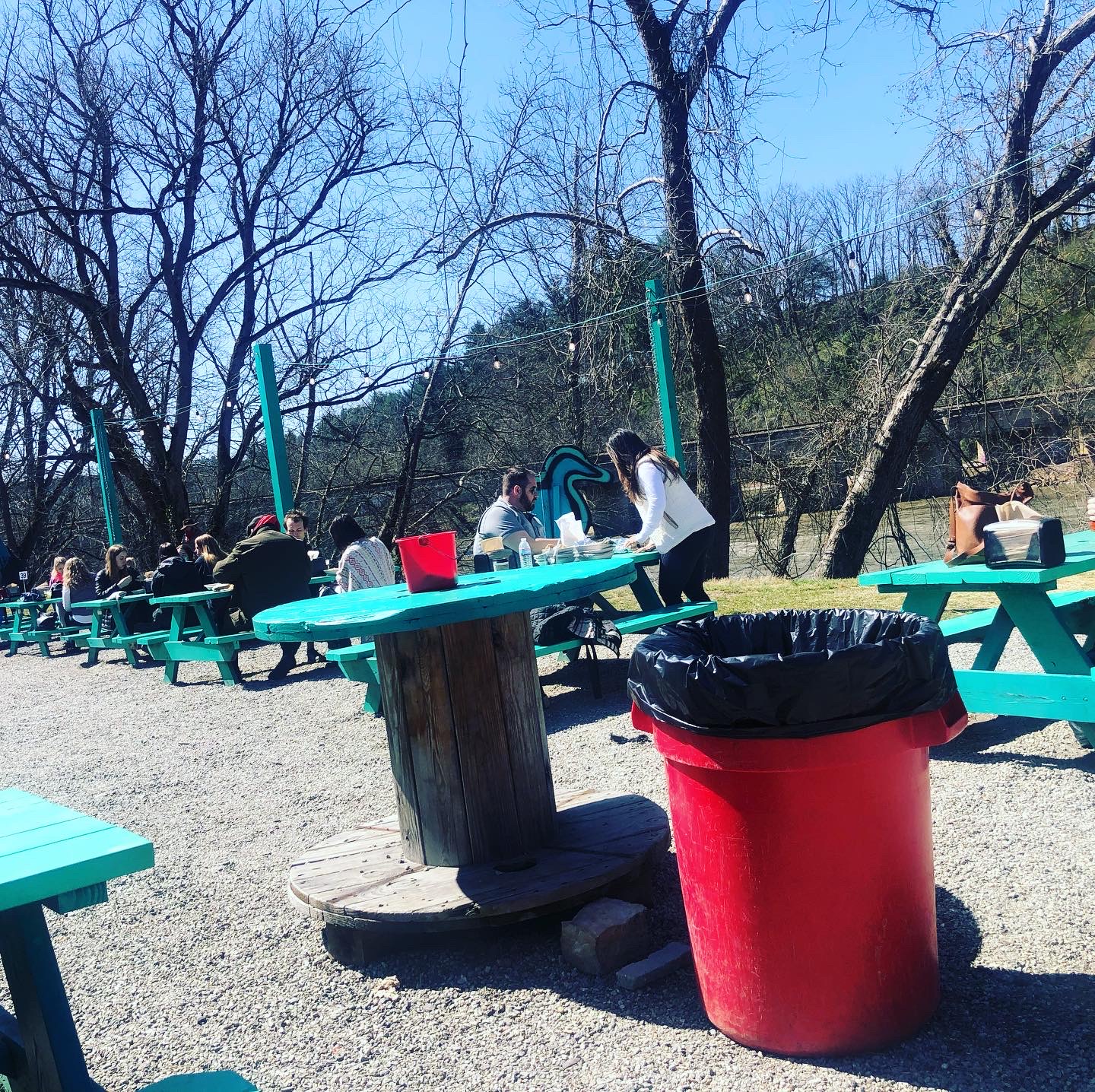
White Duck Taco
Many years ago, when I started going to Asheville as a cyclist, one of the first places I went was the original White Duck Taco that was a house you could see across from where eventually New Belgium built their Asheville location on the French Broad River.
Since our visits to Asheville often included mostly West Asheville and RAD, we would occasionally swing by the location in RAD, also impacted by Helene.
We, of course, still love Asheville, but we are heavy with the losses.
Recreation is a way to express how much we love the things that make us feel fully human, more human.
Recreation is how we salvage and resurrect and move forward.
Nothing will ever be the same in Asheville, but nothing was ever going to be the same.
This is our living and we’d better be sure to look hard enough each time.
This is it. This is everything.

astronauts (4 am)
[Header Photo by Nong on Unsplash]
that’s all we want
Something to cry for, and something to hunt
“Looking for Astronauts,” The National
we are all astronauts
given only one mission
and only one fragile spaceship
we need to be brave and kind
we should be far more careful
throughout this unpredictable journey
—P.L. Thomas

Oktoberfest (full moon)
[Header Photo by Ganapathy Kumar on Unsplash]
It was an unusually
Cool day in October
For South Carolina
He was drinking
An Oktoberfest pint
Märzen people mispronounced
While reading a novel
That reminded him of her
Choosing this nonsense of him
He had loved every curve of her
For longer than seemed possible
Through far too many angers
And there between sips
Of a beer perfectly amber
He was thinking about her
The best thing he thought
Was how much he liked her
Like these chilling sunsets of fall
Nobody told them they shouldn’t
Stand outside holding hands
Under a cold full moon
Like children hoping someday to be lovers
—P.L. Thomas
Proposed: NCTE Resolution Statement on Teacher Autonomy
URGENT
Last Chance to Vote on Proposed Resolution
Each year all NCTE members have the opportunity to propose resolutions that address issues and ideas pertinent to the field of literacy education. The proposed Resolution on Teacher Autonomy Grounded in Expertise was approved by members at the Annual Business Meeting on November 20, 2024. The next steps in the NCTE Constitution, as amended and approved in November 2023, require that resolutions be presented to the entire membership for vote and comment. The results will then be considered and discussed by the NCTE Executive Committee. Vote and comment by March 3.
NCTE Members,
Please support the proposed resolution below:
Voting: All NCTE members are invited to attend the Annual Business Meeting, scheduled this year for November 22, 2024, from 5:30–7:00 p.m. ET, and to take part in discussions and vote on resolutions about issues of concern to the profession! Membership must be verified before the start of the meeting.
Sense-of-the-House Motions: These statements reflect the opinion of the majority of members attending the Annual Business Meeting. They may be offered for discussion and action at the Annual Business Meeting. To be considered for deliberation, sense-of-the-house motions must be prepared in writing, must not exceed fifty words, and must be submitted to NCTECommittees@ncte.org, to the attention of the NCTE President or Parliamentarian, by noon ET on the day of the meeting. Such motions, if passed, are advisory to the Executive Committee or other appropriate Council bodies. They do not constitute official Council policy.
Christian Z. Goering
Katie Kelly
Hannah Schneewind
Jennifer Scoggin
Dorothy Suskind
Paul Thomas
Meghan Valerio
Since the 1980s, literacy teachers’ professionalism, knowledge, and abilities have been under scrutiny and attack, and then intensified since 2018 (Aukerman, 2022a, 2022b, 2022c; Kraft & Lyon, 2024; Thomas, 2022a, 2022b, 2024). To complicate matters, the literacy field continues to engage in tired Reading Wars (Newkirk, 2024; Tierney & Pearson, 2021). Debates over how children learn to read, combined with sensationalized media coverage on early reading proficiency and instruction, have eroded public trust of teacher expertise and resulted in an overwhelming push for a Science of Reading, a nebulous term whose definition is overly grounded in explicit and systematic phonics instruction (Aydarova, 2024).
As of September 2024, 40 states have passed restrictive literacy legislation grounded in the Science of Reading (Aydarova, 2024; Reinking, Hruby, & Risko, 2023; Schwartz, 2024). High profile and boxed commercial reading programs are now mandated nationwide, marketing a narrow definition of “science” aligning with structured literacy (Malchow, 2014). Teaching credentials are also in question, as many states require teachers to obtain structured literacy certifications. With over thirty years of flat reading scores with persistent race and social class data gaps (Aydarova, 2023, 2024; Reinking et al., 2023), the reading crisis narrative prevails, framing teachers as the cause agents, and consequently resulting in overt limitations placed atop teacher autonomy, including decision-making and instructional materials.
Historically, political reforms have heavily influenced how literacy is conceptualized, taught, and measured. Scientific-based instruction was mandated under No Child Left Behind’s Reading First. Shortly after the NCLB passing, the National Reading Panel Report emphasized a decontextualized approach to reading instruction. In efforts to control the outcome of students’ success, scripted programs were and continue to be created. Scripted programs provide teachers with step-by-step instructional language, materials, and assessments to use, negating teachers’ ability to individualize instruction and craft curriculum that is reflective of students’ cultural experiences. While some claim that scripted programs plan for engagement (Gunter & Reed, 1997; Shanahan, 2006), others report students’ withdrawal and disconnection from literacy lessons and experiences (Shelton, 2010). To contest this disengagement narrative, publishers emphasize teaching the program with fidelity, a script-flip that blames teachers for aspirational student achievement outcomes (Shelton, 2010).
Such rigid approaches to literacy instruction have taken away teachers’ instructional autonomy, reduced opportunities for student responsiveness and engagement lessons, and placed learning and outcomes in the hands of program creators (Afflerbach, 2022; Resolution on scripted curricula, 2008). Additionally, the scripted programs founded on narrow view of reading science have “whitewashed” curriculums, erasing diverse perspectives and identities, and deprived students of culturally relevant and responsive education (Delpit, 1988; Khan, et al., 2022; Muhammad, 2020; Riggel, et al. 2022). Amidst scripted programs and legislative mandates, literacy teachers are faced with a plethora of obstacles and restraints that impact their agency and autonomy, and consequently, negatively impact student reading proficiency by mis-serving marginalized and minoritized students within a one-size-fits-all series of mandates (Disotaur, et al., 2024).
Recommendations for Honoring Teacher Autonomy:
NCTE values teachers as pedagogical and content experts who know how best to serve individual students literacy needs. Teachers have both generic and situated knowledge (Afflerbach, 2022; Tierney & Pearson, 2024) and are uniquely positioned to make instructional decisions to meet the needs of all students. For this to happen:
- Teachers must be treated as agentitive professionals who are best suited to make decisions for their students.
- Curriculum and teaching materials must be neither legislatively banned nor mandated, for such restrictions prevent teachers from making instructional decisions based on the unique needs of their communities, schools, and students. Teacher accountability must be driven by students’ need not program and policy fidelity or test scores. Deficit-based educational policies and practices must be replaced to reflect students’ cultural identities, practices, and funds of knowledge as assets (Moll et al, 1992; Muhammad, 2020; Souto-Manning & Martell, 2016).
- The validity and effectiveness of instructional practices must be grounded in a wide range of evidence, including diverse and compelling bodies of research and teachers’ varied experiences.
- The weight of testing data should be recalibrated and re-designed to better represent student achievement and the impact of teacher practice and educational materials. Notably, the achievement levels of NAEP, as well as the reporting of testing data, tends to distort both student achievement and teacher quality.
- Legislation and policy must serve to support schools, teachers, and students in ways that honor human agency while resisting the cycles of the education marketplace and educational fads.
The current era of reading crisis in the US once again fails to address the most powerful influences on students acquiring literacy, social and in-school inequities. Instead, teachers are being both de-professionalized and scapegoated in media and political misrepresentations of reading science as well as national test data. For historical and current challenges facing student literacy, the key lies not in switching to yet another round of reading theories and commercial reading programs, but to establish learning and teaching conditions that center serving the individual needs of students and supporting the autonomy of their teachers to serve those needs.
References
Afflerbach, P. (2022). Teaching readers (not reading): Moving beyond skills and strategies to reader-focused instruction. Guilford Press.
Aukerman, M. (2022a). The Science of Reading and the media: Is reporting biased? Literacy Research Association Critical Conversations. CC BY 4.0 license. https://literacyresearchassociation.org/stories/the-science-of-reading-and-the-media-is-reporting-biased/
Aukerman, M. (2022b). The Science of Reading and the media: Does the media draw on high-quality reading research? Literacy Research Association Critical Conversations. CC BY 4.0 license. https://literacyresearchassociation.org/stories/the-science-of-reading-and-the-media-does-the-media-draw-on-high-quality-reading-research/
Aukerman, M. (2022c). The Science of Reading and the media: How do current reporting patterns cause damage? Literacy Research Association Critical Conversations. CC BY 4.0 license. https://literacyresearchassociation.org/stories/the-science-of-reading-and-the-media-how-do-current-reporting-patterns-cause-damage/
Aydarova, E. (2024). What you see is not what you get: Science of reading reforms as a guise for standardization, centralization, and privatization. American Journal of Education, 130(4). https://www.journals.uchicago.edu/doi/10.1086/730991
Aydarova, E. (2023). ‘Whatever you want to call it”: Science of reading mythologies in the education reform movement. Harvard Educational Review, 93(4), 556–581, https://doi.org10.17763/1943-5045-93.4.556
Blaushild, N.L. (2023). “It’s just something that you have to do as a teacher”: Investigating the intersection of educational infrastructure redesign, teacher discretion, and educational equity in the elementary ELA classroom. The Elementary School Journal, 124(2), 219-244.
Compton-Lilly, C.F., Mitra, A., Guay, M., & Spence, L.K. (2020). A confluence of complexity: Intersections among reading theory, neuroscience, and observations of young readers. Reading Research Quarterly, 55(S1), S185-S195. https://doi.org/10.1002/rrq.348
Delpit, L.D. (1988). The silenced dialogue: Power and pedagogy in educating other people’s children. Harvard Educational Review, 58, 286, 296. https://newlearningonline.com/new-learning/chapter-8/synthesis-more-recent-times/lisa-delpit-on-power-and-pedagogy
Disotuar, D., Lazrow. S., Holmes-Ware, E., & Henning, C. (2024). Equity and the Science of Reading. Children’s Literacy Initiative. https://cli.org/resources/equity-and-the-science-of-reading/
Edling, S. (2015). Between curriculum complexity and stereotypes: Exploring stereotypes of teachers and education in media as a question of structural violence. Journal of Curriculum Studies, 47(3), 399–415. https://doi.org10.1080/00220272.2014.956796
Gunter, P.L., & Reed, T. M. (1997). Academic instruction of children with emotional and behavioral disorders using scripted lessons. Preventing School Failure, 42, 33-38.
Hoffman, J.V., Hikida, M., & Sailors, M. (2020). Contesting science that silences: Amplifying equity, agency, and design research in literacy teacher preparation. Reading Research Quarterly, 55(S1), S255–S266. https://doi.org/10.1002/rrq.353
Khan, F., Peoples, L.Q., & Foster, L. (2022) Lessons in (in)equity: An evaluation of cultural responsiveness in elementary ELA curriculum. The Education Justice Research and Organizing Collaborative, New York University. https://steinhardt.nyu.edu/sites/default/files/2022-10/Lessons%20in%20%28In%29Equity%20FINAL%20ACCESSIBLE.10.31.22.pdf
Kraft, M.A., & Lyon, M.A. (2024). The rise and fall of the teaching profession: Prestige, interest, preparation, and satisfaction over the last half century. EdWorkingPaper: 22-679. https://doi.org/10.26300/7b1a-vk92
Malchow, H. (2014, July). Structured literacy: A new term to unify us and sell what we do. International Dyslexia Association. https://dyslexiaida.org/ida-approach/
Moll, L., Amanti, C., Neff, D., & Gonzalez, N. (1992). Funds of knowledge for teaching: Using qualitative approach to connect homes and classrooms. Theory Into Practice, 31(2), 132-141.
Mora (2024) Dual Language Researcher Fact-checks SoR. https://moramodules.com/2024/06/15/dl-researcher-fact-checking-sor/
Mora et al. https://kappanonline.org/russo-goldenberg-response-to-english-learners-and-the-science-of-reading/
Muhammad, G. (2020). Cultivating genius. New York: Scholastic.
Newkirk, T. (2024). The broken logic of “Sold a Story”: A personal response to “The Science of Reading.” https://literacyresearchcommons.org/resources/
Ortiz, A.A., Fránquiz, M.E., & Lara, G.P. (2021). The science of teaching reading and English learners: Understanding the issues and advocating for equity. Bilingual Research Journal, 44(2), 153-157. DOI: 10.1080/15235882.2021.1976584
Reinking, D., Hruby, G.G., & Risko, V.J. (2023). Legislating phonics: Settle science of political polemic? Teachers College Record. https://doi.org/10.1177/01614681231155688
Resolution on scripted curricula. (2008). NCTE. https://ncte.org/statement/scriptedcurricula/
Rigell, A., Banack, A., Maples, A., Laughter, J., Broemmel, A., Vines, N., & Jordan, J. (2022, November). Overwhelming whiteness: A critical analysis of race in a scripted reading curriculum. Journal of Curriculum Studies, 54(6), 852–870, https://doi.org10.1080/00220272.2022.2030803
Shanahan, T. (2006, August/September). The worst confession: Using a scripted program. Reading Today, 24(1), 14.
Shelton, N. R. (2010). Program fidelity in two reading mastery classrooms: A view from the inside. Literacy Research and Instruction, 49(4), 315-333, https://doi.org/10.1080/19388070903229404
Souto-Manning, M. & Martell, J. (2016). Reading, writing and talk: Inclusive teaching strategies for diverse learners, K-2. NewYork, NY: Teachers College Press.
Schwartz, S. (2024, September 5). Which states have passed “science of reading” laws? what’s in them? Education Week. https://www.edweek.org/teaching-learning/which-states-have-passed-science-of-reading-laws-whats-in-them/2022/07
Thomas, P.L. (2022a). How to end the Reading War and serve the literacy needs of all students: A primer for parents, policy makers, and people who care (2nd Ed.). Information Age Publishing.
Thomas, P.L. (2022b). The Science of Reading movement: The never-ending debate and the need for a different approach to reading instruction. Boulder, CO: National Education Policy Center. http://nepc.colorado.edu/publication/science-of-reading
Thomas, P.L. (2024, March). We teach English in times of perpetual crisis: The long (and tedious) history of reading crisis. English Journal, 113(4), 21-26.
Tierney, R.J., & Pearson, P.D. (2021). A history of literacy education: Waves of research and practice. Teachers College Press.
Tierney, R.J., & Pearson, P.D. (2024). Fact-checking the Science of Reading: Opening up the conversation. Literacy Research Commons. https://literacyresearchcommons.org

I Don’t Know What to Do with My Parents
I don’t know what to do with my parents.
My father and mother both died in 2017. My father in late June. And then my mother in early December, just several days before her birthday.
The end was slow, awful, and premature for my parents. I watched them die slowly while living the reality of the consequences of having little money at the end of your life.
The healthcare system in the US doesn’t care about anyone’s health. It is the bank account that matters.
But I have so much of my parents in my memory, a memory that I am learning is flawed at best.
After tropical storm Helene devastated Western North Carolina and Asheville, I have been trying to recover, trying to recreate as much of my family as I can, specifically my mother’s family who lived for about a decade in Asheville during the 1960s.

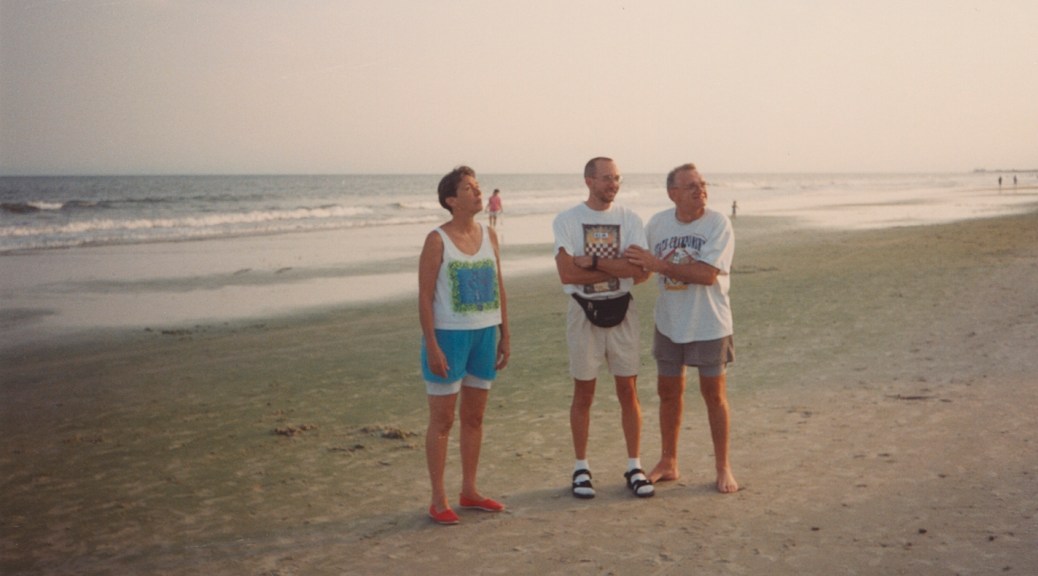
After my parents’ died, my nephews and I cleaned out my parents’ house, the only real capital they left behind and likely the thing they were most proud of. Part of what we held onto were hundreds of pictures that my oldest nephew, Tommy, sifted through and had many scanned.
I have now been looking through them all trying to find Asheville pictures. This past weekend, Tommy dropped by two containers of pictures and other things, most of which have not been scanned.
And there among the pictures, I found letters. A few from my mother to my father in 1960 while they attended Spartanburg Junior College (now Spartanburg Methodist College).
The college was very strict about relationships, including no public displays of affection. However, one day on my mother’s lunch break from working at a grocery store, my mom and dad slipped off and were married, also not allowed for anyone attending the college.
This led to their coded dialogue. Dad was “Honeybun” and Mom was “Nut,” the only two words on the envelope of one letter.

My father told stories about that over and over throughout my life. They were happy stories, and they reinforced the happy parents I enjoyed throughout my childhood and teen years.


I also found a stack of letters my mother wrote from Lumberton, NC just after I turned one year old. My mother, you see, had left my father and moved back in with her parents (who moved constantly, mostly around NC but in SC also).
The letters have the return address at Southern National Bank where Mom was working. We also have her social security card issued while in Lumberton.

These letters are sad and imploring, and often confusing. By spring, my mother began signing letters “Love always, Rosie + Paul + ?” because she was pregnant with my sister.
One letter, as well, is a sweet one from my mother to my father’s dad, Tommy (my namesake since his given name was Paul Lee Thomas).
And then there are letters from my mom to my dad in 1964, three from Asheville and four from Woodruff/Enoree (they lived in a small mill village, Enoree, just south of the slightly larger mill town of Woodruff in SC).

My father was in the National Guard and training in Fort Gordon, GA. Similar to the love letters in college and the letters from Lumberton, these letters are filled with love and missing my father by my mom, my sister, and me.
But in all these letters, the thing missing is my father. No letters back, and several times my mother asking if he has forgotten how to write letters.
I do not know what to do with my parents.
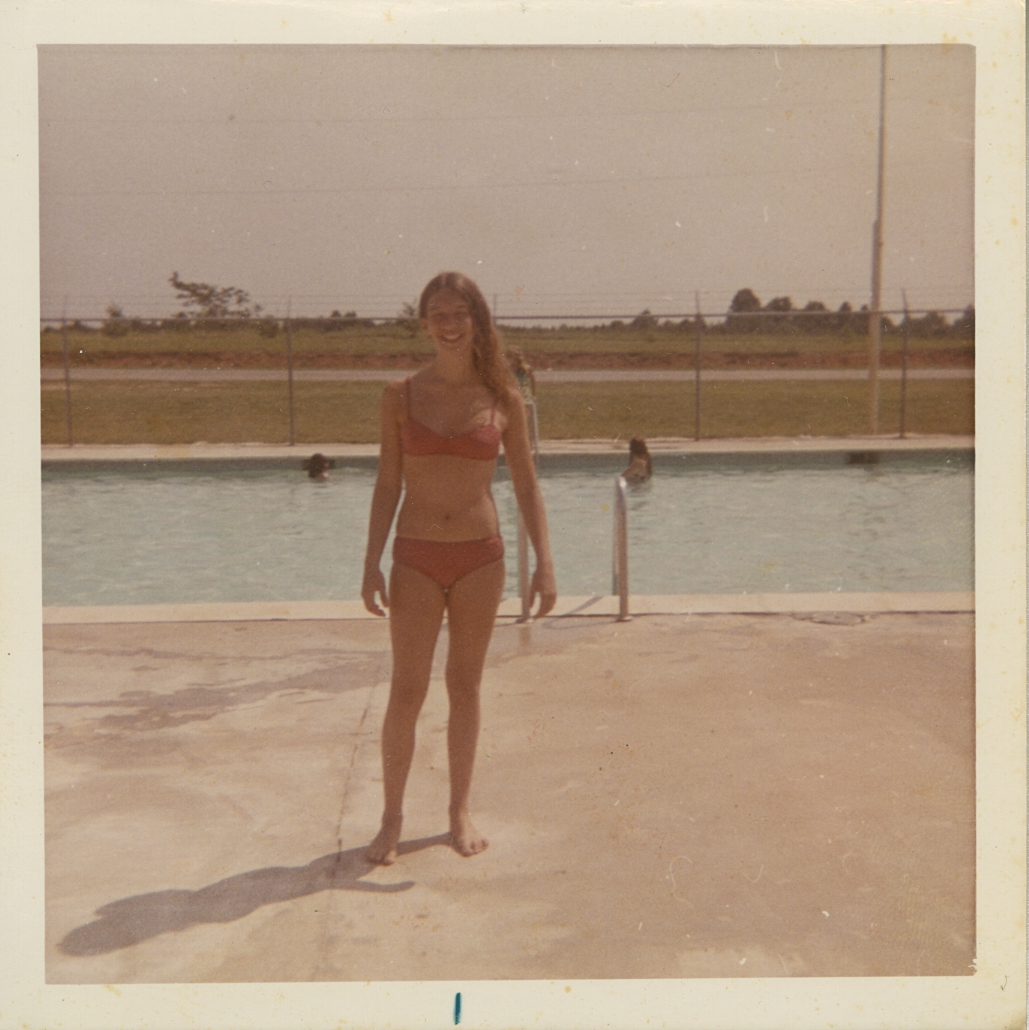
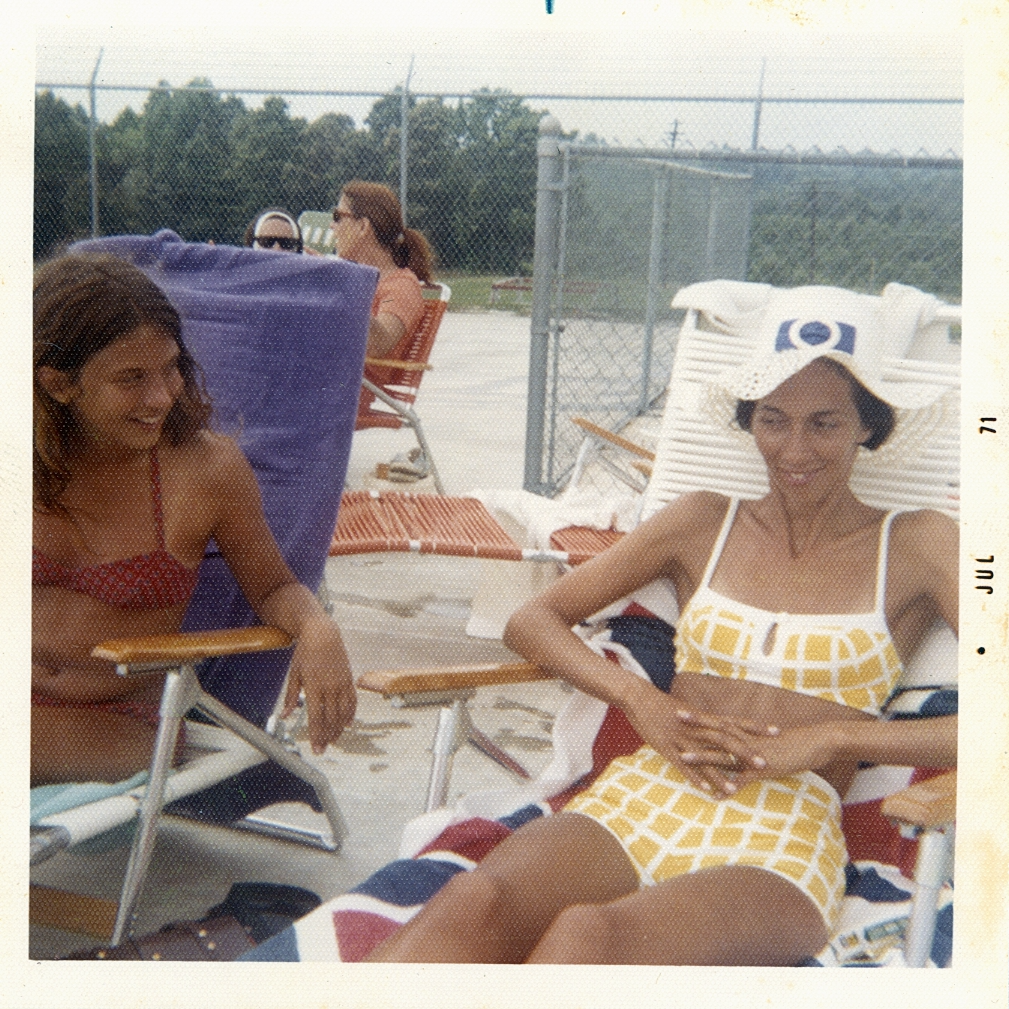
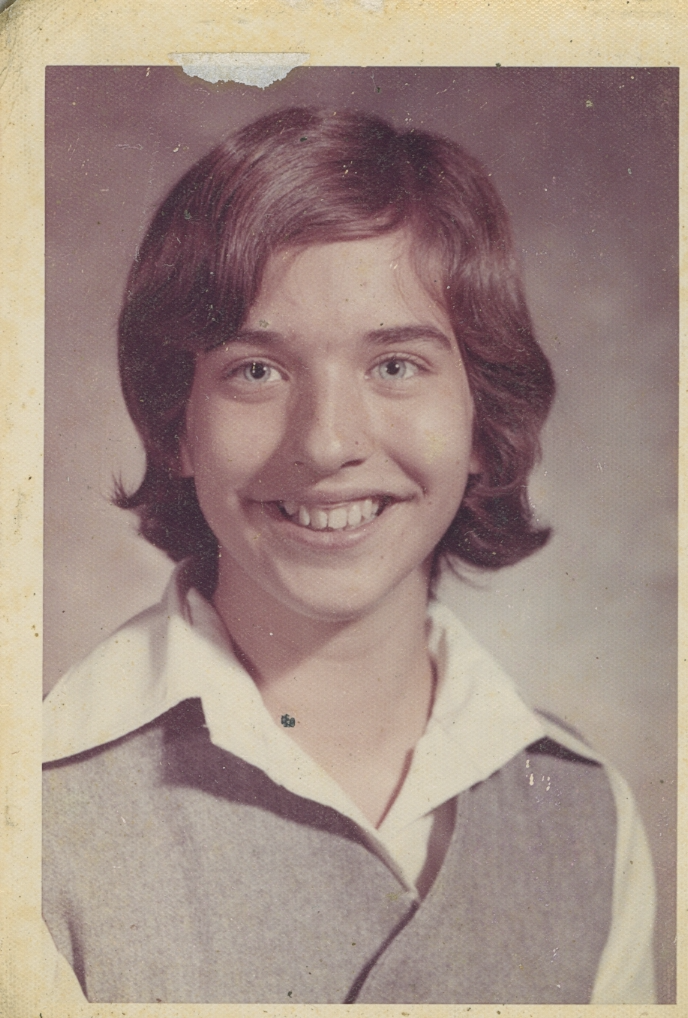
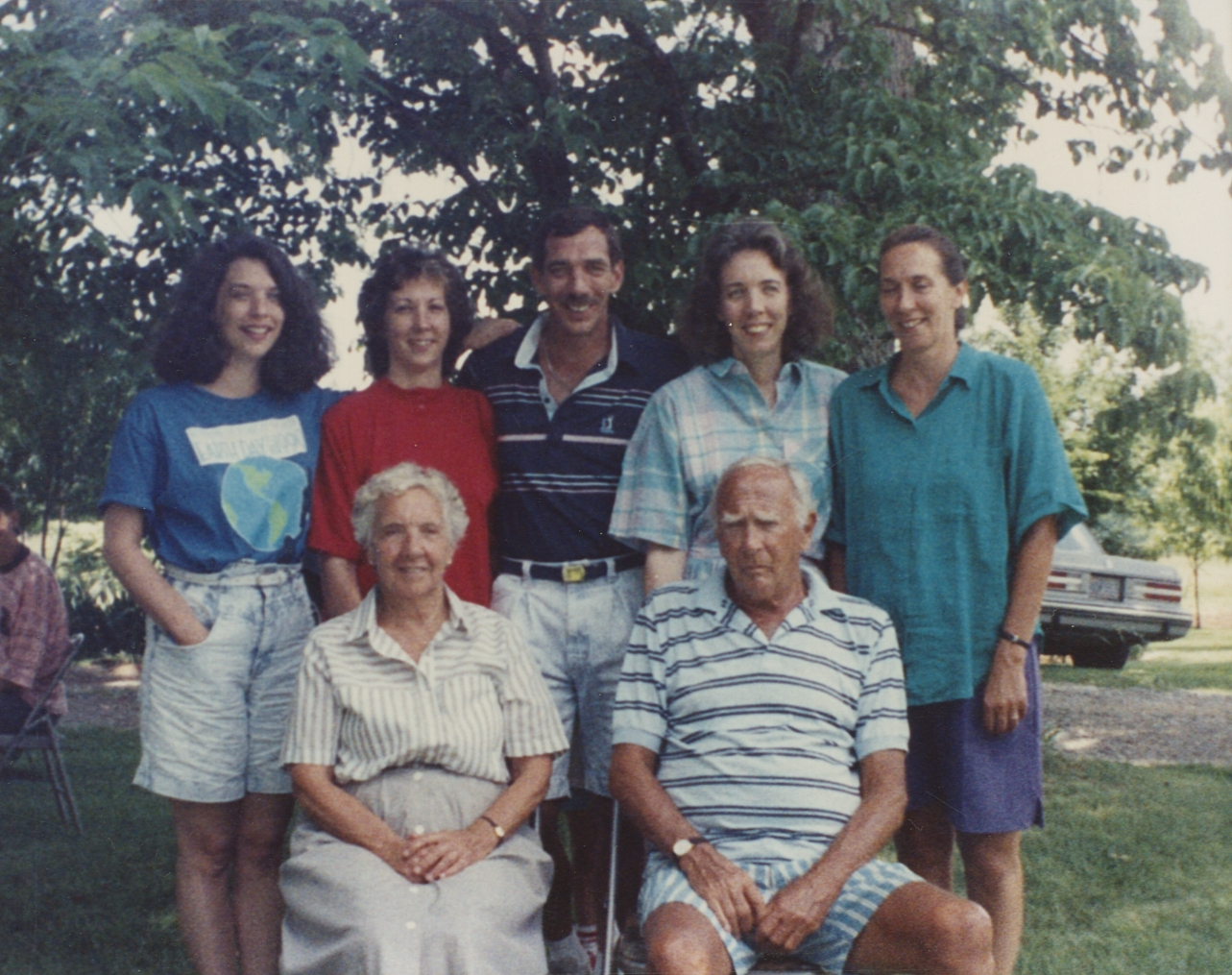
Because I have now begun to recreate a new version of them, a new version captured well I think in many of the pictures that remain.
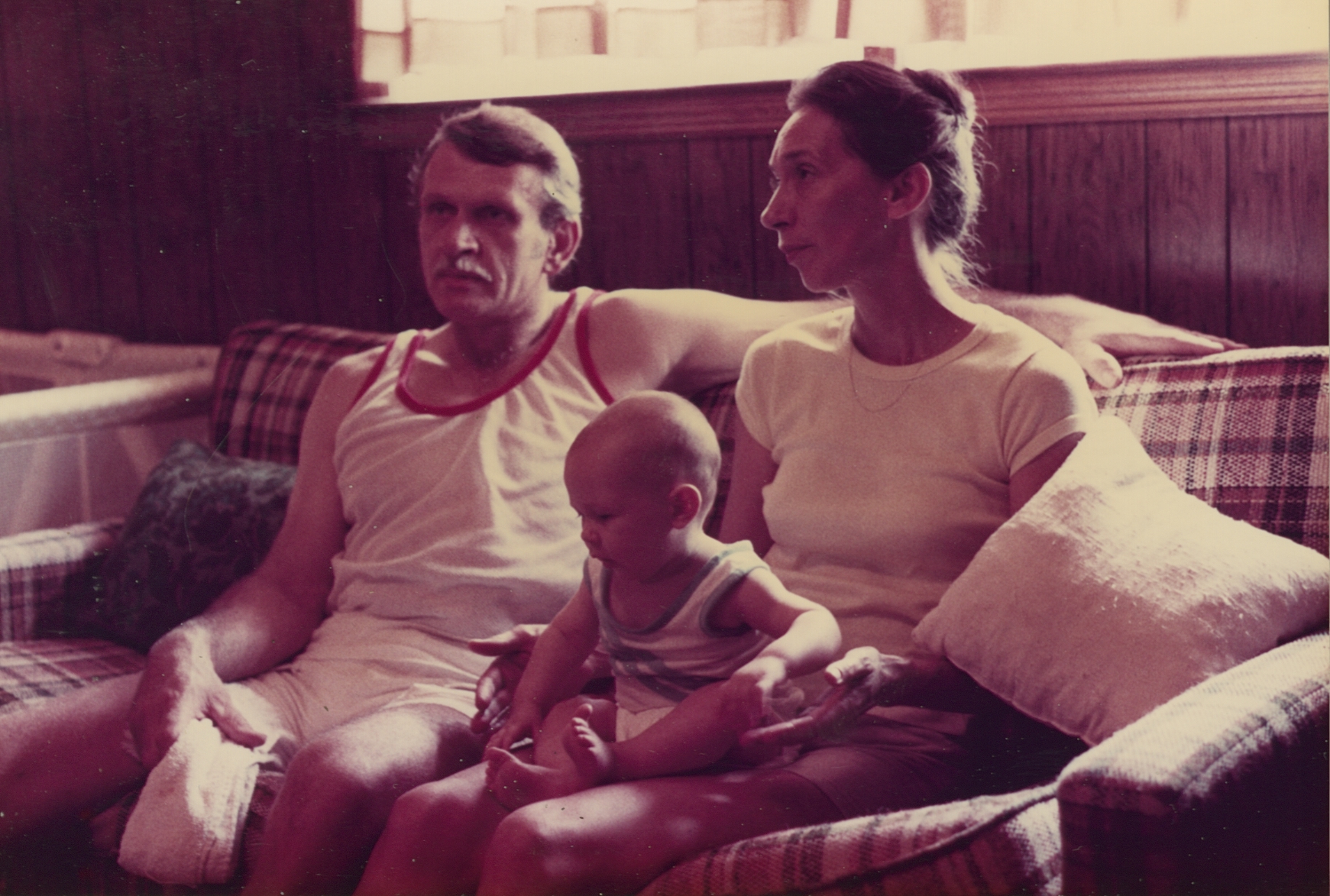
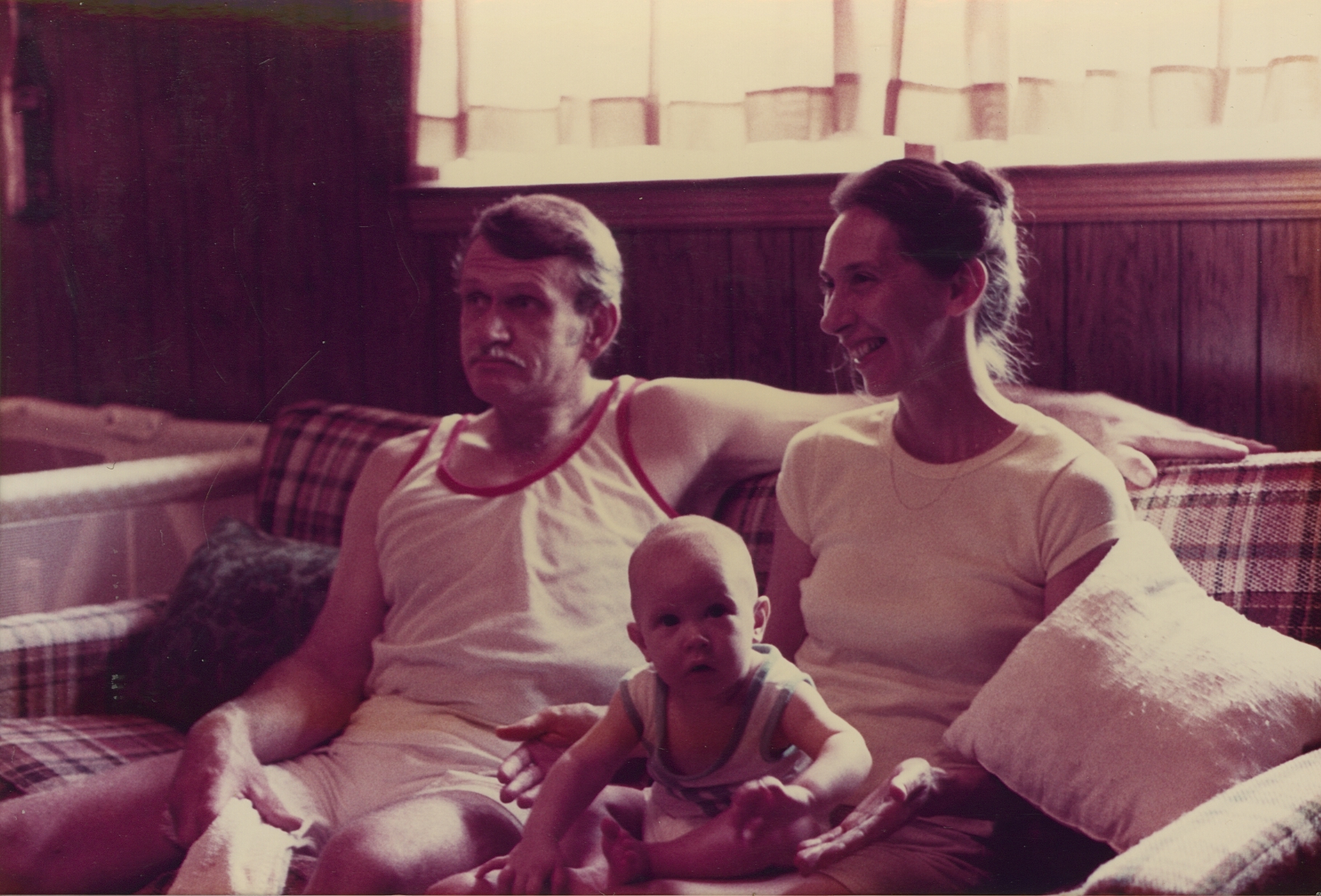

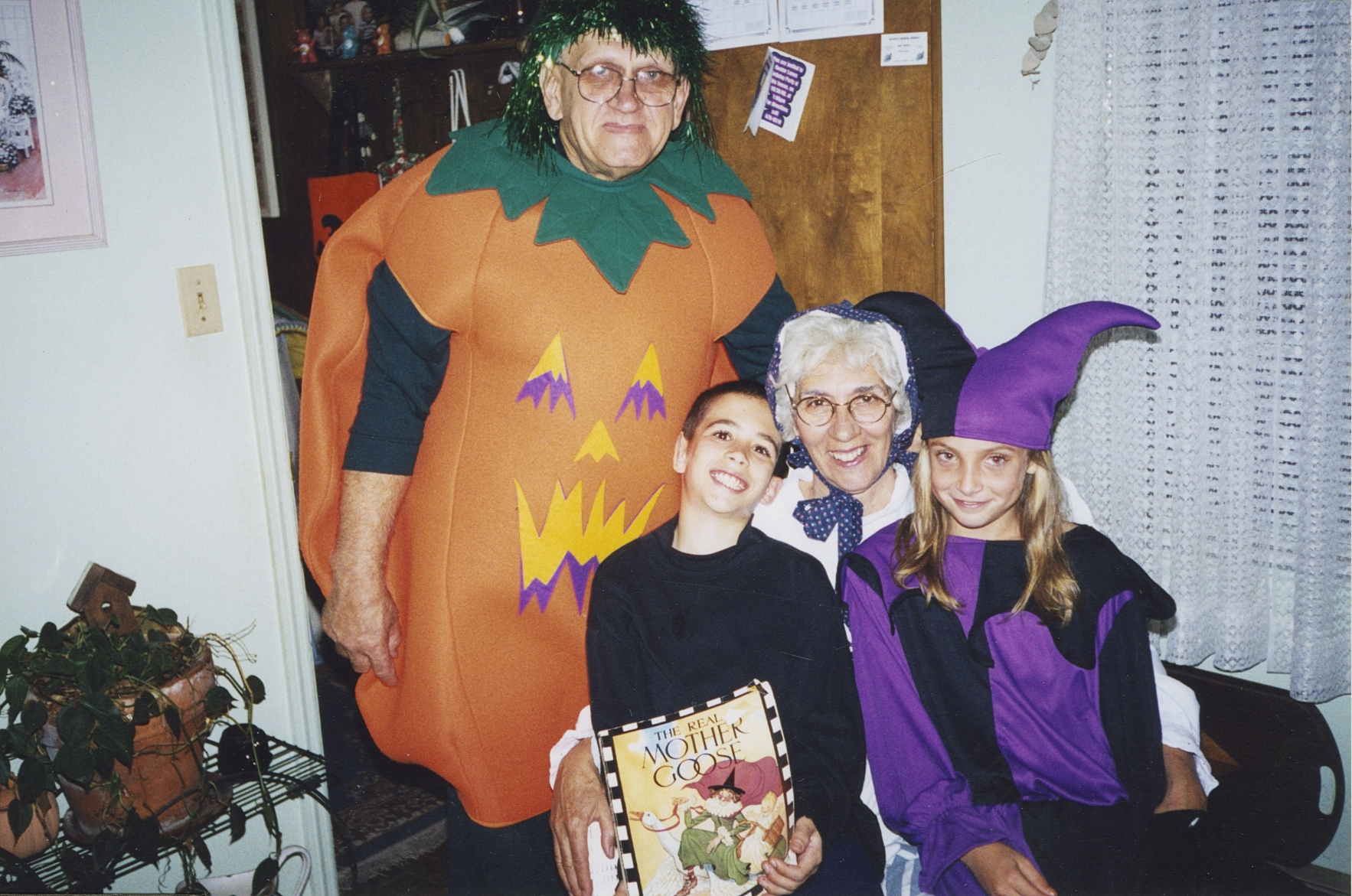
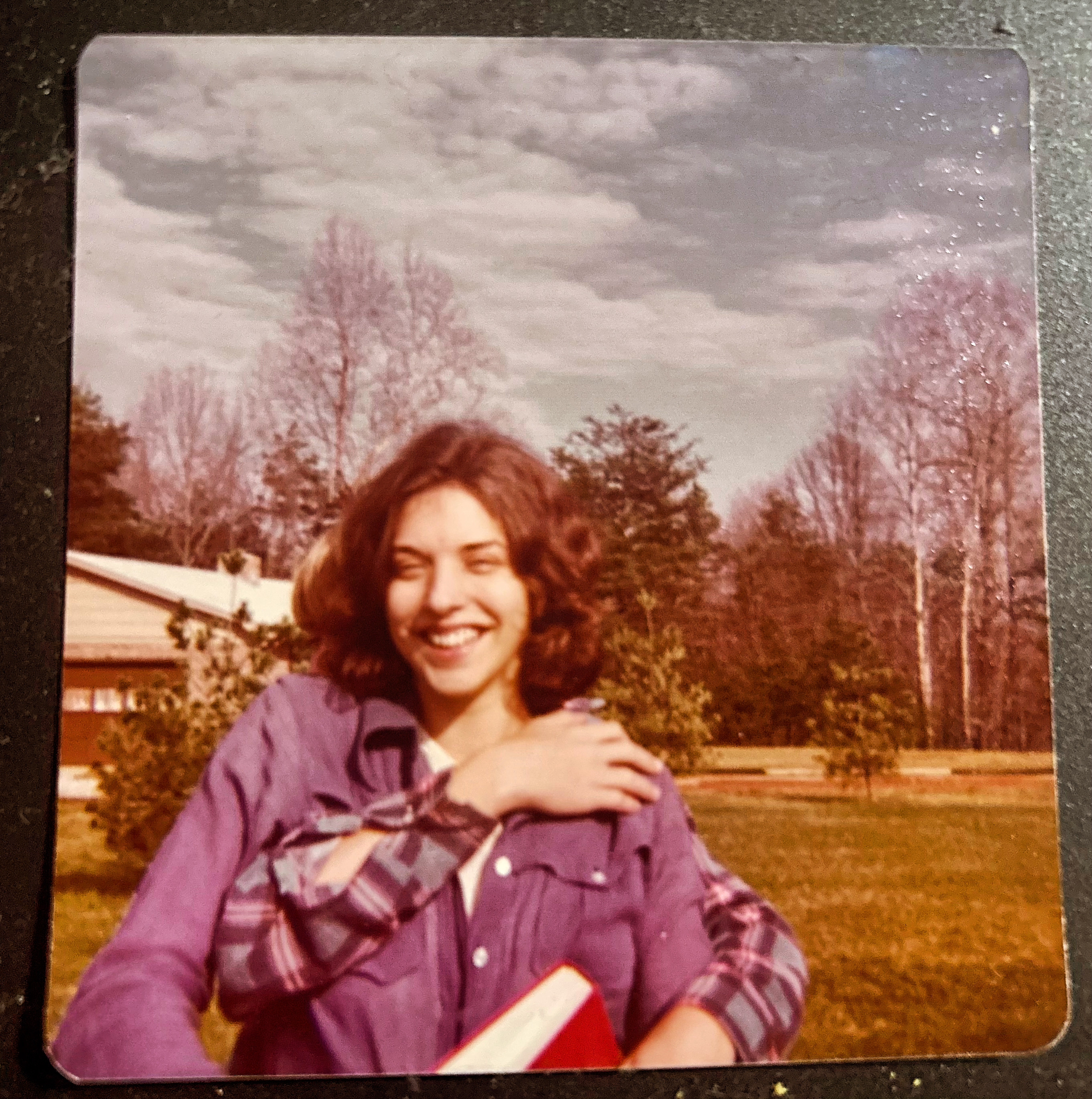
And then as I was sorting the two boxes, a picture not scanned, a picture neither I nor Tommy can identify.
My father with a woman in from of a motel at South of the Border. Dad is holding an ice cream cone. The woman is playfully offering him a scoop of her ice cream.
I don’t know what to do with my parents.
But I am recreating what I can with what I have, and this new version, I think, will find a new place in my heart that doesn’t have to know everything.
See Also
Poem: a human throat (ineffable)
Poem: my mother had a million faces (3 pictures)
Names and Places: Asheville, NC 2024
Didier Eribon on James Baldwin, Fathers, and the Crushing Weight of the Past

Recommended: maybe there will be music (Rachel Lanik Whelan)
“rising sun, you (solstice),” “glimpse you” (see here), and “we weathered winter (silence & shouting)” are three poems featuring descriptions of winter and thawing by South Carolina poet Paul L. Thomas. Life is lived in cycles, like the seasons. The word “promise” and variations of “long” (long, longer, longing) strike me as a subtle understanding of the deep power of memory and the deep hold of nostalgia. An entire year can pass with vivid connotations to each seasonal affection and somehow that remembrance is a mere glimpse of the actual lived experience.
The poems were modified from their original formats to fit the structure of the individual movements using the text as inspiration to determine form: “rising sun” is transformed with the structure of a pop song (verse, chorus, verse, chorus, bridge, verse, chorus), “glimpse you” is meditative and spiraling, using only fragments of the original poem, and “we weathered winter” emphasizes the first-person plural of the text to blossom into a triumphant duet of resilience and hope.
So often in poetry and music the season of winter is maligned as dark and brooding. Paul Thomas encourages a different approach, one that opens the idea of the winter season to the possibility of what’s to come.
Written for and dedicated to the University of South Carolina School of Music in celebration of the 100th anniversary.
Performed live in the University of South Carolina School of Music Recital Hall by:
Dominic Armstrong, tenor
Ashley Emerson, soprano
Ari Streisfeld, violin
William Terwilliger, violin
Douglas Temples, viola
Claire Bryant, cello
Jeff Francis, audio engineer
Text appears with permission from the poet. To read more of Paul’s poetry, please visit: https://radicalscholarship.com/
For biographical information, to contact the composer, or to submit a program from a performance, please visit http://www.rachellwhelan.com or rachellwhelan@gmail.com
Recommended: Dr. Elana Aydarova. Science of Reading Mythologies
Dr. Elana Aydarova. Science of Reading Mythologies
Episode notes
Dr. Elena Aydarova is an Assistant Professor in the Department of Educational Policy Studies at the University of Wisconsin-Madison and a fellow with the National Education Policy Center. Dr. Aydarova’s research examines the interaction between educational policies, education reforms, and policy advocacy. She is an award-winning author of over 40 publications. Dr. Aydarova received postdoctoral fellowships from the National Academy of Education/Spencer Foundation and the American Association of University Women.
See Also
What You See Is Not What You Get: Science of Reading Reforms As a Guise for Standardization, Centralization, and Privatization | American Journal of Education, Elena Aydarova
Elena Aydarova; “Whatever You Want to Call It”: Science of Reading Mythologies in the Education Reform Movement. Harvard Educational Review 1 December 2023; 93 (4): 556–581. https://doi.org/10.17763/1943-5045-93.4.556
FreshEd #348 – Science of Reading Unpacked (Elena Aydarova) FreshEd
Poem: a human throat (ineffable)
[Originally posted 29 December 2020]
The dead cannot call out to us.
All they can do is wait for us to call to them.
A Man, Keiichiro Hirano
i have always disliked xmas
holidays and bow-wrapped gifts
the shortest daylight of the year
the seasonal depression
of being always a stranger
i have been losing xmas eve
social media reminding me
a crushed cycling helmet from 2016
a text message xmas morning 2020
my aunt killed herself the night before
i have not cried for my aunt yet
our fractured family tensions
quilted with abrupt texts and messaging
verbalizing the weight of suicide
the frailty of just being human
i have pervasive anxiety about that frailty
the shock of suicide reminds me of Camus
“that after a while you could get used to anything”
except of course those who can no longer
fathom simply waking up one xmas morning
i have so many mostly ineffable words
minutiae tenuous melancholia existentialism mundane
this language merry-go-round chiming out of kilter
her matter-of-fact obituary-life of 192 words
a 17-word text admitting “box cutter” and “throat”
—P.L. Thomas

 dr. p.l. (paul) thomas