
Born in 1961, I experienced pop culture during the formative decades of the 1960s and 1970s.
The foundation of my pop culture awareness and fandom was my mother, who loved science fiction and horror B-movies from the first half of the twentieth century.
But my pre-teen and early teen years were grounded in rogue police and vigilante films by Clint Eastwood and Charles Bronson.
And then, by the mid-1970s, I discovered super-hero comic books and became a devoted fan and collector of Marvel comics.
I was, as seems expected, immediately a fan of Spider-Man, who was in those years strongly connected to Kingpin and The Punisher. But soon, I found myself gravitating to Daredevil.
Recently, I recommitted to collecting and reading comics, completing a full run of Daredevil. And I also am an ardent fan of the Netflix/Disney+ Daredevil series.
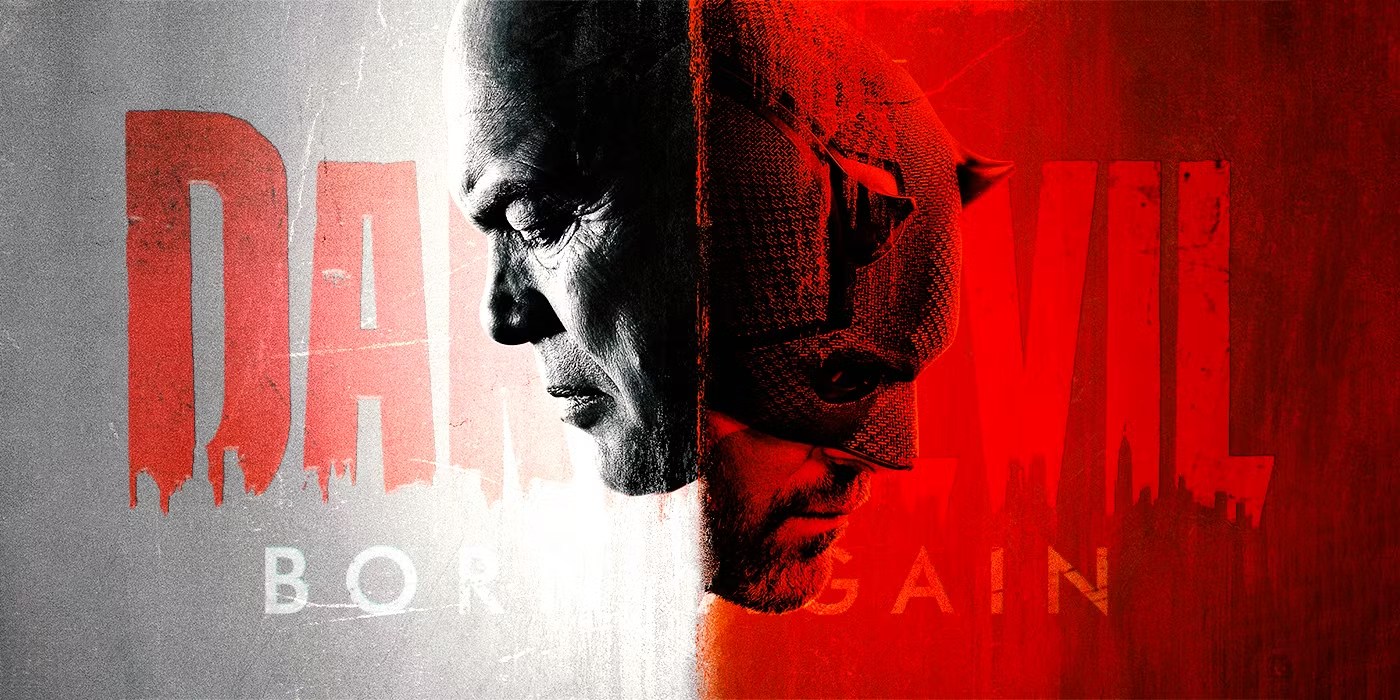
With the Disney+ reboot currently being released, I want to speak to Episode 4 of Daredevil: Born Again as a way to examine why Daredevil is a compelling character and how the motif of vigilantism is central to the wider public appeal of Daredevil as well.
“You and your goddam system”
Marvel in print comic books and film/series adaptations has many iterations of narratives around the ethics of superhero vigilantism as well as the often catastrophic collateral damage created by superheroes defending mere mortals.
The current story line of Born Again repeats at least two versions of Marvel exploring Wilson Fisk/Kingpin as Mayor of New York hell-bent on erasing masked vigilantes from the city (see Mayor Fisk and Devil’s Reign).
Born Again E4 also reintroduces the classic ethics debate between Matt Murdock (Daredevil) versus Frank Castle (The Punisher).
Murdock as lawyer and masked vigilante is resolute about his no-kill rule as well as working somewhat within the legal system or at least contributing to the existing system.
Castle as The Punisher is an ethical vigilante who directly rejects the system as corrupt, and thus, personifies a sort of utilitarian approach to eradicating evil in order to protect the good and innocent.
When Murdock and Castle reunite in E4, then, we have this powerful and foundational scene:
With “You and your goddam system” Castle serves as sort of a perverse moral compass, suggesting for the series that eventually Murdock will break and return—with vengeance—to his role as Daredevil (and thus the final scene of E4).
While these motifs and narratives are nothing new in Daredevil lore (and seem almost tired or derivative at this point), Born Again is a fresh re-examination in live action of a powerful ethical dilemma: What do good people with unique powers do when the “system” is profoundly corrupt?
Fisk now is very much a commentary on Trump and the blurring of who is a criminal or a political leader.
But one of the most interesting elements of Born Again is the growing negative portrayal of the police in the series. Murdock’s apartment fight in E2, the Punisher tattoos on police, and the Punisher t-shirt of White Tiger’s killer all suggest that the real ethical battle will be against these corrupt police and Fisk’s corrupt administration.
And the irony, of course, will be that while in power, Mayor Fisk can have the superheros labeled criminals.
Power (and superpower), corruption, and what counts as right and wrong/ good and bad have long served as the core of why, I think, Daredevil has endured in the Marvel Universe (and MCU now).
Murdock as lawyer and Murdock as a reluctant superhero often seems naive, especially against the blunt realism of Castle as The Punisher.
Born Again began (E1) with Daredevil seeming to cross his line (the roof-top scene with Bullseye) and repeats the line crossing when Murdock brutally beats two policemen (E2).
Like the Netflix series, Born Again appears committed to the foundational Daredevil narrative while also finding ways to breath fresh approaches to enduring themes and questions about justice and moral actions.
In 2025, Castle’s disgust with the “system” resonates more powerfully than ever, and as viewers, we are poised and even eager to watch as Murdock/Daredevil finds his way past the paralysis of that “system” commitment and back to doing the good he was called to do.

 dr. p.l. (paul) thomas