
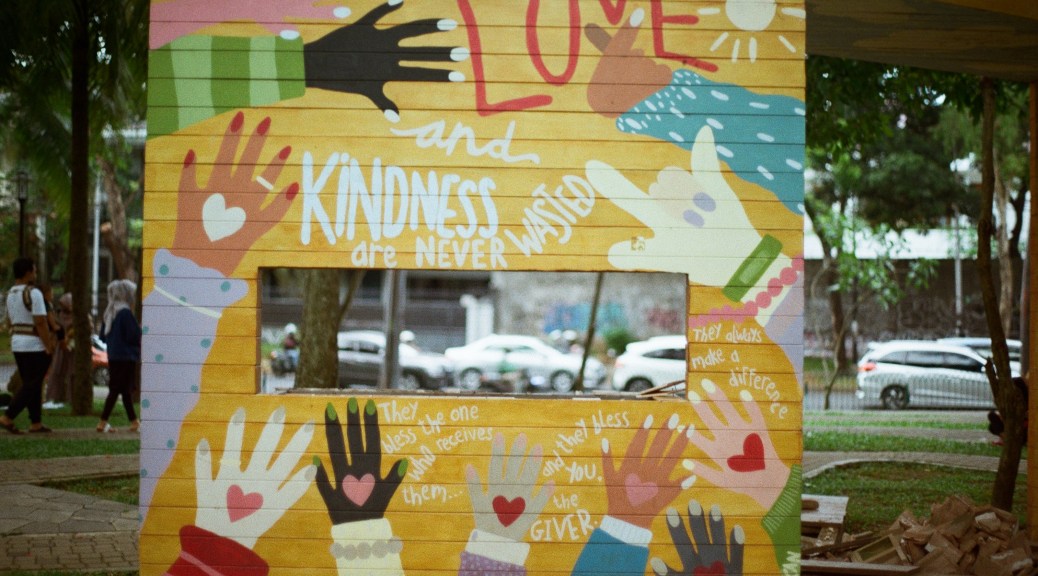
[Header Photo by Ditto Bowo on Unsplash]
Through my journey with clinical anxiety, I have come to realize that anxiety is not a monolithic thing for all of us even as our own personal anxiety may be of a specific kind.
None the less, I think it is fair to say that anxiety comes from a disconnect between our inner selves and the the world around us, especially when that disconnect seems oppressive, judgmental, and inescapable.
Sometimes anxiety is the result of recognizing who we truly are is unlike how we are expected to be or how we perceive most other people to be. Other times, anxiety is the result of becoming (too) aware of impending doom—both the possibility of something real that is foreboding but (too) often a manufactured doom that isn’t realistic or rational.
For what most or many people simply consider living or the human condition, we anxious are fully charged with an awareness, an expectation of impending doom.
I suspect that all humans long for a sort of life that allows us to be fully who we are, and thus, I have always been drawn to a simple but now fully dismantled American ideal, guaranteeing all humans life, liberty, and the pursuit of happiness.
What a beautiful thing, filled with a sort of relief that allows our full humanity—the pursuit of happiness.
My existential self finds this wonderful because I believe the pursuit of happiness is itself happiness, like Sisyphus and his rock, “The struggle itself toward the heights is enough to fill a [hu]man’s heart. One must imagine Sisyphus happy.”
There is a sort of paradox to this pursuit of individual happiness, however, a paradox that is expressed by Eugene V, Debs:
Your Honor, years ago I recognized my kinship with all living beings, and I made up my mind that I was not one bit better than the meanest on earth. I said then, and I say now, that while there is a lower class, I am in it, and while there is a criminal element I am of it, and while there is a soul in prison, I am not free.
And then, in this fiction of Kurt Vonnegut, whose life and work were inspired by Debs:
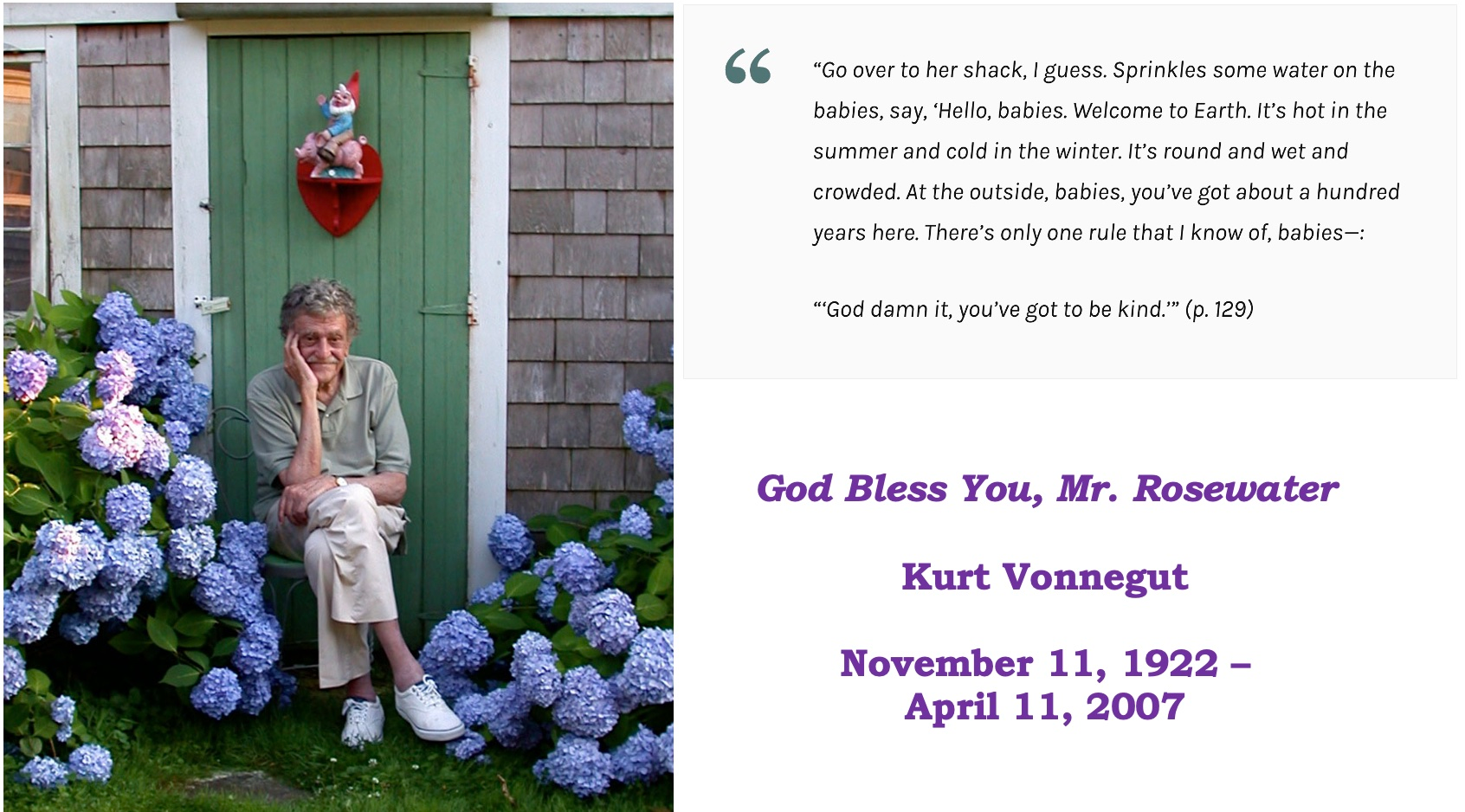
There is another paradox.
Writers and thinkers were the first experiences I had with recognizing other people who thought like me existed, unlocking a sort of awareness that I was mostly unlike the people and place of my birth and young life.
One of those first authors for me was J.D. Salinger and the small novel-in-two-parts Franny and Zooey.
Salinger appeared to be himself on a sort of personal journey to awareness, one that was grounded in something like a Christian mysticism. Eventually the bulk of Salinger’s work was grounded in the Glass family with a Christ-figure, Seymour, who commits suicide but remains the moral core for his siblings.
That is where Franny and Zooey sits, one of Seymour’s brothers, Zooey, and his sister, Franny, continuing their own spiritual quests—”a sort of prose home movie.”
While Salinger’s fiction laid the groundwork for me as a reader and writer, he also taught me a much harder and uglier lesson. Salinger himself, Salinger the real-world man, proved to be not only incapable of fulfilling the idealized spiritual goals he wrote about through Seymour, but also incapable of being a decent human being.
And despite his failures as a person and the now insensitive choices he made for Seymour as the speaker of Jesus-like parables, the end of Franny and Zooey fits into the continuum the reached my embracing Debs and Vonnegut (above) and then, below, David Lynch.
Seymour mentored his siblings while all the children were performers on a radio show; Seymour implored them all the be their best for the “Fat Lady,” his metaphor for the least among us, an uncomfortable but sincere effort at teaching these children Christian charity and love.
As Franny is crumbling mentally, Zooey explains: “But I’ll tell you a terrible secret—Are you listening to me? There isn’t anyone out there who isn’t Seymour’s Fat Lady.”
And then Zooey continues: “Don’t you know the goddam secret yet? And don’t you know—listen to me now—don’t you know who that Fat Lady really is? … Ah, buddy. Ah, buddy. It’s Christ Himself. Christ Himself, buddy.”
Not a paradox at all, but Salinger’s humanistic and even practical rendition of Christianity makes perfect sense as I found and settled into Vonnegut’s persistent efforts to spread the message of Christian kindness through his own humanism and atheism:
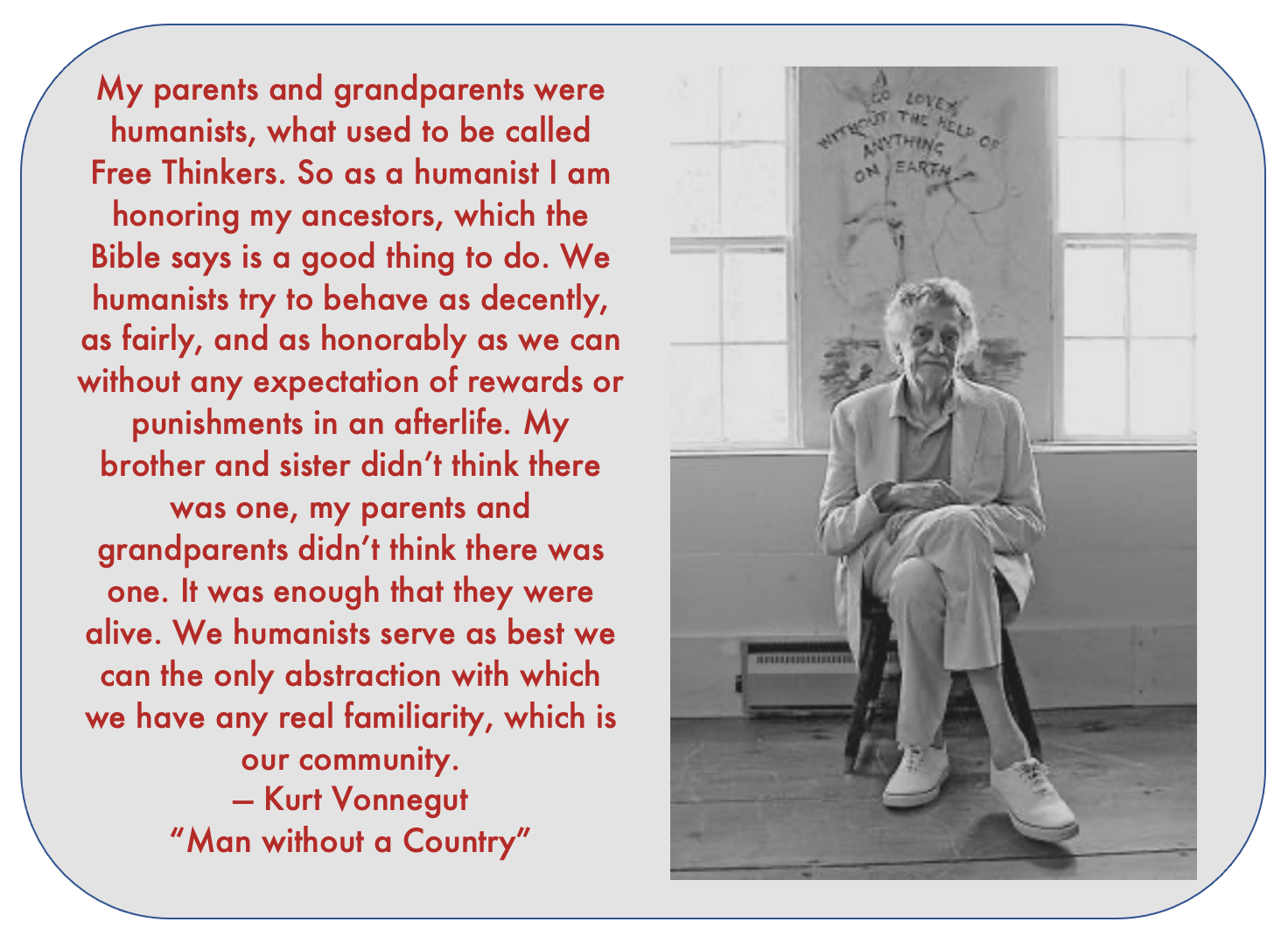
On a smaller scale than Salinger, I had to realize that Vonnegut, too, struggled to be the human he asked all of us to be—although on balance, I think Vonnegut was just flawed in the ways most of us are because we are human.
What causes me greater sadness and, yes, anxiety, is that in our current world, the dominant Christians in the US are collectively as horrible as Salinger was on the individual level.
We are a people bereft of kindness, Christian charity, Christian love.
We are a people aggressively imposing hatred and fear onto others.
I have always been a skeptical person, but now I am slipping—as many do as they grow older—into perpetual cynicism.
I want to believe that it is possible to live the life we want, to be our full and true selves—life, liberty, and the pursuit of happiness—while dedicating ourselves to insuring that everyone has that freedom as well.
Our happiness and the happiness of others are not in tension, in competition.
Our happiness and the happiness of others are dependent on each other.
The weight of my cynicism is harder and harder to carry into my mid-60s.
But there is one person who seems to have found something, found some way to live the ideals that I also embrace and believe with my entire self would make our lives collectively happier, erasing our anxieties.
David Lynch, who wrote in his memoir:
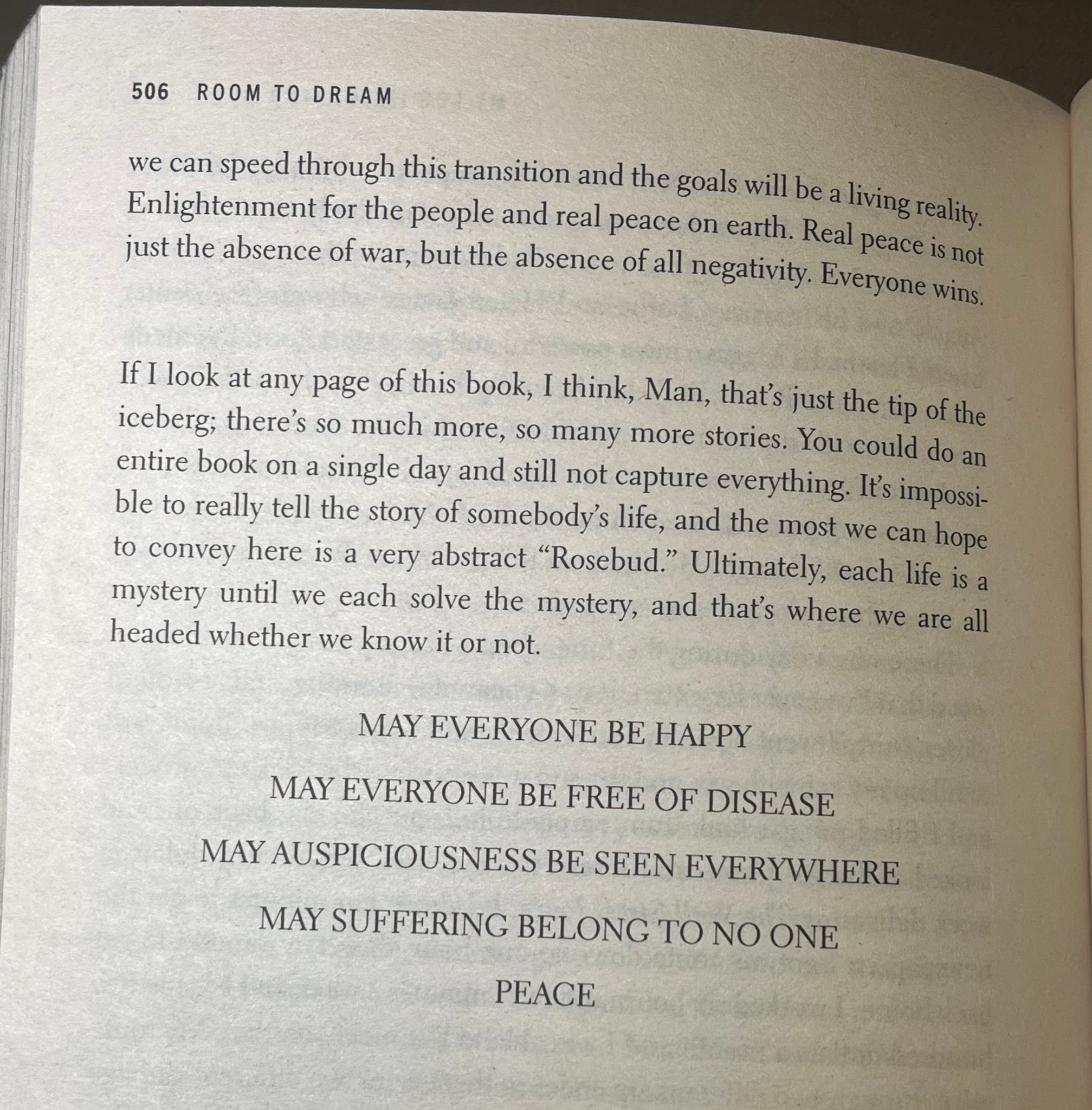
This seems obvious. It seems simple.
Maybe that’s the problem.
Maybe these ideals are beyond the capabilities of human beings.
Now we are back to Vonnegut who played around with the essential flaw in humans—”the only true villain in my story: the oversized human brain.”
It is harder and harder each day, but I keep trying to have hope, hoping Maggie Smith is right: “This place could be beautiful,/right? You could make this place beautiful.”
 dr. p.l. (paul) thomas