
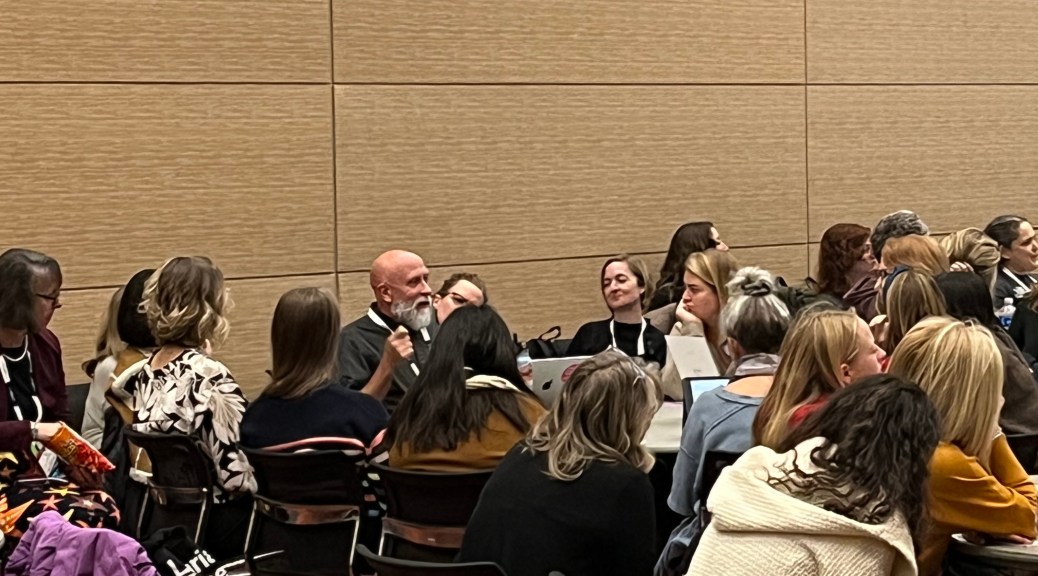
AI in the Liberal Arts: Promises and Perils
October 16 @ 5:00 pm – 6:00 pm
NCTE Annual Conference 2025 – Denver CO
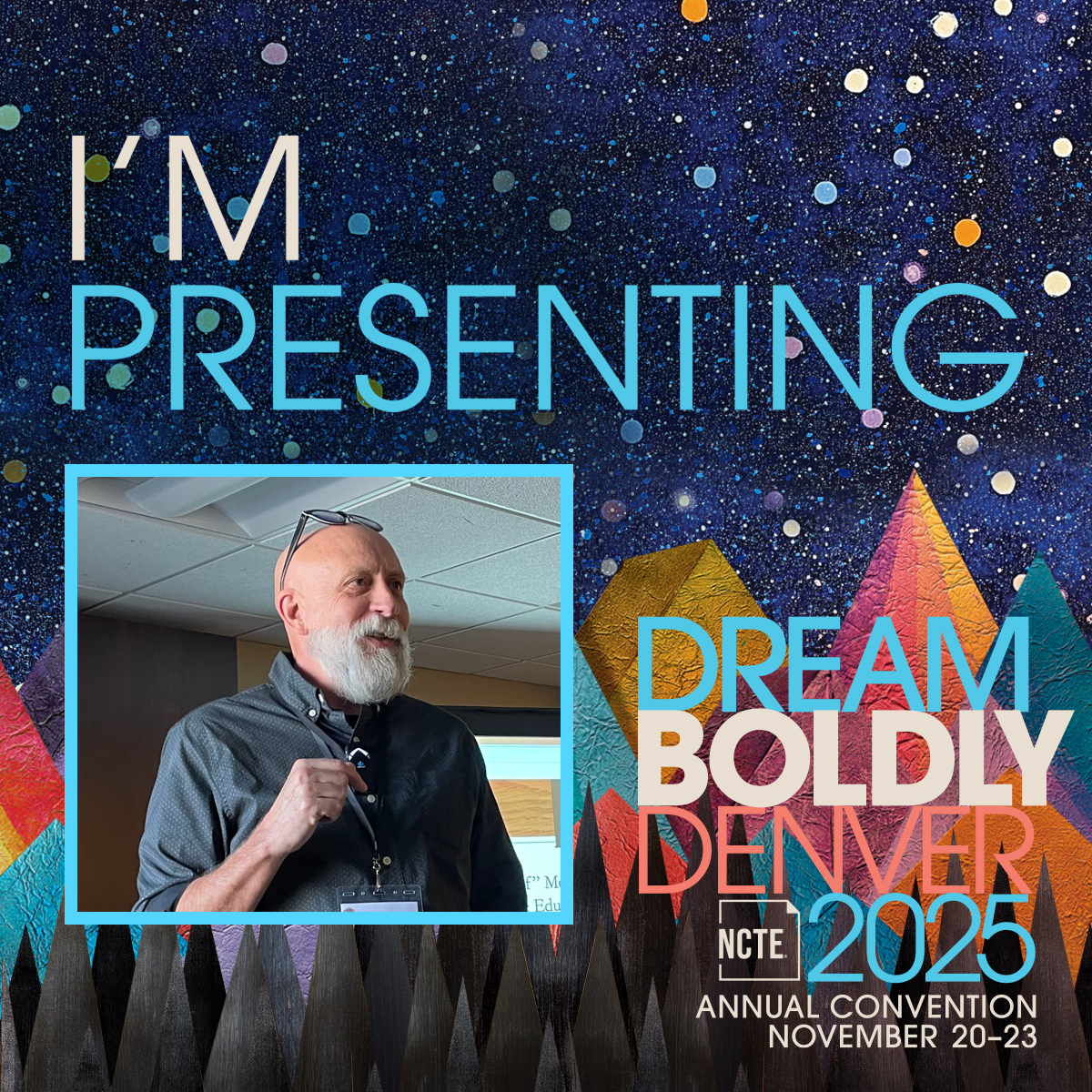
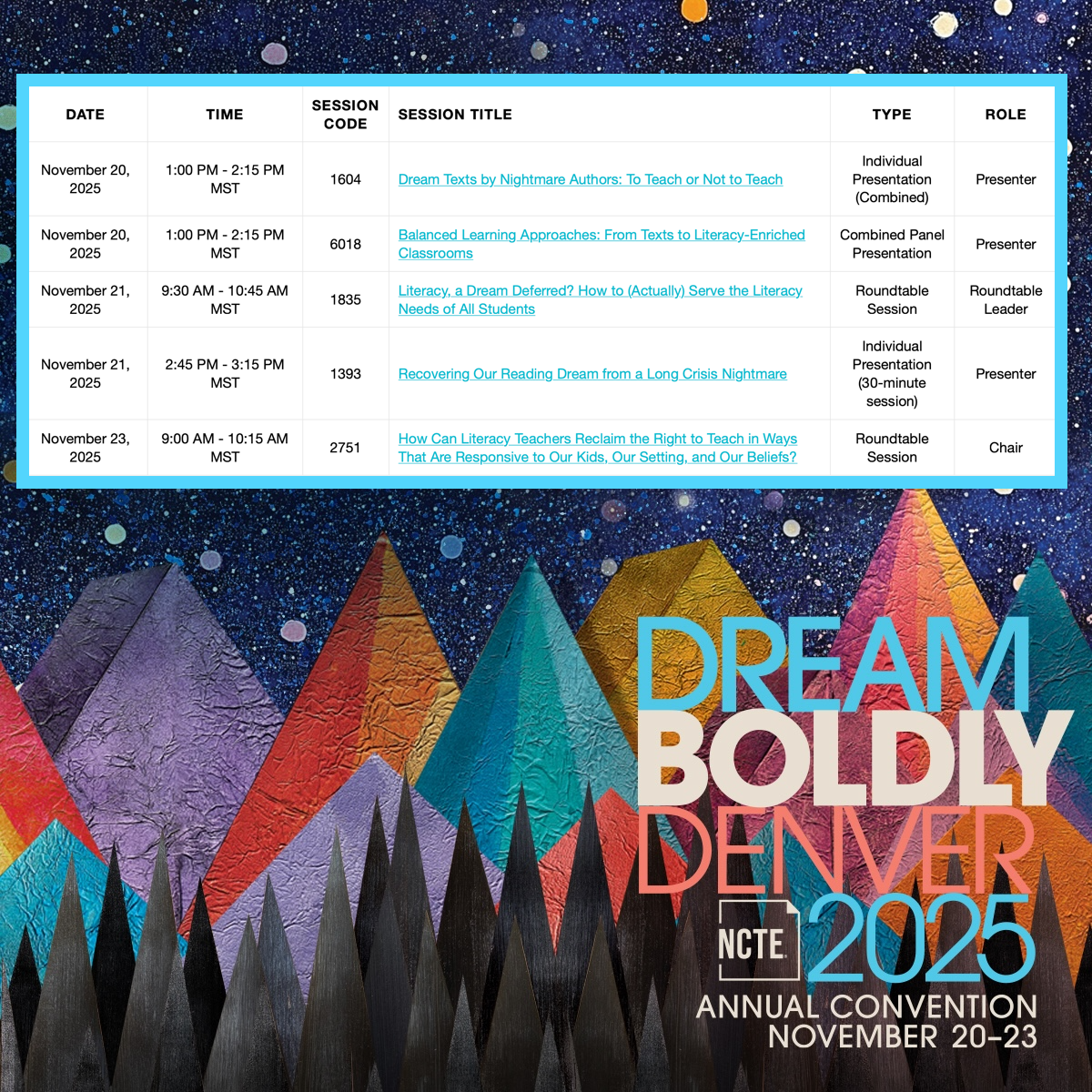
Panel: Balanced Learning Approaches: From Texts to Literacy Enriched Classrooms
11/20/2025 – 1:00 – 2:15, Mile High Ballroom 2C
Presentation
Dream Texts by Nightmare Authors: To Teach or Not to Teach
Access PDF of presentation HERE
Many beloved authors have been exposed as abusive people or advocates for offensive beliefs. From the revelations about Neil Gaiman to the anti-trans stance by JK Rowling, whether to teach their works despite those failures or controversies confronts teachers throughout K-16 literacy classrooms. This session examines if and why teachers should or should not teach dream texts by nightmare authors.
Roundtable: Literacy, a Dream Deferred?: How to (Actually) Serve the Literacy Needs of All Students
11/21/2025 – 9:30 – 10:45, Room 108/110
Roundtable Presentation
Literacy and Literature as Casualties of Reading Wars
Access a PDF of the presentation HERE [Updated 11/21/25]
Reading Wars often have two overlapping components, debates about how reading should be taught and what texts students should (and should not) read. Both of these elements tend to promote ideological agendas at the expense of authentic approaches to literacy and literature.
Individual Presentation: Recovering Our Reading Dream from a Long Crisis Nightmare
11/21/2025 – 2:45 – 3:15, Mile High Ballroom 1A/1B
Access a PDF of presentation HERE
In 1961, Jacques Barzun in Tomorrow’s Illiterates declared “illiteracy is still with us.” Charles Child Walcutt added: “[N]o further ‘research’ into methods of reading instruction is necessary.” This session examines reading crisis/reform cycles to reconsider the stories told about reading and offer a new approach for reform that serves the needs of students and supports teacher professionalism.
Roundtable: How Can Literacy Teachers Reclaim the Right to Teach in Ways that are Responsive to Our Kids, Our Setting, and Our Beliefs?
11/23/2025 – 9:00 – 10:15, Room 107/109/111
Talk
Fact Checking “The reading wars are ending. Phonics won.” (Washington Post Editorial Board)
Access a PDF of the presentation HERE [Updated]
The Editorial Board at The Washington Post published a bold claim: The reading wars are ending. Phonics won. Here, that claim is fact checked focusing on the false claim that California adopted Mississippi-style “science of reading” legislation. A brief examination of the misleading comparison of CA and MS shows that the WaPo Editorial Board has declared a false end to the reading war as well as mischaracterizing the role of phonics.
Roundtable Presentation
Education Journalism Fails Education (Again)
Access a PDF of the presentation HERE
This roundtable will share with teachers four “red flags” (Chris Ferguson) to critically engage with media coverage of educational issues and research (highlighting the “science of” coverage): RED FLAG 1: Claims that all the evidence is on one side of a controversial issue; RED FLAG 2: Reversed burden of proof. “Can you prove it’s not the smartphones?”; RED FLAG 3: Failing to inform readers that effect sizes from studies are tiny, or near zero, only mentioning they are “statistically significant.”; RED FLAG 4: Comparisons to other well-known causal effects.
WSRA 2026 Annual Conference
February 6, 2025
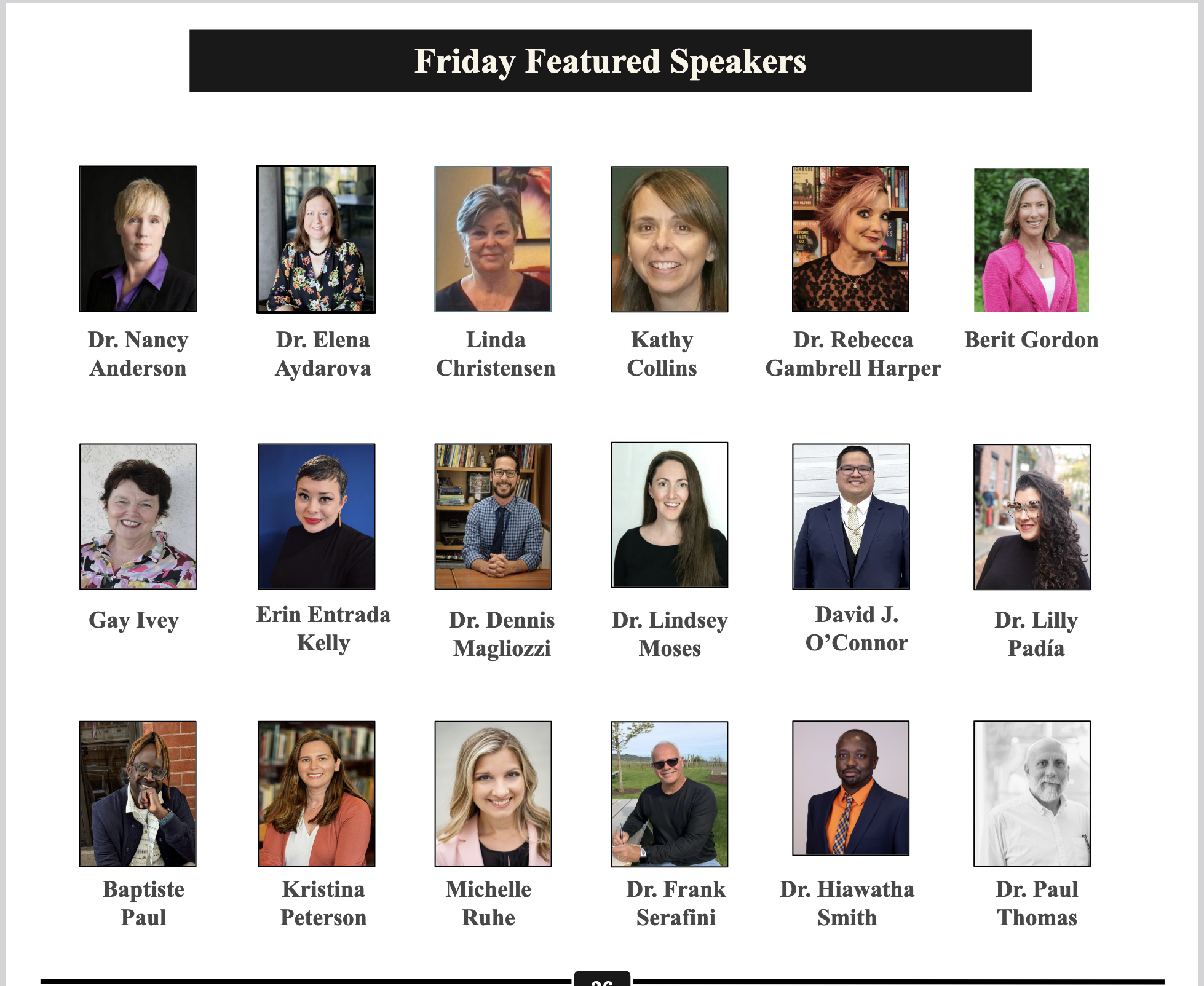
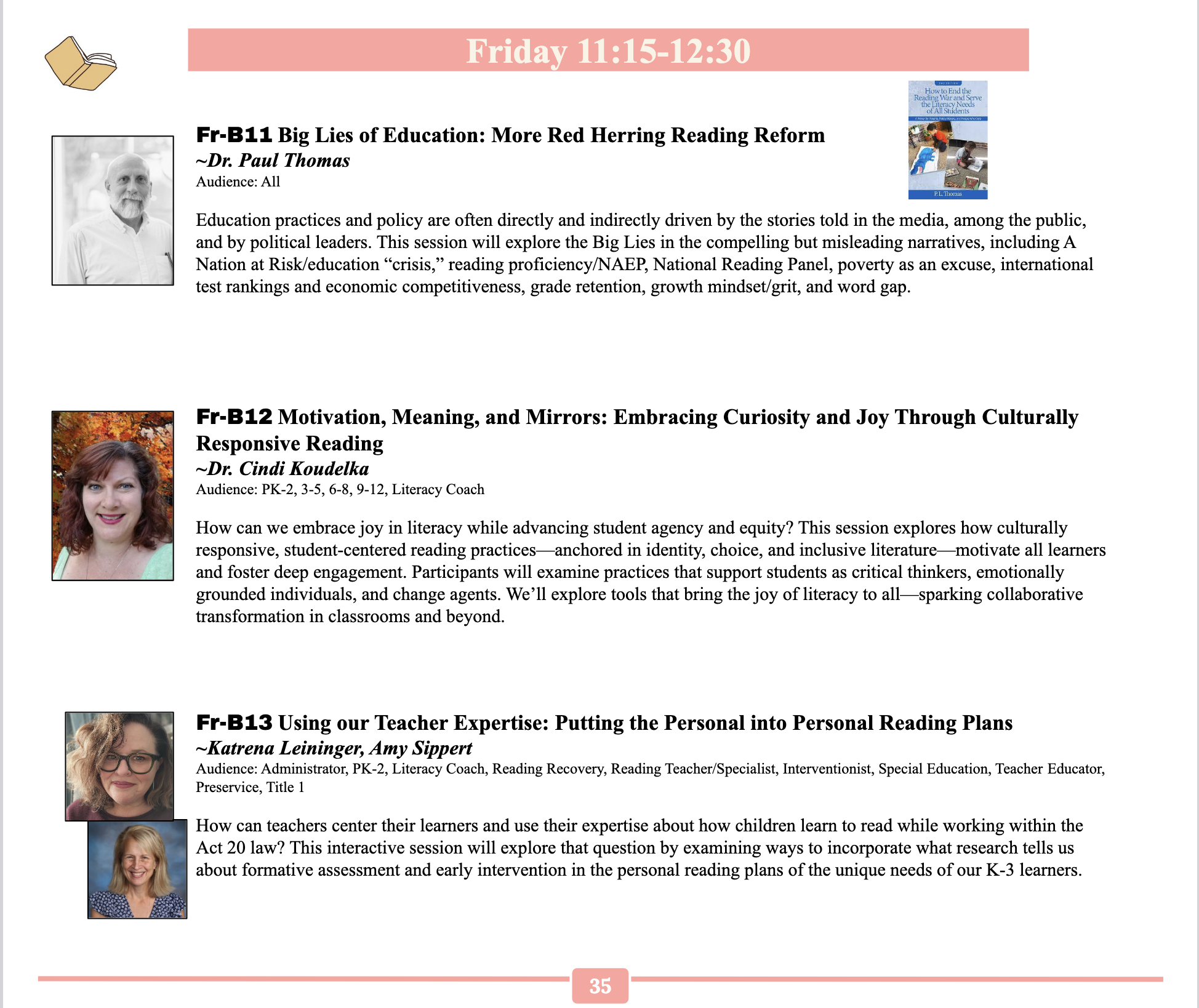
Session: Fri. Feb 6 from 11:15 to 12:30
Big Lies of Education: “Science of” Era Edition [Access PP PDF Here]
Education practices and policy are often directly and indirectly driven by the stories told in the media, among the public, and by political leaders. This session will explore the Big Lies in the compelling but misleading narratives, including A Nation at Risk/education “crisis,” reading proficiency/NAEP, National Reading Panel, poverty as an excuse, international test rankings and economic competitiveness, grade retention, growth mindset/grit, and the word gap.
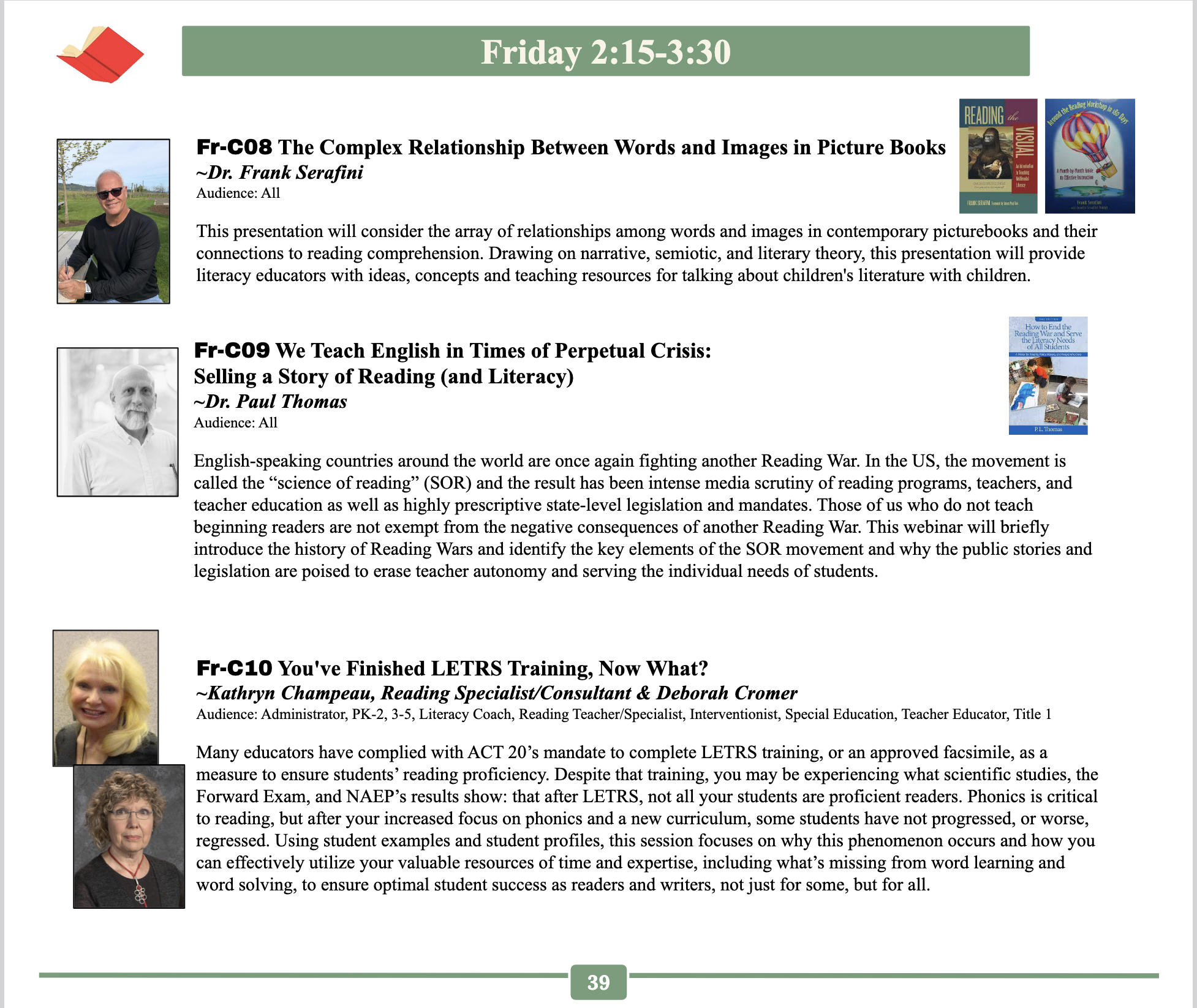
Session: Fri. Feb 6 from 2:15 to 3:30
See the presentation HERE.
English-speaking countries around the world are once again fighting another Reading War. In the US, the movement is called the “science of reading” (SOR) and the result has been intense media scrutiny of reading programs, teachers, and teacher education as well as highly prescriptive state-level legislation and mandates. Those of us who do not teach beginning readers are not exempt from the negative consequences of another Reading War. This presentation will briefly introduce the history of Reading Wars and identify the key elements of the SOR movement and why the public stories and legislation are poised to erase teacher autonomy and serving the individual needs of students.
NCTEAR 2026
Pastides Alumni Center, Columbia, SC
Pleanary Session on the Science of Reading
Saturday 3/7/2026, 1:20 – 2:30
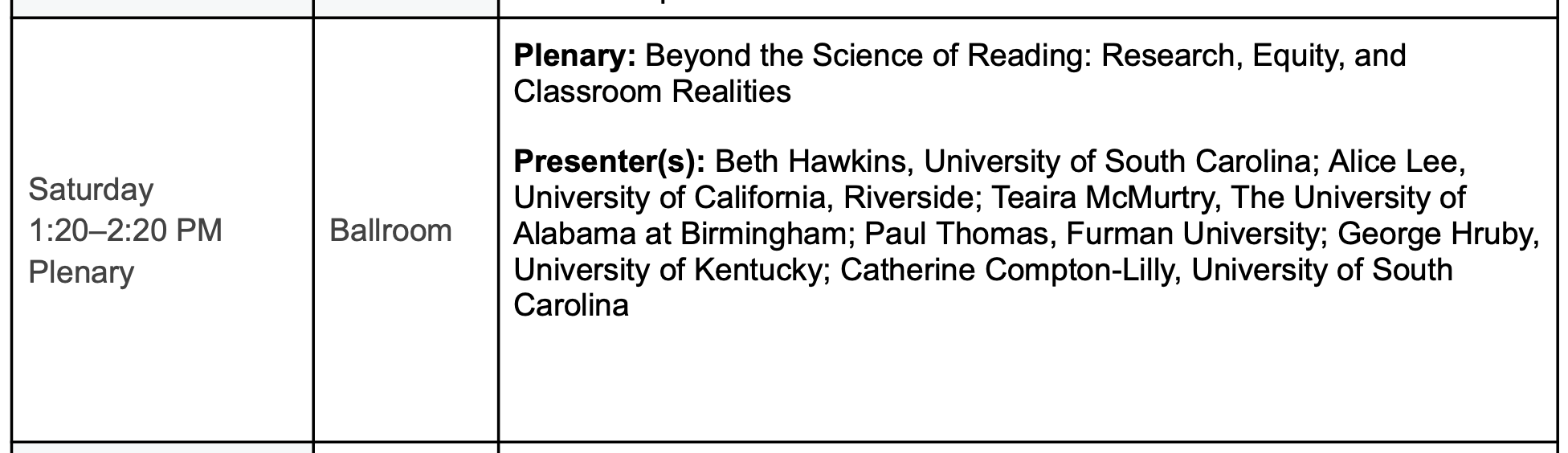
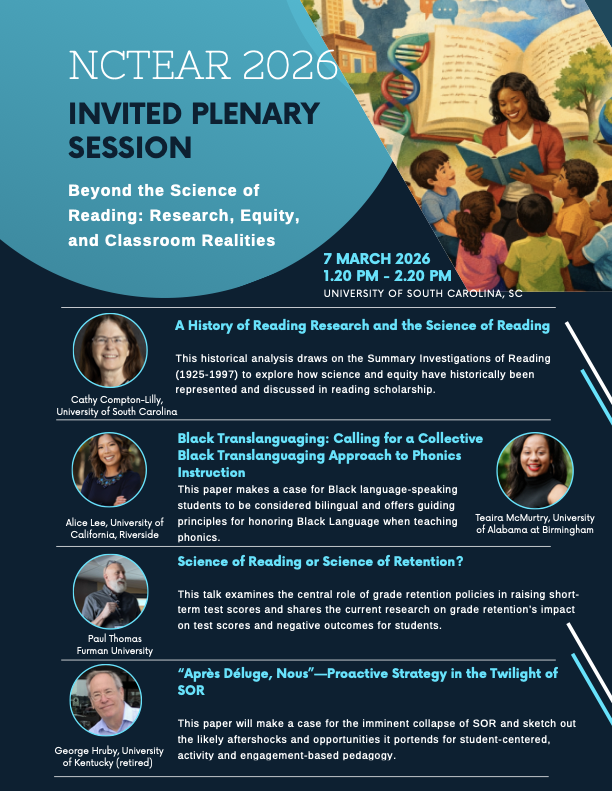
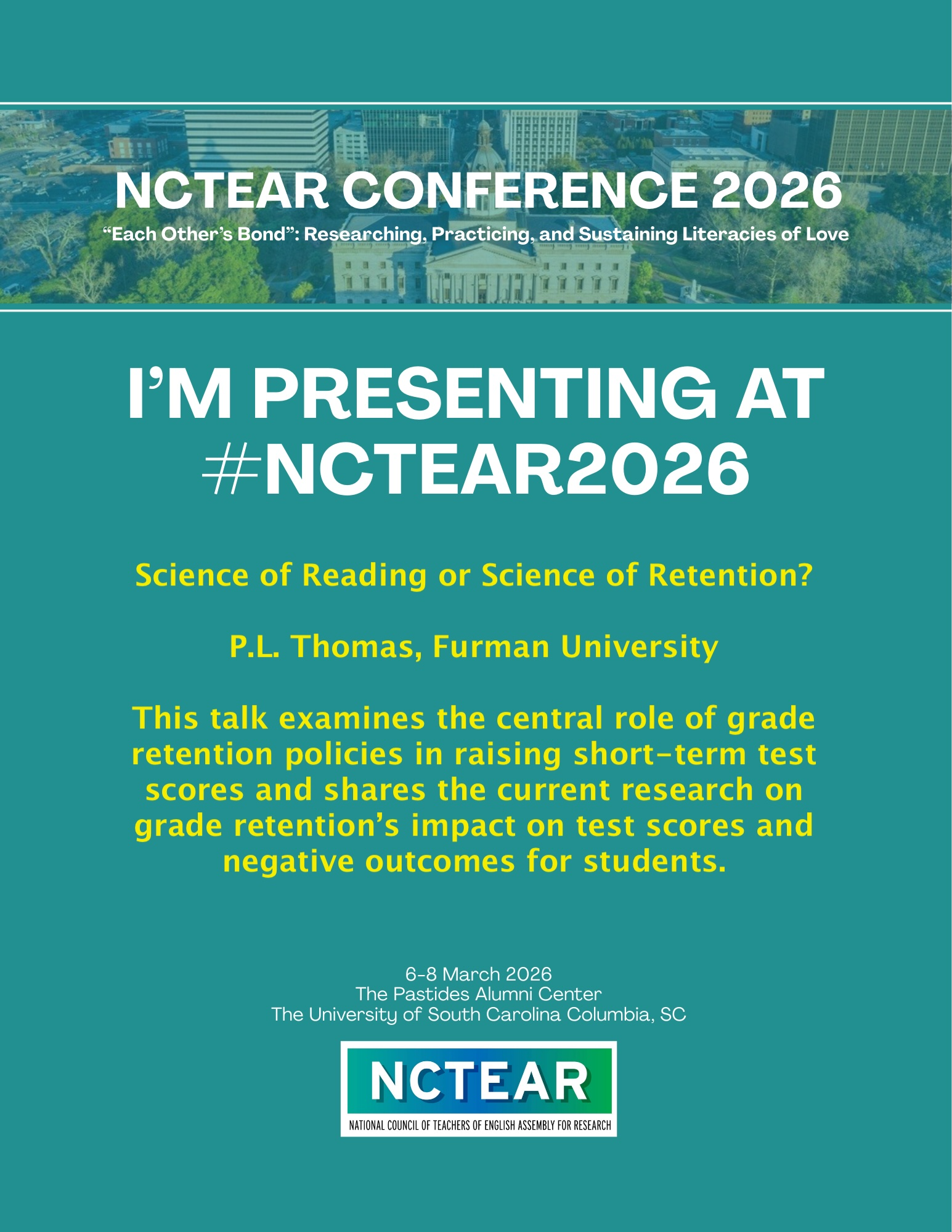
Science of Reading or Science of Retention? [follow link for PDF of PP]
P.L. Thomas, Furman University
This talk examines the central role of grade retention policies in raising short-term test scores and shares the current research on grade retention’s impact on test scores and negative outcomes for students.
Alaska Task Force on the National Assessment of Education Progress (NAEP)
April 15, 2026
Understanding NAEP and Educational Funding (follow link for PDF of presentation)
Maine Department of Education
July 1, 2026
KEYNOTE
Keynote Date: Tuesday, June 30, 2026
Keynote Time: 9:00 am – 10:00 am (1.0 hr)
Keynote Title: “From Accountability to Understanding: Using Transparent Evidence to Improve Literacy Teaching and Assessment”
The Presenter, Paul L. Thomas, shall design and deliver a keynote that invites educators to shift their mindset from “ accountability” toward “transparency” and a deeper understanding of literacy learning and teaching, encouraging participants to adopt a reflective and inquiry-oriented mindset and how transparent use of evidence can support more thoughtful and context-responsive decisions about curriculum, instruction, and student evaluation.
WORKSHOP
Workshop Date: Tuesday, June 30, 2026
Workshop Time: 1:00 pm – 3:00 pm (2 hr)
Workshop Title: “From Accountability to Understanding: Using Transparent Evidence to Improve Literacy Teaching and Assessment”
Building from the keynote, this interactive workshop led by Paul L. Thomas will support educators in applying a mindset of inquiry and understanding to everyday classroom decisions about literacy teaching and assessment.
 dr. p.l. (paul) thomas