All posts by plthomasedd

P. L. Thomas, Professor of Education (Furman University, Greenville SC), taught high school English in rural South Carolina before moving to teacher education. He is a former column editor for English Journal (National Council of Teachers of English), current series editor for Critical Literacy Teaching Series: Challenging Authors and Genres (Brill), and author of Teaching Writing as Journey, Not Destination: Essays Exploring What ‘Teaching Writing’ Means (IAP, 2019) and How to End the Reading War and Serve the Literacy Needs of All Students: A Primer for Parents, Policy Makers, and People Who Care (IAP, in press). NCTE named Thomas the 2013 George Orwell Award winner. He co-edited the award-winning (Divergent Book Award for Excellence in 21st Century Literacies Research) volume Critical Media Literacy and Fake News in Post-Truth America (Brill, 2018). Follow his work @plthomasEdD and the becoming radical (https://radicalscholarship.wordpress.com/).

The “R” Word as Taboo in Twenty-First Century U.S.A.

Margaret Atwood’s The Handmaid’s Tale offers a not-too-distant dystopia in which Atwood explores the rise of a theocracy as a sanctuary for the declining white race; the work is a tour-de-force confrontation of sexism and misogyny as well as dramatization of the relationship between power and language, including the power inherent in what humans name* and what humans taboo.

The central handmaid of the tale, June/Offred, narrates her own journey through hell that includes being assigned to a Commander who monthly is charged with attempting to impregnate his handmaid in what this new nation of Gilead calls the Ceremony, infusing the act with religious and official overtones.

However, June/Offred characterizes the Ceremony with a disturbing and clinical precision:

My red skirt is hitched up to my waist, though no higher. Below it the Commander is fucking. What he is fucking is the lower part of my body. I do not say making love, because this is not what he’s doing. Copulating too would be inaccurate, because it would imply two people and only one is involved. Nor does rape cover it: nothing is going on here that I haven’t signed up for. There wasn’t a lot of choice but there was some, and this is what I chose. (p. 94)

Many aspects of this passage are worth emphasizing, but let’s focus on the importance and value in June/Offred naming accurately this awful thing happening—and not ignore the weight of taboo language (such as the word “fucking”).

“I have guarded my name as people/ in other times kept their own clipped hair,” opens Barbara Kingsolver’s poem, “Naming Myself,” “believing the soul could be scattered/ if they were careless.”

Here too are the intersections of naming, gender, and power: why must women abandon their names in the legal/religious act of marriage while men retain theirs?

Kingsolver’s speaker, like Atwood’s narrator, both uses and values language as power—guarding a name and naming.

#

The election of Donald Trump as the president of the U.S. comes in the wake of Trump making inflammatory comments about Mexicans, Muslims, and women. Nonpartisan and measured assessments of Trump’s words rightly label them as racist, xenophobic, and sexist/misogynistic.

The rise of Trump as a political leader has exposed the lingering taboo in the U.S. for naming racism, even when there is direct evidence of racist language and behavior and especially when that racism is coded (getting tough on crime, building a wall, evoking the specter of terrorism).

Serious public debate has parsed making the distinction between Trump being a racist and Trump courting and/or attracting racists, such as being endorsed by the KKK, neo-Nazi organizations, and the white nationalist movement.

A perverse shift has occurred, in fact, from the mislabeling of Barack Obama’s being elected president as proof that the U.S. is a post-racial society to Trump’s rise asking the U.S. to reconsider what counts as racism.

Trump personifies the triple-Teflon of being white, male, and affluent, most notably in the power of those attributes to deflect the label “racist.” As Trump himself asserted defiantly:

I can never apologize for the truth. I don’t mind apologizing for things. But I can’t apologize for the truth. I said tremendous crime is coming across. Everybody knows that’s true. And it’s happening all the time. So, why, when I mention, all of a sudden I’m a racist. I’m not a racist. I don’t have a racist bone in my body.

Trump’s own strategy frames his words and behavior as “truth,” therefore not “racist.”

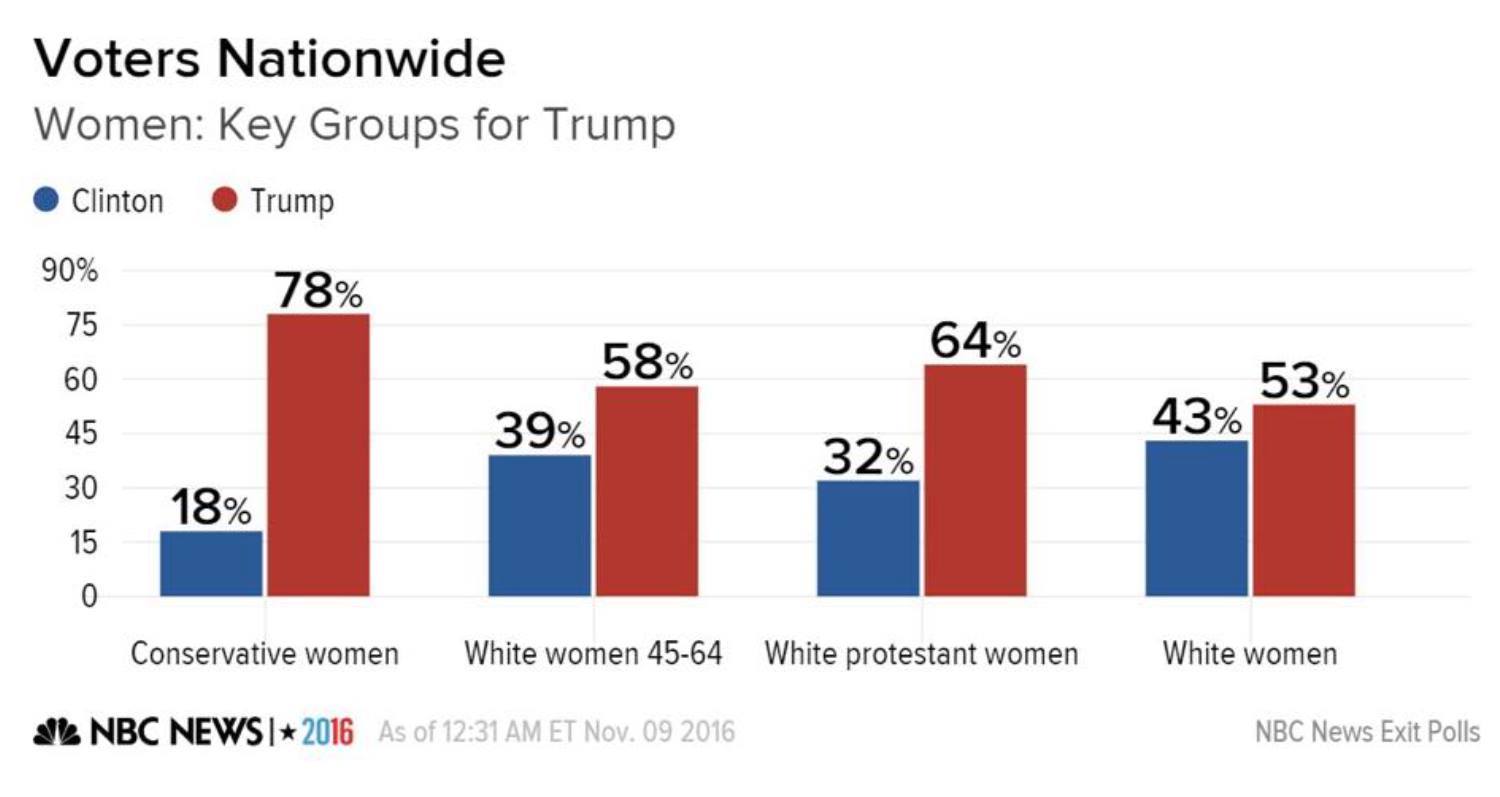
The election of Trump grounded significantly on white voter support, including a majority of white women, adds another layer of tension in that if Trump has voiced racism and/or practiced racism, how complicit are voters as racists themselves?

In short, are the approximately 25% of eligible voters who supported Trump racists? And if so, who can name that racism?

#

A valued colleague who is a rhetorician posted on social media his argument that white liberal elites, especially, should stop naming people as racists—pointing to the overwhelming evidence that the approach is ineffective.

Faced with evidence of racism, whites tend to emphasize their own personal struggles, and many whites now believe racism toward whites trumps racism toward blacks.

Systemic racism (distinct from individual racists) tends to be much harder for many in the U.S. to name or confront. For example, the political and media perpetuation of black-on-black crime is enduring despite the fact that all crime is mostly intra-racial—the white-on-white crime rate is nearly identical to the black-on-black crime rate.

To approach this in Trump-logic: black-on-black crime rates are true; therefore, referring to them cannot be racist.

But even the racism that can be named in the U.S. is reduced to the most extreme and even cartoonish version that Ta-Nehisi Coates calls the “oafish racist”:

Cliven Bundy is old, white, and male. He likes to wave an American flag while spurning the American government and pals around with the militia movement. He does not so much use the word “Negro”—which would be bad enough—but “nigra,” in the manner of villain from Mississippi Burning or A Time to Kill. In short, Cliven Bundy looks, and sounds, much like what white people take racism to be.

The problem with Cliven Bundy isn’t that he is a racist but that he is an oafish racist. He invokes the crudest stereotypes, like cotton picking. This makes white people feel bad.

What Trump represents, however, is more insidious:

The elegant racist knows how to injure non-white people while never summoning the specter of white guilt. Elegant racism requires plausible deniability, as when Reagan just happened to stumble into the Neshoba County fair and mention state’s rights. Oafish racism leaves no escape hatch, as when Trent Lott praised Strom Thurmond’s singularly segregationist candidacy.

Elegant racism is invisible, supple, and enduring. It disguises itself in the national vocabulary, avoids epithets and didacticism. Grace is the singular marker of elegant racism. One should never underestimate the touch needed to, say, injure the voting rights of black people without ever saying their names. Elegant racism lives at the border of white shame. Elegant racism was the poll tax. Elegant racism is voter-ID laws.

The racism of Trump and emboldened by Trump sullies the “elegant,” but it certainly meets Coates’s recognition of “plausible deniability.”

#

Finally, let’s return to June/Offred, being fucked, but not raped because “[t]here wasn’t a lot of choice but there was some.”

In a free society, black and brown people find themselves in a parallel circumstance to June/Offred, the victims of racism even though “[t]here wasn’t a lot of choice but there was some.”

And as my colleague noted, victims of racism certainly find value in naming racism and racists.

The problem my colleague raises, however, is among white allies to those victims of racism; if it is ineffective for white allies to name racism, to name racists, what is our obligation as allies against racism and inequity?

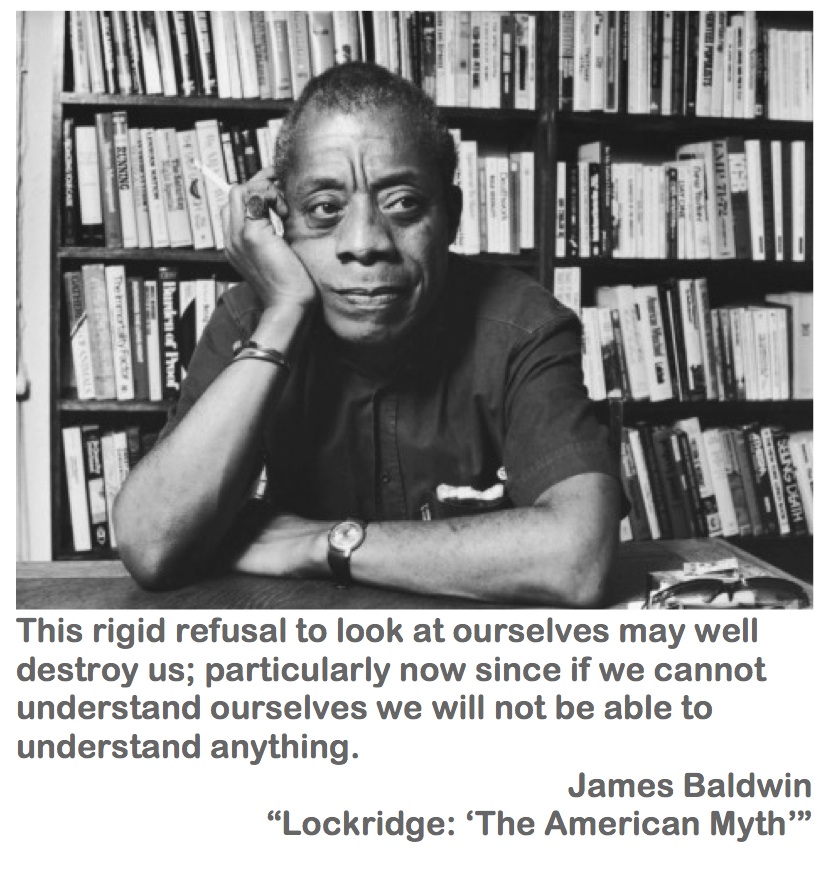
To suggest that racism and racists do not exist until acknowledged by whites is a nasty dose of paternalistic racism. To tip-toe around racists for fear of offending them and entrenching racism further also seems like a slap in the face of black and brown people living the very real consequences of racism and the “rigid refusal to look at ourselves.”

As a very privileged ally to everyone marginalized by racism (as well as sexism/misogyny, xenophobia, and all sorts of bigotry), I believe I must listen to black and brown voices, but I also must use my privilege to amplify (not confirm) those voices—to stand beside and behind, but never to speak for.

There was a time in the not-so-distant past when even the oafish racist was not called to account; therefore, I am convinced that a key step to erasing elegant racism, systemic racism, is to have the courage to call racists “racists” regardless of the evidence that those rightly labeled “racists” will not change.

I am taking this stand because I am not sure our goal is to change individual racists, but to change the greater capacity of the larger population who have yet to confront their culpability in elegant/systemic racism, and thus to create a critical mass in the name of equity that will eradicate racism over time.

In the most profound and bitter sort of appropriateness, the U.S. has elected the very worst and most perfect leader of, as Trump would say, the truth about the U.S.—which is that we are a racist, sexist/misogynist, and xenophobic people, drunk on consumerism and negligent in our humanity for each other.

With that before us and named, let us hope we can confess our sins, do our penance, and create a more perfect union.


* Dare we call fascism “fascism”? No, this isn’t the 1930s – but yes, this is fascism, James McDougall
The Rights and Responsibilities of the Teacher of English Redux (2016)

“All we gotta do is be brave
And be kind”

“Baby, We’ll Be Fine,” The National

…the world is gone daft with this nonsense.

John Proctor, The Crucible, Arthur Miller

In a keynote address at the 1960 National Council of Teachers of English (NCTE) annual convention, former NCTE president Lou LaBrant asserted:

Every teacher of English exercises some rights, no matter how dictatorial the system under which [she/]he works; and every teacher carries out some responsibilities. But today we have a considerable movement in this country to curtail certain freedom—rights—of the classroom teacher, and those rights are the matter of this discussion. (p. 379)

Published as The Rights and Responsibilities of the Teacher of English in the September 1961 English Journal, this characteristic call to action from LaBrant resonates in 2016 as English teachers prepare to gather in Atlanta, Georgia for #NCTE16 with the increasingly important theme of Faces of Advocacy.

Fifty-five years ago, LaBrant advocated for teaching:

Teaching, unlike the making of a car, is primarily a thought process. A [hu]man may work on an assembly line, turning a special kind of bolt day after day, and succeed as a bolt-turner….But the teacher is something quite different from the [hu]man who turns a bolt, because the student is not like a car. Teaching is a matter of changing the mind of the student, of using that magic by which the thinking of one so bears on the thinking of another that new understanding and new mental activity begin. Obviously, the degree to which this is reduced to a mechanical procedure affects the results. (p. 380)

Most practicing teachers today work within and against political and bureaucratic forces that “[reduce teaching] to a mechanical procedure.”

And even more disturbing is LaBrant’s warning:

What I am trying to say here is that the teacher who is not thinking, testing, experimenting, and exploring the world of thought with which [she/]he deals and the very materials with which [she/]he works, that teacher is a robot [her/]himself. But we cannot expect a teacher to continue the attempt to find better means or to invent new approaches unless [she/]he knows [she/]he will have freedom to use [her/]his results. Without this freedom we must expect either a static teacher or a frustrated one. I have seen both: the dull, hopeless, discouraged teacher, and the angry, blocked, unhappy individual. (p. 380)

At mid-twentieth century, LaBrant spoke against the all-too-familiar “bad” teacher myth used in contemporary calls for accountability:

Repeatedly when capable teachers ask for freedom, someone points out that we have many lazy teachers, stupid teachers unable to think and choose, ignorant teachers; in short, bad teachers who need control. We do have some, but we encourage others to be bad. Even the weak teacher does better when [she/]he has to face [her/]his own decisions, and when [she/]he supports that decision. (p. 383)

The de-professionalizing of all teachers, then, is not something new, but a historical fact of being a teacher. However, LaBrant confronted the culpability among educators themselves:

One reason so many of us do not have our rights is that we have not earned them. The teacher who is free to decide when and how to teach language structure has an obligation to master [her/]his grammar, to analyze the problems of writing, and to study their relations to structure….But [her/]his right to choose comes only when [she/]he has read and considered methods other than [her/]his own. [She/]He has no right to choose methods or materials which research has proved ineffective….There is little point in asking for a right without preparation for its use. (p. 390)

“Throughout our country today we have great pressure to improve our schools,” lamented LaBrant. “By far too much of that pressure tends toward a uniformity, a conformity, a lock-step which precludes the very excellence we claim to desire”:

There is little consideration of the teacher as a catalyst, a changing, growing personality. Only a teacher who thinks about [her/]his work can think in class; only a thinking teacher can stimulate as they should be stimulated the minds with which [she/]he works. Freedom of any sort is a precious thing; but freedom to be our best, in the sense of our highest, is not only our right but our moral responsibility. “They”—the public, the administrators, the critics—have no right to take freedom from us, the teachers; but freedom is not something one wins and then possesses; freedom is something we rewin every day, as much a quality of ourselves as it is a concession from others. (pp. 390-391)

The Rights and Responsibilities of the Teacher of English Redux

“Evil settles into everyday life when people are unable or unwilling to recognize it,” writes Teju Cole in the wake of Donald Trump being elected president of the U.S. “It makes its home among us when we are keen to minimize it or describe it as something else.”

LaBrant wrote about the field of teaching English throughout the 1940s and 1950s with the power—both for evil and for good—of language forefront of her concerns:

Misuse of language, as Hitler demonstrated, is a terrible thing; we teachers of English can at the very least teach our students that language is a tool of thought, a tool which can be sharp and keen, but is easily blunted. (“The Individual and His Writing,” 1950, p. 265)

So we teachers of English/ELA—and all educators—sit in 2016 confronted with a “[m]isuse of language” that has given rise to a presidency built on racism, sexism, and xenophobia; therefore, as during LaBrant’s career, we teachers of English/ELA must embrace the most pressing responsibilities.

But driving Trump’s and his supporters’ bigotry has been a powerful corruption of language: blatant lies, denials of those lies, and the ugliest of coded language. In short, bullying has rewarded a political leader with the highest office in a free society.

Parody of Trump’s misuse of language cannot be taken lightly, but that misuse has real consequences on the lives of vulnerable and marginalized people, including children in the classrooms of teachers across the U.S.

Immediately, then, teachers must admit “that every dimension of schooling and every form of educational practice are politically contested spaces” (Kincheloe, 2005).

In other words, although teachers are historically and currently de-professionalized by being told not to be political, as LaBrant argued, educators cannot reinforce that mantra by calling for politics-free zones in our classrooms and in our professional spaces.

Calling for no politics is a political act of silencing that brazenly takes a masked political stand in favor of the status quo.

Teaching and learning are unavoidably “politically contested spaces,” but they are unavoidably ethically contested spaces as well.

Language is a human behavior that allows us to wrestle with and find our moral grounding; and thus, those teaching literacy have a profoundly ethical mission to work toward the Right, Good, and Decent—in the act of teaching but also as a personal model.

As philosopher Aaron Simmons argues:

It matters that we demonstrate critical thinking even while others assume that shouting louder is tantamount to evidential refutation. It matters that we think well when it seems hard to think anything at all. It matters that we care about truth because only then can lies and bullshit still be categories to avoid.

The naive stance of neutrality can no longer be who teachers are because, as I noted above, to be neutral is to support the status quo, and in the U.S., the status quo is a cancer that left untreated promises to kill us all.

As Lucas Jacob argues directly:

Calling a politician out for Islamophobia, xenophobia, racism, and misogyny is not a matter of exerting undue influence by favoring one political party over another; nor is it a matter of disrespecting the presidency. Naming Mr. Trump’s hate speech as such is, rather, a moral imperative for supporting the missions of K-12 schools, in which Islamophobic, xenophobic, racist, and misogynist words and actions are punishable offenses that can (and must) be treated as being beyond the pale.

“It goes without saying, then, that language is also a political instrument, means, and proof of power,” James Baldwin wrote in 1979 on Black English. “It is the most vivid and crucial key to identify: It reveals the private identity, and connects one with, or divorces one from, the larger, public, or communal identity.”

Just as LaBrant linked language and power, Baldwin extended that dynamic to include race—and called for using that power in the name of community instead of divisiveness.

The word “critical,” now, has taken on exponential layers of meaning.

We are in critical times, and thus, as Kincheloe explains about the political and ethical responsibilities of being critical educator who seeks for students critical literacy:

Recognition of these educational politics suggests that teachers take a position and make it understandable to their students. They do not, however, have the right to impose these positions on their students [emphasis in original]….

To refuse to name the forces that produce human suffering and exploitation is to take a position that supports oppression and powers that perpetuate it. The argument that any position opposing the actions of dominant power wielders is problematic. It is tantamount to saying that one who admits her oppositional political sentiments and makes them known to students is guilty of indoctrination, while one who hides her consent to dominant power and the status quo it has produced from her students is operating in an objective and neutral manner. Critical pedagogy wants to know who’s indoctrinating whom. (p. 11)

In its simple form, to call a lie, a lie; to name racism, racism; to reject hate as hate—these are the undeniable responsibilities of teachers, especially teachers of English/ELA.

To say “I’m neutral” in the face of a lie is to lie.

To say “I’m neutral” in the face of racism is racism, in the face of sexism is sexism, in the face of xenophobia is xenophobia.

To divorce the act of teaching from the world within which it resides is to abdicate the greatest potential of teaching and learning: to change the human experience from dark to light.

If we shun our responsibilities as teachers in 2016, we are turning our backs to the ugliest realities faced by Baldwin nearly forty years ago:

The brutal truth is that the bulk of white people in American never had any interest in educating black people, except as this could serve white purposes. It is not the black child’s language that is in question, it is not his language that is despised: It is his experience. A child cannot be taught by anyone who despises him, and a child cannot afford to be fooled. A child cannot be taught by anyone whose demand, essentially, is that the child repudiate his experience, and all that gives him sustenance, and enter a limbo in which he will no longer be black, and in which he knows that he can never become white. Black people have lost too many black children that way.

And, after all, finally, in a country with standards so untrustworthy, a country that makes heroes of so many criminal mediocrities, a country unable to face why so many of the nonwhite are in prison, or on the needle, or standing, futureless, in the streets–it may very well be that both the child, and his elder, have concluded that they have nothing whatever to learn from the people of a country that has managed to learn so little.

Writing two decades before her NCTE keynote examined above, LaBrant made a foundational request: “For these reasons my first request of every American teacher of English is that [she/]he teach in [her/]his classroom this honest use of language and an understanding of its relation to life” (p. 206).

And about “this honest use of language,” there are only two options—although remaining neutral is not one of them.

English Journal November Sneak Preview

English Journal November Sneak Preview

The following post is by Julie Gorlewski and David Gorlewski, NCTE members and editors of the English Journal and guest editors, Sean P. Connors and P.L. Thomas. 

We are delighted to invite you to preview our November 2016 issue of EJ, which—in keeping with the presidential election—is particularly provocative and compelling. In this blog post, we feature the issue editorial, composed by guest editors Sean P. Connors and P. L. Thomas, as well as the introduction to a special section on teaching Adventures of Huckleberry Finn.We hope that the issues highlighted in this month’s EJ will open conversation among English teachers everywhere. —Julie Gorlewski and David Gorlewski

NOTE: In part, this special issue was prompted by the NCTE 2014 National Convention and this blog post resulting from that: Teaching with Our Doors Open: Professional Transparency as Acts of Resistance 

Vonnegut Reader: God Bless You, Kurt Vonnegut *11/11/22 – 04/11/2007*

Dear Kurt (if I may):

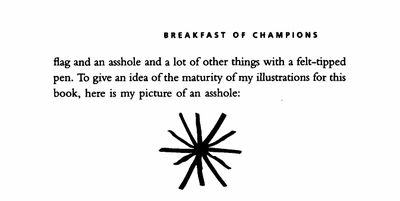
The Arc of the Moral Universe may bend toward justice, but it seems at this point on Planet Earth and specifically the good ol’ U.S. of A. that is mostly hokum—though I take some solace that you have been spared in your corporeal state from the darkest joke of all: The U.S. has literally elected your most iconic artwork:

ianewxa
Breakfast of Champions, Kurt Vonnegut

Below, in your honor, as a small token to your years of service calling on humanity to dig deep and fulfill your fictional imploring: “‘God damn it, you’ve got to be kind,’” I offer this Vonnegut Reader on the day in which, if God had been Willing, you would be 94:

So, Kurt, should we even bother to Hope?

873385f61b2e97a4942aa37302ac4df6
Breakfast of Champions, Kurt Vonnegut

Nonetheless, God bless you, Kurt Vonnegut.

As I must imagine you Out There Somewhere, know a few of us our trying, although you are likely:

facevonnegut
Breakfast of Champions, Kurt Vonnegut

What Trumplandia Confirms about Republican Party, Christian Right, and White America

I just want to ask a question:
Who really cares, to save a world in despair?
Who really cares?

“Save the Children,” Marvin Gaye

I was born and have lived my entire life in the cesspool of hypocrisy that is the Bible Belt—where conservative Republicanism and Christian values are thin veneer for hatred, bigotry, sexism, gun-lust, and enduring racism.

That hypocrisy failed me and then as a young adult and throughout my life I have been taught critical love and kindness by great writers and thinkers: Kurt Vonnegut, Eugene V. Debs, Alice Walker, Toni Morrison, Langston Hughes, and the greatest witness of all, James Baldwin.

With the election of Donald Trump as the U.S. president, the entire nation has before it this reality: Trumplandia confirms that the Republican Party, Christian Right, and white America have abdicated all rights to any moral authority.

First, despite efforts by mainstream media and pundits to argue otherwise, Trump and his rhetoric are continuations of central efforts by the Republican Party reaching back at least to Reagan: “tough on crime” as code for racist beliefs about blacks and Latinx, “build a wall” as just more xenophobia, and anti-government ranting as code for denying “free” offerings to the “lazy” people of color and “illegal immigrants.”

Trump’s Republicanism is directly in line with Reagan Republicanism. The only real difference is Trump’s outlandish and brash admissions aloud of the very worst of the Republican Party, such as calling Mexicans rapists and murderers. Traditional Republicans only hint at such.

Even more important is that the overwhelming support for Trump by the Christian Right is stunningly damning:

For eight years, Barack Obama and his family—despite a history of being practicing Christians, despite Obama himself offering several eloquent and Christian speeches and hymns in times of tragedy, and despite Obama and his family living essentially good (read: Christian) lives—the Christian Right, and Trump, have refuted Obama’s Christianity and used accusations of his being a Muslim as a slur.

Yet, Trump’s hedonism, adultery, sexual assault, profane discourse, hate speech, sexism, and rapacious behavior as a business man and pseudo-billionaire [1], for the Christian Right, prove to be just fine.

Trumplandia has exposed there is nothing “Christian” or “right” about the Christian Right.

Finally, however, the most damning and least addressed consequence of Trumplandia is what it has exposed about white America, who overwhelmingly supported Trump:

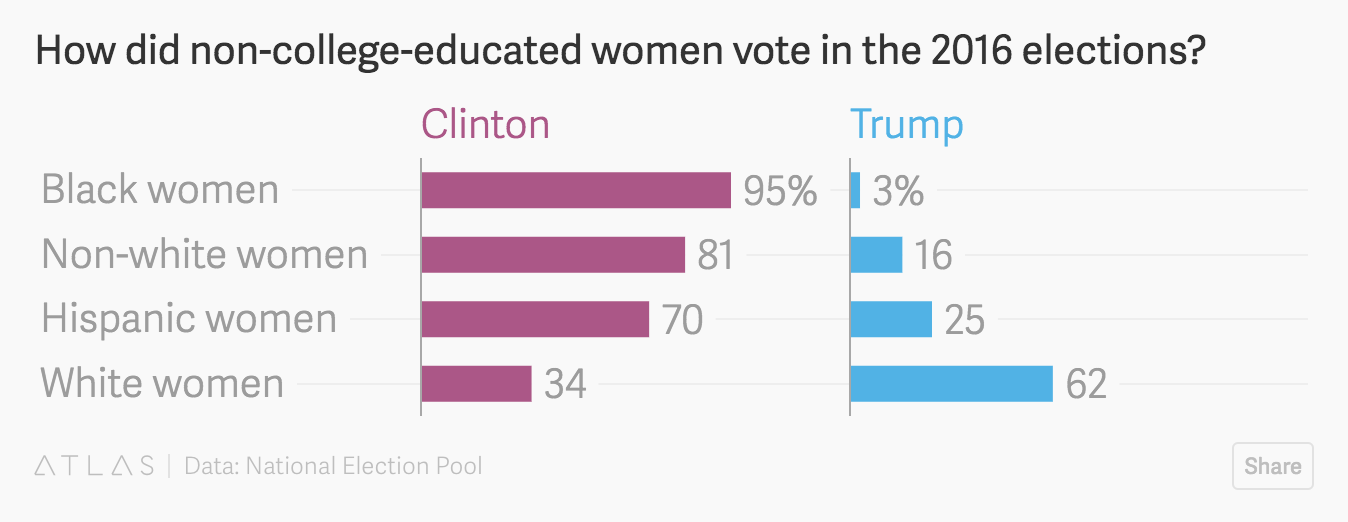
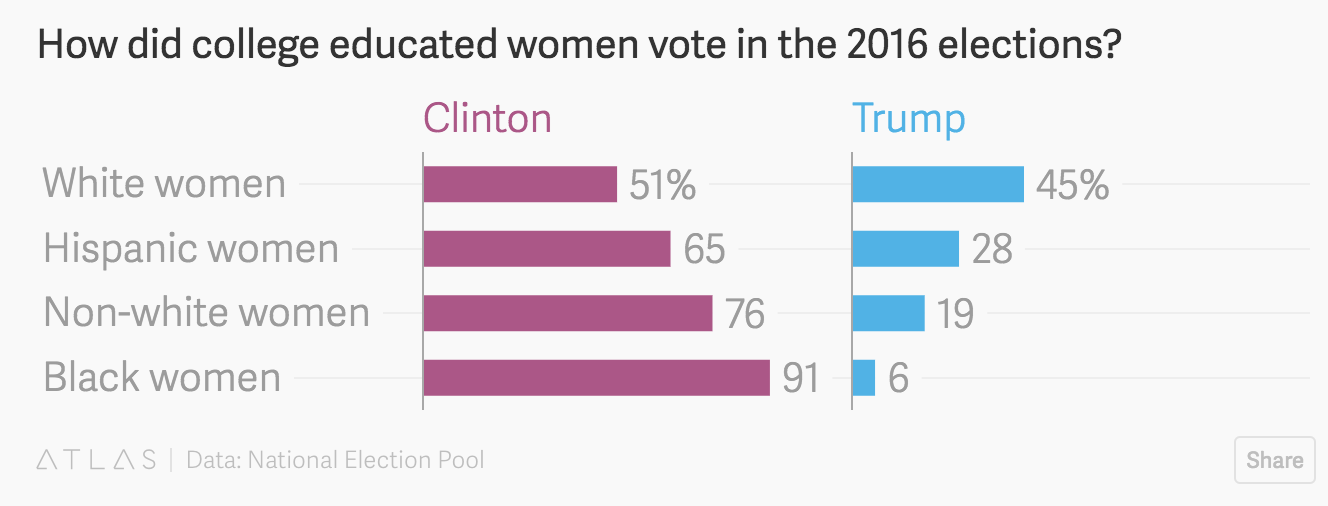
As expected, Trump did best among white voters without a college degree, beating Clinton by the enormous margin of 72 percent to 23 percent. Trump also won among white, non-college women 62 to 34 percent and white college-educated men, 54 to 39 percent. Among white voters, Clinton only won among women with a college degree by a 51 to 45 percent margin. Interestingly, among white voters, there is no evidence in the exit poll that income affected the likelihood that they supported Trump.

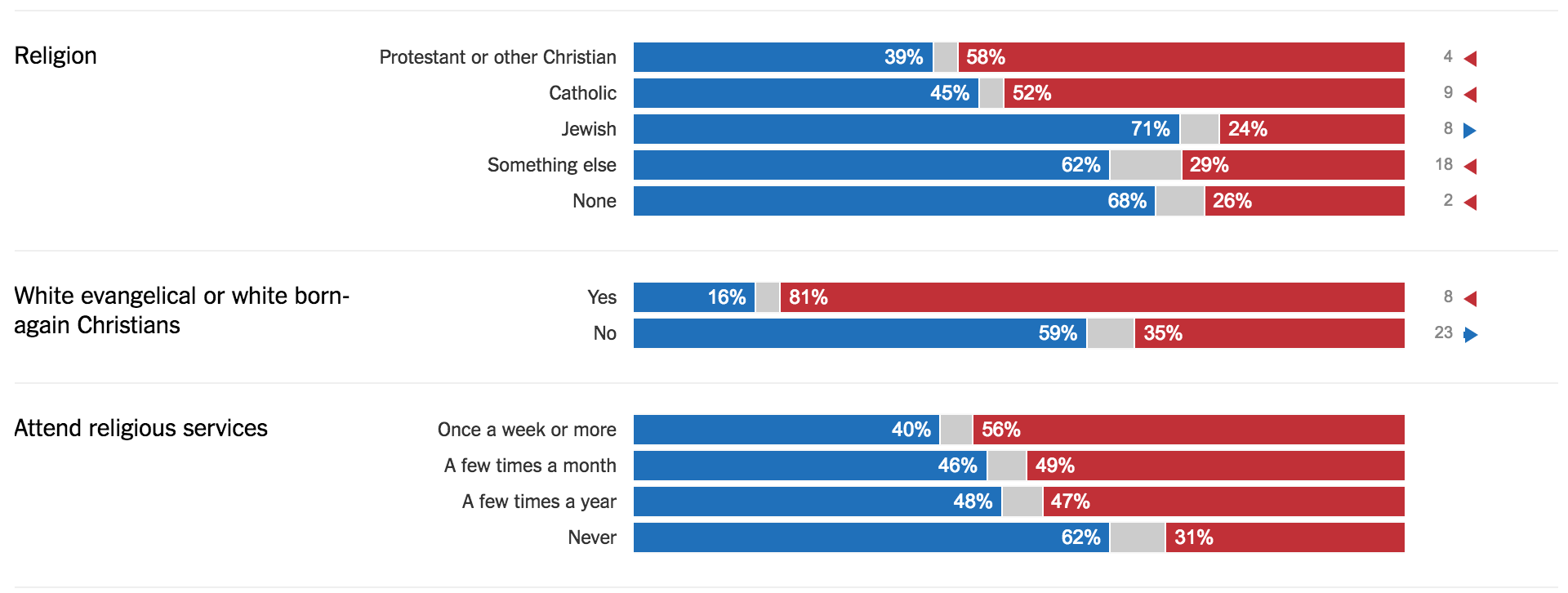
The conventional wisdom being promoted by whitewashed mainstream media is that the working and middle class have been abandoned by Democrats and the U.S. government; yet, exit polls show that the two lowest income categories chose Clinton by a slim majority (certainly skewed, however, by people of color over-represented in these groups, revealing how the media is mostly worried about “working class” and “middle class” only as that relates to whites):

Both sets of exit data from CBS and NYT, then, suggest that Trump’s support has more to do with race than disgruntled working class whites being ignored and disenfranchised.

Actually, mainstream media has its argument backward because Trumplandia confirms that white America has abandoned commitments to equity for all—not that any political party or the U.S. government has abandoned white America.

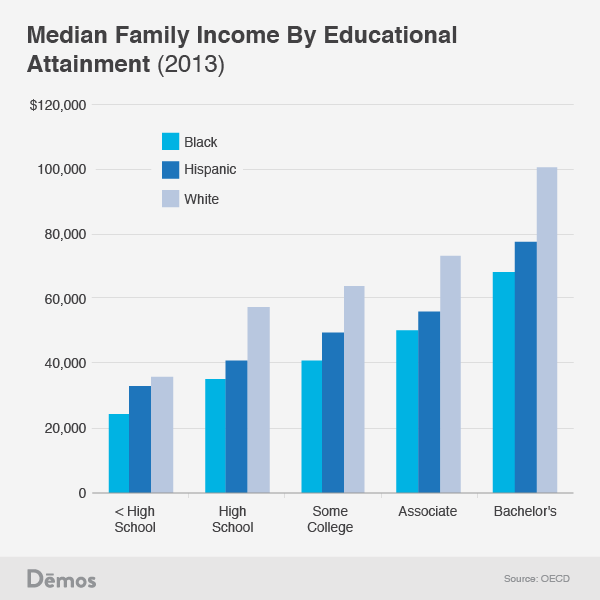
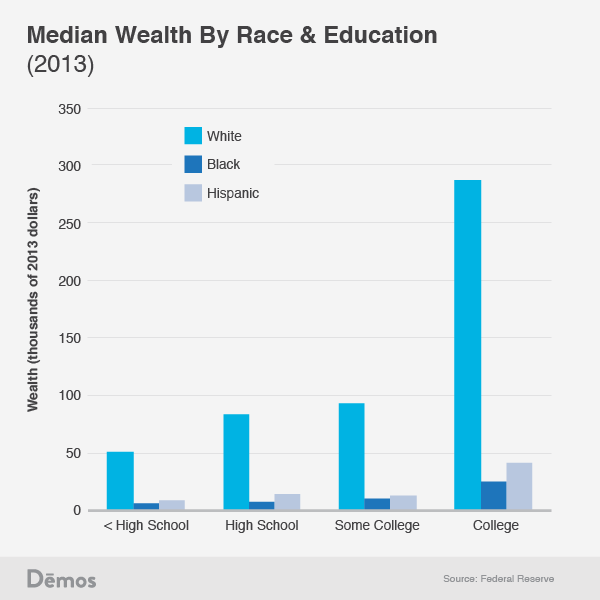
The problem with the hurting working/middle class white argument is that this is racially inequitable America:

And this is racially inequitable America:

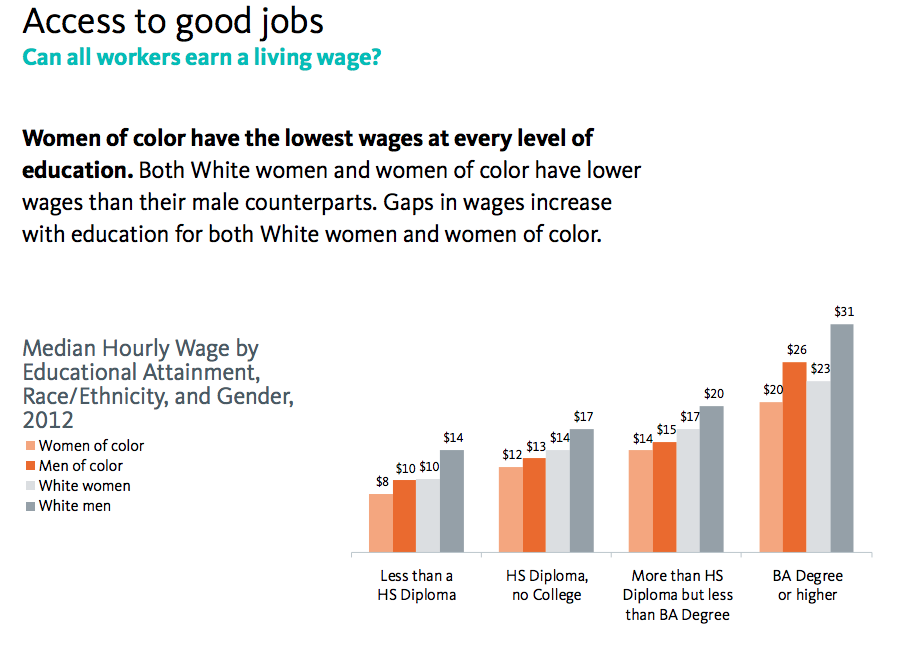
The America where race and gender create exponential inequity:

As a powerful contrast to the white male and female support to Trump, note that black women were by far least likely to vote for Trump—and they have the greatest reason to be disenfranchised (the lowest wages at every level of education, above):

The ultimate problem with the suffering working and middle class white argument for Trump’s rise is twofold: (1) white suffering may exist, but by comparison to black/brown suffering and gender suffering, white suffering remains relatively less significant, and (2) if whites are hurting, that fact should have spurred solidarity with historically marginalized groups, not the antagonism being heard from white America.

If white America ever really believed in the melting pot, believed in a country of immigrants, believed in equity for all, that may have existed in some distant and idealized past when white America saw that pot melting disparate whites into one homogenous white: equity for all who look like us (white).

Trumplandia is a white response (whitelash), not from working and middle class suffering, but against rising demands by oppressed groups (#BlackLivesMatter, Colin Kaepernick, gender neutral restrooms, marriage equity, immigration reform, etc.) for equity for all.

The only thing whites are poised to lose is their unearned privilege, but the rise of white support of Trump confirms that whites see their privilege as more important to preserve than equity for all is to attain.

“Make America Great Again” is slogan-as-code for maintaining white (and male) privilege.

#

In the tumultuous world faced by Marvin Gaye—especially war torn—he sang:

But who really cares?
Who’s willing to try?
To save our world
To save our sweet world
To save a world
That is destined…to die

Trumplandia is a defiant “Not us” from white America—and efforts to whitewash that callousness as economic angst is further proof that the dirtiest word in the U.S. to utter is “racism” because of the delicate sensibilities of the most powerful people in the country.


[1] Matthew 19:24: Again I tell you, it is easier for a camel to go through the eye of a needle than for someone who is rich to enter the kingdom of God.

Dark Mourning in America: “The world is at least/fifty percent terrible”

The best lack all conviction, while the worst
Are full of passionate intensity.

“The Second Coming,” William Butler Yeats

Although humans appear ultimately incapable of listening to and then acting upon our great capacity for art—which is an extension of our great capacity for compassion, love, and good—literature may offer some solace in a time when the US has announced itself still a racist, sexist, and xenophobic people, hiding behind the codes of “conservative,” “family values,” and “Christian nation.”

How low do people have to stoop before they have their Lady Macbeth moment:

Out, damned spot! out, I say!–One: two: why,
then, ’tis time to do’t.–Hell is murky!–Fie, my
lord, fie! a soldier, and afeard? What need we
fear who knows it, when none can call our power to
account?–Yet who would have thought the old man
to have had so much blood in him.

Shakespeare’s dramatization of guilt and being complicit is, let’s not ignore, an allusion to Pontius Pilat and the “assassination” of Jesus:

When Pilate saw that he was getting nowhere, but that instead an uproar was starting, he took water and washed his hands in front of the crowd. “I am innocent of this man’s blood,” he said. “It is your responsibility!” [Matthew 27:24, NIV]

If we can have that moment in which we admit, confront, and atone for our responsibility in the evil that humans do, we must finally listen to James Baldwin:

rigid-refusal

And to Langston Hughes:

O, let America be America again—
The land that never has been yet—
And yet must be—the land where every man is free.
The land that’s mine—the poor man’s, Indian’s, Negro’s, ME—
Who made America,
Whose sweat and blood, whose faith and pain,
Whose hand at the foundry, whose plow in the rain,
Must bring back our mighty dream again.

And face our children with our failures, against which Maggie Smith struggles:

Life is short, though I keep this from my children….
The world is at least
fifty percent terrible, and that’s a conservative
estimate, though I keep this from my children….
Life is short and the world
is at least half terrible, and for every kind
stranger, there is one who would break you,
though I keep this from my children.

The US and its majority white population have the greatest opportunity before them, a free and powerful nation of riches, and daily, that opportunity is squandered because of our “rigid refusal to look at ourselves.”

The US is undeniably inequitable, and to balance among gender, race, etc., we have only two options: to take away or to give to—but in either case, white privilege is erased and white sensibilities are challenged.

There is no evidence the white majority has the ethical backbone to make changes for equity or even to tolerate them.

On a dark mourning in America, I recommend reading or rereading Margaret Atwood’s The Handmaid’s Tale—a sobering imagining of the worst of white responses to the rise of the Others they have created.

We are now on that path, and it is ours to make the decision to turn around or move forward into that oblivion.

“History proves that the white man is a devil”

The public career and life of Malcolm X are fraught with contradictions and controversy—often complicated by the Nation of Islam and its discredited leader Elijah Muhammad.

Malcolm X’s infamy—as it contrasts with the idealizing and misrepresentation of Martin Luther King Jr. as a passive radical—lies often in his sloganized “By any means necessary” and “History proves that the white man is a devil.”

While Malcolm X himself confronted some of his more controversial and confrontational stances, in 2016, the U.S. is faced with the prescience in what seemed to be hyperbole and racial anger; however, there is much to consider about the evil capacity often behind the face of white men.

Living just across the highways from my neighborhood, Todd Kohlhepp has confessed to vicious murders after police found a woman chained in a storage container for two months.

Kohlhepp represents to a disturbing degree the classic profile of serial killers and sex offenders, central of which is being a white male.

At the University of Wisconsin:

The 20-year-old student, Alec Cook, has been arrested and appeared in court on Thursday, charged with 15 crimes against five women, including sexual assault, strangulation and false imprisonment. His modus operandi, according to police and prosecutors, was to befriend fellow students and eventually entrap and viciously attack them, while keeping notebooks detailing his alleged targets.

Kohlhepp and Cook, white males of relative affluence, are no outliers. Yet, political leaders and the media persist in characterizing for the U.S. public much different images of who to fear: Mexicans, black males, Muslims.

Daily violence—including sexual aggression and assault—is a real threat in a way nearly opposite of these political and media messages; each of us should fear people who look like us, and family, friends, and acquaintances deserve nearly equal scrutiny.

Political race-baiters and the mainstream media rarely stray from the black-on-black crime message, but also always fail to add a key fact: crime is almost entirely intra-racial as the white-on-white crime rate (86%) is nearly identical to the black-on-black crime rate (94%).

Malcolm X’s rhetoric may still seem inflammatory, but James Baldwin’s more measured charges confront the same racial masking and tension:

White Americans find it as difficult as white people elsewhere do to divest themselves of the notion that they are in possession of some intrinsic value that black people need, or want. And this assumption—which, for example, makes the solution to the Negro problem depend on the speed with which Negroes accept and adopt white standards—is revealed in all kinds of striking ways, from Bobby Kennedy’s assurance that a Negro can become President in forty years to the unfortunate tone of warm congratulation with which so many liberals address their Negro equals. It is the Negro, of course, who is presumed to have become equal—an achievement that not only proves the comforting fact that perseverance has no color but also overwhelmingly corroborates the white man’s sense of his own value.

White men control the political and media narratives, and thus, white males are bathed in the compassionate light of the white male gaze of power—everyone else becomes the feared Other.

The hatred spewed by Donald Trump is not solely what should be feared in this context, but that he personifies and speaks to “the white man’s sense of his own value” that seeks to erase that Other, as Astra Taylor reported from a Trump rally in North Carolina:

A few months ago Trump had rallied in Wilmington, North Carolina, the site of America’s only and largely forgotten coup. In 1898, in the waning days of Reconstruction, rioting white supremacists overthrew a multiracial progressive “fusion” government, deposing democratically elected leaders of both races and killing black citizens mercilessly. After that, populism in North Carolina, as in the South more broadly, was a white affair. At his rally near the site of that historic, shocking savagery, Trump suggested “the Second Amendment people” do something about Hillary.

The Trump narrative is essentially racist, and almost entirely false, Jason Stanley explains:

The chief authoritarian values are law and order. In Trump’s value system, nonwhites and non-Christians are the chief threats to law and order. Trump knows that reality does not call for a value-system like his; violent crime is at almost historic lows in the United States. Trump is thundering about a crime wave of historic proportions, because he is an authoritarian using his speech to define a simple reality that legitimates his value system, leading voters to adopt it. Its strength is that it conveys his power to define reality. Its weakness is that it obviously contradicts it.

And thus, Trump has public support from the KKK and Nazi groups for a reason; and that support is distinct from public support for any of the other presidential candidates, none of which draw hate groups into the light.

In A Dialogue between James Baldwin and Nikki Giovanni, Baldwin argues, “The reason people think it’s important to be white is that they think it’s important not to be black”:

It’s not the world that was my oppressor, because what the world does to you, if the world does it to you long enough and effectively enough, you begin to do to yourself. You become a collaborator, an accomplice of your own murderers, because you believe the same things they do. They think it’s important to be white and you think it’s important to be white; they think it’s a shame to be black and you think it’s a shame to be black. And you have no corroboration around you of any other sense of life.

Yes, we must be vigilant about the white gaze and the male gaze, both of which, as Baldwin witnessed, corrupt the agent and object of that gaze, but we must be as vigilant about the white male accusatory finger designed to keep everyone else’s gaze somewhere other than where the most power, and too often, the most evil reside.

“the white man’s sense of his own value”: James Baldwin’s The Fire Next Time

White Americans find it as difficult as white people elsewhere do to divest themselves of the notion that they are in possession of some intrinsic value that black people need, or want. And this assumption—which, for example, makes the solution to the Negro problem depend on the speed with which Negroes accept and adopt white standards—is revealed in all kinds of striking ways, from Bobby Kennedy’s assurance that a Negro can become President in forty years to the unfortunate tone of warm congratulation with which so many liberals address their Negro equals. It is the Negro, of course, who is presumed to have become equal—an achievement that not only proves the comforting fact that perseverance has no color but also overwhelmingly corroborates the white man’s sense of his own value.

Why James Baldwin’s The Fire Next Time Still Matters

baldwin2_1050x700
Baldwin in London, 1969;via Wikimedia Commons

the_fire_next_time
A 1960s edition of Baldwin’s The Fire Next Time (via Flickr user Robert Huffstutter)