All posts by plthomasedd

P. L. Thomas, Professor of Education (Furman University, Greenville SC), taught high school English in rural South Carolina before moving to teacher education. He is a former column editor for English Journal (National Council of Teachers of English), current series editor for Critical Literacy Teaching Series: Challenging Authors and Genres (Brill), and author of Teaching Writing as Journey, Not Destination: Essays Exploring What ‘Teaching Writing’ Means (IAP, 2019) and How to End the Reading War and Serve the Literacy Needs of All Students: A Primer for Parents, Policy Makers, and People Who Care (IAP, in press). NCTE named Thomas the 2013 George Orwell Award winner. He co-edited the award-winning (Divergent Book Award for Excellence in 21st Century Literacies Research) volume Critical Media Literacy and Fake News in Post-Truth America (Brill, 2018). Follow his work @plthomasEdD and the becoming radical (https://radicalscholarship.wordpress.com/).

Failing Still to Address Poverty Directly: Growth Mindset as Deficit Ideology

Reporting in Education Week, Evie Blad explains:

Having a growth mindset may help buffer students from low-income families from the effects of poverty on academic achievement, researchers found in a first-of-its kind, large-scale study of 168,000 10th grade students in Chile.

But poor students in the study were also less likely to have a growth mindset than their higher-income peers, researchers found.

Similar to the popularity of “grit” and “no excuses” policies, growth mindset has gained a great deal of momentum as a school-based inoculation for the negative impact of poverty on children.

The binaries of growth and fixed mindsets are often grounded in the work of Carol Dwek, and others, who defines each as follows:

According to Dweck, “In a fixed mindset, people believe their basic qualities, like their intelligence or talent, are simply fixed traits. They spend their time documenting their intelligence or talent instead of developing them. They also believe that talent alone creates success—without effort.”…

Alternatively, “In a growth mindset, people believe that their most basic abilities can be developed through dedication and hard work—brains and talent are just the starting point. This view creates a love of learning and a resilience that is essential for great accomplishment,” writes Dweck.

However, the media, the public, and educators often fail to acknowledge two significant flaws with growth mindset: (1) the essential deficit ideology that focuses all of the blame (and thus the need for a cure) in the individual child, and (2) the larger failure to see the need to address poverty directly instead of indirectly through formal education.

First, then, let’s consider deficit ideology [1], as examined by Paul Gorksi:

Briefly, deficit ideology is a worldview that explains and justifies outcome inequalities— standardized test scores or levels of educational attainment, for example—by pointing to supposed deficiencies within disenfranchised individuals and communities (Brandon, 2003; Valencia, 1997a; Weiner, 2003; Yosso, 2005). Simultaneously, and of equal importance, deficit ideology discounts sociopolitical context, such as the systemic conditions (racism, economic injustice, and so on) that grant some people greater social, political, and economic access, such as that to high-quality schooling, than others (Brandon, 2003; Dudley-Marling, 2007; Gorski, 2008a; Hamovitch, 1996). The function of deficit ideology, as I will describe in greater detail later, is to justify existing social conditions by identifying the problem of inequality as located within, rather than as pressing upon, disenfranchised communities so that efforts to redress inequalities focus on “fixing” disenfranchised people rather than the conditions which disenfranchise them (Weiner, 2003; Yosso, 2005).

Any person’s success or failure can be traced to a number of factors, but in the U.S., our blind faith in the rugged individual defaults to ascribing credit and blame at least initially if not totally to the individual’s character traits such as “grit” and a growth mindset.

Student X is successful because of Quality A, and thus, Student Y’s failure is due to a lack (deficit) of Quality A; therefore, formal education must instill Quality A into Student Y.

This formula is compelling, again, because of our cultural myths, but also because the formula is manageable and seemingly efficient—and since efficiency is at the core of how we design and run schooling, the media, the pubic, and most educators fail to step back critically in order to reimagine how to deal with students holistically and generatively instead of through the traditional deficit model.

As a simple but representative example, most of us have taken a paper-and-pencil test in our schooling, one on which the teacher marks answers wrong with an X and then calculates our grade at the top of our papers—as in “100 – 30 = 70.”

This process is the deficit ideology that starts with every student having 100 and then defines that student’s learning on the test by what is missed, what is lacking.

One way to flip this ideology is to recognize that all students actually begin each assessment with 0 (no work has been done), and then the grade should be built on what learning and understanding the student demonstrates: simply checking the accurate responses and then giving credit for those positives.

The entire traditional approach to formal education in the U.S. is a deficit ideology, but the hyper-emphasis on children living in poverty, and black/brown students and English language learners, has increased the power of deficit approaches through growth mindset, “grit,” and “no excuses.”

Consequently, we routinely demand of children in the worst situations of life—through no fault of their own—that they somehow set aside those lives when they magically walk into school and behave in ways (growth mindset, “grit”) that few adults do who are also burdened by forces more powerful than they are.

Despite the enduring power of the rugged individual and meritocracy myths, the burden of evidence shows that privilege (race, class, and gender) continues to trump effort and even achievement in the real world: less educated whites earn more than more educated blacks, men earn more than equally educated women, and so forth.

But research also refutes the claims of growth mindset and “grit” that achievement is primarily the result of the character of the individual. The same person, in fact, behaves differently when experiencing slack (privilege) or scarcity (poverty).

As Sendhil Mullainathan and Eldar Shafir detail extensively, living in scarcity (poverty) drains a person of mental capacities the same as being sleep deprived; therefore, the solution to “buffer students from low-income families from the effects of poverty on academic achievement” is to address poverty directly instead of trying to “fix” the students who are victims of that poverty.

In other words, if we relieve children of food insecurity, home transience, etc., we are likely to find that those students in poverty who appeared to lack “grit” and growth mindset would then demonstrate those treasured qualities.

We are currently misdiagnosing growth mindset and “grit” (as deficit ideologies) as causal characteristics instead of recognizing them as outcomes of slack (privilege).

The deficit ideologies of formal schooling—particularly those (growth mindset, “grit”) targeting impoverished and black/brown students—are the entrenched indirect approaches to alleviating poverty criticized by Martin Luther King Jr. in 1967:

At no time has a total, coordinated and fully adequate program been conceived. As a consequence, fragmentary and spasmodic reforms have failed to reach down to the profoundest needs of the poor.

In addition to the absence of coordination and sufficiency, the programs of the past all have another common failing — they are indirect [emphasis added]. Each seeks to solve poverty by first solving something else.

I am now convinced that the simplest approach will prove to be the most effective — the solution to poverty is to abolish it directly [emphasis added] by a now widely discussed measure: the guaranteed income.

Ultimately, teaching disenfranchised and struggling students growth mindset and “grit” come from, mostly, good intentions that are tragically trapped in deficit ideologies.

The great and tragic irony of growth mindset advocates is that they are also victims of deficit ideologies—as they focus their “scornful gaze” on poor children and children of color.

And just as we have allowed coded racism such as “thug” to replace the now taboo racial slur “nigger,” we are embracing deficit ideology cloaked as scientism to label students as lacking growth mindset and “grit” to mask the very ugly suggestion that these children are simply lazy.

Let us embrace instead as educators a redirected focus—as Gorski implores:

Hegemony is a difficult thing to break. In order to break it, we must consider our own complicity with it and our socialization for compliance. We must avoid the quick fix and the easy answer. We must bare the price of refusing compliance, knowing that by looking up, by training our gaze toward the top of the power hierarchy, we might strain our necks, not to mention our institutional likeability, more so than we do when we train it downward, where we pose no threat to the myths that power the corporate-capitalist machine. But if we do not break hegemony, if we do not defeat deficit ideology, we have little chance of redressing, in any authentic way, its gross inequities. This, we must realize, is the very point of the redirected gaze: to ensure and justify the maintenance of inequity and to make us— educators—party to that justification and maintenance.

The social and educational inequities in the U.S. must be our targets for repair—not our students. And thus, we are left with a dilemma confronted by Chris Emdin: “The time will always come when teachers must ask themselves if they will follow the mold or blaze a new trail. There are serious risks that come with this decision. It essentially boils down to whether one chooses to do damage to the system or to the student.”


[1] See also Dudley-Marling, C. (2007). Return of the deficit. Journal of Educational Controversy, 2(1).
Bizarro Politics and Fearing the “Other”

For decades, I was wasting my votes in South Carolina by aggressively voting against Republicans. I really never voted for a Democrat, but I certainly found all the Republicans so vile that I felt a moral duty to vote against them.

Then in 2005, I was sitting in a hotel in New Orleans just months before Katrina hit and watching an interview on TV with George Carlin. Prompted by Charlie Rose about the 1992 election, Carlin explained that he was a lifelong non-voter.

Since then, like W.E.B. Du Bois and Carlin, I have been a non-voter and very openly not a Republican, Democrat, or (the silliest of all) Independent.

With the rise of Trump, I also resisted addressing this new and unprecedented level of insanity in mainstream politics: Trump is a bizarro cartoon extreme of everything wrong with partisan politics and the U.S. (although he certainly isn’t an extreme conservative, which I address below).

Recently, I have broken my Golden Rule of not mentioning the fools who live by the glory of being mentioned, even when being called fools (again, Trump is the king of that crap).

I also have been forced to reconsider partisan politics—most disturbingly, to acknowledge that if the Republicans had nominated Jeb Bush, they would have had a very powerful leg to stand on in terms of refuting Hillary Clinton over ethics and honesty.

Yes, we all could have quibbled over policy (I detest Jeb Bush’s policy, especially the dumpster fire of education policy in Florida), but Jeb Bush proved himself one of the most honest candidates in the primary campaign, and Hillary Clinton has a legitimate credibility problem (one that is typical of almost all candidates and only easily exposed by an unusually ethical, honest candidate).

And while there is a long and disturbing history (especially in the South) of major blocks of voters voting against their best interests, the Trump phenomenon, again, is a truly extreme example of that paradox.

I have begun to understand this better after seeing a photo with a news story about Trump: A line of young white males all wearing “build the wall” t shirts mimicking Pink Floyd’s The Wall (possibly in the top three most offensive things I have seen in the campaign as a Pink Floyd fan).

Trump has risen along a continuum of Republicans who have maintained the religious right’s support despite multiple infidelities and divorces, as well as amassing wealth that clearly contradicts the whole camel through an eye of a needle idea of reaching heaven.

Trump also has seemingly increased the loyalty of poor and working class whites—despite his being the sort of business man who has exploited and ignored those populations to amass and squander his wealth. (We worship the wealthy in the U.S. and conveniently ignore that wealth is always built on the backs of workers who are left out of that wealth loop.)

I don’t want to catalogue the many contradictions between who Trump is and those subgroups who support him, but it is without question that Trump maintains support from many stakeholders who are somehow putting aside that he does not represent them in order to remain rabidly behind him.

Along with the “my team” aspect of partisan politics in the U.S. (a certain number of Republicans and Democrats, for example, would vote for anyone on their “team,” even if we simply swapped candidates), I believe there is one extremely disturbing common denominator cementing the Trump wall: fearing the “other.”

Trump has garnered the support of the anti-government Republican party with mantras of “I can do this for you” and with plans such as the federal government building a wall between Mexico and the U.S. (huge time and tax money commitments from the “less government” crowd?).

The “build the wall” refrain of the Trump campaign is simultaneously the most irrational and most compelling and solidifying aspect of his run.

The Newt Gingrich moment when he refused to acknowledge violent crime is down in the U.S. by insisting that it is more important that the public believes there is more crime—this is the “wall” element writ large.

Trump is the orange-faced, wild-haired Clown Leader of Fear—a very bad script plagiarized from a much better Stephen King novel.

The fear of the “other” feeds Islamophobia, racism, sexism/misogyny, homophobia, etc., and can be maintained only through ignorance and delusion.

And mainstream cloaked-racist refrains such as “black-on-black crime” have created the foundation upon which the Trump Circus has been built.

Some continue to argue that we must not demonize Trump supporters as stupid, but I believe that reasonable call is deeply flawed.

Do poor and working class whites have reason to be disillusioned? Of course, but that doesn’t excuse there misinformed responses.

White high school drop outs have the same employment opportunities as blacks with some college (see here page 8), but the angry poor/working class voters supporting Trump will not admit their white privilege, and refuse to address the complicated facts of a racist U.S. society.

So the ultimate paradox of the rise of Heir Clown Trump is that “build the wall” is the real unifying theme that discredits his “Make America Great Again”—because, if we were informed at all, we may be compelled to see just what our country’s values are regarding the “other”:

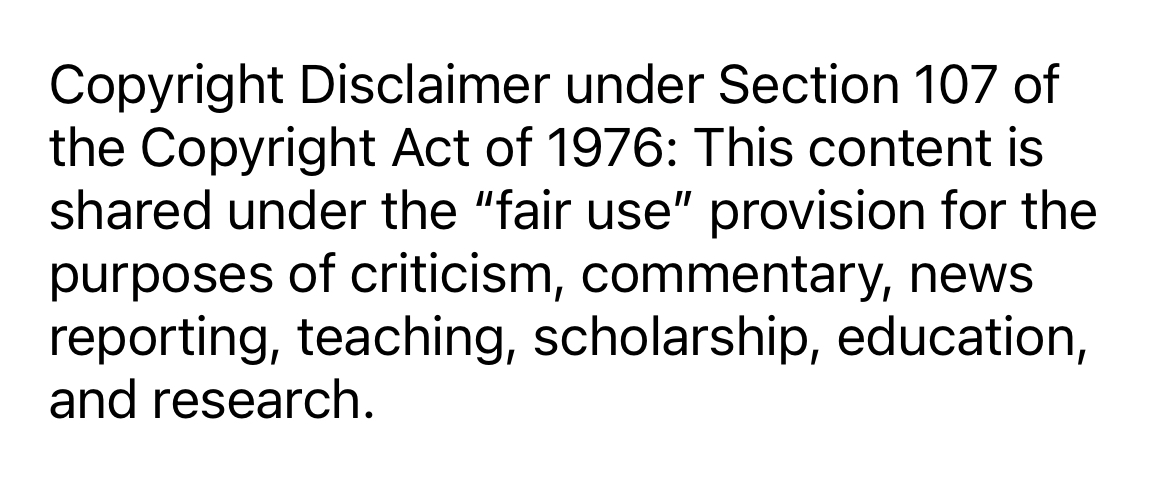
Liberty Enlightening the World poster

The New Colossus

Not like the brazen giant of Greek fame,
With conquering limbs astride from land to land;
Here at our sea-washed, sunset gates shall stand
A mighty woman with a torch, whose flame
Is the imprisoned lightning, and her name
Mother of Exiles. From her beacon-hand
Glows world-wide welcome; her mild eyes command
The air-bridged harbor that twin cities frame.
“Keep ancient lands, your storied pomp!” cries she
With silent lips. “Give me your tired, your poor,
Your huddled masses yearning to breathe free,
The wretched refuse of your teeming shore.
Send these, the homeless, tempest-tost to me,
I lift my lamp beside the golden door!”


Today in Bad Edujournalism: Putting Lipstick on the Test-Prep Pig

I often have to make sure I didn’t accidentally click on an article from The Onion, but, once again, this is actually in Education WeekStandardized-Test Prep Isn’t the Big, Bad Wolf.

And the real clincher is the author: “Travis Coleman has been teaching standardized-test prep for more than 10 years and is the LSAT curriculum manager at Magoosh Online Test Prep in Berkeley, Calif.”

So, let me understand this. A test-prep careerist is given a platform in the top education publication in the U.S. to defend test-prep?

The commentary sets out to refute Sal Khan’s attack on the test-prep industry, establishing a dichotomy between test-prep that addresses “content” and test-prep that addresses “test-taking skills.”

First, let’s not gloss over Khan, whose homophone name captures perfectly what the Khan Academy is, a con.

Just as one example, Karim Kai Ani offers a substantive critique of the poor quality of the Khan Academy math videos, concluding:

Unfortunately, the media hype surrounding Khan Academy has created a level of expectation far beyond what it – indeed, what any person or website – could ever reasonably deliver. Reporters have confused journalism with sycophantism, and the entire narrative has become a head-scratching example of the suspension of common sense.

The real problem with Khan Academy is not the low-quality videos or the absence of any pedagogical intentionality. It’s just one resource among many, after all. Rather, the danger is that we believe the promise of silver bullets – of simple solutions to complex problems – and in so doing become deaf to what really needs to be done.

But the Khan Academy in cahoots with the David Coleman SAT is an even greater con.

Now, to return to Travis Coleman’s defense of test-taking skills test-prep.

There is a serious core problem with high-stakes standardized testing that should be addressed: When a lack of test-taking skills lowers standardized test scores or when gaining test-taking skills raises test scores, we should respond not by endorsing test-prep, but by recognizing and then rejecting high-stakes testing as inherently flawed.

High-stakes standardized testing already is powerfully skewed by social class, race, and gender. Access to test-taking skills test prep—which is commercialized—is a subset of the social class bias of high-stakes standardized tests.

The only way anyone can justify test-prep of any kind is to remain trapped in the corrosive high-stakes standardized test paradigm. If we step back from that, then, Travis Coleman’s defense falls apart entirely—as does the devil’s deal between Khan and David Coleman.

So let’s end with a thought experiment (one augmented by Herb Childress’s excellent Seventeen Reasons Why Football Is Better Than High School).

We decide playing musical instruments now should be along side math and literacy in our core curriculum, requiring standards and, of course, high-stakes standardized tests.

A test is designed, multiple-choice like the SAT and most of the standards-based testing across the U.S.

We provide all the children test-prep, and scores skyrocket.

Of course, no time was spent playing instruments, and no child can play any—except for the few who do so on their own time.

Or, to focus on Childress’s argument, every Friday night, high school football teams line up across from each other on the gridiron, each team neatly in rows of desks, and take multiple-choice tests to determine the best high school football teams!

Both of these scenarios are ludicrous—until you consider that band and football are extracurricular activities, which by their nature are deemed less important than the core curriculum.

Why, then, do we demand more of children and young people in band and football (in both, they must do the real thing, as Childress points out, as “a public performance”) than we do of students learning math and literacy?

I would argue, it is a con—pure and simply—fostered by the education industry that depends on teaching and testing materials (commercialized), and thus,the test-prep pig feeding the real big bad wolf, high-stakes testing—that has blown the school house down.

That students need all sorts of test-prep to do well on high-stakes standardized testing is yet more proof we must abandon high-stakes standardized testing.

Putting lipstick in the test-prep pig cannot camouflage that fact.

Misogyny 2016

No, this isn’t the easy blog attacking Donald Trump as a misogynist.

In fact, the warranted attacks on Trump’s many flaws are often incomplete by omission: Trump’s racism, xenophobia, Islamophobia, misogyny, et al, are ours.

But the presidential race has exposed misogyny 2016:

And let us not ignore the misogyny and sexism in how Hillary Clinton is portrayed and vilified.

Bates, I believe, sums up the mess perfectly in her closing:

To tear down wives and daughters as if they are empty vessels of family honour is dangerous and demeaning. But it also distracts us from the real issues. Most political men offer ample opportunities for criticism, all by themselves.

In many, too many, ways, the Trump monster is the ugly manifestation and reflection of who we are. In our finger pointing, let’s recognize how many fingers are turned back at us.

James Baldwin “Afraid” (August 2, 1924 – December 1, 1987)

In his Message to Grassroots (10 November 1963), Malcolm X ends with:

No, it was a sellout. It was a takeover. When James Baldwin came in from Paris, they wouldn’t let him talk, ’cause they couldn’t make him go by the script. Burt Lancaster read the speech that Baldwin was supposed to make; they wouldn’t let Baldwin get up there, ’cause they know Baldwin’s liable to say anything.

Just three years later, James Baldwin again proved Malxcolm X right, authoring A Report from Occupied Territory (11 July 1966) for The Nation.

The essay resonates powerfully as virtually all of Baldwin’s essays do until this day—but it also leaves the mouth acrid because the bitterly unjust world Baldwin captures lives out before us now as vividly as it did during Baldwin’s life.

In the most perverse of prophesies, Baldwin places words in the mouths of Tamir Rice, Jordan Davis, Trayvon Martin … :

This is why those pious calls to “respect the law,” always to be heard from prominent citizens each time the ghetto explodes, are so obscene. The law is meant to be my servant and not my master, still less my torturer and my murderer [emphasis added]. To respect the law, in the context in which the American Negro finds himself, is simply to surrender his self-respect.

And Baldwin’s witnessing remains confrontational, razor-focused, and nauseatingly accurate for anyone who truly believes in life, liberty, and the pursuit of happiness:

These things happen, in all our Harlems, every single day. If we ignore this fact, and our common responsibility to change this fact, we are sealing our doom. Here is the boy, Daniel Hamm, speaking—speaking of his country, which has sworn to bring peace and freedom to so many millions. “They don’t want us here. They don’t want us—period! All they want us to do is work on these penny-ante jobs for them—and that’s it. And beat our heads in whenever they feel like it. They don’t want us on the street ’cause the World’s Fair is coming. And they figure that all black people are hoodlums anyway, or bums, with no character of our own. So they put us off the streets, so their friends from Europe, Paris or Vietnam—wherever they come from—can come and see this supposed-to-be great city.”

There is a very bitter prescience in what this boy—this “bad nigger”—is saying, and he was not born knowing it. We taught it to him in seventeen years. He is draft age now, and if he were not in jail, would very probably be on his way to Southeast Asia. Many of his contemporaries are there, and the American Government and the American press are extremely proud of them. They are dying there like flies; they are dying in the streets of all our Harlems far more hideously than flies. A member of my family said to me when we learned of the bombing of the four little girls in the Birmingham Sunday school, “Well, they don’t need us for work no more. Where are they building the gas ovens?” Many Negroes feel this; there is no way not to feel it. Alas, we know our countrymen, municipalities, judges, politicians, policemen and draft boards very well. There is more than one way to skin a cat, and more than one way to get bad niggers off the streets.

Four years earlier (17 November 1962), Baldwin’s Letter from a Region in My Mind detailed his own awakening:

I underwent, during the summer that I became fourteen, a prolonged religious crisis….Therefore, to state it in another, more accurate way, I became, during my fourteenth year, for the first time in my life, afraid—afraid of the evil within me and afraid of the evil without.

James Baldwin Gets Comfortable to Write
1/30/1963, New York, NY. James Baldwin sprawls across the bed in his New York apartment to jot down some notes. PHOTOGRAPH BY BETTMANN / CORBIS

Baldwin afraid was Baldwin coming to recognize racial despair:

School began to reveal itself, therefore, as a child’s game that one could not win, and boys dropped out of school and went to work. My father wanted me to do the same. I refused, even though I no longer had any illusions about what an education could do for me; I had already encountered too many college-graduate handymen. My friends were now “downtown,” busy, as they put it, “fighting the man.” They began to care less about the way they looked, the way they dressed, the things they did; presently, one found them in twos and threes and fours, in a hallway, sharing a jug of wine or a bottle of whiskey, talking, cursing, fighting, sometimes weeping: lost, and unable to say what it was that oppressed them, except that they knew it was “the man”—the white man. And there seemed to be no way whatever to remove this cloud that stood between them and the sun, between them and love and life and power, between them and whatever it was that they wanted. One did not have to be very bright to realize how little one could do to change one’s situation; one did not have to be abnormally sensitive to be worn down to a cutting edge by the incessant and gratuitous humiliation and danger one encountered every working day, all day long.

Here is the Baldwin “liable to say anything” mentioned by Malcolm X, the Baldwin who situated racism in whiteness, the source, the reason:

There appears to be a vast amount of confusion on this point, but I do not know many Negroes who are eager to be “accepted” by white people, still less to be loved by them; they, the blacks, simply don’t wish to be beaten over the head by the whites every instant of our brief passage on this planet. White people in this country will have quite enough to do in learning how to accept and love themselves and each other, and when they have achieved this—which will not be tomorrow and may very well be never—the Negro problem will no longer exist, for it will no longer be needed.

Over five decades later, the racism remains, the tensions have intensified, and the list of names of the sacrificed grows—and Baldwin’s assessment could be written today in nearly the exact same way with the same degree of Truth:

In any case, white people, who had robbed black people of their liberty and who profited by this theft every hour that they lived, had no moral ground on which to stand. They had the judges, the juries, the shotguns, the law—in a word, power. But it was a criminal power, to be feared but not respected, and to be outwitted in any way whatever. And those virtues preached but not practiced by the white world were merely another means of holding Negroes in subjection.

2 August 2016, Baldwin’s birthday.

White privilege and white fragility remain as powerful and deaf, dumb, and blind as Baldwin witnessed as a teen.

However, “[e]verything now, we must assume,” Baldwin ends his Letter, “is in our hands”:

we have no right to assume otherwise. If we—and now I mean the relatively conscious whites and the relatively conscious blacks, who must, like lovers, insist on, or create, the consciousness of the others—do not falter in our duty now, we may be able, handful that we are, to end the racial nightmare, and achieve our country, and change the history of the world.

And yet, we falter…

The Khan Moment: God, Family, Country

As I learn from you,
I guess you learn from me—
although you’re older—and white—
and somewhat more free.

“Theme for English B,” Langston Hughes

“‘[N]ext to of course god america/ i love you,'” opens e.e. cummings’s satirical sonnet about the hollowness of political pandering to love of God, family, country—a staple of stump speeches by both major political parties in the U.S.

The speaker turns to war toward the end:

why talk of beauty what could be more beaut-
iful than these heroic happy dead
who rushed like lions to the roaring slaughter
they did not stop to think they died instead

Late in the presidential election cycle of 2016, this poem resonates in a way that should leave every American resolute to defend the ideals we claim are at the core of a free people.

As summer creeps toward fall, we are not just about to elect a president, but are faced with a test; it is pass/fail and there are no re-takes.

The test is the Khan moment, when a grieving Muslim family spoke out at the Democratic National Convention to confront the rising and emboldened bigotry that is personified by Donald Trump but endemic of the Republican Party.

For decades, the Republican playbook has included a wink-wink-nod-nod approach to very thinly veiled courting of racists, sexists, bigots, and homophobes. Trump has now taken that playbook to a new level—with outright Islamophobia and xenophobia at the center.

Like Pat Tillman, Humayun Khan proudly embraced his service to his country, according to his mother, who was directly slandered by Trump:

My son Humayun Khan, an Army captain, died 12 years ago in Iraq. He loved America, where we moved when he was 2 years old. He had volunteered to help his country, signing up for the ROTC at the University of Virginia. This was before the attack of Sept. 11, 2001. He didn’t have to do this, but he wanted to.

Tillman’s and Khan’s service and deaths share being politicized for partisan purposes—adding additional layers of insult to injury.

But both also are about far more than partisan politics; they expose that cummings was right: Political pandering to God, family, and country as well as the public’s cheering for that pandering is ultimately hollow.

Both Republican and Democrat politicians are warmongers, elites willing to fight wars on the backs of the “heroic happy dead.”

The Khan moment, however, raises a blunt question: Which party, which candidate, Trump or Hillary, are racists, sexists, homophobes, Islamophobes, and/or xenophobes supporting?

And there is the damning truth because Trump and the Republican Party are the voices of bigotry.

Many, myself included, believe the war in which Humayun Khan died was yet another senseless war, a waste of human life and valuable national resources.

Many also recognize that the Khan family as well as others scarred by these wars have no political party unsullied by warmongering.

Yet, as a pacifist, I must acknowledge that many marginalized people choose to join, serve, fight, and die in the U.S. military.

Black, brown, gay, female, and Muslim—these soldiers may be guided by higher ideals than the calloused and hollow political leaders waging those wars.

What, then, would these marginalized people be fighting for?

The Khan moment stands before us a test about religious freedom.

A young Muslim man may have seen far more promise for religious freedom in the U.S. than in other countries—until after his sacrifice his parents had to sit by and listen to Trump call for religious intolerance, to watch as a major political party nominated this man in the wake of naked hatred.

Religious freedom for some, but not others, is not religious freedom.

“Injustice anywhere is a threat to justice everywhere.”

The Khan moment is not about limited government, taxation, crumbling infrastructures, or hundreds of legitimate but ultimately mundane issues about which people can have partisan political disagreements.

The Khan moment is about the Statue of Liberty, the Constitution, and the continuing inability of people in the U.S. to live the ideals instead of simply mouthing them.

Anonymity and Professionalism: Teacher Voice in a Time of High Anxiety

Briefly on the National Council of Teachers of English‘s Connected Community, members could post on forums anonymously, spurring a few discussions and debates about anonymity and professionalism (as well as attribution of ideas and accountability during a thread about plagiarism).

When I first moved to higher education, my current university had an online platform that included a discussion feature, one that also allowed students (or anyone in the university community) to post anonymously with screen names.

One particular group of students connected with a powerful and controversial (also highly politicized and well funded from outside sources) student organization often posted anonymously and tended toward personal attacks of university professors—xenophobic and homophobic slurs included.

Several professors also participated in these online debates, but with their names openly displayed.

This situation was a subset of a larger campus tension between very conservative students and a much more moderate faculty. Ultimately, that forum was closed and never resurrected; however, a key element of the situation was the debate over whether or not anonymous posting was appropriate—notably in the context of an institution of higher learning.

Then and during the recent NCTE Connected Community discussion, I have always maintained that a key element of professionalism is the relationship between a professional’s name and her/his stances, claims.

In my professional scholarship and my public work, my name and even access to my email are prominent always.

As a writer and career educator, I see my scholarship and public work as extensions of teaching—and believe all teachers must be authoritative, earning the trust of those they serve as teachers. The who and what of teaching and making claims, for me, is inextricable.

However, there is a long and powerful history of pen names/pseudonyms in traditional writing as well as the more recent world of blogging.

Anonymous voices have risen out of oppression in the name of overcoming that oppression—racism, sexism, homophobia, classism, etc.

So if we return to the anonymous posting on NCTE’s Connected Community and place that in the context of students posting anonymously at my university, we should not trivialize the power imbalances that drive the legitimate need for anonymous voices.

Students feared grade and course retaliations for posting under their names in the same way K-12 teachers in the U.S. fear speaking publicly because educators’ job security has deteriorated significantly in recent decades.

Educators at all levels are also under a powerful norm to avoid being political, to resist activism—much of which is about the cultural silencing of women.

Nonetheless, anonymous public and forum commentary often emboldens people to be reckless and unprofessional—personal attacks, trolling, etc.

As I noted above, all of my professional and public writing and commentary are under my very public name; therefore, that forces me to hold myself to an incredibly high standard—primarily to make only warranted claims.

Especially on social media such as Twitter and Facebook, I seek ways to model the same sort of standard for making claims in public contexts that I make in scholarship. Even my Op-Ed and commentary work in journalism is meticulously cited (through hyperlinks)—although some online publications still resist including them.

Further, as a teacher 24/7, I believe I am a model for my students who need to embrace a way of being in a democracy that includes their voices and their ethical acts of rewriting the world.

My students are unlikely to be writers or scholars, but they certainly should be living by and making warranted stances. And possibly more than ever, they must be able to read and re-read the world in order to know when others are being credible or petty and vile.

Let us not trivialize the urge to raise anonymous voices, but also, let us not ignore that the most vicious among us are empowered by anonymity: the terror and power of the KKK were intensified by the white hoods and gowns.

A free and just society in which there is no need for anonymity is a wonderful ideal, but I am certain we have yet to reach that situation.

Those of us who have levels of privilege that allow us to model the ideal must continue to do so. Using those privileges to silence others with legitimate concerns about their own imbalances of power is inexcusable.

In any and all connected communities, then, it becomes more about the nature of the conversations than professional or personal accountability.

Anonymous or not, public or professional, we teachers must always resist being petty, and those who need the veil of anonymity would serve their own causes well to have high standards for that context in the same way linking professionalism and our names should.

Imagining a Society where All Lives Matter

The law is meant to be my servant and not my master, still less my torturer and my murderer.

James Baldwin, “A Report from Occupied Territory,” The Nation, July 11, 1966.

The U.S. suffers from “myths that deform” [1].

As George Carlin quipped, “It’s called the American Dream because you have to be asleep to believe it.”

At the core of that deforming American Dream is a cultural clinging to individual responsibility and its negative—a rejection of both community/collaboration and systemic forces.

In the U.S., so the story goes, you are successful or a failure because of your own individual traits, regardless of the power of inequities (racism, classism, sexism) to shape your life.

Also necessary for the American Dream and bootstrap narratives to endure, the U.S. has a love affair with outlier antidotes: One black man’s success proves no racism exists.

Idealism in the U.S. sustains offensive slogans such as All Lives Matter, but also feeds whitewashing of the ugliest parts of our history (know-nothing pundit Bill O’Reilly, for example, arguing that slaves building the White House were well fed).

This belief in individual responsibility has created a culture in the U.S. that allows and embraces a militarized police force, one that defaults to an excessive use of force.

Just as our idealism blinds us, we in the U.S. are simplistic thinkers. Instead of questioning why in the U.S. police kill hundreds of citizens each year (2014: 630 killed) while in German police routinely kill fewer than 10 citizens a year (2014: 7 killed), the urge to whitewash shouts that police kill more whites than black—disregarding that black and brown U.S. citizens are killed at much higher rates than whites.

Let’s then imagine what a society would be like where all lives do matter—even though we really don’t have to imagine.

If all lives mattered, we would expect that no citizens be killed by the police each year, and that no police officer would die in the line of duty.

Our default would be zero in each case, and instead of rushing to justify either, we would see both as failures of our free people. “We are better than this,” we would say, “and we shall do better.”

In this imaginary society, most of us would have never known Trayvon Martin or Tamir Rice—now perversely immortalized as victims of a people who do not value some people’s lives as much as we rush to justify our violent culture, our militarized police, and our sacred guns.

In this imaginary world where all lives matter, there is “nothing to kill or die for”—but this is a type of idealism we refuse to pursue in the U.S.


[1] Paulo Freire’s Teachers as Cultural Workers.