P. L. Thomas, Professor of Education (Furman University, Greenville SC), taught high school English in rural South Carolina before moving to teacher education. He is a former column editor for English Journal (National Council of Teachers of English), current series editor for Critical Literacy Teaching Series: Challenging Authors and Genres (Brill), and author of Teaching Writing as Journey, Not Destination: Essays Exploring What ‘Teaching Writing’ Means (IAP, 2019) and How to End the Reading War and Serve the Literacy Needs of All Students: A Primer for Parents, Policy Makers, and People Who Care (IAP, in press). NCTE named Thomas the 2013 George Orwell Award winner. He co-edited the award-winning (Divergent Book Award for Excellence in 21st Century Literacies Research) volume Critical Media Literacy and Fake News in Post-Truth America (Brill, 2018). Follow his work @plthomasEdD and the becoming radical (https://radicalscholarship.wordpress.com/).
Each year all NCTE members have the opportunity to propose resolutions that address issues and ideas pertinent to the field of literacy education. The proposed Resolution on Teacher Autonomy Grounded in Expertise was approved by members at the Annual Business Meeting on November 20, 2024. The next steps in the NCTE Constitution, as amended and approved in November 2023, require that resolutions be presented to the entire membership for vote and comment. The results will then be considered and discussed by the NCTE Executive Committee. Vote and comment by March 3.
Voting: All NCTE members are invited to attend the Annual Business Meeting, scheduled this year for November 22, 2024, from 5:30–7:00 p.m. ET, and to take part in discussions and vote on resolutions about issues of concern to the profession! Membership must be verified before the start of the meeting.
Sense-of-the-House Motions: These statements reflect the opinion of the majority of members attending the Annual Business Meeting. They may be offered for discussion and action at the Annual Business Meeting. To be considered for deliberation, sense-of-the-house motions must be prepared in writing, must not exceed fifty words, and must be submitted to NCTECommittees@ncte.org, to the attention of the NCTE President or Parliamentarian, by noon ET on the day of the meeting. Such motions, if passed, are advisory to the Executive Committee or other appropriate Council bodies. They do not constitute official Council policy.
Christian Z. Goering
Katie Kelly
Hannah Schneewind
Jennifer Scoggin
Dorothy Suskind
Paul Thomas
Meghan Valerio
Since the 1980s, literacy teachers’ professionalism, knowledge, and abilities have been under scrutiny and attack, and then intensified since 2018 (Aukerman, 2022a, 2022b, 2022c; Kraft & Lyon, 2024; Thomas, 2022a, 2022b, 2024). To complicate matters, the literacy field continues to engage in tired Reading Wars (Newkirk, 2024; Tierney & Pearson, 2021). Debates over how children learn to read, combined with sensationalized media coverage on early reading proficiency and instruction, have eroded public trust of teacher expertise and resulted in an overwhelming push for a Science of Reading, a nebulous term whose definition is overly grounded in explicit and systematic phonics instruction (Aydarova, 2024).
As of September 2024, 40 states have passed restrictive literacy legislation grounded in the Science of Reading (Aydarova, 2024; Reinking, Hruby, & Risko, 2023; Schwartz, 2024). High profile and boxed commercial reading programs are now mandated nationwide, marketing a narrow definition of “science” aligning with structured literacy (Malchow, 2014). Teaching credentials are also in question, as many states require teachers to obtain structured literacy certifications. With over thirty years of flat reading scores with persistent race and social class data gaps (Aydarova, 2023, 2024; Reinking et al., 2023), the reading crisis narrative prevails, framing teachers as the cause agents, and consequently resulting in overt limitations placed atop teacher autonomy, including decision-making and instructional materials.
Historically, political reforms have heavily influenced how literacy is conceptualized, taught, and measured. Scientific-based instruction was mandated under No Child Left Behind’s Reading First. Shortly after the NCLB passing, the National Reading Panel Report emphasized a decontextualized approach to reading instruction. In efforts to control the outcome of students’ success, scripted programs were and continue to be created. Scripted programs provide teachers with step-by-step instructional language, materials, and assessments to use, negating teachers’ ability to individualize instruction and craft curriculum that is reflective of students’ cultural experiences. While some claim that scripted programs plan for engagement (Gunter & Reed, 1997; Shanahan, 2006), others report students’ withdrawal and disconnection from literacy lessons and experiences (Shelton, 2010). To contest this disengagement narrative, publishers emphasize teaching the program with fidelity, a script-flip that blames teachers for aspirational student achievement outcomes (Shelton, 2010).
Such rigid approaches to literacy instruction have taken away teachers’ instructional autonomy, reduced opportunities for student responsiveness and engagement lessons, and placed learning and outcomes in the hands of program creators (Afflerbach, 2022; Resolution on scripted curricula, 2008). Additionally, the scripted programs founded on narrow view of reading science have “whitewashed” curriculums, erasing diverse perspectives and identities, and deprived students of culturally relevant and responsive education (Delpit, 1988; Khan, et al., 2022; Muhammad, 2020; Riggel, et al. 2022). Amidst scripted programs and legislative mandates, literacy teachers are faced with a plethora of obstacles and restraints that impact their agency and autonomy, and consequently, negatively impact student reading proficiency by mis-serving marginalized and minoritized students within a one-size-fits-all series of mandates (Disotaur, et al., 2024).
Recommendations for Honoring Teacher Autonomy:
NCTE values teachers as pedagogical and content experts who know how best to serve individual students literacy needs. Teachers have both generic and situated knowledge (Afflerbach, 2022; Tierney & Pearson, 2024) and are uniquely positioned to make instructional decisions to meet the needs of all students. For this to happen:
Teachers must be treated as agentitive professionals who are best suited to make decisions for their students.
Curriculum and teaching materials must be neither legislatively banned nor mandated, for such restrictions prevent teachers from making instructional decisions based on the unique needs of their communities, schools, and students. Teacher accountability must be driven by students’ need not program and policy fidelity or test scores. Deficit-based educational policies and practices must be replaced to reflect students’ cultural identities, practices, and funds of knowledge as assets (Moll et al, 1992; Muhammad, 2020; Souto-Manning & Martell, 2016).
The validity and effectiveness of instructional practices must be grounded in a wide range of evidence, including diverse and compelling bodies of research and teachers’ varied experiences.
The weight of testing data should be recalibrated and re-designed to better represent student achievement and the impact of teacher practice and educational materials. Notably, the achievement levels of NAEP, as well as the reporting of testing data, tends to distort both student achievement and teacher quality.
Legislation and policy must serve to support schools, teachers, and students in ways that honor human agency while resisting the cycles of the education marketplace and educational fads.
The current era of reading crisis in the US once again fails to address the most powerful influences on students acquiring literacy, social and in-school inequities. Instead, teachers are being both de-professionalized and scapegoated in media and political misrepresentations of reading science as well as national test data. For historical and current challenges facing student literacy, the key lies not in switching to yet another round of reading theories and commercial reading programs, but to establish learning and teaching conditions that center serving the individual needs of students and supporting the autonomy of their teachers to serve those needs.
References
Afflerbach, P. (2022). Teaching readers (not reading): Moving beyond skills and strategies to reader-focused instruction. Guilford Press.
Aydarova, E. (2024). What you see is not what you get: Science of reading reforms as a guise for standardization, centralization, and privatization. American Journal of Education, 130(4).https://www.journals.uchicago.edu/doi/10.1086/730991
Aydarova, E. (2023). ‘Whatever you want to call it”: Science of reading mythologies in the education reform movement. Harvard Educational Review, 93(4), 556–581, https://doi.org10.17763/1943-5045-93.4.556
Blaushild, N.L. (2023). “It’s just something that you have to do as a teacher”: Investigating the intersection of educational infrastructure redesign, teacher discretion, and educational equity in the elementary ELA classroom. The Elementary School Journal, 124(2), 219-244.
Compton-Lilly, C.F., Mitra, A., Guay, M., & Spence, L.K. (2020). A confluence of complexity: Intersections among reading theory, neuroscience, and observations of young readers. Reading Research Quarterly, 55(S1), S185-S195.https://doi.org/10.1002/rrq.348
Edling, S. (2015). Between curriculum complexity and stereotypes: Exploring stereotypes of teachers and education in media as a question of structural violence. Journal of Curriculum Studies, 47(3), 399–415. https://doi.org10.1080/00220272.2014.956796
Gunter, P.L., & Reed, T. M. (1997). Academic instruction of children with emotional and behavioral disorders using scripted lessons. Preventing School Failure, 42, 33-38.
Hoffman, J.V., Hikida, M., & Sailors, M. (2020). Contesting science that silences: Amplifying equity, agency, and design research in literacy teacher preparation. Reading Research Quarterly, 55(S1), S255–S266.https://doi.org/10.1002/rrq.353
Kraft, M.A., & Lyon, M.A. (2024). The rise and fall of the teaching profession: Prestige, interest, preparation, and satisfaction over the last half century. EdWorkingPaper: 22-679.https://doi.org/10.26300/7b1a-vk92
Malchow, H. (2014, July). Structured literacy: A new term to unify us and sell what we do. International Dyslexia Association.https://dyslexiaida.org/ida-approach/
Moll, L., Amanti, C., Neff, D., & Gonzalez, N. (1992). Funds of knowledge for teaching: Using qualitative approach to connect homes and classrooms. Theory Into Practice, 31(2), 132-141.
Ortiz, A.A., Fránquiz, M.E., & Lara, G.P. (2021). The science of teaching reading and English learners: Understanding the issues and advocating for equity. Bilingual Research Journal, 44(2), 153-157. DOI: 10.1080/15235882.2021.1976584
Reinking, D., Hruby, G.G., & Risko, V.J. (2023). Legislating phonics: Settle science of political polemic? Teachers College Record.https://doi.org/10.1177/01614681231155688
Rigell, A., Banack, A., Maples, A., Laughter, J., Broemmel, A., Vines, N., & Jordan, J. (2022, November). Overwhelming whiteness: A critical analysis of race in a scripted reading curriculum. Journal of Curriculum Studies, 54(6), 852–870, https://doi.org10.1080/00220272.2022.2030803
Shanahan, T. (2006, August/September). The worst confession: Using a scripted program. Reading Today, 24(1), 14.
Shelton, N. R. (2010). Program fidelity in two reading mastery classrooms: A view from the inside. Literacy Research and Instruction, 49(4), 315-333, https://doi.org/10.1080/19388070903229404
Souto-Manning, M. & Martell, J. (2016). Reading, writing and talk: Inclusive teaching strategies for diverse learners, K-2. NewYork, NY: Teachers College Press.
Thomas, P.L. (2022a). How to end the Reading War and serve the literacy needs of all students: A primer for parents, policy makers, and people who care (2nd Ed.). Information Age Publishing.
Thomas, P.L. (2022b). The Science of Reading movement: The never-ending debate and the need for a different approach to reading instruction. Boulder, CO: National Education Policy Center.http://nepc.colorado.edu/publication/science-of-reading
Thomas, P.L. (2024, March). We teach English in times of perpetual crisis: The long (and tedious) history of reading crisis. English Journal, 113(4), 21-26.
Tierney, R.J., & Pearson, P.D. (2021). A history of literacy education: Waves of research and practice. Teachers College Press.
Tierney, R.J., & Pearson, P.D. (2024). Fact-checking the Science of Reading: Opening up the conversation. Literacy Research Commons. https://literacyresearchcommons.org
My father and mother both died in 2017. My father in late June. And then my mother in early December, just several days before her birthday.
The end was slow, awful, and premature for my parents. I watched them die slowly while living the reality of the consequences of having little money at the end of your life.
The healthcare system in the US doesn’t care about anyone’s health. It is the bank account that matters.
But I have so much of my parents in my memory, a memory that I am learning is flawed at best.
After tropical storm Helene devastated Western North Carolina and Asheville, I have been trying to recover, trying to recreate as much of my family as I can, specifically my mother’s family who lived for about a decade in Asheville during the 1960s.
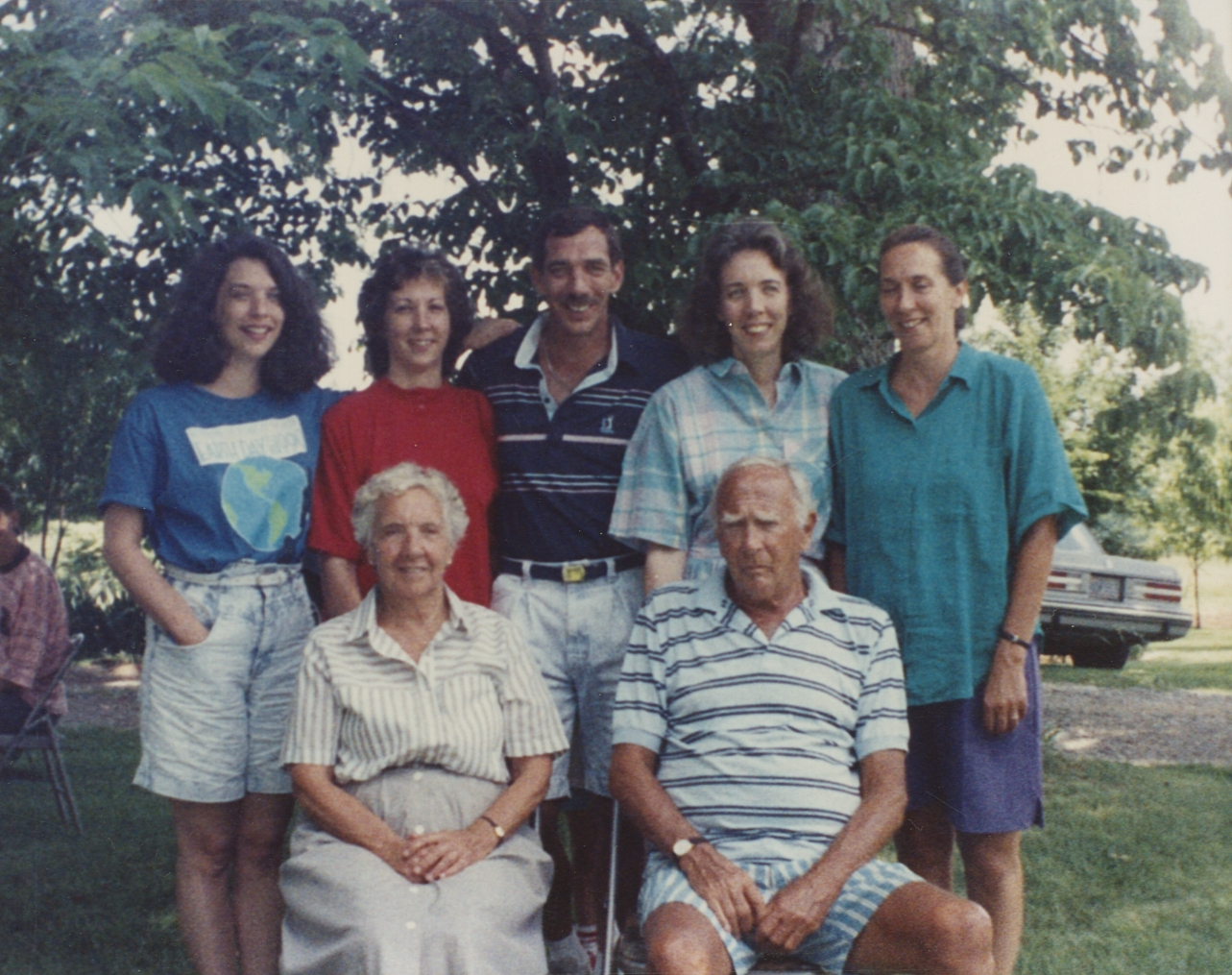
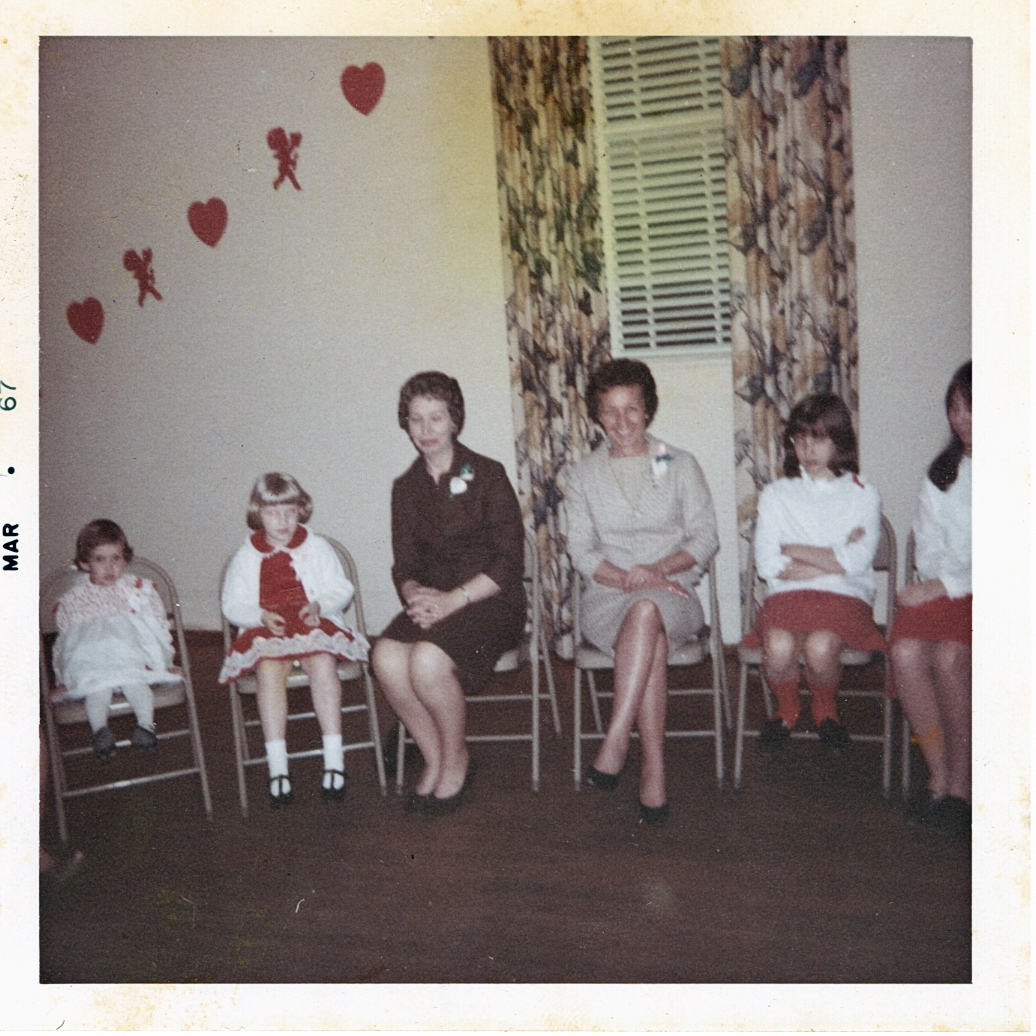
My grandmother, Deed (third from right), with my aunt Mary (partial, far right), my aunt Patsy (second from right), and my sister, Eydie (far left).
After my parents’ died, my nephews and I cleaned out my parents’ house, the only real capital they left behind and likely the thing they were most proud of. Part of what we held onto were hundreds of pictures that my oldest nephew, Tommy, sifted through and had many scanned.
I have now been looking through them all trying to find Asheville pictures. This past weekend, Tommy dropped by two containers of pictures and other things, most of which have not been scanned.
And there among the pictures, I found letters. A few from my mother to my father in 1960 while they attended Spartanburg Junior College (now Spartanburg Methodist College).
The college was very strict about relationships, including no public displays of affection. However, one day on my mother’s lunch break from working at a grocery store, my mom and dad slipped off and were married, also not allowed for anyone attending the college.
This led to their coded dialogue. Dad was “Honeybun” and Mom was “Nut,” the only two words on the envelope of one letter.
My father told stories about that over and over throughout my life. They were happy stories, and they reinforced the happy parents I enjoyed throughout my childhood and teen years.
I also found a stack of letters my mother wrote from Lumberton, NC just after I turned one year old. My mother, you see, had left my father and moved back in with her parents (who moved constantly, mostly around NC but in SC also).
The letters have the return address at Southern National Bank where Mom was working. We also have her social security card issued while in Lumberton.
These letters are sad and imploring, and often confusing. By spring, my mother began signing letters “Love always, Rosie + Paul + ?” because she was pregnant with my sister.
One letter, as well, is a sweet one from my mother to my father’s dad, Tommy (my namesake since his given name was Paul Lee Thomas).
And then there are letters from my mom to my dad in 1964, three from Asheville and four from Woodruff/Enoree (they lived in a small mill village, Enoree, just south of the slightly larger mill town of Woodruff in SC).
My father was in the National Guard and training in Fort Gordon, GA. Similar to the love letters in college and the letters from Lumberton, these letters are filled with love and missing my father by my mom, my sister, and me.
But in all these letters, the thing missing is my father. No letters back, and several times my mother asking if he has forgotten how to write letters.
I do not know what to do with my parents.
Because I have now begun to recreate a new version of them, a new version captured well I think in many of the pictures that remain.
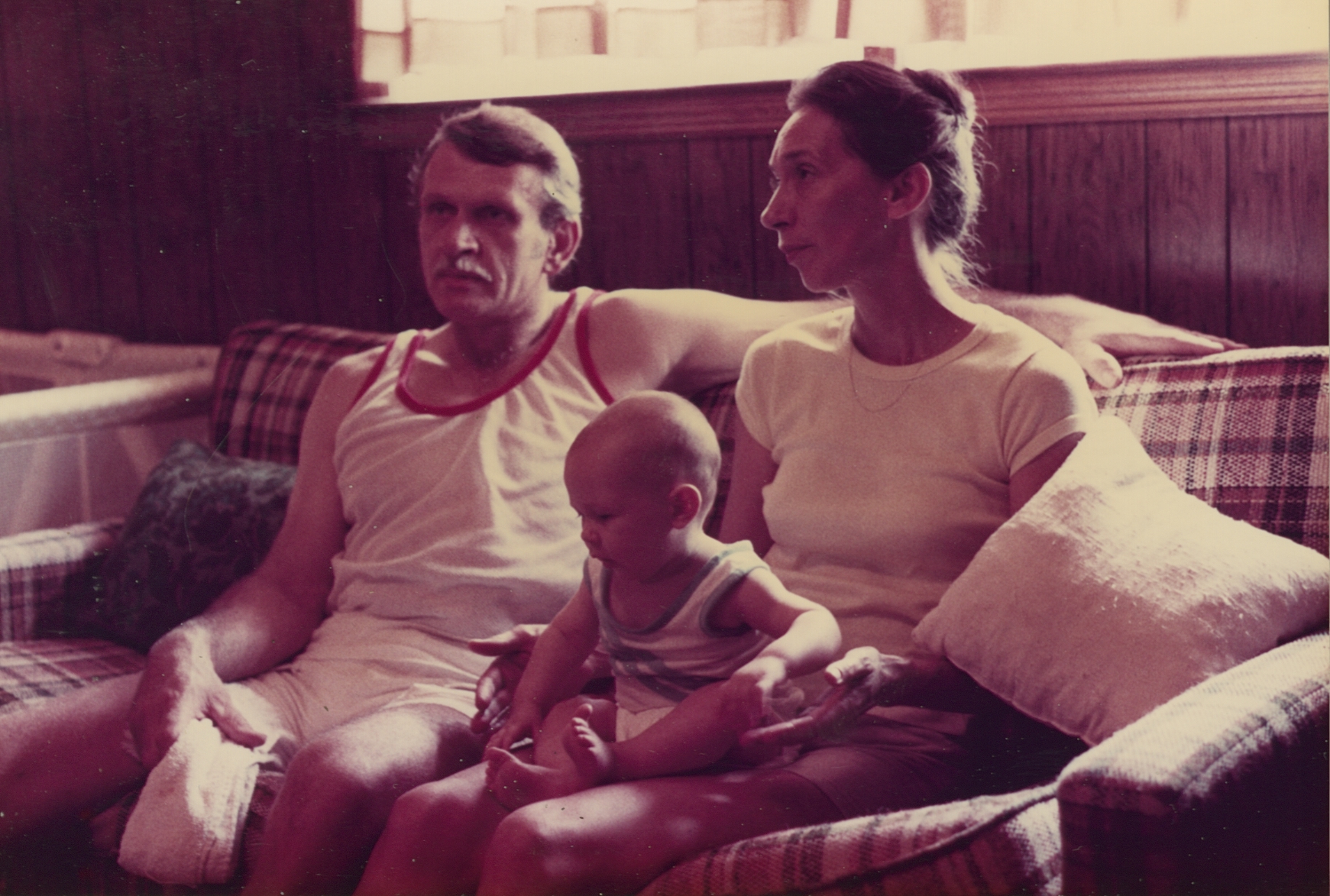
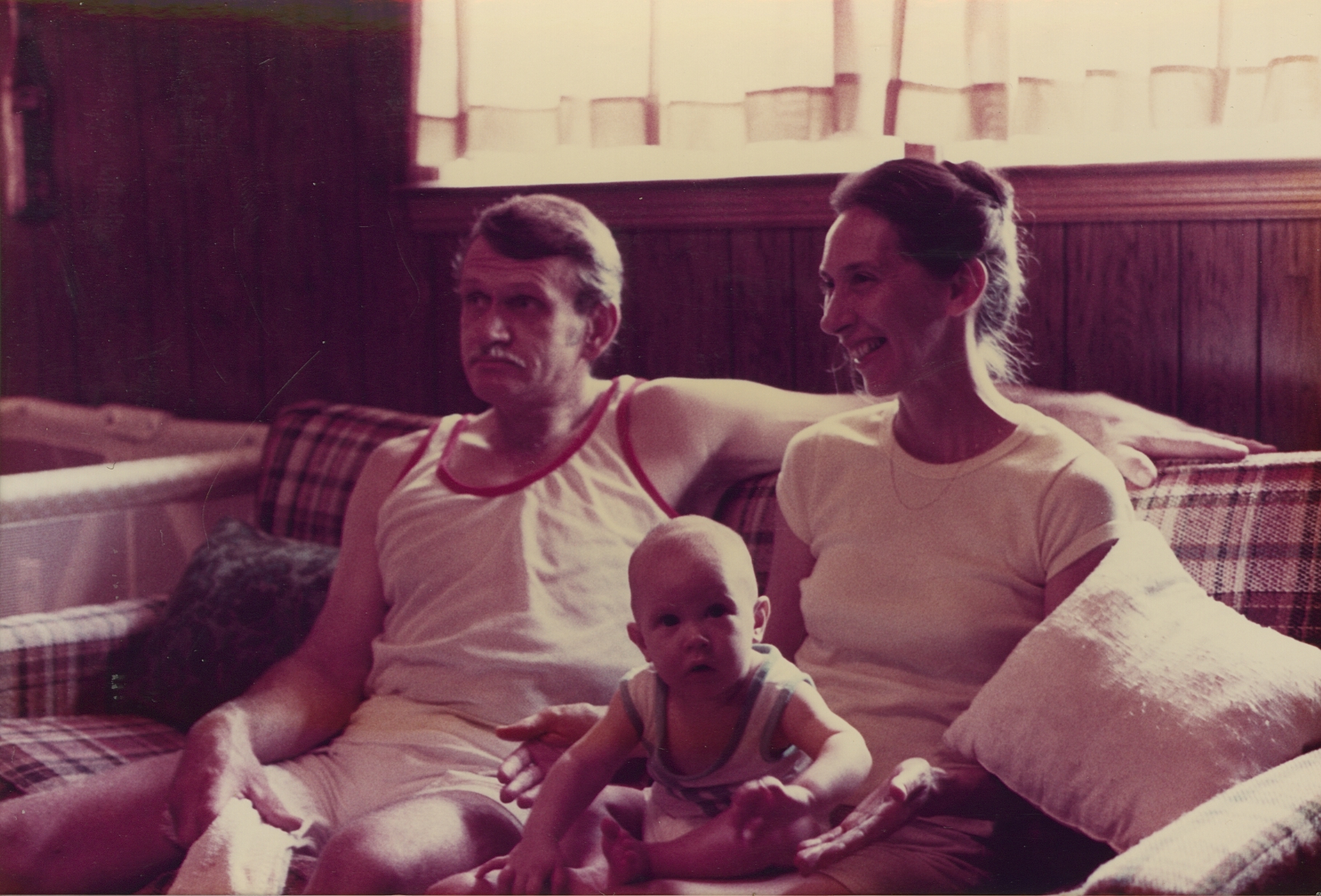
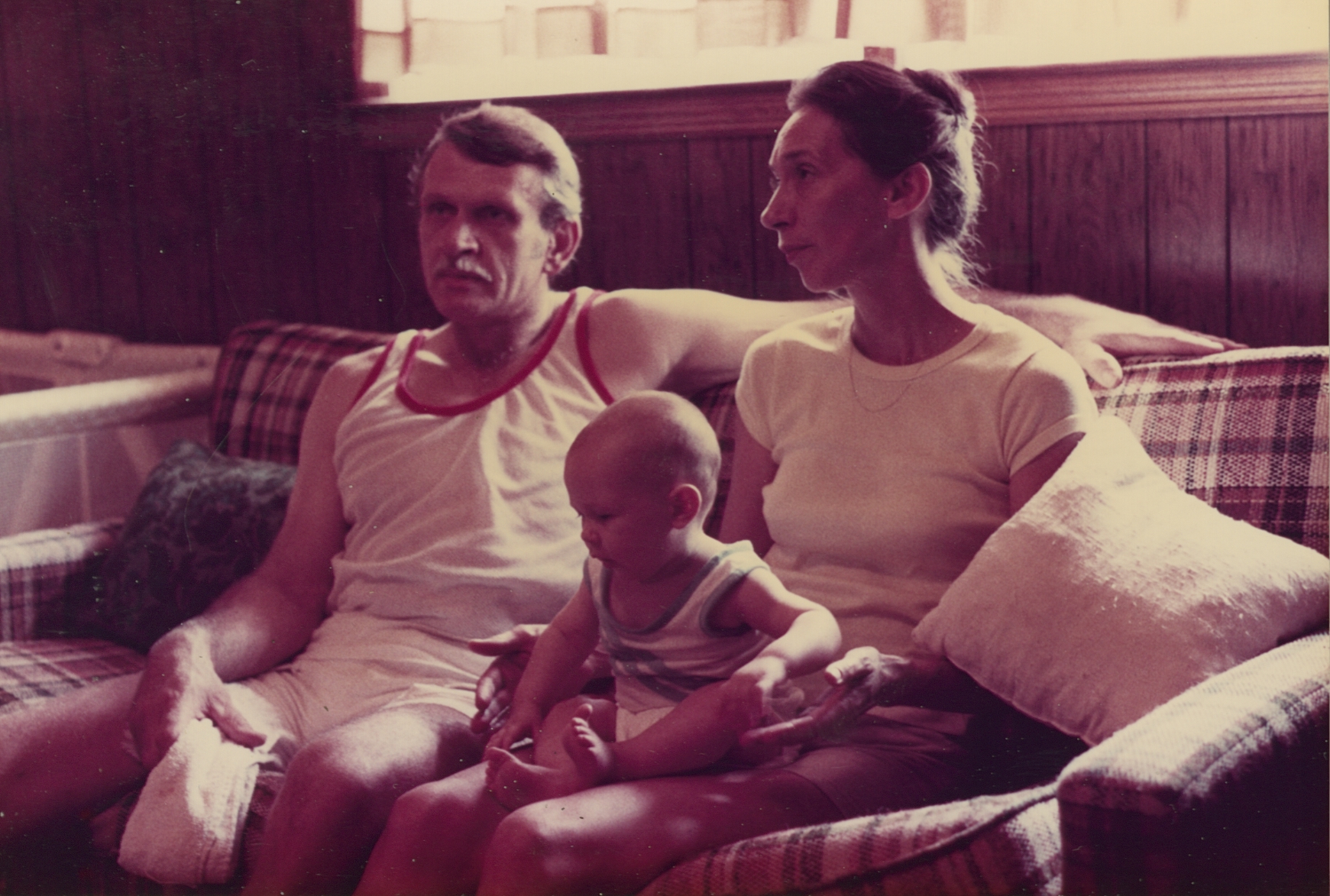
These pictures haunt me. My dad seems detached, and these two faces of my mom contrasting.As couples grow older together, relationships change. But my parents always had a spark fo the fun I remember from my childhood, especially during holidays and at Myrtle Beach.
And then as I was sorting the two boxes, a picture not scanned, a picture neither I nor Tommy can identify.
My father with a woman in from of a motel at South of the Border. Dad is holding an ice cream cone. The woman is playfully offering him a scoop of her ice cream.
I don’t know what to do with my parents.
But I am recreating what I can with what I have, and this new version, I think, will find a new place in my heart that doesn’t have to know everything.
“rising sun, you (solstice),” “glimpse you” (see here), and “we weathered winter (silence & shouting)” are three poems featuring descriptions of winter and thawing by South Carolina poet Paul L. Thomas. Life is lived in cycles, like the seasons. The word “promise” and variations of “long” (long, longer, longing) strike me as a subtle understanding of the deep power of memory and the deep hold of nostalgia. An entire year can pass with vivid connotations to each seasonal affection and somehow that remembrance is a mere glimpse of the actual lived experience.
The poems were modified from their original formats to fit the structure of the individual movements using the text as inspiration to determine form: “rising sun” is transformed with the structure of a pop song (verse, chorus, verse, chorus, bridge, verse, chorus), “glimpse you” is meditative and spiraling, using only fragments of the original poem, and “we weathered winter” emphasizes the first-person plural of the text to blossom into a triumphant duet of resilience and hope.
So often in poetry and music the season of winter is maligned as dark and brooding. Paul Thomas encourages a different approach, one that opens the idea of the winter season to the possibility of what’s to come.
Written for and dedicated to the University of South Carolina School of Music in celebration of the 100th anniversary.
Performed live in the University of South Carolina School of Music Recital Hall by: Dominic Armstrong, tenor Ashley Emerson, soprano Ari Streisfeld, violin William Terwilliger, violin Douglas Temples, viola Claire Bryant, cello Jeff Francis, audio engineer
Dr. Elena Aydarova is an Assistant Professor in the Department of Educational Policy Studies at the University of Wisconsin-Madison and a fellow with the National Education Policy Center. Dr. Aydarova’s research examines the interaction between educational policies, education reforms, and policy advocacy. She is an award-winning author of over 40 publications. Dr. Aydarova received postdoctoral fellowships from the National Academy of Education/Spencer Foundation and the American Association of University Women.
Elena Aydarova; “Whatever You Want to Call It”: Science of Reading Mythologies in the Education Reform Movement. Harvard Educational Review 1 December 2023; 93 (4): 556–581. https://doi.org/10.17763/1943-5045-93.4.556
Thank you to all who joined us for the reception of ARS POETICA III. What a wonderful celebration of so much talent. We hope to see everyone again next year!
Congratulations to our winners:
2025 First Place Award: Visual Art: David Molesky, RESCUE Poetry: Candace Tippett, Requiem for Father
2025 Second Place Award (not pictured): Visual Art: Jennifer McCormick, Redacted Poetry: P.L (Paul) Thomas, my mother had a million faces (3 pictures)
My mother’s parents can be fairly described as “characters.” Even as a small child, I found them fascinating, fun, and a treat to visit.
The thing that is most distinct about them—Harold Sowers and Edith Mize—was that most people called them Slick and Deed.
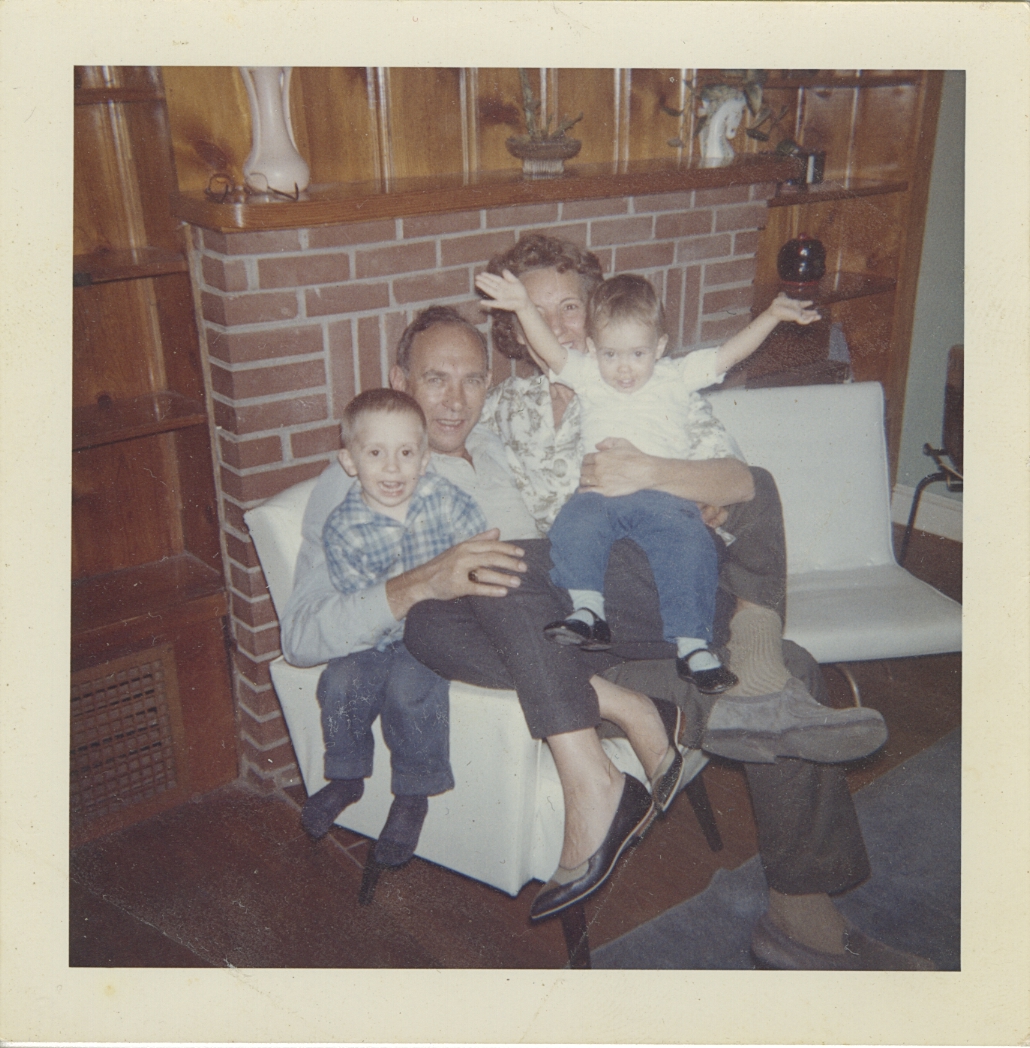
Slick and Deed holding me and my sister in the house my parents rented in Enoree, SC in the early 1960s.
Slick and Deed moved a great deal; my mother attended at least 4 high schools. But they had a family home on Sowers Road in Linwood, NC, a small plot of land remaining from a much larger area once belonging to that family, near the Yadkin River just north-west of Charlotte toward Winston-Salem.
But despite where they were living, visiting them was always a trip and sort of childhood vacation.
My namesake, however, was my father’s father, who everyone called Tommy. My Dad’s parents lived in our home town so we saw them often. And always at the same house just down the hill from my father’s grandmother’s house where he was born in what became the kitchen of that house.
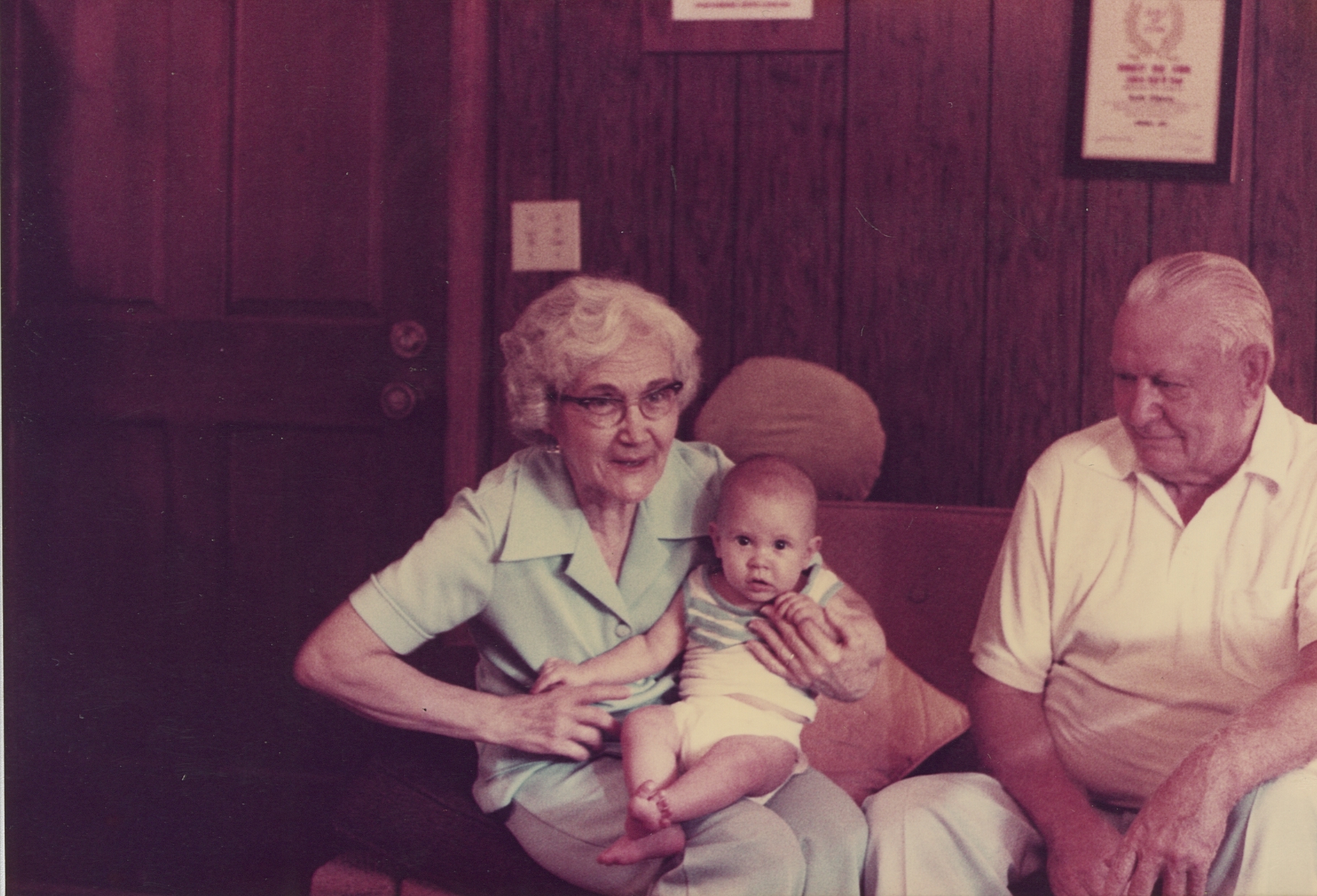
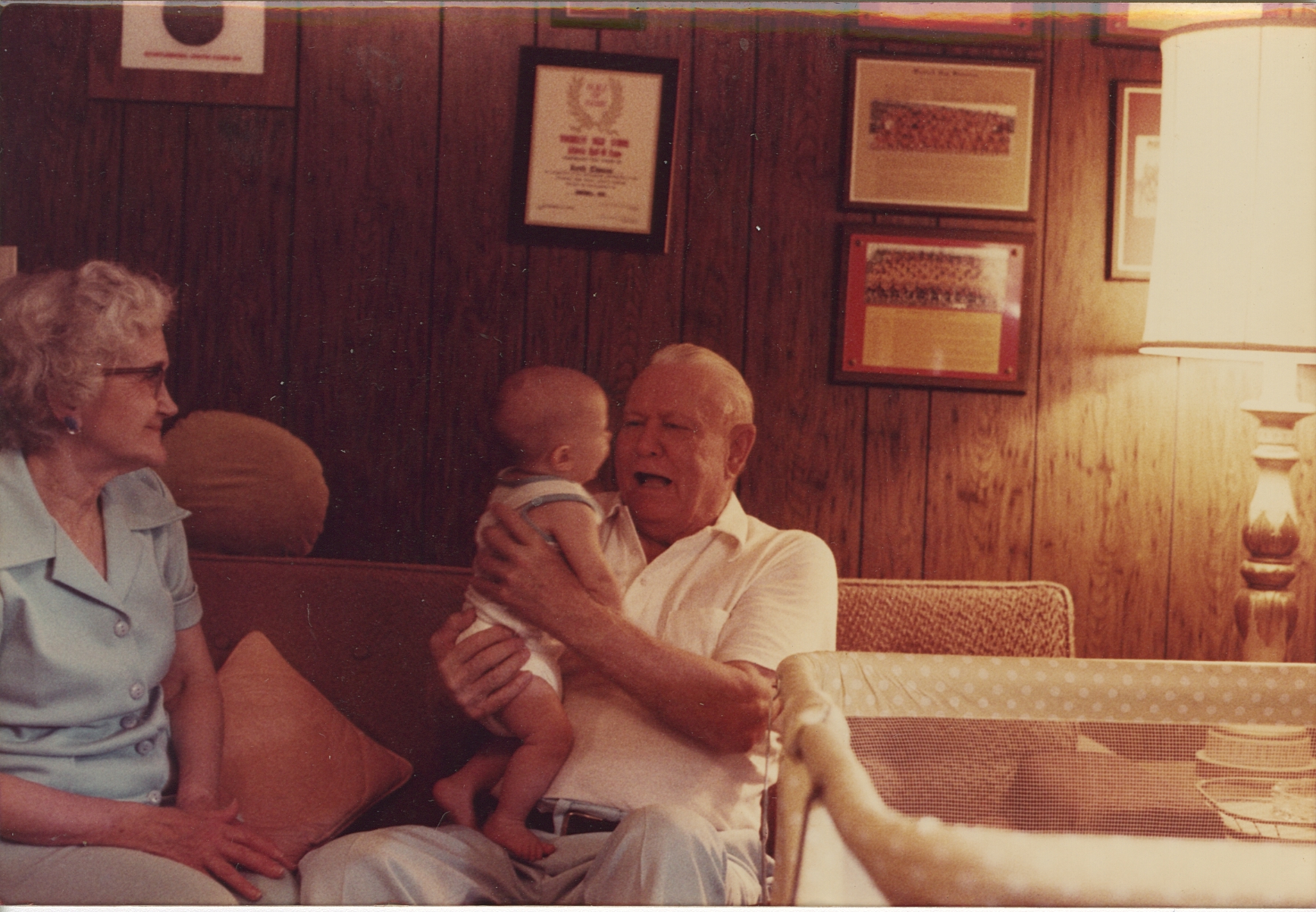
My paternal grandparents, Ruby and Tommy (Mama and Papa), at my parents’ house with each happily holding my oldest nephew, Tommy.
The naming on this side of the family is a maze. I have Tommy Thomas’s given name, Paul Lee Thomas, so I am Paul Lee Thomas II. My nephew was named Tommy, from my grandfather’s nickname.
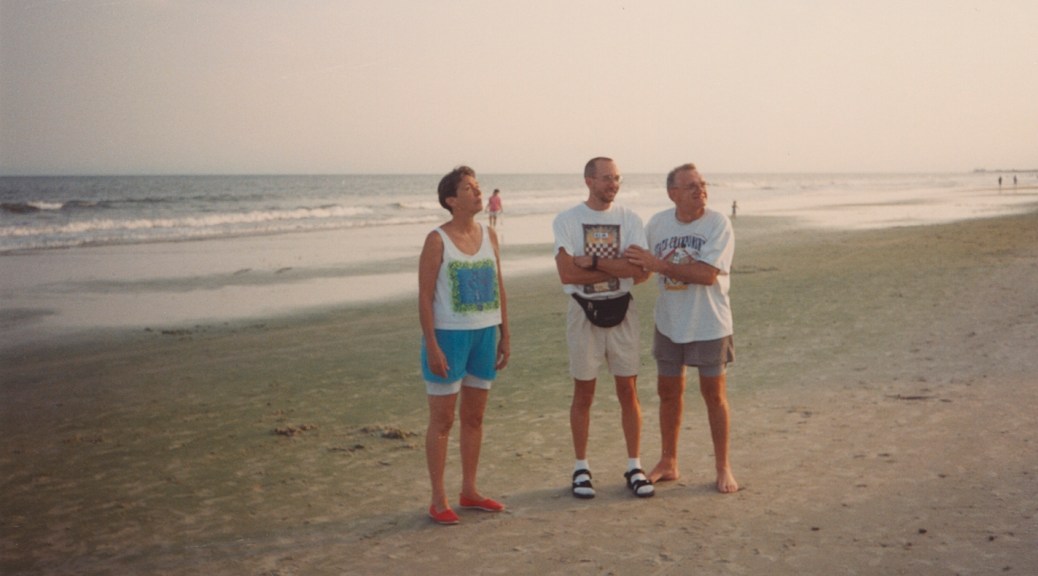
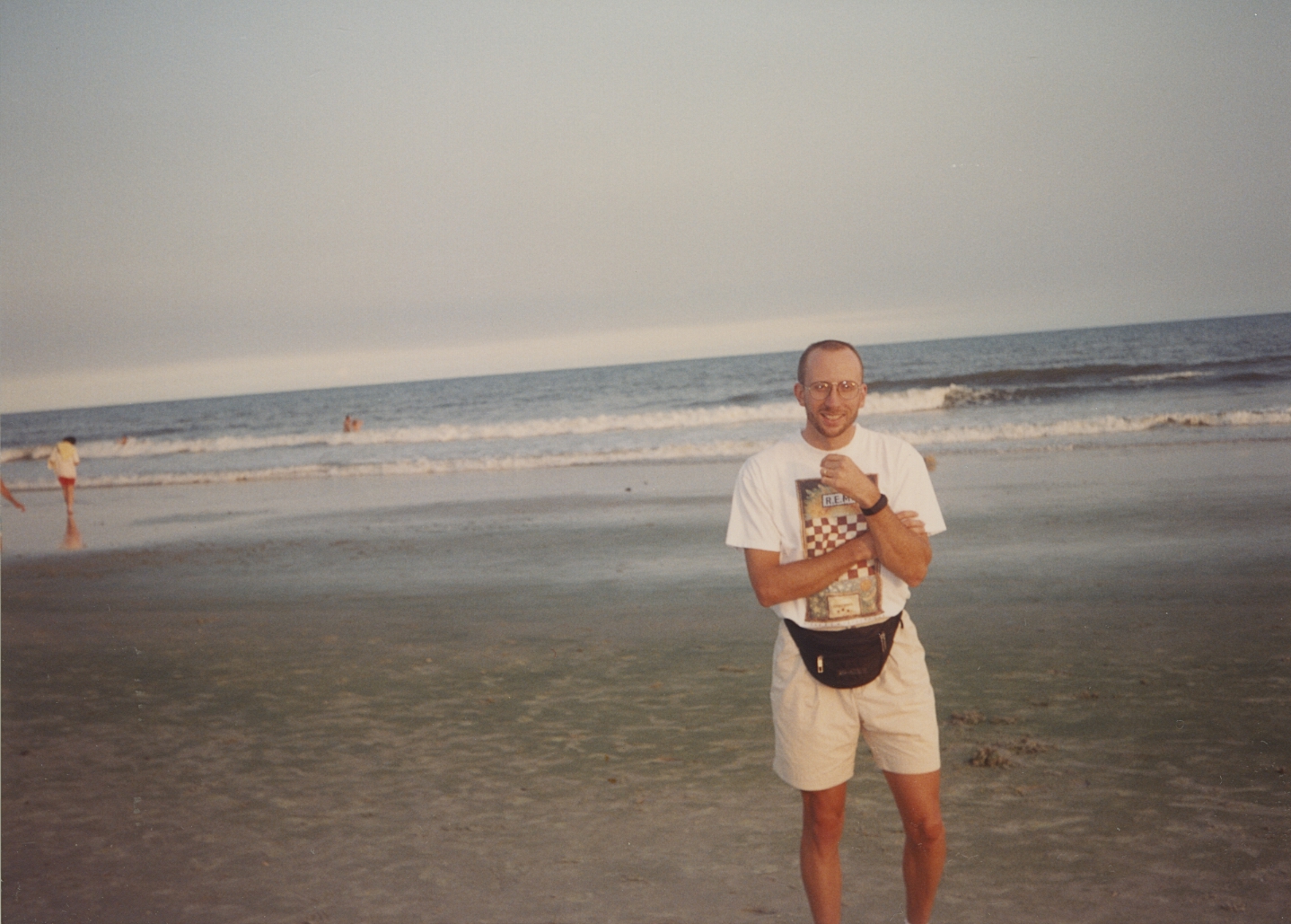
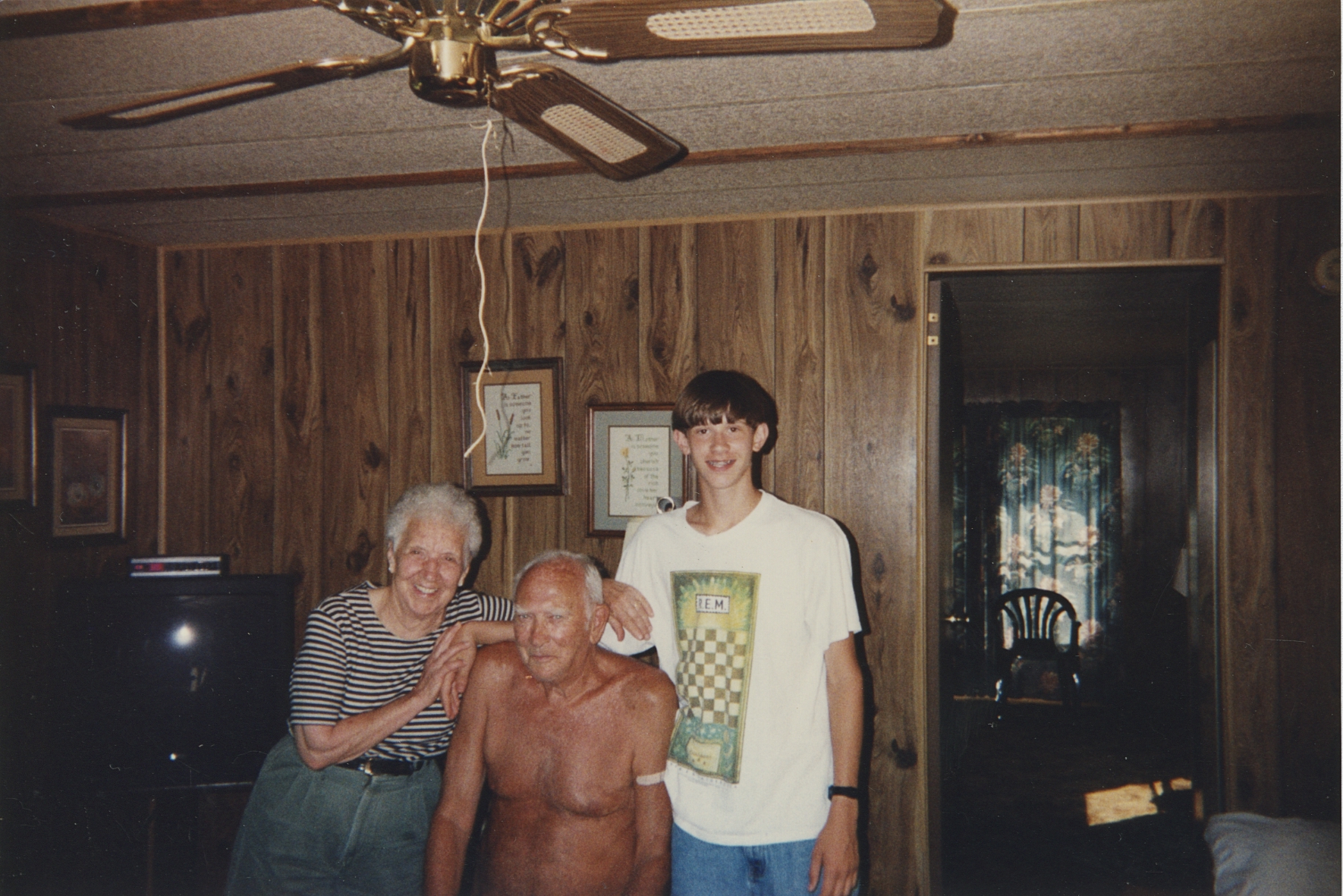
Me in an REM short at Myrtle Beach, a constant place we visited throughout my life.My nephew Tommy wearing a passed-down REM shirt of mine as he poses with Slick (characteristically shirtless) and Deed.
And then over the years with dividing families and shifting worlds, my nephew has two names, both Tommy and Steven, depending on which family he is around or when people came to know him.
My Dad’s father, Tommy, with my oldest nephew, Tommy/Steven.
My own name journey had one moment of confusion that remains with me today. My second-grade teacher announced the first day as she called roll that I was Paul Thomas, named after my father (whose full name is Paul Keith Thomas, though he went by Keith).
When I corrected her with a polite “no, ma’am”—that I was named after my grandfather—she said his name was Tommy, and promptly sent me into the hallway for talking back.
Places: The Many Homes of Slick and Deed
While I do have fond and nostalgic memories of the two houses where my father grew up, I am especially drawn to the places of my mother’s parents.
Well into adulthood, I came to realize that Slick and Deed were often quite poor. The Sowers house we visited had a wood-burning stove for heat and cooling, and there was an outhouse on the property.
We have dozens of old pictures of the Sowers family and many of the names and places are now lost to me.
Slick and Deed stayed at different times on that small plot of land, moving eventually into a trailer behind the older house.
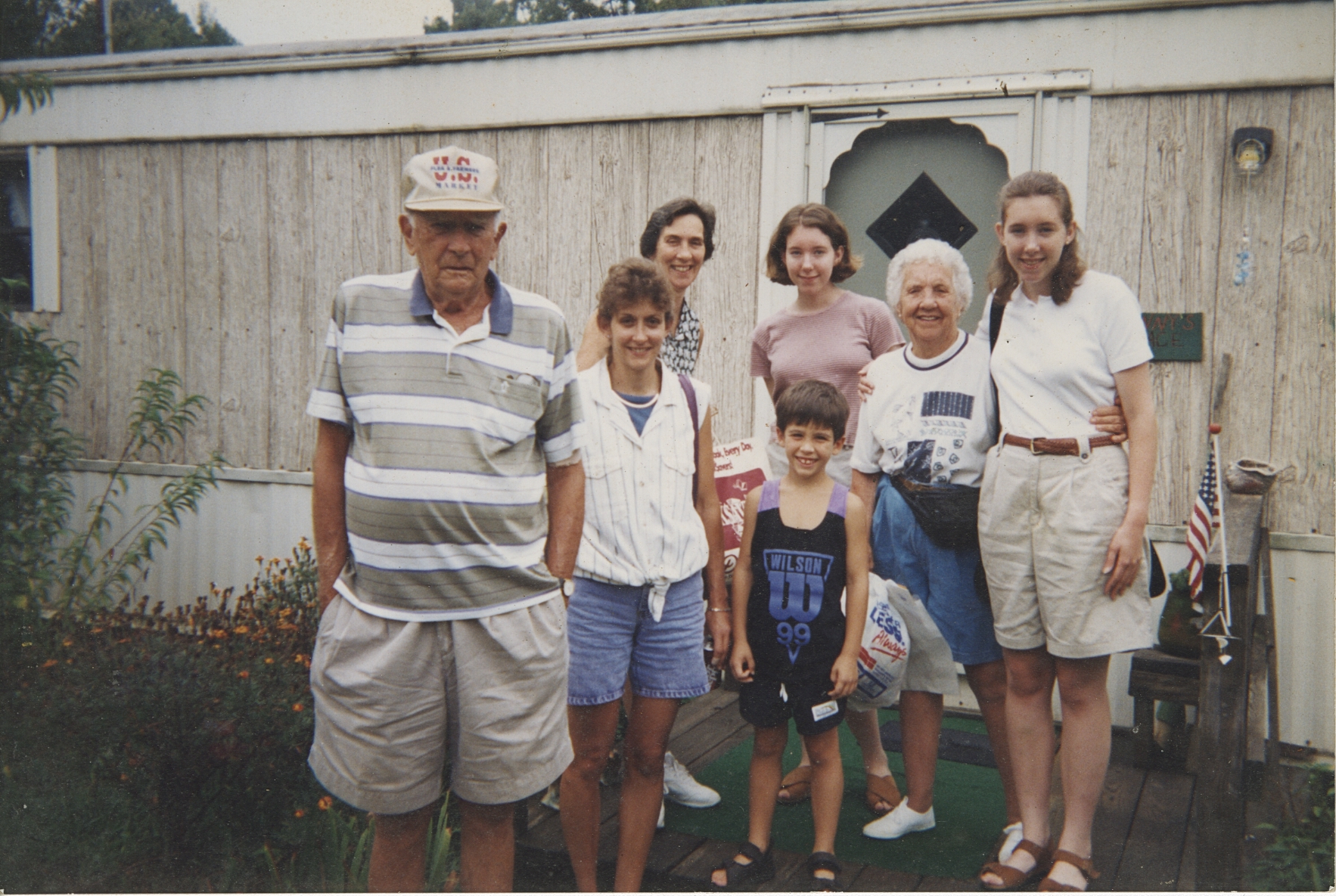
One of many family visits to see Slick and Deed. Pictured: Slick, my sister (Eydie), my mother (Rose) behind Eydie, my middle nephew (Kendall) in front of Deed with my cousins (Mae and Ingrid) to each side of her.
I will always carry with my the Sowers’ small homestead, memories of my grandfather Slick (who I called TuDaddy) sitting outside beneath the one tree in the front yard. He is shirtless and barefoot, deeply tanned and just quietly sitting alone.
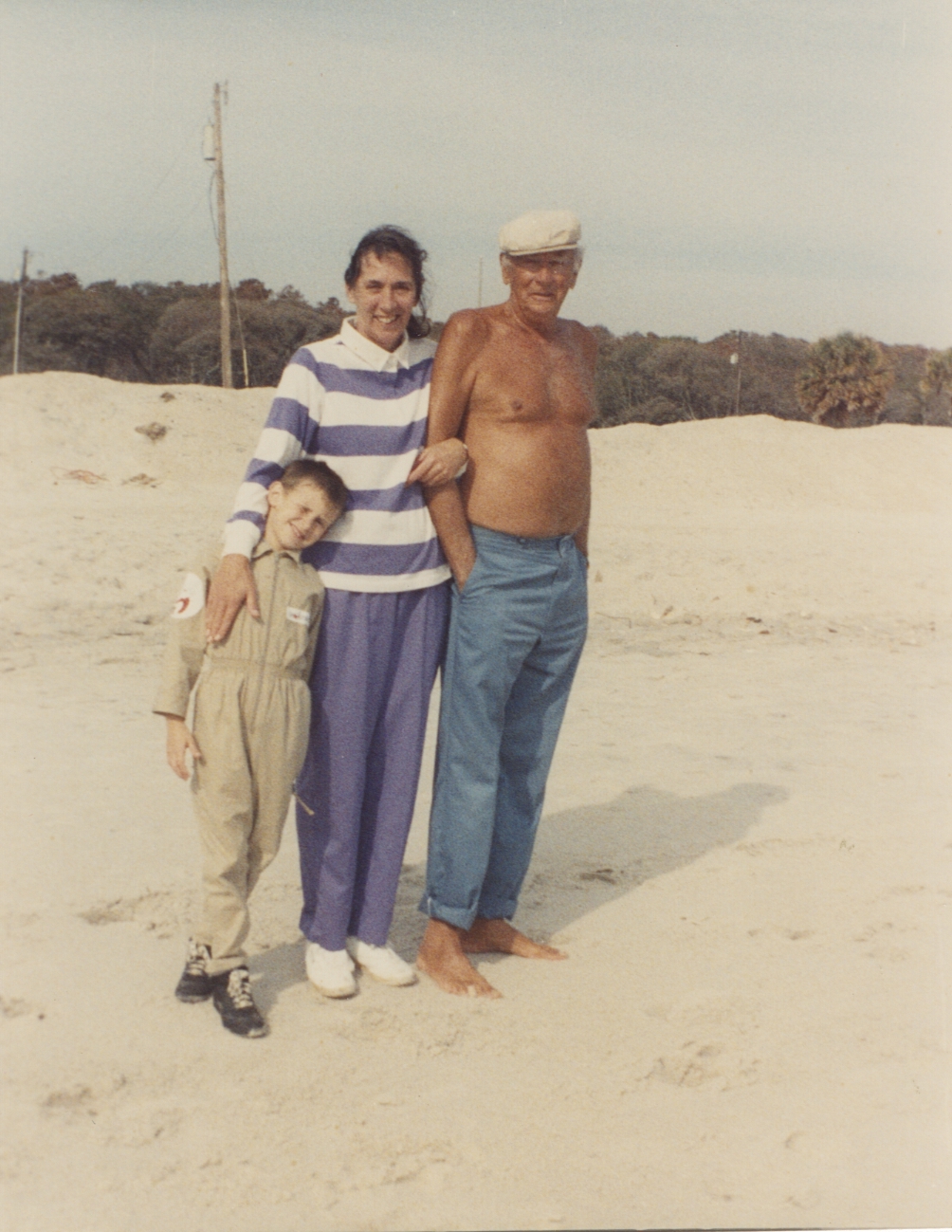
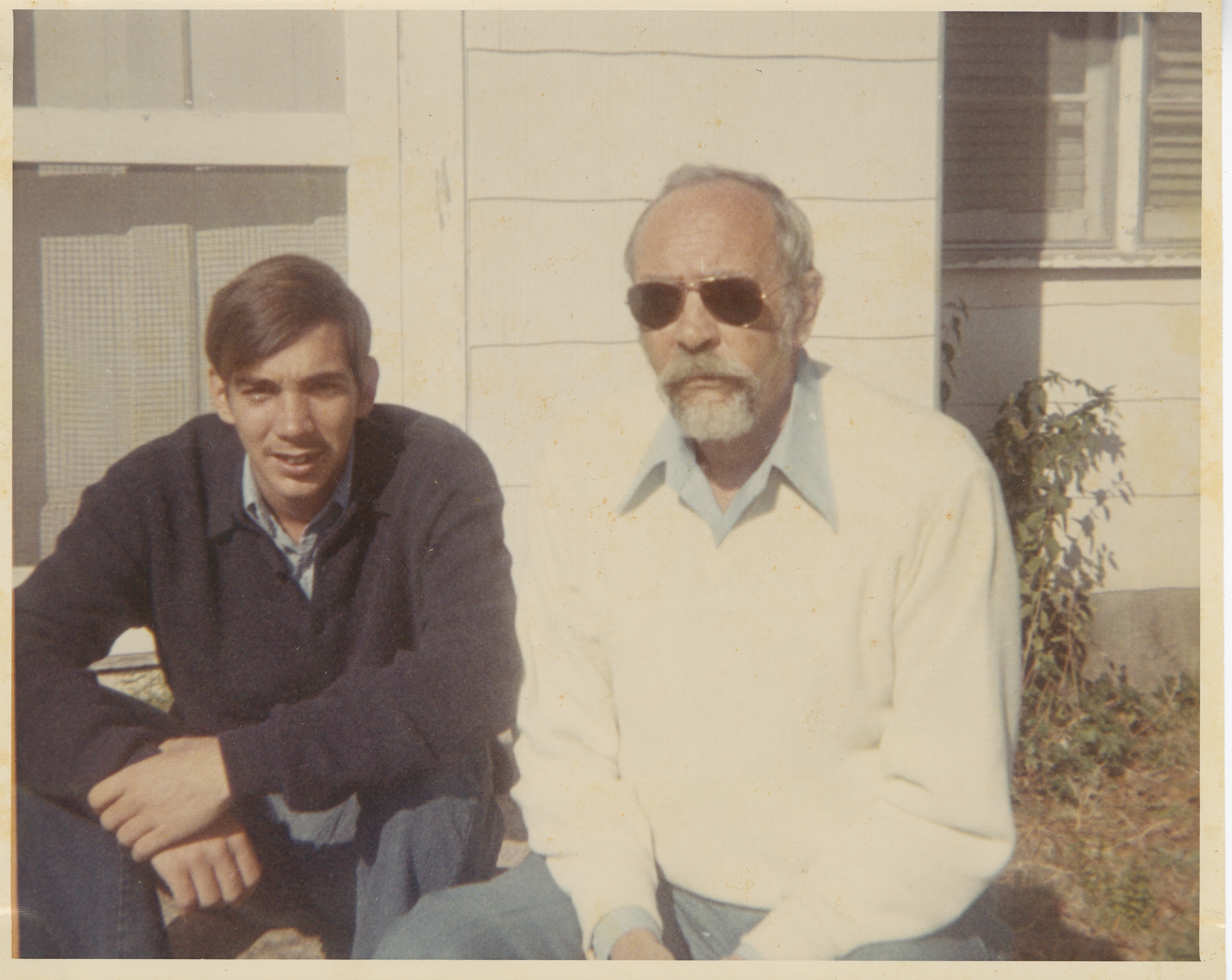
At the beach and everyone seems chilly—Tommy and Mom—but Slick is shirtless and barefoot.My uncle (Buddy, given name Harold Graham Sowers after Slick) beside the ever stoic and often dashing Slick in his Van Dyke days.
But my nostalgia today sits in the two places where Slick and Deed helped manage motels—one in Myrtle Beach, SC and another in Asheville, NC.
The remnants of hurricane Helene as a tropical storm ripped through where I live now, Spartanburg, SC on September 27, 2024—the eastern edge of the eye making a direct hit—before devastating Asheville and western NC.
The French Broad River and other rivers in that area flooded many places I love and have visited since the 1960s, and the small town of Chimney Rock, NC—southeast of Asheville and just west of Lake Lure—has been essentially erased by the historic flooding.
The child inside me has always held onto Asheville and Chimney Rock as the “mountains” where my parents loved to go (many day trips to Chimney Rock from Woodruff, SC) and where we went as a family to be with family, the many homes of Slick and Deed.
Myrtle Beach
There is one place that likely has the most consistent memories for me with family—Myrtle Beach, SC. It was about a four-hour drive from Woodruff in the Upstate of SC, and for most people, Myrtle Beach was a somewhat expensive vacation destination (but, to be fair, this was a working class and middle class beach with the beaches for wealthy people further south and near Charleston).
My working-class parents visited Myrtle Beach in off seasons; I mostly recall the beach in December, in fact.
Slick and Deed loved Myrtle Beach, but as a family with very meager resources (often as a result of Slick’s alcoholism), they were also resourceful.
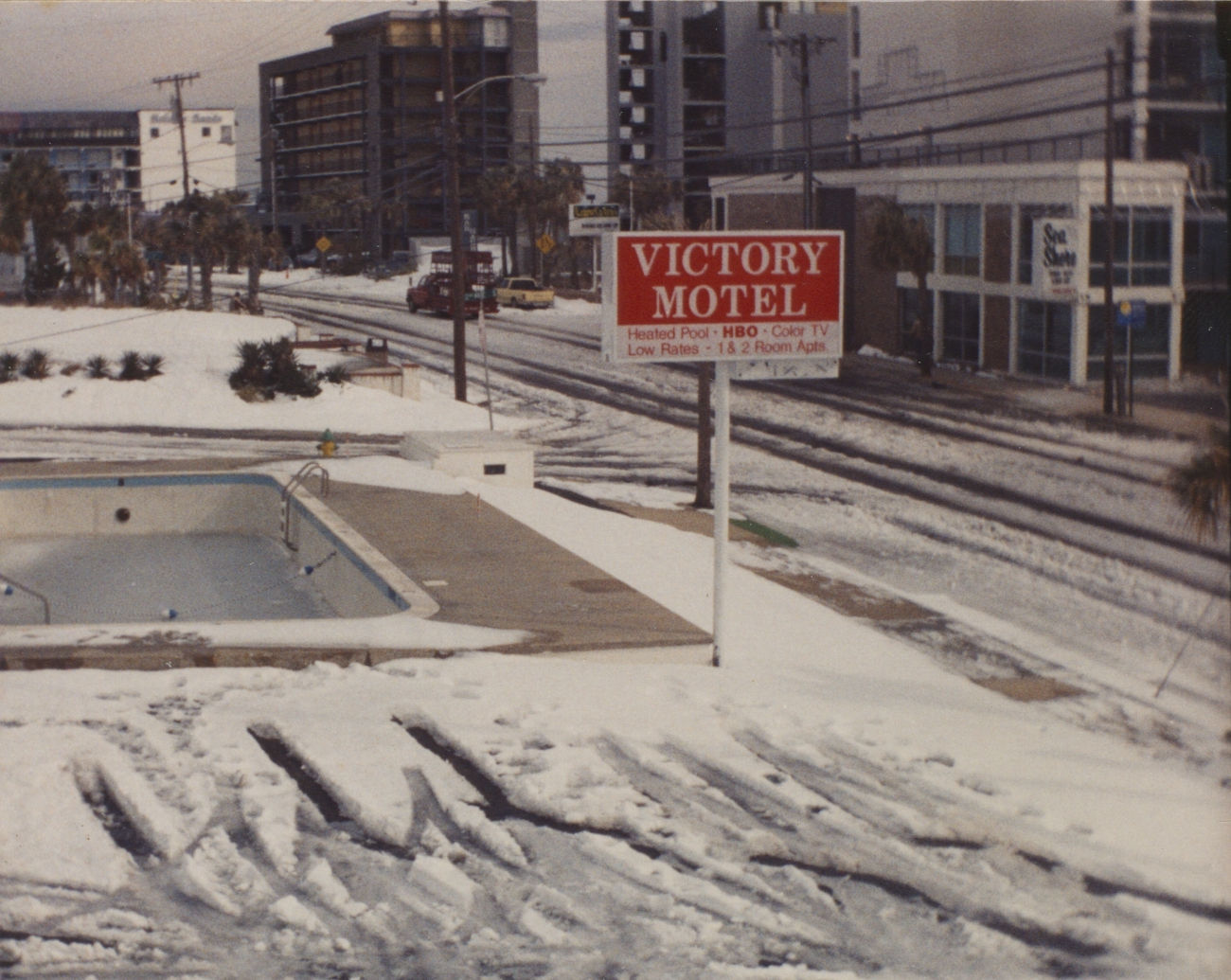
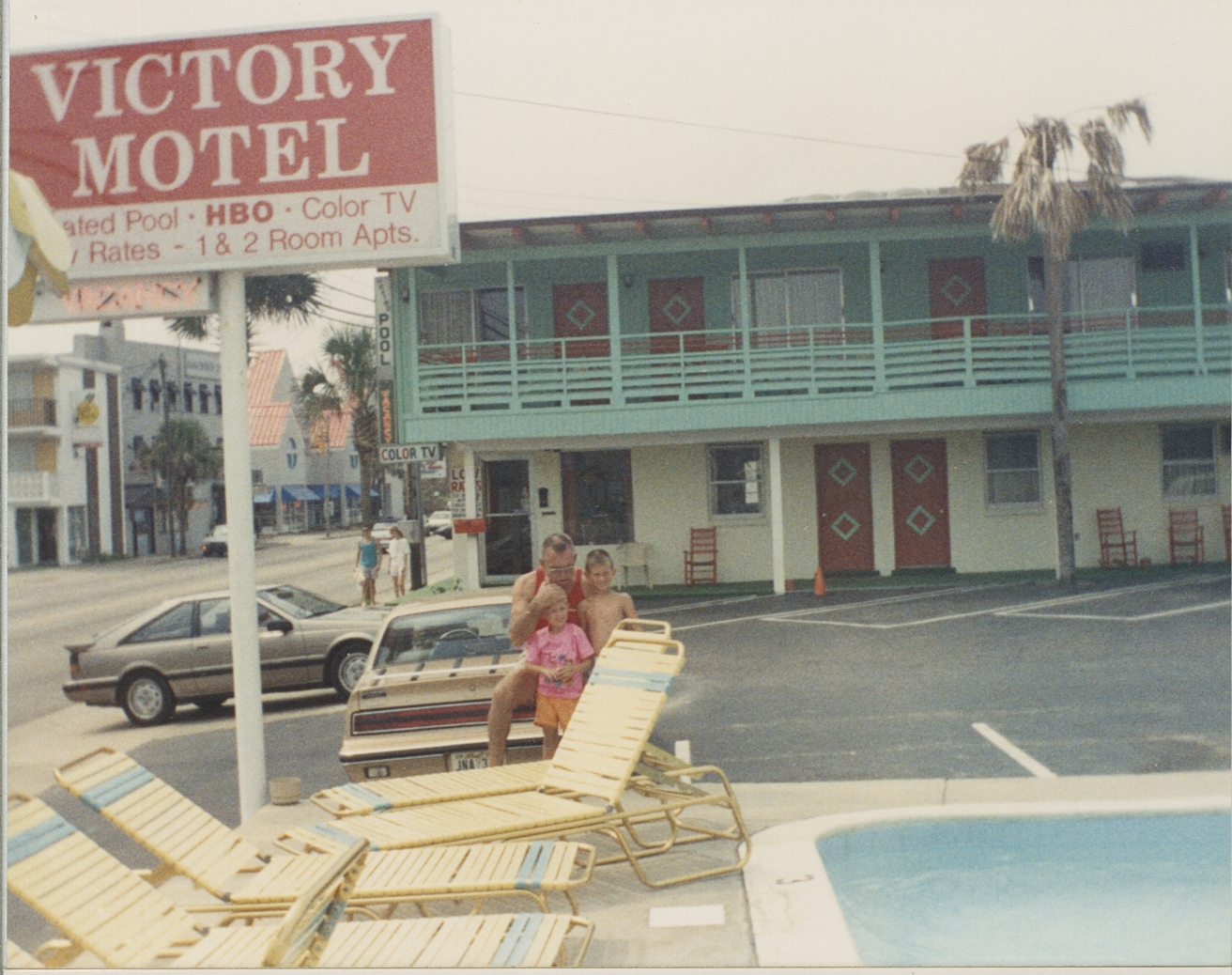
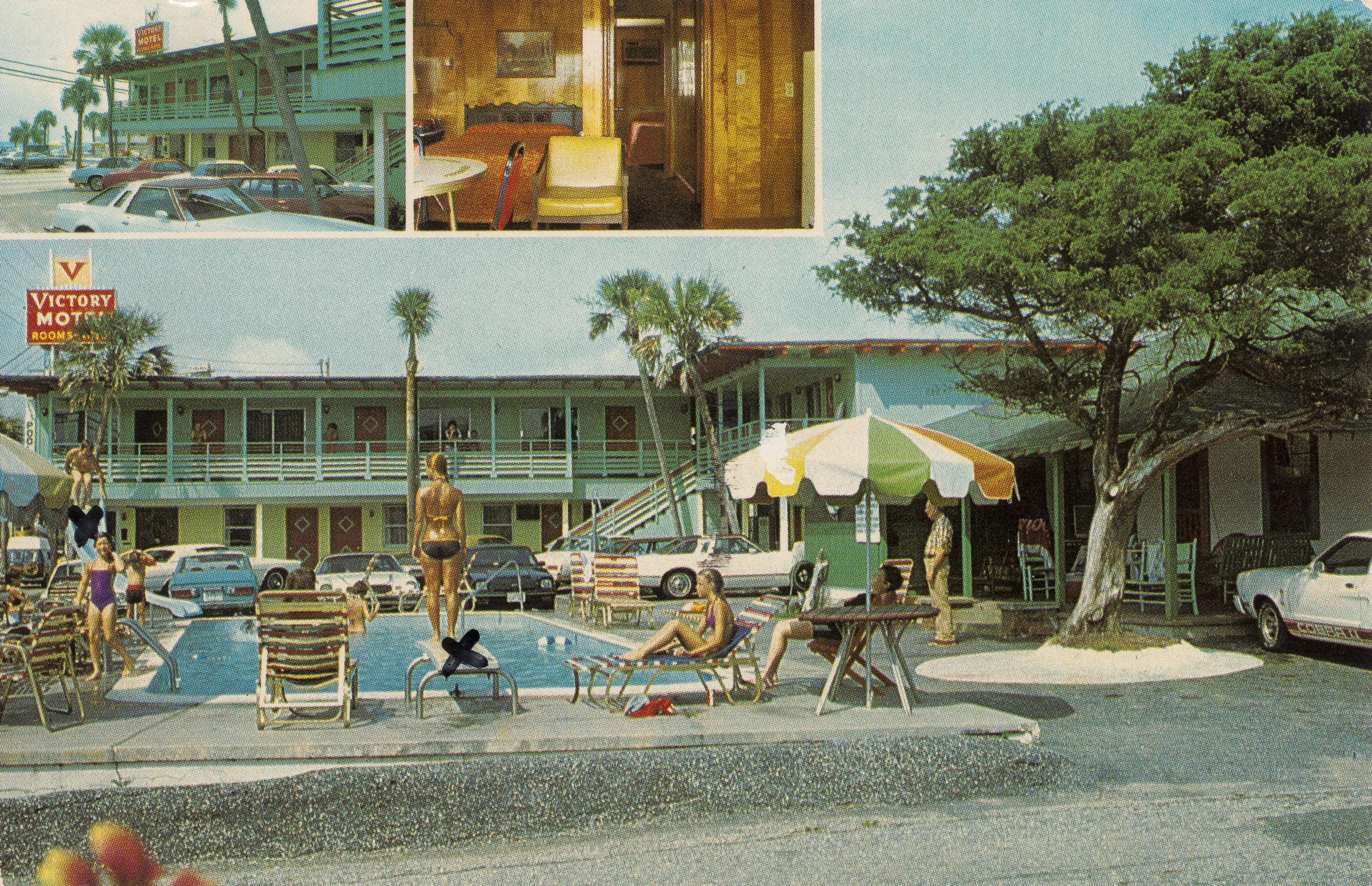
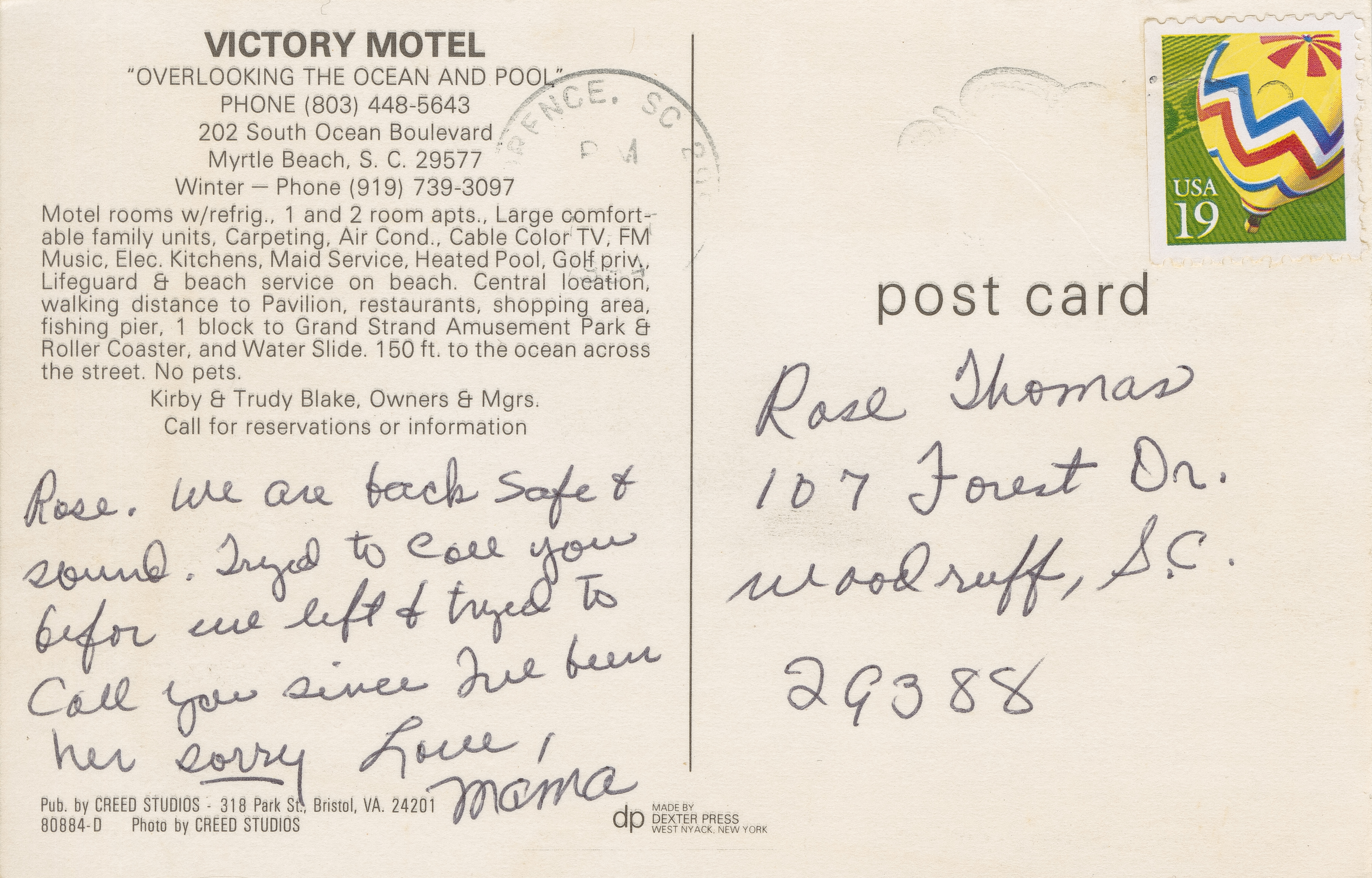
Usually in the off season as well, Slick and Deed arranged to help manage the Victory Motel in Myrtle Beach as a way to be there often.
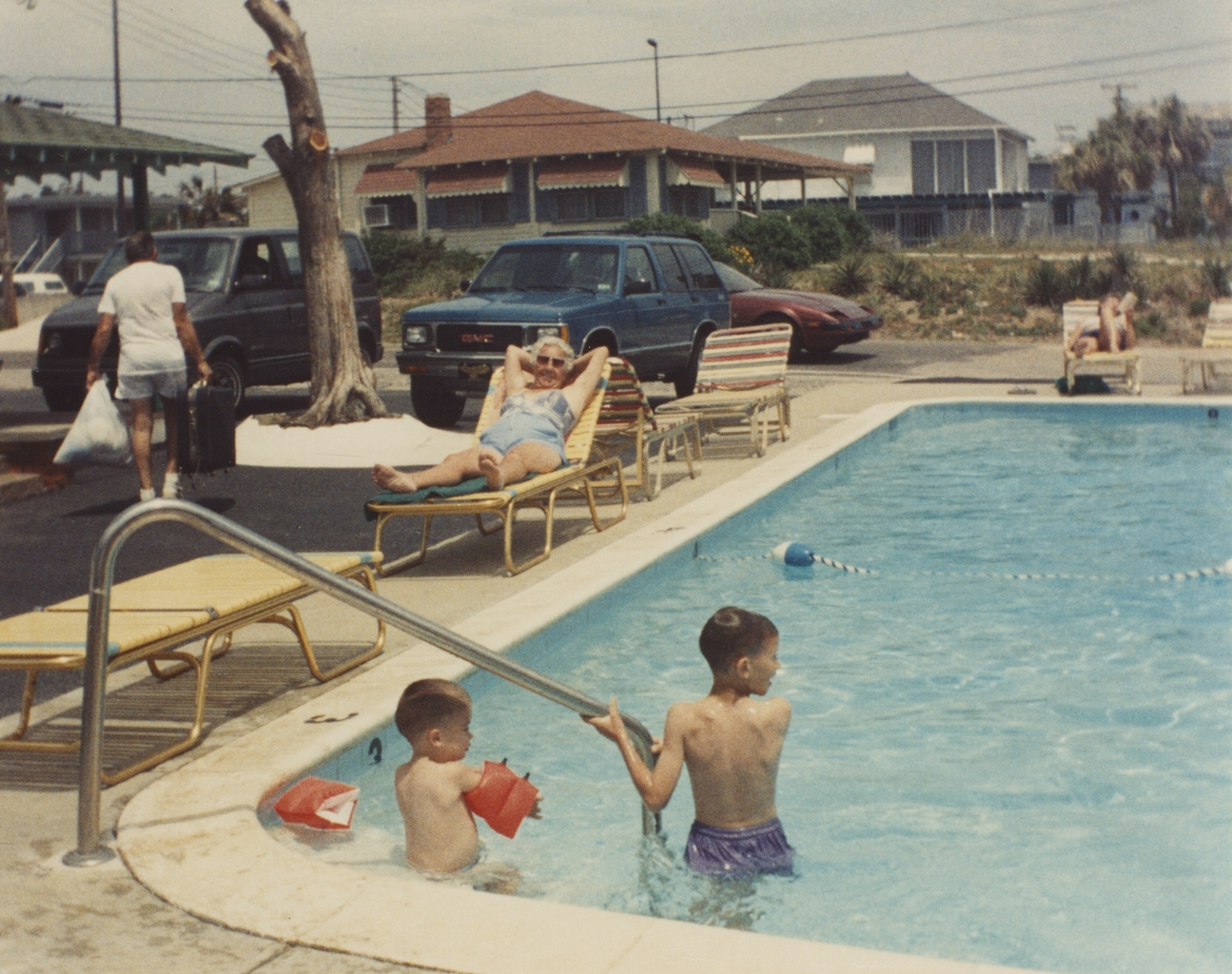
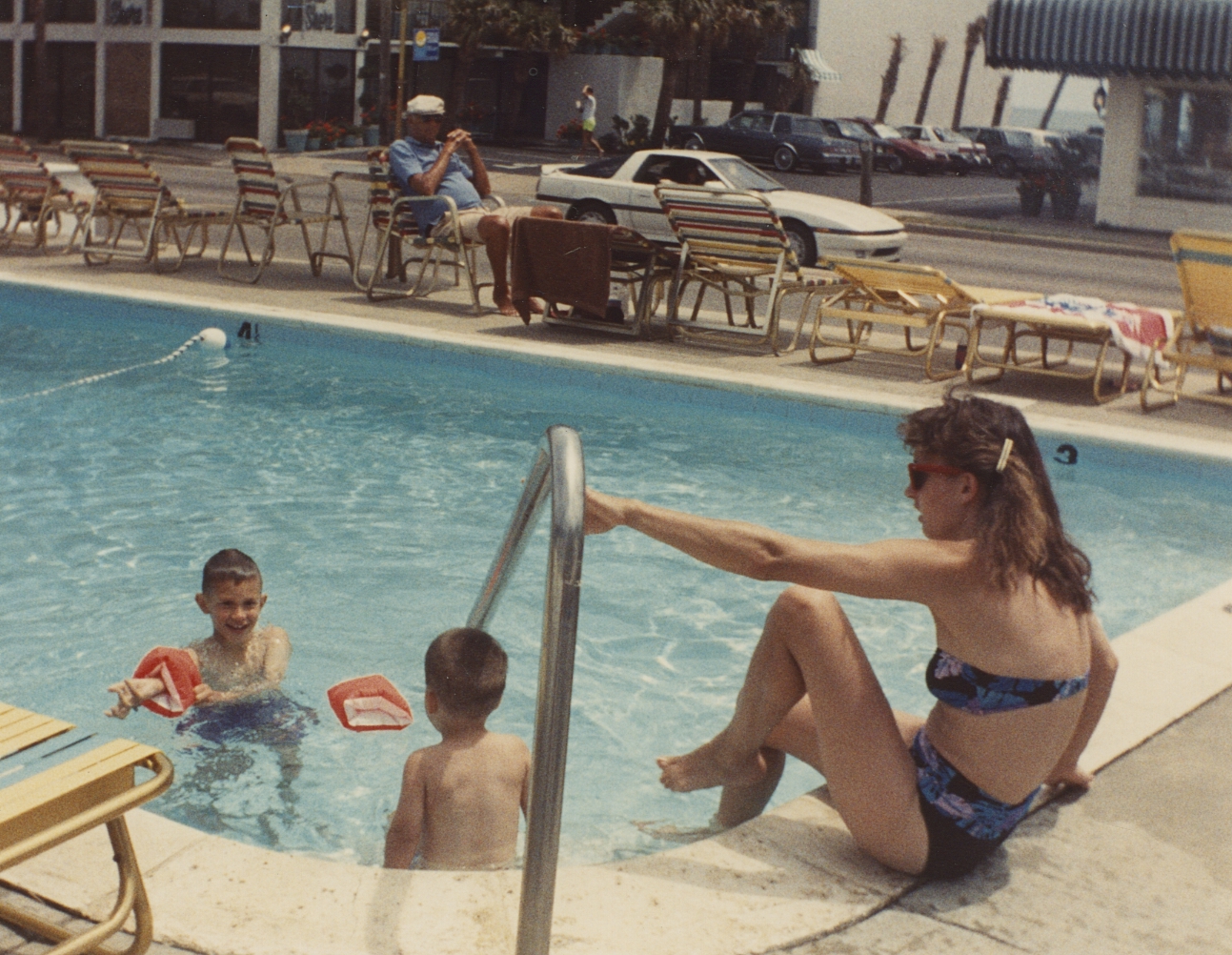
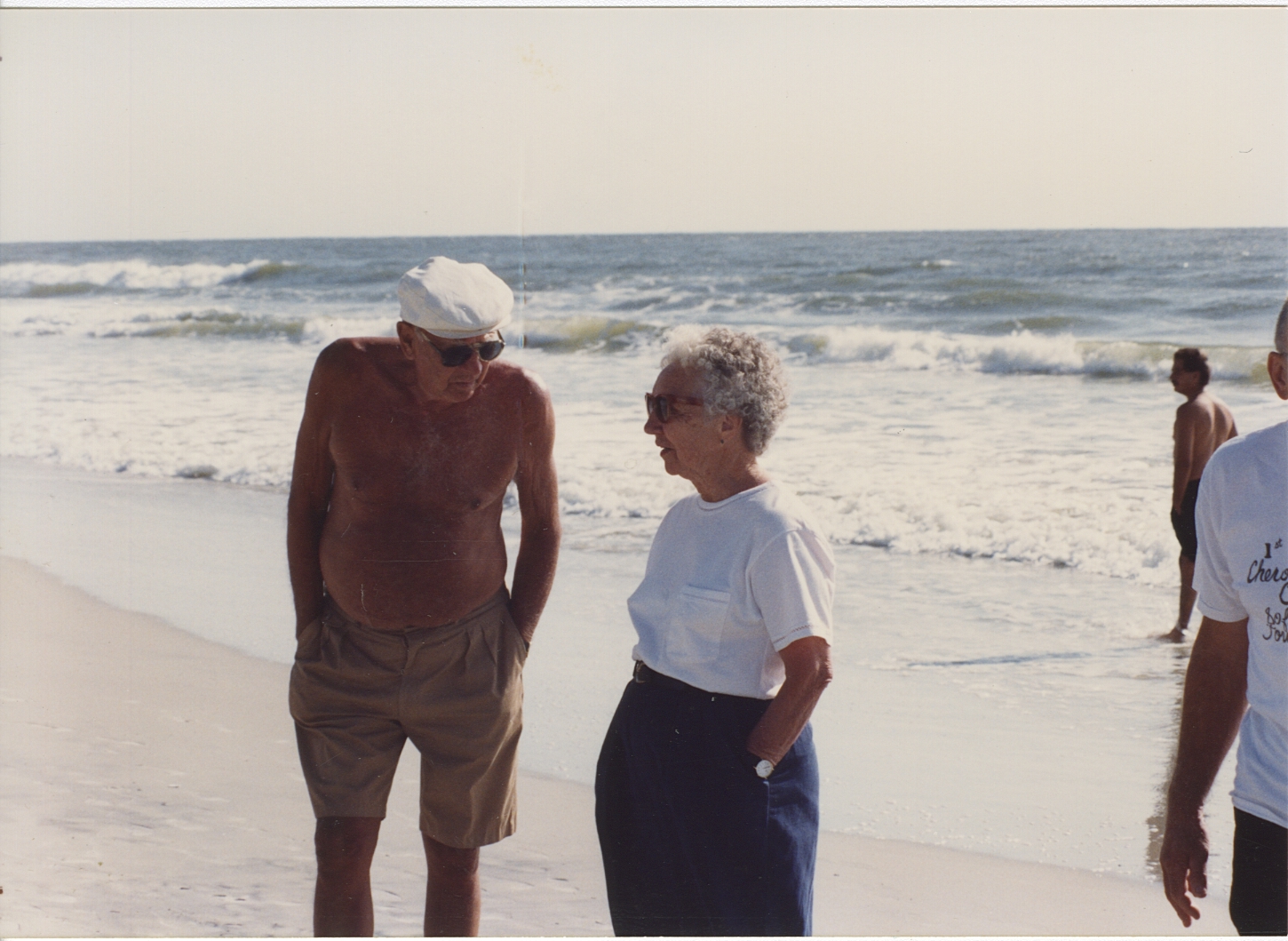
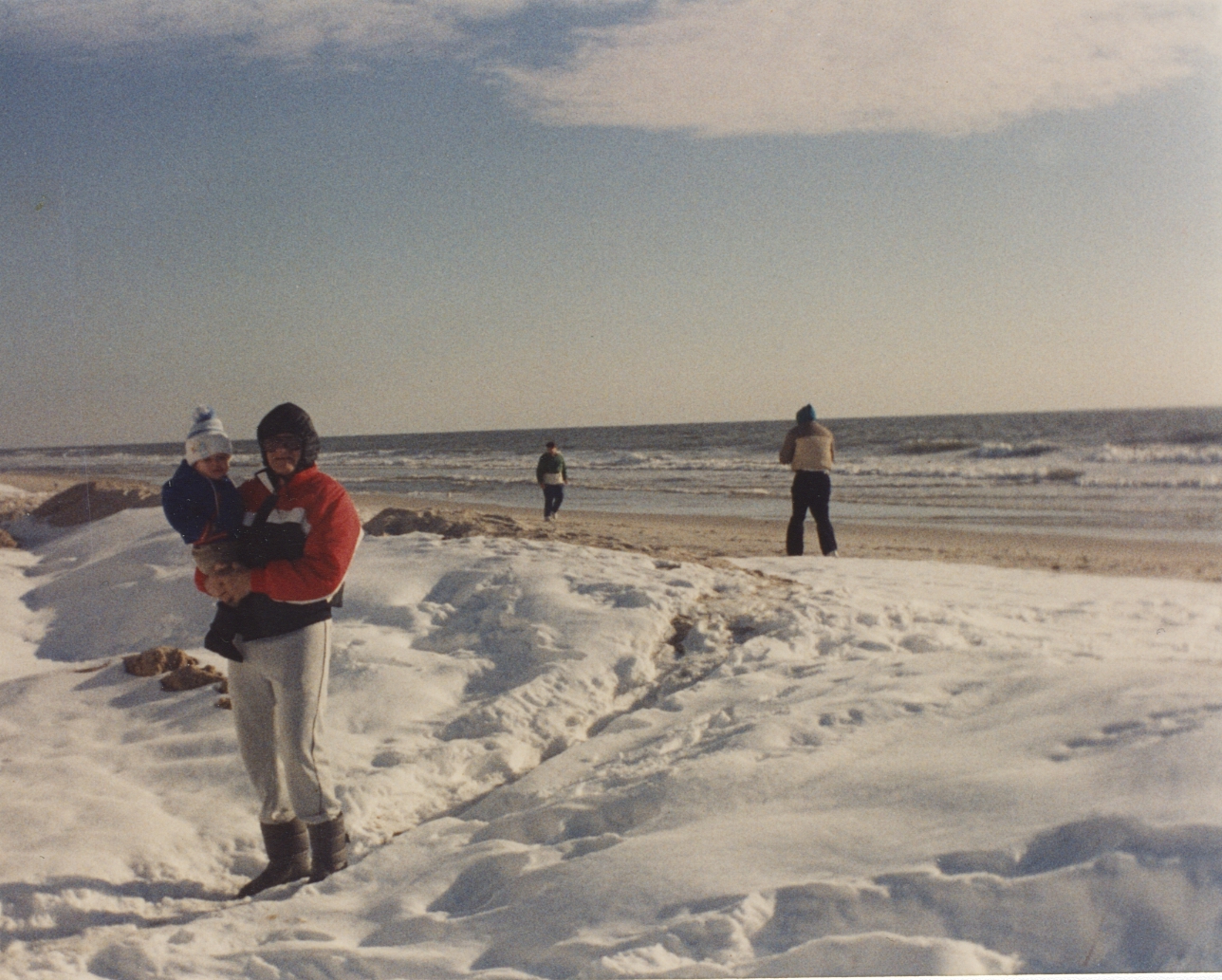
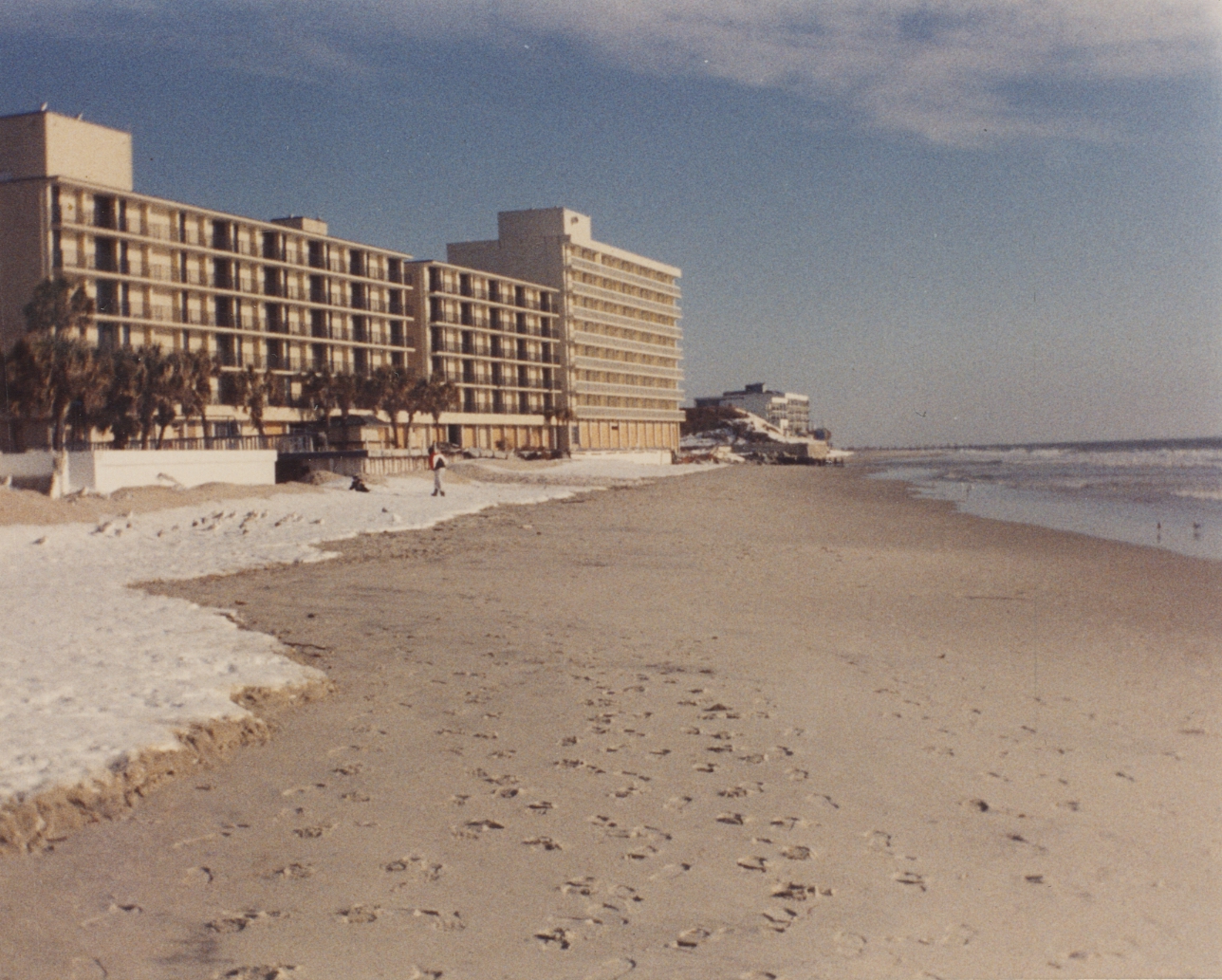
Victory Motel in Myrtle Beach in snow. My parents often raced to Myrtle Beach when there was a chance of snow. See Myrtle Beach snow events here.My father with two of my nephews, Tommy and Kendall, likely in the early 1990s.Deed lounging at the pool with Tommy and Kendall swimming.Tommy, Kendall, and my sister Eydie with Slick in the background poolside.Slick leaning in to pay attention to Deed in his typical outfit and close to the tide.This may be the the 14-inch snowfall around Christmas of 1989.The rare empty beach during the rare snow event.
Myrtle Beach snow is a rarity but we have many, many pictures of being there in the snow—an ironically warm reminder for me of the off-season trips of our working-class families who always felt drawn to the ocean.
[In 2018, my nephews and I took my mother’s ashes to Myrtle Beach because we know how much she loved the place.]
I believe I could post hundreds of pictures of Myrtle Beach with Slick and Deed as well as almost all of our extended families, but I want to end with what brought me to this blog post: Asheville 2024.
Asheville
It sweeps over me, more than a memory, more like a flashback, every time we drive into Asheville on Hwy 25 and pass through a tunnel.
The rock tunnels of Asheville and the very distinct area of West Asheville are buried in my child’s brain from trips in the 1960s and 1970s.
As an adult, much of my life included the close mountains of Tryon and Saluda, NC as well as frequent trips to Asheville—for MTB trails, gravel riding, and the explosion of breweries that many people now associate with the bohemian city.
Asheville has become gentrified, and the South Slope introduced the town to tourist beer drinkers. I know locals and long-time Asheville folk (my aunts and uncle included) likely regret these changes, but my life has spanned both Ashevilles in almost completely positive ways.
But with the help of my aunt Lynda (second oldest of five children by Slick and Deed, my mom the oldest by several years), I have reassembled some of what my fractured memory holds.
Slick and Deed moved the remaining family (my mother was married and living in Enoree, SC) from Roanoke Rapids, NC to Asheville in 1963. Moving was normal for the Sowers family; as I mentioned, my mother attended 4 high schools, including in Pendleton (SC), Concord (NC), Lumberton (NC) and Union (SC), graduating finally from the latter.
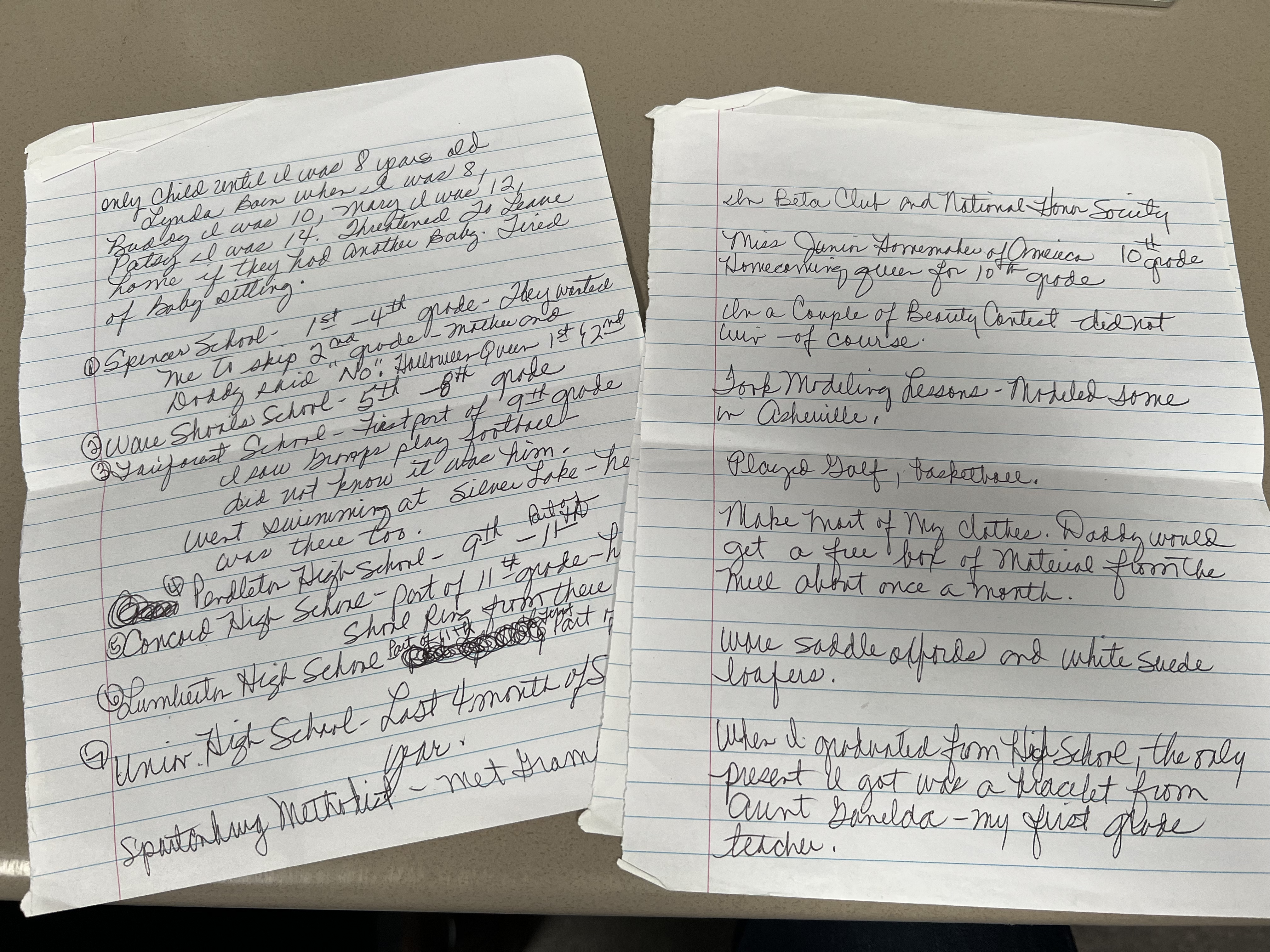
We have a handwritten outline of my mother’s early life, including a brief mention of modeling some in Asheville.
Slick had trouble keeping work, although he mostly moved the family from mill town to mill town.
Asheville proved to be some stability for Lynda, Buddy, Mary, and Patsy. However, they lived in four different houses, and Deed eventually secured the managing job at a motel on 690 Merrimon Avenue, Sunset Court Motel.
My aunts and uncle lived through the often violent integration era for schools in Asheville, some attending Asheville High (which was named Lee H. Edwards High School from 1935 to 1969).
Uncle Buddy was eventually expelled from there and moved in with my parents in Woodruff where he graduated high school before serving in Vietnam.
Two of the most traumatic events for the Sowers family occurred in Asheville. Slick fell and broke his leg while drunk, but Deed refused to help him.
I recall my mom talking on the phone and finding out he had a compound fracture and had to drag himself inside to call for help while Deed sat on the porch.
Soon after, Slick, drunk again, threatened Deed with a gun.
These extreme events, it seems, prompted Deed to seek the motel managing work to help provide the family some stability.
In many ways, the Sowers’ world was volatile like the 1960s, but eventually, they arrived at the old Sowers house (which in my memory was much earlier).
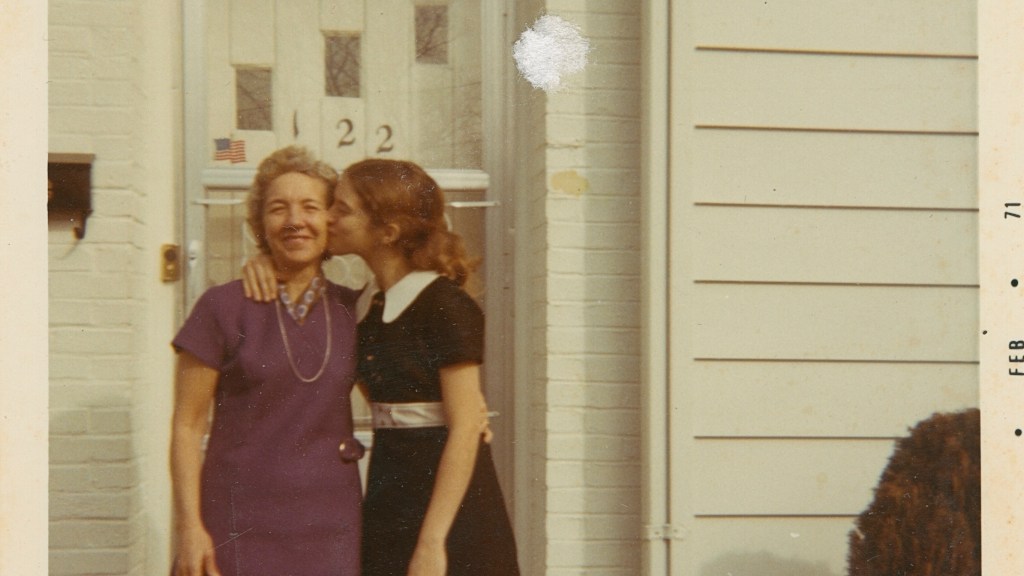
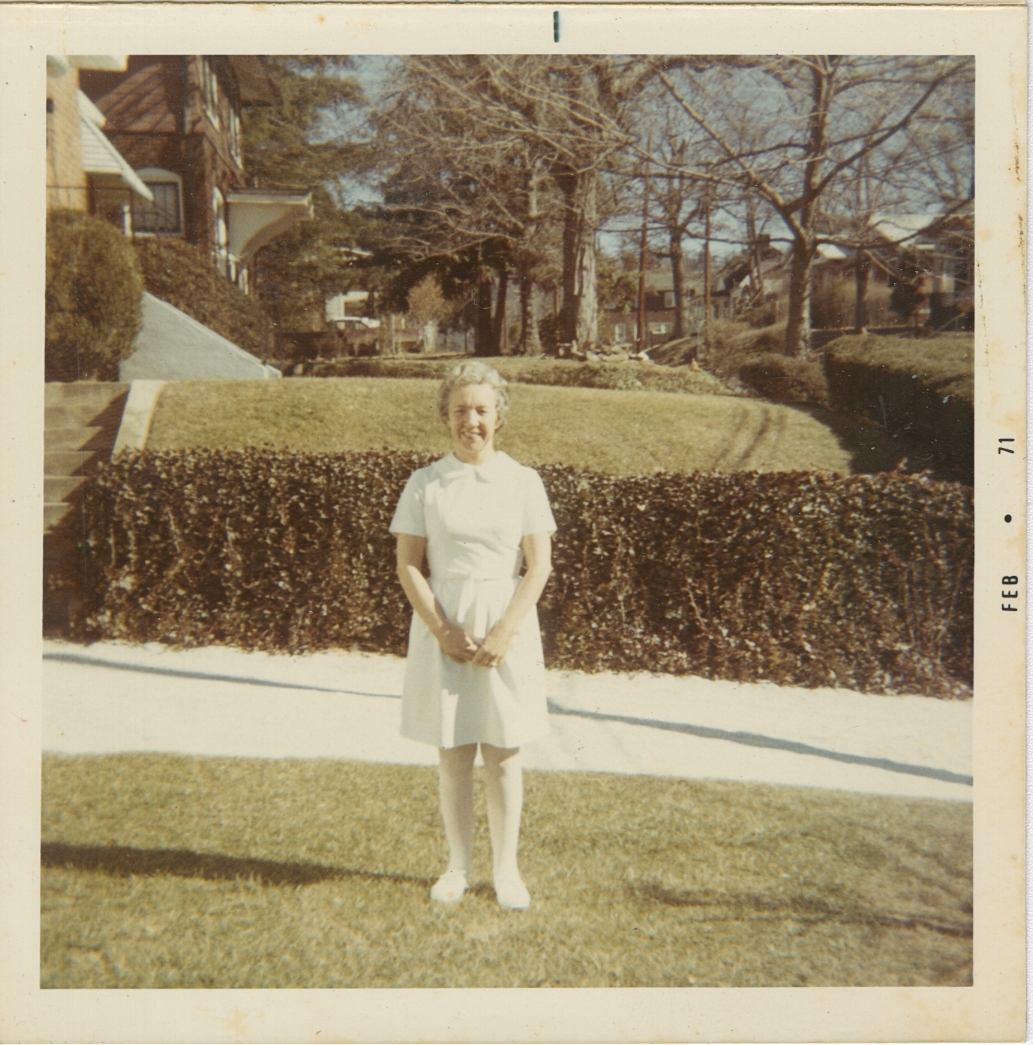
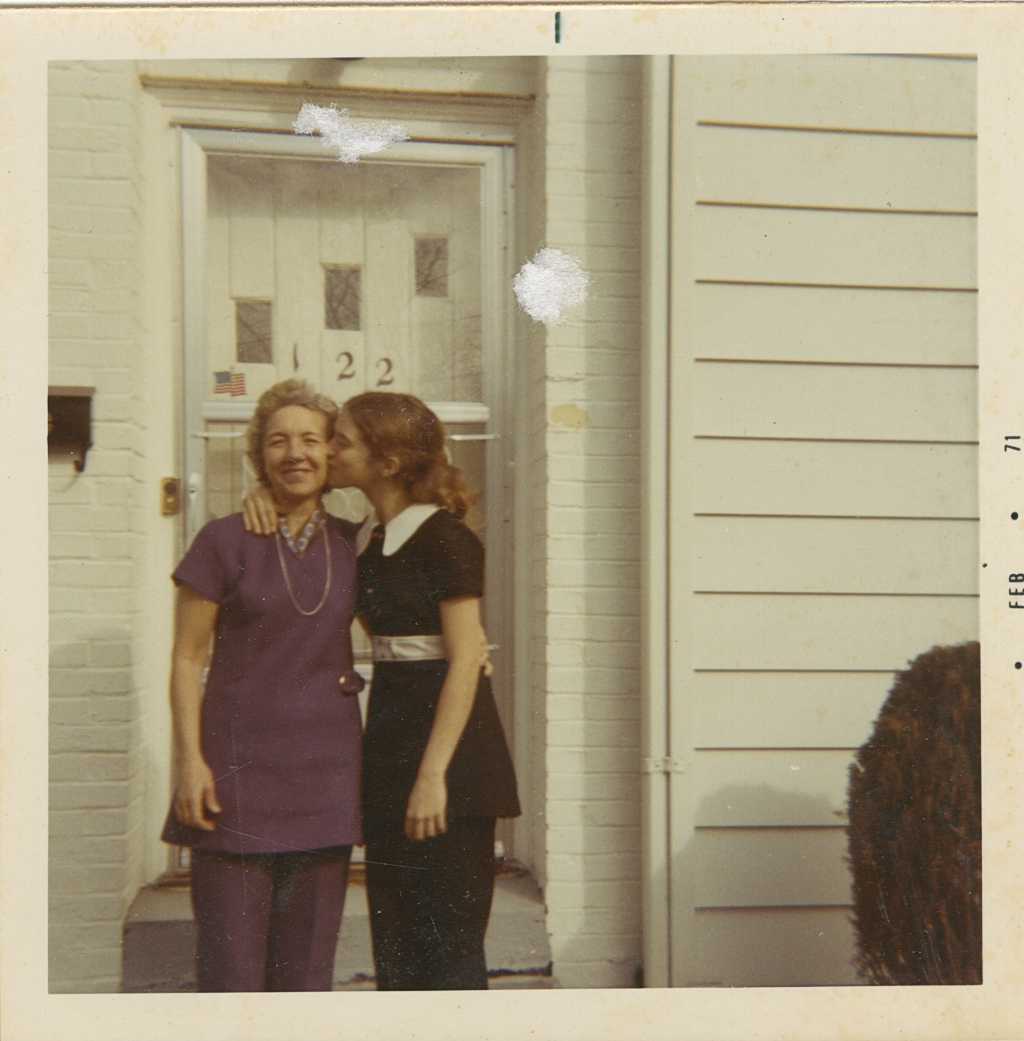
An Asheville picture including my sister (far left), Deed with crossed left in right-center, and my aunts Patsy and Mary to the right.Seeking ways to support the family, Deed stands in their Asheville yard dressed for her job at a retirement home for missionaries.Deed and Patsy at 122 Coleman Ave. in Asheville.
I’m in the crush and I hate it My eyes have fallen I’m having trouble inside my skin I’ll try to keep my skeletons in
Is it weird to be back in the south? And can they even tell That the city girl was ever there or anywhere?
This is my second day of trying to recreate my memories of Asheville and my mother’s family.
I understand this is an attempt to hold onto all that has been washed away in the wake of Helene. I scroll through social media and discover more and more places destroyed, many likely never to return.
The weight of loss due to time is often more than we can carry.
We cry.
We recall.
We try to recover, to hold on to the ephemeral.
Everything is there, nothing is there.
Names and places define us as we define them.
I am afraid the many days we have sat at Zillicoah Brewery next to the French Broad River cannot be recovered so I have begun trying to rebuild my memories.
That place and that river were often beautiful and peaceful. And we could not have known.
Names and places.
NOTE: Images were scanned by my nephew Tommy and Lynda kindly emailed and texted with me today to help me recreate shattered memory. I will update and edit as I find out more.
UPDATE: Thanks to Chris Goering (University of Arkansas), the name of the Asheville hotel was located through his search at newspapers.com.
















 dr. p.l. (paul) thomas