
All posts by plthomasedd
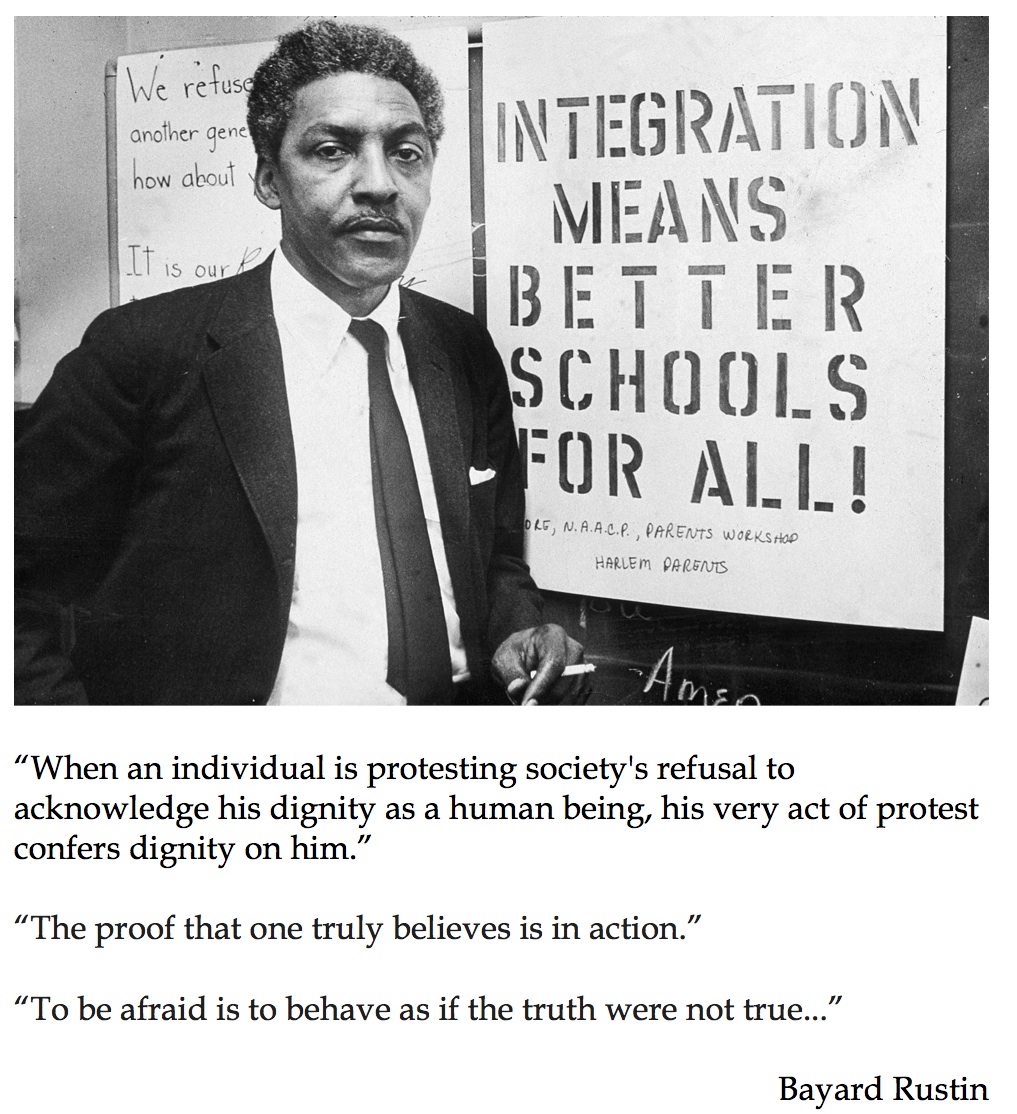
“The best lack all conviction…” William Butler Yeats
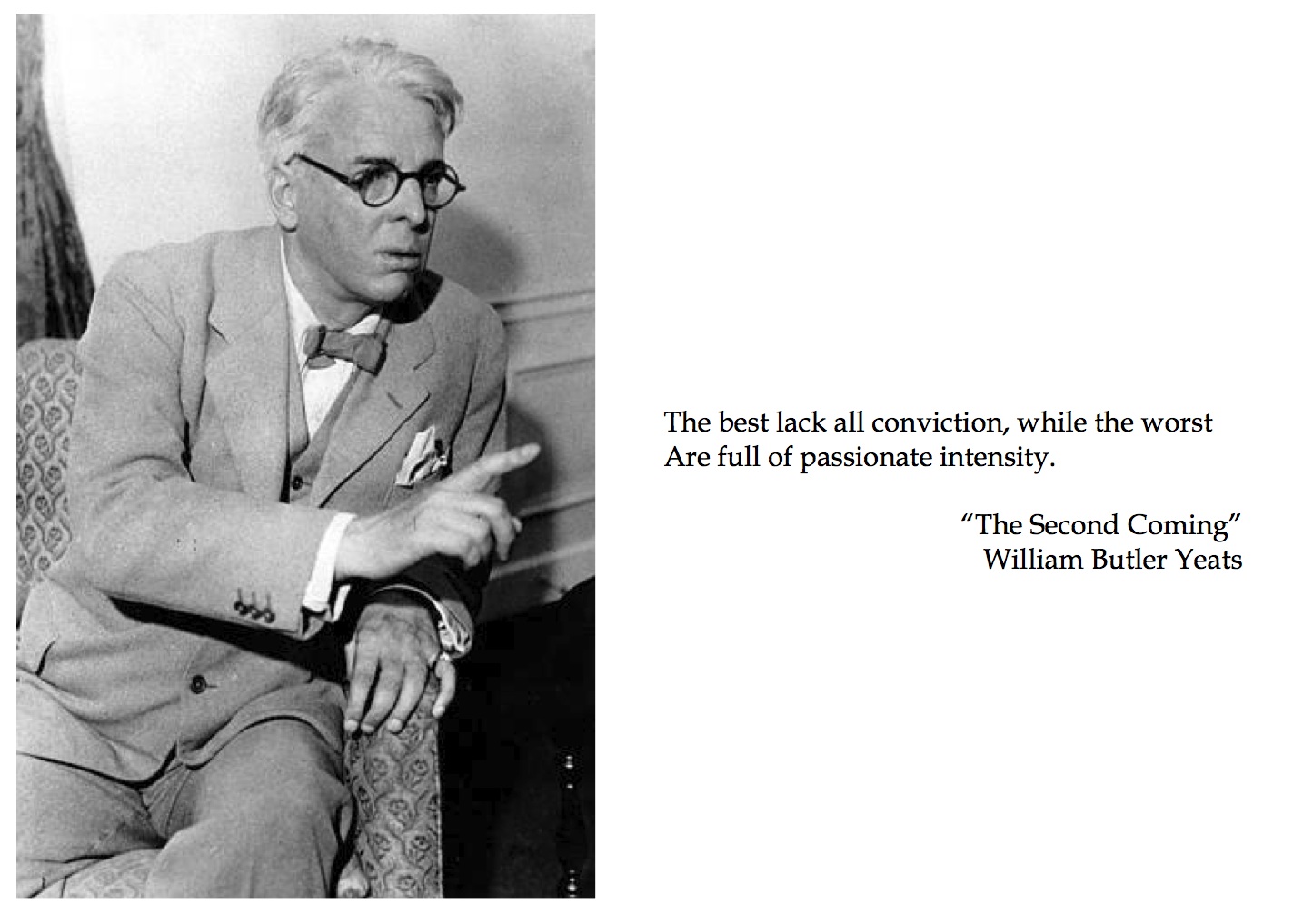
“None of us got where we are…” Thurgood Marshall
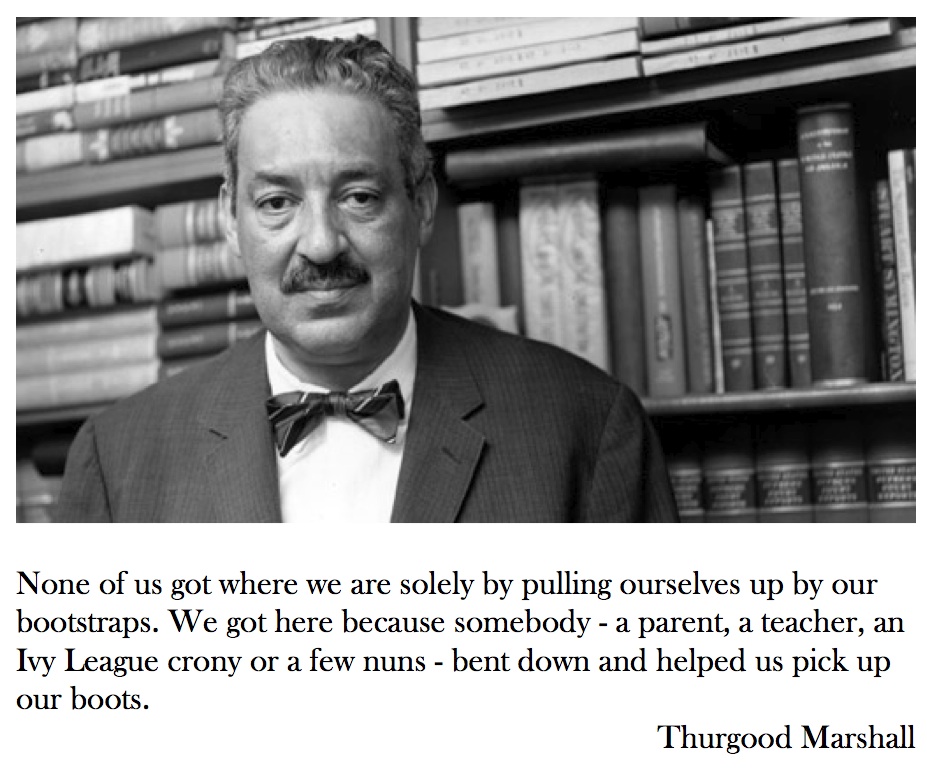
Shiny Happy People: NPR, “Grit,” and “Myths that Deform” pt. 2
hagiography (n.) ha·gi·og·ra·phy \-gē-ˈä-grə-fē, -jē-\ (1) a book about someone’s life that makes it seem better than it really is or was, (2) a biography that praises someone too much
[A]s we put into practice an education that critically provokes the learner’s consciousness, we are necessarily working against myths that deform us. As we confront such myths, we also face the dominant power because those myths are nothing but the expression of this power, of its ideology. (Freire, 2005, p. 75)
•
For most people in 2014, that children were taught for many years in U.S. public schools that George Washington could not tell a lie (the old cherry tree myth) may seem quaint, and to others, a remnant of the distant past.
But the whole truth about this mythologizing of a Founding Father is that much of the knowledge imparted to students through formal schooling remains more propaganda than fact.
From Hellen Keller to Martin Luther King Jr. to Nelson Mandela, children are spoon-fed passive radical myths and distortions of selected exceptional people in order not to capture who those people were but to perpetuate cherished cultural myths (regardless of their veracity).
So if we return to NPR’s whitewashing of the “grit” narrative, we can see how corrosive “myths that deform us” are. The “grit” narrative is itself false, and thus, personal narratives must be manufactured to reinforce that foundational but false narrative.
All of this works, of course, among the shiny happy people who push the “grit” narrative.
Everyone is very happy.
But about those “myths that deform us”; recall the grit lesson in the NPR piece concerning Steve Jobs:
That message underlies every lesson at the Lenox Academy for Gifted Middle School Students in Brooklyn, N.Y., a public school that has been trying to make kids grittier for the past three years. On a recent day, in a typical lesson, a social studies class is studying Steve Jobs. Kids raise their hands to offer examples of Jobs’ grit.
“He had failed one of the Mac projects he was creating,” says one student.
“He used his mistakes to help him along his journey,” says another.
I wonder if students will be told the full story?:
One thing he wasn’t, though, was perfect. Indeed there were things Jobs did while at Apple that were deeply disturbing. Rude, dismissive, hostile, spiteful: Apple employees—the ones not bound by confidentiality agreements—have had a different story to tell over the years about Jobs and the bullying, manipulation and fear that followed him around Apple. Jobs contributed to global problems, too. Apple’s success has been built literally on the backs of Chinese workers, many of them children and all of them enduring long shifts and the specter of brutal penalties for mistakes. And, for all his talk of enabling individual expression, Jobs imposed paranoid rules that centralized control of who could say what on his devices and in his company.
Just as we conveniently ignore the full story about other shiny happy billionaires filled with grit.
There might be some problems with that story too:
Eichenwald’s conversations reveal that a management system known as “stack ranking”—a program that forces every unit to declare a certain percentage of employees as top performers, good performers, average, and poor—effectively crippled Microsoft’s ability to innovate. “Every current and former Microsoft employee I interviewed—every one—cited stack ranking as the most destructive process inside of Microsoft, something that drove out untold numbers of employees,” Eichenwald writes. “If you were on a team of 10 people, you walked in the first day knowing that, no matter how good everyone was, 2 people were going to get a great review, 7 were going to get mediocre reviews, and 1 was going to get a terrible review,” says a former software developer. “It leads to employees focusing on competing with each other rather than competing with other companies.”
And despite what valid criticisms we can offer about Malcolm Gladwell, he makes a pretty compelling case that Gates’s success is the result of as much good fortune as it is talent and effort.
The truth is that “grit,” or effort, is at best a secondary quality (and even then it is likely overemphasized as a key element in success) because the most powerful element at the causational level for most success (and failure) is the context in which any person finds her/himself.
Privilege and slack are conducive to excelling while scarcity tends to breed failure.
The root cause is systemic, not personal. The same person in a condition of slack and a condition of scarcity performs differently and experiences different outcomes.
The lesson, then, is if your primary message for children requires that you make up stories (or cherry-picking, if you will) to prove the myth is accurate, you are likely telling children “myths that deform us” (and that isn’t very hagiography-George-Washington of you).
And in no case is that justifiable.
Reference
Freire, P. (2005). Teachers as cultural workers: Letters to those who dare to teach (D. Macedo, D. Koike, & A. Oliveira, Trans.). Boulder, CO: Westview Press.
NPR Whitewashes “Grit” Narrative
Albeit from different ideologies, NPR and Fox News have something really disturbing in common: Bias masked as, to use the Fox slogan, “fair and balanced.” In fact, the breezy tone of NPR makes its uncritical bias potentially more dangerous* than Fox’s essentially cartoonish balance.
And thus, when NPR discovers “grit,” we get this: Does Teaching Kids To Get ‘Gritty’ Help Them Get Ahead?
While the story does acknowledge critics, the piece clearly forefronts “grit” research as well as the credibility of “Angela Duckworth, a psychology professor at the University of Pennsylvania who coined the term ‘grit’ — and won a MacArthur ‘genius grant’ for it.”
How can any criticism of “grit,” and thus indirectly Duckworth, hold up to that?
Despite the framing bias of the story—and that breezy tone that suggests everything is fine—I do recommend examining Alfie Kohn’s work challenging the “grit” narrative:
- See this discussion here
- Why Self-Discipline Is Overrated: The (Troubling) Theory and Practice of Control from Within
- The Downside of “Grit”: What Really Happens When Kids Are Pushed to Be More Persistent?
- Ten concerns about the ‘let’s teach them grit’ fad
But the greatest failure of the NPR look into “grit” is what, once again, is missing: Not a single mentioning of race, of the strong critical rejection of the “grit” narrative as a not-so-thinly masked appeal to racism.
“Grit” is a mask, a marker for privilege and slack that suggests people who succeed do so because of their effort (and not their privilege and the slack of their lives) and that people who fail do so because of a failure of character (and not due to the scarcity that overburdens them).
The “grit” narrative is essentially a whitewashing of the power of privilege as that is a product of lingering racism. And thus, the “grit” narrative is primarily aimed at children of color and they are routinely encouraged to honor Gritty White Hopes like (as the NPR story reveals) Steve Jobs:
That message underlies every lesson at the Lenox Academy for Gifted Middle School Students in Brooklyn, N.Y., a public school that has been trying to make kids grittier for the past three years. On a recent day, in a typical lesson, a social studies class is studying Steve Jobs. Kids raise their hands to offer examples of Jobs’ grit.
“He had failed one of the Mac projects he was creating,” says one student.
“He used his mistakes to help him along his journey,” says another.
And thus, let me suggest the following:
My posts on “grit”:
The Poverty Trap: Slack, Not Grit, Creates Achievement
The “Grit” Narrative, “Grit” Research, and Codes that Blind
Misreading “Grit”: On Treating Children Better than Salmon or Sea Turtles
Kids Count on Public Education, Not Grit or “No Excuses”
Learning and Teaching in Scarcity: How High-Stakes ‘Accountability’ Cultivates Failure
An Open Apology, with Explanations: Math, Behaviorism, and “Grit”
Snow Blind: “Trapped in the Amber of This Moment”
From Ira Socol:
Paul Tough v. Peter Høeg – or – the Advantages and Limits of “Research”
“Grit” Part 2 – Is “Slack” What Kids Need?
“Grit” – Part 3: Is it “an abundance of possibility” our kids need?
Grit Part 4: Abundance, Authenticity, and the Multi-Year Mentor
Angela Duckworth’s Eugenics – the University of Pennsylvania and the MacArthur Foundation
From Katie Osgood:
Ignoring Mental Health in the Grit Debate
And (please see the discussion thread):
Does “Grit” Need Deeper Discussion?
Note Living in Dialogue post from Lauren Anderson, EdWeek Editor’s Note, and comments:
Lauren Anderson: Grit, Galton, and Eugenics
And a consideration of Anderson:
Grit and Galton; Is psychological research into traits inherently problematic? Cedar Rienar
Also
I Think a MacArthur Genius Is Wrong About ‘Grit,’ John Warner
—
* Revised for tone from previous version.
Who Is Unprepared? US Students? Or Arne Duncan?
The Self-Defeating South, Words Not Spoken: Racism as a Scar and Cancer
Born and raised in a very small rural town in upstate South Carolina, I have lived my entire 53 years in the South. Most of that life has been spent teaching, and a large span of that career was in the high school I attended, among children mostly just like me, where we explored literature.
A key text for me each year was William Faulkner’s “A Rose for Emily,” and if you are not from the South, and you want to come close to understanding the South, read the story carefully. The shocking revelation at the end of the story—behind the locked door, the pillow and the bed, the “iron-gray hair”—is as close as you can come to understanding the South if you are not from here. (If you want to make a unit of this project to examine the South, read also Alice Walker’s “Everyday Use” and Flannery O’Connor’s “A Good Man Is Hard to Find.”)
We are a self-defeating people, we Southerners, a sort of ignorant pride, a blind faith in tradition and a steely determination to do as we damn well please. We’d rather cling to our ignorance (a long-standing tradition) than do the right thing—especially if someone else is telling us to do the right thing. The South, you see, is stuck in a perpetual arrested development, a fixed childhood/adolescence: We’re going to smoke, drink, and make out in our own car and there is nothing you can say or do to stop us.
That “we,” however, is the white South (both literally and its controlling psyche), and that is the problem. (One element of “A Rose for Emily” that is important here is the “we” narration of the town. “When Miss Emily Grierson died, our whole town went to her funeral,” it begins.)
So if you think 8 disturbing trends that reveal the South’s battered psyche—which asks, “So what is it that perpetuates decades of poverty in the Deep South?”—helps you understand the South, you need to consider carefully what is absent in the 8 trends:
1. Southern states have the most poor people….
2. Deep South states have no minimum wage….
3. Deep South has lowest economic mobility….
4. South has lowest per capita spending [b]y state government….
5. Forget about decent preventative healthcare….
6. One result: people self-medicate in response….
7. Forget the lottery, just pray to Jesus….
8. And hold onto that gun!
What is essentially absent in this piece, an examination of trends that confuses markers for root causes?
Race, and more directly, racism.
Notably, the piece mentions race in only one place, and then only “white,” with blacks reduced to a negation, not white:
As you would expect, the vast majority of people falling under the poverty line in the poorest states do not have white faces—although there are poor whites. The Henry J. Kaiser Family Foundation compiles state poverty rates by race. In the poorest states, whites account for 15 percent to 20 percent of the poor.
Yes, the piece is examining poverty, but that may be the problem.
“Poverty” is the convenient term in the U.S. that can be uttered as a device for ignoring poverty and denying racism.
Mention the disturbing racial imbalance of drug arrests (whites and blacks use marijuana at the same rates, but blacks suffer the brunt of arrests) or mass incarceration (white males outnumber black males 6 to 1 in society, but black males outnumber white males 6 to 1 in prisons), and the response will invariably turn to the suggestion that poverty is the cause, not racism.
Of course, if mass incarceration were a function of poverty and not racism, since twice as many whites as blacks are in poverty, the prison populations would be two white males to every black male.
So in order to answer why the 8 trends noted above exist, why they are tolerated, we must name and then confront the reason: racism. Racism as a historical scar. Racism as a contemporary and undiagnosed, untreated cancer.
The self-defeating South is the function of right-wing political leadership that campaigns with coded language and images (the infamous Jesse Helms “hands” commercial in his run against Harvey Gantt, for example) and then implements policy along racial lines—even when the consequences of that policy also negatively impacts the large white poverty populations in the South: right-to-work laws, limited social program funding, shrinking funding for public institutions, resisting universal healthcare, lingering calls for breaking the wall between church and state, supporting school choice, ignoring the re-segregation of schools (public, charter, and private), and doubling down on gun access and ownership.
If we are seeking root causes to answer “So what is it that perpetuates decades of poverty in the Deep South?,” we must acknowledge the lingering power of racism and then we must also confront how rurality in the South allows that racism to remain powerful, even though it now is mostly coded (although blatant expressions of racism remain common in the South).
In 2014, we must not discuss inequity and poverty, especially in the context of the South, without also naming the historical and contemporary racism driving many of the consequences of social dynamics and public policy.
“The violence of breaking down the door seemed to fill this room with pervading dust”—Faulkner’s collective narration of “A Rose for Emily” describes the climax of an entire community finally facing the truth.
For the U.S., I would argue, the South is our Emily and we remain unwilling, possibly unable, to break down the door, look at the hair on the pillow and admit that we have skeletons in our closet—racism, both a scar and a cancer we refuse to treat.
—
Recommended Documentaries
AlterNet: Now That the SAT’s Writing Section is Gone, It’s Time to Rethink How We Teach Composition
“This rigid refusal to look at ourselves may well destroy us” James Baldwin
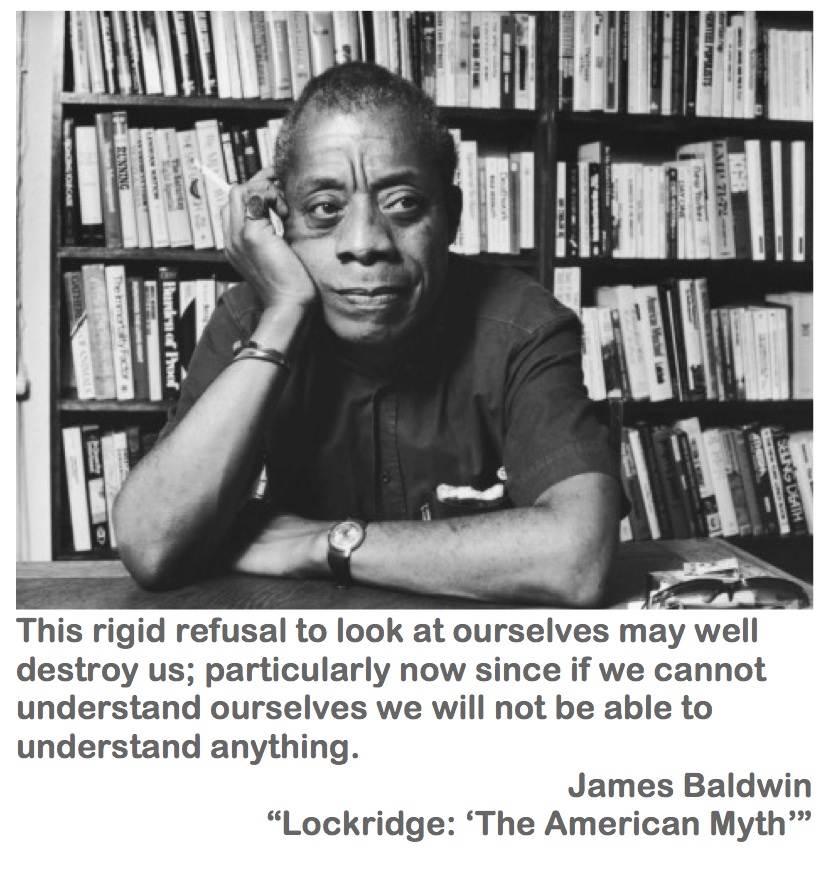
“The truth is…” James Baldwin


