
All posts by plthomasedd
The Psychological Basis for Creative Writing (1936)
Smagorinsky on Authentic Teacher Evaluation
At mid-nineteenth century, public schools were under attack by the Catholic church; Bishop John Hughes “described the public schools as a ‘dragon…devouring the hope of the country as well as religion'” (Jacoby, pp. 257-258). Throughout the twentieth century, the political and public messages were about the same: public education was a failure.
Ironically, the rhetorical math has never added up: U.S. prosperity and international competitiveness depend on world-class public schools + U.S. public schools are failures = the U.S. dominates the world economically and/or “U.S.A. is number 1!”
As the school accountability era began in the early 1980s, the “public school as failure” mantra began to focus on low-performing schools and underachievement by students—as the early wave of accountability focused primarily on schools (including school report cards for the public) and exit exams as well as increased high-stakes testing for students.
The twenty-first century has added to the accountability target a new focus on the “bad” teacher. As a result, teachers; educational historians, scholars, and researchers; and public school advocates have been forced into a corner, reduced to nearly a monolithic reactionary voice of rebuttal.
That position of reaction has drawn fire—charges of inappropriate tone, defense of the status quo, masked self-interest, and a failure to offer alternatives.
That last point is important, especially in the debate over teacher evaluation that has seen a rise in value-added methods (VAM) of teacher evaluation and a resurgence in merit pay policies despite both practices being at least tempered if not refuted by a growing body of research.
Peter Smagorinsky’s “Authentic Teacher Evaluation: A Two-Tiered Proposal for Formative and Summative Assessment” (English Education, 46(2), 165-185) offers an important place to acknowledge that the field of education, in fact, has numerous evidence-based alternatives to the reform agenda and highlight the reasons why those alternatives remain mostly absent from the public debate.
First, I highly recommend reading Smagorinsky’s entire piece, but that raises an important aspect about why evidence-based reform policies coming from educators, scholars, and researchers tend to carry little weight in the political and public debate about schools: high-quality, peer-reviewed scholarly work tends to be inaccessible except to fellow researchers and subscribers to relatively obscure journals.
Thus—as Smagorinsky notes himself in this essay about his increased public work as an academic—I want to touch on some of the most important points offered as an authentic alternative to teacher evaluation below.
Teacher Evaluation, Much More than What We Can Measure
Smagorinsky begins by noting the inherent failure of focusing heavily on measurable teaching and learning, an argument well supported by research but which appears to fall on deaf ears among politicians and the public.
Key in his proposal is refuting a false narrative, notably coming from Eric Hanushek, that teachers reject being held accountable. This is a powerful and important point that must be clearly understood.
The current approach to accountability in education includes holding teachers responsible for external mandates and teaching conditions that they have not created as well as measurable outcomes (student scores on high-stakes standardized tests) that are mostly out of their control (teacher impact on measurable student outcomes is about 10%, dwarfed by the influence of out-of-school factors, between about 60-80%).
As Smagorinsky notes, educators are rejecting that flawed approach to accountability and calling instead for professional accountability, which begins with teacher autonomy and includes holding teachers accountable for only that over which they have control (which is not measurable student outcomes).
If teacher evaluation policies, he explains, focused more on the conditions of teaching and learning—increasing the likelihood that both teachers and students can succeed—and less on punitive practices (such as firing the bottom X% based on VAM rankings, as Hanushek and Bill Gates have proposed), many of the goals for improved teacher quality and student achievement could be met.
Another key shift suggested by Smagorinsky is lessening significantly the amount of high-stakes testing (every 3-5 years, for example) included in teacher evaluations both as a recognition of the inordinate cost associated with testing (we rarely note that fully implemented VAM-like teacher evaluations would require pre-/post-tests of every student in every class taught in order to be fair and consistent among all teachers) and of the validity and reliability concerns that remain for VAM-based evaluations. This is a similar compromise to the one offered by Stephen Krashen, who has argued for not implementing Common Core and the so-called next-generation high-stakes tests, but to use the sampling process already in place with NAEP.
Teaching is a social activity within and for a community, and Smagorinsky envisions teacher evaluation that is more than a number, including a wide range of stakeholders. This point reminds me of the use of the SAT in college admissions. When discussing the weight of SAT scores with a dean of admissions, he pointed out that even when SAT scores are weighted less in admissions formulas, most of the other categories cancel each other out (as they are similar) and SAT, although a lower proportion in the formula, essentially remains the gatekeeping data point.
Any percentage of VAM, then, can prove to be powerful in teacher evaluations that are not aggressively nuanced and multi-faceted, including expanding the input of most if not all stakeholders in the teaching of children.
While much of Smagorinsky’s discussion includes the complex details that should be involved in teacher evaluations (and thus, I recommend reading his essay in its entirety), a few key points can serve to conclude this consideration:
- Teacher evaluations should be designed as “some form of mediated discussions, with artifacts from teaching serving as the basis of the conversation” (p. 171). Important here is a process that sets aside hierarchy for dialogue, seeks teacher growth instead of ranking and punishing, and builds a consensus on a rich body of evidence (artifacts) instead of reductive metrics.
- Teacher evaluations should address the entire spectrum of teacher influence, not restricted to classroom and content only. In short, Smagorinsky highlights that being a teacher is more than lessons presented to her/his students.
- Implicit in Smagorinsky’s discussion, I would add, is that teacher evaluation should not continue the assumption that teacher impact is solely between one teacher and one student. Learning results from the input of many people in a child’s life; teacher evaluations should acknowledge collaboration as well as individual competence and impact.
“I again return,” Smagorinsky notes toward the end, “to the idea that what matters is how well a teacher can justify an instructional approach and relate it to student work”—and I would add, demonstrated student need (p. 182). Teacher quality should not be about teachers fitting a prescribed mold, but about the professional efficacy of a teacher’s practices in the context of the field and students that the teacher teaches.
While I recommend Smagorinsky’s proposal because he emphasizes that “[t]eaching and learning are human pursuits” (and thus, likely unmeasurable in any meaningful way), I also want to stress that this essay is but one piece of evidence that the field of education already knows what to do.
Common Core, VAM-style teacher evaluation, and the entire array of education reform are ultimately misguided because they are commentaries based on flawed assumptions about the field of education.
Despite the education bashing that has occurred in the U.S. for over 100 years, we in fact know what to do—if only politicians, pundits, and bureaucrats could see fit to get out of the way and allow the opportunity to prove it.
Until that happens, we educators must begin to make our case for alternative to misguided reform, and in ways that are accessible to all stakeholders in public schools.
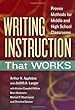
TCR: REVIEW: Writing Instruction That Works
Writing Instruction That Works: Proven Methods for Middle and High School Classrooms
reviewed by Paul Thomas — January 10, 2014
 Title: Writing Instruction That Works: Proven Methods for Middle and High School Classrooms
Author(s): Arthur N. Applebee & Judith A. Langer
Publisher: Teachers College Press, New York
ISBN: 0807754366, Pages: 216, Year: 2013
Search for book at Amazon.com
The Costs of Common Core?
Network for Public Education National Conference March 1-2, 2014, Austin TX
Rethinking “Creative” in the Common Core Era: “Let’s not tell them what to write”
In Has Common Core Lost the Plot? (posted at Anthony Cody’s Living in Dialogue), Paul Horton considers Common Core’s potential impact on literacy instruction—specifically the place for narrative fiction and creative writing:
A recent Stanford study has indicated that the number and complexity of words that a parent or guardian shares with a baby before eighteen months might partially determine the rate of a child’s acquisition of literacy in later years.
Perhaps more studies are needed to determine whether there is a similar bundled connection between exposure to narrative stories and creative writing and the development of social and emotional intelligence, empathy, tolerance, and sensitivity to the needs of others. To take things a step further, our codes of ethics, morality, and connection to the spiritual dimensions of experience have always been intertwined with our reading and writing about sacred texts, great poetry, and great literature.
Cody adds at the end of Horton’s piece:
What do you think? Should fiction and creative writing be sacrificed in schools to implement an untested Common Core Curriculum?
As well, while I remain a strong critic of CC and have posted a number of pieces explaining my concerns, Yong Zhao’s recent response to Marc Tucker captures well reasons to reject CC—but I want to focus on one point about creativity Zhao includes:
Very true, truly creative people know a lot and they have worked hard at learning it, but do they know a lot about what they are passionate about, or what the government wants them to know? Do they work hard at learning something that is personally meaningful, or do they work hard at learning something prescribed by others?
Should we be concerned about the fate of creativity under CC as Horton, Cody, and Zhao suggest?
I think that we should, but in a way that is grounded in how CC is likely to fail writing instruction (see HERE and HERE) and as an opportunity to reconsider how we use the term “creative.”
First, CC is not a unique assault on creativity; traditional practices, especially traditional writing practices, have always emphasized compliance over creativity—but I will concede that the entire standards era, including CC, has somewhat intensified how traditional practices limit creativity (especially because of the related high-stakes testing influence).
Now, let me explore creativity and its relationship to standards-based writing instruction through “The Psychological Basis for Creative Writing” by Lou LaBrant (1936).
LaBrant opens her discussion by confronting careless word usage among English teachers:
Although teachers of English should be an especially discriminating group when verbal products are concerned, unfortunately we have been as guilty as other educators in devising equivocal phrases and vague statements. We have talked about “tool writing,” “mechanics of reading,” “creative writing,” and “functional grammar.” We have suggested a knowledge as to where grammar ceases to be functional and becomes formal, although grammarians have assured us that all formal grammar is derived from speech. We have verbally separated good usage from grammar, reading skills from reading, and implied other such distinctions. “Creative writing” is probably another one of these vague inventions of our lips. (pp. 292-293)
These opening points lead to a powerful and, I fear, ignored redefining of “creative” by LaBrant related to student writing:
For in truth every new sentence is a creation, a very intricate and remarkable product. By the term “creative writing” we are, however, emphasizing the degree to which an individual has contributed his personal feeling or thinking to the sentence or paragraph. This emphasis has been necessary because too frequently the school has set up a series of directions, to this extent limiting what we may think of as the creative contribution: the teacher names the topic, determines the length of the paper, and even sometimes assigns the form. For the purposes of this paper I shall, perhaps arbitrarily, use the term “creative writing” to include only that written composition for which the writer has determined his own subject, the form in which he presents it, and the length of the product. (p. 293)
In other words, “creative” is traditionally used in writing to denote fiction or poetry compositions by students, but LaBrant argues for using the term to stress the importance of students being creative in all their writing as long as certain conditions are met: “that written composition for which the writer has determined his own subject, the form in which he presents it, and the length of the product.”
Students are being creative, then, according to LaBrant, when they are allowed their autonomy as writers, when they are given opportunities to make the sorts of decisions adult writers make instead of simply producing written text that fulfill the traditional paradigm: “the teacher names the topic, determines the length of the paper, and even sometimes assigns the form” (and during the standards era this occurs as a result of high-stakes accountability around those standards and correlating tests).
Anticipating her critics, LaBrant clarifies later in the piece:
Before continuing I should make it clear that in discussing creative writing and its basis in child need, I am not suggesting that this is the total writing program. There is no necessity for deciding that formal, carefully organized papers have no place in the high-school student’s writing; but neither is there need to conclude that the necessity for writing assigned and limited history papers precludes the possibility of creative work. In my own classes both needs are recognized. (p. 294)
That said, LaBrant offers in the following discussion why creative writing, as she defines it, remains important—a message I believe that should inform how we respond to points raised by Horton, Cody, and Zhao:
Creative writing provides an almost universally available outlet for creative energy….
Closely related to the point already made is the fact that free or creative writing has a social and a therapeutic value….
Free writing offers an ideal medium for the development of correct sentence structure, punctuation, and form….
Creative writing stimulates observation and understanding….
Creative writing also makes the pupil more conscious of values in literature. (emphasis in original omitted, pp. 294, 295, 297, 298, 299)
For LaBrant, her conception of creative writing demands more than traditional approaches from not only students, but also teachers:
The foregoing are the chief reasons I see for a program of creative writing. Such a program as here outlined is not easy to direct nor is it a thing to be accepted without careful thought. It demands a recognition of each pupil as an individual; a belief in the real force of creative, active intelligence; a willingness to accept pupil participation in the program planning. I have heard many teachers argue that, given a free hand, pupils will write very little. I can only say that has not been my observation nor my teaching experience…. (p. 299)
And with her own emphatic flair, LaBrant ends her piece: “Let’s not tell them what to write” (p. 301).
The standards era from the early 1980s and including adopting and implementing CC has eroded, if not erased, best practice in writing instruction—practices that had begun to fulfill what LaBrant envisions above. Teachers and students are currently mostly focused on raising test scores at the exclusion of creative writing; CC and the connected high-stakes tests are poised to continue that trend, not change it.
“Creative” as LaBrant defines it is important, and I believe we continue to ignore its importance as we rush to implement yet another set of standards destined to be reduced, again, to what is tested.
Reference
LaBrant, L. (1936, April). The psychological basis for creative writing. The English Journal, 25(4), 292-301.
Millions of Reasons to Reject CC in One Paragraph
Should Universities Reward Academics for Public Influence?
NOTE: Since I have already posted a few comments on the blog mentioned below, and since I have already received a couple responses to those comments, let me open with a caveat about my selfishness in this post: (1) I am not lobbying to be including in the ranking identified below, and (2) my selfishness is much larger than that as my central argument involves how I and all academics are evaluated within the university for our public work. Selfish? Yes, but likely not the way it appears on first blush; I use myself as an example because I have the data.
—–
When Rick Hess posted his annual ranking, The 2014 RHSU Edu-Scholar Public Influence Rankings, Jon Becker posted on Twitter:
“The 2014 RHSU Edu-Scholar Public Influence Rankings.” Once again, a fine idea poorly executed
On the blog post itself, DrSpector raised this concern:
I am a bit surprised to not find Dr. Peter McLaren on this list. He publishes extensively and is often featured in high-profile media events. Plus, his work is hugely [edit] influential.
I had already offered a comment, but when I spent some time with the published list and Hess’s identified system for creating the rankings, I noticed two things about the list: (1) If I use my google Scholar h-index (5) and my Klout score (62), just on those two categories alone, I would rank around 191 (but I am not included at all, and I would garner points in all of the identified categories), and (2) as DrSpector’s comment prompts, it appears not a single scholar/researcher on the list would fall under the classification of critical pedagogy (McLaren and I would).
So this leads me back to “fine idea poorly executed.”
Audrey Watters has already done an excellent job addressing that concern in her On Listing Education Innovators and Intellectuals—in which she concludes:
Frankly, I think all 3 of these lists – Byers’ list, Forbes’ list, Hess’s list – are connected to this machinery.
The machinery of privilege and exploitation. Insults to our intelligence. The right of false naming. Gestures of obliviousnesses. Genuflections to financial and political power. Disdain towards marginalized voices. The erasure of progressive activism. A wishful denial of progressive change.
And thus, I have a modest proposal (not satire despite that terminology, I promise) about how to salvage such endeavors because I strongly agree with Hess’s stated intent: Universities must move beyond rewarding only narrow parameters for what counts as “scholarship,” notably acknowledging and rewarding public work by university-based scholars and academics (what is traditionally called public intellectual work.)
And here is my selfish confession since I have decided that although I continue to publish scholarly books and journal articles in peer-reviewed and prestigious journals as well as maintaining a strong association with my appropriate fields in the academic world, I argue that my public work is far more important, it reaches a much wider and diverse audience, and it is more likely to result in action when compared to my traditional scholarship. In short, as a scholarly good within and for my university and its academic community, my public work is in fact far more valuable than my traditional scholarship.
I am not on Hess’s list (and am not lobbying to be) for a couple possible reasons: (1) I (and many other academics) was simply overlooked, or (2) I was considered but not deemed a “researcher” (both possibilities are examined, again, extremely well by Watters).
And thus, “fine idea poorly executed” because as Watters explains, mechanisms used to identify and evaluate quality of voice and influence within any context are prone to perpetuating a status quo that includes some unfairly being ignored, marginalized, silenced.
Here, then, are two suggestions for executing well a fine idea:
- Create an online calculator that allows all academics, scholars, and researchers to input their data and generate a score in order to facilitate their own efforts at their universities to garner greater awareness and credit for their public work. Since I believe Hess and agree with Hess about the need for this to happen, an on-line calculator would serve that goal much better than the current ranking and insular process. (And as another note, I am not being overly critical of Hess and his post as I also think he has taken on a herculean task that can only have weaknesses. If he hadn’t attempted these rankings, we’d not even have a chance for this discussion.)
- And then, drop the urge to rank and instead create a rubric that allows for scores to fall into a series of categories, such as “High Influence,” “Moderate Influence,” “Emerging Influence,” etc.
Hess’s effort to identify and rank edu-scholars is an ideal opportunity to put our foot more firmly in the door opening between traditional university-based scholarship and the brave new world of social media. I’m eager to start pushing a bit harder in order to not only open that door but also take it off the hinges.
 dr. p.l. (paul) thomas