All posts by plthomasedd

P. L. Thomas, Professor of Education (Furman University, Greenville SC), taught high school English in rural South Carolina before moving to teacher education. He is a former column editor for English Journal (National Council of Teachers of English), current series editor for Critical Literacy Teaching Series: Challenging Authors and Genres (Brill), and author of Teaching Writing as Journey, Not Destination: Essays Exploring What ‘Teaching Writing’ Means (IAP, 2019) and How to End the Reading War and Serve the Literacy Needs of All Students: A Primer for Parents, Policy Makers, and People Who Care (IAP, in press). NCTE named Thomas the 2013 George Orwell Award winner. He co-edited the award-winning (Divergent Book Award for Excellence in 21st Century Literacies Research) volume Critical Media Literacy and Fake News in Post-Truth America (Brill, 2018). Follow his work @plthomasEdD and the becoming radical (https://radicalscholarship.wordpress.com/).

Our Dystopia Is Now: The Circle (Eggers) and Feed (Anderson)

For twenty-first century readers and students, George Orwell’s dystopian novel 1984 poses, I think, a temporal paradox.

1984, George Orwell

Orwell’s “other world” appears simultaneously a horrifying totalitarian future possibility for humanity as well as a technological mutt of what someone in the past speculated about the future (consider the pneumatic tubes).

As I read The Circle by Dave Eggers, I began to imagine that my experience with this novel published and read in 2013 was repeating what readers during the late 1940s and early 1950s (especially British readers) may have felt turning the pages of Orwell’s Big Brother nightmare, a Kafkan dark satire of their lived England.

The Circle, Dave Eggers

My reading experience with The Circle has at least two problematic elements.

First, I read about a third of the novel before I lost interest and picked up Feed by M.T. Anderson, which I read completely before returning to and finishing The Circle.
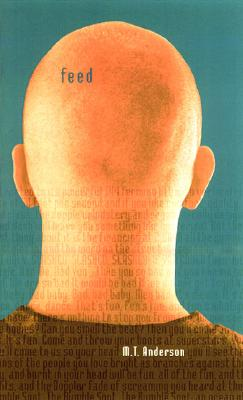
And second, I never felt fully engaged with The Circle because I couldn’t shake the feeling that the novel details that our dystopia is now.

Both The Circle and Feed provide readers with a genre carnival of sorts—dystopia fiction, young adult fiction, science fiction, and speculative fiction. But I struggled with The Circle in ways that I did not with Feed, despite my usual measured disappointment with many young adult novels.

Since Adam Bessie has explored the importance of Feed, especially as it informs education reform, I want to examine more closely The Circle in the context of Feed as well as my struggles to engage fully with Eggers’s important novel.

Just past the middle of The Circle, I began to see that Eggers’s dystopia is a contemporary 1984. When the main character, Mae, serves the will of the Circle by producing three slogan (Secrets Are Lies, Sharing Is Caring, Privacy Is Theft), Orwell’s “War Is Peace, Freedom Is Slavery, Ignorance Is Strength” echoed in my mind’s ear.

I feel compelled to place The Circle, then, within a dystopian tradition including 1984 and Margaret Atwood’s The Handmaid’s Tale—speculative works that weave contemporary social satire (albeit very dark satire) with imaginative logical extensions of what if that holds up one possible future for humankind. [1]

The Handmaid’s Tale, Margaret Atwood

While The Circle reminds me of 1984 and The Handmaid’s Tale [2]—including the slogans above alluding to 1984 and elements of zealotry along with totalitarianism’s dependency on currency manipulation (Atwood’s prescience about debit cards) shared with The Handmaid’s Tale—Eggers’s other world is not removed nearly as far from the reader as in Orwell’s and Atwood’s novels.

Since I use and know a great deal about google, Twitter, and Facebook, the Circle as a speculative logical extension of our real-world social media feels less speculative than our dystopia is now.

For the privileged in 2013—and those on the edge of privilege wanting in—smartphones, tablets, and computers connected through the Internet have blurred almost every aspect of the human condition—social with professional, entertainment with commerce, etc.

We don’t flinch when google completes our typing as we search the web or when gmail reads our emails in order to push product banners. We reduce our conversations to 140 letters with glee and among hundreds, even thousands of people we have never met in person. We retweet, favorite, and like (verbing all the way) while double posting on Twitter and Facebook—even clicking “like” under a Facebook post about the death of a dog, or a grandmother.

So when Eggers introduces the more fantastical elements of the novel, and there are some, I remained fixated on my lack of compassion for Mae and my inability to shake the feeling that Eggers is simply cataloguing the world the privileged have created, the lived world of the privileged in 2013. (I must add that The Circle and Feed focus on main characters who are compliant “insiders” of the dystopia, and both have sacrificial radical characters. I found Mae in The Circle really hard to embrace, but did feel compelled by Titus in Feed. I had the same bland response to the radical in The Circle, while caring deeply for Feed‘s Violet, my favorite character of the two novels.)

So far, I suspect, my view of The Circle may feel like less than a ringing endorsement; however, I do believe The Circle is a 1984 for our time, an important and insightful work. Let me, then, offer a few reasons why.

At its essence, The Circle is the fictionalizing of concepts explored in Michel Foucault and Gilles Deleuze: surveillance, “infinite examination,” “societies of control.” While Foucault and Deleuze are inaccessible in many ways for the general public, Eggers’s other world, even as close as it is to now, is stark in its clarity. At times, The Circle reads with the same sort of dispassionate camera feel that Ernest Hemingway uses in “Hills Like White Elephants.” In both works, there lies the danger that readers will fail to confront what has been placed before them—that the dispassion will read as endorsement or at least could be embraced by the readers.

While true of any artwork, Eggers allows readers to close The Circle in much the same mindset as Mae (Book III is a mere three-pages long in its twist-style ending).

As with Feed, The Circle also speaks directly to education reform, particularly as that overlaps with our current era of mass incarceration (see Education Reform in the New Jim Crow Era):

  • With fervor, the possibility of the Circle’s role in education is championed—and the discussion sounds eerily close to home:

“That’s the idea,” Jackie said. “…[S]oon we’ll be able to know at any given moment where our sons and daughters stand against the rest of American students, and then against the world’s students.”

“That sounds very helpful,” Mae said. “And would eliminate a lot of doubt and stress out there.”…  “And it’ll be updated how often?”

“Oh, daily. Once we get full participation from all schools and districts, we’ll be able to keep daily rankings, with every test, every pop quiz incorporated instantly. And of course these can be broken up between public and private, regional, and the rankings can be merged, weighted, and analyzed to see trends among various other factors—socioeconomic, race, ethnicity, everything.” (p. 341)

  • In possibly the most disturbing section of the novel, the Circle is characterized as a potential law enforcement tool that can erase crime and racial profiling, by color-coding everyone on the ubiquitous monitors invented by the Circle: “The three men you see in orange and red are repeat offenders” (p. 418). This plan, however, works under the assumption that previous arrests are fair, themselves not the result of race or class bias.

In the end, The Circle is a warning shot about the end of privacy, universal surveillance. If readers feel uncomfortable while reading with their smartphone dinging nearby, it is likely because our dystopia is now, and The Circle is a nearly 500-page pamphlet saying, Welcome to the Machine:

[1] I highly recommend Atwood’s essays—”Writing Utopia” and “George Orwell: Some Personal Connections”—in Writing with Intent and In Other Worlds for Atwood’s brilliant confrontations of science fiction and speculative fiction genre(s). See also Science Fiction and Speculative Fiction: Challenging Genres.

[2] I wonder what the fascination is with red covers and dystopian literature…

Fahrenheit 451, Ray Bradbury

Two-Headed Dragon of Education Policy

Recently, I posted a chart highlighting that current “No Excuses” Reform (NER) claims and policies are no different than traditional problems and policies in public education.*

The great ironies of NER include that NER perpetuates the inequities of society and the current education system and that NER does not seek a reformed and revolutionary public education system but a dismantling of public schools for private interests (See RavitchFlanagan, and Cody).

The problem in education reform parallels the problem in our two-party system: While the competing ideologies and policies have successfully masked their being different sides of the same corporate coin, the many and varied alternatives outside the either/or norm remain hidden and silenced.

Part of the success of NER, historically (before such a phrase as “no excuses” was in vogue) and currently, lies in falsely positioning progressive education as widely implemented and failed (see Kohn) and falsely positioning status quo policies as “reform.”

So let me offer another chart I use with my introductory education course that builds on the parallels (and minor differences) between traditional and progressive agendas** while including a critical alternative to the two-party education reform agenda. This chart examines the need to change theoretical and philosophical assumptions about a wide range of aspects in teaching, learning, and public education if our reform agendas seek to revitalize a public good (universal public education) for goals that include democracy, equity, and agency:
 
 
[Traditional Practices]
[Progressive Suggestions]
[Critical Lens]
 
Behaviorism
Constructivism
Critical Pedagogy
Role of TEACHER
Authoritarian
Facilitator/ Mentor (Coach)
Authoritative (teacher-student)
Role of STUDENT
Receptive (passive)
Active
Empowered (student-teacher)
Role of CONTENT (ends v. means)
Ends (goal)
Means
Means
Nature of REASONING (inductive v. deductive)
Instructional decisions = Deductive
Instructional decisions = Inductive
Not primary over affect;
Instructional decisions = Inductive
Assumptions about student thinking/ learning
Analytical (part to whole)
Global (whole to part)
To be monitored by teacher and learner
Responsibility for learning
Primarily the teacher
Primarily the student
Teacher-student/ Student-teacher
Central source of CURRICULUM
Traditions of the field
Student needs and interests
Discovered and defined during process
Nature of ASSESSMENT
Selected response/ serves to label and sort
Created response/ performances
Authentic/ integral part of learning
Nature of learning conditions (individual v. social)
Individual
Social
Social
Nature of QUESTIONS (open-ended v. closed)
Closed
Open-ended
Open-ended (confrontational)
Attitude toward ERROR
Must be avoided
Natural and even necessary element of learning
Sees “error” label as dehumanizing and oppressive; function of normalization
Assumptions about MOTIVATION (intrinsic v. extrinsic)
Extrinsic
Intrinsic
To be monitored by teacher and learner
Role of psychology (behavioral v. cognitive)
Behavioral
Cognitive
Postformalism (Kincheloe)
Names associated with theory
Pavlov, Skinner, Thorndike, Watson
Piaget, Dewey, Vygotsky
Freire, hooks, Vygotsky, Giroux, Kincheloe, Apple
Attitude toward standardization
Appropriate goal
Flawed expectation
Dehumanizing
Goal of instruction (answers v. questions)
Answers (correctness)
Questions (possibilities)
Questions that confront norms, assumptions
Perception of the nature of the mind
Blank slate
Jungian (Collective Unconscious)
Cognitive and affective both valued, evolving
Nature of Truth/truth
Truth (absolute)
truth (relative)
Truths as normalized assumptions (oppressive)

NER narratives argue that school-based reform alone can somehow revolutionize U.S. society, that social inequity can be overcome by the force of public education.

That narrative is false on two fronts: (1) We have no evidence public schools have ever been revolutionary (see Traub), (2) because public schools traditionally and currently have reflected and perpetuated the inequitable norms of the society they serve.

The privileged will never lead the revolution because the privileged benefit from the status quo.

*Originally published at Daily Kos (November 4, 2012) as Two-Headed Dragon of Education Policy.

**See the problem that traditional/progressive posturing creates—ignoring a truly critical pose: Who’s the Real Progressive?

VAMboozled by Empty-Suit Leadership in SC

Rep. Andy Patrick, R-Hilton Head Island (SC), has made two flawed claims recently, one about leadership and another about teacher evaluation (“S.C. lawmaker proposes teacher evaluation plan,” Charleston Post and Courier, December 10, 2013).*

First, and briefly, Patrick asserts that SC needs leadership for superintendent of education, discounting the importance of experience or expertise. As I will address below, Patrick’s lack of experience and expertise is, ironically, evidence that leadership is not enough. In fact, leadership begins with experience and expertise; it doesn’t replace those essential qualities.

Next, and more importantly, Patrick’s and current Superintendent Mick Zais’s pursuit of test-based teacher evaluation reform is deeply flawed and discredited by research on value added methods (VAM) of evaluating teachers.

Endorsing VAM-heavy teacher evaluation joins grade retention, charter schools, and Common Core as a series of policy decisions in SC that are countered by the research base—resulting in a tremendous waste of time and funding that should be better spent for our students and our state.

For example, Edward H. Haertel’s Reliability and validity of inferences about teachers based on student test scores (ETS, 2013) now offers yet another analysis that details how VAM fails, again, as a credible policy initiative. Haertel’s analysis offers the following:

  • First, Haertel addresses the popular and misguided perception that teacher quality is a primary influence on measurable student outcomes. As many researchers have detailed, teachers account for about 10% of student test scores. While teacher quality matters, access to experienced and certified teachers as well as addressing out-of-school factors dwarf narrow measurements of teacher quality.
  • Next, Haertel confronts the myth of the top quintile teachers, outlining three reasons that arguments about those so-called “top” teachers’ impact are exaggerated.
  • Haertel also acknowledges the inherent problems with test scores and what VAM advocates claim they measure—specifically that standardized tests create a “bias against those teachers working with the lowest- performing or the highest performing classes” (p. 8).
  • The next two sections detail the logic behind VAM as well as the statistical assumptions in which VAM is grounded, laying the basis for Haertel’s main assertion about using VAM in high-stakes teacher evaluations.
  • The main section of the report reaches a powerful conclusion that matches the current body of research on VAM:

These 5 conditions would be tough to meet, but regardless of the challenge, if teacher value-added scores cannot be shown to be valid for a given purpose, then they should not be used for that purpose.

So, in conclusion, VAM may have a modest place in teacher evaluation systems, but only as an adjunct to other information, used in a context where teachers and principals have genuine autonomy in their decisions about using and interpreting teacher effectiveness estimates in local contexts. (p. 25)

  • In the last brief section, Haertel outlines a short call for teacher evaluations grounded in three evidence-based “common features”:

First, they attend to what teachers actually do — someone with training looks directly at classroom practice or at records of classroom practice such as teaching portfolios. Second, they are grounded in the substantial research literature, refined over decades of research, that specifies effective teaching practices….Third, because sound teacher evaluation systems examine what teachers actually do in the light of best practices, they provide constructive feedback to enable improvement. (p. 26)

Haertel’s concession that VAM has a “modest” place in teacher evaluation is no ringing endorsement, but it certainly refutes the primary—and expensive—role that VAM is playing in proposals to reform teacher evaluation in SC and across the U.S.

Would SC benefit from focusing on teacher quality—as well as insuring all children have equitable access to experienced and certified teachers? Absolutely.

But current calls by leaders with no experience or expertise in education are failing that possibility by rushing to implement policy that is contradicted by a growing body of research discounting the value of VAM as a key element of teacher evaluation.

SC students, teachers, and schools cannot afford doubling-down on a failed test-based education culture, and certainly, SC cannot afford more leadership without expertise, which is what Representative Patrick is offering.

* Submitted to and unpublished in, so far, Charleston Post and Courier.

Please see VAMboozled web site for research refuting VAM.

GUEST POST: Literature, Young Adult Fiction, and the Common Core, Lauren Girouard

Lauren Girouard is a student in my first year seminar (writing intensive). Lauren is an avid reader—a Neil Gaiman fan—and when she chose to write about Common Core, I asked her permission to post this as a rare voice of a student. I hope you enjoy this fine essay by a student who has come to love reading in the way we often claim we are seeking.

Literature, Young Adult Fiction, and the Common Core

Lauren Girouard

I have never been one to appreciate the adage that “we are what we read.” Undoubtedly, we are informed by what we read, we can learn from and be inspired by our choice in reading material, but are we really what we read?

Literature certainly has the ability to ignite our passions and spark our imaginations. As a child, I adored C.S. Lewis’ The Chronicles of Narnia, and while I was far too young to understand the deeper meaning behind the words I was reading, all I knew was that the world he created was beautiful. As I grew older, I was fortunate enough to have an English teacher who, while he taught all the literary standards inside the classroom, dispensed booklists of young adult fiction we should read to better appreciate the beauty and value of the written word in our lives. From a young age, I viewed literature as a beautiful notion to place on a pedestal and adore. Unfortunately, many students are not so fortunate and they struggle to achieve that same love for literature.

Goodreads, a social networking site based on sharing and categorizing literature, serves as an organizational tool for avid readers, English teachers, and authors, and features lists of books that have been frequently organized into the same category. Goodreads’ list of Popular High School Literature Books is very starkly contrasted with Goodreads’s list of Popular Young Adult Fiction Books, suggesting a widening gap between what adolescents must read in school and what they consider enjoyable literature. This disconnect between the texts most often read in a classroom setting and the books students choose to read in their free time would not be concerning if the works selected for the classroom were truly superior examples of how students should write or offered deeper insight than that offered by popular young adult fiction. However, recent findings and a blossoming in the field of adolescent literature suggests that the disparity between what young adults want to read and what they read as a part of their curriculum need not be so large.

Some will always adhere staunchly to the classics. The Argumentative Old Git suggests that literature must be taken much more seriously, that we even go so far as to diminish literature as a subject when we allow students to select their own reading material. The idea that adolescents should not be responsible for their own curriculum in the English classroom is spawned from the notion that serious literature, that is to say what is commonly accepted as classroom literature, will make students feel that literature is a graver, more important subject. Yet a recent article in “The Telegraph” suggests that students are less well-versed in literature than they used to be because they are dropping the core subject in favor of lighter fare. This runs in direct contrast to the arguments of The Argumentative Old Git and those like him who continue to fight for a curriculum rooted solidly in the literature that has become canon for high school teachers.

While Great Britain struggles to work out whether literature should be taught at all, the United States system of education is embroiled in a feud over Common Core, which would shift the study of reading in high school even further away from fiction and certainly from young adult fiction, and focus more squarely on informative texts. The program has been widely instituted, as this map from their official website shows:

Untitled

While some would prefer to make the debate over these new standards political, even going so far as to substitute Common Core for Obamacore, others are more willing to consider the pros and cons of such a program more fairly, even when they come to the same conclusion: the program is detrimental for most literature in the public education system. Common Core simply cannot seem to win on any front, even when it tries to introduce “The Hobbit” as a piece of fiction suitable for classroom reading.

If it is abundantly apparent to many that these Common Core standards, which stifle a teacher’s ability to select their own literature or allow their students to have a voice in the standard curriculum, are harmful to schools, why then do so many still insist upon keeping such a wide range of young adult literature out of the classroom? The American Library Association seems to wonder as well, going so far as to tout the literature most frequently banned in the classroom each year. The comparison of these lists to the Goodreads lists above reveal that far more Young Adult Fiction is being banned than the tried and true literary standards that so many have become comfortable with.

Some teachers continue to fight against regulated reading standards that stifle the freedom of students to choose what they read. In radical steps, some like teacher Lorrie McNeill are implementing a new reading workshop strategy where children pick their own titles for discussion in the classroom. These attempts to combine education and pleasure have not gone unnoticed, but the continued implementation of Common Core standards suggest that these methods are simply not accepted in as wide a context as would be necessary to put choice of literature in the hands of the students.

Despite the backlash against Common Core standards and curriculum, there seems to be relatively few voices championing teacher and student choice in crafting an educational list of literature for use in the classroom each year. No wonder students are increasingly opposed to even taking an additional English class, when popular young adult fiction is being stifled, whether by petitioning parents or government regulation.

Faith-Based Education Reform: Common Core as Standards-and-Testing Redux

Let’s start with irony:

Compelling research suggests that the public in the U.S. is unique in its commitment to belief, often at the expense of evidence—leading me to identify the U.S. as a belief culture.

Additionally, while I remain convinced that the U.S. is a belief culture, I also argue that, below, the political cartoon posted at Truthout captures another important dynamic: Many committed to their own beliefs both do not recognize that they are committed to belief and belittle others for being committed to their beliefs:

By Clay Bennett, Washington Post Writers Group | Political Cartoon

And this brings me to advocacy for Common Core standards, with one additional point: Along with embracing belief over evidence, the public (along with political leadership) in the U.S. tends to lack historical context.

Placed in the century-plus commitment to pursuing new and supposedly higher standards for public schools, then, Common Core advocacy falls into only two possible characterizations:

  1. Common Core is a response to the historical failure of all the many standards movements that have come before, and thus, the success of CC depends on CC being somehow a different and better implementation of an accountability/standards/testing paradigm.
  2. CC advocacy is yet another example of finding oneself in a hole and persisting with digging despite evidence to the contrary. In other words, CC may well be yet another commitment to a reform paradigm that isn’t appropriate regardless of how it is implemented, as John Thompson details in his review of The Allure of Order:

Jal Mehta’s masterpiece, The Allure of Order, answers the question, “Why have American [school] reformers repeatedly invested such high hopes in these instruments of control despite their track record of mixed results?” He starts with the review of how the bloom fell off the NCLB rose, explaining why its results in the toughest schools have been “miserable.” In the highest poverty schools the predictable result has been “rampant teaching to the test” which has robbed children of the opportunity to be taught in an engaging manner.

Mehta explains that this “outcome might have been surprising if it were the first time policymakers tried to use standards, tests, and accountability to remake schooling from above.” The contemporary test-driven reform movement is the third time that reformers have used the “alluring but ultimately failing brew” of top down accountability to “rationalize” schools and, again, they failed [emphasis added].

These two claims are themselves evidence-based (and it will be interesting to watch as others respond, as they have to my previous work on CC, by either ignoring evidence or garbling evidence to support what proves to be faith-based commitments to CC), and thus should provide a foundation upon which to continue the debate about CC.

CC advocacy and criticism are often based on false narratives and baseless claims (see Anthony Cody for one example of this problem and Ken Libby‘s [@kenmlibby] cataloguing on Twitter #corespiracy)—again reinforcing the pervasive and corrosive consequences of faith-based, but not evidence-based debates.

Instead, we should start with an evidence-based recognition about standards-driven education reform.

For example, the existence and/or quality of standards are not positively correlated with NAEP or international benchmark test data—leading Mathis (2012) to conclude about CC: “As the absence or presence of rigorous or national standards says nothing about equity, educational quality, or the provision of adequate educational services, there is no reason to expect CCSS or any other standards initiative to be an effective educational reform by itself [emphasis in original]” (p. 2 of 5).

Therefore, CC advocacy has some principles within which it should continue if that advocacy is to be credible and thus effective:

  • Claims that CC advocacy is separate (and can be separated) from high-stakes testing must show evidence of when standards have been implemented without high-stakes tests (and how that was effective) or evidence of some state implementing CC without high-stakes tests connected. Otherwise, this is a faith-based claim.
  • Claims that accountability built on standards and high-stakes testing is an effective education reform strategy must show evidence of how that has worked in the previous state-based accountability era and then explain why those examples of success must now be replaced by the new CC set of standards. Otherwise, this is a faith-based claim.
  • CC advocacy has been endorsed as a logical next step built on the call in NCLB for scientifically based education reform; thus, CC advocates must either comply with the two points above or concede that the CC era is a break from evidence-based reform.

I am no advocate for remaining only within rational, evidence-based, and quantifiable norms for decision making, by the way, but I am convinced we must make clear distinctions between evidence and belief—and I am equally convinced that many education reformers enjoy a flawed freedom to call for evidence from their detractors while practicing faith-based reform themselves.

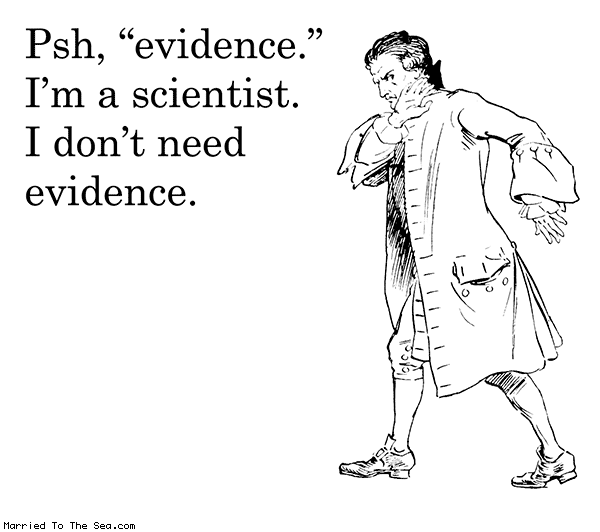
It is the hypocrisy that bothers me, the hypocrisy of power:

scientist evidence – Married to the Sea

Let’s acknowledge that teachers currently work under the demand of measurable evidence of their impact on students while CC advocates impose faith-based policies such as CC, new generation high-stakes testing, merit pay, charter schools, value-added methods of teacher evaluation, and a growing list of commitments to education reform at least challenged if not refuted by evidence.

CC advocates now bear the burden of either offering the evidence identified above or admitting they are practicing faith-based education reform.

In Memory: Sandy Hook Elementary, One Year After

I fear that we have become either callous or numb—either is a tragic consequence of mass shootings, even those at schools, becoming commonplace.

Here, I invite you to read from a group of pieces I wrote after and about the mass school shooting at Sandy Hook Elementary in Newtown, CT, one year ago, December 14, 2012:

“They’re All Our Children” (AlterNet)

  • Alongside discussions of mental health and gun control, we must use the lessons of Sandy Hook to reframe the debate around education reform.

Remembering Sandy Hook: Protecting Guns, Sacrificing (Some) Children

Misreading the Right to Bear Arms (AlterNet)

  • Confronting gun ownership is an argument about violence — not about autonomy and freedom.