

the universe reminds me of you
or do i simply see you in everything
that is how my mind works
working always back to you
•
sometimes i don’t know what to do
with my hands when we are apart
fingers stiff with age and overuse
reaching for you under covers
•
there scrawled in concrete your initials
sending my mind working and reaching
i clench my hands feeling the tightness
of knuckles and the loneliness of fingertips
•
you do not have to lie there
your arm extended across my chest
but when you turn to me under covers
i am there waiting and longing to be
•
the universe reminds me of you
or do i simply see you in everything
that is how my mind works
working always back to you
—P.L. Thomas
All posts by plthomasedd
Simplistic View of Reading Fails Children, Reading, and Science
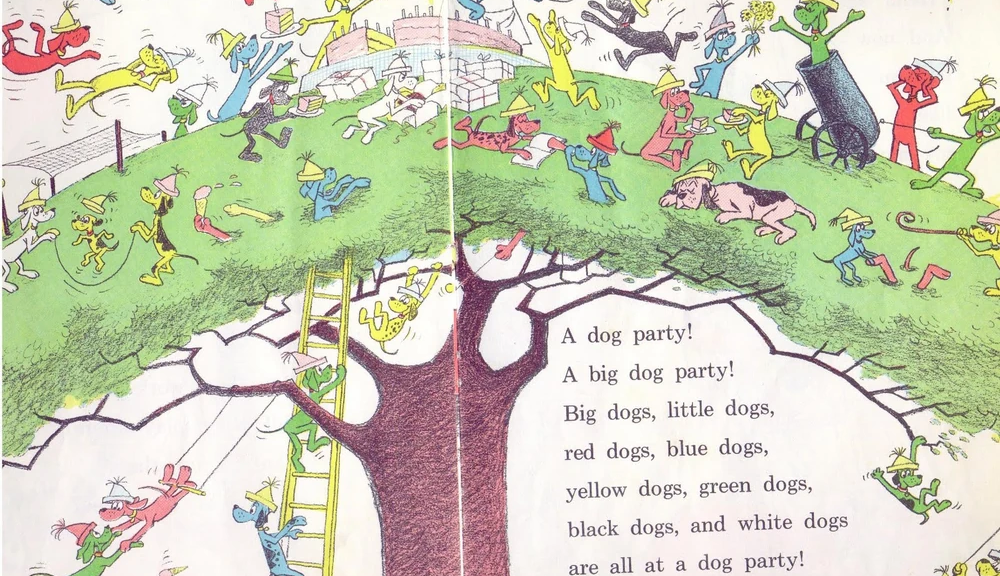
In 1967, I entered formal schooling as a first grader reading well above so-called grade level. I am 62, and I can vividly recall the books that my mother read to me and my sister—Hop on Pop, One fish two fish red fish blue fish, Green Eggs and Ham, and Go, Dog. Go!
And when I say “recall,” I mean I can see the books, the colors and images decades and decades later.
I fell in love with these books, and reading, well before I could navigate letters and words; in fact, my journey to navigating text began with falling in love with the physical books and the images.
There is a very solid line from those days in early childhood before school and my adolescent fascination with comic books that remains to this day. I continue to read whole issues of comics without ever noticing a word.
So I was filled with a particular sadness and even anger when I saw the following on Twitter:
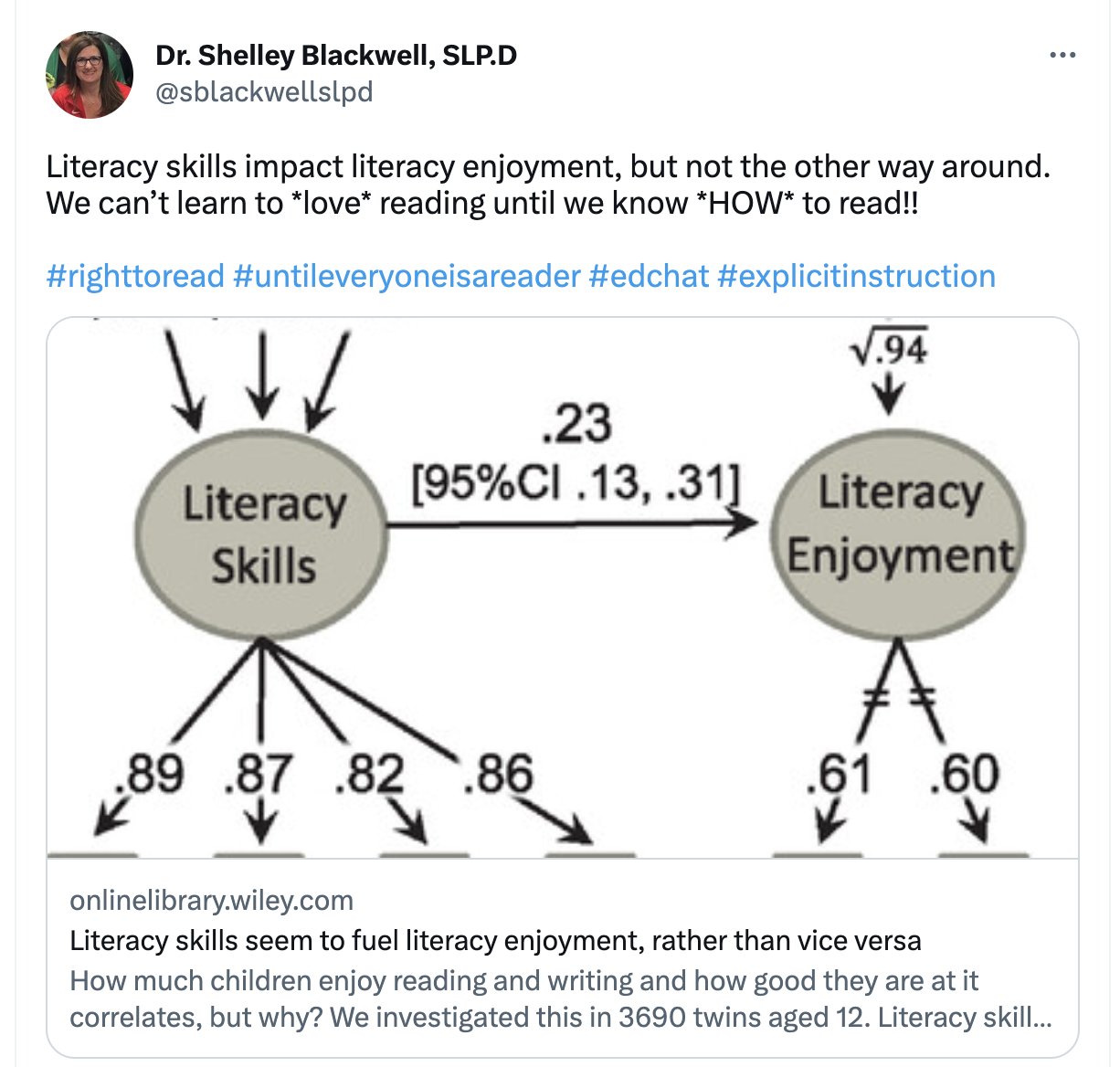
This is maddeningly untrue about how and why children fall in love with reading, but it serves one of the central agendas of the “science of reading” movement—perpetuating a simplistic sequential view of reading that is skills-based and serves a systematic program of reading.
The SOR movement stands on a reductive claim that the science of reading is both simple and settled.
Neither is true.
More and more, elected officials are banning reading instruction practices and mandating a limited pool of reading programs schools can adopt and implement.
These natural consequences of media claiming reading science is simple and settled do not serve the needs of children or the goal of reading, but do serve political and marketing agendas.
Looking back, I am well aware that I often overcame my working-class roots because my household had plentiful picture books, a routine of reading aloud, and a culture of storytelling (my very not literary father loved to tell stories over and over).
Most of this for my sister and me fostered a love for reading and was not text-based. Our desire to read text was fueled by our love for our parents and reading—as is likely common among many children fortunate enough to have the advantages of our household.
Yes, the letter-sound-meaning dynamic is a key part of reading, but that is not primary to reading and certainly is not necessary seed of learning.
The SOR movement has evolved from misrepresenting reading science as simple and settled to reducing reading to simplistic platitudes about reading that are in no way supported by science or experience.
The cultural and ideological demonizing of whole language has also erased a key element of the holistic understanding of reading, and allowed a mechanical view of reading (and children) to feed a market for scripted programs and efficient ways to systematically assure that children will learn to hate reading and hate the schooling that ruined books for them.

Neanderthal Academia Reanimated!
In 2002, I left my career as a high school English teacher for 18 years and entered higher education full time.
I genuinely loved teaching high school, specifically teaching teenagers. But that part of my career had significant personal costs because I was always an extreme outlier in terms of ideologies among my peers.
Faculty were overwhelmingly religious and most of my colleagues voted Republican (this was South Carolina in the 1980s and 1990s).
As I entered higher education, I must admit now, I had an idealistic view of academia that was shaped by the standard view that colleges and professors are liberal.
However, once in the halls of academia, I recognized that once again I was an outlier.
Higher education is populated by performative progressivism; yes, many if not most professors are moderate to progressive on social issues.
But in their professional roles, college professors are overwhelmingly conservative and traditional. The normative culture of higher education is firmly conservative.
Also, despite what the public thinks, many professors are ideologically conservative about teaching and knowledge and conduct their classes and research in highly conservative ways because those traditional norms are expected and rewarded.
How should a professor teach? With an objective pose that simply exposes students to a wide range of (normative) perspectives.
How should a professor conduct research? Experimental/quasi-experimental studies are by far the most rewarded, quantitative and objective.
Should a professor conduct public work or activism? Not no, but hell no.
Professors that conform to and perpetuate the most conservative views on disciplinary content (seminal works, classic thinkers, essential knowledge), the most conservative research (scientific), and the most conservative teaching practices (objective, not political) have the easiest paths to full professor and also have the highest prestige in the university, holding key chair positions on the committees that drive the university—Faculty Status, Curriculum, etc.
“Conservative” is grounded in having normal established and endorsed; the entire basis of scientific research is normative, finding generalizable conclusions from randomized data.
The implication is always that normal is right, and being outside that norm, abnormal, is wrong.
Of course, the key problem with generalizable research is that it excludes outliers, perpetuating the idea that everyone, even those outliers, should conform to that norm.
The marginalized (lesser status) approach to research is descriptive, qualitative, and allows there to be value is simply exploring one event or person. The non-normative approach to research is open to possibilities that what has been scientifically determined to be “normal” may in fact not be right (or even true beyond a scientific truth), at least for some.
Research and science helped create the norm, for example, that humans are sexually straight and that gender is binary. That sexuality and gender may be fluid, and that we are considering that because of the life stories of individual people, challenges not only our norms about sex and gender, but our scientific norms.
Science has proven the superiority of races, the frailty of women, and even designated homosexuality as a mental illness.
To think that the scientific norm of higher education isn’t conservative takes a great deal of mental gymnastics.
We are currently witnessing how any challenge to what has been determined as normal, especially under the guise of science, is viewed in melodramatic ways.
As a cultural example, despite the US overwhelmingly being Christian, Christians often claim to be oppressed, notably each season fighting a manufactured War on Christmas.
Somehow uttering “happy holidays” threatens the very fabric of the largest cultural holiday in the US celebrated by the overwhelming majority, Christians, while non-Christians are compelled to join in with the ubiquitous acknowledgement of Christmas from Halloween through the New Year.
The much protesting we are seeing from conservative academics is exactly like the performative crisis espoused by Christians each Christmas holiday season.
Academia is extremely conservative—scientific research, objective teaching, authorized disciplinary knowledge—and that conservative norm has allowed for many decades mediocre people (mostly white, mostly men) to thrive and even excel.
And yet, Neanderthal academia has been reanimated (not revived, because it never died).
Conservative academics are shouting that they have been canceled.
Conservative academics bemoan their university’s “woke” curriculum.
Conservative academics cry that they are being threatened by “woke mobs” of students.
This, you see, is all theater, melodrama, by people who are not really relevant and are fighting desperately to be relevant in a world continuing to question what is normal
In fact, the fight against woke agendas is clearly a manufactured drama in which these Neanderthal academics have cast themselves in leading roles with predictable lines:
“Marketplace of ideas!”
“Scientific!”
“Objectivity!”
“Classic!”
“Seminal texts!”
It is genuinely embarrassing when people with the most power shed so many tears into the chilling effect of their histrionics that the result is a blizzard that will soon leaves us all snow blind.
I have spent 39 years as an extreme ideological minority within my profession, and frankly, most situations of my life. Yet, you will not see me crying “cancel culture!” or “woke mob!” because I can see clearly from the margins.
Neanderthal academia is not just alive and well, but it is reanimated in ways it hasn’t seen since the glory days at mid-twentieth century when minoritized people “knew their place,” being contentedly white-man adjacent if not subservient.
Trash Talk
When I checked Twitter and noticed Larry Bird trending, I immediately assumed that it was connected to the Angel Reese/ Caitlin Clark debate surrounding trash talk.
I was right, and the discussions around Bird, a legendary trash talker, echoes the same racial tension that responses to Reese and Clark are exposing.
My basketball life was grounded in the 1970s and 1980s when I played a great deal of basketball—on school and rec teams throughout junior and high school as well as almost daily pick-up games in the late 70s and early 80s—and was an avid college and NBA fan.
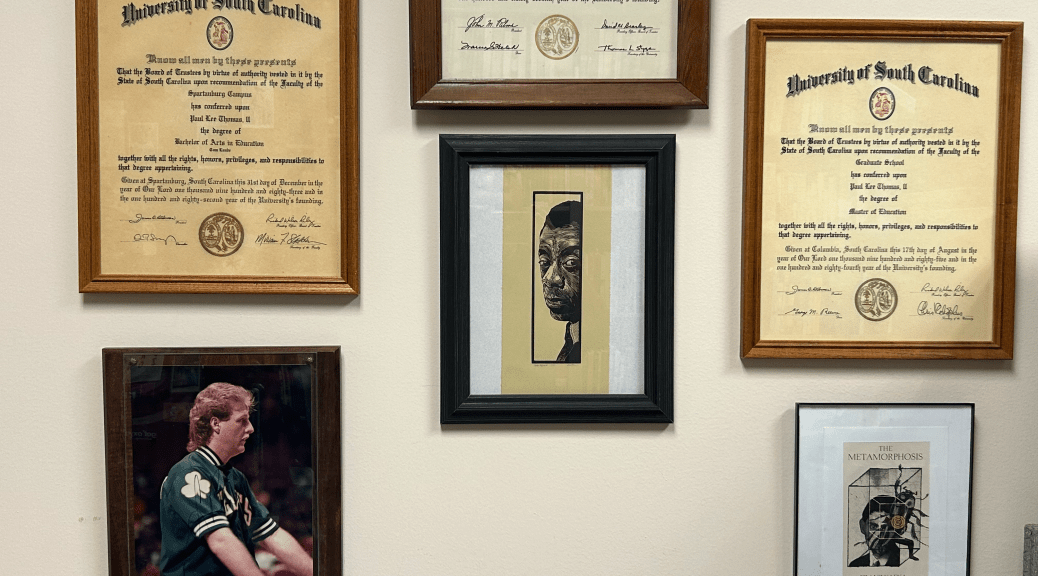
That basketball life included being a rabid fan of Pete Maravich and Bird, and since I was a scrawny white redneck from a working class family, there were many aspects of race and social class entrenched in my basketball life.
Despite my compulsive practicing—much of that focusing on dunking and spinning a basketball on my finger—I was mostly a bench warmer on school teams; I was routinely humiliated by my teammates who were overwhelmingly Black.
In fact, on a 13-person roster as a sophomore, I was the only white guy on the team.
But probably the most important part of my basketball life, and ultimately my life in general, was playing pick-up basketball almost exclusively with Black guys throughout high school and into college (where I also played intramural basketball).
Despite my limited skills as a basketball player, I was pretty athletic, I knew how to play ball well, I was a physical player, and I talked trash. On the court and off, I was known for my gifted use of profanity.
Concurrent with my basketball life, I listened for hours to George Carlin and Richard Pryor comedy albums. Carlin and Pryor taught me the power of language while also disrupting much of my redneck upbringing that was often narrow-minded and bigoted.
I learned from Carlin and Pryor that being smart and gifted knew no race, but I also learned that individual power and autonomy was grounded in my mind and my verbal abilities.
On the basketball court, I had a great to deal to make up for since I was often the weakest pure player on the court. So I had to play hard, and I used one skill I trusted—running my mouth.
One year that stands out to me is playing intramural basketball in my first couple years of college when I was playing pick-up basketball nearly daily with members of the college team and local elite high school players. Again, pick-up gains were overwhelmingly with Black guys and a couple of my closest white friends who, like me, were very Black-guy-adjacent in their basketball and personal lives.
Looking back on these experiences, especially in the context of the reductive and racist debates raging over Reese/ Clark and including references to Bird, I am now vividly aware of the moral codes I was taught through the Black culture elements of basketball.
One of my white friends used to say to me often, “Paul, you’re going to get your ass beat,” referring to my trash talk. Notably, these moments were always about my antagonistic interactions with other white guys.
I could have, and should have, gotten my ass beat, by the way. I was more mouth than ass, and I really never monitored when the other guy didn’t understand the moral code I had acquired.
The mostly Black-guy pick-up games were intense with a great deal of mouthing. But we usually smiled, we often slapped hands or shook hands to compliment good play, and I really never expected anyone to come to blows.
Unlike white guys, as well, Black guys called their own fouls when they committed them. If you fouled guys and let it slide, you caught extra hell so there was a not-so-subtle message to do the right thing.
White guys cried and moaned about being fouled, and trash talking often teetered in the edge of starting a fight.
I am certain I learned to respect the game from Black guys, and part of that code had to do with respecting each other even as we talked trash. White guys were often petty, what I called back then “punks,” calling touch fouls, complaining, being soft.
Talking trash was as much of the game as dribbling, passing, rebounding, and shooting. But talking trash was also a sign of respect and a level of expectations.
If you talk trash, you are going to pay for it at some point.
Bird often used trash talking to gain an advantage, but Bird lost games and match ups many times over his career. I am sure many people let him know that.
Bird was very open about his respect for Black athletes, and even said aloud he took it as a sign of disrespect when coaches had a white player guard him.
There is a very complex and even uncomfortable set of lessons in the racial dynamics of the basketball world of the 1970s and 1980s, often represented by Bird and Magic Johnson but also involving Michael Jordan and the Detroit Pistons.
Basketball was much more physical and even violent then, but basketball in many ways (along with professional sports) represented a way for Black men to gain status in US society in ways mostly denied them.
We want to think sports is a meritocracy, and maybe it is more so than in other contexts, but the basketball world I grew up in pushed racial tensions, racism and stereotypes, and cultural norms into a stronger spotlight for me.
In 2023, I shake my head, I sigh, and I regret that white people remain trapped in the sort of pettiness I witnessed growing up—thin skinned and absent a moral code that respects all humanity.
The Reese/ Clark controversy is much bigger than these athletes, and it exposes how public discourse remains white-centered, shaping a much different narrative of Reese than Clark.
An unfairly different narrative grounded in race and racism but also extending a faux respectability politics onto Reese but excused in Clark.
There was an important camaraderie in the trash talking of my teen and young adult years that I cherish and miss (my basketball life was quite different than my all-white golf life that had a false decorum I never felt comfortable in). Dozens and dozens of Black guys made me a better athlete and person.
Clark like Bird likely understands that trash talk has its rewards but you will pay for it.
Millions of moments like the Reese/ Clark clash happened and do happen on basketball courts around the world, daily. But theirs was on one of the brightest stages and televised.
While too many people want to make claims about the character of Reese or Clark, the truth is that the debate itself is a window into the character of everyone choosing to debate their trash talking.
Too many people, mostly white, never learned the moral codes I did, never learned the lessons of race that were gifted me in the 1970s on vinyl records and on sweaty basketball courts.
If you are inclined to chastise Reese and praise Clark, you need to take a long moment in the mirror and consider holding yourself accountable before worrying about two young women playing college basketball at the highest level.

Revisiting the Research Paper Problem for College Students as Writers
[Header Photo by Thought Catalog on Unsplash]
About 15 years ago, my university overhauled the curriculum and academic calendar, including dropping the traditional English 101/102 approach to composition for a first-year seminar structure.
That moved the responsibility for teaching composition out of the English Department solely and across the entire university (a problem of writing pedagogy that the university didn’t acknowledge until several years later). Initially students were required to take two first-year seminars, one writing intensive and another that allowed students and professors to explore their passions.
The non-writing seminar was popular, but ultimately not sustainable so when the curriculum was updated a few years ago, we dropped the non-writing FYS and added an upper-level writing and research course requirement to better support teaching writing at the college level.
I have been teaching writing formally for 39 years, 18 years as a high school ELA teacher and currently 21 years and counting at the college level. Therefore, I have a great deal of experience and knowledge about teaching writing as part of a transition from high school to college (see recommended posts below).
As a high school ELA teacher, I focused on teaching writing, and for my advanced students, I worked diligently to prepare them for college. I am proud that many students returned during college and confirmed that they were better prepared as writers than many of their peers.
Embedded in that, of course, is that many students then—and now— enter college not well prepared to write at the college level. In fact, much of my work in my first-year writing seminar is helping students unlearn beliefs and practices about writing that helped them be very successful in high school—but that were guaranteed to be far less effective in college.
A significant part of that needed transition is the misguided “research paper” approach to writing cited essay and an overemphasis of the singular importance of MLA as a style and citation guide.
Elements of the inauthentic “research paper” model of writing cited essays include the following:
- Students following templates and prescribed steps to gathering sources and producing a paper in MLA format.
- Students writing with a stilted style that focuses on their “research” and “sources” instead of incorporating sources as authoritative evidence in an original essay and purpose.
- Students using a “one source at a time” organization and discussion pattern that focuses on covering the sources instead of writing an original essay.
I address these issues directly in my FYW, scaffolding the course from a first essay that is personal narrative, to an essay citing entirely with hyperlinks, and then to a formally cited scholarly essay in which they use APA style and citation.
That FYW experience in my course is transitional and foundational, and I would say moderately effective. But I also recognize that teaching composition at the college level is not a mere inoculation; one course over 3-4 months cannot a scholarly writer make.
So I am always eager to work with my upper-level writing/research course—where every class I am confronted with how powerful the “research paper” model of writing remains in students two or three years into college.
Just yesterday, my students in the upper-level writing/research course turned in their major cited essay grounded in their course project—analyzing and evaluating how media covers a key education topic.
The course is heavily structured and scaffolded to help students write a very advanced and difficult cited essay. Part of that structure is that I almost daily remind them that the focus of their work is media analysis, which I punctuate with “You are not writing a research paper on your education topic.”
As has become expected in this course, however, students mostly submitted research papers on their education topics and tended to write using the strategies I identified above that they learned in high school—mostly writing about their sources (even calling them “sources) and simply covering all their sources one at a time.
Many students almost entirely failed to even mention media, and they all continue to struggle with the complex expectations for writing an original analysis and evaluating media coverage—especially the stylistic differences they need to practice in different sections of the essay.
Here is the full assignment and guiding support for the assignment (which I revised and refine every time I teach the course):
Assignment
Students will conduct a research project in which they critically analyze how the above chosen issue is presented in the mainstream media, and write in a workshop format (multiple drafts, conferencing) an 8-10 page essay using APA format (see link above and student resources provided) detailing how well or not the media has presented the research. See Sample APA 7e with comments. NOTE: This cited essays is primarily a critical analysis of media coverage, and not simply an essay on your chosen education topic. The essay should include the following major sections: opening, literature review, media coverage, relationship between research and media, and closing/conclusion.
For 8-10 pages, a proposed structure:
Opening – about 1 page (2-4 paragraphs); be sure to include essay focus on media
literature review – 2 pages; focus on *patterns* in the sources (write about your topics, not the sources); must be fully cited (prefer synthesis and avoid presenting one source at a time) and address all scholarly sources included in references
media analysis – 2 pages; focus on *patterns* in the media and include several examples; directly identify media outlets and journalists
media evaluation (relationship between research and media) – 2 pages; this is the most important goal of the essay so evaluate the media coverage by implementing your knowledge of the scholarship (do not refer to “research” or “sources”); must be fully cited
closing/conclusion – about 1 page (2-4 paragraphs); must emphasize essay focus, media analysis
You MUST follow APA guidelines; please refer to this SAMPLE.
And please review this CHECKLIST.
Assignment Submission Guidelines
Research project essay: Submit research project cited essay in both the initial and final submissions (all drafts should be complete and in proper format, even when submitting “rough” or initial drafts) as Word files and attach to email with “research project essay” in the subject line. See APA 7e guidelines here and Sample APA 7e with comments. Submit essay as a Word file, and format in Times New Roman font, 12 pt., double space, with 1″ margins. Each file should be named “lastname essay.docx” (as you revise and resubmit, add RW, RW2, RW3, etc., to the file name to designate multiple drafts).
Peer conferencing cited essay in class; have a copy of your cited essay (hard copy or on your device) to peer review with classmates.
Checklist for peer-review:
[ ] Formatted with 2 page breaks (after title page and after last page, before references)
[ ] Opening: narrative and focus/thesis identifying media coverage of educational topic
[ ] Four level two subheads: lit review, media analysis, relationship of media and research (key section of the essay), and closing
[ ] Fully use *all* sources and fully cite throughout the essay
[ ] APA formatting
I am very clear and address directly that the assignment is challenging, in many ways preparing students for graduate school. But I also believe this is an important entry point to writing well as an undergradute.
Students spend the first half of the course exploring writing (we examine scholarly personal narrative) and study educational research; they also carefully research both scholarly evidence on their education topic while gathering recent examples of media coverage.
Their first major assignment is to produce an annotated bibliography of those sources, and I stress that this is a process scholars use to support writing their essays (noting that creating an annotated bibliography is for them as writer and scholars, not just an assignment to follow).
The sections—literature review, media analysis, media evaluation—force them to write with different styles within one essay.
Some students struggle with focusing rhetorically on the patterns found in their scholarly sources for the literature review; they tend still to write about the sources and walk through them one at a time.
The media analysis requires that they do close textual analysis (a much different style than the literature review). We ground that in critical discourse analysis [Theory and Practice in Critical Discourse Analysis (PowerPoint)], but they also tend here simply to summarize the media examples one at a time, not focusing on patterns or how media covers the topic.
Along with not being adept with analysis, they do not understand that using sources is a way to lend authority to their own evaluation. Some of this is rhetorical since they want to say “research shows” instead of allowing the parenthetical citation to support their wording.
As I have noted before, students would be much better served if high school set aside the reductive research paper method and instead established some concepts for students about how and why academic and scholarly writing incorporates sources into writing:
- Explain to students that citation formats are a subset of style guidelines that are discipline specific. MLA, for example, is often required in high school English classes because it is the style guide favored in some of the humanities. I forefront for students the stylistic expectations of style guides in the context of disciplinary expectations (APA uses dates in parenthetical citations because when a study is conducted is important in the social sciences, for example) and stress that many of the formatting quirks of a style guide are tedious and thus not to be memorized. In short, students need to learn to use style guides as a reference, not “learn MLA,” etc.
- Focus on centering academic and scholarly writing around questions that the essay will explore and answer instead of declarative thesis sentences. Students as young scholars benefit from a humble and nuanced pose versus asserting a level of certainty that they simply do not yet have.
- Foster an understanding of a wide range of ways to offer evidence and support in academic writing. Since many students write cited essays as literary/textual analysis in their English classes, they “learn” that the only or most important evidence is quoting—yet quoting from social science sources is not recommended in APA or even relevant. In fact, writing expectations in many disciplines prefer students synthesizing multiple sources into they own words to show a body of evidence. Paraphrasing and citing multiple sources shows sophistication and understanding that simply summarizing one source at a time cannot.
- Stress that citation in original writing is a tool, not the goal of writing. As writers they need to start with clear content purposes that then lead to searching for sources that help them gain the knowledge and authority to write a compelling essay. They should move away from “my sources say” to “I know this” and include citations to stand on the shoulder of giants.
My university’s shift from English Department-based composition to first-year seminars has had many stumbles and falls, but the core principle of moving writing instruction across all the disciplines is essentially far more authentic.
As my assignment above demonstrates, academic and scholarly writing often is a blend of modes and purposes that demand a great deal from a purposeful and effective writer.
This sort of writing is very challenging, and students would benefit from being introduced early to these concepts so that so much of college instruction need no longer be spent helping them unlearn the “research paper” method.
Recommended
What Do College Professors Want from Incoming High School Graduates?
Transitioning from High School to College: (Re)considering Citation Edition
Making the Transition from Writing in High School to Writing in College
Fostering the Transition from Student to Writer

SOR Endgame: The Reading Program Boondoggle
Within a year or so of the initial “science of reading” (SOR) media campaign launch in 2018, states such as Arkansas banned reading instruction (three-cueing) that effectively banned some of the most popular and demonized reading programs in the US.
This was the canary in the coal mine for one of the most powerful (but ignored) elements of the SOR movement—reading program marketing.
In order for a new reading program market place to open, the existing programs had to be vilified and then, ultimately, banned and replaced (see here and here).
The uncritical endorsement of the SOR story remains a central feature of media coverage even as the inherent problems and flaws with that story and it consequences are beginning to be acknowledged:


And the next shoe has dropped, fulfilling the logical consequences of the entire SOR movement [1] built on false and oversimplified cries of crisis and demonizing of literacy frameworks (balanced literacy) and popular programs (Fountas and Pinnell, and Calkins’s Units of Study):
Principals historically have enjoyed enormous leeway to select curriculums. Proponents argue this allows schools to stay nimble and select materials appropriate to their specific student populations. But some experts, and even the city’s own schools chancellors, have argued that the approach can lead to a tangle of instructional practices that can vary widely in quality from classroom to classroom.
Now, officials are taking steps to rein in the city’s free-wheeling approach to curriculum. Beginning next school year, elementary schools in about half of the city’s 32 districts will be required to use one of three reading programs: Wit & Wisdom, from a company called Great Minds; Into Reading from Houghton Mifflin Harcourt; or Expeditionary Learning, from EL Education.
By September 2024, city officials are expected to require all elementary schools to use one of those three options, according to an education department official familiar with the city’s plans.
NYC schools could soon be forced to adopt a mandated reading curriculum, sources say
NYC has been a disturbing and important example of the very worst aspects of the media-driven political responses to a false story (see here and here). The city is proof that a false story has more influence than actual evidence or science.
Blaming balanced literacy and popular reading programs for a reading crisis that doesn’t exist lacks scientific research:
I am, like you, struck by the degree to which people are willing to invoke a literacy crisis, when the data do not support anything like a literacy crisis. NAEP scores, aside from the pandemic then– but NAEP scores, over the last 10, 15 years have grown– slowly, but they have gotten better in literacy.
And it’s deeply puzzling to me why we have all of this public discourse about a literacy crisis. If I were deeply cynical, I would say it’s probably a useful technique for companies that are trying to sell their programs to get people to buy those programs, if parents and some school districts are very agitated about the so-called literacy crisis.
Now that isn’t to say that all American children are doing wonderfully in literacy. Obviously, they aren’t. But it is to say that there’s not a new or a sudden decline in literacy performance, other than that associated with the dip that had to do with the pandemic.
Harvard EdCast: To Weather the “Literacy Crisis,” Do What Works
As Snow notes, claiming crisis is not supported by the most common evidence cited, NAEP trends:

And many scholars have raised concerns about structured literacy (the proposed alternative to balanced literacy in the SOR movement):
We recognize that some teachers using structured literacy approaches will find ways to respond to the interests, experiences, and literacy abilities of individual students; however, we are concerned about the indiscriminate and unwarranted implementation of the following practices:
• Directive and/or scripted lessons that tell teachers what to say and do and the implementation of lesson sequences, often at a predetermined pace (Hanford, 2018)
• Privileging of phonemic awareness and phonics as primary decoding skills (Hanford, 2018, 2019; IDA,2019; Paige, 2020; Pierson, n.d.; Spear-Swerling, 2019)
• Use of decodable texts that do not engage multiple dimensions of reading (Hanford, 2018; IDA, 2019; Paige, 2020; Spear-Swerling, 2019)
• Specialized forms of reading instruction designed for particular groups of students as core literacy instruction for all students and teacher educators (Hanford, 2018; Hurford et al., 2016; IDA, 2019; Pierson, n.d.)
• Mandating structured literacy programs despite the lack of clear empirical evidence to support these programs
• Privileging the interest of publishers and private education providers over students
Particular concerns relate to the assertion that there is a consensus across the research community about the primacy of systematic phonics approaches. This supposedly undisputed consensus was severely challenged by the findings of a review of meta-analyses (Bowers, 2020).
Compton-Lilly, C.F., Mitra, A., Guay, M., & Spence, L.K. (2020). A confluence of complexity: Intersections among reading theory, neuroscience, and observations of young readers. Reading Research Quarterly, 55(S1), S185-S195. https://doi.org/10.1002/rrq.348
Further, at least one of the mandated reading programs (Into Reading from Houghton Mifflin Harcourt) for NYC, where a high percentage of diverse students are being served, has been identified as not meeting social justice and diversity goals:
1. All three curricula were Culturally Destructive or Culturally Insufficient.
2. All three curricula used superficial visual representations to signify diversity, especially skin tone and bodily presentation, without including meaningful cultural context, practices or traditions.
3. All three curricula were dominated by one-sided storytelling that provided a single, ahistorical narrative.
4. All three curricula used language, tone and syntax that demeaned and dehumanized Black, Indigenous and characters of color, while encouraging empathy and connection with White characters.
5. All three curricula provided little to no guidance for teachers on engaging students’ prior knowledge, backgrounds and cultures; or reflecting on their own bias, beliefs and experiences.
Lessons in (In)Equity: An Evaluation of Cultural Responsiveness in Elementary ELA Curriculum
The education market churns is the actual endgame of the SOR movement. The only people likely to benefit from the SOR story are journalists, politicians, and the corporations willing to jump on the reading program branding bandwagon.
The reading problems today are little different than overt the last 80 years, and most of the causes of those problems remain outside of schools—home and community poverty and inequity—and linked to in-school issues of equity, not reading programs or reading philosophies and practices.
Yet, on the horizon, it seems, schools, teachers, and students are going to be bombarded by “structured literacy”—at least until the next unwarranted reading crisis is declared so another round of blame, ban, and adopt can start all over again.
UPDATE
See the plan here in this proposed bill in Ohio:

[1] Thomas, P.L. (2022). The Science of Reading movement: The never-ending debate and the need for a different approach to reading instruction. Boulder, CO: National Education Policy Center. http://nepc.colorado.edu/publication/science-of-reading
Recommended
What Reading Program Should Schools Adopt?
Media Coverage of SOR [access materials HERE]
Hoffman, J.V., Hikida, M., & Sailors, M. (2020). Contesting science that silences: Amplifying equity, agency, and design research in literacy teacher preparation. Reading Research Quarterly, 55(S1), S255–S266. Retrieved July 26, 2022, from https://doi.org/10.1002/rrq.353
MacPhee, D., Handsfield, L.J., & Paugh, P. (2021). Conflict or conversation? Media portrayals of the science of reading. Reading Research Quarterly, 55(S1), S145-S155. Retrieved July 26, 2022, from https://doi.org/10.1002/rrq.384
Cryonics Phonics: Inequality’s Little Helper – New Politics
[UPDATE]
The Science of Reading and the Media: Is Reporting Biased?, Maren Aukerman, The University of Calgary
The Science of Reading and the Media: Does the Media Draw on High-Quality Reading Research?, Maren Aukerman
The Science of Reading and the Media: How Do Current Reporting Patterns Cause Damage?, Maren Aukerman
Making sense of reading’s forever wars, Leah Durán and Michiko Hikida
[UPDATE]
Harvard EdCast: To Weather the “Literacy Crisis,” Do What Works
Disrupting the Disruptors: Reimagining Policy Advocacy in a Post-Truth Era, Helen Aydarova
Caught In a Web of Privatizers: Science of Reading Reforms in the State of Tennessee, Helen Aydarova
“Whatever You Want to Call It”: Science of Reading Mythologies in the Educational Reform Movement, Helen Aydarova

Frankenstein 2023
My relationship with Frankenstein is grounded in two films and my mother’s love of science fiction/horror as a merged genre—the classic 1931 film starring Boris Karloff as The Monster and the now iconic Young Frankenstein from 1974 (a tour-de-force from Mel Brooks, Gene Wilder, Madeline Kahn, Cloris Leachman, Teri Garr, and others).
Now common in pop culture, I associated “Frankenstein” with The Monster because most of the nuance in the source, Mary Shelley’s novel, was erased by adapting a novel into film.
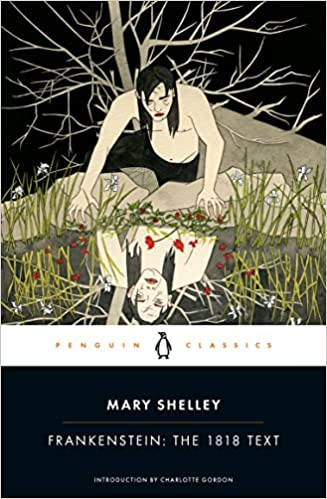
Some of that erasing includes Mary Shelley being fully recognized for a foundational work in the history of science fiction and horror, but the popular jumbling and blurring of Shelley’s creation also erases the more subtle messages and themes of her original work.
Yet it is hard to ignore that the Frankenstein myth/narrative is incredibly enduring in American pop culture.
It is 2023, The National is set to release an album titled First Two Pages of Frankenstein, using the actual first two pages of the novel (cleverly edited) and a brief video of Matt Berninger turning to the viewer with the novel in his hand at the piano to promote the work:
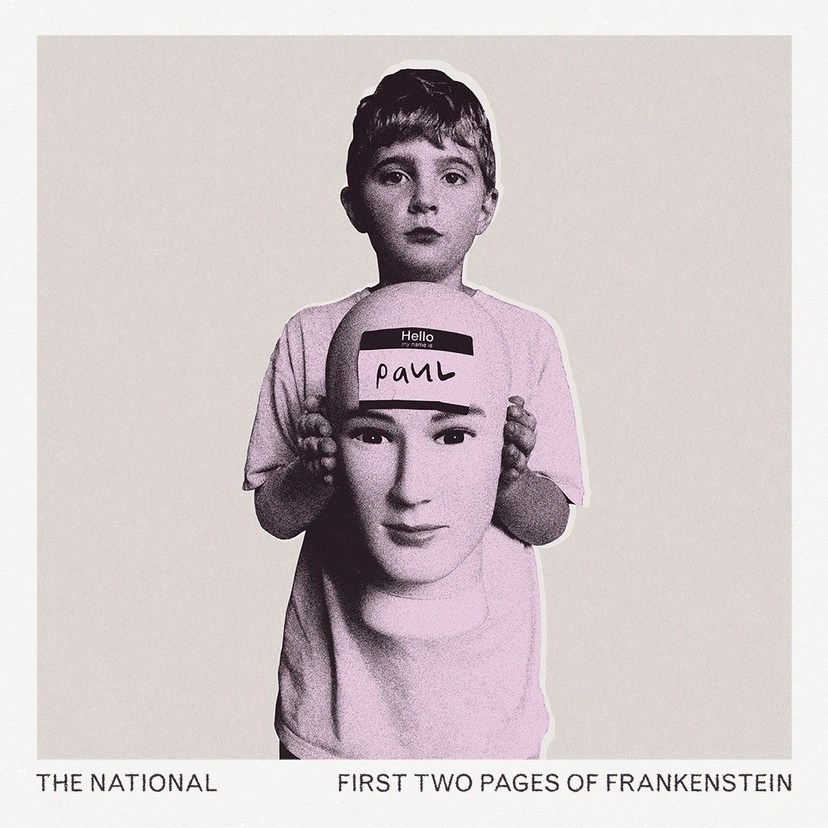
Just a few weeks before the release of The National’s album Lana Del Rey’s Did you know that there’s a tunnel under Ocean Blvd includes these lines:
I know they think that it took somebody else
To make me beautiful, beautiful
As they intended me to be
But they’re wrong
I know they think that it took thousands of people
To put me together again like an experiment
Some big men behind the scenes
Sewing Frankenstein black dreams into my songs
But they’re wrong
“Grandfather please stand on the shoulders of my father while he’s deep-sea fishing”
From Shelley to Del Rey, the intersection of the Frankenstein narrative with the lives and portrayal of women is a fascinating journey, but again, something is powerfully compelling about this story of human arrogance and the essential horror in our imagining a science-fueled future (or present).
These reminders of Frankenstein in 2023 also overlap with the paperback release of Wolverine: Weapon X Deluxe Edition.
Also due mainly to films, Wolverine (as portrayed by Hugh Jackman) has achieved an iconic place in US pop culture, one that parallels in many ways elements found in Shelley’s source material.
And not as well recognized outside of the comic book world, is Barry Windsor Smith’s brilliant portrayal of Wolverine’s origin story in Weapon X.
My association with Smith is his breakout work on Conan the Barbarian for Marvel in the early 1970s (see here).

By the 1990s, Smith stood out among the rise of the all-star artists working in comic books, like Frank Miller and Todd McFarlane; Smith helped define and represents the recognizable 90s comic book style as well:


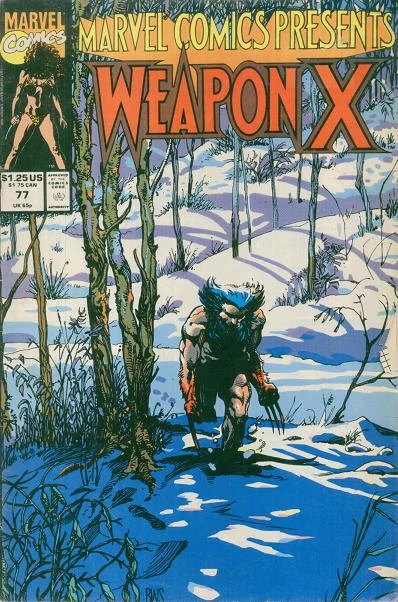
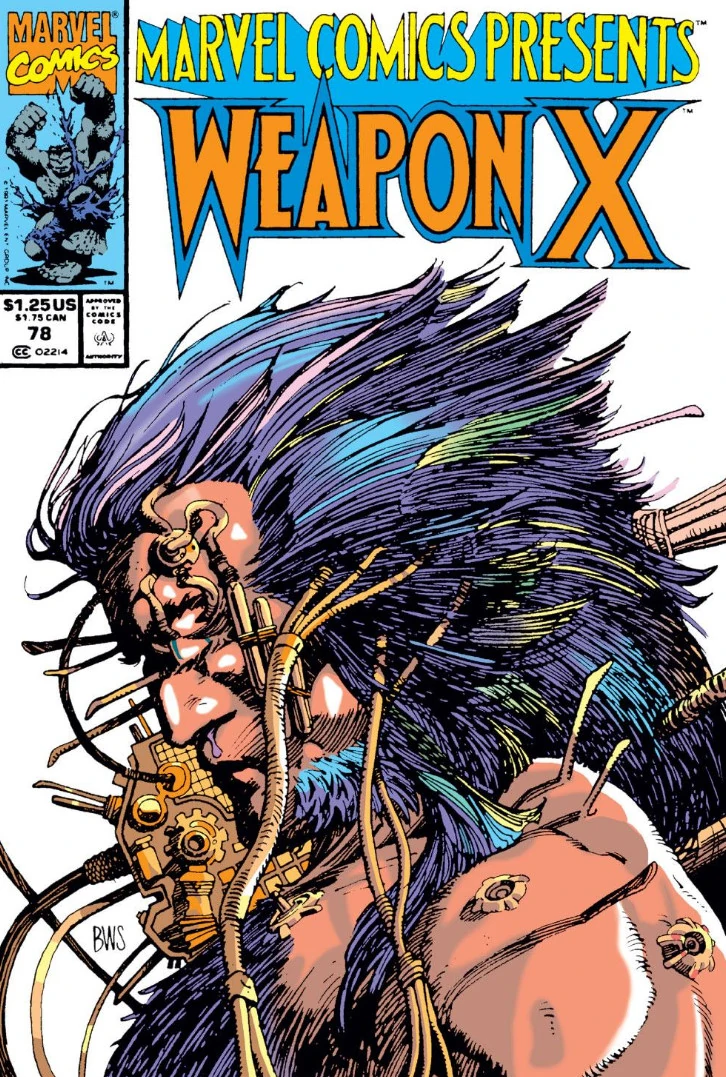

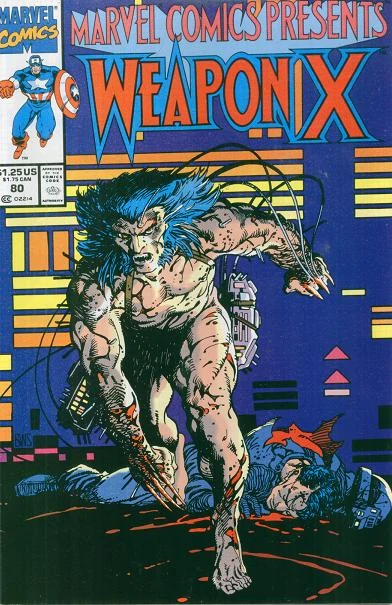


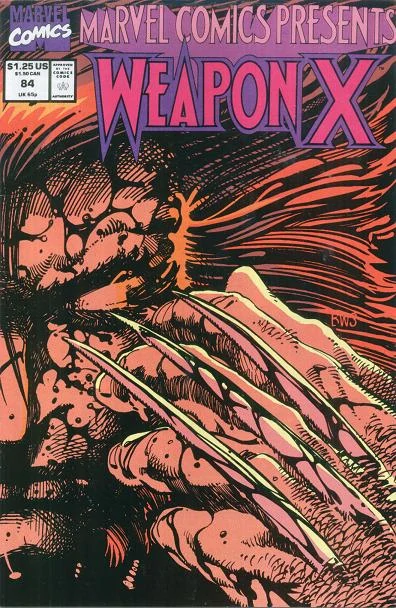
The hyper-realism and detailed work of many artists in the 1990s are both era-defining and problematic (see about Rob Liefeld, for example), but Smith remains a highly regarded comic book artist, in part due to his 13-issue run for Marvel Comics Presents featuring Wolverine.
Smith’s arc is a reimagining of the Frankenstein myth, blending the misuse of science with more fantastical elements found in superhero comics. The mutant element of Wolverine/Weapon X helps provide a fresh way to interrogate human dignity and agency since Wolverine (Logan) is The Monster (human-made) and a mutant in this retelling.
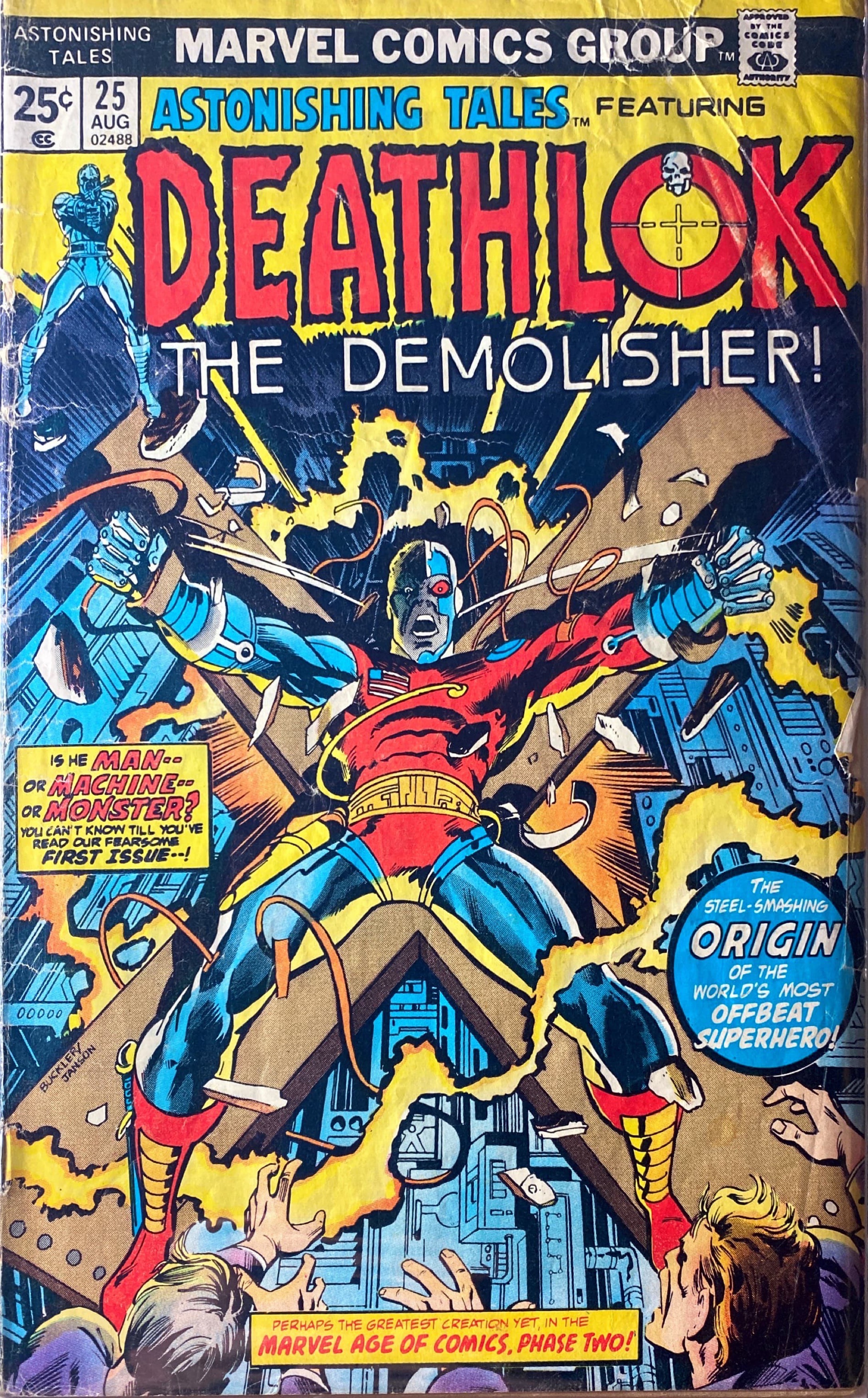
Smith’s Wolverine origin story dramatizes, I think, why science fiction and horror fit perfectly together since the essence of unbridled science threatens both individual agency and cultural stability—paralleled well, I think, by another science-gone-wrong creation from Marvel in the mid-1970s, Deathlok [Astonishing Tales featuring Deathlok 25-28, 30-36, Marvel Spotlight 33 (1974-1977)].
Humans have a very complicated relationship with the human intellect, of which science is a key part. The recent Covid epidemic exposed that once again, people struggle with understanding exactly what “science” means—and doesn’t mean.
Contemporary life for many people in 2023 depends heavily on technology, and the allure of science fiction remains strong even as we seem to resist the messages those stories offer.
Whether it is Frankenstein’s Monster or Wolverine, the possibilities of science gone wrong moves us, speaks to our humanity, and offers us a better way.
It is always worth noting Shelley’s subtitle, another thing erased by pop culture—The Modern Prometheus.
Science, it seems, is a key urge of humans to be god or supplant god. And as our recycling of the Frankenstein narrative shows again and again, a quest to be god or deceive god is pure folly, our own arrogance turned against what makes us human.
Wolverine as The Monster should speak to us through the coupling of his immortality (an off-and-on quality in Marvel’s portrayals) with his constant state of suffering—just like Shelley’s original Monster whose sentience should move our hearts and souls as much as our minds.
I am drawn to the chorus in first single released by The National for their new album:
I was so distracted then
Tropic Morning News
I didn’t have it straight in my head
I didn’t have my face on yet or the role or the feel
Of where I was going with it all
I was suffering more than I let on
The tropic morning news was on
There’s nothing stopping me now
From saying all the painful parts out loud
Distracted and suffering like each iteration of The Monster, who, ultimately, is each of us.

Fostering Purposefulness (and Not Correctness) in Students as Writers: The National Edition
A confluence of language has washed over me lately, completely an accident of living. I have been reading and finished Cormac McCarthy’s The Passenger just as The National has begun releasing singles from their upcoming album, First Two Pages of Frankenstein.
Currently my favorite band, The National’s music is characterized by their lead singer’s (Matt Berninger) literary elements, augmented by co-writing with his wife, Carin Besser. The new album leans heavily into the literary with the odd title, grounded in Berninger’s struggles with writer’s block when starting to compose this album.
The first three releases—“Tropic Morning News,” “New Order T-Shirt,” and “Eucalyptus”—sound like they have 1960s and 1980s pop influences and offer what appears to be an evolution in Berninger as a lyricist.
These three songs seem grounded in “Not in Kansas” from I am Easy to Find, a rambling sort of song that achieves its lyrical/poetic elements in many rhetorical and syntactical ways while also depending on specific details (such as references to other musical groups).
Having been a serious writer since my first year of college, I am often drawn to words and language in my hobbies, and lyrics fascinate me in the same way that poetry does.
I spent almost two decades teaching poetry to high school students through the songs of R.E.M. And among the many things I miss about teaching high school English is that I don’t have the space as I did then to engage students with lyrics as models for writing with purpose (a much more foundational writing skill than correctness).
As a poet and a teacher, I am not arguing that all students should love poetry (although I suspect that student resistance to poetry is mostly instilled in them by formal schooling ruining poetry), but I do maintain that studying how poetry/lyrics are written is an excellent context for fostering purposeful students as writers.
Lyrics are poetry adjacent; lyrics absent the music are not necessarily poetry, but a form of composing that embraces an essential quality of poetry—economy of language.
Poetry as a form relies on a purposeful structure—lines and stanzas—and a heightened form of expression through language. Poems tends to be brief and most pop songs hover around 3 minutes so these forms of text share that urgency to make the most out of the fewest words possible.
Yes, there are prose poems and book-length poems, but even then, these poetic forms are formed in tension with expectations of lines/stanzas and brevity.
What has struck me with the first 3 songs off The National’s upcoming album is Berninger’s (and when co-writing with Besser) use of specific details as well as rhetorical and syntactical patterns that raise the lyrics to poetry beyond the expected use of rhyme.
I want to focus here on two of the songs, “New Order T-Shirt” and “Eucalyptus,” as models for fostering purposefulness in students as writers.
A writing challenge in poetry and lyrics is achieving a coherent text within a very short space while also attending to more than creating meaning; to that last point, poetry and lyrics often depend heavily on exact word choice and rhetorical/syntactical elements in a compressed and layered way that isn’t necessarily in prose (although my recent McCarthy reading drifts far closer to poetry than standard prose).
So how do the lyrics of these two songs demonstrate qualities students as writers should aspire to?
First, I want to highlight how rhetorical and syntactical elements of raise the language of two songs to “poetic” (in the same way we associate rhyme and meter with “poetic”).
Consider the following:
When you rescued me from the customs cops in Hawaii
“New Order T-Shirt”
When I shut down the place with my Japanese novelty bomb
And your dad came along
How you had me lay down for a temperature check
With the cool of your hand on the back of my neck
When I said, “I think I’m finally going crazy for real”
What about the glass dandelions?
“Eucalyptus”
What about the TV screen?
What about the undeveloped cameras?
Maybe we should bury these
What about the last of the good ones?
What about the ceiling fans?
What if we moved back to New York?
What about the moondrop light?
Both songs’ opening stanzas are compelling and coherent structurally, relying on rhetorical patterns—the “when” and “how” clauses drive “New Order T-Shirt” and the “what” questions anchor “Eucalyptus.”
In typical Berninger fashion, these two examples also highlight how the specific details give writing weight and richness; both songs are heavily concrete, including a dependence on proper nouns and details.
Focusing on how the songs open also contributes to helping students interrogate how meaning is built by the writer and for the reader. The writer must have a coherent plan and purpose, but also present a text in a way that allows the reader to construct meaning.
Although cliche and a bit simplistic, poetry and lyrics when done well capture the truism “show, don’t tell” since the meaning comes from the whole text as a result of its parts.
Like poetry, as well, lyrics depend heavily on sound and patterns.
We expect rhyme in lyrics and poetry, so the near rhyme of “screen” and “these” in “Eucalyptus” both draws in and disorients the listener, reinforcing the complex topic of the song dealing with what appears to be a break up.
In those lyrics also, Berninger plays with meaning in the chorus:
You should take it ’cause I’m not gonna take it
“Eucalyptus”
You should take it, I’m only gonna break it
You should take it ’cause I’m not gonna take it
You should take it, you should take it
The listener must navigate the tension in the layers of the chorus: “take it” as in physically possessing an object and then “take it” as in putting up with a situation.
Rhetoric, syntax, and diction are the tools of the poet/lyricist who has chosen to work within the limiting constraints of poetry or a pop song; that’s where the economy of language and the need to express merge, creating poetic language.
There are many more things students could be asked to do with these lyrics, but I wanted here to start and continue a consideration of how lyrics and poetry can serve as powerful models for being an effective writer through acknowledging purposefulness and control by the writer.
There are no temples, and simplistic rules for writing often fall flat (like “show, don’t tell”), but there are enduring concepts emerging writers need to examine and adopt.
Concrete and specific details, rhetorical patterns applied with purpose, and paying attention to the sounds and emotional impact of words and syntax—this is the stuff of writing well, and these are the elements found throughout the songs I have identified here.
Some aspects of becoming a writer are ignored or simply bulldozed over, yet are as essential as the things we have traditionally taught (five-paragraph essays, rubrics, correctness, etc.)—such as engaging the reader and balancing the content of writing with the aesthetics of language.
Lyrics and poetry are ideal for highlighting those ignored elements because they are brief, rich, and engaging.
For a while now, this has been playing over and over in my head:
How you had me lay down for a temperature check
“New Order T-Shirt”
With the cool of your hand on the back of my neck
When I said, “I think I’m finally going crazy for real”
As a fan, this clearly resonates with me, but as a writer/teacher I want students to investigate how these lines are compelling—the rhetorical patterns (“how,” “when”) throughout the song creating meaning and the details shaping a very brief but compelling narrative.
Unlike (for me) McCarthy’s The Passenger, the three new songs from The National are satisfying and fulfilling, even when I find some of them fragmentary, possibly incomplete.
They also warrant re-listening because that element of fulfilling grows over time with the text and complete song.
Our students are unlikely to be poets, lyricists, or even writers beyond formal schooling, but there is a great deal to be gained from exploring purposeful things in order to foster purposefulness in what we do and why.
The speaker in “New Order T-Shirt” admits a few times, “I carry them with me like drugs in a pocket,” and for me, this is the thing about poems and songs I love. That line reminding me:
i carry your heart with me(i carry it in
[i carry your heart with me(i carry it in], e.e. cummings
my heart)i am never without it(anywhere
i go you go,my dear;and whatever is done
by only me is your doing,my darling)
Finally, I think, we often get lost trying to teach writing, mired in the technical, the rules and such. But language is more often about how we feel and about our need to communicate through language.
Poetry and lyrics are an ideal medium for not getting lost in the technical when inviting students to explore becoming writers.
Recent Poem
closer (turn inside out before washing)
closer (turn inside out before washing)
I keep feeling smaller and smaller
“I Need My Girl,” The National
i tripped and fell i think tumbling
or maybe i just leaned over too far?
i could have been pushed i think
lying at the end of this falling
that’s my problem always
trying to be closer and closer
until you are standing there cornered
your back firmly against the wall
•
i keep seeing my deceased father in my dreams
i keep seeing my deceased father in the mirror
we just moved all our clocks forward
to be closer to spring driving out the cold
so i’m thinking about clearing my head
turn inside out before washing
but i can no longer tell if i am
falling or simply fading away
•
in the darkness thinking of my father
i hear you softly telling me not to yell
you only need to turn around
you standing there behind me
i lean just a bit closer
as you lean just a bit closer
if it all falls apart you say softly again
in my ear we can rebuild it together
we have everything we need
—P.L. Thomas
Arthur Miller’s The Crucible: 2023
Over 18 years of teaching high school English, I taught American literature for English III (mostly a course for juniors) as part of the required curriculum in South Carolina.
Our required reading list of novels and plays was quite bad, overwhelmingly white authors and so-called classic works of literature (although the “classic” was merely the entrenched modernist works common in most public schools).
Along with the overkill of white men writers and characters, I found the American literature required list inordinately obsessed with Puritanism; students were required to study both Nathaniel Hawthorne’s (god awful) The Scarlet Letter and Arthur Miller’s The Crucible.
Either one would have been more than enough, and frankly, only The Crucible should have been included, if either at all. Students barely tolerated discussing The Scarlet letter, and I think very few actually read the novel (with the entire experience confirming for most of them that they hated to read).
However, we often had a good experience with Miller’s metaphorical/historical confrontation of the McCarthy Era. Over the years, I turned The Crucible unit into a world-wind of an experience that included listening to an audio version of the play (later in the mid-1990s, we watched the film version), an opening activity using R.E.M.’s “Exhuming McCarthy,” and a closing activity centered around watching the original film version of Invasion of the Body Snatchers (1956).
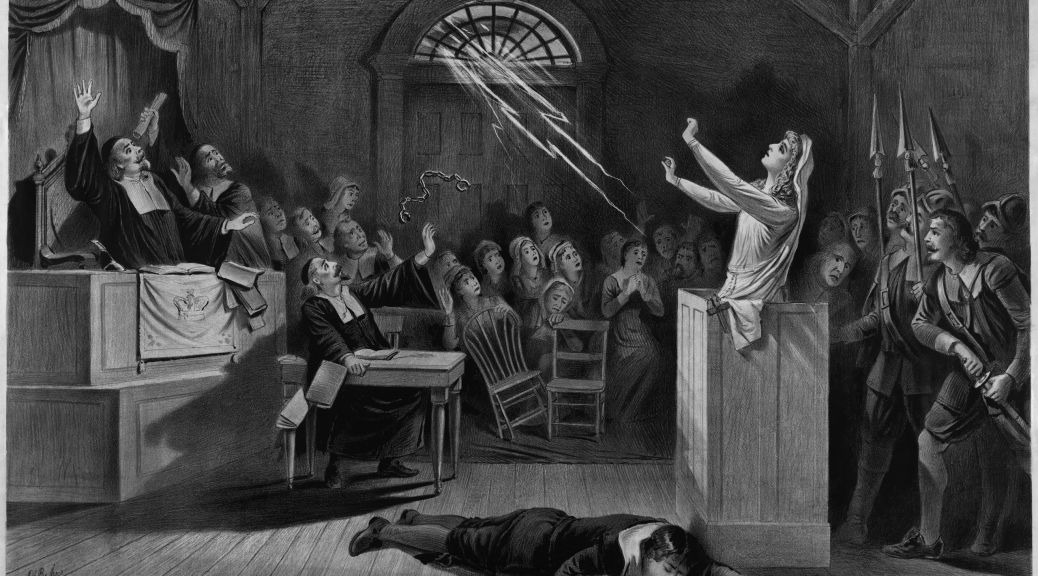
What I think made The Crucible resonate with high school students in the South in the 1980s and 1990s was my effort to help them navigate how the play was designed to address patterns of human behavior that had occurred in Puritan America and then repeated in the McCarthy Era; Miller, of course, was suggesting that this pattern would continue if humans were not vigilant to recognize it.
I have always found compelling the scene when Proctor is confronted with the accusations about witches; he responds that he has not realized “the world is gone daft with this nonsense.”
That nonsense is a fatal combination of religious fever/ missionary zeal, political authoritarianism (the blurring of church and state), and an incredibly dangerous commitment to manufactured evidence.
While The Crucible dramatizes a political/ religious/ legal tragedy mostly anchored in real historical events, in 2023, it is a powerful allegory about our current political over-reaches related to schools and radiating out into our culture and personal liberties.
The same toxic combination of religious fever/ missionary zeal, political authoritarianism (the blurring of church and state), and an incredibly dangerous commitment to evidence can be seen in all of the following:
- Anti-CRT and anti-woke legislation.
- Book bans and censorship targeting race/racism and LGBTQ+ content and authors.
- Anti-trans and anti-drag legislation and rhetoric.
- Reading legislation committed to the “science of reading.”
In each case, “”the world is gone daft with this nonsense.”
The core problem we are experiencing in the US in 2023 is that religious fever/ missionary zeal among some Americans is being leveraged by Republicans to bolster their political power, skewing toward totalitarianism.
That combination corrupts the evidence being used to push these agendas.
Evidence is being reduced to whatever suits the political/authoritarian goals, and as a report out of UCLA notes regarding specifically the anti-CRT movement, the “conflict campaign thrives on caricature.”
Caricature and misinformation to drive political agendas include how “CRT,” “woke,” banned novels and authors, trans care, drag shows, and elements of reading instruction (such as three-cueing and balanced literacy) are mischaracterized in order to attack the mischaracterization.
Social media is flooded with false definitions of “woke,” for example, grounding outlandish calls for “protecting children.”
For Americans who value life, liberty, and the pursuit of happiness, we must acknowledge Miller’s message that evidence cannot survive in the context of religious fervor/ missionary zeal and totalitarian politics (the consequential inevitability in theocracies).
While there is no such thing as objective evidence, there is a value in dispassionate evidence decoupled from authority.
The US was founded in part on a recognition that the church/state dynamic was oppressive, necessarily so, and despite the many flaws of the so-called Founding Fathers, they were drawn to the Enlightenment and a move toward scientific inquiry.
Despite the continued misuse of the term, “science” rightly understood is about grounding claims and conclusions in a careful analysis of evidence regardless of who makes the claims (decoupling from authority). And science is not about dogma (fixed Truth) but about the pursuit of truth by a community.
In 2023, we are living in the same “nonsense” Proctor named because too many are willing to abdicate the sanctity of evidence for their religious fervor/ missionary zeal and because there are enough political leaders eager to use that to leverage their pursuit of power at any cost to others.
If Nero fiddled while Rome burned, we are conveniently distracted by our many screens while life, liberty, and the pursuit of happiness are reduced to ash.
 dr. p.l. (paul) thomas