
All posts by plthomasedd
Republicans Embrace “Three Kinds of Lies: Lies, Damned Lies, and Statistics”
Misattributed quotes can still be valid, and such is the case with the often repeated, “There are three kinds of lies: lies, damned lies, and statistics,” typically associated with Mark Twain (possibly the first person to attribute the saying to the wrong person).
Statistics are a powerful kind of lie because data allow people to state factually true statistics that still mislead or distort the topic being addressed.
Republicans and conservatives have used the statistical lie often as a dog whistle for their racist base. Two of those issues are fatal police shootings and black-on-black crime.
Let’s look at how these statistical lies work.
Republicans and conservatives are apt to note the raw numbers on fatal police shootings broken down by race:

Yes, police shoot and kill more white people per year than Black people, but a statistical fact of this data is that there are about 5 times as many white people in the U.S. as there are Black people; therefore, for this data set to be equitable, about 5 times more white people would be killed than Black people (note that the difference is only about twice as many).
Thus, a better statistic is the rate of fatal police killings by race:

Therefore, fatal police shootings are racially imbalanced (Black people shot and killed at about 2.5 times higher rate than white people), if not racist.
In the case of fatal police shootings, then, the raw data are both accurate and misleading when trying to understand racial inequity.
A much more insidious use of statistics is the overuse of black-on-black crime in media, public, and political discourse.
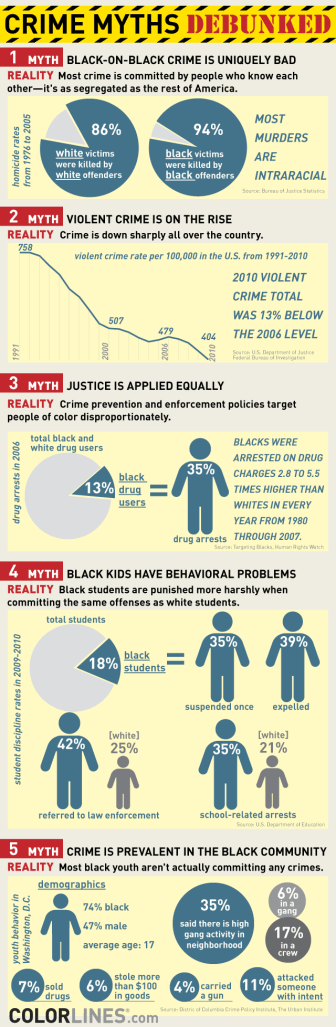
Black-on-black crime rates are extremely high, often at a 90%+ rate.
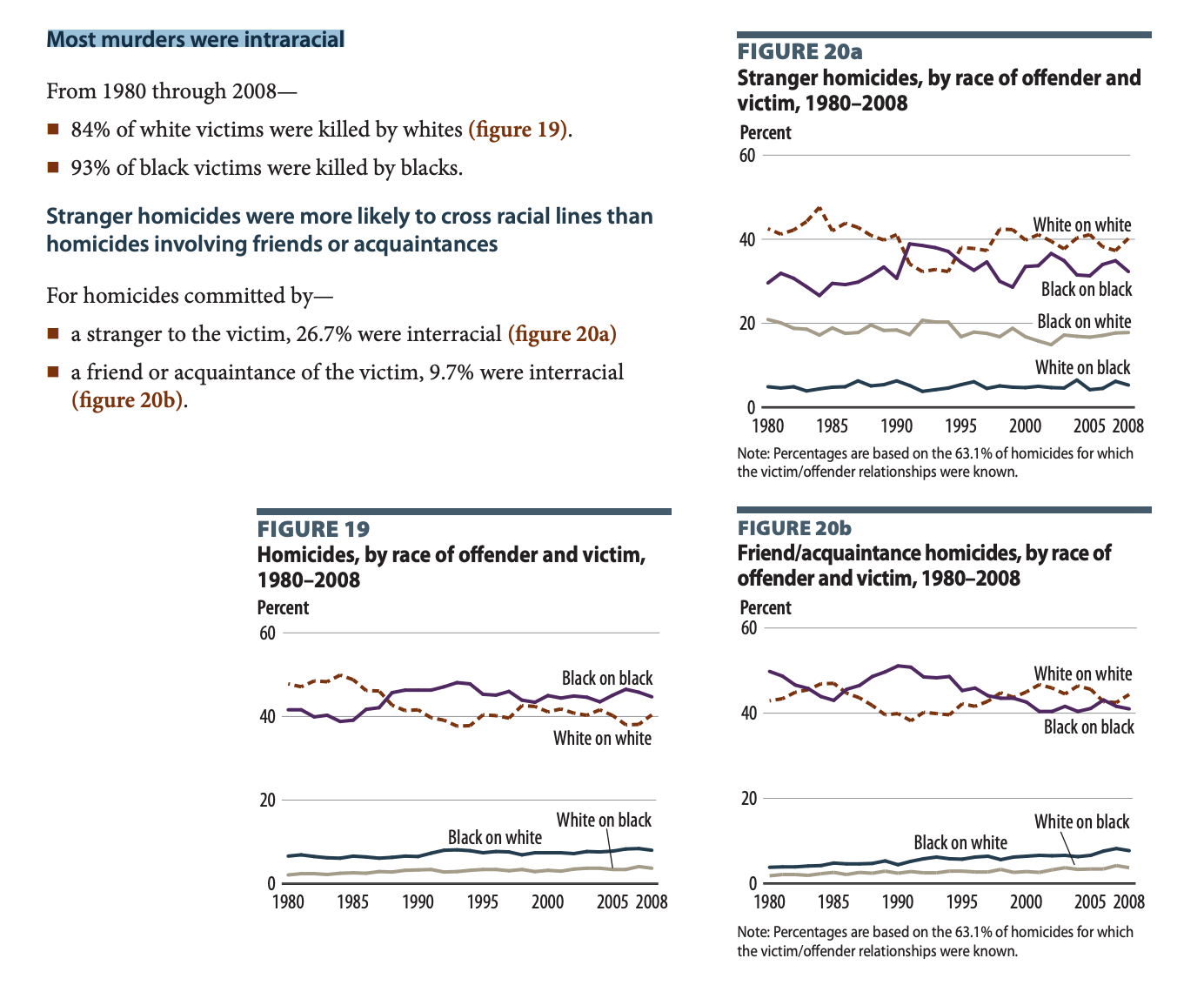
But there is almost no media, public, or political rhetoric around the white-on-white crime rate, which is about statistically the same (high 80% rate). [1]
Crime rates are almost entirely within races in the U.S. (see p. 13 from the U.S. Department of Justice [2]) because the country is still strongly racially and economically stratified.
While highlighting the very high black-on-black crime rate is factually correct, omitting that most crime is intraracial makes that emphasis misleading, and another dog whistle for racists.
But Republicans aren’t stopping there; consider the Lt. Governor of Texas who has now blamed Black Texans for being unvaccinated and causing the newest Covid spike:
However, as you may suspect, there are problems with this claim:
Once again, Republicans are using the statistical lie as a dog whistle for racist constituents.
Many racial groups are under-vaccinated, and there certainly is a significant issue with vaccine hesitancy and resistance among Black Americans, but the sheer numbers in Texas make Patrick’s careless and racist claim more than preposterous.
Further, raw data on low vaccination rates among races also ignore causes for those rates. Black Americans are disproportionately poor and live in areas were vaccine access has been weak or even suppressed.
There is ample evidence that political leaders have always cherry-picked statistics and data to promote agendas, but there is also ample evidence that Republicans target statistics as part of their larger strategy to court their racist base.
Patrick’s most recent egregious use of the statistical lie is further proof that Trump did not create the Republican Party as a party of lies, but he certainly helped the strategy gain momentum.
[1] See data here:
[2] See:
LitCon 2022: The State of the Reading War: Not Simple, Not Settled [UPDATE]
Announcement
LitCon: National K-8 Literacy & Reading Recovery Conference (January 29 – February 5, 2022, Columbus, OH)
Session Type: Spotlight Continued Engagement Session
Schedule: Thurday, February 3, 2022, 4:00 pm – 4:45 pm est
Session Strand: Reading Recovery
Session Title: TBD
Description:
Topics:
Presenters: Sam Bommarito and Paul Thomas
Featured Speaker
The State of the Reading War: Not Simple, Not Settled
Download PP HERE
P.L. Thomas
Session Type: Featured Session
Schedule: Thursday, February 3, 2022, 5:00 pm – 6:00 pm est
Session Strand: Leadership in Literacy
Session Title: FS21 – The State of the Reading War: Not Simple, Not Settled
Description: A new round of the Reading War embraces the “simple” view of reading, arguing that the “science of reading” is settled. This session interrogates the “science of reading” movement by placing it in historical context and refuting its central claims based on a more complex view of reading and science.
Topics: Equity in Education, Literacy Leadership, Reading
Presenters: Paul Thomas
Recommended Reading
Science Supports Balance, Not Intensive Phonics, for Teaching Reading
Fact Checking the “Science of Reading”: A Quick Guide for Teachers [Updated]
How to Navigate Social Media Debates about the “Science of Reading”
Reading as Comprehension and Engagement: On the Limitations of Decoding
Podcast: Educational Movements and Trends
Talking Points: A Conversation with Paul Thomas
The “Science of Reading”: A Reader for Educators
How Do We Know?: Not Simple, Not Settled
Dismantling the “Science of Reading” and the Harmful Reading Policies in its Wake [UPDATED]
Understanding the “Science of Reading” Movement and Its Consequences: A Reader
Policy Statement on the “Science of Reading” (NEPC)
How to End the Reading War and Serve the Literacy Needs of All Students
Reading as Comprehension and Engagement: On the Limitations of Decoding
About a year ago, a friend and I introduced my grandchildren to gaming; soon after I bought them a Nintendo Switch.
My granddaughter, Skylar, was immediately drawn to Animal Crossing because she loved that the game allows players to visit each other’s world. But the game also requires a great deal of reading so her initial experiences meant she had to play with someone who could read with comprehension to help and guide her.
Today, Skylar is starting second grade.

Recently, when Skylar was visiting, she immediately wanted to play Animal Crossing with my friend. As they played, Skylar was reading aloud incredibly well, only occasionally stumbling over words that would typically be classified as “above her grade level” (a concept I reject).
Despite Skylar’s ability to decode with speed and accuracy, we noticed something really important.
After reading through the text, Skylar would pause and ask my friend what she was supposed to do. Of course, the text in the game is designed to guide what the player does so my friend patiently explained that Skylar needed to re-read but pay attention to meaning (comprehension).
With that guidance and attention to the need to decode with comprehension and purpose, Skylar began to play the game with more agency (a few days later, she Facetimed my friend to continue having someone to mentor and guide her; in other words, she didn’t magically become an independent reader).
Skylar is 7 years old, my grandson, Brees, is 4 (about to turn 5 in a few weeks).
Watching them navigate gaming as well as learning to read is fascinating for several reasons.
First, Skylar clearly prefers communal gaming. Even as she is developing the ability to read with comprehension and engagement independently, she desperately wants to play the game with someone else.
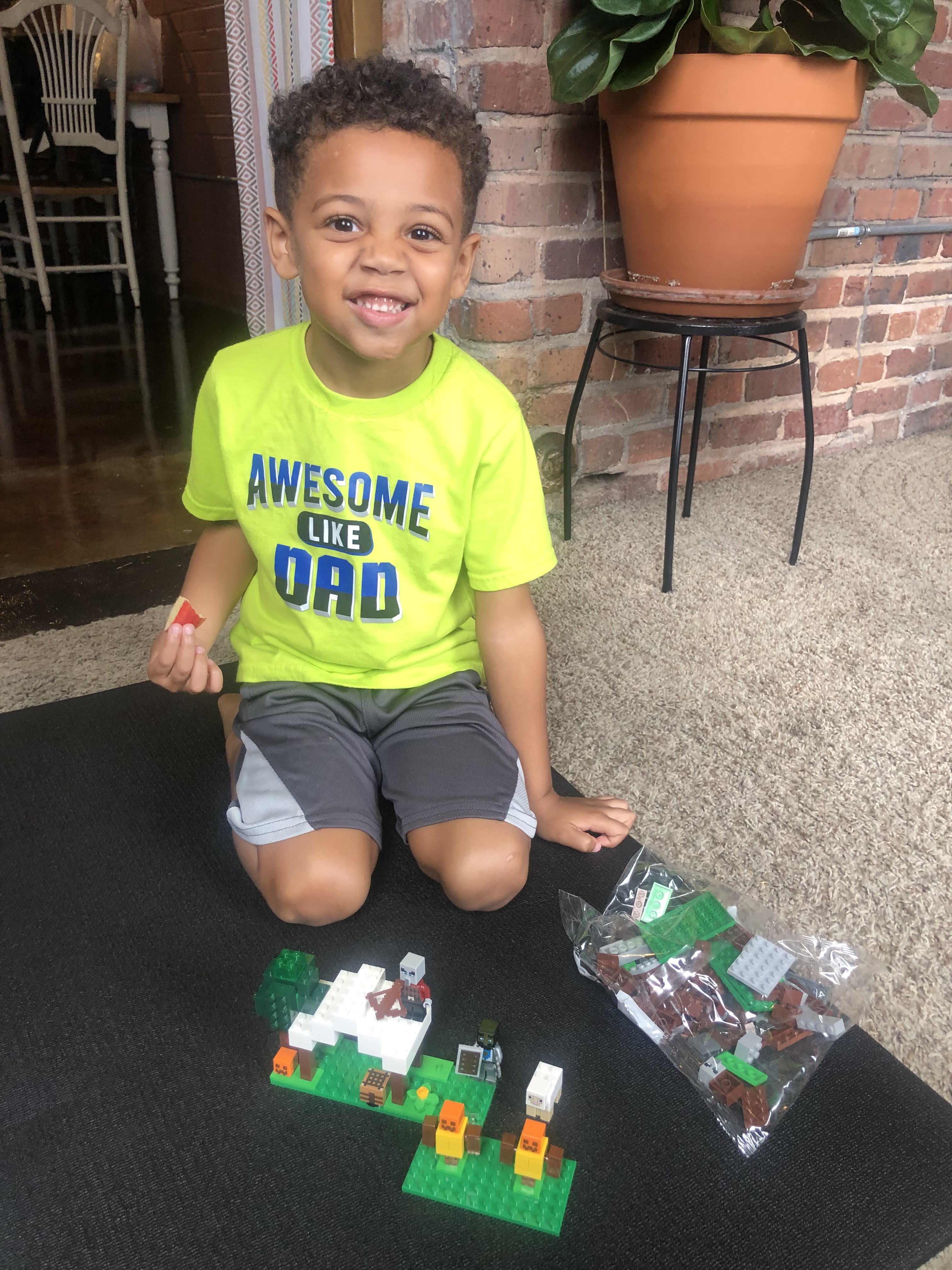
Brees, who has chosen Minecraft [1] as his go-to gaming, is a solitary gamer. While they were over for a pool day, Brees took a break and happily lay on a lounge chair playing Minecraft on his iPad.
Second, Skylar’s gaming and reading journey dramatically reveals the limitations of decoding—notably the danger of assuming that proficiency at reading aloud (words pronounced quickly and clearly) results in comprehension and engagement.
Here I want to stress that without Animal Crossing and an expert mentor (both at the game and reading), Skylar could well have remained at the level of “going through the motions” of reading aloud.
She didn’t hesitate to re-read and work toward comprehension so that she could fully engage in the game.
In other words, literacy is ultimately about autonomy, but it is also a profoundly important aspect of community.
During the Facetime session, Skylar was seeking a mentor to confirm the decisions she was making. Even though she was decoding with comprehension, she kept asking for confirmation that she was navigating the game the right way (or more accurately, a right way).
Before I go further, I want to stress that Skylar clearly has acquired some very powerful decoding strategies based in what most people call “phonics,” but when she is in the real world of gaming, she often comes to situations when those blunt decoding skills are not only inadequate but distracting from the flow of the complicated act of reading and acting on the comprehension.
I also want to stress that watching a 7-year-old play a reading-intensive video game complicates the simplistic and misleading faith placed in “grade level” texts. Like almost all real-world texts, Animal Crossing simply uses words (no concern for “grade level” and no “context clues”), often very common words mixed in with exact vocabulary that is uncommon.
Overly simplistic views of reading and vocabulary tend to conflate the “easy/hard” binary for vocabulary with “common/uncommon.”
Uncommon words that Skylar could not decode, and often has never encountered before, were not “hard” since with a mentor to pronounce and explain the word, Skylar very quickly adapted and with repetition in the game, those words became common to her (and thus, “easy”).
Finally, this experience with my grandchildren, at different stages of development and reading, helps personify some of the significant problems with the “science of reading” (SoR) movement that advocates for the “simple view” of reading and for systematic intensive phonics for all students.
Decoding is a necessary but small aspect of the reading, which ultimately must be an act of comprehension with engagement.
But the SoR movement also will fail our students because it centers systematic programs, silver-bullet thinking, and a misguided emphasis on decoding (and blunt decoding strategies).
However, what all students need and deserve are real-world experiences with and reasons to read.
Those experiences include activities too many people still stigmatize as “bad” for children—comic books, gaming, and even Lego.
Skylar as an emerging independent reader has had some wonderful traditional school experiences, and loving teachers. But her journey to reading is much larger than that, including her current fascination with Animal Crossing.
My beautiful and eager grandchildren are powerful examples that when it comes to teaching reading, nothing is settled and nothing is simple.
Reading is comprehensions and engagement, and as Skylar demonstrates, reading is about community, a shared purpose that is filled with pleasure and the joy of creating without a finish line.
by Cassie J. Brownell – 2021
Background/Context: Educators have considered how Minecraft supports language and literacy practices in the game and in the spaces and circumstances immediately surrounding gameplay. However, it is still necessary to develop additional conceptualizations of how children and youth’s online and offline worlds and experiences are blurred by and through the games. In this study, I take up this call and examine how the boundaries of the digital were blurred by one child as he wrote in response to a standardized writing prompt within his urban fourth-grade classroom.
Purpose/Objective/Research Question/Focus of Study: Through snapshots of Jairo’s writing, I illuminate how he muddled the lines between his physical play experiences and those he had in the virtual world of Minecraft. In doing so, I argue that he carried over his personal interest as a fan of Minecraft into the writing curriculum through creative language play. As Jairo “borrowed” his physical play experiences in the virtual world of Minecraft to complete an assigned writing task, he exemplified how children blur playworlds of physical and digital play in the elementary ELA classroom.
Research Design: Drawing on data generated in an 18-week case study, I examine how one child, Jairo, playfully incorporated his lived experiences in the virtual world of Minecraft into mandated writing tasks.
Conclusions/Recommendations: My examination of his writing is meant to challenge writing scholars, scholars of play, and those engaged in rethinking media’s relation to literacy. I encourage a rethinking of what it means for adults to maintain clear lines of what is digital play and what is not. I suggest adults might have too heavy a hand in bringing play into classrooms. Children already have experiences with play—both physical and digital. We must cultivate a space for children to build on what was previously familiar to them by offering scaffolds to bridge these experiences between what we, as adults, understand as binaries. Children do not necessarily see distinctions between “reality” and play worlds, or between digital and physical play. For children, play worlds and digital worlds are perhaps simply worlds; it is we as adults who harbor a desire for clear boundaries.
Teachers College Record Volume 123 Number 3, 2021, p. –
https://www.tcrecord.org ID Number: 23622, Date Accessed: 9/18/2021 7:46:35 AM
See Also
Stranger Things: The Eternal Whiteness of the Pop Culture Mind
South Park has Token, and Stranger Things has Lucas Sinclair.
Having come (very) late to Stranger Things, this was one of my first thoughts when Lucas sets off on his own to find the gate (S1E6).

Since Stranger Things is a pop culture referential series, my experience includes immediately thinking of WandaVision (also referential and driven by pastiche) and how Stranger Things includes more than a passing debt to superhero narratives, along with gaming culture as well as the broader 1980s TV and movie references.
I am a child of the 1960s and 1970s, but the love affair Stranger Things has for the 1980s speaks to vivid elements of my young adulthood spent navigating marriage, fostering a career, and fathering my only child in 1989.
The power of this series and the enduring elements of pop culture in the U.S. have been confirmed for me as I continue to make asynchronous connections (Stranger Things as the child of The X-Files and Mayor of Easttown).
Even though I haven’t watched the show until mid-2021 (I just began Season 2), I do have a good deal of fringe knowledge about the series and essential spoiler knowledge that likely dulls some of the tension created in the show when watched in real time.
I know, for example, certain characters persist even when they are put in serious danger in the first season. In S1E6 mentioned above, whether the show’s creators intended this or not, having a lone Black character placed in danger triggers one of the worst aspects of pop culture, linked to Star Trek (redshirt characters) and the use of “throw-away” characters that are too often Black and other racial minorities.
Lucas isn’t sacrificed, however (Barbara isn’t so lucky).
And like Mare of Easttown, Stranger Things represents a much larger problem in the U.S.—the eternal whiteness of the pop culture mind.
Also like Mare of Easttown, Stranger Things has a white people gaze that is strongly linked to white people dysfunction and the ever-creeping danger surrounding children (mostly white).
Eleven is remarkably frail (the camera work shifting from her intense face to her full-bodied spindly self is excellent), and fantastically powerful (at great expense to herself).

But the white problem in Stranger Things (Indiana) also sits beside the superhero genre obsession with white Middle America (see also the whiteness of South Park in Colorado and Mare in Pennsylvania).
Superhero narratives in the world of comic books are grounded in (and recursively obsessed with) origin stories, and the origin story of the superhero narrative serves an important purpose as I navigate Stranger Things.
Michael Chabon beautifully fictionalizes who and how superhero comics came to be in his The Amazing Adventures of Kavalier & Clay.
I was a comic book collector throughout my teen years, the 1970s, and although the rise of the MCU is relatively recent, I have always felt comic book narratives have been incredibly important contributors to and reflective of pop culture in the U.S.
Those original creators, as Chabon dramatizes, were often Jewish and/or immigrants (Joseph Shuster and Jerry Siegel [Superman], Jack Kirby and Stan Lee [Marvel], Joe Simon [with Kirby, Captain America], and Bob Kane [Batman], for example).
These origins are steeped in a singular American Dream by men of aspirational backgrounds, and they seem to have chosen white Middle America as their only template; just think of Superman, an alien expelled from his home planet and landing in the Great Farm Land (Smallville) to be raised by an earnest working class white couple.
Kurt Vonnegut—a pop culture icon referenced in Stranger Things—writes on the first page of Mother Night:
This is the only story of mine whose moral I know. I don’t think it’s a marvelous moral; I simply happen to know what it is: We are what we pretend to be, so we must be careful about what we pretend to be. (p. v)
Mother Night, Kurt Vonnegut
I think Vonnegut has a point not only for anyone (especially children and teens) existing in the so-called “real world,” but especially for those imagined worlds, the ones that seem struck in time and place—and race.
The many powerful themes of Stranger Things driven by the stellar acting must not be reduced to the simplistic “universal” praise—although childhood and the dangers of being a child or teen are shared among viewers regardless of race, etc.
Nancy Wheeler, for example, is yet another spindly white girl/young woman (like Eleven) who directly personifies Vonnegut’s warning; Jonathan Byers confronts her about pretending to be someone she isn’t in Season 1.
Her experiences are valid, and even compelling—although they pale beside Eleven’s.
Ultimately, I am left uncomfortable that Stranger Things has fallen into the well-worn rut (from Superman to Mare of Easttown) because too many people continue to believe the viewing public has empathy primarily for the frailty of whiteness.
Podcast: Educational Movements and Trends
Educational Movements and Trends
How can historical perspective help direct teaching and learning?
When trying to solve problems, humans are prone to looking for a “silver bullet” which often bypasses the learning process. Educational trends prove this theory. The hot teaching movement today may not have solid research behind it. History shows us that we are not good at being patient students throughout life’s journey.
Our guests Dr. Michele Dufresne, President and founder of Pioneer Valley Books and Dr. Paul Thomas at Furman University share that while K-12 education may be a basic right, not everyone has equal access to it. If every child is capable of learning and no one progresses at the same rate, then how can teachers better support student growth? Having an educated society impacts all facets of our communities.
Episode 1
60 (Last Time)
This coming Thanksgiving of 2021 will be the ten-year anniversary of me being ghosted.
The person was an important part of my life, but our connection made both our lives complicated. And we were never able (willing?) to address the problems in ways that would protect the relationship.
The ghosting was a dark cloud over my life for many years—although I never discussed it in any real way with anyone else. And if I am entirely honest with myself, the ghosting may have been about the only option for the other person.
Over the last few years, that dark cloud has vanished, and in its place, the ghosting simply remains as an example of one of my deepest existential fears—realizing I have experienced the last time after the fact.
I think many of us believe that if we have forewarning, we could better prepare for and work through a last-time situation—such as the loss of a loved one or the end of a serious relationship, whether lover or friend.
Not knowing, I admit, triggers my anxiety, but I lost both of my parents about 4 years ago, my father in late June 2017 and my mother that December.
My father had been in poor and declining health for years, to the point that I think many of us had become far too complacent with that reality. He literally died right after telling me he needed to “poop,” likely as three nurses moved him into the bathroom or certainly by the time they had him on the toilet.
Nothing about being aware of his poor health and imminent death or being right there as he passed really made that last time any less overwhelming or less shocking. Once the last time has passed, there are many what-ifs to worry your mind.
My mother’s death was much different. By comparison she seemed healthier than my father (she wasn’t), and then, her death was precipitated by a stroke.
Nearly every day after her stroke in early June until her death in early December, I visited her, unable to speak and often suffering an assortment of ailments that left her miserable. The end for my mother was a many-months nightmare.
Just weeks before she died, the doctors discovered she had stage 4 lung cancer; he last days were spent in hospice where I sat beside her a few hours a day.
She died late at night when I wasn’t there, and I slept through the call from hospice since my cell phone was on silent. The what-ifs about the last time with my mother have weighed on me and my nephews.
On July 9, the day after my granddaughter turned 7, I was just starting a 16-hour drive to Kansas before then driving to Colorado for two weeks before a week in Arkansas to visit friends at the University of Arkansas. While driving, I noticed an email from my dean about a position I had applied for, director of my university’s writing program.
I have been at my university almost twenty years and have invested a great deal of time into our first-year writing program, effectively lobbying for and helping develop the job that I applied for.
Since I was driving, my partner read the email, which explained that I would not be interviewed at all for the position. My dean acknowledged that he knew I would be disappointed.
I am 60, and this was my dream position for my career.
Yes, I was deeply disappointed, driving much of that day very depressed and slightly numb from the realization.
But the larger issue was coming to recognize that this was very likely the last time I would apply for any position other than the one I now have. I certainly will never be the director of writing at my university.
I am white, a man, well paid, and very privileged. I am also 60. People now routinely ask me when I plan to retire.
This is the end of my career, although I genuinely do not think about retiring since writing and teaching are careers I can continue to do for many more years.
And yet, my experience is quite insignificant and pales against the racial and gender awareness among Black people and women (for example) who navigate the workplace with the moment-by-moment awareness that they are being ignored, passed over, paid less, and marginalized simply for being who they are, regardless of their qualifications or potential.
This is not intended as a pity party, but a way to acknowledge and navigate something almost all humans must endure, the fear of and experiencing the last time.
I taught Thornton Wilder’s Our Town many years as a high school English teacher. I have always been drawn to the character Emily who dies young but is allowed to relive a day of her life.
By the final act, Emily views her life in replay from beyond and exclaims: “I can’t look at everything hard enough.”
She then turns to the Stage Manager and asks, distraught: “Do any human beings ever realize life while they live it—every, every minute?” And the Stage Manager replies, “No—Saints and poets maybe—they do some.”
Living is a series of last times, and we are damned as humans to rush through our lives simply not looking hard enough because we are so pre-occupied with our lives.
I am 60.
When I get down on the floor to play with my grandchildren, I inevitably have to stand up. It is a challenge these days, standing up, and I think maybe, just maybe, part of the struggle is carry around all the last times I have accumulated.
Last times I will continue to accumulate.
Until the last time.
Conservatives are Wrong about Parental Rights
With public schools poised to reopen for the 2021-2022 academic year, South Carolina faces the challenges of dealing with another wave of a Covid variant, a challenge made more complicated because of political theater by Republicans.
Columbia (SC) Mayor Steve Benjamin issued a mask requirement for students in the city, and immediately Governor Henry McMaster responded: “’This is another attempt to force children to wear masks in schools without a bit of consideration for a parent’s right to make that decision,’” said Brian Symmes, McMaster’s spokesman.”
The political theater of invoking “parental rights” by Republicans and conservatives falls apart at several levels.
First, if parents do have the right to demand that their children not wear masks (see below), those parents do not have the right to endanger other people—and the mask mandate in schools is primarily about community safety.
“Freedom” in this case is once again not license; parents choosing to keep their children unmasked must also address the consequences of that decision. Those parents then are obligated to provide their children proper education since the unmasking means those children cannot attend K-12 public schooling.
Just as adults are free to drink alcohol, but restricted from driving while impaired (a mandate that addresses community safety), parents and their children may remain unmasked but that means there are restrictions on where they can go and what they can do.
Choice has consequences.
But, there is a much larger issue here about parental rights and how that impacts the rights of children.
Republicans such as McMaster either are unaware of the law or are intentionally dishonest with their “parental rights” rhetoric.
In The Parent as (Mere) Educational Trustee: Whose Education Is It, Anyway?, Jeffrey Shulman details that parental rights and the education of their children are in many ways “circumscribed,” restricted or limited.
Broadly, Shulman explains:
What role should the state play in the transmission of values? What values can the state successfully transmit? How can it do so? To approach these questions, this Article begins with principles laid down by the Supreme Court. It is the state’s duty to ensure that all schools, public or private, inculcate habits of critical reasoning and re- flection, a way of thinking that implies a tolerance of and respect for other points of views. In pursuit of this lofty goal, the state need not make public schooling compulsory. However, the state must see that all children are provided an education that is, in the fullest sense, public—a schooling that gives children the tools they will need to think for themselves, a schooling that exposes children to other points of view and to other sources of meaning and value than those they bring from home. This effort may well divide child from parent, not because socialist educators want to indoctrinate children, but because learning to think for oneself is what children do. It is one facet of the overall movement toward the individuation and autonomy that is “growing up” and is, perhaps, the most natural and vital part of healthy maturation.
The Parent as (Mere) Educational Trustee: Whose Education Is It, Anyway?
There is, then, a long legal history in the U.S. that simply doesn’t recognize parental rights as monolithic, or even sacred.
One way parental rights are limited is directly embedded in the commitment to universal public education:
The state as educator, then, is no ideologically neutral actor. The philosophical foundations supporting a truly public education are the liberal biases of our nation’s intellectual forbearers, biases in favor of a non-authoritarian approach to truth, of free argument and debate (what Jefferson called truth’s “natural weapons”), and of a healthy sense of human fallibility—the foundation, in other words, of our nation’s governmental blueprint. Unless children are to live under “a perpetual childhood of prescription,” they must be exposed—intellectually, morally, and spiritually—to the dust and heat of the race. Whether one considers the formation of moral commitments a matter of choice or duty, of reflective self-directedness or cultural embeddedness, the child must not be denied the type of education that will allow him, as an adult, to choose whether (and in what way and to what degree) to honor those commitments. A public education is the engine by which children are exposed to “the great sphere” that is their world and legacy. It is their means of escape from, or free commitment to, the social group in which they were born. It is their best guarantee of an open future.
The Parent as (Mere) Educational Trustee: Whose Education Is It, Anyway?
The great irony here is that the courts have recognized that public education, the state, has the obligation to protect the individual intellectually freedom of children, even when that conflicts with parental wants or demands that are framed in rugged individualism rhetoric.
That legal recognition creates a tension that is rarely voiced in public discussions:
We are cautioned by family law historian Barbara Bennett Woodhouse that “[s]tamped on the reverse side of this coinage of family privacy and parental rights are the child’s voicelessness, objectification, and isolation from the community.” It is often assumed that state control of education “disserve[s] the values of pluralism and experimentation,” but public education can bring its students a much needed respite from the ideological solipsism of the enclosed family. Public education can physically and intellectually transport the child across the boundaries of home and community. Of course, this transportation comes at a cost. It disrupts the intramural transmission of values from parent to child. It threatens to dismantle a familiar world by introducing the child to multiple sources of authority—and to the possibility that a choice must be made among them.
The Parent as (Mere) Educational Trustee: Whose Education Is It, Anyway?
And thus, the masking debate exposes a couple elements of legal obligations to the community, to children, and to parents since the requirement (or not) to mask impacts children’s opportunities to learn in contexts where academic freedom is protected and where all the people involved are safe as reasonably possible from infectious disease.
However, ultimately, the rights of children must be protected:
No one would suggest that parents may not introduce their children to personal sources of moral or religious meaning. However, to those parents who want their children untouched by other points of view, the state must say that the rights of parents, while profound, are circumscribed—contingent, as the Supreme Court has always noted, on preparing the young for the additional obligations they will take on as members of a pluralistic society. “In a democracy,” political theorist William Galston writes, “parents are entitled to introduce their children to what they regard as vital sources of meaning and value, and to hope that their children will come to share this orientation.” Yet, children have freestanding intellectual and moral claims of their own, claims that Galston goes on to remind us, “imply enforce- able rights of exit from the boundaries of community defined by their parents.” If children are granted this right of exit, they must be able to exercise it freely. They must not be disempowered from making their own intellectual and moral claims in the first place. The state has a duty to make sure they are not disempowered, and one of its best resources to that end is public schooling.
The Parent as (Mere) Educational Trustee: Whose Education Is It, Anyway?
The state is charged with protecting children intellectually and physically when parents do not share that goal (risking the child’s health by refusing to mask, indoctrinating the child in singular beliefs by restricting that child’s access to knowledge and critical thinking):
The full capacity for individual choice is the presupposition of First Amendment freedoms. It is for this reason that the state has a strong obligation to see that free choice is not strangled at its source. The state may not sponsor particular religious or political beliefs, but that is not enough; it must protect children from being forced to adopt particular religious or political beliefs. The state must work to protect the moral and intellectual autonomy of all children. Further, if the state has the obligation to ensure the child’s opportunity to become autonomous, that obligation, as educational theorist Harry Brighouse has pointed out, “cuts against the differential regulation of public and private schools with respect to religious instruction.” Children are owed this obligation “regardless of whether it is the state, their parents, or a religious foundation that pays for their education, and regardless of whether they attend privately-run or government-run schools.” The constitutional freedom to choose is not guaranteed only to be so circumscribed that it exists in principle but not in fact.
The Parent as (Mere) Educational Trustee: Whose Education Is It, Anyway?
The Republican political theater of “parental rights” rhetoric exposes that conservatives are intellectually and legally bankrupt, but it also exposes the essential need for the state to protect children, who have essentially no political power.
McMaster and other Republican governors are clearly speaking to the adults who are likely to vote for them, and not in any way addressing the education and health of children.
The continuing political theater surrounding Covid and public schooling is too often ignoring the children at the center of that storm.
Since children have no political authority or autonomy, the state must function in ways that support parents who honor their children’s intellectual freedom and personal health and safety but also protect children when their parents have motives not in the interest of their children’s ability to think critically and live safely.
“Racial Discomfort” in an Era of Erasing Curriculum
My neighboring state of North Carolina has filed copy-cat legislation being proposed across the U.S. by Republicans as part of the manufactured Critical Race Theory (CRT) crisis.
As Justin Parmenter explains, “Among other things, the bill would make it illegal for teachers to promote feelings of racial discomfort and would require schools to prominently post information about diversity training on their websites for public review.”
Republicans and conservatives have launched a campaign grounded primarily in several false claims, including a drastic misrepresentation of what CRT is (a graduate-level theoretical lens primarily found in law schools) and that CRT exists in any significant way in K-12 public education (it doesn’t).
Since the public and political rhetoric is both misleading and false, and since the legislation is written in coded ways, those of us who recognize that this movement is an insidious lie (political leaders claiming to be protecting academic freedom by banning CRT from academic spaces) must now call Republicans on their bluff, specifically addressing the concept of “racial discomfort.”
As an educator for almost 40 years, I find no real evidence that white third graders across the U.S. are being told in schools that they are personally culpable for racism and slavery simply because they are white.
And as a scholar who understands and embraces CRT, I also know if CRT were being practiced with children across the U.S. in public school, that theoretical lens focuses on systemic racism, not individual racism. In other words, white students in U.S. public education would be well served by CRT that emphasizes the role of systemic racism regardless of individual beliefs.
CRT is one way to raise everyone’s awareness of racism and inequity so that we can all behave in ways that lead the country toward equity and meritocracy.
The only blame anyone should suffer (in the context of CRT) is a refusal to recognize systemic racism and then a refusal to behave in ways that are equitable.
Republican legislation is prescribing, then, that students remain ignorant, and ironically, passively complicit in systemic racism.
But the primary unwritten/unspoken given in the claimed concern about “racial discomfort” is that the term addresses only white racial discomfort—as if being white is somehow a greater burden, for example, than being Black and actually experiencing racism.
Is hearing or reading “n—–” not a form of racial discomfort?
Is being told you are “articulate” while Black not a form of racial discomfort?
Is being asked “Can I touch your hair?” while Black not a form of racial discomfort?
Is being paid less even though you the same educational attainment while Black not a form or racial discomfort?
Since this movement is ambiguous on the surface, we must call their bluff by acknowledging “racial discomfort” among all races.
Black students, for examples, must not be asked to read The Adventures of Huckleberry Finn, To Kill a Mockingbird, Of Mice and Men, or The Great Gatsby.
Imagine being a Black teenager in a room filled with white peers and a white teacher, reading from Gatsby [1]:
“Civilization’s going to pieces,” broke out Tom violently. “I’ve gotten to be a terrible pessimist about things. Have you read The Rise of the Colored Empires by this man Goddard? … Well, it’s a fine book, and everybody ought to read it. The idea is if we don’t look out the white race will be – will be utterly submerged. It’s all scientific stuff; it’s been proved … This fellow has worked out the whole thing. It’s up to us, who are the dominant race, to watch out or those other races will have control of things … The idea is that we’re Nordics. I am, and you are, and … And we’ve produced all the things that go to make civilization – oh, science and art, and all that. Do you see?”
The Great Gatsby, F. Scott Fitzgerald
Or the repeated use of “n—–” in Huck Finn, Mockingbird, and Of Mice and Men.
And let’s not stop there.
Shakespeare is filled with sexism, bigotry, and racism It must go. No more Shakespeare because children and teens might feel discomfort.
And honestly, who didn’t feel discomfort when confronted with the Pythagorean Theorem.
It must go also.
In the context of the legislation being proposed and passed, we must demand that all texts and topics causing anyone (regardless of race) “racial discomfort” be removed from the curriculum.
The logical extension of this nonsense is the total erasure of curriculum; there simply is nothing left to teach if we mobilize and demand that legislation be applied evenly for everyone.
It shouldn’t be on the shoulders of minoritized peoples to call this bluff, but a widespread effort to take this legislation to its logical conclusions would cause the movement to collapse under its own dishonesty.
Republicans and conservatives do not care about everyone’s discomfort, let’s note. How trans students feel has been repeatedly disregarded, for example.
Legislation aimed at CRT is a Great White Lie, but if we call them on their bluff, that lie will be exposed when we find ourselves with a total erasure of the curriculum.
[1] See When W. E. B. Du Bois Made a Laughingstock of a White Supremacist
NCTQ: “The data was effectively useless”
You can count on two things when the National Council on Teacher Quality (NCTQ) releases one of their “reports.”
First, media will fall all over themselves to report NCTQ’s “findings” and “conclusions” without any critical review of whether the “findings” or “conclusions” are credible (or peer-reviewed, which they aren’t).
Second, NCTQ’s “methods,” “findings,” and “conclusions” are incomplete, pre-determined (NCTQ has a predictable “conclusion” that teacher education/certification is “bad”), and increasingly cloaked in an insincere context of diversity and equity (now teacher education/certification are not just “bad” but especially “bad” for minority candidates).
So the newest NCTQ report has been immediately and uncritically amplified by Education Week (who loves to take stands for “scientific” evidence while also reporting on “findings” and “reports” that cannot pass the lowest levels of expectations for scientific research).
There is great irony in this report and EdWeek’s coverage that includes two gems:
“The data was effectively useless,” said Kate Walsh, the president of NCTQ….
Said Walsh: “We do think that states ought to be asking some hard questions of institutions that have really low first-time pass rates. … We shouldn’t be afraid of this data. This data can help programs get better.”
First-Time Pass Rates on Teacher Licensure Exams Were Secret Until Now. See the Data
Walsh, in the first comment, is referring to data on passing rates on standardized testing, used for teacher licensure, but the irony is that she would be more accurate if she were referring to the NCTQ “report” itself.
The “report” admits that a number of states refused to cooperate (NCTQ has a long history of lies and manipulation to acquire “data” and many institutions and organizations have wisely stopped complying since the outcomes of NCTQ’s are predictable); therefore, this NCTQ “report” is similar to all their other “reports” in terms of incomplete data and slipshod methodology (a review of another NCTQ “report” by a colleague and me, for example, noted that NCTQ’s methodology wouldn’t be accepted in an undergraduate course, much less as credible scholarship to drive policy).
NCTQ and EdWeek, however, are typically not challenged since their claims and coverage fit a misleading narrative that the public and political leaders believe (again ironically in the absence of the data that Walsh claims “[w]e shouldn’t be afraid of”)—everything about U.S. public education, from teacher education to teacher quality, is total garbage.
NCTQ is a hack, agenda-driven think-tank, and EdWeek has eroded its journalistic credibility by embracing NCTQ’s “reports” when it serves their need for online traffic (see EdWeek’s obsession with the misleading “science of reading” movement where EdWeek shouts “science!” and cites NCTQ reports that fail the minimum requirements of scientific methodology).
This “report” on standardized testing in the teacher licensure process shouldn’t be viewed as in any way valuable for drawing conclusions about teacher education (teacher ed is a real problem that I have criticized extensively, but NCTQ hasn’t a clue what those problems are, and frankly, they don’t care) or for making policy.
However, what is interesting to notice is that NCTQ has chosen to use a shoddy analysis of previously hidden data on standardized testing to (once again) damn teacher education and traditional certification (both of which actually do deserve criticism and re-evaluation) even though there is another position one could take when analyzing (more rigorously and using a more robust methodology and the peer-review process) this data.
What if the problem with passing rates is not the quality of teacher education, but the inherent inequity built into standardized testing throughout the entire system of formal education?
Across the educational landscape—from NAEP to state-based accountability testing to the SAT and ACT to teacher licensure exams—standardized testing remains deeply inequitable, mostly correlated with socio-economic status, race, and gender in ways that perpetuate inequity.
In the very recent past, NCTQ was fully on board with the value-added method (VAM) for determining teacher quality, recall, and that movement eventually fell apart under its own weight since narrow forms of measurement, standardized testing, are actually a lousy way to understand teaching and learning.
If we take Walsh seriously about data (and we shouldn’t), here is a simple principle of gathering and understanding data—one data point (a standardized test score) will never be as powerful of valuable (valid/reliable) as multiple data points:
“Multiple data sources give us the best understanding of something,” said Petchauer, who was not involved in NCTQ’s report. “I get worried when a single high-stakes standardized test can trump other indicators of what a teacher knows and is able to do.”
First-Time Pass Rates on Teacher Licensure Exams Were Secret Until Now. See the Data
For one example, the Holy Grail of data credibility for the SAT has always been to be as predictive as GPA (GPA is the result of dozens of data points over years, and thus, a far more robust data set that one test score). GPA is more predictive.
Teacher education, like all education, remains inadequate, especially for marginalized populations, but one of the key elements in that claim is the overused of standardized testing.
If NCTQ and EdWeek were interested in challenging the use of high-stakes testing, then there may be some value in NCTQ’s most recent “report” (although the data is incomplete and the analysis is shoddy).
NCTQ’s “report” makes a big deal out of the licensure pass rates being hidden until their “report,” but once again, NCTQ’s agenda and total lack of scientific credibility as research makes this unveiling even worse than the data being hidden.
Ultimately, NCTQ’s misinformation campaign could be averted if and when media choose to practice what they preach. EdWeek is obsessed with teachers using the “science of reading” but their journalists routinely publish articles citing “reports” that never reach the level of “scientific.”
Whether you are a journalist or a researcher/scholar, you really are no better than the data, evidence, or sources you choose to stand with.
When your data are not credible, neither are you.

