Category Archives: Art

Recreation

In the wake of Helene a few weeks ago, Western North Carolina and the Upstate of South Carolina continue to recover and rebuild.

Entire businesses and even towns in WNC were washed away in the flooding. My home in the Upstate of SC experienced a great deal of loss as well, but often many magnitudes less than nearby WNC.

My own experience was mostly inconvenience and throwing everything from our refrigerator in the apartment dumpster. But the greatest loss for me has been emotional, my family connections to Asheville NC as well as the loss of cherished businesses and places around Asheville and Chimney Rock, one of the towns essentially swept away in the historic flooding near Lake Lure.

I am compelled again to attempt recreation, a way to remember as well as a way to preserve things that are both gone and precious.

Chimney Rock

When I was a child, my parents loved to simply drive into the mountains, sometimes to Asheville to see my mother’s family but often up the Saluda Grade or to the tourist town Chimney Rock.

In January 2022, we went with friends to hike near Lake Lure. Afterward we drove into Chimney Rock to eat and have a few beers at Chimney Rock Brewing Company, a small, quaint facility right on the Broad River and in the shadow of Chimney Rock.

We sat outside on the deck by the river, freezing and huddled near the fire pit with the locally famous mountain and US flag just above us.

Where we were sitting, laughing and shivering, has all been washed away with most everything along the Broad River—a name now eerily horrifying in the wake of its power.

Zillicoah Beer Company

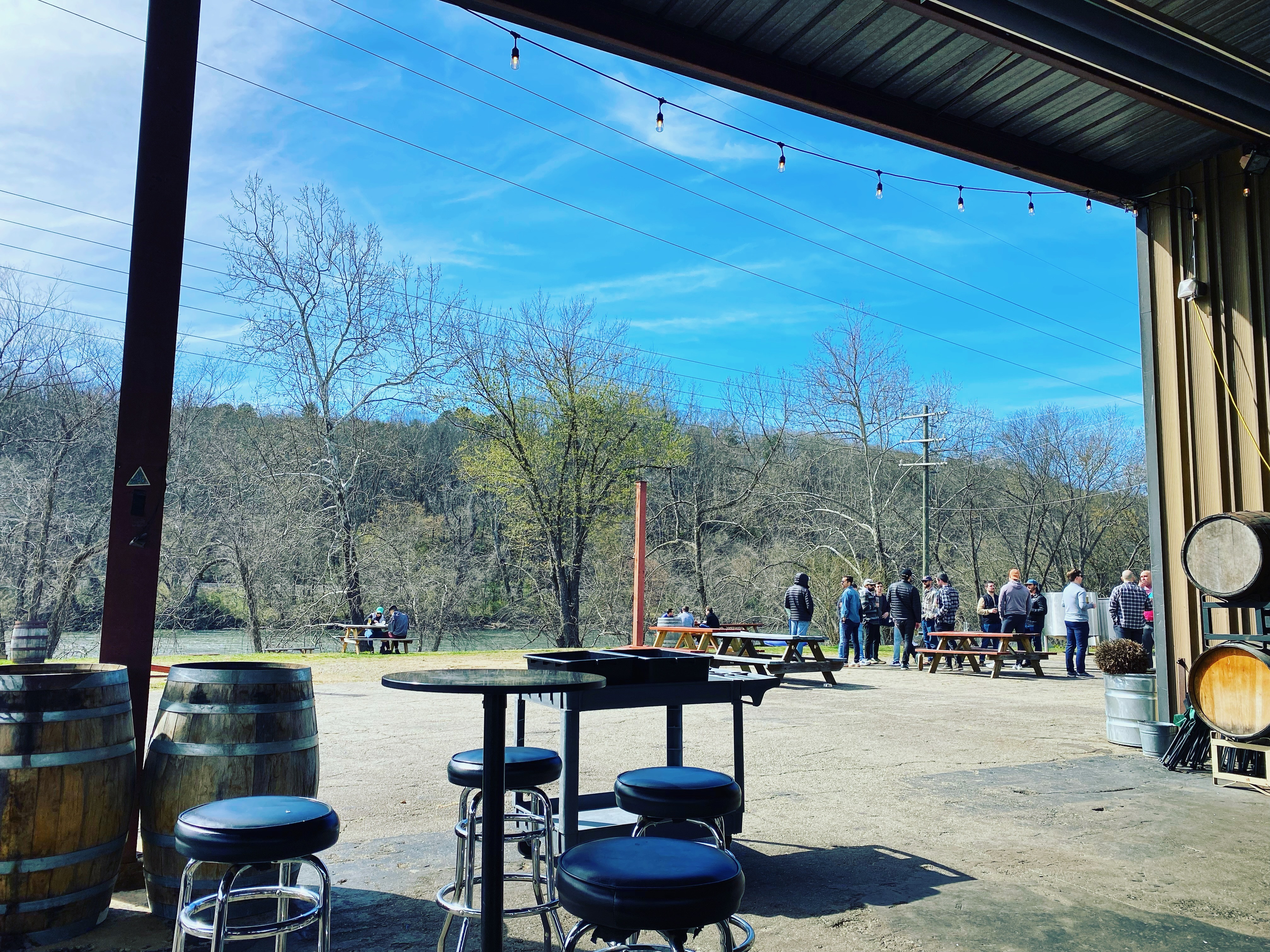
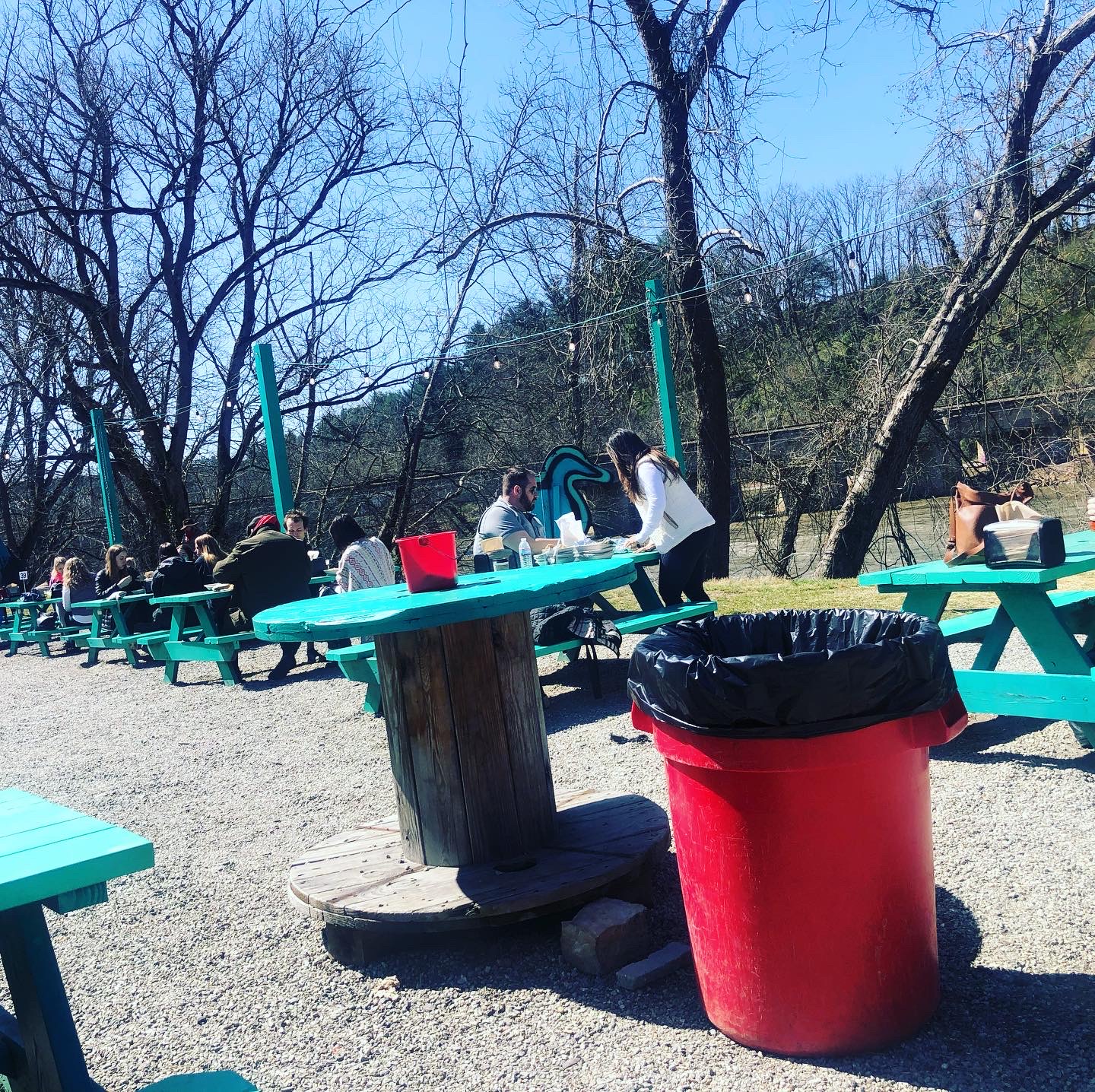
In late January 2021, I invited friends to one of our favorite places and breweries, Zillicoah, right beside the French Broad River.

For people who hadn’t been there, I would always add that the facility was rustic, but beautiful, and the beer was wonderful.

That day was a celebration of my turning 60, although we often found ourselves at this brewery close to West Asheville because we could sit in the chairs or at picnic tables near the river with our dog, Ren, and simply enjoy the sunshine and soft sounds of that flowing water.

January 2021 was bitterly cold, however, so we huddled for a while under the awning and close to the gas heaters that did little to ease the frigid wind.

None the less, we laughed and we had a few proper pints and we had no idea that almost the entire place would eventually be swept away by the very river we have found calming and beautiful.
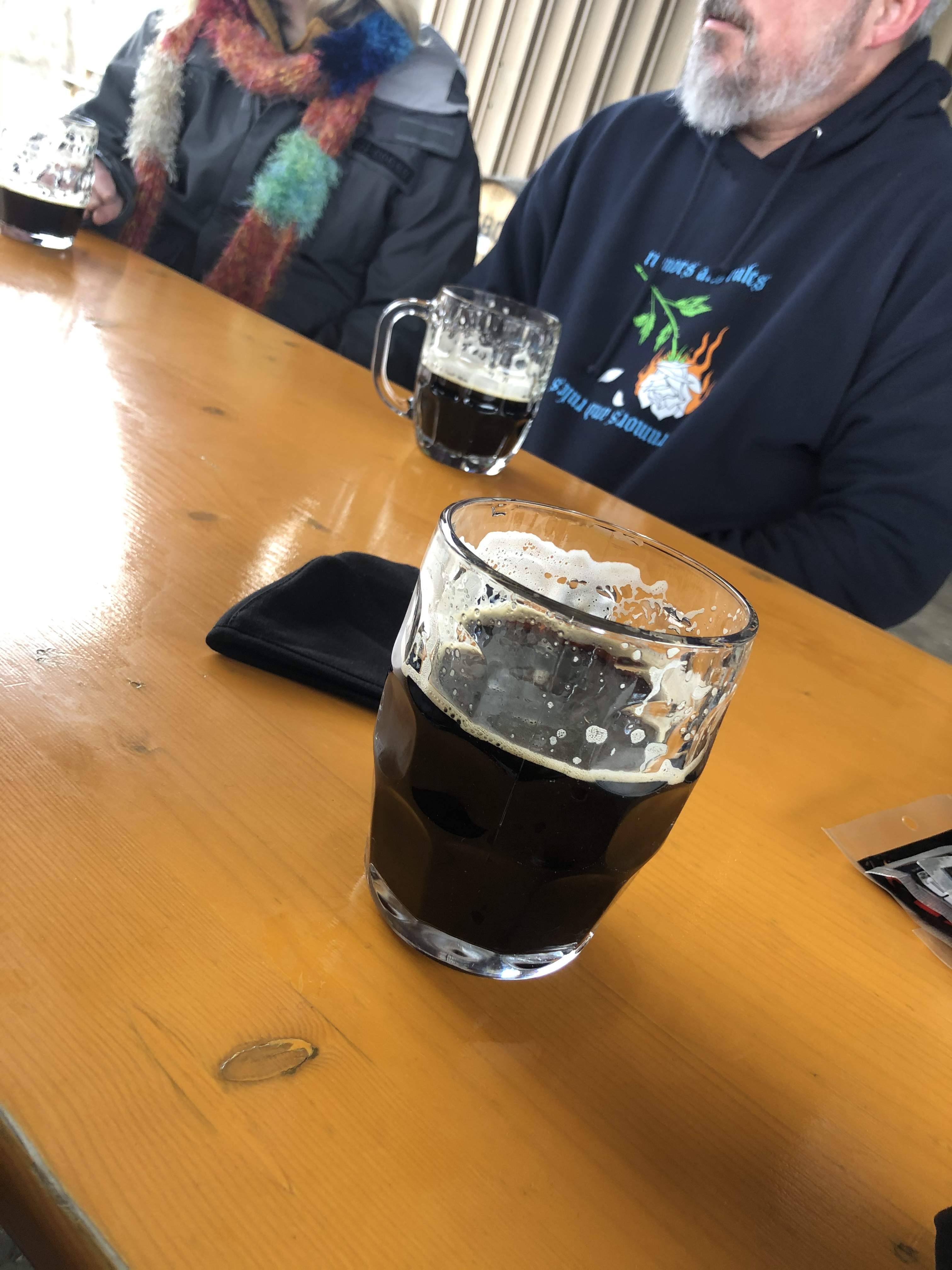
Once the devastation of Helene was revealed, I wasn’t sure if Zillicoah would survive, could survive. But within days, the owners were accepting donation—one of my first gestures for helping—and now are themselves attempting to recreate their business, their livelihood.

Pleb Urban Winery

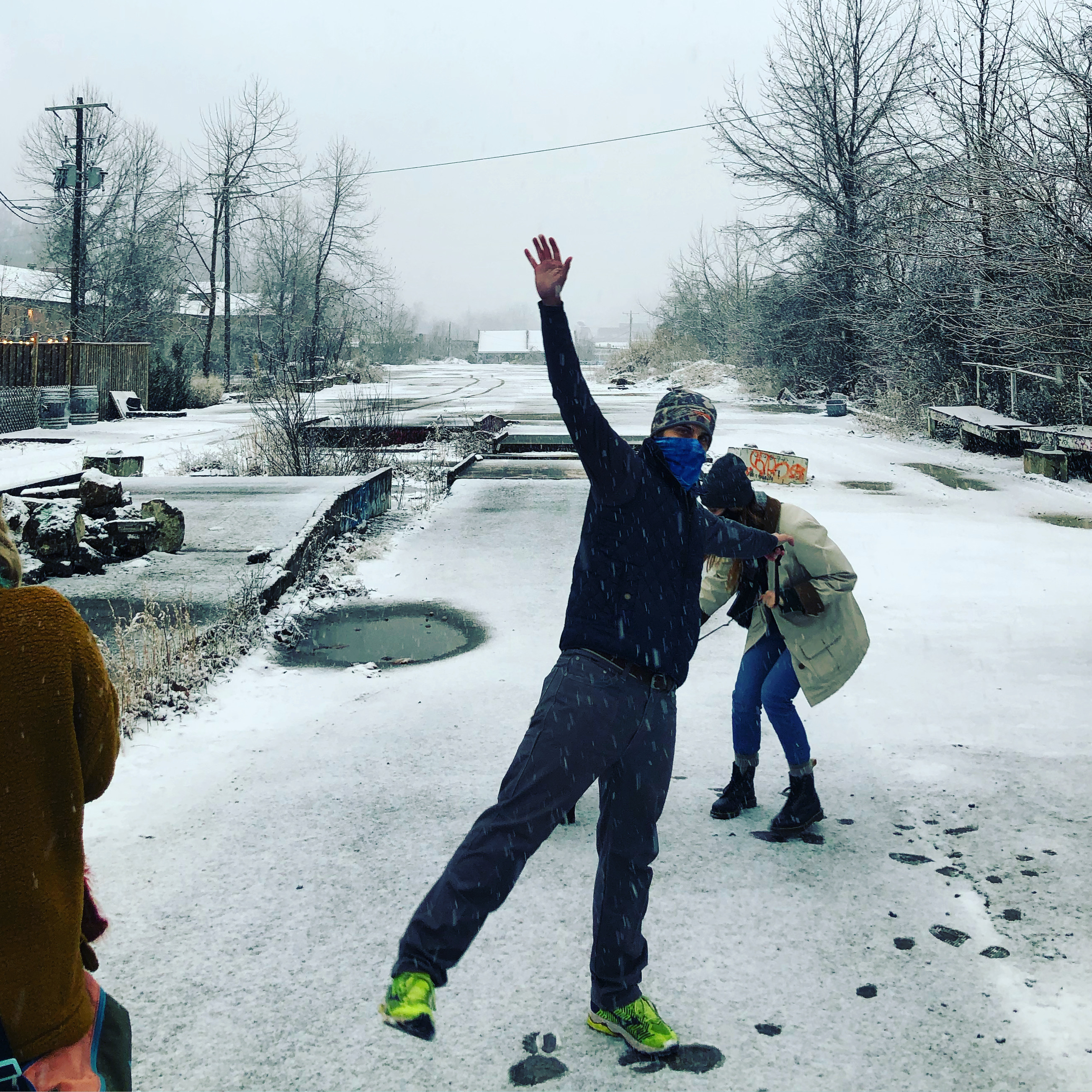
Also near West Asheville at one end of the River Art District (RAD) in Asheville, Pleb Urban Winery lives very warmly in my heart. Our last stop on my 60th birthday in 2021 was at their beautiful facility where it began to snow.

I am not a wine person, but we have always loved the place. And that day was childlike and magical. A birthday, mull wine, and snow.

When we brought home our poodle, Ren (short for Karen, named for The National’s “Karen”), she was dark red and only 3 pounds. One of our first places we took Ren was our local brewery, Rockers.

Since she was tiny, I would hold her in my lap. She gradually developed a habit of resting the front half of her body on tables as visiting breweries and taphouses was a regular outing.

She is two now and almost 50 pounds so this is something we have lost as well.

River Arts District

One of the most wonderful and recently revitalized areas of Asheville was the River Arts District (RAD). Helene’s impact there is very hard to comprehend since it is not just huge loses of buildings but of peoples’ businesses and art.

Weaving through the artists’ workshops was calming and peaceful. We often simply walked around as part of our days in Asheville, a perfect counterbalance to the tourists crowding the South Slope or downtown.

Since I have done a great deal of work on James Baldwin, the mural outside one building was always a moment to pause.

As artists do, despite the tragic losses, they have begun to salvage and resurrect artwork feared gone.

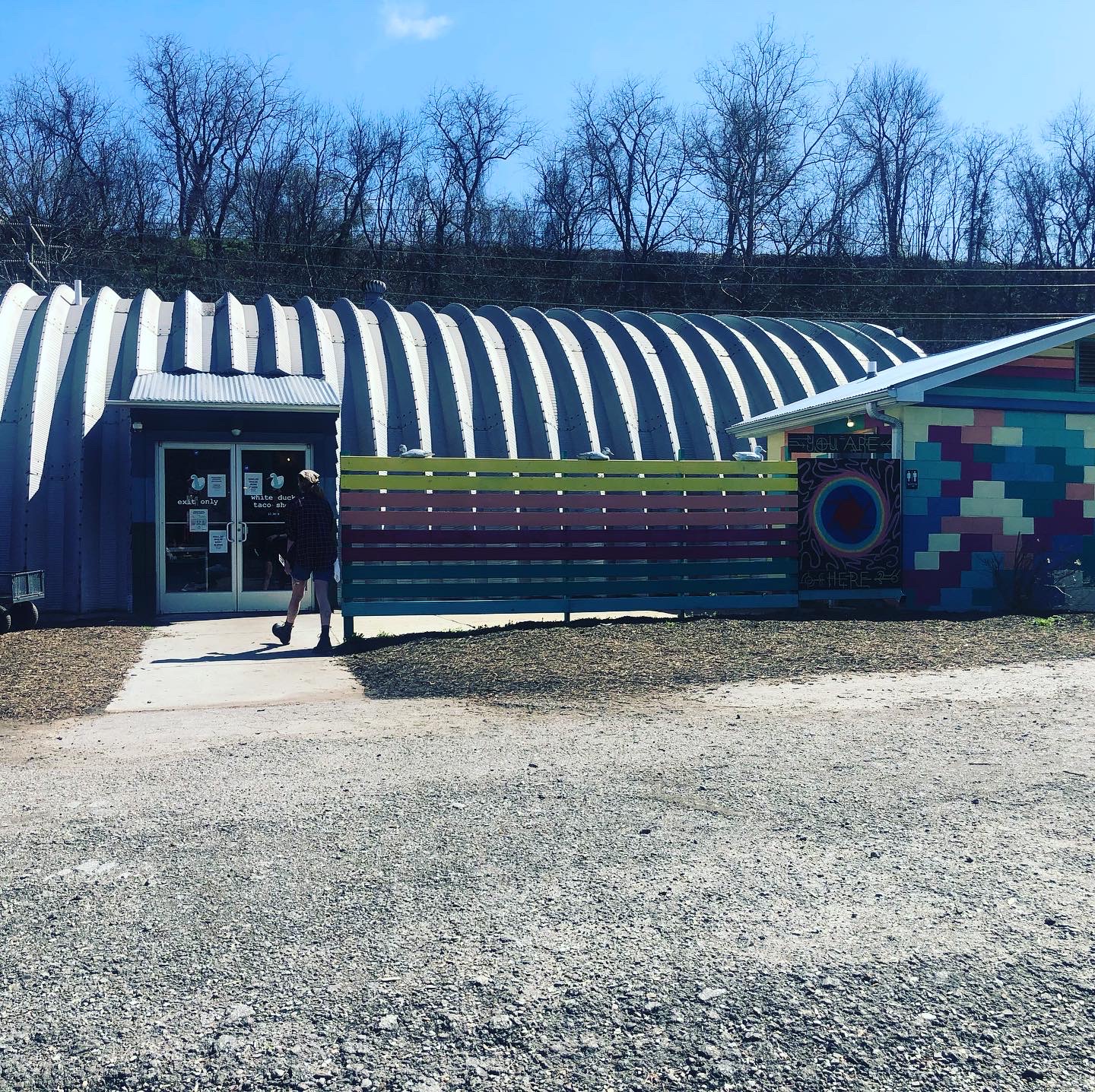
White Duck Taco

Many years ago, when I started going to Asheville as a cyclist, one of the first places I went was the original White Duck Taco that was a house you could see across from where eventually New Belgium built their Asheville location on the French Broad River.

Since our visits to Asheville often included mostly West Asheville and RAD, we would occasionally swing by the location in RAD, also impacted by Helene.
We, of course, still love Asheville, but we are heavy with the losses.

Recreation is a way to express how much we love the things that make us feel fully human, more human.

Recreation is how we salvage and resurrect and move forward.

Nothing will ever be the same in Asheville, but nothing was ever going to be the same.

This is our living and we’d better be sure to look hard enough each time.

This is it. This is everything.
On Art, Imposter Syndrome, and Epistemic Trespassing

Ada Limón’s “The Raincoat” ripped through me as I read the poem; it begins:

When the doctor suggested surgery
and a brace for all my youngest years,
my parents scrambled to take me
to massage therapy, deep tissue work,
osteopathy, and soon my crooked spine
unspooled a bit, I could breathe again,
and move more in a body unclouded
by pain. 

I was diagnosed with scoliosis in the summer of 1975 as I was about to enter ninth grade. My entire high school experience was shaped (literally) by wearing a full upper-torso brace.

This was deeply traumatizing for an anxious, skinny, and deeply self-conscious teenager, but it was also unimaginably moving—especially in hindsight—because my working-class parents never hesitated to seek out, pay for, and support anything I needed medically or emotionally to straighten my spine and live somewhat normally once it was removed.

My scoliosis years are also my introduction to reading, collecting, and drawing from Marvel comic books.

Recently, I have come back to creating art although I abandoned my aspirations to be a comic book artist somewhere in my early 20s.

I started out simply tracing from comic books in 1975, but soon began drawing freehand from my favorite artists working at Marvel. By my senior year and into early college, I was drawing more realistic pencil work usually from photographs.

I was entirely self-taught because my high school in the late 1970s had no art courses (until my senior year when the only art class offered was during a required class), just as it had no Advanced Placement courses.

Early in life, I was engaged in self-education in a way that seems logical as I remained in formal schooling until I was 37, when I finished my doctorate.

Yes, I have degrees in education, but my real expertise is learning.

I also spent decades learning to be a serious cyclist and my own bicycle mechanic. And my life as a creative writer, now mostly poetry, is very much self-taught (although I did enroll in one graduate creative writing course during my EdD).

However, all of this sparks a real tension for me that can be captured well in two concepts—imposter syndrome and epistemic trespassing.

While I have returned to art, prompted by my partner exploring art for the first time in her life through Procreate, I have had to revisit what it means to do any sort of work from a naive and inexperienced position while there are people doing that same work from a position of expertise and many years of purposeful pursuit of that work.

My nephew is a professional photographer, yet, much as my partner expressed, he recently worried over texting about his submitting an art display on school shootings. He and my partner are very aware of both imposter syndrome and epistemic trespassing (although the latter, more so as a concept and not necessarily the term).

The conversations with both of them while I have committed anew to being a visual artist myself (which has not progressed as I anticipated; see here and here) have allowed me to think carefully and deeply about how to justify being self-taught, how to navigate imposter syndrome, and how to avoid epistemic trespassing.

First, as I explained to my nephew, to do any creative work, art for public consumption, takes a degree of arrogance—the assumption that your expression matters in some way and that others should or need to experience it.

As a writer, I have the fortunate “gift” that despite my trepidations and insecurities, once I feel the urge to write something, I do it, I do it with zeal, and then I share it. (Yes, later I suffer the terror of having done all that, but the terror never impedes my doing it, fortunately.)

But as we in the literary world know, arrogance is a dangerous thing; arrogance is so dangerous, much of literature bangs the warning drum repeatedly: “My name is Ozymandias, King of Kings;/Look on my Works, ye Mighty, and despair!/Nothing beside remains” (“Ozymandias,” Percy Bysshe Shelley).

Next, then, since creative acts take at least a modicum of arrogance, the key is the most important lesson I learned over three decades as a dedicated student: The moment you have a “great idea” you must understand that there are many people who have already had that idea and spent years upon years purposefully exploring that idea (or behavior).

Your creative arrogance must be tempered by humility, a healthy alternative to both imposter syndrome and epistemic trespassing.

A doctorate (not exclusively of course) like any advanced formal schooling or training provides skills in that humility—such as first knowing there are experts that have come before you (and concurrent with you), researching who those people and their work are, and then assessing how to navigate their expertise in ways that inform your coming to know and to do.

My scrawny ass, fully braced, standing at the bar of my parents’ house knew that I deeply wanted to draw something as wonderful as Gil Kane, something as stunning as Jim Steranko, something as beautiful as Frank Frazetta.

During that same time I was falling in love with writers—reading, reading, and mimicking.

Being creative requires that balance between arrogance and humility; however, I also think one other reality is very important to confront.

American culture tends to suggest that many human behaviors are for gifted people only—especially visual arts and poetry, for example.

So, most of us pause when we have creative urges—”Who am I …?”—although, and I cannot emphasize this enough, to be human is to be creative.

Creativity is not for the gifted only. Or better yet, we are all potentially gifted, and thus, potentially creative.

My new life of visual art isn’t what I planned or expected. It involves the wonders of technology (iPad and Procreate) that allow me to blend my very naive attempts at photographs, my latent and self-taught abilities as a visual artist, and my many decades as a purposeful and serious writer.

For me, then, I move forward arrogantly with the humility of “Who am I …?” as my background music while I work.

Cowards and Wasp Nest

It was the summer of 1975 when I was diagnosed with scoliosis—and eventually fitted with a massive upper-body brace designed to allow my vertebrae to grow and my spine to return to something like normal.

I was entering ninth grade, scrawny and nerdy. Deeply insecure, introverted, and (although I wouldn’t realize this for over 20 years) nearly paralyzed with anxiety.

My parents were incredibly supportive; they rushed to provide anything they could to make the experience less traumatizing. But I was heading off to school daily in the brace, the self-consciousness of adolescence intensified exponentially.

By sheer coincidence, my refuge from this experience was comic books, which I began collecting and also drawing from while I stood at our long bar separating our kitchen and living area.

Eventually, my efforts as an artist—which progressed from tracing to drawing superhero comics to drawing in pencil realistic portraits and even recreating album covers on the walls of our dorm rooms—waned in my early 20s.

Four-plus decades later, I discovered Procreate on the iPad, having watched my partner teach herself art on the program.

If Procreate/iPad had existed when I was a teen, I believe I would have never stopped doing art, but I have jumped back in.

The feel of drawing digitally has been disorienting so I started doing some photograph-based work to learn how to use the program and adjust to the feel of the digital pencil.

My first experiment was with the only image I have of Lou LaBrant:

What I had planned to be a way to practice Procreate, however, became something I want to do as artwork, although working from my original photgraphs.

Here are two of my projects, both from original photgraphs.

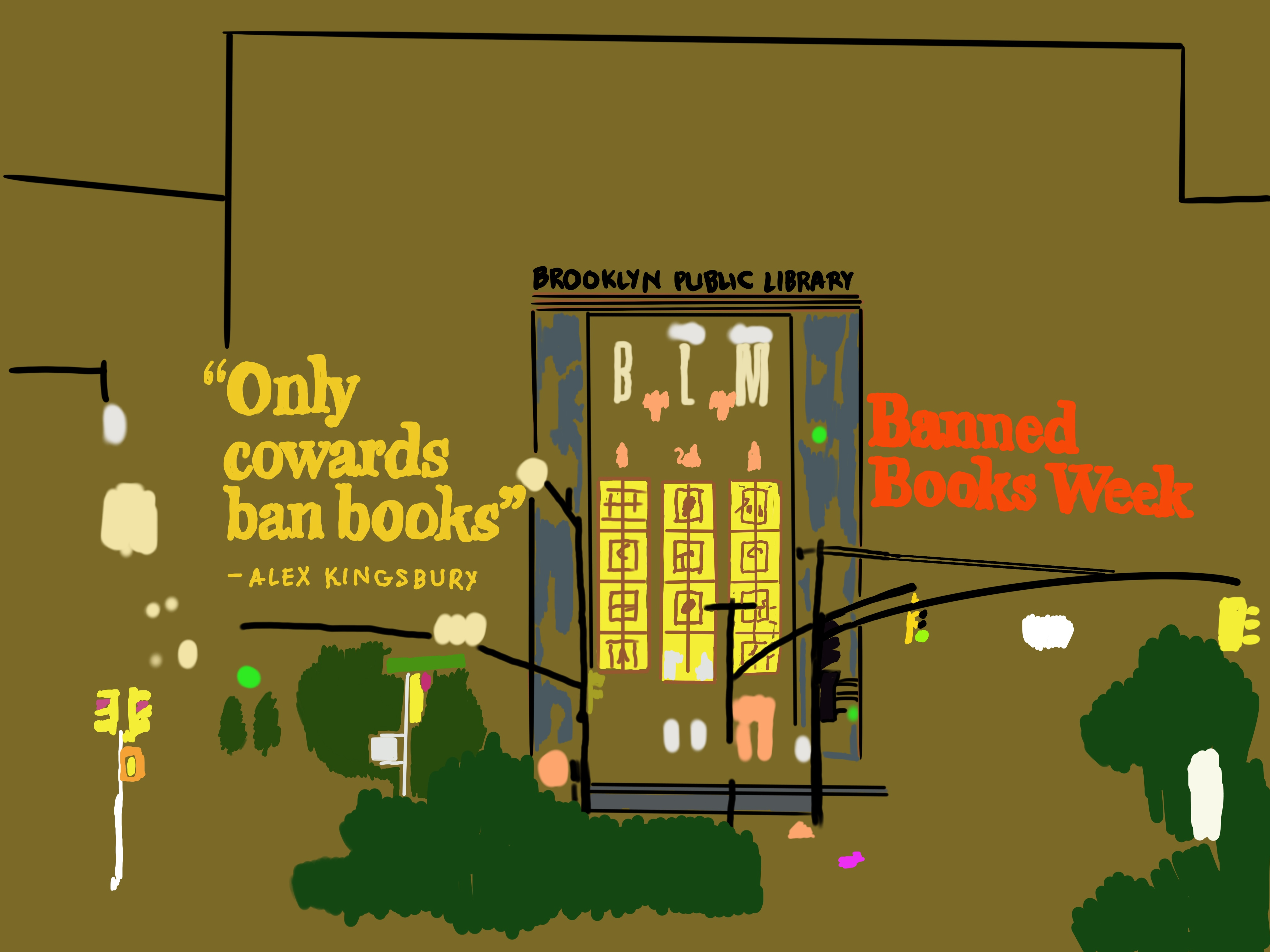
First, I based “Only Cowards Ban Books” on a photograph I took at the Brooklyn Public Library. Part of my purpose here was to play with colors and since this addresses censorship, I have a great deal of space where parts of the original photograph are missing.

Also absent is that the original was taken at dark so I used color to emphasize the sporadic lights.

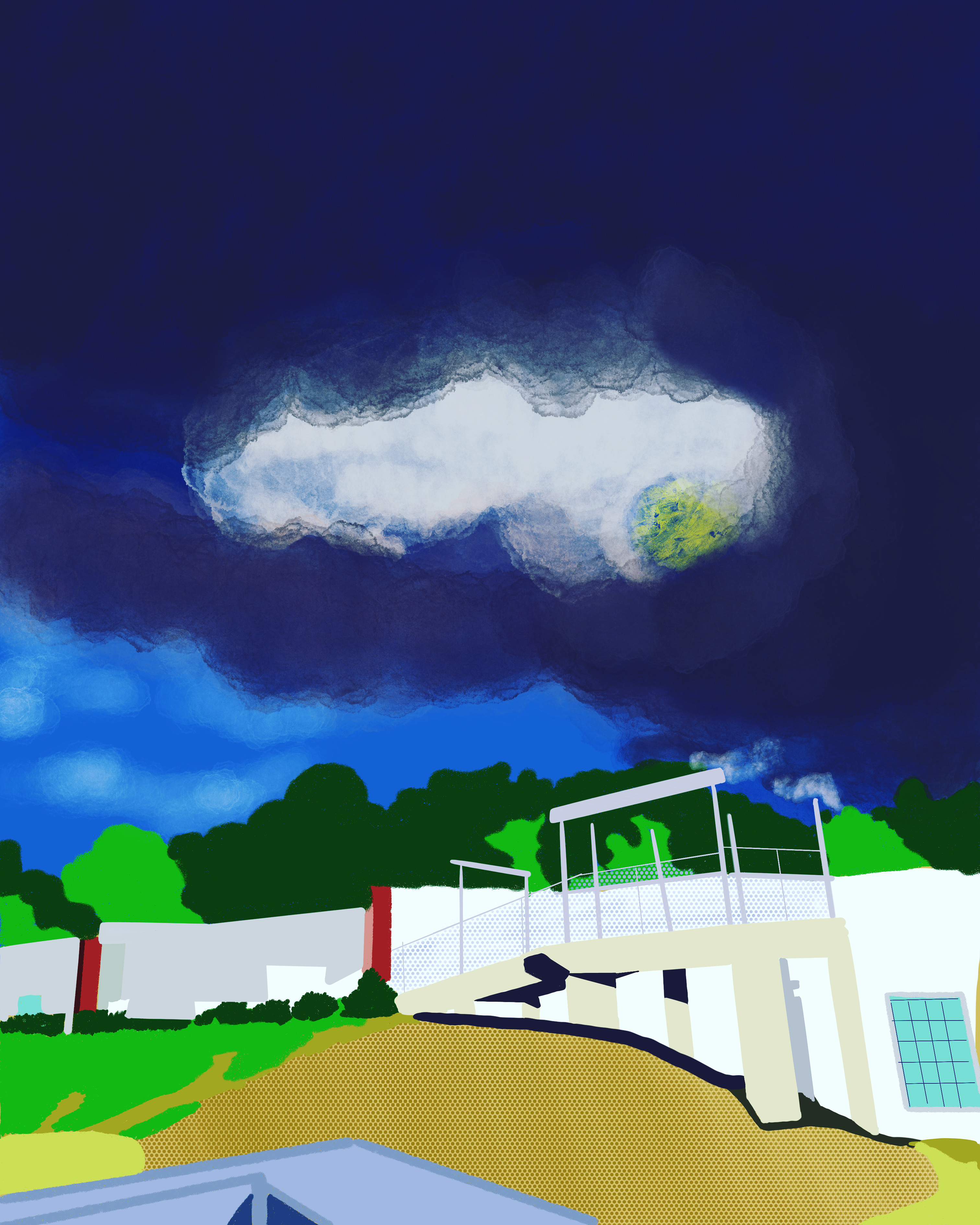
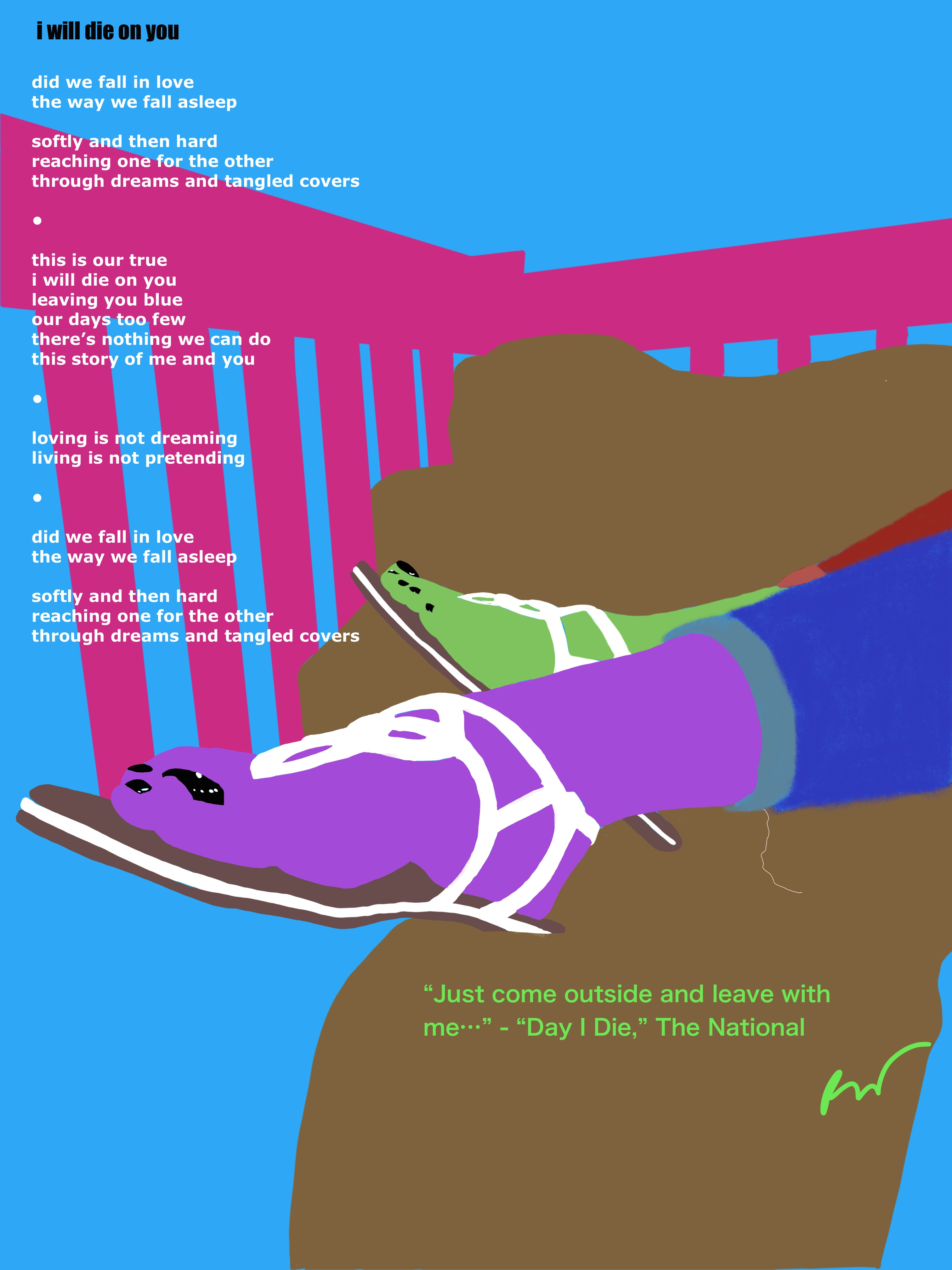
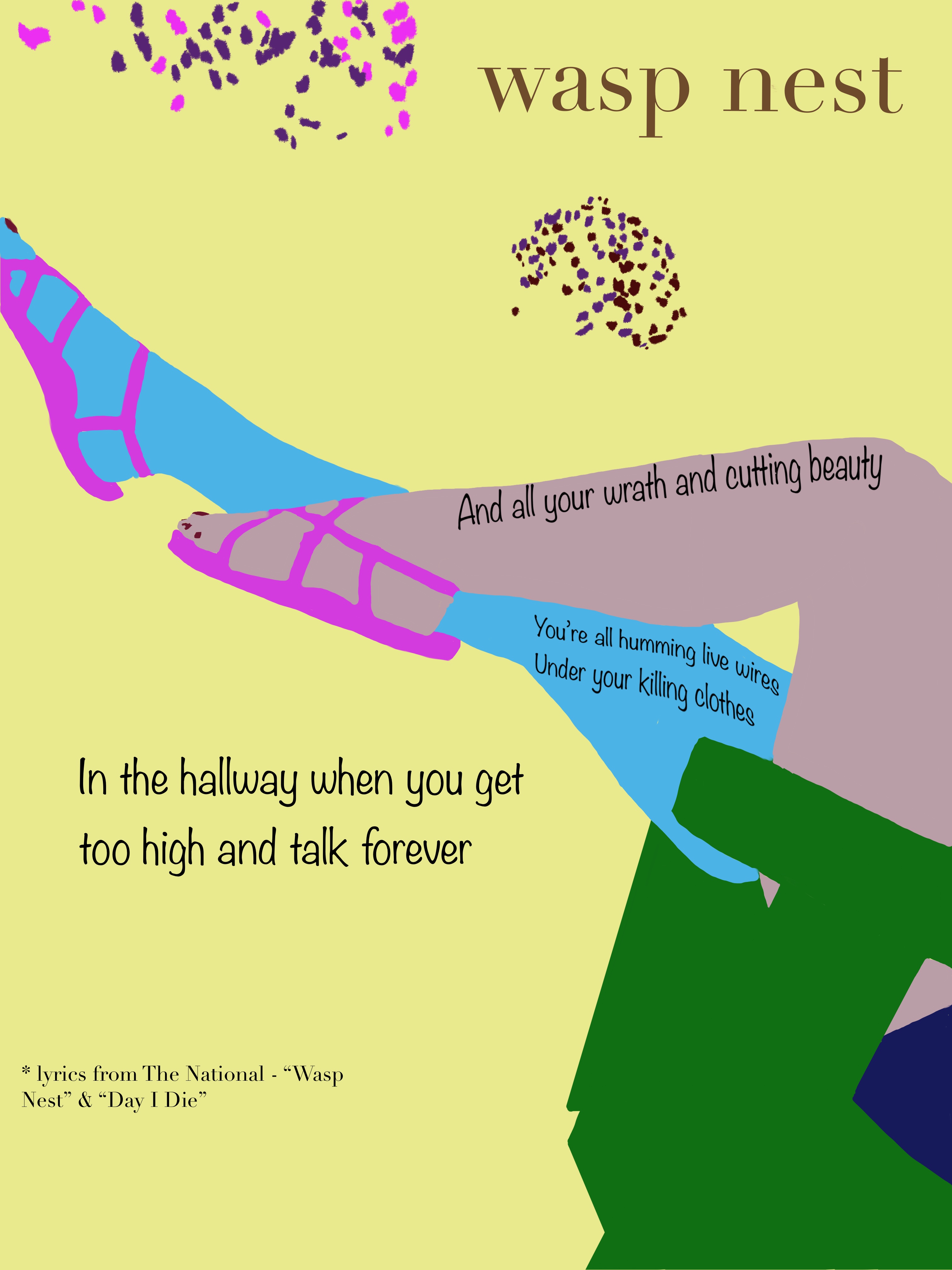
The second is an idea I had after see The National at Red Rocks, working from an image I took while in Colorado this July.

I continue to work in flat colors and again much of the original image is omitted.

The lyrics and central idea of “Wasp Nest” is The National’s songs “Wasp Nest” and “Day I Die.”

Wasp Nest