Category Archives: book banning

Whose Rights Matter?: On Censorship, Parents, and Children

Having been an educator in South Carolina across five decades, starting in the early 1980s, I have witnessed dozens of challenges by parents concerning assigned books, topics discussed, and controversial ideas raised in class discussions.

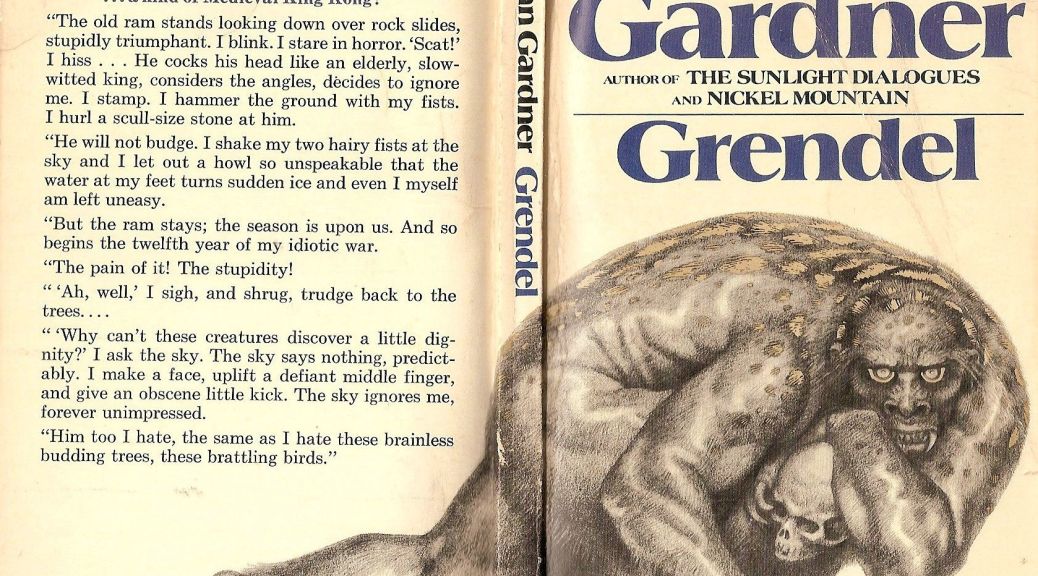
In the first years of teaching, I had assigned John Gardner’s Grendel, a retelling of sorts of the Old English classic Beowulf narrative, to my advanced tenth grade American Literature class (knowing they would read Beowulf the next year and also as preparation for advanced students going to college in just a few years).

Grendel was a highly regarded novel, experimental and challenging but also often humorous and deeply thought provoking. Gardner was also one of favorite authors, and his work fit well into preparing students for the Advanced Placement program.

However, this novel became my first book challenge experience as a teacher. I learned a few things.

First, it didn’t take long—my students informed me—to discover that a few parents had conspired to challenge the book primarily as a way to challenge me.

Next, I found out quickly that a few parents did have the power for making decisions for everyone—since the book was pulled from required reading for all students as those two parents requested (although it remained on my classroom shelves and in our library).

While Gardner’s novel does include what some people would consider crude language and one very brief graphic scene, this parent challenge was entirely about ideology, not literary quality or even offensive material.

More broadly, I learned that what I taught would always be about the politics of whose rights matter, including the rights of everyone in a free democracy, parents, teachers, and of course (although this is too often ignored), students.

A few other moments stand out from my two decades teaching high school English.

Once, I had a heated debate with the school librarian about Alice Walker’s The Color Purple. By then, I was English Department chair and teaching AP Literature and Composition. Walker’s celebrated novel was included in that AP course (which is supposed to reflect college-level content and instruction).

The librarian had children who would be in that course, and she was adamant that The Color Purple was pornography, not literature. I calmly referenced several critical books on the shelves of the library, literary criticism on Walker and the novel.

Again, this was not really about the novel; this was about fundamentalist religious beliefs and racism.

Which brings me to maybe the most powerful censorship moment of my career.

I cannot stress this enough, but book bans and censorship are almost never about a book. Book bans and censorship are about some people imposing their ideologies on all people.

I was fortunate to have as a colleague the only Black teacher in our English Department, Ethel Chamblee. She was a powerful advocate for students and one of the kindest supporters of me as a teacher I have ever experienced.

While I was chair, Ethel and I worked to diversify our required reading lists for high school students in our English courses. Before we did so, the required works were all by white authors, and almost entire while men.

This process of revising the reading list was laborious because one reason the so-called canon remains white and male is that older works are often absent any potentially offensive language and all the sex is cloaked in metaphor (my students routinely failed to recognize what Daisy blossoming for Gatsby implied).

However, we eventually chose and approved adding Zora Neale Hurston’s Their Eyes Were Watching God. Hurston’s novel had been out of print until being fairly recently resurrected, notably as a recommended novel in AP programs.

The novel has some modest sexual content, but certainly isn’t as graphic as The Color Purple or even many of the classics we had required for decades.

During the first semester the book was taught, in Ethel’s classes, a parent complained. By then, I had established a process for parent complaints based on NCTE’s guidelines, including that anyone raising a concern had to complete a form and identify if they had or not read the book.

We had a committee of high school and middle school teachers who reviewed the complaints and issued a ruling.

Since the form demonstrated the parent had not read the book and since the parent boldly admitted they did not want their child reading a work by a Black author (a student sitting in a classroom taught by a Black woman, by the way), we quickly rejected the complaint and noted the student could be issued a different novel instead, but the class assignment remained with the novel on our required reading list.

Now the important part: The parent complaining was a leader in the local KKK.

Once again, I cannot stress this enough, but book bans and censorship are almost never about a book. Book bans and censorship are about some people imposing their ideologies on all people.

Should the bigoted ideology of the KKK determine what books teachers can teach and what books students can read for an entire public school?

Although there is an even harder question—should the bigoted ideology of the KKK be a prison for a child that just happens to be born into that family?

In 2022, book challenges are occurring across the U.S., repeating my own experiences above. These are attacks on freedom in the name of using public schools and public libraries to impose some people’s ideologies onto everyone.

One parent having a book removed from a school library makes decisions for all other parents and students. So who determines whose rights matter?

Academic freedom isn’t free as long as we allow the rights of a few to determine the rights of everyone.


Recommended

Grendel Introduced Me to Allegory, Allusion, Symbolism, and Generally Blew My Mind

Conservatives are Wrong about Parental Rights

Curriculum as Windows, Mirrors, and Maps

Banned in the U.S.A. Redux 2021: “[T]o behave as educated persons would”

Banning Books Is Un-American

Censorship, Banned Books Awareness: “Only Cowards Ban Books”

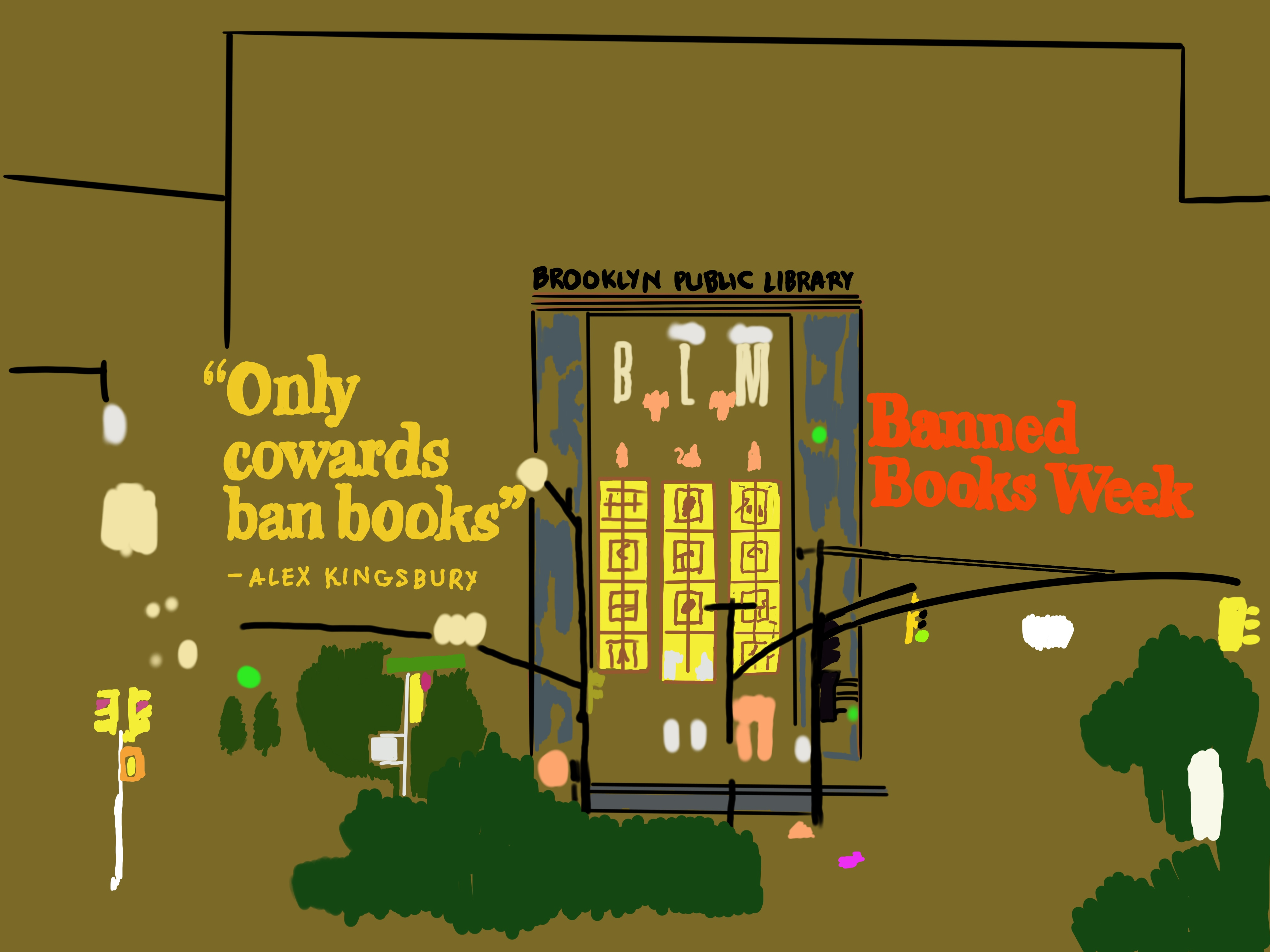
I have created a design based on my original photo of the Brooklyn Public Library and a powerful quote by NYT editor Alex Kingsbury (who has approved use):

Please follow this LINK to purchase, and note you can click on a tshirt (or product) of your choice, and adjust quality/price, color, etc.

This site does generate profit; therefore, ALL profit generated will be donated to libraries and other organizations dedicated to free access to books and academic freedom.

DONATE to Books Unbanned Tour

Cowards and Wasp Nest

It was the summer of 1975 when I was diagnosed with scoliosis—and eventually fitted with a massive upper-body brace designed to allow my vertebrae to grow and my spine to return to something like normal.

I was entering ninth grade, scrawny and nerdy. Deeply insecure, introverted, and (although I wouldn’t realize this for over 20 years) nearly paralyzed with anxiety.

My parents were incredibly supportive; they rushed to provide anything they could to make the experience less traumatizing. But I was heading off to school daily in the brace, the self-consciousness of adolescence intensified exponentially.

By sheer coincidence, my refuge from this experience was comic books, which I began collecting and also drawing from while I stood at our long bar separating our kitchen and living area.

Eventually, my efforts as an artist—which progressed from tracing to drawing superhero comics to drawing in pencil realistic portraits and even recreating album covers on the walls of our dorm rooms—waned in my early 20s.

Four-plus decades later, I discovered Procreate on the iPad, having watched my partner teach herself art on the program.

If Procreate/iPad had existed when I was a teen, I believe I would have never stopped doing art, but I have jumped back in.

The feel of drawing digitally has been disorienting so I started doing some photograph-based work to learn how to use the program and adjust to the feel of the digital pencil.

My first experiment was with the only image I have of Lou LaBrant:

What I had planned to be a way to practice Procreate, however, became something I want to do as artwork, although working from my original photgraphs.

Here are two of my projects, both from original photgraphs.

First, I based “Only Cowards Ban Books” on a photograph I took at the Brooklyn Public Library. Part of my purpose here was to play with colors and since this addresses censorship, I have a great deal of space where parts of the original photograph are missing.

Also absent is that the original was taken at dark so I used color to emphasize the sporadic lights.

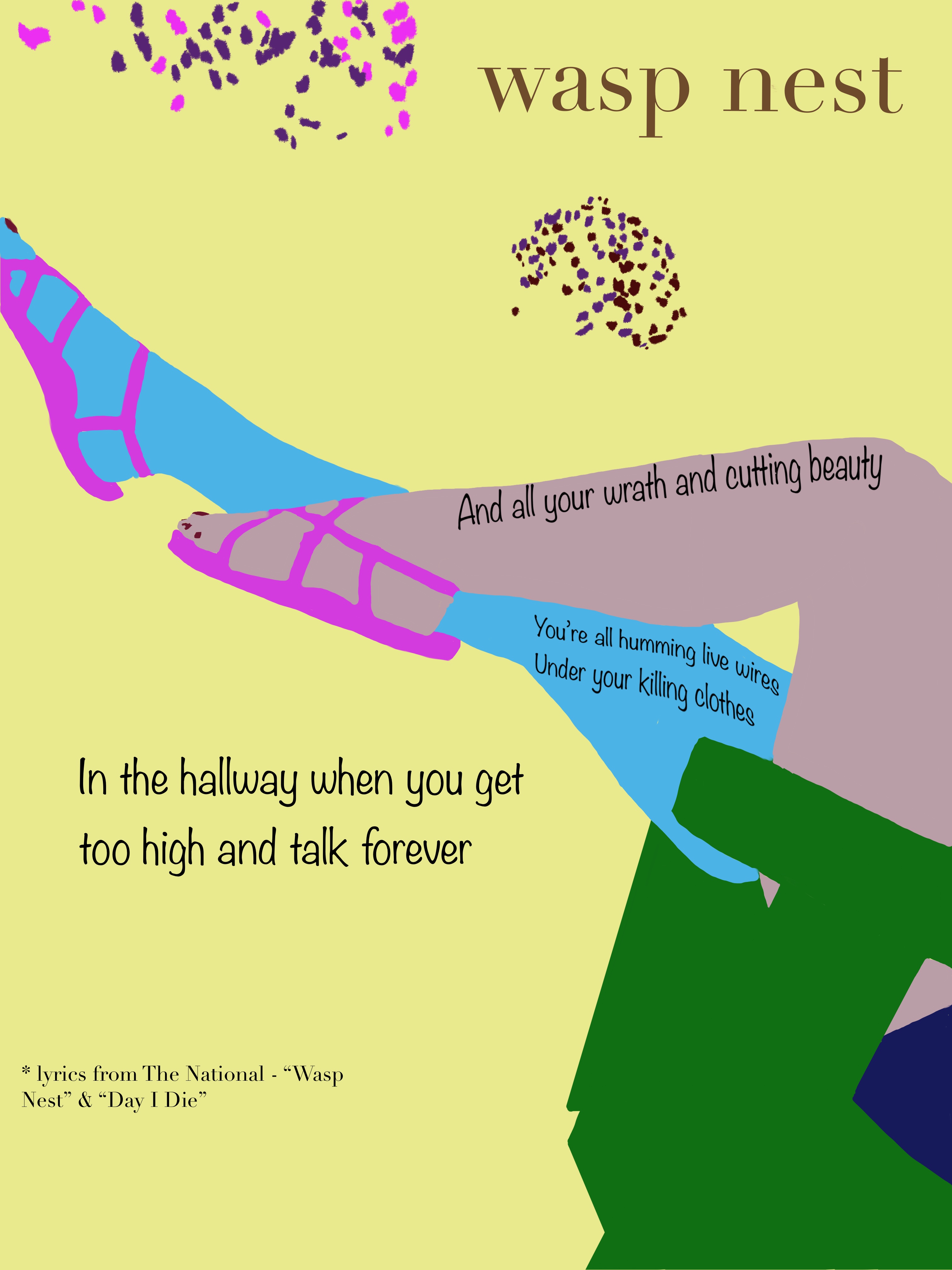
The second is an idea I had after see The National at Red Rocks, working from an image I took while in Colorado this July.

I continue to work in flat colors and again much of the original image is omitted.

The lyrics and central idea of “Wasp Nest” is The National’s songs “Wasp Nest” and “Day I Die.”

Wasp Nest

Republicans Misreading “Banned Books Week” across Upstate South Carolina

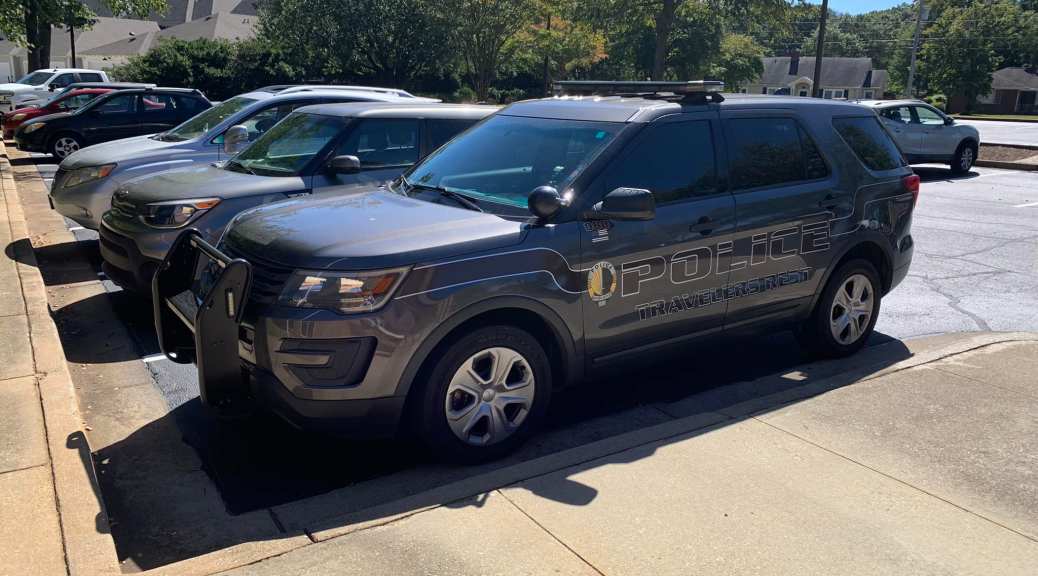
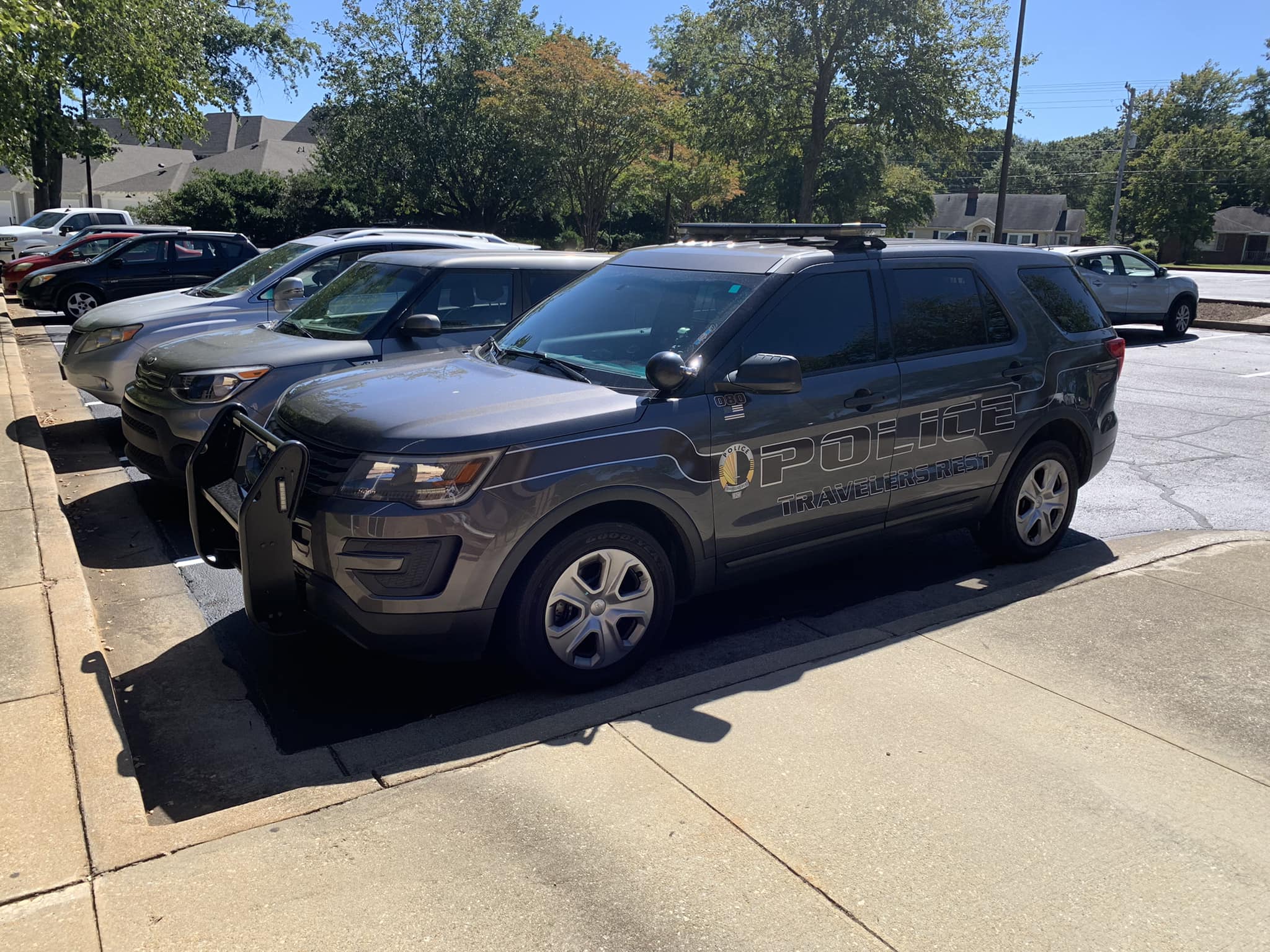
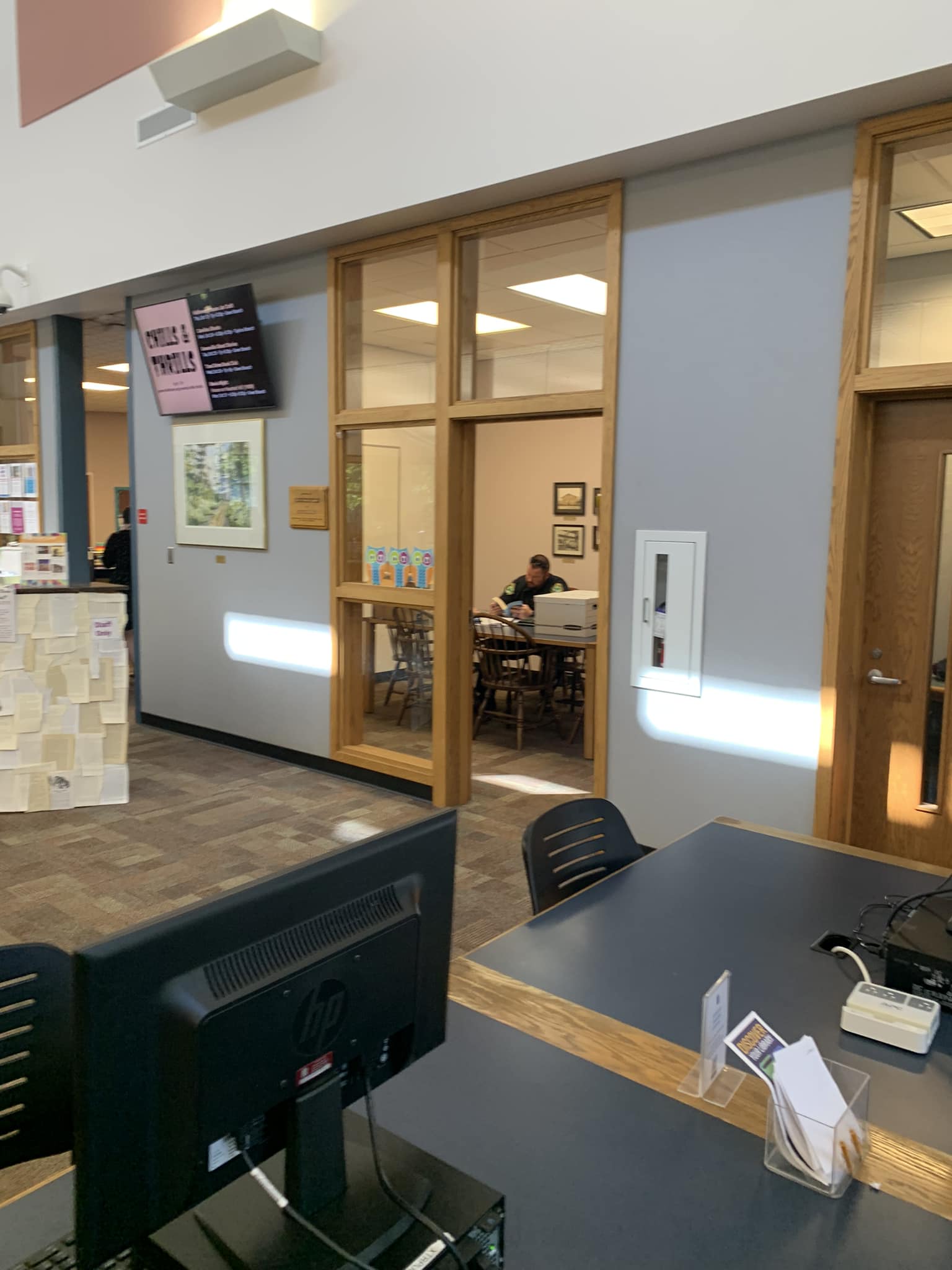
The Travelers Rest (SC) branch of the public library had a visit from the local police recently:

Image courtesy Brandon Inabinet

As reported by Grace Runkle:

Police have now been pulled into the debate over what should and shouldn’t be in a library.

Travelers Rest police chief Ben Ford said his department received an email saying the Travelers Rest library branch was spreading obscene material.

The email named LGBTQ books that were being promoted as part of a Banned Books Week display, saying they contained sexually explicit material.

Ford said they investigated the claim, like they would with any other, but said it was unfounded.

Police called to library to investigate ‘obscene material’

This follows Pickens County schools banning Stamped, Racism, Anti-Racism, and You (for 5 years) and Perks of Being a Wallflower (for 3 years). As well, Runkle also reported, the Greenville County Republican Party targeted LGBTQ+ books included in children’s sections of the library.

Unreported, however, are numerous “quiet” bans and censorship occurring weekly if not daily in schools all across the Upstate of SC and the US broadly.

For Republicans, Banned Books Week is a time for them to actively ban books—another misreading of what academic freedom and individual rights mean in the US.

Again, the new normal in US schools—classrooms and libraries—and now increasingly including public libraries is allowing individuals to ban access to books for everyone else.

This is not about parental rights, as one often-banned author asserts:

“They act like they’re concerned for the kids, but they’re not,” said Ellen Hopkins, the author of Crank, Tricks, People Kill People, and many other challenged books. “By saying, ‘Books on LGBTQ content can’t be there,’ they’re not only saying these kids don’t count. They’re saying they shouldn’t exist.”

…According to the PEN list, Hopkins is the author most frequently banned, with 43 bans. Gender Queer by Maia Kobabe, the second most banned author, is the most banned book. The memoir has been pulled from 41 districts, according to the report. Next comes All Boys Aren’t Blue by George M. Johnson and Pérez’s Out of Darkness.

Most-Banned Author in America Calls BS on Parents’ ‘Concern’

If the bans were about parental rights, we would be acknowledging that when one parent has books removed from libraries and classrooms, that parent is denying the rights of all other parents who want their children to have access to those books.

But even more important is that access to books is about children’s and students’ rights, as author George M. Johnson explains:

My book, “All Boys Aren’t Blue,” is a young adult memoir about my experience growing up Black and queer in America. In my story, I discuss growing up in a Black family who loved and affirmed me; the good, bad and ugly truths about what teens really deal with; and my journey through gender and social identity. My life was and still is full of joy, but also include some painful moments involving nonconsensual sex, as well as my experience with losing my virginity. Unfortunately, my sexual experiences have been deemed “an issue” — pornographic by some. To be clear, this book is for ages 14-18 and it contains truths that many of us have experienced and are healing from. People’s backlash, in all forms, is being used to disguise the real issue.

George M. Johnson: What Getting My Book Banned Taught Me About Telling Your Truth

Access to books is access to ideas and coming to know ourselves, regardless of whether or not anyone meets societal standards of “normal,” which can be very harmful for those who discover they exist outside those expectations. Suicide and self-harm are disproportionate among LGBTQ+ young people, and book banning as well as curriculum censorship contribute to hostile environments for these young people.

Maia Kobabe details that personal journey:

I came out as queer to my mom as a senior in high school. It took almost a decade to also come out to her as nonbinary, even though I had been questioning my gender identity since I started puberty at age 11. A major reason for this long delay between my first coming out and my second was the lack of visibility of trans and nonbinary identities when I was young. By high school, I had met multiple out gay, lesbian and bisexual people, but I didn’t meet an out trans or nonbinary person until I was in grad school. The only place I had access to information and stories about transgender people was in media — mainly, in books.

Schools are banning my book. But queer kids need queer stories.

Ultimately, book banning and censorship can never be justified. If parents want to shelter or indoctrinate their own children (homeschooling that teaches flat-earth misinformation)—as disturbing as that is—that is substantially different than any parent seeking to control how everyone else navigates books, ideas, and learning.

Republicans are misreading Banned Books Week as a call for bans and censorship, the most UnAmerican ways to destroy our libraries and schools.

Armed police officers walking into a public library to evaluate the books available to a free people is proof that we are in fact not a free people.


Take action here: Stop Discriminating Against LGBTQ People

Cowards, Censorship, and Collateral Damage: The Other Reading War

My partner and I took two of my grandchildren—Brees, 6, a kindergartener, and Skylar, 8, a third-grader—to a local high school football game where their father is an assistant coach.

As we were leaving, Brees said “Dorman” as we passed a sign for the school. My partner asked if he read the word, he explained he remembered “Dorman” starts with a “D” and ends with an “N” so he made a contextualized, and correct guess.

We praised him, and then he proceeded to spell “Dorman” with brief hesitations—”D,” “O,” “R,” “M,” “E,” “N.” My partner told him he did a great job and that he was nearly perfect, but the final vowel is “A,” although the “E” was a reasonable choice considering how the word is pronounced (especially here in the South).

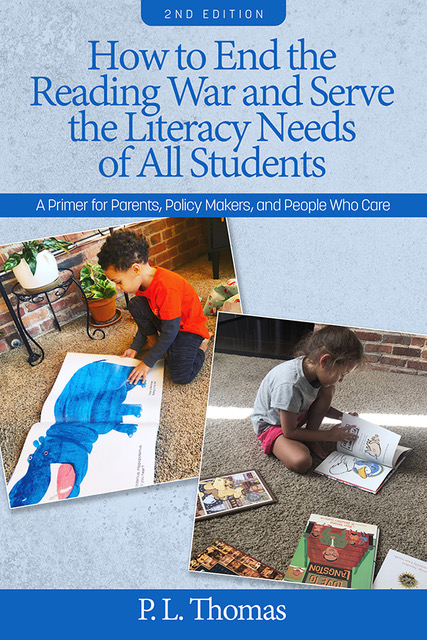
I think about these children, beginning and emerging readers both, often as I continue to challenge the reductive current reading war driven by the “science of reading” movement. I have written about Skylar, an eager reader, and included both children on the cover of the second edition of my book about that reading war:

Brees demonstrated the value of having a wide and deep toolbox for reading for meaning, and represents, I think, the real-world value of seeking context and clues beyond simple decoding and reliance on phonics (although both are, of course, part of that toolbox). Ultimately, the key to his reading “Dorman” was experiential—having visited the school and having seen the word on clothes, etc., with his father.

And while this reading war leaves me nearly drained from frustration—and even angry—I am possibly more concerned about the other reading war. That reading war is the rise of censorship by parents and elected Republicans as well as the self-censorship occurring in our schools, self-censorship that is often nearly invisible but eroding literacy and academic freedom.

To paraphrase John Dewey and add a bit of attitude, why the hell are we concerned about teaching children to read if we are bound and determined to erase books and meaningful texts from their hands?

Traditionally, we have implemented in schools two approaches that I reject—whole class assigning and studying of texts (often limited to a very narrow canon) and allowing parents to opt their children out of those assignments.

My frustration with those practices now seems very naive since the new normal is that any single parent can have books and texts banned not just for their children, but for all children. And unlike the occasional complaint I experienced when teaching high school, states have passed book bans and curriculum censorship—exclusively by Republicans—all across the U.S.

I spent a few days this past week in Flatbush/Brooklyn, and while walking around, passed the Brooklyn Public Library just after sunset:

There is no way to justify book bans or censorship—not by Republicans, not by parents, and especially not by educators, the most vile actors in this movement.

There are books and ideas I genuinely loathe, such as the so-called novels of Ayn Rand. I criticize them, and would never encourage anyone to read them, but I would fight to make sure they are on book shelves of school and public libraries and in books stores, that anyone has access to them, that everyone has access to them.

“Coward” seems too mild a word, in fact.

But, yes, people who ban books, people who censor are cowards, and our children as well as academic freedom are the collateral damage in this senseless and UnAmerican reading war.

Misreading Innocence in Teaching and Learning

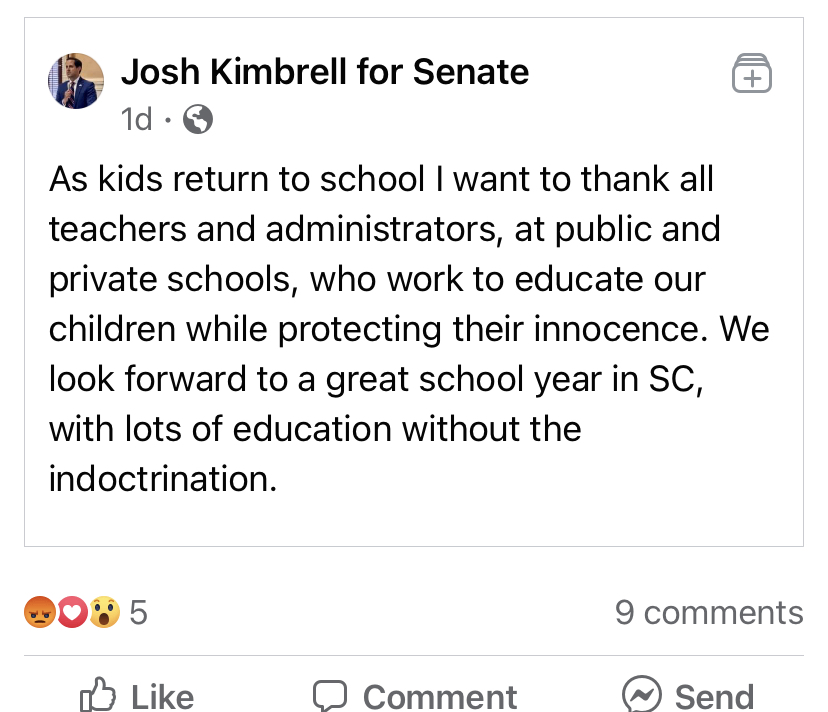
Back to school 2022 looks different than any of my many years as a student and even more as a teacher. “Back to school” now means curriculum bans for teachers and censorship for students.

It’s the Upside Down of the American Dream and academic freedom.

One recurring (and misleading) justification by Republicans banning curriculum and censoring books is a manufactured crisis around “age-appropriate” content; however, several Republicans have also directly begun including in their claims that the role of school and teachers is to protect childhood innocence:

As a parent, grandparent, and almost 40-years a teacher, I want to emphasize that the role any adult plays in mentoring, parenting, or teaching children is not to protect their innocence (more on why later), but to provide support and guidance as children mature and come to know the full, complicated, and often disturbing real world.

To keep a child or teen innocent is to deny them their full humanity and autonomy.

As a reader and teacher of literature, I am aware of the power and allure of idealizing innocence.

Setting aside for a moment the tremendous problems with author J.D. Salinger, his career was built on a nearly fawning adoration of his central motif, the “catcher in the rye” imagery of Holden Caulfield’s quest to protect his sister’s (and all children’s) innocence because he clearly has been traumatized by his entry into the adult world.

Author Eudora Welty praised Salinger as a writer in her review of Nine Stories in 1953:

The stories concern children a good deal of the time, but they are God’s children. Mr. Salinger’s work deals with innocence, and starts with innocence: from there it can penetrate a full range of relationships, follow the spirit’s private adventure, inquire into grave problems gravely–into life and death and human vulnerability and into the occasional mystical experience where age does not, after a point, any longer apply. Mr. Salinger’s world urban, suburban, family, mostly of the Eastern seaboard is never a clue to the way he will treat it: he seems to write without preconception of shackling things.

Threads of Innocence

Like Salinger (and nearly as problematic as a human), e.e. cummings idealized childhood and seemed to lament adulthood: “children guessed(but only a few/and down they forgot as up they grew.” Like many writers and artists throughout history, cummings portrayed childhood innocence as being closer to God (or the Universe); adulthood is a forgetting.

Both of these authors were attractive to me as a young writer, teacher, and even scholar, but the most compelling work about innocence was always William Blake, who complicated the innocence/experience dynamic. Blake’s work shows the necessary duality of life without idealizing innocence—even as he detailed the darkness of experience.

What is innocence?

It is a lack of awareness, a lack of knowledge, the absence of living life that is idealized not only in literature but in Christianity—the fall from grace, eating the fruit of the Tree of Knowledge, being cast out of the idyllic innocence of the Garden of Eden.

But innocence is extremely dangerous, and the innocent are easily manipulated, easily controlled.

And here is the truth about curriculum bans and book censorship: Republicans, conservatives, and Christian fundamentalists are primarily concerned about control—especially controlling women and children.

There is no crisis in our schools concerning exposing children and teens to content and books that are not age appropriate. If anything, traditional schooling still coddles children and teens—and especially young adults.

Protecting the innocence of children is not a valid goal for teachers or schooling; protecting the innocence of children is cruel and dehumanizing, in fact.

But that is not what Republicans are concerned about.

This is pure and simple a power grab, a way to control minds and impose a worldview on others.

Welcome to the Upside Down of the American Dream.


Recommended

Experimentalism and its relation to a new psychology (1935), Witty and LaBrant

Announcing: Fall 2022 through Winter 2023 Schedule

During my first 18 years as an educator, I was a high school English teacher in rural South Carolina, my hometown in fact. I never imagined doing anything else, but I did attain my doctorate in 1998, still planning to be Dr. Thomas, high school teacher, for my entire career.

It is 2022, and I just completed 20 years in higher education, where I am a full professor in education and (fortunately) also teach first-year and upper-level writing. This fall I am taking my first ever sabbatical.

However, if anything, my scholarly schedule is more packed than at any time in my career. If you are interested in my work, I invite you to join me at the following presentations/keynotes and/or look for my upcoming publications.

Fall 2022 through Winter 2023 Schedule

Publications

How to End the Reading War and Serve the Literacy Needs of All Students (2nd Ed)(2nd Edition) – IAP – [first edition]


Thomas, P.L. (2022). The Science of Reading movement: The never-ending debate and the need for a different approach to reading instruction. Boulder, CO: National Education Policy Center. Retrieved [date] from http://nepc.colorado.edu/publication/science-of-reading


A Critical Examination of Grade Retention as Reading Policy (white paper)

P.L. Thomas, Education, Furman University (Greenville, SC)

Prepared for the Ohio Education Association in response to Ohio’s “Third Grade Reading Guarantee”

September 15, 2022

[Download as PDF and supporting PP]


Presentations/Keynotes, Podcasts, Webinars

UPDATE (Supplement for Presentations below)

Update: Science of Reading Movement (PP) 2 February 2023

2022

Great Lakes Center for Education Research & Practice

September 28, 2022

Webinar

Science of Reading Policy Brief (NEPC)


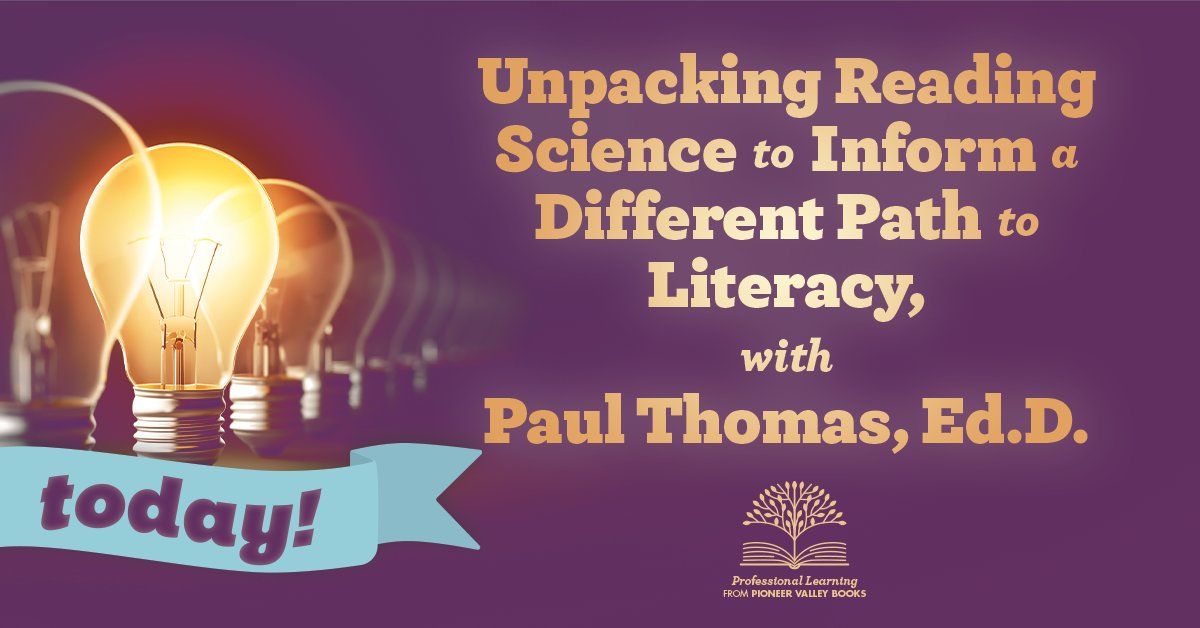
Pioneer Valley Books

October 20, 2022 – 4:00 – 5:00 pm

Webinar (view online)

PowerPoint HERE

Unpacking Reading Science to Inform a Different Path to Literacy 

The “Science of Reading” movement that began in 2018 has gained momentum and has had outsized influence on state reading policy and classroom practice. However, the SoR movement presents two negative impacts on long-term literacy education—a commitment to the “simple view” of reading (SVR) and mandates for phonics-first instruction for all beginning readers. In this webinar, Paul Thomas, Ed.D. (Professor of Education, Furman University, and author of How to End the Reading War and Serve the Literacy Needs of All Students) places the SoR movement in the context of the robust but complex current state of reading science. Come join us on October 20, 2022, at 4 p.m. as we explore what’s next in literacy education.


Ohio Education Association

Education Matters podcast; grade retention

November 10, 2022


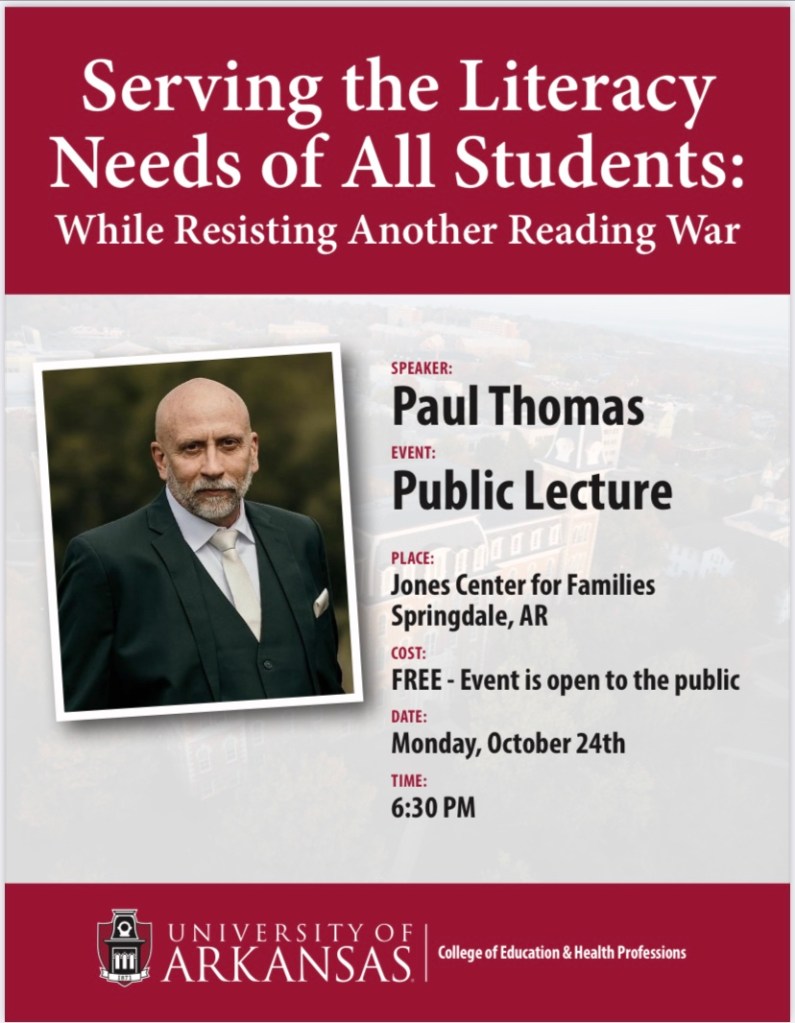
University of Arkansas

October 24 at 6:30

The Jones Center for Families

Serving the Literacy Needs of All Students: While Resisting Another Reading War


30th annual Reading Recovery Council of Michigan Institute, Thursday, November 17, 2022, Somerset Inn, Troy, Michigan

Keynote

The “Science of Reading” Multiverse (click for PP)

Before anyone can, or should, answer “Do you support/reject the ‘science of reading’?” we must first clarify exactly what the term means. I detail the three ways the phrase currently exists since it entered mainstream media during 2018. “Science of reading” as discourse, as marketing, and as a research base.

Break-out Session

How to Navigate Social Media (and RL) Debates about the “Science of Reading” (click for PP)

Let me start with a caveat: Don’t debate “science of reading” advocates on social media. However, if you enter into a social media or real-life debate, you must keep your focus on informing others who may read or hear that debate, and be prepared with credible and compelling evidence.


NCTE 2022, November 17 – 20, 2022, Anaheim, CA 

Friday November 18, 2022

Event Title: Banned in the USA: Lighting a Fire for Reading and Not to Books (click for PP)

Cowards, Censorship, and Collateral Damage: The Other Reading War (click for PP)

Type: Roundtable Sessions

Time: 12:30 PM PST – 1:45 PM PST

Location: 264-BC


Consulting: Charleston County School District

Reading programs, “science of reading,” and potential PD for faculty and administrators

November 21, 2022


Schoolutions podcast

December 20, 2022


2023

2023 Comprehensive Literacy and Reading Recovery Conference, Chicago, IL, January 18-20, 2023 

Keynote – 8:00 – 9:00 CT January 20, 2023

Teaching Literacy in a Time of Science of Reading and Censorship

The key elements of the science of reading (SOR) movement as well as the current move the ban books and censor curriculum are outlined against historical and research-based contexts. The unique challenges facing literacy educators iden/fied with considera/on of how literacy teachers can maintain professional autonomy in the classroom and prac/ce ac/vism in pursuit of a more nuanced understanding of “science” and research as well as in support of academic freedom.

90-minute breakout sessions

Academic Freedom Isn’t Free: Teachers as Activists – 9:15 – 10:45 CT January 20, 2023

The US is experiencing one of the most significant waves of book bans and educational gag orders impacting academic freedom, access to diverse voices and history, and the safety of teachers and students. Teachers are historically required to be apolitical and avoid advocacy in and out of the classroom. This session examines the politics of calling for no politics among educators, and explore with participants both the need to advocate for their professional autonomy and academic freedom as well as for academic freedom.

Unpacking the “Science” in the Science of Reading for a Different Approach to Policy and Practice – 11:30 – 1:00 CT January 20, 2023

The science of reading (SOR) movement and the use of the “science of reading” in marketing literacy programs have had a significant impact on reading policy and practice across the US since 2018. Policy and practice related to dyslexia, adopting reading programs, teaching reading (and the role of phonics instruction), however, have too often been guided by a misleading and overly simplistic version of SOR portrayed in the media and advocated by parents and politicians. This session examines the contradictions between claims made by SOR advocates and the current research base.


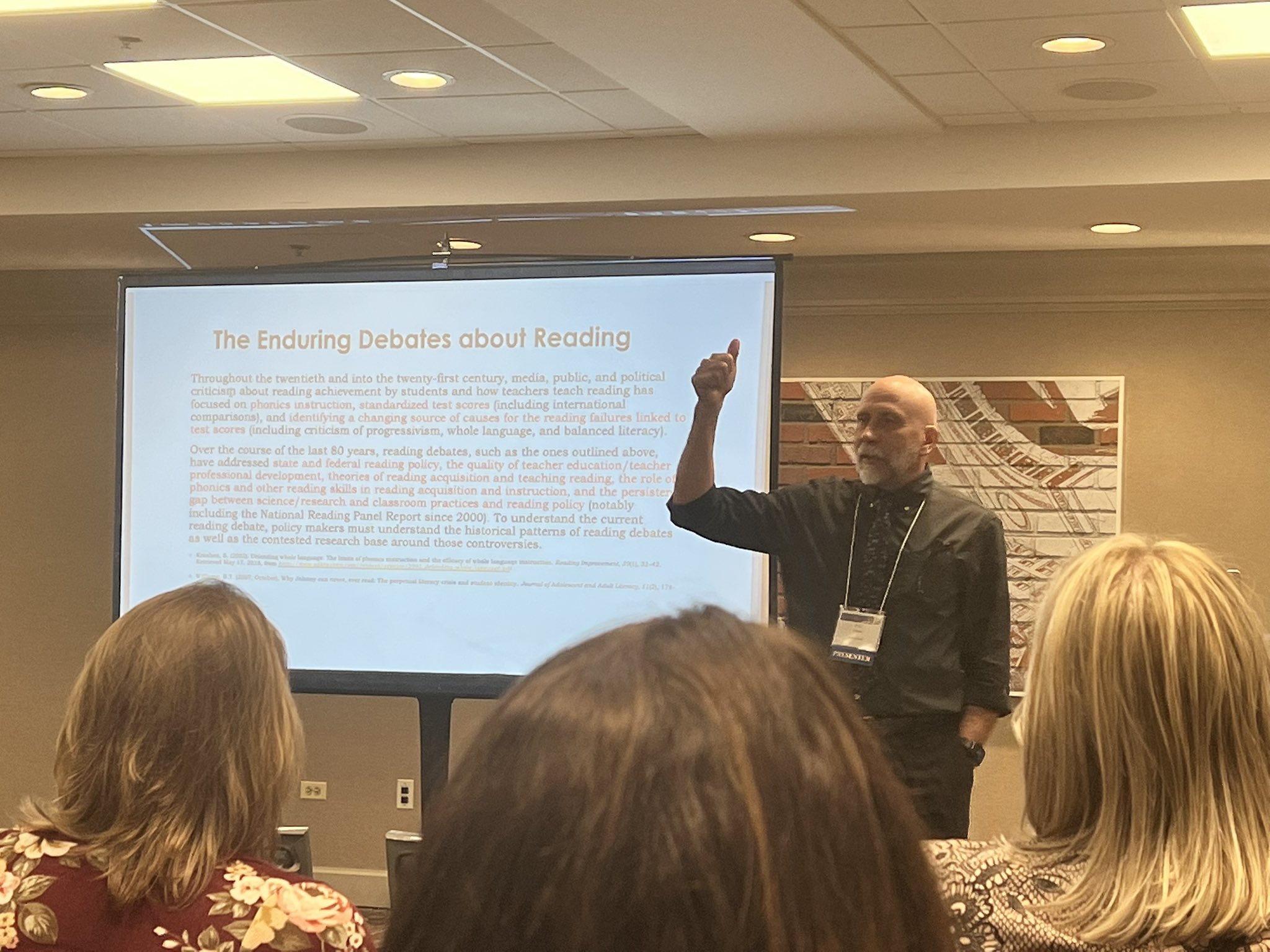
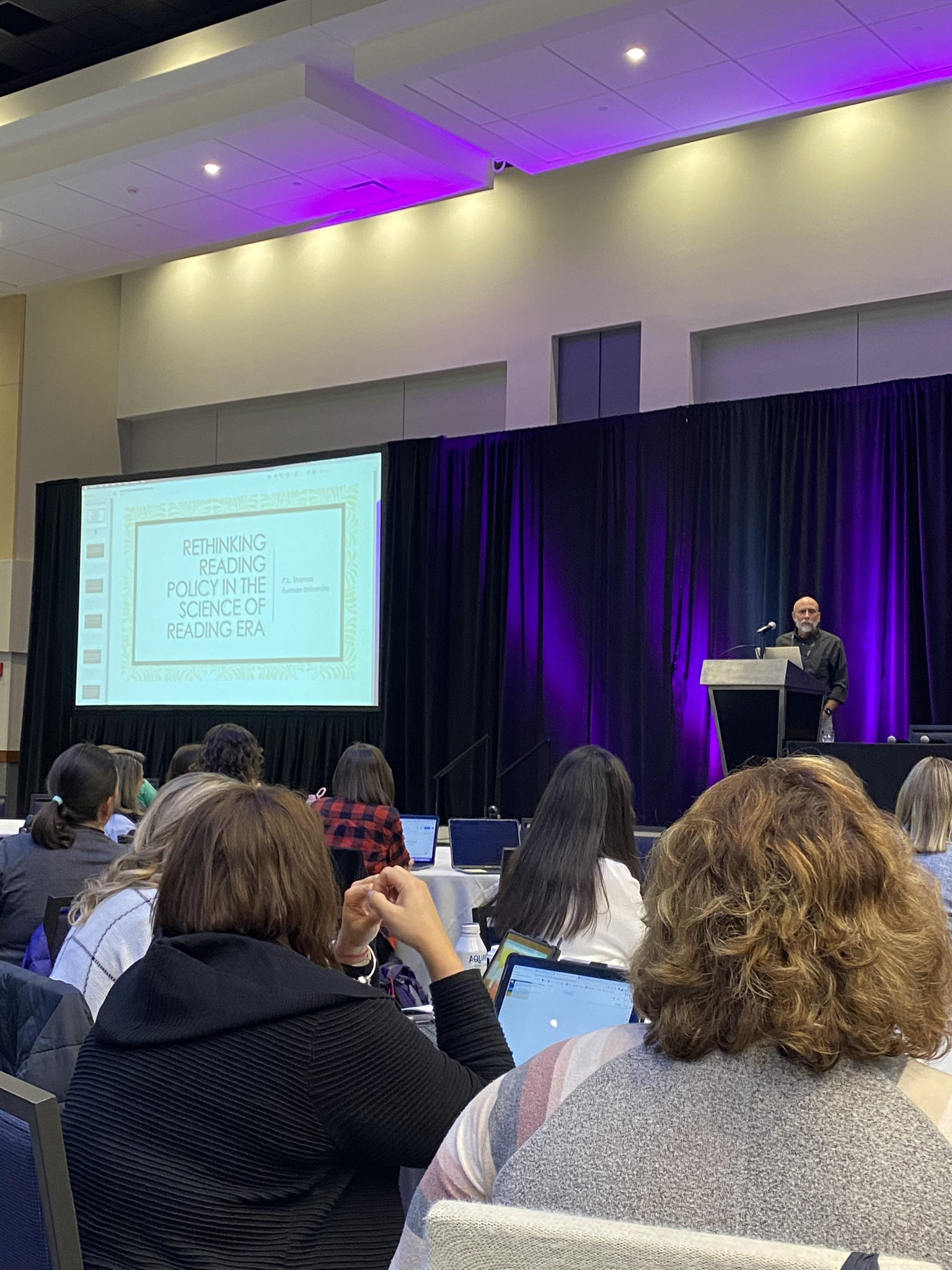
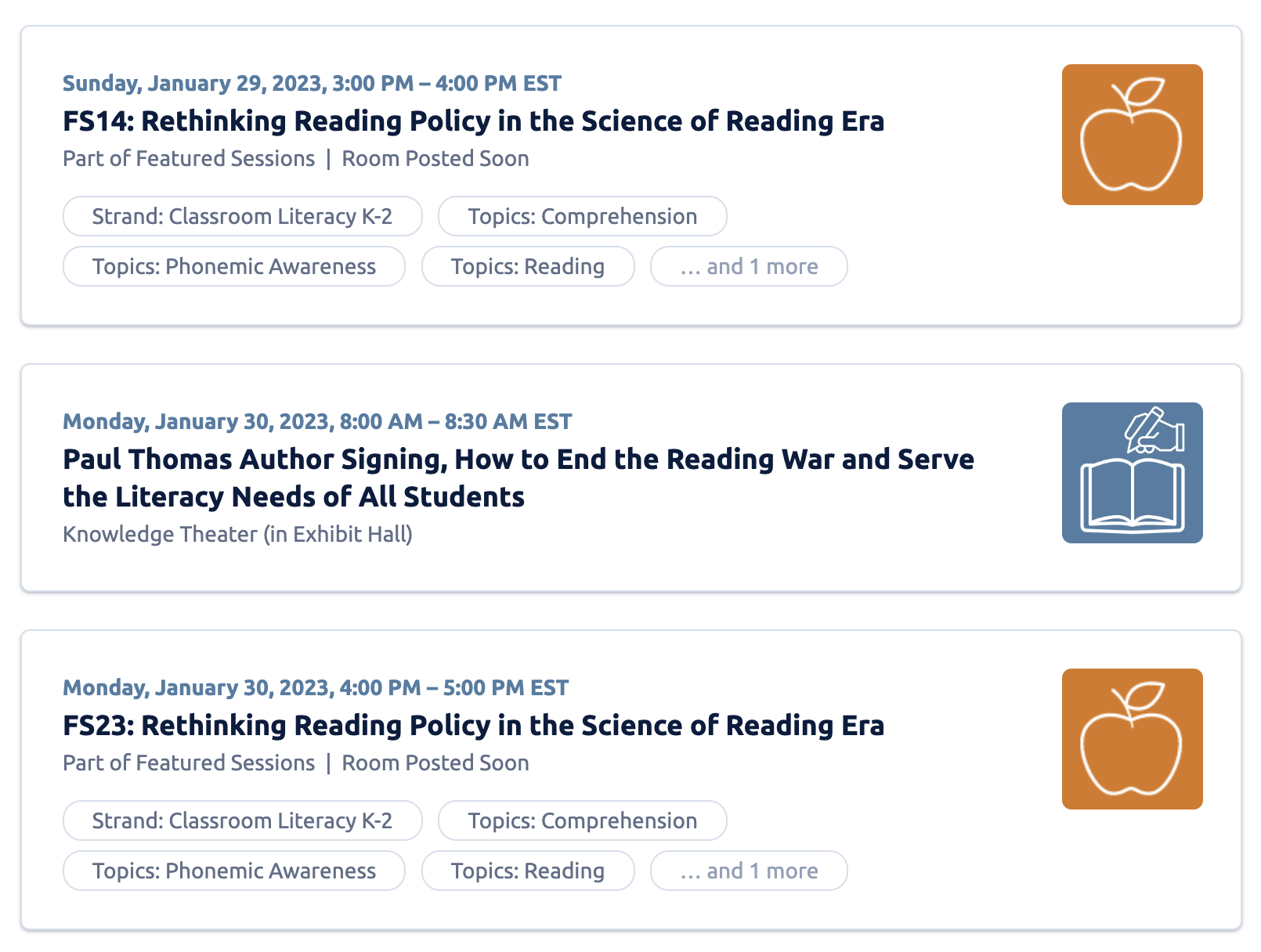
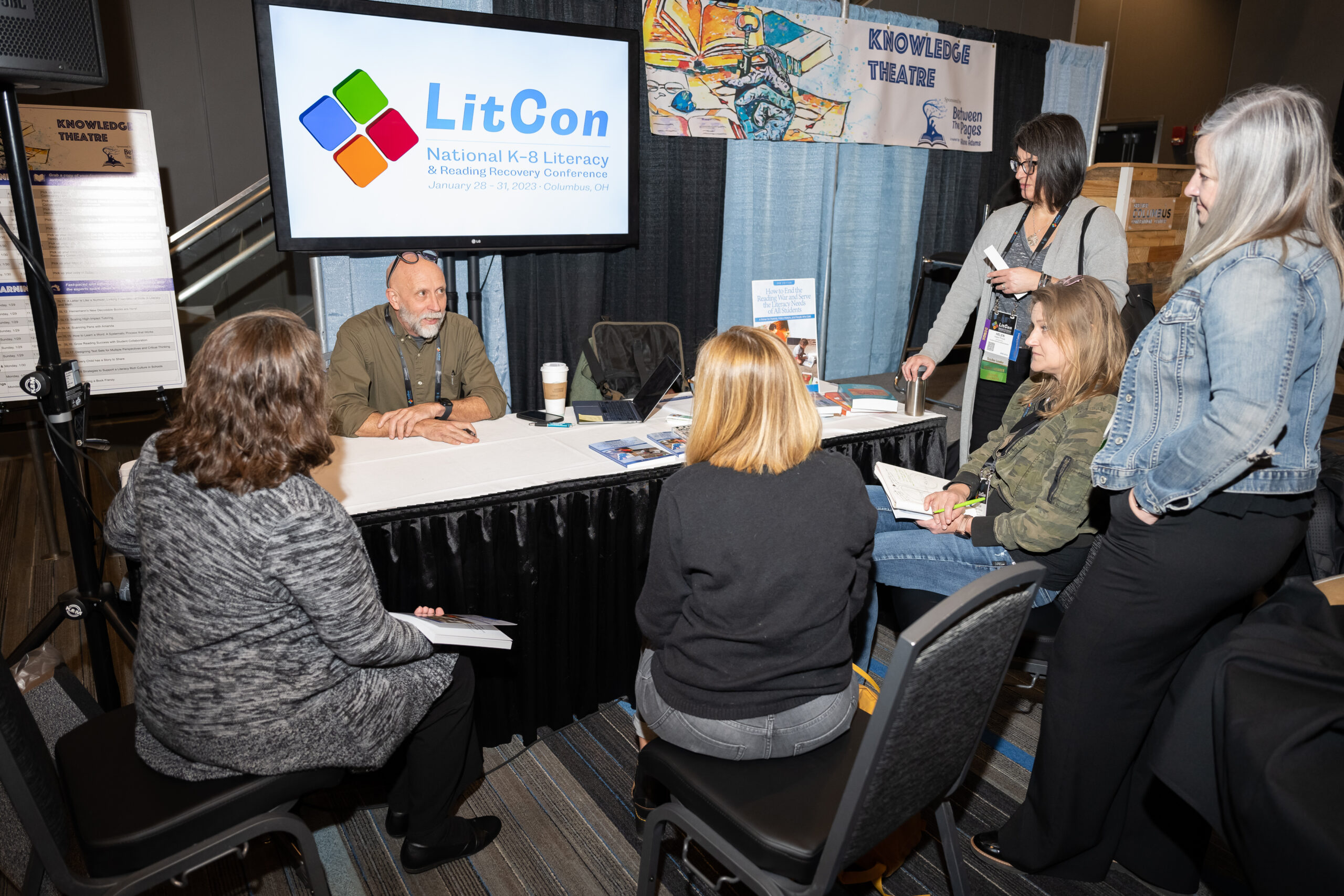
LitCon 2023, January 28 – 31, Columbus, OH

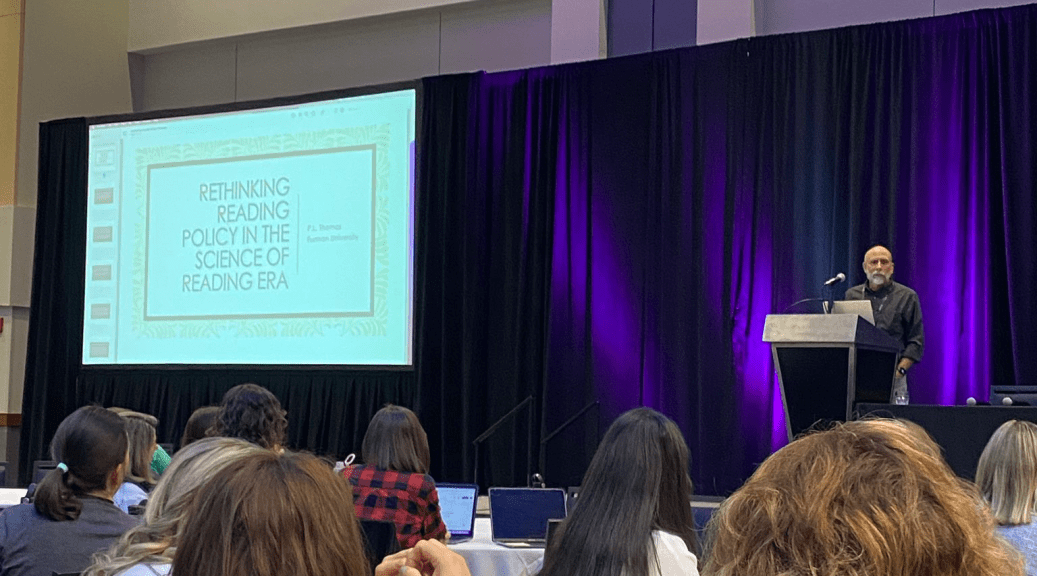
Rethinking Reading Policy in the Science of Reading Era

Sunday, January 29, 2023, 3:00 pm – 4:00 pm ET

Monday, January 30, 2023, 4:00 pm – 5:00 pm ET

Since 2018, states have been revising or adopting new reading legislation prompted by the science of reading movement. Placed in the context of several reading crises over the last 100 years, however, this movement is deja vu all over again, destined to fail and be replaced by another reading crisis in the near future. This session explains why and offers a new approach to reading policy at the state, district, and school levels.

Book signing: How to End the Reading War and Serve the Literacy Needs of All Students (2nd Ed)

Monday, January 30, from 8:00 – 8:30 am


WSRA 2023 Conference, Milwaukee, WI, February 9-11, 2023 

PROGRAM

Thursday, February 9, 11:15-12:30 B01

Creating Worlds of Possibility: Closing Our Opportunity Gaps Through Recognizing the Sciences of Literacy and Learning

Expert Panel Discussion with Dr. Annalee Good, Dr. Lara Handsfield, Dr. Carol Lee, Dr. Paul Thomas, Dr. Don Vu

Thursday, February 9, 2:00-3:15 C08

Banning Books Is Un-American

The U.S. is experiencing a wave of book censorship and educational gag orders. This session examines the historical context of censorship as it impacts the teaching of literacy and literature by focusing on writer Kurt Vonnegut’s response to censors. The session will include powerful policy and position statements supporting the rights of teachers to teach and students to learn, including The Students’ Right to Read (NCTE), Freedom to Teach: Statement against Banning Books (NCTE), and Educators’ Right and Responsibilities to Engage in Antiracist Teaching (NCTE). Participants will have an opportunity to discuss and explore how and why educators must and can seek ways to defend academic freedom and thew right to teach and learn.

Friday, February 10, 9:45-11:00 A10

The “Science of Reading” Multiverse

Since early 2018, the phrase “science of reading” has entered and often dominated media, public/parental, and political discourse around the teaching and learning of reading in the U.S. Before anyone can, or should, answer “Do you support/reject the ‘science of reading’?” we must first clarify exactly what the term means; therefore, in this session, then, I want to detail the three ways the phrase currently exists since it entered mainstream use in the media during 2018. The session will cover the research base around the SoR movement for context. Participants will be invited to discuss their experiences with these three versions as well.


PSLA Conference 2023, February 23-25, 2023

Marriott Hilton Head Resort and Spa, Hilton Head Island, South Carolina

Friday, February 24, 2023, 8:00 – 9:00

Invited Speaker: Rethinking Reading Science: Beyond the Simple View of Reading, Paul Thomas

Focusing on reading science published since 2018 addressing reading, dyslexia, and phonics, this session details a complex but robust state of reading science. Media and think-tank messaging parents, political leaders, and the public are receiving about the “science of reading” are oversimplified, cherry-picked, and contradictory to that current state of reading science. Classroom teachers deserve the autonomy to interrogate reading science, understand the individual needs of all their students, and then the teaching and learning conditions to serve those students with evidence-based practice.

Saturday, February 25, 2023, 10:15 -11:15 

Panel: Carving a Path Forward: Equity, Neuroscience, Policy Mandates and Literacy Education 

The Politics of Teaching Reading, Paul Thomas

Provincialism, Ways of Being, and the Failure of Democracy

I had dinner and a few beers with a former student recently. Although he is about two decades younger than me, we share a hometown and grew up in the same neighborhood. And after I had moved out during young adulthood, as a child, he often spent time at my parents’ house, just playing and hanging out.

He’s worked all over the world and has been living in Europe for more than 15 years. Our conversation drifted to our hometown and his perception of living in Europe instead of near where he grew up. Eventually, he asked how some people “get out” of small hometowns, escape the trap of narrow-mindedness—what I referred to as provincialism.

We share a strong discomfort with conservative and fundamentalist thinking even though we were raised in that environment, which continues to this days in our hometown. His question reminded me of one of my favorite lyrics from The National: “How can anybody know/ How they got to be this way?”

Especially as a teacher, I have found teaching siblings complicates any solid answer to his question since two people raised in the same home and town can turn out to be very different people. We catalogued several people also from our community who, like us, no longer conform to the mold of our upbringing, trying to understand why some people change and others remain frozen in the provincialism of their upbringing.

My former student is very clear that the key for him was being an exchange student in Europe during his junior year of high school; his worldview changed once he had lived a different view of the world. I credit my education, especially literature, but it is the same dynamic—being exposed to different views of the world.


“The English class does not differ from other classes in responsibility for social situations which militate against prejudice and intolerance,” begins “The Words of My Mouth” in a June issue of English Journal. “Classifications which result in racial or cultural segregation, encouragement of small cliques, avoidance of crucial issues—all of these may be evils in the English classes as others.”

That opening builds to this key question: “Do the very words we use and our attitudes toward them affect our tendency to accept or reject other human beings?”

This essay is by Lou LaBrant and was published in 1946. LaBrant was vividly aware of the threats to freedom in the context of WWII and Nazi Germany, but her essay resonates today because of the threats from within the US, the Republican assaults on academic freedom, books, and individual choice by weaponizing “pornography,” “grooming,” “Critical Race Theory,” and any word or phrase to impose a narrow view of the world onto all of us.

“Not one facet of human experience will serve to insure the kind of society we need so desperately, and all aspects of living affect all others,” LaBrant warns.

The role of education, she emphasizes, must include: “A basic understanding which needs to be taught in school and home is that the existence of a word does not at all prove the existence of anything.” At the core of racism, sexism, and all types of bigotry and hate, LaBrant recognized the need to challenge the power of “word magic,” the belief that uttering something makes it so, gives it power.

In 1950, LaBrant returned to this topic, focusing on students as writers:

[Students] should discover the danger in word-magic, that calling a man by a name does not necessarily make him what they say; that describing the postal system as socialist does not transfer our mail to Moscow, nor brand either the writer or postman as disciples of Stalin. We must teach our students that words are symbols which they use, and that there is stupidity in word-magic. (p. 264)

LaBrant, L. (1950, April). The individual and his writing. Elementary English27(4), 261-265. http://www.jstor.org/stable/41383735

Over the past few years, I have made long trips from South Carolina into the Midwest, specifically Ohio and Wisconsin. Each time, I find the persistence of what is stereotypically “Southern” into the region that we in the South would classify as the “North” (which is everything outside of the Deep South, including Virginia and Texas). Fundamentalist billboards condemning homosexuality and abortion as well as huge signs quoting scripture line highways all through rural America.

These 8-10 hour drives left me certain I was not making just the specific trip I was on (conference presentations) but was destined for the flaming pits of Hell. Although I am a white straight man, I strongly believe in the rights of all people regardless of racial identification, gender, sexuality, religion (or not), etc., because I very much believe I deserve the same sort of freedom to fully be the human I have come to know that I am.

I also know that for women to be fully human, body autonomy is essential and that includes abortion rights.

Like Kurt Vonnegut, I am a humanist:

My parents and grandparents were humanists, what used to be called Free Thinkers. So as a humanist I am honoring my ancestors, which the Bible says is a good thing to do. We humanists try to behave as decently, as fairly, and as honorably as we can without any expectation of rewards or punishments in an afterlife [emphasis added]. My brother and sister didn’t think there was one, my parents and grandparents didn’t think there was one. It was enough that they were alive. We humanists serve as best we can the only abstraction with which we have any real familiarity, which is our community.

A Man without a Country, Kurt Vonnegut

To me, this is a foundational commitment to the country’s claim of life, liberty, and the pursuit of happiness. How can any of us be happy if we are required to conform to a narrow mandate of ways of being determined by a few in power based on a provincial view of the world?

My gender identity and sexuality are who I am, and right for me, but that means nothing for anyone else. I want my ways of being to be honored; therefore, I believe I am obligated to honor that for everyone else.


As my former student can attest by experience, people have even more freedom in countries other than the US; Americans do not have a monopoly on individual freedom and certainly not communal support for those freedoms (universal healthcare contributes to individual freedom, for example):

[I]t seems to me that the myth, the illusion, that this is a free country, for example, is disastrous….

There is an illusion about America, a myth about America to which we are clinging which has nothing to do with the lives we lead and I don’t believe that anybody in this country who has really thought about it or really almost anybody who has been brought up against it—and almost all of us have one way or another—this collision between one’s image of oneself and what one actually is is always very painful and there are two things you can do about it, you can meet the collision head-on and try and become what you really are or you can retreat and try to remain what you thought you were, which is a fantasy, in which you will certainly perish.

“Notes for a Hypothetical Novel,” James Baldwin

The hostile environment in the US today fostered by conservatives is also eroding those freedoms day by day; people are less free in the US than 6 months ago, and we are very likely on the precipice of the erasing of even greater freedoms in the coming months.

The Republican agenda of rolling back freedoms and rights as well as increasing bans and censorship is an agenda grounded in provincialism, which, as I have observed, seems to be rooted in rurality, the isolation of people creating an isolation of worldview.

We know rural America is red and urban American is blue, but I think we fail to examine fully why this is the case. For me, my former student’s experience illustrates the dangers of narrow thinking when you have limited experiences and why a cosmopolitan worldview is a doorway to expanding how you think and your ability to have empathy for people who appear to be unlike you.

I use “appear” because, for example, a gay person and a straight person have different sexualities but share the need for having that sexuality honored. That is our commonality.

Yet, democracy is failing us in the US because those who want to use their political power to control have the same rights to vote as those who want to use their political power to insure everyone’s freedoms and ways of being.

And in 2022, those voting to control seem to the have the upper-hand, not because there are more of them but because the system has been gamed to favor them and they often have the greatest passion for asserting their control. Sadly, “The best lack all conviction, while the worst/Are full of passionate intensity” (William Butler Yeats).

Some see their ideologies and beliefs as baseball bats; others see them as safety nets. In a democracy, those votes are equal—and the humanity of individuals hangs in the balance.

I am not concerned, however, that I am in fact going to hell for wanting individual freedom for everyone regardless of their ways of being, regardless of how their gender, sexuality, or whatever appears the same or different from mine.

The irony is that Republicans are creating hell on earth for all of us right here in the US; they are proving Sartre right: “Hell is other people.”

And because of the failure of democracy, there is no exit.

Academic Freedom Isn’t Free

My poem The 451 App (22 August 2022) is a science fiction/dystopian musing about the possibility of technology providing a comforting veneer to the creeping rise of totalitarianism—a simple App appearing on everyone’s smartphone before erasing all our books.

The point of the poem is less about technology and a dystopian future (alluding of course to Fahrenheit 451) and more about another work of literature: “The best lack all conviction, while the worst/Are full of passionate intensity” (“The Second Coming,” William Butler Yeats).

For me, this unmasking of the human condition has always been haunting; it also has become disturbingly relevant in the Trump/post-Trump present in which we live.

Real life is always far more mundane than speculative fiction—and far more shocking.

The “worst,” “full of passionate intensity,” launched an assault on academic freedom in the final months of the Trump administration. The initial wave seemed poised at The 1619 Project and a manufactured Critical Race Theory scare.

By January of 2022, a report found that educational gag orders passed in states across the U.S. were having a significant and chilling effect:

We found that at least 894 school districts, enrolling 17,743,850 students, or 35% of all K–12 students in the United States, have been impacted by local anti “CRT” efforts. Our survey and interviews demonstrate how such restriction efforts have been experienced inside schools as well as districts. We found that both state action and local activity have left many educators afraid to do their work.

The Conflict Campaign (January 2022)

As bills have increased since this report, the number of teachers and students impacted are certainly higher.

Concurrent with educational gag order legislation, book banning has increased dramatically, as reported by PEN America:

• In total, for the nine-month period represented, the Index lists 1,586 instances of individual books being banned, affecting 1,145 unique book titles. This encompasses different types of bans, including removals of books from school libraries, prohibitions in classrooms, or both, as well as books banned from circulation during investigations resulting from challenges from parents, educators, administrators, board members, or responses to laws passed by legislatures. These numbers represent a count of cases either reported directly to PEN America and/or covered in the media; there may be other cases of bans that have not been reported and are thus not included in this count.

• The Index lists bans on 1,145 titles by 874 different authors, 198 illustrators, and 9 translators, impacting the literary, scholarly, and creative work of 1,081 people altogether.

• The Index lists book bans that have occurred in 86 school districts in 26 states. These districts represent 2,899 schools with a combined enrollment of over 2 million students.

Banned in the USA: Rising School Book Bans Threaten Free Expression and Students’ First Amendment Rights

Republicans and conservatives have steadily created an environment of fear around teaching and learning, which is being detailed now by teachers experiencing that fear (with many leaving the field):

Last year, I was quoted in an article in the School Library Journal about how I discussed toxic masculinity with my high school students when we read Shakespeare’s “Romeo and Juliet”togetherWithin days, far-right publications twisted my words to denounce “woke liberal indoctrination in schools.”

Strangers sent me messages on social media accusing me of indoctrinating students, of being unprofessional and unintelligent. I received a handwritten letter addressed to me at school. The letter accused me of being a “low-life, pseudo-intellectual, swallow-the-lib/woke/b—s— koolaid a — h—-.” [The hyphens were added to replace letters because of Washington Post style and not in the original].

‘Educators are afraid,’ says teacher attacked for ‘Romeo and Juliet’ unit, Sarah Mulhern Gross

This movement is driven by lies and fear mongering, but it depends on the missionary zeal of the liars and fear mongers as well as the passivity of “the best” among us.

My childhood and adolescence were profoundly shaped by books and movies—often the science fiction loved by my mother.

Along with The Andromeda Strain (film adapted from Michael Crichton’s novel), two films based on Ray Bradbury’s work remain with me today—The Illustrated Man and Fahrenheit 451.

There is a profound darkness and fatalism in these works, but in Fahrenheit 451, I was struck by the optimism and power of the individuals who walked around repeating the books they had become.

These people, the best among us, seem to suggest Bradbury held on to some sliver of hope.

It seems overwhelming to consider that as sentient creatures we are doomed to not recognize that things matter until they have been taken from us—taken from us with almost no resistance, with almost no recognition of the book being gently slipped from our hands and then our minds.

Academic freedom isn’t free, but without free minds—freedom to teach, freedom to learn, freedom to read and consider—we are no longer fully human.


Recommended

National Days of Teaching Truth

My 31 texts for 31 days in May

Freedom to Teach: Statement against Banning Books (NCTE)

Banning Books Is Un-American

Banned in the U.S.A. Redux 2021: “[T]o behave as educated persons would”

Censorship and Book Burning: A Reader [Updated]

Furman faculty pass resolution rejecting pending state legislation aimed at academic freedom

Educators’ Right and Responsibilities to Engage in Antiracist Teaching (NCTE)

Lehre Ist Tot

This past week an early career teacher, highly regarded in the classroom and very accomplished in the field of education, received a parental request that a student not be required to read The Great Gatsby. That parent, however, had signed a consent agreement with all texts, including that novel, identified as required reading at the beginning of the course.

The parent then reached out to the administration, who confirmed that the teacher had to assign a different work. This, of course, undermines the teacher and the process established, but it also creates more work for teachers already under incredible strain.

While parental oversight of assigned reading has been common in education for decades, this situation comes as states are increasingly passing parental trigger legislation, which moves the parental power from each parent’s own children to parents being able to ban works for all teachers or students to explore in classes.

That same teacher, frustrated and disillusioned, later that day read aloud their resignation letter to me in the context of telling me that much that they had taught in the first three years of teaching could no longer be taught in the last couple years—and increasingly will be directly banned in the coming year (as my home state is poised to pass its own educational gag order this spring).

The teacher cried while reading the letter aloud, and added that the resignation was depressing; this, you see, was a career they had been working toward since high school—and within 6 years, teaching is dead.

The current anti-teacher climate in the U.S. is incredibly harsh and driven by orchestrated false narratives:

Right-wing media are creating parental trigger structures even without the concurrent legislation:

While teacher and school bashing (notably as “liberal indoctrination”) has a long history in the U.S., reaching back to Catholic schools fighting for market space as public schooling increased in the 19th century, the current anti-teacher climate has its roots not in Republican politics but in the Obama administration’s education agenda.

Obama’s appointment of Arne Duncan as Secretary of Education heralded an era of education reform that actually doubled-down on the worst aspects under George W. Bush, and that doubling down feed into a growing media attack on “bad teachers.”

Instead of rejecting the standard approaches to education reform begun under Reagan and federalized under W. Bush, the Obama administration turned their blame to teachers and teacher quality. During the Obama years, the great experiment in value-added methods (VAM) devastated the teaching profession.

The perennial paradox of education has always been that teacher quality matters but it remains a very small part of measurable student achievement (only about 10-15%). Therefore, the Holy Grail of the VAM experiment—identifying “good” and “bad” teachers through standardized test scores of students—was always doomed to fail.

But it did accomplish planting the seeds of today’s multi-pronged attack on teachers—the “science of reading” movement blaming teachers and teacher educators for student reading achievement and the anti-CRT/educational gag order movements being linked to parent trigger laws.

Throughout the education reform era over the past 40 years, many of us in education have argued that education reform initiatives are less about improving education and more about killing public education and the teaching profession—charter schools and voucher schemes, Teach For America, VAM and merit pay, demonizing and dismantling unions and tenure, etc., to name a few.

From Fox News lies to parental trigger laws and education gag orders, the evidence is very clear now that this current wave of teacher bashing is definitely about killing the profession, and not about student discomfort.

Let me return to the opening teacher story.

When the parent was asked for reasons why they wanted their child not to read The Great Gatsby—so the teacher had context for choosing an alternate text—the parent responded that they did not want the child (a high school student) to read about inappropriate relationships and sexual content. So here is a point of fact about the insincerity of these challenges; that student had already read and studied The Crucible, without any complaint, a play grounded in adultery.

I am certain some parents challenging what their children are being taught are sincere, but I am also certain the larger political motivation among conservatives is to completely dismantle public education.

Just as I have explained that there simply is no CRT propaganda agenda in K-12 schools, there is no liberal indoctrination/grooming occurring in K-12 (or K-16) education either.

The Ingraham rants are simply political lies.

And these lies are not improving education.

They have one goal and it seems to have been effective: Teaching is dead.