Category Archives: Censorship

A Response to NCTE Statement on the Doublespeak Award and Anti-Censorship Efforts

Today is 8 February 2022. One year ago today the National Council for the Social Studies (NCSS) released a pointed and powerful statement: “Saving” American History? Start by Teaching American History.

This public statement by NCSS was bold and proved the organization was willing to place professional commitments to the fields of history and social studies over the fear of taking so-called “political” risks.

Labeled “A Current Events Response,” the statement begins: “National Council for the Social Studies (NCSS), the largest professional association in the country devoted solely to social studies education, strongly rejects the recent development of proposed bills in state legislatures which are designed to censor specific curricular resources from being used for instruction in K-12 schools.”

On 7 February 2022, the National Council of Teachers of English (NCTE) released NCTE Statement on the Doublespeak Award and Anti-Censorship Efforts, a reaction to a series of concerns raised by former members of NCTE’s Public Language Awards Committee and others (including my blog post and an Open Letter now soliciting signatures of support).

After I posted my blog raising concerns about NCTE’s silence and inaction during the rise of book/text and curriculum censorship as well as the controversy over putting the Doublespeak Award on hiatus (resulting in some committee members resigning), I have heard from many NCTE members, former NCTE members, and even past presidents of NCTE—all agreeing with the concerns being raised.

In the context of NCSS’s direct and early response, I want to address a few of the points in NCTE’s statement from 7 February 2022, a year after NCSS’s public stance.

First, this statement is a reaction to criticism, not a proactive stance against book/text and curriculum censorship. Others and I have been calling for proactive and public statements.

Second, the statement, ironically in the context of the Doublespeak and Orwell Awards, seems to be massaging if not rewriting the history of putting the Doublespeak Award on hiatus; I am not aware of a single person claiming NCTE “canceled” the award (their first bullet point). The concern was clearly that the hiatus seems to have been an effort to avoid making NCTE look “political,” again an ironic context given the awards.

Next, the statement feels to many of us as an unfair framing of the committee members who resigned on principle; we do not have to agree with those members (I do), but I think we must respect the professional ethics involved in resigning.

Ideally, NCTE would have better served the Council by simply admitting that the hiatus and how it occurred was a mistake that would be corrected—instead of putting so much focus on the principled committee members.

Finally, I want to address a comment in the statement’s penultimate paragraph: “We want NCTE members to know—NCTE has not remained on the sidelines in regard to intellectual freedom and censorship matters, and has no intention of doing so in the future.”

Let me be very clear again: I deeply respect and appreciate my colleagues who signed the statement as the faces and names of leadership for NCTE; however, I respectfully disagree and think the statement as a reaction to criticism and the continued lack of a public statement similar to NCSS (a year later) are proof that NCTE leadership continues to fail the larger fields of literacy and literature, students across the U.S., and all teachers of English/ELA.

Yes, as some NCTE members have noted on social media, NCTE has been a stellar organization inwardly with powerful position statements and a diversity-rich 2021 annual convention. But that serves and speaks to a very small fraction of teachers of English/ELA—and likely has no impact on public opinion/discourse or political policy.

NCTE needs to back up and re-address the Doublespeak mistake again, but also, NCTE must acknowledge the larger concern about remaining on the sidelines because that is where the organization is while our classrooms are being dismantled and our professions are being destroyed.

Many NCTE members are frustrated because NCTE has a powerful infrastructure to speak Truth to power the way NCSS did. Currently, we are in the final days of members voting on a new and important resolution: Resolution on Supporting Educators’ Right and Responsibilities to Engage in Antiracist Teaching.

But what good is all this if NCTE keeps the work inward and refuses to take the principled stands needed to change the public and political narratives about books, texts, and curriculum?

Laws are being passed; books are being removed from classrooms, school libraries, and public libraries because of the complaint of a single parent; teachers are being fired; and board members have called for book burnings.

If you Google “governor” and “pornography” today, you do not find articles on scandal but dozens of media articles on multiple governors across the U.S. (Texas and South Carolina, notably) calling award-winning literature “pornography.”

And as the report from UCLA clearly notes, the anti-CRT movement is itself an Orwellian attack on facts as well as teaching and learning:

We put “CRT” in quotation marks throughout this report because so often the conflict campaign’s definition of “CRT” (like its description of actual K–12 practice) is a caricatured distortion by loud opponents as self-appointed “experts.” The conflict campaign thrives on caricature — on often distorting altogether both scholarship and K–12 educators’ efforts at accurate and inclusive education, deeming it (and particularly K–12 efforts to discuss the full scope of racism in our nation) wholly inappropriate for school. (Pollock, & Rogers, et al., 2022, p. vi)

Pollock, M., & Rogers, J., et al. (2022, January). The conflict campaign: Exploring local Experiences of the campaign to ban “Critical Race Theory” in public K-12 education in the U.S., 2020-2021. UCLA’s Institute for Democracy, Education, and Access. https://idea.gseis.ucla.edu/publications/the-conflict-campaign/

Regretfully, 2021 and now 2022 are demanding principled stands such as the Doublespeak and Orwell Awards from NCTE; but students, teachers, literacy, and literature need NCTE to take a principled stand beyond the NCTE bubble.

Many of us remain concerned that NCTE is content with being reactionary and, yes, there on the sidelines.

O NCTE, NCTE, Wherefore Art Thou NCTE? [Update]

[UPDATE: Please see and support this open letter to NCTE Executive Committee.]

[UPDATE 2: NCTE Statement on the Doublespeak Award and Anti-Censorship Efforts.]

[UPDATE 3: Public statement from NCSS 8 February 2021: “Saving” American History? Start by Teaching American History]

I have been a literacy educator for 38 years and counting; throughout the 1980s and 1990s, I taught high school English in rural South Carolina, and then I moved to higher education in 2002, where I am in teacher education and teach first-year and upper-level writing.

Along with being a career educator, I am a writer. I can identify the beginning of my real life as a writer and scholar with three publications: first, Oregon English (published by a state affiliate of the National Council of Teachers of English [NCTE]) in 1989, and then English Journal (a flagship journal of NCTE) in 1991 and 1998.

When I made my move to higher education, I also began a twenty-year and counting relationship with NCTE that has been among the most rewarding elements of my career as teacher and writer/scholar.

While my colleagues and friends discovered through NCTE are too many to list here, at NCTE San Francisco (2003), I attended a presentation and met Ken Lindblom; we began talking, and eventually our connection led to my editing/co-editing a column in English Journal for 10 years under several editors (also counted among my friends and colleagues), including Ken.

In 2013, NCTE named me recipient of their George Orwell Award—one of the proudest moments of my career—acknowledging not only my work that spoke truth to power but highlighting the significance of my public work (blogging, which is often marginalized in academia). Then, after my work on the committee preparing for NCTE’s Centennial at the Chicago annual convention (2011), I served as the Council Historian from 2013-2015.

Until the interruptions of Covid, one of the highlights of each year included attending and presenting at NCTE’s annual conventions.

I share all this not to aggrandize myself, but to establish a fact of my life and career: I love NCTE and the people who have enriched my life because NCTE brought us together.

And thus, I write here in the spirit of James Baldwin: “I love America more than any other country in this world, and, exactly for this reason, I insist on the right to criticize her perpetually” (Notes of a Native Son).

Since I do love NCTE, and since I am troubled at this moment of literary and educational crisis, I feel obligated to criticize NCTE, asking, Wherefore art thou, NCTE?

Novices to Shakespeare often misread “wherefore” as simply “where,” but, of course, Juliet is asking “why” Romeo exists, specifically why is she being confronted with the challenge of Romeo’s family name.

Why, I am asking, does NCTE exist? And more pointedly, why is NCTE choosing silence, why is NCTE choosing to take a false apolitical pose—at this moment of literary and educational crisis?

First, let me stress the context of my question.

Across the U.S., Pollock and Rogers, et al., have authored a report from UCLA that analyses the wildfire spreading across the U.S.—curriculum, instruction, and book/text bans:

We found that at least 894 school districts, enrolling 17,743,850 students, or 35% of all K–12 students in the United States, have been impacted by local anti “CRT” efforts. Our survey and interviews demonstrate how such restriction efforts have been experienced inside schools as well as districts. We found that both state action and local activity have left many educators afraid to do their work.

(Pollock, & Rogers, et al., 2022, p. vi)

As I have been cataloging, censorship and even calls for book burnings are nearly a daily event into 2022.

Notable, these attacks on what and how teachers teach, on what and how students learn, are grounded in dishonest claims and misrepresentations, as the UCLA report notes:

We put “CRT” in quotation marks throughout this report because so often the conflict campaign’s definition of “CRT” (like its description of actual K–12 practice) is a caricatured distortion by loud opponents as self-appointed “experts.” The conflict campaign thrives on caricature — on often distorting altogether both scholarship and K–12 educators’ efforts at accurate and inclusive education, deeming it (and particularly K–12 efforts to discuss the full scope of racism in our nation) wholly inappropriate for school.

(Pollock, & Rogers, et al., 2022, p. vi)

The news reports are chilling: A teacher fired in Tennessee for teaching Ta-Nehisi Coates (a featured speaker at an annual NCTE convention); a superintendent of education in North Carolina banning a book from one parent complaint, and without reading the book; and high-profile coverage by NBC and The Atlantic detailing the magnitude of the censorship movement, which has included bans of one of the most celebrated graphic novels ever, Maus.

With that context in mind, I want to add I am guided by two more commitments.

Martin Luther King Jr., in Strength to Love (1963), warned: “The ultimate measure of a man is not where he stands in moments of comfort and convenience, but where he stands at times of challenge and controversy. The true neighbor will risk his position, his prestige, and even his life for the welfare of others.”

And Howard Zinn [1], whose work has been prominent at NCTE’s annual convention, who titled his memoir, You Can’t Be Neutral on a Moving Train, argued:

This mixing of activism and teaching, this insistence that education cannot be neutral on the critical issues of our time, this movement back and forth from the classroom to the struggles outside by teachers who hope their students will do the same, has always frightened the guardians of traditional education. They prefer that education simply prepare the new generation to take its proper place in the old order, not to question that order.

You Can’t Be Neutral on a Moving Train

As of today, I am deeply concerned that NCTE, as the premiere national professional organization for literacy and literature in the U.S., has chosen the path of neutrality, of silence, to strike an apolitical pose in order to avoid risk.

In November before the 2021 annual convention, I reached out to some leaders of NCTE and implored that NCTE take a leadership role in speaking out against the creeping threat of state legislation banning curriculum and the rising number of books being banned across the country.

Although I was assured this would happen, there has only been silence.

And then, this: Members of NCTE’s Public Language Awards Committee posted on social media that NCTE has put the Doublespeak Award on hiatus indefinitely in order to avoid looking “political.”

Some members have resigned in protest.

The disappointment and irony of this move is that the Doublespeak Award, a companion of the Orwell Award, is designed to offer an “ironic tribute to public speakers who have perpetuated language that is grossly deceptive, evasive, euphemistic, confusing, or self-centered.”

If you return to the report from UCLA, it is obvious we are in the midst of an educational and literary/literature crisis that screams for the Doublespeak Award (“[t]he conflict campaign thrives on caricature”), that demands public-facing, risk-embracing leadership from NCTE.

Why does NCTE exist, if not for this moment?

The current anti-CRT/book banning movement is politically partisan only because Republicans have chosen to make it so. And as King and Zinn noted throughout their careers, taking a neutral pose, pretending to be apolitical, is a political concession to support the status quo.

Since curriculum bans, book censorship, and parental oversight legislation are occurring exclusively among Republican-controlled states, the teachers and students impacted are mostly in right-to-work (non-union) situations; therefore, they are the most vulnerable, and most in need of advocacy from organizations and people with power.

NCTE is the collective voice of literacy educators, scholars, and creators.

I want to remain hopeful, but I am deeply disappointed and increasingly skeptical of that hope.

NCTE’s leaders must look in the mirror, ask “why,” and then act.

Returning to Baldwin, I end with this: “There is never time in the future in which we will work out our salvation. The challenge is in the moment, the time is always now” (Nobody Knows My Name).


[1] Trying to confirm if/when Zinn spoke at an annual NCTE convention [edit].

Anti-CRT Movement Built on Lies

Republicans and conservatives have been depending for a long time on a truism with an ambiguous source: “A lie can travel halfway around the world while the truth is still putting on its shoes.”

The anti-Critical Race Theory movement has fully committed to this strategy; just lie quickly and then spend most of your time ranting as if the lie is true.

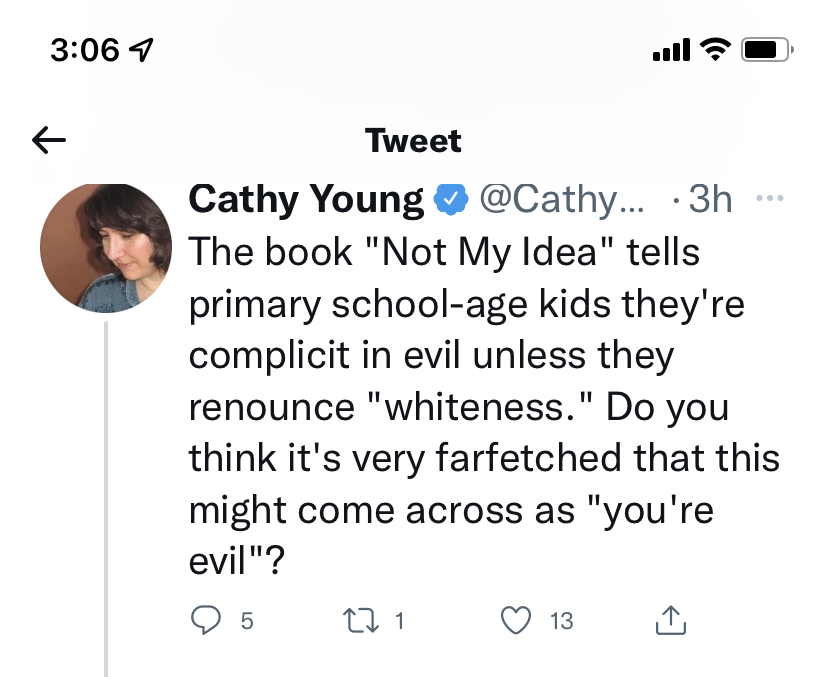
Here is but one of many examples:

While the claim here is a blatant lie, we should note that anti-CRT advocates are the ones who repeatedly conflate “whiteness” with “racism.”

Not My Idea, by Anastasia Higginbotham, in fact, goes to great lengths to recognize white people throughout history who have stood firm against racism; in other words, one of the strongest messages of the book is “not all white people.” The title and motif of the book is that white children are not the ones who created racism, “not my idea”—“Racism was not your idea. You don’t need to defend it.”

And here is the real issue: The book makes a strong case not for rejecting whiteness, but for rejecting racism when you are white.

As is the case is almost all efforts to censor, people have likely never read the book. So here you are, listen and hear the truth:

If you have to advance your beliefs through lies, you should interrogate those beliefs.

The anti-CRT movement is built on lies.

The Eternal Darkness of the Empty Mind

My childhood and adolescence were a paradox.

I was born in Woodruff, South Carolina, and spent some of my childhood in nearby Enoree. Both were very small (Enoree was essentially a cross roads, not far from even smaller Cross Anchor); both were mill towns that had not quite begun to crumble in the 1960s and 1970s.

Woodruff seems like parody now, an ugly parody since the town had literal racial divisions with the Black neighborhood, Pine Ridge, on the other side of the railroad tracks dividing the town.

Racism and a bitter fundamentalism were the norm among white people, although most of these cancers remained unspoken and carefully navigated.

What I heard and witnessed in white-only spaces, including my home, contrasted disturbingly with what I heard and witnessed in mixed-race spaces—notably the vibrant high school sports arenas that much of my hometown worshipped. Yes, my hometown was a high school Friday night football sort of world that, again, almost seems like parody now.

Tradition and authority governed schooling and parenting. Conservative ideology was so pervasive there was little to no evidence any other way of thinking was possible.

There was a bitterness and fatalism among white people, among my family members, that I am deeply aware of now. I see it in the far-right Trump movement, reminding me of my parents railing against Muhammad Ali and blaming Dan Rather for the fall of Richard Nixon.

A darkness of empty minds. Irrational and certain.

By some inexplicable twist of fate, the paradox, I found myself in a series of events that allowed me to rise above that emptiness, allowed me the freedom of the human mind that quite literally saved my life.

I wasn’t quite bookish as a child, but I grew up surrounded by books and reading; my mother was a very bright woman with sparse formal education, a natural teacher with a tendency toward nurturing and mothering (she spent a good bit of her life running an in-home daycare and raised my sister’s three sons).

The secular miracle of my life was that for some odd reason my parents never censored my world, especially my intellectual life. By the time I was a teenager, I had graduated from relentlessly watching science fiction B-movies with my mother to reading covertly hundreds of comic books and novels by Arthur C. Clarke, Larry Niven and Jerry Purnell, and other science fiction not assigned in school (and there were several assigned novels in school I simply did not read, like Charles Dickens, even though I fell in love with Thomas Wolfe’s You Can’t Go Home Again, which I read in a literal fever while home sick).

In tenth grade, the miracle of miracles, I entered Lynn Harrill’s English class. Lynn was a fairly new teacher, a kind and passionate educator who eventually became a mentor and the primary impetus for my life as a teacher, scholar, and writer.

Lynn was perceptive, and bold. I spent many days hanging out in Lynn’s room when I wasn’t in class (a kindness I learned and mimicked when I became a teacher, the first years in the exact room where Lynn taught me).

His perception was recognizing my proclivities and how traditional schooling wasn’t serving me fully. His boldness was whispering to me one day when I was taking up his valuable time that I should read D.H. Lawrence (he added that since he knew my parents the recommendation would be fine but Lawrence was a controversial writer).

Lynn was right about the recommendation and my parents.

By high school, in fact, my mother patiently wrote checks each month for my subscription to a few comic books and Playboy, delivered to my home as if this sort of thing was completely normal in 1970s SC.

Of course, as a teen, Playboy and Lawrence spoke to my sexual curiosity of adolescence, but that was a very small fraction of my intellectual life that they both spurred. I recall to this day several interviews I read in Playboy by thoughtful people dramatically unlike the adults of my hometown.

Lawrence became my first literary crush (Clark as well as Niven and Purnell was my first nerd-reading crush). Over the next few years, I read everything by Lawrence. In college as I drifted toward education and English, I gathered as much literary analysis of Lawrence as I could.

Hovering beneath all this, of course, was my comic book collecting. For almost 50 years, I have been a collector of some kind. When I discover a writer, I plow through all their work, proudly buying and displaying all their books.

From that first affair with Lawrence to the more recent obsessions with Haruki Murakami, there have been too many love affairs with authors’ works to list them all—Kurt Vonnegut, Milan Kundera, Margaret Atwood, James Baldwin, and on and on.

And as I noted many times, one of the pivotal moments of my life was finding a used copy of the non-economic writing of Karl Marx, including the foundational pieces that turned me on to being an educator.

Yes, Karl Marx inspired me to a life of service and a commitment as a teacher to foster in students a vibrant mind of possibilities and ideas—and a robust, unyielding repulsion for indoctrination, and even authority.

Many years later, I discovered Paulo Freire and bell hooks. Freire gave me an important framing—the choice of being authoritative (earning the respect of students and readers because I demonstrate authority over content) instead of authoritarian (demanding compliance because of my status).

It is 2022 and I am terrified.

That terror isn’t grounded in the never-ending threat of Covid (although that is certainly terrifying), but in the spreading threat from Republicans determined to censor and control curriculum and what books anyone has access too.

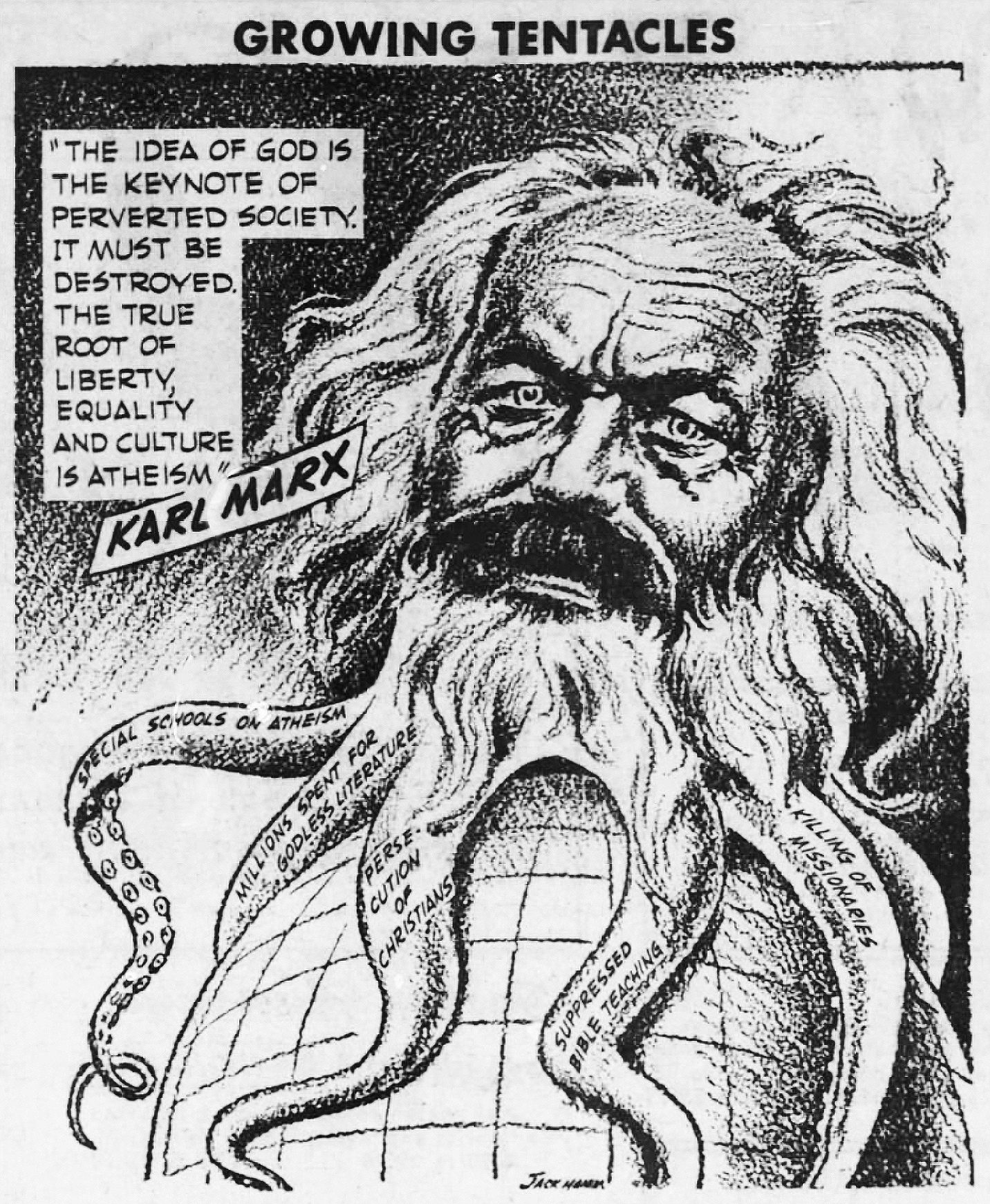
The current Republican playbook isn’t new. Consider this from 1961 in an Oklahoma newspaper:

Jack Hamm, Oklahoma City Star, 6/2/1961 (H/T Randall Stephens)

Notice the second tentacle from the left: “Millions spent for Godless literature.”

I was born about 6 months before this editorial cartoon, and today read the following from Judd Legum:

In Indiana, State Senator Scott Baldwin (R) has introduced sweeping legislation that Baldwin says is designed to ban Critical Race Theory (CRT) and related concepts in K-12 education. During a committee hearing on the bill earlier this month, Baldwin told a high school English teacher that he should be “impartial” when discussing Nazism. It is a case study about how the frantic efforts to ban CRT can quickly lead to absurd outcomes. 

Author of anti-CRT bill tells teacher he should stay “impartial” on Nazism

Republicans all across the U.S. are introducing and passing legislation censoring curriculum (targeting anti-racism content) and banning books from classrooms, school libraries, and public libraries (focusing on LGBTQ+ authors and works); some school board members have even called for book burnings.

My home state of SC is following the lead of other Republican-led states (notably Texas) by proposing guidelines that allow anyone to censor books for others.

It is incredibly important to emphasize that Republicans are actively removing books from school and public libraries—using government to decide what books and ideas people have access to.

These actions are tyranny. The antithesis of being free people.

There is no individual freedom without intellectual freedom.

No one should be held hostage to a life of an empty mind. Everyone deserves the accidental great fortune of my youth, including the kindness and boldness of my teacher, Lynn Harrill.

But none of this should be done in whispers, or with fear.

Republicans are calling for the eternal darkness of the empty mind, and we must resist because censorship erodes both American freedom and human dignity.

Also in 1961, Lou LaBrant recognized the failure of education as conformity:

Throughout our country today we have great pressure to improve our schools. By far too much of that pressure tends toward a uniformity, a conformity, a lock-step which precludes the very excellence we claim to desire….Only a teacher who thinks about his work can think in class; only a thinking teacher can stimulate as they should be stimulated the minds with which he works. Freedom of any sort is a precious thing; but freedom to be our best, in the sense of our highest, is not only our right but our moral responsibility. “They”—the public, the administrators, the critics—have no right to take freedom from us, the teachers; but freedom is not something one wins and then possesses; freedom is something we rewin every day, as much a quality of ourselves as it is a concession from others. Speaking and writing and exploring the books of the world are prime fields for freedom. (pp. 390-391)

LaBrant, L. (1961). The rights and responsibilities of the teacher of EnglishEnglish Journal, 50(6), 379–383, 391. Stable URL: http://www.jstor.org/stable/810824

We must rewin our freedom.

Conservative Wet-Paper-Towel Commentary and the So-Called “Liberal” Media

Robert Pondiscio and Frederick Hess, both from the conservative American Enterprise Institute, are about as credible as a paper towel, a wet paper towel.

Not Bounty, of course, but those other paper towels.

Yet, here is an interesting fact.

The so-called “liberal” mainstream media love to provide inordinate space to Pondiscio and Hess, particularly when the topic is even remotely about education.

For example, The New York Times allows them to hold forth on book censorship in Texas. Hess offers a flippant comment that captures the veneer of being reasonable at the core of conservative wet-paper-towel commentary:

“It’s just enormously problematic to rule out particular works,” said Frederick Hess of the American Enterprise Institute, who has written favorably of the battles against critical race theory. “I happen to think ‘1619’ is a shoddy work, but so what? Let kids read critiques and wrestle with it.”

In Texas, a Battle Over What Can Be Taught, and What Books Can Be Read

Gosh, that’s mighty kind of Hess to allow “kids” to read some “shoddy” history!

But Pondiscio is granted the last word, and again, he takes the pose of moderation, although like Hess, it is couched in a nasty little swipe: “He sees antiracist education, such as grouping students in racial affinity groups, as lapsing into parody.”

Ah, yes, what a joke antiracist education is!

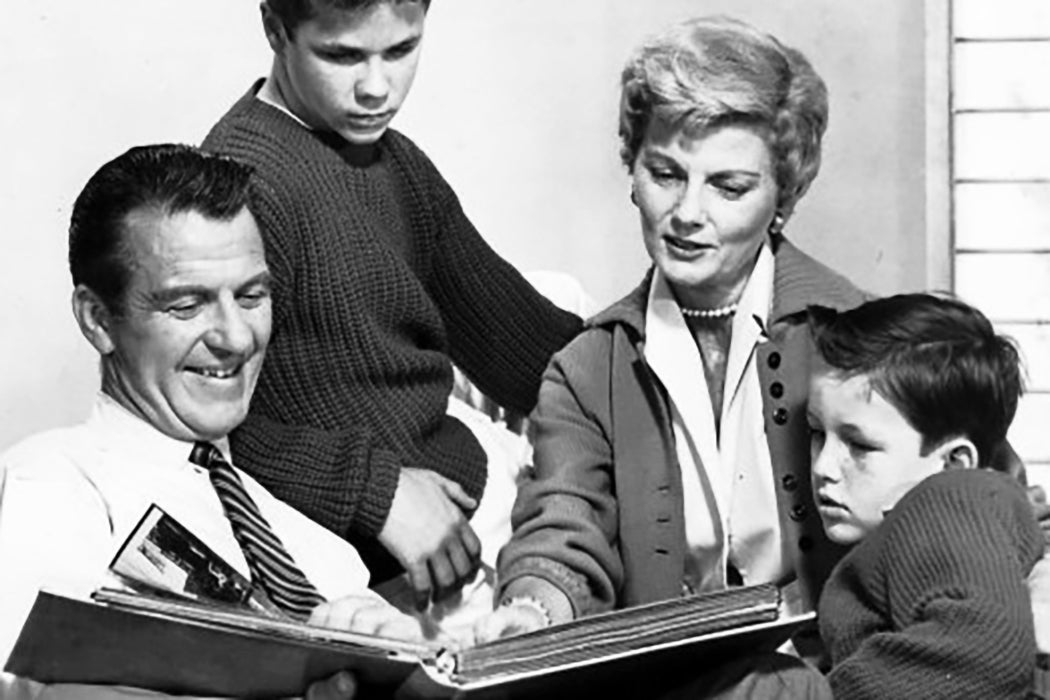
From Pondiscio to Hess and the entire array of high-profile know-nothing conservative pundits, like David Brooks, mainstream media is awash in wet-paper-towel commentary from conservative (mostly male, mostly white) pundits who benefit from presenting as harmless “experts” who remind us of Ward Clever or Ronald Reagan (actor, not politician).

When Ward Cleaver Caused Social Anxiety - JSTOR Daily
It's Golden Again in America: Ronald Reagan and Hollywood | Film and  Digital Media

But don’t let the reasonable pose fool you. These wet paper towels not only don’t hold water very well, but also don’t place a coffee cup on them or you’re going to have a mess on your hands.

Behind the smiles and the hair cuts, however, is something insidious, and the only real way to identify that is to admit conservative commentary is mostly built on lies.

Consider the process in a full Op-Ed by Pondiscio, Drawing the line between censorship and age-appropriateness.

First, note that his commentary is allowed a very reasonable headline, as if the censorship movement across the U.S.—and even calls for book burnings—are merely about misunderstanding a very reasonable issue facing our schools, age appropriateness (glossing over, of course, the implication that teachers and administrators don’t already consider age appropriateness).

Next, as the comments above in the NYT show, Pondiscio proceeds to weave a puppet show of reasonableness that isn’t reasonable at all [1].

Early in his commentary, Pondiscio assures us he is bored with the canon war (apparently itself a bit of a joke like antiracism education!). Where does his concern lie?:

The more challenging front in the censorship wars is over new and comparatively obscure works targeted at readers, from small children to young adults, which cannot claim canonical status. These new works are being published, promoted and defended on grounds of “authenticity and inclusivity.” To question them — to draw a line — is to risk a charge of ignorance, bigotry or worse.

Drawing the line between censorship and age-appropriateness

“Obscure works”? “Targeted at readers”? (Side question: Are there books not targeted at readers? Those readerless books?)

It gets even more fun:

Publishers of young adult novels have been falling over one another in recent years to bring out controversial texts on themes of sexual abuse, racism, domestic violence, gang life, school shootings and other “realistic” subjects, in widely read books such “The Hate U Give,” “Thirteen Reasons Why,” and “The Absolutely True Diary of a Part-Time Indian.”

Picture books for little kids are even more discomfiting. I’m old enough to remember the controversies that attended “Heather Has Two Mommies” (1989) “And Tango Makes Three” (2005), which sought to normalize gay and lesbian family structures.

Drawing the line between censorship and age-appropriateness

“Falling over one another”? “Discomforting”? “Normalize gay and lesbian family structures”?

Pondiscio seems to think he is Ward Clever surrounded by his doting and clueless family.

And, boy, things suddenly stopped being a joke, right? To Pondiscio, antiracism education is “parody,” but the real problem (not racism!) is “[t]hat normalizing impulse now goes to lengths that give pause on grounds of age appropriateness even to parents who think of themselves as progressive.”

Jesus, how did the U.S. fall under the spell of “normalizing”? And why are these “progressive”parents confiding in a senior fellow at the American Enterprise Institute?

You see, Pondiscio is playing a slightly softer version of the conservative Red Herring strategy behind attacks on Critical Race Theory: Make an outlandish and unsubstantiated claim, and then quickly shift to attacking that claim with more outlandish extremism:

Instead, we must reaffirm that you’re not a homophobe if you don’t want your child exposed to an explicit illustration of oral sex as in the graphic novel “Gender Queer.” Neither are you a closet white supremacist if you question the wisdom of exposing young children to the racially charged picture book “Not My Idea. A Book About Whiteness,” which concludes, “Whiteness is a bad deal. It always was.”

Drawing the line between censorship and age-appropriateness

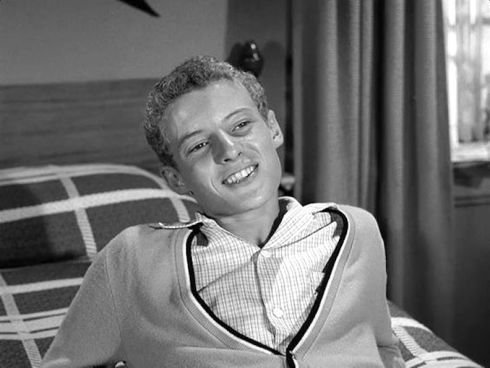
The Big Reveal is that Pondiscio isn’t Ward Clever; he is Eddie Haskell.

Ken Osmond (Eddie Haskell) 1943-2020 – PowerPop… An Eclectic Collection of  Pop Culture

Here is the essential problem with both the conservative/Republican attack on books and curriculum, and conservative wet-paper-towel commentary trying to justify erasing free speech and academic freedom.

Including Texas, but all across mostly red states, books are being banned (not checked for age appropriateness), removed from classrooms and libraries so that no one has access to them. These attacks are not about assigning books, but about deciding for parents and students what books can be read.

These attacks are not concerns about age appropriateness (legitimate) or parental rights (debatable). This is fear-mongering around “normalizing” (remember, that thing more dangerous than racism!).

Access to books in children’s homes, classrooms, and schools is one the most important aspects of developing literacy, and limiting access to books in classrooms and schools will disproportionately and negatively impact children living in poverty.

The real parodies—ones so dark they aren’t funny—are Pondiscio, Hess, Brooks, et al., who, like Eddie Haskell, are allowed to offer their veneer of reasonableness in mainstream “liberal” media to promote their wet-paper-towel commentary.

There isn’t enough Bounty in the world to clean up that mess.


[1] As a frame of reference, here is an actual reasonable claim in my own commentary on book censorship (published in The Greenville News, SC):

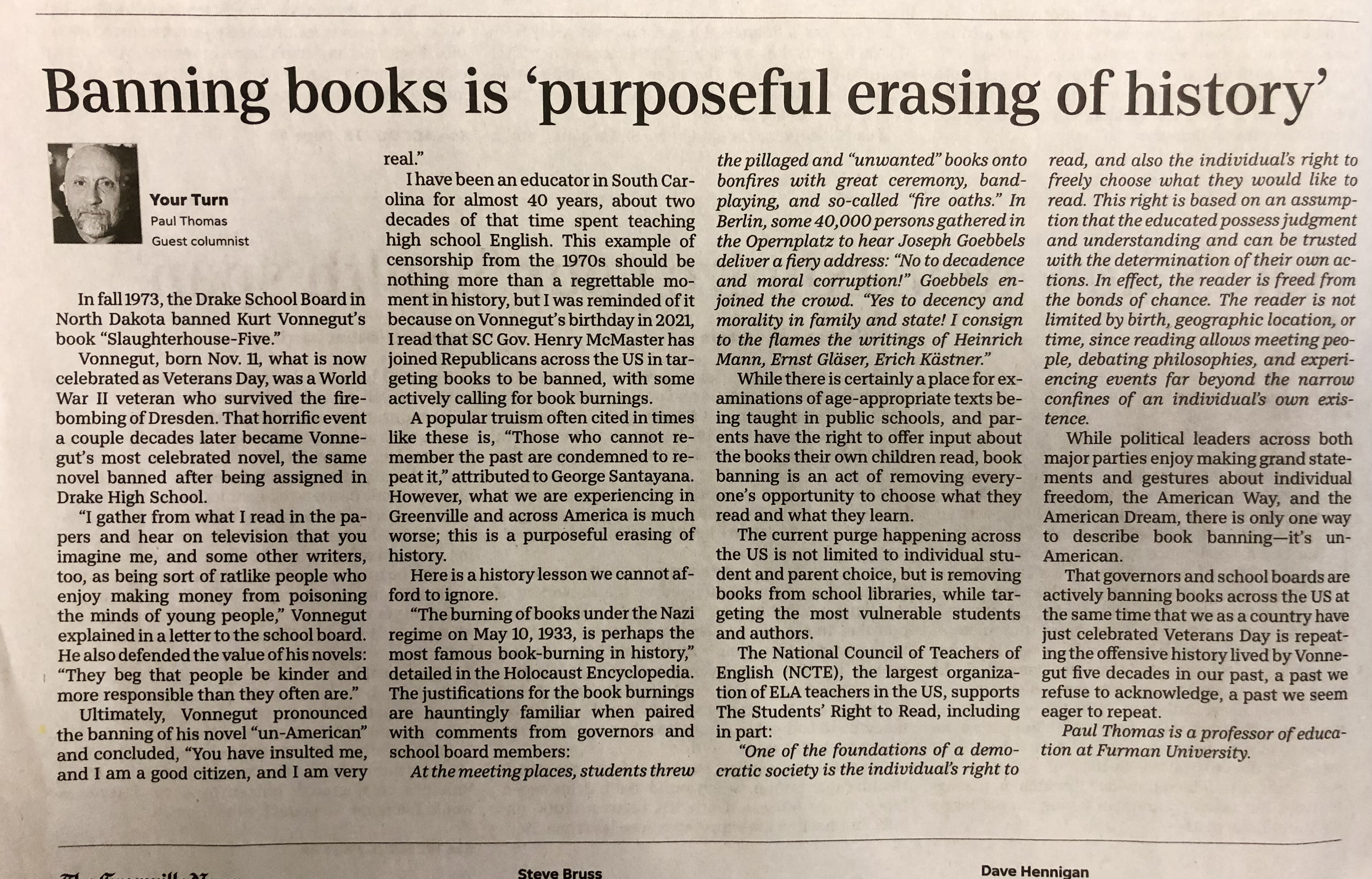
While there is certainly a place for examinations of age-appropriate texts being taught in public schools, and parents have the right to offer input about the books their own children read, book banning is an act of removing everyone’s opportunity to choose what they read and what they learn.

The current purge happening across the U.S. is not limited to individual student and parent choice, but banning books from school libraries, while targeting the most vulnerable students and authors.

Banning books is “purposeful erasing of history”

Freedom and the Politics of Canceling Teachers and Curriculum

By mid-December of 2021, Matthew Hawn, a former teacher in Tennessee, will once again have his appeal heard after being fired for violating the state’s restrictions on curriculum:

The Tennessee General Assembly has banned the teaching of critical race theory, passing a law at the very end of the legislative session to withhold funding from public schools that teach about white privilege.

Republicans in the House made the legislation a last-minute priority, introducing provisions that ban schools from instructing students that one race bears responsibility for the past actions against another, that the United States is fundamentally racist or that a person is inherently privileged or oppressive due to their race.

Tennessee bans public schools from teaching critical race theory amid national debate, Natalie Allison

As Allison reported in May, several states across the U.S. have filed or passed copy-cat legislation aimed at banning the teaching of Critical Race Theory.

By October and November, the consequences of Tennessee’s law have moved from silencing and canceling teachers to attempts to cancel curriculum [1]:

The Tennessee Department of Education recently declined to investigate a complaint filed under a new state law prohibiting the teaching of certain topics regarding race and bias.

The complaint, the first directed to the state under the new law passed this spring, was filed by Robin Steenman, chair of the Moms for Liberty Williamson County chapter, a conservative parent group sweeping the nation. 

The 11-page complaint alleged that the literacy curriculum, Wit and Wisdom, used by Williamson County Schools and at least 30 other districts, has a “heavily biased agenda” that makes children “hate their country, each other and/or themselves.”

Tennessee Department of Education rejects complaint filed under anti-critical race theory law, Meghan Mangrum

Although the complaint was rejected, Mangrum noted, “The group detailed concerns with four specific books on subjects like the Rev. Martin Luther King Jr.’s March on Washington, the integration of California schools by advocate Sylvia Mendez and her family, and the autobiography of Ruby Bridges, adapted for younger learners.”

A teacher fired for teaching Ta-Nehisi Coates, parents calling for bans on MLK and teaching about Ruby Bridges—these events are not unique to Tennessee, but they reflect a pattern of efforts to control not only teachers, but what students are allowed to learn and read.

Notable in these examples is that many of the consequences of legislation are canceling Black writers and key aspects of Black history; additionally, legislation and calls for book banning are targeting LGBTQ+ writers and topics.

Teaching and curriculum in the U.S. are being systematically and politically whitewashed.

One aspect not being addressed often is that political dynamic. Parents, political activists, and politicians are impacting who teaches and what is being taught in the context of a historical and current demand that teachers themselves remain apolitical, both in their classrooms and their lives beyond school.

As I have discussed often, teaching is necessarily political, and teaching as well as writing are necessarily types of activism.

For teachers, then, we must recognize that calls for teachers to be objective, neutral, and apolitical are themselves political acts. Currently, laws being passed and parents/activists confronting school boards are exercising their political power at the expense of teachers and schools—both of which are required to remain somehow politically neutral.

From historian/activist Howard Zinn to critical scholars such as Joe Kincheloe and to poet Adrienne Rich, we have ample evidence that taking a neutral stance is a political act that passively endorses the status quo and that silencing words is an act of canceling thought, eradicating ideas.

Zinn’s commitment to transparency as a teacher and activist is hauntingly relevant to the current political attack on teachers and curriculum:

This mixing of activism and teaching, this insistence that education cannot be neutral on the critical issues of our time, this movement back and forth from the classroom to the struggles outside by teachers who hope their students will do the same, has always frightened the guardians of traditional education. They prefer that education simply prepare the new generation to take its proper place in the old order, not to question that order [emphasis added]….

From the start, my teaching was infused with my own history. I would try to be fair to other points of view, but I wanted more than “objectivity”; I wanted students to leave my classes not just better informed, but more prepared to relinquish the safety of silence, more prepared to speak up, to act against injustice wherever they saw it. This, of course, was a recipe for trouble.

You Can’t Be Neutral on a Moving Train: A Personal History of Our Times, Howard Zinn

And Kincheloe confronted not only who is actually indoctrinating students but the imperative that teachers recognize teaching as inherently political:

Thus, proponents of critical pedagogy understand that every dimension of schooling and every form of educational practice are politically contested spaces. Shaped by history and challenged by a wide range of interest groups, educational practice is a fuzzy concept as it takes place in numerous settings, is shaped by a plethora of often-invisible forces, and can operate even in the name of democracy and justice to be totalitarian and oppressive [emphasis added].

Critical Pedagogy Primer, Joe L. Kincheloe

The great irony is that critical educators (often smeared as “Marxists”) are committed, as Kincheloe asserts, to a foundational concern: “Critical pedagogy wants to know who’s indoctrinating whom.”

The Orwellian named “Moms for LIberty,” then, by calling for canceling curriculum are in fact being “totalitarian and oppressive,” calling for not education, but indoctrination. To ban words and ideas is to ban the possibility of thinking, of learning:

The study of silence has long engrossed me. The matrix of a poet’s work consists not only of what is there [emphasis in original] to be absorbed and worked on, but also of what is missing, desaparecido [emphasis in original], rendered unspeakable, thus unthinkable.

Arts of the Possible, Adrienne Rich

A final powerful point is that many of these political acts to silence teachers and cancel curriculum are occurring in right-to-work states controlled by Republicans. Teachers not only are expected to be neutral, objective, and apolitical, but also work with a distinct awareness they have almost no job security.

Hawn fired in Tennessee simply taught a text and now is fighting for his career; the text in most ways just a year ago was considered non-controversial and even celebrated as Coates had attained recognition as one of the country’s leading Black voices.

During this holiday season at the end of 2021, teachers honestly have no decision about whether or not to be political. We are faced with only two political choices: conform to the demand that we take a neutral pose, resulting in endorsing whatever status quo legislators and parents/activist impose on schools; or recognize and embrace the essential political nature of being a teacher by actively opposing efforts to cancel teachers and curriculum.


[1] Twitter thread:

Reading Matters

[Header Photo by Christin Hume on Unsplash]

Polonius: What do you read, my lord?

Hamlet: Words, words, words.

Polonius: What is the matter, my lord?

Hamlet: Between who?

Polonius: I mean, the matter that you read, my lord.

Hamlet: Slanders, sir: for the satirical rogue says here that old men have grey beards….

Polonius: [Aside] Though this be madness, yet there is method in’t.

–Hamlet, Act II, Scene ii.

Reading matters.

I imagine you would be hard pressed to find anyone who would disagree with those two simple words. But the reality is that those two words have dramatically different meanings among people advocating for teaching children to read in schools.

“[S]ociety should get behind teaching everybody to read the right way,” explains John McWhorter, linguist turned public intellectual who uses his bully pulpit at the New York Times to join the long list of Black celebrities and notable people invited into the white mainstream of conservative thought cloaking racism and racial stereotyping.

The problem in McWhorter’s words, of course, is that “right way.”

Since early 2018, the U.S. has once again lifted the Reading War into public consciousness with a misleading refrain, “the science of reading” (SoR). The media has maintained a steady beat claiming that teacher education and practicing teachers have failed to embrace the SoR, and as a result, children are failing to learn to read.

The SoR media movement has merged with some aggressive parent advocacy groups, notably related to dyslexia, and the result is copy-cat SoR reading legislation being passed throughout the country. Ironically, and disturbingly, that legislation often codifies policies and practices that are strongly refuted by scientific research—grade retention, universal screening for and oversimplification of dyslexia [1], systematic intensive phonics programs for all students [2], bans on popular reading programs, and efforts to mimic policies implemented in Mississippi [3] (after one round of improved NAEP scores in reading at grade 4).

While I am certain that people advocating for improved reading instruction in our schools all have mostly good intentions (except for a powerful lobby for phonics programs and some media/journalists seeing an opportunity to cash in on SoR), the problem remains with what anyone means by “reading matters.”

We must acknowledge two contexts here.

One context is approaching a common term but a rare case that it may be accurate—crisis.

Since the SoR movement and advocates such as McWhorter are speaking into a conservative and traditional ideology about language, reading, and literature (used broadly to mean any texts students reading), the SoR movement has been swept into a concurrent movement against public education broadly begun under Trump with the purposeful and orchestrated attacks on the 1619 Project and Critical Race Theory (McWhorter’s “right way” comment sits inside his joining the anti-woke movement).

What merges the anti-woke education movement and the SoR movement is the focus on parental rights to monitor and control what students learn and how students learn.

The crisis we are approaching, I think, is the ironically disturbing part. The merging of the SoR movement with the anti-woke movement means that so-called advocates for better reading instruction have joined forces with a new rise in censorship that includes book banning, removing books from libraries (lists of 850+ books identified in Texas), proposing bans on terms deemed “woke,” and even calls for burn burnings.

A significant but less powerful group of literacy advocates, teachers, scholars, and writers have noted the problem with emphasizing the need for children to learn to read while simultaneously reducing what they can read, and even what those students are allowed to consider or think.

A second context is the contradiction between the narrow demands of the SoR movement and the likelihood that policies and practices being implemented in the name of SoR are likely to inhibit and even discourage children from reading.

I have detailed several times that I grew up in a racist and deeply conservative community and household. The conditions that saved my life, my mind, and my soul include the coincidence that my very misguided parents happened to respect intellectual freedom; I was allowed to read anything throughout my childhood and teen years.

Once I moved beyond my home and community—college—I was then liberated by reading Black authors assigned and recommended by wonderful professors, again a context that respected intellectual freedom and my mind.

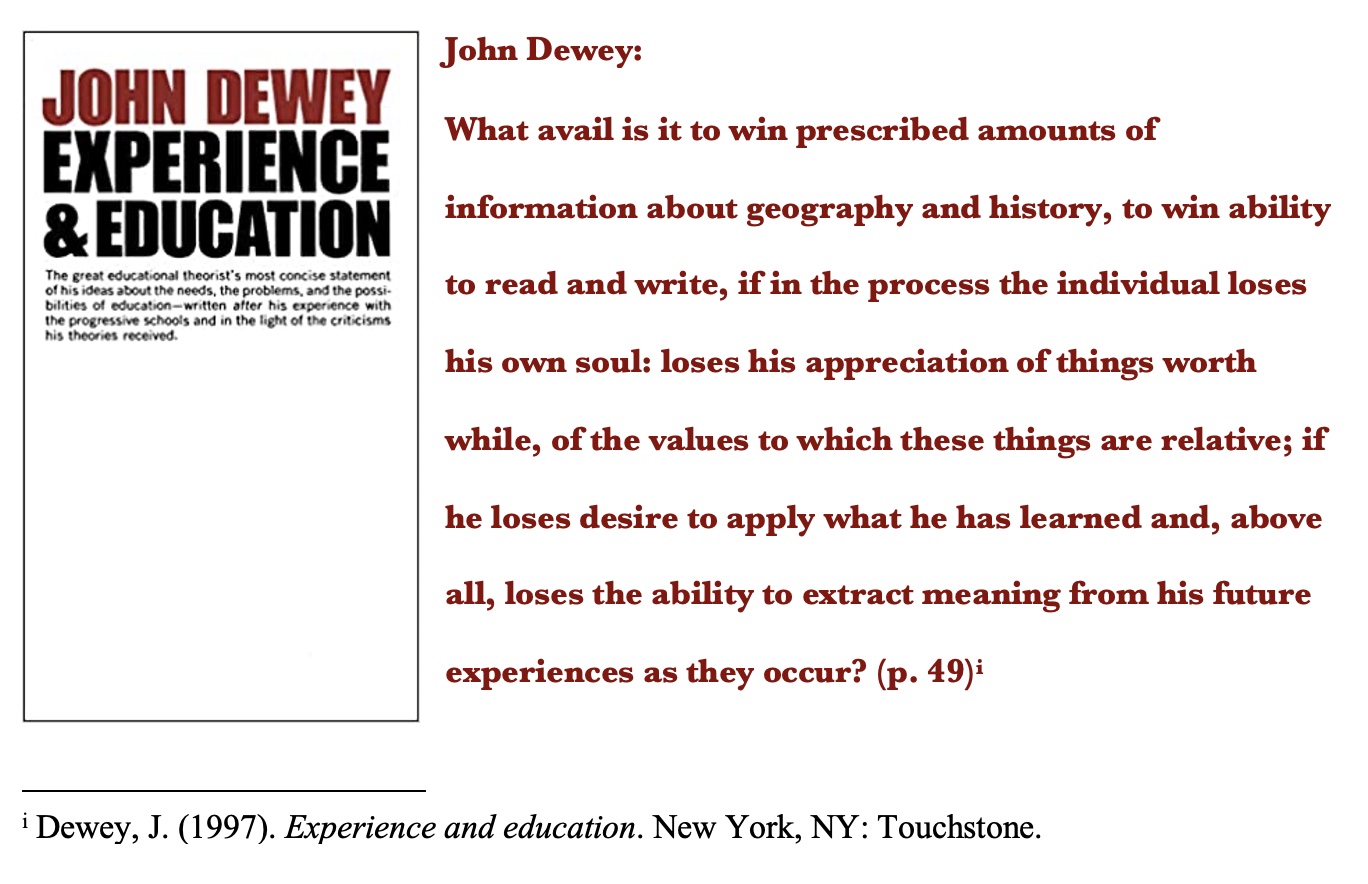
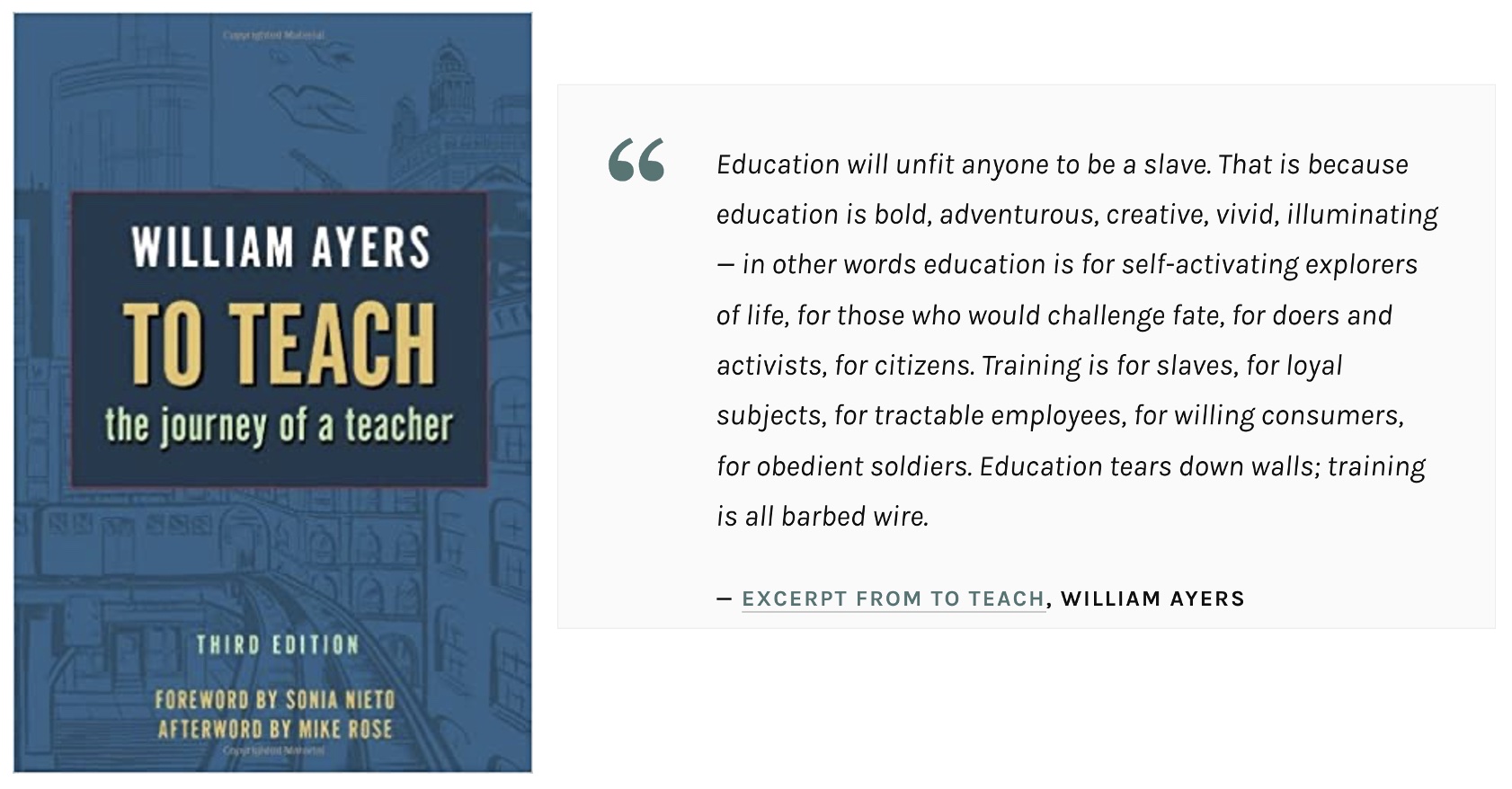
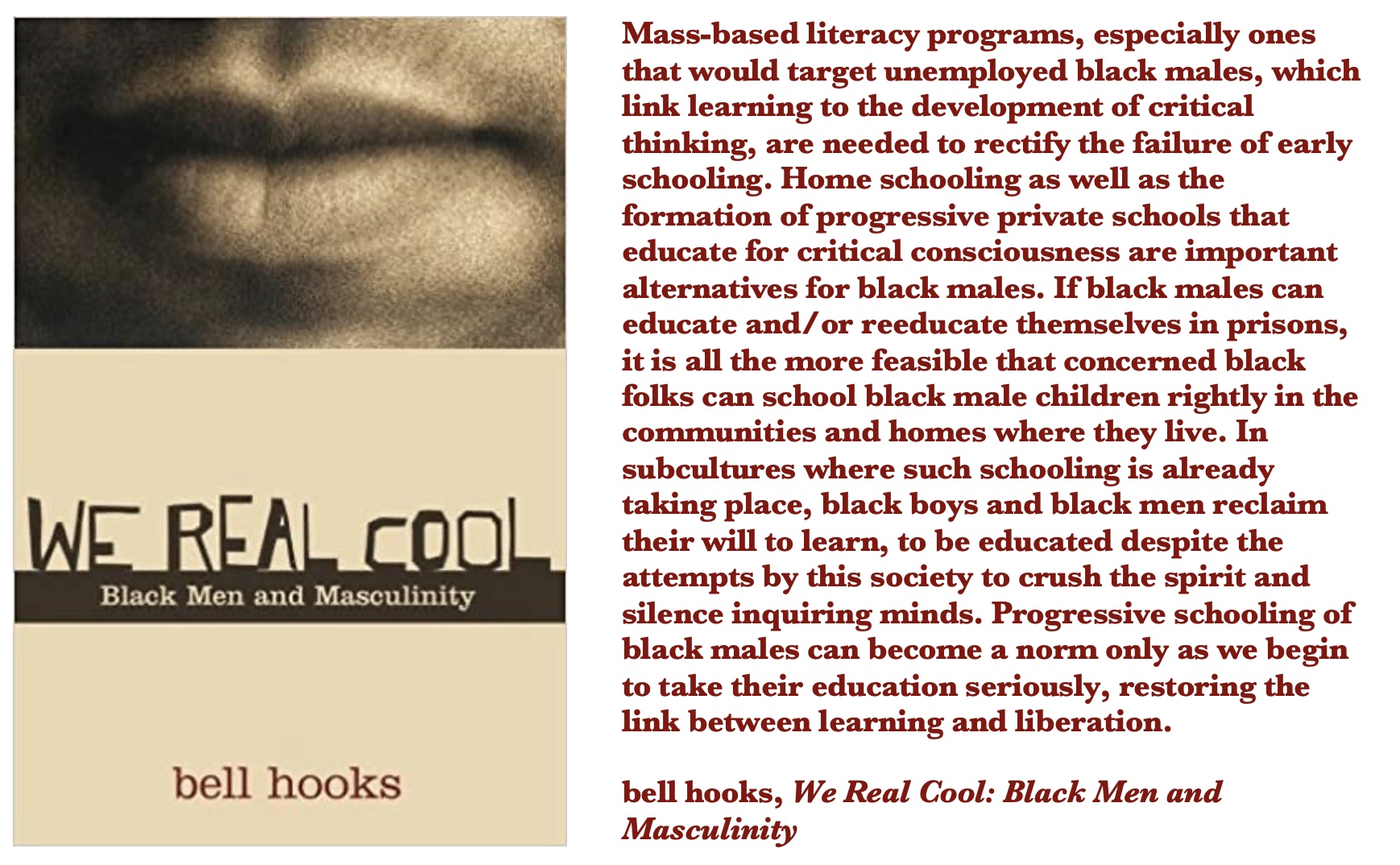
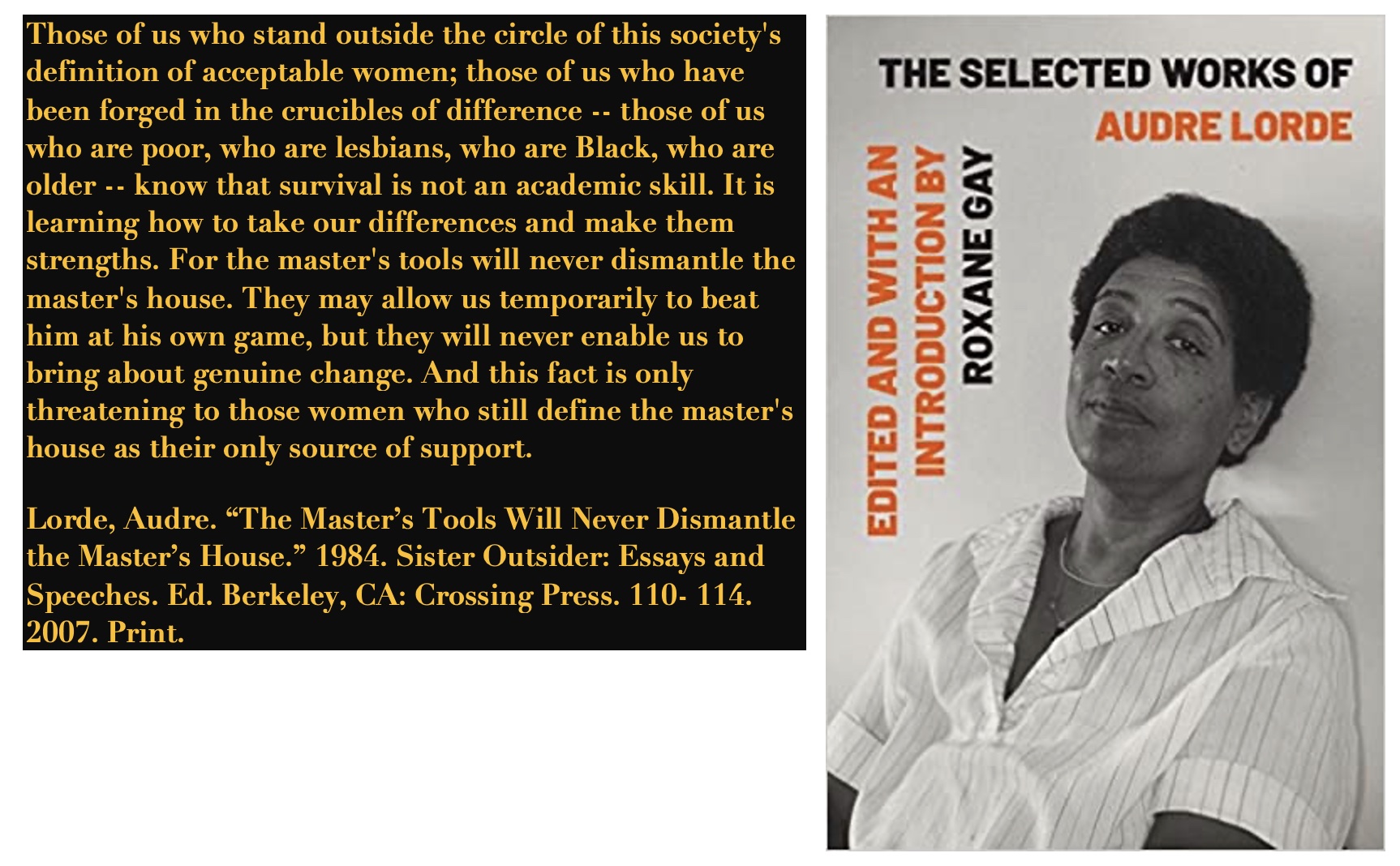
Not an exhaustive list, but for me, someone who has spent almost 40 years as a literacy educator, I want to offer some reasons reading matters for me, highlighting John Dewey, William Ayers, bell hooks, and Audre Lorde:

The allure of SoR for the media, parents, and politicians is grounded in silver-bullet “all students must” thinking that is antithetical to the reasons I believe reading matters.

At the core of the tension in debates about teaching reading and what texts students are assigned or allowed to read is those embracing indoctrination (“teaching everybody to read the right way”) versus those embracing education as liberation (from Dewey to Ayers to hooks and to Lorde).

Indoctrination depends on someone not only controlling what people read, hear, and think, but also erasing what people read, hear, and think.

The SoR movement ultimately fails because it resists being student centered and allows far too often for reading to be reduced to decoding (systematic intensive phonics for all); further, while SoR advocates often demonize popular reading programs (and I am a strong critic of all reading programs), they make the same essential mistake by simply choosing different programs to endorse as rigid expectations for students and teachers (LETRS, DIBLES).

Reading matters, but if we become distracted by raising reading test scores, our practices are likely to produce non-readers (Dewey).

Reading matters, but if we fail to distinguish between indoctrination and education for liberation (hooks), we reduce reading instruction to training (Ayers).

Reading matters, but our commitments must be to how reading matters for the individual, especially for those “who stand outside the circle of this society’s definition of acceptable” (Lorde).

If we truly believe every person deserves the human dignity of intellectual freedom, as my parents and teachers afforded me, then reading matters only if we refuse silver-bullet scripts, only if we protect all the books and ideas available to free people.

That is the only “right way” worth evoking.


[1] See the following:

An Examination of Dyslexia Research and Instruction, with Policy Implications, Peter Johnston and Donna Scanlon

Research Advisory: Dyslexia (ILA)

[2] See the following:

A Meta-Analysis of the Effects of Reading Comprehension Interventions on the Reading Comprehension Outcomes of Struggling Readers in Third Through 12th Grades, Marissa J. Filderman, Christy R. Austin, Alexis N. Boucher, Katherine O’Donnell, Elizabeth A. Swanson

“the simple view of reading does not comprehensively explain all skills that influence reading comprehension, nor does it inform what comprehension instruction requires.”

The Sciences of Reading Instruction, Rachael Gabriel (Educational Leadership)

The Trouble With Binaries: A Perspective on the Science of Reading, David B. Yaden Jr., David Reinking, and Peter Smagorinsky

Reconsidering the Evidence That Systematic Phonics Is More Effective Than Alternative Methods of Reading Instruction, Jeffrey S. Bowers (2020)

[3] UPDATED 23 February 2020: Mississippi Miracle or Mirage?: 2019 NAEP Reading Scores Prompt Questions, Not Answers

See Also

The Problem with Balanced Literacy

Failing Balanced Literacy Is Failing Readers, Katie Kelly and Paul Thomas

Banning Books Is Un-American

[Update: Published at the Greenville News (SC); see PDF at end of post with hyperlinks]

person holding Ray Bradbury book
Photo by Will Porada on Unsplash

In the fall of 1973, the Drake School Board in North Dakota banned Kurt Vonnegut’s Slaughterhouse-Five.

Vonnegut, born November 11, what is now celebrated as Veterans Day, was a World War II veteran who survived the firebombing of Dresden. That horrific event a couple decades later became Vonnegut’s most celebrated novel, the same novel banned after being assigned in Drake High School.

“I gather from what I read in the papers and hear on television that you imagine me, and some other writers, too, as being sort of ratlike people who enjoy making money from poisoning the minds of young people,” Vonnegut explained in a letter to the school board. There he also defended the value of his novels: “They beg that people be kinder and more responsible than they often are.”

Ultimately, Vonnegut pronounced the banning of his novel “un-American” and concluded, “you have insulted me, and I am a good citizen, and I am very real.”

I have been an educator in South Carolina for almost 40 years, about two decades of that time spent teaching high school English. This example of censorship from the 1970s should be nothing more than a regrettable moment in history, but I was reminded of it because on Vonnegut’s birthday in 2021 I read that SC Governor Henry McMaster has joined Republicans across the U.S. who are not only banning books, but actively calling for book burnings.

A popular truism often cited in times like these is “Those who cannot remember the past are condemned to repeat it,” attributed to George Santayana. However, what we are experiencing in Greenville, SC and across America is much worse; this is a purposeful erasing of history.

Here is a history lesson we cannot afford to ignore.

“The burning of books under the Nazi regime on May 10, 1933, is perhaps the most famous book burning in history,” detailed at the Holocaust Encyclopedia. The justifications for the book burnings are hauntingly familiar when paired with comments from governors and school board members:

At the meeting places, students threw the pillaged and “unwanted” books onto bonfires with great ceremony, band-playing, and so-called “fire oaths.” In Berlin, some 40,000 persons gathered in the Opernplatz to hear Joseph Goebbels deliver a fiery address: “No to decadence and moral corruption!” Goebbels enjoined the crowd. “Yes to decency and morality in family and state! I consign to the flames the writings of Heinrich Mann, Ernst Gläser, Erich Kästner.”

Holocaust Encyclopedia

While there is certainly a place for examinations of age-appropriate texts being taught in public schools, and parents have the right to offer input about the books their own children read, book banning is an act of removing everyone’s opportunity to choose what they read and what they learn.

The current purge happening across the U.S. is not limited to individual student and parent choice, but banning books from school libraries, while targeting the most vulnerable students and authors.

The National Council of Teachers of English (NCTE), the largest organization of ELA teachers in the U.S., supports The Students’ Right to Read, including in part:

One of the foundations of a democratic society is the individual’s right to read, and also the individual’s right to freely choose what they would like to read. This right is based on an assumption that the educated possess judgment and understanding and can be trusted with the determination of their own actions. In effect, the reader is freed from the bonds of chance. The reader is not limited by birth, geographic location, or time, since reading allows meeting people, debating philosophies, and experiencing events far beyond the narrow confines of an individual’s own existence.

The Students’ Right to Read (NCTE, 2018)

While political leaders across both major parties enjoy making grand statements and gestures about individual freedom, the American Way, and the American Dream, there is only one way to describe book banning—un-American.

That governors and school boards are actively banning books across the U.S. at the same time that we as a country were celebrating Veterans Day is repeating the offensive history lived by Vonnegut five decades in our past, a past we refuse to acknowledge, a past we seem eager to repeat.

Greenville News (SC) 5 December 2021