
Category Archives: Childhood

Beyond “Doubly Disadvantaged”: Race, Class, and Gender in U.S. Schools and Society

The U.S. Department of Housing and Urban Development (HUD) established the Moving to Opportunity (MTO) for Fair Housing program in the mid-1990:

MTO recruited more than 4,600 families with children living in severely distressed public housing projects in five cities (Baltimore, Boston, Chicago, Los Angeles, and New York City). HUD offered some MTO families the opportunity to use a housing voucher to move into private-market housing in lower poverty neighborhoods and did not make the same offer to others.

“The Long-Term Effects of Moving to Opportunity on Youth Outcomes” (2012) reveals the following from that program:

These patterns [school dropout, low test scores, and delinquency] have led to a longstanding concern that neighborhood environments may exert an independent causal effect on the life chances of young people. Because low-income individuals comprise nearly one-half of the 8.7 million people living in census tracts with poverty levels of 40 percent or higher (Kneebone, Nadeau, and Berube, 2011), poor children growing up in neighborhoods of concentrated poverty may be “doubly disadvantaged”—they face potential risks from growing up in a low-income household and in an economically poor neighborhood. (See a full discussion HERE)

The disadvantages of being born poor and then attending public schools in impoverished neighborhoods are far greater than doubled, however. The disadvantages are exponential and involve race, class, and gender.

NPR has presented two brief looks at new analyses from MTO—one directly about Study: Boys Report PTSD When Moved Out Of Poverty, and the other a related story, ‘Prep School Negro’ Shows Struggle Between Poverty And Plenty.

David Green reports on the MTO research:

Now a new study in the Journal of the American Medical Association finds that boys from these families did not thrive. They found that the move took a toll on their emotional well being, a toll not experienced by girls….

Professor at Harvard Medical School, Ronald Kessler explains about the research findings:

Well, the hope was originally that the educational opportunities for the kids would increase because of better schools, that the opportunities for the parents finding jobs would increase because they moved to places where there were higher employment rates so that in the long run the kids, as they moved out, would have better socioeconomic achievement than they would have otherwise….

Well, we found something that we hadn’t expected, which was the effect of the intervention was quite positive for girls, but boys had the opposite effect. Boys were more depressed. They were more likely to have post traumatic stress disorder. They were more likely to have conduct problems if they were in families that were offered vouchers than in the control group that wasn’t involved in any kind of move.

Although not part of the WTO experimental group, Andre Robert Lee represents that alienation felt by African American and poor males and identified by Kessler and his team:

I kind of feel like when you’re black, sometimes you have to be twice as good. I was kind of, you know, sad by it, you know. I’m a people person and to go to a school where you can’t be yourself – I was being myself, but people not to embrace you is just – it kind of sucked.

This research and personal experience must be placed in several social and educational contexts.

First, the unique and negative experiences of impoverished males, including impoverished African American males, are complicated by the research on how people view African American children:

Asked to identify the age of a young boy that committed a felony, participants in a study routinely overestimated the age of black children far more than they did white kids. Worse: Cops did it, too.

The study, published in the Journal of Personality and Social Psychology, aimed at figuring out the extent to which black children were likely to be treated differently than their white peers solely based on race. More specifically, the authors wanted to figure out the extent to which black kids were dehumanized. “Children in most societies are considered to be in a distinct group with characteristics such as innocence and the need for protection,” author Phillip Atiba Goff of UCLA told the American Psychological Association. “Our research found that black boys can be seen as responsible for their actions at an age when white boys still benefit from the assumption that children are essentially innocent.”

Second, the more specific context of how society sees and treats African American young men is captured in the controversies surrounding the shootings of Trayvon Martin and Jordan Davis as well as the controversies surrounding Richard Sherman (and the coded use of “thug”) and Marcus Smart.

Third, the Office for Civil Rights (USDOE) has detailed that in-school discipline policies and retention are disproportional by gender and race, and that access to high-quality courses and experienced teachers is also inequitable. “No excuses” practices and zero tolerance policies tend to target high-poverty and racial minority students as well:

There is abundant evidence that zero tolerance policies disproportionately affect youth of color. Nationally, black and Latino students are suspended and expelled at much higher rates than white students. Among middle school students, black youth are suspended nearly four times more often than white youth, and Latino youth are roughly twice as likely to be suspended or expelled than white youth. And because boys are twice as likely as girls to receive these punishments, the proportion of black and Latino boys who are suspended or expelled is especially large.  Nationally, nearly a third (31 percent) of black boys in middle school were suspended at least once during the 2009–10 school year. Part of this dynamic is that under-resourced urban schools with higher populations of black and Latino students are generally more likely to respond harshly to misbehavior. (p. 3)

Fourth, the race, class, and gender inequity found in school discipline is replicated and intensified in the mass incarceration of African American males in the U.S.

Finally, and possibly most importantly, the historical context must be addressed. Consider first James Baldwin speaking in 1963, Take This Hammer:

And also, consider Baldwin writing in 1966, A Report from Occupied Territory:

Here is the boy, Daniel Hamm, speaking—speaking of his country, which has sworn to bung peace and freedom to so many millions. “They don’t want us here. They don’t want us—period! All they want us to do is work on these penny-ante jobs for them—and that’s it. And beat our heads in whenever they feel like it. They don’t want us on the street ’cause the World’s Fair is coming. And they figure that all black people are hoodlums anyway, or bums, with no character of our own. So they put us off the streets, so their friends from Europe, Paris or Vietnam—wherever they come from—can come and see this supposed-to-be great city.”

There is a very bitter prescience in what this boy—this “bad nigger”—is saying, and he was not born knowing it. We taught it to him in seventeen years. He is draft age now, and if he were not in jail, would very probably be on his way to Southeast Asia. Many of his contemporaries are there, and the American Government and the American press are extremely proud of them. They are dying there like flies; they are dying in the streets of all our Harlems far more hideously than flies.

How much different, then, is our world when we listen carefully to Lee:

Yeah, it’s hard. And when a kid walks in and they’re immediately seen as a delinquent, that perception and notion is thrust upon a person immediately. Despite the fact that I’m quote-unquote successful and have a career and have a graduate degree, you know, I still have a darn hard time getting a cab, and this is even if I’m in a suit or not.

If you’re not a really strong person, it can destroy you ’cause it’s constant chipping away at your psyche, you know, and I realized this in 9th grade. I thought there’s inequity in the world and it’s not going to change. What am I going to do?

The conclusions about impoverished males drawn from the WTO experiment and Lee’s personal story suggest that Baldwin’s warnings remain disturbingly true:

This rigid refusal to look at ourselves may well destroy us; particularly now since if we cannot understand ourselves we will not be able to understand anything. (“Lockridge: ‘The American Myth’”; Baldwin, 1998, p. 593)

The truth is that the country does not know what to do with its black population now that the blacks are no longer a source of wealth, are no longer to be bought and sold and bred, like cattle; and they especially do not know what to do with young black men, who pose as devastating a threat to the economy as they do to the morals of young white cheerleaders. It is not at all accidental that the jails and the army and the needle claim so many, but there are still too many prancing around for the public comfort. Americans, of course, will deny, with horror, that they are dreaming of anything like “the final solution”—those Americans, that is, who are likely to be asked: what goes on in the vast, private hinterland of the American heart can only be guessed at, by observing the way the country goes these days. (No Name in the Street; Baldwin, 1998, pp. 432-433)

The disadvantage of being impoverished, African American, and male remains powerfully staggering, far beyond “doubly” and something we seem unable to confront much less address.
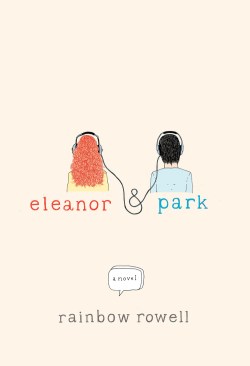
REVIEW: eleanor & park

children guessed(but only a few
and down they forgot as up they grew

[anyone lived in a pretty how town],” e. e. cummings

I cried on the first page of eleanor & park by Rainbow Rowell.

eleanor & park, Rainbow Rowell

But to be perfectly honest, I am a crier, and that may not be my most compelling argument for this disturbingly beautiful novel. I agree, however, with John Green:

But I have never seen anything quite like “Eleanor & Park.”…

“Eleanor & Park” reminded me not just what it’s like to be young and in love with a girl, but also what it’s like to be young and in love with a book.

Before discussing the novel more directly, I want to offer a few points of context.

First, I am a strong advocate of young adult literature, but must confess, I also tend to be disappointed by young adult literature. Too often, I believe, young adult novels ask too little of readers, slip into simplistic language and ideas, and drift into condescension. I must stress strongly here that eleanor & park is not one of those novels.

Second, quite by accident, I read eleanor & park immediately after reading Jeffrey Eugenides’s The Virgin Suicides. I will examine this further below, but both novels are powerful works that ask the reader to consider the fragility of adolescence and the often dangerous conditions in which adolescents and children live—both physically and psychologically dangerous.

And third, I knew I had fallen in love with eleanor & park when it immediately reminded me of Notting Hill (which oddly began running on cable just as I started reading Rowell’s novel; karma, I suppose). Eleanor and Park are fearful, hesitant to wade into love, similar to William and Anna in the film. And the first page of the novel describes a broken Park, confirming William’s fear:

William: The thing is, with you I’m in real danger. It seems like a perfect situation, apart from that foul temper of yours, but my relatively inexperienced heart would I fear not recover if I was, once again, cast aside as I would absolutely expect to be. There’s just too many pictures of you, too many films. You know, you’d go and I’d be… uh, well buggered basically.

I cannot say more emphatically or directly that I believe everyone should read eleanor & park; it is equally a novel for adolescents and adults. And for that reason I cannot separate my reasons why so I’ll simply offer here my arguments for dedicating some of your reading life, your heart, and your tears to this novel.

Rowell beautifully and elegantly frames scene by scene the budding and doomed love between Eleanor and Park, two adolescents joined by qualities that Rowell examines without romanticizing, without condescending. Eleanor and Park represent and share both gender-based and universal characteristics: low self-esteem and self-consciousness related to body image; nerdom linked to comic books, music, social awkwardness and anxieties, and fashion; and navigating the painful transition from childhood to adulthood that includes hurdles related to peer groups, family dynamics, and social institutions such as school.

And while I anticipate everyone crying while reading this novel, I can assure you that spontaneous laughter comes about in an equal amount. Rowell is perceptive and empathetic as a writer, but she is also damned funny: “It was the nicest thing she could imagine. It made her want to have his babies and give him both her kidneys” (p. 93).

Again, I think anyone who loves to read, who loves novels will love eleanor & park, but I also have some more targeted suggestions.

If you are a parent (or expect to be some day) or a teacher (or expect to be some day), Rowell reminds us about the power—both positive and negative—of the adults in the lives of children and adolescents. As I noted above, The Virgin Suicides is a disturbing portrait of the tragic consequences of the misguided home, the overbearing parents.

While Eugenides’s novel is focused, Rowell invites the reader into two homes that serve as complex and nuanced narratives about how difficult parenting is—especially for Eleanor’s family because of the weight of poverty and the frailties of her mother joined with the inexcusable terror of her mother’s second husband. Park’s family is also complex, but there are moments of real kindness, change, and just-plain-real-life in Park’s home that serve to put Eleanor’s challenges in stark relief.

Rarely are things or people all evil or all angel (think about Tina in the novel when you read), but the impact of parents on their children is central to why parents and teachers must read this novel.

And while the school is somewhat less defined or fully developed in the novel, school and teachers share another burden along with the parents. Yes, there is terror and cruelty in school for Eleanor, but there are moments of real tenderness and kindness (DeNice and Beebi are wonderful friends for Eleanor) that serve to avoid the typical portrayal of schools in young adult works (think Ferris Bueller’s Day Off).

“Damn, damn, damn,” [Eleanor] said. “I never said why I like you, and now I have to go.”

“That’s okay,” [Park] said.

“It’s because you’re kind,” she said. “And because you get all my jokes…” (p. 113)

My second targeted suggestion is nearly impossible to express so I am likely to wander.

When my daughter was a child, sleeping each night upstairs in a child’s daybed, I would often tip-toe up the stairs and into her room to stand next to her sleeping like a stone.

Like me, she radiates heat while sleeping, but my nighttime ventures were to take her tiny warm foot in my hand, squeezing it slightly, feeling the softest skin and the curve of her arch.

That is the only other experience for me that compares to holding the hand of the one you love. And that is the only way I can come close to my broad second recommendation.

If you love holding hands, you should read this book.

If you have the sort of anxiety that creeps into self-loathing and the fear that you are unlovable, you should read this book.

If you believe in or want to believe in soul-mates, you should read this book.

If your heart breaks at the sign of human kindness, you should read this book.

If you love adolescents and realize that some of being an adolescent is always with us (and should be) and that some of being a child is always with us (and should be)—if you regret that for most people “down they forgot as up they grew,” you should read this book.

She would never belong in Park’s living room. She never felt like she belonged anywhere, except for when she was lying on her bed, pretending to be somewhere else. (p. 127)

I suppose in the end what I want to say is that if you are fully aware of what it means to be a human and you are determined to cling to the dignity of being fully human for yourself and everyone else, you should read this book because it is a beautiful reminder, a powerful confirmation that creeps into you bone-deep like the love you have for that one person who also resides there in your bones forever.

See Also

Review: Eleanor & Park by Rainbow Rowell

http://www.youtube.com/watch?v=KFdWcNJ17YY

A Child’s Story: “Because she’s older and the teacher, she’s right and I’m not”

A child’s birthday should be a ritual of joy, a celebration of living as well as of being a child.

Rachel sits in class on her eleventh birthday in Sandra Cisneros‘s “Eleven,” however, feeling many things except joy:

Only today I wish I didn’t have only eleven years rattling inside me like pennies in a tin Band-Aid box. Today I wish I was one hundred and two instead of eleven because if I was one hundred and two I’d have known what to say when Mrs. Price put the red sweater on my desk. I would’ve known how to tell her it wasn’t min instead of just sitting there with that look on my face and nothing coming out of my mouth. (p. 7)

Even before her day turns against her, Rachel has offered a glimpse of her world, the life she brings with her each day to school:

And maybe one day when you’re all grown up maybe you will need to cry like if you’re three, and that’s okay. That’s what I tell Mama when she’s sad and needs to cry. Maybe she’s feeling three. (p. 6)

On this day of her turning eleven, Mrs. Price, her math teacher, discovers a red sweater, and when the teacher asks for its owner, Sylvia Saldivar says the sweater is Rachel’s. The teacher adds she has seen it on Rachel so she “takes the sweater and puts it right on [Rachel’s] desk” (p. 7).

In a voice that almost isn’t a voice, Rachel tries to explain that the sweater isn’t hers, but to no avail “[b]ecause she’s older and the teacher, she’s right and I’m not,” Rachel recognizes (p. 7).

Rachel struggles with her rising powerlessness and anger, crying and prompting the teacher to reprimand her:

“Now, Rachel, that’s enough,” because she sees I’ve shoved the red sweater to the tippy-tip corner of my desk and it’s hanging all over the edge like a waterfall, but I don’t’ care.

“Rachel,” Mrs. Price says. She says it like she’s getting mad. “You put that sweater on right now and no more nonsense.”

“But it’s not—”

“Now!” Mrs. Price says. (p. 8)

The sweater stinks. It itches. Rachel soon crumbles for everyone to see, a nightmare in the world of childhood:

That’s when everything I’ve been holding in since this morning, since when Mrs. Price put the sweater on my desk, finally lets go, and all of a sudden I’m crying in front of everybody. I wish I was invisible but I’m not. I’m eleven and it’s my birthday today and I’m crying like I’m three in front of everybody. I put my head down on the desk and bury my face in my stupid clown-sweater arms. My face all hot and spit coming out of my mouth because I can’t stop the little animal noises from coming out of me, until there aren’t any more tears left in my eyes, and it’s just my body shaking like when you have the hiccups, and my whole head hurts like when you drink milk too fast. (p. 9)

And then, Phyllis Lopez claims the sweater—adding insult to Rachel’s embarrassment. But “Mrs. Price pretends like everything’s okay” even though, for Rachel, “it’s too late,” her birthday has been ruined (p. 9).

While it may be compelling to read “Eleven” as a powerful narrative of a child’s ruined birthday, it is important not to ignore how Cisneros offers us all important messages about how schools and teachers impact the children they are intended to serve, how teachers often become calloused and hurtful especially as they fail to recognize the frailty and humanity of each child.

Here, then, are some lessons from the story:

  • Children do not and cannot leave their lives behind when they walk through the doors of a school or a classroom. To pretend that they can is dehumanizing and hurtful.
  • How a child feels about the world and her/himself is at least as important if not more important than what a child thinks about the world. Emotions should not be ignored or marginalized as “childish.” A child’s affective and cognitive selves are dialogic and inseparable.
  • The authoritarian teacher is the failed teacher.
  • “We know of course there’s really no such thing as the ‘voiceless’. There are only the deliberately silenced, or the preferably unheard,” cautions Arundhati Roy in her 2004 Sydney Peace Prize lecture.
  • All education should begin with the child, and then always hold the dignity of each child sacred.

Rachel knows a certain sadness in her home, and on her eleventh birthday, her teacher, her peers, and her school make her want to disappear, force her deny herself and her childhood:

I’m eleven today. I’m eleven, ten, nine, eight, seven, six, five, four, three, two, and one, but I wish I was one hundred and two. I wish I was anything but eleven, because I want today to be far away already, far away like a runaway balloon, like a tiny o in the sky, so tiny-tiny you have to close your eyes to see it. (p. 9)

Every child that we teach needs our relentless love and patience because childhood is a frail becoming that leads to this thing we call adulthood, which we fail each time we allow ourselves to be callous to the laughter or tears of a child—especially when we do so in the name of education.

King’s Next Shining Novel: More “True History of the Torrance Family”

Stephen King’s career reminds me of the career of Kurt Vonnegut in three ways: (1) they suffered the negative consequences of being associated with writing genre fiction, (2) they are often devalued as being too popular to be credible “literary” authors, and (3) as many popular writers are, they are often associated with one work—King with The Shining and Vonnegut with Slaughterhouse-Five. King, as well, has been further marginalized by the stigma that being prolific means a writer can’t possibly be high quality.

Doctor Sleep, Stephen King

With Doctor Sleep, then, King takes on some monumental challenges since this 2013 novel is a sequel of possibly his most treasured work, The Shining, from 1977. King confronts the task of writing a sequel, as well as the weight of the popular film adaptation, in a concluding Author’s Note:

Did I approach the book with trepidation? You better believe it. The Shining is one of those novels people always mention…when they talk about which of my books really scared the bejeezus out of them….

I like to think I’m still pretty good at what I do, but nothing can live up to the memory of a good scare, and I mean nothing, especially if administered to one who is young and impressionable….

And people change. The man who wrote Doctor Sleep is very different from the well meaning alcoholic who wrote The Shining, but both remain interested in the same thing: telling a kick-ass story. (pp. 529-530)

Like many people, I was first drawn to King’s The Shining after seeing the 1980 film adaptation made popular by Jack Nicholson’s role. While I am certain I read the novel, I also realize I tend to recall more vividly the film version (the culturally iconic “Here’s Johnny!” and “Redrum”), which King warns about in a parenthetical comment in his Author’s Note: “If you have seen the movie but not read the novel, you should note that Doctor Sleep follows the latter, which is, in my opinion, the True History of the Torrance Family.”

I should also add that I am no fan of King’s primary genres, such as horror, and have not been an avid reader of King over the years. During a couple summers in the early 2000s when I was an instructor in a regional National Writing Project institute, we assigned King’s On Writing, solidifying my argument that King remains a writing treasure as well as a writer’s writer, one who informs what we know and understand about the craft of narrative.

In 2013, I had bought several King novels, deciding once and for all to spend more time with his work because an avid reader I trust deeply is a devoted King fan, but had yet to find one that grabbed me. Then I came across Adam Roberts’s Best science fiction books of 2013, in which he praised Doctor Sleep along with Margaret Atwood’s MaddAddam.

Although not intended as a book review, I want to offer first that Doctor Sleep delivers on King’s stated goal, “telling a kick-ass story.”

Dan Torrance is a fully developed and compelling character as a haunted adult, and his new shining companion, Abra Stone, is equally engaging as a child character replicating but also expanding some of the power found in Danny as a child in The Shining. If you are looking for a novel worthy of your commitment as a “ling-distance reader,” this is more than worthy of your time and investment.

But there are two aspects of the work I want to highlight beyond a recommendation.

First, as a regular and enthusiastic beer drinker who knows the horrors of alcoholism among men on my mother’s side of the family, the most haunting aspect of the novel is the examination of alcoholism and the personal yet not idealistic dramatization of Alcoholics Anonymous. At over 500 pages in hardback, the book took several days to read and it bore into my thoughts deeply and pervasively, making me contemplative about even raising a pint of beer with a meal.

The weight and terror associated with the life of alcoholism are rendered far more frightening in this work than the vampire-like threat of the True Knot. For readers, the damage done by alcoholism is real, and the damage done to humans in its wake, including children, haunts Dan and the reader as powerfully as the apparitions expected in a King work of horror.

Many so-called types of genre fiction—such as science fiction, fantasy, and horror—incorporate social commentary through allegory. In Doctor Sleep, King does not hide his examination of alcoholism, however, beneath a metaphorical veneer; instead he pairs the twin demons of alcoholism and the supernatural—resulting in a work that may be more disturbing in the real rather than the imagined.

The second powerful aspect of the work involves the relationship between being a child and also being vulnerable because of that mere status as well as because of nearly debilitating fears that you are alone because you are different.

Much of Doctor Sleep for me is about childhood, itself a scary thing. When Dan as a struggling adult crosses paths with Abra, their shared shining creates a compelling look at how any child and all humans must come to terms with the Self, even or especially when that Self feels or is dramatically unlike social norms or what appears to be normal: “’I’m okay,’ [Abra] said. ‘Really. I’m just glad not to be alone with this inside my head’” (p. 236). You don’t have to have the shining to understand Abra’s relief.

Even as Abra finds solace in her connection with Dan—and their shared shining—she remains a victim of her own anxieties, especially as she feels compelled to hide her differences from her parents in order to protect them.

Abra also has a terrifying connection with a murdered boy—again speaking to both the fragility of being a child in a harsh adult world and the weight of isolation and bonds that are beyond any person’s control. This connection is stunning and, like the focus on alcoholism, haunts the reader:

They cut him up and licked his blood and then they did something even worse to him [emphasis in original]. In a world where something like that could happen, mooning over a boy band seemed worse than wrong. (p. 209)

Abra’s story is more than the narrative of a paranormal girl; it is the story of the collision between childhood and adulthood, and the potential of that childhood and even children being left in the wake. Again, this very real element is somehow much more terrifying than the supernatural.

King’s noting he is a different man than the one who wrote The Shining informs the big picture about Doctor Sleep since this novel of horror has a compassionate and soothing narration to it—the gift of a master storyteller—that keeps the reader somewhere between Abra’s anxiety and the eternal drift into slumber—both the daily ritual of sleep and the inevitable exit from this mortal coil.

Yes, Doctor Sleep is “a kick-ass story,” but it also much more; it will not soon leave you once you’ve returned to, or entered for the first time, the Torrance Family Album.