Category Archives: Education

Misreading Innocence in Teaching and Learning

Back to school 2022 looks different than any of my many years as a student and even more as a teacher. “Back to school” now means curriculum bans for teachers and censorship for students.

It’s the Upside Down of the American Dream and academic freedom.

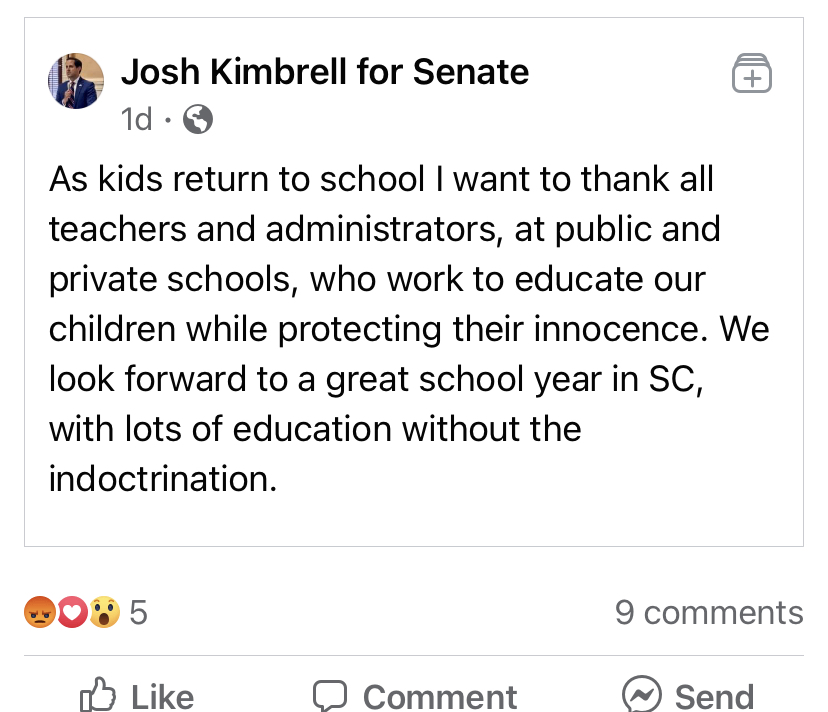
One recurring (and misleading) justification by Republicans banning curriculum and censoring books is a manufactured crisis around “age-appropriate” content; however, several Republicans have also directly begun including in their claims that the role of school and teachers is to protect childhood innocence:

As a parent, grandparent, and almost 40-years a teacher, I want to emphasize that the role any adult plays in mentoring, parenting, or teaching children is not to protect their innocence (more on why later), but to provide support and guidance as children mature and come to know the full, complicated, and often disturbing real world.

To keep a child or teen innocent is to deny them their full humanity and autonomy.

As a reader and teacher of literature, I am aware of the power and allure of idealizing innocence.

Setting aside for a moment the tremendous problems with author J.D. Salinger, his career was built on a nearly fawning adoration of his central motif, the “catcher in the rye” imagery of Holden Caulfield’s quest to protect his sister’s (and all children’s) innocence because he clearly has been traumatized by his entry into the adult world.

Author Eudora Welty praised Salinger as a writer in her review of Nine Stories in 1953:

The stories concern children a good deal of the time, but they are God’s children. Mr. Salinger’s work deals with innocence, and starts with innocence: from there it can penetrate a full range of relationships, follow the spirit’s private adventure, inquire into grave problems gravely–into life and death and human vulnerability and into the occasional mystical experience where age does not, after a point, any longer apply. Mr. Salinger’s world urban, suburban, family, mostly of the Eastern seaboard is never a clue to the way he will treat it: he seems to write without preconception of shackling things.

Threads of Innocence

Like Salinger (and nearly as problematic as a human), e.e. cummings idealized childhood and seemed to lament adulthood: “children guessed(but only a few/and down they forgot as up they grew.” Like many writers and artists throughout history, cummings portrayed childhood innocence as being closer to God (or the Universe); adulthood is a forgetting.

Both of these authors were attractive to me as a young writer, teacher, and even scholar, but the most compelling work about innocence was always William Blake, who complicated the innocence/experience dynamic. Blake’s work shows the necessary duality of life without idealizing innocence—even as he detailed the darkness of experience.

What is innocence?

It is a lack of awareness, a lack of knowledge, the absence of living life that is idealized not only in literature but in Christianity—the fall from grace, eating the fruit of the Tree of Knowledge, being cast out of the idyllic innocence of the Garden of Eden.

But innocence is extremely dangerous, and the innocent are easily manipulated, easily controlled.

And here is the truth about curriculum bans and book censorship: Republicans, conservatives, and Christian fundamentalists are primarily concerned about control—especially controlling women and children.

There is no crisis in our schools concerning exposing children and teens to content and books that are not age appropriate. If anything, traditional schooling still coddles children and teens—and especially young adults.

Protecting the innocence of children is not a valid goal for teachers or schooling; protecting the innocence of children is cruel and dehumanizing, in fact.

But that is not what Republicans are concerned about.

This is pure and simple a power grab, a way to control minds and impose a worldview on others.

Welcome to the Upside Down of the American Dream.


Recommended

Experimentalism and its relation to a new psychology (1935), Witty and LaBrant

Don’t Write Like the NYT

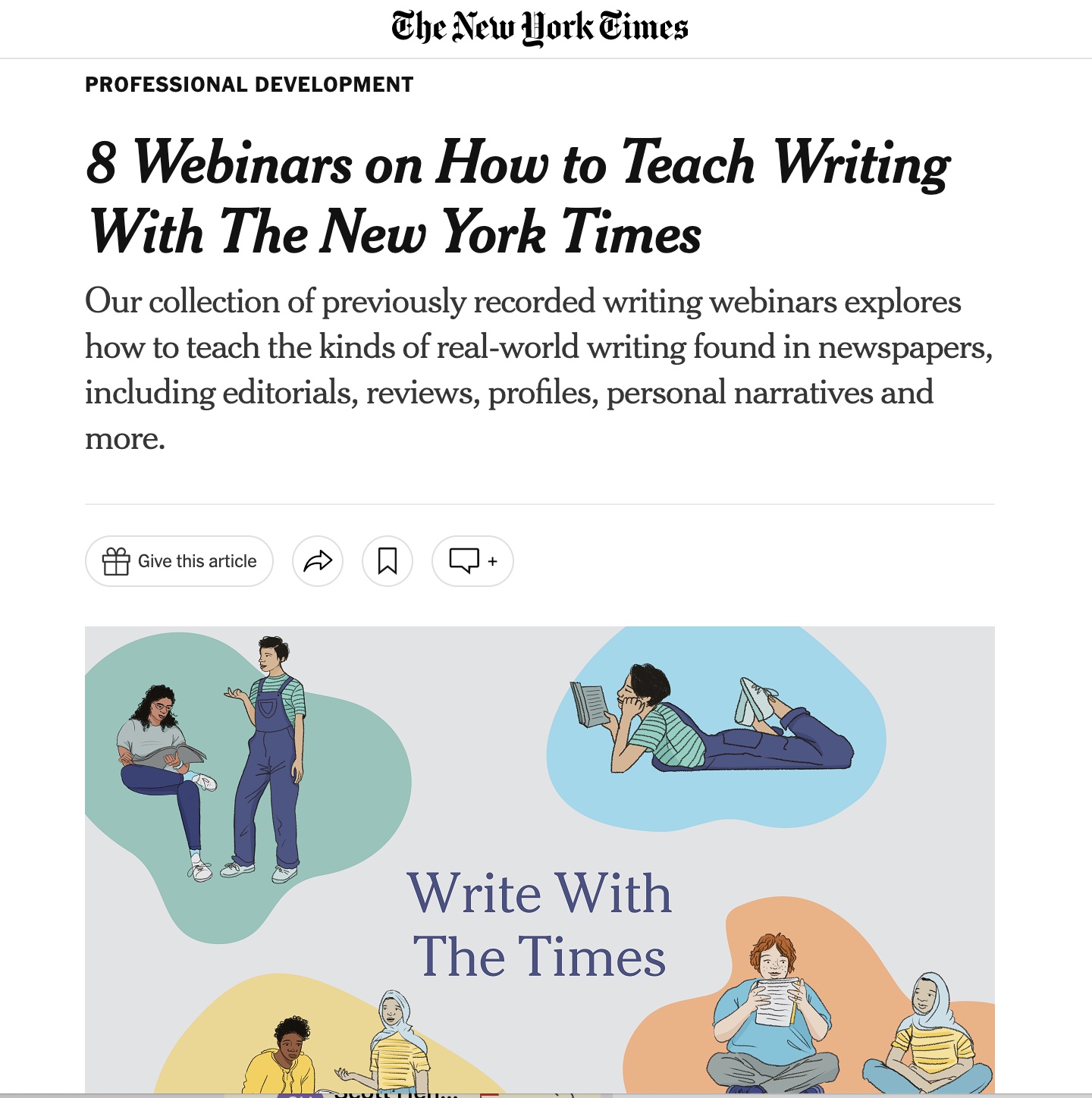
At first glance, I thought this was satire from The Onion or McSweeney’s:

Since this is a real thing, I want to state clearly for anyone aspiring to be a writer or (which is the case for many of us) for anyone currently being a writer and trying to continue our journey, don’t write like the NYT.

I am not being satirical, by the way, and I am not being hyperbolic.

The NYT provides an unmatched platform for their journalists and opinion columnists:

The New York Times (NYT) is an American daily newspaper, founded and continuously published in New York City since September 18, 1851. It has won 112 Pulitzer Prizes, more than any other news organization. Its website is one of America’s most popular news sites, and the most popular among all the nation’s newspapers, receiving more than 30 million unique visitors per month as reported in January 2011. The paper’s print version remains the largest local metropolitan newspaper in the United States and third-largest newspaper overall, behind The Wall Street Journal and USA Today. Following industry trends, its weekday circulation has fallen to fewer than one million daily since 1990. Nicknamed The Gray Lady, The Times is long regarded within the industry as a national “newspaper of record”. It is owned by The New York Times Company. Arthur Ochs Sulzberger Jr., whose family has controlled the paper since 1896, is both the paper’s publisher and the company’s chairman. Its international version, formerly the International Herald Tribune, is now called the International New York Times. The paper’s motto, “All the News That’s Fit to Print”, appears in the upper left-hand corner of the front page. Its website has adapted it to “All the News That’s Fit to Click”. It is organized into sections: News, Opinions, Business, Arts, Science, Sports, Style, Home, and Features. The New York Times stayed with the eight-column format for several years after most papers switched to six, and was one of the last newspapers to adopt color photography.

Roper Center for Public Opinion Research

Yet, invariably, nearly daily, the NYT and its journalists badly mangle their public duty to report the news and offer high-quality and informed opinions from what can be argued as the loftiest perch in print/online newspapers in the U.S.

Being this big and this powerful, it seems, has simply allowed the NYT to be arrogant and incredibly lazy—even petty.

A search on my blog site reveals that over the past ten years I have blogged dozens of times about the inaccurate, misleading, and even harmful articles that are essentially what is common in the NYT.

In a 2017 open letter to the NYT, I detailed why the newspaper of record is failing its mission, including a list of posts where I detail those failures:

And over the past five years, I have continued to catalogue the many predictable ways that the NYT fumbles their relentless coverage of education (and specifically teaching reading) and other topics:

So here, at no cost, I want to outline why no one should write like the NYT, and ironically, how reading critically the NYT can serve as a “what not to do” as a conscientious and credible writer.

First, at a superficial and practical level, the NYT simply represents that mainstream media and journalism are in serious decline (however, I want to emphasize, as I will explain below, that the NYT essentially is deeply flawed because of traditional and long-standing journalistic standards of writing). Even major newspapers have been firing editors and journalists for many years.

The field of journalism has contracted significantly, and one of the great costs has been a reduction in editing and editorial oversight as well as shifting the workforce from veterans with full-time, well paid positions to younger (read: cheaper) and even part-time (or freelance) journalists who often have to survive through their own blogging even while being traditional journalists or after they lose their full-time position. (For a little peak at the consequences, I recommend following Typos of the New York Times on Twitter.)

More substantially, however, the NYT is a bastion of bad writing that is a reflection of bad thinking—again, in part, because that is how journalists are trained to write (and think).

In the posts I include above, I have detailed all these essential problems with bad writing/thinking at the NYT and all across mainstream media, but here let me make an accessible list of those problems:

  • Both-sides journalism. The NYT is certainly among almost all journalism in this flaw, but, again, the outsized platform that is the NYT makes their impact far greater, and more harmful. Journalists are taught to look for and present “both sides” of issues to give the appearance of not being biased (see more on this below). First, presenting any issue as a “both sides” argument is lazy, the sort of thinking I would not allow in my first-year writing students. Next, by presenting “both sides,” journalists often give the impression the sides are equally valid (and they often are not).
  • Press-release journalism. As a result of the contracting industry, journalists have ceded investigative journalism and research to aggressive think tanks and advocacy organizations. Too often, articles in the NYT and across mainstream media are simply repackaged versions of press releases, regardless of the credibility of the information or perspective. Readers are left with deeply biased information presented as credible and unbiased “news” coverage of a topic.
  • Crossing the Big Foot Line. Press release journalism is one aspect of a larger shift in journalism. At one point, tabloid journalism and the type of credible journalism found in the NYT were distinct. The example I use is Big Foot. The National Inquirer (tabloid) used to run when I was growing up repeated stories about someone seeing Big Foot. The scam was that the tabloid simply covered that someone made the claim (there was no effort to verify the claims of the source). Just because a tabloid printed a story that Bob claimed the world was going to end in October didn’t mean the tabloid actually was reporting the world would end in October; the article was about Bob claiming the end of the world. Not to be nostalgic or to oversimplify, but mainstream media at that time decades ago would not have touched that sort of story. Yet, during the Trump era and again because the field is contracting, more and more mainstream media simply covers a topic without seeking verification of credibility of any claims (see the many years of Trump when mainstream media simply reported Trump saying false things but refusing to label his claims as “lies”).
  • Peddling stereotypes. One of the most insidious flaws with the NYT is grounding journalism and commentary in stereotypes and “common sense” thinking. The NYT perpetuates stereotypes about people living in poverty, public education, policing, race/racism, and essentially every topic they cover. The NYT is absent any critical interrogation of assumptions—mostly because journalists and commentators have little or no background in the topics covered.
  • Lacking historical context and crisis rhetoric. Journalists tend to have backgrounds in journalism (a problem as noted above). Without expertise in a topic, journalists and commentators are often trapped in presentism, and the result is Christopher Columbus journalism—the delusion that you have discovered something new and the failure to realize there is a history and likely many experts on the topic to draw from. This is common in coverage of education topics. Because of the lack of context, the coverage often frames topics in crisis rhetoric. Over the past few years, the media coverage of reading is a classic example of misreading a topic, failing to offer historical context, and misidentifying an issue as a “crisis.”
  • Taking an objective/non-political pose (and fearing the “liberal media” label). The journalism especially, but the commentary also, at the NYT is mostly discredited by the relentless effort to take an objective pose. That is inherently a lie since everything is subjective, and political. By simply choosing to cover a topic, journalism is biased; by deciding which “side” of “both sides” to present first, journalism is biased. As I have noted before, when I interact with journalists and challenge them for framing “both sides” as equally credible (when they are not), those journalists have often retorted, “It isn’t my job to determine if the position is credible or not.” Yet, in fact, that certainly should be their job. Since journalism and the NYT are often slandered as “liberal media,” the NYT seems determined to prove otherwise—resulting in a constant gaze into the minds of conservative America. The key point here is that the NYT (and any media) cannot be unbiased, objective, or non-political; instead, the NYT could make a much greater effort to be biased toward nuanced and valid claims about the topics they choose to cover.

Suffice it to say, don’t write like the NYT.

And don’t believe most of what you may read in the NYT because the “national ‘newspaper of record'” is broken.

Roundup [UPDATED December 2022]: Media, Reading, and Misinformation

The media have a long and muddled fascination with children and students reading, especially declaring that we are experiencing a reading crisis. However, even more concerning that this misguided click-bait approach to journalism is that the media more often than not promote crisis rhetoric with misinformation.

[UPDATES IV and V below]

I. Education Week

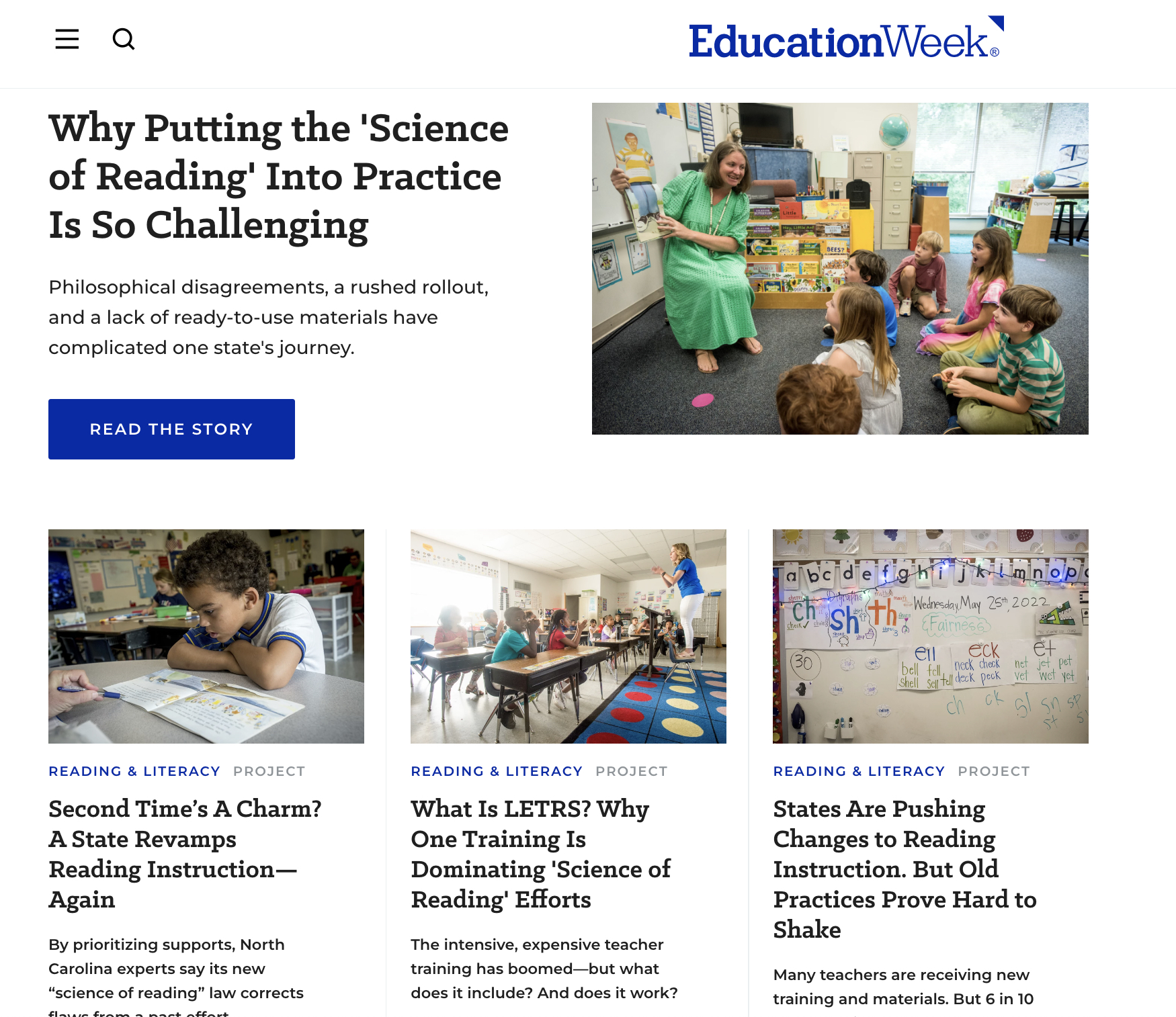
Possibly the most (un)impressive example of this is from Education Week. In just the last few weeks, EdWeek has posted a catalogue of misinformation about their favorite topic—the science of reading:

Here are a few reminders about the nonsense and misinformation that EdWeek will not set aside:

II. Newsweek

Next is a nonsense article, more misinformation, from Newsweek: Education Expert: A Love to ‘Read by Three’ Is the Answer to Success.

Consider instead this response from Stephen Krashen:

This is a response to Bethlam Forsa, “A Love to ‘Read by Three’ Is The Answer to Success.” (https://www.newsweek.com/education-expert-love-read-three-answer-success-1727222).

Published in the Newsweek Expert Forum, an “invitation-only network of influential leaders, experts, executives and entrepreneurs.” (This response was not invited.) Forsa cannot be reached by email or telephone. She is the president of Savvas, formerly Pearson K12.

It is widely believed that failure at grade 3 predicts school failure later on in school (Forsa, “A love to read by three,” 7/25/22).

If true, we should study what factors predict success by the end of grade 3.

In Lao, Lee, McQuillan and Krashen (2021), we summarized the results of three studies of ten -year old children on a test of reading comprehension, the PIRLS test, 10 year olds in 45 countries in 2006, in 57 countries in 2011 and in 61 countries in 2016. 

The number of children tested ranged from 3349 to 18,245 and was administered in the national language of the country.

In agreement with Forsa’s recommendation, the best predictor was access to reading material, represented here as the presence of a school library). High levels of poverty meant lower levels of reading competence, as did the amount of reading instruction in school and whether children had developed some reading competence before starting school. 

The clear winner: access to books. There was the most popular recommendation among the public, direct instruction in reading, was not a strong predictor. There is plenty of support for this predictor from other studies, see especially the work of Keith Curry Lance. https://keithcurrylance.com and S. Krashen (2004).

Krashen, S. 2004. The Power of Reading. Libraries Unlimited.

Lao, C., Lee, S-Y., McQuillan, J., and Krashen, S. 2021. Predicting reading ability among ten-year olds: Poverty (negative), school libraries (positive), instruction (zero), early literacy (zero). Language Magazine 20,10: 20-21. https://tinyurl.com/cn3nekc4

See also the following:

III. The New York Times

The NYT certainly is running a close second to EdWeek for misinformation (see here and here). But the newest NYT article is even worse than misinformation because it is really bad (and not surprising) news: New Reading Curriculum Is Mired in Debate Over Race and Gender.

It is important to connect the dots and recall that states have banned reading programs, as reported here:

The Arkansas Division of Secondary and Elementary Education announced in October 2019 that any curriculum that utilizes cueing strategies won’t be approved for use in the state, meaning that Calkins’ materials and another popular program, Fountas and Pinnell Classroom, are effectively banned. Colorado released a list of approved core reading curriculum, and Calkins’ programs weren’t on the list. A group outside St. Louis sent a letter signed by 216 parents, students and taxpayers to the school board asking that Calkins, and Fountas and Pinnell be dropped. The Oakland Unified School District, whose use of Calkins’ products was highlighted in the 2019 APM Reports story, announced it was forming a committee to consider adopting new curriculum. And Student Achievement Partners, a nonprofit consulting group, published a review that concluded Calkins’ curriculum materials are “unlikely to lead to literacy success for all of America’s public schoolchildren.” 

Influential literacy expert Lucy Calkins is changing her views

Republican legislation has begun to erode academic freedom among previously respected academic publishers, such as Heinemann. The combination of politics and the market is bad news for teachers, bad news for education, and bad news for students.

IV. Time [UPDATED]

Time has joined the mainstream media misinformation parade with Inside the Massive Effort to Change the Way Kids Are Taught to Read.

The expansive piece follows a now old and tired pattern of misrepresenting nearly everything about reading and teaching reading. In fact, the article almost comically fails the fact checking guidelines I developed years ago.

The post opens with a garbled defense of the reading program Open Court, blaming (of course) teachers for abandoning the program (and characterizing those teachers as driven by wokeness, not concern for students). Here is what is left out: Open Court was at the center of the Reading First scandal, and careful reviews of the program have shown that it simply does not meet the exact standards the science of reading movement calls for. (See McQuillan’s review and the review at phonics-friendly EdReports.)

Misinformation by omission.

Luscombe offers yet another, and somewhat breezy, inaccurate portrayal of whole language:

There are many schools of thought on how best to aid this process, but the main contretemps has been about whether kids need to be taught how to sound out words explicitly or whether, if you give them enough examples and time, they’ll figure out the patterns. The latter theory, sometimes known as whole language, says teaching phonics is boring and repetitive, and a large percentage of English words diverge from the rules. (Hello there, though, thought, through, trough and tough!) But if you immerse children in beautiful stories, they’ll be motivated to crack the code, to recognize each word. The counterargument is that reading is as connected to hearing as it is to sight. It begins, phonics advocates say, with speech. This understanding, and the data that supports it, has become known as the science of reading.

Massive Effort to Change the Way Kids Are Taught to Read

The goal is to frame whole language (and balanced literacy; see later in the article) as nothing more than a whim and elevate the real “science of reading.” See here for a full and accurate understanding of whole language, and here and here for balanced literacy.

Of course misinformation articles on reading must cite and greatly misrepresent the National Reading Panel (NRP). Once again, the NRP reports were deeply flawed since the panel was underfunded and understaffed; the panel also lacked any teachers and limited their review of research to narrow quantitative studies. See a fuller examination of NRP here.

The piece builds as expected to focusing on dyslexia and making a pretty huge (and inaccurate) claim:

Just as most children, no matter how many times they’ve been in a car, still need to be taught to drive, most readers benefit from being explicitly taught how sounds and letters go together. This is true not just for dyslexics (who represent about 10% of all learners) but for the majority of readers.

Massive Effort to Change the Way Kids Are Taught to Read

One of the worst aspects of the “science of reading” movement and the state legislation it has prompted is that all students are being treated as if they are dyslexic, or struggling. Not only are the movement and parent advocate misrepresenting the research on dyslexia, they are pathologizing all reading. See here and here for a more nuanced and complex understanding of dyslexia and addressing struggling readers.

And no misinformation piece on reading is complete now with the “Mississippi Miracle” propaganda. To be brief, there is no credible research showing Mississippi improved NAEP scores by using the “science of reading”; in fact, it is likely the score bumps come from excessive grade retention. See a full analysis of Mississippi’s NAEP scores here.

Part of the Mississippi and “science of reading” propaganda relies on general readers simply accepting that everything being endorsed is, well, “scientific”; however, once again, the article champions the power of LETRS, a program to train teachers in phonics and reading instruction. Another example of misinformation by omission since:

A growing number of U.S. states have funded and encourage and/or require teachers to attend professional development using Moats’s commercial LETRS program, including Alabama, Arkansas, Kansas, Mississippi, Missouri, Oklahoma, Rhode Island, and Texas. This is despite the fact that an Institute of Education Sciences study of the LETRS intervention found almost no effects on teachers or student achievement (Garet et al., 2008). (p. S259)

Hoffman, J.V., Hikida, M., & Sailors, M. (2020). Contesting science that silences: Amplifying equity, agency, and design research in literacy teacher preparation. Reading Research Quarterly, 55(S1), S255-S266. https://doi.org/10.1002/rrq.353

The article ends by praising Emily Hanford and trashing teacher education—the former has no credibility and the latter is simply more misinformation. See just one example on Hanford here, and here for teacher education.

Just like cries of reading “crisis,” the Time article offers nothing new by traveling down a well-worn path of misinformation that now seems the only direction mainstream media can see.

V. The New York Times (Again) [UPDATED]

Let’s end 2022 with some context.

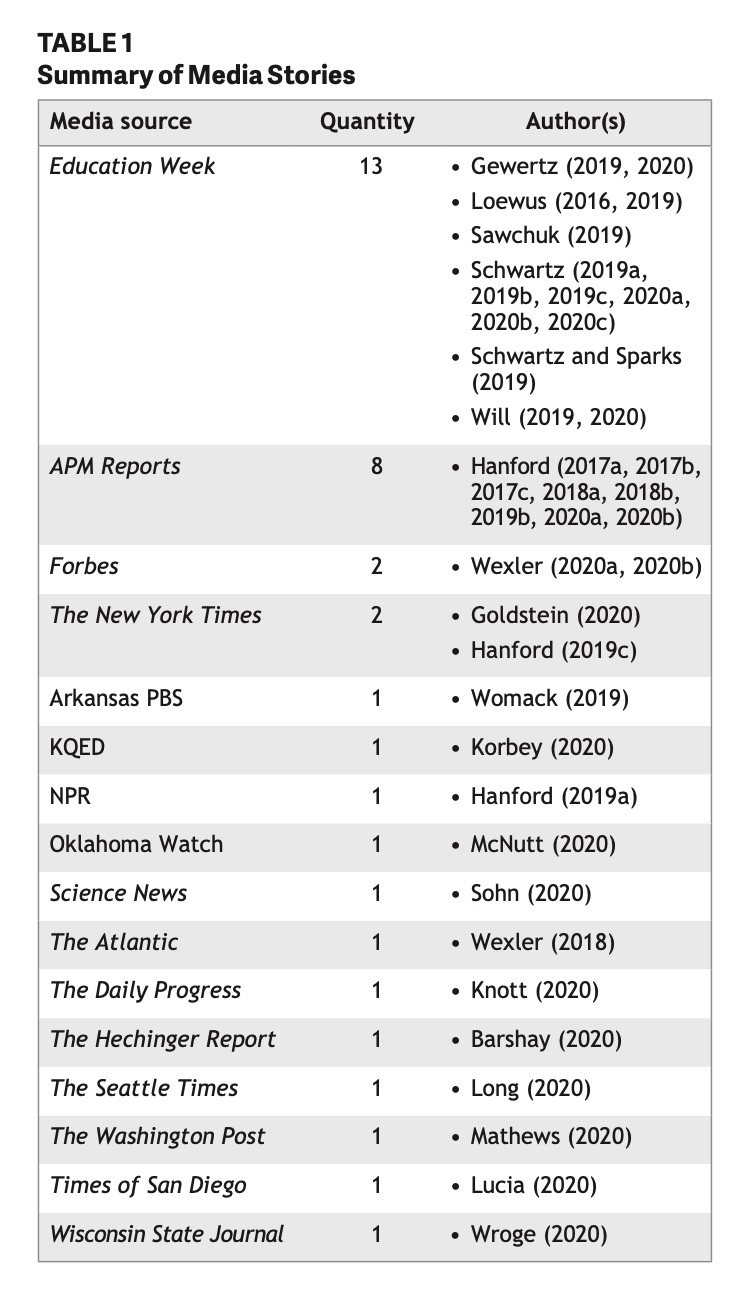
I recommend this scholarly analysis of media coverage of SOR by MacPhee, Handsfield, & Paugh (2021):

MacPhee, D., Handsfield, L.J., & Paugh, P. (2021). Conflict or conversation? Media portrayals of the science of reading. Reading Research Quarterly, 55(S1), S145-S155. https://doi.org/10.1002/rrq.384

I also recommend the series of blogs posts from Aukerman addressing media coverage of SOR (HERE, HERE, and HERE).

Now to the (potentially) last example of 2022, again from the NYT: In Memphis, the Phonics Movement Comes to High School.

This latest coverage of reading by Sarah Mervosh almost reads like parody now since the mainstream media is recycling over and over the initial and inaccurate coverage by Emily Hanford (see the links above), but this time suggesting this false narrative applies to high school.

What does this newest article get predictably wrong?

First, the uncritical acceptance of the “science of reading” movement and then of course the mischaracterization of balanced literacy:

The program in Memphis is an extension of a growing national movement to change the way younger children are taught to read, based on what has become known as “the science of reading.” And it is a sign of how sharply the pendulum has swung in the decades-long, contentious debate over reading instruction, moving away from a flexible “balanced literacy” approach that has put less emphasis on sounding out words, and toward more explicit, systematic teaching of phonics.

In Memphis, the Phonics Movement Comes to High School

Next a quick reference (no citation) to “brain research” and then a hyperlink to the out-dated and (again) misrepresented NRP report:

Brain science has shown that reading is not automatic, and longstanding research supports the need for sequenced sound-it-out instruction, along with books that build vocabulary and knowledge.

In Memphis, the Phonics Movement Comes to High School

I recommend seeing the recent and much more complex research base on brain research and phonics instruction HERE.

Tennessee like many other states have turned to retraining teachers, a market boom for education business (again):

Tennessee has aggressively pushed for statewide change. Last year, the state’s Republican legislature and governor, Bill Lee, passed a law that required all elementary schoolteachers be trained in a phonics-based approach, with optional literacy training for middle and high school teachers. More than 40,000 teachers have participated in the training so far, according to the state’s education department.

In Memphis, the Phonics Movement Comes to High School

The article returns to misrepresenting balanced literacy by linking to Hanford, a discredited article by Goldstein in the NYT, and Education Week, which routinely repackages Hanford’s narrative:

In the early to mid-2010s, when high schoolers today were in elementary school, many schools practiced — and still practice — “balanced literacy,” which focuses on fostering a love of books and storytelling. Instruction may include some phonics, but also other strategies, like prompting children to use context clues — such as pictures — to guess words, a technique that has been heavily criticized for turning children away from the letters themselves.

In Memphis, the Phonics Movement Comes to High School

The article ends by mimicking Hanford’s original article and her misleading coverage of Mississippi; here the implied “miracle” is Tennessee.

As Coles exposed in Hanford’s original coverage of Pennsylvania, don’t buy it.


The great irony facing us now is that the very worst place to read about reading is mainstream media—unless you are prepared to do the hard work journalists are not doing and interrogate the tired and relentless misinformation at the center of all the misguided crisis rhetoric around reading.


Recommended

Making sense of reading’s forever wars, Leah Durán and Michiko Hikida

Announcing: Fall 2022 through Winter 2023 Schedule

During my first 18 years as an educator, I was a high school English teacher in rural South Carolina, my hometown in fact. I never imagined doing anything else, but I did attain my doctorate in 1998, still planning to be Dr. Thomas, high school teacher, for my entire career.

It is 2022, and I just completed 20 years in higher education, where I am a full professor in education and (fortunately) also teach first-year and upper-level writing. This fall I am taking my first ever sabbatical.

However, if anything, my scholarly schedule is more packed than at any time in my career. If you are interested in my work, I invite you to join me at the following presentations/keynotes and/or look for my upcoming publications.

Fall 2022 through Winter 2023 Schedule

Publications

How to End the Reading War and Serve the Literacy Needs of All Students (2nd Ed)(2nd Edition) – IAP – [first edition]


Thomas, P.L. (2022). The Science of Reading movement: The never-ending debate and the need for a different approach to reading instruction. Boulder, CO: National Education Policy Center. Retrieved [date] from http://nepc.colorado.edu/publication/science-of-reading


A Critical Examination of Grade Retention as Reading Policy (white paper)

P.L. Thomas, Education, Furman University (Greenville, SC)

Prepared for the Ohio Education Association in response to Ohio’s “Third Grade Reading Guarantee”

September 15, 2022

[Download as PDF and supporting PP]


Presentations/Keynotes, Podcasts, Webinars

UPDATE (Supplement for Presentations below)

Update: Science of Reading Movement (PP) 2 February 2023

2022

Great Lakes Center for Education Research & Practice

September 28, 2022

Webinar

Science of Reading Policy Brief (NEPC)


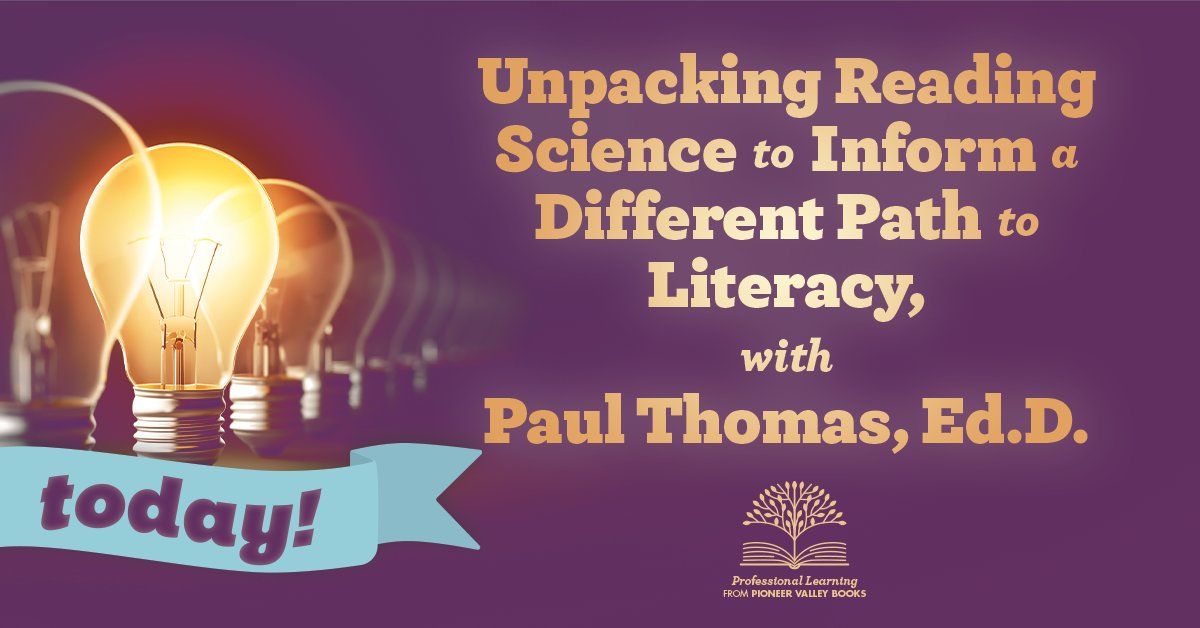
Pioneer Valley Books

October 20, 2022 – 4:00 – 5:00 pm

Webinar (view online)

PowerPoint HERE

Unpacking Reading Science to Inform a Different Path to Literacy 

The “Science of Reading” movement that began in 2018 has gained momentum and has had outsized influence on state reading policy and classroom practice. However, the SoR movement presents two negative impacts on long-term literacy education—a commitment to the “simple view” of reading (SVR) and mandates for phonics-first instruction for all beginning readers. In this webinar, Paul Thomas, Ed.D. (Professor of Education, Furman University, and author of How to End the Reading War and Serve the Literacy Needs of All Students) places the SoR movement in the context of the robust but complex current state of reading science. Come join us on October 20, 2022, at 4 p.m. as we explore what’s next in literacy education.


Ohio Education Association

Education Matters podcast; grade retention

November 10, 2022


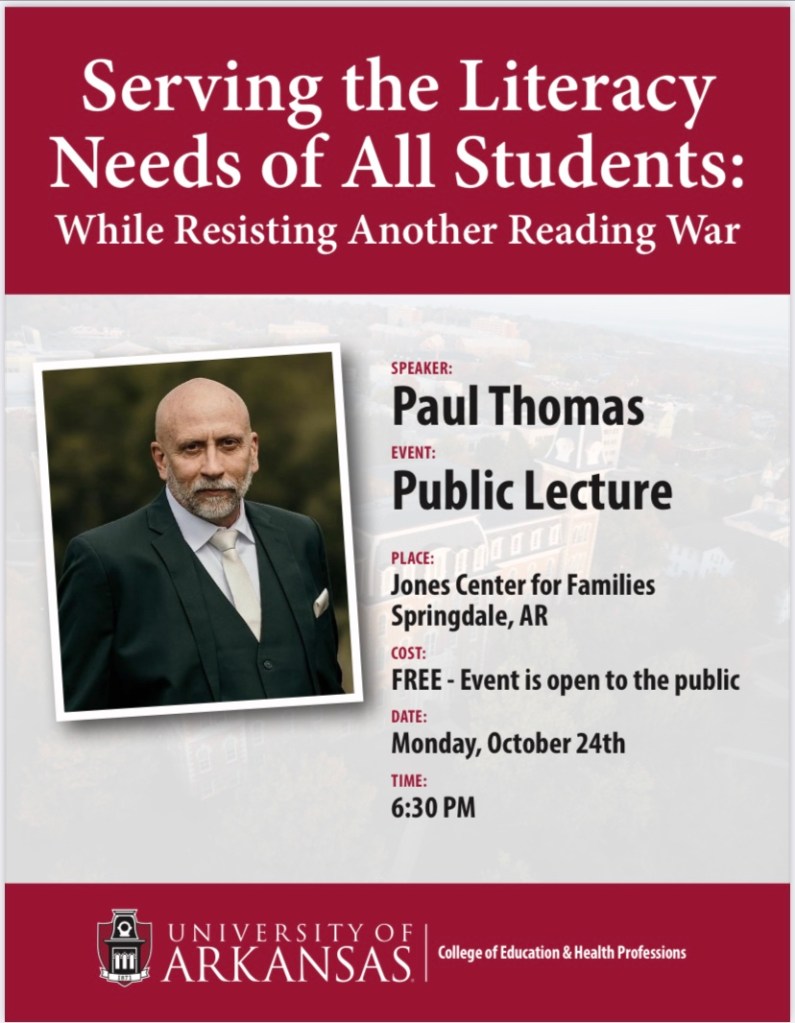
University of Arkansas

October 24 at 6:30

The Jones Center for Families

Serving the Literacy Needs of All Students: While Resisting Another Reading War


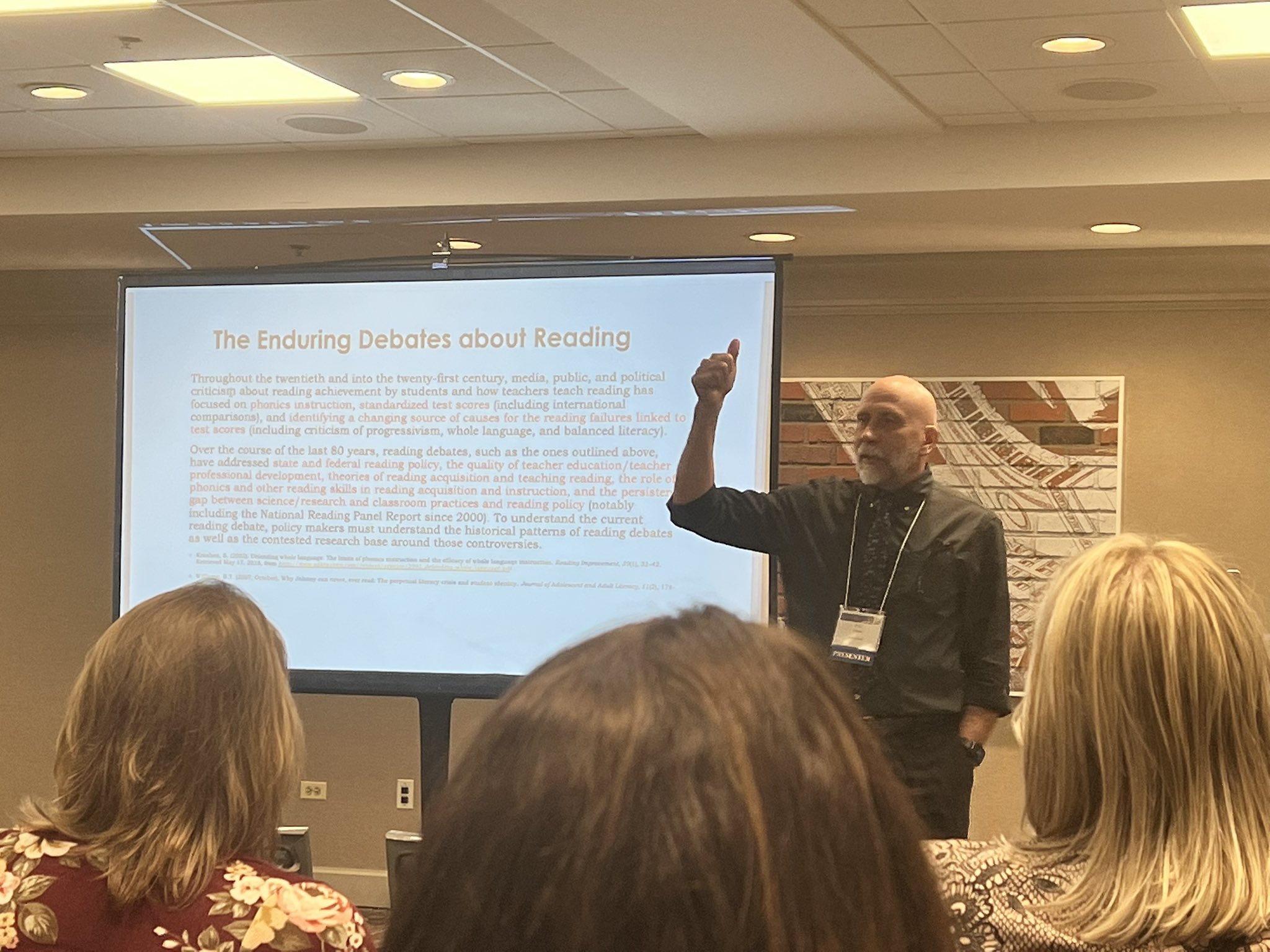
30th annual Reading Recovery Council of Michigan Institute, Thursday, November 17, 2022, Somerset Inn, Troy, Michigan

Keynote

The “Science of Reading” Multiverse (click for PP)

Before anyone can, or should, answer “Do you support/reject the ‘science of reading’?” we must first clarify exactly what the term means. I detail the three ways the phrase currently exists since it entered mainstream media during 2018. “Science of reading” as discourse, as marketing, and as a research base.

Break-out Session

How to Navigate Social Media (and RL) Debates about the “Science of Reading” (click for PP)

Let me start with a caveat: Don’t debate “science of reading” advocates on social media. However, if you enter into a social media or real-life debate, you must keep your focus on informing others who may read or hear that debate, and be prepared with credible and compelling evidence.


NCTE 2022, November 17 – 20, 2022, Anaheim, CA 

Friday November 18, 2022

Event Title: Banned in the USA: Lighting a Fire for Reading and Not to Books (click for PP)

Cowards, Censorship, and Collateral Damage: The Other Reading War (click for PP)

Type: Roundtable Sessions

Time: 12:30 PM PST – 1:45 PM PST

Location: 264-BC


Consulting: Charleston County School District

Reading programs, “science of reading,” and potential PD for faculty and administrators

November 21, 2022


Schoolutions podcast

December 20, 2022


2023

2023 Comprehensive Literacy and Reading Recovery Conference, Chicago, IL, January 18-20, 2023 

Keynote – 8:00 – 9:00 CT January 20, 2023

Teaching Literacy in a Time of Science of Reading and Censorship

The key elements of the science of reading (SOR) movement as well as the current move the ban books and censor curriculum are outlined against historical and research-based contexts. The unique challenges facing literacy educators iden/fied with considera/on of how literacy teachers can maintain professional autonomy in the classroom and prac/ce ac/vism in pursuit of a more nuanced understanding of “science” and research as well as in support of academic freedom.

90-minute breakout sessions

Academic Freedom Isn’t Free: Teachers as Activists – 9:15 – 10:45 CT January 20, 2023

The US is experiencing one of the most significant waves of book bans and educational gag orders impacting academic freedom, access to diverse voices and history, and the safety of teachers and students. Teachers are historically required to be apolitical and avoid advocacy in and out of the classroom. This session examines the politics of calling for no politics among educators, and explore with participants both the need to advocate for their professional autonomy and academic freedom as well as for academic freedom.

Unpacking the “Science” in the Science of Reading for a Different Approach to Policy and Practice – 11:30 – 1:00 CT January 20, 2023

The science of reading (SOR) movement and the use of the “science of reading” in marketing literacy programs have had a significant impact on reading policy and practice across the US since 2018. Policy and practice related to dyslexia, adopting reading programs, teaching reading (and the role of phonics instruction), however, have too often been guided by a misleading and overly simplistic version of SOR portrayed in the media and advocated by parents and politicians. This session examines the contradictions between claims made by SOR advocates and the current research base.


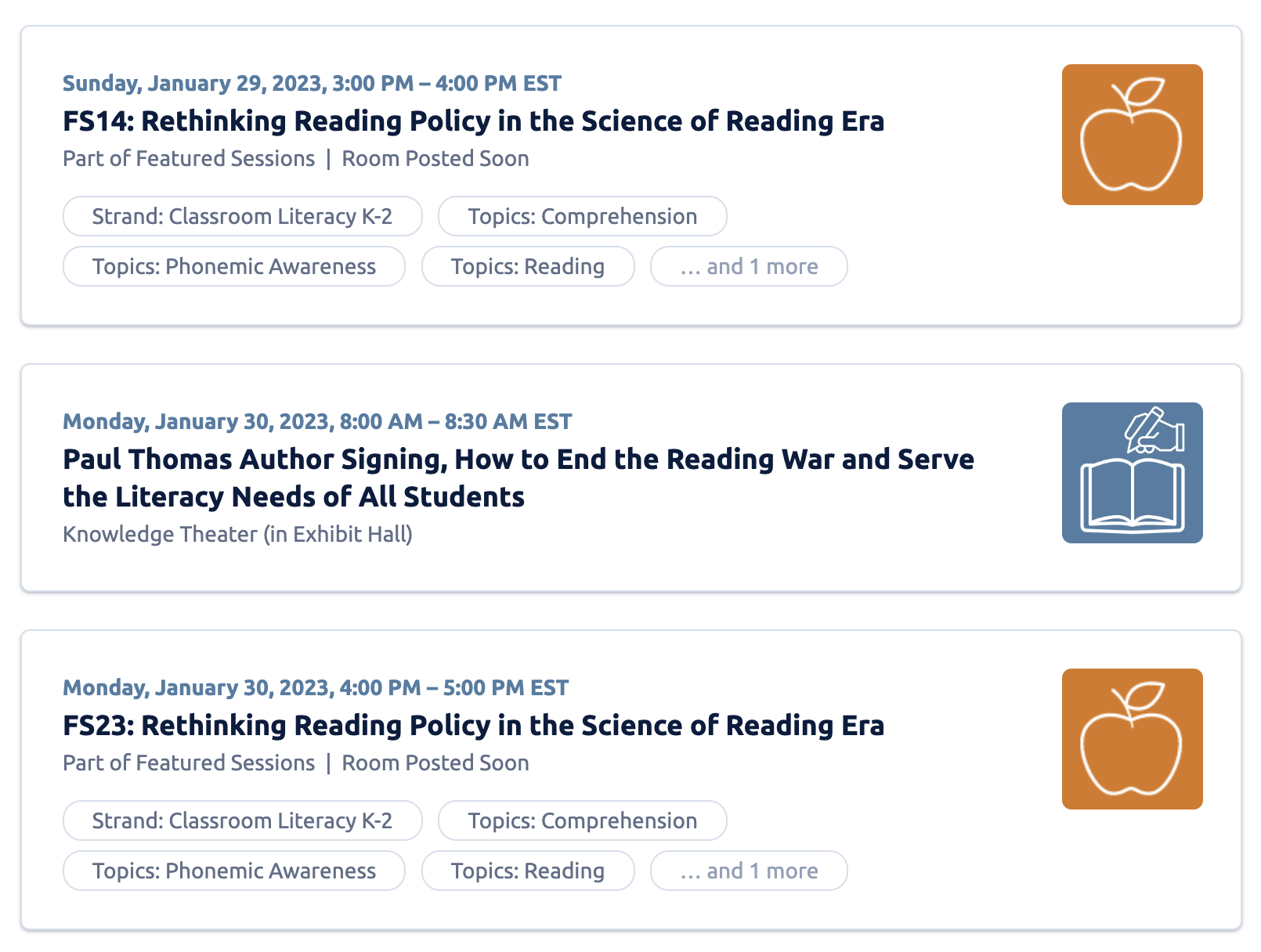
LitCon 2023, January 28 – 31, Columbus, OH

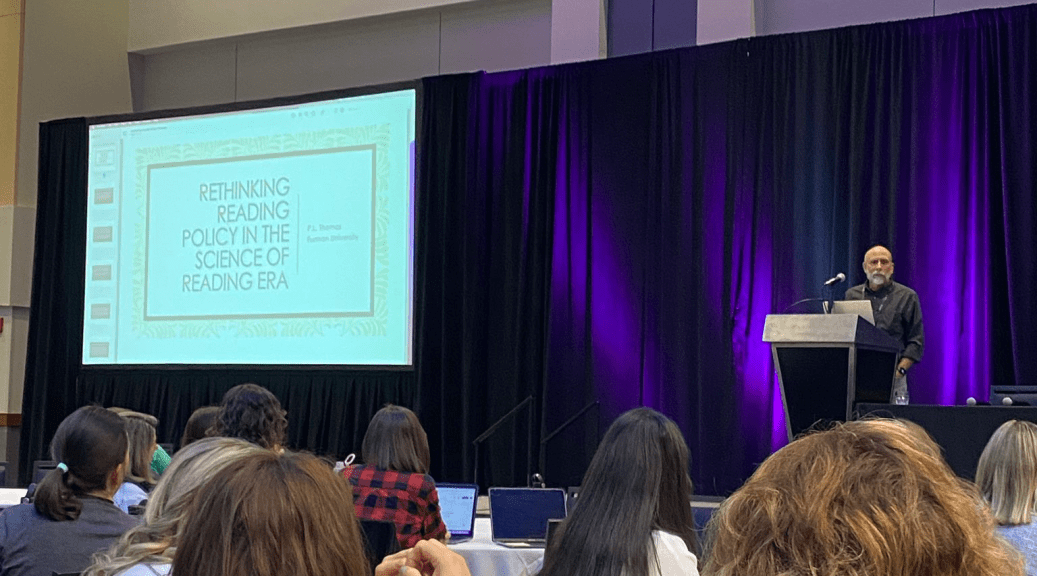
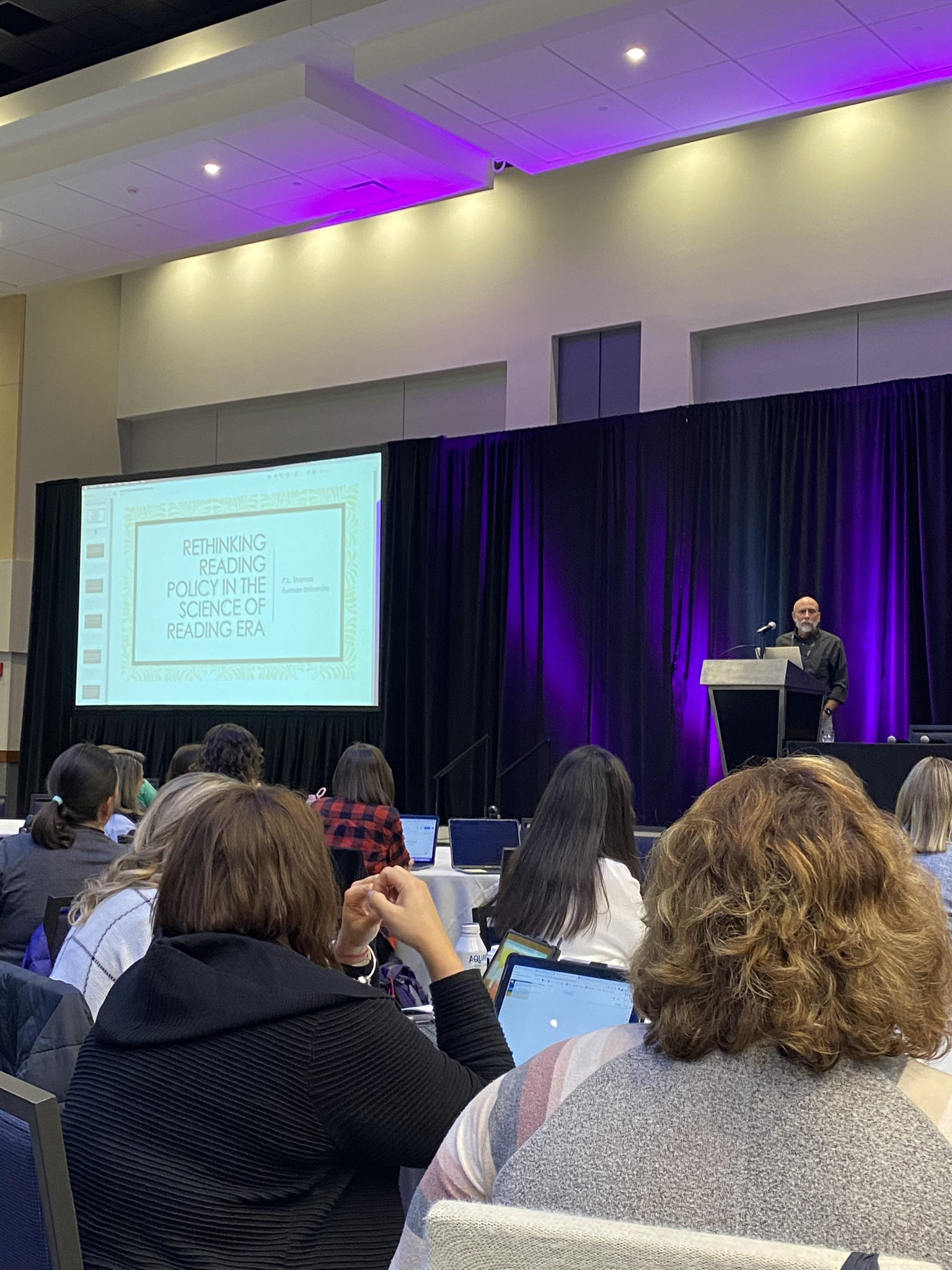
Rethinking Reading Policy in the Science of Reading Era

Sunday, January 29, 2023, 3:00 pm – 4:00 pm ET

Monday, January 30, 2023, 4:00 pm – 5:00 pm ET

Since 2018, states have been revising or adopting new reading legislation prompted by the science of reading movement. Placed in the context of several reading crises over the last 100 years, however, this movement is deja vu all over again, destined to fail and be replaced by another reading crisis in the near future. This session explains why and offers a new approach to reading policy at the state, district, and school levels.

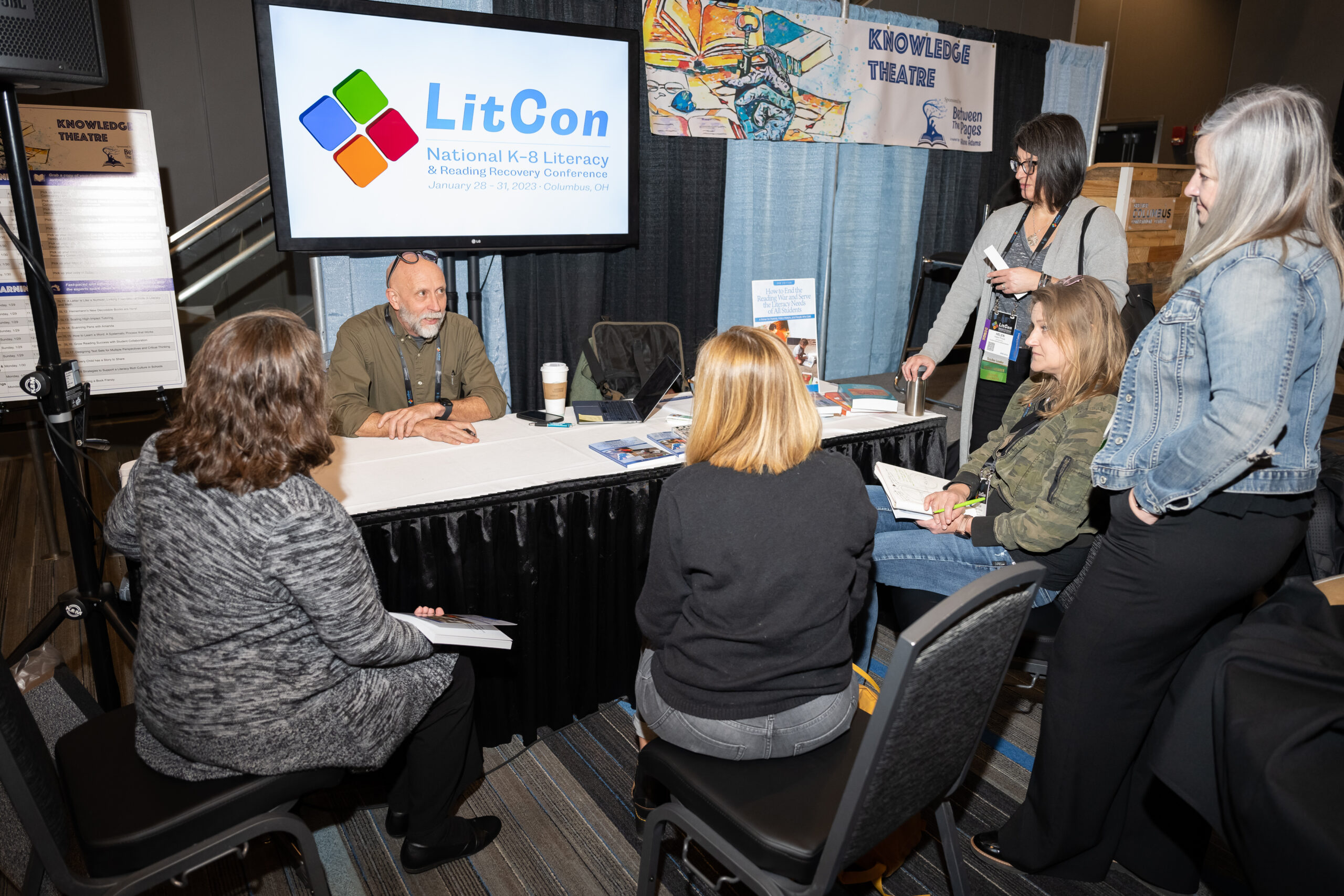
Book signing: How to End the Reading War and Serve the Literacy Needs of All Students (2nd Ed)

Monday, January 30, from 8:00 – 8:30 am


WSRA 2023 Conference, Milwaukee, WI, February 9-11, 2023 

PROGRAM

Thursday, February 9, 11:15-12:30 B01

Creating Worlds of Possibility: Closing Our Opportunity Gaps Through Recognizing the Sciences of Literacy and Learning

Expert Panel Discussion with Dr. Annalee Good, Dr. Lara Handsfield, Dr. Carol Lee, Dr. Paul Thomas, Dr. Don Vu

Thursday, February 9, 2:00-3:15 C08

Banning Books Is Un-American

The U.S. is experiencing a wave of book censorship and educational gag orders. This session examines the historical context of censorship as it impacts the teaching of literacy and literature by focusing on writer Kurt Vonnegut’s response to censors. The session will include powerful policy and position statements supporting the rights of teachers to teach and students to learn, including The Students’ Right to Read (NCTE), Freedom to Teach: Statement against Banning Books (NCTE), and Educators’ Right and Responsibilities to Engage in Antiracist Teaching (NCTE). Participants will have an opportunity to discuss and explore how and why educators must and can seek ways to defend academic freedom and thew right to teach and learn.

Friday, February 10, 9:45-11:00 A10

The “Science of Reading” Multiverse

Since early 2018, the phrase “science of reading” has entered and often dominated media, public/parental, and political discourse around the teaching and learning of reading in the U.S. Before anyone can, or should, answer “Do you support/reject the ‘science of reading’?” we must first clarify exactly what the term means; therefore, in this session, then, I want to detail the three ways the phrase currently exists since it entered mainstream use in the media during 2018. The session will cover the research base around the SoR movement for context. Participants will be invited to discuss their experiences with these three versions as well.


PSLA Conference 2023, February 23-25, 2023

Marriott Hilton Head Resort and Spa, Hilton Head Island, South Carolina

Friday, February 24, 2023, 8:00 – 9:00

Invited Speaker: Rethinking Reading Science: Beyond the Simple View of Reading, Paul Thomas

Focusing on reading science published since 2018 addressing reading, dyslexia, and phonics, this session details a complex but robust state of reading science. Media and think-tank messaging parents, political leaders, and the public are receiving about the “science of reading” are oversimplified, cherry-picked, and contradictory to that current state of reading science. Classroom teachers deserve the autonomy to interrogate reading science, understand the individual needs of all their students, and then the teaching and learning conditions to serve those students with evidence-based practice.

Saturday, February 25, 2023, 10:15 -11:15 

Panel: Carving a Path Forward: Equity, Neuroscience, Policy Mandates and Literacy Education 

The Politics of Teaching Reading, Paul Thomas

Educators Have Only One (Bad) Political Choice: 2022

In 2022, I still stand by my posts from 2012 ands 2015, included below—that educators still have no political party that supports teachers and universal public education.

However, today, I have a caveat that is vital, even urgent.

Not voting stopped being an option after 2016 and the rise of Trumpublicans.

Voting for the best candidate regardless of political party stopped being an option after the end of Trump’s presidency.

Educators cannot vote for any Republican because the Republican Party has no interest in education or teaching as a profession (in part, because more that 80% of educators are women, and the Republican Party is also hostile to women—as well as children).

Over the past couple years, 100% of anti-CRT bills, curriculum gag orders, parental trigger bills, and a variety of efforts to de-professionalize teaching and erode public education have been proposed by Republicans—only.

There is now only one choice for educators: we must be politically active and we cannot endorse or vote for any Republicans until the ship of democracy is righted, saved from capsizing, and then turned onto a better course for education, educators, all people, and our individual freedoms.

If you read below, you will note that Democrats have failed educators and education; however, some, maybe many, have been willing to fight against the recent assaults on education by Republicans. A few governors and many representatives have listened and resisted legislation that is aimed at ending academic freedom, critical thinking, and teaching children the facts of the country and world they live in.

There is no longer room for calling for no politics from educators.

There is no longer room to tip-toe around identifying the dangers of one political party, Republicans, and admitting we have only one choice, Democrats.

This is a means to a greater end—where we have two (or more) political parties that value and honor academic freedom, public education, and educators as professionals.

However, to reach that end, we cannot pretend that “both sides” are harmful to education in the same ways and to the same degrees. That simply is the sort of fake news that Republicans are using to dismantle education and teaching.

In 2022, educators still have no political party, but we also have no choice except to unseat every Republican that we can in order to rebuild a more perfect union.


NOTE: Below is a repost from 23 August 2012 with small edits. With great regret, I see no reason to write something new since the Chicago mayoral election and the announcement of Hillary Clinton entering the presidential election have offered clear proof educators still have no political party. I do, however, offer some important additions after the repost from W.E.B. Du Bois and George Carlin. I recommend them highly.

$$$

Educators (Still) Have No Political Party

For about thirty years now, public education as well as its teachers and students have been the focus of an accountability era driven by recurring calls for and the implementation of so-called higher standards and incessant (and now “next generation”) testing. At two points during this era, educators could blame Ronald Reagan’s administration for feeding the media frenzy around the misleading A Nation at Risk and George W. Bush’s administration for federalizing the accountability era with No Child Left Behind (NCLB)—both under Republican administrations.

For those who argued that Republicans and Democrats were different sides of the same political coin beholden to corporate interests, education advocates could point to Republicans with an accusatory finger and claim the GOP was anti-public education while also endorsing Democrats as unwavering supporters of public education. To claim Republicans and Democrats were essentially the same was left to extremists and radicals, it seemed.

As we approach the fall of 2015 and the next presidential election, however, educators and advocates for public education have found that the position of the extremists—Republicans and Democrats are the same—has come true under the Barack Obama administration.

Educators have no political party to support because no political party supports educators, public education, or teachers unions.

Democrats and Republicans: Our Orwellian Future Is Now

“If you want a picture of the future, imagine a boot stamping on a human face—forever.”

1984, George Orwell

Behind the historical mask that Democrats support strongly public education and even teachers specifically and workers broadly, the Obama administration has presented a powerful and misleading education campaign that is driven by Obama as the good cop and Secretary of Education Arne Duncan as the bad cop. Obama Good Cop handles the discourse that appeals to educators by denouncing the rising test culture in 2011:

What is true, though, is, is that we have piled on a lot of standardized tests on our kids. Now, there’s nothing wrong with a standardized test being given occasionally just to give a baseline of where kids are at. Malia and Sasha, my two daughters, they just recently took a standardized test. But it wasn’t a high-stakes test. It wasn’t a test where they had to panic.

Yet, simultaneously, Secretary Duncan Bad Cop was endorsing and the USDOE was implementing Race to the Top, creating provisions for states to opt out of NCLB, and endorsing Common Core—each of which increases both the amount of standardized testing and the high-stakes associated with those tests by expanding the accountability from schools and students to teachers.

Under Obama, Democratic education policy and agendas, embodied by Duncan, have created a consistently inconsistent message. During his campaign mode for a second term, Obama once again offered conflicting claims about education—endorsing a focus on reducing class size (despite huge cuts for years in state budgets that have eliminated teachers and increased class size, which many education reformers endorse) and making a pitch to support teachers unions and even increasing spending on education, leading Diane Ravitch to ponder:

Well, it is good to hear the rhetoric. That’s a change. We can always hope that he means it. But that, of course, would mean ditching Race to the Top and all that absurd rightwing rhetoric about how schools can fix poverty, all by themselves.

Throughout his presidency, Obama’s discourse has been almost directly contradicted by Duncan’s discourse and the USDOE’s policies. Obama tended to state that teachers were the most important in-school influence on student learning while Duncan tends to continue omitting the “in-school” qualifier, but these nuances of language are of little value since the USDOE under Obama has an agenda nearly indistinguishable from Republican agendas:

  • Incentivizing all states to adopt CC and the necessary increase in testing and textbook support (and thus, profit) to follow.
  • Endorsing market dynamics and school choice by embracing the charter school movement, specifically charters such as Knowledge Is Power Program (KIPP) that practice “no excuses” ideologies for school reform and school cultures.
  • Criticizing directly and indirectly public school teachers and perpetuating the “bad” teacher myth by calling for changes in teacher evaluations and compensation, disproportionately based on student test scores.
  • Funding and endorsing the spread of test-based accountability to departments and colleges of education involved in teacher certification.
  • Funding and endorsing the de-professionalization of teaching through support for Teach for America.
  • Appealing to the populist message about choice by failing to confront the rise of “parent trigger” laws driven by corporate interests posing as concerned parents.

If my claim that Republicans and Democrats are different sides of the same misguided education reform coin still appears to be the claim of an extremist, the last point above should be examined carefully.

Note, for example, the connection between the issues endorsed by Democrats for Education Reform (DFER) and the anti-union sentiment joined with endorsing the next misleading Waiting for “Superman”Won’t Back Down.

The Democratic National Convention was home to DFER, Parent Revolution, and Students First to promote Won’t Back Down as if this garbled film is a documentary—including a platform for Michelle Rhee.

There is nothing progressive about the education reform agenda under the Obama administration, nothing progressive about the realities behind Obama’s or Duncan’s discourse, nothing progressive about Rhee, Gates, or the growing legions of celebrity education reformers.

If the Democratic Party were committed to a progressive education platform, we would hear and see policy seeking ways to fund fully public schools, rejecting market solutions to social problems, supporting the professionalization of teachers, embracing the power and necessity of collective bargaining and tenure, protecting students from the negative impact of testing and textbook corporations, distancing themselves from Rhee-like conservatives in progressive clothing, and championing above everything else democratic ideals.

Instead, the merging of the education agenda between Democrats and Republicans is Orwellian, but it real, as Ravitch warned early in Obama’s administration:

This rhetoric represented a remarkable turn of events. It showed how the politics of education had been transformed. . . .Slogans long advocated by policy wonks on the right had migrated to and been embraced by policy wonks on the left. When Democrat think tanks say their party should support accountability and school choice, while rebuffing the teachers’ unions, you can bet that something has fundamentally changed in the political scene. (p. 22)

Still today in 2015, educators have no political party to support because no political party supports educators—and this is but one symptom of a larger disease killing the hope and promise of democracy in the U.S.

This tragic fact is the inevitable result of the historical call for teachers not to be political. Now that educators have no major party to support, the failure of that call is more palpable than ever.

Both the faux “not political” pose and playing the partisan political game fail educators, public education, and the democratic hope of the U.S.

Why I Won’t Vote, W.E.B. Dubois, The Nation, 20 October 1956

Provincialism, Ways of Being, and the Failure of Democracy

I had dinner and a few beers with a former student recently. Although he is about two decades younger than me, we share a hometown and grew up in the same neighborhood. And after I had moved out during young adulthood, as a child, he often spent time at my parents’ house, just playing and hanging out.

He’s worked all over the world and has been living in Europe for more than 15 years. Our conversation drifted to our hometown and his perception of living in Europe instead of near where he grew up. Eventually, he asked how some people “get out” of small hometowns, escape the trap of narrow-mindedness—what I referred to as provincialism.

We share a strong discomfort with conservative and fundamentalist thinking even though we were raised in that environment, which continues to this days in our hometown. His question reminded me of one of my favorite lyrics from The National: “How can anybody know/ How they got to be this way?”

Especially as a teacher, I have found teaching siblings complicates any solid answer to his question since two people raised in the same home and town can turn out to be very different people. We catalogued several people also from our community who, like us, no longer conform to the mold of our upbringing, trying to understand why some people change and others remain frozen in the provincialism of their upbringing.

My former student is very clear that the key for him was being an exchange student in Europe during his junior year of high school; his worldview changed once he had lived a different view of the world. I credit my education, especially literature, but it is the same dynamic—being exposed to different views of the world.


“The English class does not differ from other classes in responsibility for social situations which militate against prejudice and intolerance,” begins “The Words of My Mouth” in a June issue of English Journal. “Classifications which result in racial or cultural segregation, encouragement of small cliques, avoidance of crucial issues—all of these may be evils in the English classes as others.”

That opening builds to this key question: “Do the very words we use and our attitudes toward them affect our tendency to accept or reject other human beings?”

This essay is by Lou LaBrant and was published in 1946. LaBrant was vividly aware of the threats to freedom in the context of WWII and Nazi Germany, but her essay resonates today because of the threats from within the US, the Republican assaults on academic freedom, books, and individual choice by weaponizing “pornography,” “grooming,” “Critical Race Theory,” and any word or phrase to impose a narrow view of the world onto all of us.

“Not one facet of human experience will serve to insure the kind of society we need so desperately, and all aspects of living affect all others,” LaBrant warns.

The role of education, she emphasizes, must include: “A basic understanding which needs to be taught in school and home is that the existence of a word does not at all prove the existence of anything.” At the core of racism, sexism, and all types of bigotry and hate, LaBrant recognized the need to challenge the power of “word magic,” the belief that uttering something makes it so, gives it power.

In 1950, LaBrant returned to this topic, focusing on students as writers:

[Students] should discover the danger in word-magic, that calling a man by a name does not necessarily make him what they say; that describing the postal system as socialist does not transfer our mail to Moscow, nor brand either the writer or postman as disciples of Stalin. We must teach our students that words are symbols which they use, and that there is stupidity in word-magic. (p. 264)

LaBrant, L. (1950, April). The individual and his writing. Elementary English27(4), 261-265. http://www.jstor.org/stable/41383735

Over the past few years, I have made long trips from South Carolina into the Midwest, specifically Ohio and Wisconsin. Each time, I find the persistence of what is stereotypically “Southern” into the region that we in the South would classify as the “North” (which is everything outside of the Deep South, including Virginia and Texas). Fundamentalist billboards condemning homosexuality and abortion as well as huge signs quoting scripture line highways all through rural America.

These 8-10 hour drives left me certain I was not making just the specific trip I was on (conference presentations) but was destined for the flaming pits of Hell. Although I am a white straight man, I strongly believe in the rights of all people regardless of racial identification, gender, sexuality, religion (or not), etc., because I very much believe I deserve the same sort of freedom to fully be the human I have come to know that I am.

I also know that for women to be fully human, body autonomy is essential and that includes abortion rights.

Like Kurt Vonnegut, I am a humanist:

My parents and grandparents were humanists, what used to be called Free Thinkers. So as a humanist I am honoring my ancestors, which the Bible says is a good thing to do. We humanists try to behave as decently, as fairly, and as honorably as we can without any expectation of rewards or punishments in an afterlife [emphasis added]. My brother and sister didn’t think there was one, my parents and grandparents didn’t think there was one. It was enough that they were alive. We humanists serve as best we can the only abstraction with which we have any real familiarity, which is our community.

A Man without a Country, Kurt Vonnegut

To me, this is a foundational commitment to the country’s claim of life, liberty, and the pursuit of happiness. How can any of us be happy if we are required to conform to a narrow mandate of ways of being determined by a few in power based on a provincial view of the world?

My gender identity and sexuality are who I am, and right for me, but that means nothing for anyone else. I want my ways of being to be honored; therefore, I believe I am obligated to honor that for everyone else.


As my former student can attest by experience, people have even more freedom in countries other than the US; Americans do not have a monopoly on individual freedom and certainly not communal support for those freedoms (universal healthcare contributes to individual freedom, for example):

[I]t seems to me that the myth, the illusion, that this is a free country, for example, is disastrous….

There is an illusion about America, a myth about America to which we are clinging which has nothing to do with the lives we lead and I don’t believe that anybody in this country who has really thought about it or really almost anybody who has been brought up against it—and almost all of us have one way or another—this collision between one’s image of oneself and what one actually is is always very painful and there are two things you can do about it, you can meet the collision head-on and try and become what you really are or you can retreat and try to remain what you thought you were, which is a fantasy, in which you will certainly perish.

“Notes for a Hypothetical Novel,” James Baldwin

The hostile environment in the US today fostered by conservatives is also eroding those freedoms day by day; people are less free in the US than 6 months ago, and we are very likely on the precipice of the erasing of even greater freedoms in the coming months.

The Republican agenda of rolling back freedoms and rights as well as increasing bans and censorship is an agenda grounded in provincialism, which, as I have observed, seems to be rooted in rurality, the isolation of people creating an isolation of worldview.

We know rural America is red and urban American is blue, but I think we fail to examine fully why this is the case. For me, my former student’s experience illustrates the dangers of narrow thinking when you have limited experiences and why a cosmopolitan worldview is a doorway to expanding how you think and your ability to have empathy for people who appear to be unlike you.

I use “appear” because, for example, a gay person and a straight person have different sexualities but share the need for having that sexuality honored. That is our commonality.

Yet, democracy is failing us in the US because those who want to use their political power to control have the same rights to vote as those who want to use their political power to insure everyone’s freedoms and ways of being.

And in 2022, those voting to control seem to the have the upper-hand, not because there are more of them but because the system has been gamed to favor them and they often have the greatest passion for asserting their control. Sadly, “The best lack all conviction, while the worst/Are full of passionate intensity” (William Butler Yeats).

Some see their ideologies and beliefs as baseball bats; others see them as safety nets. In a democracy, those votes are equal—and the humanity of individuals hangs in the balance.

I am not concerned, however, that I am in fact going to hell for wanting individual freedom for everyone regardless of their ways of being, regardless of how their gender, sexuality, or whatever appears the same or different from mine.

The irony is that Republicans are creating hell on earth for all of us right here in the US; they are proving Sartre right: “Hell is other people.”

And because of the failure of democracy, there is no exit.

Media and Parental Advocacy Not Credible Sources for Reading Policy

Peter Greene, former teacher and one of the best public thinkers about education today, found this Tweet “familiar” as a veteran of education reform debates:

Greene and I share long careers in education and the mind-numbing experience of rebuking education reform claims and policies over the last few decades. Education reform, in fact, has followed the exact path Richard Sever warns against in his Tweet.

While some of the larger aspects of the education reform movement that began after A Nation at Risk was released under Ronald Reagan have sputtered—charter schools, Teach For America, standards and high-stakes testing, stack ranking and value-added methods for teacher evaluation—the reform du jour is focused on reading.

Since the mid- to late 2010s—specifically 2018—the science of reading (SOR) movement has been driven by media and parental advocacy, resulting in new or revised reading legislation in dozens of states across the U.S. [1]

The problem is that political leaders are disproportionately influenced by inexpert advocacy such as Emily Hanford’s journalism and parent organizations for dyslexia (Decoding Dyslexia).

Journalists and parents often share missionary zeal for topics, especially issues related to education, but lack historical, disciplinary, and statistical expertise to see clearly both the very real failures in education and the complex solutions that are needed.

Are too many students being mis-served as emerging readers in our schools, as media claim? Yes!

Is the current education system failing to identify and serve students with reading challenges, including dyslexia, as parents claim? Yes!

None the less, media and parental evidence, claims, and demands for solutions are mostly jumbled, misleading, and not scientific.

And the really bad news is that political leaders and the public receive almost exclusively the misleading messaging from media and parent advocates, but not the high-quality scholarship that debunks the claims and offers more credible and needed solutions.

For example, Hanford’s “Hard Words” and Decoding Dyslexia’s advocacy are both compelling on the surface, especially to the general public and political leaders with no background in education or literacy.

Hanford triggered the SOR movement by highlighting the claimed outlier success of schools in Bethlehem, Pennsylvania linked to a phonics-intensive program and increased test scores, for example:

This arguments fits into the larger education reform narrative started decades ago—that poverty is an excuse (and thus the “no excuses” reform movement) and that simply changing how we teach students can increase achievement (in-school only reform absent social change).

As those of us in education have witnessed since the 1980s, this argument is very compelling to the public and political leaders, and it is completely false.

“Miracle” schools, in fact, do not exist. [2]

The problem with media covering education miracles is that the basic evidence is both accurate and deeply misleading.

Because of pressures to raise test scores during the accountability era of education, many educators and policy makers have found ways to raise scores, but those test score gains are mostly weak forms of assessment (do they really measure what they claim?) and those gains often disappear over time (see the Florida model that uses grade retention to raise scores [3]).

To the first concern—are the test scores measuring reading?—those of us in the field of literacy recognized that the test data is from DIBELS, a phonics-intensive program that teaches and then measures students’ ability to pronounce real and nonsense words.

In other words, this test defines reading as “pronunciation”—not comprehension, which intensive phonics instruction does not increase [4] and which, in most cases, is what we mean when we are concerned about “reading.”

Therefore, yes, these schools did raise pronunciation test scores among high-poverty students, but no, this is not a reading miracle.

And to the second concern—are increased test scores real, sustained learning over time?—Gerald Coles investigated and discovered:

As I noted above, follow-up studies on the effects of early phonics programs have failed to find long-term benefits on reading achievement. Therefore, I wrote to two administrators in the Bethlehem schools, asking for information about the students’ reading ability in later grades. Neither replied to my request. Consequently, I used the publicly available Pennsylvania reading/language arts tests results, which provided scores for Bethlehem schools. By these measures, the reading achievement for students in SBSL early-reading program either stayed the same as students who had not used the program in previous years or else made only very modest improvement….

[T]here is Hanover Elementary school, where only 15.6 percent of students qualify for free or discounted lunch. There the impact of students’ economic circumstances was clearly in the opposite direction: About 85 percent of its students—virtually the same percentage as lunch standards—met the reading/language arts standards both before and after the introduction of SBSL program. Similar parallels between the beginning reading skills program and literacy outcomes can be found for all other Bethlehem schools.

Cryonics Phonics: Inequality’s Little Helper

Like almost all the “miracle” claims before this—often among charter school advocates—Bethlehem, PA is a mirage, not a miracle.

But this misrepresentation is typical of media coverage of SOR in that journalists advocate for “science” but use “anecdotes” as their evidence. In short, Hoffman, Hikida, and Sailors conclude: “the SOR community do not employ the same standards for scientific research that they claimed as the basis for their critiques.”[5]

Parental advocacy has the same problems as media advocacy, as represented by the Decoding Dyslexia movement. Richard Allington has detailed that Decoding Dyslexia is both highly effective in advocating for dyslexia legislation while also being misinformed about the complexity of dyslexia, a highly contested diagnosis within the fields of literacy and special needs.

Parents advocating for struggling readers is grounded in a valid concern. However, recent overviews of the research on dyslexia and the International Literacy Association (ILA) have clearly detailed the following: (1) no clear definition for identifying dyslexia exists, (2) no one instructional approach is appropriate for all students identified with dyslexia (including Orton-Gillingham phonics or systematic phonics for all students), (3) universal screen for dyslexia is likely to cause more harm than good, and (4) teacher expertise and autonomy are essential for teaching any students struggling to read.

Yet, parents advocating for dyslexia endorse policy and practices counter to that research while also likely greatly overestimating the number of students who should be identified as dyslexic.

The irony of the SOR movement promoted by media and parental advocacy is that it is significantly out of touch with the evidence, the research, and the science.

The media and parents certainly can and should play a role in monitoring how well our education system teaches reading and serves the needs of all students. But neither the media or parents are credible advocates for identifying either the problems or the solutions around reading achievement.

Media and parents demonstrate both the hubris Richard Sever warned about in his Tweet and the tragic flaw of hubris portrayed in literature for eons. The expertise and humility that come with understanding the complexity of science and research, it seems, is far more important than good intentions and the sort of arrogance that comes from never having thought long and deeply about an issue.


[1] Cummings, A. (2021). Making early literacy policy work in Kentucky: Three considerations for policymakers on the “Read to Succeed” act. Boulder, CO: National Education Policy Center. Retrieved May 18, 2023, from https://nepc.colorado.edu/publication/literacy

Cummings, A., Strunk, K.O., & De Voto, C. (2021). “A lot of states were doing it”: The development of Michigan’s Read by Grade Three law. Journal of Educational Change. Retrieved April 28, 2022, from https://link.springer.com/article/10.1007/s10833-021-09438-y

Collet, V.S., Penaflorida, J., French, S., Allred, J., Greiner, A., & Chen, J. (2021). Red flags, red herrings, and common ground: An expert study in response to state reading policy. Educational Considerations, 47(1). https://doi.org/10.4148/0146-9282.2241

[2] Thomas, P.L. (2016). Miracle school myth. In W.J. Mathis & T.M. Trujillo (Eds.), Learning from the Federal Market‐Based Reforms: Lessons for ESSA (pp. 223-232). Charlotte, NC: IAP.

[3] Briggs, D. (2006). Review of “Getting Farther Ahead By Staying Behind: A Second-Year Evaluation of Florida’s Policy to end Social Promotion.” Boulder and Tempe: Education and the Public Interest Center & Education Policy Research Unit. Retrieved May 18, 2023, from http://epicpolicy.org/thinktank/review-getting-farther-ahead-staying-behind-a-second-year-evaluation-floridas-policy-end-s

Huddleston, A. P. (2014). Achievement at whose expense? A literature review of test-based grade retention policies in U.S. school. Education Policy Analysis Archives, 22(18). http://dx.doi.org/10.14507/epaa.v22n18.2014

Jasper, K., Carter, C., Triscari, R., & Valesky, T. (2017, January 9). The effects of the mandated third grade retention on standard diploma acquisition and student outcome over time: A policy analysis of Florida’s A+ Plan. Policy Analysis.

[4] From Coles:

Based on the research on phonics in previous decades, cited in the Report of the National Reading Panel, these results should not be surprising. The conclusions of one study on phonics and similar word-level training represents the overall findings on intensive phonics instruction: Benefits for “reading comprehension were not significant” (Reading the Naked Truth, 92). A recent analysis by literacy researcher Jeff McQuillin drew similar conclusions from a large-scale study in England.20 Once again, “phonics instruction has a modest effect on initial literacy levels, but little to no impact on reading achievement in later grades.”

Cryonics Phonics: Inequality’s Little Helper

[5] Hoffman, J.V., Hikida, M., & Sailors, M. (2020). Contesting science that silences: Amplifying equity, agency, and design research in literacy teacher preparation. Reading Research Quarterly, 55(S1), S259. https://doi.org/10.1002/rrq.353

See also Hanford’s misleading claims about Mississippi as another false SOR “miracle.”

Understanding the Zombie Politics of the National Reading Panel in 2022

A core aspect of George W. Bush’s No Child Left Behind (NCLB) legislation in 2001 was the report from the National Reading Panel (NRP) [1].

The NRP report represents a key feature of NCLB that isn’t being interrogated fully during the current “science of reading” (SOR) movement: NCLB mandated that instructional practices must be scientifically based (similar to the call for reading instruction to be “scientific” today).

If federal legislation already mandated reading instruction must be research-based two decades ago, why are we experiencing yet another Chicken Little moment claiming that teachers and teacher educators do not know or simply refuse to implement the SOR?

First, the NRP demonstrates key problems with identifying the research base along with then finding practical ways to inform day-to-day classroom instruction with that evidence.

The best way to describe the results of the NRP, then, is that it was a highly contested report that claimed to identify the then-current state of scientific research on how children acquire reading and how best to teach reading.

When the report was issued, Joanne Yatvin, a panel member, challenged the panel for lacking classroom teachers, protested the narrow definition of “scientific” the panel used to review the then-current state of evidence on reading, and predicted (accurately) that the panel findings would be misrepresented.

See Yatvin’s work here:

The NRP findings also were challenged by scholars such as Elaine Garan; see here:

The NRP report and the debates prompted by the report are a stark lesson in the problems surrounding establishing the “science” of anything in education, but the report also demonstrates the essential problem with politicizing both research and educational policy/practice.

The NRP was a political vehicle similar to Reagan’s A Nation at Risk, and the result is not a dispassionate overview of research on reading but a distorted report driven by internal and external ideological biases.

That political element, in fact, brought the promises of the NRP and scientifically-based reading practices to its ultimate demise—a Reading First scandal grounded in federal funding and textbook adoption.

When the NRP was released and throughout the 2000s, then, the only fair way to describe the findings of the NRP was that the report was contested within the field of literacy, overly narrow, and ultimately derailed by political and ideological bias.

None the less, the NRP introduced a framework, the five pillars of reading, that remains influential today: Phonemic Awareness, Phonics, Fluency, Vocabulary, and Comprehension.

However, as Yatvin warned, what the NRP found is typically misrepresented, especially related to phonics; one extremely useful source for understanding what the NRP concluded is a teacher’s guide created by Diane Stephens in 2008:

Here, paraphrased, are the key points highlighted by Stephens (herself quoting directly from the report):

  • Phonemic Awareness: PA is a “means rather than an end”; doesn’t increase comprehension; only one of many elements needed to read independently.
  • Phonics: Minimal value in kindergarten; no conclusion about phonics beyond grade 1 for “normally developing readers”; systematic phonics instruction in grades 2-6 with struggling readers has a weak impact on reading text and spelling; systematic phonics instruction has a positive effect in grade 1 on reading (pronouncing) real and nonsense words but not comprehension; at-risk students benefit from whole language instruction, Reading Recovery, and direct instruction.
  • Fluency: The ability of students to make sense of text grammatically and with understanding of punctuation.
  • Vocabulary: Vocabulary is acquired many ways by readers; number of words acquired cannot be accomplished through direct instruction. About 1/3 of vocabulary learning in grades 3 – 8 linked to reading.
  • Comprehension: Weak evidence in report on comprehension. Emphasizes need for SBRR (scientifically based reading research) and “putting teachers in positions where their minds are the most valued educational resource.”

A short but accurate point to emphasize here is that the NRP did not (even discounting its contested process) find that systematic phonics instruction was essential for all students throughout the early years of schooling.

NRP in 2018-2022

The SOR movement has resurrected not only the NRP report and findings but also the zombie politics of misrepresenting the NRP findings.

A consistent aspect of the media messaging about the SOR has been citing NRP findings as proof that all students need systematic phonics instruction—from Hanford’s “Hard Words,” ground zero of the movement, to a recent critical piece by Goldstein on Lucy Calkins (the only research cited is the NRP report [2]).

One of the important ironies and contradictions of the SOR movement is that findings from the NRP are now twenty years old, and a robust body of research has both expanded and contested those findings. Notably, since SOR advocates often cite the NRP, many scholars have revisited and carefully detailed the flaws and misunderstandings surrounding the report

  • Seidenberg, M.S., Cooper Borkenhagen, M., & Kearns, D.M. (2020). Lost in translation? Challenges in connecting reading science and educational practice. Reading Research Quarterly, 55(S1), S119– S130. https://doi.org/10.1002/rrq.341
  • Bowers, J.S. (2020).Reconsidering the evidence that systematic phonics is more effective than alternative methods of reading instruction. Educational Psychology Review, 32(2020), 681–705. https://link.springer.com/article/10.1007%2Fs10648-019-09515-y
  • Collet, V.S., Penaflorida, J., French, S., Allred, J., Greiner, A., & Chen, J. (2021). Red flags, red herrings, and common ground: An expert study in response to state reading policy. Educational Considerations, 47(1). https://doi.org/10.4148/0146-9282.2241

Important to note is that even Seidenberg (a cognitive scientist strongly endorsing the SOR) concludes with Borkenhagen and Kearns: “[T]he main point is that the report was not a sufficient basis for designing an effective reading curriculum, but that is how it is frequently taken—today.”

Further, Bowers offers a solid clarification about drawing conclusions from the NRP reports on phonics:

In sum, rather than the strong conclusions emphasized the executive summary of the NRP (2000) and the abstract of Ehri et al. (2001), the appropriate conclusion from this meta-analysis should be something like this:

“Systematic phonics provides a small short-term benefit to spelling, reading text, and comprehension, with no evidence that these effects persist following a delay of 4–12 months (the effects were not reported nor assessed). It is unclear whether there is an advantage of introducing phonics early, and there are no short- or long-term benefit for majority of struggling readers above grade 1 (children with below average intelligence). Systematic phonics did provide a moderate short-term benefit to regular word and pseudoword naming, with overall benefits significant but reduced by a third following 4–12 months.”

Bowers, J.S. (2020).Reconsidering the evidence that systematic phonics is more effective than alternative methods of reading instruction. Educational Psychology Review, 32(2020), 681–705. https://link.springer.com/article/10.1007%2Fs10648-019-09515-y

Since policy and classroom practice were significantly impacted after the NRP was released, and the NRP again is significantly influencing policy and practice today because of the SOR movement, if we genuinely are dedicating ourselves to scientific research to inform classroom practice, then we must no longer cite the NRP since it is both a politically flawed report carefully contested by literacy scholars for twenty years and since the current understanding of that science is better represented by recent scholarship (including those cited above).

Ultimately, the NRP report is merely an artifact in the history of the long and tedious reading debate that recurs every decade or so, negatively impacts classroom practices, and then recycles itself like scenes in Groundhog Day.

The media, advocates for reading, and political leaders would be better served focusing on current evidence available about how to teach reading and the complicated place of phonics instruction in that process. For example, England implemented systematic phonics mandates in 2006, and recent research has challenged that policy, concluding, once again, a need for balanced approaches to reading instruction that are student-centered and driven by teacher autonomy and expertise.

In 2022, citing the NRP is nothing more than zombie politics that erodes the credibility of anyone who continues to use those reports as proof of the SOR.


[1] See the full report, reports from the subgroups, and the minority view by panel member Joanne Yatvin.

[2] From Goldstein:

But in recent years, parents and educators who champion the “science of reading” have fiercely criticized Professor Calkins and other supporters of balanced literacy. They cite a half-century of research that shows phonics — sound it out exercises that are purposefully sequenced — is the most effective way to teach reading, along with books that build vocabulary and depth.

In the Fight Over How to Teach Reading, This Guru Makes a Major Retreat

NYT Blasts Calkins with “Science of Reading” propaganda

Just 10 days after the New York Times ran a factually misleading piece on a dyslexia program championed by Mayor Eric Adams, Dana Goldstein amplified the “science of reading” attack on Lucy Calkins and the Units of Study reading program.

Margaret Thornton (Princeton) offered on Twitter the essential problem with this mainstream media coverage:

Goldstein’s uncritical use of “science of reading” propaganda fits into a pattern of mainstream media, particularly the work of Emily Hanford, that weaponizes “science” while trafficking in anecdote and grand misrepresentations. Hoffman, Hikida, and Sailors explain:

Hanford critiqued approaches named as balanced literacy and whole language without citing any evidence around these claims. She continued with anecdotes on how a focus on the SOR has improved student performance, but there is not a single citation of evidence in support of this claim. … It is clear that the repeated critiques of literacy teacher preparation expressed by the SOR community do not employ the same standards for scientific research that they claimed as the basis for their critiques.

Hoffman, J.V., Hikida, M., & Sailors, M. (2020). Contesting Science That Silences: Amplifying Equity, Agency, and Design Research in Literacy Teacher Preparation. Reading Research Quarterly, 55(S1), S255-S266. https://doi.org/10.1002/rrq.353

The NYT’s article on Calkins has several significant problems. First, since the bar in journalism for citing evidence is much lower than in academia, the piece itself oversimplifies and misrepresents complex and important issues about reading and teaching reading, often with no citation or by cherry-picking (and misrepresenting) a single link to evidence.

Next, the fundamental problem with the article is the continued uncritical acceptance by mainstream media of the “science of reading” movement and marketing. This last point, the marketing aspect of the “science of reading,” must not be ignored since phonics-heavy programs are committed to taking market share away from current popular reading programs such as those by Calkins and Fountas and Pinnell.

And finally, the framing of the article fails to recognize, as Thornton does (as well as Hoffman, Hikida, and Sailors), that both Calkins’s programs and the “science of reading” deserve critical interrogations against research and best practice.

Goldstein’s lede begins in misrepresentation and without citation: “For decades, Lucy Calkins has determined how millions of children learn to read. An education professor, she has been a pre-eminent leader of ‘balanced literacy,’ a loosely defined teaching philosophy.”

“Balanced literacy” (BL) is not “loosely defined,” and even so, that definition is quite accessible and important to this discussion:

A balanced approach to literacy development is a decision-making approach through which the teach makes thoughtful choices each day about the best way to help each child become a better reader and writer. A balanced approach is not constrained by or reactive to a particular philosophy. It is responsive to new issues while maintaining what research has already shown to be effective. It is an approach that requires and frees a teacher to be a reflective decision maker and to fine tune and modify what he or she is doing each day in order to meet the needs of the child.

Spiegel, D. (1998). Silver bullets, babies, and bath water: Literature response groups in a balanced literacy program. The Reading Teacher, 52(2), 114-124. www.jstor.org/stable/20202025

That definition, in fact, directly contradicts the “science of reading” propaganda that phonics is rejected by BL advocates and programs. Goldstein reports without context: “But in recent years, parents and educators who champion the ‘science of reading’ have fiercely criticized Professor Calkins and other supporters of balanced literacy.”

Yes, there are critics of BL, but more often than not, those critics are simply misinformed and that criticism is misguided.

However, the false representation of BL is matched only by the skewed misrepresentation of teaching phonics: “They cite a half-century of research that shows phonics — sound it out exercises that are purposefully sequenced — is the most effective way to teach reading, along with books that build vocabulary and depth.

This link, a rare citation, refers readers to the National Reading Panel (NRP), which raises two problems. The NRP was widely discredited (see Garan) when it was released as a cornerstone of NCLB, and since that release, the findings of the NRP have been repeatedly misrepresented (See Yatvin).

The NRP found that systematic phonics was effective in grade 1 only, and that effectiveness was linked to pronunciation, and not comprehension (see Stephens).

Since the inception of “science of reading” movement, the persistent misrepresentation of systematic phonics for all students (and students with dyslexia [see ILA, 2016 and Johnston and Scanlon, 2021) is discredited by a number of studies:

  • Bowers, J.S. (2020). Reconsidering the evidence that systematic phonics is more effective than alternative methods of reading instruction. Educational Psychology Review, 32(2020), 681–705. https://link.springer.com/article/10.1007%2Fs10648-019-09515-y
  • Davis, A. (2013, December 13). To read or not to read: Decoding synthetic phonics. IMPACT No. 20. Philosophical Perspectives on Education Policy. https://doi.org/10.1111/2048-416X.2013.12000.x
  • Filderman, M. J., Austin, C. R., Boucher, A. N., O’Donnell, K., & Swanson, E. A. (2022). A meta-analysis of the effects of reading comprehension interventions on the reading comprehension outcomes of struggling readers in third through 12th grades. Exceptional Children88(2), 163–184. https://doi.org/10.1177/00144029211050860
  • Wyse, D., & Bradbury, A. (2022). Reading wars or reading reconciliation? A critical examination of robust research evidence, curriculum policy and teachers’ practices for teaching phonics and reading. Review of Review of Education10(1), e3314. https://doi.org/10.1002/rev3.3314

The last study, in fact, examines the systematic phonics mandate begun in 2006 throughout England (synthetic phonics); Wyse and Bradbury concluded:

Our findings from analysis of tertiary reviews, systematic reviews and from the SQMS do not support a synthetic phonics orientation to the teaching of reading: they suggest that a balanced instruction approach is most likely to be successful….

In addition to the importance of contextualised reading teaching as an evidence-based orientation to the teaching of reading we hypothesise the following pedagogical features that are likely to be effective. Phonics teaching is most likely to be effective for children aged five to six. Phonics teaching with children younger than this is not likely to be effective. A focus on whole texts and reading for meaning, to contextualise the teaching of other skills and knowledge, should drive pedagogy. Classroom teachers using their professional judgement to ensure coherence of the approach to teaching phonics and reading with other relevant teaching in their classroom is most likely to be effective. Insistence on particular schemes/ basals, scripted lessons, and other inflexible approaches is unlikely to be optimal. Well-trained classroom assistants, working in collaboration with their class teachers, could be a very important contribution to children’s reading development.

Wyse, D., & Bradbury, A. (2022). Reading wars or reading reconciliation? A critical examination of robust research evidence, curriculum policy and teachers’ practices for teaching phonics and reading. Review of Review of Education10(1), e3314. https://doi.org/10.1002/rev3.3314

The most recent research, then, on national mandates for systematic phonics instruction concludes the need for “balance,” and pedagogical practices that strongly match Spiegel’s original definition for BL.

One other claim lacking any link to evidence focuses on the narrow view of “science” being promoted by the “science of reading” movement: “With brain science steadily adding to that evidence, there is a sense — at least for many in the education establishment — that the debate over early reading instruction may be ebbing. Phonics is ascendant.”

Several problems exist with invoking “brain science,” as explained by Yaden, Reinking, and Smagorinsky

[W]e specifically address four limitations that we believe raise questions about the assumptions underlying, and thus conclusions reached, when the SOR is limited to the nature side of the binary and the experimental methods that typically accompany that view: (1) too heavy a reliance on a narrow conception of science claimed to be authoritative and monolithic, (2) too little accounting for environmental factors that complicate the idea that the brain functions identically across the whole of the human population, (3) an exclusive view that experimental designs and replicability are the gold standard of scientific research when other approaches have generated many useful insights, and (4) dismissal of all other conceptions of reading as unscientific and, therefore, of marginal value in generating knowledge about reading and how to teach it.

Yaden, D.B., Reinking, D., & Smagorinsky, P. (2021). The trouble with binaries: A perspective on the science of reading. Reading Research Quarterly, 56(S1), S119– S129. https://doi.org/10.1002/rrq.402

This article misreads Calkins/Units of Study and the “science of reading,” and thus, readers do not get the central message: This shift by Calkins is a market response to state legislation banning the adoption of Units of Study; this shift is not a concession that the “science of reading” is right.

Further, the result of this extended critique of Calkins and Units of Study is that the reasonable and needed challenges to this or any reading program is reduced to a propaganda vehicle for the “science of reading.”

As I have examined before, the problem with Calkins’s Units of Study and BL is how the program is implemented. Many teachers find the prescriptive and silver-bullet approaches to any program or ideology as de-professionalizing and harmful to students.

Too often, teachers are being held accountable for implementing the program, covering the standards, and preparing students for (awful) high-stakes tests.

If we need a reading revolution, and we do, the blunt solution is that we must stop teaching programs, stop teaching reading ideologies, and stop teaching reading to children.

Instead, let’s teach children to read, and to learn.

As some prominent authors of a reading program lamented recently, hit pieces on reading programs, grandstanding about the “science of reading,” and passing prescriptive and misguided reading legislation is all about the adults trying to one-up each other—and not about the students.


See Also

How to Navigate Social Media Debates about the “Science of Reading” [UPDATED]

Media and Political Misreading of Reading (Again): NYC Edition

Media “Experts” + Parental Zeal + Political Knee-jerk Legislation + Market Forces = Failing Reading, Again

Don’t Buy It: The Marketing Scam of MSM and the “Science of Reading”

Reading Programs Put Reading Last

Teaching Reading and Children: Reading Programs as “Costume Parties”

Academic Writing: Process, Practice, and Humility

Recently, I accepted a scholarly writing assignment, a policy brief for a university-based think tank. As I approach submitting the initial draft for peer-review and then revision before publishing, the experience has helped me continue to think about ways in which teaching students to write present challenges for both teachers and students.

My writing assignment matches well the scholarly cited essay assignment in my upper-level writing/research course—a course where students tend to struggle with breaking free of reductive research paper approaches to writing.

In my first-year writing (FYW) seminar, I have very broad goals for students. I see FYW as transitional and foundational. The writing assignments are designed to help students confront and move beyond the assumptions and approaches they have acquired in K-12 coursework (transitional) and then begin to establish an awareness of writing that will serve them well in academic settings and beyond (foundational).

The FYW seminar allows me to practice my beliefs about writing and teaching writing—such as providing students with a great deal of choice in writing topics and form (we directly reject the five-paragraph essay and challenge template approaches to writing and the writing process).

But in the upper-level writing/research course, both the students and I must navigate the realities of scholarly writing, including the narrow parameters of academic citation and structured/prescriptive writing templates. I explain to my students that often academic writing follows templates that are rigid and even clunky, but scholarly journals and other publications allow very little deviation from those requirements.

The upper-level course also asks students to better understand that citation style sheets are guidelines for more than citation, such as tone, sentence and paragraph formation, and integrating sources (we specifically examine the stylistic difference between MLA, what they are often familiar with, and APA).

These are undergraduate students, and much of what I ask them to consider and produce is another type of transitional and foundational—transitioning from writing like a student to writing like an academic/scholar and foundational for scholarly writing in graduate school or the so-called real world.

I accepted the policy brief assignment near the end of my spring upper-level writing/research course so I was able to share with the students the assignment as a sort of justification for their cited essay assignment. The policy brief project includes the following elements that I include in the course:

  • The policy brief has a detailed content outline, six defined sections.
  • The executive summary and policy brief have strict word count requirements (including a direct warning that exceeding the word count would result in the manuscript being returned).
  • Guidelines address tone, word choice, and structure/organization.
  • The think tank uses a modified citation stylesheet (based on APA but using endnotes).

As an experienced writer and academic, the narrowness of the assignment and genre (policy brief) was stressful—likely in similar ways that are stressful for my students in the upper-level course—because it is writing unlike what I tend to do. Also, the requirement for using endnotes is a citation approach I have rarely used.

This last point, about using endnotes, is the primary lesson I now have for my students.

I completed a full draft well ahead of deadline, but that drafting had been plagued by my concern for the word count. I was well over both the executive summary and full policy brief requirements. So when I sent in my initial full draft, I had worked for days cutting and tightening—nearly to exhaustion because I was trying to fit a great deal into what appeared to be a nearly impossible word count.

When that draft was returned to me, I was immediately confused since the feedback noted I was way under word count—and thus, much of the feedback stressed a need for adding and explaining more fully. I also received very valuable feedback about organization (editorial feedback is incredibly useful for academic writing since that feedback typically has the context of the writing assignment more clearly than the author of the piece).

What happened?

Well, despite my constant warnings to my students about knowing the features of Word, I fell pray to ignorance since I wasn’t aware my Word default word count included the endnotes. Once I adjusted that, my draft was, yep, well under word count.

Although I don’t recommend making such mistakes as part of the writing process, this was part of the process for me, and while it was embarrassing and frustrating, my next round of drafting was much improved because I had feedback and a greater awareness of my writing purpose and the assignment template.

But another experience with the writing process also struck me as something important to bring to the classroom. Over a few days, I began revising my first full draft, greatly expanding my literature review. As a result, I reviewed that research again, finding more and better ways to integrate that evidence.

Part way through revising and expanding the literature review, I took a break to do a gravel ride. While cycling, I continued to work on the policy brief in my head, and had so many writing epiphanies that I paused during the ride, typed out those ideas in Notes, and emailed myself the brainstorming:

  • Teacher/teacher ed in lit review
  • Move MS to analysis
  • Cover UK research in BL section of lit review
  • Frame analysis with bullet list of SoR claims in intro

While cycling, I realized at least one important gap in the lit review and made some key decisions about organization.

While I had left the draft a bit drained, once I returned from the gravel ride, and showered, I was energized to quickly note the changes in my draft (I moved sections and added brief placeholders, all in red text, to guide my further revision).

Regardless of how often I explain this to students, I cannot emphasize enough that the writing process is quite messy, rambling and recursive. Students, I think, are very uncomfortable with that messiness and struggle to see all drafting as tentative (likely because writing in school is often graded).

While I have a new and “completed” full draft, I still do not see the project as finished. I will have editorial and peer-review feedback, and the final text will be copyedited and formatted.

I have done a tremendous amount of work, and the writing project is still in an early phase.

My writing process included making a mistake with word count, significantly rethinking the next draft while doing a gravel bicycle ride, using red text in my draft to guide revision, and emailing notes and drafts to myself.

Like my students, I struggled with writing within a template, navigating an unfamiliar stylesheet and endnote format, and fully understanding a type of writing I have little experience with. A significant amount of my time has been spent reviewing my sources, seeking out more sources, and copyediting the endnotes several times.

Academic writing is almost equally invigorating and mind-numbingly tedious.

A final point about how my real-world experience with academic writing can inform teaching students academic writing is the recognition that students are often trying to navigate both an unfamiliar writing assignment and coming to understand a complex topic and the research related to that topic.

I am working on a topic I have examined for years, and most of my evidence was already compiled and organized (and examined) in my blog and two editions of a book.

For students to be successful in an upper-level course requiring them to confront both new ways to write and cite as well as new content and evidence, we must provide the most supportive contexts possible.

I require and allow a great deal of drafting, provide class time for drafting and conferences, do not grade writing assignments, and repeatedly stress that the essay is a process (that all writing is tentative).

None the less, students have been trained to be finishers and to focus on a grade; both are not conducive to academic writing, or writing of any kind.

Once this project is completed, I have some excellent artifacts to bring to the classroom, but most of all, I have a heavy dose of humility that always serves teachers of writing well.