Category Archives: Education

When Think Tank Opinion on Policy Is Driven by Advocacy, Refute Them: A Reader

Last night in my new upper-level writing course, Scholarly Reading and Writing in Education, we waded into critical discourse analysis, followed by practicing those moves on a picture book, Click, Clack, Moo: Cows that Type.

Next, we shifted to small groups so students could also practice analyzing media coverage of education—a key component of their assignments that require comparing media narratives about key education topics to the research base on that topic. I provided the small groups with an Op-Ed on teacher recruitment and retention from the local paper and 10 (More) Reasons Why the U.S. Education System Is Failing from Education Week.

One group noticed this EdWeek commentary cited The Brookings Institute, and as I and one of our texts (Bracey, 2006) have stressed, when analyzing media claims about educational research, we must all critically investigate anything coming from think tanks.

So I was primed for my Twitter feed this morning when I noticed Peter Greene’s Still Pushing the Common Core—a sharp and thorough unpacking of The Brookings Institutes’ misguided When public opinion on policy is driven by misconceptions, refute them:

Among the living dead that stumble through the graveyard of failed education ideas, we can still find our old friend, the Common Core State [sic] Standards. Like an undead Tinker Bell, as long as someone’s willing to clap for the damned thing, it will keep coming back.

This time the applause is coming from Brookings, an institution devoted to the notion that economists can be experts in anything. The actual research they’re highlighting was produced by a research grant from the USC Rossier School of Education, and written up by Stephen Aguilar, Morgan Polikoff, and Gale Sinatra, all of the Rossier School. Polikoff is a familiar name in the ed reform world, and he can sometimes be found conducting serious research. This is not one of those times.

Echoing Greene’s last point, I stressed last night that Brookings often produced solid reports, despite Greene’s caution (“economists can be experts in anything”); in fact, I routinely promote the work of Andre Perry, a Brookings Fellow.

After reading Greene’s analysis, I clicked on the Brookings report and immediately scanned the footnotes, noticing that the report includes none of the thorough reports and comprehensive research on two very important issues related to the Common Core debate: (1) the standards movement has shown over more than three decades of constantly creating and implementing new standards that there is almost no clear correlation between the quality or presence of standards and better student outcomes, and (2) careful analyses of Common Core have shown that these standards show no promise of overcoming that clear trend.

Instead of taking the necessary larger step back and away from the cult of accountability, standards, and high-stakes testing, as Greene explains:

The paper purports to be about correcting misperceptions and misunderstandings about public policy, but I think it’s better understood as a study of how to better sculpt PR to market your policy idea. And in this case they’re looking at how to better manage the PR for Common Core.

Yes, as someone who lives in the Tea-Party-turned-Trumplandia Upstate of South Carolina, I witnessed the yard signs protesting the Common Core, a heaping mess of anti-Obama misconceptions.

But what Brookings fails to acknowledge, trapped as they are in the “better standards” delusion, is that Common Core advocates were mostly just as misinformed as the ideologues attacking Common Core as a proxy for the Obama agenda.

Why not conduct some research on that? Maybe: When political opinion on policy is driven by misconceptions, refute them.

Or better yet: Bitter lessons from chasing better standards [1].

(Hint: Think tanks are mostly all-in on education reform for the sake of education reform and too often bereft of critical education scholars.)

And thus, here is another hint: In this Groundhog Day adventure in standards [2], there has been absolutely no absence of solid evidence-based and critical responses to the Common Core movement. The problem, repeated again by this Brookings report, is the “rigid refusal” to acknowledge the failure of the accountability/standards/high-stakes testing silo approach to education reform.

Along with suggesting you read Greene, then, let me offer a reader, one I am certain will once again be ignored since it makes a case the education reform crowd simply does not want to acknowledge:

Finally, there is a nugget in this Brookings misfire that deserves some attention:

Despite largely falling off the political radar (neither President Trump nor Secretary DeVos has talked much about Common Core in the last year except to say that it is dead),[3] the standards are still an important topic. More than 40 states are still implementing the standards or a very close variant thereof.[4] Billions are still being spent on curriculum materials and professional development.

As I noted in the AlterNet piece linked above, the pursuit of better (and ever-new) standards and better (and ever-new) high-stakes tests is mostly a financial boondoggle for the textbook and testing industries as well as a careless financial drain on educational funding (tax-payers’ money).

Framing any standards debate, then, as simply a PR problem is more than lazy; it is careless and ultimately yet another remedy that is part of the disease.


[1] Bitter Lessons from Chasing Better Tests

[2] I am seeking a second-level metaphor since Greene aptly used the zombie comparison.
The Politics of Education Policy: Even More Beware the Technocrats

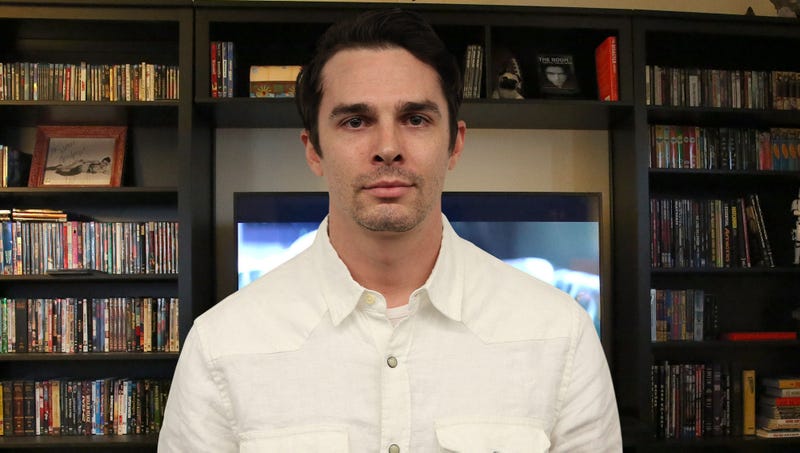
Man Prefers Comic Books That Don’t Insert Politics Into Stories About Government-Engineered Agents Of War (The Onion) includes a simple picture of a 31-year-old white male with the hint of a soon-to-be Van Dyke:

The fictional “man,” Jeremy Land, explains:

“I’m tired of simply trying to enjoy escapist stories in which people are tortured and experimented upon at black sites run by authoritarian governments, only to have the creators cram political messages down my throat,” said Land, 31, who added that Marvel’s recent additions of female, LGBTQ, and racially diverse characters to long-running story arcs about tyrannical regimes turning social outsiders into powerful killing machines felt like PC propaganda run amok. “Look, I get that politics is some people’s thing, but I just want to read good stories about people whose position outside society makes them easy prey for tests run by amoral government scientists—without a heavy-handed allegory for the Tuskegee Study thrown in. Why can’t comics be like they used to and just present worlds where superheroes and villains, who were clearly avatars for the values of capitalism, communism, or fascism, battle each other in narratives that explicitly mirrored the complex geopolitical dynamics of the Cold War?”

The satire here is the whitesplaining/mansplaining inherent in the politics of calling for no politics.

It strains the imagination only slightly to understand how this commentary on comic book fanboys also parallels the persistent combination in education of calling for no politics while using policy and a narrow definition of data and evidence to mask the racial and gender politics of formal schooling.

Let’s imagine, then, instead of the fictional Land an image of David Coleman (who parlayed his Common Core boondoggle into a cushy tenure as the head of the College Board) or John Hattie (he of the “poverty and class size do not matter” cults that provide Hattie with a gravy train as guru-consultant).

A close reading of David Coleman’s mug shot reveals a whole lot of smug.
In his “visible learning” hustle, John Hattie likely prefers to keep his enormous profits invisible.

Coleman and Hattie as technocrats feed the systemic racism, classism, and sexism in formal education policy and practice by striking and perpetuating an objective pose that serves as a veneer for the normalized politics of political and economic elites in the U.S.

As Daniel E. Ferguson examines, Coleman’s Common Core propaganda, the rebranded traditional mis-use of New Criticism into “close reading,” argues:

Close reading, as it appears in the Common Core, requires readers to emphasize “what lies within the four corners of the text” and de-emphasize their own perspective, background, and biases in order to uncover the author’s meaning in the text.

However, Ferguson adds,

Critical reading, in contrast, concerns itself with those very differences between what does and does not appear in the text. Critical reading includes close reading; critical reading is close reading of both what lies within and outside of the text. For Paulo Freire, critical reading means that “reading the world always precedes reading the word, and reading the word implies continually reading the world.”

And thus, close reading serves the cult of efficiency found in the high-stakes standardized testing industry that depends on the allure of believing all texts have singular meanings that can be assessed in multiple-choice formats—a dymanic Ferguson unmasks: “The story beyond the four corners of Coleman’s video is one of a man whose agenda is served by teachers following a curriculum that requires students to read in a way assessable through standardized tests he oversees and profits from.”

Simultaneously, of course, keeping students and teachers laser-focused on text only detracts them from the richer context of Martin Luther King Jr. and the broader implications of racism and classism informed by and informing King’s radical agenda.

Simply stated, close reading is a political agenda embedded in the discourse of objectivity that whitewashes King and denies voice and agency to King, teachers, and students.

Concurrently, Hattie’s catch phrase, “visible learning,” serves the same political agenda: Nothing matters unless we can observe and quantify it (of course, conveniently omitting that this act itself determines what is allowed to be seen—not the impact of poverty or the consequences of inequity, of course).

Hattie’s garbled research and data [1] match the recent efforts in education reform to isolate student learning as the value added (VAM) by individual teachers, yet another off-spring of the cult of efficiency manifested in high-stakes standardized testing.

Just as many have debunked the soundness of Hattie’s data and statistics, the VAM experiment has almost entirely failed to produce the outcomes it promised (see the school choice movement, the charter school movement, the standards movement, etc.).

Coleman and Hattie work to control what counts and what matters—the ultimate in politics—and thus are welcomed resources for those benefitting from inequity and wishing to keep everyone’s gaze on anything except that inequity.

The misogyny and racism among comic book fanboys allows the sort of political ignorance reflected in The Onion‘s satire.  If we remain “within the four corners of the text” of Marvel’s Captain America, for example, we are ignoring that, as I have examined, “Captain America has always been a fascist. … But … Captain America has always been our fascist, and that is all that matters.”

3e281
Captain America: Steve Rogers #1 (c) Marvel

The politics of education policy seeks to point the accusatory finger at other people’s politics, and that politics of policy is served by the technocrats, such as Coleman and Hattie, who feed and are fed by the lie of objectivity, the lie of no politics.


[1] See the following reviews and critiques of Hattie’s work:

NEW: Critical Media Literacy and Fake News in Post-Truth America

Critical Media Literacy and Fake News in Post-Truth America

Edited by Christian Z. Goering, University of Arkansas, USA and Paul L. Thomas, Furman University, USA

This edited collection is not a response to the 2016 United States Presidential Election so much as it is a response to the issues highlighted through that single event and since when incredibly smart, sophisticated, and intelligent members of our society were confused by misinformation campaigns. While media literacy and critical media literacy are ideas with long histories in formal education, including K-12 students and higher education, the need for increased attention to these issues has never reached a flash point like the present. The essays collected here are confrontations of post-truth, fake news, mainstream media, and traditional approaches to formal schooling. But there are no simple answers or quick fixes. Critical media literacy, we argue here, may well be the only thing between a free people and their freedom.

Table of contents

Foreword vii
William M. Reynolds1. An Introduction: Can Critical Media Literacy Save Us? 1
Christian Z. Goering and P. L. Thomas2. An Educator’s Primer: Fake News, Post-Truth, and a Critical Free Press 7
P. L. Thomas

3. Reconsidering Evidence in Real World Arguments 25
Troy Hicks and Kristen Hawley Turner

4. What Is the Story? Reading the Web as Narrative 39
Sharon A. Murchie and Janet A. Neyer

5. Fighting “Fake News” in an Age of Digital Disorientation: Towards
“Real News,” Critical Media Literacy Education, and Independent
Journalism for 21st Century Citizens 53
Rob Williams

6. Educating the Myth-Led: Critical Literacy Pedagogy in a Post-Truth World 67
Robert Williams and Daniel Woods

7. Teaching Critical Media Literacy as a Social Process in Writing
Intensive Classrooms 85
Joanne Addison

8. Before You Click “Share”: Mindful Media Literacy as a Positive Civic Act 99
Jason L. Endacott, Matthew L. Dingler, Seth D. French and John P. Broome

9. Engaging the Storied Mind: Teaching Critical Media Literacy through
Narrative 115
Erin O’Neill Armendarez

10. Supporting Media-Savvy Youth-Activists: The Case of Marcus Yallow 127
Mark A. Lewis

11. Creating Wobble in a World of Spin: Positioning Students to Challenge
Media Poses 141
Sarah Bonner, Robyn Seglem and Antero Garcia

Author Biographies 155

The Fourth Lie, and What Hope Truth?

The irony of truth may often be more impressive than truth itself. Consider the pithy truism “There are three kinds of lies: lies, damned lies, and statistics.”

While the snark of this aphorism certainly spurs us toward a kind of truth about the misuse of numbers, ironically, the words themselves are typically associated with Mark Twain, who did popularize the phrasing, but certainly was not the original source; and to make this more complex, it seems no clear source has been identified.

And while it is now in vogue to debate the rise of fake news and how we find ourselves in a post-truth society, the jumbled relationship between mainstream media and truth/fake news reaches well back into the 1800s.

We seem unable even to face the truth about fake news.

As an educator and writer (one who ventures, foolishly, into public discourse), I have a long and frustrating relationship with a fourth kind of lie: Things people just believe, regardless of the evidence otherwise.

Over three decades, for example, I have talked patiently on the phone with education journalists—from The New York Times to state and local newspapers—who responded to evidence-based arguments with equal parts shock (“I have never heard that before”) and disbelief.

Here are some of the public claims I have doggedly shared for decades now:

  • Education is not the great equalizer; in fact, home and community conditions combined with race, gender, and other individual characteristics are far more powerful influences than school or teacher impact on both academic outcomes by students and then their status after formal education.
  • In-school education reform is destined to fail if out-of-school factors remain unaddressed due to a lack of political and public will to confront systemic inequity with public policy reform.
  • Accountability, standards (always changing), high-stakes testing (also, always changing), and grades are all flawed mechanisms for insuring universal public education in the pursuit of democracy, individual agency, and equity.
  • Formal schooling reflects and perpetuates the norms of community it serves; formal schooling almost never proves to be a change agent.
  • The type of schooling—public, charter, private—tends not to determine educational quality; school quality (typically determined by narrow measures such as student test scores) remains mostly bound to the characteristics of the students and communities being served. As a concurrent fact, there are no “miracle” schools.
  • Formal education must remain a commitment to public institutions; market forces are inappropriate for insuring all children have an equitable opportunity to learn.

Repeatedly, however, these claims, all strongly supported by significant bodies of research, elicit, at best, my being discounted as just a “critic,” and at worst, my being framed as some sort of enemy of reform out to protect anyone or anything except children, a cursed “defender of the status quo.”

And there was also too often crass nastiness, anger, and of course, lies.

Since education in practice is the result of state and public policy (driven, typically, by public and political narratives and beliefs—see lie four), here is a larger truism I have repeated for years with responses again running from disbelief to anger: The Obama education policy and discourse were just as misguided and harmful as the W. Bush education policy and discourse.

Toward the end of Obama’s administration, in fact, I had moved past skepticism and solidly into cynicism in terms of whether any journalists or politicians would set aside their beliefs (the fourth lie) and confront the truth about education and education reform.

However, in the fall of 2016, I noticed what I felt at the time was a crack in charter school support and began drafting a proposal that this was a harbinger of the end of the accountability era.

Before that piece was published, Trump was elected president, and my spark of hope soon looked like fool’s gold. In fact, I was embarrassed to have momentarily felt a glimmer of hope.

A year into Trumplandia, with a Department of Education and Secretary of Education that make the dumpster fires that were the DOE and SOE under W. Bush and Obama look like “the good ol’ days,” the irony has reached a new level.

Despite the market-based agenda under Trump/DeVos, the crack in charter school support has now been joined by mainstream pushback against testing and even grades; as well, recent arguments against the “tyranny of metrics” seem to match the case I and other educators/scholars have posed since the early 1980s when Reagan ushered in the accountability era for education reform.

Irony, in fact, seems to be trumped by the absurd—this from Trump-supporting South Carolina conservative (and Foghorn Leghorn impersonator) Governor Henry McMaster, as reported by Cindi Scoppe at The State:

So it was no surprise that the best part of [McMaster’s] first State of the State address was the way he framed public education. He could have been channeling so many teachers when he talked about the role poverty and parents play in how well children do in school. “Poverty,” he said, “is the enemy of education; some of our children, through no fault of their own, live in circumstances so bleak that intellectual stimulation and learning are but fleeting experiences. Ultimately, gainful employment of the parents or adults in the home offers the surest deliverance of the child into educated society.”

But he didn’t use that as an excuse for failure, noting instead that: “Good teachers and good principals clearly are the key to success. There is rarely a child who will not or cannot be taught. The key is not trying to pour knowledge in, but rather opening eyes and imaginations and letting eagerness and fascination out. A good teacher can do this.”

Unlike Scoppe, I am shocked, damned shocked.

Poverty, McMaster seems to concede, is an essential and powerful force determining the education of children in SC. But let’s also unpack that he still idealizes “[g]ood teachers and good principals” as “key[s] to success.”

Yes, teachers and principals matter, but as I have argued and as the evidence shows, they rarely have causal impact that can be measured because of out of school factors and other systemic forces such as racism and sexism.

And let’s not ignore that McMaster remains trapped in the fourth lie because he believes in market forces and fails to put his rhetoric into practice with actual policy (embracing instead tax cuts that certainly will erode any hopes of effective education policy).

Creeping into 2018, I am trying to regain my skepticism, a first step toward hope that truth can rise through all this muck, decades of muck.

Lies, I recognize, have the upper hand—lies, damned lies, statistics, and what people just stubbornly and blindly believe—but truth seems to be resilient.

At least it seems pretty to think so.

ANNOUNCING: FREE EBOOK! On Writing: Garn Author Interviews

FREE EBOOK! On Writing: Garn Author Interviews

On Writing: Garn Author Interviews FREE eBook Downloads EPUB and MOBI

EPUB (iPad and other eReaders) and MOBI (for Amazon Kindle) made possible through your Patreon donations.

Download EPUB: For Apple iPad and other eReaders (Free)

Download MOBI: For Amazon Kindle and other Amazon Readers (Free)

FREE EBOOK (PDF Version): On Writing: Garn Interview Series PDF Download (Free)

I, Marxist

It is not for the theater alone, but the theater itself would justify the moment in each class I teach when I out myself as a “communist” (pausing, then clarifying the whole communist-socialist-Marxist mess that most Americans cannot untangle).

And that comes early so that I can punctuate about once a class period a key point with “Here is the communist propaganda of the day.” Eventually, this prods laughter when at first there were silent faces, eyes down, of utter fear.

In almost all of my courses, we back up and reconsider terms such as “theory,” “hypothesis,” “belief,” “objectivity,” and of course the cursed trinity, “communist-socialist-Marxist.” What is interesting as well is that most of my students are as ill-informed about “capitalism,” “democracy,” and “republic” as they are misguided about the Red Scare.

While I remain resistant to any and all labels (see this about my born-again agnostic confession), I am, in fact, more or less a Marxist, with the caveat that the term itself and the ideologies surrounding it are contentious, at best.

I was never an Ayn Rand simpleton (excuse the redundancy), but in my early life as a would-be intellectual/academic (my teens), I was powerfully drawn to American Romanticism’s star-struck gaze on the individual—the stuff of the three-name bullshitters, Ralph Waldo Emerson and Henry David Thoreau (for whom I still have some affection, by the way).

But my twenties and thirties included a great awakening that ran through John Dewey (rejecting the either/or thinking of society v. individual) and directly into Paulo Freire, a (the?) patron saint of educational Marxists.

The boy-to-man transition can be a slow one, but I eventually shrugged off my idealizing the individual and demonizing the collective (damned Society), and came to a much more nuanced understanding of the moral and ethical implications (or absence thereof) inherent in the rugged individual myth and the larger consumerism/capitalism norm of the good ol’ U.S. of A.

This transition, I realize, is part of a personal journey to an ethical way of being, and thus, I had to reject rugged individualism and capitalism (consumerism) for their amorality; I had to embrace Marxism for its moral imperative.

Of course, I realize that “moral” and “ethical” are social constructions, not some objective thing handed down by G(g)od; however, I think humans can create norms that seek ways to honor the collective and individual good.

I am still traversing along Dewey’s call to reject the either/or—despite the wealth of post-apocalyptic science/speculative fiction (that I love) grounded in the evil collective assaulting the idealized indivdual. See Winston’s head trapped in the cage under the threat of loosed rats.

Pretty damn hard to resist this warning, but it’s hokum, mostly, especially since this sort of propaganda by Randian capitalists and aimed at demonizing the government is a distortion of a more credible warning about totalitarianism, something more likely when government is corrupted by corporations (not the implied message that government is the inherently corrupt force in the universe).

Thus, my Marxism runs toward the recognition (the paradox) that if we do value individual freedom and the so-call free market (insert sarcastic cough here), the path to those ideals begins with insuring the robustness of the public good first.

Randian capitalists preach that the free market comes first, as the sacred Invisible Hand—while public institutions (gasp) are to be tolerated only and always under a skeptical gaze.

As ideologies, both of these approaches are idealistic, and possibly inherently unattainable.

I remain with the Marxist camp because it is the moral idealism against the amoral idealism of Randian capitalism.

I am willing to concede that having two or three competing pharmacies facing off across the street and corners from each other can work to depress prices—possibly more so than depending on the usually bungled bureaucracy of government to serve the people well (here, read some Kafka).

But the public good will not be served by Walgreens and Ekerd alone in terms of just what pharmaceuticals they sale; in fact, if anything, the U.S. is a horrible parable about the failure of allowing the market to drive the selling of medicine. (Consider Tamiflu, which is mostly sold to create profit for drug companies, but likely is not close to being cost effective or curative for patients).

The free market spawned Viagra and Cialis, we must consider, but cancer is left to private non-profits begging for people to be decent, and, human.

Charity.

So to stand before my students and confess “I, Marxist,” is no mere theater, although it serves that well also.

It is, in fact, an act of confessing my own moral imperative as a teacher, and a human—as flawed as all that is.

It is a defiance in the wake of all the cartoonish Red baiting that has characterized the U.S. for more than a century.

And I persist, although “I’m not sure all these people understand.”

SCCTE 2018: Teaching Writing Beyond “College and Career Ready” and High School

Teaching Writing Beyond “College and Career Ready” and High School

Paul Thomas, Furman University

Session E.9/ 2:50-3:35

Yeamans 2

Teaching high school students to write, traditionally and in the era of “college and career ready,” often fails to prepare students either for college writing or real-world writing. This session will invite a conversation about how students are taught to write in high school English (highlighting AP and test-prep) in the context of disciplinary writing in college as well as so-called authentic writing beyond formal education.

Resources

See PowerPoint HERE

Advice on Writing, Trish Roberts-Miller

Advice to Students and Authors: Submitting Your Work

UNC Writing Center Handouts

Writing for Specific Fields

Prompt Analysis for Genre Awareness (A. M. Johns)

Web Literacy for Student Fact Checkers, Michael A. Caulfield

Why are there so many Different Citation Styles

Framework for Success in Postsecondary Writing

Recommended

What do College Professors Want from Incoming High School Graduates?

Welcome to College!: How High School Fails Students

To High School English Teachers (and All Teachers)

Writing and Teaching Writing: By Topics

Disciplinary Writing

First-Year Composition

The Outlier Fallacy: Keeping Our Accusatory Gaze on Individuals, and Not Systemic Inequity

Neil deGrasse Tyson is an astrophysicist and a celebrity—both of which speak to his exceptional talents, especially in the context of being a black man in the U.S.

In many ways, Tyson is the anti-Sheldon (the fictional nerd genius of The Big Bang Theory), and his celebrity as a scientist serves as a powerful model against corrosive racist stereotypes.

I am but a redneck with a doctorate (EdD) that most in the hard sciences, like Tyson, would brush aside, and my scholarship and public work as a social scientist also land me squarely well below the credibility bar against Tyson’s stature as a hard scientist and celebrity.

None the less, I must offer a friendly rebuttal to Tyson on a recent Tweet:

To which I replied:

Despite his status as an astrophysicist, his wealth of knowledge as a scientist, Tyson’s celebrity, I fear (much as is the case with Oprah), has clouded his better sensibilities.

The celebrity class in the U.S. often uses that celebrity to hold forth well beyond their areas of expertise (see as the king of this practice, Bill Gates). And Tyson very well could have good intentions here, and I concede he may not deserve being held liable for the codes of his Tweet (How many read “broken childhoods” as code for “living in poverty” and/or “single-black-parent home”?)

Tyson’s public is rife with those who cling to successful blacks who reinforce their racism: OJ Simpson, Ben Carson, Bill Cosby, Clarence Thomas, Charles Barkley, to name a few.

And so Tyson is holding forth as a Great American Winner, and winners often believe that the primary cause of their success is in their own character and effort; winners, in other words, are apt not to consider the role of the rules in their winning—notably rarely considering that the rules could be unfairly tilted in their favor.

So there are two fundamental flaws in Tyson’s Tweet: First is the implication that in the U.S. we are not already focusing on “those who succeed in spite”; and second, “those who succeed in spite” are outliers, and thus, both in the hard sciences and the social sciences more problematic than the potential source of understanding human behavior.

Tyson’s suggestion is trapped within the rugged individualism/bootstrap myths of the U.S. and then speaks to the same—but coming from Tyson, his argument feeds some nasty racial and racist narratives as well (If only we could inculcate in all blacks the character and effort that the black winners [outliers] have…).

People who succeed have character traits that trump people who fail—goes the narrative. And thus, all we need to do is fix those people who do not succeed.

This outlier fallacy fails as science, but it also keeps the accusatory gaze on individuals. While Tyson suggests we focus on winners instead of losers, either option is flawed in that it allows systemic forces to be ignored even though systemic forces (not individual qualities) are often the primary cause of outcomes.

Let’s recalibrate Tyson’s Tweet just a bit to see the problem: Why don’t we study black men who do not find themselves in the criminal justice system instead of studying black men who are incarcerated to understand criminalization?

This proposal, of course, puts the gaze entirely on black men, and fails to recognize the first level problem—the criminal justice and policing systems in the U.S. are significantly inequitable for black Americans.

If our goal is equity and social justice for people trapped in poverty and for so-called racial minorities in the U.S., as well as seeking ways to support children better who are living broken childhoods, Tyson’s musing ignores how we already are failing both goals and promotes an outlier fallacy driven by the white gaze, something fostered among the winners who cannot allow themselves to question the rules that created their winning.

Especially in this time of Trump, seeking equity and justice cannot afford a celebrity class blinded by its celebrity. “Those who succeed” and “those who don’t succeed” are not the sources of where our gaze should be; those are outcomes driven by a game that is rigged.

Let’s reconsider the rules of that game and not the participants, whether they succeed or not.