
Episode 27: Education Deans are on the “EDJE” of Justice and EquityEpisode 27: Education Deans are on the “EDJE” of Justice and Equity
Category Archives: Education
Comments Shared with my Colleagues on the Responsibility of the Intellectual
The study of silence has long engrossed me. The matrix of a poet’s work consists not only of what is there to be absorbed and worked on, but also of what is missing, desaparecido, rendered unspeakable, thus unthinkable.
Adrienne Rich, Arts of the Possible
Since this is a voluntary gathering of concerned faculty, I am going to risk assuming we are here mostly in solidarity.
None the less, I recognize I am offering at least two controversial points and asking that you afford them your immense breadth and depth of knowledge as well as your patience.
First, while it is now popular in this time of Trump for pundits and the media to wring their collective hands about post-truth and fake news, my opening controversial claim is that despite that attention, neither of these is something manufactured by Trump, and fake news is not the primary problem.
Please consider this Twitter exchange between me and Juana Summers, a well-respected journalist at NPR in 2014, the time of the exchange., and now with CNN:
@plthomasEdD I’m not sure it’s my place to say whether the study is credible, but we both note the significant criticism of the methods.
— Juana Summers (@jmsummers) June 18, 2014
Summers represents here a tradition that journalists and educators, including professors, assume a neutral pose, honoring a call that they remain apolitical.
In that context, let me ask you next to consider an article published in the New York Times just a week before Trump’s inauguration: In the Shopping Cart of a Food Stamp Household: Lots of Soda.
The headline and the article itself are mainstream media, not fake news; yet, what that distinction reveals is that our day-to-day public discourse is often indistinguishable from the click bait and false content we are lamenting in fake news.
O’Connors article cites a study from the USDA, which along with this being in the NYT, appears to be credible and compelling.
However, Joe Soss, writing in Jacobin and professor in the Humphrey School of Public Affairs at the University of Minnesota, has exposed that O’Connor’s article badly misrepresents the USDA study and expresses instead ugly stereotypes about people in poverty, what many in the public believe about people depending on food stamps.
So my first controversial claim, which leads into the second, is that public discourse has crossed the Bigfoot line. While there is a spectrum from fake news (entirely false and created to generate clicks online and thus revenue) to mainstream journalism, virtually all of that fails policy and the public because of traditional and misguided commitments to neutrality, objectivity.
There was a time when the National Enquirer depended on a facile commitment to report without unpacking the credibility of the person making a claim; thus, “Hiker has close encounter with Bigfoot!”
Might we imagine that journalist deflecting: “I’m not sure it’s my place to say whether the hiker is credible”?
In that era, mainstream media mostly refused to cross that Bigfoot line. But today, major media outlets are debating if journalists should report “Trump makes claim X” or “Trump makes false claim X”—or even more astounding “Trump lies.”
So I want to end with my second controversial claim.
If you google “fake news,” you are likely to read about a Davidson College graduate, and for us, this may trigger our own Yik-Yak founders.
I think this is not a trivial connection as we gather in our concern as university faculty, intellectuals, serving the liberal arts and our disciplines.
Across our campus, across our disciplines, the liberal arts is an argument that each of our fields is one way of coming to know the human condition. From biology to religion, from economics to philosophy, from psychology to education, and everything in between, we are carefully considering not only what knowledge exists, but what knowledge matters.
Our collective knowledge, or collective pursuit of knowledge, is more likely to serve us well than any one alone.
And then, there is the whole world beyond our beautiful fountains.
Therefore, when Donald Trump says torture works, or when his final TV ad in SC blatantly falsified data on the employment and crime rates, I think about fake news, hot new smartphone Apps, and the failures of mainstream media—each of which fails us if we resist looking at this world informed, if we pretend we can be apolitical, if we close our eyes to larger questions of ethics and morality.
The responsibility of the intellectual—and that includes us—is not about taking a neutral pose, but about speaking beyond those fountains, about modeling what it means to be well informed, to honor the truth, as difficult as at that is to attain, and to model for everyone what it looks like to work in the service of humanity, and not simply to say what you are paid to say, not simply to advocate for your own self-interest.
The responsibility of the intellectual is inescapably political, even as we pledge rightfully to be non-partisan.
Now, I end by appealing as an old English teacher, a writer, must—through metaphor.
Activist historian Howard Zinn’s memoir argues that the human condition is a moving train, and any of us who choose to sit quietly are in effect endorsing where that train is heading.
And thus, as Zinn believed and practiced, ours is always a political act—whether in our passivity or our action.
The responsibility of the intellectual?
For me, it is acknowledging that you cannot be neutral on a moving train, and I must add, you must not be neutral on a disaster-bound train—so I urge that we express our concern as action, informed and ethical.
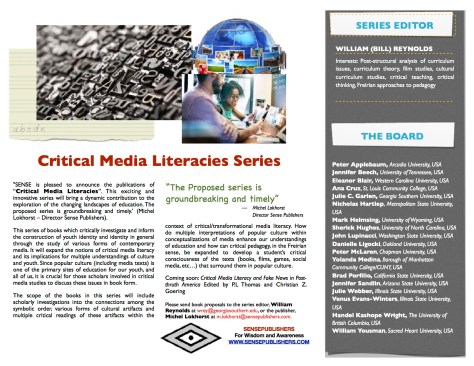
UNDER CONTRACT CFP: Critical Media Literacy and Fake News in Post-Truth America
Critical Media Literacy and Fake News in Post-Truth America
Co-editors P.L. Thomas and Christian Z. Goering
UNDER CONTRACT:
Critical Media Literacies and Youth series[1], Sense Publishers
Series Editor, William Reynolds
Rationale
In the fall of 2016, just after the U.S. elected Donald Trump president, a black female first-year student submitted an essay on the prospects for Trump’s presidency. The course is a first-year writing seminar focusing on James Baldwin in the context of #BlackLivesMatter; therefore, throughout the course, students have been asked to critically investigate race, racism, gender, sexism, and all types of bias related to the U.S.—through the writing of Baldwin, Ta-Nehisi Coates, Roxane Gay, Teju Cole, and Arundhati Roy, among others.
The student’s discussion of Trump’s policies, however, were hyperlinked to Trump’s campaign website. Discussing the draft with the student revealed that the current post-truth America is a significant issue among youth who seem unable to distinguish between facts and so-called fake news.
To blame youth for this lack of critical media literacy seems misguided since the mainstream media itself plays a significant role in misinforming the public. For example, as a subset of the wider media, edujournalism represents a default lack of critical perspective among journalists.
Claims by mainstream media are impressive:
Education Week is the best independent, unbiased source for news and information on pre-K-12 education. With an average of 42 stories posted each weekday on edweek.org, there is always a news, multimedia, or opinion piece to keep you up-to-date on post-election changes in policy, and to help you become a better practitioner and subject matter expert.
The reality is much different. When journalists at Education Week were challenged about their lack of critical coverage of NCTQ, Juana Summers Tweeted, “I’m not sure it’s my place to say whether the study is credible.”
In other words, mainstream media are dedicated to press-release journalism and maintaining a “both sides” stance that avoids making informed decisions about any claims from their sources—including the campaign of Trump.
This volume, then, seeks contributions that address, but are not limited to, the following in the context of teaching and reaching youth in the U.S. about critical media literacy:
- Unpacking the lack of critical perspectives in mainstream media.
- Examining “post-truth” America.
- Confronting issues of race, racism, sexism, misogyny, homophobia, and xenophobia as related to the media.
- Exploring the promises of the New Media as a haven for truth.
Contributions should seek ways to couch chapters in practical aspects of teaching and reaching youth in the U.S., but can reach beyond the traditional classroom into youth culture as that intersects with critical media literacy.
UPDATED CALL:
We have room for about 3-5 more chapters. Please send a proposal ASAP (by April 1) or a full chapter draft within the following guidelines:
Submit 5000-6000 word chapters by June 1, 2017. (double-spaced, APA 6th, please)
To: paul.thomas@furman.edu and cgoering@uark.edu
Mss guidelines:
- Minimal formatting as we have to prepare a camera-ready manuscript.
- 12 pt, New Times Roman font, double spaced, 1” margins
- Format block quotes and hanging indents with the Word ruler (NOT return/tab)
- Do NOT use auto-formatting citation Apps
- Do NOT use Word templates for header or anywhere in the mss
Chapters returned for revisions by August 1, 2017.
Final Chapters due by September 1, 2017.
Proofs to authors by October 1, 2017.
Book published in fall 2017.
Please include the following information with proposals or draft chapters:
- Your commitment to follow through and meet the deadlines as stated.
- All contact information (email address REQUIRED) for each author of your chapter.
[1]
The Bootstrap Lie and the Politics of Privilege
This is going to be difficult and uncomfortable.
I invite you, then, to be patient while I start with something slightly less uncomfortable but just as difficult.
The tragic but real story of Pat Tillman is many things—one of which is a complete unmasking of how powerful and dangerous cultural mythologies are and how often our cultural mythologies prove to be both false and serving the interests of privilege (primarily white, male, and wealth privilege).
Tillman believed in the sacred duty of a person to serve his country, and then, in that service, Tillman not only lost his life, but also had his death story fabricated to perpetuate the very false myth that failed him.
Those with power sullied Tillman’s legacy to reinforce that the false myth of patriotism could be preserved in the service of their power — and were willing to sacrifice anyone buying the myth.
Again, that is a very hard discussion, a nearly impossible reality to recognize and digest.
But this is even more difficult because it entails race and racism as well as the very ugly stereotypes the U.S. perpetuates and embraces about people in poverty.
And as a very privileged and successful white man, I am walking onto very thin ice by confronting and naming black leaders who, as I will outline, represent a tragedy similar to Tillman’s.
Next, before I become more pointed, my caveat here is that I offer this as a witness in the tradition of James Baldwin, to whom I will return at the end. These are critical views of the world that I have learned by listening carefully, by setting aside my own urge to mansplain, whitesplain—to be the authority.
I am not the authority, but I am a diligent student.
To be considered:
Lawyer Michelle Alexander has detailed a disturbing dynamic: many black communities have advocated against their own best interests by embracing the “get tough on crime” myth perpetuated in the service of privilege. Alexander’s best example, I think, is that police often sweep black neighborhoods (are often invited to do so by blacks themselves), but choose not to do similar sweeps in white and affluent areas such as college campuses—although both are likely to have recreational drugs being used and sold.
Critical educator Chris Emdin, writing on his Instagram page, confronts a parallel paradox in education: “Black teachers with white supremacist ideologies [are] just as dangerous as white folks who don’t understand culture.” From Geoffrey Canada to Steve Perry to Joe Clark—many black educators have embraced the essentially racist “no excuses” ideologies that target black, brown, and poor children while perpetuating that the problems with educating these children lies in deficits of the children, and not any systemic forces. Education designed to correct, “fix,” fundamentally broken children (racial minorities, impoverished children) is inherently racist and classist.
Scholar Stacey Patton advocates against corporal punishment, specifically addressing how many blacks have internalized racist demands that the black body be punished, reaching back to U.S. slavery. As Patton explains:
Dr. Stacey Patton: People think that hitting a child is a form of teaching. We think it will protect them. And people grow up to invert the violence they experience as children as something that was good, particularly in African-American culture. As a people, we attribute our success to having had our bodies processed through violence and quite frankly what it does is confirm a long-standing racist narrative about Black bodies. The only way to control us, the only way to make us “good,” law-abiding, moral people is with a good whupping. It seems that we unconsciously agree with that narrative.
Alexander, Emdin, and Patton represent a much larger body of work that recognizes how often privilege recruits outliers of marginalized groups in order to distort those outliers as proof of false myths, specifically pointing to any successful black person as proof that the bootstrap myth is real, that we have achieved a meritocracy.
Popular culture is filled with examples—O.J. Simpson, Ben Carson, Clarence Thomas, Bill Cosby, just to name a few who have become spokespersons in the service of privilege, who, as Emdin notes, are “just as dangerous.”
So here is the very hardest and most uncomfortable part, forced by the nomination of Betsy DeVos as Secretary of Education, an ideologue billionaire hell-bent on perpetuating the choice myth that serves only people like her at the expense of marginalized people, especially children who should not have to wait for the Invisible Hand and who should be served immediately by leaders of the wealthiest country in human history.
Senator Tim Scott (R-SC) has eagerly supported DeVos within his own unwavering advocacy for choice, often invoking that poor and minority families and children deserve the same choices as white and wealthy families and children.
Scott has sold his political soul (much like Clarence Thomas) to an ugly and harmful bootstrap myth, as expressed on his biography page:
An unbridled optimist, Senator Scott believes that despite our current challenges, our nation’s brightest days are ahead of us. As a teenager, Tim had the fortune of meeting a strong, conservative mentor, John Moniz. Moniz helped instill in Tim the notion that you can think your way out of poverty, and that the golden opportunity is always right around the corner. The American Dream is alive and well, and Tim’s story is a concrete example of that.
Scott is an outlier, and his story of success is commendable—except it is an ugly thing to hang one’s success over the heads of others, demanding that their not reaching a similar success is simply due to not “think[ing] [their] way out of poverty.”
No, the American Dream is not alive and well:

At the same levels of effort, women and racial minorities remain disadvantaged by systemic forces that work against them; these inequities are not the result of the ugly “laziness” myth about black, brown, and poor people that lies underneath the bootstrap myth, the rugged individual myth, the meritocracy myth.
The free market and all sorts of choice are crap shoots, and they are in no way mechanisms for equity, for justice.
Scott’s “notion that you can think your way out of poverty” is a slap in the face of adults and children who are already working and trying as hard as they can, and worst of all, this bootstrap mantra maintains the very systemic forces it refuses to recognize.
Billionaires from Trump to DeVos are spreading cultural lies, and they depend along the way on recruits into these narratives, recruits—as Alexander, Emdin, and Patton reveal—who may even look just like the people being cheated.
And so I will end by coming back to Baldwin, whose legacy is being renewed, and whose message still resonates as Rich Blint concludes:
As the latest entry of the brilliance of James Baldwin on film, I Am Not Your Negro (along with Baldwin’s scathing account of American film-making, The Devil Finds Work) lays bare the rhetorical and imagistic sleight of hand that enables the fiction and terror of race in American life to persist with such a renewed and deadly power. As he suggests, the extent to which we truly wrestle with our psychic need for the myth of the “nigger,” will determine the future of the country. It is still the only song left to sing.
GUEST POST: Bigger than Sputnik, Christian Z. Goering
GUEST POST
Bigger than Sputnik: How Betsy Devos’ Nomination for Secretary of Education just Saved Public Education
Most people are familiar with American educational history to the point to remember that the Soviet launch of a satellite into space in 1957 before the launch of a US satellite struck great fear that our country was falling behind and thus needed to double down on our efforts, especially those in education. This little blinking light meant the Cold War could be lost and the years after Sputnik were marked by the National Defense of Education Act in 1958 and an onslaught of programs designed to improve teaching and learning and strengthen our system of public schools. A friend who began teaching in 1963 often shared with me the different ways in which he benefited from this urgency—paid summer workshops for teachers, support for graduate degrees, and just plain old-fashioned support for education.
I’m going to be bold in predicting that Donald Trump’s nomination of Betsy DeVos for Secretary of Education will be remembered as a watershed moment in educational history, the point in time where public education was saved. I believe Betsy is bigger than Sputnik.
Before you rush to think otherwise, I don’t believe Ms. DeVos has any business leading the US Department of Education. Her religious adherence to the school choice movement, one I believe is designed to tear down (not improve) our system of public education, is single-handedly a disqualifier. The comment about bears and the fact that she has zero experience ever working inside a school of any kind seems like enough further evidence that she has no business setting foot in the Department of Education, much less leading it. When then President-Elect Trump passed on Michelle Rhee—the former Chancellor of the Washington D. C. schools and arguably the most hated educator in America—to instead nominate billionaire DeVos, it seemed apparent that only the most non-logical and most offensive choice was the goal. In this case, President Trump went too far.
While I’d love to tell you that Betsy DeVos is the worst nominee for President Trump’s cabinet and to place all of the blame for this nomination squarely on the President’s shoulders, she’s not and that wouldn’t be fair. Rather, a hefty amount of blame must be placed at the feet of the Democratic party, which over the past twenty years has increasingly drifted towards the school choice movement, interestingly one of the few areas of agreement in our divided country. Following eight treacherous years for public education under President George W. Bush and No Child Left Behind, Barack Obama gave legitimacy and real teeth to the failed policies of his predecessors. The name and shame, test-punish-rinse-repeat cycle did nothing for our education system. What’s worse is that President Obama provided funding for the biggest expansion of school choice in our nation’s history. His picks for Secretary of Education were both unqualified and considered by teachers to be outright attacks on our sensibility of what education actually is and isn’t. So, a hearty “thanks Obama” is in order.
How’s Betsy bigger than Sputnik, one might ask? She has singlehandedly united the Democratic party against the destructive school choice movement, one they almost universally supported previously and she has unified teachers and public education groups for a cause like I’ve never seen. She’s such a bad nominee for this position that she’s taken the place of a satellite blinking across the night sky. As a teacher, I’m looking towards Satellite DeVos with renewed hope and a sort of religious reverence.
Even school choice magnate Eli Broad came out to denounce her nomination. This guy drinks school choice Kool-Aid out of a platinum cup for breakfast and he’s against her? Anyone interested in perpetrating the school choice ruse is likely screaming from their rooftops or smashing their heads against a wall. BB (Before Betsy) everything was sailing through a dark night sky towards unprecedented spreading of vouchers and charters and the opportunity for the greedy to make money off of our nation’s most vulnerable—our school children. The Democrats were shamefully sitting at the same gilded table as the Republicans, no difference in their vision for education. AB (After Betsy), I project a future where public educators are again valued and where programs are initiated to support teaching and learning, a return to doing what is best for all of the students, a vision lost over the last couple of decades. I project a future in which the Democrats are stronger than ever supporters of public schools, unflinching and unwilling to accept anything less than the best for all of our nation’s students, especially not risky and fraudulent school choice schemes.
Thanks Betsy for being such an egregious choice for Education Secretary that you’ve united and revitalized the opposition to your broken ideas. If you are somehow confirmed, the unified force of all teachers—not just the Democrats—will have the brightest blinking light to look towards and know immediately what we need to work against.
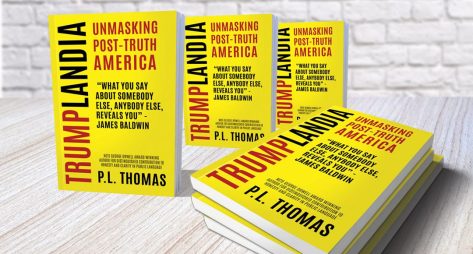
BOOK ANNOUNCEMENT: Trumplandia: Unmasking Post-Truth America (Garn Press)
Dear New York Times
It is the end of the month, and as I click on what appear to be important articles in my social media feed, you, The New York Times, alert me that I have exhausted my free access to your news and commentary, including options for subscribing to your publication.
For a long time now, those messages have, frankly, irritated me because I have been blogging extensively as an educator about how your publication as a leader in mainstream media as well as other highly regarded outlets such as NPR and Education Week has been using my field of education as toilet paper.
Mainstream media consistently misrepresent the quality and problems with public education and teachers; routinely honor reform advocates, politicians, and organizations/think tanks with essentially no credibility; and remain trapped in vapid “both sides,” so-called objective, and press-release journalism.
Since I am just a blogger, only an 18-year veteran of public school teaching, and a current college professor and scholar of education, race, and poverty, I realize you really do not care about my informed positions, but since you are soliciting my money and my support, let me simply remind you here of some of my work highlighting your truly careless and harmful reporting:
- UPDATED: Mainstream Media in (Perpetual) Crisis: More Education Meat Grinder
- The New York Times in an Era of Kool-Aid Journalism
- Mainstream Media, Not Fake News, Spawned Trumplandia
However, I am not addressing this open letter to you, The New York Times, to rail yet again about your failures as a major aspect of the free press in the U.S.
For the first time, when you blocked access to an article and waved your subscription options before me, I paused because unlike NPR, you have done something that many are calling “bold,” but is actually what you should have always been doing: In a Swirl of ‘Untruths’ and ‘Falsehoods,’ Calling a Lie a Lie, Dan Barry.
If I may be so bold, let me counter your solicitation of my patronage with a request of my own.
The New York Times, as major voice in a fading field, could you please acknowledge the failure of mainstream media, a failure far more damaging than fake news, and along with your commitment to name lies as “lies,” could you please take a foundational stand for moving mainstream media in the U.S. toward rejecting “fair and balanced” and then embrace the tenets of being a critical free press?
Again, as a lowly blogger/educator/scholar, I know my voice really doesn’t matter, but I have laid out this problem often:
- When Fake Is Real and Real Is Fake: More on Crossing the Bigfoot Line
- Fair and Balanced Education and Journalism: On the Death of Democracy
- U.S. and Education Reform Need a Critical Free Press
- My Open Letter to Journalists: A Critical Free Press, pt. 2
- Invoking “Oliver Rule (Expanded)” for Education Reform Debate
- O, Free Press, Where Art Thou?
I am very cautiously willing to crack open the door I have long ago closed about the failures of mainstream media, beholden to our consumer society, because of your willingness to do something that any ethical person would do—confront lies, especially from the highest levels of our society.
But as I detail above in a recent blog, about the same time you made your stance about lies, you published a truly awful and harmful article about people living in poverty and depending on government assistance.
It was a hate piece that feeds the very lowest stereotypes (hint: lies) about poor people as well as triggering racism; others as I link in my piece have shown that the article was both filled with gross stereotypes and factually misrepresented the study it cited.
So, thank you for pointing out Trump’s lies, but as I was admonished as a child, when you point a finger at someone, three are pointing back at you.
Will you simultaneously clean your own house, become a leader for your field in the pursuit of a critical free press, as you challenge the current administration?
If yes, I will eagerly open the door, and subscribe with glee.
See Also
Sam Waterston: The danger of Trump’s constant lying
Fair and Balanced Education and Journalism: On the Death of Democracy
Once I posted a reader for Trumplandia, based on the increased sales of George Orwell’s 1984 as well as the related thought pieces on important texts from Orwell and other writers, I was not surprised by the expected response calling for teachers and classrooms to be somehow politically neutral.
I have rejected this idea often, focusing on Howard Zinn’s brilliant metaphor of being unable to remain neutral on a moving train. Both calling for no politics in any context and taking a neutral stance are, in fact, political themselves—the former is a political strategy to deny some Others their politics while imposing your own and the latter is the politics of passively endorsing the status quo (in a society where racism and sexism, for example, continue to thrive, being neutral is an indirect endorsement of both).
Education and journalism—universal free public education and the free press—share many important and disturbing qualities: they are essential to the creation and preservation of a free and equitable people, they remain mostly unachieved in the U.S. in practice because they are often the tools of powerful people and forces who distort their ideal contributions to democracy and equity, and at the heart of that failure (we have failed them; they have not failed us) is the shared traditional code of education/teachers and journalism/journalists assuming neutral poses, being forced into a state of objectively presenting both sides in a fair and balanced way.
Particularly in the post-truth times we now find ourselves—and I argue we are here because of our failures in education and journalism—demanding that educators and journalists remain neutral is not the right goal and not actually how either functions.
In fact, education and journalism are always political, and in most contexts, educators and journalists routinely break the rule of neutrality—and thus, when anyone wags a finger and exclaims “We must be fair and balanced! Show both sides!” the truth is not that educators or journalists are being ideological or biased, but that someone in power feels that his/her politics is being challenged.
Let me illustrate in both education and journalism, starting with the media.
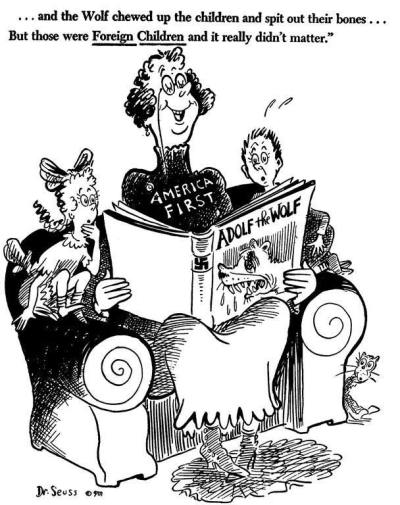
As I have noted before, when we compare the Ray Rice inspired public debate about domestic abuse to the Adrian Peterson motivated public debate about corporal punishment, the unbiased press myth is completely unmasked because domestic abuse (men hitting and psychologically abusing women) was entirely examined throughout the media as wrong (no pro-abuse side aired) while that same media almost exclusively presented corporal punishment as a debate with a fair and balanced presentation of both sides to adults hitting children.
What is clear here is incredibly disturbing: The media, in fact, make decisions about when to honor credible positions, when to reject or even not cover invalidated and unethical positions, and when to shrink back into the “both sides” cover.
While decades of research and the same ethical concerns about power and abuse related to rejecting domestic abuse entirely refute corporal punishment, the media have chosen to remain neutral on a moving train aimed at the health and well being of powerless children.
In other words, when media shirks its role in creating and maintaining a free and equitable people behind its tin shield of objectivity—think about always framing evolution or climate change as debates, as if “both sides” are equally credible when they are not—this is a dishonest pose because the media routinely take sides.
Finally, I want to highlight that education represents this same dishonest dynamic—claiming to be apolitical, or aspiring to be apolitical, while often taking sides.
Unless I am misreading the current mood of the country, the rise of interest in 1984 and other works of literature similar to Orwell’s is along a spectrum of concern about to fear of the rise of fascism and totalitarianism. Concurrently, with the public discussions about fake news and post-truth, we are experiencing a renaissance in examining how power and language are inseparable.
So what does it mean when teachers call for presenting both side of this debate when we bring politically charged novels by Orwell or Margaret Atwood into high school and college classes?
Before answering, let me offer a few examples from typical lessons found in high schools for virtually every student.
Both the Holocaust and slavery in the U.S. are taught as foundational content in anyone’s education; these are disturbing topics, and hard issues.
When we teach the Holocaust, notably through Night by Elie Wiesel in an English course, do we rush to have students read Hitler’s Mein Kamft to fairly represent both sides, treating each position as morally equivalent, allowing our students to choose whichever position she/he wishes?
When we teach U.S. slavery, possibly having students read Frederick Douglass, do we also find eugenicists’ and racists’ declarations demonizing blacks to fairly represent both sides, treating each position as morally equivalent, allowing our students to choose whichever position she/he wishes?
As in the media, educators at all levels routinely take sides—the answer to the two questions above reveal.
And thus, returning to the push back to my Trumplandia reader, I am lost on how or why educators would find ways to present pro-fascist ideas to balance literature study about the threats of fascism and totalitarianism.
Using Orwell and all sorts of powerful literature to help students on the cusp of or early in their roles as active participants in a democracy to better read the world and better act on that world in informed and ethical ways is the very essence of politics, one not corrupted by simplistic partisan politics of endorsing Democrats [1] or Republicans (which is worth resisting in education and journalism).
In 2017, the U.S. and even the entire world are faced with whether or not we truly believe in freedom and equity, whether or not we are willing to invest in the institutions that can leverage both that freedom and equity—institutions such as formal education and the media. And we have been here before, in the same words and the same actions. [2]
If the answer is yes, then our resolve must be linked to demanding that our teachers and journalists are grounded in taking informed and ethical stands, not the dishonest and uncritical pose of objectivity.
As I have shown above, neither is really being neutral now, but instead, pulling out the objective card only when it serves the interest of the status quo.
Critical educators and critical journalists must not serve the whims of power and money, and must be transparent in their pursuit of credible evidence and ethical behavior.
To frame everything as a debate with equally credible antithetical sides is dishonest and insufficient for the promise of life, liberty, and the pursuit of happiness.
Teachers and journalists are always political agents; both professions must choose in whose interest they are willing to work.
The neutral pose by either is to take a seat on the train, to keep eyes down, and to allow the train to rumble along as if the tracks are not leading to a cliff.
Pretending that cliff isn’t now on our horizon will not stop the train from crashing on the rocks of the coming abyss.
[1] My political work is not partisan, for example, as I have been warning about the Orwellian failures of political parties for many years; see Orwellian Educational Change under Obama: Crisis Discourse, Utopian Expectations, and Accountability Failures by Paul Thomas.
[2]
A Reader for Trumplandia
My dad predicted Trump in 1985 – it’s not Orwell, he warned, it’s Brave New World, Andrew Postman
‘It will be called Americanism’: the US writers who imagined a fascist future, Sarah Churchwell
George Orwell’s ‘1984’ Is Suddenly a Best-Seller, Kimiko de Freytas-Tamura
Orwell’s “1984” and Trump’s America, Adam Gopnik
1984, George Orwell
The Orwell essay that’s even more pertinent than “1984” right now, Maxwell Strachan
Politics and the English Language, George Orwell
Uneasy About the Future, Readers Turn to Dystopian Classics, Alexandra Alter
The Handmaid’s Tale, Margaret Atwood

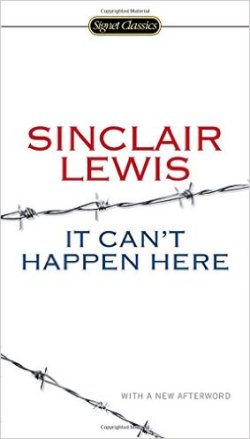
It Can’t Happen Here, Sinclair Lewis
Newt Gingrich: Margaret Thatcher is the real model for the Trump presidency

1987’s “Document” feels especially applicable to America in 2017, Annie Zaleski
On Jan. 20, Paste ran a clever article titled “An Inaugural Day Message via the Words of R.E.M.” The piece creates a narrative about politics and life by jumbling together and rearranging phrases culled from the Athens, Georgia, band’s song lyrics. Workload-wise, the 2400-word piece is impressive; mixing and matching sentiments from a 30-plus-year career certainly isn’t easy….
The last record R.E.M. released via I.R.S. Records — and the first LP the band recorded with producer Scott Litt — “Document” addresses the corrupting nature of money; political witch hunts concerning free speech; circumstances that are both bewildering and unprecedented; and economic and employment oppression. Appropriately, the record’s music is glinting and electrified, and nods to post-punk, folk, funk and fiery rock ‘n’ roll….
In 2003, Stipe admitted that “Disturbance at the Heron House” is his “take” on George Orwell’s “Animal Farm.”…
“That song is so fucking political, and it’s so appropriate to what’s going on right now,” he told Filter. “Like, the kind of arrogance that some of the policy makers and world leaders are carrying with them right now is, I think, reflective of the very worst of the United States. It’s that teenage arrogance, as a young country, the know-it-all-kind of thing. That makes me crazy.”
R.E.M. – Disturbance At The Heron House (see also here)
Animal Farm, George Orwell

Additional Recommended Texts
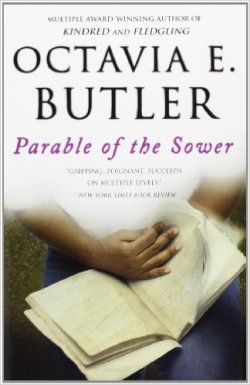
Parable of the Sower, Octavia E. Butler
Gold Fame Citrus, Claire Vaye Watkins

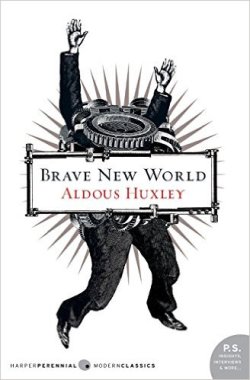
Brave New World, Aldous Huxley
“This American carnage”: Trumplandia and the Ultimate Rise of “Careless People”
Do an Internet search for “carnage” now and the first matches are from Trump’s inauguration speech, in which he invoked “[t]his American carnage” to launch into his standard use of false claims to speak to his misinformed and misguided base.
Setting aside whatever anyone may assume is Trump’s intent—if “intent” even is applicable anymore—this use of “carnage” sends a message I am certain is lost on Trump and his “America first”/”Make America Great Again” crowd.
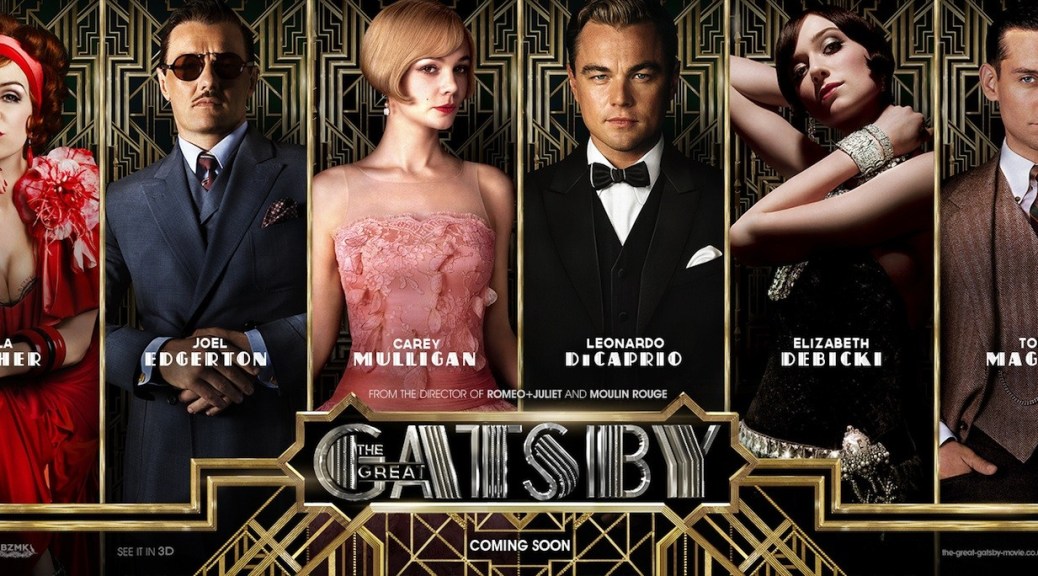
A century ago, F. Scott Fitzgerald’s The Great Gatsby dramatized a scathing message that the American Dream was a wonderful ideal that Americans mostly allowed to slip through their fingers, as novelist John Gardner examined:
That idea—humankind’s inalienable right to life, liberty, and the pursuit of happiness—coupled with a system for protecting human rights—was and is the quintessential American Dream. The rest is greed and pompous foolishness—at worst, a cruel and sentimental myth, at best, cheap streamers in the rain. (p. 96)
Gatsby is new money in the novel, and portrayed by the mesmerized narrator Nick as the embodiment of the American Dream, as “cheap streamers in the rain”; Gatsby’s money is ill-got and he is a very delusional man.
Having taught the novel for nearly two decades, I think far too often studying the novel (what we do in formal schooling, as opposed to reading the work) becomes lost in idealizing the novel’s technical achievements against the rules of New Criticism (much as Nick idealizes Gatsby)—and as a result, we are apt not to pay adequate attention to the carnage.
The Great Gatsby is a novel about carnage as much as a work deconstructing the American Dream.
By the end, we are confronted with Myrtle left like an animal run over and ripped apart in the middle of the road and with George committing suicide after shooting and killing Gatsby floating alone in his opulent pool.
Among the dead, the common denominators are Tom and Daisy, who Nick comes to understand while talking to Tom:
I couldn’t forgive him or like him, but I saw that what he had done was, to him, entirely justified. It was all very careless and confused. They were careless people, Tom and Daisy—they smashed up things and creatures and then retreated back into their money or their vast carelessness, or whatever it was that kept them together, and let other people clean up the mess they had made…. (p. 179)
While Daisy and Tom Buchanan flee, essentially unscathed, to Europe, the images of Myrtle dead in the road and Gatsby face-down in his swimming pool haunt Nick’s final lines of Fitzgerald’s so-called American classic:
Gatsby believed in the green light, the orgiastic future that year by year recedes before us. It eluded us then, but that’s no matter—tomorrow we will run faster, stretch out our arms farther….And one fine morning—
So we beat on, boats against the current, borne back ceaselessly into the past. (p. 182)
In the days after Trump’s inauguration and his pronouncement about “carnage,” if you are looking for the U.S., there it is—Myrtle’s corpse in the wake of Daisy driving a gold Rolls Royce, Gatsby and George Wilson both dead at George’s disillusioned hand.
Myrtle and George as the slaughtered white working class who attract our sympathetic but myopic gaze—let us not ignore that The Great Gatsby is a very white novel, itself a demonstration of how we whitewash even in art.
Trumplandia, however, is all too real and is a free people’s abdication to the ultimate rise of “careless people” who depend on our being as mesmerized by their wealth and delusional as Nick.
“[G]reed and pompous foolishness,” Garnder’s words, ring now in the wake of the grand and dishonest pronouncement of “this American carnage.”
We cannot claim we haven’t been properly warned.

 dr. p.l. (paul) thomas