
Category Archives: education reform

When Fake Is Real and Real Is Fake: More on Crossing the Bigfoot Line

Soon after the accident when a car struck a pack of cyclists in which I was riding, the ride leader and another cyclist, both of whom were on the front of the pack and heard the crash unfold behind them, sent out emails to seek how we could reconstruct the events as soon as possible for insurance and any litigation.

What is disturbing about recreating the accident is that many of us share a distinct and common memory of noise. As both a victim and witness of the accident, I can offer two perspectives, but I share with everyone the anger and fear.

Concurrent with seeking reality among victims and witnesses, I saw on the news over the next few days several mainstream media stories about the accident, many of which were factually inaccurate, and several of which that spoke authoritatively about the victims—although not a single news outlet has ever spoken with me about the accident or my condition.

With the current focus on fake news and post-truth public discourse, and the renewed interest in postmodernism, this real-life experience for me has been and continues to be a cruel and painful example of that debate—notably how it reflects a basic tenet of postmodernism about the relative and power-based nature of reality, truth, and facts.

Human reality and facts are far more tenuous than we tend to admit in our day-to-day lives. 2+ 2 = 4 seems obvious and above any politics, but this formula is, in fact, relative to a base-10 math system, and that system has to be instilled and preserved by some power structure.

Yet, as some of the garbled efforts to co-opt postmodernism has shown, while truth and facts are bound and controlled by power, while truth and facts are often contestable, we are certainly not served well as a people to make wild claims that no facts can ever exist.

Like my accident and the all-too-slow recovery, the U.S. coming to terms with fake news and the post-truth debate is painful, and not easy.

And apparently, we continue to move in the wrong direction.

Crossing the Bigfoot Line

Consider these comments from journalists, one Tweet from 2014 and then one current news article directly about Trump:

Asked by host Chuck Todd whether he’d be willing to call out a falsehood as a “lie” like some other news outlets have done, [Wall Street Journal editor Gerard] Baker demurred, saying it was up to the newspaper to just present the set of facts and let the reader determine how to classify a statement.

“I’d be careful about using the word, ‘lie.’ ‘Lie’ implies much more than just saying something that’s false. It implies a deliberate intent to mislead,” Baker said, noting that when Trump claimed “thousands” of Muslims were celebrating on rooftops in New Jersey on 9/11, the Journal investigated and reported that they found no evidence of a claim.

Keeping these traditional and current standards of mainstream journalism in mind, now consider how the mainstream media are addressing fake news directly:

Established news organizations usually own their domains and they have a standard look that you are probably familiar with. Sites with such endings like .com.co should make you raise your eyebrows and tip you off that you need to dig around more to see if they can be trusted. This is true even when the site looks professional and has semi-recognizable logos. For example, abcnews.com is a legitimate news source, but abcnews.com.co is not, despite its similar appearance.

To be blunt, helping consumers of media distinguish between the reality of fake news (abcnews.com.co) and “a legitimate news source” (abcnews.com) fails miserably because in essence these two present us with a very dangerous paradox: fake news is real and real news is fake (with the WSJ’s odd twist on the false history of George Washington: “We cannot call a lie ‘a lie!'”).

Two ways this manifests itself are (1) mainstream media is rushing to cover fake news, but only to distinguish it from “legitimate” news, and (2) mainstream media’s refusal to take a stand on credible sources, warranted claims, and naming lies as “lies.”

In popular media, a phenomenon exists that speaks to what we are witnessing in mainstream journalism:

Jumping the Shark is the moment when an established long-running series changes in a significant manner in an attempt to stay fresh. Ironically, that moment makes the viewers realize that the show’s finally run out of ideas. It’s reached its peak, it’ll never be the same again, and from now on it’s all downhill.

However, in mainstream journalism we have crossing the Bigfoot line.

In other words, and as I have been documenting for years in edujournalism, mainstream journalism has adopted and embraced a pose that allows them to report on a real event without taking any stance on the finer elements of the event being reported.

As I noted before, just a few decades ago, tabloid journalism was distinct from mainstream journalism because tabloids used the “just reporting what we are being told” defense.

If a person came to a tabloid with images or video and a wild story about Bigfoot ransacking their camp site, the tabloid eagerly and with outlandish headlines reported the fact that this person told them the story—while taking the pose I shared above: “I’m not sure it’s my place to say whether the [story] is credible.”

There was a time when mainstream media balked at just reporting as fact that source A made claim X if the journalists found claim X to be lacking in credibility.

Political scandal from John F. Kennedy until Richard Nixon, in fact, was allowed to remain mostly hidden because the bar for credibility was so high that sources were routinely ignored, marginalized, and even victimized.

And while online click-bait has supplanted the outlandish grocery store tabloid in our increasingly virtual avenues for news and information, what is more troubling is that mainstream journalism has callously crossed the Bigfoot line, now brazenly using click-bait headline techniques and remaining entrenched in their “rigid refusal” to verify the claims of those about whom they are reporting.

While there exists a great deal of fretting about the future of the free press under Trump, we have ample evidence that mainstream media and journalists had cross the Bigfoot line long ago, and not at the hands of rising fascism, but willingly as a natural development of capitalism and consumerism.

The public in the U.S. and many voters hold provably false beliefs that guide how they live their lives and how they vote; this was pre-Trump, and this was in the context of how the media carelessly feed the masses.

Now that the Bigfoot line has been crossed by mainstream media, we have a troubling challenge before us.

Yes, the public needs much greater skills in critical media literacy, but those skills will mean little if we are left without a critical free press as an option.

As it stands, on the other side of the Bigfoot line is the new mantra of mainstream journalism: “We are not fake news.”

This is a mighty low and ultimately irrelevant bar.


See Also

How to Become a Famous Media Scholar: The Case of Marshall McLuhanJefferson Pooley

A Peek Inside the Strange World of Fake Academia, Kevin Carey

New York Times, Wall Street Journal editors take on Trump and the media, Hadas Gold

“Fake News” And How The Washington Post Rewrote Its Story On Russian Hacking Of The Power Grid, Kalev Leetaru
 

Mainstream Media and the Rise of Fake News

In response to my Crass Edupolitics, Failed Mainstream Media in South Carolina, Paul Bowers, education reporter at The Post and Courier, and Jason Emory Park, Interactive Editor at the P&C, offered a few key entry points into unpacking how mainstream media norms have contributed significantly to the rise of fake news and post-truth public discourse:

These challenges from Bowers and Parker—to a position I believe has been best examined by Chris Hedges, with whom I mostly agree on this analysis—present several key dynamics associated with understanding how media present facts and truth, and then how the public consumes and often misreads facts and truth:

  • Mainstream media and journalists are entrenched in a “both sides” mentality that they continue to defend as objective and fair.
  • As Hedges confronts, mainstream media have blurred divisions of media (such as the loss of the clear line between the news and entertainment divisions) and have suffered contractions as businesses that have weakened investigative journalism; and thus, “press release journalism” and business interests trumping the ethical grounding of the free press have come to characterize mainstream media.
  • Yes, as Parker argues, mainstream journalism, fake news, and post-truth discourse are distinct from each other, but my point is that they are subsets of the same problem and they each feed the other: a traditional and so-called objective mainstream news story provides the environment in which fake news thrives.

My blogging has catalogued for years how edujournalism represents the larger mainstream media failures (such as failing to refute Donald Trump) and how all of mainstream journalism has birthed fake news and post-truth discourse.

Consider these examples from edujournalism:

  • Search Education Week for hundreds of articles including something such as “teacher quality is the most important element in student achievement.” These stories depend on the fact that SOE Duncan or NCTQ or Michelle Rhee or Bill Gates or someone with implied authority makes that statement.
  • While these articles (to Bowers’s point above) are being factual about Person X or Y making the claim, they are using mainstream norms of journalism to abdicate the journalists’ professional obligation to identify the source’s credibility and the credibility of the claim itself.
  • A critical free press would have covered these years focusing on teacher quality differently by noting, for example, that when SOE Duncan claims teacher quality is the most important element in student achievement, Duncan was exposing his own lack of expertise and making a false claim since teacher quality accounts for only about 10-15% of student achievement; out -of-school factors remain the overwhelmingly largest factor in student achievement (60% or more), and even if we focus on in-school factors, teacher quality is no more important than other school factors and unexplained influences.

This same careless but normal process characterized the rise and fall of Common Core: advocates for new standards were allowed the prominent stage with edujournalists reporting that they were making Claims X, Y, and Z (again it was true they were making the claims), but those same journalists made little to no effort to report that research has shown that there is no correlation between the quality or even existence of standards and student achievement.

In other words, Common Core advocacy was much ado about nothing, expect wasted money.

Now, on the national stage, the parallel media pattern in terms of Trump is undeniable:

  • In his TV ads and speeches, Trump repeatedly claimed higher crime rates and unemployment—both refuted by facts.
  • The media, however, mostly reported the fact that Trump made the claims without challenging either Trump or the claims.
  • A critical free press would have reported Trump’s lies as a fact.

If we return to Parker’s insistence that we make fine distinctions about terms, then, we can agree that fake news and mainstream journalism are not exactly the same, but I must stress that as long as journalists refuse to see how they are culpable for fake news and post-truth discourse, as I have shown above, that distinction is merely academic.

For traditional journalists to use “we are not fake news” as a shield for refusing to investigate how they are failing their ethical responsibility as a free press is inexcusable.

As my blog post that prompted this exchange exposed, two major newspapers in South Carolina continue to give a primary stage to a bogus education organization and bogus leaders of that organization because the media remains mired in press-release journalism—reporting on what advocates feed them.

Trump has acquired the ultimate podium and will now garner a primary stage simply because he is president, not because he is credible, not because his claims are factual.

Will it be fake news to report the new SOE endorsing school choice? Will it be fake news to report President Trump taking credit for a booming economy before any of his policies have been implemented?

Well, let’s go back in time a bit: Then-SOE Margaret Spellings announced that NCLB had worked because test scores had increased; however, all the score increases for NAEP between 1999-2005 occurred before NCLB was implemented.

Thus, the press reporting on Spellings announcing NCLB’s success was factual. The rise in scores from 1999-2005 was factual.

However, press-release journalism allowed Spellings’s essential argument to slip by without noting it was a lie, a political lie.

So was that fake news? And does it matter what we call it?

I say it doesn’t matter because, to return to Bowers’s “I fail to see how reporting on the lobbying activity of charter advocates constitutes ‘fake news,'” media coverage of charter school advocacy perpetuates several false narratives about public schools, why student achievement remains inadequate, and the effectiveness of charter schools.

This coverage is not fake, but it is just as corrosive as if it were fake because it is misleading and misguided.

There was a time when The National Enquirer ran story after story about Bigfoot. To report that a person claimed to see Bigfoot while camping was not fake news if the person made these claims to the journalist.

In other words, it was a fact the person claimed to see Bigfoot.

There was a time when mainstream media drew a line at such stories because of the essential lack of credibility in the person making such claims and no evidence of Bigfoot existing.

Call it what you will, but that line no longer exists.

Crass Edupolitics, Failed Mainstream Media in South Carolina

An Op-Ed in The State and Paul Bower’s Charter school advocates shifting gears in South Carolina (The Post and Courier) inadvertently reveal the same message: South Carolina remains mired in crass edupolitics.

StudentsFirst and 50CAN have become SouthCarolinaCAN, but the merging and renaming hasn’t changed a truly ugly fact: these education advocacy groups across the US have no credibility and are created to provide individuals political platforms that benefit the so-called leaders and the pro-privatization forces funding and supporting these constantly morphing organizations.

Yet mainstream media continues to allow these groups and their leaders significant platforms for their misleading propaganda while educators are nearly absent from the public debate.

Crass edupolitical organizations are a sham, but as long as mainstream media continues to shirk their responsibility to support credible sources, it is the media who are at fault here.

Edujournalism has been and continues to be one of the elements contributing to post-truth fake news.

The crass edupolitics infecting SC remains committed to failed policies such as takeover districts, charter schools, and school choice because these organizations and their leaders are not concerned about education, but about their own political agendas.

Since I have addressed these issues repeatedly, I offer here a few posts below:

The Zombie Politics of School Choice: A Reader

Resisting Fatalism in Post-Truth Trumplandia: Charter Schools and the End of Accountability

The Post and Courier: Beware of ‘turnaround’ school districts

The media must choose credibility over press-release journalism if our public institutions, such as public schools, and our democracy has a chance to recover from post-truth fake news.


For Further Reading

‘Fake News’ in America: Homegrown, and Far From New

Edujournalism and the Continuing Adventures in Post-Truth: Technology Edition

Mainstream America appears, as usual, to be a bit behind the times, but in Trumplandia, there is a sort of shallow postmodernism going on (although postmodernism has been supplanted by post-postmodernism and a slew of other -isms since its heyday).

The media is, in fact, nearly consumed with a meta-analysis of itself as almost everyone has now confronted that the U.S. is a post-truth nation.

The handwringing is mostly shallow, mired in the false claims that post-truth is something new (the U.S. has always been post-truth) and that there are some fringe faux-news outlets (spurred by the evils of Social Media) that are spoiling the game for mainstream media (which ignores that mainstream media are just as complicit in post-truth as the extremes).

A subset of the failures of mainstream media is edujournalism, trapped in a both-sides mentality that masks its essential nature as press-release journalism.

Think tanks and entrepreneurs feed edujournalism, and edujournalism simply passes on the propaganda.

In post-truth Trumplandia, then, we now are confronted with what passes as credible edujournalism, an Orwellian formula that defies logic:

Earlier this week, Khan Academy, the College Board, and Turnitin released tools to give all students the chance to practice for the SAT without having to drop hundreds or even thousands of dollars to get the kind of relevant practice required. The companies have combined their technology tools to bring free Official SAT Practice to Khan Academy with added writing instructional tools provided by Turnitin. Read more details about the news here on The Tech Edvocate.

That’s right three discredited organizations—Khan Academy, the College Board/SAT, and Turnitin—have combined, according to Education Week to create equity because:

I’ve long been an outspoken advocate of technology tools for education. Technology can break down barriers, bring new materials and relevancy to instruction. It can excite students with its interactivity. It can help the teacher cut down on busy work and get right to the act of teaching and guiding students. And as in this case, technology–pretty exciting technology– is leveling the playing field for every student willing to invest their time in preparing for the SAT.

The basis for these grand, but false, promises is what can fairly be called post-truth—all belief not grounded in credible evidence.

Technology has been idealized for decades in education and has never fulfilled the educational promises, but has filled the coffers of technology commerce.

Edujournalists as willing propagandists for entrepreneurs fail education and equity, actually.

We would be much better served to listen to experts, such as Audrey Watters, who confronts the conventional wisdom:

And yet the dominant narrative – the gospel, if you will – about education and, increasingly education technology, is that it absolutely is “the fix.”

Education technology will close the achievement gap; education technology will close the opportunity gap. Education technology will revolutionize; education technology will democratize. Or so we are told. That’s the big message at this week’s ASU-GSV Summit, where education technology investors and entrepreneurs and politicians have gathered (registration: $2995) to talk about “equity.” (Equity and civil rights, that is; not equity as investing in exchange for stock options and a seat on the Board of Directors, I should be clear. Although I’m guessing most of the conversations there were actually about the latter.)

Watters, in fact, pulls the curtain back on the grand pronouncements of the Wizard:

Anyon’s work is critical as it highlights how students’ relationship to “the system of ownership of symbolic and physical capital, to authority and control, and to their own productive activity” are developed differently in working class, middle class, and elite schools. Her work helps us to see too how the traditional practices of school might be reinforced, re-inscribed by technology – not, as some like to argue, magically disrupted, with these hierarchies magically flattened. Menial tasks are still menial if done on a computer. To argue otherwise is ed-tech solutionism – dangerous and wrong.

And thus:

Despite all the hype and hope about revolution and access and opportunity that these new technologies are supposed to provide us, they do not negate hierarchy, history, privilege, power. They reflect those. They channel it. They concentrate it, in new ways and in old.

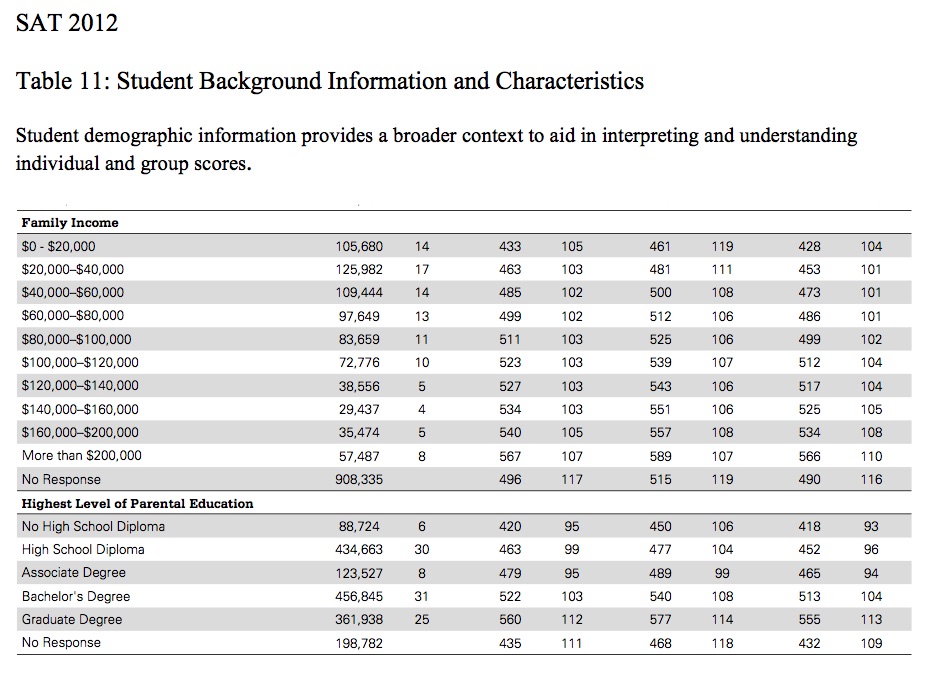
For example, we must ask, how will combining these forces eradicate the current and historical fact that the SAT reflects and perpetuates privilege, that the SAT is the antithesis of equity? (Hint: It will not and cannot):

Technology and edupreneurs as mechanisms for equity are post-truth mythologies, and edujournalism remains a willing accomplice in the sham propagated by the combined forces of the Khan Academy, the College Board/SAT, and Turnitin—none of which should be endorsed alone, much less heralded in combination as forces for equity.


Please read in full Ed-Tech’s Inequalities, Audrey Watters

The Inevitable Rise of Trumplandia: Market Ideology Ate Our Democracy

Writing in 2000 specifically about education reform, Michael Engel [1] acknowledges: “Market ideology has triumphed over democratic values not because of its superiority as a theory of society but in part because in a capitalist system it has an inherent advantage” (p. 9).

Nearly four decades before Engel’s claim, Raymond E. Callahan [2] confronted what he labeled the cult of efficiency in education:

The tragedy itself was fourfold: that educational questions were subordinated to business considerations; that administrators were produced who were not, in any true sense, educators; that a scientific label was put on some very unscientific and dubious methods and practices; and that an anti-intellectual climate, already prevalent, was strengthened. (p. 246)

What is disturbingly clear here is that despite the enduring claims that universal public education—often attributed to the idealistic foresight of Founding Father Thomas Jefferson—serves our democracy, public schooling has in fact worked almost entirely in the service of market ideology: sorting children for the workforce and instilling compliance in those young people become good and compliant workers [3].

And here we have a subset of the entire country.

While many are wringing their hands about the post-truth U.S., our newly minted Trumplandia is not anything new, but the logical outcome of who we have always been—a belief culture skirting by on mythologies and false narratives to mask the ugly facts of our essential commitments to competition, consumerism, and capitalism.

Donald Trump is the best and most accurate personification of who the U.S. currently is, but also the embodiment of who we have always been.

Founded as a revolt against monarchy, the Founding Fathers used the rhetoric of freedom as a veneer for a few privileged men truly wanting the doors to exploitation, not closed, but opened just a tad wider so they could cozy in.

The newly founded free country allowed by law the enslavement of humans and the relegation of women to second-class citizenship.

“Life, liberty, and the pursuit of happiness” was post-truth.

Or at least only the sliver of truth for a select few white men already clutching power.

All you have to do is to listen now or to the record of black voices, women’s voices, the voices of the imprisoned and impoverished: “(America never was America to me.)” [4]

Just as the robber baron era of U.S. history was no blip on the country’s radar, but who we really are, the current ascension of Trumplandia is simply a more full unmasking of our complete failure at democracy and human liberation.

Trump’s apparent cabinet appointments, his claims he doesn’t need daily briefings, and the brash blurring of celebrity and huckster business acumen—these are the U.S. laid bare.

We have always been mostly branding—meritocracy, boot straps, upward mobility as marketing lingo with little basis in fact.

Political leaders have always sold the U.S. public a bill of goods wrapped in the American flag; George W. Bush sold a war on repackaged lies, and there were essentially only consequences for the soldiers, the U.S. public, and the victims of that war.

But the warmongers remain essentially unscathed.

And thus, Trump as Teflon blow hard reality TV star/business huckster is just a few notches past Ronald Reagan as Teflon actor.

The ugliest paradox of all is that in our lust for consumerism we have allowed market ideology to eat our democracy, and as the metaphor requires, the excrement has really hit the fan this time.


[1] Engel, M. (2000). The struggle for control of public education: Market ideology vs. democratic values. Philadelphia, PA: Temple University Press.

[2] Callahan, R. E. (1962). Education and the cult of efficiency: A study of the social forces that have shaped the administration of the public schools. Chicago: The University of Chicago Press.

[3] See Education Technology and the ‘New Economy,’ Audrey Watters:

Although there is some lip service paid to learning computer programming in order to deepen students’ thinking and expand their creativity, much of the conversation about computer science is framed in terms of developing students who are “job ready” – the rationale for teaching computer science President Obama gave in his final State of the Union address in January.

[4] “Let America Be America Again,” Langston Hughes

Education Reform and the Eternal Failure of the Unimaginative Bureaucratic Mind

In the 2006 film Idiocracy, the U.S. five centuries into the future is suffering crippling crop shortages due to a dust bowl that the main character (a survivor of suspended animation from the present of the film’s opening, around 2005), Private Joe Bauers, discovers is human-made since the nation of idiots has been irrigating those crops with a Gatorade-like sports drink.

This science fiction satire has experienced a resurgence due to many pundits associating the rise of Trump with the film’s extrapolation about humanity becoming more and more a nation of idiots, but for those of us in education, Idiocracy speaks to the most recent era of education reform driven by accountability, standards, and testing.

The human-made dust bowl is the result of an initial false analogy: If the sports drink, they reasoned, is a powerful fluid for human hydration, then it must be an ideal solution to struggling crops needing hydration.

If we unpack this idiotic logic a bit more, we must add that even the initial idea—sports drinks filled with sugar and salt as powerful hydration fluids—is mostly a false belief based on a great deal of clever marketing and gullibility in the consumers.

Before Bauer forces this future of idiots to reimagine their problem in order to rethink their solution, the status quo of hydrating crops with sports drink continues along with the puzzlement among the idiots about why nothing is improving.

So let’s do a little thought experiment with that film in mind.

First, consider this from Rebecca Smith:

In the late 1800s, the United States was feeling the impact of the industrial revolution. Influenced by Taylorism and the desire for scientific management, statistics and measurement were evolving as objective methods used to evaluate and systematically organize information. Education was swept up in the measurement and statistical movement. Thorndike (1918), relying on his psychological work, believed scientific measurement utilized in educational settings could create efficient systems where ‘knowledge is replacing opinion, and evidence is supplanting guess-work in education as in every other field of human activity’ (p. 15). To Thorndike, the measurement of educational products was the means by which education could become scientific through rigor, reliability, and precision….

To [Thordike], the connection between science, measurement, and human behavior was clear (Cremin, 1964). Lewis Terman published the Binet-Simon IQ Test in 1916; this test provided the context for psychologists to assess abilities, explain differences in students’ performance, and improve schools (Chapman, 1988). Standardized academic tests measure performance in the areas of handwriting, maths, and reading. Data from these tests offered superintendents, teachers, parents, or pupils ‘guidance in many different sorts of decisions and actions’ including ‘the fate of pupils, the value of methods, and the achievement of school systems’ (Thorndike, 1918, pp. 19, 22). Although Thorndike used the term ‘product’ instead of ‘data’, concepts such as rigor, reliability, and precision became part of educational discourse, measuring unseen changes in human beings. Intelligence had become objectified in numbers. The quantification of children’s intelligence, demographic characteristics, and school performance resulted in columns of numbers compared, contrasted, and evaluated in the United States. As the scientific gaze turned towards children, they became classified, compared, and evaluated according to numbers (Cannella, 1997). (pp. 3, 4)

Just a decade after this film and almost a century after Thorndike, in 2016, consider this:

In the latest international comparison of student achievement, public schools in the United States ranked no better than 24th in the world. But the public schools of Massachusetts had few peers.

Perhaps Massachusetts has something to teach the rest of the nation.

Well, unless you listen to Massachusetts, where researchers determined that two-thirds of the state’s effort at education reform has been a failure:

The evidence we have gathered strongly suggests that two of the three major “reforms” launched in the wake of the 1993 law — high-stakes testing and Commonwealth charter schools — have failed to deliver on their promises.

On the other hand, the third major component of the law, providing an influx of more than $2 billion in state funding for our schools, had a powerfully positive impact on our classrooms. But we will show that, after two decades, the formula designed to augment and equalize education funding is no longer up to the task.

So what we have here is an idiocracy of education reform, a failure of imagination to reconsider the problem and then to rethink solutions.

The U.S. need not idealize Finland or Massachusetts—or let’s not forget in 1962, it was the Swiss.

And the relentless commitment to accountability based on ever-new standards and ever-new tests is no different than the idiots continuing to hydrate crops with sports drink.

Like sports drinks, testing is inherently a sham, and our refusal to step away from a paradigm that has never worked despite countless efforts at making it work is our own version of a very real and current Idiocracy.

Not What, But Who: Remaining Grounded as a Teacher of Students

Because she’s older and the teacher, she’s right and I’m not.

Sandra Cisneros, “Eleven”

The field experience students complete as part of my foundations of education course has this semester blended well with their reading Chris Emdin’s For White Folks Who Teach in the Hood…and the Rest of Y’all Too.

As we have discussed both during class sessions, students have been drawn to witnessing and reading as well as thinking about how teachers view and respond to their students.

Although these students have virtually no background in formal education, they have been very perceptive about the inordinate, and distracting, pressures on teachers to cover the curriculum (standards) and prepare students for testing—notably while observing and tutoring at a local majority-minority elementary school.

High student/teacher ratios have also been identified as making good classroom practice nearly impossible.

Running through our discussions has been a concern about how teachers treat students (often more harshly than my students anticipated or endorsed) and about the pervasive deficit perspective throughout the school.

Observing and tutoring in special needs classes and among Latinx students needing to acquire English have intensified how my students have responded to their field placement and their recognition of the myriad factors that impact negatively formal education.

Often unspoken, but what teachers and students share in far too many schools is a “no excuses” imperative that demands teachers perform well (even miraculously) despite being placed in circumstances that work against their efforts and that demands students somehow leave the pressures and inequities of their lives in order to excel at academics being imposed on them.

Teresa Watanabe’s Can a child who starts kindergarten with few reading or math skills catch up? is a snapshot of what my students have witnessed and what Emdin’s work challenges.

Responding to that article, Stephen Krashen, Professor Emeritus at the University of Southern California, has identified the problem that my students have observed:

But there is no evidence that tougher standards lead to more learning, and no evidence showing that the Common Core standards are better at preparing children for college and career than other standards or than no standards….

Forcing young children to study flashcards in the car and spell words during family outings in order to “master” 100 words is turning kindergarten into kindergrind.  Children who develop a love of reading will master thousands of words, without suffering.

Although political leaders and the public often view the authoritarian classroom where teachers are charged with keeping order and demanding that students learn standards and content about which they have no choice or input as the solution, it is now far past time to recognize that this is the problem with formal schooling.

Of course, what we teach is important at every level of education, and that what is becoming even more important for our democracy as we are confronted with a new post-truth media and politics.

That what needs to be the sort of truth that empowers a free people.

That what also needs to include a clear focus on the civility of learning and wrestling with ideas since our post-truth media and politics are increasing and justifying the demanding and nasty tone that is already a problem in many schools.

However, the what must remain secondary to the who—who we teach is what makes teaching an essential calling grounded in the dignity of both teachers and their students.

And the what can never be well taught or learned unless we attend to the conditions of teaching/learning and living among our teachers and students.

The authoritarian classroom, deficit thinking, “no excuses” ideologies and practices—these are corrosive elements for teaching, learning, and democracy as well as liberty.

The very long era of standardized testing and the more recent and relatively shorter era of accountability and standards have inflicted immeasurable harm on teachers and students.

And even as educator autonomy and professionalism become daily further eroded, we are morally obligated to call for and remain grounded in our role as teachers of students.

The who of teaching and learning must always come before the what.

Call for Chapter Proposals: Critical Media Literacy and Fake News in Post-Truth America

Critical Media Literacy and Fake News in Post-Truth America

Co-editors P.L. Thomas and Christian Z. Goering

Critical Media Literacies and Youth series, Sense Publishers

Series Editor, William Reynolds

Rationale

In the fall of 2016, just after the U.S. elected Donald Trump president, a black female first-year student submitted an essay on the prospects for Trump’s presidency. The course is a first-year writing seminar focusing on James Baldwin in the context of #BlackLivesMatter; therefore, throughout the course, students have been asked to critically investigate race, racism, gender, sexism, and all types of bias related to the U.S.—through the writing of Baldwin, Ta-Nehisi Coates, Roxane Gay, Teju Cole, and Arundhati Roy, among others.

The student’s discussion of Trump’s policies, however, were hyperlinked to Trump’s campaign website. Discussing the draft with the student revealed that the current post-truth America is a significant issue among youth who seem unable to distinguish between facts and so-called fake news.

To blame youth for this lack of critical media literacy seems misguided since the mainstream media itself plays a significant role in misinforming the public. For example, as a subset of the wider media, edujournalism represents a default lack of critical perspective among journalists.

Claims by mainstream media are impressive:

Education Week is the best independent, unbiased source for news and information on pre-K-12 education. With an average of 42 stories posted each weekday on edweek.org, there is always a news, multimedia, or opinion piece to keep you up-to-date on post-election changes in policy, and to help you become a better practitioner and subject matter expert.

The reality is much different. When journalists at Education Week were challenged about their lack of critical coverage of NCTQ, Juana Summers Tweeted, “I’m not sure it’s my place to say whether the study is credible.”

In other words, mainstream media are dedicated to press-release journalism and maintaining a “both sides” stance that avoids making informed decisions about any claims from their sources—including the campaign of Trump.

This volume, then, seeks contributions that address, but are not limited to, the following in the context of teaching and reaching youth in the U.S. about critical media literacy:

  • Unpacking the lack of critical perspectives in mainstream media.
  • Examining “post-truth” America.
  • Confronting issues of race, racism, sexism, misogyny, homophobia, and xenophobia as related to the media.
  • Exploring the promises of the New Media as a haven for truth.

Contributions should seek ways to couch chapters in practical aspects of teaching and reaching youth in the U.S., but can reach beyond the traditional classroom into youth culture as that intersects with critical media literacy.

Send a tentative title, author information, and 100-word abstract of the proposed chapter as a Word file (use your name to label the file, please). Make sure your abstract clearly shows how the proposed chapter addresses the focus of the volume—critical media literacy, fake news, and post-truth U.S. as related to youth.

Contact: paul.thomas[at]furman.edu

Timeline, etc., TBD


Critical Media Literacies and Youth series, Sense Publishers

Series Editor, William Reynolds

cmls-3

The Zombie Politics of School Choice: A Reader

The original zombie narrative has been re-created and distorted in contemporary U.S. pop culture, as Victoria Anderson explains:

So what were zombies, originally? The answer lies in the Caribbean. They weren’t endlessly-reproducing, flesh-eating ghouls. Instead, the zombie was the somewhat tragic figure of a human being maintained in a catatonic state – a soulless body – and forced to labour for whoever cast the spell over him or her. In other words, the zombie is – or was – a slave. I always find it troubling that, somewhere along the line, we forgot or refused to acknowledge this and have replaced the suffering slave with the figure of a mindless carnivore – one that reproduces, virus-like, with a bite.

While there is some nuance and variety among the many ways in which U.S. pop culture have manipulated the zombie narrative, central to almost all of those is the zombie as relentless consumer who has risen from the dead and resists being killed permanently.

In that context, school choice is zombie politics because the ideology will not die and its many versions (vouchers, tuition tax credits, charter schools) are destructive.

A few decades ago, school choice advocacy depended on the appeal of the ideology itself since choice is idealized and fetishized in the U.S.

Once school choice policy began to be implemented, and then over the past 2-3 decades as evidence from how choice has not achieved the promises made, school choice advocacy has depended on constantly shifting the type of choice and the promises.

At the center of the school choice debate is a failure in the U.S. to appreciate the importance of the Commons, how publicly funded institutions are necessary for the free market to work (both economically and ethically).

For example, publicly funded roads and highways are powerful and essential for commerce in the U.S. Many resist toll roads in the U.S., and certainly, the entire economy and way of life in the U.S. would be destroyed if we left roads and highways to the whims of the Invisible Hand.

Two facts remain important now as the election of Donald Trump and the apparent choice for Secretary of Education suggest that the zombie politics of school choice has been rejuvenated:

  • The overwhelming evidence for all aspects of school choice show little differences when compared to traditional public schools; some aspects can certainly be categorized as harmful, and any so-called positives are erased when those gains are explained—attrition, comparing apples and oranges, selectivity, inability to scale, etc.
  • Idealizing parental choice fails to step back to the bedrock promise of publicly funded institutions: insuring that choice isn’t necessary.

Just as a blow to the head and brain can kill permanently the zombie, evidence and truth should eradicate the zombie politics of school choice. However, Trumplandia is a post-truth country.

None the less, the truth is our only real option so below is a reader to combat the zombie politics of school choice:

Betsy DeVos’ big education idea doesn’t work, Sarah Carr

Idealizing, Misreading Impoverished and Minority Parental Choice 

Parental Choice, Magical Thinking, and the Paralysis of Indirect Solutions

School choice lessons for Charleston – Post and Courier

Public School, Charter Choice: More Segregation by Design

Don’t Buy School Choice Week

Parental Choice?: A Critical Reconsideration of Choice and the Debate about Choice

Work by Christopher Lubienski

The Public School Advantage: Why Public Schools Outperform Private SchoolsChristopher A. Lubienski and Sarah Theule Lubienski 

Research-Based Options for Education Policymaking – 2016 Collection, William J. Mathis (NEPC)

Julian Vasquez Heilig on vouchers

Julian Vasquez Heilig on charter schools

School Finance 101, Bruce Baker

School Vouchers Are Not a Cure For Segregation: Part I , Jersey Jazzman

Here are links to all five parts of the series:

On negative effects of vouchers, Mark Dynarski

Recent research on statewide voucher programs in Louisiana and Indiana has found that public school students that received vouchers to attend private schools subsequently scored lower on reading and math tests compared to similar students that remained in public schools. The magnitudes of the negative impacts were large. These studies used rigorous research designs that allow for strong causal conclusions. And they showed that the results were not explained by the particular tests that were used or the possibility that students receiving vouchers transferred out of above-average public schools.

Another explanation is that our historical understanding of the superior performance of private schools is no longer accurate. Since the nineties, public schools have been under heavy pressure to improve test scores. Private schools were exempt from these accountability requirements. A recent study showed that public schools closed the score gap with private schools. That study did not look specifically at Louisiana and Indiana, but trends in scores on the National Assessment of Educational Progress for public school students in those states are similar to national trends.

In education as in medicine, ‘first, do no harm’ is a powerful guiding principle. A case to use taxpayer funds to send children of low-income parents to private schools is based on an expectation that the outcome will be positive. These recent findings point in the other direction. More needs to be known about long-term outcomes from these recently implemented voucher programs to make the case that they are a good investment of public funds. As well, we need to know if private schools would up their game in a scenario in which their performance with voucher students is reported publicly and subject to both regulatory and market accountability.

Failing The Test Series

Regardless of motives, the charter initiatives in Oakland and Los Angeles together signal a significant watershed in the growth of a statewide movement that was birthed by California’s Charter Schools Act of 1992 to create classroom laboratories that might develop the dynamic new curricula and teaching methods needed to reinvigorate schools that were failing the state’s most underserved and disadvantaged children.

How that modest experiment in fixing neighborhood public schools could morph in less than 25 years into the replacement of public schools with an unproven parallel system of privately run, taxpayer-funded academies is only half the story of California’s education wars that will be examined in this series, much of which is based on conversations with both sides of the charter school debate. Over the next few days Capital & Main will also look at:

  • The influence wielded by libertarian philanthropists who bankroll the 50-50 takeovers.
  • How charter schools spend less time and money on students with learning disabilities.
  • The lack of charter school transparency and accountability.
  • How charter expansion is pushing Oakland’s public school district toward a fateful tipping point.
  • The success of less radical yet more effective reforms that get scant media coverage.
  • Nine solution takeaways for struggling schools.

(from Failing the Test: A New Series Examines Charter Schools, Bill Raden)

Charters and Access: Here is Evidence, Julian Vasquez Helig

No, Eva, You Can’t Do Whatever You Want, Jersey Jazzman

Don’t Trust Invested Advocates in Edureform Wars

from Engel, M. (2000). The struggle for control of public education: Market ideology vs. democratic values. Philadelphia, PA: Temple University Press.

[I]t is nothing short of disastrous that more than ever before, one antidemocratic system of ideas—market ideology—almost exclusively defines the terms of educational politics and charts the path of education reform.

…[I]deology is important in understanding educational change….Ideology is nonetheless often overlooked or at best misapplied by mainstream social scientists as a factor in politics. This is due in part to the dominance of quantitative methodologies in political science, which leads to the trivialization of the concept into conveniently measurable but irrelevant labels….Market ideology has triumphed over democratic values not because of its superiority as a theory of society but in part because in a capitalist system it has an inherent advantage. (pp. 3, 8-9)

from Callahan, R. E. (1962). Education and the cult of efficiency: A study of the social forces that have shaped the administration of the public schools. Chicago: The University of Chicago Press.

For while schools everywhere reflect to some extent the culture of which they are a part and respond to forces within that culture, the American public schools, because of the nature of their pattern of organization, support, and control, were especially vulnerable and responded quickly to the strongest social forces. . . .The business influence was exerted upon education in several ways: through newspapers, journals, and books; through speeches at educational meetings; and, more directly, through actions of school boards. It was exerted by laymen, by professional journalists, by businessmen or industrialists either individually or in groups. . ., and finally by educators themselves. Whatever its source, the influence was exerted in the form of suggestions or demands that the schools be organized and operated in a more businesslike way and that more emphasis by placed upon a practical and immediately useful education….

The tragedy itself was fourfold: that educational questions were subordinated to business considerations; that administrators were produced who were not, in any true sense, educators; that a scientific label was put on some very unscientific and dubious methods and practices; and that an anti-intellectual climate, already prevalent, was strengthened. (pp. 1, 5-6, 246)

Posts about school choice

Posts about charter schools


Trumplandia 2016 (Prelude): What Mainstream Media Hath Wrought

The election of Barack Obama prompted a rash claim that the U.S. was officially post-racial. As a cruel commentary on that misinterpretation of the first black president, the era of Donald Trump has coincided with the Oxford Dictionary naming “post-truth” the word of the year.

Part of being “post-truth” includes that which shall not be named.

For example, “[a]n Alabama police officer has been fired for sharing racist memes, including one about Michelle Obama,” reports Lindsey Bever of the Washington Post. But the police department’s explanation for the firing is important to analyze:

Bryant, the city manager, said statements that are “deemed to be biased or racially insensitive or derogatory” can affect the community’s trust in the police department and, when that happens, “we have to take action to correct it.”

Not racist, not racism, but “racially insensitive.”

While Bever does use “racist” in the lede, later she explains:

Since Donald Trump was elected president, a wave of racially and religiously motivated acts of intimidation, violence and harassment have swept across the country — from a middle school in Michigan and a high school in Pennsylvanian to universities in Texas and elsewhere.

Not a wave of racism, but “racially motivated acts.”

And while this article and the incidences Bever details are mostly about how racists and racism have been confronted and with consequences (multiple firings of public officials), the piece still reflects the tendency in the U.S. for mainstream media to avoid or tiptoe around directly naming racists and racism.

Tressie McMillan Cottom, Ph.D., an assistant professor of sociology at Virginia Commonwealth University and faculty associate with Harvard University’s Berkman Klein Center for Internet & Society, explains in a detailed blog post:

I said over two years ago that media style guides precluded major newspapers from calling something racist.

Then I asked around and professional media people told me that there isn’t a style convention on this matter so much as an informal culture. The general rule, I was told, is to never call anything racist and certainly to never call anyone racist. At best, they might quote someone calling something or someone racist.

The implication is that there is no such thing as objectively racist. Racism, according to many mainstream media producers and gatekeepers, can only be subjective.

While, again, Bever’s journalism is relatively bold in this context identified by Cottom, the authority figure in the article represents well a fundamental problem in the U.S. with naming racists and racism.

For example, in 2014, when high school students dressed in black face for intramural football, the principal reacted as follows:

A group of seniors in Sullivan, Missouri was criticized after donning blackface for an intramural football game, which their principal said fueled a misunderstanding, the Riverfront Times reported.

“I thought, ‘Oh, they don’t mean anything by it. Just let it go. No one thinks anything of it,’” Sullivan High School principal Jennifer Schmidt. “I didn’t think anyone did. Evidently, someone did.”

Schmidt said the 12 seniors painted their faces black on Nov. 5 as part of a charity “powder-puff” football game organized by the junior class. According to her, the face paint was intended to be a parody of the football team’s habit of wearing eye-black on their own faces.

Broadly, then, although in the U.S. there is lip service given to the importance of a free press in a democracy, the real problem is that there is no critical free press—one that honors a careless “both sides” and “press release” journalism over offering the public informed stances.

In the prelude to the era of Trumplandia, we are now faced with how the lack of a critical free press either allowed or created Trump and how the rise of a critical free press could suppress the danger inherent in Trump’s tenure as president and turn the tide against bigotry.

A vivid example of the dangers ofthe traditionally passive mainstream media is the coverage of Trump considering former DC chancellor Michelle Rhee for Secretary of Education; for example, Andrew Ujifusa in Education Week:

Trump’s search for education secretary appears to be crossing party lines. Rhee, who has identified as a Democrat throughout her career, is a strong supporter of school choice (including vouchers), which appears to be the top K-12 priority for Trump. She also rose to prominence for how she handled teachers and teacher evaluations during her tenure in the District of Columbia, which lasted from 2007 to 2010. In 2010, she left the nation’s capital and founded StudentsFirst, an advocacy group that pushes for choice, reforms to labor policies often unfriendly to teachers’ unions, and data-based school accountability. She stepped down as the leader of StudentsFirst in 2014.

Framed as crossing party lines, and then detailing in Wikipedia fashion Rhee’s professional resume, this coverage ignores Rhee’s lack of experience in education (a Teach For America corp member) as well as her tenure in DC that was either significantly mismanaged or outright criminal [1].

Even more telling is Ujifusa’s use of the standard mainstream journalism “both sides” reduction of all issues—some will applaud Rhee and some will not. Of course, no effort is made to make an informed recognition that Rhee is, like Trump, so tarnished in her career that she is unsuited for public service.

Those in positions of authority and the mainstream media who report on them are both trapped in maintaining and creating a safe space throughout the U.S. to protect racism, white privilege, and sexism/misogyny from being named. As Cottom includes about this phenomenon:

The most cited and widely recognized [research] is Eduardo Bonilla-Silva’s theory of colorblind racism in which there is racism but no racists….

Media had, at some point, produced a culture that normalized using euphemisms for racism and racists.

And so, in Trumplandia, not only is truth sacrificed, but also is any semblance of expertise, credibility, or ethics.

The consequence of that approach is Trump himself and now the government he has the power to build.

The only antidote to perpetuating bigotry is to name it—including especially by a critical free press that could be a powerful force for a free people.


[1] Omitting as well that Rhee’s husband, Kevin Johnson, is also a seriously tarnished public official.