Critical Literacy Teaching Series: Challenging Authors and Genres
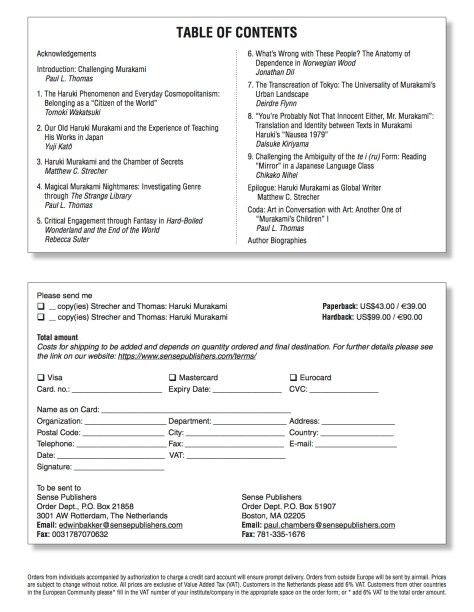
Haruki Murakami: Challenging Authors (Sense)


What do a medical diagnosis and education reform have in common?
Two things: (1) complex matters reduced to a few letters, and (2) failing children.
First, consider ADHD. Below are some readings to help interrogate how this diagnosis has many significant problems, misdiagnosis and over-diagnosis among them, some of which are related to the high-stakes accountability movement in education:
Next, a growing list of alphabet (toxic) soup is assaulting our schools and students under the umbrella of “state takeover” approaches, targeting mostly high-poverty and racial minority schools.
RSD, ASD, OSD, and EAA—among others—have gained political momentum built on propaganda and not results. Below is a reader addressing the failures of state takeover plans for schools:
Low-income students need more support, not an achievement school district | NC Policy Watch
Finally, misdiagnosing and over-diagnosing ADHD along with partisan-political state takeovers of schools are targeting and hurting vulnerable populations of students—students who need the most support to overcome the obstacles of their lives not of their own making.
Being me, it will not be white.
But it will be
a part of you, instructor.
You are white—
yet a part of me, as I am a part of you.“Theme for English B,” Langston Hughes
For a very long time in the U.S., the conventional wisdom has been that good schools were the key to just about everything—each child’s future, the nation’s economic survival, you name it.
More recently, that fantasy has narrowed to good teachers as the the “most important thing [fill in the blank].” And as I have examined, moving legislatively from NCLB to ESSA is unlikely to change that mantra, as delusional as it is.
So, if you began reading this in hopes of my analyzing why or why not to use VAM or any other myriad of teacher evaluation instruments, I must gently recommend your time may be better spent reading a volume of Harry Potter or Lord of the Rings fantasies, or take a stab an Ursula K. Le Guin.
Instead, this is a story, a true story about yesterday morning, a true story about yesterday morning and every year leading up to that during my 30-plus-years teaching career.
There is a powerful symbiotic relationship between being a teacher and a writer. Having just blogged about turning 55—using Sandra Cisneros’s “Eleven” to help me wrestle with aging—my mind was primed for attending the 2016 South Carolina Council of Teachers of English annual conference with three of my four students currently certifying to teach high school English.
This was the first professional conference and presentation for the three candidates, and it was a bit of a homecoming for me since I have been a career-long educator in SC, but haven’t attended this conference—packed with friends, colleagues, and former students—in several years.
I have always enjoyed students, my students, and I have always rejected the “don’t be friends with your students” mandate as shallow and dehumanizing. (What the hell is there about friendship that is a negative characteristic? I have to ask, musing as well that people who make such bold claims must have really lousy friendships.)
If any student of mine offers friendship, I am always deeply honored by the gesture. It ranks equal to their respect for me as a person and appreciation of my credibility as a teacher.
So the conference was also a wonderful few days for the four of us to weave together informal teacher talk with just being four English nerds, and people. They also gave me opportunities to confront the tension all students and young people feel around teachers and adults: Whether or not they can be their authentic selves without risking judgment.
Don’t worry; I am vividly aware of how fortunate I am that this is my profession.
When Saturday morning rolled around and the presentation loomed at 10:45 AM, my students and I had ample time because of the structure of the day to set up our technology and for them to practice and prepare for an hour before the presentation.
They were each excited and nervous in their own ways (for one practice run, I was asked to leave the room). When game time rolled around, we had a solid crowd drift in—many friendly faces of my career included.
I offered a brief framing of the presentations—designed around the problem that being an English major does not necessarily prepare someone to teach writing—and then each of my three pre-service teachers shared her 10-minute talk, supported by a PowerPoint that I scrolled through in support.
And then it happened.
I felt the urge to cry well up in me, my chest, my eyes. I had already been overwhelmed by recognizing that in the room were four former students of mine as well as my three current students presenting.
But it hadn’t quite risen to my consciousness until that moment—a moment in which these three students of mine were stunning, smarter and more professional that I could have ever mustered when I was their ages or even 10 years older, and my former students in the audience were eagerly engaged, contributing wonderfully in the discussion at the end.
It was then I had my closing comments, anchored by a simple realization: “If you want to be seen as a good teacher,” I said to the audience, “then just have good students,” as I motioned to the three presenters and the the four former students in the audience.
If you think this is cheesy or self-deprecating, I don’t want to be rude, but you probably haven’t taught—or if you have taught, maybe you shouldn’t.
After the presentation, a former student who is now a teacher educator herself lingered talking to my current students, praising them and the work I do (she is vividly aware of the challenges of both being a K-12 teacher—since she was an outstanding ELA teacher herself—and being a teacher educator).
And as I listened, I knew even more clearly than I have always felt that I am not just every year of teaching I have ever taught, but I am every student I have ever taught.
I am left with a paradox—one that powerfully refutes the simplistic calls for “good teachers” and the relentless pursuit of quantifying “good teachers”: If you want to know if I am a good teacher, spend some time with my students, but then don’t be eager to give me too much credit for how wonderful they are.
We did all this wonderful together.
[Reposted at The Answer Sheet]
I turned eleven yesterday for the fifth time.
It was a hectic day filled with my glorious duties as a caregiver for my granddaughter intermixed with teaching an afternoon seminar for eight wonderful pre-service college seniors. I forced myself to ride the bicycle trainer an hour late in the day, despite a lingering headache and being very hungry.
I also forced myself to meet good friends at a local tap house for a few beers and tacos—but immediately regretted that decision when I discovered the place was packed because of a formal event being held there. Despite my great urge to flee, I found a bit of solitude in a side room, where two friends were also avoiding the crowd. The wait staff kindly served me without my having to fight through the crowd.
Mostly, I was distracted throughout the day by the hectic, but also the incredible kindness of friends virtual and real. Distracted from my urge to wallow in my aging, the decrepitude that is growing older.
Yesterday morning, however, I thought of Sandra Cisneros’s “Eleven,” a bittersweet and powerful story of Rachel’s really awful day at school on her eleventh birthday.
The opening paragraph, I think, can be applied to any birthday, at any age:
What they don’t understand about birthdays and what they never tell you is that when you’re eleven, you’re also ten, and nine, and eight, and seven, and six, and five, and four, and three, and two, and one. And when you wake up on your eleventh birthday you expect to feel eleven, but you don’t. You open your eyes and everything’s just like yesterday, only it’s today. And you don’t feel eleven at all. You feel like you’re still ten. And you are—underneath the year that makes you eleven.
I turned eleven yesterday for the fifth time. But nothing special came with that arbitrary counting off of our brief and precious time on this mortal coil.
“What they never tell you” still haunts me.
The years that make you still “rattle inside [you] like pennies in a tin Band-Aid box.”
At fifty-five, I feel the increasing tension between my diminishing physical self and my (for now) ever increasing intellectual self. Yes, I have more in my brain than ever—more books, more poems, more songs, more films, more art, more people, more conversations, more questions, and much more desire.
There was a time in the first couple elevens when my body was dragging my mind, but that has flipped because my softening and spreading middle, my aching back, my leaden legs are conspiring against my mind and what some people would call my soul.
My soul still soars, and my heart still races with joy because I can recognize the wonderful better than ever.
However, my soaring heart is always temporary because I have yet been able to slay the anxiety that denies me the moment again and again.
Like Rachel in “Eleven,” I find myself always in the hostile classroom and seemingly constantly under the gaze of Mrs. Price.
Like Rachel, I too burst into tears often—in anger, yes, but very often when my soul and heart soar. I cry listening to songs and thinking of the ones I love, I cry watching films, I cry reading books.
As hard as the world is, I consider myself lucky for feeling that world so vividly (although in those moments, I may claim something entirely different).
Unlike Rachel, I am not idealizing being older:
I’m eleven today. I’m eleven, ten, nine, eight, seven, six, five, four, three, two, and one, but I wish I was one hundred and two. I wish I was anything but eleven, because I want today to be far away already, far away like a runaway balloon, like a tiny o in the sky, so tiny tiny you have to close your eyes to see it.
But I can no longer idealize being young either because being young is so goddam hard as well, so unfair. Being young is the relentless tyranny of “[b]ecause she’s older and the teacher, she’s right and I’m not.”
And I sure as hell do not want to return to that.
Just as I am bound and determined not to be the agent of that tyranny.
I am a father, a grandfather, and a teacher—gifted the lives of young people.
Young people have for many of my eleven years made me want to be a better person, have distracted me from my own demons. The young laugh quickly and become far too excited about things older people find trivial.
Isn’t that wonderful? I think so.
I turned eleven yesterday for the fifth time. I am not happy about that, and I am frightened by the inevitable diminishing of body and mind.
I am there, underneath the years that make me.
I am a zombie.
I am a vampire.
I am all the me‘s that have come before today and none of the me‘s yet to come.
See Also
This post is mainly a public service because it has become stunningly clear that trying to engage journalists and the media covering education in order to prompt change is falling on willfully deaf ears.
My public service is to save you, dear reader, time. If you see or view a story in the media covering education, you can expect only two frames: (1) If the coverage is about public schools, the message is CRISIS!, but (2) if the coverage is about someone (anyone) without expertise or experience in education, the message will be breathless awe at their courage to finally be dragging that miracle to life that the horrible public school system has been unable to do lo these many years.
Sal Khan? Wow:
As we’ve reported, students anywhere now can get free SAT test prep both online and in person at some Boys & Girls Clubs of America. The move may help level the playing field by improving test prep for less-affluent students to get them ready for the newly revamped SAT, which remains a pillar of college admissions despite the growth in 2015 in “test optional” schools.
It’s part of what Khan Academy calls its core duty to help provide “a free, world-class education for anyone, anywhere.”
Teach For America? No way!:
In Teach For America lingo, that would be called a hook, a compelling way to think about a concept so that it’ll stick in students’ minds….
Those concerns are reflective of the new tack toward preparation taken by TFA’s Dallas-Fort Worth region, which is trying to move away from teacher-directed instruction in favor of techniques that focus more on students drawing conclusions on their own.
And rather than giving its new corps members a crash course on lesson planning, typically the first step in the TFA’s summer training, the Dallas region supplied its recruits with 700 ready-made lessons, focusing instead on giving candidates feedback on the finer points of carrying off a lesson well.
But what about that pesky skill reading that no one has really figured out—or possibly has never even tried to figure out?
Don’t fret! Buy psychologist Daniel Willingham’s new book!
Or (thank goodness another book to buy!):
About five years ago, the chief executive officer of the Uncommon Schools charter network offered up a lofty charge during a routine staff meeting: “Figure out” reading instruction.
OK, since I said at the outset I was planning to save you time, I’ll stop here, but rest assured, I could do this for hours because the list of (wow!) edu-saviors with almost no or often no experience or expertise in education who are heralded by the media as if the field doesn’t already exist but (again, thank goodness!) these innovative types are here to save the day is almost endless itself: Bill Gates, Michelle Rhee, KIPP founders Mike Feinberg and Dave Levin [1], and those already noted above.
Search those names and the pattern is the same: Fair-and-balanced edu-journalists open with breathless amazement at brave Edu-Genuis X and then later notes the person or the program has “received some criticism” (without nary a nod toward whether or not Edu-Genius X is credible, without nary a nod toward whether or not the criticism is credible—because, hey, that’s not a journalist’s job, right?).
We are left then with two related but wrong edu-journalist approaches to education reporting: public education is (and always has been) in crisis; therefore, the only people we can count on to save us is someone (anyone) outside of education.
However, the real story is much more complicated.
Much needs to be reformed in public schooling in the U.S.—much that has been historical failures.
But those problems are more about the structural wall of bureaucracy that has always existed and is even thicker today between the rich and powerful research and expertise in education as a field and practice, and the ability of teachers to implement their profession.
“A brief consideration,” LaBrant wrote in 1947, “will indicate reasons for the considerable gap between the research currently available and the utilization of that research in school programs and methods.”
LaBrant’s claim remains today, and has been documented specifically about how middle and high school students are bing taught writing. Applebee and Langer discovered:
Overall, in comparison to the 1979–80 study, students in our study were writing more in all subjects, but that writing tended to be short and often did not provide students with opportunities to use composing as a way to think through the issues, to show the depth or breadth of their knowledge, or to make new connections or raise new issues…. The responses make it clear that relatively little writing was required even in English….[W]riting on average mattered less than multiple-choice or short-answer questions in assessing performance in English…. Some teachers and administrators, in fact, were quite explicit about aligning their own testing with the high-stakes exams their students would face. (pp. 15-17)
Applebee and Langer emphasize that the negative consequences of high-stakes testing distinguish this study from their earlier work and that accountability has essentially stymied the influence of writing research, professional organizations, and teacher professionalism.
In other words, teachers today know more about teaching writing and have a more robust research base on what works in teaching writing but are unable to implement that knowledge base because of the accountability bureaucracy that has supplanted teacher professionalism.
Also damning is that this negative dynamic is even more pronounced for our most vulnerable students:
By far the greatest difference between the high poverty and lower poverty schools we studied stemmed from the importance that teachers placed and administrators placed on high-stakes tests that students faced. In the higher poverty schools, fully 83% of teachers across subject areas reported state exams were important in shaping curriculum and instruction, compared with 64% of their colleagues in lower poverty schools. (Applebee & Langer, 2013, p. 149)
And their is a truly ugly irony to this mess: Political leadership and edu-preneurs (remember, buy the book and program!) are chanting “college and career ready” while pushing mainstream education that guarantees students lack the rich and complex behaviors that would serve them well in higher education, their careers, and (god forbid) their lives. As noted above (and writing as someone who teaches first-year writing at the university level), students are being denied writing instruction they need and deserve because of accountability (except for privileged students at private schools that are not shackled by the mandates of politicians who send their children to those private schools).
So, I know this isn’t the stuff of breathless awe and fair-and-balanced journalism, but the reality is that we are failing the profession of education, the research of the field of education, public education as a great democratic experiment, our children, and our country. But the solution to that huge set of problems is to tear down the bureaucratic wall of accountability and rebuild public schools with the leadership of educators.
—
[1] See this excellent examination of KIPP and the clueless media coverage of education “hot shot” experiments by know-nothing edu-preneurs:
For Russo to ignore the uneven outcomes of KIPP schools as a possible reason for their recent lack of attention is odd, but not surprising as reform cheerleaders are often blind to any objective evidence that does not support their narrative.
Once again, predictably, when my South Carolina should focus on education opportunity, not accountability was published at The State, comments included convoluted arguments demonizing people who are poor while discounting racism because “I was poor but I worked hard and succeeded” (this last claim invariably comes from a white person who is oblivious to the example proving the power of white privilege even against the weight of poverty).
Recently, as well, Teaching Tolerance confronted Ruby Payne’s poverty industry that speaks to and perpetuates stereotypes about poverty, race, and privilege (see here for research discrediting Payne’s work).
My public work addressing poverty, race, and education consistently reinforces that political leaders, the media, and much of the public in the U.S. suffer corrosive and inaccurate views of poverty, race, and privilege—stereotypes that are incredibly powerful.
When I argue about the need to address poverty directly, many respond by claiming anyone can succeed if she/he simply works hard enough. When I argue about the need to address racism, many concede poverty is burdensome, but add that racism no longer exists—again, people of color simply fail to take advantage of the opportunities all people have in the U.S.
Despite the great potential of social media and online publications with commentary (a way to democratize whose voices matter), those open forums allow anyone to respond un-vetted and perpetuate one of the great failures of public debate—arguing a single example proves or disproves a generalization: One black person excelled means there is no racism; “I was poor but” proves everyone has an equal opportunity.
Evidence appears ineffective against stereotypes—the illogical and irrational—but I invite you to step away from your assumptions and understand poverty, racism, and privilege again for the first time.
Focusing on poverty, the most enduring myths include some of the following (see the reader below for ample evidence disproving each):
Research, however, refutes and discredits all of these.
One of the most powerful ways to reject false narratives about the poor is to consider that in the U.S., the cheapest foods are high in fat and processed sugar; and thus, it is a matter of practicality that the poor tend toward obesity.
Good health and safety are more expensive—shopping at Whole Foods or purchasing a car with added safety features—and thus both are accessed more easily by privilege.
Yet, we are a people stuck in false narratives about meritocracy and rugged individualism.
To understand poverty, racism, and privilege, however, systemic dynamics such as slack and scarcity must be examined. Sendhil Mullainathan and Eldar Shafir in their Scarcity: Why Having Too Little Means So Much examine the research base that shows the same person behaves differently under slack and scarcity.
Privilege begets privilege because slack allows a great deal of room for failure, and poverty begets poverty because the margins are so tight that irrational behavior seems rational.
But, again, these dynamics are the result of the conditions and not inherent qualities in individuals.
Below I offer a reader because the facts about poverty, racism, and privilege are dramatically different than the false narratives we live with in the U.S. For even good people with good intentions, the myths are hard to set aside.
A Reader: Understanding Poverty, Racism, and Privilege Again for the First Time
Scarcity: Why Having Too Little Means So Much, Sendhil Mullainathan and Eldar Shafir
George Saunders’s Allegory of Scarcity and Slack
Miseducating Teachers about the Poor: A Critical Analysis of Ruby Payne’s Claims about Poverty, Bomer, et al.
Pathologizing the Language and Culture of Poor Children, Curt Dudley-Marling and Krista Lucas
Savage Unrealities, Paul C. Gorski
The Myth of the Culture of Poverty, Paul C. Gorski
Problematizing Payne and Understanding Poverty: An Analysis with Data from the 2000 Census, Jennifer C. Ng and John L. Rury [pdf]
The State: South Carolina should focus on education opportunity, not accountability
[original unedited submission below]
Former Governor and Secretary of Education Richard Riley established South Carolina as one of the first states to move education reform to the top of any state’s agenda. That journey for our state is now three decades-plus old, and political leaders, the media, and the public remain unsatisfied with our public schools.
With the No Child Left Behind (NCLB) era behind us and the newly passed Every Student Succeeds Act (ESSA) now returning a great deal of power to states for school reform, The State has called for SC to recommit to accountability, warning: “[R]emoving that oversight provides a tremendous temptation for states to lower the bar. We must not let that happen in South Carolina.”
My entire 34 years as an educator in SC has been during the accountability era in which the state has changed standards and high-stakes tests five or six times each. While I agree with The State’s editorial that the transition from NCLB to ESSA is a great opportunity, I caution about doubling down on accountability.
First, SC political leaders, the media, and the public must finally confront that our public schools are a reflection of the tremendous burden of poverty on children and families in our state. The schools along the Corridor of Shame (the I-95 corridor) as well as other pockets of high poverty across the state present us with a very disturbing lesson that school reform alone has never worked, and will likely never work.
Across the U.S., in fact, accountability based on standards and high-stakes testing has failed in both fifty different experiments and the more recent national effort with Common Core. The quality or even presence of standards and high-stakes tests has never produced higher student achievement or closed the so-called achievement gap between wealthy and poor students or racial minorities and whites.
The greatest education challenge, then, facing our state is addressing poverty and racism in our society so that education reform has a chance to succeed. Without adopting policy that deals directly with stable jobs with adequate pay and benefits, healthcare, childcare, and an equitable criminal justice system, our schools are destined to continue to struggle.
Next, we need to reconsider entirely education reform—not based on accountability but on equity of opportunity.
Labeling and ranking our schools—whether we use more than test scores or not—has been harmful, and it is past time to consider another process. As Bruce Baker, Professor in the Graduate School of Education at Rutgers, and researcher Gerald Bracey have argued often, educational rankings tend to reveal more about conditions outside of the school’s control than about the quality of education. Overwhelmingly in all types of educational rankings the greatest predictor of high or low rankings is wealth or poverty.
However, The State actually hits on a better alternative: “But the focus must remain on the core function of the schools: providing all children in this state the opportunity to receive a decent education, of the sort that will allow them to become self-supporting, productive, taxpaying citizens.”
Equity of opportunity must replace accountability in SC—although this doesn’t mean lowering expectations or absolving schools or teachers from their responsibilities to students and the state.
What I propose is transparency about the opportunities to learn that all students are receiving in the context of social programs that help every student enter the doors of those schools on much more equal footing than they have historically or currently.
Those equitable opportunities must include for all students access to experienced and certified teachers, open door policies for challenging courses and programs (such as Advanced Placement and International Baccalaureate), and equitably funded schools and facilities across the state. As well, we must end inequitable disciplinary policies and outcomes, tracking, and harmful current policies such as third-grade retention based on reading scores.
But grading and ranking schools must end as well.
A hard reality of teaching is that we can never guarantee outcomes; students ultimately, if given the conditions in their lives and schools to succeed, are responsible for learning. Schools and teachers are responsible for making that learning possible.
Accountability has not worked for thirty-plus years. The hard question now is: Have the adults learned that lesson and are they prepared to try something different?
See Also
While the transition from NCLB (the federalization of accountability-based education reform) to ESSA (returning accountability-based education reform mostly to the states) is a microscopic change at best, it appears that teacher quality will remain a key mantra of those seeking reform—even though the use of value-added methods for evaluating teachers appear to have lost some steam.
My home state of South Carolina has been an early and dedicated home for education reform based on standards and high-stakes tests. SC is also a very high poverty state—ranking 5th in highest childhood poverty in the U.S. These pockets of poverty have been well documented by Corridor of Shame and years of court battles over equitable education funding across the state.
SC also shares with the entire U.S. a pattern of resegregation in public and charter schools as well as the historical and current reality that impoverished students, black and brown students, English language learners, and special needs students disproportionately are assigned to new and early-career teachers, and un-/under-certified teachers (notably in math). Compounding those inequities, these vulnerable populations of students also sit in high student/teacher ratio classes and are less likely to have access to challenging curriculum (such as Advanced Placement, International Baccalaureate, and gifted and talented programs), courses often taught by experienced and highly qualified teachers.
Recently, Associate Editor Cindi Ross Scoppe (The State) has argued: Key to improving poor schools: a good teacher in every classroom.
This call for a post-NCLB focus on teacher quality, I must note, does admit that teacher quality is a key part of in-school only influences on student achievement; however, we must begin to frame concerns for teacher quality in ways political leaders, the media, and the public fail to do.
First, we must note that the impact of teacher quality is dwarfed by out-of-school factors:
But in the big picture, roughly 60 percent of achievement outcomes is explained by student and family background characteristics (most are unobserved, but likely pertain to income/poverty). Observable and unobservable schooling factors explain roughly 20 percent, most of this (10-15 percent) being teacher effects. The rest of the variation (about 20 percent) is unexplained (error). In other words, though precise estimates vary, the preponderance of evidence shows that achievement differences between students are overwhelmingly attributable to factors outside of schools and classrooms (see Hanushek et al. 1998; Rockoff 2003; Goldhaber et al. 1999; Rowan et al. 2002; Nye et al. 2004).
However, that assessment is relative conservative when compared to Experiences of poverty and educational disadvantage by Donald Hirsch (JRF, 2007):
Just 14 per cent of variation in individuals’ performance is accounted for by school quality. Most variation is explained by other factors, underlining the need to look at the range of children’s experiences, inside and outside school, when seeking to raise achievement.
So the caveat for focusing on teacher quality must include that as long as we use measurable data for determining student achievement and teacher quality, failing to address out-of-school factors likely guarantees we’ll see little change in measures such as test scores.
Nonetheless, we must address teacher experience and qualifications/expertise at high-poverty, majority-minority schools; however, without social reform that alleviates the burdens of poverty on the lives of students and their families, we are unlikely to see the sorts of changes in data that would justify any in-school only reforms.
Also, the teacher quality debate often fails to make clear at the outset just how we are designating “good” or “bad” teachers (as well as “good” and “bad” schools). We must make sure that we are not using labels of quality as markers for those out-of-school factors. In other words, we tend to say schools and teachers are “good” when the student population is affluent, and both are “bad” when the student population is high poverty.
We are also apt to overreact to outliers (when so-called “bad”—high poverty—schools or teachers of poor students have higher than typical test scores) as if those outliers prove some possible standard for all teachers and schools. However, outliers are just that, outliers. And research shows that high-flying schools simply are extremely rare, and often not as high-flying as originally claimed.
Also the teacher quality discussion suffers from the false belief that “teacher quality” is a distinct and permanent quality. In fact, teacher quality is dependent on many factors and contexts. I often am a great teacher and an ineffective teacher for two different students in the same class.
Teacher quality is hard to identify and often relative to dozens of factors, including changing student populations and content being taught.
As a result, so-called low teacher quality in high-poverty schools in SC is likely a mislabel in some ways for the state being the fifth worst child poverty state in the country. But teacher quality is also a marker for our failure to address teacher experience, teacher certification, and funding at high-poverty schools.
So, yes, SC does need to insure high teacher quality for all students, addressing directly the historical and current failures associated with the most vulnerable students in the state’s high-poverty schools.
Jobs programs, comprehensive healthcare reform, food stability legislation, proving books in the homes of all children, and addressing directly the teaching and learning conditions of all schools—these reforms are likely to show greater positive outcomes than traditional approaches to the teacher quality problem.
Therefore, without addressing poverty broadly or how we determine quality teachers and schools—including moving past test-based rankings doing both—we are likely to be again disappointed with any teacher quality reforms we attempt.
See Also
Teachers at Low-Income Schools Deserve Respect, Bruce Hansen
Working in Class: Recognizing How Social Class Shapes Our Academic Work
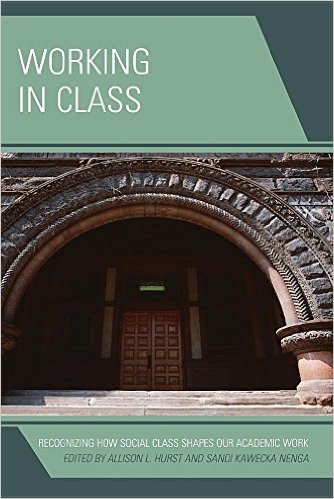
From publisher:
More students today are financing college through debt, but the burdens of debt are not equally shared. The least privileged students are those most encumbered and the least able to repay. All of this has implications for those who work in academia, especially those who are themselves from less advantaged backgrounds. Warnock argues that it is difficult to reconcile the goals of facilitating upward mobility for students from similar backgrounds while being aware that the goals of many colleges and universities stand in contrast to the recruitment and support of these students. This, combined with the fact that campuses are increasingly reliant on adjunct labor, makes it difficult for the contemporary tenure-track or tenured working-class academic to reconcile his or her position in the academy.

