Category Archives: education

The U.S. Formula for Children and the Choices We Refuse to Make

The formula for children in the U.S. can be summed up in one word, I think: “harsh.” And the response we should have to this formula is “inexcusable.”

Let’s consider the U.S. formula for children:

If children in the U.S. can survive the gauntlet that is the national formula for children, as young adults they can look forward to crushing debt to attend college so that they can enter a nearly non-existent workforce.

But there is a caveat to this formula: The U.S. formula for children above is for “other people’s children,” that new majority in U.S. public schools and those children living in homes of the working poor, the working class, and the dwindling middle class.

Children of the privileged are exempt.

And what are the choices we refuse to make?

The Joseph Rowntree Foundation (UK) has released “Does money affect children’s outcomes?”—based in part on “many studies…from the US.” The key points include:

  • This review identified 34 studies with strong evidence about whether money affects children’s outcomes. Children in lower-income families have worse cognitive, social-behavioural and health outcomes in part because they are poorer, not just because low income is correlated with other household and parental characteristics.
  • The evidence was strongest for cognitive development and school achievement, followed by social-behavioural development. Income also affects outcomes indirectly impacting on children, including maternal mental health, parenting and home environment.
  • The impact of increases in income on cognitive development appears roughly comparable with that of spending similar amounts on school or early education programmes. Increasing household income could substantially reduce differences in schooling outcomes, while also improving wider aspects of children’s well-being.
  • A given sum of money makes significantly more difference to children in low-income than better-off households (but still helps better-off children).
  • Money in early childhood makes most difference to cognitive outcomes, while in later childhood and adolescence it makes more difference to social and behavioural outcomes.
  • Longer-term poverty affects children’s outcomes more severely than short-term poverty. Although many studies were from the US, the mechanisms through which money appears to affect children’s outcomes, including parental stress, anxiety and material deprivation, are equally relevant in the UK.

The third bullet point should not be ignored: The key to eradicating poverty and the negative consequences of poverty for children is to address poverty directly in the lives of children—money—and to address inequity directly in the education of children.

There is no either/or, then, in the education reform debate. It is imperative that we do both.

Ultimately, the U.S. formula for children is based on flawed assumptions. Before we can change that formula, we must change our views of poverty as well as people and children trapped in poverty.

Scarcity and abundance are powerful forces; in the U.S., both are allowed to exist as an ugly game of chance.

The choice of abundance for all is there to be embraced, however, if compassion and community are genuinely a part of the American character.

Pop Culture and the Mutant Narrative: X-Men Endure

The late 1930s and early 1940s birthed the superhero comic book fascination that despite several bumps along the way has endured into the twenty-first century where superhero films are huge box-office successes and pop culture gold mines.

In both the comic book and film universes, superhero reboots are common: Batman, Superman, and Spider-Man have all experienced revised origins in the pages of their comics as well as multiple cycles of films dedicated to the superheroes. The X-Men films from 2000 to 2006 may have had as much to do with the adaptation success of comic books to film as Batman, Superman, and Spider-Man.

X-Men: First Class in 2011 was one such re-boot and enough of a success that X-Men: Days of Future Past is slated for 2014.

Alexander Abad-Santos discusses how the mutant aspect of X-Men narratives can be found nearly universally in pop culture:

In about seven months, I along with a lot of X-Men fans will be getting to the theater an hour early, lining up, and then watching to see if Days of Future Past is what I’ve imagined it would be. What’s kinda great for an X-Men fans, though, is that we don’t have to wait until then to get an X-Men story. Pop culture is filled with them.

Recently, I was interviewed by a local journalist about zombie culture; the journalist was investigating why zombies are so popular. I tried to explain that pop culture has all sorts of cycles. Some periods when vampires are hot, some periods when something else is hot. But I also conceded that certain elements of pop culture trends are enduring; for example, something about zombies certainly remains captivating with the public.

I believe the same case can be made for mutants: mutant narratives are compelling and ripe for making important social commentary. And to that I wrote about X-Men and the Hunger Games trilogy as they speak to wider issues, such as education:

Separate, Unequal…and Distracted*

When research, history, and allegory all converge to tell us the same story, we must pause to ask why we have ignored the message for so long and why are we likely to continue missing the essential thing before us.

The New York Times and Education Week reveal two important lessons in both the message they present and the distinct difference in their framing of that message:

“Black Students Face More Discipline, Data Suggests [sic]” headlines the NYT’s article with the lead:

Black students, especially boys, face much harsher discipline in public schools than other students, according to new data from the Department of Education.

And EdWeek announces “Civil Rights Data Show Retention Disparities,” opening with:

New nationwide data collected by the U.S. Department of Education’s civil rights office reveal stark racial and ethnic disparities in student retentions, with black and Hispanic students far more likely than white students to repeat a grade, especially in elementary and middle school.

One has to wonder if this is truly news in the sense that this research is revealing something we don’t already know—because we should already know this fact:

America’s public schools and prisons are stark images of the fact of racial, gender, and socioeconomic inequity in our society—inequity that is both perpetuated by and necessary for the ruling elite to maintain their artificial status as that elite.

The research, coming from the U.S. Department of Education, and the media coverage are not evidence we are confronting that reality or that we will address it any time soon. The research and the media coverage are proof we’ll spend energy on the research and the coverage in order to mask the racism lingering corrosively in our free state while continuing to blame the students who fail for their failure and the prisoners for their transgressions.

X-Men and The Hunger Games: Allegory as Unmasking

Science fiction allows an artist to pose worlds that appears to be “other worlds” in order for the readers to come to see our own existence more clearly.

In the re-boot film version of Marvel Comics superhero team, X-Men: First Class, the powerful allegory of this comic book universe portrays the isolation felt by the mutants—one by one they begin to discover each other and share a common sentiment: “I thought I was the only one.”

These mutants feel not only isolation, but also shame—shame for their looks, those things that are not their choices, not within their direct power to control. While this newest film installment reveals the coming together of the mutants, this narrative ends with the inevitable division of the mutants into factions: Professor X’s assimilationists and Magneto’s radicals.

It takes only a little imagination to see this allegory in the historical factionalism that rose along with the Civil Rights movement between Martin Luther King Jr. and Malcolm X.

In whose interest is this in-fighting?

Although written as young adult literature, The Hunger Games trilogy is beginning to spread into mainstream popular consciousness. The savage reality show that pits children against children to the death gives the first book in the series its title, but as with the research on racial inequity in our schools, I fear we fail to look at either the purpose of these Hunger Games in that other world of the novel or how it speaks to us now.

In Catching Fire, Katniss Everdeen, the narrator, confronts directly that her country, Panem, has created stability by factionalizing the people into Districts, ruled by the Capitol.

Panem exists because of the competition among the Districts, daily for resources and once a year personified by two lottery losers, children form each district.

In this second book, Katniss learns something horrifying but true when the winners of the most recent Games, Katniss and Peeta, visit District 11—home of Katniss’s friend killed in the Games, Rue: During the celebration, the people of District 11 repeat Katniss’s act of rebellion:

What happens next is not an accident. It is too well executed to be spontaneous, because it happens in complete unison. Every person in the crowd presses the three middle fingers of their left hand against their lips and extends them to me. It’s our sign from District 12, the last good-bye I gave Rue in the arena. (p. 61)

Then as Katniss and Peeta are rushed from the stage, they witness Peacekeepers executing people in the District 11 crowd. As President Snow has warned Katniss about the possibility of uprisings:

“But they’ll follow if the course of things doesn’t change. And uprisings have been known to lead to revolution….Do you have any idea what that would mean? How many people would die? What conditions those left would have to face? Whatever problems anyone may have with the Capitol, believe me when I say that if it released its grip on the districts for even a short time, the entire system would collapse.” (p. 21)

What maintains the stability of Panem? Competition, division, and fear.

What threatens the stability of Panem and the inequity it maintains? Solidarity, compassion, cooperation, and rebellion.

Separate, Unequal…and Distracted

U.S. public education has always been and remains, again like our prisons, a map of who Americans are and what we are willing to tolerate.

Children of color and children speaking home languages other than English are disproportionately likely to be punished and expelled (especially the boys), disproportionately likely to be retained to suffer the same grade again, disproportionately likely to be in the lowest level classes with the highest student-teacher ratios (while affluent and white children sit in advanced classes with low student-teacher ratios) in order to prepare them for state testing, and disproportionately likely to be taught by un- and under-certified teachers with the least experience.

And many of these patterns are distinct in pre-kindergarten.

We don’t really need any more research, or history lessons, or sci-fi allegory, or comic books brought to the silver screen.

We need to see the world that our children live in and recognize themselves (just ask an African American young man), and then look in the mirror ourselves.

Why do those in power remain committed to testing children in order to label, sort, and punish them?

Who does the labeling, sorting, and punishing benefit? And what are the reasons behind these facts, the disproportionate inequity in our schools and in our prisons?

We only need each minute of every day to confront what the recent data from the USDOE reveal, but it is always worth noting that this sentiment is often ignored despite its value:

…I recognized my kinship with all living beings, and I made up my mind that I was not one bit better than the meanest on earth. I said then, and I say now, that while there is a lower class, I am in it, and while there is a criminal element I am of it, and while there is a soul in prison, I am not free. (Eugene V. Debs: Statement September 18, 1918)

How and why?

Eugene V. Debs is marginalized as a socialist, a communist so no one listens to the solidarity of his words. Because this sentiment is dangerous for the Capitol.

If we persist in being shocked by the research or enamored by the exciting story of Katniss, we will remain divided and conquered.

Katniss in Catching Fire responds to the president with: “‘It [Panem] must be very fragile, if a handful of berries can bring it down.'”

To which the president replies, “‘It is fragile, but not in the way that you suppose'” (p. 22).

The fragility is masked by the 99% as separate, unequal, and distracted—fighting among ourselves in fear of what we might lose otherwise.

It is time to suppose otherwise.

Reference

Atwood, M. (2011). In other worlds: SF and the human imagination. New York: Nan A. Talese/ Doubleday.

* Originally posted at Daily Kos March 6, 2012

Ignoring the New Majority: Education Reform behind Blinders

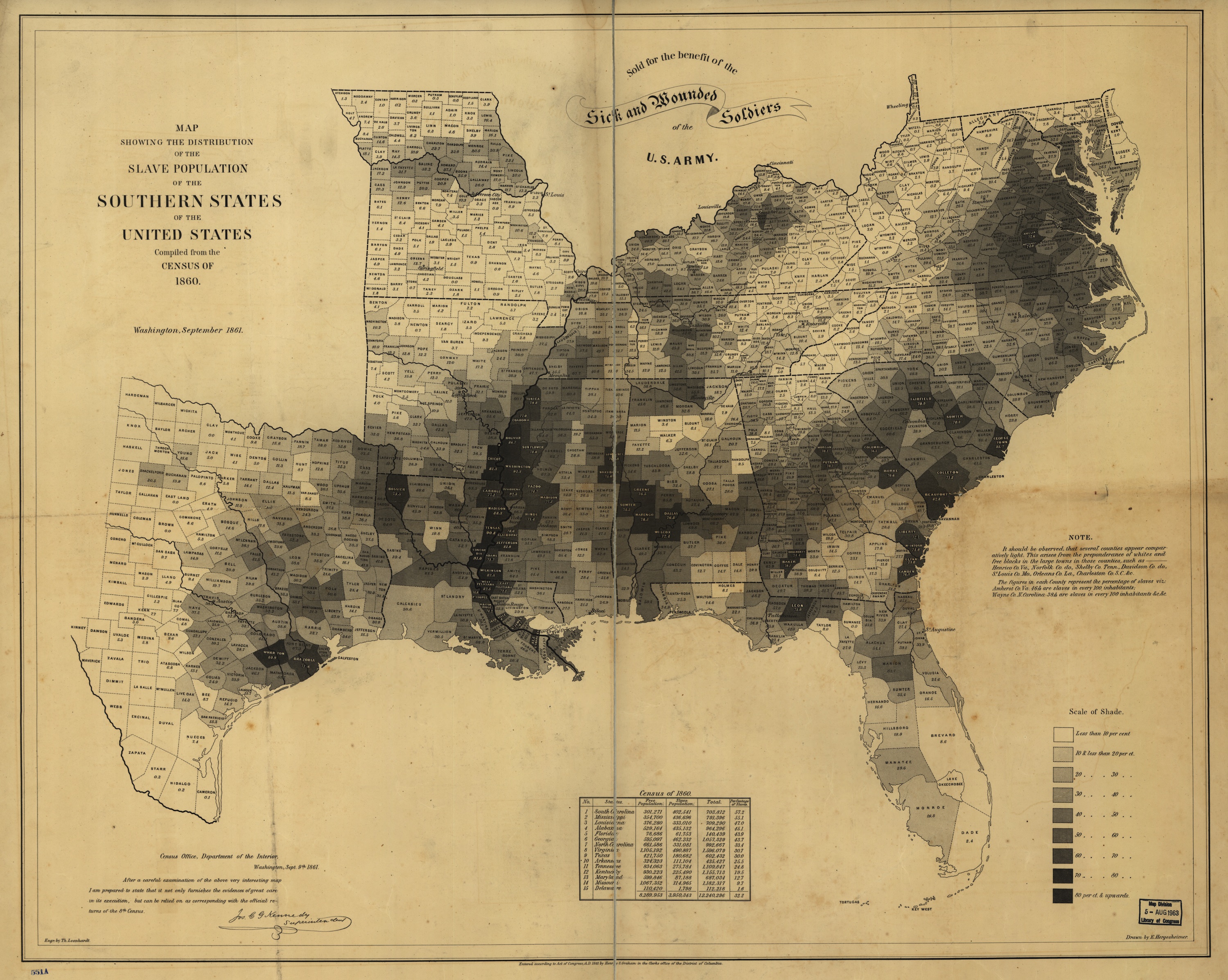
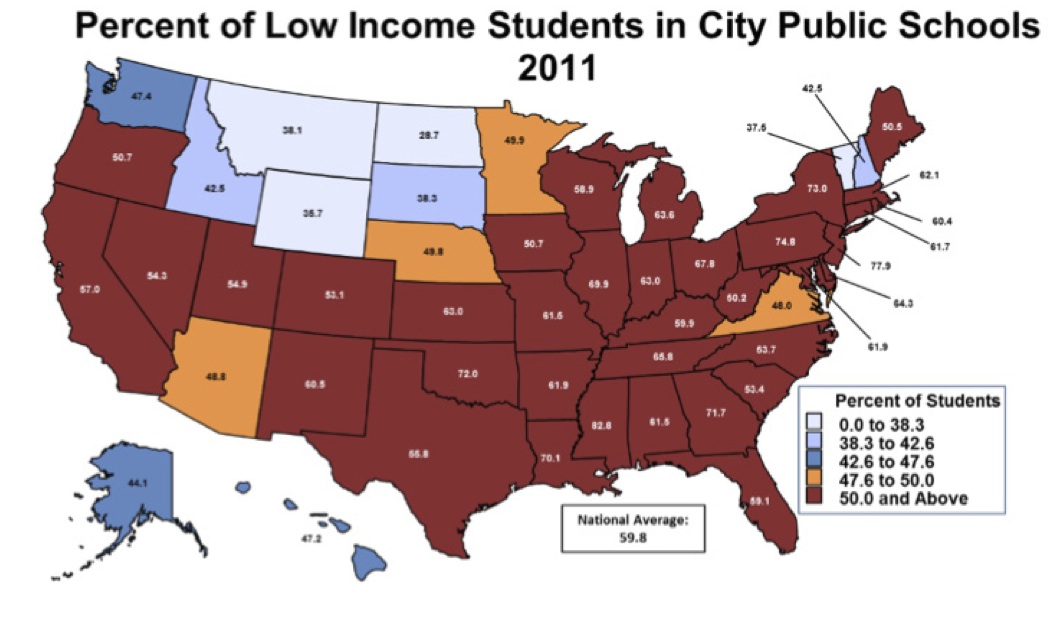
Consider three maps—one using data from the 1860 Census, one focusing on public schools in 2011, and one detailing the remaining states allowing corporal punishment in schools:

BigSlaveryMap

[1860; click to enlarge]

Perc of low income students public schools copy

[2011; click to enlarge]

[2005-2006; click to enlarge]

“A majority of students in public schools throughout the American South and West are low-income for the first time in at least four decades, according to a new study that details a demographic shift with broad implications for the country,” explains Lyndsey Layton, based on the report from the Southern Education Foundation (SEF).

The data in the SEF report parallel in many ways the documenting of in-school segregation lingering in the South as portrayed in the HBO film Little Rock Central: Fifty Years Later and reported by Felicia Lee:

On a recent visit to Central High, Ms. Trickey spoke to a self-segregated classroom: whites on one side, blacks on the other. An African-American student apparently dozed as she spoke. Students and teachers alike spoke blithely or painfully of the low educational aspirations and achievements of too many black students. Central, many said, is now two schools in one: a poor, demoralized black majority and a high achieving, affluent white minority.

And five years after the documentary, The Civil Rights Project detailed the extent of re-segregated schools across the South:

  • Since 1991, black students in the South have become increasingly concentrated in intensely segregated minority schools (defined as 90-100% minority students). This represents a significant setback. Though for decades Southern black students were more integrated than their peers in other parts of the country, by 2009-10 the share of Southern black students enrolled in intensely segregated minority schools (33.4%) was fast closing in on the national figure (38.1%).  By comparison, in 1980, just 23% of black students in the South attended intensely segregated schools.
  • For the last four decades, contact between black and white students has declined in virtually all Southern states.  In schools across the region, white students make up 30% or less of the enrollment in the school of the typical black student for the first time since racial statistics pertaining to schools were collected by the federal government.
  • Most of the largest Southern metro areas also report declining black-white exposure. The Raleigh, NC metro had the highest black-white contact although this too has fallen in recent years.  In 2009, the typical black student in the metro went to a school where whites accounted for about 45% of their peers, compared to about 54% in 2002).
  • In 2009, black-white exposure in the metropolitan area of Raleigh was relatively similar to the overall white percentage in the metro (54%)–indicating fairly stable levels of desegregation.  Future enrollment data for the Raleigh metro should be closely monitored to ascertain the impact of recent policy changes to the district’s voluntary integration policy.
  • Two metros, Memphis, TN and Miami, FL, had the lowest exposure of black students to white students in 2009, under 15%. (Siegel-Hawley & Frankenberg2012, September 19)

In Western states with high Latino/a populations, race and poverty patterns constitute double segregation:

  • The typical black or Latino today attends school with almost double the share of low-income students in their schools than the typical white or Asian student.
  • In the early 1990s, the average Latino and black student attended a school where roughly a third of students were low income (as measured by free and reduced price lunch eligibility), but now attend schools where low income students account for nearly two-thirds of their classmates.
  • There is a very strong relationship between the percent of Latino students in a school and the percent of low income students. On a scale in which 1.0 would be a perfect relationship, the correlation is a high .71.  The same figure is lower, but still high, for black students (.53).  Many minority-segregated schools serve both black and Latino students.  The correlation between the combined percentages of these underserved two groups and the percent of poor children is a dismaying .85. (Orfield, Kucsera, & Siegel-Hawley, 2012, September 19)

Combined with the growing trends in the U.S. related to increased inequity, rising child poverty, and re-segregating of schools by class and race, the 2013 SEF report on low-income students being the new majority in public schools should be a wake-up call to the current in-school only focus of education reform. While race and class segregation has proven to be entrenched in U.S. society, education reformers must admit that social institutions such as public schools do not lift children out of poverty but play two roles reformers prefer to ignore—they reflect social inequity and they tend to perpetuate that inequity:

A majority of public school children in 17 states, one-third of the 50 states across the nation, were low income students – eligible for free or reduced lunches – in the school year that ended in 2011. Thirteen of the 17 states were in the South, and the remaining four were in the West. Since 2005, half or more of the South’s children in public schools have been from low income households. During the last two school years, 2010 and public schools. (SEF 2013)

Also hard hit by these social and academic realities are urban public schools:

city public schools

[click to enlarge]

In other words, while the South and West are crucibles for historical and current negative consequences associated with racial and class inequity and segregation, urban areas of the U.S. show that these same problems infect essentially the entire country:

In each of the nation’s four regions, a majority of students attending public schools in the cities were eligible for free or reduced lunch last year. The Northeast had the highest rates for low income school children in cities: 71 percent. The next highest rate, 62 percent, was found in Midwestern cities. The South had the third highest percentage of low income students in the cities – 59 percent.

The SEF report ends with the dilemma facing education reformers who promote a “no excuses” ideology grounded in market-based policies:

There is no real evidence that any scheme or policy of transferring large numbers of low income students from public schools to private schools will have a positive impact on this problem. The trends of the last decade strongly suggest that little or nothing will change for the better if schools and communities continue to postpone addressing the primary question of education in America today: what does it take and what will be done to provide low income students with a good chance to succeed in public schools? It is a question of how, not where, to improve the education of a new majority of students.

The lingering legacy of segregation as well as the rise of impoverished students constituting the new majority in public schools is evidence that ignoring poverty does not make it go away.

Arguing that in-school reform alone can eradicate the scars of slavery that remain vivid in the two maps included above is beyond idealism and approaches inexcusable irresponsibility of a type that is exposed by the data presented by SEF’s report.

With impoverished students now the new majority in public schools, a new era of education reform is unavoidable—one that begins with social reform addressing racial and class inequity and then continues by redesigning a public school system that itself is dedicated to equity of opportunity.