Category Archives: Equity

School Rankings as Racist, Classist Propaganda

On 20 May 2019, the Charleston Post and Courier offered this: Here’s what it takes for a SC school to be the No. 1 public high school in the US. And here is what is newsworthy:

The news was out before the sound of the school announcement system crackled through the halls: Academic Magnet High, long regarded as the top-performing high school in South Carolina, had climbed to No. 1 in a national ranking of public high schools.

Just three days later, The State (Columbia, SC) reported: Richland 1’s elite elementary school is also its whitest and least impoverished. This coverage explains:

Like all parents, Sara McBride just wanted her son to get the best possible education.

That’s why she tried to get her son into Richland 1’s highest-ranked school: Brockman Elementary. A school where class sizes are small and teachers’ advanced degrees and experience nets them a higher average salary.

The South Carolina Department of Education provides for 1270 public schools in the state a Poverty Index; for 2018, Academic Magnet High is the #1 least impoverished school in the entire state, and Brockman Elementary is #57, placing these two celebrated schools in the top 4.5% of all schools in the state in terms of extremely low poverty as well as disproportionate racial imbalances (Brockman is 75% white and AMH has only 3.5% black enrollment).

SC as a state ranks in the bottom ten of high-poverty states (about an 18% poverty rate) and has a relatively high percentage of black citizens (28%) as well as about 5-6% Hispanic/Latinx.

Across the U.S., there are some harsh facts about measurable student outcomes and demographics of students being served. Race, socioeconomic status, first language, and special needs are all highly correlated with those measurable outcomes.

High poverty, majority-minority schools with high percentages of ELL and special needs students have historically low test scores.

Therefore, these rankings and labels such as “elite” are gross misrepresentations of school quality.

Imagine if we had some hospitals that admitted only well patients and then ranked those against the hospitals serving curably sick patients as well as hospitals only admitting the terminally ill.

Can you guess how they would rank if we used health of the patients as the data for ranking?

This is more than just a problem of semantics, but to be blunt, these schools are not elite; they are selective—one overtly (AMHS) and one indirectly (BE).

These rankings and then the media coverage that perpetuates the rankings mask some powerful and essential facts that if confronted could help drive substantial social and educational reform that would serve students in SC much more directly.

First, public schools are primarily a reflection of the communities they serve; high-poverty communities have high-poverty schools, and both the communities and those schools suffer under enormous burdens related to a wide array of inequities linked to racism and poverty.

Second, schools almost never change the burdens of those communities. In fact, formal schooling has structures that tend to perpetuate and even intensify the inequities of high-poverty and racial minority communities—inequitable discipline policies, tracking, inequitable teacher assignment, inability to attract and retain experienced and certified teachers.

Magnet (AMHS) and choice (BE) mechanisms work to increase inequity because affluent and privileged students are over-served while poor students, racial minorities, ELL, and special needs students are systematically excluded through direct and invisible structures (choice, for example, often requires parents who can provide transportation and the time needed for transportation).

Conversely, poor students and racial minorities are over-identified as having special needs while also being under-identified in other sorting structures such as gifted and talented.

In-school inequities also include that wealthy and white student are more often served by experienced and certified teachers while sitting in classes with lower student/teacher ratios (typically correlated with being in Advanced Placement or International Baccalaureate tracks). High-poverty students and racial minority students experience just the opposite—inexperienced and un-/under-certified teachers and high student/teacher ratios as well as more remedial and test-prep courses.

Continuing to rank schools while also maintaining a disproportionate concern for narrow data (test scores) serves only to misrepresent how well students are learning, how well schools are serving their students, and how our policies and practices are in fact guaranteeing success and failure for children born into privilege or disadvantage through no effort or fault of their own.

The real news in the two articles above is that SC has a long history of political malfeasance—a lack of political will—and a compliant media that simply refuse to label racism and classism for what they are.

U.S. Education a Scam and a Rigged Game

iceberg on water
Photo by James Eades on Unsplash

Many years ago while I was a high school English teacher, I began to advocate strongly against the influence of the SAT, and all standardized testing. One of the few sources for that criticism was work by Alfie Kohn, whose publications received pretty harsh resistance from the testing industry.

One of my best friends and colleagues while teaching high school left for higher education before I did, and as I would several years later, found himself teaching at a selective liberal arts college. He taught education foundations, where he included some of my work and Kohn’s confronting the failures of testing and the SAT specifically.

What my friend and former colleague discovered is that students at a selective liberal arts college did not receive well his message or the evidence about the inequity in high-stakes standardized testing and college admission exams.

As the recent college admissions scandal, Operation Varsity Blues, is gradually unmasking, people with privilege are powerfully invested in proving their merit—even if that veneer has to be manufactured at great expense.

I have been very successful at every level of formal education, attaining what is ominously called a “terminal degree.” Along that journey, I worked very hard, and simultaneously, the journey was nearly effortless because it required skills that I have mostly been quite adept at completing.

As well, I have been a professional educator for 35-plus years, at both the K-12 and higher education levels, including public and private schools.

In those experiences, I have been afforded incredible privilege because I am white and male. But I also have been often at arm’s length from that privilege in some ways because of my working-class background and my ideological alienation from my personal and professional communities.

Most difficult has been that despite my educational accomplishments and career as an educator, I have witnessed and then argued that while formal education is often framed as powerful in terms of how it shapes society and people (the “great equalizer” and “game changer” mantras), the reality of K-12 and higher education in the U.S. is that they mostly reflect and reinforce our inequities along racial, economic, and gender lines.

With the so-called college admissions scandal before us, I hope we can have larger discussions of what the purpose of education is and how access to education must be as sacred as what happens once students enter school.

The scandal exposes that education is not a game changer, but a marker for privilege. The wealthy are always branding, always seeking ways to be associated with the aura of quality.

Wealthy celebrities needed a daughter to attend USC for the prestige that attending Arizona State did not offer. This is no outlier, but an extreme example of how the wealthy perpetuate and are drawn to “elite” institutions, whether it be selective pre-schools, private K-12 academies, or the Ivey League.

Some experiences I have noticed throughout my teaching career include a misunderstanding of teaching and learning compounded at selective (mislabeled as “elite”) colleges by a wish among faculty to take credit for the existing so-called excellence in students admitted.

Let me explain with some historical context first.

The concept of universal public education in the U.S. is expressed very well as an ideal by the deeply flawed elitist Thomas Jefferson in the following passages:

The object [of my education bill was] to bring into action that mass of talents which lies buried in poverty in every country for want of the means of development, and thus give activity to a mass of mind which in proportion to our population shall be the double or treble of what it is in most countries. ([1817], pp. 275-276)

The less wealthy people, . .by the bill for a general education, would be qualified to understand their rights, to maintain them, and to exercise with intelligence their parts in self-government; and all this would be effected without the violation of a single natural right of any one individual citizen. (p. 50)

I… [proposed] three distinct grades of education, reaching all classes. 1. Elementary schools for all children generally, rich and poor. 2. Colleges for a middle degree of instruction, calculated for the common purposes of life and such as should be desirable for all who were in easy circumstances. And 3d. an ultimate grade for teaching the sciences generally and in their highest degree… The expenses of [the elementary] schools should be borne by the inhabitants of the county, every one in proportion to his general tax-rate. This would throw on wealth the education of the poor. (p. 791)

To all of which is added a selection from the elementary schools of subjects of the most promising genius, whose parents are too poor to give them further education, to be carried at the public expense through the colleges and university.  (p. 275)

By that part of our plan which prescribes the selection of the youths of genius from among the classes of the Door, we hope to avail the State of those talents which nature has sown as liberally among the poor as the rich, but which perish without use, if not sought for and cultivated. But of all the views of this law none is more important none more legitimate, than that of rendering the people the safe, as they are the ultimate, guardians of their own liberty. (p. 276)

The tax which will be paid for this purpose is not more than the thousandth part of what will be paid to kings, priests and nobles who will rise up among us if we leave the people in ignorance. (p. 278)

The recent college admissions scandal is but the tip of the iceberg of privilege that has already sunk the Titanic plan detailed above by Jefferson, himself an original elitist unable to make his ideal real.

So, since these lofty claims established formal education in the U.S., we have instead embraced a deficit ideology—framing students needing to learn as a flaw of the student and a burden on the teacher (misunderstanding teaching and learning)—and creating formal education as a mechanism of enculturation (institutions that either label and shame those deemed deficient or label and praise those deemed elite).

If we pull back from the scandal and how this is the tip of the iceberg in terms of the wealthy gaming everything along a spectrum from inequitable and unethical to outright criminal, we must also interrogate that we have failed the ideals of not only universal public education (K-16), but also the potential of education to revolutionize society and individuals.

Many students who need that ideal education the most are disenfranchised from or disillusioned by formal schooling while many privileged students are deeply invested in the game of formal schooling even as the education itself mostly washing over and by them.

In both cases, education is a scam and a rigged game.

While we are hand wringing over the college admissions scam, my home state of South Carolina has rejected provisions in a new education bill calling to lower some student/teacher ratios, claiming such mandates are too expensive.

However, in public schools across the state, mostly white and affluent students sit daily in Advanced Placement and International Baccalaureate classes with incredibly low student/teacher ratios, classes often next door to so-called regular classes at and above state maximums for student/teacher loads.

Inequity serving the wealthy and white and mis-serving everyone else—this is a feature of our systems and institutions, including schools, not a glitch—as some seem to suggest about the admissions scandal.

Today, in 2019, formal education in the U.S. is mostly a disturbing snapshot of how we are a people mostly using rhetoric to hide the power and momentum of privilege.

There is really nothing shocking about the admissions scandal, unless you want to pretend it is something other than the tip of a very old and very large iceberg of privilege that defines the good ol’ U.S. of A.

Operation Varsity Blues: One Corrupt Tree in the Forest of White Wealth Privilege

It’s called the American Dream because you have to be asleep to believe it.

George Carlin

Andrew Lelling, the US attorney for Massachusetts, made a nearly laughable opening claim in his press conference about a college admissions scandal named “Operation Varsity Blues”:

“This case is about the widening corruption of elite college admissions through the steady application of wealth combined with fraud,” Lelling said. “There can be no separate college admission system for the wealthy, and I’ll add that there will not be a separate criminal justice system either.”

He added, “For every student admitted through fraud, an honest, genuinely talented student was rejected.”

Nearly laughable, in part, because this grandstanding of justice wants to proceed from the position that discovering the wealthy gaming a system they already control is somehow shocking (it isn’t), and nearly laughable as well because Lelling offered as context and with a straight face the following:

We’re not talking about donating a building so that a school’s more likely to take your son or daughter.

We’re talking about deception and fraud – fake test scores, fake athletic credentials, fake photographs, bribed college officials.

The layers of bullshit in what is being called a “massive admissions scandal” are nearly as complicated as the story itself, an intricate web of complicit parents, college and athletics officials, SAT/ACT shenanigans, and a charlatan mastermind at the controls—as reported by Kirk Carapezza:

Here’s how Lelling says it worked. Between 2011 and 2018, wealthy parents paid Rick Singer, the head of a foundation and a for-profit admissions consulting service, more than $25 million. Singer would then use that money to pay a ringer to take the SAT or ACT for children or correct their answers. He’d also bribe Division 1 coaches.

Here’s one layer: Despite the very serious tone and facial expressions at the Department of Justice’s press conference, Lelling’s rhetoric remains complete bullshit. In the U.S., these has always been and continues to be two distinct admissions processes for college and two distinct justice systems.

In fact, in every way possible there are two Americas [1], neatly divided by wealth and race. Being wealthy and being white provide significant privileges and then those who enjoy those privileges routinely and without consequence leverage that privilege for even more advantages at the expense of everyone else.

The great irony of the so-called college admission scandal is that the wealthy in the U.S. promote false narratives about merit and rugged individualism while actively perpetuating their own privilege, which buoys mediocrity, at best, and a complete absence of merit or effort at worst.

The wealthy are driven to maintain the veneer of “well-educated” because it provides cover for that mediocrity and privilege.

To be white and wealthy allows them to skip college and still thrive while people of color and the poor scramble to gain more and more eduction even as the rewards remain beneath the truly lazy and undeserving rich:

[F]amilies headed by white high school dropouts have higher net worths than families headed by black college graduates.

…First, understand that blacks and Hispanics have lower incomes than whites up and down the educational spectrum.

On average, black families at a given level of educational attainment receive incomes that are just 66% of what white families at the same level of educational attainment receive. For Hispanic families, that figure is 79%. Naturally, when education-controlled income disparities like this exist, education-controlled wealth disparities will exist.

Second, understand that even blacks, Hispanics, and whites with the same incomes have dramatically different net worths.

On average, black wealth is 26% of white wealth, even controlling for income. For Hispanics, the figure is 31%. Peruse the studies above to try to tease out why. Note here though that, according to Gittelman and Wolff, this is not because blacks have lower savings rates. Inheritance and in-life wealth transfers also appear, in all of the studies, to play a non-trivial role. (Bruenig, 2014)

Lori Loughlin and her social media star daughter are not some sort of outlier evil geniuses who found a loop-hole in the system; they are the faces of the system.

This is how America works.

Ivanka Trump, also, is no evil genius, no outlier, and also not a deeply delusional woman. She believes the narrative that she has been taught even as her life completely contradicts those myths of meritocracy and bootstrapping.

I imagine those parents implicated—and the many more who will skirt by this time as wealthy people most often do—have convinced themselves they used their means for the good of their own children, as anyone would do if having those same means.

And this is the myopia of white wealth privilege in the U.S., the blindness of rugged individualism that allows some to believe they are either above or somehow disconnected from everyone else.

As reported by Cydney Henderson, Loughlin’s daughter used her celebrity and a dorm room someone else more deserving did not have to promote her brand, and make money of course:

Olivia Jade moved into her college dorm in September 2018, documenting the milestone on Instagram through a paid partnership with Amazon’s Prime Student. It’s a standard practice for social media influencers to earn money from companies by advertising products to their followers.

“Officially a college student! It’s been a few weeks since I moved into my dorm and I absolutely love it,” she captioned the post. “I got everything I needed from Amazon with @primestudent and had it all shipped to me in just two-days.”

This is America, at least one of the Americas, the one we worship despite it being a gigantic lie, as Carlin says, the club we will not be allowed to join.

“Operation Varsity Blues” is not a surprise, then, but we must guard against it being yet another gear in the privilege machine, a distraction.

This so-called college admissions scandal is but one tree in the much larger and more powerful forest of white wealth privilege.

As we become fixated on Aunt Becky, we continue to ignore legacy admissions, a criminal justice system best understood as the New Jim Crow, the lingering racism and sexism in high-stakes standardized testing, the school-to-prison pipeline and schools as prisons, and a list far too long to include here.

Like whiteness itself, wealth must remain invisible in the ways it perpetuates privilege and inequity.

This college admissions scandal is an opportunity to pull back and take a long and critical look at the whole forest, a much uglier reality than we have been led to believe.


[1] See the following:

Teaching and Learning: The Dysfunctional Celebrity Couple

I am deeply torn about the obsession with celebrities in the U.S. because seeking to be a celebrity brings with the rewards of fame a sort of 24-hour surveillance that no human deserves, or can survive.

When I see a media report on Celebrity X finally finding the love of their life, I immediately anticipate the cheating or break-up coverage to come. And then, the next story years later about Celebrity X finally finding the love of their life.

There exists in the U.S. a fundamental misunderstanding about the causal relationship between celebrity and happiness—that celebrity causes happiness.

I think teaching and learning suffer from both an over-exaggerated media and public focus as well as the same misunderstanding.

Let me share here that over the first few years of my becoming a high school English teacher I was racked with doubt about my work as a teacher because I routinely noticed that despite my teaching student often failed to demonstrate learning.

But something else bothered me as well.

Those first years in the early and mid-1980s included a common practice of issuing to students and then teaching from Warriner’s grammar text. Although I knew isolated grammar instruction was at least problematic, if not harmful (which George Hillocks showed within a decade of this experience), I tried to somehow follow the expectations of my department (use the grammar book!) and teach well my students to write.

Here’s the concern: Students were driven dutifully through, for example, “who/whom” chapters of Warriner’s, exercises and tests, from about 5th grade through 12th grade.

I watched as my students scored poorly on the “who/whom” assessments, waded through the worksheets.

Looking back, I connect this “who/whom” foolishness with my own high school adventures with “shall/will” exercises and tests.

First, “whom” is nearly dead, soon to join dear-departed “shall.” In a weird way, student ambivalence about “who/whom” will eventually be justified—just as those of us who failed to care about “shall/will” have won out.

More importantly, however, I realized in those first few years of teaching that there is in fact a very weak causal relationship between teaching and learning.

That I teach cannot guarantee learning, and students demonstrating (or not) learning often is not proof they have or haven’t been taught.

I have been brought back to this because so much of the current phonics fundamentalism I witness on social media is grounded in two deeply flawed premises.

Phonics fundamentalists are mired in anecdote. Broach the topic of reading on social media and legions will weight in with “I know a student” or “I have a child,” which leads to the second problem.

Phonics fundamentalists are trapped in weak evidence that students can’t read and then are convinced that lack of reading ability is caused by a failure of teaching.

A middle schooler reads poorly, they argue, and it is because that middle schoolers has weak decoding skills—because nobody teaches phonics anymore!

This resonates with me because as a literacy educator focusing mainly on the teaching of writing for 35 years and counting, I hear regularly the “nobody teaches grammar anymore” refrain—posed similarly by those making rash claims based on flimsy evidence.

Both phonics and grammar fundamentalism suffer as well from a serious lack of historical perspective.

Since at least 1900, roughly a beginning point of broad formal public education (although that promise was marred for about 7 more decades by all sorts of failures in assuring racial and gender equity), there has not been a moment when the media and the public was not lamenting that “kids today can’t read or write.”

When intensive phonics had its heyday: The media and public screamed students couldn’t read.

When isolated grammar was all the rage: The media and public screamed students couldn’t write correctly.

In this fourth decade of being a teacher, I am weary of fundamentalism and missionary zeal.

I have little patient for adults who have lower standards for themselves than the children and young people they claim to be serving.

I also have a heaping helping of humility.

I am a teacher.

However, teaching is no guarantee of learning.

Students failing to demonstrate learning is no proof they haven’t been taught before they entered my classroom—or while they have been in my classroom.

Teaching and learning are a dysfunctional celebrity couple.

We must stop staring and expecting them to fulfill some idealistic vision we are imposing on the universe.

And we would all be better off checking our fundamentalism and missionary zeal.

You know, kids today, they are wonderful, and to be perfectly honest, they make me happy to be alive to witness their becoming.

They can do without the worksheet, phonics and grammar rules. Maybe patience and adults who are kind and attentive.

You see, I, too, dwell in idealism, of a different kind.


The NFL and the Politics of Lies

Much Gesture, from the Pulpit –
Strong Hallelujahs roll –

“This World is not Conclusion” (373), Emily Dickinson

I taught throughout the 1980s and 1990s in my small rural hometown in Upstate South Carolina. That town literally had a railroad track separating the black and white sides of town.

The very small school district includes only four schools—primary, elementary, middle (junior, when I attended), and high—that encircled the largest church in town, Woodruff First Baptist, its steeple looming prominently over the schools and the town.

white church near trees at daytime
Photo by Aaron Burden on Unsplash

Many of my students attended that church, and for a time, virginity pledges became a thing. Sunday morning services included girls and young women coming forward to pledge their virginity until marriage.

These young women received praise and recognition throughout the town and at school. At one point when this trend was at a peak, a group of young women came to me upset that, as they explained, most of their peers taking the virginity pledge were far from virgins, before the pledge or after.

These young women taking the pledge were playing a powerful game of making public displays that gave them social capital but required in no way that they practice what they proclaimed.

The young women who had not pledged, were mostly not sexually active, and felt a great deal of resentment also informed me that one of the young women who had recently been praised in front of the student body, and was also a very popular student and cheerleader, was among a secret group of young women who helped each other pay for and acquire abortions.

I have dozens and dozens of these stories, since I grew up in the deep South and am well acquainted with the power and hypocrisy of the Christian veneer.

While I have mostly stopped watching all organized sports, college or professional, I was wrangled last night into viewing the 2019 Super Bowl. What resonated with me above the lackluster game itself and the disappointment of another success story for the New England Patriots (with a coach and quarterback who personify all that is wrong with the NFL and the U.S.) was the clear drumbeat throughout the event by the NFL that the organization is deeply committed to social justice.

Over the past few years, the NFL has ostracized Colin Kaepernick for political protests and perpetuated the vapid notion that some of the athletes have sullied the game with their politics.

This same NFL began the most recent Super Bowl, as usual, with nothing except politics, the National Anthem and a military flyover. But most disgusting of all was the use of Martin Luther King Jr., ostensibly since the game was played in Atlanta, GA, to associate billionaire owners and the league with social justice.

I have never seen anyone look more out of place than the images of Commissioner Roger Goodell touring Atlanta and marking great places and moments in civil rights.

The NFL is a master of the politics of lies, playing up its own brand while simultaneously beating down any millionaire worker who has the audacity to be anything other than a player-drone for the billionaires who own them.

I understand how many NFL players feel compelled to remain stooges for the corporation that pays many of them well, even as the evidence is mounting that almost all of them are being physically and mentally maimed, that virtually all of them are just cogs, expendable. None the less, I cringed when Marshawn Lynch showed up in one of the most popular feel-good spots portraying the NFL as all that is good and happy:

There is a world unlike this one in which I imagine Marshawn Lynch as the hero and not bent by the great burdening weight of the NFL.

But that is not this world.

Concurrent with the Super Bowl has been a brewing controversy about the governor of Virginia, which Chris Emdin confronts broadly:

Today, as everyone indicts the governor for his racism and everyone professes to stew in anger at how he has let down his constituents, I am most disturbed by the ways that we allow folks to construct progressive public personas that are allowed to mask a problematic past even as the country endorses the past and the masking. WE have allowed people to use buzzwords like equity and social justice to mask their racism. WE have allowed sitting next to the right people or hanging the right painting to erase things they have done that cause pain. WE have failed to allow folks to face their history and the part they play in what they profess to fight against. It is easy to advocate for something without acknowledging that you are part of what caused it. It is easy for the governor to denounce the hatred in Charlottesville without acknowledging that he is a branch of the tree that the hate there grew from.

Emdin unmasks the progressive veneer that works like the Christian veneer—for some. Mostly for the privileged who use that veneer to maintain a death-grip on their unearned power.

In this age of Trump politics, we must recognize that billionaire NFL owners are no more committed to social justice than Trump is to Christianity.

Billionaires have been afforded their billions because of inequity, and the only real threat to their egregious wealth is equity, the cleansing sunshine of social justice.

The NFL exists on lies, it needs lies. The NFL is a microcosm of U.S. capitalism that exists on poverty, that needs poverty.

Kaepernick was sacrificed exactly because he was the Truth, unadulterated because the banishment was swift and seemingly invisible, silent. Allowed to return to the NFL, like Lynch, Kapernick likely and excusably would have merged into the fold in some uncomfortable way—like Jim Brown’s face if the commercial above is paused just right.

The NFL’s lie is just another Great America Myth, another cultural lie. The Super Bowl was its crowning act of this year’s season of lies.

The perfect team, the Patriots, now sit on that throne of duplicity like an arrogant middle finger to all that is decent and humane.

Like the church steeple ringed by my home town’s only schools.

Equity and the Zero-Sum Game Mirage

A picture may be worth far more than a thousand words in today’s partisan political climate; consider this:

As Stephen Johnson reports about the 2018 mid-term elections:

  • Women and nonwhite candidates made record gains in the 2018 midterms.
  • In total, almost half of the newly elected Congressional representatives are not white men.
  • Those changes come almost entirely from Democrats; Republican members-elect are all white men except for one woman.

This image triggered for me an important realization about equity and the persistence of inequity. Consider next the inequitable representation, historical and current, in the U.S. Senate:

white men in senate

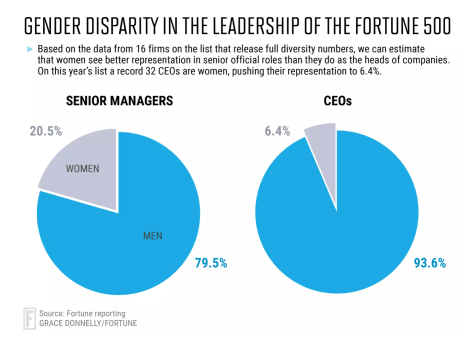
Stacey Jones also details about Fortune 500 CEOs that “[o]f those high ranking officials, 80% are men and 72% of those men are white”; for example:

gender fortune 500

These pie charts are important, I think, because they help us confront the zero-sum game thinking that impacts people with inequitable access to power: white men.

An equitable Senate would have 30-40 white men; an equitable distribution of CEOs would be about the same percentage, 30-40%.

So here is the trap—in order to reach equity, the current power structure must change and those with current inequitable power will perceive they have lost something substantial, something they believe they have earned. In fact, however, what they must lose is privilege, unfair advantages.

Is equity a zero-sun game? I think not, but it certainly must feel that way to those with the current status quo of power because, as the recent gains among Democrats shows, when we move toward equity of power, the demographics change, primarily with a reduction of white men.

The failure of zero-sum game thinking is deeply partisan, as Danielle Kurtzleben explains:

Exit polls also showed wide partisan gaps in views of gender. An overwhelming majority of Americans, nearly 8 in 10, said it’s important to elect more women to public office. Among those who consider that “important,” two-thirds voted for Democrats. Meanwhile, more than 8 in 10 of those who consider that “not important” voted for Republicans.

This gap suggests that Republicans attract those who perceive moving toward equity as a loss for the the inequitable status quo.

The tide that must turn is when we all can agree that equity expanding is a net gain for everyone, especially as we move toward our positions of power reflecting more closely those over whom they have that power.

Halloween Reader: Everything You Know Is Wrong

Scientific Racism And Black Sexual Pathology

Ending the practice of pathologizing Black sexuality will not be easy because the assumptions that enable it to flourish are part of the fabric of American culture. As noted, some researchers have recognized the problems associated with pathologizing Black sexuality and are advocating different approaches, perhaps illustrating that tenaciously adhering to the old tradition can prevent true resolution.

Johnson: Women’s voices are judged more harshly than men’s

There is no escaping the fact that some voices sound more pleasing than others. And there is no quick way around society’s belief that deep voices convey authority; men have been more powerful than women for all of known history. It may be good practical advice to tell women who want to get into the voice-over industry—or indeed others that have been historically dominated by men—to use firm and deep voices if they want to impress. They might also take care to avoid the distraction of vocal fry, while simultaneously ensuring that they don’t sound too mannish. Women, in other words, are required to walk a thin line when they speak in public, a no-room-for-error performance never expected of men.

The myth of meritocracy: who really gets what they deserve?

Inspired by the meritocratic ideal, many people these days are committed to a view of how the hierarchies of money and status in our world should be organised. We think that jobs should go not to people who have connections or pedigree, but to those best qualified for them, regardless of their background. Occasionally, we will allow for exceptions – for positive discrimination, say, to help undo the effects of previous discrimination. But such exceptions are provisional: when the bigotries of sex, race, class and caste are gone, the exceptions will cease to be warranted. We have rejected the old class society. In moving toward the meritocratic ideal, we have imagined that we have retired the old encrustations of inherited hierarchies. As Young knew, that is not the real story.

The Slowly Approaching Rumble of the “White Noise” of Privilege

Perchance he for whom this bell tolls may be so ill, as that he knows not it tolls for him; and perchance I may think myself so much better than I am, as that they who are about me, and see my state, may have caused it to toll for me, and I know not that.

Meditation XVII, John Donne

although you’re older—and white—
and somewhat more free.

“Theme for English B,” Langston Hughes

For my first-year writing students, Roxane Gay’s “Peculiar Benefits” serves as a powerful mentor text and an effective entry point into a difficult topic, privilege.

“Privilege is a right or immunity granted as a peculiar benefit, advantage, or favor,” Gay explains, adding:

There is racial privilege, gender (and identity) privilege, heterosexual privilege, economic privilege, able-bodied privilege, educational privilege, religious privilege and the list goes on and on. At some point, you have to surrender to the kinds of privilege you hold because everyone has something someone else doesn’t.

While her essay demonstrates the effectiveness of grounding an argument in personal narrative—her own Haitian heritage and trips to Haiti that confronted her with that country in contrast to the US—Gay also acknowledges the inherent struggle to address privilege in meaningful ways:

The problem is, we talk about privilege with such alarming frequency and in such empty ways, we have diluted the word’s meaning. When people wield the word privilege it tends to fall on deaf ears because we hear that word so damn much the word it has become white noise.

From #BlackLIvesMatter to #MeToo, I have begun to wonder if a growing rumble approaches, a rising toll that will someday no longer be only “white noise.”

Many in the US strongly resist discussions of or acknowledging privilege, as Gay notes, and part of that resistance is grounded, I think, in the cultural narrative created and perpetuated by the power elites—mostly white men: Political and economic status in the US has been earned through merit, and not privilege.

That cultural narrative is mostly a lie since the original power grabs were almost all at the expense of others (slavery and denying women equal status with men, for examples) and then those advantages—privilege—have been accumulated over many, many generations. That historical expanse has helped reduce privilege to “white noise,” it seems.

The recently stalled appointment of Brett Kavanaugh represents both the entrenched refusal of privilege and the potential eroding of the merit-cloak shrouding the truly disturbing underbelly of life-long privilege.

Kavanaugh’s interview to defend himself and proclaim both his innocence and determination to continue the appointment process has some telling features:

“I’ve always treated women with dignity and respect,” Kavanaugh insisted. “Listen to the people who’ve known me best my whole life.” Did he commit sexual assault? He “never saw any such thing.” Did he engage in lurid sexual encounters? He “never participated in any such thing.” Rather, he was focused on “trying to be No. 1 in my class” and “captain of the varsity basketball team” while working on “service projects” and “going to church.” Also, he did not have “anything close to sexual intercourse in high school or for many years thereafter.”

The denial extends beyond claiming not to have committed sexual assault to never hearing of misconduct at his school or by classmates, punctuated with his own choir-boy self-description.

This picture is the merit-veneer narrative common among the privileged who have created and maintained a network of privilege. Kavanaugh’s appointment is a blueprint for circling the wagons among the connected to protect each other regardless of who or why.

Kavanaugh’s assertions stretch credibility, however, not just for those attending elite private school but for anyone who has ever attended any high school in the US. Teens drinking and sexual misbehavior are all too common parts of adolescence, but even more damning are artifacts from Kavanaugh’s own high school experience and published accounts by his peers and friends, notably Mark Judge:

Judge, 54, has chronicled the debauchery of his 1980s high school years as a student at Georgetown Prep, where he and Kavanaugh were self-proclaimed members of the “100 Kegs or Bust” club.

In his 1997 memoir, “Wasted: Tales of a Gen X Drunk,” he wrote of high school “masturbation class,” said he “lusted after girls” at Catholic schools and referenced a passed-out “Bart O’Kavanaugh,” who drank too much and once threw up in a car.

This Kavanaugh debacle is a slightly more polished but perfectly aligned part of the larger Trump phenomenon grounded in lies and denying evidence. While Trump plays the cartoonish buffoon, Kavanaugh is sprung from the refined elites who, as this unmasking is exposing, have very ugly lives under the cover of privilege—the ruling vampire class of the US.

As the perverse and contradictory claims reveal about the cavalry forming to defend Kavanaugh—including women—somehow Kavanaugh is both innocent of sexual assault (because he was a virgin and attended church) and the poster boy for “all boys have sexual assault in their pasts” and “we cannot allow boyhood indiscretions to ruin the promising futures of some men.”

And beyond the specific Kavanaugh controversy and the subsequent defenses, even more disturbing is the rise of concerns about all men now being afraid of #MeToo consequences joined by garbled memes about mothers fretting over their sons’ futures (see this Twitter thread dismantling that narrative).

Ultimately, the US is now poised to make an important decision about continuing to ignore the white noise of privilege or hearing the rising rumble that tolls for the abusive and corrupt privileged elites.

The Kavanaugh accusations sit against the merit-veneer narrative orchestrated by Kavanaugh (and echoed by Trump and his ilk) as well as the often-ignored weight of evidence:

“Sexual assault is likely the most under-reported crime in the United States. About two-thirds of female sexual assault victims do not report to the police, and many victims do not tell anyone. Sexual assault is a terrifying and humiliating experience. Women choose not to report for a variety of reasons — fear for their safety, being in shock, fear of not being believed, feeling embarrassed or ashamed, or expecting to be blamed.

“A lack of reporting does not mean an assault or attempted assault did not happen or is exaggerated. Research demonstrates that false claims of sexual assault are very low — between 2 and 7 percent. This tells us that far more women are assaulted and don’t report than women who make false claims.” (Statement of APA President Regarding the Science Behind Why Women May Not Report Sexual Assault)

A people disgusted by the sordid underbelly of privilege must reject the merit-veneer narrative and choose the greater path to not only truth but also equity.

#MeToo is a reckoning about sexual assault and the silencing of women.

Everything about the Kavanaugh narrative rings false, and we are far past time to silence the lies of privilege.

The Unbearable Lightness of Being a Practitioner in Education

In the final days of my Summer I graduate course, my department chair asked me to switch from the Summer II graduate course I was assigned (a new preparation I had worked on diligently to teach for the first time) to a literacy course in which the instructor could no longer teach the class.

This course was one I have never taught, and thus, would have to prepare in just a few days to take on—scrambling as I did to understand the other instructor’s syllabus and schedule while also facing the herculean task of teaching from four assigned books that I have never read.

This afternoon, then, when I face these graduate students, I will confess that I have never taught elementary literacy (the course is a graduate literacy methods class)—having all my experience and expertise in teaching high school and college literacy, primarily writing—and thus, I will be relying on their practitioner expertise (the students are mostly practicing elementary teachers) while performing the role myself of facilitator.

In my Summer I class, as well, one assignment required students to read a professional book on literacy, and share with the class. Part of our discussion revolved around professional books in education emphasizing classroom practice (over theory and philosophy) while being written by education personalities.

The credibility of these books are often grounded in the assumption these personalities are credible; issues of validity and reliability—and even thorough citation—are ignored or de-emphasized. So I cautioned them that professional books (and education personalities) are not to be viewed as scripture, not as sacred directives, but as opportunities to think along with these education personalities in order to develop and sharpen their own practitioner expertise.

My journey as an educator has included 18 years as a classroom high school English teacher followed by 16 years as a teacher educator, and concurrently, an education scholar and public intellectual.

I lived, then, nearly two decades of sitting in mandated workshops and presentations where education consultants spoke down to us practitioners while earning in a few hours what no practicing teacher earned. These consultants and speakers may have had some classroom experience, but it was vividly clear to us they had all eagerly jumped ship to talk to lowly practitioners because the hours and the pay were much better.

K-12 teachers tend to loath this traditional aspect of being a teacher—the torture of being treated unprofessionally and the waste of our precious time that we could all better use to do the stuff of teaching, planning and responding to student work.

The edu-guru market is an ugly beast that perpetuates the notion that K-12 teachers are not professional or experts themselves, that practice is somehow just a mechanical thing that can be imposed onto a passive and compliant workforce (let us hasten to add, a passive and compliant workforce in which 3 of 4 teachers are women with undergraduate and graduate degrees and years of experience).

So when I teach or provide in-service for teachers, I emphasize my own classroom experience above all else, and couch my scholarly expertise in that practice now edging toward 40 years.

The accountability era has ratcheted up this divide, in part perpetuated by authoritarian structures (prescriptive legislation and top-down managerial styles of administrators) and in part by the market.

This latter influence must not be ignored. Publishers depend heavily on the cult of personality to drive textbook and professional book sales as well as the related consultant appearances.

Too often, however, what is being mandated and sold proves to be mostly hokum beneath the shimmer and shine of well-formatted books and over-confident edu-gurus.

Paul Murphy’s Teachers Are Tired of Robert Marzano highlights nearly everything that is wrong with this cult of personality that de-professionalizes teachers while also blaming them for the outcomes driven by the practices they are mandated and coerced to implement.

Murphy stresses: “For years, teachers were asked (or, more often, told) to swallow a lot of crap. More and more of us are done eating it” (emphasis in original).

In a powerful and thorough interrogation of this dynamic, Benjamin Doxtdator challenges Doug Lemov and Dave Burgess:

Both Lemov and Burgess construct masculine, individualistic heroes. Champion teachers, according to Lemov, “routinely do what a thousand hand-wringing social programs have found impossible: close the achievement gap between rich and poor, transform students at risk of failure into achievers and believers, and rewrite the equation of opportunity.” For Burgess, Pirates are “entrepreneurs”, “daring, adventurous, and willing to set forth into uncharted territories with no guarantee of success. They reject the status quo and refuse to conform to any society that stifles creativity and independence.”

I have spent a great deal of my work as a scholar and public intellectual raising the same concerns about Angela Duckworth’s grit and Carol Dweck’s growth mindset.

Scholars of poverty and social class began lining up more than a decade ago to refute the popular but invalid training provided by Ruby Payne, who continues to profit greatly off the uncritical edu-guru poverty circuit funded mostly by tax dollars.

There are patterns to all this madness:

  • Practitioners are framed as or assumed to be unprofessional and inexpert.
  • Experts are, then, the consultants themselves, who are beyond reproach (criticize the work of Duckworth, or John Hattie, and expect to be accused of attacking the people themselves, to be shamed for the criticism).
  • Both educational research and teacher practices are trivialized as secondary to the gimmick (grit, teaching like a champion, visible learning, etc.) and the edu-guru who peddles the gimmick.
  • Teaching and learning are necessarily narrowed and over-simplified. Marzano and Hattie direct a laser focus on the impact of teachers; Duckworth and Dweck keep the accusatory eye on weaknesses and flaws in the children/students themselves.
  • Teacher and student voices are muted or entirely ignored.
  • Teachers are conditioned to behave in unprofessional ways that are used to justify treating them unprofessionally.
  • Divisions of labor and compensation for labor are disturbingly skewed so that practitioners are underpaid and under-appreciated while consultants and administrators (farthest from the day-to-day experiences of students) are overpaid and overvalued.

When I met with a colleague who designed the course I will be teaching for the first time this afternoon, she empathized with the abrupt change in course assignments and then helped me tremendously by noting that when she taught the course, she used elements of the National Writing Project (NWP) model for summer institutes.

I was co- and lead instructor of a writing project in South Carolina at the end of my high school teaching career just before entering higher education in 2002. Being a participant in and then facilitating for a NWP site were by far the greatest experiences for me as an educator and a professional.

Why? The sacred elements of these summer seminars were the professionalism of the teachers and the community of scholars that was fostered and developed.

One of the most important refrains of these communities was the call to check ourselves regularly against the allure of edu-gurus and gimmicks (we at first embraced the term “best practice” and then quickly felt it had become a mandate and not a healthy generalization for how any teacher works from a toolbox of practices with the needs of the learner guiding those fluid decisions).

K-12 practitioners remain trapped in a hellish contradiction created by the cult of personality driving edu-gurus and gimmicks: Teachers are simultaneously posed as the singular and most important factor in student learning (a verifiable lie) and then treated as incompetent technicians.

Teachers need to be relieved of edu-gurus and gimmicks; they deserve professional experiences that include the time, support, and conditions that are conducive to what is best for each student taking a seat in any of their classrooms.

Teachers must not be reduced to technocrats, must not be compelled to be martyrs and missionaries.

If we can resist the allure of celebrity and cashing in, we must ultimately acknowledge the humanity of teachers and their students, while admitting the ugly influences of sexism and consumerism that too often trump our stated goals of democracy and equity.

Free Speech, Free Market, and the Lingering “Rigid Refusal”

In the documentary Corridor of Shame, which explores the historical inequities of school funding in South Carolina along lines of race and social class, Senator (R, SC) Lindsey Graham claims while speaking at MLK Day in 2005: “We have a disparity of funding in a region of our state…. The reason we have disparity in funding is not cause we are prejudiced at the governmental level. It’s because we collect taxes based on property value. And our property value in those counties are pretty low because there’s no industry.”

Graham’s denial of systemic racism represents what Ta-Nehisi Coates called “elegant racism” while confronting the “oafish racism” of Cliven Bundy and former L.A. Clippers owner Donald Sterling:

The problem with Cliven Bundy isn’t that he is a racist but that he is an oafish racist. He invokes the crudest stereotypes, like cotton picking. This makes white people feel bad. The elegant racist knows how to injure non-white people while never summoning the specter of white guilt. Elegant racism requires plausible deniability, as when Reagan just happened to stumble into the Neshoba County fair and mention state’s rights. Oafish racism leaves no escape hatch, as when Trent Lott praised Strom Thurmond’s singularly segregationist candidacy.

Elegant racism is invisible, supple, and enduring. It disguises itself in the national vocabulary, avoids epithets and didacticism. Grace is the singular marker of elegant racism. One should never underestimate the touch needed to, say, injure the voting rights of black people without ever saying their names. Elegant racism lives at the border of white shame. Elegant racism was the poll tax. Elegant racism is voter-ID laws.

Graham acknowledges inequity, but uses “prejudiced” instead of “racist,” and casually rejects systemic racism.

As Coates explains, whites in the U.S. are more apt to acknowledge oafish racism while almost always employing elegant racism, such as denying systemic racism; therefore, Graham’s obfuscation is a powerful and effective political ploy, especially in the South.

In the matter of a few days recently, this distinction has played out in a public way with the NFL instituting a new policy about players protesting during the National Anthem and Roseanne Barr having her ABC sit-com canceled after a racist outburst on social media.

The NFL Anthem policy and Barr’s show cancelation have two important elements in common: what they represent in terms of how the U.S. confronts and understands racism, and how many in the U.S. have a deeply flawed understanding of free speech.

First, when former NFL quarterback Colin Kaepernick initiated protests during the National Anthem, the public and political response has tended to misrepresent the actions. Kaepernick and other players were protesting systemic racism, inequitable policing of blacks often resulting in death, during the Anthem.

Notably, Barr’s oafish racism, comparing a person of color to an ape, has resulted in a similar outcome for Barr and Kaepernick—the loss of work—although the former is a racist and the latter is protesting racism.

While Kapernick and other protesting NFL players have been condemned for being political (disregarding they are taking credible stands against a reprehensible social reality), Barr has a history of being bigoted.

Writer Roxane Gay has examined that history and then the recent cancelation, in fact.

Also significant about these two situations is that the new NFL policy does in fact limit when and how NFL players can express themselves, but Barr was perfectly free to share her comments, with an incredibly wide audience.

That comparison leads to the now common aspect of the public discussion of Barr’s cancelation, claims that they are about free speech: Since the NFL and ABC are not the government, neither of these situations is an issue of free speech.

As Katherine Timpf explains:

First of all, this is in no way a free-speech or First Amendment issue. The First Amendment protects us from facing consequences from the government over our speech, not consequences from our peers or our employers. Yes, what Barr said, although abhorrent, absolutely was constitutionally protected speech, and, of course, it should be. After all, giving the government the power to decide what is and is not “acceptable” speech would be giving the government the power to silence whatever kind of speech it felt like silencing, which would be very dangerous indeed. Anyway, the point is, a free-speech-rights violation would be someone trying to, say, arrest Barr for her comments, not firing her for them. Her rights were in no way violated in this case. ABC simply exercised its own rights as a private company to decide whom it does and does not want to associate with, and it’s my view that no one should blame its executives for making the decision that they made.

Therefore, the NFL policy on the National Anthem and the cancelation of Barr’s sit-com are not about free speech but the free market. Both the NFL and ABC are hedging that their actions preserve their audiences, their bottom line.

And what those concerns about their audiences reinforce is that the public has a much lower tolerance for oafish racism (Barr) than for confronting elegant racism (NFL protests). The NFL believes its audience either denies or cannot see systemic racism, and thus does not support the so-called politics of NFL players who protest while ABC feels that continuing to give an oafish racist a major platform will erode their audience.

Here is where we must confront the problem with trusting the free market since doing the right thing is linked to the moral imperative of the majority, the consumers. Currently in the U.S., that majority remains insensitive to systemic inequity and injustice; therefore, elegant racism survives—even bolstered ironically when oafish racism is shamed and seemingly blunted.

When each oafish racist is given their due, those denying systemic racism have their worldview confirmed since they see individual punishment as justice.

These actions by the NFL and ABC reflect that in the U.S. whites are still in the early adolescent stage of racial consciousness. Being able to confront oafish racism isn’t even fully developed yet.

Many in the media called Barr’s slurs “racially insensitive,” showing the same sort of refusal to call a lie, a lie that now characterizes mainstream media. But a few in that media are calling Barr’s words “racist,” and ABC folded under the weight of that fact—although we should be asking why Barr had this second chance considering her history of bigotry.

As a people, white America is not adult enough, however, to move past finger-wagging at oafish racists and to acknowledge systemic racism because, as Coates recognizes, “to see racism in all its elegance is to implicate not just its active practitioners, but to implicate ourselves.”

James Baldwin’s “Lockridge: ‘The American Myth'” remains a chilling warning then: “This rigid refusal to look at ourselves may well destroy us; particularly now since if we cannot understand ourselves we will not be able to understand anything.”

That anything, as the NFL and ABC have exposed, is racism—the cancer destroying our democracy and our free market.

As consumers, we have a moral obligation to tell the NFL it is wrong; we will not stand for systemic racism. And we must tell ABC that canceling Barr’s sit-com is a start, but it isn’t enough.

As citizens, we have to look at ourselves in the mirror of the voting booth—something we have failed to do yet in the good ol’ U.S. of A.

Recommended

Who Me?