Category Archives: inequity

The Writing Center Dilemma

In What’s Wrong with Writing Centers, Rose Jacobs reports on Lori Salem’s “quantitative analysis of Temple University’s writing center, which she has directed since 1999. The assistant vice provost wanted to understand its role by investigating who doesn’t visit as well as who does.” Salem discovered:

[T]hat practices that are near-orthodoxy in writing centers — such as nondirective instruction, in which tutors prompt students to come up with the right answers themselves; and a resistance to focusing on grammatical errors — cater to individuals who already have a strong grounding in grammar and composition, the sort of students who never turn up. That leaves the most frequent visitors underserved: female students, minority students, and those who grew up speaking a language other than English at home.

Salem admits her study is just a beginning since it focuses on one center at one university, but as someone who has been teaching writing for almost four decades, both as a high school English teacher and a college professor of first-year and upper-level writing courses, I can confirm that many of the dilemmas uncovered by Salem ring disturbingly true.

Those two distinctly different teaching experiences have shaped me within a broader unifying way: I have mostly taught myself how to teach writing, having only one real formal experience with learning how to teach writing through the National Writing Project’s summer institute. I don’t have any degree in composition, and didn’t formally study composition in any undergraduate or graduate courses.

As a high school teacher for almost twenty years, I learned mostly by trial-and-error, and then was saved by my regional NWP affiliate, the Spartanburg Writing Project, where I also was a co-lead instructor for a few summers before heading to higher education full time.

But the last decade has been an incredibly fertile and difficult journey with how writing is taught in higher education. I have been teaching first-year writing, along with an upper-level writing course, and I briefly held a small administrative role in guiding our first-year seminars.

Over that time, my university has (finally) formalized a writing program by naming a Director of Writing Programs and seeking ways to make the writing and media lab and program more cohesive (adding the upper-level writing/research requirement to the curriculum, for example). The teaching of writing is also being more directly addressed by creating Faculty Writing Fellows, faculty who participate in a year-long seminar addressing writing instruction.

As I have participated in and witnessed these recent growing pains at my university, I can offer some anecdotal, but I think credible, observations that match well with Salem’s research:

  • Writing instruction at the course/class/individual faculty level suffers from a lack of purpose and cohesion without a school/college unifying mission and set of shared goals. In other words, how does any class/course contribute to some set of outcomes related to writing all students should have experiences in as integral to graduating?
  • Class-level writing instruction and writing centers/labs must guard against two corrosive but alluring perspectives: (1) viewing writing instruction as remediation, and (2) seeing any course or session on “how to write” as some sort of one-shot inoculation against “errors” (a deficit view).
  • Both learning to writing and teaching writing are journeys, and must remain grounded in clearly defined contexts. Disciplinary writing in high school and college is much different than becoming a writer of fiction or poetry. For example, composition faculty and K-12 English teachers define “writing workshop” differently than creative writing faculty (think MFA).
  • Teaching writing always involves tension among concerns about craft, content, and correctness. A writing program, and writing center practices, must address how these elements will be taught as well as how each is weighted (not if, but when, how, and why). Many who come to teaching writing from disciplines outside English or composition are over-concerned with correctness (teaching writing is correcting grammar, mechanics, and usage) and significantly focused on disciplinary content and the logic of student claims, evidence, and elaboration in writing.
  • Teaching writing is enhanced by those teachers being writers themselves, but this expectation must be navigated carefully since few faculty are writers and some may write mostly out of necessity, not out of a drive to be writers.
  • The inequity unmasked by Salem’s study often presents itself in the teaching of writing through which students receive what instruction. So-called reluctant or remedial students (disproportionately black, brown, and/or poor) receive instruction on correctness (grammar, mechanics, usage) often in isolation (worksheets on skills) and are allowed or required to compose very little or not at all. The so-called advanced or gifted students (disproportionately white and affluent) compose more often and are allowed to venture into “creative” writing, experimentation, and choice. These instructional choices perpetuate inequity.

Writing centers and programs, then, are necessarily integral parts of equity and academic goals in any school, college, or university. Students must be better served at the class/course level as well as over the entire school/college experience through a cohesive writing program that rejects seeing the teaching of writing as remediation or an inoculation, but embraces authentic purposeful instruction.

Just as Salem’s data show that students view writing centers as ineffectual, thus unimportant, faculty often marginalize the status of teaching writing—something to be done by someone else or not relevant to their discipline.

Writing, however, is an essential tool of not only students and academics, but also being fully human.

Learning to write and teaching writing are both being mis-served in formal education, with the shortcomings of writing centers as one example, and as a consequence, so are our students and those charged to teach them.


For Further Consideration

Decisions…Decisions: Who Chooses to Use the Writing Center?, Lori Salem

Degrees of Inequality: Culture, Class, and Gender in American Higher Education, Ann L. Mullen

Differences in College Access and Choice among Racial/Ethnic Groups: Identifying Continuing Barriers, Sylvia Hurtado, Karen Kurotsuchi Inkelas, Charlotte Briggs and Byung-Shik Rhee

Minimal Marking, Richard H. Haswell

Why Senior Faculty Should Teach First-Year Students, Randall Smith
The Politics of Education Policy: Even More Beware the Technocrats

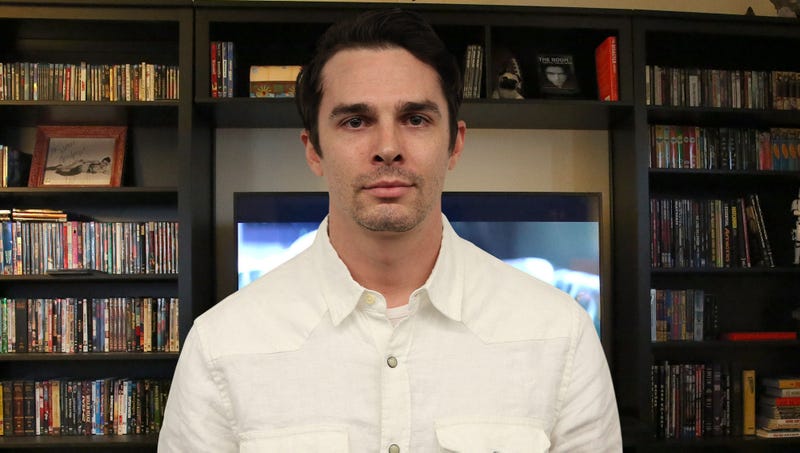
Man Prefers Comic Books That Don’t Insert Politics Into Stories About Government-Engineered Agents Of War (The Onion) includes a simple picture of a 31-year-old white male with the hint of a soon-to-be Van Dyke:

The fictional “man,” Jeremy Land, explains:

“I’m tired of simply trying to enjoy escapist stories in which people are tortured and experimented upon at black sites run by authoritarian governments, only to have the creators cram political messages down my throat,” said Land, 31, who added that Marvel’s recent additions of female, LGBTQ, and racially diverse characters to long-running story arcs about tyrannical regimes turning social outsiders into powerful killing machines felt like PC propaganda run amok. “Look, I get that politics is some people’s thing, but I just want to read good stories about people whose position outside society makes them easy prey for tests run by amoral government scientists—without a heavy-handed allegory for the Tuskegee Study thrown in. Why can’t comics be like they used to and just present worlds where superheroes and villains, who were clearly avatars for the values of capitalism, communism, or fascism, battle each other in narratives that explicitly mirrored the complex geopolitical dynamics of the Cold War?”

The satire here is the whitesplaining/mansplaining inherent in the politics of calling for no politics.

It strains the imagination only slightly to understand how this commentary on comic book fanboys also parallels the persistent combination in education of calling for no politics while using policy and a narrow definition of data and evidence to mask the racial and gender politics of formal schooling.

Let’s imagine, then, instead of the fictional Land an image of David Coleman (who parlayed his Common Core boondoggle into a cushy tenure as the head of the College Board) or John Hattie (he of the “poverty and class size do not matter” cults that provide Hattie with a gravy train as guru-consultant).

A close reading of David Coleman’s mug shot reveals a whole lot of smug.
In his “visible learning” hustle, John Hattie likely prefers to keep his enormous profits invisible.

Coleman and Hattie as technocrats feed the systemic racism, classism, and sexism in formal education policy and practice by striking and perpetuating an objective pose that serves as a veneer for the normalized politics of political and economic elites in the U.S.

As Daniel E. Ferguson examines, Coleman’s Common Core propaganda, the rebranded traditional mis-use of New Criticism into “close reading,” argues:

Close reading, as it appears in the Common Core, requires readers to emphasize “what lies within the four corners of the text” and de-emphasize their own perspective, background, and biases in order to uncover the author’s meaning in the text.

However, Ferguson adds,

Critical reading, in contrast, concerns itself with those very differences between what does and does not appear in the text. Critical reading includes close reading; critical reading is close reading of both what lies within and outside of the text. For Paulo Freire, critical reading means that “reading the world always precedes reading the word, and reading the word implies continually reading the world.”

And thus, close reading serves the cult of efficiency found in the high-stakes standardized testing industry that depends on the allure of believing all texts have singular meanings that can be assessed in multiple-choice formats—a dymanic Ferguson unmasks: “The story beyond the four corners of Coleman’s video is one of a man whose agenda is served by teachers following a curriculum that requires students to read in a way assessable through standardized tests he oversees and profits from.”

Simultaneously, of course, keeping students and teachers laser-focused on text only detracts them from the richer context of Martin Luther King Jr. and the broader implications of racism and classism informed by and informing King’s radical agenda.

Simply stated, close reading is a political agenda embedded in the discourse of objectivity that whitewashes King and denies voice and agency to King, teachers, and students.

Concurrently, Hattie’s catch phrase, “visible learning,” serves the same political agenda: Nothing matters unless we can observe and quantify it (of course, conveniently omitting that this act itself determines what is allowed to be seen—not the impact of poverty or the consequences of inequity, of course).

Hattie’s garbled research and data [1] match the recent efforts in education reform to isolate student learning as the value added (VAM) by individual teachers, yet another off-spring of the cult of efficiency manifested in high-stakes standardized testing.

Just as many have debunked the soundness of Hattie’s data and statistics, the VAM experiment has almost entirely failed to produce the outcomes it promised (see the school choice movement, the charter school movement, the standards movement, etc.).

Coleman and Hattie work to control what counts and what matters—the ultimate in politics—and thus are welcomed resources for those benefitting from inequity and wishing to keep everyone’s gaze on anything except that inequity.

The misogyny and racism among comic book fanboys allows the sort of political ignorance reflected in The Onion‘s satire.  If we remain “within the four corners of the text” of Marvel’s Captain America, for example, we are ignoring that, as I have examined, “Captain America has always been a fascist. … But … Captain America has always been our fascist, and that is all that matters.”

3e281
Captain America: Steve Rogers #1 (c) Marvel

The politics of education policy seeks to point the accusatory finger at other people’s politics, and that politics of policy is served by the technocrats, such as Coleman and Hattie, who feed and are fed by the lie of objectivity, the lie of no politics.


[1] See the following reviews and critiques of Hattie’s work:

Research and Miscellaneous Roundup

Selective Exposure to Misinformation: Evidence from the consumption of fake news during the 2016 U.S. presidential campaign, Andrew Guess, Brendan Nyhan, and Jason Reifler

Abstract

Though some warnings about online “echo chambers” have been hyperbolic, tendencies toward selective exposure to politically congenial content are likely to extend to misinformation and to be exacerbated by social media platforms. We test this prediction using data on the factually dubious articles known as “fake news.” Using unique data combining survey responses with individual-level web traffic histories, we estimate that approximately 1 in 4 Americans visited a fake news website from October 7-November 14, 2016. Trump supporters visited the most fake news websites, which were overwhelmingly pro-Trump. However, fake news consumption was heavily concentrated among a small group — almost 6 in 10 visits to fake news websites came from the 10% of people with the most conservative online information diets. We also find that Facebook was a key vector of exposure to fake news and that fact-checks of fake news almost never reached its consumers.

Educational opportunity in early and middle childhood: Variation by place and age, Sean F. Reardon

Abstract

I use standardized test scores from roughly 45 million students to describe the temporal structure of educational opportunity in over 11,000 school districts—almost every district in the US. For each school district, I construct two measures: the average academic performance of students in grade 3 and the within-cohort growth in test scores from grade 3 to 8. I argue that third grade average test scores can be thought of as measures of the average extent of educational opportunities available to students in a community prior to age 9. Growth rates in average scores from grade 3 to 8 can be thought of as reflecting educational opportunities available to children in a school district between the ages of 9 and 14.

I document considerable variation among school districts in both average third grade scores and test score growth rates. Importantly, the two measures are uncorrelated, indicating that the characteristics of communities that provide high levels of early childhood educational opportunity are not the same as those that provide high opportunities for growth from third to eighth grade. This suggests that the role of schools in shaping educational opportunity varies across school districts. Moreover, the variation among districts in the two temporal opportunity dimensions implies that strategies to improve educational opportunity may need to target different age groups in different places. One additional implication of the low correlation between growth rates and average third grade scores is that measures of average test scores are likely very poor measures of school effectiveness. The growth measure I construct does not isolate the contribution of schools to children’s academic skills, but is likely closer to a measure of school effectiveness than are measures of average test scores.

Tax Bill Would Increase Abuse of Charitable Giving Deduction, with Private K-12 Schools as the Biggest Winners, Carl Davis

From Executive Summary

In its rush to pass a major rewrite of the tax code before year’s end, Congress appears likely to enact a “tax reform” that creates, or expands, a significant number of tax loopholes. One such loophole would reward some of the nation’s wealthiest individuals with a strategy for padding their own bank accounts by “donating” to support private K-12 schools. While a similar loophole exists under current law, its size and scope would be dramatically expanded by the legislation working its way through Congress.2 This report details how, as an indirect result of capping the deduction for state income taxes paid, the bill expected to emerge from the House-Senate Conference Committee would enlarge a loophole being abused by taxpayers who steer money into private K-12 school voucher funds. This loophole is available in 10 states: Alabama, Arizona, Georgia, Kansas, Montana, Oklahoma, Pennsylvania, Rhode Island, South Carolina, and Virginia.

The Sound of White Silence, @michaelharriot

White is a blank space.

It is the unwritten adjective that filled the infinite and simultaneously minuscule void between “all” and “men” when our founding fathers so eloquently declared their independence. The word “white” is not included in the Constitution, but it is understood by all to be the unmentioned modifier in “we the people.” It is our national equivalent to the aphonic letter “e.” We could always see it, but as a country we agreed to adhere to the first rule of American phonetics:

The “white” is silent.

The Nature and Aim of Fiction, Flannery O’Connor

People have a habit of saying, “What is the theme of your story?” and they expect you to give them a statement: “The theme of my story is the economic pressure of the machine on the middle class”—or some such absurdity. And when they’ve got a statement like that, they go off happy and feel it is no longer necessary to read the story.

Some people have the notion that you read the story and then climb out of it into the meaning, but for the fiction writer himself the whole story is the meaning, because it is an experience, not an abstraction.


Scholarship, “Lived Reality,” and “the Validity of a Thing”

In the beginning of my experiment as a public intellectual, I was a lowly high school English teacher who on occasion had a letter to the editor in the Herald-Journal (Spartanburg, SC).

These brief efforts at speaking to a general public as an informed voice taught me some valuable and enduring lessons—one of which included feedback from that general public.

My letters to the editor prompted long, rambling messages on my phone answering machine and incoherent typed letters mailed to my home and the high school where I taught.

Many of the phone messages were irate retired people who proved beyond a shadow of a doubt that they had no real understanding of Social Security or the workings of government and the free market. The typed letters (some on manual typewriters) were often single-spaced with almost no margins and punctuated with slurs and threats.

One frequent letter writer opened his diatribe with “Dear African American Homosexual”—all meant as slurs, and none accurately identifying me.

These early experiences with being misunderstood and ineffective were mostly interactions with anonymous and angry readers.

Eventually, mostly because I moved to higher education after earning my doctorate (although only a lowly EdD), I have been afforded a larger stage—Op-Eds in local, state, and national publications as well as a well-read personal blog, invited public and university-based talks, and a substantial collection of published work.

Responses to my public claims, now, are typically not as often public, but those responses continue to teach me valuable lessons—mostly how often and how easily words and claims can be misunderstood and even work in ways that are the opposite of my intent.

Here I want to examine two experiences, one from 2014 and another recent, that help shape who I seek to be as a person, a writer, a teacher, and a scholar.

First, some context.

As a redneck from rural South Carolina who had working-class parents, attended state universities, and has embraced critical pedagogy as my scholarly self, I am regularly marginalized in scholarly and academic contexts because of those identities; my writing is brushed aside as “polemics,” and my Southern drawl is noted with passive-aggressive disdain.

In personal spaces with family and friends as well as in my public writing and speaking, I am there marginalized as “just a scholar”—another pointed-headed intellectual with no real-world experience.

Let me stress here that as a white man with an advanced degree and a prestigious position at a universities, I am acknowledging these experiences but in no way suggesting they are nearly as consequential as simply being a woman, a person of color, or gay (for example). This is not a whine-fest, but I am trying to discuss the challenges of navigating public spaces as a perceived scholar.

Several years ago, I was invited to speak at the University of Arkansas by good friends who are professors there; I had written a book on poverty, and they were kind enough to ask me to speak at a week-long focus on poverty and education.

The University of Arkansas happens also to be home to a Walton-funded graduate department that is staffed by faculty who universally reject my scholarly perspective, and in some cases, me specifically.

Based on that talk, some of those antagonistic professors mentioned me in a piece for Education Next. In their defense of “no excuses” ideologies (specifically KIPP charter schools, both of which I reject), they openly mischaracterized me in order to discredit me:

Like all charter schools, KIPP schools are chosen by parents, but critics fear that disadvantaged parents do not know enough to choose wisely, or else do not have their children’s best interest at heart. Leaving aside whether the critics patronize the people of color KIPP schools serve, we propose that KIPP and similar schools are not nearly as militaristic as critics, who may have never been inside them, fear.

Recently, Andre Perry has confronted that charter advocates tend to smear critics of charter schools as “against parental choice,” something I have examined critically as well.

Even though I am skeptical of most charter and choice advocates, I learned an important lesson, and was confronted with a real dilemma: How do I challenge charter schools and “no excuses” ideologies in the context of black, brown, and poor families voluntarily choosing them?

Michelle Alexander offered me a solution in her confronting of The New Jim Crow:

This last point – that African Americans seem to support both the war on crime and “no excuses” charter schools – presents the most problematic aspect of charges that mass incarceration and education reform are ultimately racist, significant contributions to the New Jim Crow.

For example, Carr reports that African American parents not only choose “no excuses” charter schools in New Orleans, but also actively cheer and encourage the authoritarian policies voiced by the schools’ administrators. But Alexander states, “Given the dilemma facing poor black communities, it is inaccurate to say that black people ‘support’ mass incarceration or ‘get-tough’ policies” because “if the only choice that is offered blacks is rampant crime or more prisons, the predictable (and understandable) answer will be ‘more prisons.’ ” (p. 210)

New Orleans serves as a stark example of how this dynamic works in education reform: Given the choice between segregated, underfunded and deteriorating public schools and “no excuses” charters – and not the choice of the school environments and offerings found in many elite private schools – the predictable answer is “no excuses” charters. (Education Reform in the New Jim Crow Era)

As a result, I now try to frame my rejecting of charter schools and “no excuses” by clarifying that all parents regardless of social class or race deserve high-quality schools without need to choose or compete; I also confront directly how choice advocates tend to embrace a false choice (as exposed by Alexander).

My second example happened just yesterday on Twitter when Angela Dye and I interacted about the “word gap,” which I have often rejected.

I consider Dye a comrade, virtual colleague, and someone whose public voice informs my own; in those ways, this experience was not like the one above, but it forced me once again to confront how good intentions are not enough, especially when that intent is perceived as silencing or ignoring the exact people I seek to support.

Several of Dye’s comments are powerful checks on how I have examined the “word gap”:

You’re talking as a scholar. I respect that. I’m talking as a person living in a specific community with a specific lived reality. I’m hoping the respect can be mutual.

— Angela Dye, PhD (@ejuc8or) December 25, 2017

It pains me when we limit the validity of a thing to research–silencing or debating the voices of those living it.

— Angela Dye, PhD (@ejuc8or) December 25, 2017

So you have to excuse me if I am unwilling to invalidate an experience because “research” doesn’t prove it.

— Angela Dye, PhD (@ejuc8or) December 25, 2017

This Twitter moment also serves to prove John Warner’s point about the value of social media.

Dye’s challenges asked me to reconsider how my work perpetuated the voice of a scholar that uses research to “invalidate” “lived reality”—especially since I in no way sought to have that impact.

Just as I have afforded a fuller context to my rejecting charter schools and “no excuses,” I must seek ways to examine the “word gap” with Dye’s powerful concerns in mind.

Rejecting the “word gap,” I must clarify, is not rejecting the lived reality of significant and consequential differences among the social classes in terms of literacy. Yes, people living in poverty are denied access to and marginalized by privileged language.

Too often formal education works to perpetuate that equity gap resulting in the so-called “word gap” that works as a term and in reality similar to the “achievement gap.”

This lived reality in which some people due to race and social class are excluded from life, liberty, and the pursuit of happiness through formal gatekeeping of who has access to privileged language and who does not, I think, is what Dye is speaking for and through.

So as I navigate still how to express more clearly why I reject the “word gap” as a term and how it works against marginalized and vulnerable populations, I offer two contexts for what I am rejecting.

First, Virginia Eubanks confronts in The Digital Poorhouse:

The most marginalized in our society face higher levels of data collection when they access public benefits, walk through heavily policed neighborhoods, enter the health care system, or cross national borders. That data reinforces their marginality when it is used to target them for extra scrutiny. Groups seen as undeserving of social support and political inclusion are singled out for punitive public policy and more intense surveillance, and the cycle begins again. It is a feedback loop of injustice.

And, Annette Lareau unpacks in Unequal Childhoods: Class, Race, and Family Life (see online)

The differences are striking….

Neither the approach of concerted cultivation or the accomplishment of natural growth is without flaws. Both have strengths and weaknesses [emphasis added]. Middle-class children, for example, are often exhausted, have vicious fights with siblings, and do not have as much contact with their extended families as working-class and poor children. But when children enter institutions such as schools and health care settings, the strategy of middle-class child rearing of concerted cultivation is far more in compliance with the current standards of professionals than is the approach of the accomplishment of natural growth. There are signs that middle-class children gain advantages, including potentially in the world of work, from the experience of concerted cultivation. Working-class and poor children do not gain this benefit.

Therefore, I argue that the “word gap” fails for the following reasons:

  • Literacy is reduced and distorted to quantifying vocabulary (data collecting) as the sole proxy for literacy. Literacy is far more complex.
  • That use of data serves to frame poor children and their parents as having incomplete or inadequate literacy and idealizes middle-class and affluent literacy without acknowledging that this imbalance is an issue of power.
  • The “word gap” keeps the evaluative gaze on children and their parents (how to give the children more vocabulary and how to blame poor parents for literacy-deficient homes) and allows education and education reform to remain focused on “fixing” children and their parents and in-school reform only while ignoring the larger and more powerful social inequities reflected in schools and homes.
  • Research confirming the “word gap,” notably by Hart and Risley, is compelling not because of the quality of the research but because it confirms race and class biases in both conservative and liberal narratives. Media/journalists, pundits, and the public rush to cite Hart and Risley for reasons that must be unpacked—even as we acknowledge the inequities of literacy correlated with social class.

Because of an uncritical embracing of the “word gap” as a concept (not the acknowledging of the inequity of literacy among social classes), vulnerable populations of students have been mis-served through reductive vocabulary drill-and-kill, narrow high-stakes testing, and the lack of political will to address their access to rich literacy in their homes, communities, and schools (experiences afforded middle-class and affluent children that results in their identifiable vocabulary differences).

Because of an uncritical embracing of the “word gap” as a concept (not the acknowledging of the inequity of literacy among social classes), poor children and families are characterized primarily through deficit lenses that ignore their literacy strengths that simply do not match privileged literacy.

Because of an uncritical embracing of the “word gap” as a concept (not the acknowledging of the inequity of literacy among social classes), the barriers to literacy, academic, economic, and judicial equity remain mostly unexamined—out of sight, out of mind.

By confronting scholarly debates about the “word gap,” Dye has exposed the problematic relationship among scholarship, “lived reality,” and “the validity of a thing.”

I must do a better job with that dynamic if I want to be the sort of voice for social equity and justice that I seek to be.

UPDATE

Angela Dye has taken the exchange above and examined how our Twitter interaction confronts a tension around public discourse and elements of power and privilege; see Pissing on My Pee.


For Further Reading

What These Children Are Like, Ralph Ellison

If Black English Isn’t a Language, Then Tell Me, What Is?, James Baldwin

Woody Allen, Hollywood, and the Monsters of Capitalism: “I thought it was funny at the time”

The Woody Allen dilemma, now resurrected in the wake of Harvey Weinstein being exposed as a serial sexual predator, confronts us on two levels.

Level one is an enduring debate about Allen himself: Is Allen merely attracted to young women in his personal and creative lives, a proclivity that pushes at the boundaries of social norms for consent and age-appropriate relationships? Or is Allen a sexual predator, one who has sexually abused a child?

Level two involves how this remains a debate, how keeping alive arguments about who Allen is provides a shield behind which Allen continues to produce films, accumulating wealth and power, and to remain mostly unscathed—much as Weinstein did for years: When women accuse men of sexual harassment, sexual assault, or sexual abuse, men raise the specter of false accusations—Allen himself responding to the Weinstein scandal by cautioning against a witch hunt in Hollywood.

If we return to level one, we must be willing to acknowledge the tension between consent and women’s (especially young women’s) autonomy and human agency.

Consider for example, a parallel situation involving another powerful and celebrated artist, J.D. Salinger, who courted young women; at 18, Joyce Maynard made a decision:

At Salinger’s urging, I left college — left the world, more or less — to be with him. I will state plainly: This was a choice I made, of my own volition, with as much understanding of the world as an 18-year-old may possess.

Maynard forefronts her autonomy, but we must also admit her decision to be with Salinger was prior to his exposing himself as a monster. In other words, a young woman’s autonomy and consent need not be erased, and must not be demonized, if we keep our focus where it belongs—on the men who are monsters.

So that brings us back to level two and why the most damning possibility about Allen—he is a man who sexually abused a child—remains only a possibility, a rumor, because shouting “Witch hunt!” maintains the accusatory gaze on the victims—imbued with their possibility of being false witnesses.

But the false witness argument is at least a distraction if not a lie:

The majority of sexual assaults, an estimated 63 percent, are never reported to the police (Rennison, 2002). The prevalence of false reporting cases of sexual violence is low (Lisak, Gardinier, Nicksa, & Cote, 2010), yet when survivors come forward, many face scrutiny or encounter barriers. For example, when an assault is reported, survivors may feel that their victimization has been redefined and even distorted by those who investigate, process, and categorize cases.

The valid fear, then, about sexual assault includes the following:

Research shows that rates of false reporting are frequently inflated, in part because of inconsistent definitions and protocols, or a weak understanding of sexual assault. Misconceptions about false reporting rates have direct, negative consequences and can contribute to why many victims don’t report sexual assaults (Lisak et al., 2010). To improve the response to victims of sexual violence, law enforcement and service providers need a thorough understanding of sexual violence and consistency in their definitions, policies and procedures.

We must add that men who assault also perpetuate the “frequently inflated” narrative because treating outliers as some sort of rampant phenomenon allows the monsters to survive without scrutiny or consequences.

Despite Courtney Love in 2005 and, apparently, Family Guy for years—the open secret of sexual abuse in Hollywood has remained closeted, from Weinstein to Kevin Spacey and dozens (hundreds?) of men including Allen and Roman Polanski.

Another hint about the open secret, Lana Del Rey’s “Cola,” serves as a powerful entry into the root cause of the Allen dilemma narrowly and the sexual abuse reality broadly:

“When I wrote that song, I suppose I had a Harvey Weinstein/Harry Winston-type of character in mind,” Del Rey told MTV of the “Cola.” “I envisioned, like, a benevolent, diamond-bestowing-upon-starlets visual, like a Citizen Kane or something. I’m not really sure. I thought it was funny at the time, and I obviously find it really sad now. I support the women who have come forward. I think they’re really brave for doing that.”

Del Rey, like Allen, has strong personal and artistic connections with relationships between young women and older men, but Del Rey personifies how gender shapes the consequences of those experiences and themes for women:

This kind of reversal has cemented LDR’s legend: Caught between misogynist dismissal of her art and feminist critiques of same, she appears coolly immune to both forms of attack, which boil down to a common shame over heterosexual cliché. Each camp argues that she presents a superficial, even damaging view of womanhood, minus the talent or veneer of commentary to carry it off. Where Taylor Swift and Katy Perry will belt a breakup anthem as a call to arms, Lana has the audacity to stew in her nihilism and laugh ruefully at the men who mistreat her. Gendered, negative responses just feed into her enveloping aura.

Here, however, let’s pause at “I thought it was funny at the time.”

Comedian and film maker Louis CK has released I Love You, Daddy, a poorly timed film by another man with rumors that linger without any real consequences.

This film is either an homage or garbled analysis of Allen, a work that is blunt pastiche that may ultimately be 21st-century fan fiction—seemingly an artistic extension of Allen’s “witch hunt” mantra.

With Del Ray’s mea culpa in mind about her art, a brief moment in Louis CK’s film trailer is telling:

Louis C.K.’s character is not sure he is ok with his beautiful and carefree daughter dating a man three times her age, and at one point reiterates to Malkovich’s character that she is a minor, to which he responds “a minor what?”

Let’s extrapolate Del Ray’s response to her own song: Maybe Allen seemed funny “at the time,” and maybe Louis CK thinks his Being Woody Allen is funny now—but this was never funny because monsters in real life are never funny.

Hollywood has made billions on fictional monsters, but we must now admit Hollywood has made billions by monsters as well—and they continue by the dozens.

“The evil that men do” (here, the sexism of Shakespeare language is prescient), however, is not a Hollywood real-life story alone; the monsters are everywhere, and if we look carefully at the Hollywood cesspool, we see the root of all evil—”the love of money” that empowers the shield behind which monsters thrive.

Weinstein and Allen, although not alone or unique, depended on their power and wealth to make or break the careers of young women—megalomaniacs who disregarded the humanity of their victims.

I have argued before that Tom and Daisy Buchanan in F. Scott Fitzgerald’s The Great Gatsby are the “careless people,” the wealthy who are themselves monsters, who best represent who America truly is as a country—a people poisoned by capitalism, materialism, and consumerism.

The real world of Hollywood, in fact, trumps Fitzgerald’s fictional unmasking of the America Dream, but nothing can surpass the actual Trump clan now lording over the U.S.

The national indignity of Donald Trump being elected president after being exposed on video as a sexual predator himself is something the country can never erase, or even explain—adding to our long history of propping up men-who-are-monsters as heroes and honorable men.

But we should be just as disgusted by Donald Trump Jr. who recently continued the Trump family tradition of stealing other people’s ideas when he Tweeted (like father, like son) on Halloween, our national celebration of fictional heroes:

Like Allen’s “witch hunt” response to Weinstein, Junior is playing the diversion game in order to maintain the shield behind which the Trumps scuttle along as the monsters they are.

Many have noted that Junior appears clueless about both socialism and his dear capitalism, his shield. Framing socialism as some sort of monster itself is a diversion from how capitalism creates monsters and perpetuates them.

Advocates of amoral systems, capitalism, must hide that socialism is, in fact, a moral system—a people consenting to community and cooperation so that everyone has essential needs that support basic human dignity and agency.

Explaining socialism, Oscar Wilde argued: “It is immoral to use private property in order to alleviate the horrible evils that result from the institution of private property. It is both immoral and unfair”:

Socialism, Communism, or whatever one chooses to call it, by converting private property into public wealth, and substituting co-operation for competition, will restore society to its proper condition of a thoroughly healthy organism, and insure the material well-being of each member of the community….

Private property has crushed true Individualism, and set up an Individualism that is false. It has debarred one part of the community from being individual by starving them. It has debarred the other part of the community from being individual by putting them on the wrong road, and encumbering them….The industry necessary for the making money is also very demoralising. In a community like ours, where property confers immense distinction, social position, honour, respect, titles, and other pleasant things of the kind, man, being naturally ambitious, makes it his aim to accumulate this property, and goes on wearily and tediously accumulating it long after he has got far more than he wants, or can use, or enjoy, or perhaps even know of.

Wilde concludes ( with more prescient sexist language), “The evolution of man is slow. The injustice of men is great.”

The deplorables laugh at Junior’s ignorant Tweet because they think it is funny.

What now? Will we allow “I thought it was funny at the time” to appear on the gravestones of the women and children sacrificed in our quest for the all mighty dollar?

Or like Del Ray can we finally admit it isn’t funny.

It was never funny.

The Lingering, and Powerful, Legacy of “Scientific Racism” in America

Writing about the class of 2017’s performance on the newly redesigned SAT, Catherine Gewertz notes, “The number of students taking the SAT has hit an all-time high,” and adds cautiously:

What appear to be big scoring increases should be understood not as sudden jumps in achievement, but as reflections of the differences in the test and the score scale, psychometricians said.

More test takers and higher scores, albeit misleading ones, are the opening discussion about one of the most enduring fixtures of U.S. education—standardized testing as gatekeeping for college entrance, scholarships, and scholastic eligibility.

However, buried about in the middle of Gewertz’s article, we discover another enduring reality:

The 2017 SAT scores show inequities similar to those of earlier years. Asian (1181), white (1118), and multiracial (1103) students score far above the average composite score of 1060, while Hispanic (990) and African-American (941) students score significantly below it.

Throughout its long history, the SAT, like all standardized testing, has reflected tremendous gaps along race, social class, and gender lines; notable, for example, is the powerful correlation between SAT scores and takers’ parental income and level of education as well as the fact that males have had higher average scores than females for the math and verbal sections every year of SAT testing (the only glitch in that being the years the SAT included a writing section).

The SAT is but one example of the lingering and powerful legacy of “scientific racism” in the U.S. Tom Buchanan, in F. Scott Fitzgerald’s The Great Gatsby, punctuates his racist outbursts with “‘It’s all scientific stuff; it’s been proved.'”

Buchanan represents the ugly and rarely confronted relationship between “scientific” and “objective” with race, social class, and gender bigotry. In short, science has often been and continues to be tainted by bias that serves the dominant white and wealthy patriarchy.

Experimental and quasi-experimental research along with so-called standardized testing tends to avoid being implicated in not only identifying racism, classism, and sexism, but also perpetuating social inequity.

As I noted recently, since Carol Dweck and Angela Duckworth have produced mainstream scientific studies and published in reputable peer-reviewed journals, their inherently biased work has been nearly universally embraced—among the exact elites who tend to ignore or outright reject the realities of inequity and injustice.

As just one example, Duckworth grounded her work in and continues to cite a Eugenicist, Francis Galton, with little or no consequences.

Racism, classism, and sexism are themselves built on identifying deficits within identifiable populations. Science allows these corrupt ideologies to appear factual, instead of simple bigotry.

“Scientific” and “objective” are convenient Teflon for bias and bigotry; they provide cover for elites who want evidence they have earned their success, despite incredible evidence that success and failure are more strongly correlated with the coincidences of birth—race, social class, gender.

It takes little effort to imagine a contemporary Tom pointing to the 2017 SAT data and arguing, “‘It’s all scientific stuff; it’s been proved.'”

Such ham-fisted scientism, however, mutes the deeper message that SAT data is a marker for all sorts of inequity in the U.S. And then when that data have the power to determine college entrance and scholarships, the SAT also perpetuates the exact inequities it measures.

The SAT sits in a long tradition including IQ testing that speaks to a jumbled faith in the U.S. for certain kinds of numbers and so-called science; when the data and the science reinforce our basest beliefs, we embrace, but when data and science go against out sacred gods, we refute (think climate change and evolution).

Science that is skeptical and critical, questioning and interrogating, has much to offer humanity. But science continues to be plagued by human frailties such as bias.

Science, like history, is too often written by the winners, the oppressors. As a result, Foucault details, “[I]t is the individual as he[/she] may be described, judged, measured, compared with others, in his[/her] very individuality; and it is also the individual who has to be trained or corrected, classified, normalized, excluded, etc.” [1]

“Scientific racism,” as a subset of science that normalizes bigotry, allows the accusatory white gaze to remain on groups that are proclaimed inherently flawed, deficient, in need of correction. “Scientific racism” distracts us from realizing that the tests and science themselves are the problem.

And thus, we must abandon seeking ever-new tests, such as revising the SAT, and begin the hard work of addressing why the gaps reflected in the tests exist—a “why” that is not nested in any group but our society and its powerful elite.


[1] Foucault, M. (1984). The Foucault reader. Ed. P. Rabinow. New York: Pantheon Books, p. 203.

See this thread:


Innovative Deception: The Charter Scam Chronicles Continue

The school choice movement has its roots in mid-twentieth century, and was bolstered by some ugly truths about racism in the U.S. during the Civil Rights movement and public school integration.

While school choice advocacy has maintained some foundational catch phrases such as “innovation” and relied on appeals to uncritical faith in market forces over “the damned government,” school choice has also maintained two key patterns: (1) promises associated with school choice advocacy have mostly failed, and thus, (2) “choice” has morphed repeatedly into new versions to stay ahead of all the bad news about outcomes falling short of those promises.

The last decade, however, has revealed a school choice gold mine in the charter school movement that appears to blend the public’s support for public schools with the allure of parental choice.

However, on balance, charter school advocacy has proven to be mostly rhetoric and absent evidence in ways similar to the larger school choice movement.

Public and charter schools, for example, are currently plagued with rising segregation, and both embrace policies that can fairly be labeled racist and classist—leading the NAACP to maintain a strongly skeptical position about the credibility of charter schools.

And when charter schools appear to succeed where public schools do not, a careful analysis nearly always reveals that what is too good to be true is, in fact, not true.

School choice innovation, including charter school innovation, actually has little to do with education and more to do with keeping ahead of the evidence in order to maintain political and public support for finding yourself in a hole and continuing to dig.

For a glimpse into how the charter movement seeks mostly to keep itself afloat, often at the expense of children and their families, consider Paul Bowers’s Erskine College’s new role as charter school gatekeeper could change landscape of public education.

Bowers hits a key point in the following:

Across the U.S., the National Association of Charter School Authorizers has been sounding the alarm about a trend it calls “authorizer shopping,” which it calls “a growing threat to overall charter school quality.”

“Authorizer shopping happens when a charter school chooses an initial authorizer or changes authorizers specifically to avoid accountability,” the group said in a 2016 report. “A low-performing school may shop for a new authorizer to avoid closure, or reopen under a new authorizer after closure.”

Also important to highlight is, as Bowers notes, how this new phase of charter expansion linked to less or no accountability is appealing to the least effective forms of charter schools:

Two of the first schools to express an interest in the new public charter school sponsor, the Charter Institute at Erskine College, are the S.C. Virtual Charter School and Cyber Academy of South Carolina. The two schools enrolled more than 4,000 students combined in kindergarten through 12th grade last school year.

The hard truths about educating children in a free society in order to create a more perfect union, to reach and sustain an equitable democracy, are that public education has mostly failed the children who need it most because the U.S. is plagued by political cowardice and that schemes labeled “education reform” are mostly even worse alternatives (including school choice and charter schools) to the mismanaged public system.

Near the end of his life, Martin Luther King Jr. called for addressing poverty directly and thus eradicate related social inequities and empower public institutions:

In addition to the absence of coordination and sufficiency, the programs of the past all have another common failing — they are indirect. Each seeks to solve poverty by first solving something else.

I am now convinced that the simplest approach will prove to be the most effective — the solution to poverty is to abolish it directly by a now widely discussed measure: the guaranteed income. …

We are likely to find that the problems of housing and education, instead of preceding the elimination of poverty, will themselves be affected if poverty is first abolished. The poor transformed into purchasers will do a great deal on their own to alter housing decay. Negroes, who have a double disability, will have a greater effect on discrimination when they have the additional weapon of cash to use in their struggle.

King’s plea has been repeatedly justified since the claims that education is the great equalizer never materializes. For example, in Equal Pay Day for African-American Women, By the Numbers Emily Crockett confronts:

African-American women only earn 64 cents to every dollar earned by non-Hispanic white men, according to the NWLC analysis; the figure for women overall is 77 cents. That’s based on the average earnings of female and male full-time, year-round workers taken from Census data.

The pay gap for Black women varies based on age and industry. Older Black women have it the hardest—the pay gap is only 82 cents on the dollar for 15-year-old to 24-year-old Black women compared to white men, but the gap widens to 67 cents and 59 cents, respectively, for Black women ages 25-to-44 and 45-to-64.

As for industries, Black women working as physicians and surgeons—a high-wage and male-dominated occupation—make only 52 cents for every dollar paid to their white male counterparts. Black women fared slightly better in lower-paid occupations, making 86 cents on the dollar in male-dominated, mid-wage construction industries and 85 cents on the dollar working as low-wage, mostly female personal care aides. …

The fact that Black women are overrepresented in low-wage jobs doesn’t help, the analysis said. Black women make up 14 percent of low-wage workers and 6 percent of the overall workforce.

Education levels don’t make much of an impact on the high wage gap between Black women and non-Hispanic white men. While more education corresponds with higher wages for both Black women and white men, Black women still make between 61 and 66 cents on the dollar compared to their counterparts at every education level [emphasis added]. African-American women have to have at least a Bachelor’s degree to make as much as white men who didn’t finish college.

This equity gap along race and gender lines is a lingering and powerful fact in the U.S.

Education reform, then, especially under the guise of school choice/charter schools, is once again failing to address directly the root causes of why we believe public education needs reform in the first place.

The only real innovation among the charter school advocates is how many ways they can avoid the hard truths about reforming schools and the impotence of education to overcome social inequity and injustice.

SC Fails Students Still: More on Grade Retention and Misreading Literacy

But their remedies do not cure the disease: they merely prolong it. Indeed, their remedies are part of the disease.

Oscar Wilde (1891), The Soul of Man under Socialism

Bells will certainly continue to signal class changes in public schools all across South Carolina this fall, but there is a much more serious (and unwarranted) bell of doom for many third-graders because of SC’s punitive Read to Succeed legislation.

Paul Hyde’s Furman professor: Read to Succeed retention policy ‘a disaster’ offers a primer on the politically and publicly popular move across the U.S. to retain students based in part or fully on third-grade high-stakes tests of reading.

Once again, literacy policy often fails to address valid literacy practices or to acknowledge that literacy proficiency is strongly correlated with systemic conditions beyond the walls of the school or the control of teachers.

Worksheets on literacy skills, test-prep for state assessments of reading and writing, linking teacher evaluations to students’ test scores, and retaining children are simply not only flawed literacy policies, but also negative influences on children’s literacy and academic achievement.

And decades of creating ever-new standards and then purchasing ever-new reading textbooks and programs have utterly failed children and literacy.

For about a century, in fact, we have known what is needed to help students develop literacy—but the political will remains lacking.

A robust literacy strategy for schools must include instead the following:

  • Addressing access to books in all children’s homes.
  • Insuring access to books in all children’s schools.
  • Providing all students ample and extended time in class to read by choice.
  • Guaranteeing every student balanced literacy instruction based on each student’s demonstrated literacy needs (not the prescriptions of literacy programs).
  • Discontinuing the standards and testing disaster dominating schools and classrooms by providing teachers the materials, time, and professional autonomy to teach literacy in evidence-based ways.

Just as education policy ignores a rich research base, political leaders and the public refuse to address how public policy directly and indirectly impacts student achievement; the following would create higher student achievement and literacy:

  • Eradicating food deserts and insuring food security.
  • Providing universal healthcare to children and families with children.
  • Creating job security for families with children.

Finally, we must acknowledge that grade retention fulfills a cultural negative attitude about children and people in poverty among the U.S. public—one grounded in individual blame and punishment.

But decades of research has shown (yes, even with the failed Florida policy that serves as a template for many states such as SC) that grade retention may raise test scores short term, but that gain disappears in a few years and the many negative consequences of retention remain.

As the National Council of Teachers of English detail in their position statement on grade retention and high-stakes testing, grade retention fails in the following ways:

  • retaining students who have not met proficiency levels with the intent of repeating instruction is punitive, socially inappropriate, and educationally ineffective;
  • basing retention on high-stakes tests will disproportionately and negatively impact children of color, impoverished children, English Language Learners, and special needs students; and
  • retaining students is strongly correlated with behavior problems and increased drop-out rates.

Of course all children need and deserve rich and rewarding literacy experiences and growth, but third grade literacy is both a manufactured metric (by textbook and testing companies) and a misleading emergency.

Grade retention and skills- and standards-based literacy instruction and testing have failed and continue to fail horribly the students who need authentic literacy instruction the most—black and brown children, English language learners (who may need a decade to acquire a second language), students in poverty, special needs students.

These populations are a significant portion of the students served in SC public schools; our hateful and misguided policies are created and tolerated by a more white and affluent political leadership and public who have racist and classist biases against “other people’s children.”

In fact, failed literacy policy in SC can be linked directly to how the U.S. demonizes and fails the impoverished:

It all starts with the psychology concept known as the “fundamental attribution error”. This is a natural tendency to see the behavior of others as being determined by their character – while excusing our own behavior based on circumstances.

For example, if an unexpected medical emergency bankrupts you, you view yourself as a victim of bad fortune – while seeing other bankruptcy court clients as spendthrifts who carelessly had too many lattes. Or, if you’re unemployed, you recognize the hard effort you put into seeking work – but view others in the same situation as useless slackers. Their history and circumstances are invisible from your perspective.

Struggling students in SC are viewed as lacking or broken, in need of repair and/or punishment to correct.

If you think this is harsh, compare how mostly white and more affluent students learn literacy in advanced and gifted classes in public schools (a dirty little secret about how we have maintained segregation) and most private schools.

Like No Child Left Behind and Every Student Succeeds Act, Read to Succeed is an Orwellian name for a horrible way to view, treat, and teach children.

SC continues to be a morally bankrupt state, calloused and driven to punish instead of offering our citizens, especially our children, the compassion and opportunities all people deserve.

For Further Reading

At Duke, I realized how badly many South Carolina schools are failing students like me, Ehime Ohue

Grade Retention Research

Executive Summary: THE EFFECTS OF MANDATED THIRD GRADE RETENTION ON STANDARD DIPLOMA ACQUISITION AND STUDENT OUTCOMES OVER TIME: A POLICY ANALYSIS OF FLORIDA’S A+ PLAN (9 January 2017)

THE EFFECTS OF MANDATED THIRD GRADE RETENTION ON STANDARD DIPLOMA ACQUISITION AND STUDENT OUTCOMES: A POLICY ANALYSIS OF FLORIDA’S A+ PLAN, Kathleen M. Jasper (2016)

NCTE: Resolution on Mandatory Grade Retention and High-Stakes Testing

Retain to Impede: When Reading Legislation Fails (Again)

Confirmed: SC Implementing Retain to Impede

Beware Grade-Level Reading and the Cult of Proficiency

Teaching Reading and Children: Reading Programs as “Costume Parties”

Florida Retention Policy a Blight on Literacy, Children across US


Freedom, Choice, and the Death of Us

“they did not stop to think they died instead”

“‘next to of course god america i,'” e.e. cummings

Over the course of a couple hours after my mother was discovered comatose, the ER doctor offered us a choice: airlift my mother to a larger hospital for surgery to remove the clot in her brain that caused her stroke or leave her comatose, each moment destroying more of her brain.

Just twelve days later, in front of my mother then in a rehabilitation facility after responding well to the high-risk surgery,  my father became unresponsive; the EMS team summoned by a 911 call were frantically trying to resuscitate my father, kept alive by his pacemaker/defibrillator. Since my father had resisted switching off the defibrillator and choosing a do-not-resuscitate (DNR) order, the lead EMS responder asked me where I wanted him to be transported.

Because of the proceeding days when we all scrambled against my parents’ health insurance, my first thought was how was I to know where his insurance would cover this event (ultimately the last moments of his life).

While cycling on the local rail trail near my university and where my mother now remains in a single room—the building in which she witnessed my father’s death—a friend and I pedaled up to a road crossing where a father sat on his bicycle with a trailer attached for children to ride along.

This intersection has decorative circles of brickwork on each side of the road. As this man crossed, he steered poorly around the brickwork—the cart left wheel rolling up onto the brick, tipping the cart and his two sons over onto the side of the trail and jerking the bicycle out from under the father.

These are all complicated and difficult stories about choice and freedom in the U.S.

The U.S. is a cruel and calloused culture that values a false narrative about freedom and choice, an idealized version of freedom and choice as concepts that trump all else.

Even human dignity.

Even life.

Especially in healthcare, education, and providing social support for the poor, the guiding principle is giving people choice, believing that individual responsibility is the root cause of poor health, failing students and schools, and finding oneself in poverty.

The meritocracy and rugged individualism myths are so powerful in the U.S. that winners and losers both cling to them even when the game is revealed to be fatally rigged. As Tim Maly explains:

So there are people who can be so wrapped up in a certain worldview that even in the face of serious evidence that they have been taken in, and despite many warnings from the rest of the world, they persist. Indeed, warnings from the rest of the world seem to serve only to entrench them in their position. With some of them, it’s as if they end up making bad choices specifically to spite the people warning them.

The U.S. has instilled a tremendous amount of self-loathing, in fact, among marginalized groups (blacks, English language learners, women) who feel compelled to embrace the bitter American Dream in order to be American—even as each of them could utter as Langston Hughes wrote:

Let America be America again.
Let it be the dream it used to be.
Let it be the pioneer on the plain
Seeking a home where he himself is free.

(America never was America to me.)

The parent cycling with his children in tow was free to choose placing those boys in the trailer, free to choose to pedal along the trail and then to send them tumbling.

And there we must admit, parental choice is not universally a good thing, and we must also confront that anyone’s choice necessarily encroaches on the freedom of others: children routinely suffer the consequences of their parents’ choices.

The children were fine, however, but my mother and father—along with our family—have been navigating a hellscape of healthcare dictated by patient choice and freedom, jumbled with a nightmare of bureaucracy in which mandated and bounded choices are not really choices at all.

In the U.S., we celebrate the choice between a Toyota Camry and Honda Accord (essentially the same car with the free market promise of competitive prices in your local market!), but few people are afforded the freedom of not buying a car at all—and no one is allowed the freedom from sales and property taxes or freedom from insurance and liability for all that driving.

Freedom and choice are in fact a nasty shell game used to keep the masses occupied so that they do not realize only the few have some sort of economic freedom and choice because of the labor of those masses, those people drawn to the myths like moths to a flame but never allowed to survive the allure.

It’s July 4th, a patriotic orgy in the U.S. that is as shallow and materialistic as the country we celebrate.

A people truly committed to equity and our moral obligations as humans would recognize that sometimes, maybe even often, choice and freedom are not as important as insuring that no one needs to choose because essentials are collectively provided for everyone to insure the dignity of simply being a human.

No child left to the lottery draw of their parents, no sick person tossed into the meat grinder of market-based healthcare, no elderly cast into the dark well of individual responsibility.

As we wave tiny plastic flags today, swill (mostly) cheap beer while overeating from our decadent grills, let us roast in the sun and the recognition that we actually have freedom and choice—and this heartless and selfish country is what we have chosen.

For Further Reading

Why poverty is not a personal choice, but a reflection of society, Shervin Assari

‘What to the Slave Is the Fourth of July?’ by Frederick Douglass

The Hollow Nation

Shape without form, shade without colour,
Paralysed force, gesture without motion…

“The Hollow Men,” T.S. Eliot

My name is Kathy H. I’m thirty-one years old, and I’ve been a carer now for eleven years….Carers aren’t machines.

Never Let Me Go, Kazuo Ishiguro

We are the hollow nation. We are the stuffed nation, “Leaning together/Headpiece filled with straw.”

It has been almost seven months since a motorist struck a pack of cyclists I was riding with on Christmas Eve 2016, injuring four of us—two seriously and permanently.

The motorist was deemed at fault on the scene, but received only a $76 ticket, less than the monthly payments I am making on my remaining medical bills since the insurance claim for the accident has yet to be settled.

My own insurance has paid much of the cost, but I am required to repay those payments once I have a settlement. The orthopedist, as well, overcharged me during my fracture treatment, refunding that amount more than six months later.

Nine or ten insurance companies and multiple lawyers have been wrestling with this accident, and the other injured cyclists and I have received a barrage of bills and notices from the ER, the hospital, the ambulance service, and numerous doctors. One cyclist was airlifted from the scene, and since the motorist had minimum coverage, his portion of that insurance likely was erased immediately in that urgent care.

This recent Monday morning, my mother was found unconscious by my youngest nephew, her grandson. She had a stroke, requiring an ambulance to transport her to our local hospital that then had her airlifted to a larger hospital nearby for emergency surgery on the clot discovered in her brain.

She has been in neurological ICU, and now a regular hospital room since Monday—but soon she will be transferred again to a rehabilitation facility for 2-3 weeks.

My father has been quite unwell recently; therefore, we are guiding him around in a wheelchair, circling our own wagons because my mother’s stroke creates a new and terrifying reality: she was his caretaker, and the family now must seek ways to provide both of my parents care.

Working-class children of the 1940s and 1950s, my parents have only Social Security and Medicare to sustain them.

Our next steps are swamped by if and how well their insurance and social services cover the medical care and rehabilitation my mother needs, if and how well my father can receive the daily care she has been providing.

My accident and my mother’s stroke are not nearly as extreme as the terrors of the healthcare system in the U.S. that countless people suffer daily. But these “terrors” are not really about the healthcare.

The treatment my mother has received, the seemingly miraculous surgery, has been the sort of kind and skilled medicine that leaves you mesmerized by the power of humans to make this world work in ways that are good and right and life-affirming.

But that care, I am afraid, is an isolated outlier in a calloused and awful system of administration, bureaucracy, and dehumanization caused by our lack of political courage as a people, as a country.

The power of universal healthcare and a single-payer system to provide humanity and dignity to the amazing medicine and brilliant healthcare providers already in the U.S. is left in the wake of our hollow nation.

A nation that is the wealthiest and most powerful in human history.

A nation that allows more than 1 in 5 children to live in poverty.

A nation of heartless and vicious partisan politics poised to dump an already inadequate system into the laps of caretakers, family members.

My accident exposes the hollowness of calls for individual responsibility; the system is designed to allow serial carelessness that leaves innocent victims responsible.

My mother’s stroke exposes that we as a nation genuinely do not care about a generation of people who may have bought the American Dream myth most sincerely—people such as my parents who were buoyed by white privilege they denied, who preached and practiced  the rigged rugged individualism scarred by racism with the faith it would pay off as they decline into their new reality of being dependent on the kindness of not only family, but the kindness of strangers.

Wealth and security are hoarded by a few, a vicious tribalism of a country that denies community, the power and dignity of everyone caring about everyone—not just the tunnel vision quest of “me getting mine,” the mean-spirited Social Darwinism that lurks beneath our national platitudes about working hard and fair play.

A hollow nation that denies the humanity of all sorts of “others” because of race and religion, but also culls away many at the edges of white privileged—white poor, white working-poor, white working class.

My parents represent that even the wink-wink-nod-nod promise of the American Dream (the white nationalism of “Make America Great Again”) is a lie, a calloused lie within the larger lie to the tired, the poor, the huddled massed—and especially a bald-faced lie about the so-called melting pot, a metaphor more accurate if named a witch’s cauldron.

With these realities before me, it is tempting to call for the removal of the Statue of Liberty, but at least, we must strip it of the poem inscribed at the base and post instead:

We are the hollow nation. We are the stuffed nation, “Leaning together/Headpiece filled with straw.”