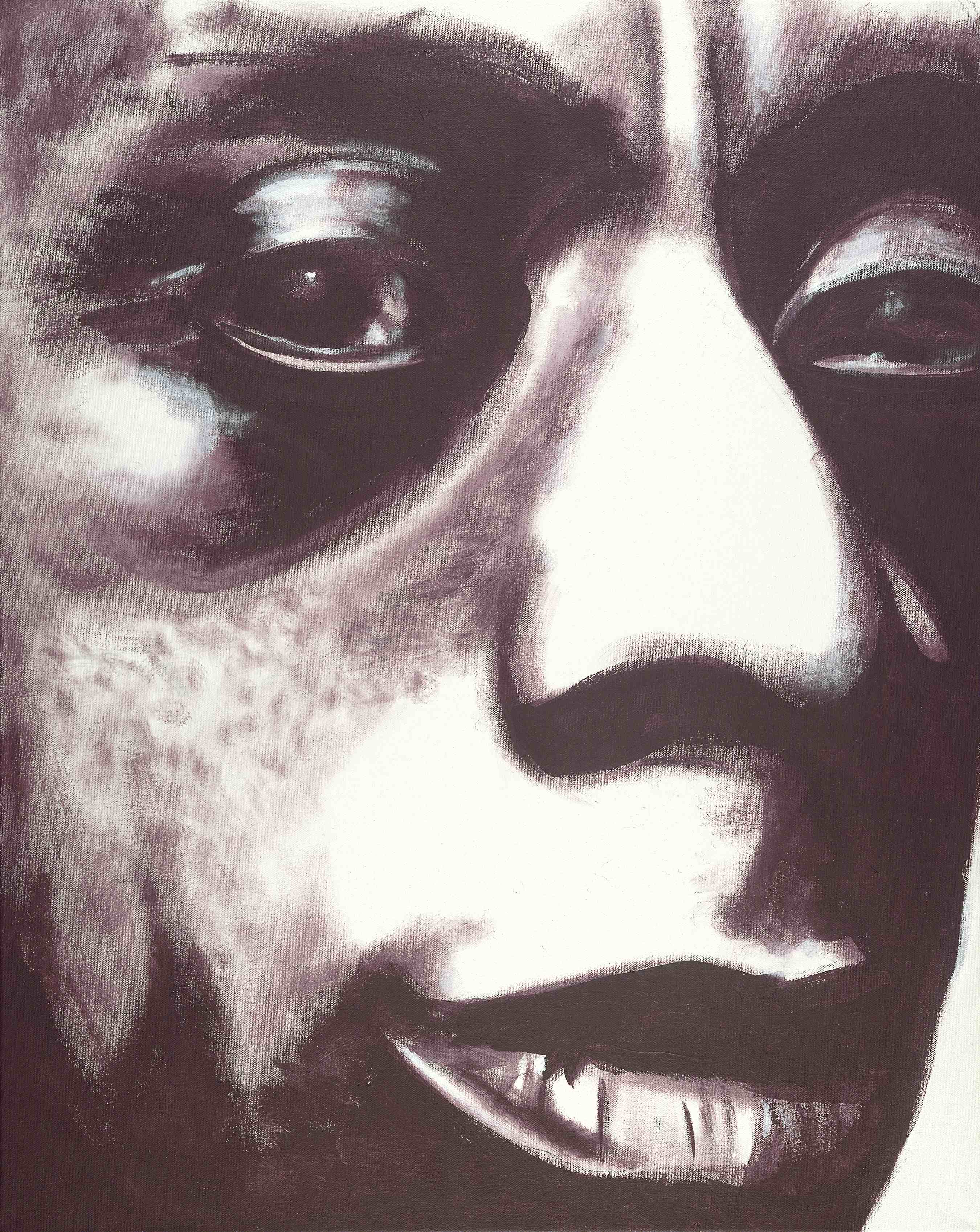
Category Archives: James Baldwin

“The Deliberately Silenced, or the Preferably Unheard”

No rhetorical sleight of words should mask that Trayvon Martin was a son. He had parents.

No rhetorical sleight of words should allow us to ignore that any child is everyone’s child.

Trayvon Martin was killed in part because he was reduced to a stereotype, and after his death, Trayvon was again reduced—often by well-meaning people—to an icon, the hoodie.

In his death, as well, Trayvon has been spoken about, spoken for—and I am compelled to argue that he has also been rendered voiceless.

But, as Arundhati Roy has explained, “We know of course there’s really no such thing as the ‘voiceless’. There are only the deliberately silenced, or the preferably unheard.”

I am also compelled to speak beyond Trayvon, about “the deliberately silenced, or the preferably unheard” Others, African American males.

At mid-twentieth century, as the US was fighting against its racist heritage, African American males demanded to be heard—Martin Luther King Jr., Malcolm X, Ralph Ellison, James Baldwin, Richard Wright and many others took the stage as artists, public intellectuals, and civic leaders.

Wright’s Black Boy and Ellison’s Invisible Man represent in fictional narrative a powerful and disturbing image of the African American male; for Ellison, the guiding metaphor of that narrative is invisibility. The killing of Trayvon and the subsequent trial may suggest that African American males no longer suffer from invisibility but from how they are seen, how they are silenced, and how they are unheard: Trayvon seen (and reduced) as black male, thus necessarily a thug, a threat, and then Trayvon, the hoodie, the icon of the disposable African American male.

The fact of being seen and reduced as African American males are too often results in violent deaths and prison. And the intersection of race, class, and gender with education has paralleled the rise of mass incarceration over the past thirty-plus years.

Just as Wright’s and Ellison’s fiction captures the African American male experience at mid-twentieth century, continuing to speak to the complex and entrenched conditions that contributed to Trayvon’s killing, Ellison’s and Baldwin’s concerns about the failure of education to see clearly and holistically—and humanely—African American males remain ominous and powerful messages in 2013.

In 1963, Ellison spoke to teachers:

At this point it might be useful for us to ask ourselves a few questions: what is this act, what is this scene in which the action is taking place, what is this agency and what is its purpose? The act is to discuss “these children,” the difficult thirty percent. We know this very well; it has been hammered out again and again. But the matter of scene seems to get us into trouble.

Ellison recognized the stigma placed on African American students, a deficit view of both an entire race and their potential intelligence (marginalized as insufficient language skills):

Some of us look at the Negro community in the South and say that these kids have no capacity to manipulate language. Well, these are not the Negroes I know. Because I know that the wordplay of Negro kids in the South would make the experimental poets, the modern poets, green with envy. I don’t mean that these kids possess broad dictionary knowledge, but within the bounds of their familiar environment and within the bounds of their rich oral culture, they possess a great virtuosity with the music and poetry of words. The question is how can you get this skill into the mainstream of the language, because it is without doubt there. And much of it finds its way into the broader language. Now I know this just as William Faulkner knew it. This does not require a lot of testing; all you have to do is to walk into a Negro church.

But Ellison rejected this deficit perspective: “Thus we must recognize that the children in question are not so much “culturally deprived” as products of a different cultural complex”:

As we approach the dropouts, let us identify who we are and where we are. Let us also have a little bit of respect for what we were and from whence we came. There is a bit of the phony built into every American. This is inevitable in a conscious society that has developed as swiftly as ours has. We are faced with endless possibilities for change, for metamorphosis. We change our environment, our speech, our styles of living, our dress, and often our values. So, in effect, we become somebody else–or so we are tempted to believe–and often we act as though we have no connection with our past. We are all tempted to become actors, and when we forget who we are and where we are from, our phony selves take command.

Finally, Ellison demanded that the human dignity of all children be honored:

I don’t know what intelligence is. But this I do know, both from life and from literature: whenever you reduce human life to two plus two equals four, the human element within the human animal says, “I don’t give a damn.” You can work on that basis, but the kids cannot. If you can show me how I can cling to that which is real to me, while teaching me a way into the larger society, then I will not only drop my defenses and my hostility, but I will sing your praises and help you to make the desert bear fruit.

Baldwin addressed teachers in that same year, 1963: “Let’s begin by saying that we are living through a very dangerous time.  Everyone in this room is in one way or another aware of that.  We are in a revolutionary situation, no matter how unpopular that word has become in this country.  The society in which we live is desperately menaced, not by Khrushchev, but from within.”

Then, Baldwin unmasked the cruel tension between the promise of universal public education and the inequity found in the lives of African American children:

Now, if what I have tried to sketch has any validity, it becomes thoroughly clear, at least to me, that any Negro who is born in this country and undergoes the American educational system runs the risk of becoming schizophrenic.  On the one hand he is born in the shadow of the stars and stripes and he is assured it represents a nation which has never lost a war.  He pledges allegiance to that flag which guarantees “liberty and justice for all.”  He is part of a country in which anyone can become president, and so forth.  But on the other hand he is also assured by his country and his countrymen that he has never contributed anything to civilization – that his past is nothing more than a record of humiliations gladly endured.  He is assumed by the republic that he, his father, his mother, and his ancestors were happy, shiftless, watermelon-eating darkies who loved Mr. Charlie and Miss Ann, that the value he has as a black man is proven by one thing only – his devotion to white people.  If you think I am exaggerating, examine the myths which proliferate in this country about Negroes….

The point of all this is that black men were brought here as a source of cheap labor.  They were indispensable to the economy.  In order to justify the fact that men were treated as though they were animals, the white republic had to brainwash itself into believing that they were, indeed, animals and deserved  to be treated like animals.  Therefor it is almost impossible for any Negro child to discover anything about his actual history.  The reason is that this “animal,” once he suspects his own worth, once he starts believing that he is a man, has begun to attack the entire power structure.  This is why America has spent such a long time keeping the Negro in his place.  What I am trying to suggest to you is that it was not an accident, it was not an act of God, it was not done by well-meaning people muddling into something which they didn’t understand.  It was a deliberate policy hammered into place in order to make money from black flesh.  And now, in 1963, because we have never faced this fact, we are in intolerable trouble.

Ultimately, education, for Baldwin, is revolutionary, an act of social justice:

I began by saying that one of the paradoxes of education was that precisely at the point when you begin to develop a conscience, you must find yourself at war with your society.  It is your responsibility to change society if you think of yourself as an educated person.  And on the basis of the evidence – the moral and political evidence – one is compelled to say that this is a backward society.  Now if I were a teacher in this school, or any Negro school, and I was dealing with Negro children, who were in my care only a few hours of every day and would then return to their homes and to the streets, children who have an apprehension of their future which with every hour grows grimmer and darker, I would try to teach them –  I would try to make them know – that those streets, those houses, those dangers, those agonies by which they are surrounded, are criminal.  I would try to make each child know that these things are the result of a criminal conspiracy to destroy him.  I would teach him that if he intends to get to be a man, he must at once decide that his is stronger than this conspiracy and they he must never make his peace with it.  And that one of his weapons for refusing to make his peace with it and for destroying it depends on what he decides he is worth.  I would teach him that there are currently very few standards in this country which are worth a man’s respect.

No rhetorical sleight of words should mask that Trayvon Martin was a son. He had parents.

No rhetorical sleight of words should allow us to ignore that any child is everyone’s child.

However if the killing of Trayvon does not haunt us, if the killing of Trayvon slips beneath the next tragedy-of-the-moment—as the Sandy Hook shooting has beneath the Zimmerman trial—then society and schools will continue to be mechanisms that shackle “the deliberately silenced, or the preferably unheard.”

And I suppose that is ultimately the cruel paradox, rendering Trayvon a ghost in this American house he was never allowed to enter, invisible again as Ellison’s unnamed narrator.

What Would James Baldwin Do (Say, Write)?

My future son-in-law is black. My daughter is white. And we live in the South where, despite their (possibly naive) idealism, interracial relationships still matter, often in negative ways.

I have been deeply concerned about race, class, and literacy for my 30-year career as a teacher, writer, and scholar, but I must confess that their relationship increases the poignancy of those issues for me because on the day the Trayvon Martin murder became the focus of the media, my future son-in-law left my house in a hoodie covering his dreadlocks. It was nighttime, and I wrestled with telling him to be careful in a way that had nothing to do with the perfunctory “be careful” people often use to say good-bye.

Their relationship has also colored my watching the documentary The Loving Story, and purchasing Loving v. Virginia in a Post-Racial World: Rethinking Race, Sex, and Marriage.

Over the past couple of years, as well, I have been exploring the work of James Baldwin, notably his non-fiction, leading to my co-editing a new volume on Baldwin.

As a white child of the redneck South, I am, then, wrestling with the not guilty verdict in the shooting of Trayvon Martin on many levels—personal, scholarly, existentially. And I find myself at a loss.

One enduring rock I continue to seek—a place to stand or even hold on to—is the work of James Baldwin. In fact, What would James Baldwin do (say, write)? echoes in my mind.

I imagine Baldwin, not on the Dick Cavett Show, but on Oprah, righteous and angry:

I imagine Baldwin responding to the smug inhumanity of Rush Limbaugh:

And I envision his words, 57 years later, still titled “A Report from Occupied Territory“:

On April 17, 1964, in Harlem, New York City, a young salesman, father of two, left a customer’s apartment and went into the streets. There was a great commotion in the streets, which, especially since it was a spring day, involved many people, including running, frightened, little boys. They were running from the police. Other people, in windows, left their windows, in terror of the police because the police had their guns out, and were aiming the guns at the roofs. Then the salesman noticed that two of the policemen were beating up a kid: “So I spoke up and asked them, ‘why are you beating him like that?’ Police jump up and start swinging on me. He put the gun on me and said, ‘get over there.’ I said, ‘what for?’”

An unwise question. Three of the policemen beat up the salesman in the streets. Then they took the young salesman, whose hands had been handcuffed behind his back, along with four others, much younger than the salesman, who were handcuffed in the same way, to the police station.

Nearly two decades before Ronald Reagan initiated the mass incarceration of African American males and almost six decades before Michelle Alexander declared this The New Jim Crow (asking, for example, why drug sweeps target poor and mostly black neighborhoods but not college dorms), Baldwin declared black neighborhoods “occupied territory”:

As a result of the events of April 17, and of the police performance that day, and because Harlem is policed like occupied territory, six young Negro men, the oldest of whom is 20, are now in prison, facing life sentences for murder. Their names are Wallace Baker, Daniel Hamm, Walter Thomas, Willie Craig, Ronald Felder and Robert Rice. Perhaps their names don’t matter. They might be my brothers, they might also be yours.

Haunting this passage from Baldwin is the ugly underbelly of who we identify with, and how we create some groups of people (black males) as “others.” George Zimmerman’s jurors, all white females, appear to have identified with Zimmerman, and seem not to have viewed Trayvon Martin as someone’s son, and thus everyone’s child.

Do race and racial stereotypes over-ride our human dignity? Can we not listen to our possibilities as parents and the fact that all humans are at their core children?

Where is our empathy, the appeal to basic human dignity in Baldwin’s words?

Today, I seek Baldwin’s words, as well, because he spoke from his own life:

This means that I also know, in my own flesh, and know, which is worse, in the scars borne by many of those dearest to me, the thunder and fire of the billy club, the paralyzing shock of spittle in the face, and I know what it is to find oneself blinded, on one’s hands and knees, at the bottom of the flight of steps down which one has just been hurled. I know something else: these young men have been in jail for two years now. Even if the attempts being put forth to free them should succeed, what has happened to them in these two years? People are destroyed very easily. Where is the civilization and where, indeed, is the morality which can afford to destroy so many?

In the wake of the Civil Rights movement, blacks in the US learned lessons we continue to witness today:

Furthermore, the Negro’s education, North and South, remains, almost totally, a segregated education, which is but another way of saying that he is taught the habits of inferiority every hour of every day that he lives. He will find it very difficult to overcome these habits. Furthermore, every attempt he makes to overcome them will be painfully complicated by the fact that the ways of being, the ways of life of the despised and rejected, nevertheless, contain an incontestable vitality and authority. This is far more than can be said of the middle class which, in any case, and whether it be black or white, does not dare to cease despising him….

The children, having seen the spectacular defeat of their fathers—having seen what happens to any bad nigger and, still more, what happens to the good ones—cannot listen to their fathers and certainly will not listen to the society which is responsible for their orphaned condition.

What must children be learning now—Trayvon Martin dead, drug tested, vilified, reduced to an iconic hoodie; Zimmerman freed, exonerated, justified?

Baldwin speaks to those lessons:

This is why those pious calls to “respect the law,” always to be heard from prominent citizens each time the ghetto explodes, are so obscene. The law is meant to be my servant and not my master, still less my torturer and my murderer. To respect the law, in the context in which the American Negro finds himself, is simply to surrender his self-respect….

These things happen, in all our Harlems, every single day. If we ignore this fact, and our common responsibility to change this fact, we are sealing our doom. Here is the boy, Daniel Hamm, speaking—speaking of his country, which has sworn to bung peace and freedom to so many millions. “They don’t want us here. They don’t want us—period! All they want us to do is work on these penny-ante jobs for them—and that’s it. And beat our heads in whenever they feel like it. They don’t want us on the street ’cause the World’s Fair is coming. And they figure that all black people are hoodlums anyway, or bums, with no character of our own. So they put us off the streets, so their friends from Europe, Paris or Vietnam—wherever they come from—can come and see this supposed-to-be great city.”

There is a very bitter prescience in what this boy—this “bad nigger”—is saying, and he was not born knowing it. We taught it to him in seventeen years. He is draft age now, and if he were not in jail, would very probably be on his way to Southeast Asia. Many of his contemporaries are there, and the American Government and the American press are extremely proud of them. They are dying there like flies; they are dying in the streets of all our Harlems far more hideously than flies. A member of my family said to me when we learned of the bombing of the four little girls in the Birmingham Sunday school, “Well, they don’t need us for work no more. Where are they building the gas ovens?” Many Negroes feel this; there is no way not to feel it.

Baldwin’s last comment—”Many Negroes feel this; there is no way not to feel it”—likely remains true, but shouldn’t we by now be able to say about the death of Trayvon Martin, “Everyone recognizes the injustice; there is no way not to feel it”?

Baldwin and Woodson: Lingering Legacy of Failing Education System

I am currently drafting a chapter on schools as prisons (a product of zero tolerance and “no excuses” ideologies and policies), and along with the words of James Baldwin being relevant today—

The truth is that the country does not know what to do with its black population now that the blacks are no longer a source of wealth, are no longer to be bought and sold and bred, like cattle; and they especially do not know what to do with young black men, who pose as devastating a threat to the economy as they do to the morals of young white cheerleaders. It is not at all accidental that the jails and the army and the needle claim so many, but there are still too many prancing around for the public comfort. Americans, of course, will deny, with horror, that they are dreaming of anything like “the final solution”—those Americans, that is, who are likely to be asked: what goes on in the vast, private hinterland of the American heart can only be guessed at, by observing the way the country goes these days. (Baldwin, 1998, pp. 432-433) [1]

—so are the words of Carter Godwin Woodson:

[T]he educational system as it has developed both in Europe and America [is] an antiquated process which does not hit the mark even in the case of the needs of the white man himself….The so-called modern education, with all its defects, however, does others so much more good than it does the Negro, because it has been worked out in conformity to the needs of those who have enslaved and oppressed weaker people….The same educational process which inspires and stimulates the oppressor with the thought that he is everything and has accomplished everything worth while, depresses and crushes at the same time the spark of genius in the Negro by making him feel that his race does not amount to much and never will measure up to the standards of other peoples. The Negro thus educated is a hopeless liability of the race. (pp. 4-5) [2]

[1] Baldwin, J. (1998). James Baldwin: Collected essays. New York, NY: The Library of America. Originally published in 1972, No Name in the Street.

[2] Woodson, C. G. (1933). The mis-education of the negro. New York, NY: Tribeca Books.

“What You Say about Somebody Else, Anybody Else, Reveals You”

In a clip from Take this Hammer (1963), James Baldwin speaks pointedly and thoughtfully about “Who is the Nigger?”

—–

In this explication of the racial slur now rendered taboo, Baldwin explains that “What you say about somebody else, anybody else, reveals you.” His examination asks his listeners to turn the racism and demonizing of people positioned as “Others” back on those using language as both a sword and a mask.

Currently, in 2013, racial slurs as taboo words have resulted in an ironic silencing of discussions of race as well. Polite company—that middle-class norm of civility—will not allow racial slurs, but that censoring of a word also becomes a more insidious form of oppression, a verbal shielding of the remaining racism that strangles the American democracy.

Nearly fifty years later, during the 2012 Republican primaries for president, Americans found themselves confronted by the most corrosive forms of racism in the candidacy of Newt Gingrich, but few strayed outside the confines of civility to name it for what it was.

[As SC Republicans have joined the rise of voters supporting Donald Trump, the discussion below remain relevant, and Trump has followed an even more aggressively racist and fascist pattern than Gingrich.]

“I’m Going to Continue to Help Poor People Learn How to Get a Job”

During Gingrich’s rise to winning the South Carolina presidential primary in January 2012, Gingrich built a steady platform about “poor people”—including the following:

• Repeating the refrain that Obama is the “food stamp president.”

• Calling for “poor children” to be given work in schools as janitors because:

“Really poor children in really poor neighborhoods have no habits for working and have nobody around them who works. So they literally have no habit of showing up on Monday,” Gingrich told more than 500 employees inside the Nationwide Insurance lunchroom, NBC News reported. “So they literally have no habit of showing up on Monday. They have no habit of staying all day. They have no habit of ‘I do this and you give me cash,’ unless it’s illegal.”

• Assuming the pose of professor and job creator by announcing he was “…going to continue to help poor people learn how to get a job, learn how to get a better job, and someday learn how to own the job.”

Gingrich’s racism and his speaking to the racism of his constituency were in many ways more insidious than the racial slur confronted by Baldwin in 1963 because Gingrich’s ploy allowed him to mask his intent one or two layers beneath his words. “Food stamps,” “janitor,” “no habit” (laziness), and “illegal” trigger the racial stereotypes that drive racism—stereotypes that have no basis in fact, but remain robust in America’s social norms and uncritical acceptance of myths such as the culture of poverty.

As a fifty-plus-year-old white man living my entire life in the South, I am well acquainted with the pervasive direct racism as well as the wink-wink-nod-nod racism not just a legacy of the South but a daily reality remaining in 2013. As Gingrich mined and as Obama remained mostly silent on that racism, Americans and their leaders must confront the realities of the land of the free and the home of the brave:

• Males constitute about half the U.S. population, but represent by 10 to 1 the prison population; white men outnumber black men about 5 to 1, but black men fill U.S. prisons at a rate 6 to 1 compared to white men.

• According to 2005 research by Walter Gilliam, prekindergarten expulsion rates mirror U.S. prison dynamics: “Black boys receive less attention, harsher punishments, and lower grades in school than their White counterparts”:

African-American preschoolers were about twice as likely to be expelled as European-American (both Latino and non-Latino) preschoolers and over five times as likely as Asian-American preschoolers. Boys were expelled at a rate over 4½ times that of girls. The increased likelihood of boys to be expelled over girls was similar across all ethnicities, except for African-Americans (?2 = 25.93, p < .01), where boys accounted for 91.4% of the expulsions.

• Childhood poverty has accelerated in the U.S. (22%) and ranks far below countries similar to the U.S. throughout the world (see HERE, HERE, and HERE).

• The wealth gap has increased significantly among racial groups:

The racial wealth gap has been enormous ever since the Census Bureau began measuring it 25 years ago. But it has never been larger than today. The median wealth of a white family is now at least 20 times higher than that of a black family and 18 times that of a Latino family, according to an analysis by the Pew Research Center.

• The welfare myth remains powerful but also inaccurate—specifically in terms of who receives food stamps:

Gingrich, meanwhile has been criticized not only for singling out Obama as the “food stamp president” but for specifically linking the program to minorities. The NAACP and the National Urban League sharply criticized him for comments in early January that “the African-American community should demand paychecks and not be satisfied with food stamps,” accusing him of feeding stereotypes about the black poor. In fact, 22% of SNAP recipients are black, compared to 36% for whites, 10% for Latinos and 18% from unknown racial backgrounds.

Equity, especially among the races, and upward mobility have eroded in the U.S., often dwarfed by greater equity and upward mobility in other countries. Timothy Smeeding explains:

Higher levels of economic inequality are associated with lower rates of mobility. But children are more upwardly mobile in some nations than in others. How do countries like Canada, with above-average inequality and above-average child poverty rates, do so well on mobility outcomes compared with the United States? Canada has more effective public investments in education, including nearly universal preschool, effective secondary schools and high rates of college completion. And the Canadians are much more generous to low- and middle-income families, including child allowances and tuition breaks for university education.

• While “No Excuses” education reformers simultaneously decry public education a historical failure and the sole mechanism for social reform, children of color and children in poverty are routinely assigned to classrooms taught by the least experienced and un-/under-qualified teachers—including a rise in hiring Teach for America (TFA) recruits to staff high-poverty schools and in corporate charter schools that are re-segregating public education.

The reality of racism and inequity in America is being ignored, and politicians, such as Gingrich, bait racists and perpetuate racism, directly and indirectly.

A recent Room for Debate (The New York Times) includes George Lakoff identifying why and how politicians continue to misrepresent the state of America:

But more often politicians lie to protect or advance what they see as a moral endeavor (e.g., the invasion of Iraq, Reagan’s war on nonexistent ‘welfare queens, Johnson on the Tonkin Gulf). In the conservative moral system, the highest value is protecting and extending the moral system itself. When conservative icons or ideas themselves are threatened, it is not uncommon for conservative politicians to lie in their defense (Reagan never raised taxes; there’s no evidence for global warming; “government takeover”).

It is politically advantageous to claim that America is post-racial, that America has achieved equity, but as the evidence above shows, those claims are political lies.

We may say that Gingrich’s campaign strategy included race-baiting or class warfare, but that would be yet more masking and avoiding the harsh reality that Gingrich’s strategy was racism—and it often worked.

To paraphrase and extend Baldwin’s perceptive understanding of a racial slur, what Gingrich said about poor people was telling us about him, and by association, those who voted for him.

Racism remains a vivid and crippling scar on the American character in 2013, and America needs leadership and voices that will name that reality and call for a commitment to seeking the ideals of equity and post-racial America. But that will never occur if we hide behind the masks of middle class civility and political expediency that claim we have achieved the ideals we debase every day.

Recommended James Baldwin

Who is the Nigger? -James Baldwin

Baldwin’s Nigger 1 of 3

Baldwin’s Nigger 2 of 3

Baldwin’s Nigger 3 of 3

James Baldwin on Education

To Jimmy (and Jose), with Love: I Walk Freely among Racism

When Jose Vilson posts a blog, I read carefully, and I don’t multitask.

Why?

I am a privileged, white male who has lived his entire 52 years in the South where racism clings to our region like the stench of a house razed by fire. And as a result, I walk freely among racism because I am white.

So when Jose posted “An Open Letter From The Trenches [To Education Activists, Friends, and Haters],” I listened, and I recognized:

“Anger isn’t a title we parade around like doctorates, followers, and co-signers; it’s the feeling before, during, and after we approach things with love and earnest….

“However, for anyone to say that racial insults are ‘no big deal’ speaks volumes to the sorts of work people of color and anyone who considers themselves under the umbrella have to do in order to make things right. As colleague Kenzo Shibata once said, ‘You can’t build a movement by making allies feel unwelcome and telling them to get over it.’ I’d take it one step further and say that we can’t build coalition if we continue to think we have to build a movement under one or two people’s terms. I refuse to believe that we can’t coalesce around building a better education system for all children, regardless of background.

“How can you say you care about children of color, but ostracize adults of color with the same breath?…

“Adults, on the other hand, don’t get excuses. The privilege is in the hopes and dreams we have for our students, not in the ways we act towards our fellow man or woman. The privilege, to convert the anger over how our kids are treated in the system into a passion for student learning, remains at the forefront.”

I learned, painfully and too slowly, I regret to admit, to read and listen to Jose as I do with Charles Blow and Ta-Nehisi Coates, as I do with Martin Luther King Jr., Malcolm X, Ralph Ellison, and now more than ever, James Baldwin, who is the focus of a book project I co-edit.

I have learned daily, I continue to learn today that America the Beautiful has failed an entire race of people and specifically African American males.

I have learned daily, I continue to learn today that in my half-century-plus life, the most hateful people I have encountered have been white men—yet, daily brown and black faces smile at me (even or especially when we are strangers), and speak with kindness and joy when we approach each other on the street, in restaurants, and where we all work and live.

I have learned daily, I continue to learn today that in my half-century-plus life, that the most beautiful humans, the greatest reasons to live on this planet are children of every possible shade—red and yellow, black and white children laugh and sing and dance and run with the beauty of life that has nothing at all to do with race, or the supreme and inexcusable failures of the adults in whose care they reside.

America the Beautiful created a minority class out of a race of people who are as rich, vibrant, and beautiful as any race of people

America the Beautiful created a criminal class out of African America men, building a new Jim Crow with mass incarceration masked as a war on drugs.

America the Beautiful created a dropout class and future criminal class out of African American young men, building school-to-prison pipelines and schools-as-prisons as zero tolerance school houses imprisoning urban communities.

And these are not angry and hyperbolic claims about the soot-stained American past; these are claims about the roots that continue to thrive and bear bitter fruit, as James Baldwin, in “A Report from Occupied Territory” (The Nation, July 11, 1966), confronted as an “arrogant autonomy, which is guaranteed the police, not only in New York, by the most powerful forces in American life” and the corrosive deficit view of race it is built upon: “‘Bad niggers,’ in America, as elsewhere, have always been watched and have usually been killed”:

“Here is the boy, Daniel Hamm, speaking—speaking of his country, which has sworn to bring peace and freedom to so many millions. ‘They don’t want us here. They don’t want us—period! All they want us to do is work on these penny-ante jobs for them—and that’s it. And beat our heads in whenever they feel like it. They don’t want us on the street ’cause the World’s Fair is coming. And they figure that all black people are hoodlums anyway, or bums, with no character of our own. So they put us off the streets, so their friends from Europe, Paris or Vietnam—wherever they come from—can come and see this supposed-to-be great city.’

“There is a very bitter prescience in what this boy—this ‘bad nigger’—is saying, and he was not born knowing it. We taught it to him in seventeen years [emphasis added]. He is draft age now, and if he were not in jail, would very probably be on his way to Southeast Asia. Many of his contemporaries are there, and the American Government and the American press are extremely proud of them….”

These realities of racism from 1966 linger today, the scar of racism cloaked, as Baldwin recognized, with claims of justice:

“This is why those pious calls to ‘respect the law,’ always to be heard from prominent citizens each time the ghetto explodes, are so obscene. The law is meant to be my servant and not my master, still less my torturer and my murderer. To respect the law, in the context in which the American Negro finds himself, is simply to surrender his self-respect.”

And thus, Baldwin’s conclusion about the Harlem Six rings true still:

“One is in the impossible position of being unable to believe a word one’s countrymen say. ‘I can’t believe what you say,’ the song goes, ‘because I see what you do’—and one is also under the necessity of escaping the jungle of one’s situation into any other jungle whatever. It is the bitterest possible comment on our situation now that the suspicion is alive in so many breasts that America has at last found a way of dealing with the Negro problem. ‘They don’t want us—period!’ The meek shall inherit the earth, it is said. This presents a very bleak image to those who live in occupied territory. The meek Southeast Asians, those who remain, shall have their free elections, and the meek American Negroes—those who survive—shall enter the Great Society.”

Today, the racism is thinly masked, and only the adults refuse to see it.

However, “the children do notice.”

In 1853, Frederick Douglass [1] recognized what would 100 years later be portrayed as invisibility by Ralph Ellison:

“Fellow-citizens, we have had, and still have, great wrongs of which to complain. A heavy and cruel hand has been laid upon us.

“As a people, we feel ourselves to be not only deeply injured, but grossly misunderstood. Our white fellow-countrymen do not know us. They are strangers to our character, ignorant of our capacity, oblivious of our history and progress, and are misinformed as to the principles and ideas that control and guide us as a people. The great mass of American citizens estimate us as being a characterless and purposeless people; and hence we hold up our heads, if at all, against the withering influence of a nation’s scorn and contempt.”

Douglass’s charges remain in Baldwin’s “No Name in the Street,” which points a finger at the entrenched American problem with race:

“The truth is that the country does not know what to do with its black population now that the blacks are no longer a source of wealth, are no longer to be bought and sold and bred, like cattle; and they especially do not know what to do with young black men, who pose as devastating a threat to the economy as they do to the morals of young white cheerleaders. It is not at all accidental that the jails and the army and the needle claim so many, but there are still too many prancing around for the public comfort. Americans, of course, will deny, with horror, that they are dreaming of anything like ‘the final solution’—those Americans, that is, who are likely to be asked: what goes on in the vast, private hinterland of the American heart can only be guessed at, by observing the way the country goes these days.”

America doesn’t know what to do, but it is startlingly clear that we should know what not to do: Don’t suspend and expel young black men, don’t incarcerate young black men, don’t lure and then send young black men to war, and without a doubt, don’t allow anyone to demonize anyone else with racial slurs.

Maybe, in the end, racism remains a cancer on America the Beautiful because we will not face it, we will not unmask it, and ultimately, the solution seems trite: As Jose stated, as King repeated, and James (“Jimmy” of the allusion-as-blog-title) Baldwin demanded, the solution is love: Love everyone, but be vigilant about loving the least among us—children, the impoverished, the imprisoned, the hungry, the sick, the elderly—and do so color-blind.

I may have no real right to these words as a privileged, white male, but I offer them, as I stated above, because I walk freely among racism and because I, like Jose, refuse to believe “that we can’t coalesce around building a better education system for all children, regardless of background.”

And as Baldwin referenced: “‘I can’t believe what you say,’ the song goes, ‘because I see what you do’”—and we all must hear what everyone else says, the words they choose, never offering excuses for the racism of policy, the racism of action, or the racism of language.

To Jimmy (and Jose), with Love,

Paul

[1] The passage below is cited by Michelle Alexander in The New Jim Crow.

“The Poor Are Too Free”?: Unlocking the Middle-Class Code

Walking outside the Commander’s compound in the “heart of Gilead,” Offred (June) is reminded of her past now swept away by the rise of Gilead, the theocracy at the center of Margaret Atwood’s The Handmaid’s Tale:

Luke and I used to walk together, sometimes, along these streets. We used to talk about buying a house like one of these, an old big house, fixing it up. We would have a garden, swings for the children. We would have children. Although we knew it wasn’t too likely we could ever afford it, it was something to talk about, a game for Sundays. Such freedom now seems almost weightless.

This idealized middle-class fantasy ignores that behind the weightless freedom often lurked the life-long burden of debt—the thirty-year mortgages, the monthly bills, the billowing cost of college-for-all. A motif of freedom weaves its way through Atwood’s “dystopia from the female point of view – the world according to Julia, as it were,” a work with George Orwell just below the surface.

To fulfill her role as a handmaid (fertile women designated to conceive with the Commanders), Offred (June) has been re-educated at the Rachel and Leah Center by the Aunts, women controlling women. The Aunts as the teachers for Gilead help the handmaids understand freedom:

There is more than one kind of freedom, said Aunt Lydia. Freedom to and freedom from. In the days of anarchy, it was freedom to. Now you are being given freedom from. Don’t underrate it….We were a society dying, said Aunt Lydia, of too much freedom.

As Atwood explains,

Gilead has utopian idealism flowing through its veins, coupled with a high-minded principle, its ever-present shadow, sublegal opportunism, and the propensity of the powerful to indulge in behind-the-scenes sensual delights forbidden to everyone else. But such locked-door escapades must remain hidden, for the regime floats as its raison d’être the notion that it is improving the conditions of life, both physical and moral; and like all such regimes, it depends on its true believers.

In the “no excuses” charter school movement, David Whitman is a true believer, a voice for the “new” paternalism that shares a haunting parallel with the paternalism of Atwood’s dystopia:

By paternalistic I mean that each of the six schools is a highly prescriptive institution that teaches students not just how to think, but also how to act according to what are commonly termed traditional, middle-class values. These paternalistic schools go beyond just teaching values as abstractions: the schools tell students exactly how they are expected to behave, and their behavior is closely monitored, with real rewards for compliance and penalties for noncompliance….Paternalistic programs survive only because they typically enforce values that “clients already believe,” Mead notes. But many paternalistic programs remain controversial because they seek to change the lifestyles of the poor, immigrants, and minorities, rather than the lifestyles of middle-class and upper-class families. The paternalistic presumption implicit in the schools is that the poor lack the family and community support, cultural capital, and personal follow-through to live according to the middle-class values that they, too, espouse.

Another true believer, cited by Whitman in his Sweating the Small Stuff, is Lawrence Mead, who claims in The New Paternalism: Supervisory Approaches to Poverty: “The problem of poverty or underachievement is not that the poor lack freedom. The real problem is that the poor are too free.”

Now let’s add all this up, as Diane Ravitch has helped us do the math: President Barack Obama + Secretary of Education Arne Duncan + speechwriter David Whitman + “the poor are too free” Lawrence Mead = “no excuses” education policy.

People trapped in poverty, Mead et al. argue, are suffering from too much freedom; therefore, they must be given freedom from (like the handmaids). Our “new” paternalistic schools, then, are gifts of the middle-class code bestowed upon children living in poverty, disproportionately children who also are African American and Latino/a.

So just what are these impoverished children being given freedom from?

Natalie Hopkins has one suggestion:

It’s a great question—one that gets to the heart of the tensions over “urban” school reform. What will our schools look like once they “succeed”? Will black girls stop playing hand games? Will black boys lose the urge to tap West African rhythms on their desks? Will children graduate bearing no trace of the poverty, riches, triumph, failure, and culture that form the complex kaleidoscope of blackness in this country?…But the problem is when you consider education policy for the past six decades, there hasn’t been a war at all. From desegregation to today’s “school choice” [such as charter schools], every single scheme has been designed to kill off the Negro soul—or at least provide an escape hatch from it.

Another question is, What are the consequences of these new urban schools policies?

Examining the rise of “no excuses” charter schools in post-Katrina New Orleans, Sarah Carr cites one teacher: “‘The first week of school is all about compliance,’ said Kaycee Eckhardt, one of the founding teachers.”

But Carr notes that Andre Perry (institute for Quality and Equity in Education, Loyola University) “is troubled by the idea that children—and poor children of color most especially—need to be controlled. ‘There’s an insidious mistrust of children reflected in having them walk on lines or making them stay silent.'”

Yet, “no excuses” charter schools driven by a “new” paternalism that embraces a deficit view of children, people in poverty, and people of color remain committed to freedom from, despite the potential long-term outcomes:

Sci Academy and other [“no excuses”] charter schools like it run a risk in creating such structured, disciplined environments where students receive motivation from external rewards and punishments. The approach can backfire in the long run if students do not know how to function once all the structure and incentives disappear and if they do not learn how to think for themselves….Despite the guiding ambition to send all their students through college, Sci’s learning environment is the opposite of collegiate in many respects.

And here we find the ugly truth behind the claim that “no excuses” paternalism seeks to offer impoverished children of color the key to middle-class values: The people these students are being trained to be—as Hopkins unmasks—is not some middle-class ideal such as the one recalled by Offred (June), but the ideal that privileged people want for “other people’s children”—controlled, passive, silent, obedient, freedom from—so that privileged children can maintain their freedom to.

As in Gilead, the privileged orchestrate a world in which they have freedom to built on the rest having freedom from. And this deficit view by a paternalistic state extends beyond schools, as Deborah Meier condemns in her quote of the day:

“We are coming to find you and monitor every step you take. And we are going to learn about every bad friend you have. And you’re going to get alienated from those friends because we are going to be all over you.” Joanne Jaffe, of the New York City Police Department, on a program meant to steer juveniles away from crime.

Joanne Jaffe may have heart of gold, but she, and the NYC Police Department, couldn’t be further off the mark. This quotation and the story it goes with sent shivers up my spine. The idea that the kids will follow our advice if we treat them unfairly, interfere with their perfectly legal rights, harass them a bit more is so far from reality that it truly is scary.

Meier seeks a different barometer for the standards we allow for “other people’s children,” however:

That’s why medicine rests on “do no harm”—and so does raising children. So I often rest my arguments on “would I do it to myself” and “would I do it to my own offspring?” And if so, why not?

In “A Report from Occupied Territory” (The Nation, July 11, 1966), James Baldwin confronted an “arrogant autonomy, which is guaranteed the police, not only in New York, by the most powerful forces in American life” and the corrosive deficit view of race it is built upon: “‘Bad niggers,’ in America, as elsewhere, have always been watched and have usually been killed.” [Think of the Trayvon Martin tragedy.]

As an example, Baldwin adds:

Here is the boy, Daniel Hamm, speaking—speaking of his country, which has sworn to bring peace and freedom to so many millions. “They don’t want us here. They don’t want us—period! All they want us to do is work on these penny-ante jobs for them—and that’s it. And beat our heads in whenever they feel like it. They don’t want us on the street ’cause the World’s Fair is coming. And they figure that all black people are hoodlums anyway, or bums, with no character of our own. So they put us off the streets, so their friends from Europe, Paris or Vietnam—wherever they come from—can come and see this supposed-to-be great city.”

There is a very bitter prescience in what this boy—this “bad nigger”—is saying, and he was not born knowing it. We taught it to him in seventeen years [emphasis added]. He is draft age now, and if he were not in jail, would very probably be on his way to Southeast Asia. Many of his contemporaries are there, and the American Government and the American press are extremely proud of them.

Baldwin’s central message appears relevant to the hallways of “no excuses” schools as well as the streets of urban America:

This is why those pious calls to “respect the law,” always to be heard from prominent citizens each time the ghetto explodes, are so obscene. The law is meant to be my servant and not my master, still less my torturer and my murderer. To respect the law, in the context in which the American Negro finds himself, is simply to surrender his self-respect.

This surrender of self, of culture, of race can be found in the normalizing effect of zero tolerance policies that turn the school-to-prison pipeline into schools-as-prison as well as the conversion of urban public schools into “no excuses” charter schools. “DuBois might have called our flight from blackness and fixation with standardized tests ‘measuring one’s soul by the tape of a world that looks on in an amused contempt and pity,'” explains Hopkins, adding:

In order to move beyond the black/white, negative/positive binary that dominated DuBois’ 20th century, we need to generate some new definitions. What does it mean to be educated? What is history? What is “culture”and how can our public institutions value it? We need new definitions for success – hopefully ones that don’t deodorize the funk.

The middle-class code of “no excuses” school reform, it seems, is more about someone else’s freedom from to preserve the freedom to remain privileged.

While privileged children sit in gifted classrooms and private academies that celebrate creativity and respecting a child’s innate zest for learning, a separate and unequal school system is being built on a “new” paternalism platform that hides issues of race and class behind code words like “middle class.”

As Baldwin envisioned almost fifty years ago, if “no excuses” ideologies win, “the meek American Negroes—those who survive—shall enter the Great Society,” but it will be one designed for them and not by them.

“A Separate and Unequal Education System” 2013

The Education Trust-West has released At a Crossroads: A Comprehensive Picture of How African-American Youth Fare in Los Angeles County Schools (February 2013), highlighting:

Nearly 60 years after Brown v. Board of Education, too many of California’s African-American students languish in a separate and unequal education system. If current trends continue, only 1 in 20 of today’s African-American kindergartners will go on to graduate from high school and complete a degree at a four-year California university. Indeed, on nearly every measure of educational opportunity, the dream of equal access to a high-quality education is not a reality for African-American students and their families in California. (p. 1)

Despite almost 60 years since desegregation of schools and almost 50 years since the Civil Rights Era in the U.S., the racial and socioeconomic inequities confronted by Malcolm XJames Baldwin, and Martin Luther King Jr. remain persistent in our society and schools in 2013. While educational outcomes such as test scores, graduation rates, college attendance, and college completion present often cited achievement gaps that must not be ignored, much less attention is paid to the powerful and corrosive inequity of opportunity that still exists between African-American children and children of other races, as detailed in the ET-W report on Los Angeles.

African Americans have experienced a decline in their relative status as a minority race, as well as continued to experience socioeconomic inequity, but African-American students also disproportionately find themselves in either inequitable public school settings or charter schools, which also tend to segregate students:

African-American students used to be the third largest subgroup in L.A. County, making up about 12 percent of the student population in 1994. During the past two decades (from 1994 to 2011), however, the African-American population has been on the decline and is now only slightly larger than the Asian student population. Currently, 9 percent of students are African Americans and nearly three-quarters of these students are socioeconomically disadvantaged…. Of the African-American students enrolled in the public school system in L.A. County, the vast majority attend traditional public K-12 schools (94 percent), with the remaining 6 percent attending alternative schools of choice or continuation schools. Nearly 1 out of 6 (15 percent) attends one of L.A. County’s more than 300 charter schools, almost twice the rate of students overall. (p. 2)

One failure of the current education reform movement is focusing almost exclusively on in-school variables as well as school-related outcomes. For African-American students specifically, access to opportunities are a better place to look. Schools tend to mirror and replicate the inequity of the neighborhoods they serve; thus, “doubly disadvantaged” students from high-poverty homes and communities produce outcomes that represent the inequity of opportunity they face in the lives and schools—more so than their quality as students:

At the middle and high school levels, rates of participation and proficiency in math courses provide signals about college eligibility and readiness. Algebra I is a “gatekeeper” course for higher level math classes that students need to become eligible for admission to the University of California (UC) and California State University (CSU) systems. Yet Algebra I is effectively closed to many African-American middle school students in L.A. County. Only 60 percent of African-American students took Algebra I in the eighth grade in 2011-12. (p. 3)

For African-American students, separate-but-unequal persists, manifested in tracking and school-within-schools whereby race and class determine whether or not students enter Advanced Placement or International Baccalaureate courses as opposed to test-prep courses focusing on remediation and high-stakes accountability tests:

Unfortunately, African-American students in L.A. County graduate from high school at lower rates, are less likely to complete rigorous coursework while in high school, and are less ready for college-level coursework than their white peers. For every 100 African-American students who walk into a ninth-grade classroom in L.A. County, only 63 students leave high school four years later with a diploma in hand, and just 20 of them have completed the A-G course sequence that makes them eligible to attend a four-year public university in California. The outcomes are even worse for African-American male students: for every 100 African-American male students who enter ninth grade, just 58 graduate on time, and only 15 complete the A-G course sequence…. L.A. County high schools continue their practice of systematic tracking, whereby low-income students and students of color receive less rigorous coursework. For example, although African-American students make up 9 percent of L.A. County’s population, only 6 percent of students taking one or more Advanced Placement (AP) courses are African American….On the other hand, 22 percent of students taking at least one AP course are white, though they make up a smaller share of the overall student population. (p. 5)

If college readiness and college attendance/completion are genuine goals for all U.S. students regardless of background or race, then the gaps that remain in these goals must be traced back to the cumulative effect of access gaps existing in African-American children’s lives from birth and throughout their schooling:

The latest results reveal that the vast majority of African-American 11th-graders in L.A. County lack the skills necessary for college-level English and math work. In contrast, white students in L.A. County are three times more likely to be “ready for college-level work” in English and math…. 2 out of 5 African-American ninth-graders go to college five years later, lagging behind the rates of their white and Asian peers by 20 percentage points to more than 30 percentage points. (p. 6)

Inequity of educational opportunities for African-American students is paralleled by inequitable discipline policies and outcomes, including race-based inequities of the criminal justice system beyond the walls of schools. As Kathleen Nolan and Sarah Carr have shown, zero tolerance and no-excuses policies feed the school-to-prison pipeline and create schools-as-prisons:

Across California, nearly 1 out of every 5 African-American students (18 percent) was suspended at least one time, compared with 1 in 17 white students (6 percent). Suspension rates are slightly lower in L.A. County than the state average, but large gaps still exist: 15 percent of African-American students were suspended at least once, compared with 4 percent of white students…. The California Department of Justice reports that in L.A. County a much larger share of African-American students are arrested for felony charges than white students. Specifically, for every 1,000 youth ages 10-17, 38 African-American juveniles are arrested for felonies, as compared with 7 white youth. (p. 7)

While the education reform movement has argued that teacher quality drives student outcomes—an inaccurate claim—almost no attention has been paid to the inequitable distribution of teacher assignments that disadvantage students of color, ELL students, and special needs students:

These inequitable and often dismal outcomes are the result of many factors. In fact, this educational inequity is set in motion prior to elementary school. African-American children are more likely to grow up in poverty and enter school with critical educational disadvantages…. African-American children are less likely to access preschool than white children; and when they do, they are less likely to be taught by well-prepared teachers. In L.A. County, 59 percent of African-American three and four-year olds attend preschool, compared with 69 percent of white children. Across the state, just 13 percent of African-American children are estimated to be in preschool classrooms in which the lead teacher has at least an associate’s degree in early childhood education, compared with 41 percent for white and 42 percent for Asian children. (p. 8)

These inequities remain embedded in the rise of segregated schools in both traditional public schools and charter schools:

Although African Americans comprise a small percentage of the student population in L.A. County, they often attend schools where they are substantially overrepresented and that are intensely segregated (defined as schools where more than 90 percent of students come from underrepresented minority backgrounds)…. Research demonstrates that African-American students in high-poverty, high-minority schools receive less of everything we know matters most in education—from effective teachers and resources to sufficient interventions and supports. Students in intensely segregated schools are almost three times as likely to have a teacher lacking full qualifications than students attending majority white and Asian schools. And our own research finds that African-American students in LAUSD are less likely to be taught by highly effective teachers than their white or Asian peers. Such segregated schools often suffer from overcrowding, which creates unsafe and ineffective learning environments. (pp. 8-9)

Claims of a post-racial America, a meritocracy whereby each person’s success is the result of her or his “grit” are both factually untrue and terribly misleading as a message for children. The ET-W report ends with a sobering message:

More than 135,000 African-American students go to school in Los Angeles County, and far too many of these children and youth are underserved. Even before starting kindergarten, they are often disadvantaged by poverty, access to quality preschool, and a host of other factors. When they do enter the education system, they too frequently face school segregation, low academic expectations, insufficient resources, minimal educational and socioemotional supports that fail to leverage the assets they bring, and—dare we say it—racism that manifests itself in the form of over-identification for special education and more frequent suspension and expulsion, particularly among African-American male students. (p. 13)

Along with the ET-W report, I recommend some related reading:

“The Real Reason More Low-Income Students Don’t Go to College,” Sarah Carr

“The Fight for Accountability Continues for Trayvon Martin’s Family”

“Parents reflect: Trayvon Martin’s death is ‘lodged deep in our psyches'”

“School Police and Principals Forced to Undergo Trainings in Implicit Racism”

“Handcuffing and Interrogating a 7-Year-Old? The Police State Crashes Into America’s Schools”

“Black students’ learning gaps start early, report says”

IN-PRESS: James Baldwin: Challenging Authors (Sense Publishers)

In-press with Sense.

Series: Critical Literacy Teaching Series: Challenging Authors and Genres

Volume: James Baldwin: Challenging Authors

LITE-Henderson-HB_Proof copy

Editors, A. Scott Henderson and P. L. Thomas, Furman University

The recognition and study of African American (AA) artists and public intellectuals often include Martin Luther King, Jr., and occasionally Booker T. Washington, W.E.B. DuBois, and Malcolm X. The literary canon also adds Ralph Ellison, Richard White, Langston Hughes, and others such as female writers Zora Neale Hurston, Maya Angelou, and Alice Walker.

Yet, the acknowledgement of AA artists and public intellectuals tends to skew the voices and works of those included toward normalized portrayals that fit well within foundational aspects of the American myths reflected in and perpetuated by traditional schooling. Further, while many AA artists and public intellectuals are distorted by mainstream media, public and political characterizations, and the curriculum, several powerful AA voices are simply omitted, ignored, including James Baldwin.

This edited volume will invite and gather a collection of essays that confront Baldwin’s impressive canon or writing and his role as a public intellectual while also exploring Baldwin as a confrontational writer, expatriate, civil rights agitator, and openly gay individual during a highly repressive era.

Cover portrait of James Baldwin by Roy Thinnes

%22JAMES BALDWIN%22 - Acrylic, c Roy Thinnes

%22JAMES BLUE SUIT%22 - at MLK funeral - Acrylic, c Roy Thinnes

Table of Contents [working]

Introduction, P. L. Thomas

  1. Conversion Calls for Confrontation: Facing the Old to Become New in the Work of James Baldwin, McKinley E. Melton
  2. Baldwin and the Black Theater, Susan Watson Turner
  3. Baldwin in South Africa, Hugo Canham
  4. From James’ Portrait to Baldwin’s Room: Dismantling the Frames of American Masculinity, Dwan H. Simmons
  5. Another Country: James Baldwin at “Home” (and) Abroad, Sion Dayson
  6. Feeling in Critical Consciousness: James Baldwin’s Emotions as Radical Critique of Capitalism, Jeffrey Santa Ana
  7. James Baldwin’s The Fire Next Time and the Jeremiad Tradition, James Tackach
  8. James Baldwin: Artist as Activist and the Baldwin/Kennedy Secret Summit Circa 1963, Charles Reese
  9. Uplift Versus Upheaval: The Pedagogical Visions of Ralph Ellison and James Baldwin, A. Scott Henderson
  10. The Agitating Power of Civil Rights Cool in “Going to Meet the Man,” Beazley Kanost
  11. James Baldwin vs. William Buckley and the Soul of America, Seneca Vaught
  12. James Baldwin’s Gospel of Postcategorical Love, Pekka Kilpeläinen
  13. “Fame Is the Spur”: James Baldwin’s Portrait of the Artist in His Later Novels and His Personal Struggle with Fame, Jacqueline Jones Compore
  14. “Digging through the Ruins”: Just Above My Head and the Memory of James A. Baldwin, Ernest L. Gibson, III

Author Biographies

Timeline

Call for essay proposals DUE: May 15, 2013

Essays accepted, author confirmations due: May 31, 2013

Initial essay drafts DUE: September 20, 2013

Editor feedback, drafts returned: October 1, 2013

Final/ revised essays DUE: November 15, 2013

Proofs due December 8, 2013

Final draft submission to Sense: December 15, 2013

MLK Day Readings [updated]

“The Drum Major Instinct,” Martin Luther King Jr. [AUDIO]

“Final Words of Advice,” “Where Do We Go From Here?” — Martin Luther King Jr.

“The MLK Imperative in an Era of ‘No Excuses'” — P. L. Thomas @ Daily Censored

“‘They’re All Our Children'” — P. L. Thomas @ AlterNet

“The Polonius Chronicles: The Invisible Hand and the King Imperative” — P. L. Thomas @ Daily Censored

“Organizations, No, Community, Yes: MLK Jr. Day 2012” — P. L. Thomas @ Daily Kos

“21st Century Segregation: Inverting King’s Dream” — P. L. Thomas @ Truthout

“Diversity and the Rise of Majority-Minority Schools” — P. L. Thomas @ Truthout

James Baldwin on Education (video)

“What These Children Are Like” — Ralph Ellison

“A Talk to Teachers” — James Baldwin