Category Archives: James Baldwin

Fact Checking “Cancel Culture”

Every white person in this country—and I do not care what he or she says—knows one thing. They may not know, as they put it, “what I want,” but they know they would not like to be black here. If they know that, then they know everything they need to know, and whatever else they say is a lie.

On Language, Race and the Black Writer, James Baldwin (Los Angeles Times, 1979)

If we can take seriously the high-quality source, the actor who plays Mr. Bean, it appears we should be fearful of a future where there is no freedom of speech because “what we have now is the digital equivalent of the medieval mob roaming the streets looking for someone to burn,” claims Rowan Atkinson.

Of course, this is but one of many alarm bells about the scourge of “cancel culture.”

It would be easy to smile at Atkinson’s goofy face and brush this off—except there are dire consequences to this manufactured crisis. Take for just one example the language being used to propose legislation in my home state of South Carolina.

“Pushing back against what they called America’s ‘woke mob,’ a group of GOP lawmakers want to protect South Carolina historic monuments and markers and penalize any community or elected official that removes them,” writes Adam Benson for the Post and Courier (Charleston, SC).

Later in the article, Benson quotes Republicans advancing this legislation:

“In South Carolina, our heritage roots run real deep, and they’ve got to be protected from the small number of people that could cancel out our monuments and pull them down,” Taylor said, who is sponsoring the bills with state Reps. Steven Long, R-Inman, and Lin Bennett, R-Charleston.

“In today’s day and age where the woke mob is coming after our monuments from George Washington to Abraham Lincoln to South Carolina’s heritage, this is all inclusive,” Long said of the proposed state certification of plaques.

Proposals would punish removing monuments: ‘Time to stand up and defend the history of SC’

Conservatives in the U.S. have taken over the “cancel culture” label and used it to create a false narrative about liberals (“woke mob”) having the disproportionate power to unfairly punish conservatives, to end free speech, and as these Republicans argue, to erase history.

Recent “cancel culture” controversies that represent that false narrative include Dr. Seuss’s estate ending the publication of six of his books, changes to Mr. Potato Head, and the firing of Gina Carano from The Mandalorian.

While all of these have been framed as “cancel culture,” they aren’t all the same. Dr. Seuss wasn’t canceled (most of his books remain in print, and this was an estate decision), but like the renaming of Mr. Potato Head, these are market decisions, not some government mandate driven by “woke culture.”

Carano’s firing isn’t even that unusual in Hollywood; consider Kevin Spacey. Was he canceled? Or are there simply consequences for people’s words and actions—even, some times, when you are rich and famous?

To dissect the false narrative around “cancel culture” by conservatives, let’s return to the Dr. Seuss fake news cycle. Consider these Tweets from Michael Hobbes:

The pattern: Falsely claim “cancel culture,” point fingers only at the liberal mob, and ignore what is really happening (market forces versus actual canceling legislation proposed from conservatives).

Also conservatives shouting “cancel culture” tend to have a weak grasp on the past along with being highly selective in their outrage.

John Warner offers an excellent comparison between his own experiences as an author and the the Dr. Seuss controversy:

Was Warner’s liberal parody of conservative W. Bush canceled? The nefarious workings of the liberal mob? Or was this the free market doing its work?

But consider a much more substantial situation—the end of Colin Kaepernick’s NFL career.

I do not recall any conservatives crying “cancel culture” when Kaepernick was essentially banned from the NFL by mostly conservative billionaire owners because of Kaepernick’s liberal politics. And I don’t recall those players standing during the national anthem having any consequences for their ostensibly conservative political actions (standing during the anthem).

I do recall conservatives wringing their hands over Tim Tebow’s short-lived NFL career since Tebow is a darling of conservatives and also conveniently used his NFL platform to express his conservative religious politics.

“Cancel culture” as a terminology of any social value has been erased, ironically, by conservatives who have co-opted the language to perpetuate lies about the left as a distraction from their own penchant for canceling.

The partisan political nature of the shift to “cancel culture” being the mantra of conservatives has some very serious consequences in the U.S. since it misrepresents free speech and also blurs the line between valid accountability and the so-called mob mentality in pop culture.

Conservatives have repeatedly misrepresented the free market as a free speech issue, which is essentially about the role of government in what people are allowed to express.

The decisions made by Dr. Seuss’s estate, Republicans losing Twitter followers, and Carano being fired (see also, Spacey)—these are all the workings of the free market, not mandates of government. If Republicans want to start a conversation about the silencing impact of capitalism, then I think many of us on the left would be thrilled, but they seem oblivious to how their own ideology works.

Ultimately, the most problematic aspect of conservatives capitalizing on “cancel culture” is that it has distorted a needed conversation on fairness since free speech isn’t license; even when what we say and do is not mandated by either the government or the market, “free” in free speech doesn’t mean we are free of the consequences.

So which is unfair here—that Woody Allen has never suffered any real consequences for his behavior or that Louis CK had his comedy career briefly stalled due to his serial sexual harassment?

Maybe there are petty dynamics on Instagram in which mob mentalities evolve and people are unfairly “canceled,” but what is currently passing as “cancel culture” is a bald-faced lie with political/ideological intentions.

The history of people being closeted in the U.S. as well as the current reality of closeted people is a narrative about the precariousness of being outside the norms of this country—norms that are decidedly conservative and thus to be outside those is necessarily liberal.

Unfair consequences in the U.S. remain mostly for people on the left; conservative Americans are themselves fretting about losing their status of privilege, and their cries of “cancel culture” are ugly projections since it is they who wish to erase the realities that have always existed but have too often been forced behind lock and key.

When millionaire white men wag their fingers about “cancel culture” from the floor of the U.S. Senate, we must be more than skeptical that they are being sincere about freedom of speech since they are embodying that they, in fact, haven’t been canceled at all.

MLK Jr. Day Reader 2021

Photo by History in HD on Unsplash

From 1984 until 2002, 18 years, I taught high school English in the town and school where I grew up and graduated, moving into the classroom of my high school English teacher, Lynn Harrill, where I had sat as a student just six years earlier.

My first few years were overwhelming and at times terrifying; I taught five different preparations—managing fifteen different textbooks—and several of the classes were filled to capacity, 35 students packed into the room.

Throughout those two decades spanning the 1980s and past the 1990s, I was a student-centered teacher who had a wonderful relationship with my students—lots of mutual love and respect. However, there was always some tension between me and white redneck boys.

Again, these white redneck boys were who I had been growing up, and even the least aware among them likely sensed deep down inside that I knew who they were.

One of the worst days of my teaching career—sitting among having to confront a student gunman and returning to school after three children burned down the school building—included the actions of one white redneck boy.

A significant sub-unit of my nine-week non-fiction unit included walking students through the concept of civil disobedience, starting with Emerson and Thoreau but spending far more time on a mini-unit in Black history grounded in ideas and texts by Marcus Garvey, Booker T. Washington, W.E.B. Du Bois, Malcolm X, and Martin Luther King Jr.

We capped off that unit with Gandhi, but the grounding text of this nine weeks was always King’s “Letter from Birmingham City Jail” paired with different excerpts from Malcolm X.

One day as I was passing out King’s “Letter” (I always provided students their own copies of texts to annotate and keep), a white redneck boy slapped the handout off his desk and announced, “I ain’t reading that [N-word].”

In many ways, this was a defining moment for me as a teacher and a human. I was very aware that I had Black students in the room and that this teenager was much larger and angrier than was safe for me or the classroom of students.

I calmly returned the handout to the desk, my hand firmly on the paper while I leaned toward the student, and I said without hesitation that he would read the essay and that he would never utter that word in class again.

It seems odd to me now, but that is exactly what happened as I continued handing out the essay before we began reading and discussing the essay as a class.

This is no after-school special, and I never had any sort of deep conversation with that student—and I suspect he never changed his beliefs, except keeping his bigotry to himself, at least in my class.

I do suspect that for him and others in the classroom, I was the first white man to take a stand against racism and racist language that they had ever experienced.

It is embarrassing to admit, but that unit was a huge risk for me throughout my 18 years teaching. It even prompted not-so-veiled attacks from local preachers during sermons that my students attended on Sunday mornings (oddly, Southern Baptists seemed very offended by students studying Gandhi, who they dismissed as “not a Christian”).

There are many things I would change about my first two decades of teaching, being charged with the learning of hundreds of teenagers; there are many things I did inexcusably wrong, things for which I remain embarrassed and wish I had the power to return to those moments in order to make amends.

But that sub-unit, and specifically how I taught MLK and what works of his I exposed students to, is important still to me because we did not read “I Have a Dream,” and we did not mythologize MLK as a passive radical, rejecting the whitewashing far too common with King’s ideas and life.

I also exposed students to a wide range of Black writers and thinkers, emphasizing the importance of recognizing Malcolm X and taking his arguments seriously.

None the less, I could have done better—and even today in 2021, King’s life and legacy are woefully mis-served, especially in classrooms (as well as crossing the lips of politicians who cannot even for one day practice an iota of the ideals of King).

Here, then, is a reader for serving King better and expanding the voices and ideas with which we invite our students to engage:

Martin Luther King Jr., “The Drum Major Instinct” Sermon

Final Words of Advice/ “Where do we go from here?” (1967), Martin Luther King Jr.

The Trumpet of Conscience, Martin Luther King Jr.

“Letter from Birmingham City Jail,” Martin Luther King Jr.

Read This Before Co-Opting MLK Jr., Jose Vilson

The Revisionist’s Martin Luther King Jr., “I Have A Dream For Most Of Us,” Jose Vilson

Harlem, Langston Hughes

Let America Be America Again, Langston Hughes

The Forgotten, Radical Martin Luther King Jr., Matt Berman

James Baldwin: “the time is always now”

“Every white person in this country…knows one thing,” James Baldwin (1979) (incl. What Can a Sincere White Person Do? Malcolm X)

James Baldwin from “The Negro and the American Promise”

They Can’t Turn Back, James Baldwin

A Report from Occupied Territory, James Baldwin

“Peculiar Benefits,” Roxane Gay

You Want a Confederate Monument? My Body Is a Confederate Monument, Caroline Randall Williams

Lockridge: “The American Myth,”James Baldwin

If Black English Isn’t a Language, Then Tell Me, What Is? James Baldwin

“The Baldwin Stamp,” Adrienne Rich

Black Body: Rereading James Baldwin’s “Stranger in the Village,” Teju Cole

The Transformation of Silence into Language and Action, Audre Lorde

Bayard Rustin (March 17, 1912 – August 24, 1987): A Reader

The Mis-Education of the Negro, Carter Godwin Woodson

Nina Simone on the Role of the Artist

One-Time
Monthly
Yearly

Make a one-time donation

Make a monthly donation

Make a yearly donation

Choose an amount

$5.00
$15.00
$100.00
$5.00
$15.00
$100.00
$5.00
$15.00
$100.00

Or enter a custom amount

$

Your contribution is appreciated.

Your contribution is appreciated.

Your contribution is appreciated.

DonateDonate monthlyDonate yearly

Imposter: Whitewashing “By Any Means Necessary”

Every white person in this country—and I do not care what he or she says—knows one thing. They may not know, as they put it, “what I want,” but they know they would not like to be black here. If they know that, then they know everything they need to know, and whatever else they say is a lie.

James Baldwin, On Language, Race and the Black Writer (Los Angeles Times, 1979)

I have these very deep feelings that white people who want to join black organizations are really just taking the escapist way to salve their consciences. By visibly hovering near us, they are “proving” they are “with us.”

Malcolm X, “What Can a Sincere White Person Do?”

I grew up among oafish racists in my white family and community. This was upstate South Carolina in the 1960s and 1970s.

As a teenager, I stood in the pro shop of the golf course where I worked while one of the grounds crew carefully explained to me that once Cain was banished from the Garden of Eden, he mated with apes and that’s how we have Black people.

This horrific moment aside, one of the most stark lessons I learned living among people with grossly simplistic views of race was that any person’s relationship with race is incredibly complicated.

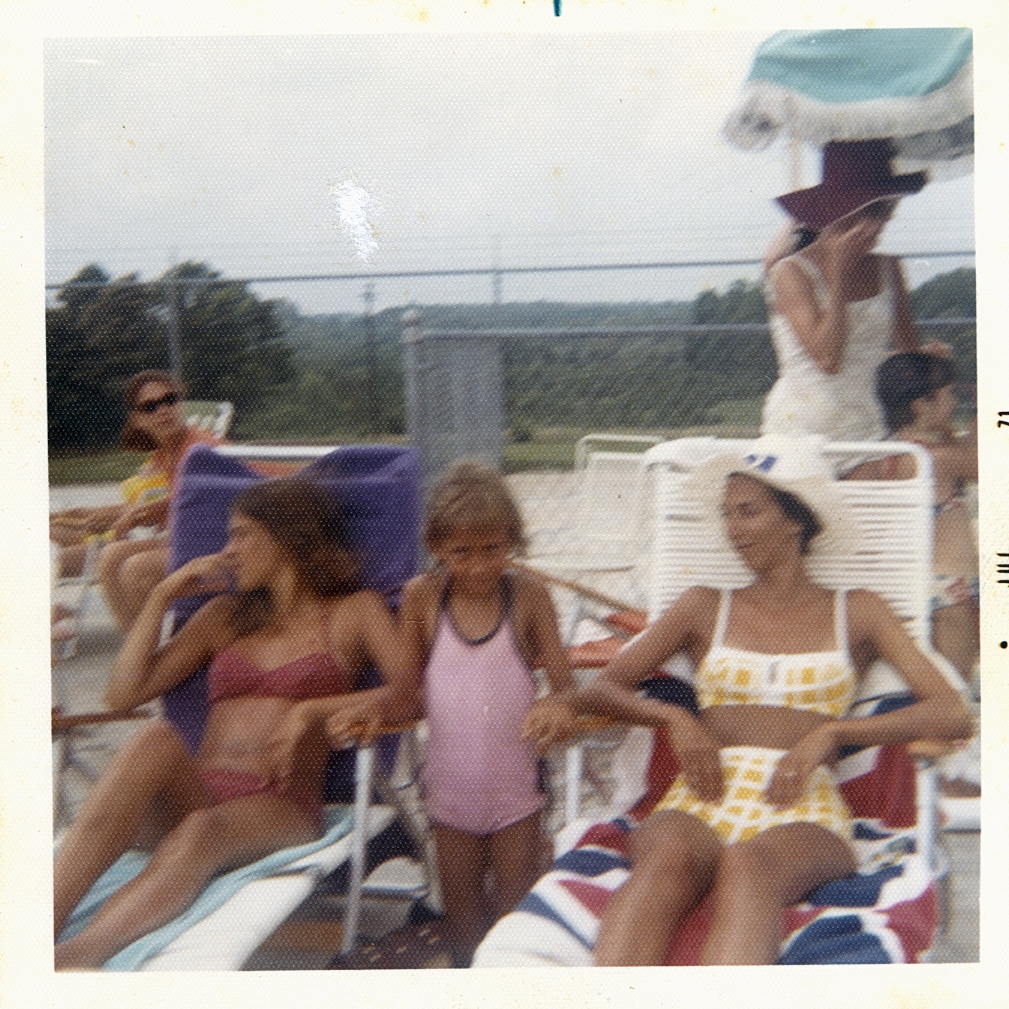
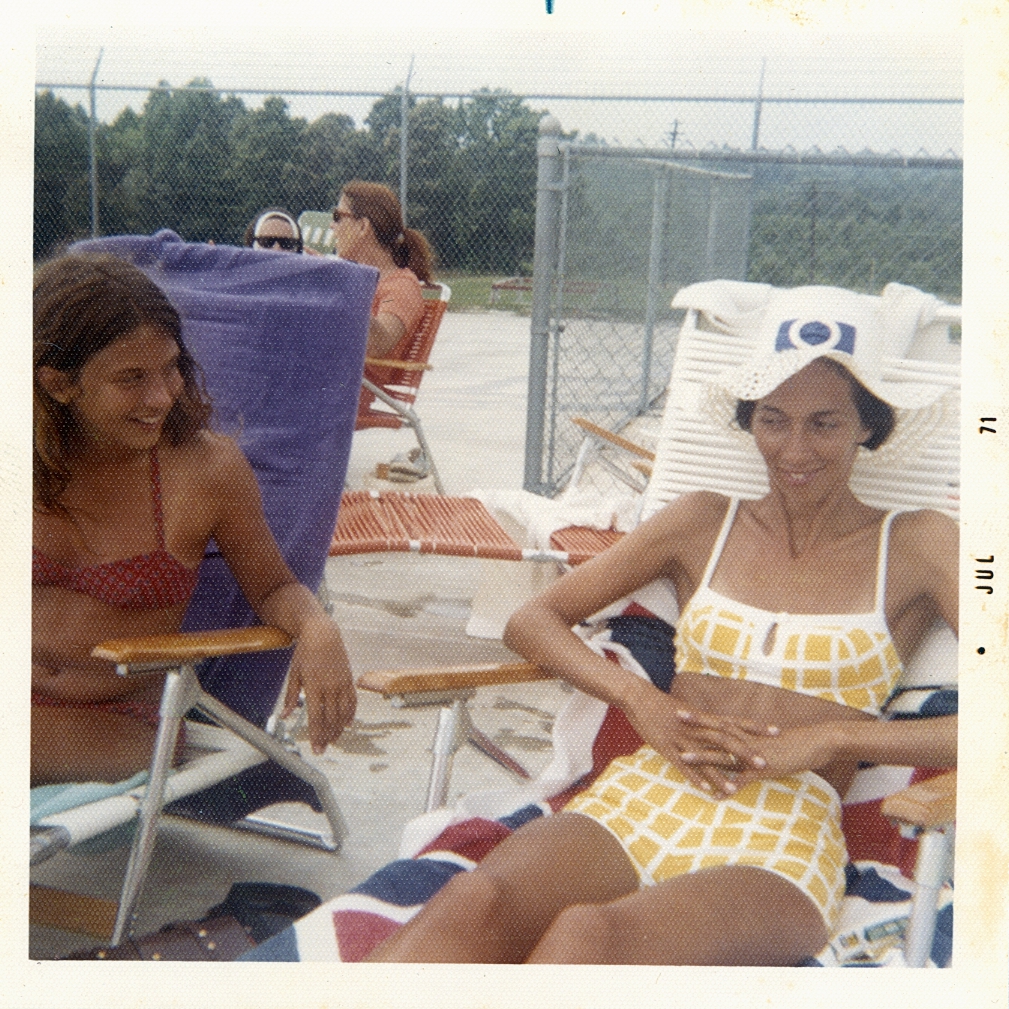
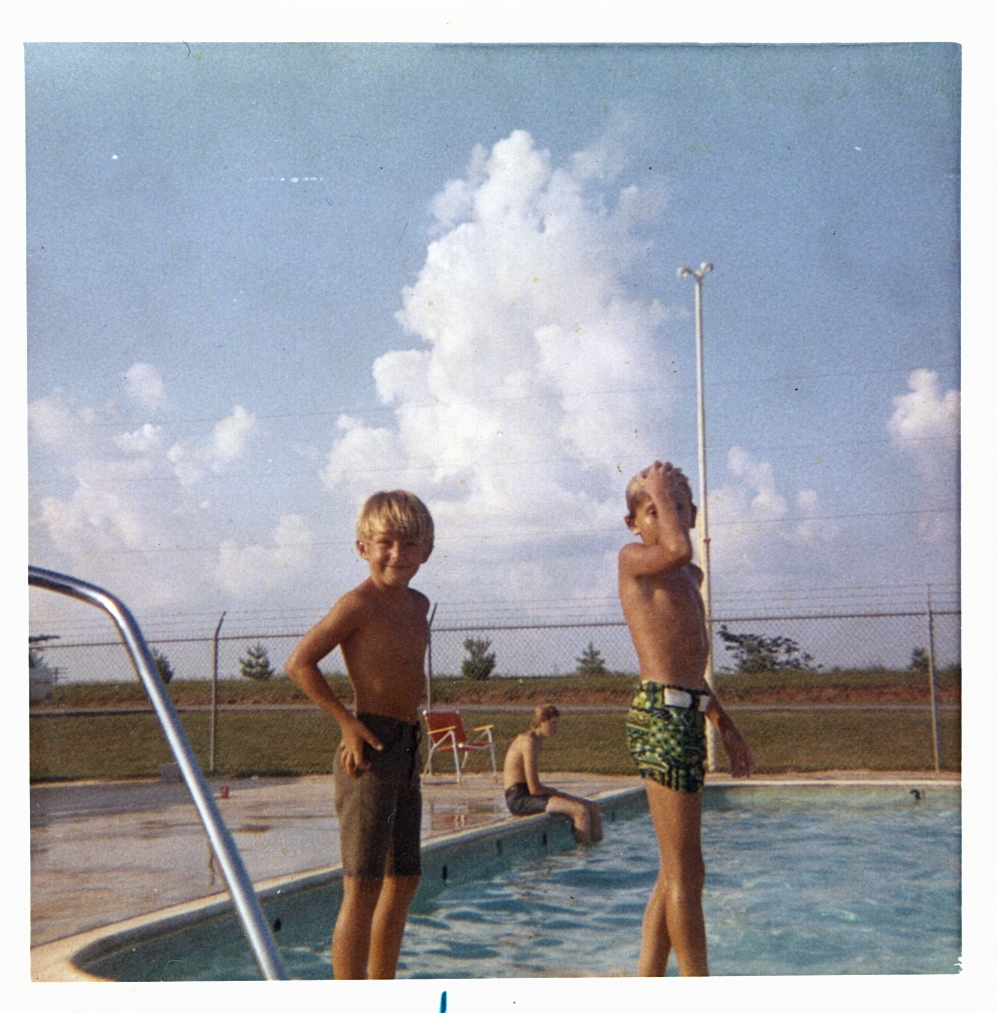
Each summer as a teenager, I moved from working in the pro shop to working as an attendant and then a lifeguard at the country club’s pool. There, white Southern women arrived daily, many with unnaturally bleached-blond hair piled high, and rubbed themselves down with baby oil to sun bath from midmorning until mid-afternoon.

These women were as blatantly racist as their husbands routinely were on the golf course—a white person’s sanctuary that explicitly banned Black people from joining.

I have a very vivid memory of one woman, a wife of a long-time employee of the golf course. She had the most cartoonish bleached hair, maybe the tallest, but she also was tanned to beyond brown; with the lathering of baby oil, her stomach glistened black.

And my mother often joined these women. She also sunbathed in our yard when not at the pool. Like her father who sat outside barefoot in only cut-off blue jean shorts any sunny day, she was olive complexioned and tanned deeply.

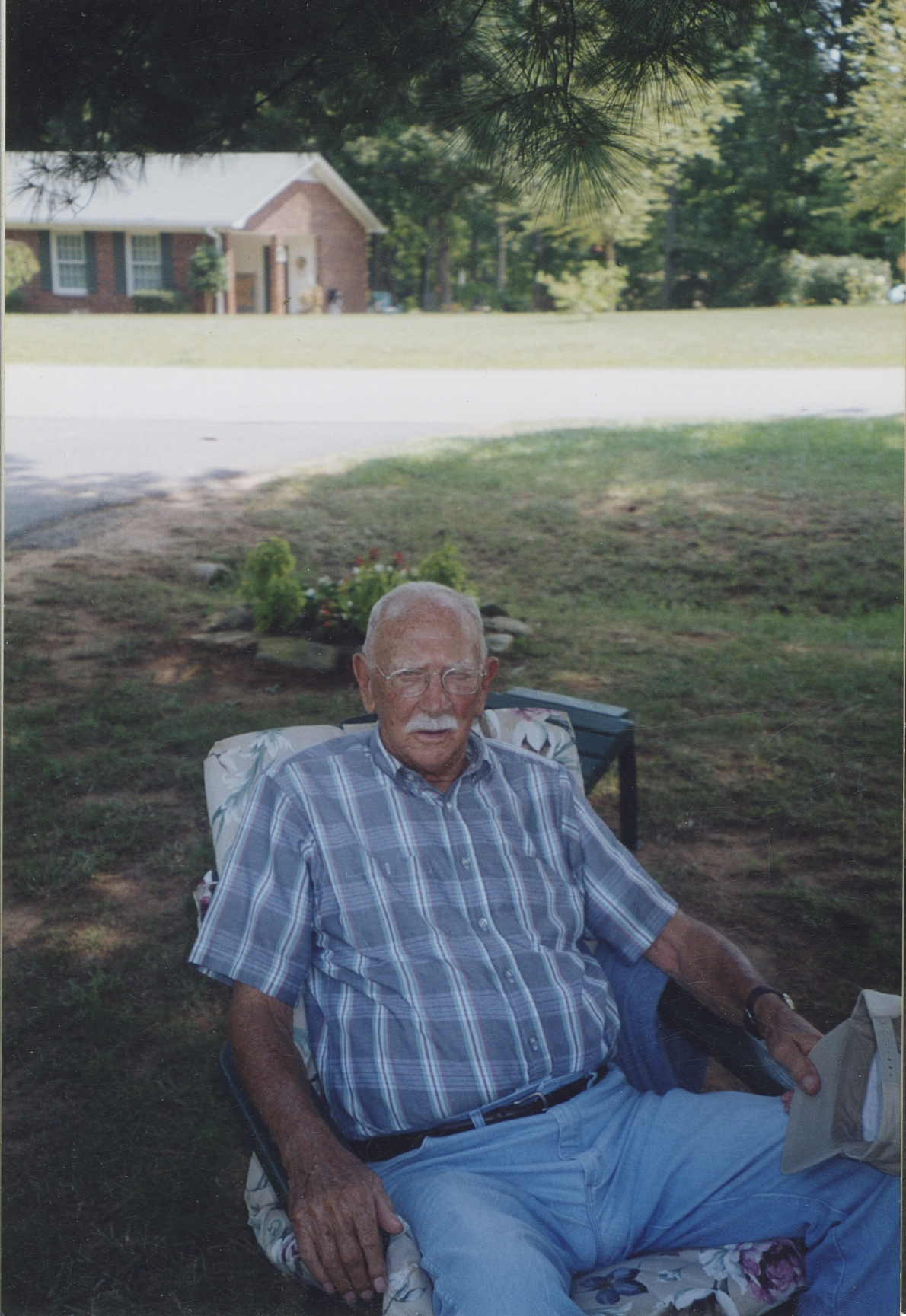
Harold Sowers, my maternal grandfather, was my Tu-Daddy; here, in his later years, he sat outside fully clothed and in the shade.

What compelled these white women who so openly loathed Black and brown people to render themselves dark every summer?

This, I think, is the complexity of anyone’s relationship with race—especially when white and especially when trapped in baseless, simplistic views of race that serve the interests of white people.

In the first six years of my life, before we moved to the golf course, I remember vividly that my mother often suggested she had some Indian heritage; with hindsight, I suspect she spoke with something like a garbled romantic longing because she had exoticized the Lumbee Tribe of North Carolina from briefly living in Lumberton, North Carolina growing up.

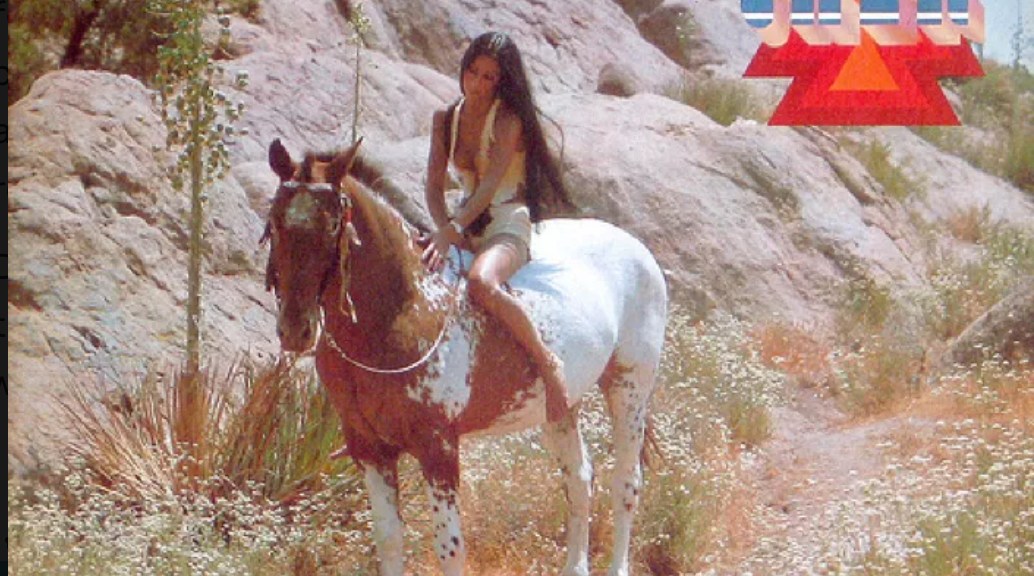
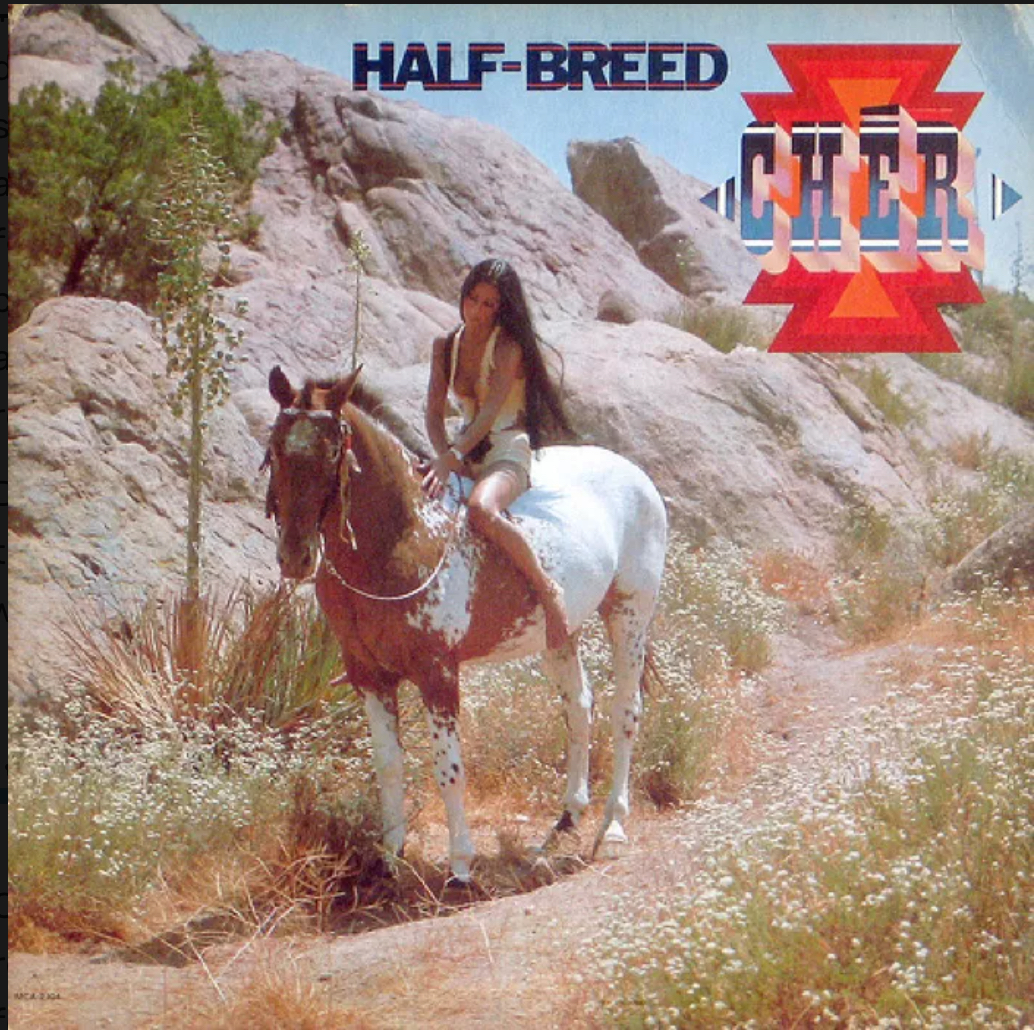
My mother also adored Cher, whose own jumbled heritage and flourishes of cultural appropriation helped fuel the very worst aspects of my mother’s racism.

Wikipedia offers how complex race and celebrity are (not the used of “claimed”): “Cher was born Cherilyn Sarkisian in El Centro, California, on May 20, 1946.[3] Her father, John Sarkisian, was an Armenian-American truck driver with drug and gambling problems; her mother, Georgia Holt (born Jackie Jean Crouch), was an occasional model and bit-part actress who claimed Irish, English, German, and Cherokee ancestry.”

These white women tanning and my mother’s fantasy of having Lumbee blood somewhere in her veins are my first experiences with white women imposters, who are increasingly being exposed in higher education:

This year alone has seen the unmasking of a handful of white academics who have posed as nonwhite: BethAnn McLaughlinJessica Krug, C. V. Vitolo-Haddad and Craig Chapman.

Whereas Chapman and McLaughlin impersonated women of color online only, Krug and Vitolo-Haddad wove their false ethnicities into their personal and professional identities day in and day out. This kind of living a lie is perhaps most infamously exemplified by Rachel Dolezal, former head of the NAACP in Tacoma, Wash., and part-time professor of African American studies at Eastern Washington University. Dolezal identified herself as Black but was revealed to be white in 2015.

White women passing as not white has become a multi-layered offensive whitewashing of “by any means necessary,” since this act of being an imposter seems designed to manipulate a genuine problem in academia, the lack of diversity.

The paradoxical aspect of these layers includes that women are one of the areas of need in many universities dedicated to increasing diversity and inclusion and that white women suffer the negative consequences of being women even as that is tempered by their proximity to white men’s privilege (something that we have abundant evidence a majority of white women will cultivate, notably that more white women voted for Trump in 2016 than for a white woman, Hillary Clinton).

White imposters of race who are women are not only doing harm by taking away the very small spaces afforded Black and brown faculty candidates, but by spitting in the face of the very real and very harmful effects of imposter syndrome often experienced by minoritized people.

As a faculty member on our presidential committee for diversity and inclusion, I have spent many years specifically serving on and chairing a committee that participates in the hiring process so that the university implements best practice to increase diversity among our faculty (which is deeply underrepresented by race as well as gender).

Since my university has now faced a recently hired faculty member accused of being a race imposter, I am witnessing in proximity (as I did with my mother) that this deception has many negative consequences, mostly suffered by the people this event has impacted directly (the department, students, etc.) and indirectly (candidates not hired), but also impacting the process of recruiting and hiring diverse faculty.

Academia is a complicated environment, even culture, in which many things must not be spoken while other things are discussed to the point of no return (with no action).

Legal restrictions and tradition have created circumstances whereby universities seeking diverse faculty can discuss diversity needs and set up policies and practices aimed at increasing diversity, but not explicitly address any candidate’s race, culture, gender, etc.

There are also spaces in academia (not all of them) where everything works under a veil of good faith, but the sort of good faith that has existed forever among the privileged, the sort of wink-wink-nod-nod that existed among the all-white members of the golf course of my youth.

Higher education is not the world of Leftist indoctrination imagined by conservatives, but it is populated by progressives with good intentions who are more than counter-balanced by a willful naivete that comes with being the white progressives Martin Luther King Jr. warned about.

As I mentioned above, academia can often be more words than action. I do not doubt that many who speak often and eloquently about the need for diversity and inclusion are genuine in their rhetoric and their intellectual commitment; but I also know for a fact that most who offer the rhetoric balk at taking any actual steps on the road to equity.

Don’t want to step on any of the wrong toes.

There are few places where “talk is cheap” (and safe) is more telling and complicated than higher ed.

Academia, then, is ripe for deception by those who are willing to whitewash “by any means necessary” even at the expense of people who have no choice but to live lives tinted every moment with racism, sexism, homophobia, transphobia, etc.

My life has transitioned from the oafish racism of my childhood—good country people—to the elegant racism of higher education—well-educated people with good intentions.

Each faculty member unmasked for being a race imposter sends me back in time to my mother playing Cher records or sun bathing with the regulars at the golf course pool.

I have been reminded in recent days that people with grossly simplistic views of race reveal that any person’s relationship with race is incredibly complicated—and ultimately dangerous.

Patriotic Education and the Politics of Lies

Not long after my daughter started losing baby teeth and going to bed excited about visits from the Tooth Fairy, she confronted me in our upstairs bonus room while I sat working at my computer.

“You and Mom are the Tooth Fairy,” she asserted, with no hint of asking.

When I admitted such, she replied, “Why did y’all lie to me?”

I can still recall that moment vividly—just as I can one of my moments of having to face the disconnect between mythology and reality concerning my father.

During my first year of marriage, we lived in the converted garage of my parents’ house, and one night we were awaked by my sister yelling and pulling the screen door off the hinges to our room. My mother had found my father collapsed and covered in blood in their bathroom.

I rushed to help him. In the next few hours, our roles shifted and would continue to transform until he died a couple years ago, very frail and worn down by both the myth and reality of his invincibility and job as provider.

As a parent and grandparent, coach, and career-long educator, I have had to wrestle with the role of myths in how adults interact with children and teenagers. Explaining to my daughter that stories such as the Tooth Fairy (like Santa Claus and the Easter Bunny) aren’t lies, but metaphors fell on deaf ears, closed off by a loss of innocence, an awareness of a harsh world that was being hidden from her because she was a child.

My father, of course, was never superhuman, invincible, or even uniquely capable of being the ideal manufactured in a son’s mind.

That tension between harsh, uncomfortable reality and the intoxicating allure of myth and the Ideal has now confronted the U.S. in vivid and disturbing ways; the Trump administration has launched an assault on harsh, uncomfortable reality and called for a return to the soma of the Ideal concerning America.

Ironically, a call for patriotic education is embracing the very indoctrination that many conservatives claim to be refuting.

I was a high school English teacher throughout most of the 1980s and 1990s. The first quarter of my American literature course was devoted to nonfiction, and one of the first texts we examined was the Christopher Columbus chapter of Howard Zinn’s A People’s History of the United States.

For my very provincial students in rural upstate South Carolina, this was the beginning of a disorienting nine weeks that included works by Ralph Waldo Emerson, Henry David Thoreau, Margaret Fuller, Martin Luther King Jr., and Malcolm X.

Many of these students responded as my daughter did, feeling as if they had been lied to, deceived, disrespected for being young.

An interesting part of conservatives demonizing much of formal education as liberal propaganda is that they completely misread how young people respond to adults and ignore that institutionalized education has always been overwhelmingly conservative itself.

I watched as my daughter was fed a deeply distorted and incomplete version of Hellen Keller during her third grade; the Hellen Keller students meet is a myth of rugged individualism that erases Keller’s leftwing political activism.

For most K-12 students in the U.S., the education they receive in social studies and history is primarily idealized, incomplete, and patriotic education.

For fifty or sixty years, some have been chipping away at that distortion of history—the “I cannot tell a lie” George Washington of my education in the 1960s was mostly gone by my teaching career in the 1980s-1990s—and there has been a slow process of including the stories and voices traditionally omitted, women and Black Americans, for example.

The Trump administration first attacked critical race theory and then Zinn directly, so a few days ago, I asked my foundations in education students to consider why we in the U.S. have formal schooling. We had briefly examined Thomas Jefferson’s commitments and framing of why a free people and a democracy needed universal public schooling, but my students were keenly aware that K-16 schooling in practice is primarily focused on preparing young people to enter the workforce.

In another twist of irony, saying public schooling is for fostering citizens and to fertilize the soil of democracy is itself an idealized myth that is refuted by how the country actually works.

And here is an important point: I became and continue to be a teacher because I believe in the promise of equity, liberty, and democracy that the U.S. and public education aspire to; and therefore, as James Baldwin implored, “I love America more than any other country in this world, and, exactly for this reason, I insist on the right to criticize her perpetually” (Notes of a Native Son).

I am not sure I primarily aspire to patriotism or loving my country, however, since I think those are steps away from the ideals I do embrace. A country should not be loved until it deserves that love.

I am sure that the many young people I have taught did not immediately believe anything I taught them; I am certain that my students did not respect me or the implication of my authority simply because I had the title of “teacher” and stood before them with that power every day.

Respect, like love, and the gift of knowledge and facts cannot be demanded—must not be demanded—but certainly can be attained when humans are free to recognize and embrace them.

And now the final irony: Conservatives reinvigorated by Trump have long resented critical educators, who continue to be marginalized and discredited as the purveyors of indoctrination, yet critical educators, scholars, and activists (see those who practice critical race theory as well as Howard Zinn) “[want] to know who’s indoctrinating whom” (Joe Kincheloe, Critical Pedagogy Primer).

I often see my daughter standing there beside me in a moment when I had to confront that what seemed like a harmless myth had denied her basic human dignity; she deserved reality, the truth, simply by being a human being trying to navigate a reality that often seems determined to erase us.

The daily tally of lies trafficked by Trump and his enablers has reached a logical conclusion, a demand that the entire country double-down on the delusions of myths, white-washed history, and plain and simple lies.

Conservatives have long buckled under the weight of genuinely not trusting children and young people, of believing so deeply in Original Sin and flawed humanity that they cannot see the paradox of yielding to authoritarianism that must eradicate their liberty, their humanity.

Calling for patriotic education is the next step in the politics of lies.

If we truly believe in individual freedom, we are now faced with the choice of who we will be as people, whether or not we deserve that freedom.

You don’t have to teach people to love their country if that country deserves to be loved.

To “Be” or Not To “Be”: Moving Beyond Correctness and Stigmatized Language

ESPN radio has recently shaken up their on-air personalities across the daily schedule, notably replacing the morning slot held for many years by Mike & Mike (and a recent fractured version after Mike Greenberg left) with a clear signal toward diversity— as reported by Andrew Marchand:

And now, look who is moving into the predominantly white sports-radio neighborhood beginning Monday. It’s Keyshawn, Jay Williams & Zubin Mehenti….

How will it be different?

“First of all, we are three minorities,” Keyshawn said. “That is No. 1. There haven’t been three minorities that I know of on a morning national sports show.”

One of the traditional areas where radio and television in the U.S. has had a strict lack of diversity is the use of language; talking heads—even late-night talk show hosts—practice something of a radio voice (lacking distinct regional pronunciations) and so-called “standard English.”

While listening to the new and more diverse morning radio show on ESPN, I heard Keyshawn Johnson say about a river they were discussing that people “be jet-skiing” in it. The trio’s reactions made it clear this waterway was not safe for recreation.

Since it is early in my first-year writing seminars, I am still helping students re-orient their attitudes and assumptions about reading, writing, and language. A foundational re-orientation for my courses is moving away from seeing language use as “correct” or “incorrect” (as well as rejecting terms such as “standard English” and “non-standard dialect”) and cautioning students not to stigmatize language use as some distinct flag for intelligence or moral/ethical character.

Johnson’s use of “be” to capture a continuous “presentism” of an action along with the omission of “to be” verbs (“Keyshawn home all day”) are often markers for what some call “Black English” (I was taught about Black English through the work of Dillard in the 1970s, but “Ebonics” and “AAVE” have also been used to designate this language usage pattern).

Few people are likely to recognize that ESPN’s new line up is more than racial or cultural diversity; Johnson embodies the importance of language use diversity as well—and he also embodies my cautions to students about “correctness” and stigmatizing language.

While there are people who may have flinched and drawn unfair and racist conclusions about Johnson’s verb usage, I suspect that there will be no professional consequences for Johnson’s language usage.

As I noted to my class, everyone listening knew the meaning of Johnson’s usage, and thus, the primary value of language—clear and precise communication—was completely achieved.

Writing from France in 1979, James Baldwin explained: “The argument concerning the use, or the status, or the reality, of black English is rooted in American history and has absolutely nothing to do with the question the argument supposes itself to be posing. The argument has nothing to do with language itself but with the role of language.”

A few paragraphs later, Baldwin elaborated, focusing on French:

What joins all languages, and all men, is the necessity to confront life, in order, not inconceivably, to outwit death: The price for this is the acceptance, and achievement, of one’s temporal identity. So that, for example, thought it is not taught in the schools (and this has the potential of becoming a political issue) the south of France still clings to its ancient and musical Provençal, which resists being described as a “dialect.” And much of the tension in the Basque countries, and in Wales, is due to the Basque and Welsh determination not to allow their languages to be destroyed. This determination also feeds the flames in Ireland for many indignities the Irish have been forced to undergo at English hands is the English contempt for their language.

It goes without saying, then, that language is also a political instrument, means, and proof of power. It is the most vivid and crucial key to identify: It reveals the private identity, and connects one with, or divorces one from, the larger, public, or communal identity. There have been, and are, times, and places, when to speak a certain language could be dangerous, even fatal. Or, one may speak the same language, but in such a way that one’s antecedents are revealed, or (one hopes) hidden.

In her work to move teachers of English away from “correctness” and the “error hunt,” Connie Weaver has highlighted Baldwin’s point about language usage being about power and that some forms of language usage have social, economic, and political consequences (often grounded in inequity such as racism, classism, etc.).

Often the use of “status marking” in language usage is accompanied by an uncritical acceptance of “standard English” and the inherent context that some language usage (“She is home”) is more complete and “better” than other language usage (“She home”) (see Pullum).

And language usage as status marking (some threat of observable consequences) is used to justify teaching students about code switching instead of stigmatizing any form of language usage.

The code switching argument has stood for many years as a progressive way to teach language that avoids “correctness” and appears to avoid stigma (which it doesn’t).

Again, Baldwin’s key point—”People evolve a language in order to describe and thus control their circumstances, or in order not to be submerged by a reality that they cannot articulate”—is simply side-stepped when we teach disenfranchised and marginalized young people to code switch because that approach allows us to avoid discussing the larger issues of power and inequity that govern the status marking.

Johnson’s use of “be” comes in a time of high social unrest over race, but also intersects with another harsh reality about language and teaching language: Language use is always in a state of flux, and the loose conventions that structure different groups of language usage are tenuous at best.

“People evolve a language in order to describe and thus control their circumstances, or in order not to be submerged by a reality that they cannot articulate,” Baldwin acknowledges. Language change, then, is also about power, not necessarily who has power but the dormant or repressed power of marginalized humans (children and teens manufacturing slang to build a linguistic wall between them and adults or racial minorities reshaping and reappropriating language as defiance and to claim power denied).

Although language can be racist, homophobic, misogynistic, etc., language also can shift toward equity. For example, many publications have now embraced “they” as a gender-neutral singular pronoun. Although some people are pulling out their hair in protest, that usage of “they” is centuries old in the English language because it fills a need left vacant in so-called “standard English.”

This door opened to “they” as singular and gender-neutral is in part about diversity, of course, and we can imagine that some racialized usages of language will walk through a similar door.

Language change is often very slow; it seems to happen organically, and then those with power eventually and some times reluctantly acknowledge a thing that has existed for decades or even centuries.

If this were a case for communication and standardization in the name of that communication, we may find the reluctance more compelling.

But Baldwin’s 1979 confrontation of Black English remains true in 2020 when the world and our language usages are all tinted by racism.

Because all teaching is political, and the very best teaching is activism, re-orienting students’ understanding of language does not have to be slow or organic, as demonstrated by The Conference on College Composition and Communication (CCCC):

We DEMAND that:

  1. teachers stop using academic language and standard English as the accepted communicative norm, which reflects White Mainstream English!
  2. teachers stop teaching Black students to code-switch! Instead, we must teach Black students about anti-Black linguistic racism and white linguistic supremacy!
  3. political discussions and praxis center Black Language as teacher-researcher activism for classrooms and communities!
  4. teachers develop and teach Black Linguistic Consciousness that works to decolonize the mind (and/or) language, unlearn white supremacy, and unravel anti-Black linguistic racism!
  5. Black dispositions are centered in the research and teaching of Black Language!

In K-16 formal education, language usage still falls on a continuum from correctness/standard English at one end and encouraging code switching at the other; the radical dismantling of language usage as status marking is rare, but some evidence exists that culturally we are ready for it.

This demand by CCCC is not simply about equity and authentic diversity, however, because the 5 demands are more linguistically sound than traditional approaches to framing language usage as “correct” or “wrong.”

Once again, Baldwin remains painfully true as he ends his essay:

The brutal truth is that the bulk of white people in American never had any interest in educating black people, except as this could serve white purposes. It is not the black child’s language that is in question, it is not his language that is despised: It is his experience. A child cannot be taught by anyone who despises him, and a child cannot afford to be fooled. A child cannot be taught by anyone whose demand, essentially, is that the child repudiate his experience, and all that gives him sustenance, and enter a limbo in which he will no longer be black, and in which he knows that he can never become white. Black people have lost too many black children that way.

And, after all, finally, in a country with standards so untrustworthy, a country that makes heroes of so many criminal mediocrities, a country unable to face why so many of the nonwhite are in prison, or on the needle, or standing, futureless, in the streets–it may very well be that both the child, and his elder, have concluded that they have nothing whatever to learn from the people of a country that has managed to learn so little.

Those of us who teach language usage have a moral obligation to refuse the norm of “correctness” and to dismantle the stigmatizing of language usage. Otherwise we are abdicating our own agency in the service of inequity and at the expense of our students.

Why Dorothy Counts?

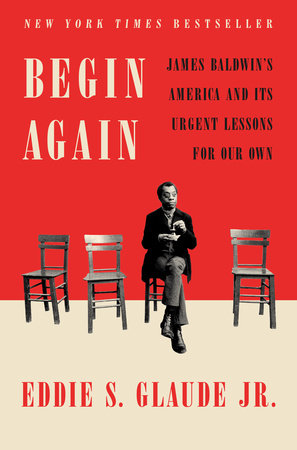
“I must admit this is a strange book,” Eddie S. Glaude Jr. explains in the “Introduction” to Begin Again, explaining:

It isn’t biography, although there are moments when it feels biographical; it is not literary criticism, although I read Baldwin’s nonfiction writings closely; and it is not straightforward history, even though the book, like Baldwin, is obsessed with history. Instead, Begin Again is some combination of all three in an effort to say something meaningful about our current times. (p. xviii)

One such “something meaningful” is quite large: “A moral reckoning is upon us, and we have to decide, once and for all, whether or not we will truly be a multiracial democracy” (p. xix).

Begin Again by Eddie S. Glaude Jr.
Begin Again, Eddie S. Glaude Jr.

Addressing that large scope for the book, Glaude navigates James Baldwin witnessing and confronting “the lie“:

The lie is more properly several sets of lies with a single purpose. If what I have called the “value gap” is the idea that in America white lives have always mattered more than the lives of others, then the lie is a broad and powerful architecture of false assumptions by which the value gap is maintained. These are the narrative assumptions that support the everyday order of American life, which means we breathe them like air. We count them as truths. We absorb them into our character. (p. 7; see Chapter One excerpt for a full explication of “the lie”)

But as Glaude notes about his own transition form Ralph Ellison to Baldwin—”Baldwin was too personal. In contrast, Ellison remained hidden behind his elegant words and powerful insight” (p. xxiv)—another “something meaningful” is as small as an individual person, a jumbled intersection with Baldwin, Dorothy Counts:

This picture signaled an end to segregation. Why has so little ...
Photograph: Douglas Martin/AP

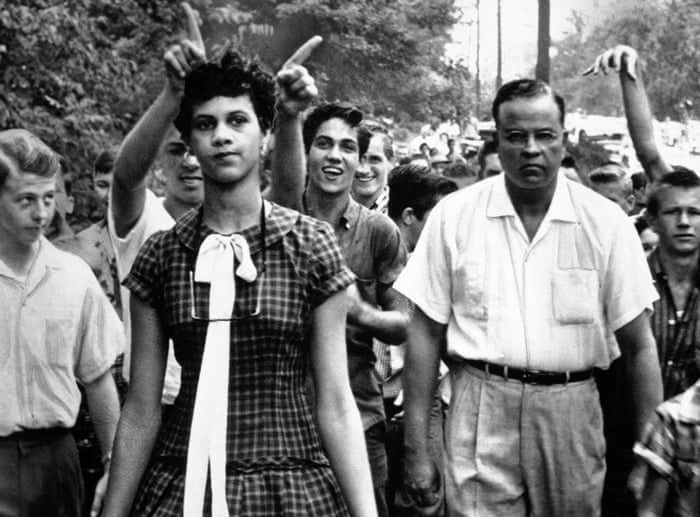
Chapter Two, “Witness,” opens with the harrowing story or Dorothy “Dot” Counts, a Black teenager carrying the weight of integrating Harding High School in Charlotte, NC, in 1957.

“Dot walked a racist gauntlet to enter Harding High School,” Glaude details. “She made the walk for just three more days before deciding never to return” (p. 30).

The racist anger launched repeatedly at a fifteen-year-old young woman personifies the lie, but that indelible image of Dot Counts became a twisted mythology for Baldwin (even as he fumbled details and the facts of history):

[I]n No Name in the Street, [Baldwin] would start at the beginning, with the image of her amid the hatred on her first day, and use the famous photo [above] of Dorothy to justify his own decision to join the fray….

Looking back, after the deaths of Medgar Evers, Malcolm X, and Martin Luther King, Jr., the photo with all of its pathos, anguish, and pride represented for Baldwin in 1972 the demand to bear witness to what was happening in 1957 and to what had transpired since, which led to his [mistaken] recollection of it in No Name in the Street. Dot’s eyes captured the trauma of that journey. Baldwin sought to narrate what happened on the eve of a social movement that would attempt to transform the country, and to testify to that odd combination of trauma and grit, which he now knew so well, seen in a fifteen-year-old black girl’s courage that spurred him, so he believed, to leap into the fire. (p. 43)

So, why Dorothy Counts?

Glaude weaves a motif of trauma through this work, and certainly there is trauma linking Baldwin and Counts, the latter more often than not ignored by white America: “It has never been America’s way to confront the trauma directly, largely because the lie does not allow for it” (p. 46). The result, Glaude notes, is “historical gaslighting.”

That did not happen, or That did not happen that way, or That is only the past, not who we [Americans] are today—so it goes.

While Baldwin’s mythology of Counts and his charge to bear witness are a narrative of the South, it certainly has become a prescient story about all of America, especially those supporting Trump:

The white southerner had to lie continuously to himself in order to justify his world. Lie that the black people around hum were inferior. Lie about what he was doing under the cover of night. Lie that he was Christian. For Baldwin, the accumulation of lies suffocated the white southerner. (p. 49)

That was then; this is now:

We are told every day not to believe what we see happening all around us or what we feel in the marrow of our bones. We are told, for example, that Trumpism is exceptional, a unique threat to our democracy. thus view that Trump, and Trump alone, stresses the fabric of the country lets us off the hook. It feeds into the lie that Baldwin spent the majority of his life trying to convince us to confront. It attempts to explain away as isolated events what today’s cellphone footage exposes as part of our everyday experience. Exceptionalizing Trump deforms our attention…. Trump represents a reassertion of the belief that America is, and always will be, a white nation. (p. 54)

Read Glaude’s exceptional work grounded in Baldwin and you will soon learn that there is no question why Dorothy Counts.


Dorothy Counts-Scoggins Still Fighting

This picture signaled an end to segregation. Why has so little changed?

From Observer archives (2007): Dorothy Counts at Harding High, a story of pride, prejudice

Where Are They Now?: Dorothy Counts

Confronting DiAngelo’s “White Fragility” in the Time of #BlackLivesMatter

For a book on racism written by an academic, Robin DiAngelo’s White Fragility has experienced a level of popularity over the last two years that is interesting, if not surprising.

With the #BlackLivesMatter movement re-ignited after the killing of George Floyd by a police officer, DiAngelo’s book has also experienced another significant boost in readership, primarily by white Americans seemingly having a long-overdue come-to-Jesus moment with their whiteness and complicity in systemic racism.

On social media, however, blog posts and Twitter threads have warned “don’t read White Fragility” and “don’t worship DiAngelo.” These warnings come from Black scholars and advocates for anti-racism activism, creating a powerful and important tension in that fight to eradicate white privilege and racism in the U.S.

There is also an insidious challenge to DiAngelo and White Fragility that comes from and speaks to white denial and white nationalism; this denial is grounded in a dishonest use of “science” calling into question DiAngelo’s statistics, methods, and scholarship.

This rebuttal is ironic proof of the existence and resilience of white denial and racism. It has no credibility and is a distraction.

Black voices, however, challenging the centering of DiAngelo in the conversation about race and racism must be acknowledged by anyone—especially white people—claiming to be anti-racism.

Having been raised in a racist home (with parents who embraced white celebrities such as Elvis Presley whose celebrity erased Black entertainers) and community throughout the 1960s and 1970s, I have documented that my journey to awareness about white privilege, white denial/fragility, and systemic racism has been grounded in Black writers and scholars.

When I first read DiAngelo’s essay, I found nothing new or surprising, except that a book existed and that people seemed to be reading it.

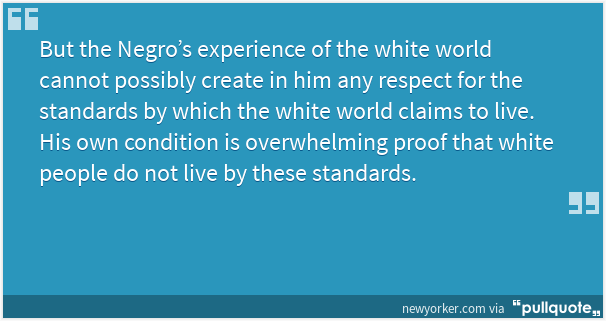
If anyone had wanted to understand white America or white fragility, James Baldwin unpacked all that often, for example in 1962’s “Letter from a Region in My Mind”:

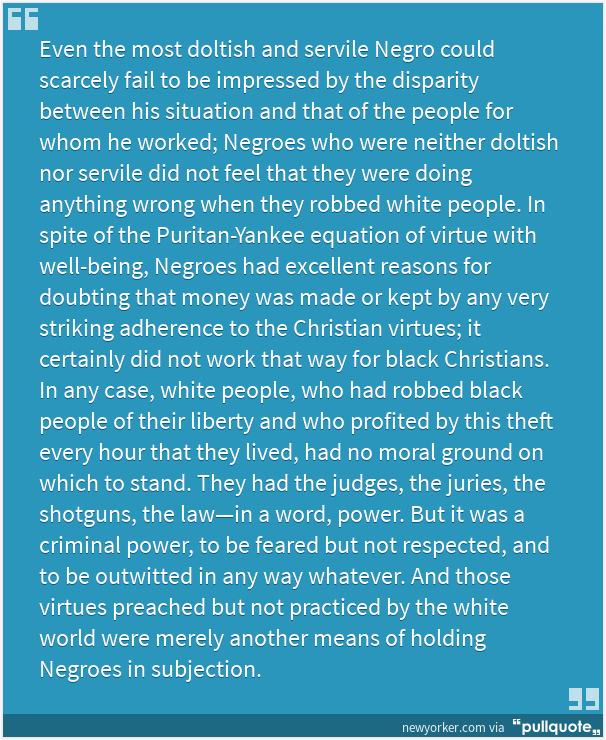
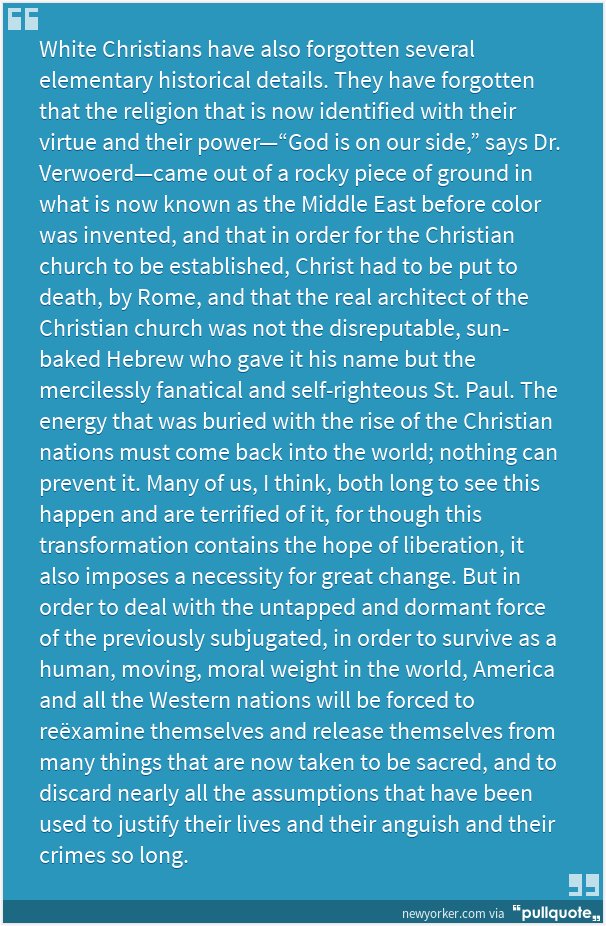
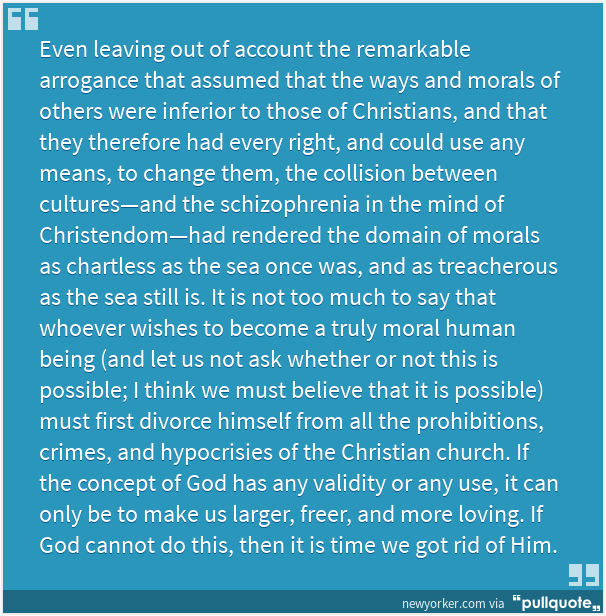
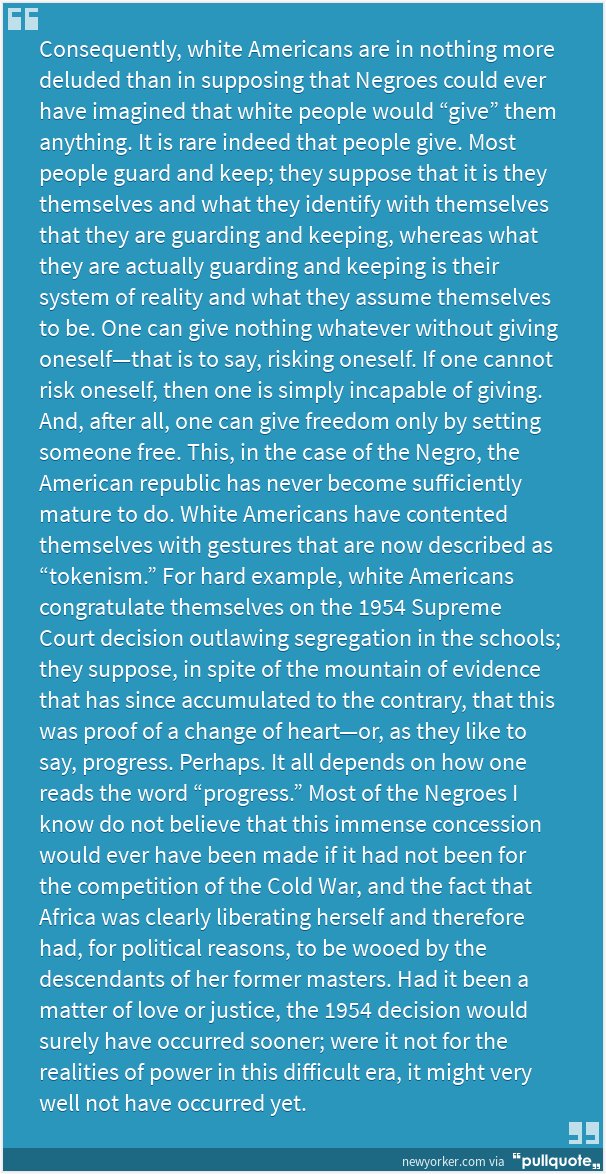
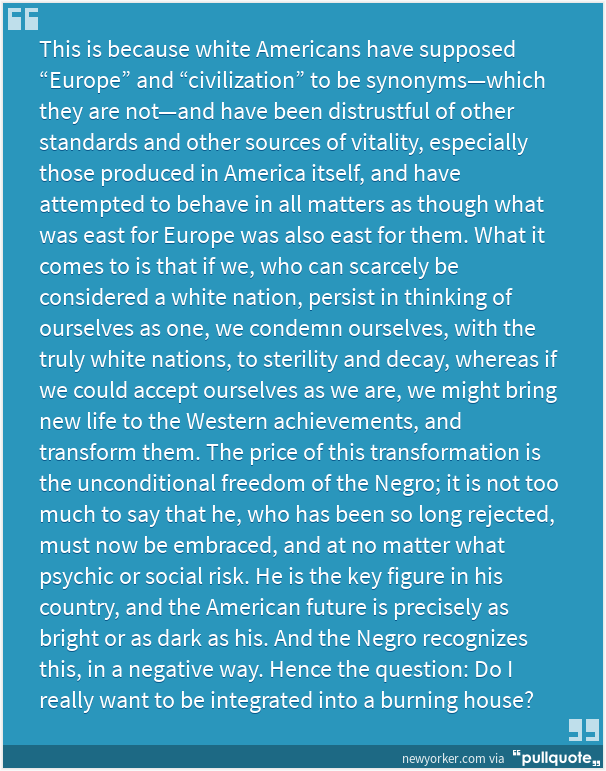
quote 8
quote 9

My reading and scholarship on race, whiteness, and racism began in the late 1970s and early 1980s, including Malcolm X, James Baldwin, Alice Walker, Audre Lorde, Ralph Ellison, Richard Wright, Langston Hughes, Carter Godwin Woodson, bell hooks, Paulo Freire, Martin Luther King Jr., Nikki Giovanni, Frederick Douglass, Nina Simone, Claude McKay, Zora Neale Hurston, W.E.B. Du Bois, Bayard Rustin, and others.

I cannot emphasize enough the essential role social media has played in my evolving racial awareness through my being able to connect to an invaluable wealth of Black and multi-racial scholars, academics, writers, and creators whose voices drive my own commitments to anti-racism: Natalie Hopkinson, Jose Vilson, Chris Emdin, Trina Shanks, Camika Royal, Theresa Runstedtler, Nikki Jones, Mariame Kaba, Robert Jones Jr., Mychal Denzel Smith, Andre Perry, Ernest Morrell, Seneca Vaught, Michah Ali, Nikole Hannah-Jones, Rhondda R. Thomas, Jay Smooth, Greg Carr, Imani Gandy, Lou Moore, Simone Sebastian, Yvette Carnell, Asadah Kirkland, Venus Evans-Winter, Roxane Gay, John Ira Jennings, Jacqueline Woodson, Cornelius Minor, Stacey Patton, Jessica Moulite, Chenjerai Kumanyika, Brittney Cooper, Lisa Stringfellow, Angela Dye, Sherri Spelic, Bree Newsome Bass, Zoe Samudzi, Eddie S. Glaude Jr., Jonathan W. Gray, A.D. Carson, Terrenda White, Clint Smith, David E. Kirkland, Dereca Blackmon, Alondra Nelson, Teju Cole, Colin Kaepernick, Morgan Parker, Tressie McMillan Cottom, Crystal Fleming, Eve L. Ewing, Johnny E. Williams, DeMisty Bellinger, Imani Perry, Josie Duffy Rice, Kareem Abdul-Jabbar, Etan Thomas, Ijeoma Oluo, Natalie Auzenne, Ja’han Jones, Howard Bryant, The Root, Jemele Hill, Ibram X. Kendi, Nnedi Okorafor, Jason Reynolds, Jamil Smith, Valerie Kinloch, Michael Harriot, Bomani Jones, Rashawn Ray, Walter D. Greason, Hanif Abdurraqib, Sarah Thomas, Joshua Bennett, Marc Lamont Hill, Sarah J. Jackson, Clarkisha Kent, Robert Randolph Jr., Peter Darker, Tanji Reed Marshall, Sil Lai Abrams, Sami Schalk, Bianca Nightengale-Lee, Jessica Owens-Young, Andre M. Carrington, Christena Cleveland, Christopher Cameron, Val Brown, Kim Pearson, Kim Parker, Nicole Sealey, Margaret Kimberley, Malaika Jabali, Lisa Sharon Harper, Benjamin Dixon, Tade Thompson, Maria Taylor, Terri N. Watson, Zaretta Hammond, Shea Martin, and Kim Gallon.

There simply is an enormous wealth of Black voices historical and contemporary that white people should read and listen to, often easily accessible online, in fact.

DiAngelo is finding a place in mainstream and fragile America in a similar way that Ta-nehisi Coates and Michelle Alexander have, the latter two Black writers having also received criticism from Black scholars and public intellectuals for appeasing whiteness even as they confront racism.

I have included DiAngelo’s book as a choice reading in my courses as I have introduced students to Coates and Alexander—with caveats and in the context of required reading from critical Black writers, thinkers, and scholars.

White privileged students have admitted openly in class sessions that they finally listened to DiAngelo, even though they have heard and resisted claims of white privilege and systemic racism before.

DiAngelo’s White Fragility and her celebrity from that work fit into what I have called the paradox of centering whiteness to de-center whiteness (a paradox of which I am a part).

DiAngelo represents centering whiteness, acknowledging racism and Black suffering only in proximity to whiteness, and Black voices given space because of white approval; these all work against anti-racism and are in fact racism.

Simultaneously, and paradoxically, DiAngelo represents the importance of and power in white-to-white confronting of and naming racism as well as white denial and fragility.

Yes, we should all feel skeptical about celebrity status and capitalizing from racism, just as we should resist monetizing and career-boosting that surrounds poverty studies as well as poverty workshops and simulations.

White people must not worship DiAngelo or her book, and no one should be recommending that white people read only White Fragility or read it instead of Black voices.

My students who have been introduced to DiAngelo know that dozens of Black writers, thinkers, and scholars made the case against whiteness and racism over decades starting at least a century ago (in terms of the works I offer as required reading).

I take the warnings of “don’t read DiAngelo” from Black scholars very seriously, and find compelling without qualifications the alternative offered—read Black voices, listen to Black voices, and believe Black voices on their own merit.

I also think there remains a place for DiAngelo’s work—even as it has one foot solidly in centering whiteness—as long as it is an element of de-centering whiteness and eradicating white privilege and racism.

My critical commitments make me concerned this caveat is a mistake, yet another concession to that white fragility which DiAngelo is naming.

Is a contextualized place for DiAngelo necessary as white people continue to wrestle with racism? I think that is likely true.

“Don’t rely on only white voices about whiteness and racism” is the goal, the ideal.

Since we find ourselves in the midst of the paradox of centering whiteness to de-center whiteness, at the very least white people committed to anti-racism must reject calls for reading only DiAngelo or reading DiAngelo instead of Black voices.

White celebrity and white authority can no longer be allowed to rise on the backs and instead of Black labor and experiences, as that whiteness occupies spaces that erase or bar Black voices.

There simply is no place left for approaching the work of anti-racism while tip-toeing around the delicacy of white people.

Ultimately that is the sort of white fragility we must recognize, name, and check.


Recommended

You Want a Confederate Monument? My Body Is a Confederate Monument, Caroline Randall Williams

A Conversation in 2020 with James Baldwin’s “Letter from a Region in My Mind”

One of the worst forms of propaganda about text and reading in formal schooling is that any text has a fixed meaning, independent of the reader, the reader’s history, or the writer and the writer’s history.

Traditionally, K-12 schooling, often in English courses, has implemented a very reduced version of New Criticism that frames all text meaning as a static formula whereby the reader adds up the techniques and discovers an authoritative meaning (that is singular and, again, not grounded in the people creating meaning or the conditions surrounding either the writing or the reading). More recently this anemic approach to text and reading has been reinvigorated by the “close reading” movement embedded in the failed Common Core era.

In 2020 as the Trump era could be coming to a close and the U.S. is being ravaged by a pandemic and another round of something like mainstream racial awareness, I re-read James Baldwin’s “Letter from a Region in My Mind.”

The 1962 publication of this essay (which becomes a section of The Fire Next Time) had a distinct historical and personal set of purposes—Baldwin’s relationship with the church and Christianity as well as his being courted by Elijah Muhammad for the Nation of Islam.

This essay has a powerful online presence for The New Yorker currently:

Main image

One of Baldwin’s persistent messages in his nonfiction is the inextricable relationship between white and Black America, and, as he stated, “[t]this rigid refusal to look at ourselves [that] may well destroy us” (“Lockridge: ‘The American Myth'”). “Ourselves” and “us” are telling in that Baldwin sought a new self-awareness for both white and Black Americans even as he was especially focusing on white fragility and denial.

As I re-read a few days ago, I shared quotes on social media, drawn to how this essay speaks vividly to now and to the lingering white problem in the U.S., a white problem that fuels racism, still, through white denial.

One of the first essays by Baldwin I invite my first-year writing students to read in my Baldwin/#BlackLivesMatter seminar is “A Report from Occupied Territory” since this 1966 essay details the historical/systemic racial/racist inequity of police violence in the U.S. that is a part of the two Americas confronted early in “Letter” by Baldwin:

quote 1

A paradox of racism driven by white supremacy narratives is that white power has demands for “other people” that white leaders and most white people cannot and do not maintain. While some confront the tendency of hypocrisy in leadership, we far too rarely ascribe that to a feature of white supremacy narratives and cultural myths. In fact, this hypocrisy may be more embedded in whiteness than any aspect of leadership.

One of those white lies is being replayed in the respectability politics of white people focusing on marches and demonstrations by framing them as “rioting” and “looting.” This misguided attention (distractions from the police shootings and killing that prompted the demonstrations) is also a calculated effort to ignore or erase the white violence and economic theft that are essential to white dominance and capitalism.

U.S. enslavement of Black people made capitalism “successful” for white America, and white economic theft of Black people and on the backs of Black people remains a daily aspect of this country’s “success”—as Baldwin explains:

quote 2

The role of racism in capitalism and the U.S. market is paralleled by that same corruption of Christianity, with Baldwin’s message prescient for the deplorable embracing of Trump by conservative Christians:

quote 3

Racism is a race lie, an economic lie, and a religious lie.

For Baldwin, the latter meant that Black Americans needed to walk away from a fatally corrupted Christianity:

quote 4

Compared to Martin Luther King Jr., Baldwin poses a much blunter confrontation of the white progressive and the hollowness of progressive policies, the incredibly slow incrementalism bending (maybe) toward King’s “justice”:

quote 5

As some in the U.S. feel hopeful in 2020 that the promise of racial justice seems closer at hand, Baldwin, again, acknowledged this possibility in the need for the types of disruptions filling the streets across the country in the wake of the killing of George Floyd:

quote 6

That American Dream is a myth not framing Truth but myth that is a lie—as Paulo Freire explains, “myths that deform us”:

quote 7

Few moments are more apt in 2020 than this closing question, which also forces the reader to consider that white denial also ignores that the house is, in fact, burning even as white supremacy maintains the myth of white superiority.

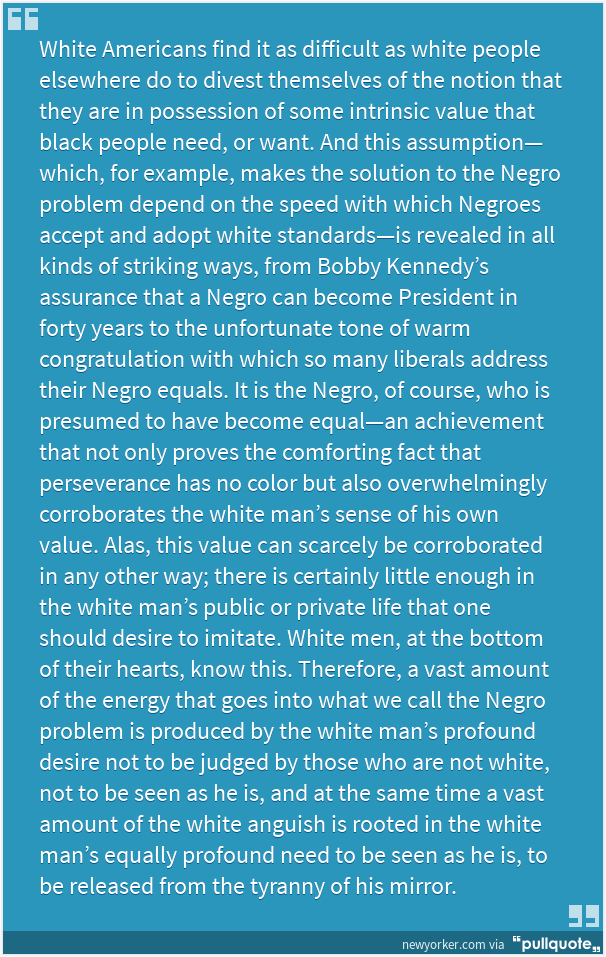
Baldwin continues his rhetorical brilliance by confronting the corrosive nature of deficit ideology (whereby Black people are framed always as lacking white qualities) as he builds again to his recognition of white people refusing to see themselves even as they beg to always be at the center of everyone’s consciousness:

quote 8

This essay becomes a brilliant and enduring unmasking of white America:

quote 9

Being white is inevitably being “the slightly mad victims of their own brainwashing.”

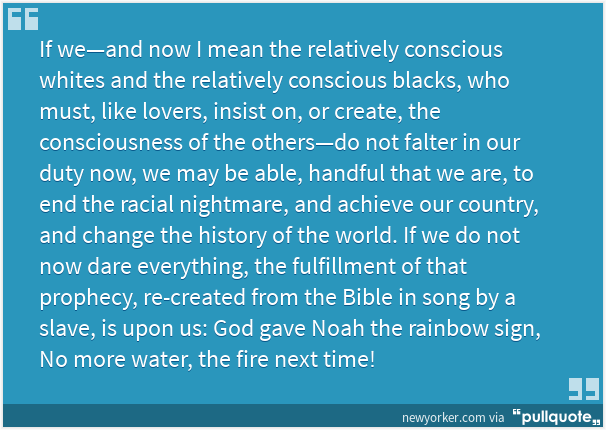
By the end, Baldwin returns to a moral grounding and phrase that has remained connected to Baldwin as has his resilient hope and trust in the power of love:

quote 10

Baldwin’s writing as hope and prophesy seems too long delayed, a “dream deferred” because, as Langston Hughes also mused, “(America never was America to me.)”

All White People Must Confront How the System Only Works in Total Whiteness

I was born in 1961, after Brown v. Board but before the Civil Rights Act.

My childhood in the upstate of South Carolina included the assassination of John F. Kennedy, Martin Luther King Jr., Malcolm X, and Robert Kennedy as well as vivid memories of my mother’s family living through the racial unrest in nearby Asheville, North Carolina and my uncle being shipped off to the Vietnam War.

My parents had been raised in the 1940s and 1950s throughout North and South Carolina; they were among the white Americans who disapproved of King, and I recall vividly my parents’ animosity for Muhammad Ali that sat next to their anger at the mainstream media for bringing down Richard Nixon.

I was born in 1961, but I was baptized and washed daily in whiteness.

I believed in whiteness even as I was conditioned never to see it because my accusatory gaze was trained on blackness, and any racial identity not white.

These were the lessons of my home, my community, my school, and nearly every moment of the media I was consuming through news or entertainment.

My history books, TV shows, movies, novels, and comic books were filled with white saviors—and all that was wrong with the world shaded in darkness, blackness.

By the time I entered college during the fall of Jimmy Carter and the rise of Ronald Reagan, I believed entirely in the reverse racism narrative that buoyed Reagan’s ascent.

Despite the challenges of growing up in a working class family in the South at mid-twentieth century, I had been afforded tremendous privileges of race, gender, and more that, once again, were rendered invisible to me, and in that un-self-aware blindness, I was allowed to pity myself at every perceived disadvantage.

College, however, was a paradox; it was my ticket out of white denial even as it helped intensify my white privilege.

In 2020, I am the small percentage of people with a doctorate, and my salary as a tenured professor places me in a life of comfort and leisure that is well beyond what I have earned, what I deserve by the mere content of my character.

My working-class roots certainly contributed to my work ethic, but they also allowed me to believe the rewards I garnered were mostly about effort, even as white privilege supported me at every turn.

For about 40 years, then, I have been on a journey to confront not only my whiteness but also all whiteness.

Here is what I can confess at this moment on that journey.

Even as I did not create racism and white privilege, even as I have come to denounce the forces at the root of both (the enslavement of Black people, capitalism, etc.), I have daily benefitted from racism and white privilege.

Daily.

Moment by moment.

To be white in the U.S. is never to be neutral about race. Whiteness has a lift and momentum that carry me and all white people unless we actively resist it—and even then, at best, we are applying meager brakes, merely slowing that incessant force.

A person of the rural South, I know in my bones what Southern white poverty and ignorance look and sound like. I know they are real, and I have heard and still hear the voices of that angry whiteness who feel cheated by life, who can only exist in white denial because of the inability to confront their whiteness.

Systemic racism and white privilege can work invisibly to those who benefit from it. The mythologies of America have come out of racism and white privilege, working to maintain them and keep them invisible.

Rugged individualism and individual freedom implore us all to think about the individual person, and maintain a lie about individuality that keeps in place blinders hiding how the system only works in total whiteness.

Whiteness is the most powerful vaccination in the U.S., but like even the best vaccination, it isn’t universally effective.

White people fail, and white people struggle—while some Black people succeed, and some Black people seem to rise effortlessly above the barriers of racism and white privilege.

Confronting racism and white privilege, however, means coming to recognize that when white people fail and struggle, it isn’t because of their whiteness, but in spite of their whiteness.

Black people are daily, moment by moment, living under the weight their blackness because of racism and white privilege.

Despite the ever-trivialized manipulation of King’s “content of their character” message, in the U.S. whiteness trumps character and blackness renders character irrelevant.

In my journey confronting whiteness, then, I cannot be complacent simply in that confronting. White people created racism and white privilege; white people maintain racism and white privilege, both actively and in naive neutrality.

Only white people can dismantle racism and white privilege.

The very things that have allowed my success must be eradicated, and I must lend my hand to the dismantling.

Two acknowledgements sustain me in that quest.

Howard Zinn explored his life through a metaphor for understanding whiteness, warning that you cannot be neutral on a moving train.

And James Baldwin offered possibly the best discrediting of white denial in 1979:

Every white person in this country—and I do not care what he or she says—knows one thing. They may not know, as they put it, “what I want,” but they know they would not like to be black here [emphasis in original]. If they know that, then they know everything they need to know, and whatever else they say is a lie.

The system only works in total whiteness.

The system must change.


Imagine a Unites States …

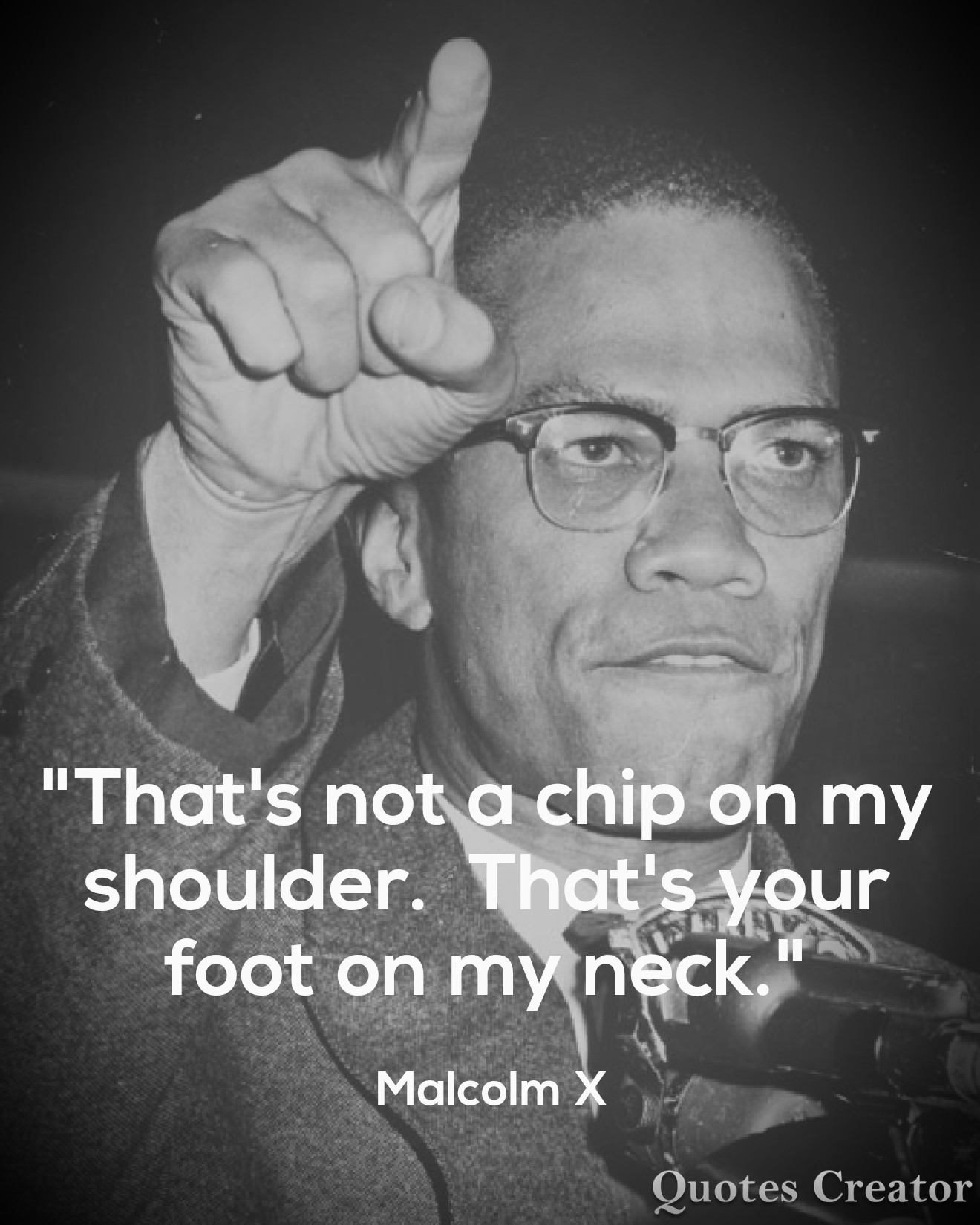
Malcolm X knee

People often either over-idealize or reject as a “bad” song the lyrics to John Lennon’s “Imagine,” but the concept serves a useful purpose.

Imagine a United States where the public and political leadership took seriously Colin Kaepernick’s peaceful protests against the racially inequitable policing and justice system in the US.

Imagine white America taking action because they listened, believed, and truly wanted an equitable and just country.

Imagine the many Black lives that would be with us today, alive and mostly anonymous in those lives.

Imagine no marches, no protests or signs emblazoned with “George Floyd” or “Black Lives Matter.”

But, instead, white America attacked Kaepernick, retreated into their comfortable white denial.

But, instead, white America today points accusatory fingers at “riots” and laments the loss of property, proving that for many whites, Black lives in fact do not matter.

White America created this, and only white America can end it.

Baldwin law

Now.

Imagine a country where the police protect and serve.

To make that real, white America must admit that the police protect and serve white interests at the expense of those lives that do not matter.

If you suffer white denial, if you are fretting over the protests and not the blue knee that took George Floyd’s Black life, I am providing a reader below.

But this is not a place for your white denial or white arguments.

“There is never time in the future in which we will work out our salvation. The challenge is in the moment, the time is always now,” James Baldwin, Nobody Knows My Name (“Faulkner and Desegregation”)

Reader

James Baldwin: “the time is always now”

False Equivalence in Black and White

James Baldwin: “It’s a trauma because it’s such a traumatized society”

Understanding Racism as Systemic and about Power

All Lives Matter as a response to #BlackLivesMatter is offensive because…

James Baldwin’s “They Can’t Turn Back” (1960): “On such small signs and symbols does the southern cabala depend”

The “White Gaze” and the Arrogance of Good Intentions

This Is U.S.: “To be a Negro in this country…”

“The Other America,” Martin Luther King Jr. 14 March 1968

“Every white person in this country…knows one thing,” James Baldwin (1979)