I have been a literacy educator for 38 years and counting; throughout the 1980s and 1990s, I taught high school English in rural South Carolina, and then I moved to higher education in 2002, where I am in teacher education and teach first-year and upper-level writing.
Along with being a career educator, I am a writer. I can identify the beginning of my real life as a writer and scholar with three publications: first, Oregon English (published by a state affiliate of the National Council of Teachers of English [NCTE]) in 1989, and then English Journal (a flagship journal of NCTE) in 1991 and 1998.
When I made my move to higher education, I also began a twenty-year and counting relationship with NCTE that has been among the most rewarding elements of my career as teacher and writer/scholar.
While my colleagues and friends discovered through NCTE are too many to list here, at NCTE San Francisco (2003), I attended a presentation and met Ken Lindblom; we began talking, and eventually our connection led to my editing/co-editing a column in English Journal for 10 years under several editors (also counted among my friends and colleagues), including Ken.
In 2013, NCTE named me recipient of their George Orwell Award—one of the proudest moments of my career—acknowledging not only my work that spoke truth to power but highlighting the significance of my public work (blogging, which is often marginalized in academia). Then, after my work on the committee preparing for NCTE’s Centennial at the Chicago annual convention (2011), I served as the Council Historian from 2013-2015.
Until the interruptions of Covid, one of the highlights of each year included attending and presenting at NCTE’s annual conventions.
I share all this not to aggrandize myself, but to establish a fact of my life and career: I love NCTE and the people who have enriched my life because NCTE brought us together.
And thus, I write here in the spirit of James Baldwin: “I love America more than any other country in this world, and, exactly for this reason, I insist on the right to criticize her perpetually” (Notes of a Native Son).
Since I do love NCTE, and since I am troubled at this moment of literary and educational crisis, I feel obligated to criticize NCTE, asking, Wherefore art thou, NCTE?
Novices to Shakespeare often misread “wherefore” as simply “where,” but, of course, Juliet is asking “why” Romeo exists, specifically why is she being confronted with the challenge of Romeo’s family name.
Why, I am asking, does NCTE exist? And more pointedly, why is NCTE choosing silence, why is NCTE choosing to take a false apolitical pose—at this moment of literary and educational crisis?
First, let me stress the context of my question.
Across the U.S., Pollock and Rogers, et al., have authored a report from UCLA that analyses the wildfire spreading across the U.S.—curriculum, instruction, and book/text bans:
We found that at least 894 school districts, enrolling 17,743,850 students, or 35% of all K–12 students in the United States, have been impacted by local anti “CRT” efforts. Our survey and interviews demonstrate how such restriction efforts have been experienced inside schools as well as districts. We found that both state action and local activity have left many educators afraid to do their work.
Notable, these attacks on what and how teachers teach, on what and how students learn, are grounded in dishonest claims and misrepresentations, as the UCLA report notes:
We put “CRT” in quotation marks throughout this report because so often the conflict campaign’s definition of “CRT” (like its description of actual K–12 practice) is a caricatured distortion by loud opponents as self-appointed “experts.” The conflict campaign thrives on caricature — on often distorting altogether both scholarship and K–12 educators’ efforts at accurate and inclusive education, deeming it (and particularly K–12 efforts to discuss the full scope of racism in our nation) wholly inappropriate for school.
(Pollock, & Rogers, et al., 2022, p. vi)
The news reports are chilling: A teacher fired in Tennessee for teaching Ta-Nehisi Coates (a featured speaker at an annual NCTE convention); a superintendent of education in North Carolina banning a book from one parent complaint, and without reading the book; and high-profile coverage by NBC and The Atlantic detailing the magnitude of the censorship movement, which has included bans of one of the most celebrated graphic novels ever, Maus.
With that context in mind, I want to add I am guided by two more commitments.
Martin Luther King Jr., in Strength to Love (1963), warned: “The ultimate measure of a man is not where he stands in moments of comfort and convenience, but where he stands at times of challenge and controversy. The true neighbor will risk his position, his prestige, and even his life for the welfare of others.”
And Howard Zinn [1], whose work has been prominent at NCTE’s annual convention, who titled his memoir, You Can’t Be Neutral on a Moving Train, argued:
This mixing of activism and teaching, this insistence that education cannot be neutral on the critical issues of our time, this movement back and forth from the classroom to the struggles outside by teachers who hope their students will do the same, has always frightened the guardians of traditional education. They prefer that education simply prepare the new generation to take its proper place in the old order, not to question that order.
As of today, I am deeply concerned that NCTE, as the premiere national professional organization for literacy and literature in the U.S., has chosen the path of neutrality, of silence, to strike an apolitical pose in order to avoid risk.
In November before the 2021 annual convention, I reached out to some leaders of NCTE and implored that NCTE take a leadership role in speaking out against the creeping threat of state legislation banning curriculum and the rising number of books being banned across the country.
Although I was assured this would happen, there has only been silence.
And then, this: Members of NCTE’s Public Language Awards Committee posted on social media that NCTE has put the Doublespeak Award on hiatus indefinitely in order to avoid looking “political.”
Some members have resigned in protest.
The disappointment and irony of this move is that the Doublespeak Award, a companion of the Orwell Award, is designed to offer an “ironic tribute to public speakers who have perpetuated language that is grossly deceptive, evasive, euphemistic, confusing, or self-centered.”
If you return to the report from UCLA, it is obvious we are in the midst of an educational and literary/literature crisis that screams for the Doublespeak Award (“[t]he conflict campaign thrives on caricature”), that demands public-facing, risk-embracing leadership from NCTE.
Why does NCTE exist, if not for this moment?
The current anti-CRT/book banning movement is politically partisan only because Republicans have chosen to make it so. And as King and Zinn noted throughout their careers, taking a neutral pose, pretending to be apolitical, is a political concession to support the status quo.
Since curriculum bans, book censorship, and parental oversight legislation are occurring exclusively among Republican-controlled states, the teachers and students impacted are mostly in right-to-work (non-union) situations; therefore, they are the most vulnerable, and most in need of advocacy from organizations and people with power.
NCTE is the collective voice of literacy educators, scholars, and creators.
I want to remain hopeful, but I am deeply disappointed and increasingly skeptical of that hope.
NCTE’s leaders must look in the mirror, ask “why,” and then act.
Returning to Baldwin, I end with this: “There is never time in the future in which we will work out our salvation. The challenge is in the moment, the time is always now” (Nobody Knows My Name).
[1] Trying to confirm if/when Zinn spoke at an annual NCTE convention [edit].
Let me start with a caveat: Don’t debate “science of reading” (SoR) advocates on social media.
Ok, so I suspect some of you will enter the fray, and I must caution that you are not going to change the minds of SoR advocates; therefore, if you enter into a social media debate, you must keep your focus on informing others who may read that debate, others who genuinely want a discussion and are looking to be better informed (SoR advocates are not open to debate and do not want an honest discussion).
First, expect to be attacked and swarmed.
Next, keep focused on the claims made by SoR advocates, and you can anticipate those pretty easily (see below). An important way to hold SoR advocates accountable is to point out the contradictions between calling for a narrow view of “science” and then referring to reports that are released with no peer review (not scientific), such as reports released by NCTQ, and also misrepresenting challenged reports, such as the reports from the National Reading Panel (NRP) under George W. Bush.
Finally, I recommend making evidence-based challenges to the two broad claims of SoR advocacy—that the “science of reading” is simple and settled.
Your best approach is to counter with “not simple, not settled.”
Here, then, let me offer the main claims you will likely confront and resources for responding (also see resources linked after the post).
SoR Claim: Dyslexia is under-diagnosed and students with dyslexia need intensive systematic phonics (likely Orton-Gillingham–based approaches).
Counter: Research does not support one way to address or diagnose dyslexia, there isn’t a strong consensus on what constitutes dyslexia (no unifying definition), and research does not support O-G phonics for all dyslexia issues.
As yet, there is no certifiably best method for teaching children who experience reading difficulty (Mathes et al., 2005). For instance, research does not support the common belief that Orton-Gillingham–based approaches are necessary for students classified as dyslexic (Ritchey & Goeke, 2007; Turner, 2008; Vaughn & Linan-Thompson, 2003). Reviews of research focusing solely on decoding interventions have shown either small to moderate or variable effects that rarely persist over time, and little to no effects on more global reading skills. Rather, students classified as dyslexic have varying strengths and challenges, and teaching them is too complex a task for a scripted, one-size-fits-all program (Coyne et al., 2013; Phillips & Smith, 1997; Simmons, 2015). Optimal instruction calls for teachers’ professional expertise and responsiveness, and for the freedom to act on the basis of that professionalism.
Currently, there is a well-organized and active contingent of concerned parents and educators (and others) who argue that dyslexia is a frequent cause of reading difficulties, affecting approximately 20 percent of the population, and that there is a widely-accepted treatment for such difficulties: an instructional approach relying almost exclusively on intensive phonics instruction. Proponents argue that it is based on “settled science” which they refer to as “the science of reading” (SOR). The approach is based on a narrow view of science, and a restricted range of research, focused on word learning and, more recently, neurobiology, but paying little attention to aspects of literacy like comprehension and writing, or dimensions of classroom learning and teacher preparation. Because the dyslexia and instructional arguments are inextricably linked, in this report, we explore both while adopting a more comprehensive perspective on relevant theory and research.
JOHNSTON, P., & SCANLON, D. (2021). AN EXAMINATION OF DYSLEXIA RESEARCH AND INSTRUCTION WITH POLICY IMPLICATIONS. LITERACY RESEARCH: THEORY, METHOD, AND PRACTICE, 70(1), 107–128. HTTPS://DOI.ORG/10.1177/23813377211024625
Johnston and Scanlon answer 12 questions and then offer these important policy implications (quoted below):
There is no consistent and widely accepted basis – biological, cognitive, behavioral, or academic – for determining whether an individual experiencing difficulty with developing word reading skill should be classified as dyslexic. (Questions 1 and 10).
Although there are likely heritable and biological dimensions to reading and language difficulties, there is no way to translate them into implications for instructional practice. (Questions 2 and 11).
Good first instruction and early intervention for children with a slow start in the word reading aspect of literacy, reduces the likelihood they will encounter serious difficulty. Thus, early screening with assessments that can inform instruction, is important. Screening for dyslexia, particularly with instructionally irrelevant assessments offers no additional advantage. (Questions 5 and 6).
Research supports instruction that purposely develops children’s ability to analyze speech sounds (phonological/phonemic awareness), and to relate those sounds to patterns of print (phonics and orthographics), in combination with instruction to develop comprehension, vocabulary, fluency, and a strong positive and agentive relationship with literacy. (Questions 7 and 12).
Evidence does not justify the use of a heavy and near-exclusive focus on phonics instruction, either in regular classrooms, or for children experiencing difficulty learning to read (including those classified as dyslexic). (Questions 7, 8 and 12).
Legislation (and district policies) aligned with the SOR perspectives on dyslexia will necessarily require tradeoffs in the allocation of resources for teacher development and among children having literacy learning difficulties. These tradeoffs have the potential to privilege students experiencing some types of literacy learning difficulties while limiting instructional resources for and attention available to students whose literacy difficulties are not due (exclusively) to word reading difficulties. (Question 12).
SoR Claim: SoR advocates rely on a narrow definition of “science,” emphasizing cognitive science and brain research over a broad range of research covering a century in literacy.
Counter: A complex and full understanding of the term “science,” and recognizing evidence on teaching reading must include more than cognitive science and brain research.
Hoffman, J.V., Hikida, M., & Sailors, M. (2020). Contesting Science That Silences: Amplifying Equity, Agency, and Design Research in Literacy Teacher Preparation. Reading Research Quarterly, 55(S1), S255-S266. https://doi.org/10.1002/rrq.353
Abstract:
In this article, we argue that the “science of reading” (SOR) construct is being used to shape the future of literacy teacher preparation and silence the voices and work of literacy teacher education researchers to the detriment of quality science, quality teaching, and quality teacher preparation. First, we briefly inspect the SOR movement in terms of its historical roots in experimental psychology. Next, we examine the claims being made by SOR advocates regarding the absence of attention to the SOR literature in teacher preparation programs, and the related claims for the negative consequences that occur when these so-called underprepared teachers enter the workforce. Then, we present literature reviews, drawn from a large and dynamic database of research on literacy teacher preparation (over 600 empirical studies that were published between 1999 and 2018); the studies in the database have been excluded from the SOR. Finally, we conclude with a discussion of equity, agency, and design as a pathway forward in improving literacy teacher preparation. (p. S255)
Hoffman, J.V., Hikida, M., & Sailors, M. (2020). Contesting Science That Silences: Amplifying Equity, Agency, and Design Research in Literacy Teacher Preparation. Reading Research Quarterly, 55(S1), S255-S266. https://doi.org/10.1002/rrq.353
Note also about the lack of science behind LETRS:
A growing number of U.S. states have funded and encourage and/or require teachers to attend professional development using Moats’s commercial LETRS program, including Alabama, Arkansas, Kansas, Mississippi, Missouri, Oklahoma, Rhode Island, and Texas. This is despite the fact that an Institute of Education Sciences study of the LETRS intervention found almost no effects on teachers or student achievement (Garet et al., 2008). (p. S259)
Hoffman, J.V., Hikida, M., & Sailors, M. (2020). Contesting Science That Silences: Amplifying Equity, Agency, and Design Research in Literacy Teacher Preparation. Reading Research Quarterly, 55(S1), S255-S266. https://doi.org/10.1002/rrq.353
See also:
Specifically, we address limitations of the science of reading as characterized by a narrow theoretical lens, an abstracted empiricism, and uncritical inductive generalizations derived from brain-imaging and eye movement data sources….
Unfortunately, we believe that in many cases, the cloak of science has been employed to elevate the stature of SOR work and to promote the certainty and force of its advocates’ preferred explanations for what reading is and how it should be taught (e.g., Gentry & Ouellette, 2019; Schwartz & Sparks, 2019). What we suggested in this article is that the SOR, when so used in the reading wars, is not science at all in its fullest sense. It neglects an entire domain that influences and shapes human experience. It does so with an unmitigated confidence that evidence from one side of a binary can establish a final truth and that such a truth creates a single prescription for all instruction. Taking that stance, however, is outside the pale of science and dismisses work that has both merit on its own terms and a critical role in advancing the aims motivating reading research and instruction.
Yaden, D.B., Reinking, D., & Smagorinsky, P. (2021). The Trouble With Binaries: A Perspective on the Science of Reading. Read Res Q, 56(S1), S119– S129. https://doi.org/10.1002/rrq.402
When it comes to reading instruction, an “all or nothing” approach is actually unscientific.
Every January, my social media feeds fill with ads, free trials, and coupons from the diet and wellness industry, promising to help me with my (presumed) resolutions to be better, faster, leaner, and healthier. Every diet program claims some type of relationship to science.
The same is true with reading instruction. Most programs or approaches claim to be based on “science.” But consider the many possible meanings of this claim. Some approaches to reading instruction are developed as part of rigorous, peer-reviewed research and are continuously evaluated and refined. Others are designed by practitioners who draw on experience, and whose insights are validated by inquiry after development. Many are based on well-known principles from research or assumptions about learning in general, but haven’t themselves been tested. Some “research-based” instructional tools and practices have been shared, explained, interpreted, misinterpreted, and re-shared so many times that they bear little resemblance to the research on which they were based (Gabriel, 2020). Others rack up positive evidence no matter how many times they’re studied. Then there are practices that have no evidence behind them but are thought to be scientific—because they’ve always been assumed to be true.
SoR Claim: SoR advocates attack misrepresentations of balanced literacy and whole language.Neither WL nor BL can credibly be called “failures” in any distinct way from other philosophies or practices in literacy.And claiming WL or BL does not include teaching of phonics is false (see Krashen farther below on types of phonics).
Counter: Detail strong historical context and accurate definitions of BL and WL; also note that programs labeled as “BL” may not be BL, and may be implemented poorly.
In this historical analysis, we examine the context of debates over the role of phonics in literacy and current debates about the science of reading, with a focus on the work and impact of the late literacy scholar Jeanne Chall. We open by briefly tracing the roots of the enduring debates from the 19th and 20th centuries, focusing on beginning reading, decoding, and phonics. Next, we explore insights drawn from the whole language movement as understood by Kenneth Goodman and Yetta Goodman, as well as a synthesis of key ideas from Chall’s critique of the whole language approach. We then analyze the shifts across the three editions of Chall’s Learning to Read: The Great Debate and summarize major ideas from her body of work, such as the stage model of reading development. We suggest that reading instruction should be informed by a broader historical lens in looking at the “science of reading” debates and should draw on a developmental stage model to teaching reading, such as the six-stage model provided by Chall. We describe implications for educators, textbook publishers, researchers, and policymakers that address the current reading debates and provide considerations of what Chall might say about learning to read in a digital era given the pressures on teacher educators and teachers to align their practice with what is deemed to be the science of reading.
Semingson, P., & Kerns, W. (2021). Where Is the Evidence? Looking Back to Jeanne Chall and Enduring Debates About the Science of Reading. Read Res Q, 56(S1), S157– S169. https://doi.org/10.1002/rrq.405
SoR Claim:Reading programs, such as those by Lucy Calkins, and Fountas and Pinnell, have failed students because they rely on balanced literacy.(SoR advocates tend to rely on reviews by EdReports, which has been challenged for biased analyses skewed by the interests of publishers.)
Counter: The problem is strict and misguided dependence on any reading program. After NCLB and the National Reading Program required schools to adopt “scientifically-based reading programs,” evidence shows that scripted, phonics-intensive programs such as Open Court “failed.”
See:
This means teachers did actually implement the program as it was intended, so we can’t blame the results on teachers not doing what they were supposed to do. The randomized design helps ensure (but not guarantee, of course) that the results are due to the treatment and not some other factor. Random assignment is sometimes called the “gold standard” in research design….
This is the key finding: no “main” effects means that the overall impact of the program on reading scores during the first year of the study was zero, nada. By year two of the program, it was slightly negative. Oops.
SoR Claim:SoR advocates support the “simple” view of reading as “settled science.”
Counter: “[T]he simple view of reading does not comprehensively explain all skills that influence reading comprehension, nor does it inform what comprehension instruction requires” (see Filderman, et al., 2022).
The simple view of reading is commonly presented to educators in professional development about the science of reading. The simple view is a useful tool for conveying the undeniable importance—in fact, the necessity—of both decoding and linguistic comprehension for reading. Research in the 35 years since the theory was proposed has revealed additional understandings about reading. In this article, we synthesize research documenting three of these advances: (1) Reading difficulties have a number of causes, not all of which fall under decoding and/or listening comprehension as posited in the simple view; (2) rather than influencing reading solely independently, as conceived in the simple view, decoding and listening comprehension (or in terms more commonly used in reference to the simple view today, word recognition and language comprehension) overlap in important ways; and (3) there are many contributors to reading not named in the simple view, such as active, self-regulatory processes, that play a substantial role in reading. We point to research showing that instruction aligned with these advances can improve students’ reading. We present a theory, which we call the active view of reading, that is an expansion of the simple view and can be used to convey these important advances to current and future educators. We discuss the need to lift up updated theories and models to guide practitioners’ work in supporting students’ reading development in classrooms and interventions.
Duke, N.K., & Cartwright, K.B. (2021). The Science of Reading Progresses: Communicating Advances Beyond the Simple View of Reading. Read Res Q, 56(S1), S25– S44. https://doi.org/10.1002/rrq.411
Theoretical models, such as the simple view of reading (Gough & Tunmer, 1986), the direct and inferential mediation (DIME) model (Cromley et al., 2010; Cromley & Azevedo, 2007), and the cognitive model (McKenna & Stahl, 2009) inform the constructs and skills that contribute to reading comprehension. The simple view of reading (Gough & Tunmer, 1986) describes reading comprehension as the product of decoding and language comprehension. The simple view of reading is often used to underscore the critical importance of decoding on reading comprehension; however, evidence suggests that the relative importance of decoding and language comprehension changes based on students’ level of reading development and text complexity (Lonigan et al., 2018). Cross-sectional and longitudinal studies demonstrate that decoding has the largest influence on reading comprehension for novice readers, whereas language comprehension becomes increasingly important as students’ decoding skills develop and text becomes more complex (e.g., Catts et al., 2005; Gough et al., 1996; Hoover & Gough, 1990; Proctor et al., 2005; Tilstra et al., 2009). However, the simple view of reading does not comprehensively explain all skills that influence reading comprehension, nor does it inform what comprehension instruction requires.
Filderman, M. J., Austin, C. R., Boucher, A. N., O’Donnell, K., & Swanson, E. A. (2022). A Meta-Analysis of the Effects of Reading Comprehension Interventions on the Reading Comprehension Outcomes of Struggling Readers in Third Through 12th Grades. Exceptional Children, 88(2), 163–184. https://doi.org/10.1177/00144029211050860
Reading a philosophical investigation, Andrew Davis
SoR Claim: SoR advocates argue SoR-based reading policies will accomplish what no other programs or standards have (consider NCLB and Common Core, both of which claimed “scienticfic”).[SoR advocates will reference Mississippi and the 2019 NAEP scores as “proof” of this.]
Counter:State legislation and policy are often deeply flawed, and prone to failure.No research has been conducted on 2019 reading scores on NAEP for MS, but the likely cause of the score bump is grade retention:
In many U.S. states, legislation seeks to define effective instruction for beginning readers, creating an urgent need to turn to scholars who are knowledgeable about ongoing reading research. This mixed-methods study considers the extent to which recognized literacy experts agreed with recommendations about instruction that were included on a state’s reading initiative website. Our purpose was to guide implementation and inform policy-makers. In alignment with the initiative, experts agreed reading aloud, comprehension, vocabulary, fluency, phonological awareness, and phonics all deserve a place in early literacy instruction. Additionally, they agreed some components not included on the website warranted attention, such as motivation, oral language, reading volume, writing, and needs-based instruction. Further, experts cautioned against extremes in describing aspects of early reading instruction. Findings suggest that experts’ knowledge of the vast body of ongoing research about reading can be a helpful guide to policy formation and implementation.
Collet, Vicki S.; Penaflorida, Jennifer; French, Seth; Allred, Jonathan; Greiner, Angelia; and Chen, Jingshu (2021) “Red Flags, Red Herrings, and Common Ground: An Expert Study in Response to State Reading Policy,” Educational Considerations: Vol. 47: No. 1. https://doi.org/10.4148/0146-9282.2241
Recommended:
Cummings, A. (2021). Making early literacy policy work in Kentucky: Three considerations for policymakers on the “Read to Succeed” act. Boulder, CO: National Education Policy Center. https://nepc.colorado.edu/publication/literacy
To make his case, Reeves — much like the Mississippi Department of Education itself — is chronically selective in his statistics, telling only part of the story and leaving out facts that would show that many of these gains are either illusory or only seem to be impressive because the state started so far behind most of the rest of the nation.
SoR Claim: All students should receive intensive systematic phonics instruction.
Counter: Research does not support intensive systematic phonics for all students. Research does support basic phonics (see Krashen below) and a balanced approach to literacy instruction (see Wyse & Bradbury).
Intensive Systematic Phonics
[abstract] The aims of this paper are: (a) to provide a new critical examination of research evidence relevant to effective teaching of phonics and reading in the con-text of national curricula internationally; (b) to report new empirical findings relating to phonics teaching in England; and (c) examine some implications for policy and practice. The paper reports new empirical findings from two sources: (1) a systematic qualitative meta-synthesis of 55 experimental trials that included longitudinal designs; (2) a survey of 2205 teachers. The paper concludes that phonics and reading teaching in primary schools in England has changed significantly for the first time in modern history, and that compared to other English dominant regions England represents an outlier. The most robust research evidence, from randomised control trials with longitudinal designs, shows that the approach to phonics and reading teaching in England is not sufficiently under-pinned by research evidence. It is recommended that national curriculum policy is changed and that the locus of political control over curriculum, pedagogy and assessment should be re-evaluated.
[from the full report] Our findings from analysis of tertiary reviews, systematic reviews and from the SQMS do not support a synthetic phonics orientation to the teaching of reading: they suggest that a balanced instruction approach is most likely to be successful.
Wyse, D., & Bradbury, A. (2022). Reading wars or reading reconciliation? A critical examination of robust research evidence, curriculum policy and teachers’ practices for teaching phonics and reading. Review of Education, 10, e3314. https://doi.org/10.1002/rev3.3314
It will help to distinguish three different views of phonics: (1) intensive, or heavy phonics, (2) basic, or light phonics, and (3) zero phonics. Basic phonics appears to have some use, but there are good reasons why intensive phonics is not the way to improve reading.
Intensive Phonics. This position claims that we learn to read by first learning the rules of phonics, and that we read by sounding out what is on the page, either out-loud or to ourselves (decoding to sound). It also asserts that all rules of phonics must be deliberately taught and consciously learned.
Basic Phonics. According to Basic Phonics, we learn to read by actually reading, by understanding what is on the page. Most of our knowledge of phonics is subconsciously acquired from reading (Smith, 2004: 152).
Conscious knowledge of some basic rules, however, can help children learn to read by making texts more comprehensible. Smith (2004) explains how this can happen (p. 152): The child is reading the sentence ‘The man was riding on the h____’ and cannot read the final word. Given the context and recognition of h, the child can make a good guess as to what the final word is: the reader will know that the word is not donkey and mule. This won’t work every time (some readers might think the missing word was ‘Harley’), but some knowledge of phonics can restrict the possibilities of what the unknown words are.
Basic Phonics is the position of the authors of Becoming a Nation of Readers, a book widely considered to provide strong support for phonics instruction: ‘…phonics instruction should aim to teach only the most important and regular of letter-to-sound relationships … once the basic relationships have been taught, the best way to get children to refine and extend their knowledge of letter-sound correspondences is through repeated opportunities to read. If this position is correct, then much phonics instruction is overly subtle and probably unproductive’ (Anderson et al., 1985: 38).
Zero Phonics. This view claims that direct teaching is not necessary or even helpful. I am unaware of any professional who holds this position.
There is a widespread consensus in the research community that reading instruction in English should first focus on teaching letter (grapheme) to sound (phoneme) correspondences rather than adopt meaning-based reading approaches such as whole language instruction. That is, initial reading instruction should emphasize systematic phonics. In this systematic review, I show that this conclusion is not justified based on (a) an exhaustive review of 12 meta-analyses that have assessed the efficacy of systematic phonics and (b) summarizing the outcomes of teaching systematic phonics in all state schools in England since 2007. The failure to obtain evidence in support of systematic phonics should not be taken as an argument in support of whole language and related methods, but rather, it highlights the need to explore alternative approaches to reading instruction.
A focus on synthetic phonics comes at a high cost. Not only in terms of the money it costs to purchase these huge, labor-intensive packages that take many hours of time for struggling readers and their teachers to complete and then test, but also in terms of being relevant to contemporary lifeworlds in which meaning-making and comprehension are critical to successfully navigating everyday life in diverse contexts. They are reductionist, simplistic, and do not provide emerging readers with the functional strategies to make meaning from multimodal texts. It elevates one aspect of our language acquisition above all others when in contemporary times we need to be able to interconnect the meaning forms (text, image, space, object, sound, and speech) and not consider them as separate entities.
A final point: While SoR advocates will rarely acknowledge the harmful consequences of their advocacy in terms of state policy being adopted that is refuted by research, anyone venturing into social media debates about SoR should emphasize that SoR is often linked with grade-retention legislation, even though grade retention has been discredited by decades of research.
See:
Short-term gains produced by test-based retention policies fade over time with students again falling behind but with a larger likelihood of dropping out of school. These unintended consequences are most prevalent among ethnic minority and impoverished students.
We are now in Year 4 of the “science of reading” (SoR) movement.
The SoR movement has directly influenced many states introducing new or revising existing reading legislation. However, the SoR movement is characterized by mostly misinformed, misleading, and over-simplified claims.
Similar to the larger accountability movement begun in the 1980s, the SoR influence on reading legislation and instruction is doomed to fail because it misidentifies the problems with teaching reading and learning to read.
Here, then, briefly, I outline the real problems with teaching reading and reading achievement among students in the U.S.:
The greatest barriers to all formal learning are out-of-school (OOS) factors such as household poverty, parental job security, food security, access to healthcare, and access to books/texts in the home. Decades of research have shown that about 60%-80+% of measurable student achievement is casually related to OOS factors; this holds true for reading achievement as well.
In-school barriers to reading achievement include teaching/learning conditions (class size, teacher expertise and experience) and inequitable access to learning (tracking, gate-keeping for so-called advanced programs—gifted and talented, Advanced Placement, International Baccalaureate, etc.).
Teacher education being bound to accountability mandates for accreditation and then teachers being held accountable for standards and high-stakes test scores are powerful barriers to individual student reading achievement.
The most important negative instructional barrier to reading achievement is holding teachers accountable for implementing reading programs instead of providing teachers support for addressing individual student needs.
Because of many of the barriers noted above, reading instruction is standards- and program-centered, not student-centered, and thus, many unique and complex needs of students are not addressed (special needs such as dyslexia, for example).
A significant cultural barrier to reading achievement is the ahistorical “crisis” rhetoric around student reading achievement; for well over a century, media, public, and political narratives have claimed that students are failing to read. We have never paused to ask why there is not one single year in which we declared reading achievement adequate.
Another conceptual barrier to reading achievement is a blind faith in grade-level reading. We have failed to recognize that decades of flat high-stakes test scores and a wide variety of rates among students for reading development refute a narrow technocratic view of reading development occurring in a prescribed sequence and conforming to biological age.
Similar to several Reading War movements reaching back to the 1940s, the current SoR movement is misidentifying barrier to teaching reading and reading achievement, and thus, the proposed changes to instruction and legislation are misguided, ultimately causing far more harm than good.
For about three years, states across the U.S., including South Carolina, have been adopting new reading legislation. This recent movement has been driven by a media fascination with the “science of reading.”
Proponents of the “science of reading” have made some dramatic claims: teachers are not teaching reading based on the current research base because teacher educators have failed to prepare those teachers, and students are struggling to read because of those failures.
The “science of reading” movement has also taken aim at popular reading programs—notably those by Lucy Calkins and Fountas and Pinnell—arguing that they lack the support of research.
As a result, we are now in the midst of yet another Reading War, pitting systematic intensive phonics (supported by the “science of reading” advocates) against balanced literacy (which has its roots in the whole language movement).
While public education certainly has an obligation to focus on literacy for all students, especially students living in poverty as well as those struggling to read, the “science of reading” movement is causing far more harm than good.
Reading Wars and debates over the proper place of systematic intensive phonics happen in English-speaking countries all over the world, including England where a shift to systematic intensive phonics occurred almost two decades ago. Dominic Wyse and Alice Bradbury detail the transition:
Prior to 2006 the teaching of reading in most classrooms in England is best described as balanced instruction, in which some phonics teaching has always been part of the teaching of reading typically for children in the infant years (aged five to seven) although not necessarily ‘systematic phonics’ instruction…. However in 2006 the Rose Report recommended that there should be even more emphasis on phonics teaching….
This was followed by the increased emphasis on discrete teaching of phonics recommended by the Rose Report and the PNS from 2006 onwards. Further intensification of synthetic phonics teaching was seen in England’s national curriculum of 2014, along with a range of other measures to ensure teacher compliance with the prescribed method of teaching reading, including the use of the PSC; the vetting of phonics teaching schemes; and the use of the inspectorate to focus on outcomes in statutory reading assessments as a prime focus in school inspections.
In other words, England shifted away from balanced literacy and toward systematic intensive phonics—the goal of the “science of reading” movement—about 16 years ago.
Therefore, Wyse and Bradbury’s analysis of this shift is a powerful message for the current call to drop balanced literacy for systematic intensive phonics (what advocates call the “science of reading”).
Wyse and Bradbury use a meta-synthesis of experimental research (the “science of reading”) and a survey of 2205 teachers to draw the following conclusions: “Our findings from analysis of tertiary reviews, systematic reviews and from the SQMS do not support a synthetic phonics orientation to the teaching of reading: they suggest that a balanced instruction approach is most likely to be successful.”
The “science of reading,” in fact, supports balanced literacy and not prioritizing systematic intensive phonics.
Further, Wyse and Bradbury offer important recommendations:
In addition to the importance of contextualised reading teaching as an evidence-based orientation to the teaching of reading we hypothesise the following pedagogical features that are likely to be effective. Phonics teaching is most likely to be effective for children aged five to six. Phonics teaching with children younger than this is not likely to be effective. A focus on whole texts and reading for meaning, to contextualise the teaching of other skills and knowledge, should drive pedagogy. Classroom teachers using their professional judgement to ensure coherence of the approach to teaching phonics and reading with other relevant teaching in their classroom is most likely to be effective. Insistence on particular schemes/ basals, scripted lessons, and other inflexible approaches is unlikely to be optimal. Well-trained classroom assistants, working in collaboration with their class teachers, could be a very important contribution to children’s reading development.
Another key problem with the “science of reading” movement is state’s adopting prescriptive phonics training for teachers (such as LETRS), a move doomed to failure as this study confirms.
Although too many states have jumped on the “science of reading” bandwagon already, this important research from England is an opportunity to pause, readjust, and not waste another decade or two making the same mistake England made in 2006.
I was born in Woodruff, South Carolina, and spent some of my childhood in nearby Enoree. Both were very small (Enoree was essentially a cross roads, not far from even smaller Cross Anchor); both were mill towns that had not quite begun to crumble in the 1960s and 1970s.
Woodruff seems like parody now, an ugly parody since the town had literal racial divisions with the Black neighborhood, Pine Ridge, on the other side of the railroad tracks dividing the town.
Racism and a bitter fundamentalism were the norm among white people, although most of these cancers remained unspoken and carefully navigated.
What I heard and witnessed in white-only spaces, including my home, contrasted disturbingly with what I heard and witnessed in mixed-race spaces—notably the vibrant high school sports arenas that much of my hometown worshipped. Yes, my hometown was a high school Friday night football sort of world that, again, almost seems like parody now.
Tradition and authority governed schooling and parenting. Conservative ideology was so pervasive there was little to no evidence any other way of thinking was possible.
There was a bitterness and fatalism among white people, among my family members, that I am deeply aware of now. I see it in the far-right Trump movement, reminding me of my parents railing against Muhammad Ali and blaming Dan Rather for the fall of Richard Nixon.
A darkness of empty minds. Irrational and certain.
By some inexplicable twist of fate, the paradox, I found myself in a series of events that allowed me to rise above that emptiness, allowed me the freedom of the human mind that quite literally saved my life.
I wasn’t quite bookish as a child, but I grew up surrounded by books and reading; my mother was a very bright woman with sparse formal education, a natural teacher with a tendency toward nurturing and mothering (she spent a good bit of her life running an in-home daycare and raised my sister’s three sons).
The secular miracle of my life was that for some odd reason my parents never censored my world, especially my intellectual life. By the time I was a teenager, I had graduated from relentlessly watching science fiction B-movies with my mother to reading covertly hundreds of comic books and novels by Arthur C. Clarke, Larry Niven and Jerry Purnell, and other science fiction not assigned in school (and there were several assigned novels in school I simply did not read, like Charles Dickens, even though I fell in love with Thomas Wolfe’s You Can’t Go Home Again, which I read in a literal fever while home sick).
In tenth grade, the miracle of miracles, I entered Lynn Harrill’s English class. Lynn was a fairly new teacher, a kind and passionate educator who eventually became a mentor and the primary impetus for my life as a teacher, scholar, and writer.
Lynn was perceptive, and bold. I spent many days hanging out in Lynn’s room when I wasn’t in class (a kindness I learned and mimicked when I became a teacher, the first years in the exact room where Lynn taught me).
His perception was recognizing my proclivities and how traditional schooling wasn’t serving me fully. His boldness was whispering to me one day when I was taking up his valuable time that I should read D.H. Lawrence (he added that since he knew my parents the recommendation would be fine but Lawrence was a controversial writer).
Lynn was right about the recommendation and my parents.
By high school, in fact, my mother patiently wrote checks each month for my subscription to a few comic books and Playboy, delivered to my home as if this sort of thing was completely normal in 1970s SC.
Of course, as a teen, Playboy and Lawrence spoke to my sexual curiosity of adolescence, but that was a very small fraction of my intellectual life that they both spurred. I recall to this day several interviews I read in Playboy by thoughtful people dramatically unlike the adults of my hometown.
Lawrence became my first literary crush (Clark as well as Niven and Purnell was my first nerd-reading crush). Over the next few years, I read everything by Lawrence. In college as I drifted toward education and English, I gathered as much literary analysis of Lawrence as I could.
Hovering beneath all this, of course, was my comic book collecting. For almost 50 years, I have been a collector of some kind. When I discover a writer, I plow through all their work, proudly buying and displaying all their books.
From that first affair with Lawrence to the more recent obsessions with Haruki Murakami, there have been too many love affairs with authors’ works to list them all—Kurt Vonnegut, Milan Kundera, Margaret Atwood, James Baldwin, and on and on.
And as I noted many times, one of the pivotal moments of my life was finding a used copy of the non-economic writing of Karl Marx, including the foundational pieces that turned me on to being an educator.
Yes, Karl Marx inspired me to a life of service and a commitment as a teacher to foster in students a vibrant mind of possibilities and ideas—and a robust, unyielding repulsion for indoctrination, and even authority.
Many years later, I discovered Paulo Freire and bell hooks. Freire gave me an important framing—the choice of being authoritative (earning the respect of students and readers because I demonstrate authority over content) instead of authoritarian (demanding compliance because of my status).
It is 2022 and I am terrified.
That terror isn’t grounded in the never-ending threat of Covid (although that is certainly terrifying), but in the spreading threat from Republicans determined to censor and control curriculum and what books anyone has access too.
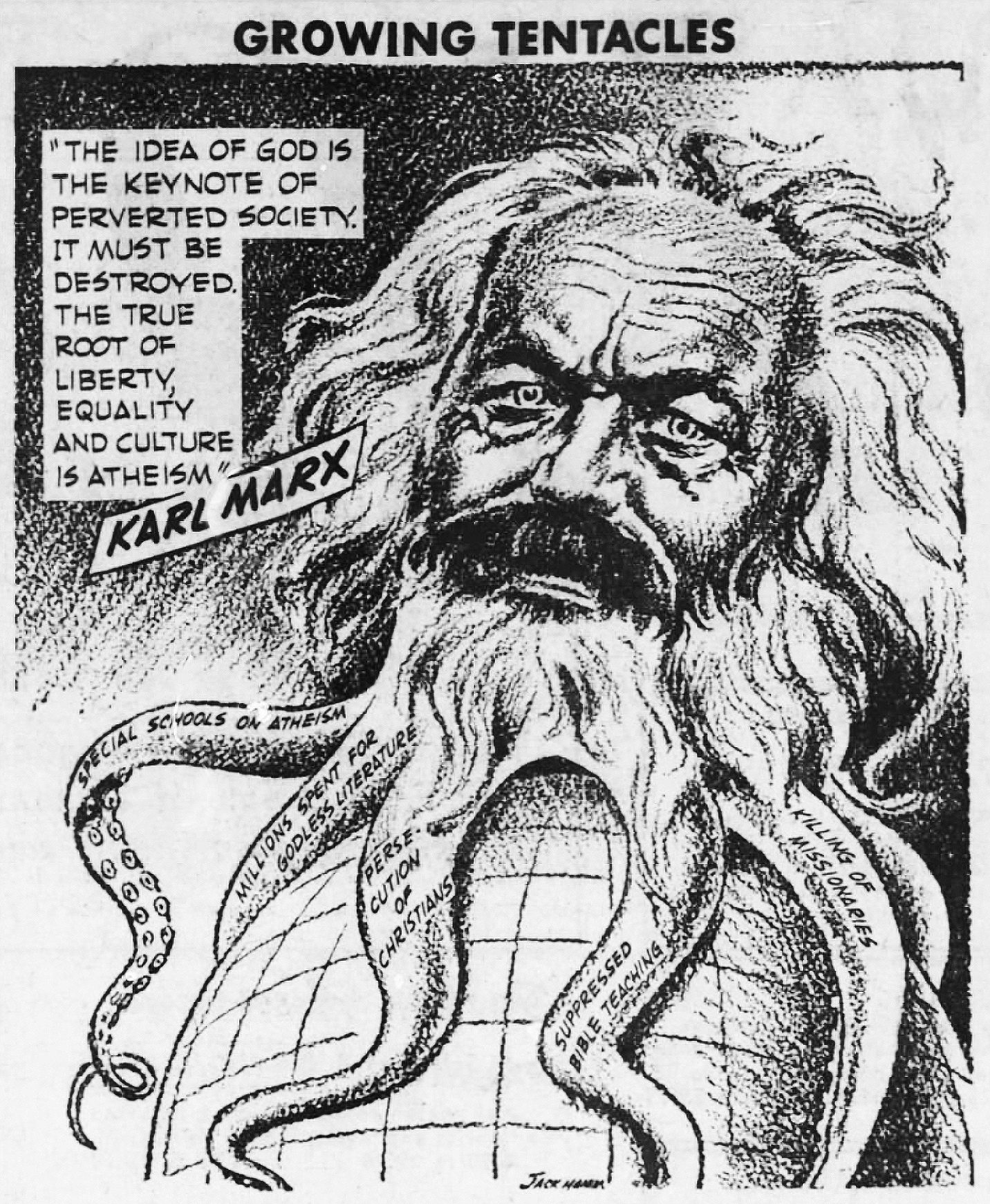
Notice the second tentacle from the left: “Millions spent for Godless literature.”
I was born about 6 months before this editorial cartoon, and today read the following from Judd Legum:
In Indiana, State Senator Scott Baldwin (R) has introduced sweeping legislation that Baldwin says is designed to ban Critical Race Theory (CRT) and related concepts in K-12 education. During a committee hearing on the bill earlier this month, Baldwin told a high school English teacher that he should be “impartial” when discussing Nazism. It is a case study about how the frantic efforts to ban CRT can quickly lead to absurd outcomes.
Republicans all across the U.S. are introducing and passing legislation censoring curriculum (targeting anti-racism content) and banning books from classrooms, school libraries, and public libraries (focusing on LGBTQ+ authors and works); some school board members have even called for book burnings.
My home state of SC is following the lead of other Republican-led states (notably Texas) by proposing guidelines that allow anyone to censor books for others.
It is incredibly important to emphasize that Republicans are actively removing books from school and public libraries—using government to decide what books and ideas people have access to.
These actions are tyranny. The antithesis of being free people.
There is no individual freedom without intellectual freedom.
No one should be held hostage to a life of an empty mind. Everyone deserves the accidental great fortune of my youth, including the kindness and boldness of my teacher, Lynn Harrill.
But none of this should be done in whispers, or with fear.
Republicans are calling for the eternal darkness of the empty mind, and we must resist because censorship erodes both American freedom and human dignity.
Also in 1961, Lou LaBrant recognized the failure of education as conformity:
Throughout our country today we have great pressure to improve our schools. By far too much of that pressure tends toward a uniformity, a conformity, a lock-step which precludes the very excellence we claim to desire….Only a teacher who thinks about his work can think in class; only a thinking teacher can stimulate as they should be stimulated the minds with which he works. Freedom of any sort is a precious thing; but freedom to be our best, in the sense of our highest, is not only our right but our moral responsibility. “They”—the public, the administrators, the critics—have no right to take freedom from us, the teachers; but freedom is not something one wins and then possesses; freedom is something we rewin every day, as much a quality of ourselves as it is a concession from others. Speaking and writing and exploring the books of the world are prime fields for freedom. (pp. 390-391)
Public and media debate as well as public policy driven by those debates is too often driven by misuse and misunderstanding of key terms and concepts, especially for the field of education.
Two such terms—Critical Race Theory and the “science of reading” (SoR)—have demonstrated that phenomenon over the past few years.
With reading and literacy a high-priority focus of the media and state-level legislation, understanding and using terms and concepts around reading and literacy correctly and clearly are urgently needed. Therefore, I strongly recommend a new volume, Language of Literacy Education, edited by Vicki S. Collet, Associate Director, NWA Writing Project, and Associate Professor, CIED, University of Arkansas.
The volume offers research-based explanations for literacy terms [1], such as SoR, the simple view of reading, etc., that often contrast with the way these terms are used in public and media discourse as well as in state-level legislation debates and policy.
For example, the volume’s definition for SoR is how the term should be used and understood:
Science of reading, broadly defined, is research results from a variety of fields and methodologies, including basic and applied science, related to reading and reading instruction. The science of reading is supported by ongoing research with a “dynamic interplay among methods, theories, and findings” (Pearson, 2020). Examining this full range of science “can be a helpful policy guide to initiatives that seek to improve students’ reading ability and appetite” (Collet et al., 2021)….
Because of the complexity of reading and the differences among learners and contexts, no single instructional approach has been found to be effective in teaching all students to read (Compton-Lily et al, 2020; International Dyslexia Association, 2018; Malloy et al., 2019).
While I strongly endorse the full definition provided here for a nuanced and robust understanding of SoR and how people learn to read over their entire lifetime, I find the inclusion of the current problems with the misuse of SoR as compelling:
Some instantiations of the “science of reading” are narrowly construed to emphasize basic research from cognitive psychology, neuroscience, and linguistics that describe how the brain learns to read in the early years. Public discourse sometimes focuses on the alphabet principle (Liberman et al., 1989) and a simple view of reading (Gough & Tunmer, 1986). This overly-restrictive view “is being used to shape public policy and silence other perspectives” (Hoffman et al., 2020, p. S258) and to narrow curricula (Compton-Lily et al., 2020; Vaughn et al., 2020) and should not be confused with the body of scientific studies of reading, which includes an interdisciplinary store of knowledge about “reading-related skills, processes, antecedents, and outcomes” (Alexander, 2020, p. S90). A “cautionary disposition to avoid drawing unwarranted inferences about the efficacy of pedagogical alternatives that have not themselves been rigorously examined” (Cervetti et al., 2020, p. S168) is needed. In contrast, research on reading instruction and the preparation of literacy teachers is robust, extensive, and useful for guiding reform efforts (Hoffman et. al, 2020).
Ultimately, Collett reaches an important conclusion that should be driving our understanding of reading, teaching reading, and reading policy: “At times controversial, the science of reading is an ongoing body of research, ‘an area for inquiry rather than a foregone conclusion’ (Woulfin et al., 2020, p. S111).”
Parents, the media, politicians, and anyone advocating for better literacy instruction must have this volume at their side in order to navigate this debate in ways that could benefit our teachers and their students.
Misinformation and misusing terms result in harmful debates and ultimately extremely harmful educational policy.
Annotation Argumentative Writing Assessment Background Knowledge Biliteracy Close Reading Comprehension Comprehension Strategies Comprehensive Literacy Instruction Construction-Integration (CI) Model Context Contextual Reading Model Critical Literacy and Critical Media Literacy Cueing Systems Culturally Responsive Instruction Decoding Diffferentiation Digital Literacies Direct Instruction Disciplinary Literacy Discourse Analysis Discussion Dyslexia Embodied Literacies Emergent Literacy Fluency Four-Part Mental Processor Genre Gradual Release of Responsibility Grammar and Mechanics Graphic Organizers Guided Reading/Writing Independent Reading/Writing Informational text Integrated Instruction Intervention Language Development Learning Progressions Literacy/Literacies Literary Devices Mentor Texts Miscue Analysis Modeling Morphology Motivation Multicultural Literature Multimodality Narrative Text New Literacies Peer Response Perspective and Point of View Phonics Phonological and Phonemic Awareness Pragmatic Knowledge Question Answer Relationship Read Aloud Readability Reading Recovery Reading-Writing Relationships Reciprocal Teaching Rhetorical Factors and Devices Running Record Scafffolding Science of Reading Semantics Sentence Frames Shared Reading/Writing Sight Words Simple View of Reading Small-Group Instruction Sociocultural Perspective Standards Story Elements/Story Grammar Text Structures and Text Features Theme Thesis Think Aloud Transactional Theory Translanguaging Understanding Vocabulary Instruction Voice Workshop (Reading & Writing) Writing Process Zone of Proximal Development
Polonius: I mean, the matter that you read, my lord.
Hamlet: Slanders, sir: for the satirical rogue says here that old men have grey beards….
Polonius: [Aside] Though this be madness, yet there is method in’t.
–Hamlet, Act II, Scene ii.
Reading matters.
I imagine you would be hard pressed to find anyone who would disagree with those two simple words. But the reality is that those two words have dramatically different meanings among people advocating for teaching children to read in schools.
The problem in McWhorter’s words, of course, is that “right way.”
Since early 2018, the U.S. has once again lifted the Reading War into public consciousness with a misleading refrain, “the science of reading” (SoR). The media has maintained a steady beat claiming that teacher education and practicing teachers have failed to embrace the SoR, and as a result, children are failing to learn to read.
The SoR media movement has merged with some aggressive parent advocacy groups, notably related to dyslexia, and the result is copy-cat SoR reading legislation being passed throughout the country. Ironically, and disturbingly, that legislation often codifies policies and practices that are strongly refuted by scientific research—grade retention, universal screening for and oversimplification of dyslexia [1], systematic intensive phonics programs for all students [2], bans on popular reading programs, and efforts to mimic policies implemented in Mississippi [3] (after one round of improved NAEP scores in reading at grade 4).
While I am certain that people advocating for improved reading instruction in our schools all have mostly good intentions (except for a powerful lobby for phonics programs and some media/journalists seeing an opportunity to cash in on SoR), the problem remains with what anyone means by “reading matters.”
We must acknowledge two contexts here.
One context is approaching a common term but a rare case that it may be accurate—crisis.
Since the SoR movement and advocates such as McWhorter are speaking into a conservative and traditional ideology about language, reading, and literature (used broadly to mean any texts students reading), the SoR movement has been swept into a concurrent movement against public education broadly begun under Trump with the purposeful and orchestrated attacks on the 1619 Project and Critical Race Theory (McWhorter’s “right way” comment sits inside his joining the anti-woke movement).
What merges the anti-woke education movement and the SoR movement is the focus on parental rights to monitor and control what students learn and how students learn.
The crisis we are approaching, I think, is the ironically disturbing part. The merging of the SoR movement with the anti-woke movement means that so-called advocates for better reading instruction have joined forces with a new rise in censorship that includes book banning, removing books from libraries (lists of 850+ books identified in Texas), proposing bans on terms deemed “woke,” and even calls for burn burnings.
A significant but less powerful group of literacy advocates, teachers, scholars, and writers have noted the problem with emphasizing the need for children to learn to read while simultaneously reducing what they can read, and even what those students are allowed to consider or think.
A second context is the contradiction between the narrow demands of the SoR movement and the likelihood that policies and practices being implemented in the name of SoR are likely to inhibit and even discourage children from reading.
I have detailed several times that I grew up in a racist and deeply conservative community and household. The conditions that saved my life, my mind, and my soul include the coincidence that my very misguided parents happened to respect intellectual freedom; I was allowed to read anything throughout my childhood and teen years.
Once I moved beyond my home and community—college—I was then liberated by reading Black authors assigned and recommended by wonderful professors, again a context that respected intellectual freedom and my mind.
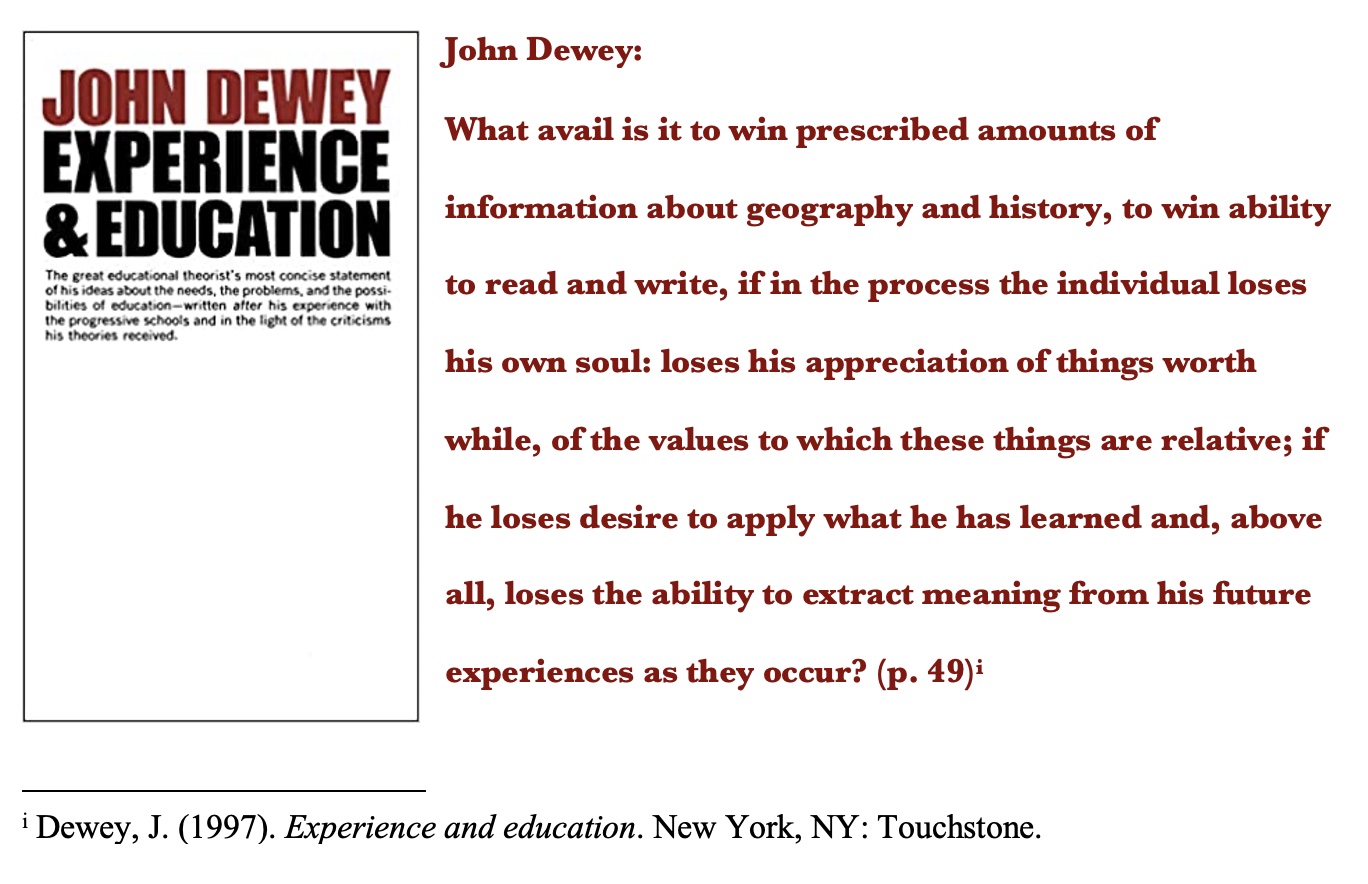
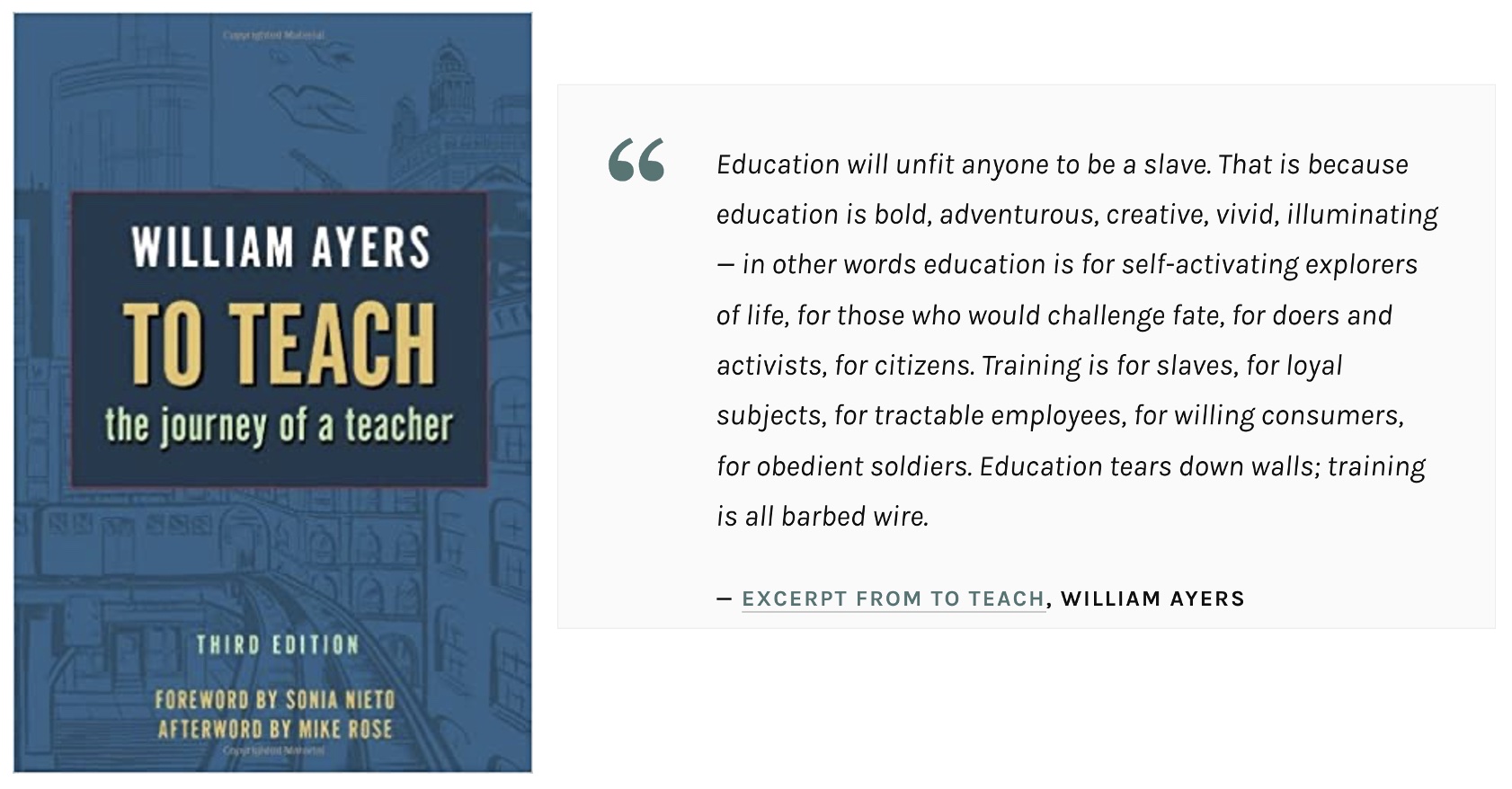
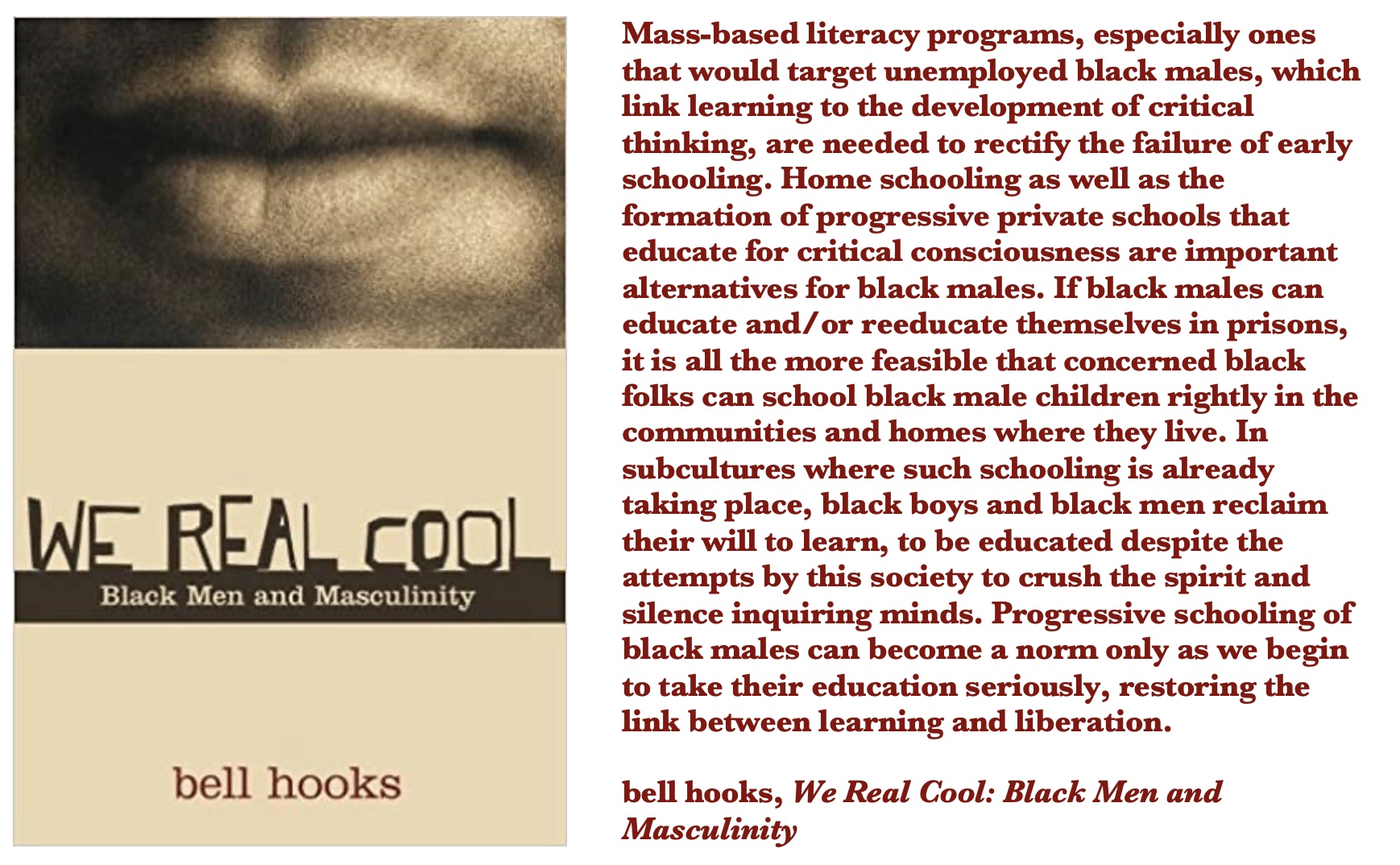
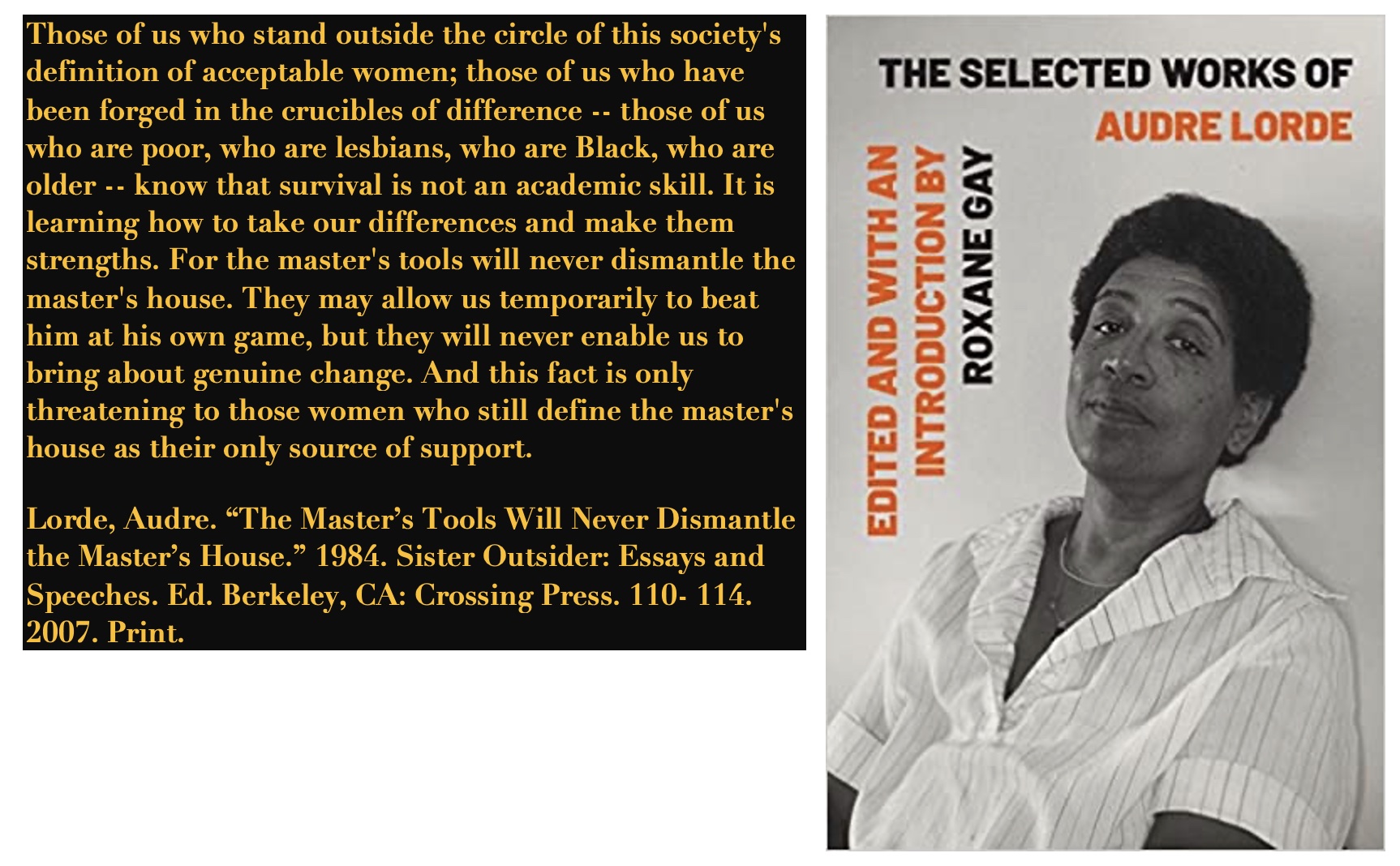
Not an exhaustive list, but for me, someone who has spent almost 40 years as a literacy educator, I want to offer some reasons reading matters for me, highlighting John Dewey, William Ayers, bell hooks, and Audre Lorde:
The allure of SoR for the media, parents, and politicians is grounded in silver-bullet “all students must” thinking that is antithetical to the reasons I believe reading matters.
At the core of the tension in debates about teaching reading and what texts students are assigned or allowed to read is those embracing indoctrination (“teaching everybody to read the right way”) versus those embracing education as liberation (from Dewey to Ayers to hooks and to Lorde).
Indoctrination depends on someone not only controlling what people read, hear, and think, but also erasing what people read, hear, and think.
The SoR movement ultimately fails because it resists being student centered and allows far too often for reading to be reduced to decoding (systematic intensive phonics for all); further, while SoR advocates often demonize popular reading programs (and I am a strong critic of all reading programs), they make the same essential mistake by simply choosing different programs to endorse as rigid expectations for students and teachers (LETRS, DIBLES).
Reading matters, but if we become distracted by raising reading test scores, our practices are likely to produce non-readers (Dewey).
Reading matters, but if we fail to distinguish between indoctrination and education for liberation (hooks), we reduce reading instruction to training (Ayers).
Reading matters, but our commitments must be to how reading matters for the individual, especially for those “who stand outside the circle of this society’s definition of acceptable” (Lorde).
If we truly believe every person deserves the human dignity of intellectual freedom, as my parents and teachers afforded me, then reading matters only if we refuse silver-bullet scripts, only if we protect all the books and ideas available to free people.
“the simple view of reading does not comprehensively explain all skills that influence reading comprehension, nor does it inform what comprehension instruction requires.”
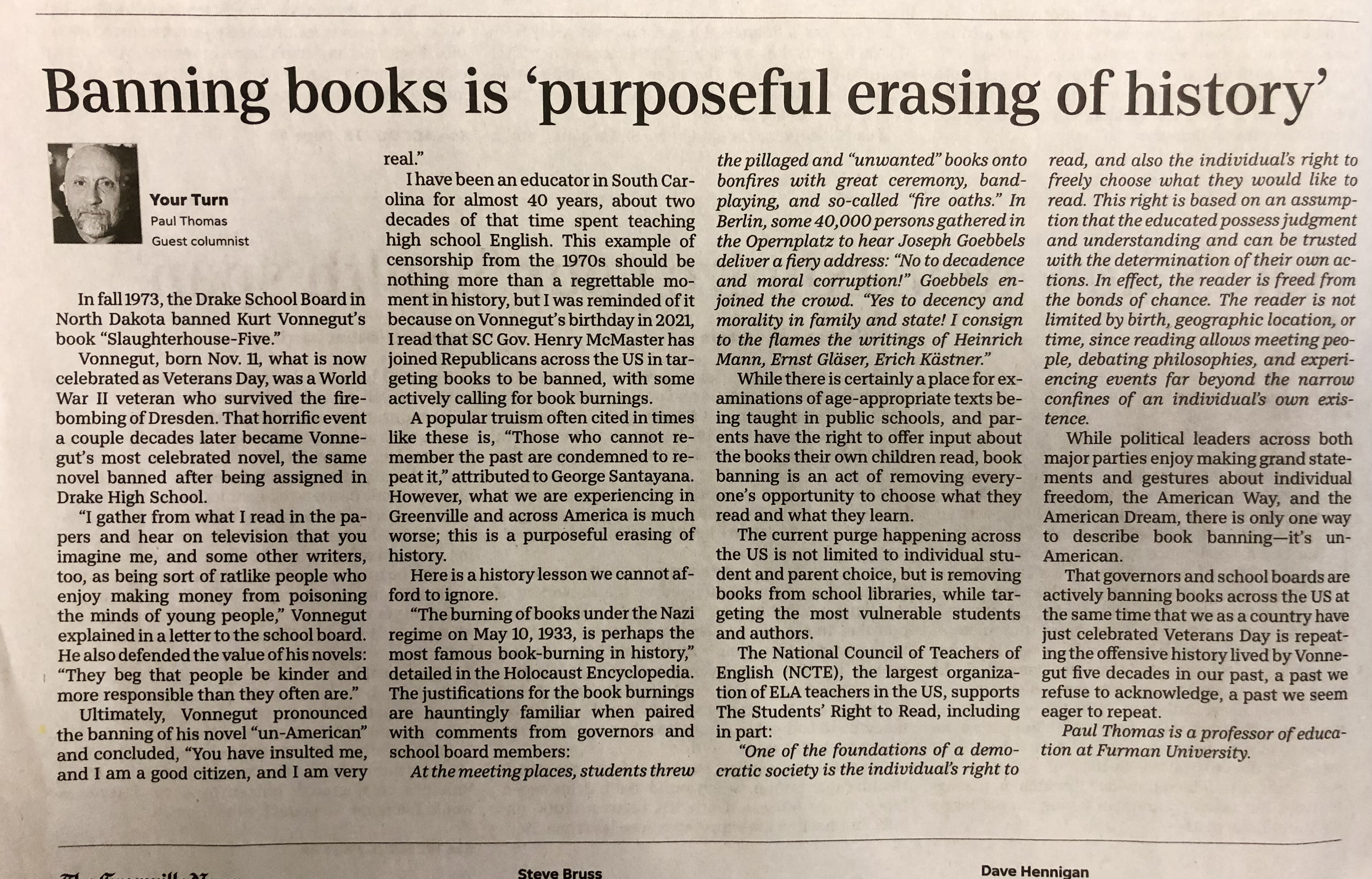
In the fall of 1973, the Drake School Board in North Dakota banned Kurt Vonnegut’s Slaughterhouse-Five.
Vonnegut, born November 11, what is now celebrated as Veterans Day, was a World War II veteran who survived the firebombing of Dresden. That horrific event a couple decades later became Vonnegut’s most celebrated novel, the same novel banned after being assigned in Drake High School.
“I gather from what I read in the papers and hear on television that you imagine me, and some other writers, too, as being sort of ratlike people who enjoy making money from poisoning the minds of young people,” Vonnegut explained in a letter to the school board. There he also defended the value of his novels: “They beg that people be kinder and more responsible than they often are.”
Ultimately, Vonnegut pronounced the banning of his novel “un-American” and concluded, “you have insulted me, and I am a good citizen, and I am very real.”
I have been an educator in South Carolina for almost 40 years, about two decades of that time spent teaching high school English. This example of censorship from the 1970s should be nothing more than a regrettable moment in history, but I was reminded of it because on Vonnegut’s birthday in 2021 I read that SC Governor Henry McMaster has joined Republicans across the U.S. who are not only banning books, but actively calling for book burnings.
A popular truism often cited in times like these is “Those who cannot remember the past are condemned to repeat it,” attributed to George Santayana. However, what we are experiencing in Greenville, SC and across America is much worse; this is a purposeful erasing of history.
Here is a history lesson we cannot afford to ignore.
“The burning of books under the Nazi regime on May 10, 1933, is perhaps the most famous book burning in history,” detailed at the Holocaust Encyclopedia. The justifications for the book burnings are hauntingly familiar when paired with comments from governors and school board members:
At the meeting places, students threw the pillaged and “unwanted” books onto bonfires with great ceremony, band-playing, and so-called “fire oaths.” In Berlin, some 40,000 persons gathered in the Opernplatz to hear Joseph Goebbels deliver a fiery address: “No to decadence and moral corruption!” Goebbels enjoined the crowd. “Yes to decency and morality in family and state! I consign to the flames the writings of Heinrich Mann, Ernst Gläser, Erich Kästner.”
While there is certainly a place for examinations of age-appropriate texts being taught in public schools, and parents have the right to offer input about the books their own children read, book banning is an act of removing everyone’s opportunity to choose what they read and what they learn.
The current purge happening across the U.S. is not limited to individual student and parent choice, but banning books from school libraries, while targeting the most vulnerable students and authors.
The National Council of Teachers of English (NCTE), the largest organization of ELA teachers in the U.S., supports The Students’ Right to Read, including in part:
One of the foundations of a democratic society is the individual’s right to read, and also the individual’s right to freely choose what they would like to read. This right is based on an assumption that the educated possess judgment and understanding and can be trusted with the determination of their own actions. In effect, the reader is freed from the bonds of chance. The reader is not limited by birth, geographic location, or time, since reading allows meeting people, debating philosophies, and experiencing events far beyond the narrow confines of an individual’s own existence.
While political leaders across both major parties enjoy making grand statements and gestures about individual freedom, the American Way, and the American Dream, there is only one way to describe book banning—un-American.
That governors and school boards are actively banning books across the U.S. at the same time that we as a country were celebrating Veterans Day is repeating the offensive history lived by Vonnegut five decades in our past, a past we refuse to acknowledge, a past we seem eager to repeat.
Several students in my literacy course in our MAT program chose to read Donna Alvermann’s Effective Literacy Instruction for Adolescents. While the initial discussion around Alvermann’s essay focused on those students struggling with the density of her academic writing, they emphasized the importance and power of her addressing student self efficacy in the fostering of student literacy development:
Adolescents’ perceptions of how competent they are as readers and writers, generally speaking, will affect how motivated they are to learn in their subject area classes (e.g., the sciences, social studies, mathematics, and literature). Thus, if academic literacy instruction is to be effective, it must address issues of self-efficacy and engagement.
That discussion led to some very insightful comments about the importance of providing students feedback, as opposed to grades, on their writing as part of the drafting and workshop process (anchored in their reading Graham and Perin’s 2007 Writing Next analysis of research on teaching writing).
As a long-time advocate of feedback and someone who practices de-grading the classroom as well as delaying grades (assigning grades for courses but not on assignments), I strongly supported this discussion, and was impressed with the thoughtfulness of the students.
That discussion had a subtext also—a concern raised by several students about the need for teachers to provide students positive feedback (so students know what they are doing well), and not just negative feedback. (Some of that subtext, I am sure, was an unexpressed feeling among some of these graduate students that they received mostly or exclusively “negative” feedback from me on their first submitted essays.)
After several students worked through this argument for positive feedback, I asked them to step back even further to consider, or -re-consider, what counts as “positive” or “negative” feedback.
I appreciate the hard work that went into this essay. It has many merits, but it also has something profoundly and disturbingly wrong with it. In fact, I’m writing this feedback on my phone, cowering in the bathtub with my wife, after your essay terrorized and nearly destroyed us….
The essay was formatted correctly, and each sentence was more or less intelligible in itself. But altogether, the effect was—disorientation. Worse, actually. Pure senselessness. The Void.
This satirical piece does exactly what my MAT students requested, blending positive (“many merits”) with negative (“something profoundly and disturbingly wrong with it”) feedback; and I think, herein is the problem with the dichotomy itself.
Once dramatically while I was teaching high school and often since I have been teaching at my current selective liberal arts university, I have encountered students who perceive all feedback as negative and reject having to revise their writing.
My argument to my MAT students was that actionable feedback on student writing is not inherently “negative” even though it does suggest something is “wrong” and needs “correcting” (perceptions grounded in students’ experiences in traditional classrooms that focus on the error hunt and punish students with grades).
However, I am well aware over almost four decades that part of my challenge as a writing teacher is how to help students see and respond to feedback as supportive and not an attack on their work or them as people (we had a great discussion about whether or not students can or should see their writing as inextricable from them as people).
In other words, affect matters.
Throughout the past 20 years teaching in higher education, I have been struggling against the perception by students than my written feedback is “mean,” “harsh,” “negative,” etc., while they simultaneously find my face-to-face feedback supportive and “good.”
I continue to seek ways to make feedback on student writing more effective as a key aspect of helping students grow as writers and thinkers as well as fostering their independence as writers and thinkers (learning to revise and edit their work on their own).
Students persist, however, in finding the feedback “negative,” and occasionally shutting down.
If there is a path to moving past the dichotomy of negative/positive feedback to student writing, I think it lies in the following concepts and practices:
Having explicit discussions with students about the inherent need for all writers to revise writing, ideally in the context of feedback from an expert and/or supportive writer/teacher. I often share with students samples of my own work submitted for publication with track changes and comments from editors.
Adopting strategies and rhetoric that rejects deficit ideology and the error hunt (Connie Weaver). It is important for teachers and students to prefer “revising” and “editing” instead of “error,” “mistake,” and “correcting” as the language surrounding the writing process. The pursuit in writing must be grounded in the recognition that all writing can be better even when it is currently quite good (and especially if is is somewhat or deeply flawed).
Clarifying for students that challenging and critical feedback is intended as actionable by students as writers, and thus, inherently positive. One of the recurring tone issues I experience with students viewing my written feedback as negative is misreading questions; students often read questions as sarcastic or accusatory when I am asking in order to elicit a response (for example, when I write “Did you look at the sample?” how I move forward with helping a student depends on that answer). As my MAT students expressed in the context of Alvermann, students absolutely do need to see themselves as writers and do need to trust they will be successful, but they also must embrace the need to revise and the awareness that no one produces “perfect” writing in one (or even several) drafts.
Feedback and the dynamic between teachers and students (including trust) are the lifeblood of the writing process when students are young and developing. As I noted above, affect matters and the teacher/student relationship inevitably impacts how effective the teacher is.
As teachers providing feedback, we must be careful and purposeful in our feedback, focusing on actionable feedback and creating/maintaining a culture of support and encouragement.
To that end, I believe we cannot reduce feedback to a positive/negative dichotomy that serves only to reinforce the cultures and practices we need to reject, deficit ideologies and the error hunt.
In the McSweeney’s parody above, the writing teacher and their wife are ensnared in a demon-possessed student essay, but the more horrifying detail of this piece is the ending—the realization that teachers and students are actually trapped in an even greater hellscape:
“I did it,” she sobbed. “I killed it. I killed it.”
“You did it,” I said, climbing into the bathtub with her, holding my wife close. “It’s over. It’s all over now.”
Yes, let’s work on feedback and the affect created around the writing process, but let’s not ignore that their are larger dynamics (grades and testing) at play that erode the teacher/student relationship as well as the effectiveness of teaching and the possibilities of learning.
The “science of reading” movement has direct roots in a U.S. media narrative starting about 2018, but the Science of Reading now drives reading and education decisions in many states and provinces. The decisions and legislation often includes policies and practices not supported by research (for example, grade retention) and further de-professionalizes teachers. This session places the Science of Reading movement in historical context and disrupts the “evidence-based” claims of Science of Reading advocates. The goal of the session is to provide teachers the evidence and support needed to assert their professional autonomy in support of their students’ needs and agency.









 dr. p.l. (paul) thomas