In my current trends in literacy course for our MAT program, I have 7 students across several content areas. Our discussion yesterday confronted how too often teachers (notably ELA teachers) assign texts and reading that discourage students as readers.
One candidate in ELA shared a story of a teacher who declared that most of their students “can’t read Shakespeare” so that teacher has the class listen to an audio recording of the play Macbeth.
I noted that required reading lists often do more harm than good for students as readers and added if I had to choose between required texts that students don’t read or choice texts that students actually read, I always want the latter.
Further, this example triggered a pet peeve of mine about how we teach different forms and genres of writing.
I asked the class what type of text Macbeth is, and they all identified it as a play. I followed up with asking how plays/drama are intended to be experienced, and again, they all noted that plays are written to be viewed, preferably as live performances.
Next, I shared with them recurring experiences I have with my first-year writing students (high-achieving students—disproportionately white and affluent—admitted to a selective liberals arts college).
Often on the first day of class, I ask students what novels they read in high school English, and several students will say A Raisin in the Sun, Hamlet, and such. I then point out that these are plays, and not novels. But the students have mostly read these plays in bound books that look identical to the novels they were assigned.
Also in the first few days, I have students do a writing exercise where they write a mimic passage from a chapter in Sandra Cisneros’s The House on Mango Street, “A House of My Own.” Students are told to mimic the grammar and style of the chapter exactly while changing the content.
The assignment is designed as a first transition to reading like a writer [1] (as opposed to reading text for literary analysis) so that students develop the skills needed to compose and revise with attention to not just what they express but also how they express their messages.
Invariably, several students email me their piece and identify it as their “poem,” despite my noting in class that they are mimicking a prose chapter from a novel.
In other words, very bright and often “A” students demonstrate over and over that they have garbled and often inaccurate knowledge about genre and form—and they learn these flawed lessons in school, typically in English, because of careless approaches to text like the one above concerning Macbeth.
I want to focus here on two aspects, interconnected, about how we teach text to students, particularly in high school.
First, concerning having students listen to or read plays, I always see lessons involving text as essentially lessons in genre awareness, a concept endorsed by Ann Johns instead of genre acquisition (her discussion forefronts composition, but this applies to reading as well):
Russell [and] Fisher (in press) distinguish between two approaches to genre pedagogy, two basic goals for a course or tutorial. The first is GENRE ACQUISITION, a goal that focuses upon the students’ ability to reproduce a text type, often from a template, that is organized, or ‘staged’ in a predictable way. The Five Paragraph Essay pedagogies, so common in North America, present a highly structured version of this genre acquisition approach. …
A quite different goal is GENRE AWARENESS, which is realized in a course designed to assist students in developing the rhetorical flexibility necessary for adapting their socio-cognitive genre knowledge to ever-evolving contexts. …I have concluded that raising genre awareness and encouraging the abilities to research and negotiate texts in academic classrooms should be the principal goals for a novice literacy curriculum (Johns 1997).
This juxtaposition of two quite different goals, genre acquisition and genre awareness, is reminiscent of another pedagogical contrast mentioned by Henry Widdowson years ago (1984) and, later, by Flowerdew (1993): that pedagogies are designed to either TRAIN for specific tasks (i.e., text types) or EDUCATE, to cope with an almost unpredictable future. It is my argument here that education should, in the end, be our goal for novice academic literacy courses, for a genre awareness education will prepare students for the academic challenges that lie ahead. (pp. 238-239)
Johns, A.M. (2008). Genre awareness for the novice academic student: An on-going quest. Language Teaching, 41(2), 237-252.
Therefore, when I teach a genre or form, I typically invite students to ask questions and develop or refine their internalized rubric for what constitutes that genre or form (or medium): What makes a poem, a poem? What makes a comic book, a comic book? What makes a film, a film? What makes an essay, an essay? etc.
Reading and critical literacy require that the reader come to a text with some awareness of form and genre, and that awareness helps the reader navigate the text for meaning.
Sitting down to read Naomi Shihab Nye’s “Gate A-4,” for example, often challenges people since I have seen it identified and heard students refer to the work as a poem, a story, and a non-fiction essay (it is a prose passage, fictional, in Nye’s Honeybee: Poems & Short Prose).
Finally, we must confront why Macbeth was taught to these students through an audio recording—the conclusion that high school students couldn’t read Shakespeare.
I am deeply skeptical of the rush to identify high school students as struggling readers for several reasons:
Many high school students are non-readers and it is too easy to conflate non-readers with struggling readers.
Often, even in ELA courses, lessons and assessments are designed in ways that allow students to pass or even excel in a course without having to read [2] (students can access information on novels and plays or simply depend on the teacher to cover everything to be assessed in class, which most teachers do).
Students who are non-readers are not necessarily demonstrating they have decoding, vocabulary, or comprehension problems, but that they lack motivation to read texts assigned to them and to perform in ways that are not authentic. Many non-readers in the classroom go home and perform complex and advanced literacy that teachers do not see and traditional schooling does not acknowledge (video and board gaming, binge-watching TV, reading and collecting comic books, reading novels they choose such as YA lit or science fiction and fantasy).
Students who “struggle” with assigned texts and performing in ways that are often required in school (narrow analysis and multiple choice testing) may be struggling due to those expectations as well as lacking adequate experience reading (since they have passed courses without reading). I think “struggling” is a misnomer for that phenomenon.
Lou LaBrant warned in 1949, “We should not, under the guise of developing literary standards, merely pass along adult weariness” (p. 276).
And LaBrant (1937) held that belief because “the adolescent has much greater power to read and to think intelligently about reading than the results of our conventional program have led us to believe” (p. 34).
We ask too little of students when we fail to honor the fidelity of genre, form, and medium, but we ultimately fail students when we assume their lack of reading lies in a fault with them (“struggling”) instead of interrogating what we require them to read (or not read) and our reductive approaches to text and literacy.
[2] I saw a former students several years after he was a marginal and combative AP Literature student of mine. He smiled and announced that he expected I would be surprised to know he earn a degree in English in college. Then, he added that he did so without ever reading a book assigned to him.
Sources
LaBrant, L. (1949, May). Analysis of clichés and abstractions. English Journal, 38(5), 275-278. Stable URL: http://www.jstor.org/stable/807545
LaBrant, L. (1937, February 17). The content of a free reading program. Educational Research Bulletin, 16(2), 29–34. Stable URL: http://www.jstor.org/stable/1471836
I have also continued to blog about the movement, and in all of these experiences, I am forced to rethink and think more complexly through what I know and understand about the SoR movement as well as how to teach reading and literacy.
The most recent interview, by literacy expert Sam Bommarito, proved to be an enlightening experience on several levels.
First, Sam’s experience and expertise in the field of literacy were a welcomed change from being interviewed by generalists and journalists because his questions dove directly into the core of the issues surrounding SoR and those questions challenged me to think more deeply and carefully.
Our exchange between people with similar levels of expertise on the subject allowed (or even required) us to focus on how best to offer any viewers nuanced but clear explanations of a deeply complex topic; as I noted (and emphasize often now), the evidence on teaching reading is not simple, and not settled.
But the larger take-away for me after the interview was that Sam’s third question—Does it make any sense to effectively ban selected practices found in balanced approaches to reading, e.g., reading recovery, workshop teaching or guided reading?—prompted me to explain in greater detail a core concept that grounds a fundamental reason I reject the SoR movement.
Whether I am addressing literacy specifically or teaching pedagogy broadly, I have relied for many years on the best practice concepts expressed by Zemelman, Daniels, and Hyde.
Each chapter in their book (now in its fourth edition) ends with a chart that suggests instructional practices that teachers should increase or decrease; for example, on writing instruction (download sample here):
Key to note is that best practice is grounded in broad and diverse bodies of research on teaching and learning, and that best practice philosophy neither requires nor bans any specific instructional approach; whether a teacher uses any pedagogy is directly linked to student need (not a prescription form some authority such as standards or an adopted program).
When SoR advocates call for “all students must” (for example, systematic intensive phonics for all students and universal screening for dyslexia), they are misrepresenting what we know about teaching and learning: There is no universal silver bullet for “all students.”
Best practice structures promote research and evidence as a spectrum, a range of practices for every teacher’s toolbox; best practice also recommends that instruction begin with individual students, their demonstrated known, unknown, and misconceptions.
If we think carefully about decoding and direct instruction in phonics and phonemic awareness, teachers will face a wide diversity of students in any class in terms of where they are in their reading development; in short, there simply is no situation where “all students must” serves students well.
Literacy is not simple, and literacy development is not linear, sequential, or systematic.
For example, most people do not accumulate vocabulary in order to be able to read, but develop their vocabulary by reading.
Context (in terms of so-called literacy skills) and engagement are extremely important when students are developing their literacy; regretfully, many misguided movements during the history of the Reading War have eroded an essential aspect of literacy that must be honored—literacy as holistic.
Here, we must address a fundamental paradox in the SoR movement.
Several different kinds of advocacy are fueling the SoR movement—from parents advocating for greater awareness of dyslexia to Black and poor parents advocating for under-/un-served populations of students to advocates for the needs of emerging bilingual students.
The common denominator here is a genuine concern for the under-/un-served student, a pervasive belief that for a number of reasons, too many students are being failed by the system itself (although some elements of the SoR movement are also directly blaming teachers and teacher educators for those failures).
The paradox is that the aggressive advocacy behind the SoR movement is driving an all-or-nothing silver-bullet approach to teaching reading, which will mis-serve students as much or more than the current conditions of teaching and learning in U.S. public schools.
So this leads me to Sam’s effort to bridge the divisions in the Reading War (something I am far more skeptical about, as I address in Sam’s question 5: Cambourne and Crouch recently said we should stop using the Reading Wars metaphor and replace it with the metaphor of the Reading Quilt- with different “sides” adding different pieces to the quilt. Do you see any hope for that point of view? Do you see hope for an end to the divisive discourse? Do you see hope for ending the reading wars? [13:20]).
I am no fan of compromise (as I explain in the interview) but I think we do have common ground in terms of two beliefs: (1) Far too many students are being under-/un-served in our current K-12 public school system (notably in their literacy), and (2) the under-/un-served are disproportionately marginalized and vulnerable populations of students (Black students, poor students, emerging bilinguals, students with special needs).
Not a compromise, but my modest proposal is that all of us concerned with reading and literacy among K-12 students need to set aside the “all students must” mandate and commit instead to “each student deserves.”
“All students must” be screened for dyslexia is a guaranteed disaster for students (consider the over-diagnosing of ADHD as one example), but “each student deserves” access to ample books and other texts in their homes and schools fulfills what we know about literacy development without being overly simplistic or harmful.
Each student deserves whatever teaching and learning experiences they need and want in order to grow and develop at the rate unique to them (not some manufactured and artificial “grade level” proficiency).
This commitment shifts our instruction and assessment gaze away from compliance to a reading program or to a set of prescribed standards and toward the demonstrated needs and wants of each student who enters any classroom.
The ultimate irony here is that the whole language (WL), reading/writing workshop, and balanced literacy (BL) movements (all falsely demonized since the 1990s) offer that exact commitment along with very high standards for teacher expertise (each of us in charge of any student must have a very complex toolbox for teaching and also must be prepared to individualized instruction).
Again, as I stated in the interview, WL, workshops, and BL did not fail our students, but we have certainly failed the core commitment of those movements—serving the learning needs of each student.
What we know about teaching reading is not simple or settled, but I think we can and must all agree that instead of falling prey to the overly simplistic and harmful “all students must,” a better way forward is a resolute commitment to “each student deserves.”
Schedule: Thursday, February 3, 2022, 5:00 pm – 6:00 pm est
Session Strand: Leadership in Literacy
Session Title: FS21 – The State of the Reading War: Not Simple, Not Settled
Description:A new round of the Reading War embraces the “simple” view of reading, arguing that the “science of reading” is settled. This session interrogates the “science of reading” movement by placing it in historical context and refuting its central claims based on a more complex view of reading and science.
Topics: Equity in Education, Literacy Leadership, Reading
About a year ago, a friend and I introduced my grandchildren to gaming; soon after I bought them a Nintendo Switch.
My granddaughter, Skylar, was immediately drawn to Animal Crossing because she loved that the game allows players to visit each other’s world. But the game also requires a great deal of reading so her initial experiences meant she had to play with someone who could read with comprehension to help and guide her.
Today, Skylar is starting second grade.
Happy for day 1 of grade 2.
Recently, when Skylar was visiting, she immediately wanted to play Animal Crossing with my friend. As they played, Skylar was reading aloud incredibly well, only occasionally stumbling over words that would typically be classified as “above her grade level” (a concept I reject).
Despite Skylar’s ability to decode with speed and accuracy, we noticed something really important.
After reading through the text, Skylar would pause and ask my friend what she was supposed to do. Of course, the text in the game is designed to guide what the player does so my friend patiently explained that Skylar needed to re-read but pay attention to meaning (comprehension).
With that guidance and attention to the need to decode with comprehension and purpose, Skylar began to play the game with more agency (a few days later, she Facetimed my friend to continue having someone to mentor and guide her; in other words, she didn’t magically become an independent reader).
Skylar is 7 years old, my grandson, Brees, is 4 (about to turn 5 in a few weeks).
Watching them navigate gaming as well as learning to read is fascinating for several reasons.
First, Skylar clearly prefers communal gaming. Even as she is developing the ability to read with comprehension and engagement independently, she desperately wants to play the game with someone else.
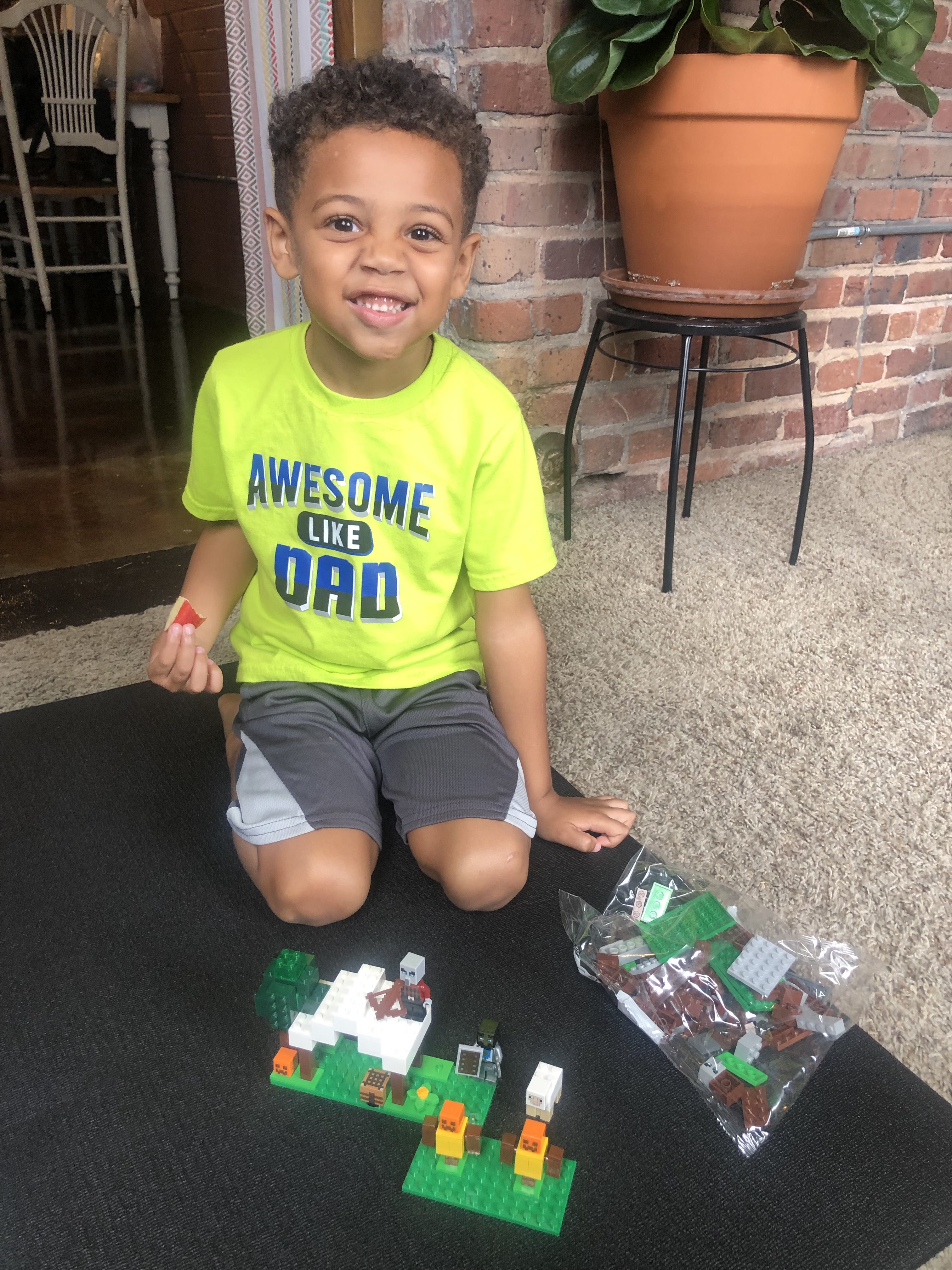
Brees, who has chosen Minecraft [1] as his go-to gaming, is a solitary gamer. While they were over for a pool day, Brees took a break and happily lay on a lounge chair playing Minecraft on his iPad.
Minecraft mania extends to Lego as well.
Second, Skylar’s gaming and reading journey dramatically reveals the limitations of decoding—notably the danger of assuming that proficiency at reading aloud (words pronounced quickly and clearly) results in comprehension and engagement.
Here I want to stress that without Animal Crossing and an expert mentor (both at the game and reading), Skylar could well have remained at the level of “going through the motions” of reading aloud.
She didn’t hesitate to re-read and work toward comprehension so that she could fully engage in the game.
In other words, literacy is ultimately about autonomy, but it is also a profoundly important aspect of community.
During the Facetime session, Skylar was seeking a mentor to confirm the decisions she was making. Even though she was decoding with comprehension, she kept asking for confirmation that she was navigating the game the right way (or more accurately, a right way).
Before I go further, I want to stress that Skylar clearly has acquired some very powerful decoding strategies based in what most people call “phonics,” but when she is in the real world of gaming, she often comes to situations when those blunt decoding skills are not only inadequate but distracting from the flow of the complicated act of reading and acting on the comprehension.
I also want to stress that watching a 7-year-old play a reading-intensive video game complicates the simplistic and misleading faith placed in “grade level” texts. Like almost all real-world texts, Animal Crossing simply uses words (no concern for “grade level” and no “context clues”), often very common words mixed in with exact vocabulary that is uncommon.
Overly simplistic views of reading and vocabulary tend to conflate the “easy/hard” binary for vocabulary with “common/uncommon.”
Uncommon words that Skylar could not decode, and often has never encountered before, were not “hard” since with a mentor to pronounce and explain the word, Skylar very quickly adapted and with repetition in the game, those words became common to her (and thus, “easy”).
Finally, this experience with my grandchildren, at different stages of development and reading, helps personify some of the significant problems with the “science of reading” (SoR) movement that advocates for the “simple view” of reading and for systematic intensive phonics for all students.
Decoding is a necessary but small aspect of the reading, which ultimately must be an act of comprehension with engagement.
But the SoR movement also will fail our students because it centers systematic programs, silver-bullet thinking, and a misguided emphasis on decoding (and blunt decoding strategies).
However, what all students need and deserve are real-world experiences with and reasons to read.
Those experiences include activities too many people still stigmatize as “bad” for children—comic books, gaming, and even Lego.
Skylar as an emerging independent reader has had some wonderful traditional school experiences, and loving teachers. But her journey to reading is much larger than that, including her current fascination with Animal Crossing.
My beautiful and eager grandchildren are powerful examples that when it comes to teaching reading, nothing is settled and nothing is simple.
Reading is comprehensions and engagement, and as Skylar demonstrates, reading is about community, a shared purpose that is filled with pleasure and the joy of creating without a finish line.
Background/Context: Educators have considered how Minecraft supports language and literacy practices in the game and in the spaces and circumstances immediately surrounding gameplay. However, it is still necessary to develop additional conceptualizations of how children and youth’s online and offline worlds and experiences are blurred by and through the games. In this study, I take up this call and examine how the boundaries of the digital were blurred by one child as he wrote in response to a standardized writing prompt within his urban fourth-grade classroom.
Purpose/Objective/Research Question/Focus of Study: Through snapshots of Jairo’s writing, I illuminate how he muddled the lines between his physical play experiences and those he had in the virtual world of Minecraft. In doing so, I argue that he carried over his personal interest as a fan of Minecraft into the writing curriculum through creative language play. As Jairo “borrowed” his physical play experiences in the virtual world of Minecraft to complete an assigned writing task, he exemplified how children blur playworlds of physical and digital play in the elementary ELA classroom.
Research Design: Drawing on data generated in an 18-week case study, I examine how one child, Jairo, playfully incorporated his lived experiences in the virtual world of Minecraft into mandated writing tasks.
Conclusions/Recommendations: My examination of his writing is meant to challenge writing scholars, scholars of play, and those engaged in rethinking media’s relation to literacy. I encourage a rethinking of what it means for adults to maintain clear lines of what is digital play and what is not. I suggest adults might have too heavy a hand in bringing play into classrooms. Children already have experiences with play—both physical and digital. We must cultivate a space for children to build on what was previously familiar to them by offering scaffolds to bridge these experiences between what we, as adults, understand as binaries. Children do not necessarily see distinctions between “reality” and play worlds, or between digital and physical play. For children, play worlds and digital worlds are perhaps simply worlds; it is we as adults who harbor a desire for clear boundaries.
Teachers College Record Volume 123 Number 3, 2021, p. – https://www.tcrecord.org ID Number: 23622, Date Accessed: 9/18/2021 7:46:35 AM
How can historical perspective help direct teaching and learning?
When trying to solve problems, humans are prone to looking for a “silver bullet” which often bypasses the learning process. Educational trends prove this theory. The hot teaching movement today may not have solid research behind it. History shows us that we are not good at being patient students throughout life’s journey.
Our guests Dr. Michele Dufresne, President and founder of Pioneer Valley Books and Dr. Paul Thomas at Furman University share that while K-12 education may be a basic right, not everyone has equal access to it. If every child is capable of learning and no one progresses at the same rate, then how can teachers better support student growth? Having an educated society impacts all facets of our communities.
In the early to mid-1980s, I entered the world of serious recreational cycling. I had been an athlete throughout my childhood and teen years, but found myself sedentary and out of shape in the first few years of my career as a high school English teacher.
Road cycling wasn’t the most inviting of sports, being both an individual and group endeavor. I quickly discovered, in fact, that cycling is deeply tradition-bound and steeped in ritual and conformity.
Ultimately, it is also an orchestra of Social Darwinism; you must be strong enough and skilled enough to ride with a group regardless of anything else (such as the right bicycle or the proper kit).
Early on, I had to focus on fitness—riding more often and longer, but always alone—and finding ways I could afford ever-better bicycles (see Rule 12). Gradually, I began shaving my legs and made the most daunting commitment facing me, using toe clips on my pedals.
Toe clips were a must among serious cyclists, but they involved literally reaching down and tightening a leather or nylon strap around your feet. The monumental learning curve was reaching down to tighten the straps and always reaching down to flick the release when coming to a stop.
At the time, I lived only a couple miles from my bicycle shop so I rode my bicycle there to buy my first toe clips. They installed the clips to my pedals and went over how to tighten and release.
Filled with glee about my next step toward being a real cyclist, I rolled out of the shop parking lot and promptly came to a stop at a red light where I fell over fairly dramatically beside several cars—having completely forgotten to reach down to loosen the straps.
Just as I had to learn how to shift gears (old-school down-tube friction shifting), I learned to tighten and release the toe clips along with dozens of other behaviors necessary to ride in tight packs of cyclists at high intensity and to near exhaustion.
High-paced group cycling is a mix of many precise behaviors in incredibly tense contexts—from being dropped from the group to being in or causing a serious accident.
That was three decades ago, and today (after many changes to pedals and shifting) I function on a bicycle in ways that seem entirely natural, requiring essentially no thought.
Matching kits, clipless pedals.
Cycling for me is automatic behavior; I also have acquired an incredible amount of knowledge about bicycles (I do bicycle maintenance and build bicycles) and the history of the sport.
I often think of this journey in learning of mine, which was again prompted by a few exchanges on Twitter:
Multiple choice questions are not bad.
Direct instruction is not bad.
DOK level 1 questions are not bad.
Rote memorization is not bad.
We often completely write something off instead of recognizing that it is a tool with value, limitations, and the capacity to be misused.
These comments about what we know and how we know it are common, but, I think, trapped in a misunderstanding about, for example, “rote memorization.”
Memorization and automatic behavior are not about “bad” or “good.” In fact, memorization and automatic behavior are inevitable for most humans, even essential.
The trap can be exposed by considering a behavior most of us have in common—assembling something from parts such as a TV stand or entertainment unit, or a children’s toy.
Do you recall opening the box, spreading out the parts, laying out the directions, and then beginning to assemble? Was there a moment (or several) while assembling when you turned from the directions to look on the box at the image of the fully assembled item?
So here is my point: The Twitter exchange above is trapped in viewing learning in a reductive way based on part-to-whole, easier-to-harder, sequential perceptions of learning.
This singular and reductive view is the trap.
Since most of the items we assemble are a one-time event, that assembly is both learning to assemble and assembling at the same time. (I once assembled a TV stand, badly, and then my in-laws wanted the same stand. The second assembly was a near-euphoric experience since I was able to apply what I had learned from doing the whole thing one time before.)
My journey in cycling and my assembly example here reveal that learning resulting in memorization and automatic behavior is extremely complex and is in fact an interplay between part and whole, not a step-by-step journey from part to whole.
“Breaking it down” is not always easier or clearer for some students, in some learning activities.
Many people learning to use toe straps, for example, would go into a grass field, strap in, and (as I did publicly) fall down repeatedly. Learning the real thing required doing the whole and real thing relatively badly until they improved (motivated by real consequences).
There is no debate, then, about the good or bad in memorization or automatic behavior. The real tension is about how and why we come to memorize or behave automatically.
Despite misleading claims that memorization is a foundation, we often come to know something, have it memorized, after (not before) we have rich and complex experiences with the knowledge or behavior.
In my doctoral program, I had to perform from memory in two intense settings—written comps and dissertation defense. I studied for neither because I had engaged with the material for so long and in such intense situations (course work, numerous papers, a full dissertation) that I had much of the material in recall.
Twenty-five-plus years later, much of that dissertation work remains in recall for me.
Like with cycling, my final doctoral work felt natural, as much a part of me as pedaling with my hands off the handlebars while I remove my cycling vest and stuff it into a rear pocket while sitting at the back of a high-paced group.
The quests for silver-bullets and simple step-by-step paths to learning and automatic behavior are at the core of many educational debates, in fact, including the incessant reading debate.
The complexity of cycling reminds me of the complexity in reading—the many interconnected behaviors and knowledge required to do both automatically and well.
Reading, learning to read, and teaching someone to read—like all learning—are not simple and how we come to know is just not settled.
In fact, learning will never be simple or settled because human beings are far too complex.
The paradox, of course, is that how we know is simple to explain: It is some type of interplay between doing the whole thing we want to learn and coming to know the many intricate parts that make up that whole thing.
Published in The High School Journal (May 1951) by Dorothy McCuskey, a review of Lou LaBrant‘s most comprehensive work on teaching English, We Teach English, concluded: “In short, this is no ‘how to teach’ book. Rather, it is a book which will cause the reader to re-examine the bases of his [sic] teaching methods and the content of his [sic] courses.”
LaBrant was a demanding teacher and scholar with a career as a teacher of English from 1906 until 1971. And one of the defining features of that career was her persistent challenges to how teachers taught the field labeled, then, as “English.”
The field traditionally called “English” has evolved over the years, often at the K-12 level being envisioned as English/Language Arts (ELA) or simply Language Arts.
Schools often teaches courses called Language Arts. Yet, little actual art happens in most of these classrooms. Instead, language is often treated as a static set of prescriptivist rules that children are expected to master and mimic back to their teacher. This is not an exploration of the art of language. This is linguistic oppression.
Concurrent with this post from Flores, I argued that students must unlearn to write in order to write well at the college level and shared on Twitter the baggage students bring to college, what they must unlearn:
* "Research paper" is a real thing * Huge paragraphs are good * Big (obscure) words are good * Editing is revision * Don't use "I" is a real thing
Having been a high school English teacher for almost two decades and then a teacher educator focusing on ELA and a first-year composition professor for an additional two decades, I carry on LaBrant’s tradition of mostly swimming against the tide of tradition in terms of what counts as “teaching English.”
Students majoring in the humanities, specifically English, has declined significantly—”History is down about 45 percent from its 2007 peak, while the number of English majors has fallen by nearly half since the late 1990s”—prompting many colleges and universities to reconsider and even cut those majors and departments.
We are well past time, I think, the need to reimagine the teaching and fields of English/ELA for K-16.
At one level, English/ELA includes a complex challenge since teachers and professors in that singular field/discipline are often tasked with addressing a wide range of content included in literature and literacy (reading/writing). Bluntly put, teaching English/ELA is a herculean, nearly impossible task.
If we teachers of English/ELA are to be successful in covering literature and literacy K-16, any success found in our students is necessarily cumulative over many, many years. This is no trivial point, and not mere metaphor, but when teaching or learning literature and literacy, there is no finish line.
While I firmly believe we must distinguish between the teaching of literature and literacy, specifically between teaching literature and composition/writing, I also recognize that the myriad aspects of literacy are inherently recursive, symbiotic: learning to read is learning to write; learning to write is learning to read.
For people learning to teach, for example, high school English/ELA (courses that are designed to address both literature and literacy [reading/writing]), majoring in English often proves to be inadequate since English as a discipline at the university level tends to be literature based, often very narrow in course content (an entire semester on William Butler Yeats, for example).
Yes, English majors tends to write a great deal, but writing literary analysis or even so-called creative writing does not prepare a person to teach writing. In higher education, English (literature) and composition are distinct and separate fields.
To emphasize my point, when I was teaching American literature for high school students and as I teach first-year writing at my university, bringing texts into class has completely different purposes; it isn’t that both sets of students aren’t learning reading and writing in the courses, but that we are interrogating texts for significantly distinct purposes.
Literary analysis and reading like a writer are complex but different behaviors for students with different purposes and outcomes.
In fact, literary analysis is a discipline-based type of writing that demands unique moves and conventions than other discipline-based writing, such as in history, psychology, or the sciences.
I spent 18 years teaching high school English and have spent a bit longer now preparing candidates to teach high school English/ELA. I can attest without hesitation that expectations for K-12 English/ELA are excessive, inherently impossible.
While I don’t want to linger on the problems with teaching math, I do want to note that math tends to acknowledge the unique aspects within the field since students take sequences and more clearly delineated courses (geometry, Algebra I, Algebra II, calculus, etc.) that have mathematical principles in common throughout while maintaining the distinct features of each course.
With math (and the sciences), we recognize that a geometry teacher may be ill equipped to teach algebra (or a chemistry teacher, ill equipped to teach biology), but we tend to see English/ELA teachers as a monolithic monstrosity.
Somehow, with only a bachelors degree and at the tender age of 22, I was deemed capable of teaching American and British literature as well as writing to my high school students, but college professors several years older than that and armed with doctoral degrees are hired in English departments to teach Elizabethan drama (and such candidates often wave off requests that they take on first-year composition as well since, well, they aren’t trained to do that).
Sure, professors at the college level teach outside their specialities, but this is seen as a stretch, and not the norm or ideal. And when professors are tasked to work outside their areas of specialization, outcomes are often disappointing (my university decided years ago any professor could teach first-year writing—until it became abundantly clear that that is certainly not true).
Since a significant percentage of my college teaching load is now first-year and upper-level writing, I witness the harm done to students at the K-12 level and the inadequacies at the university level for writing instruction, historically a shunned cousin of the field of English since, I think, composition is viewed as mere teaching (and we all know the status of the field of education in academia).
Students need and deserve in K-16 schooling courses and teachers/professors properly equipped to teach both literature and literacy (specifically writing), but not simultaneously.
English/ELA must be reimagined as a complex field with symbiotic but distinct elements that require time and patience for both teaching and learning—and a much greater respect for the complexity and difficulty involved in teaching any of those different areas.
Writing in 1939 about the experimental program at the Ohio State University High School, LaBrant posed a similar argument:
That not all teachers are, however, equally skilled in assisting with all phases of language experiences, as, for example with personal or creative writing or with leisure reading; and consequently that students need a so-called “English” teacher who will assume certain specialized responsibilities and who will, in addition, study the general language growth of individual students and classes, and see that, as far as possible, adequate and balanced growth takes place. (p. 269)
At OSU, the University School recognized that a team of teachers with unique training and strengths needed to work together in order to address that “language growth and study are to be expected in all phases of school experience”—not simply laid at the feet of the English teacher.
It’s 2021, and “we teach English” needs to mean something more complex than it does currently, something similar to a nearly forgotten experiment in the early twentieth century where LaBrant practiced what she preached.
After emailing me about new reading legislation being proposed in North Carolina—next door to my home state of South Carolina that also has jumped on the “science of reading” bandwagon—Ann Doss Helms of WFAE (NPR, Charlotte, NC) interviewed me by phone.
I have given dozens of interviews about education over the last 15 to 20 years, and they all have a similar pattern; the journalist tosses out predictable questions and then becomes somewhat disoriented by my answers. Typically, the journalist at some point notes they didn’t know or had never heard the information I offered, the context and complications I raised about the topic.
My conversation with Helms was no different as we gradually peeled back the layers of the onion that is the “science of reading” as well as the very harmful reading policies that are being proposed and adopted in its wake.
Over the past couple years, I have blogged almost nonstop and written a book on the “science of reading” media narrative and how it is oversimplified and misleading but very compelling and harmful since state after state is adopting deeply flawed reading legislation (often, as Helms noted, to mimic Mississippi).
As I explained, the “science of reading” movement is grounded in the media and parent advocacy (specifically focusing on dyslexia)—advocates who have no expertise or background in literacy—but is essentially a thinly veiled resurrection of the tired intensive phonics versus holistic approaches to teaching reading.
Part of our conversation also confronted the contradiction in the “science of reading” movement that forefronts the debunked claim of “settled science” around how to teach reading and then supports actions and policies that have no scientific support—notably grade retention and using Mississippi as a justification for polices absent any research behind the claimed NAEP improvements by that state.
Further, the “science of reading” movement and those using the “science of reading” to promote state-level reading policy also rely on discredited (read “bad science”) sources such as NCTQ or misrepresent contested sources such as the National Reading Panel (see here).
The “science of reading” movement is deja vu all over again since the movement looks essentially like many other education reform patterns that have all failed (as many of us said they would) because they misunderstand the problem and grasp for silver-bullet solutions—all wrapped in a media and political frenzy that is almost impossible to stop. The trash heap of failure includes Teach for America, charter schools, accountability driven by standards and high-stakes testing, the NRP and Reading First, value-added methods of teacher evaluation and merit pay, and many others.
States adopting truly awful reading policy driven by the “science of reading” slogan will not change reading in the U.S., and in time, very soon, in fact, the media and political leaders will be, once again, lamenting a reading crisis.
While it may be too little, too late since states are racing to pass essentially the same reading legislation across the U.S., many scholars are carefully dismantling the “science of reading” movement in ways that support my claims over the past two years.
Here, then, are three I recommend for anyone needing further proof that the “science of reading” is yet another bandwagon we should avoid:
Currently, there is a well-organized and active contingent of concerned parents and educators (and others) who argue that dyslexia is a frequent cause of reading difficulties, affecting approximately 20 percent of the population, and that there is a widely-accepted treatment for such difficulties: an instructional approach relying almost exclusively on intensive phonics instruction. Proponents argue that it is based on “settled science” which they refer to as “the science of reading” (SOR). The approach is based on a narrow view of science, and a restricted range of research, focused on word learning and, more recently, neurobiology, but paying little attention to aspects of literacy like comprehension and writing, or dimensions of classroom learning and teacher preparation. Because the dyslexia and instructional arguments are inextricably linked, in this report, we explore both while adopting a more comprehensive perspective on relevant theory and research.
Johnston, P., & Scanlon, D. (2021). An Examination of Dyslexia Research and Instruction With Policy Implications. Literacy Research: Theory, Method, and Practice, 70(1), 107–128. https://doi.org/10.1177/23813377211024625
Johnston and Scanlon answer 12 questions and then offer these important policy implications (quoted below):
There is no consistent and widely accepted basis – biological, cognitive, behavioral, or academic – for determining whether an individual experiencing difficulty with developing word reading skill should be classified as dyslexic. (Questions 1 and 10).
Although there are likely heritable and biological dimensions to reading and language difficulties, there is no way to translate them into implications for instructional practice. (Questions 2 and 11).
Good first instruction and early intervention for children with a slow start in the word reading aspect of literacy, reduces the likelihood they will encounter serious difficulty. Thus, early screening with assessments that can inform instruction, is important. Screening for dyslexia, particularly with instructionally irrelevant assessments offers no additional advantage. (Questions 5 and 6).
Research supports instruction that purposely develops children’s ability to analyze speech sounds (phonological/phonemic awareness), and to relate those sounds to patterns of print (phonics and orthographics), in combination with instruction to develop comprehension, vocabulary, fluency, and a strong positive and agentive relationship with literacy. (Questions 7 and 12).
Evidence does not justify the use of a heavy and near-exclusive focus on phonics instruction, either in regular classrooms, or for children experiencing difficulty learning to read (including those classified as dyslexic). (Questions 7, 8 and 12).
Legislation (and district policies) aligned with the SOR perspectives on dyslexia will necessarily require tradeoffs in the allocation of resources for teacher development and among children having literacy learning difficulties. These tradeoffs have the potential to privilege students experiencing some types of literacy learning difficulties while limiting instructional resources for and attention available to students whose literacy difficulties are not due (exclusively) to word reading difficulties. (Question 12).
In this article, we critique the science of reading when it is positioned within the reading wars as settling disagreements about reading and how it should be taught. We frame our argument in terms of troublesome binaries, specifically between nature and nurture. We interpret that binary in relation to Overton’s distinction between split and relational metatheories, with the latter suggesting a more integrative view of nature and nurture. Focusing on the nature side of the binary, which predominates when the science of reading is promoted in the reading wars, we argue that its singular focus limits the range of scientific inquiry, interpretation, and application to practice. Specifically, we address limitations of the science of reading as characterized by a narrow theoretical lens, an abstracted empiricism, and uncritical inductive generalizations derived from brain‐imaging and eye movement data sources. Finally, we call for a relational metatheoretical stance and offer emulative examples of that stance in the field.
Yaden, D.B., Reinking, D., & Smagorinsky, P. (2021). The Trouble With Binaries: A Perspective on the Science of Reading. Read Res Q, 56(S1), S119– S129. https://doi.org/10.1002/rrq.402
Note the strong conclusion to this piece:
Unfortunately, we believe that in many cases, the cloak of science has been employed to elevate the stature of SOR work and to promote the certainty and force of its advocates’ preferred explanations for what reading is and how it should be taught (e.g., Gentry & Ouellette, 2019; Schwartz & Sparks, 2019). What we suggested in this article is that the SOR, when so used in the reading wars, is not science at all in its fullest sense. It neglects an entire domain that influences and shapes human experience. It does so with an unmitigated confidence that evidence from one side of a binary can establish a final truth and that such a truth creates a single prescription for all instruction. Taking that stance, however, is outside the pale of science and dismisses work that has both merit on its own terms and a critical role in advancing the aims motivating reading research and instruction.
In this historical analysis, we examine the context of debates over the role of phonics in literacy and current debates about the science of reading, with a focus on the work and impact of the late literacy scholar Jeanne Chall. We open by briefly tracing the roots of the enduring debates from the 19th and 20th centuries, focusing on beginning reading, decoding, and phonics. Next, we explore insights drawn from the whole language movement as understood by Kenneth Goodman and Yetta Goodman, as well as a synthesis of key ideas from Chall’s critique of the whole language approach. We then analyze the shifts across the three editions of Chall’s Learning to Read: The Great Debate and summarize major ideas from her body of work, such as the stage model of reading development. We suggest that reading instruction should be informed by a broader historical lens in looking at the “science of reading” debates and should draw on a developmental stage model to teaching reading, such as the six‐stage model provided by Chall. We describe implications for educators, textbook publishers, researchers, and policymakers that address the current reading debates and provide considerations of what Chall might say about learning to read in a digital era given the pressures on teacher educators and teachers to align their practice with what is deemed to be the science of reading.
Semingson, P., & Kerns, W. (2021). Where Is the Evidence? Looking Back to Jeanne Chall and Enduring Debates About the Science of Reading. Read Res Q, 56(S1), S157– S169. https://doi.org/10.1002/rrq.405
UPDATE 1
From the very beginning of the “science of reading” movement, media coverage, parental advocacy, and political policy have been misleading and grounded in misunderstanding. As the examples above show, there continues to be a steady dismantling of all that even as policy has been adopted and is being considered, policy that is fundamentally not “scientific” and will prove to be ineffective and even harmful.
Below are some additional examples of the dismantling that I highly recommend:
When it comes to reading instruction, an “all or nothing” approach is actually unscientific.
Every January, my social media feeds fill with ads, free trials, and coupons from the diet and wellness industry, promising to help me with my (presumed) resolutions to be better, faster, leaner, and healthier. Every diet program claims some type of relationship to science.
The same is true with reading instruction. Most programs or approaches claim to be based on “science.” But consider the many possible meanings of this claim. Some approaches to reading instruction are developed as part of rigorous, peer-reviewed research and are continuously evaluated and refined. Others are designed by practitioners who draw on experience, and whose insights are validated by inquiry after development. Many are based on well-known principles from research or assumptions about learning in general, but haven’t themselves been tested. Some “research-based” instructional tools and practices have been shared, explained, interpreted, misinterpreted, and re-shared so many times that they bear little resemblance to the research on which they were based (Gabriel, 2020). Others rack up positive evidence no matter how many times they’re studied. Then there are practices that have no evidence behind them but are thought to be scientific—because they’ve always been assumed to be true.
The simple view of reading is commonly presented to educators in professional development about the science of reading. The simple view is a useful tool for conveying the undeniable importance—in fact, the necessity—of both decoding and linguistic comprehension for reading. Research in the 35 years since the theory was proposed has revealed additional understandings about reading. In this article, we synthesize research documenting three of these advances: (1) Reading difficulties have a number of causes, not all of which fall under decoding and/or listening comprehension as posited in the simple view; (2) rather than influencing reading solely independently, as conceived in the simple view, decoding and listening comprehension (or in terms more commonly used in reference to the simple view today, word recognition and language comprehension) overlap in important ways; and (3) there are many contributors to reading not named in the simple view, such as active, self-regulatory processes, that play a substantial role in reading. We point to research showing that instruction aligned with these advances can improve students’ reading. We present a theory, which we call the active view of reading, that is an expansion of the simple view and can be used to convey these important advances to current and future educators. We discuss the need to lift up updated theories and models to guide practitioners’ work in supporting students’ reading development in classrooms and interventions.
Duke, N.K., & Cartwright, K.B. (2021). The Science of Reading Progresses: Communicating Advances Beyond the Simple View of Reading. Read Res Q, 56(S1), S25– S44. https://doi.org/10.1002/rrq.411
NOTE: The short version of the Duke and Cartwright essay should be: The “science of reading” is not so simple and not so settled.
What is happening in this new stage of the reading wars is there for all to see in North Carolina’s and others’ use of the phrase. Instead of spelling out what they mean, “science of reading” advocates wrap themselves in the protective mantel of science, as if invoking science is all that anyone needs to be credible and persuade others to join them. Anyone disagreeing is anti-science, i.e., ignorant.
This is not a great persuasion strategy. Not surprisingly, those from a different vantage point argue that no one has a right to define science in a way that conveniently fits their perspective.
The “Read to Succeed” Act ultimately did not pass during Kentucky’s 2021 legislative session. However, given that state legislators have introduced early literacy bills multiple times in recent years, it is likely that the state may see similar proposals in coming years. Further, given the rapid spread of these policies across states in recent decades, the considerations discussed here will be relevant to policymakers in other states interested in third-grade literacy legislation. Though many states have already enacted early literacy legislation, policymakers need not adhere to a one-size-fits-all approach to improving third-grade literacy achievement. State policymakers can learn from the research, described above, that has been conducted to this point about these policies. I offer three specific recommendations for policymakers to consider as they strive to ensure the efficacy of third-grade literacy policies moving forward:
• Instead of limiting the legislation to the “Big Five” components of reading, include a set of instructional best practices in literacy.
• Ensure initial, ongoing, and targeted professional development in literacy for K-3 teachers.
• Show educators that their expertise is valued by involving them in the development of the policy. This can be done by soliciting feedback through an open online comment period, conducting focus groups with a representative group of K-3 educators, and/or involving educators in the creation of various components of the policy.
Cummings, A.. (2021). Making early literacy policy work in Kentucky: Three considerations for policymakers on the “Read to Succeed” act. Boulder, CO: National Education Policy Center. https://nepc.colorado.edu/publication/literacy
In many U.S. states, legislation seeks to define effective instruction for beginning readers, creating an urgent need to turn to scholars who are knowledgeable about ongoing reading research. This mixed-methods study considers the extent to which recognized literacy experts agreed with recommendations about instruction that were included on a state’s reading initiative website. Our purpose was to guide implementation and inform policy-makers. In alignment with the initiative, experts agreed reading aloud, comprehension, vocabulary, fluency, phonological awareness, and phonics all deserve a place in early literacy instruction. Additionally, they agreed some components not included on the website warranted attention, such as motivation, oral language, reading volume, writing, and needs-based instruction. Further, experts cautioned against extremes in describing aspects of early reading instruction. Findings suggest that experts’ knowledge of the vast body of ongoing research about reading can be a helpful guide to policy formation and implementation.
Collet, Vicki S.; Penaflorida, Jennifer; French, Seth; Allred, Jonathan; Greiner, Angelia; and Chen, Jingshu (2021) “Red Flags, Red Herrings, and Common Ground: An Expert Study in Response to State Reading Policy,” Educational Considerations: Vol. 47: No. 1. https://doi.org/10.4148/0146-9282.2241
Marissa J. Filderman, Christy R. Austin, Alexis N. Boucher, Katherine O’Donnell, Elizabeth A. Swanson
Abstract
Informed by theories of reading comprehension and prior reviews of reading comprehension intervention, this meta-analysis uniquely contributes to the literature because it describes the relative effects of various approaches to comprehension intervention for struggling readers in Grades 3 through 12. Findings from 64 studies demonstrate significant positive effects of reading comprehension intervention on comprehension outcomes (g = .59, p < .001, 95% confidence interval [CI] [0.47, 0.74], τ2 = .31). A metaregression model indicated significantly higher effects associated with researcher-developed measures, background knowledge instruction, and strategy instruction, and significantly lower effects associated with instructional enhancements. Grade level, metacognitive approaches, and study quality did not moderate effects. Findings support the use of background knowledge instruction and strategy instruction to support comprehension of struggling readers in upper elementary and beyond.
Theoretical models, such as the simple view of reading (Gough & Tunmer, 1986), the direct and inferential mediation (DIME) model (Cromley et al., 2010; Cromley & Azevedo, 2007), and the cognitive model (McKenna & Stahl, 2009) inform the constructs and skills that contribute to reading comprehension. The simple view of reading (Gough & Tunmer, 1986) describes reading comprehension as the product of decoding and language comprehension. The simple view of reading is often used to underscore the critical importance of decoding on reading comprehension; however, evidence suggests that the relative importance of decoding and language comprehension changes based on students’ level of reading development and text complexity (Lonigan et al., 2018). Cross-sectional and longitudinal studies demonstrate that decoding has the largest influence on reading comprehension for novice readers, whereas language comprehension becomes increasingly important as students’ decoding skills develop and text becomes more complex (e.g., Catts et al., 2005; Gough et al., 1996; Hoover & Gough, 1990; Proctor et al., 2005; Tilstra et al., 2009). However, the simple view of reading does not comprehensively explain all skills that influence reading comprehension, nor does it inform what comprehension instruction requires.
The DIME model of reading (Cromley et al., 2011; Cromley & Azevedo, 2007) and cognitive model (McKenna & Stahl, 2009) build upon the simple view of reading as component-based models. The relationship between five variables—background knowledge, inference, strategies, vocabulary, and word reading—are hypothesized to result in reading comprehension according to the DIME model. Word reading, vocabulary, and background knowledge each have direct effects on reading comprehension. However, the effect of word reading, vocabulary, and background knowledge on reading comprehension is also mediated by other variables. Indirectly, background knowledge and vocabulary are needed to use comprehension strategies or to draw inferences (Ahmed et al., 2016). The cognitive model (McKenna & Stahl, 2009) also breaks reading comprehension into its component parts. According to the cognitive model, reading comprehension is made possible by automatic word recognition, language comprehension, and strategic knowledge. The model further delineates specific skills contributing to each of these components of reading comprehension. For successful language comprehension to occur, vocabulary, background knowledge, and knowledge of text structures are needed. General purposes for reading, specific purposes for reading, and knowledge of strategies contribute to strategic knowledge. In summary, both the DIME model and the cognitive model provide greater insight into specific constructs and skills required for reading comprehension that can be targeted instructionally in comprehension intervention.
Filderman, M. J., Austin, C. R., Boucher, A. N., O’Donnell, K., & Swanson, E. A. (2022). A Meta-Analysis of the Effects of Reading Comprehension Interventions on the Reading Comprehension Outcomes of Struggling Readers in Third Through 12th Grades. Exceptional Children, 88(2), 163–184. https://doi.org/10.1177/00144029211050860
Teaching children to read is one of the most fundamental goals of early years and primary education worldwide, and as such has attracted a large amount of research from a range of academic disciplines. The aims of this paper are: (a) to provide a new critical examination of research evidence relevant to effective teaching of phonics and reading in the con-text of national curricula internationally; (b) to report new empirical findings relating to phonics teaching in England; and (c) examine some implications for policy and practice. The paper reports new empirical findings from two sources: (1) a systematic qualitative meta-synthesis of 55 experimental trials that included longitudinal designs; (2) a survey of 2205 teachers. The paper concludes that phonics and reading teach-ing in primary schools in England has changed significantly for the first time in modern history, and that compared to other English dominant regions England represents an outlier. The most robust research evidence, from randomised control trials with longitudinal designs, shows that the approach to phonics and reading teaching in England is not sufficiently under-pinned by research evidence. It is recommended that national curriculum policy is changed and that the locus of political control over curriculum, pedagogy and assessment should be re-evaluated.
Wyse, D., & Bradbury, A. (2022). Reading wars or reading reconciliation? A critical examination of robust research evidence, curriculum policy and teachers’ practices for teaching phonics and reading. Review of Education, 10, e3314. https://doi.org/10.1002/rev3.3314
Key points:
The key question that we address in this paper is whether robust research evidence sup-ports this historically significant change in reading pedagogy. Our findings from analysis of tertiary reviews, systematic reviews and from the SQMS do not support a synthetic phonics orientation to the teaching of reading: they suggest that a balanced instruction approach is most likely to be successful. They also suggest the need for a new more careful consideration of the strengths and weaknesses of whole language as an orientation to teaching reading. The reading wars have often resulted in some very dismissive attitudes to whole language, a position that is not underpinned by the research. Although there remains no doubt that phonics teaching in general is one important component in the teaching of reading, the research certainly does not suggest the complete exclusion of whole language teaching….
In addition to the importance of contextualised reading teaching as an evidence-based orientation to the teaching of reading we hypothesise the following pedagogical features that are likely to be effective. Phonics teaching is most likely to be effective for children aged five to six. Phonics teaching with children younger than this is not likely to be effective. A focus on whole texts and reading for meaning, to contextualise the teaching of other skills and knowledge, should drive pedagogy. Classroom teachers using their professional judgement to ensure coherence of the approach to teaching phonics and reading with other relevant teaching in their classroom is most likely to be effective. Insistence on particular schemes/basals, scripted lessons, and other inflexible approaches is unlikely to be optimal. Well-trained classroom assistants, working in collaboration with their class teachers, could be a very important contribution to children’s reading development. Although the most relevant studies in the SQMS showed approaches that were effective usually from between 9.1 h and 60 h of teaching time, we hypothesise that effective teaching of the alphabetic code could be delivered in 30 h or less of instruction time. If so, this would mean that greater emphasis on aspects such as reading comprehension could begin much earlier in England’s national curriculum programmes of study than in the current national curriculum of 2014.








 dr. p.l. (paul) thomas