Category Archives: NCTE

To High School English Teachers (and All Teachers)

All teachers are incredibly important, but high school English teachers will always have a special place in my heart.

I am in my fourth decade as an educator, spending almost two decades as a public high school English teacher (many years coaching and teaching/advising journalism/newspaper as well) and now in my second decade as a teacher educator (primarily working with future secondary ELA teachers) and a first year writing instructor.

Significant in my teaching journey are being in my area National Writing Project (Spartanburg Writing Project) and then serving as a lead co-instructor in that same project for a couple years.

Concurrent with my career as an educator, I have been a serious and published writer for about thirty years. And of course I have been madly in love with books of all kinds since before memory.

I write this specifically to my colleagues who are high school English teachers, but all teachers really, out of my greatest respect for teacher professionalism, importance, and autonomy—as well as my deepest commitment, the sacredness of every single student who enters any teacher’s classroom.

While at times this may read as scolding, preaching, or prescribing, I am seeking here to invite every teacher to do what I have done my entire career—stepping back from practice as often as possible, checking practice against my most authentic and critical goals, and then changing that practice if those do not match.

I am fortunate that my students often contact me, email or Facebook are common, and generally they are too kind. Typically, they reach out to thank me for preparing them as writers, and few things could make me prouder to be a teacher.

But these moments are tempered at times because they are speaking from decades ago—during years when I now know my practice was off, sincere but flawed.

So I come to teachers with this invitation from many years thinking hard about teaching literacy, focusing on writing, and being a serious writer myself. These thoughts are informed by years teaching English, years teaching young people to be teachers, and years teaching other teachers as well as observing practicing teachers in the field.

I have been fortunate recently to teach four young women who have secured their first teaching jobs as English teachers. Working with them has impacted me profoundly because they are wonderful additions to our field, but also they have encountered a field and practicing teachers who have routinely discouraged them and me about who teaches and how we teach English.

Michelle Kenney’s The Politics of the Paragraph coming in the wake of two separate debates about the use of “they” as a singular gender-free pronoun (see my The Politics of Teaching Grammar) along with my current literacy graduate course has all spurred me to the thoughts below—this rising concern about how English teachers impact our students as free people and as literate people.

My lessons also are strongly shaded by the history of the field of education broadly and English teaching narrowly as I have come to understand both through the lens of Lou LaBrant. Teaching and teachers have been profoundly and negatively impacted by eternal forces for a century at least, and those corrosive forces have been intensified during the recent thirty-plus years of accountability driven by standards and high-stakes testing.

Now, then, I offer this invitation to consider lessons I have learned about teaching English:

  • Begin with and remain true to authentic literacy, and then comply with standards and testing mandates within that greater commitment. Our planning and practice must start with our students’ literacy being sacred—seeking ways to foster eager readers and writers who still must often demonstrate literacy proficiency in the worst possible settings. This is not a call to be negligent, but to be dedicated to the power of literacy first and bureaucracy second.
  • Forefront your expertise and professionalism 24/7. Teachers have never received the professional respect we deserve, and during the accountability era, our professionalism has been even further eroded by shifting all the authority for how and what we teach to standards and high-stakes test. Our expertise and professionalism are our only weapons for demanding the authority for teaching be with us—not bureaucratic mandates, or commercial programs. Every moment of our lives we are teachers, and every moment we are representing our profession.
  • Teach students—not programs, standards, test-prep, or your discipline. Especially at the high school level, and particularly during the accountability era, we are apt to lose sight of our central purpose in teaching English—our students.
  • Resist teaching so that students acquire fixed content and instead foster students as ongoing learners. Recently one of my teacher candidates attended a course in which fellow English teachers were adamant they needed students to learn to cite using MLA by memory. My former student resisted this, suggesting that students should understand citation broadly and then be equipped to follow the ever-changing and different citation guides they will encounter as college students and beyond. This exemplifies a central flaw in teaching English that views learning as acquiring fixed content. Read Lou LaBrant’s New Bottles for New Wine (1952), in which she implores: “Do our students know that our language is changing, that it is the product of all the people, each trying to tell what is in his mind? Do they understand their own share in its making and re-creation?” (p. 342).
  • Become and remain a student of language. What is your background in the history of the English language? How much linguistics have you studied? For me, a key shift in teaching English was embracing a descriptive grammarian stance informed by linguistics and the history of the language. This allows me to view student language use as part of that history, and helps me focus on teaching students to play with language and then to edit and revise their writing, instead of focusing on “correcting.” This is central to having a low-stakes classroom that sees language as investigation.
  • Reject deficit views of language and students. The prescriptive grammarian comes from a history that linked language use with people’s character—a false link. While ideas such as the “word gap” is compelling, it is both false (based on one flawed study) and counter to what we know about literacy and power. Language changes, and claims about “correctness” are always more about power than either language development or literacy. Please read James Baldwin’s If Black English Isn’t a Language, Then Tell Me, What Is? and Ralph Ellison’s What These Children Are Like.
  • Foster genre awareness in students while interrogating authentic texts (and rejecting artificial writing templates). As Kenney details, writing templates may prepare students for artificial demonstrations of literacy (high-stakes tests), but they ultimately fail authentic writing and literacy goals. Published writing nearly never follows the 5-paragraph essay template, and the whole thesis idea is equally rare in published writing. Students as writers need to be eager readers who are encouraged to mine that reading constantly for greater genre awareness about how any writer makes a piece what the writer is seeking to accomplish. What is an Op-Ed? A memoir? Investigative journalism? A feature story on an Olympic athlete? The essay form, even in academia, is a question, not a template. Please read Ann John’s Genre awareness for the novice academic student: An ongoing quest and Neil Gaiman’s “The Pornography of Genre, or the Genre of Pornography” (it is clean, I promise, and from his collection, The View from the Cheap Seats).
  • Be a dedicated reader and writer yourself. While I argue above for being a professional educator 24/7, I caution here about allowing our teacher Selves to erase our literate Selves. My voracious reading life and my co-career as a writer are invaluable and inseparable from my being an effective teacher. Our reading and writing lives keep us grounded in our authentic goals eroded by accountability.
  • Choice, joy, and kindness. Writing in 1949, LaBrant warned: “On the other hand, we should not, under the guise of developing literary standards, merely pass along adult weariness” (p. 276). How often have we allowed prescription and standards-based, test-prep instruction to instill in our students a distaste for reading and writing? If we demand all students read Shakespeare or The Scarlet Letter, and then most of them come to hate reading, if we hammer the five-paragraph essay into students who wish never to write again, what have we accomplished?

And to offer an umbrella under which my invitation to my lessons rest, I believe we must heed John Dewey:

What avail is it to win prescribed amounts of information about geography and history, to win ability to read and write, if in the process the individual loses his own soul: loses his appreciation of things worth while, of the values to which these things are relative; if he loses desire to apply what he has learned and, above all, loses the ability to extract meaning from his future experiences as they occur? (Experience and Education, p. 49)
Weekend Quick Takes June 25-26

Read Julian Vasquez Heilig’s What other universities should learn from UT, and note especially this:

Not discussed in the current ruling, but I believe relevant, is that Fisher did not fall below a bright line by which whites were rejected and minorities admitted. As reported in The Nation, UT-Austin offered admission “to some students with lower test scores and grades than Fisher. Five of those students were Black or Latino. Forty-two were white.” Additionally, “168 black and Latino students with grades as good as or better than Fisher’s who were also denied entry into the university that year.”

It is unfortunate that Fisher believed wrongly, in spite of factual evidence and data to the contrary, that she was discriminated against because she was white. In fact, by pursuing a case where the data was very clear on this point, she continued the insecurity and insidiousness of racial prejudice that has unfortunately permeated our society for centuries.

Also see his co-authored Actuating equity?: Historical and contemporary analyses of African American access to selective higher education from Sweatt to the Top 10% Law


There may be many cracks in Maintaining the Charter Mirage: Progressive Racism, including Paul Hewitt’s A modest proposal for charter schools; consider this:

Now that I have established myself as an opponent of charter schools I have a proposal for the Walton family and charter school proponents everywhere. I propose that you go against my friend’s admonition that we need public schools for charters to succeed. If charter schools are so good, let’s make every school in the current school district a charter school. Let’s dissolve the traditional school board and have them become trustees of school facilities. Let’s take all the existing school facilities and have charter school groups nationwide bid through proposals to take over and run that school. State law may need to be altered a little for this grand experiment. For example, no student living in the current school boundaries could transfer to a school in another neighboring school district. This would ensure that the charters serve all students in the community including the special education, English language learners, and at-risk children to ensure that no child could be “pushed out.”

Just imagine, every school would be a charter school and parents could have their choice of schools for their child. The traditional lottery system would be used at each school, and if the parent wasn’t lucky enough to get their first choice they could go to their second or third. Because the population of the entire school district would be involved there could be no discrimination and all students, even the at-risk, would be served. The traditional creaming of top students that is the major criticism of charters would be eliminated. This would be a completely free-market school choice system.

The double irony to this confrontation as (mostly) satire is that transforming all public schools into charter schools has already occurred—in New Orleans; see Endgame: Disaster Capitalism, New Orleans, and the Charter Scam.

And while edureformers continue to mislead political leaders and the public about such turnover/turnarounds, New Orleans is but one example of how these market-based reforms have proven to be utter failures.


In 1949, former NCTE president and English teacher/educator Lou LaBrant argued: “Our language programs have been set up as costume parties and not anything more basic than that” (p. 16).

In 2016, former NCTE president and esteemed educator and activist Joanne Yatvin confronts the same disturbing dynamic in her Too Little and Too Late.

Regretfully, Yatvin’s powerful refuting of the National Reading Panel, at the base of No Child Left Behind, was mostly ignored by political leaders and the public. Yet, she is once again ringing a bell that must be heard:

To the Editor:

As a retired educator, still deeply involved with the teaching of reading and writing, I was dismayed to read that the Portland Public schools are still tied to one-size-fit all commercial materials for teaching reading and considering combining pieces from several of them to make a new program. By this time experienced teachers should have learned that each child learns to read in his own time frame and in his own way, and that real literature and non-fiction are far better tools than anything concocted by commercial publishers.

Learning to read is not all that difficult when children are given interesting and well-written books for group activities and allowed to choose books that appeal to them to read on their own. It also helps when adults read aloud interesting books with illustrations on a regular basis. That is how children learn vocabulary and begin to understand the world outside their own homes and neighborhoods. Reading poetry helps too, because of the repeated word sounds and lines.

Over all, we should remember that reading and writing have been around for many centuries, and that the people who wanted and needed to use those skills found them easy to learn– often without a teacher, and certainly without any breakdown into separate skills, workbook exercises, or tests.

Sincerely yours,
Joanne Yatvin

The entire accountability reform movement driven by ever-new standards and ever-new high-stakes tests benefits mostly the education market—not students, not teachers.

In fact, as my current graduate literacy course has revealed to me, teachers both recognize the negative impact of required reading programs and materials and feel powerless to set those materials aside in order to implement what their children actually need.


I entered the field of education fueled by the belief that traditional schooling needed to be reformed. I am a public school advocate, but I also recognize that traditional public schools have served white middle-class and affluent children well (even though, as I can attest, that population often excels in spite of traditional schooling) while mostly failing vulnerable populations of students, specifically black, brown, and poor children.

My fellow pro-public school friends have been proudly sharing Jack Schneider’s America’s Not-So-Broken Education System.

While both Schneider and those sharing his piece are, I am certain, driven by good intentions, I must caution that such defenses of public schools suffer from whitewashing—a not-so-subtle middle-class lens that fails to adequately emphasize the racist and classist policies entrenched in public schools.

Public education as a social reform mechanism has not happened; public schools more often than not reflect and perpetuate the very worst aspects of our society.

If I may, I believe those of us who are adamant about supporting public education are committed to the potential, the promise that public education could be or should be something better, at the very least a model of equity if not a lever for equity.


Related to the above concern, access to experienced and certified teachers is a key aspect of both how our public schools have failed and how we are currently committed to the very worst aspects of education reform (for example, Teach For America and value-added methods for teacher evaluation).

Derek Black has compiled a powerful and important examination of Taking Teacher Quality Seriously.

See the abstract:

Although access to quality teachers is one of the most important aspects of a quality education, explicit concern with teacher quality has been conspicuously absent from past litigation over the right to education. Instead, past litigation has focused almost exclusively on funding. Though that litigation has narrowed gross funding gaps between schools in many states, it has not changed what matters most: access to quality teachers.

This Article proposes a break from the traditional approach to litigating the constitutional right to education. Rather than constitutionalizing adequate or equal funding, courts should constitutionalize quality teaching. The recent success of the constitutional challenge to tenure offers the first step in this direction. But the focus on teacher tenure alone is misplaced. Eliminating tenure, without addressing more important fundamental challenges for the teaching profession, may just make matters worse. Thus, this Article argues for a broader intervention strategy. When evaluating claims that students have been deprived of their constitutional right to education, courts should first ensure that states equally distribute existing quality teachers, regardless of the supply. Courts should then address state policies that affect the supply of teachers, which include far more than just salaries. When those remedies still prove insufficient to ensure access to quality teachers, courts must ensure that the removal of ineffective teachers is possible.


And a perfect companion for your weekend reading comes from 1969: “Bullshit and the Art of Crap -Detection” by Neil Postman.

Here’s just a taste:

Thus, my main purpose this afternoon is to introduce the subject of bullshit to the NCTE. It is a subject, one might say, that needs no introduction to the NCTE, but I want to do it in a way that would allow bullshit to take its place alongside our literary heritage, grammatical theory, the topic sentence, and correct usage as part of the content of English instruction. For this reason, I will have to use 15 minutes or so of your time to discuss the taxonomy of bullshit. It is important for you to pay close attention to this, since I am going to give a quiz at the conclusion.

Today in “Don’t Believe It”

More often than not, mainstream media and think tanks produce claims about education that are without credibility.

Sometimes the source is also lacking credibility, but many times, the source has good intentions.

Today in “Don’t Believe It,” let’s consider both types.

First, NCTQ—a think tank entirely lacking in credibilityissued a report claiming that teacher education is lousy, basing their claims on a fumbled review of textbooks assigned and course syllabi.

Don’t believe it because NCTQ bases the claims on one weak study about what every teacher should know, and then did a review of textbooks and syllabi that wouldn’t be allowed in undergraduate research courses.

See the full review here.

Next, despite genuinely good intentions, Kecio Greenho, regional executive director of Reading Partners Charleston, claims in an Op-Ed for The Post and Courier (Charleston, SC) that South Carolina’s Read to Succeed, which includes provision for third-grade retention based on high-stakes test scores, “is a strong piece of legislation that gives support to struggling readers by identifying them as early as possible.”

Don’t believe it because Read to Succeed is a copy-cat of similar policies across the U.S. that remain trapped in high-stakes testing and grade retention, although decades of research have shown retention to be very harmful to children.

See this analysis of Read to Succeed, the research base on grade retention, and the National Council of Teachers of English’s resolution on grade retention and high-stakes testing.

When you are confronted with claims about education, too often the source and the claim are without merit, but you have to be aware that those with good intentions can make false claims as well.

A Moment in #NCTE15 History-Annual Convention Minneapolis

This is my last annual NCTE convention as Council Historian, and I am pleased to offer this special Moment of History by Roxanne Henkin in honor of recent victories for marriage equity.

Please note my ongoing project related to my role as Council Historian, Lou LaBrant: An Annotated Bibliography.

A Moment in NCTE History-Annual Convention Minneapolis, 2015

Roxanne Henkin

Delivered at the Board of Directors Meeting 2015 National Council Teachers of English

Annual Convention

At this moment in U.S. history, with the historic Supreme Court decision legalizing lesbian and gay marriage last June, we look back at the efforts of our Lesbian, Gay, Bisexual and Transgender members of NCTE and the work that was accomplished beginning with the creation of the Assembly on Gay and Lesbian Academic Issues Awareness.

Although the NCTE Lesbian and Gay Caucus began in 1974, it was transformed into an assembly in 1993 to give LGBT issues a greater visibility and voice in NCTE. The new organization, the NCTE Assembly on Gay and Lesbian Academic Issues Awareness was created to “promote communication and cooperation on issues involving gay and lesbian students, teachers, and materials in academic communities and to investigate these issues, encourage research, and disseminate information…” (Karsten).

Three proposals about LGB issues were submitted, accepted and presented during the 1994 NCTE Annual Convention in Orlando, Florida. In April 1995, the NCTE SLATE newsletter was devoted to lesbian, gay, and bisexual issues. Our chair, Mary Bixby was interviewed in this issue and explained that the decision to devote a SLATE Newsletter to ‘Issues of Sexual Orientation’ was a major landmark of support (Wolfe 2). Although NCTE had passed the 1992 resolution “not to hold national council meetings in municipalities that have accepted anti-gay legislation,” Bixby felt that real progress had been slow (Wolfe 2).

In 1995, William Spurlin and I became co-chairs of the NCTE Assembly on Gay and Lesbian Academic Issues Awareness. In June 1996, we sent a letter to the NCTE Executive Committee. We wrote that we were, “Concerned about the visibility of our members and issues within NCTE.” NCTE Executive Director Miles Myers agreed to give the letter to each new convention chair and created the NCTE Advisory Committee on Lesbian, Gay, and Bisexual Issues in Academic Studies to serve as a resource to advise the Executive Committee and other groups and individuals in NCTE about LGBT issues and to make recommendations for specific actions. William Spurlin and I were appointed the first co-chairs of this new committee.

The Spring 2001 conference was slated for Birmingham, Alabama, which had sodomy laws, so the Advisory Committee asked that the convention be moved. Although the NCTE 1992 resolution decreed that NCTE would not meet in states that had anti-gay laws, the policy was not being followed in practice. NCTE still held the spring conference in Birmingham, but letters were sent to officials in Alabama, asking that the discriminatory laws in Alabama be changed. NCTE also authorized a special pin for NCTE members to wear during the conference to encourage talk about these discriminatory laws.

In 2007, NCTE passed a resolution strengthening teacher knowledge about LGBT issues. Two years later, in 2009, English Journal editor Ken Lindblom asked longtime Assembly members Paula Ressler and Becca Chase to guest edit what became an extraordinary issue of English Journal on LGBTQ issues.

At the November 2011 NCTE centennial Convention in Chicago the LBGTQ assembly celebrated 20 years of continuous work in NCTE. Now known as the NCTE Gay-Straight Educators’ Alliance, the T was added to welcome another underrepresented group, transgender teachers and students. We also welcomed our straight colleagues explicitly by including them in our name and acknowledging their critical role as allies.

This morning, at our 105th Annual Convention, we welcomed Alison Bechdel as a general session speaker. An out lesbian, Alison is a powerful and well-known writer and cartoonist. How thrilled we were to finally have one of our own as a general session speaker. Her session was well attended and well received. We need more of these in the future.

During this convention, we will have over 20 LGBT sessions presented throughout the program. On this transgender Day of Silence as we look back in history, NCTE has made great progress with LGBT issues over the past 24 years and we look forward to a future where all students and teachers, of all sexual orientations and gender identities support each other and are supported and able to thrive in both their academic and personal lives.

Works Cited

Karsten, Ernie. AGLAIA Brochure. Urbana: NCTE, 1994. Print.

Ressler, Paula, and Becca Chase, Guest eds. Theme: Sexual Identity and Gender Variance. English Journal 98.4 (2009). Print.

Spurlin, William, and Roxanne Henkin. Letter to NCTE Executive Committee. June 1996. TS.

Wolfe, D. “An Interview with Mary Bixby.” SLATE Newsletter 20 (1995): 1–4. Print.

See Also

A MOMENT IN NCTE HISTORY – NCTE ANNUAL CONVENTION BOSTON, 2013

#NCTE15: G.05 Teaching Beyond the Classroom: Social Media as Teacher Activism and Professionalism

G.05 Teaching Beyond the Classroom: Social Media as Teacher Activism and Professionalism

9:30-10:45, Saturday November 21

102DEF

Drawing on Audre Lorde’s “For the master’s tools will never dismantle the master’s house,” these roundtables will explore how social media (blogging, Twitter, Facebook, etc.) can serve as the new tools to reclaim the teaching profession through teacher voice, teacher stories, and public scholarship and activism.

Chair: Paul Thomas, Furman University, Greenville, SC

Co-Chair: Sean Connors, University of Arkansas, Fayetteville

Roundtable 1: “Just Write: Blogging for Change” Sarah Hochstetler, Illinois State University, Mark E. Letcher, Lewis University, Joliet, IL, Leah Zuidema, Dordt College, Sioux Center, Iowa, Kristen Turner, Fordham University, New York, New York

Roundtable 2: “Why is no one reading my blog?” Steven Zemelman, Illinois Writing Project, Evanston, Peter Smagorinsky, The University of Georgia, Athens

Roundtable 3: “Teaching beyond the Classroom: Creating a Public Voice for Literacy Advocacy” Paul Thomas, Furman University, Greenville, South Carolina

Roundtable 4: “Fist Pumps and Paradigm Shifting: Redefining Contextual Implications of Social Constructs and Their Lived Experiences” Nakeiha Primus, Millersville University, Kristy Girardeau, Arbor Station Elementary School, Douglasville, Georgia, Shekema Silveri, IFE Academy of Teaching & Technology, Atlanta, Georgia

Roundtable 5: “Droplets, Puddles, Torrents, Waves: How Social Media Can Foster Solidarity” Julie Gorlewski, State University of New York at New Paltz

Roundtable 6: “What Is and Isn’t Covered Under the Mantle of Academic Freedom?” Christian Goering, University of Arkansas, Fayetteville

Roundtable 7: “Cultivating Your Role as a TeacherActivist” Shawna Coppola, Rollinsford Grade School

Roundtable 8: “Interrupting the Preschool to Prison Pipeline in Education” Jeanette Toomer, Drama Discovery and Learning, New York, New York, and New York City Department of Education, New York

See Also (uploaded as handouts)

What, Me Blog?

New Media, New Public Intellectuals

Professors as Public Intellectuals: A Reader

Safe Spaces for Teachers’ Professional Voices in a Public Sphere

#NCTE14 MOH: The Possible?: “You must consider what happens to a life which finds no mirror”

A Moment in NCTE History – NCTE Annual Convention

Washington DC, 2014

Paul Thomas, Council Historian

Delivered at the Board of Directors Meeting, 2014 Annual Convention

The Possible?: “You must consider what happens to a life which finds no mirror”

In late November of 2003, I sat on the floor in a crowded luncheon just a few feet and slightly behind Adrienne Rich, speaking and reading her poetry at the annual convention of the National Council of Teachers of English, held that year in San Francisco. Appropriately, Rich was reading from her then-upcoming collection, The School among the Ruins, and talking about teaching, teachers, and education. I was struck by many things that day, but one of Rich’s most enduring messages from her Arts of the Possible confronts our choices about education in the U.S.:

Universal public education has two possible—and contradictory—missions. One is the development of a literate, articulate, and well-informed citizenry so that the democratic process can continue to evolve and the promise of radical equality can be brought closer to realization. The other is the perpetuation of a class system dividing an elite, nominally “gifted” few, tracked from an early age, from a very large underclass essentially to be written off as alienated from language and science, from poetry and politics, from history and hope—toward low-wage temporary jobs. The second is the direction our society has taken. The results are devastating in terms of the betrayal of a generation of youth. The loss to the whole of society is incalculable. (162)

If anything, history is a tapestry of choices—the story of human commitments, choices that shape us. Universal public education in the U.S. is such a tapestry of choices, choices about the possible as well as the possible ignored.

Writing in the November 1985 English Journal, novelist Walter Dean Myers reflected on his journey to loving literature:

I would read a library book under my desk with the assigned text on the desk itself. It happened that I had no library book one day, but I had discovered a store which sold used paperbacks for ten cents a piece. The cover of the book I had selected featured a young woman, sword in hand, blouse carelessly pulled down from her shoulder, standing before a billowing mainsail….

Now, I’d like to think that I read today because I enjoy the finer things in literature. I’m sure that’s the case. I remember, years later, icebound on a cargo ship on Baffin Bay, I actually experienced Coleridge’s “wondrous cold” and the “dismal sheen” of Arctic fog. But sometimes…sometimes I wonder if I wasn’t reading for at least a few years, at just the right time in my life, in hopes that I would find another really juicy line the likes of “he silently padded over her.” (93-94)

And then in 2014, the year he passed away on July 1 just a month and one day before James Baldwin would have turned 90, Myers returned to why he loved literature, why he wrote in“Where Are the People of Color in Children’s Books?”:

But by then I was beginning the quest for my own identity. To an extent I found who I was in the books I read….

But there was something missing. I needed more than the characters in the Bible to identify with, or even the characters in Arthur Miller’s plays or my beloved Balzac. As I discovered who I was, a black teenager in a white-dominated world, I saw that these characters, these lives, were not mine. I didn’t want to become the “black” representative, or some shining example of diversity. What I wanted, needed really, was to become an integral and valued part of the mosaic that I saw around me….

Then I read a story by James Baldwin: “Sonny’s Blues.” I didn’t love the story, but I was lifted by it, for it took place in Harlem, and it was a story concerned with black people like those I knew. By humanizing the people who were like me, Baldwin’s story also humanized me. The story gave me a permission that I didn’t know I needed, the permission to write about my own landscape, my own map.

And thus, Myers in the January 2005 English Journal explained: “As a writer I especially want to reach the uninspired reader. I believe it is vital for the country and important for social order, and I relish my shared experiences with inner-city youths” (37).

Like Myers, Rich wrote in 2004 about Baldwin in her “The Baldwin Stamp.” Rich had encountered Baldwin’s work when she was 19, and then met him personally in 1980, explaining, “I did not need to introduce myself to Baldwin nor raise my hand in a question. His work was what I needed” (51). Later, Rich adds,

Baldwin was a moralist, a role which many writer today are apparently uncomfortable, since morality has become hostage of various fundamentalisms, or Hollywood/TV “good guys and “bad guys,” or relegated to the critical trash heap of “post-” discards. But there was no self-righteous or simplistic moral scenario for him. (52)

In the U.S. where our streets and schools are increasingly hostile to young black males—the threat of being shot and killed by the exact police meant to protect them or destined to be suspended, expelled, or failed by the exact schools meant to teach them—we teachers of English, among all teachers, have become hostage to yet another era of accountability, standards, and tests that keep us from our central calling—one identified by Rich and Myers, one voiced by Baldwin at the Non Violent Action Committee Los Angeles (December 18, 1964): “you must consider what happens to a life which finds no mirror.”

With each passing moment, we are contributing to the ever-growing tapestry of history, too often adding the possible ignored. Instead, let’s create the possible; let’s offer our students those mirrors for their quests for their own identities.

In her “Language Teaching in a Changing World,” Lou LaBrant (1943) warned: “Teachers should consider carefully what they are doing with the most intimate subject in the curriculum” (97). The possible, then, resides in the words of Rich, Myers, and Baldwin and the faces of our students who come to our classes seeking themselves.

Works Cited

LaBrant, Lou. “Language Teaching in a Changing World.” The Elementary English Review 20.3 (1943, March): 93–97. Print.

Myers, Walter Dean. “How I Came to Love English Literature.” English Journal (1985, November): 93-94. Print.

Myers, Walter Dean. “Where Are the People of Color in Children’s Books?” The New York Times (2014, March 15). Web.

Myers, Walter Dean. “Writing for the Uninspired Reader.” English Journal 94.3 (2005, January): 36-38. Print.

Rich, Adrienne. A Human Eye: Essays on Art in Society, 1997-2008. New York: Norton, 2010. Print.

Rich, Adrienne. Arts of the Possible: Essays and Conversations. New York: Norton, 2001. Print.

#NCTE14: Teaching Reading and Children: Reading Programs as “Costume Parties”

“Why do we need the things in books?”: The Enduring Power of Libraries and Literature

Panel presentation, 75 mins

Gaylord National Resort – Annapolis 1

11:00-12:15

Teaching Reading and Children: Reading Programs as “Costume Parties”*

P. L. Thomas, Furman University

Abstract

“[L]anguage behavior can not be reduced to formula,” Lou LaBrant (1947) argued (p. 20)—emphasizing that literacy growth was complicated but flourished when it was child-centered and practical (for example, in the ways many privileged children experience in their homes because one or more of the parents are afforded the conditions within which to foster their children’s literacy). Also, LaBrant (1949) identified the central failure of teaching reading: “Our language programs have been set up as costume parties and not anything more basic than that” (p. 16). This opening talk of the panel will focus on the importance of access to books and libraries as an antidote to “costume parties”—highlighting the work of LaBrant and Stephen Krashen as well as the speeches and writings of Neil Gaiman and Ray Bradbury as life-long proponents of libraries.

“It is 1956, and I am thirteen years old,” begins Louise DeSalvo’s memoir Vertigo.  The opening scene reveals DeSalvo’s teenage angst and her desire to flee:

I have begun my adolescence with a vengeance. I am not shaping up to be the young woman I am supposed to be. I am not docile. I am not sweet. I am certainly not quiet. And, as my father tells me dozens of times, I am not agreeable. If he says something is true, I am sure to respond that it is most certainly not true, and that I have the evidence to prove it. I look up at the ceiling and tap my foot when my father and I argue, and this makes him furious.

In the middle of one of our fights, the tears hot on my cheeks, I run out of the house, feeling that I am choking, feeling that if I don’t escape, I will pass out. It is nighttime. It is winter. I have no place to go. But I keep running.

There are welcoming lights a few blocks away. It is the local library. I run up the stairs. I run up to the reading room, sink into one of its comforting, engulfing brown leather chairs, pull an encyclopedia down from the shelf, hold it in front of my face so that no one can see me, so that no one will bother me, and pretend to read so that I won’t be kicked out. It is warm and it is quiet. My shuddering cries stop. My rage subsides. (Prologue, p. xiii)

Libraries, librarians, and teachers return often throughout DeSalvo’s life story that reads as a slightly revised version of Tennessee Williams’s fictional “kindness of strangers”—this a retelling of the kindness of teachers, and of the library as sanctuary.

“There is more than one way to burn a book” (p. 209), Ray Bradbury warns in the “Coda” included in the 60th anniversary edition of Fahrenheit 451—a comment that motivated a poem of mine, “The 451 App (22 August 2022),” a speculative poem about how the move to electronic books could lead to the dystopian end to books and reading.

Bradbury’s novel, of course, emphasizes the importance of books, and of reading, but Bradbury’s writing of the novel and life also present powerful messages about libraries.

Jonathan R. Eller explains, “Bradbury virtually lived in the public libraries of his time” (p. 168). Further, Bradbury drafted early versions and then Fahrenheit 451 itself in the UCLA Library, working at a dime-per-half-hour typewriter.

Bradbury explains as well in the audio introduction to Fahrenheit 451:

I’m a library-educated person; I’ve never made it to college. When I left high school, I began to go to the library every day of my life for five, ten, fifteen years. So the library was my nesting place, it was my birthing place, it was my growing place. And my books are full of libraries and librarians, and book people, and booksellers. (p. 196)

It makes a great deal of sense and offers some literary symmetry, then, that Neil Gaiman wrote the Introduction to Bradbury’s 60th anniversary edition—Gaiman who is the source of a mostly satiric piece I wrote calling for Gaiman to replace Arne Duncan as the U.S. Secretary of Education.

Gaiman, like, Bradbury is an advocate of books, of reading, of libraries, and then of children choosing what they read:

It is obviously in my interest for people to read, for them to read fiction, for libraries and librarians to exist and help foster a love of reading and places in which reading can occur….

The simplest way to make sure that we raise literate children is to teach them to read, and to show them that reading is a pleasurable activity. And that means, at its simplest, finding books that they enjoy, giving them access to those books, and letting them read them….

Well-meaning adults can easily destroy a child’s love of reading: stop them reading what they enjoy, or give them worthy-but-dull books that you like, the 21st-century equivalents of Victorian “improving” literature. You’ll wind up with a generation convinced that reading is uncool and worse, unpleasant….

Another way to destroy a child’s love of reading, of course, is to make sure there are no books of any kind around. And to give them nowhere to read those books. I was lucky….

They were good librarians. They liked books and they liked the books being read. They taught me how to order books from other libraries on inter-library loans. They had no snobbery about anything I read. They just seemed to like that there was this wide-eyed little boy who loved to read, and would talk to me about the books I was reading, they would find me other books in a series, they would help. They treated me as another reader – nothing less or more – which meant they treated me with respect. I was not used to being treated with respect as an eight-year-old.

But libraries are about freedom. Freedom to read, freedom of ideas, freedom of communication. They are about education (which is not a process that finishes the day we leave school or university), about entertainment, about making safe spaces, and about access to information.

As I am writing this, it is late in the year 2014. No dystopia like Bradbury envisioned has happened, and at least potentially, books are more abundant than ever—both in print and electronically.

But a much more insidious dystopia does exist, one that is little different than decades before us and one that comes in the form of policy and what former NCTE president Lou LaBrant called “adult weariness” (p. 276).

Reading and books—and children—have long been the victims of prescribed reading lists, reading programs, and reading legislation. By mid-twentieth century, LaBrant (1949) had identified the central failure of teaching reading: “Our language programs have been set up as costume parties and not anything more basic than that” (p. 16).

Nearly 65 years later, Common Core, the related high-stakes tests, and rebranded concepts such as “close reading” are poised to have the same chilling effect Bradbury dramatized in Fahrenheit 451, and directly warned about, again: “There is more than one way to burn a book.”

From LaBrant to Stephen Krashen, literacy teachers and scholars have called repeatedly for access to books in the home, well-funded public libraries, and children having choice in what they read.

Instead, we close libraries (and public schools), we defund and underfund what libraries (and schools) remain, and we invest in reading programs and reading tests. That is a very real and painful dystopia.

Like DeSalvo, Gaiman recalls the library as a safe haven:

Nobody is giving you a safe space. I used to love libraries at school. Because school libraries had an enforced quiet policy, which meant they tended to be bully-free zones. They were places where you could do your homework, you could do stuff, whether it was reading books, or getting on with things that you wanted to get on with, and know that you were safe there. And people responded to your enthusiasms. If you like a certain writer, or a certain genre, librarians love that. They love pointing you at things that you’ll also like. And that gets magical.

Here, Gaiman answers his question from his Introduction to Bradbury’s Fahrenheit 451: “Why do we need the things in books?” (p. xv).

Books as magic, libraries as sanctuaries—we must cast spells, then, to erase the dystopia before us in the form of yet more standards and test, yet more libraries closed, and then yet more children taught to hate the very things and the very places that have made life worth living for so many.

Books and libraries created Gaiman, spawned his belief: “The world doesn’t have to be like this. Things can be different.”

Let’s hope so.

References

LaBrant, L. (1949, May). Analysis of clichés and abstractions. English Journal, 38(5), 275-278.

LaBrant, L. (1949). A genetic approach to language. Unpublished manuscript, Institute of General Semantics, Lakeville, CT.

LaBrant, L. (1947). Um-brel-la has syllables three. The Packet, 2(1), 20-25.

*Portions adapted from the following blog posts:

Teaching Reading and Children: Reading Programs as “Costume Parties”

Common Core in the Real World: Destroying Literacy through Standardization (Again)

“Fahrenheit 451″ 60 Years Later: “Why do we need the things in books?”

Neil Gaiman Should Be U.S. Secretary of Education: “Things can be different”

See Also

Neil Gaiman: Libraries are cultural ‘seed corn’

It’s a Book, Lane Smith

DRAFT NCTE Resolution: Grade Retention as Flawed Education and Reading Policy

DRAFT Proposal for Resolution [Please email your support, allowing your name to be included and note if NCTE member, and any edits ASAP to paul.thomas@furman.edu]

NCTE Resolution: Grade Retention as Flawed Education and Reading Policy

Grade retention as a major element in education and reading policy has been adopted by at least 14 states, with 32+ states linking reading intervention to high-stakes testing (Rose, 2012). These policies ignore four decades of research on the negative consequences of grade retention and the significant body of research on effective and supportive literacy instruction.

Grade retention, the practice of holding students back to repeat a grade, does more harm than good, including: (i) retaining students who have not met proficiency levels with the intent of repeating instruction is punitive, socially inappropriate, and educationally ineffective, (ii) grade retention, especially when based on high-stakes tests, will disproportionately and negatively impact children of color, impoverished children, ELL students, and special needs students, and (iii) grade retention is strongly correlated with behavior problems, increased drop-out rates, and discipline issues.

As such, grade retention represents a system of policies increasingly adopted based on misleading advocacy , resulting in a recursive cycle of punishment for young people, diminishing their sense of belonging and reducing their opportunity for educational equity. The academic benefits of retention are limited, short-lived and far outweighed by the negative consequences on students’ development in reading, writing, and all aspects of literacy. In fact, negative social, emotional, and academic effects of grade retention, at every level, are ongoing and persist into adulthood. Educators, policymakers, and political leaders must oppose the practice of retention.

The current pattern of political and public embrace of grade retention as a significant element in reading policy ignores solid decades of research refuting grade retention.

Resolved that NCTE strongly opposes the growing practice in several states of enacting into law grade retention requirements that children be retained in any grade who do not meet criteria in reading and other subjects.

And be it further Resolved that NCTE strongly opposes the use of high-stakes test performance as a major criterion for making judgments about retention in grade at any level or graduation.

If this resolution is adopted the NCTE staff will publicize this resolution to the public and urge similar actions by professional and other organizations. And the NCTE executive committee will schedule an agenda item to consider further implementations, including a plan to contact states with grade retention policies in order to advocate for repealing those policies and implementing sound literacy policy instead

Grade Retention Research

Signed

NCTE Members

Yetta Goodman, Regents Professor Emerita
Ken Goodman, Professor Emeritus
Julie Gorlewski, Assistant Professor
David Gorlewski, Assistant Professor
P.L. Thomas, Associate Professor, Furman University
David Schultz, Assistant Professor
Janis Mottern-High
Steven Heller
Tara Seale
Renee M. Moreno, Ph.D.
Jesse P. Turner
Jeanne Gilliam Fain, Ph.D.
Joan Kaywell, Professor
Marjorie Siegel, Teachers’ College, Columbia U.
Renita Schmidt, COE, U.of Iowa
Dorothy King, retired
Connie Weaver, retired Endowed Professor of Reading and Writing, Miami U.
Diane Stephens, U. of So. Carolina
Prisca Martens, Towson U.
Jack S. Damico, U of Louisiana@Layfayette
Margaret Phinney, U. of Wisconsin River Falls
Amy Barnhill, U. of Houston, Victoria
Patricia L. Anders, U. of Arizona, COE
Michael Shaw, Director of the Reading Collaborative
J.C. Harste, retired Indiana U
Barbara Flores, San Bernadino City Unified School Board Member
Paul Crowley, Sonoma State U.
Yvonne Sui Runyan, NCTE Past President
Caryl Crowell, teacher, Tucson Unified School District
Eliane Rubinstein-Avila, Teaching, Learning & Sociocultural Studies, U. of Arizona.
Elizabeth Jaeger, Teaching, Learning & Sociocultural Studies, U of Arizona
Susan Seay, School of Ed., U. of Alabama, Birmingham
Richard Meyer, Language, Literacy and Sociocultural Studies, U. of  New Mexico
Denny Taylor, Garn Press
Christian Z. Goering
Lenny Sanchez, U. of Missouri
Mitzi Lewison, Literacy, Culture & Language Education, Indiana U.
Koomi Kim, Mexico State U.
Kathryn Whitmore, Endowed Chair Early Childhood, U. of Louisville
Jan Turbill, U. of Woolongong, NSW, Australia
Carole Edelsky, retired, Arizona State U.
Dawn J. Mitchell, Adjunct Instructor Furman University/ Spartanburg Writing Project, USC Upstate
Sandra Wilde, City U. of New York
Bess Altwerger, Towson U.
Carol Lauritzen, Eastern Oregon U.
Nancy Patterson, Literacy Studies, Grand Vallley State U.
Scott Richie, Kennesaw State U.
Jane Baskwill, Mount Saint Vincent U.
Howard Miller, Mercy Coilege School of Education
Reade Dornan, retired Michigan State U.
John Stansell, Chair Teacher Education and Administration U. of North Texas
Karen Packard, retired
Dr. Geneva Smitherman

Additional Support

Dan Kenley, Retired K-12 Teacher, Principal, and Director
Bill Boyle, Principal
Tom Gallagher, Teacher
Russ Walsh
Jack Awtrey, Title I Academic Specialist, Elementary ELA

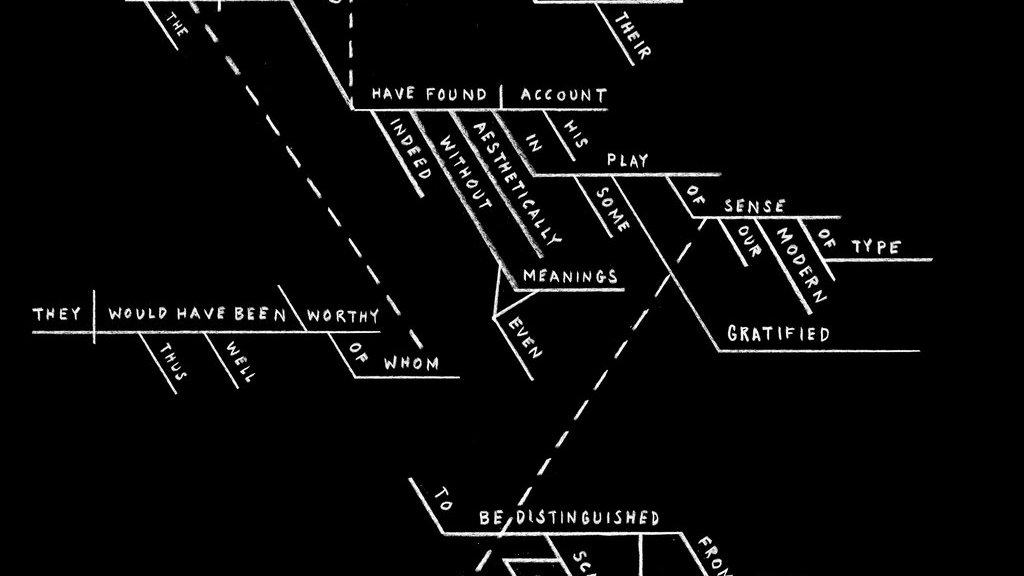
Diagramming Sentences and the Art of Misguided Nostalgia

Having been a serious competitive and recreational cyclist (not “biker”) for all but a handful of years over three decades, I cringe and must bite my tongue every time people refer to their bicycle “seat” (it is a “saddle”). During those years committed to cycling, I have also become well acquainted with the history of the professional sport and a fairly accomplished bicycle mechanic.

I can take apart and assemble a high-end road bicycle, and I know the proper names for all the parts.

All of that knowledge and skill, however, have not made me a better cyclist. And since I have spent those same approximate years also pursuing careers as a writer and teacher (mainly of English, specifically writing), I remain baffled at both recurring arguments found in Juana Summer’s NPR piece and the public responses to it:

When you think about a sentence, you usually think about words — not lines. But sentence diagramming brings geometry into grammar.

If you weren’t taught to diagram a sentence, this might sound a little zany. But the practice has a long — and controversial — history in U.S. schools.

And while it was once commonplace, many people today don’t even know what it is….

But does it deserve a place in English class today? (The Common Core doesn’t mention it.)

I found this article through Facebook, where the original posting was praising sentence diagramming and many who commented followed suit. Oddly—although not surprising—when I weighed in with a century of research refuting the effectiveness of sentence diagramming for teaching writing, my comments were brushed off as a “viewpoint” and one person even boldly stated that no one could convince her that sentence diagramming wasn’t effective.

During a teaching career—mostly in English—that spanned over six decades and included a term as president of the National Council of Teachers of English (NCTE), Lou LaBrant [1] confronted the grammar debate, including sentence diagramming, in 1952:

Let us admit that in thousands of schoolrooms our teaching of punctuation has concerned sentences no child ever made, errors which adults and publishing houses provided, books which we have spent hours trying to “motivate,” and corrections of so-called “errors” which are approved forms everywhere except in our classrooms. We have wasted hours on diagramming dull sentences when what a sentence calls for is not to be drawn but to be understood. Who understands “Thou shalt not steal” the better for having written not on a slanting line under shalt steal? Our first step is clearing away busy work, meaningless matters, and getting at the problems of speaking about something worth saying and writing with sincerity and zest. Reading is not to be “something I had”; it should be “something I do.”

Six years previous, LaBrant identified the research base examining isolated direct grammar instruction and teaching writing:

We have some hundreds of studies now which demonstrate that there is little correlation (whatever that may cover) between exercises in punctuation and sentence structure and the tendency to use the principles illustrated in independent writing.

In 1953, although there is a danger in her simple phrasing, LaBrant offered an eloquent argument about the job of teaching writing:

It ought to be unnecessary to say that writing is learned by writing; unfortunately there is need. Again and again teachers or schools are accused of failing to teach students to write decent English, and again and again investigations show that students have been taught about punctuation, the function of a paragraph, parts of speech, selection of “vivid” words, spelling – that students have done everything but the writing of many complete papers. Again and again college freshmen report that never in either high school or grammar school have they been asked to select a topic for writing, and write their own ideas about that subject. Some have been given topics for writing; others have been asked to summarize what someone else has said; numbers have been given work on revising sentences, filling in blanks, punctuating sentences, and analyzing what others have written….Knowing facts about language does not necessarily result in ability to use it.

And thus, we come to LaBrant’s most powerful metaphor for teaching writing:

Knowing about writing and its parts does not bring it about, just as owning a blueprint does not give you a house….The end has all along been writing, but somewhere along the way we have thought to substitute mechanical plans and parts for the total. We have ceased to build the house and have contented ourselves with blueprints. Whatever the cost in time (and that is great), and whatever the effort, our students must be taught to write, to rewrite, to have the full experience of translating ideas into the written word. This is a deep and full experience, one to which each in his own way has a right.

At mid-twentieth century, then, LaBrant expressed evidence-based positions on teaching writing (and the ineffectiveness of isolated direct grammar instruction and sentence diagramming) that have been replicated by numerous teachers and scholars for decades—notably the work of Connie Weaver and George Hillocks. Hillocks, for example, has shown that isolated direct grammar instruction has negative consequences on students as writers:

grammar negative
Teaching Writing as Reflective Practice, George Hillocks

NCTE has catalogued the same debates, misunderstandings, and research base: Guideline on Some Questions and Answers about Grammar and Resolution on Grammar Exercises to Teach Speaking and Writing. And despite a cumulative and clear recognition of the effective and ineffective approaches to teaching children to write (see Writing Next), we find articles such as the NPR piece above and the responses I witnessed on Facebook.

And while I don’t suffer the delusion that I can stem the grammar/sentence diagramming debates, I want to offer here some framing clarifications that I think may help both teachers and the public better understand the issues:

  • Isolated direct grammar instruction (including sentence diagramming) is ineffective in general for fostering students as writers. If our goal, however, is to teach grammar, then isolated grammar instruction would be justifiable.
  • And thus, isolated direct grammar instruction fails writing instruction because (i) it too often replaces time better spent reading and writing by students, (ii) it requires a great deal of instruction related to terminology and systems that (a) does not transfer to composition and (b) again consumes huge amounts of classroom time, and (iii) formal and isolated grammar instruction remains decontextualized for students since grammar (like algebra) requires abstract reasoning by children and teens who may have not yet reached the level of brain development necessary to navigate or understand the system at the explicit level.
  • However, the two key points here include the following: we are discussing writing instruction as the primary goal and we are confronting isolated direct grammar instruction. So let me be very clear: No one in literacy suggests not teaching grammar; the question is not if, but how and when. Thus, once students are required and allowed to have rich and extended experiences reading and writing by choice, direct instruction is very effective after those experiences and when anchored in those students’ own demonstrations of language acquisition, misunderstanding, or gaps.
  • Connected to the context and when of direct grammar instruction is the importance of balanced literacy, which calls for literacy teachers to incorporate any practice (including sentence diagramming, including grammar exercises) that helps individual students (which may rub against generalizations found in the research base):
Spiegel
  • And finally, many people have a distorted nostalgia about why they have learned so-called standard English. While people are quick to ascribe harsh and traditional grammar instruction as effective in their own learning, that doesn’t make it so. In fact, many people grew as readers and writers in spite of traditional practices—or what is often the case, they can’t recognize their existing facility for language (often brought from home), which made them good at direct grammar exercises and sentence diagramming, as the actual cause of that success.

So I return to LaBrant, and her plea that teaching young people to write is about goals and weighing what truly matters:

There are many ways of writing English, and the teacher of composition must know, before he thinks of means for teaching, what kind of writing he thinks important to teach. He may be content if the writing is composed of sentences with correct structure, with periods neatly placed, verbs correctly ended, pronouns in the right case, and all attractively placed on the page. I have heard teachers say that if their pupils do all this, and spell with reasonable correctness, they (the teachers) are content. I am willing to admit that a conventional paper, such as is just described, tempts one to be satisfied; but I am not willing to admit that it represents a worth-while aim. As a teacher of English, I am not willing to teach the polishing and adornment of irresponsible, unimportant writing….I would place as the first aim of teaching students to write the development of full responsibility for what they say.

If we seek to teach young people to write, and thus to think, in complex and original ways, we remain confronted by the need to see that writing is learned by writing—just as I have honed my skills as a cyclist by riding a bicycle about 5000 to 10,000 miles annually for most of the last thirty years.

Naming correctly the parts of the bicycle, taking apart and putting together a bicycle—these have not made me a better cyclist. For students as writers, blueprints, still, are not houses, diagramming is not composing.

Simply stated, then: The effective writing classroom must never be absent the direct teaching of grammar (again, not if, but when and how), but the grammar-based classroom has often been and continues to be absent writing by students—and therein is the failure.


Recommended

Teaching the Unteachable, Kurt Vonnegut

[1] See Chapter 7 in Missing Chapters, Lou LaBrant: An Annotated Bibliography, and Lou LaBrant: A Woman’s Life, a Teacher’s Life.