Category Archives: NCTE

“Students Today…”: On Writing, Plagiarism, and Teaching

Posted at Maureen Downey’s Get Schooled, college instructor Rick Diguette offers a grim picture of first year college writing:

Once upon a time I taught college English at a local community college, but not any more.  Don’t get me wrong, I’m still on faculty and scheduled to cover three sections of freshman composition this fall.  But it has become obvious to me that I am no longer teaching “college” English.

Every semester many students in my freshman English classes submit work that is inadequate in almost every respect. Their sentences are thickets of misplaced modifiers, vague pronoun references, conflicting tenses, and subjects and verbs that don’t agree―when they remember, that is, that sentences need subjects.  If that were not bad enough, the only mark of punctuation they seem capable of using with any consistency is the period.

I read this just after I had been mulling Jessica Lahey’s What a 12 Year Old Has in Common With a Plagiarizing U.S. Senator, and I recognize in both pieces several overlapping concerns that deserve greater consideration as well as some warranted push back.

“Students Today…”

Let me first frame my response by noting that I taught high school English for 18 years in rural upstate South Carolina—where I focused heavily on student writing—and now have been in teacher education for an additional 13 years. My primary role is to prepare future English teachers, but I also serve as the university Faculty Director for First Year Seminars, and thus support the teaching of writing at my university.

In both Diguette’s and Lahey’s pieces, we must confront a problematic although enduring sense that “students today” are somehow fundamentally different than students in the past, and that difference is always that “students today” are worse. Students today can’t even write a complete sentence (Diguette), and students today are cheating like there is no tomorrow (Lahey).

This sort of “students today” crisis discourse fails us, I believe, because it is fundamentally skewed by our tendency to be nostalgic about the past as well as by shifting far too much focus on lamenting conditions instead of addressing them.

I offer, then, a broad response to both Diguette’s and Lahey’s central points: Let’s not address student writing and plagiarism/cheating as if these are unique or fundamentally worse concerns for teachers and education in 2014 than at any other point in modern U.S. education.

And for context, especially regarding students as writers, I offer the work of Lou LaBrant on teaching writing (see sources below) and my own examination of teaching writing built on LaBrant’s work; in short:

In “Writing Is More than Structure,” LaBrant (1957) says that “an inherent quality in writing is responsibility for what is said. There is therefore a moral quality in the composition of any piece” (p. 256). For LaBrant, the integrity of the content of a student’s writing outweighs considerably any surface features. In that same article, she offers a metaphor that captures precisely her view of the debate surrounding the teaching of writing—a debate that has persisted in the English field throughout this century: “Knowing about writing and its parts does not bring it about, just as owning a blueprint does not give you a house” (p. 256)….

…LaBrant sought ultimately through writing instruction the self-actualized literate adult, the sophisticated thinker. She never wavered in her demand that writing instruction was primarily concerned with making sincere and valuable meaning—not as a means to inculcate a set of arbitrary and misleading rules, rules that were static yet being imposed on a language in flux.

Lou LaBrant remained paradoxically rigid in her stance: The writing curriculum had to be open-ended and child-centered; the content of writing came first, followed by conforming to the conventions; and English teachers had to be master writers, master descriptive grammarians, and historians of the language. It all seemed quite obvious to her, since she personified those qualities that she demanded. LaBrant was one of many who embodied the debates that surround the field of teaching English, and she left writing teachers with one lingering question: Do we want our students drawing blueprints or building houses? The answer is obvious. (pp. 85, 89)

Instead of framing student writing and plagiarism, then, within crisis discourse, we must view the teaching of writing and the need to instill scholarly ethics in our students as fundamental and enduring aspects of teaching at every level of formal schooling. In other words, the problems in student work we encounter as teachers—such as garbled claims; shoddy grammar, mechanics, and usage; improperly cited sources; plagiarism—are simply the foundations upon which we teach.

Along with the essential flaw of viewing “students today” as inferior to students of the past, the urge to lament that students come to any of us poorly prepared by those who taught them before is also misleading and more distraction.

We certainly could and should do a better job moving students along through formal education (see my discussion of common experiences versus standards), but the simple fact is that each teacher must take every student where she/he is and then move that student forward as well as possible. Formal standards and implied expectations about where all students should be mean little in the real world where our job as teachers is bound to each student’s background, proclivities, and all the contexts that support or impede that student’s ability to grow and learn.

Now, before moving on, let me introduce another point about our perceptions of how and when students “learn” literacy. Consider the common view of children learning to read by third grade, for example. As reported at NPR, this widespread assumption that students acquire reading by third (or any) grade is flawed because children and adults continue to evolve as readers (and writers) in ways that defy neat linear categories.

As educator professor and scholar Peter Smagorinsky notes in his response to Diguette, “Education is very complex, and it’s rare that one problem has a single cause.”

On Writing, Plagiarism, and Teaching

None of what I have offered so far relieves teachers of this truth: All students need (deserve) writing instruction and that must include serious considerations of proper citations as well as focusing on the ethical implications of being a scholar and a writer (and citizen, of course).

And while I disagree with claims that “students today” are fundamentally worse writers or more prone to plagiarism than students in the past, I do recognize that we can expose why students perform as they do as writers and why students plagiarize and settle for shoddy citation.

Whether we are concerned about the claims or organization in a student writing sample, the surface features (grammar, mechanics, and usage), faulty attribution of citations, or outright plagiarism, a central root cause of those issues can be traced to the current thirty-years cycle of public school accountability built on standards and high-stakes testing.

As Smagorinsky does, I want to urge anyone concerned about student writing to consider the conclusions drawn by Applebee and Langer regarding the teaching of writing in middle and high school (see my review at Teachers College Record).

Applebee and Langer present a truly disheartening examination of the consequences related to the accountability era as they impact student writing: Although teachers are more aware than ever of best practices in the teaching of writing (due in no small part to the rise of the National Writing Project in the 1970s and 1980s), throughout middle and high school, students are not writing in ways that foster their abilities to generate original ideas; establish, support, and elaborate on credible claims; and polish writing that conforms to traditional conventions for language.

The primary reasons behind this failure are not “bad” teachers or lazy/stupid students, but the demands linked to high-stakes accountability. Just as one example, please consider Thomas Newkirk’s challenge to the unintended and corrosive consequences of writing being added to the SAT in 2005.

The writing section of the SAT has negatively impacted the teaching of writing in the following ways, all of which can be found in contexts related to preparing students for other high-stakes testing situations related to state-based accountability (although NCTE warned about these consequences from the beginning):

  • Writing (composition) is reduced to what can be tested in multiple-choice format. In other words, students are being taught and assessed for writing in ways that are not composing. Here we have the central failure of allowing testing formats to correlate with holistic performances, and thus, students are not invited or allowed to spend the needed time for developing those holistic performances (composing). See LaBrant (1953) “Writing Is Learned by Writing.”
  • Students write primarily or exclusively from detailed prompts and rubrics assigned by teachers or formulated by test designers. Ultimately, by college, few students have extended experiences with confronting the wide range of decisions that writers make in order to form credible and coherent ideas into a final written form. If many college students cannot write as well as professors would like, the reason is likely that many of those students have never had the opportunity to write in ways that we expect for college students. Students have been drilled in writing for the Advanced Placement tests, the SAT, and state accountability tests, but those are not the types of thinking and writing needed by young scholars.
  • Students have not experienced extended opportunities to draft original essays over a long period of time while receiving feedback from their teachers and peers; in other words, students have rarely experienced workshop opportunities because teachers do not have the time for such practices in a high-stakes environment that is complicated by budget cut-backs resulting in enormous class sizes that are not conducive to effective writing instruction.

The more productive and credible approach to considering why students write poorly or drift into plagiarism, then, is to confront the commitments we have made to education broadly. The accountability era put a halt to best practice in writing for our teachers and students so we should not be shocked about what college professors see when first year students enter their classes.

But another source of shoddy student writing must not be ignored.

Within that larger context of accountability, student writing that is prompted tends to have much weaker characteristics (content as well as surface features including proper citation) than writing for which students have genuine engagement (see the work of George Hillocks, for example). In other words, while students are not composing nearly enough in their K-12 experiences (and not receiving adequate direct instruction of writing at any formal level), when students do write, the assignments tend to foster the worst sorts of weaknesses highlighted by Diguette and Lahey.

Shoddy ideas and careless editing as well as plagiarism are often the consequences of assigned writing about which students do not care and often do not understand. (Higher quality writing and reducing plagiarism [Thomas, 2007] can be accomplished by student choice and drafting original essays over extended time with close monitoring by the teacher, by the way.)

And this leads back to my main argument about how to respond to both Diguette and Lahey: As teachers in K-12 and higher education, we have a moral obligation to teach students to be writers and to be ethical. Period.

To be blunt, it doesn’t matter why students struggle with writing or plagiarism at any level of formal education because we must address those issues when students enter our rooms, and we must set aside the expectation that students come to us “fixed.”

In other words, like most of education, learning to write and polishing ones sense of proper citation as well as the ethical demands of expression are life-long journeys, not goals anyone ever finishes.

However, in the current high-stakes accountability era of K-12 education—and the likelihood this is spreading to higher education—I must concur with Smagorinsky:

If you want kids to learn how to write, then put your money to work to provide teachers the kinds of conditions that enable the time to plan effective instruction, guide students through the process, and assess their work thoughtfully and considerately.

Otherwise, you may as well add yourself to the list of reasons that kids these days can’t write.

And I will add that if college professors want students who write well and ethically, they (we) must commit to continuing to teach writing throughout any students formal education—instead of lamenting when those students don’t come to us already “fixed.”

Writing and ethical expression have never been addressed in formal schooling in the ways they deserve; both have been mostly about technical details and domains of punishment. The current accountability era has reinforced those traditional failures.

I find Diguette’s and Lahey’s pieces both very important and seriously dangerous because they are likely to result in more misguided “blaming the victims” in that too many of the conclusions drawn about why students write poorly and often plagiarize remain focused on labeling teachers and students as flawed.

That students write poorly and often plagiarize is evidence of systemic failures, first and foremost. In order for the outcomes—effective and ethical student writers—to occur, then, we all must change the conditions and expectations of formal education, including understanding that all teachers are obligated to identify our students strengths and needs in order to start there and see how far we can go.

Final Thoughts: Adult Hypocrisy

Many of you may want to stop now. The above is my sanitized response, but it isn’t what I really want to say so here goes.

If you wonder why students write poorly and too often plagiarize, I suggest you stroll into whatever room has the biggest mirror and look for a moment.

As someone who is a writer and editor, I work daily with scholars and other writers who submit work far more shoddy than my students submit.

And as an increasingly old man, I witness the adult world that is nothing like the idealized and ridiculous expectations we level moment by moment on children.

Plagiarism? You too can become vice president of the U.S.!

Lazy student? You can become president of the U.S.!

Now, I absolutely believe we must have high expectations for our students, including a nuanced and powerful expectation for ethical behavior, but many of the reasons that children fail at their pursuit of ethical lives must be placed at our feet. The adults in the U.S. (especially if you are white, if you are wealthy, if you are a man) play a much different ethical game than what we tell children.

Children see through such bunkum and that teaches a much different lesson that doesn’t do any of us any good.

For Further Reading

The New Writing Assessments: Where Are They Leading Us?, Thomas Newkirk

On Children and Childhood

Advice to Students and Authors: Submitting Your Work

High and Reasonable Expectations for Student Writing

What do College Professors Want from Incoming High School Graduates?

References

LaBrant, L. (1949, May). Analysis of clichés and abstractions. English Journal, 38(5), 275-278.

LaBrant, L.L. (1934, March). The changing sentence structure of children. The Elementary English Review, 11(3),  59-65, 86

LaBrant, L. (1945, November). [Comment]. Our Readers Think: About IntegrationThe English Journal, 34(9), 497-502.

LaBrant, L. (1950, April). The individual and his writingElementary English27(4), 261-265.

LaBrant, L. (1955). Inducing students to write. English Journal, 44(2), 70-74, 116.

LaBrant, L. (1943). Language teaching in a changing world. The Elementary English Review, 20(3), 93–97.

LaBrant, L. (1936, April). The psychological basis for creative writingThe English Journal, 25(4), 292-301.

LaBrant, L. (1946). Teaching high-school students to write. English Journal, 35(3), 123–128.

LaBrant, L. (1953). Writing is learned by writing. Elementary English, 30(7), 417-420.

LaBrant, L. (1957). Writing is more than structure. English Journal, 46(5), 252–256, 293.

Thomas, P. L. (2000, January). Blueprints or houses?—Looking back at Lou LaBrant and the writing debate. English Journal, 89(3), pp. 85-89.

Thomas, P. L. (2007, May). Of flattery and thievery: Reconsidering plagiarism in a time of virtual information. English Journal, 96(5), 81-84.
NCTE 2014: “Why do we need the things in books?”: The Enduring Power of Libraries and Literature

[At the 2014 National Council of Teachers of English Annual convention—themed Story As the Landscape of Knowing and held November 20-23, 2014, in Washington DC—Renita Schmidt (University of Iowa), Sean Connors (University of Arkansas), and I will be presenting as detailed below; I offer our proposal as a preview and hope you can join us as we need to raise our voices for both libraries and literature.]

“Why do we need the things in books?”: The Enduring Power of Libraries and Literature

Panel presentation, 75 mins

2014 NCTE Annual Convention - Participant Announcement copy

Teaching Reading and Children: Reading Programs as “Costume Parties”*

P. L. Thomas, Furman University

“[L]anguage behavior can not be reduced to formula,” Lou LaBrant (1947) argued (p. 20)—emphasizing that literacy growth was complicated but flourished when it was child-centered and practical (for example, in the ways many privileged children experience in their homes because one or more of the parents are afforded the conditions within which to foster their children’s literacy). Also, LaBrant (1949) identified the central failure of teaching reading: “Our language programs have been set up as costume parties and not anything more basic than that” (p. 16). This opening talk of the panel will focus on the importance of access to books and libraries as an antidote to “costume parties”—highlighting the work of LaBrant and Stephen Krashen as well as the speeches and writings of Neil Gaiman and Ray Bradbury as life-long proponents of libraries.

The More Books the Better!: Library Books as Boundary Objects To Build Strong Girls

Nita Schmidt, University of Iowa

Libraries provide stories for helping us understand who we are and who we might become. Sometimes, those stories take us to places we cannot imagine and we need more stories to resolve the tension. Libraries provide the books that become boundary objects or, as Akkerman and Baker (2011) describe, artifacts that work as mediators during times of discontinuity. Drawing on sociocultural theories of learning (Gee, 1996; Wenger, 1998; Vygotsky, 1978), this paper will discuss the ways an after school book club works with 4th – 6th grade girls to consider new perspectives. Book club members visit the library every month, read books with strong female protagonists, discuss topics in the books that relate to the real lives of the girls, and help the girls start their own personal libraries to encourage girls to begin to see themselves as successful young women in a complex global world. A bibliography will be provided.

Speaking Back to Power: Teaching YA Literature in an Age of CCSS

Sean Connors, University of Arkansas

If, as the narrator of John Green’s (2009) Paper Towns suggests, imagination is the machine that kills fascists, then literature, as English teachers and librarians know, is the engine that drives it. Despite the current education reform movement’s insistence on reducing the study of literature to a set of narrowly defined, measurable skills, and arguments which associate “close reading” and “textual complexity” with canonical literature, educators who value Young Adult fiction know that, like literature for adults, it is capable of creating a space for readers to examine complex issues related to race, class, gender, etc. This presentation calls on educators to recast arguments for teaching YA fiction in an age of CCSS by foregrounding its ability to encourage critical thinking. The presenter will share examples of (and guidelines for producing) student created digital book trailers that, rather than promoting books, instead “speak back” to oppressive ideologies featured in them.

*Portions adapted from the following blog posts:

Teaching Reading and Children: Reading Programs as “Costume Parties”

Common Core in the Real World: Destroying Literacy through Standardization (Again)

“Fahrenheit 451” 60 Years Later: “Why do we need the things in books?”

Neil Gaiman Should Be U.S. Secretary of Education: “Things can be different”

References

Akkerman, S.F. & Baker, A. (2011). Boundary crossing and boundary objects. Review of Educational Research, 81(2), 132-169.

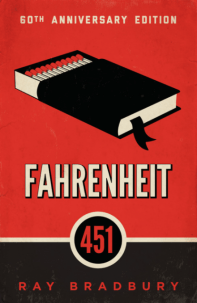
Bradbury, R.  Fahrenheit 451, 60th anniversary edition.

Fahrenheit 451: 60th Anniversary Edition

Neil Gaiman lecture in full: Reading and obligation — http://readingagency.org.uk/news/blog/neil-gaiman-lecture-in-full.html

Gee, J.P. (1996). Social linguistics and literacies: Ideology in discourse. New York: Routledge.

Green, J. (2009). Paper towns. New York: Speak.

Krashen, S. (2014, January 4). The Spectacular Role of Libraries in Protecting Students from the Effects of Poverty. http://skrashen.blogspot.com/2014/01/the-spectacular-role-of-libraries-in.html?m=1

LaBrant, L. (1949). A genetic approach to language. Unpublished manuscript, Institute of General Semantics, Lakeville, CT.

LaBrant, L. (1947). Um-brel-la has syllables three. The Packet, 2(1), 20-25.

LaBrant, L. (1944, November). The words they know. The English Journal, 33(9), 475-480.

LaBrant, L. (1940, February). Library teacher or classroom teacher? The Phi Delta Kappan, 22(6), pp. 289-291.

LaBrant, L. (1931, March). Masquerading. The English Journal, 20(3), pp. 244-246.

Wenger, E. (1998). Communities of practice, learning, meaning and identity. Cambridge: Cambridge University Press.

Vygotsky, L. (1978). Mind and Society: The development of higher psychological processes. Cambridge, MA: President and Fellows of Harvard College.

My Open Letter to Journalists: A Critical Free Press, pt. 2

Dear Journalists (especially those who write about education):

After posting my U.S. and Education Reform Need a Critical Free Press, which represents a recurring effort in my public work to address the problems with journalism about education and education research/reports, I continued to interact with Juana Summers (NPR) and Stephen Sawchuk (Education Week) on Twitter. Those exchanges have suggested to me that I need to examine more fully what my concerns raised specifically about mainstream coverage of NCTQ’s reports mean to my wider call for a critical free press.

First, I think I need to establish the foundational context of my complaints about journalism/education journalism.

I believe journalists and teachers should be (must be) comrades in arms because a free press and universal public education are essential foundational institutions for a free people.

I am not, however, suggesting that this camaraderie is some sort of wink-wink, nod-nod collusion between the two professions in which we “cover” for each other, but that we are comrades joined by the same mission to build the free society that many claim the U.S. seeks. In fact, as comrades I expect we should be each other’s most vigilant and accurate critics to insure that we both stay the course.

And that builds on my second larger context for my concerns about journalism and my call for a critical free press. My use of the term “critical” is the source of my calls for reform of both education and journalism—two fields that reach their potential when critical, but fail when they are bound by traditional expectations of impartiality, calls that teachers and journalists avoid being “political.” Critical teachers and critical journalists are activists; they use their professions as mechanisms for change. Apolitical teachers and journalists are essentially defenders of the status quo (thus, the calls for impartiality are always loudest from those with power and wealth).

So I want to return briefly to my criticisms of mainstream media coverage of NCTQ’s latest report.

While Summers, Sawchuk, and I exchanged Tweets related to my post, Adam Bessie, whose important public work refuting the “bad” teacher meme is central to my points here, offered a Tweet that simply identified a fact about Gates funding among NPR, Education Week, and NCTQ:

@jmsummers @plthomasEdD @Stephen_Sawchuk Gates Funds NPR: http://t.co/L2YMLobtRn NCTQ: http://t.co/HCb8OrQ6ps EdWeek: http://t.co/INKq8Kp39s

— Adam Bessie (@AdamBessie) June 19, 2014

This Tweet represents the central issue to my concerns: Among the New Media (blogs, Twitter, Facebook, etc.), many critical educators have been confronting the disproportionate and inappropriate (because Gates has no credibility in the field of education, but nearly endless funds) influence of Gates on education reform—an influence that I have confronted often with a question: If Bill Gates had no money, who would listen to him about education reform? No one.

Also, Bessie’s Tweet about the ubiquity of Gates funding has finally begun to gain some traction in the mainstream press. But bloggers still carry the greatest weight for being critical about the influence of Gates on education reform. (The most common places now to find critical journalism is in the New Media, such as blogs at Education Week [see Anthony Cody and Nancy Flanagan] and The Washington Post [see Valerie Strauss] or alternative press such as Truthout and AlterNet.)

Despite Bessie’s Tweet only stating facts, Sawchuk immediately responded with this:

@AdamBessie @jmsummers @plthomasEdD As someone who works to be scrupulously fair I find that pretty offensive.

— Stephen Sawchuk (@Stephen_Sawchuk) June 19, 2014

It is at “offensive” that I think we should all pause and consider carefully.

I do not in any way think Sawchuk is a careless, “bought,” or shoddy journalist. In fact, as I stated to him, I have interacted with Sawchuk because I respect him, his work, and his profession (I do not interact with others about whom I cannot say the same).

I must add that my concern with Sawchuk’s coverage of NCTQ (as well as the other coverage I identified) is that the work fails because it conforms to the flawed traditional convention of fairness that Sawchuk mentions directly.

The traditional view of fairness in journalism has been brilliantly skewered recently by John Oliver on his HBO show: Oliver exposes that being “fair” in the climate change debate—having one person for “both sides” debate the issue—actually greatly misrepresents the current understanding within the field of science for the lay public. Mainstream journalists committed to this sort of “fair and balanced” are doomed to fail the much more important goal of accuracy. As Oliver demonstrated, the ratio of for and against climate change within the sciences is not 1 to 1 as a “fair” debate implies, but about 97 for and 3 against (and while Oliver didn’t explore this, a careful look at the against shows that even those 3% are less credible within the field).

If we extrapolate the Oliver Rule, then, to education reform, we do not find an equal 1 to 1 ratio of research on using value-added methods (VAM) to evaluate and dismiss teachers because the field overwhelmingly refutes using VAM in highs-stakes situations (even pro-VAM researchers call for “modest” uses of VAM) and mostly ideological advocates and political leaders (without expertise) endorse VAM for high-stakes education policy. However, VAM advocacy garners primary coverage in the mainstream press with little attention paid to the more credible research refuting its high-stakes and disproportionate use.

So let me be very clear here about both Sawchuk being offended and the difference between critical journalists and fair journalists.

I’m sorry, but journalists and journalism will always look bad when money speaks louder than expertise (see again Gates).

Now, imagine, journalists, if every day your field was repeatedly and inaccurately trashed for all the public: U.S. public education is a failure because our tests scores rank poorly internationally (misleading), schools with impoverished students have low test scores because of low expectations by the teachers (untrue), U.S. public education is failing because of corrupt teachers’ unions (untrue and basically opposite of the evidence), to improve public schools we need to identify “bad” teachers and fire them (untrue), public school teachers are “bad” mostly because they have tenure (untrue) [1], and the list goes on.

I genuinely regret Sawchuk being offended because he doesn’t deserve it, but I must emphasize that Sawchuk is among the media who are complicit in offending teachers, teaching, and schools everyday because journalists are quick to assume the misguided pose of “fair” and unwilling to assume the needed position of critical.

Many issues simply do not have “sides” (rape, genocide), and to be honest, most issues do not have equally credibly sides.

Does teacher education/certification need to be reformed (full disclosure: I am a teacher educator)? Absolutely.

But NCTQ has no credibility and garners its influence through the impact of money and media endorsement, and not validity (just as Gates has done).

Louann Reid, Chair of NCTE’s Conference on English Education, has identified this problem perfectly in her rebuttal of NCTQ’s recent report:

The recommendations are, however, backed by considerable funding, which helps extend NCTQ’s reach. CEE doesn’t have that kind of funding, but we do have reliable researchers and educators who can mobilize to tell the true stories of effective English teacher education. And I believe we must do so.

And herein lies the problem. While I also spurred some offense by my use of “press-release journalism,” the inordinate and uncritical coverage of NCTQ by the mainstream press proves my point that mainstream journalists respond to press releases (funding) while the experts (NCTE/CEE) remain mostly ignored.

And that’s the problem with “fairness” as the journalist’s guide instead of “critical.”

As researcher and scholar Bruce Baker added to the Twitter discussion, critical journalism would have responded to NCTQ quite differently:

@Stephen_Sawchuk @plthomasEdD To be really blunt, my point is that NCTQ report is so obviously junk, it shldn’t be covered by media at all

— Bruce Baker (@SchlFinance101) June 19, 2014

It may appear “fair” to respond to NCTQ as one perspective in the education reform debate, but it isn’t beneficial to afford an organization and a report without merit more credence (or even the same) as the contributions of those who have credibility.

And choosing to cover a topic is a political choice; coverage is never unbiased. And framing a topic is also a political choice (what perspective to present first, how to frame in the headline and lede, etc.). In truth, assuming a dispassionate pose is always dishonest since as humans we are always being political. I suggest we are all better off being openly and purposefully political instead of conforming to misleading norms of “neutrality.”

Yet, this is how the mainstream media carry on day after day—especially in the misguided assault on teachers, public schools, and now higher education.

Legions of hardworking and dedicated classroom teachers are offended daily by the mainstream media being complicit in a false story being told by those with money and an agenda—while that same mainstream media either offer secondary equal time [2] or ignore a powerful group of educators, researchers, and scholars who have the experience and expertise to reform education as it needs to be reformed.

Journalists, if you are ever offended, I would add that coincidentally you are now educators’ comrades for another reason.

As a lifelong teachers (31 years with 13 years teaching journalism to wonderful high school students), I am asking that you join us in the fight instead of taking your impartial stance that allows the well-funded but misguided reformers to keep on keeping on.

Any takers?

[1] How many mainstream journalists covering the Vergara ruling in California addressed that the judge issuing the ruling has job security himself?

[2] As “fair,” we are occasionally allowed to rebut the “reformers” somewhere in the middle or bottom third of the coverage, but even then we are framed as “critics.”

GUEST POST by Peter Smagorinsky: Response to the new NCTQ Teacher Prep Review

Response to the new NCTQ Teacher Prep Review

Guest Post by Peter Smagorinsky, The University of Georgia

NCTQ’s announcement of its new edition of its Teacher Prep Review predictably exalts its own role in improving public education by requiring colleges of education to raise students’ test scores through the instruction of its teacher candidates once they are members of school faculties. I will briefly respond to a few of the claims that they make, which rely on rhetorical characterizations about “success” and “achievement” that spuriously elevate their belief that standardized tests reflect the whole of learning, a claim that few teachers or teacher educators endorse. In contrast, most teachers and teacher educators believe that the NCTQ’s narrow focus on standardized “achievement” tests undermine an authentic education that prepares students for work or life.

The report claims that “The training that teachers receive has to set them up for success.” Well, who doesn’t want successful teachers and students? The question that many of us within the profession ask is this: How is success defined here? For NCTQ, teacher educators are successful when graduates of their programs teach students who do well on standardize tests. But it’s pretty well documented that the best way to have students get good test results is to teach kids from affluent families. The best way to be a successful teacher educator, then, is to encourage teacher candidates to teach the wealthiest kids possible, rather than those residing in impoverished communities. Given that social justice is inscribed in the mission statement of just about every college of education in the nation, being successful according to NCTQ means betraying the values to which we are committed as educators.

The recent judicial decision to eliminate teacher tenure in California may well negate the claim that tenure decisions will now include data from “student achievement.” NCTQ overlooks the fact that in many “Right to Work” states do not have tenure, collective bargaining, unions, or other job protection rights. In any case, the idea that the only measure of “student achievement” is standardized tests overlooks other ways in which students may achieve in school.

The “troubling ‘capacity gap’ between what teachers were being expected to do and what their training equipped them to do” is only troubling if one accepts the fact that teacher educators reject the idea that they should focus on one thing: training prospective teachers to train children and youth to take multiple choice tests. I use the word “train” here because narrow, tedious learning of this sort involves little constructive or open-ended thinking. These tests, first of all, are often not related at all to the curriculum but instead test students on their ability to get correct answers on test items constructed in relation to brief passages by psychometricians who may have little understanding of curriculum, instruction, human developmentexcitement about learningopen-ended thinkingcreativityartistic expressionkids’ home livesauthentic work readiness, cultural ways of thinking, kinesthetic learningthe needs of learners with special circumstancesthe cultivation of committed writersrelating instruction authentically to students’ lives, and other aspects of school learning.

The emphasis on narrow testing abilities further overlooks the many contributions that teachers make to schools: caring for emotionally needy studentsproviding pathways to persistingmaking a long-term commitment to schools and their communitiesfostering the ability to form healthy relationshipsinvolving community members in school activitiesbeing good colleaguesbuilding the confidence of young people at fragile points in their lives, and other aspects of cultivating the whole person.

The report further claims that “new teachers don’t feel like they can even get to the business of teaching and learning because they haven’t been taught the most basic classroom management techniques.” They are right in that many colleges of education have eliminated classes in classroom management, in many cases because without unruly students present to illustrate procedures, the abstraction of management textbooks are of little value in learning how to manage increasingly large classes of kids who are subjected to a deadly dull curriculum oriented to multiple choice assessments. The NCTQ appears to have little understanding of the relation between an engaging curriculum and student engagement. Rather, colleges of education should train teacher candidates how to prepare kids for standardized tests and manage (i.e., punish) those who find the experience despicable. It’s easy to see why an intelligent, dedicated teacher educator would find that prospect both unappealing and educationally bankrupt.

Safe Spaces for Teachers’ Professional Voices in a Public Sphere

It is a bittersweet irony that words are mostly inadequate to express my appreciation to be nominated for and then recognized with the National Council of Teachers of English 2013 George Orwell Award—”established in 1975 and given by the NCTE Public Language Award Committee, recognizes writers who have made outstanding contributions to the critical analysis of public discourse.”

I am first humbled to be added to the powerful list of previous winners. I also fear I pale in comparison, but having been included, I now take on the obligation of fulfilling this recognition that my work does belong here.

So let me highlight briefly that the 2013 Orwell Award directly recognizes my blogging, identifying Evidence? Secretary Duncan, You Can’t Handle the Evidence.

As both public intellectual work and a part of New Media, my blogging is fraught with minefields in the context of my life as a university professor  and scholar as well as my status as a teacher, identifying myself always as someone who spent 18 years teaching in a rural public high school in South Carolina.

Public intellectual work and blogging remain marginalized ways of being for academics and scholars, while they both are risky ventures for public school teachers.

I am cautiously optimistic that NCTE’s Orwell Award this year is about much more than me—it is about the New Media of blogging and about the importance of professional voices in public spheres.

And thus we have two obligations before us as educators, scholars, and academics:

  1. We must work diligently to create safe spaces for all teachers’ voices in public spheres. Currently, safe spaces exist for tenured professors (my status), but such is not the case for public school teachers and their students; as Arundhati Roy has explained, “We know of course there’s really no such thing as the ‘voiceless.’ There are only the deliberately silenced, or the preferably unheard.”
  2. And once those safe spaces are created, teachers must bring our individual and collective professional voices to the public sphere.

Because, as Orwell cautioned, public discourse is dominated by partisan political voices and “[p]olitical language–and with variations this is true of all political parties, from Conservatives to Anarchists–is designed to make lies sound truthful and murder respectable and to give an appearance of solidity to pure wind.”

Professional teachers’ voices in the public sphere must, as NCTE suggests “[contribute] to honesty and clarity in public language” as a form of resistance to the continued failure of partisan political discourse, especially as that partisan political discourse impacts our public school, our public teachers, and our public school students.

A MOMENT IN NCTE HISTORY – NCTE ANNUAL CONVENTION BOSTON, 2013

A MOMENT IN NCTE HISTORY – NCTE ANNUAL CONVENTION

BOSTON, 2013

Paul Thomas, Council Historian

Delivered at the Board of Directors Meeting, 2013 National Council of Teachers of English Annual Convention

“Not the Time . . . to Follow the Line of Least Resistance”

Honoring our history allows us to acknowledge that we all stand on the shoulders of giants. For those of us teaching English, we recall not only people, their lives, and careers, but also their words—and that words matter.

The Moment of History for NCTE each year, then, confirms our debt to the past and speaks to our obligations for today and tomorrow: And in that spirit, I note that “[t]his is not the time for the teacher of any language to follow the line of least resistance, to teach without the fullest possible knowledge of the implications of his medium.”

In the mid-1800s, public education was called a “’dragon. . .devouring the hope of the country as well as religion. [It dispenses] ‘Socialism, Red Republicanism, Universalism, Infidelity, Deism, Atheism, and Pantheism—anything, everything, except religion and patriotism,’” explains Jacoby (2004, pp. 257-258). Bullying public education has deep roots, at least reaching back to the threat of universal public schooling detracting from the Catholic church’s control of education in the nineteenth century.

Education historian Diane Ravitch (2013), in her Reign of Error, details how this historical trend has manifested itself in the current thirty-year accountability era. The media, in documentaries such as Waiting for “Superman” and an endless stream of articles in print and online, along with political leadership at the state and federal levels as well as on both sides of the aisle have offered a steady refrain that public schools are failures and public school teachers are mostly to blame. The solutions for three decades have been more accountability, new standards, and better high-stakes tests.

As teachers of literacy we are squarely in the crosshairs of these claims, and since we all love a good story, we are also major characters in competing narratives about education and education reform in the U.S.Ravitch (2013) documents these narratives well, but also exposes that the dominant and compelling narrative—schools are failures and teachers are to blame—is mostly misleading and that the counter-narrative—expressed by teachers, academics, scholars, and researchers—remains essentially ignored.

Let’s go back in time, then, with our current state of affairs in public education firmly in mind. Let’s go back to 1947 and Lou LaBrant, a few years before her tenure as president of NCTE, in the pages of Elementary English when she laments “…the considerable gap between the research currently available and the utilization of that research in school programs and methods” (p. 87). Later in that piece, LaBrant concludes:

Most thinking persons agree that the existence of civilized man is threatened today. While language is not food or drink, and will not satisfy the hungry and thirsty, it is the medium by which we must do much of our learning and panning, and by which we must think out solutions to our problems if we are not to solve them by the direct method of force. No sensible person believes that language will cure all difficulties; but the thoughtful person will certainly agree that language is a highly important factor in promoting understanding, and a most dangerous factor in promoting understanding between individuals and between the countries individuals represent. Moreover, language is a significant factor in the psychological adjustment of the individual. This is not the time for the teacher of any language to follow the line of least resistance, to teach without the fullest possible knowledge of the implications of his medium [emphasis added]. Before we, either as individuals or as a Council, experiment with methods of doing specific things or block out a curriculum, let us spend some time with the best scholars in the various fields of language study to discover what they know, what they believe uncertain and in need of study. Let us go to the best sources and study the answers thoughtfully. The game of Gossip is not for us. (p. 94)

Just three years later, writing about writing instruction, LaBrant (1950) also sounded an alarm about “word magic”:

There is other semantic knowledge with which our students should become familiar. They should discover the danger in word-magic, that calling a man by a name does not necessarily make him what we say; that describing the postal system as socialist does not transfer our mail to Moscow, nor brand either the writer or the postman as disciples of Stalin. We must teach our students that words are symbols which they use, and that there is stupidity in word magic. (p. 264)

Now, let’s jump ahead in history to 2001, when No Child Left Behind codified the accountability era and called for “scientifically based research” over 100 times. The implications of this legislation, of course, were that between 1947 and 2001, education had failed to listen to LaBrant.

If we move just a few years further to 2005, the College Board announced a writing section of the SAT. NCTE promptly responded (Ball, et al., 2005) by warning that research suggested that timed, high-stakes tests were likely to damage effective and equitable literacy pedagogy and learning. In subsequent years, some of the power of the SAT has diminished, but high-stakes testing has increased, both in the lives and learning of children and in the evaluation of teachers and schools.

Today, as we now face the implementation of Common Core and the highs-stakes tests related to those new standards, we are again presented with evidence from the National Education Policy Center:

As the absence or presence of rigorous or national standards says nothing about equity, educational quality, or the provision of adequate educational services, there is no reason to expect CCSS or any other standards initiative to be an effective educational reform by itself. (Mathis, 2012)

In November of 2013, then, it seems all too obvious that echoing LaBrant is necessary as we seek ways in which we can raise the discourse and change the actions of those leading the reform of public schools to fulfill our debt to our past and our obligations to today and tomorrow.

We face “a considerable gap between the research currently available and the utilization of that research in school programs and methods” and “[t]his is not the time for the teacher of any language to follow the line of least resistance, to teach without the fullest possible knowledge of the implications of his medium.” And finally, as LaBrant (1950) concluded about word magic:

Perhaps not everyone in the land is ready to read Macbeth or to write a sonnet. Better, it seems to me, that each read what he can honestly understand, and admit on occasion that he is baffled; better that the boy or girl write a simple account of what he saw on the street than that he write a collection of stereotypes on democracy. Let him, perhaps, admit with all of us that he is learning about democracy and has much to read and to think before he can say what should be. Misuse of language, as Hitler demonstrated, is a terrible thing; we teachers of English can at the very least teach our students that language is a tool of thought, a tool which can be sharp and keen, but is easily blunted. Alice was wrong, for once: It makes a great deal of difference whether one says “important” or “unimportant.” (p. 265)

We cannot afford the word magic of the current reform movement any longer. Words matter, and it is time for resistance.

References

Ball, A., Christensen, L., Fleischer, C., Haswell, R., Ketter, J., Yageldski, R., & Yancey, K. (2005, April 16). The impact of the SAT and ACT timed writing tests. Urbana, IL: National Council of Teachers of English.

Jacoby, S. (2004). Freethinkers: A history of American secularism. New York, NY: Henry Holt and Company.

LaBrant, L. (1950, April). The individual and his writing. Elementary English27(4), 261-265.

LaBrant, L. (1947, January). Research in language. Elementary English, 24(1), 86-94.

Mathis, W. (2012, October). Research-based options for education policymaking: Common Core State Standards. National Education Policy Center, School of Education, University of Colorado Boulder. Boulder, CO.

Ravitch, D. (2013). Reign of error: The hoax of the privatization movement and the danger to America’s public schools. New York, NY: Knopf.

Thomas, P. L. (2011, November 28). “Not the time…to follow the line of least resistance.” Truthout. Retrieved from

SPECIAL CALL: Speaking Truth to Power (English Journal)

SPECIAL CALL

For my January 15, 2014, CALL for my English Journal column, Speaking Truth to Power, I am seeking a column that combines the column focus with the special issue, with guest editors Alan Brown and Chris Crowe and focusing on the theme “A Whole New Ballgame: Sports and Culture in the English Classroom.”

Please contact me with a query or draft that combines these elements as detailed below.

Speaking Truth to Power

Editor: P. L. Thomas

“If education cannot do everything, there is something fundamental that it can do. In other words, if education is not the key to social transformation, neither is it simply meant to reproduce the dominant ideology. . . . The freedom that moves us, that makes us take risks, is being subjugated to a process of standardization of formulas, models against which we are evaluated. . . . We are speaking of that invisible power of alienating domestication, which attains a degree of extraordinary efficiency in what I have been calling the bureaucratizing of the mind” (110–11). (Freire, 1998, Pedagogy of Freedom: Ethics, Democracy, and Civic Courage)
This column seeks to explore the experiences and possibilities that arise when educators speak Truth to power. It is also intended to be an avenue for teachers to speak Truth to power through teacher narratives about the “the bureaucratizing of the mind,” about best practice in critical literacy against scripted and tested literacy, and about creating classrooms that invite students to discover, embrace, and develop their own voices and empowerment.
Submit an electronic Word file attached to your email to the column editor, P. L. Thomas, atpaul.thomas@furman.edu.

A Whole New Ballgame: Sports and Culture in the English Classroom

Deadline: January 15, 2014

Publication Date: September 2014

Guest Editors: Alan Brown and Chris Crowe

Love sports or hate them, it’s hard to deny their prominence in American society and their popularity with 21st-century adolescents. Interscholastic athletics in particular can play a significant role in the overall culture of a school and have a substantial impact on students’ daily lives. Despite this influence, the topic of sports in society is often absent from the professional conversations of English teachers, an exclusion that could prove to be a missed opportunity. This issue will examine the possibilities for both utilizing and critiquing the culture of sports as a means of increasing student engagement and promoting student learning in the English classroom. Within this context, we seek manuscripts that explore the intersection of literacy, sport, culture, and society, and we encourage column submissions devoted to this same theme.

A number of important questions guide this issue: What connections or disconnections exist between the perceived physical nature of athletics and the mental nature of academics? What real-world associations have you made between sports and the English curriculum? How can sports-related texts (e.g., young adult literature, canonical literature, graphic novels, poetry, nonfiction, magazines, newspapers) be integrated into the academic culture of an English class? How have you promoted the teaching of 21st-century skills through the use of sports-related media, film, and technology? What possibilities exist for interdisciplinary (e.g., historical, political, scientific, social) connections to sports across content areas? How have you engaged students in critical dialogue about our societal emphasis on sports? How can we extend the definition of sport to be more inclusive for students of diverse cultures, races, genders, ethnicities, and abilities? How can an examination of sports culture open the door to discussions of other cultures that exist in school and society?

Thank You, Ken Lindblom (and Others)

I met Ken Lindblom at a national convention, the National Council of Teachers of English (NCTE) meeting in San Francisco 2003, if I recall correctly.

My relationship with NCTE has been complex because the people and opportunities NCTE has brought to me have been many and wonderful, but the organization itself has often failed what I believe are key commitments.

Nonetheless, I have served as a column editor under Ken’s brilliant tenure as editor of English Journal. His work has been stellar, and I am honored to have been a very small part of this work.

My last piece for this column, Adventures with Text and Beyond, pulls together my argument about the need to recognize and celebrate a wider context for what counts as text. But it also acknowledges the work of Adam Bessie, Dan Archer, and the spectacular graphic scholarship of Nick Sousanis.

For all his support and inspiring work, I want to thank Ken for being the sort of colleague every scholar should experience. I also want to thank Adam, Dan, and Nick for their brilliant work—work that pushes me to seek out the heights they have attained.

Finally, I want to thank Julie and David Gorlewski, incoming editors at EJ because, like Ken, they have become supportive friends/colleagues who have allowed me to remain a column editor at EJ—Speaking Truth to Power.

It is because of this community of educators, scholars, and artists that I hold onto my hope that some day we fulfill the promises of universal public education and democracy for which these good friends work each day.

Educators: “[N]ot the Time. . .to Follow the Line of Least Resistance”

In a major journal from the National Council of Teachers of English (NCTE), a teacher and scholar laments the current state of implementing the research in language: “A brief consideration will indicate reasons for the considerable gap between the research currently available and the utilization of that research in school programs and methods” (p. 87). [1]

And the discussion of that gap between research and classroom practices leads to this conclusion:

“Most thinking persons agree that the existence of civilized man is threatened today. While language is not food or drink, and will not satisfy the hungry and thirsty, it is the medium by which we must do much of our learning and panning, and by which we must think out solutions to our problems if we are not to solve them by the direct method of force. No sensible person believes that language will cure all difficulties; but the thoughtful person will certainly agree that language is a highly important factor in promoting understanding, and a most dangerous factor in promoting understanding between individuals and between the countries individuals represent. Moreover, language is a significant factor in the psychological adjustment of the individual. This is not the time for the teacher of any language to follow the line of least resistance, to teach without the fullest possible knowledge of the implications of his medium [emphasis added]. Before we, either as individuals or as a Council, experiment with methods of doing specific things or block out a curriculum, let us spend some time with the best scholars in the various fields of language study to discover what they know, what they believe uncertain and in need of study. Let us go to the best sources and study the answers thoughtfully. The game of Gossip is not for us.” (p. 94)

While those of us living our lives as teachers, especially teachers of literacy in K-12 settings or in teacher education, may recognize many points above in our current debates about education reform—including some of the debates that simmer below the surface of the workings of NCTE—this piece is by Lou LaBrant and was published in the January 1947 issue of Elementary English (now Language Arts).

More than six decades after LaBrant wrote about the gap between research and practice, More than six decades after she implores us that “[t]his is not the time for the teacher of any language to follow the line of least resistance,” educators across the U.S. are faced with the failure of leaders, the public, and professional organizations in the face of the promise of universal public education and its potential to drive the great hope we call democracy.

The Locus of Authority: Our Time for Resistance

At the 100th anniversary annual convention for NCTE in Chicago (November 2011), I presented during a panel on the Council’s century of leadership in the field of literacy—reading from the essay above by LaBrant and suggesting how she would have responded to the current calls for Common Core State Standards (CCSS), increased testing, intensified value-added methods (VAM) for teacher accountability linked to those tests, and accelerating mandates driving teacher preparation and accreditation of colleges and departments of education.

I know from my work as the biographer of LaBrant that she was a powerful voice for the professionalism, scholarship, and teacher autonomy—including herself and every teacher with whom she interacted. LaBrant, in fact, during the early 1930s when enrolled in her doctoral program at Northwestern University, faced pressure while teaching English to implement required reading lists, textbooks, and benchmark testing, all of which she knew to be flawed practices.

What did LaBrant do?

She fabricated lesson plans with her roommate, the foreign language teacher, and submitted them each week while practicing the pedagogy she embraced—student choice in what they read and wrote, holistic instruction and assessment of literacy. At the end of the year, LaBrant and her students (yes, in the early 1930s) faced end-of-course testing, and LaBrant’s students received top scores. Consequently, she was praised by the principal in front of the entire faculty for her dedication to the prescribed policies.

This tension between bureaucratic mandates that seek to shift the locus of authority (consider Freire’s distinction between “authoritarian” and “authoritative”) away from the teacher and within the standards and tests designed and prescribed by the state is not entirely new (except for the intensity), but neither is the need for teachers to own their autonomy, their professionalism—to be that resistance.

Also at the 2011 NCTE annual convention, a convention of celebration, Susan Ohanian, Stephen Krashen, Carol Mikoda, Bess Altwerger, Joanne Yatvin, and Richard J. Meyer proposed a resolution: NCTE will oppose common core standards and national tests. [2] This act of resistance, this act of teacher autonomy and professionalism resulted in what Catherine Gewertz in the Curriculum Matters blog at Education Week describes as: “The National Council of Teachers of English was asked by a group of its members to take a strong stand against the common standards, but it declined to do so.”

This is a time when political leaders, the public, and national organizations have abdicated their moral obligation to create and maintain universal public education for all children as a sacred trust between a free people and the promise of democracy.

As the faculty of Garfield High School (Seattle, WA) take a principled stand against MAP testing as a beacon of hope in the fog of corporate education reform, this is also a time for all educators to shine every light of our autonomy on what is right and what is wrong in the day-to-day pursuit of teaching children.

“This is not the time for the teacher of any [student] to follow the line of least resistance, to teach without the fullest possible knowledge of the implications of his medium.”

References

Freire, P. (2005). Teachers as cultural workers: Letters to those who dare to teach. Trans. D. Macedo, D. Koike, & A. Oliveira. Boulder, CO: Westview Press.

Freire, P. (1993). Pedagogy of the oppressed. New York: Continuum.

Freire, P. (1998). Pedagogy of freedom: Ethics, democracy, and civic courage. Trans. P. Clarke. Lanham, MD: Rowman and Littlefield Publishers, Inc.

LaBrant, L. (1947, January). Research in language. Elementary English, 24(1), 86-94.

[1] Originally posted at Daily Kos (November 21, 2011) and cross-posted at Truthout (November 28, 2011). Reposting here as a call for solidarity among educators inspired by the resistance of Garfield High School faculty (Seattle, WA) to the corrosive impact of MAP and other elements of high-stakes testing in U.S. education. The original piece has been revised.

[2] Revised resolution passed: Resolution Proposal to Support: No Confidence in United States Department of Education Secretary Arne Duncan