Category Archives: poetry

Poem: grammar Nazis (post-apostrophe literature)

grammar Nazis (post-apostrophe literature)

when they came for the apostrophes
its like someone took all the stars
turning the night sky flat black

we were left with isnt and wont
all our its were jumbled
and everyone lost all their possessions

we began to bury dashes in the backyard
lock semicolons in chests in the attic
stuff commas by the handfuls in our pockets

sometimes in the inky darkness of night
exclamation points hidden like knives
under our pillows

we held hands or spooned whispering

itll be alright
they wont win
they wont win


—P.L. Thomas

Where Do Poems Come From?

The quaint euphemistic way we once talked around having “the talk” with children about the birds and the bees is at least metaphorical, even poetic in its tip-toeing.

Here, I want to play a bit with a slightly different version of “the talk”—specifically walking through where poems come from.

It was a Friday afternoon, and I found myself alone with friends all somewhere else even though we usually congregate at the local brewery on Fridays.

So I came equipped with a book, Acceptance by Jeff Vandemeer, as well as a lingering dose of depression and anxiety. This seemed an ideal opportunity to inject a few pints of the seasonal beer just being released.

I also came with my constant companions—anxiety, introversion, and solid doses of ADHD and OCD.

It was mid-afternoon so only a modest crowd was there mulling around and the band had not yet begun. My introversion runs in a way that this sort of public space allows me to disappear and be nearly relaxed. Once the crowd grows and especially when live music cranks up, the same space become the worst sort of hell for me.

To appease my ADHD as I read, I slipped into my smart phone surfing that annoys my intimates because I am apt always to be doing several things at once, giving off the impression that I am not in the moment with any one person. Ever.

And then it happened.

I was scanning through Instagram, where I follow several artists, and saw a post by Valeria Ko:

hanging clothes

The painting of a woman in only panties, from behind and holding a laundry basket outside near a trailer, immediately prompted these words:

we buy an RV
and then unceremoniously we leave

somehow we reach the desert
where we park for days

because we have been watching
on the couch Breaking Bad

Let me pause here to stress how this represents at least for me where poems come from.

This scenario holds several elements that I find are consistent: the presence of creative works (reading volume 3 of Vandemeer’s science fiction trilogy, Ko’s artwork), a sudden burst of lines of poetry that seemingly just come to me, and not a small dose of sadness or depression.

Many poems of mine begin in some way while reading, viewing a film, or listening to new music; visual artwork is also a powerful trigger [see Fisherman and The Siren (vortex of desire)].

Poetry, unlike my blogging and scholarly writing, always comes first as inspired words, phrases, and lines; in other words, I never sit down to write a poem.

The poem itself initiates the writing.

Some who know I am a poet and read my work have noted as well that depression and sadness seem to rest next to my poetic output. I must confess that seems fair.

Now, back to the writing of this poem*.

Mornings can be fertile times for poetry to call, but typically, my first move with a poem is to type the inspired words or lines into notes on my phone and then email that to myself to work on at the computer.

I often will continue to run through those lines in my head, incessantly and often that repeating causes the poem, or story, to grow.

In this case, I knew I had a good bit of time alone and would not be at the computer until the next day, likely, so I did something I think I have never done before; I began drafting the poem right there on the notes of my phone.

Drafting a poem includes after the initial rush of inspiration a recursive act of discovering what the poem wants to be (in terms of content and story as well as craft) and then writing and revising to meet those unfolding demands.

A few initial ideas were the repetition of “we” and then “some” in “somehow” and “some times.” I considered for a while having “we” in every line but let that slip eventually.

The central purpose of the poem appeared to be my associating an RV and the desert with the series Breaking Bad, which I have been re-watching.

The artwork spoke to my essentially visual nature, but it also challenged me to think about, as someone who read the poem noted, the voyeuristic motif that is present in the painting and my poem.

As I drafted, I returned to the Instagram post and discovered something truly stunning: The painting itself, as Ko notes, was “[i]nspired by @joshsoskin photos” (see here and his web site).

A photographer inspired a painter who inspired a poet—all of which depends on both the intent of artists and the co-created meanings of those viewing/reading the art.

What is the intended tone of the painting? Of the photographer’s image? And then how does the intended story I created resonate with any or all of that?

The original idea and the focus on “we” soon became subsumed by the imagery of the poem, specifically the desert scene.

The first title of the poem was just “we,” but I eventually revised as “we (deserts),” editing that to “we (desert)” since this narrative is clearly about one couple in one desert—a singular event and a poem about being alone while also existing in a way that is the antithesis of lonely.

Some key elements revealed themselves and became the focus as I read, reread, and drafted: the couple as voyeur and watched (man inside, woman outside), the concept of being alone as a couple and that being a state of freedom, and the overarching reframing of a desert, not as barren or oppressive but as a refuge, a paradise.

My poetry tends toward narration more than narrative, but this poem clearly was meant to be a story with characters and setting. But I also seek an economy of language, inspired always by Gwendolyn Brooks’s “We Real Cool.”

To say the least possible for the greatest effect—so two stark images of the woman (grounded in the painting); adding “cacti,” “sand,” and “brush.”

Also along with the voyeur/viewed problem I felt compelled to focus on stasis (man) and motion (woman) while keeping the dynamic of the couple both something I was celebrating and problematizing.

How to end a poem is always a challenge, one that typically comes to me in a similar way as the initial lines—I simply feel it, both the sense that it is not finished and then that these lines are it.

The turning point for this poem being finished was “people i suspect don’t know/a goddamn thing about deserts” and imagining this couple in the desert during the longest daylight weeks of the year (so the 14 hours detail).

I enjoy being able to talk about and through a poem once I have made it public and can hear others respond. Doing that led me to describing this as a post-apocalyptic poem, the apocalypse not some nuclear holocaust but the act of this couple: “we buy an RV without a plan or map/and then unceremoniously we leave.”

An act not away from anything but toward their being entirely alone and together, free as the woman seems to be in her complicated image of the painting—the gendered domesticity outside and partially clothed while being watched by her lover.

As much as I was motivated by the opening lines—that I still love—and the narrative, I am mostly haunted by the next to the last stanza, and wondering what do people know especially about being happy, about refusing to sit there alone instead of holding tight the one you love.


* we (desert)

But what if you discover that the price of purpose is to render invisible so many other things?
Acceptance, Jeff Vandermeer

we buy an RV without a plan or map
and then unceremoniously we leave

somehow we reach the desert
where we park for days then weeks

because we have been watching sometimes naked
on the couch Breaking Bad

we realize we are o so alone
except for sand and brush

on warm bright mornings i watch
you outside hanging clothes

sometimes wearing only a shirt unbuttoned
other times only panties soft tan like your skin

i do not run through the door and sand
tackling you cradled in my arms to the ground

because my chest is overfilled with this
so that everything seems to be spilling from my eyes

and once you turned seeing me through the window
curtsying and opening the shirt with a smile

people i suspect don’t know
a goddamn thing about deserts

or being all alone as we are
with 14 hours of sunshine and cacti

What Does This Poem Mean?: On the Politics of Core Knowledge and Reading Instruction

While I am skeptical of nostalgia, the mostly vapid good-old-days approach to anything, I want to return to my high school teaching years, mostly pre-Internet and smart phone years throughout the 1980s and 1990s.

One of the best parts of teaching English was forming bonds with students over popular music. Gradually, in fact, my entire poetry unit was grounded in the music of R.E.M., the alternative group based in Athens, GA.

R.E.M. achieved immediate critical success with their first album, Murmur, and then were college rock stars throughout the 1980s, with popular stardom coming more than a decade after they formed.

What made R.E.M. particularly fascinating for my students and me was that they typically did not release the lyrics for their earliest albums, and thus, we would spend hours listening and trying to figure out just what Michael Stipe was saying. In fact, some early jabs at R.E.M. referred to Murmur as Mumbles since Stipe had a signature way of being terribly unclear.

I can still recall wrestling with “You Are the Everything”—students puzzled by “eviscerate” and all of us thrown by “With your teeth in your mouth.”

The beauty of all this for me as a teacher of poetry was that we had to work diligently first on the what, the literal, of the lyrics before we could begin trying to tackle meaning.

Too often, I found, students felt compelled (a really flawed lesson learning in school) to jump immediately to “this song/poem means” without taking any care to read the poem literally first.

Ultimately, investigating poetry was yet more efforts at learning to read, a behavior that is always in a state of emerging (despite the technocratic view that we can reach proficiency).

These memories came to me when I read Carol Black’s excellent Twitter thread:

Black carefully and powerfully unpacks and discredits the E.D. Hirsch Core Knowledge argument about reading that is compelling to those so-called experts outside of literacy and especially to the media, politicians, and textbook publishers.

As Black details, the argument that some core or essential knowledge exists in an objective apolitical way falls apart once you unpack how facts are presented and, more importantly, who determines what knowledge matters.

A disturbing example of Black’s critique immediately surfaced, also on Twitter:

This example of whitewashing slavery further exposes that no knowledge is value neutral and that the details of knowledge are far less important than confronting the authority behind what knowledge counts as fact or true.

So let me return to my students and me trying to decipher Stipe’s mumbling so that we could start to imagine what those wonderful songs meant.

The essential flaw of Core Knowledge arguments is that it promotes the passive acquisition of knowledge (what Paulo Freire criticized as the “banking concept” of teaching and learning) instead of the interrogation of knowledge, the domain of critical literacy.

Yes, we listened to the songs over and over so that we could as a community create the text, and we also scoured the music press for any and everything we could find from the band members about those lyrics, especially anything Stipe might reveal.

And we also built knowledge about the band and Stipe himself to provide context for those interpretations. Once Peter Buck said his favorite line from Monster was “Oh, my kiss breath turpentine,” explaining that it didn’t mean anything, but sounded great.

In other words, lyrics, as Stipe also explained at some point, were a way for Stipe’s voice to be another instrument in the song, not necessarily always about coherent meaning in the traditional use of text.

We were not acquiring knowledge, but interrogating an audio text in an effort to discover and uncover meaning, even as that meaning was tentative.

Recently, Bertis Downs, long-time lawyer for R.E.M., posted “Photograph” to social media, where I listened again and read along to the lyrics:

Always a favorite song of mine, including the beautiful accompaniment of Natalie Merchant, I was struck this time by the lines: “Was she willing when she sat/And posed a pretty photograph.” The “willing” speaks to the #MeToo era in a way I had not noticed many years ago.

As well, this song reminded me of Margaret Atwood’s “This Is a Photograph of Me,” which I taught for many years in A.P. Literature.

As an entry point to think deeply about consent, the song has new meaning, a meaning that works beyond the text and resonates because of a changing time and new social awareness.

All text meaning is political, communal, and tentative—not a fixed or objective truth.

And then, Atwood’s poem always posed tremendous challenges for students. In short, the ambiguity of the poem was an ideal way to help students learn to ask questions as a pursuit of meaning, instead of looking for the meaning.

Other than being in lines and stanzas, the poem achieves its poetic form without many of the traditional elements students expect (rhyme, for example). Further, the poem’s second section in parenthesis asks readers to consider the implications of punctuation as that contributes to meaning.

“(The photograph was taken/ the day after I drowned” opens that section and immediately challenges the reader with the literal problem since the photograph appears to be of the lake: “I am in the lake, in the center/ of the picture, just under the surface.”

Moving from R.E.M.’s song to Atwood’s poem and then, for example, adding Stevie Smith’s “Not Waving but Drowning” builds for students a body of problematic texts that warrants investigation, and not simple knowledge acquisition.

These three texts certainly are better read when the reader is more knowledgeable, but let’s not misread “knowledgeable.”

To be well read, in fact, is having had many experiences interrogating text and knowledge which is also the process of acquiring knowledge.

The more R.E.M. I listened to, the better I read those songs. The more Atwood I read, the more I understood Atwood (her word play, her misdirection).

What does this poem mean?—this becomes a journey and not a destination, an interrogation, not a proclamation.

Black’s dismantling the Core Knowledge propaganda about learning to read, then, pulls back the curtain on how Core Knowledge advocates are themselves serving an unspoken politics by taking on a faux veneer of apolitical essential knowledge.

Unintended I am sure, Atwood’s poem itself speaks to this as well:

the effect of water
on light is a distortion

but if you look long enough,
eventually
you will be able to see me.)

Let us invite our students to “look long enough,” beyond the “distortion,” so that they will “be able to see.”

Make America Great, Finally?: The Archeology of White People (Redux)

America has never been great. Including now.

The problem with such a claim is that a blanket statement  leaves too much room to discredit the argument, and of course, we must all agree on the definition of “great.”

Large-scale evidence that America has never been great is obvious: slavery, lynching, the Japanese internment, the Trail of Tears, the Tulsa massacre, and the bloody litany of mass and school shootings that characterize America in a way distinct from all other democracies.

At any moment in the history of the US, what can be called “great” for any group of people, when unpacked, can be exposed as the consequence of some other people’s suffering. It has always benefitted the winners in the US to keep everyone’s eyes on the winning so that we can conveniently ignore the necessary losing.

That is part of the message in Ursula K. Le Guin’s “The Ones Who Walk Away from Omelas.”

That is what I confronted in the last stanza of my poem “the archeology of white people“:

Ignore the body in the road
we whisper in their tiny innocent ears
Isn’t that golden car spectacular?

In F. Scott Fitzgerald’s The Great Gatsby, America is great for Tom and Daisy, but if we refuse to look the other way, that comes at the expense of Myrtle, ripped apart and dead in the road; of George, dead at his own hand; and of Gatsby, perversely shot in his opulent pool.

This is America: “the wreck and not the story of the wreck/the thing itself and not the myth” (“Diving into the Wreck,” Adrienne Rich).

Or as Langston Hughes’s speaker challenges: “(America never was America to me.)”—the too often ignored voice of those who live the fact of America not being great.

To rally around “Make America Great Again” is a perversion of hope; it is delusion.

Delusion is not the result of a lack of knowledge, but a refusal to listen, to see because you are driven deaf and blind by a fear of acknowledging the truths that refute your beliefs.

The delusion of clinging to guns, instruments of death, as a symbol for life, liberty, and the pursuit of happiness.

On social media, I witness this daily—those for whom proof and evidence mean nothing, those who shout the loudest, know the least, and listen not at all.

While there is no credible greatness to recapture in America, I do not deny yet the possibility of greatness. In fact, I can rally myself around “Make America Great, Finally.”

Greatness is certainly a worthy aspiration, although that too requires that we agree on exactly what “great” is.

Let me pose two examples we may want to follow.

Teachers in West Virginia, a right-to-work (non-union) state, have demonstrated a quest for greatness by recognizing and then acting on the power of striking. If citizens would more commonly recognize and then act on the power of mobilized groups with common interests, unresponsive government and political leadership could be eradicated in the name of the greatness we claim to seek.

Students across the US, prompted by Parkland, Florida students, have also demonstrated the potential for the powerless to organize and assert power with the nation-wide walk outs demanding action on gun control. Even before the walk out, student activism had prompted large corporations to change gun sale policies without any policy changes from political leaders.

WV teachers without the legal right to strike along with children and teens with almost no direct political power have demonstrated that power exists where it appears absent and that greatness springs from community and not individual zeal, not necessarily reduced to a zero-sum gain.

The choice in the US does not have to be between Daisy and Myrtle, in fact.

That American dream is only a dream for some because it is a nightmare for many.

There is nothing great about wealth or the wealthy; there is nothing great about coaxing most Americans to develop the grit to overcome adversity.

Great is the absence of poverty, not the presence of wealth.

Great is the absence of adversity, not the presence of grit.

Teachers in WV and students all across the nation have played great first hands.

Your turn.

Ah, Love: A Reader

UPDATE 2020: I Loved You Before I Was Born, Li-Young Lee

UPDATE 2019: [i like my body when it is with your], e. e. cummings

UPDATE: Love Poems Are Dead, Morgan Parker

Snow, Mary Ruefle

The Cinnamon Peeler, Michael Ondaatje

[i carry your heart with me(i carry it in], e.e. cummings

[love is more thicker than forget], e.e. cummings

Twenty-One Love Poems [(The Floating Poem, Unnumbered)], Adrienne Rich

Twenty-One Love Poems [Poem II], Adrienne Rich

Variations On The Word Love, Margaret Atwood

Wild Nights—Wild Nights! (249), Emily Dickinson

Knee Song, Anne Sexton

Parting, Jorge Luis Borges

Guilt, Desire, and Love, James Baldwin

Pyramid Scheme, Hera Lindsay Bird

This Is Just to Say, William Carlos Williams

Be Mine, R.E.M.

Lucky You, The National

Gospel, The National

City Middle, The National

You said “I think I’m like Tennessee Williams”
I wait for the click. I wait, but it doesn’t kick in
I think I’m like Tennessee Williams
I wait for the click. I wait, but it doesn’t kick in

The Stuff of Poetry: My First Good Cry of 2018

Poet Tara Skuru, The Amoeba Game, posted her “Morning Love Poem” as a gift for the new year:

I responded that it brought my first good cry of 2018, and she shared a nugget about how the poem came to be:

The poem and exchange prompted more from me:

Teaching poetry can include focusing on poem analysis, using the poem as a model text for understanding poetry (what makes a poem, a poem?), or fostering poetry composing (how to write poetry).

In all of those contexts as a teacher and poet, I strive to help students unlearn their misconceptions about poetry while helping them become comfortable with the far more nuanced elements of understanding form, genre, and mode that contribute to being able to read or write well any writing form.

Skurtu’s “Morning Love Poem” is both a lovely poem and an ideal model for teaching poetry because it demonstrates the stuff of poetry that students often miss.

In an interview, Jason Reynolds confronts some of the essential aspects of that stuff of poetry:

One of my favorite poets is Countee Cullen, and he only wrote in tight form. But it’s powerful stuff. It hits you, every single one. And I think of Lucille Clifton who wrote these really short poems. She was the master of brevity. You may get five or six lines but it’s a gut punch. It may not be a particular structure like a sonnet or a sestina, but that also doesn’t mean that when structure doesn’t have a name it’s not structure. The danger in talking about free verse the way we normally do, we typically don’t complicate the structure of free verse. What it does is it strips the poet of agency and decision-making. There is a structure. That poet chose to break a line here or add a stanza. To punctuate or not punctuate. And that constitutes the structure of that piece.

About the common “fear (or intimidation) of poetry,” Reynolds explains “[i]t comes from the over-intellectualization of poetry from the classics,” adding:

It’s all over-intellectualized. But I think that the poet has always been seen as the intellect of the literary community. The poets were supposed to be the scribes of all the things. The poets were the leaders of the literary community for a very, very long time. And so, I think it just comes from the echelon this BS caste system that’s carried over. I think it’s that nonsense on top of racism, which is always there, on top of the undervaluing or de-valuing of diverse voices. The truth is Gwendolyn Brooks’ “We Real Cool” should be considered a classic. “We Real Cool” is familiar, it’s accessible. It’s interesting.

Skurtu’s poem as a model for the stuff detailed by Reynolds is a powerful way to help students as readers or writers of poetry—coming to understand and embrace that poetry comes from poet purpose and not from some mechanical analysis, the over-intellectualizing too often common in English courses.

For students, “Morning Love Poem” upon first glance probably triggers their awareness of what a poem looks like (lines and stanzas), but their student-urge likely soon hits a wall against the mechanistic ways they have been taught—looking for narrow sorts of patterns in line/stanza formation, meter, rhyme, etc.

Yes, poetry tends to be grounded in purposeful line/stanza formation, and it depends heavily on pattern. But some of the most compelling poetry is driven by voice, concision, and a poet’s craft to render the language in a way that appears simple (as if anyone could have written it). Think Lucille CliftonGwendolyn Brooks, and Maggie Smith. Or even William Carlos Williams.

In just 14 lines, Skurtu creates a layered story (a couple and both a dream and their reality) and powerfully explores a bittersweet and enduring thing of being human: “It’s hard to say I need you enough.”

Students are well served to contemplate that this could just as easily have been a short story, or even a short film. But Skurtu chose poem, and that makes all the difference.

The line formation and stanzas guide the reader, influence the reading, and then, her diction (word choice) drives the concision: “cracked,” “nose-dived,” “poison,” and as she noted herself “get wet” (two simple three-letter words that rhyme)

And here, I think, is where over-intellectualizing, as Reynolds argues, raises its ugly head. Students become mired in mechanical and simplistic technique-hunts, but they also have (mis)learned that poetry is hard, inaccessible, something to be solved like an arcane puzzle (5000 pieces all blue).

But even when poetry is challenging, possibly inaccessible—think Wallace Stevens—the reductive ways students have come to think about poetry fails them; consider “[if seventy were young]” by e.e. cummings (yes, challenging).

Students can begin to play with how cummings uses pattern in unexpected ways—the dashes, the teasing with rhyme (see also Emily Dickinson), space and colons, wordplay and sound.

cummings becomes more accessible, in fact, if we resist over-intellectualizing, and choose instead to play along with him as readers.

Ultimately, I want students to recognize that, for example, Skurtu’s poem is rich with story (plot, setting, and character) and that it works because of concrete details, the triggering of the senses that Flannery O’Connor called for in the writing of fiction.

In other words, we read poetry not to calculate what the poem means but to share with the poet, often, what we feel, what we intuit possibly in ways that cannot be articulated beyond recognizing that the words shaped on a page are so beautifully bittersweet (“All the moments/we stop ourselves”) that we are looking at them through spontaneous tears.

Teaching Students to Dislike Poetry: “What is the most boring subject/possible?”

As an avid reader, teacher, and writer/poet, I read poetry nearly every day, especially now that I am prompted wonderfully through social media such as Twitter.

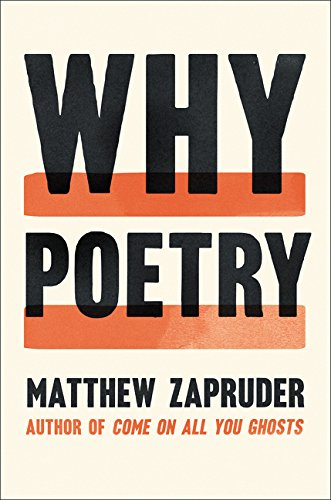
So Matthew Zapruder‘s recent Understanding Poetry Is More Straightforward Than You Think spurred both my Teacher-Self and my Poet-Self with his lede:

Do you remember, as I do, how in the classroom poems were so often taught as if they were riddles? What is the poet really trying to say here? What is the theme or message of this poem? What does this word “purple” or “flower” or “grass” really mean? Like classical music, poetry has an unfortunate reputation for requiring special training and education to appreciate, which takes readers away from its true strangeness, and makes most of us feel as if we haven’t studied enough to read it.

Why Poetry, Matthew Zapruder

Teaching and writing poetry for over three decades now, I have always swum against the “I dislike poetry” tide with equal parts evangelical zeal and soul-crushing disappointment. Poetry, I learned many years ago as a first-year college student, is beautiful; it is the orchestra of words best representing the human compulsion toward language and communicating with each other.

Recently, as I read Randall Mann’s “A Better Life,” I began to cry by the lines “Fear lives in the chest/like results.” That emotional response upon a first reading wasn’t intellectually engaged with understanding fully the poem, or how traditional approaches to teaching poetry demands that readers seek out deeper meanings.

And also read recently, Margaret Ross’s “Socks” prods the reader in the opening lines toward the mundane:

The socks came in a pack of five.
What is the most boring subject
possible?

As I did with Mann’s poem, soon my heart was deeply drawn to Ross’s simple verse:

All that time
I could have touched you and didn’t
or did absentminded, getting in
or out of bed or trying to reach
something behind you.

These two poems are beautiful in the way poetry moves me, and they are both wonderful examples of how the craft of poetry can, and often does, elicit our hearts and our minds through what seems to be very simple language and topics—”a better life” in less purposeful hands is trite, and, I mean, socks?

For those of us concerned about the place of poetry in formal education and then how that fits into the place of poetry in life beyond school, we must consider what the hell we are doing that leads so many people to “I don’t like poetry.”

People all were once children who danced and sang to poetry in their children’s books and cartoons. How many children have you ever known not to revel in rhyme and word play as well as the discovery of utterances and words (o glorious taboo words!)?

And once having gone sufficiently to school, many if not most of these once-children are apt to say “I don’t like poetry.”

Not to be an ass, or simply to quibble, but I think they are actually saying that they have become exhausted with the exact problem confronted by Zapruder; that poetry has more often than not for students been the source of how one adult in the room has the key to a puzzle that is used to make the children feel stupid.

Scanning meter and rhyme scheme, conducting the literary term hunt, explaining some deeper meaning beyond the words on the page—these tasks become laborious and tell students that the tasks themselves matter more than experiencing the poem, that the poem is just some vehicle for these educational adventures in torture.

Here, then, are some suggestions for classroom moves that may better preserve the sanctity of poetry and may better insure that more (but not all) students will retain their childhood joy for words, rhyme, and the feeling of poetry:

  • Expand the responses to poetry from intellectual to emotional, allowing students to begin with (and even linger on) how poetry makes them feel.
  • Emphasize the essential concrete and narrative elements of poetry (instead of making poetry seem as if it is always about Big Meaning, and thus, mostly abstractions). What is this poem saying and who is telling us? These are powerful and important ways to engage with poetry that avoids the pressure of “What do socks represent in this poem?”
  • Focus on how poetry as a form has distinct qualities that impact the reading experience—notably that poets craft in line and stanza form (or in the case of prose poetry with the awareness that they are abandoning even that basic aspect of what makes poetry poetry; none the less, poetry always carries an awareness of lines/stanzas for poets and readers).
  • Encourage students to share their personal reactions and then ask them to distinguish those personal responses from the textual evidence in the poem.
  • Draw them to the text by asking students to identify their favorite word(s) and line(s), and then allow them to highlight the word(s) and line(s) that puzzle or confuse them. This avoids the “guess what the teacher wants” trap of students risking being wrong or right.
  • Read aloud poems, often and repeatedly. Poetry is inextricable from sound as well as how the words are shaped on the page. Most poetry is brief enough to be read aloud and multiple times, making poetry ideal for encouraging these practices in students as purposeful readers.
  • Allow frequent space for the reading of a poem to be enough—no demand for comment or analysis.
  • Share with students your genuine responses to the poems you love—and why you love them in ways that are not about being their teacher, but a human who loves poetry.

No poet writes to be the source of multiple-choice questions on an Advanced Placement Literature exam, or the focus of a 45-minute lesson on scansion and rhyme scheme.

And we can rest assured no poet writes in order to be the reason anyone dislikes poetry.

Late in Ross’s poem, the speaker confesses:

I’ve been
looking for a long time
at the stretch of table where you had
your hand. I am afraid
to touch it.

She has me mind, body, and soul, and as I finished this poem the first time, I wanted to share it with others, which I did.

None of us discussed what it means, or even her wonderfully accessible language that certainly speaks to us beyond the “boring subject” of socks.

Mostly we quoted and often agreed on our favorite lines, and then felt something satisfying about having this poem in common. Nothing about the repetition of blue or what socks really mean.

But I have been thinking because of both poems and Zapruder’s piece about “a better life” for students, for teachers, and for the promise poetry affords us if we simply let it be.