Category Archives: privilege

Doubling Down (Again) on the White Man’s World

A decade ago, I was confronted with an incredibly uncomfortable situation when my first-year English class overwhelmingly believed the Duke lacrosse team was innocent and the woman accusing them of sexual assault was fraudulent.

There was a significant mixture of irony in the tension resulting from my trusting that the class—atypically majority male at a university consisting of mostly privileged and white students—was biased by their collective and individual privilege as that conflicted with the eventual revealing that the Duke lacrosse team was in most ways innocent (although I would argue that is a simplistic conclusion supported by technicalities of law): the irony, of course, being that I—white, male, and privileged—was proven wrong about my claims of the U.S. being, in the language of today, a country in which white male lives matter most.

Just this May, another class included, again atypically, about a third black students, some of whom were eager to argue for corporal punishment and then several of the black male students felt compelled to speak up for males wrongly accused of sexual assault.

At that, I asserted that in the U.S. today it remains easier to be a male wrongly accused of sexual assault than to be a woman actually raped or sexually assaulted.

But I could not have anticipated both the Baylor University scandal and then the Brock Turner rape judgment and sentence, which has been followed by a disturbing pair of commentaries by Turner’s father and a female childhood friend.

The light sentence of Turner, by a judge who like Turner attended Stanford University, was justified because of the consequences this rape would have on Turner’s life. Turner’s victim has rebuked this decision in her own statement.

Both the Turner sentence and the Baylor scandal returned me to my examination of The Martian, an unintended allegory of the hyperbolic concern in the U.S. for the white male at the expense of women and people of color.

Having been raised in the sexist and racist South, I have spent my adult life—going on four decades—working against my privilege and learned bigotries.

I am aware of and fearful of whitesplaining and mansplaining, the white gaze and the male gaze in every interaction I have in both the real and virtual worlds. I shudder to think, on social media especially, how often I creep toward the line crossed by vicious male trolls, how often women and people of color see in my words the very things I abhor.

As a writer, I am hyper-aware that my one-more-white-man’s voice is crowding out space for women and people of color; we simply do not need more white male perspectives.

As a scholar and academic, now full professor and tenured with a significant body of published works, I am equally hyper-aware I continue to do the same in academia.

Much of my work has been devoted to calling out racism, but I have also addressed misogyny and mansplaining often. In both cases, I have tried to confront the inevitable “yes, but” from men and whites.

But I look at the one picture of Turner, and I see me—white male. I think about the judge in the case, and I am among the disproportionate number of white males in power in the U.S.

What woman would trust me, especially from a distance? Why would black and brown people believe my solidarity?

And while I am writing about me, this is not about me; this is about the daily doubling down in the U.S., proving that white male lives matter most—and the corrosive consequences for everyone.

That fact—the light sentence for Turner, the failure to hold police officers accountable for taking black lives—sustains a hostile world for everyone; we are pitted daily against each other because the greatest threat to power is solidarity.

I will continue to name misogynyracism, and child abuse—even as that work pushes my voice farther the margins.

As a privileged white male, I am insulated enough that I can offer these observations that remain mostly about my own minor inconveniences that are devastating realities for vulnerable populations and people oppressed because of race, gender, sexuality, or age. As a privileged white male, I seek to use my privilege to eradicate privilege.

But most of all, my greatest act of solidarity remains my role as a student—I listen, I read, I heed.

And even then, I fall short.

I have failed enough women, children, and people of color to last a dozen life times—and “I’m sorry” seems trivial against that.

White male privilege has created a vicious world that needs to be dismantled, and in its place, we must imagine something better, a world brought forth from the mouths and minds of those rendered less human and thus more aware of the beauty and grandeur of being human.

As Adrienne Rich offers, “the sea is another story/ the sea is not a question of power.”

Most people know “Power tends to corrupt and absolute power corrupts absolutely,” but the Turner verdict and sentencing remind us of what Lord Acton offered next: “Great men are almost always bad men.”

Daily, this is proven true as we watch white males double down again and again on white male lives mattering most.

Strangers in Academia: Teaching and Scholarship at the Margins

No, there was no way out, and no one can imagine what nights in prison are like.

Meursault, The Stranger, Albert Camus

I left public education after an 18-year career as a high school English teacher and coach. The exit had its symbolism because at that time I was wearing a wrist brace on my right hand from overuse after almost two decades of responding to about 4000 essays and 6000 journal entries per year; in other words, I left public education broken.

A former student of mine on the cusp of becoming a first-year English teacher asked me recently what my first years were like, and I had to confess that from day one, my career as an educator has always been at the margins, a stranger at all levels of formal schooling and academia.

Yes, my hand was exhausted from marking essays, but I was broken as a public school teacher by administrators and in a bit of not so hyperbolic science fiction, The System.

Every single day of my life as a public school teacher, I worked against the system—but I did so with my door open because I believed (and still believe) my defiance was for The Cause.

I was never defiant for my own benefit, but resistant to the structures, policies, and practices that I believed dehumanized teachers and students, that worked against formal education as liberation.

I didn’t punish students for being a few seconds late to class, for asking to go to the restroom. I didn’t stand guard at the doorway or in the hallways as if we were surveilling a criminal population of teens.

We laughed and moved around in my room, played music and even danced during breaks. Students ate candy, food, sneaking in drinks occasionally.

And to a fault, I was friendly with my students—a friend to my students. In the perfect sort of irony or symmetry, many of those students are today my friends on Facebook.

But toward the end, after year upon year of wrestling with administration and finding little collegiality or camaraderie among my colleagues, I found my breaking point when I took off days to present at a national conference—one I was afforded through my doctoral program, which I completed while a full-time high school teachers—and returned to work to discover I was docked pay for those days and even the substitute fee.

Public education, I learned, had no room for teachers who were also scholars.

Because the opportunity presented itself, I begrudgingly applied for, was offered, and then accepted (at a significant reduction in pay) a position in higher education as a teacher educator.

I entered the role as tenure track assistant professor very naive (even in my early 40s) and so deluded by public education that I also idealized higher education: my land of milk and honey where my full self as educator, writer, and scholar would be not only welcomed, but also encouraged.

After 14 years an the university level, making my way through tenure to full professor, let me offer the short version: more delusion.

“Don’t be so political.” “I never published an Op-Ed until I had tenure.” “Dressing awfully casually for a junior faculty member.”

Yes, my university is in many ways a very wonderful place, and my colleagues are brilliant and supportive.

But the old patterns recurred in higher education that had run me out of public education: critical pedagogy isn’t welcomed, scholarly activity creates as much friction as it receives praise, wading into public intellectual work creates even more friction, and even well-educated people can be prejudiced and petty.

Department politics and dynamics have proven to be as frustrating (for me and other professors) as my experiences with administration while I was a public school teacher.

As one example, my university has recently conducted a gender equity study because the playing field isn’t level here. Professors of color and LGBT professors will also note significant inequities as well.

Higher education has revealed itself to be in many ways as flawed as public education because even in our systems of formal education, we are apt to replicate the society we serve instead of being a working model of how things could be, how things should be.

Race, class, gender, sexual identification, and ideology—these all even in higher education create those of us who are strangers in academia; we are forced to teach, conduct scholarship, and write at the margins.

Just making this claim, I know, pushes me further to the margins, boundaries possibly well secured by the statuses I have attained despite being a stranger in academia.

Yet, I am not yet willing to throw up my hands and simply accept that we cannot be otherwise—because if the most well educated cannot set aside our biases, what hope for all of humanity?

In Albert Camus’s The Stranger, the allegory reveals the existential message that we are all prisoners. Meursault, after being literally imprisoned, confesses, “Afterwards my only thoughts were those of a prisoner.”

But readers are cautioned to note that Meursault also makes the case that his new situation in a physical prison is no different than his life as a so-called free man.

As academics, I think, it is ours to resist the same dynamic between the so-called real world and academia in which there is essentially no difference.

Academia need not be the pejorative “Ivory Tower,” suggesting we are above it all, but academia sure as hell could be, should be a model of how to honor and celebrate the human dignity of everyone.

Outliers Never Evidence of Normal in Education

In Money, Race and Success: How Your School District Compares, the NYT, like most of mainstream media, is begrudgingly coming to admit that race and class inequity in the U.S. has a profound impact on the education of children—and that simply tinkering (badly) with school policy is not enough to change that reality:

We’ve long known of the persistent and troublesome academic gap between white students and their black and Hispanic peers in public schools.

We’ve long understood the primary reason, too: A higher proportion of black and Hispanic children come from poor families. A new analysis of reading and math test score data from across the country confirms just how much socioeconomic conditions matter.

Children in the school districts with the highest concentrations of poverty score an average of more than four grade levels below children in the richest districts.

But then there is this:

The data was [sic] not uniformly grim. A few poor districts — like Bremen City, Ga. and Union City, N.J. — posted higher-than-average scores. They suggest the possibility that strong schools could help children from low-income families succeed.

“There are some outliers, and trying to figure out what’s making them more successful is worth looking at,” said Mr. Reardon, a professor of education and lead author of the analysis.

Well, no, if we find outliers—and virtually all data have outliers in research—we should not waste our time trying to figure out how we can make outliers the norm.

The norm is where we should put our efforts in order to confront what is, in fact, not “puzzling” (used earlier in the article) at all; the data are very clear:

What emerges clearly in the data is the extent to which race and class are inextricably linked, and how that connection is exacerbated in school settings.

Not only are black and Hispanic children more likely to grow up in poor families, but middle-class black and Hispanic children are also much more likely than poor white children to live in neighborhoods and attend schools with high concentrations of poor students.

Our great education reform failure is one of failing to rethink our questions and our goals.

Let’s stop trying to find the “miracle” in a rare few schools where vulnerable students appear to succeed despite the odds against them. With time and careful consideration, we must admit, those appearances almost always are mirages.

Let’s instead put our energy in eradicating the poverty, racism, and sexism that disadvantages some students, vulnerable populations easily identified by race and social class, so that we can educate all students well.

And while we are making efforts at social policy, let’s end the in-school policies that we know “exacerbate” inequity: tracking, teacher assignments (and TFA), high-stakes testing, grade retention, discipline policies grounded in zero tolerance and “no excuses,” and segregation through school choice (including charter schools).

Education reform, as was highlighted in the original court case examined in the South Carolina documentary The Corridor of Shame, is obsessed with playing the hero by seeing who can pull the most babies out of the river.

And then examining the ones who survive the potential drowning in order to “make” all babies survive the trauma of being cast down stream.

But no one seems interested in walking upstream to stop babies being thrown in.

Life and learning do not need to be something children survive—and we must confront that we have decided that this is exactly what we are willing to accept for “other people’s children.”

It would not be so if we believed and acted upon that “they’re all our children.”


The Allegory of the River

Even Technocrats with Good Intentions Sustain Classroom Colonialism

Kassie Benjamin offers a powerful confession at Jose Vilson’s blog. Benjamin—like many educators including myself—became an educator firmly holding to the belief that education is the great equalizer, the lever that changes people’s lives and society for the better.

However, Benjamin explains: “Slowly, I came to the belief I have today: education is assimilation. Still.”

In his For White Folks Who Teach in the Hood…and the Rest of Y’all Too, Chris Emdin names the assimilation Benjamin confronts as “classroom colonialism” (p. 14), and clarifies earlier in his Preface:

What I am suggesting is that it is possible for people of all racial and ethnic backgrounds to take on approaches to teaching that hurt youth of color….

I argue that there must be a concerted effort…to challenge the “white folks’ pedagogy” that is being practiced by teachers of all ethnic and racial backgrounds. (pp. viii-ix)

Emdin points a finger at urban “no excuses” charter schools as contemporary versions of traditional schooling created to “fix” Native Americans. For example, Joanne Golann explains about her extensive research embedded at a “no excuses” charter serving mostly black and poor students:

In a tightly regulated environment, students learned to monitor themselves, hold back their opinions, and defer to authority. These are very different skills than the ones middle-class kids learn—to take initiative, be assertive, and negotiate with authority. Colleges expect students to take charge of their learning and to advocate for themselves. One of the students I talk about in the article learned to restrain herself to get through, to hold herself back and not speak her mind. She ended up winning the most-improved student award in 8th grade for her changed behavior.

Golann also makes connections similar to Emdin’s:

Bowles and Gintis wrote this famous study where they were looking at the history of mass public education in the US. They argue that schooling expanded in large part to quell social unrest. You had these immigrant populations coming into the cities in the mid-nineteenth century, and Bowles and Gintis basically make the argument that factory owners and the professional class wanted a docile workforce. They wanted people who would be obedient and man these factories, and so they used schools as a way to socialize children to follow rules and show deference. Looking at the school I studied, I found the same behaviors but with a very interesting twist. In a new era of accountability, instead of creating workers for the factories, schools are creating *worker-learners* to close the achievement gap. Schools are emphasizing obedience because they need to create order to raise test scores and they see that as the way to social mobility. It’s the same behaviors but for a different purpose.

But we should also look at a number of policies that are thinly veiled mechanisms for assimilation/colonialism.

Just as one example, tracking remains a robust practice in U.S. education, I believe, because it appears to help the so-called top students (mostly white and relatively affluent) even though a great deal of evidence shows tracking hurts the so-called struggling students (mostly black/brown and impoverished).

Further, like Benjamin and Emdin, Zoé Samudzi argues We Need A Decolonized, Not A “Diverse”, Education because “diversity agendas are hindrances rather than stepping stones to justice and equity.”

Policy makers, administrators, and teachers promoting and implementing practices, then, who are in effect perpetuating classroom colonialism may often have good intentions.

Charlotte Danielson provides us here an ironic and important model as she confronts teacher evaluation:

The idea of tracking teacher accountability started with the best of intentions and a well-accepted understanding about the critical role teachers play in promoting student learning. The focus on teacher accountability has been rooted in the belief that every child deserves no less than good teaching to realize his or her potential.

Danielson, of course, continues to criticize the recent push for extended accountability, standards, and high-stakes testing into how we evaluate, retain, and pay teachers (popularly known as VAM, for using “value added methods”).

The irony comes as Danielson slips into what I believe is the central problem driving much of the classroom colonialism challenged by Benjamin, Emdin, Samudzi, and Paul Gorski: Danielson’s alternative to the failed good intentions of teacher evaluation is just another technocratic version of teacher evaluation.

Colonialism in traditional schooling survives because education is a reflection of our society. Schools will never be transformative at the social level until formal education is unlike our inequitable social structures—until formal schooling serves our vulnerable students’ needs first by honoring them as fully human instead of framing them through deficit lenses.

School discipline begins and reflects the racially inequitable mass incarceration of the wider society. Tracking reflects and perpetuates our class stratifications.

Nearly every aspect of school policy and practice is a mechanism for assimilation—not transformation.

Education and education reform are trapped in a technocratic vision that can only replicate our society.

Education reform and the commodification of education are bound by the mantra “My technocratic vision is better than your technocratic vision.”

It isn’t about standards, but the new and better standards.

It isn’t about high-stakes testing, but the new and better high-stakes tests.

And not once, not once, has the promise of the new been realized in any ways that serve impoverished students, black/brown students, or English language learners.

However, nearly always, the policies and practices in place have served well (or at least not impeded) the whitest and wealthiest.

Emdin invokes the metaphor of invisibility throughout his dismantling of “white pedagogy” and call for “reality pedagogy.” But I am drawn to my English teacher and existential roots by the concluding image of Albert Camus’s The Stranger: the guillotine.

Camus’s main character Meursault describes that “the guillotine looked like such a precision instrument, perfect and gleaming….[T]he machine destroyed everything: you were killed discretely , with a little shame and with great precision” (p. 112).

The efficiency of the technocratic mind, the guillotine, that served the interests of the ruling elites at the expense of anyone else who did not conform, assimilate.

The technocrats, even with good intentions, maintain a classroom colonialism that honors “assimilate or die.”


Day on Diversity at the University of South Carolina

I am participating as a discussion leader and speaker for a day on diversity at the University of South Carolina 14 April 2016. Below are my notes which may be of value to some addressing race and class in both social and educational contexts.

University of South Carolina

April 14 1:30 pm

Svec. M., & Thomas, P.L. (2016). The classroom crucible: Preparing teachers from privilege for students of poverty. In A.L. Hurst & S.K. Nenga (Eds.), Working in class: recognizing how social class shapes our academic work. Landham, MD: Rowman & Littlefield Publishers.

http://www.heinemann.com/blog/wp-content/uploads/2015/12/Confronting-Privilege-to-Teach-About-Privilege.pdf

https://radicalscholarship.wordpress.com/2014/11/13/my-redneck-past-a-brief-memoir-of-twos/

https://radicalscholarship.wordpress.com/2015/12/20/i-dont-belong-heremy-otherness-my-privilege/

April 14 6 pm

“How do we look at systemic issues of equity in institutional settings?”

20 minutes

Scarcity: The New Science of Having Less and How It Defines Our Lives, Sendhil Mullainathan and Eldar Shafir

For White Folks Who Teach in the Hood… and the Rest of Y’all Too: Reality Pedagogy and Urban Education, Chris Emdin

Police in the Hallways: Discipline in an Urban High School, Kathleen Nolan

Hope Against Hope, Sarah Carr

Reaching and Teaching Students in Poverty: Strategies for Erasing the Opportunity Gap, Paul Gorski

No Caste Here? Toward a Structural Critique of American Education, Daniel Kiel

Abstract:

In his famous dissent in Plessy v. Ferguson, Justice John Marshall Harlan argued that in the United States, there was “no caste here.” Justice Harlan was rejecting the idea that American society operated to assign preordained outcomes to individuals based upon classifications, including racial classifications. This Article questions whether Justice Harlan’s aspirational assertion accurately reflects contemporary American education. Identifying: (1) multiple classification mechanisms, all of which have disproportionate racial effects, and (2) structural legal, political, and practical impediments to reform, the Article argues that the American education system does more to maintain the nation’s historical racial hierarchy than to disrupt it. This is so, the Article suggests, despite popular agreement with the casteless ideal and popular belief that education can provide the opportunity to transcend social class. By building the framework for a broad structural critique, the Article suggests that a failure to acknowledge and address structural flaws will preclude successful comprehensive reform with more equitable outcomes.

Privilege

Racism, classism

deficit perspectives (word gap, achievement gap, grit)

Paternalism

Accountability v. equity — academics and discipline policies

https://radicalscholarship.wordpress.com/2014/12/04/grit-education-narratives-veneer-for-white-wealth-privilege/

https://radicalscholarship.wordpress.com/2016/04/06/are-racially-inequitable-outcomes-racist/

https://radicalscholarship.wordpress.com/2016/03/29/race-and-education-a-reader/

https://radicalscholarship.wordpress.com/2014/02/11/what-these-children-are-like-rejecting-deficit-views-of-poverty-and-language/

https://radicalscholarship.wordpress.com/2014/05/01/revisiting-james-baldwins-black-english/

https://radicalscholarship.wordpress.com/2016/03/29/race-and-education-a-reader/

https://radicalscholarship.wordpress.com/2015/06/12/recommended-reaching-and-teaching-students-in-poverty-paul-c-gorski/

https://radicalscholarship.wordpress.com/2016/03/22/a-crack-in-the-dam-of-disaster-capitalism-education-reform/

https://radicalscholarship.wordpress.com/2016/01/23/understanding-poverty-racism-and-privilege-again-for-the-first-time/

https://radicalscholarship.wordpress.com/2014/12/30/bearing-witness-hypocrisy-not-ideology/

https://radicalscholarship.wordpress.com/2014/12/31/responsibilities-of-privilege-bearing-witness-pt-2/

http://www.heinemann.com/blog/wp-content/uploads/2015/12/Confronting-Privilege-to-Teach-About-Privilege.pdf

https://radicalscholarship.wordpress.com/2014/11/20/thomas-race-matters-in-school-discipline-and-incarceration-opinion-columns-the-state/

https://radicalscholarship.wordpress.com/2015/09/03/criminalizing-black-children-begins-in-our-schools/

https://radicalscholarship.wordpress.com/2014/11/30/creating-crime-criminals-to-justify-deadly-force/

http://cedar.wwu.edu/cgi/viewcontent.cgi?article=1184&context=jec

Are Racially Inequitable Outcomes Racist?

Among what may seem to be marginally related policies and conditions, these all have one startling thing in common—grade retention, school discipline, NCAA athletics, incarceration, “grit,” “no excuses,” zero-tolerance, high-stakes testing (such as the SAT and ACT), charter schools and school choice—and that commonality is observable racially inequitable outcomes that are significantly negative for blacks.

My own experiences with exploring and confronting race and racism through my public writing has shown that many people vigorously resist acknowledging racism and will contort themselves in unbelievable ways to avoid accepting facts and data that show racism exists.

Common responses include “I am not a racist,” “I am sure the people who started X didn’t intend to be racist,” “White people experience racism too,” and “Everyone has the same opportunities in this country.”

And while I continue to compile a stunning list of ways in which racial inequity and racism profoundly impact negatively black people, resistance to terms such as “white privilege” and “racism” remain robust.

In the wake of the NCAA Final Four, Patrick Hruby has attempted a similar tactic I have used in order to unmask the racial inequity in college athletics by carefully working readers through the evidence in order to come to an uncomfortable conclusion about the financial exploitation of college athletes (money-making sports being disproportionately black) by the NCAA and colleges/universities (leadership and those profiting being overwhelmingly white) along racial lines:

Understand this: there’s nothing inherently racist about amateurism itself. And there’s no reason to believe that its defenders and proponents—including current NCAA president Mark Emmert—are motivated by racial animus….

And yet, while the NCAA’s intent is color-blind, the impact of amateurism is anything but. In American law, there is a concept called adverse impact, in which, essentially, some facially neutral rules that have an unjustified adverse impact on a particular group can be challenged as discriminatory….Similarly, sociologists speak of structural racism when analyzing public policies that have a disproportionately negative impact on minority individuals, families, and communities. State lottery systems that essentially move money from predominantly lower-class African-American ticket buyers to predominantly middle-and-upper-class white school districts fit the bill; so does a War on Drugs that disproportionately incarcerates young black men; so does a recent decision by officials in Maricopa County, Arizona, to drastically cut the number of presidential primary polling stations in and around Phoenix, which unnecessarily made voting far more difficult for the residents of a non-white majority city.

Big-time college sports fall under the same conceptual umbrella. Amateurism rules restrain campus athletes—and only campus athletes, not campus musicians or campus writers—from earning a free-market income, accepting whatever money, goods, or services someone else wants to give them. And guess what? In the revenue sports of Division I football and men’s basketball, where most of the fan interest and television dollars are, the athletes are disproportionately black.

And herein lies the problem with refusing to equate racially inequitable outcomes with racism.

Hruby’s detailed unmasking of the NCAA comes also during the troubling rise of Trump in presidential politics—another marker for how many scramble to find any cause other than racism.

Trump’s rise is not exclusively the result of overt and unexamined racism, but a significant amount of his success is easily traced to a wide spectrum of racism.

However, from the rise of Trump to the so-called popularity of charter schools to the school-to-prison pipeline and to the spread of third-grade retention policies, all of these and more are fueled by racism because racism, we must acknowledge, is most insidious when it isn’t overt, when the racist person or the racist act is unconscious, unacknowledged.

The impact of racism in NCAA sports, as Hruby details, is the elegant racism Ta-Nahisi Coates unpacked when Donald Sterling became the NBA’s face for oafish racism (along with Clive Bundy in popular culture).

What has occurred in the U.S. since the mid-1960s is an end to placard racism, the end of “White Only” signs on bathroom and restaurant doors.

What has not occurred in the U.S. yet is an end to seeing black boys as significantly older than their biological ages, an end to tracking black children into segregated schools and reductive courses, an end to incarcerating black men—and this is a list that could go on for several pages.

Racial (and class) equity will never occur in the U.S. until the white power structure admits that racially inequitable outcomes are in fact racist.

White privilege is a powerful narcotic that numbs white elites to the harm that privilege causes black and brown people, but it is also a powerful narcotic that pits poor whites against black and brown people because poor whites believe their whiteness gives them the chance at great wealth held by only a few.

That the NCAA maintains a structure within which black athletes produce wealth enjoyed almost exclusively by white elites is an undeniable fact and a startling example of the elegant racism eroding the soul of a free people—an elegant racism eating at the roots of public education, the judicial system, the economic system, and nearly ever aspect of the country.

Racially inequitable outcomes are racist, and this must be admitted in order to be confronted and then to be eliminated.

U.S. Offers Only Soft or Hard Commitments to Ravages of Consumerism

Many people have commented on the rise of Trump as the leader in the Republican quest for president—noting it is like a bad reality show or some life-imitates-art version of Idiocracy.

However, the truth of what Trump represents is much, much uglier than any of those speculations because Trump represents almost perfectly exactly who the U.S. is, and essentially always has been.

The U.S. has always bloviated on sweeping and grand ideologies about Freedom, Liberty, and so much horse manure, but the very beginnings of that were while white males owned human slaves and white females were human only in relationship to some white man.

The U.S. has always been about someone’s freedom at the expense of other people’s human dignity; and that fact remains today in 2016.

And when people say the the U.S. is a conservative nation, mostly right of center (especially in relationship to Europe and Canada), the reality of that is “conservative” is a code for a blind and nearly rabid commitment to consumerism—a consumerism grounded in Social Darwinism that breeds a lust for financial wealth regardless of the consequences to others.

Sure, Trump is profoundly unqualified to be a national leader and is spewing vile and inexcusable hatred, but the space between Trump and mainstream Republicans and Democrats is minuscule once you set aside the rhetoric.

From Trump to Cruz, a slight step back and to the side; from Cruz to Hillary, yet another slight step back and to the side. Republicans bark a hard commitment and Democrats skirt a soft commitment to the ravages of consumerism, but the consequences are the same.

Except for Sanders in the 2016 election cycle, team politics between Republicans and Democrats is splitting hairs and turning a blind eye to your candidate while eviscerating the other side’s candidate for the same behavior.

Mainstream politics in the U.S. creates the delusion of choice and keeps the public frantic so that no one notices there really is no difference because everything is about the winners maintaining their edge.

Never-ending war, mass incarceration, staggering income and wealth inequity, underfunded public institutions, refusals to acknowledge lingering racism—these are the qualities among every candidate on both sides of the so-called aisle.

The Nixon/Reagan contributions to mass incarceration of black and brown populations are nearly indistinguishable from the Clinton era gutting of the social safety net devastating the same people.

And all the while, the only thing that matters is the economy. The sacred economy doomed George W. Bush’s presidency and ushered in Obama—not any ethical matters of war or failures to secure human dignity or the lip service we give Democracy.

There could be few indignities worse than electing Trump as president of the U.S., but to be perfectly honest, Trump is in the course of the history of the country, the most perfect representative of who we are and have always been: A cartoon character spewing bromides to hide our dark and soulless greed.

And then, nearly as bad, if we elect someone from the remaining mainstream candidates, that indignity will be only slightly less than choosing Trump because what she or he represents is so close to being the same that it really doesn’t matter.

Politics, the Super Bowl, and, of course, the Children

This was supposed to be another post about good teachers because I was invited to speak to a class of 4th graders about writing public opinion pieces and that experience confirmed my recent assertion that to know if a teacher is good just watch and listen to the students.

The short version of that blog: the students were vibrant and smart—reflecting just how wonderful their teacher is.

During that visit, however, the teacher asked if we could have a brief debate so the students could think about how to pose their arguments. When a student asked what I was thinking about writing next, I mentioned the Super Bowl halftime show, specifically Beyoncé’s performance.

For several minutes, I was confronted by a classroom of children adamant that Beyoncé and her backup dancers were inappropriate for the show; their clothing and dancing, the children argued, were not appropriate for children watching on TV and attending the game.

I asked them to consider how we have different standards for how women dress and behave, and I asked about whether it was appropriate for children to watch the NFL, considering the violence of the sport, and the commercials, such as those for beer.

The children never budged, noting that children, in fact, play football (boys are just violent, they argued) and rambling into a very casual acceptance of children having guns and knives (for hunting).

But Beyoncé? Not appropriate for prime time (and the children).

Of course, these students were mostly voicing the opinion of their parents and other adults, highlighting, I think, the influence of every child’s home on who they are and how they think.

These students’ arguments also reflect something that almost no one is addressing about the Super Bowl: everything about the Super Bowl is political. Everything.

Those who criticize Beyoncé for her political performance and chastise the hoodied Cam Newton for over-celebrating throughout the season and his sulking post-Super Bowl defeat are silent during the NFL’s ritualistic flag waving and hiding behind the U.S. military—some of the many shields the NFL hopes mask the orgy of violence that is professional football; are somehow OK with Coldplay and Bruno Mars; and likely didn’t uttered a peep when All-American white hero straight out of Pleasantville, Peyton Manning, spouted a Gronk-like beer comment, pouted and didn’t shake hands after one of his Super Bowl defeats, and (like Cam, who was criticized) kept his helmet on while shaking hands with Russell Wilson, another Super Bowl defeat.

Just as every second of the Super Bowl is political, every moment of the gosh-darn industry that is Peyton Manning is political.

And Manning’s politics is aimed right at your red-white-and-blue bank account.

But the politics of capitalism and consumerism that buoy white male privilege in the U.S. is at least shielded, if not invisible, behind the confetti and celebration of yet another ascension to pinnacle by a Great White Quarterback (Beer and pizza, anyone!).

This is not about Beyoncé being political and Coldplay/Bruno Mars not being political.

This is not about Cam being political and Peyton not being political.

This is about the racialized notion of “political” (and “not appropriate for children”) and the very American and very ugly symbolism of the NFL shield.

Peyton, Coldplay/Bruno Mars (very safe and male pop music), and the NFL’s patriotic posturing are simply the shielded politics of those in power, of white privilege, of male privilege.

Beyoncé—along with her backup dancers and her song—and Cam are complicated elements in the politics of resistance (both real and perceived)—and of course, we can have none of that. You know, the children.

Listen

Super Bowl Aftermath: Beyoncé, Cam Newton, and “Unapologetic Blackness”

MLK Day 2016: A Reader

In the US in 2016—and specifically for educators—the need to confront racism must remain central to all efforts to overcome inequity and injustice. Among the privileged—white-, male-, heterosexual-skewed—there is no room for “yes, but,” although there remains ample room for stepping back, being silent, and then listening as first steps to offering solidarity in the action needed to confront the false narratives of “meritocracy” and “rugged individualism,” and then to overcome the irrefutable inequities linked to race, class, gender, and sexuality.

One commitment is to resist the whitewashing of Martin Luther King Jr. as a passive radical. So here, I offer some readings, varied and important, but pathways to honoring the radical MLK and to resisting the lingering dream deferred.

Final Words of Advice/ “Where do we go from here?” (1967), Martin Luther King Jr.

MLK poverty

The Trumpet of Conscience, Martin Luther King Jr.

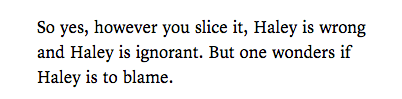
Leonard Pitts Jr.: Haley’s fairy tale ignores our history

haleyEnslaved Africans of George Washington Depicted as ‘Happy and Joyful’ in New Children’s Book

The Forgotten, Radical Martin Luther King Jr., Matt Berman

Martin Luther King, Jr.: Christian Radical—And Saint, Elizabeth Stoker Bruenig

Read This Before Co-Opting MLK Jr., Jose Vilson

The Revisionist’s Martin Luther King Jr., “I Have A Dream For Most Of Us,” Jose Vilson

Harlem, Langston Hughes

Let America Be America Again, Langston Hughes

The white man pathology: inside the fandom of Sanders and Trump, Stephen Marche

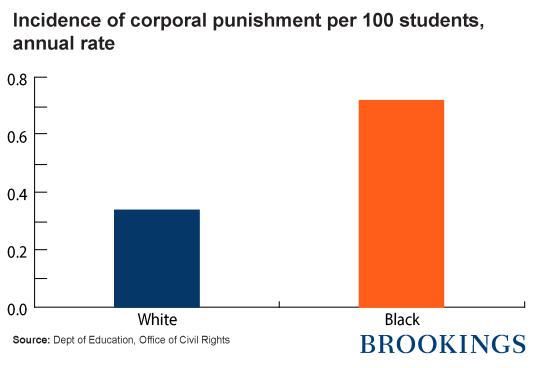
Schools, black children, and corporal punishment, Dick Startz

figure-1

“Please—a little less love, and a little more common decency.”

The Causal Effects of Cultural Relevance: Evidence from an Ethnic Studies CurriculumThomas Dee, Emily Penner

Questioning Payne | Teaching Tolerance

Toolkit for “Questioning Payne” | Teaching Tolerance

50 Years After Selma, White Lives Still Matter More, Stacey Patton

The Oscars’ Racist Refusal to Honor Modern Black Heroes, Stereo Williams

Should We Marvel at a Black Captain America?

The Martian: Allegory of Whose Lives Matter

Nicolas Sparks and the Allegory of Pretty White People Who Struggle until Everything Works Out

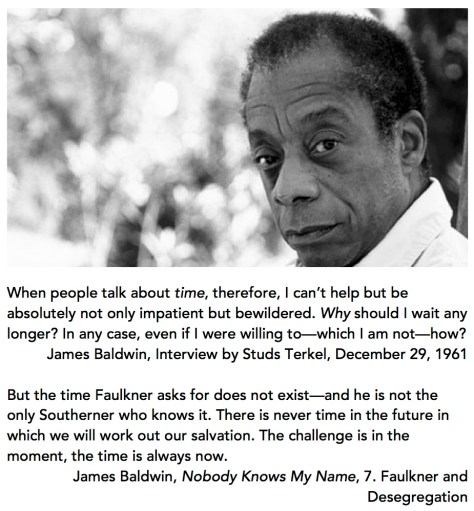
James Baldwin: “the time is always now”

the-time-is-always-now

A New Year’s Reader

Spanking children slows cognitive development and increases risk of criminal behavior, expert says

[See also The Stream: Should parents spare the spank]

On the Impossibility of Teaching Creative Writing, Tara Skurtu

[See also Teaching the Unteachable, Kurt Vonnegut; Writing, Unteachable or Mistaught?]

New education law: a lot of suds, William Mathis

[See also Doubling Down (Again) by Reverting, Not Changing: The Exponential Failures of Education Legislation]

A Lecture From the Lectured, John Barone, Cassandra Chaplinsky, Taylor Ehnle, John Heaney, Riley Jackson, Zoe Kaler, Rachael Kossy, Benjamin Lane, Thomas Lawrence, Jessica Lee, Sarah Lullo, Kevin McCammack, Daniel Seeder, Carly Smith, and Demetrius Wade

Is the Drive for Success Making Our Children Sick? Vicki Abeles

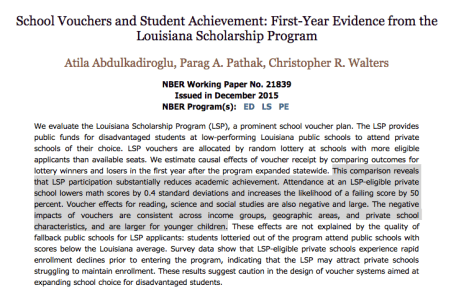
School Vouchers and Student Achievement: First-Year Evidence from the Louisiana Scholarship ProgramAtila Abdulkadiroglu, Parag A. Pathak, and Christopher R. Walters

vouchers LA

The Subtle Linguistics of Polite White Supremacy, Yawo Brown

To the White Parents of my Black Son’s Friends

The Moynihan Report ResurrectedSam Klug