Category Archives: race

Poetry in an Era of #BlackLivesMatter

Maybe there is karma, or some confluence of the universe, but earlier today I began contemplating if and how to begin work on an anthology of poetry from poets past and present that speaks to and from #BlackLivesMatter.

And then in my Twitter feed:

Jen Benka, Executive Director of the Academy of American Poets, speaks to the incredibly powerful fact that poetry matters in an era of #BlackLivesMatter—anchored by the printing of Langston Hughes’s “I, Too” in the NYT.

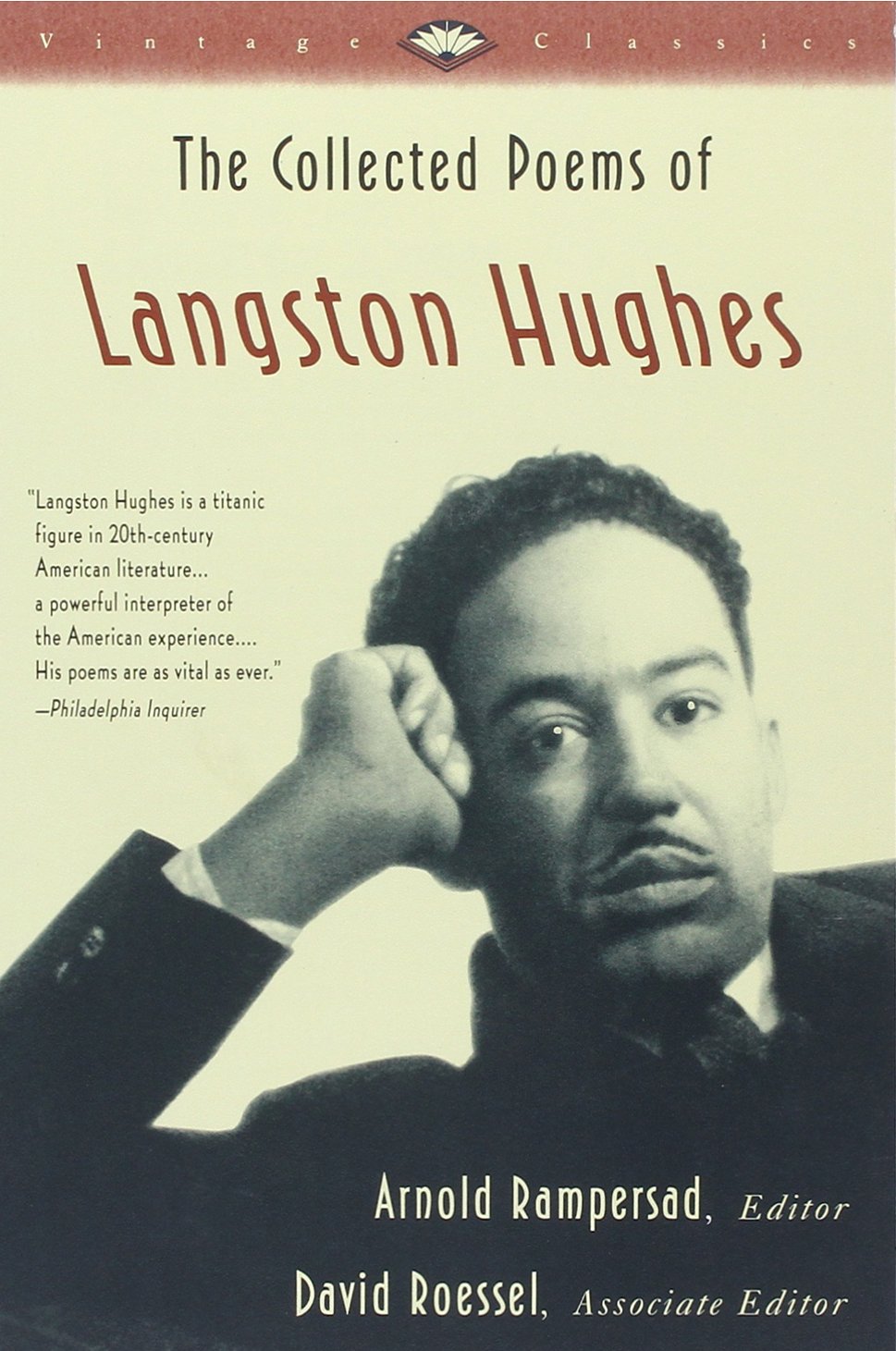
Hughes has been much on my mind recently—his “Let America Be America Again,” “Theme for English B,” and “Harlem,” notably [1].

As a poet and a teacher, I have been struggling with race and racism as well: first spring (Baltimore is burning) and Four Poems: For Jordan Davis and Trayvon Martin.

Benka pointed to these poetic responses: what the dead know by heart, Dante Collins; A Small Needful Fact, Ross Gay; and the bullet was a girl, Danez Smith.

Maybe I am too hopeful as a poet, and reader of poetry, but I am compelled to think we may well need an anthology of poetry past and present to help begin the healing.

Anyone? Anyone?

Until (if) this idea gains momentum, please send me a list of poems (and if accessible online) to add below.

“Incident,” Countee Cullen

“Allowables,” Nikki Giovanni

The Talk,” Jabari Asim

“Middle Passage,” Robert Hayden

from Don’t Let Me Be Lonely: “Cornel West makes the point…,” Claudia Rankine


[1] See also Listening to Langston Hughes about “Make America Great Again” and Revisiting “Theme for English B” by Langston Hughes.

Political Will: A Meditation

In my introductory foundations course in education, we have been watching Corridor of Shame and discussing the historical negligence of some schools, some students, and some communities in South Carolina for generations; in this case, “some” means “black” and “poor.”

The maudlin and melodramatic documentary is grounded in a court case that has taken the state two decades to settle—and then to proceed to do exactly nothing.

As we waded into a class discussion of this political negligence, I stressed a refrain I am moving toward more and more often: political will.

The godawful Truth of the matter is that public schools in high-poverty black communities—notably those along the I-95 corridor—are underfunded, marginalized, and essentially left to chance exactly because this is what we want in the state.

Nowhere in the U.S. at the state or federal level is there a lack of money, resources, or expertise to do anything we wish to do. What we choose to do and what we choose to ignore are exactly what we want.

In 2014, I wrote this poem:

It is a poem about political will, about the tyranny of the privileged and the consequences of that tyranny for marginalized groups; I highlight women and children, but this is also about black and brown people, people in poverty, religious minorities, foreign nationals, transgender people, gay people—anyone not of the centered community that is white, male, straight, and a certain kind of superficial Christian.

A former student of mine, Lucas Patterson, posted a Nikki Giovanni poem on Facebook, “Allowables,” and I felt my heart sink:

allowables

In fact, I felt sick physically and in my soul because of this:

Tulsa police officer Betty Shelby, identified as the officer who shot 40-year-old Terence Crutcher on Friday night, has offered her side of the story in the fatal encounter.

In dashcam and helicopter video released by police, Crutcher appears to have his hands up moments before he is shot by Shelby. Shelby’s attorney, Scott Wood, maintains that Crutcher refused to follow more than two dozen commands and that he reached into the open window of the car before Shelby perceived a threat and shot him….

Shelby believed that when Crutcher attempted to reach into the car, he was retrieving a weapon, Wood said. In her interview with homicide detectives, she said, “I was never so scared in my life as in that moment right then,” according to Wood.

Just as people who call themselves Christian and patriots will without a thought crush a spider under the soles of their shoes, those people will and have created this world and allow it to be exactly as they want it to be.

A world where black men’s names become hash tags as inconsequential as court cases being settled.

A world of unwarranted privilege at the expense of the Other.

The world was exactly as they expected, exactly as they knew it to be.

And mostly not as it could have been, or should have been.

Education’s Diversity Dilemma: What Can Be Done

My 18 years as a public high school teacher and current 15 years as a university professor have one dilemma in common: diversity.

At the K-12 level, many schools struggle to recruit and maintain a diverse faculty; while universities often face a lack of diversity in both faculty and students.

The teaching staff at the rural South Carolina school where I taught was nearly all white, working-class, and essentially all Christian. Once we hired an outstanding woman to teach science; she happened to be a native of India and Hindu.

The culture in the school was so toxic to her diversity, that she left—or better phrased, she was run off by the implicit and direct messages of the people and the culture of the school.

My university has recently confronted the low percentage of women faculty as well as concerns about faulty and student diversity.

At our opening faculty retreat focusing on diversity and inclusion, a female faculty member expressed concern over the time and energy needed to address pronoun preferences to be sensitive to gender identity and/or gender expression.

Concurrently, several faculty expressed surprise that complimenting black faculty or students for being “articulate” is racist and offensive.

More pervasive, however, was the demand that we not proceed with diversity initiatives without defining diversity, and that always included concerns about reducing diversity to race. Both of these strategies bound to the norms of academia, in effect, marginalize the power of privilege (many whites have been and are hired because they are white) and the realities of race in the diversity dilemma.

Parallel to these strategies were responses to a gender study at our university, a study that was refuted by several white male faculty because it didn’t (in their view) meet the standards of high-quality research—too much anecdote, and thus, a code for too many voices from those affected, from those normally without a voice.

All of these situations point to the toxic nature of centered communities that derive from both individual and systemic forces—even when many or most of the people consider themselves not bigoted, racist, classist, homophobic, or sexist.

Individuals often embody and express bigotry despite their own intentions not to be bigoted or intolerant due to a lack of critical consciousness, and thus, as lack of critical sensitivity.

Over the decades from when I graduated high school and through my career teaching at the school, the community saw a significant decrease in blacks, resulting in a relatively white community. The faculty of the schools stayed almost entirely white—even as schools sought more teachers of color.

My current university has worked diligently—as have many universities—to increase student and faculty diversity, with little to show for all the effort.

This is the diversity dilemma that remains—and may be nearly impossible to correct. Therefore, many diversity and inclusion initiatives become bogged down in and/or eventually abandon diversity efforts because of inadequate outcomes related to goals.

The failure to increase diversity of faculty, for example, may be a lack of political will—as Maybeth Gasman argues:

While giving a talk about Minority Serving Institutions at a recent higher education forum, I was asked a question pertaining to the lack of faculty of color at many majority institutions, especially more elite institutions.

My response was frank: “The reason we don’t have more faculty of color among college faculty is that we don’t want them. We simply don’t want them.” Those in the audience were surprised by my candor and gave me a round of applause for the honesty.

But one missing component of diversity and inclusion initiatives is certain: working toward culturally relevant communities that acknowledge the sensitivity and privilege afforded centered people, that work to spread that sensitivity to all members of the community, and that decrease and erase the privilege afforded centered people.

“Culturally relevant,” as envisioned by Gloria Ladson-Billings [1], in educational communities must foster awareness and sensitivity to culture and race as well as to gender, sexuality, social class, and religion—among faculty, staff, and students.

In schools and colleges, the question is not if we have the time and energy to address pronoun preferences to be sensitive to transgender people, but how we can assure that all members of the community are educated on the power of gendered language to center and oppress people.

For example, schools and universities can adopt “they” as a singular gender-neutral pronoun as a simple policy move, but also infuse the gender politics of language throughout the curriculum and in faculty development.

The paradox of course is multi-layered: education has a diversity dilemma that quite possibly cannot be addressed well directly, but may be ameliorated by education itself, education that is purposefully culturally relevant and systemic.

Diversifying a toxic community is unlikely to be as effective as creating an inclusive community that invites diversity.

Diversity initiatives that fail to realize that the latter can and must be done are making a regrettable mistake that may jeopardize the best of intentions of all involved.


[1] See her definition:

I have defined culturally relevant teaching as a pedagogy of opposition (1992c) not unlike critical pedagogy but specifically committed to collective, not merely individual, empowerment.

The Eternal Negligence of the Mainstream Media: “The World Is Not White”

Somewhere among Urban Legend and the sort of fine-detail scholarly bickering that people outside of academia find tedious lies the truth about how many words Eskimo have for “snow.”

What is compelling about Eskimo words for “snow,” I think, is the idea that a people would become increasingly nuanced in proportion to how much something dominated their environment: Eskimo are so daily confronted with snow and the challenges of snow that they have a hundred words for all the ways it pervades their lives and world.

Conversely, in the very human effort to understand our world and human nature, one of our cliches includes a truism (speculative and mostly metaphorical) about fish being completely unaware of water since it is both ever-present and essential for their existence.

So when it comes to so-called mainstream culture in the U.S., we are, regretfully, fish and not Eskimo.

And the daily record of that obliviousness is recorded by the mainstream media.

Exhibit A:

people and black Americans

Exhibit B:

Rapinoe, a World Cup and gold-medal winner with the U.S. women’s national team, becomes the first nonblack professional athlete to join in protesting during the national anthem since Kaepernick gained notoriety for sitting out the anthem in 49ers preseason games.

I could make this a quiz, but it would be one most people would fail for the exact reason I included both examples.

The word that shall not be spoken in the U.S. is “white.”

The New York Times editors apparently believe black people are not people, but they certainly cannot cross the line and confront that it is white people who “fail to understand”—or better yet, refuse to understand—”the lives of black Americans.”

And, really ESPN? Megan Rapinoe is “nonblack”?

And if we dig beneath the “rigid refusal to look at ourselves” (read: white Americans) we are able to unmask that when politicians or the media admit the U.S. continues to have a “race” problem, that is the whitewashed code for a “racism” problem—yet the other word that dare not be uttered.

In an interview from 1984, Julius Lester asked James Baldwin about “the task facing black writers,” and Baldwin replied:

This may sound strange, but I would say to make the question of color obsolete….

Well, you ask me a reckless question, I’ll give you a reckless answer—by realizing first of all that the world is not white. And by realizing that the real terror that engulfs the white world now is visceral terror. I can’t prove this, but I know it. It’s the terror of being described by those they’ve been describing for so long. And that will make the concept of color obsolete.

Baldwin’s confrontation of the power of normalizing white as that marginalizes black in the U.S. is portrayed brilliantly in a scene from Ralph Ellison’s (1952) Invisible Man where the unnamed main character finds himself in a hellish nightmare after being kicked out of college and sent on a cruel quest for work in New York. He then turns to a paint manufacturing plant for employment:

KEEP AMERICA PURE

WITH

LIBERTY PAINTS. (p. 196)

The exchange between the main character and his supervisor, Kimbro, when the main character is first learning his job at the paint factory informs well the current tensions created by #BlackLivesMatter:

“Now get this straight,” Kimbro said gruffily. “This is a busy department and I don’t have time to repeat things. You have to follow instructions and you’re going to do things you don’t understand, so get your orders the first time and get them right! I won’t have time to stop and explain everything. You have to catch on by doing exactly what I tell you. You got that?” (p. 199)

What is important at Liberty Paints is the best-selling paint and the company slogan—”If It’s Optic White, It’s the Right White”—that echoes the racist “white is right.”

The main character learns from Kimbro that Liberty Paints’ prize item, Optic White, requires ten drops of black (a literary harbinger for Baldwin’s argument that whites are defined by blacks in the U.S.). The process makes no sense on many levels to the main character, but he is chastised for questioning instructions: “‘That’s it. That’s all you have to do,’ [Kimbro] said. ‘Never mind how it looks. That’s my worry. You just do what you’re told and don’t try to think about it’” (p. 200).

So white America finds itself in 2016 anesthetized by whiteness to the point that it does not see “white,” and the institutions designed to maintain white privilege—such as the mainstream press—dare not utter the word.

Fish so accustomed to water that they have no concept of water.

Or as Baldwin confronted, the truth may be that as fish white America has now been forced to confront water/whiteness and fears the consequences of the other side of the end to white privilege so desperately as to render itself “nonblack.”

Listening to Langston Hughes about “Make America Great Again”

When an individual is protesting society’s refusal to acknowledge his dignity as a human being, his very act of protest confers dignity on him.

Bayard Rustin

It’s called the American Dream because you have to be asleep to believe it.

George Carlin

When I met with my first-year writing seminar, Reconsidering James Baldwin in the Era of #BlackLivesMatter, this Monday, I noted that the weekend had provided for us local and national examples of why the course matters: locally, one high school restricted students from having U.S. flags at a football game because of patterns of using that flag to taunt and harass rival students who are Latinx/Hispanic, and nationally, Colin Kaepernick was questioned about his sitting during the National Anthem at the beginning of NFL preseason games.

As entry points into the work of Baldwin as well as the long history of racism in the twentieth and twenty-first centuries, I read aloud and we discussed Langston Hughes‘s “Theme for English B” [1] and “Let America Be America Again.”

I stressed to these first-year college students that Hughes lived and wrote in the early to mid-1900s—nearly a century ago in terms of the college student personae in “Theme for English B.”

As we examined the professor/student and race-based aspects of power in “Theme,” students were quick to address the relevance of Hughes today—emphasizing as well part of my instructional purpose to expose these students to the lingering and historical racism in the U.S.

But the real meat of this class session revealed itself as we explored “Let America Be America Again.”

Hughes: “(America never was America to me.)”

Written and published about 80 years ago, “Let America Be America Again” represents a racialized dismantling of the American Dream myth—a poetic companion to the skepticism and cynicism of F. Scott Fitzgerald, Ernest Hemingway, and other writers/artists works throughout the early to mid-twentieth century.

Hughes begins with a celebratory stanza that easily lulls readers into an uncritical response to the American Dream, but then offers a brilliant device, the use of parentheses, to interject a minority voice (parenthetical, thus representing the muted voices of the marginalized in the U.S.) after several opening stanzas:

(America never was America to me.)…

(It never was America to me.)…

(There’s never been equality for me,
Nor freedom in this “homeland of the free.”)

And then the poem turns on two italicized lines followed by:

I am the poor white, fooled and pushed apart,
I am the Negro bearing slavery’s scars.
I am the red man driven from the land,
I am the immigrant clutching the hope I seek—
And finding only the same old stupid plan
Of dog eat dog, of mighty crush the weak.

My students soon recognized a disturbing paradox: Hughes and Donald Trump’s “Make America Great Again” campaign slogan share a foundational claim but for starkly different reasons.

Trump has built political capital on anti-immigrant and anti-Muslim (both as “Others”) sentiment that the media and pundits often mask behind what is being called legitimate white working-class angst.

Parallel racist anger has been sparked when Michelle Obama, for example, confronted that the White House was built in part with slave labor—raising the issue of just who did build this country. Upon whose backs? we must ask.

Eight volatile decades ago, Hughes named “the poor white, fooled and pushed apart” now courted by Trump’s coded and blatant racism and xenophobia.

However, Hughes’s poem celebrates the diverse workers who created the U.S. while reaping very little if any of the benefits. Hughes offers a different coded assault, his on capitalism and the ruling elites, but not the rainbow of U.S. workers “fooled,” it seems, by the hollow promise of the American Dream.

In Whitmanesque style, Hughes raises throughout the poem a collective voice of immigrants and slaves as the foundation of the U.S.:

I’m the man who sailed those early seas
In search of what I meant to be my home—
For I’m the one who left dark Ireland’s shore,
And Poland’s plain, and England’s grassy lea,
And torn from Black Africa’s strand I came
To build a “homeland of the free.”

But as he returns to the poem’s refrain, Hughes unmasks the promise and tempers the hope:

O, let America be America again—
The land that never has been yet—
And yet must be—the land where every man is free.

In the final stanza, there is hope, built on “We, the people, must redeem.”

In a time of Trump’s cartoonish stereotype of the empty politician, his “Built a Wall” and “Make America Great Again” sloganism, we must reach back almost a century to Hughes’s often ignored voice that merges races through our shared workers’ remorse.

Hughes calls out the robber baron tradition of U.S. capitalism—”those who live like leeches on the people’s lives”—as the “fooled and pushed apart” line up to support those very leeches.

“Let America Be America Again” is a warning long ignored, but truths nonetheless facing us. Silence and inaction are endorsements of these truths.

“To be afraid,” Bayard Rustin acknowledged, “is to behave as if the truth were not true.”

It remains to be seen if we are brave enough as a people to “Let America Be America Again.”


[1] See also Revisiting “Theme for English B” by Langston Hughes.

One-Time
Monthly
Yearly

Make a one-time donation

Make a monthly donation

Make a yearly donation

Choose an amount

$5.00
$15.00
$100.00
$5.00
$15.00
$100.00
$5.00
$15.00
$100.00

Or enter a custom amount

$

Your contribution is appreciated.

Your contribution is appreciated.

Your contribution is appreciated.

DonateDonate monthlyDonate yearly

Allegory of the Life Jackets

In Randlandia—people of the Pearl Clan and the Onyx Clan—each morning all the children gathered at the Great Pool for Lessons.

Once, the Tribe of Rosewater—a nomadic people without clans—wandered into Randlandia, and since Lessons at the Great Pool were an honored Tradition of Randlandia, the Tribe of Rosewater was invited to gather and watch.

Children of the Pearl Clan arrived in bathing suits and Life Jackets, slipping into the water and swimming about gracefully and quickly as if this is what they were meant to do.

Children of the Onyx Clan came to the Great Pool with bathing suits only, no Life Jackets—and they gathered in a tight bobbing mass, treading water as the children of the Pearl Clan darted and glided here and there around the Great Pool.

A member of the Tribe of Rosewater asked a member of Randlandia, smiling with pride as they watched the Lessons, “What do you do for the children of the Onyx Clan?”

“What do you mean?” came the blank reply.

“That these children must tread water while the children of the Pearl Clan have Life Jackets,” explained the member of the Tribe of Rosewater in a voice filled with compassion.

“Let me show you,” followed with a finger upraised. “Children of the Onyx Clan, what have you learned?”

In unison and loudly while treading water dutifully, the children of the Onyx Clan chanted, “Treading water is not an excuse!”

The Randlandian beamed with pride and added: “We are instilling grit in the children of the Onyx Clan so that they too someday can glide through the water as effortlessly as these children of the Pearl Clan!”

“But—” stammered the member of the Tribe of Rosewater, “but that is cruel and unfair.”

And this was the day new words were brought to the people of Randlandia by the Tribe of Rosewater—”cruel” and “unfair.”

South Carolina Changes Scale, Shocked at Same Outcomes

Education reform in South Carolina—just like the rest of the U.S.—suffers from a tragic lack of imagination: SC has changed the standards and high-stakes tests during thirty years of accountability about seven times, but the outcomes continue to be disappointing.

This proves that even in the South we are immune to our own cleverness: You can weigh a pig, but it won’t make the pig fatter.

The education reform version of that is that you can keep changing the tests, but the scores are going to tell you the same thing.

Deanna Pan, as a consequence, offers this “sky is falling” of the moment about public schools in SC, Only 14 percent of S.C. graduates are ready for college, according to ACT [1]:

Results on the ACT college entrance exam show recent South Carolina high school graduates are woefully unprepared for college, despite their ambitions for postsecondary education.

Only 14 percent of 51,000 students tested statewide who graduated this year met the ACT’s “college readiness” benchmarks in all four of the exam’s subject areas — English, math, science and reading — yet 83 percent of test takers indicated they wanted to go on to college.

Even more staggering, just 2 percent of black students met the ACT’s benchmarks in all four sub-tests, compared with 9 percent of Latinos, 21 percent of whites and 33 percent of Asians.

After I talked with Pan by phone for 15-20 minutes, here is what made it to her article:

Paul Thomas, an associate professor of education at Furman University, said these results should be “taken with a grain of salt.” Without multiple years of testing data to compare with this year’s batch of scores, he said it’s difficult to draw any definitive conclusions, particularly about the performance of the state’s black students who disproportionately attend high-poverty schools with less access to advanced curriculum and veteran teachers.

“All standardized testing is still extremely biased by race, social class and gender,” Thomas said. “(These results) are more of a reflection of systemic problems, not with students.”

Just for clarities sake—since several charter school advocates took to Twitter to attack me by misrepresenting the above in order to promote charter schools, which annually prove to be no better than traditional public schools in SC—my caution focuses on interpreting ACT scores from one year of data after SC has over the past few years adopted Common Core and the related tests, dropped Common Core, renamed what are essentially Common Core standards to look as if we have our own state standards, and then adopted ACT as our annual testing.

In other words, my concern about shouting that the sky is falling based on the new ACT scores includes the following:

  • The data are certainly depressed due to the curricular/standards shuffling across the state over the past 3-4 years.
  • ACT tests, like all standardized tests, remain more strongly correlated with race, social class, and gender than the quality of the schools or teachers.
  • Virtually all shifts to new high-states standardized tests necessarily begin with a drop in scores; and thus, my point about the need to wait for several years of data.

However, my key point of emphasis, regretfully, during my interview with Pan was omitted: The ACT results are nothing new since SC has a long history of having low, if not the lowest, tests scores in the U.S. (notably our demoralizing residency in the basement of the discredited practice of journalists ranking states by SAT scores), but the single most important lesson from this data is that SC has yet to address the equity gap in the lives and education of vulnerable children.

To persist with misnomers such as the “achievement gap” is to keep our eyes on the outcomes while ignoring the root causes of those outcomes.

SC has spent three decades changing standards, tests, and accountability mandates, but refuses to address directly the race and class inequities facing our state and those same inequities reflected in our schools (both traditional and charter).

Ultimately, then, I am not trivializing that these current ACT scores paint a grim picture about SC education—especially as that relates to black, brown, and poor students—but I am emphasizing that we did not need yet more data from a different test to tell us what we have known and ignored for decades: social and educational inequity is cheating those black, brown, and poor students, and our obsession with changing standards and tests fails to address the root equity problems reflected in low test scores.

The real failure in education reform lies in the ideology of the education reformers, including those committed to accountability, school choice, and charter schools—none of which addresses the root causes directly and all of which increase the actual problems.

As Paul Gorski explains:

It also is why as a teacher educator I attend to ideology. No set of curricular or pedagogical strategies can turn a classroom led by a teacher with a deficit view of families experiencing poverty into an equitable learning space for those families (Gorski 2013; Robinson 2007)….

Just as importantly, what realities does deficit ideology obscure and to what are we not responding when we respond through deficit ideology? Can we expect to eradicate outcome disparities most closely related to the barriers and challenges experienced by people experiencing poverty by ignoring those barriers and challenges – the symptoms of economic injustice?

The lamented results of the recent ACT is not a new revelation, but the callous responses by some who say poverty is an excuse are predictable and remain inexcusable.

The implication of weighing a pig doesn’t make a pig fatter is crucial in our debates about low test scores. That implication is about the need to feed the pig, a metaphor for addressing root causes.

While problematic, recent research suggests that even when some schools can raise test scores, those higher scores do not translate into benefits once students enter the real world. In other words, if education is to have real life-long positive consequences, we must address a wide range of complex root causes and school practices in order to insure equity of opportunity—which unlike test scores is more likely to produce life-long benefits.

In short, instead of changing tests and increasing test-prep, which disproportionately impacts negatively our vulnerable student populations, we need social reform that erases food, health, and work insecurity, and we need education reform that addresses equity of opportunity (for vulnerable students that includes access to experienced and certified teachers as well as access to challenging courses and then affordable college)—and not more accountability driven by ever-new standards and ever-new tests.

If anyone needed the recent ACT scores to confront that our schools, like our society, is negligent with black, brown, and poor students, that is news and cringe worthy.

Now, the real question is, who is willing to do something different and directly about the inequity?


[1] Let’s take a glance at what may be meant by taking this data with a grain of salt.

First, while poverty correlates strongly with standardized test scores, no one claims it is a perfect correlation. If you want to suggest that Tennessee calls into question SC’s low scores, you have to acknowledge that Nevada makes SC scores look quite differently. So only highlighting the TN/SC comparison is the discredited practice of cherry-picking (don’t trust people who cherry pick).

Next, among these 20 states we have no clarification on (1) how many years has the state been using this ACT test (the more years, the higher the scores, typically [reliability]), and (2) how well does this test correlate with what teachers have taught the students over 10-11 years of schooling [validity] (most of which could not have been correlated with this test).

Therefore, ACT test scores tell us about socioeconomic status, race, gender, and test validity/reliability—all of which are not about student learning, teacher quality, or school quality.

Ultimately, however, low ACT scores in SC this year are well within the historical data from every single different standardized test we have ever implemented. That is the lesson—one that I detail above we have no urge to address.

Average composite scores by states requiring ACT (see page 14 here) || Poverty Rank/Percentage

Minnesota 21.1 || 7/ 11.4%

Illinois 20.8  || 24/14.3%

[National Composite Score 20.8]

Colorado 20.6  ||  13/12.1%

Wisconsin 20.5  ||  18/13.2%

Michigan 20.3  || 33/16.2%

Montana 20.3  ||  27/15.2%

North Dakota 20.3  || 5/11.1%

Missouri 20.2  || 30/15.5%

Utah 20.2  12/11.8%

Arkansas 20.2  || 46/18.7%

Kentucky 20.0  || 47/19%

Wyoming 20.0  || 3/10.6%

Tennessee 19.9 || 41/18.2%

Louisiana 19.5  || 49/19.9%

Alabama 19.1  || 48/19.2%

North Carolina 19.1  || 39/17.2%

Hawaii 18.7  ||  9/11.5%

South Carolina 18.5  || 40/17.9%

Mississippi 18.4  || 51/21.9%

Nevada 17.7  || 29/15.4%

Mamas, Don’t Let Your Babies Grow Up to Be Ryan Lochte

At our faculty retreat focusing on diversity, a few lessons grew spontaneously from the keynote and related break-out sessions.

One lesson at the individual level exposed blind spots among faculty related to how language offends, the relationship between intent and impact, and a not-so-veiled resistance to listening and then acting on expanding diversity through culturally responsive behavior among faculty with privilege.

Another lesson at the systemic level was a confrontation of the chasm between words and action: what we say matters, but what we fund and how we act ultimately determine if those words are veneer or genuine principles.

My university is a selective liberal arts college that is a microcosm of the larger tensions of culture and diversity facing the U.S.

White heterosexual male privilege dominates (and even fuels) both our wider society as well as any insular community or institution within our society. James Baldwin deconstructed throughout his career how whiteness and blackness inform each other while whiteness seeks always to keep itself central to the American Way.

As Baldwin argued about language:

Now, I do not know what white Americans would sound like if there had never been any black people in the United States, but they would not sound the way they sound….

The brutal truth is that the bulk of white people in American never had any interest in educating black people, except as this could serve white purposes. It is not the black child’s language that is in question, it is not his language that is despised: It is his experience. A child cannot be taught by anyone who despises him, and a child cannot afford to be fooled. A child cannot be taught by anyone whose demand, essentially, is that the child repudiate his experience, and all that gives him sustenance, and enter a limbo in which he will no longer be black, and in which he knows that he can never become white. Black people have lost too many black children that way.

Today, for example, as #BlackLivesMatter rose out of tragedy after tragedy, the narcissism of whiteness has created a backlash that demands attention to how working-class whites have suffered.

And then, on a smaller scale, during the 2016 Rio Olympics—a time ripe with amazing accomplishments by black athletes from the U.S.—we have been handed Ryan Lochte, a case of arrested development as a consequence of privilege.

Somehow we will not address the white gaze, and we are also committed to keeping the gaze of concern on whiteness because, you know, frat-boy life is funny even when guys are biologically grown:

Cause 32-year-old kids just want to have fun.

But the lesson that perpetually faces us isn’t funny at all. There are dire consequences.

In the U.S., we persist in creating and protecting at all cost these lives.

And we declare in the most calloused ways possible that these lives do not matter.

Mustn’t there be a time of reckoning for a people who see 32-year-old Lochte as a kid just trying to have fun but turn a blind eye to the execution of Tamir Rice, an actual child?

As Baldwin understood all too well, however, lessons remain wasted on those unwilling to learn:

And, after all, finally, in a country with standards so untrustworthy [emphasis added], a country that makes heroes of so many criminal mediocrities [emphasis added], a country unable to face why so many of the nonwhite are in prison, or on the needle, or standing, futureless, in the streets—it may very well be that both the child, and his elder, have concluded that they have nothing whatever to learn from the people of a country that has managed to learn so little.

The Eternal Narcissism of White Privilege

The nomination of Donald Trump by the Republican Party has spawned a growing body of punditry seeking ways to explain Trump’s rise without directly addressing racism, bigotry, and xenophobia.

The explanation du jour cautions critics of Trump supporters, arguing that Trump is attractive to working-class whites who have legitimate fears.

Works such as Hillbilly Elegy by J.D. Vance have become representative of the serious reconsideration of the angry white voter, as Vance proclaims:

The simple answer is that these people–my people–are really struggling, and there hasn’t been a single political candidate who speaks to those struggles in a long time.  Donald Trump at least tries.

However, as a redneck son of the self-defeating South, I immediately had a different reaction to Vance and the scramble to attend to the eternal narcissism of white privilege:

The four-year-old Joel frets about his mother: “She’s not looking at me. No one ever looks at me.”

The histrionics of working class whites, to me, sound like arrested development, spurred by the long deferred political and social recognition about racism prompted by the #BlackLivesMatter movement.

The consequences of white privilege include that privilege is both ever-present and thus invisible—much as we says that fish don’t understand water.

And thus, while working-class whites have suffered because of disaster capitalism and the vast majority of the policies implemented by the Republican machine they support, the narcissism of privilege among working-class whites in the U.S. blinds them from two powerful and damning facts:

  1. White privilege buoys all whites in comparison to black and brown people in terms of socioeconomic opportunity and wealth as well as shielding whites from the negative consequences of the U.S. judicial system and policing. Just as two examples, whites who dropped out of high school have the same employment opportunities as blacks with some college, and blacks constitute only about 12% of the U.S. population, but mass incarceration impacts 2207/100,000 blacks compared to 380/100,000 whites.
  2. Working-class whites have supported Republicans for ideological reasons linked to religious and racial bigotry—while disregarding how that commitment has been self-defeating to their own interests. As Neil Gross explains: “Union decline [as a subset of many economic factors, I want to add] has left the [white] working class politically and economically vulnerable, and it’s this vulnerability Mr. Trump has been able to exploit.”

This “O, crap!” moment for working-class whites isn’t without merit, but it comes with the same sort of false logic found in the South where whites shout for blacks to “Get over slavery” while clutching and waving the Confederate battle flag and screaming “Tradition!”

Again, as a life-long Southerner, I am compelled despite my own skepticism about organized religion, especially the fundamentalist kind of my home region, to proclaim that working-class whites need to have a Come-to-Jesus moment.

First, while recognizing the power of white privilege regardless of socioeconomic status is essential, working-class whites must forefront the concerns of black and brown people who suffer disproportionately for the mere fact of their race in the U.S.

Next, working-class whites must form a solidarity with all people who share their social and economic needs: working-class status is more significant for equity in the U.S. than religious or racial differences.

And finally, working-class whites must reject the “Make American Great Again” mantra since there is no compelling evidence to support either that the U.S. was once great or that somehow the expansion of freedom and equity beyond whiteness is anti-American.

Again, in a blazing display of illogic, while working-class whites remain committed to mythologies such as “a rising tide lifts all boats,” they have politically resisted expanding* marriage rights to homosexuals, social and economic equity to black and brown Americans, equal pay for women, American citizenship for immigrants, the end to mass incarceration for recreational marijuana use—all of which raising the tide for everyone in the U.S. by growing freedom.

If we concede to the mainstream whitewashing of Trump and his supporters; if we continue not to name bigotry, racism, and xenophobia; if we only attend to anything once it becomes a white problem—we are failing the very thing the Right and conservatives are so quick to shout about: life, liberty, and the pursuit of happiness.

The “yes, but” narcissism of white privilege once again is shouting over #BlackLivesMatter, and their ring-leader is the king of shouting over substance.

Working-class whites need to put on their grown-up pants, sit down, listen patiently, and wait their turn—finally.


* And ideologically refuse even to acknowledge these inequities exist or matter.

Note: Below are Tweets of mine prompting this blog post:

The Post and Courier: Get real for reform by ending ‘get tough’ school discipline

Get real for reform by ending ‘get tough’ school discipline

[See original submission with hyperlinks included below]

Reforming School Discipline Policies Must Recognize Racial Inequity

P.L. Thomas

A recent Post and Courier editorial argues: “[school] is…not a place where children should be labeled criminals on a regular basis. And that’s what seems to have been happening in Charleston County schools.”

Just as Richland 2 (Columbia) addressed in 2014, Charleston is now committed to reforming discipline policies in schools that have resulted in significant imbalances in how students are treated, worst of which is that often those practices criminalize students of color disproportionately.

Education reform has been prominent in South Carolina and across the U.S. since the late 1970s and early 1980s, notably with the accountability movement based on academic standards and high-stakes testing. Along with a “get-tough” attitude about academics—such as instituting exit exams—public schools have also increasingly embraced “get-tough” approaches to student behavior—“no excuses” philosophies and zero tolerance policies, for example.

Over the past thirty or so years, however, doubling down again and again on accountability as well as discipline has not created the outcomes promised, but has resulted in many unintended negative consequences.

Exit exams as gatekeepers in school and student accountability as well as popular policies such as grade retention based on test scores have proven to be extremely harmful, especially for vulnerable populations of students (poor, black/brown, and special needs students and English language learners).

While Charleston continues to struggle with education reform targeting academics, the city has also been the epicenter of the larger national challenge to recognize concerns about policing and racial tensions—with the shooting of Walter Scott and the heinous massacre at the Emanuel African Methodist Episcopal Church.

To reform school discipline, we must admit, is to confront a subset of the wider race problem with mass incarceration and police shootings. If our public schools are to be change agents for our society, they must be unlike the culture and communities they serve.

Charleston, then, is making a wise and important decision to reform discipline policies in the district, but additionally, this move requires that political leaders and the public are well educated about the realities of racial inequities in school discipline.

Those lessons must include the following:

  • In 2012 the Office of Civil Rights released disturbing data about racial imbalances in school suspensions and expulsions: “African-American students represent 18% of students in the CRDC [Civil Rights Data Collection] sample, but 35% of students suspended once, 46% of those suspended more than once, and 39% of students expelled.”
  • Racial inequities in school discipline begin in prekindergarten, and have lingering negative consequences for students, including contributing to the school-to-prison pipeline and higher drop-out rates.
  • Research also shows that black children are targeted more often and treated differently than white children for the same behaviors. In fact, Kenrya Rankin Naasel reports: “When black students exhibit behavioral problems at school, administrators are more likely to call the police than to secure medical interventions. In fact, the study found that the more black students who attend a school, the more likely the people in charge are to call the police, rather than a doctor.”
  • Black children are viewed as being much older than their biological ages, and thus, Stacey Patton, a senior enterprise reporter at the Chronicle of Higher Educationargues, “Black America has again been reminded that its children are not seen as worthy of being alive—in part because they are not seen as children at all, but as menacing threats to white lives.”
  • Police in the hallways of schools has proven to be more likely to criminalize students than to create safer learning environments.

The #BlackLivesMatter movement has forced the U.S. to confront some hard truths about lingering racial inequity, and addressing discipline policies in Charleston along with continuing to reform academic opportunities for students is yet another set of hard racial truths for us to examine and overcome.

Charleston educational leaders should be commended for this needed move, but the way forward has to be informed by the available research and then grounded in a firm commitment to create the sorts of equitable and rich school experiences that South Carolina has for too long neglected to provide for poor and black/brown students.

In his For White Folks Who Teach in the Hood…and the Rest of Y’all Too, Christopher Emdin offers a powerful guiding principle for all education reform: “It essentially boils down to whether one chooses to do damage to the system or to the student.”

Our “get-tough” approaches to academics and discipline are damaging our students, and we must find better ways to serve all our students.


See Also

Greenville News: COMMENTARY: Are black children criminalized in schools?

Thomas: Race matters in school discipline and incarceration | Opinion Columns | The State


UPDATE: And then I receive a racist (incoherent) email as a response:

racist email