For decades, I was wasting my votes in South Carolina by aggressively voting against Republicans. I really never voted for a Democrat, but I certainly found all the Republicans so vile that I felt a moral duty to vote against them.
Then in 2005, I was sitting in a hotel in New Orleans just months before Katrina hit and watching an interview on TV with George Carlin. Prompted by Charlie Rose about the 1992 election, Carlin explained that he was a lifelong non-voter.
Since then, like W.E.B. Du Bois and Carlin, I have been a non-voter and very openly not a Republican, Democrat, or (the silliest of all) Independent.
With the rise of Trump, I also resisted addressing this new and unprecedented level of insanity in mainstream politics: Trump is a bizarro cartoon extreme of everything wrong with partisan politics and the U.S. (although he certainly isn’t an extreme conservative, which I address below).
Recently, I have broken my Golden Rule of not mentioning the fools who live by the glory of being mentioned, even when being called fools (again, Trump is the king of that crap).
I also have been forced to reconsider partisan politics—most disturbingly, to acknowledge that if the Republicans had nominated Jeb Bush, they would have had a very powerful leg to stand on in terms of refuting Hillary Clinton over ethics and honesty.
Yes, we all could have quibbled over policy (I detest Jeb Bush’s policy, especially the dumpster fire of education policy in Florida), but Jeb Bush proved himself one of the most honest candidates in the primary campaign, and Hillary Clinton has a legitimate credibility problem (one that is typical of almost all candidates and only easily exposed by an unusually ethical, honest candidate).
And while there is a long and disturbing history (especially in the South) of major blocks of voters voting against their best interests, the Trump phenomenon, again, is a truly extreme example of that paradox.
I have begun to understand this better after seeing a photo with a news story about Trump: A line of young white males all wearing “build the wall” t shirts mimicking Pink Floyd’s The Wall (possibly in the top three most offensive things I have seen in the campaign as a Pink Floyd fan).
Trump has risen along a continuum of Republicans who have maintained the religious right’s support despite multiple infidelities and divorces, as well as amassing wealth that clearly contradicts the whole camel through an eye of a needle idea of reaching heaven.
Trump also has seemingly increased the loyalty of poor and working class whites—despite his being the sort of business man who has exploited and ignored those populations to amass and squander his wealth. (We worship the wealthy in the U.S. and conveniently ignore that wealth is always built on the backs of workers who are left out of that wealth loop.)
I don’t want to catalogue the many contradictions between who Trump is and those subgroups who support him, but it is without question that Trump maintains support from many stakeholders who are somehow putting aside that he does not represent them in order to remain rabidly behind him.
Along with the “my team” aspect of partisan politics in the U.S. (a certain number of Republicans and Democrats, for example, would vote for anyone on their “team,” even if we simply swapped candidates), I believe there is one extremely disturbing common denominator cementing the Trump wall: fearing the “other.”
Trump has garnered the support of the anti-government Republican party with mantras of “I can do this for you” and with plans such as the federal government building a wall between Mexico and the U.S. (huge time and tax money commitments from the “less government” crowd?).
The “build the wall” refrain of the Trump campaign is simultaneously the most irrational and most compelling and solidifying aspect of his run.
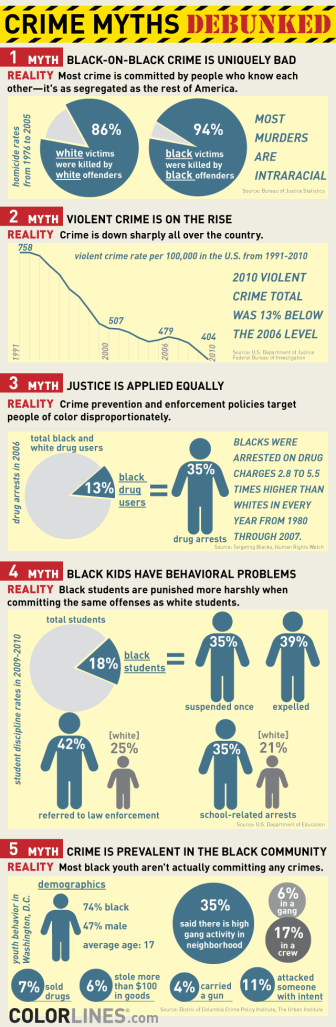
The Newt Gingrich moment when he refused to acknowledge violent crime is down in the U.S. by insisting that it is more important that the public believes there is more crime—this is the “wall” element writ large.
Trump is the orange-faced, wild-haired Clown Leader of Fear—a very bad script plagiarized from a much better Stephen King novel.
The fear of the “other” feeds Islamophobia, racism, sexism/misogyny, homophobia, etc., and can be maintained only through ignorance and delusion.
And mainstream cloaked-racist refrains such as “black-on-black crime” have created the foundation upon which the Trump Circus has been built.
Some continue to argue that we must not demonize Trump supporters as stupid, but I believe that reasonable call is deeply flawed.
Do poor and working class whites have reason to be disillusioned? Of course, but that doesn’t excuse there misinformed responses.
White high school drop outs have the same employment opportunities as blacks with some college (see here page 8), but the angry poor/working class voters supporting Trump will not admit their white privilege, and refuse to address the complicated facts of a racist U.S. society.
So the ultimate paradox of the rise of Heir Clown Trump is that “build the wall” is the real unifying theme that discredits his “Make America Great Again”—because, if we were informed at all, we may be compelled to see just what our country’s values are regarding the “other”:
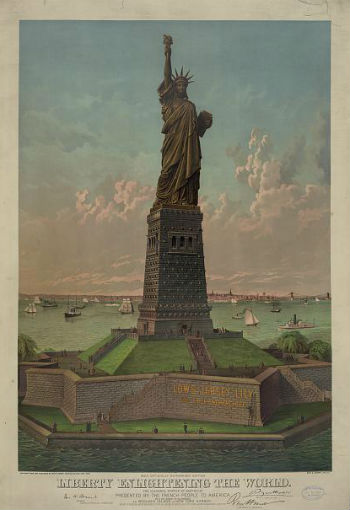
The New Colossus
Not like the brazen giant of Greek fame, With conquering limbs astride from land to land; Here at our sea-washed, sunset gates shall stand A mighty woman with a torch, whose flame Is the imprisoned lightning, and her name Mother of Exiles. From her beacon-hand Glows world-wide welcome; her mild eyes command The air-bridged harbor that twin cities frame. “Keep ancient lands, your storied pomp!” cries she With silent lips. “Give me your tired, your poor, Your huddled masses yearning to breathe free, The wretched refuse of your teeming shore. Send these, the homeless, tempest-tost to me, I lift my lamp beside the golden door!”
No, it was a sellout. It was a takeover. When James Baldwin came in from Paris, they wouldn’t let him talk, ’cause they couldn’t make him go by the script. Burt Lancaster read the speech that Baldwin was supposed to make; they wouldn’t let Baldwin get up there, ’cause they know Baldwin’s liable to say anything.
Just three years later, James Baldwin again proved Malxcolm X right, authoring A Report from Occupied Territory (11 July 1966) for The Nation.
The essay resonates powerfully as virtually all of Baldwin’s essays do until this day—but it also leaves the mouth acrid because the bitterly unjust world Baldwin captures lives out before us now as vividly as it did during Baldwin’s life.
In the most perverse of prophesies, Baldwin places words in the mouths of Tamir Rice, Jordan Davis, Trayvon Martin … :
This is why those pious calls to “respect the law,” always to be heard from prominent citizens each time the ghetto explodes, are so obscene. The law is meant to be my servant and not my master, still less my torturer and my murderer [emphasis added]. To respect the law, in the context in which the American Negro finds himself, is simply to surrender his self-respect.
And Baldwin’s witnessing remains confrontational, razor-focused, and nauseatingly accurate for anyone who truly believes in life, liberty, and the pursuit of happiness:
These things happen, in all our Harlems, every single day. If we ignore this fact, and our common responsibility to change this fact, we are sealing our doom. Here is the boy, Daniel Hamm, speaking—speaking of his country, which has sworn to bring peace and freedom to so many millions. “They don’t want us here. They don’t want us—period! All they want us to do is work on these penny-ante jobs for them—and that’s it. And beat our heads in whenever they feel like it. They don’t want us on the street ’cause the World’s Fair is coming. And they figure that all black people are hoodlums anyway, or bums, with no character of our own. So they put us off the streets, so their friends from Europe, Paris or Vietnam—wherever they come from—can come and see this supposed-to-be great city.”
There is a very bitter prescience in what this boy—this “bad nigger”—is saying, and he was not born knowing it. We taught it to him in seventeen years. He is draft age now, and if he were not in jail, would very probably be on his way to Southeast Asia. Many of his contemporaries are there, and the American Government and the American press are extremely proud of them. They are dying there like flies; they are dying in the streets of all our Harlems far more hideously than flies. A member of my family said to me when we learned of the bombing of the four little girls in the Birmingham Sunday school, “Well, they don’t need us for work no more. Where are they building the gas ovens?” Many Negroes feel this; there is no way not to feel it. Alas, we know our countrymen, municipalities, judges, politicians, policemen and draft boards very well. There is more than one way to skin a cat, and more than one way to get bad niggers off the streets.
I underwent, during the summer that I became fourteen, a prolonged religious crisis….Therefore, to state it in another, more accurate way, I became, during my fourteenth year, for the first time in my life, afraid—afraid of the evil within me and afraid of the evil without.
1/30/1963, New York, NY. James Baldwin sprawls across the bed in his New York apartment to jot down some notes. PHOTOGRAPH BY BETTMANN / CORBIS
Baldwin afraid was Baldwin coming to recognize racial despair:
School began to reveal itself, therefore, as a child’s game that one could not win, and boys dropped out of school and went to work. My father wanted me to do the same. I refused, even though I no longer had any illusions about what an education could do for me; I had already encountered too many college-graduate handymen. My friends were now “downtown,” busy, as they put it, “fighting the man.” They began to care less about the way they looked, the way they dressed, the things they did; presently, one found them in twos and threes and fours, in a hallway, sharing a jug of wine or a bottle of whiskey, talking, cursing, fighting, sometimes weeping: lost, and unable to say what it was that oppressed them, except that they knew it was “the man”—the white man. And there seemed to be no way whatever to remove this cloud that stood between them and the sun, between them and love and life and power, between them and whatever it was that they wanted. One did not have to be very bright to realize how little one could do to change one’s situation; one did not have to be abnormally sensitive to be worn down to a cutting edge by the incessant and gratuitous humiliation and danger one encountered every working day, all day long.
Here is the Baldwin “liable to say anything” mentioned by Malcolm X, the Baldwin who situated racism in whiteness, the source, the reason:
There appears to be a vast amount of confusion on this point, but I do not know many Negroes who are eager to be “accepted” by white people, still less to be loved by them; they, the blacks, simply don’t wish to be beaten over the head by the whites every instant of our brief passage on this planet. White people in this country will have quite enough to do in learning how to accept and love themselves and each other, and when they have achieved this—which will not be tomorrow and may very well be never—the Negro problem will no longer exist, for it will no longer be needed.
Over five decades later, the racism remains, the tensions have intensified, and the list of names of the sacrificed grows—and Baldwin’s assessment could be written today in nearly the exact same way with the same degree of Truth:
In any case, white people, who had robbed black people of their liberty and who profited by this theft every hour that they lived, had no moral ground on which to stand. They had the judges, the juries, the shotguns, the law—in a word, power. But it was a criminal power, to be feared but not respected, and to be outwitted in any way whatever. And those virtues preached but not practiced by the white world were merely another means of holding Negroes in subjection.
•
2 August 2016, Baldwin’s birthday.
White privilege and white fragility remain as powerful and deaf, dumb, and blind as Baldwin witnessed as a teen.
However, “[e]verything now, we must assume,” Baldwin ends his Letter, “is in our hands”:
we have no right to assume otherwise. If we—and now I mean the relatively conscious whites and the relatively conscious blacks, who must, like lovers, insist on, or create, the consciousness of the others—do not falter in our duty now, we may be able, handful that we are, to end the racial nightmare, and achieve our country, and change the history of the world.
“‘[N]ext to of course god america/ i love you,'” opens e.e. cummings’s satirical sonnet about the hollowness of political pandering to love of God, family, country—a staple of stump speeches by both major political parties in the U.S.
The speaker turns to war toward the end:
why talk of beauty what could be more beaut-
iful than these heroic happy dead
who rushed like lions to the roaring slaughter
they did not stop to think they died instead
Late in the presidential election cycle of 2016, this poem resonates in a way that should leave every American resolute to defend the ideals we claim are at the core of a free people.
As summer creeps toward fall, we are not just about to elect a president, but are faced with a test; it is pass/fail and there are no re-takes.
The test is the Khan moment, when a grieving Muslim family spoke out at the Democratic National Convention to confront the rising and emboldened bigotry that is personified by Donald Trump but endemic of the Republican Party.
For decades, the Republican playbook has included a wink-wink-nod-nod approach to very thinly veiled courting of racists, sexists, bigots, and homophobes. Trump has now taken that playbook to a new level—with outright Islamophobia and xenophobia at the center.
Like Pat Tillman, Humayun Khan proudly embraced his service to his country, according to his mother, who was directly slandered by Trump:
My son Humayun Khan, an Army captain, died 12 years ago in Iraq. He loved America, where we moved when he was 2 years old. He had volunteered to help his country, signing up for the ROTC at the University of Virginia. This was before the attack of Sept. 11, 2001. He didn’t have to do this, but he wanted to.
Tillman’s and Khan’s service and deaths share being politicized for partisan purposes—adding additional layers of insult to injury.
But both also are about far more than partisan politics; they expose that cummings was right: Political pandering to God, family, and country as well as the public’s cheering for that pandering is ultimately hollow.
Both Republican and Democrat politicians are warmongers, elites willing to fight wars on the backs of the “heroic happy dead.”
The Khan moment, however, raises a blunt question: Which party, which candidate, Trump or Hillary, are racists, sexists, homophobes, Islamophobes, and/or xenophobes supporting?
And there is the damning truth because Trump and the Republican Party are the voices of bigotry.
Many, myself included, believe the war in which Humayun Khan died was yet another senseless war, a waste of human life and valuable national resources.
Many also recognize that the Khan family as well as others scarred by these wars have no political party unsullied by warmongering.
Yet, as a pacifist, I must acknowledge that many marginalized people choose to join, serve, fight, and die in the U.S. military.
Black, brown, gay, female, and Muslim—these soldiers may be guided by higher ideals than the calloused and hollow political leaders waging those wars.
What, then, would these marginalized people be fighting for?
The Khan moment stands before us a test about religious freedom.
A young Muslim man may have seen far more promise for religious freedom in the U.S. than in other countries—until after his sacrifice his parents had to sit by and listen to Trump call for religious intolerance, to watch as a major political party nominated this man in the wake of naked hatred.
Religious freedom for some, but not others, is not religious freedom.
The Khan moment is not about limited government, taxation, crumbling infrastructures, or hundreds of legitimate but ultimately mundane issues about which people can have partisan political disagreements.
As George Carlin quipped, “It’s called the American Dream because you have to be asleep to believe it.”
At the core of that deforming American Dream is a cultural clinging to individual responsibility and its negative—a rejection of both community/collaboration and systemic forces.
In the U.S., so the story goes, you are successful or a failure because of your own individual traits, regardless of the power of inequities (racism, classism, sexism) to shape your life.
Also necessary for the American Dream and bootstrap narratives to endure, the U.S. has a love affair with outlier antidotes: One black man’s success proves no racism exists.
This belief in individual responsibility has created a culture in the U.S. that allows and embraces a militarized police force, one that defaults to an excessive use of force.
Just as our idealism blinds us, we in the U.S. are simplistic thinkers. Instead of questioning why in the U.S. police kill hundreds of citizens each year (2014: 630 killed) while in German police routinely kill fewer than 10 citizens a year (2014: 7 killed), the urge to whitewash shouts that police kill more whites than black—disregarding that black and brown U.S. citizens are killed at much higher rates than whites.
Let’s then imagine what a society would be like where all lives do matter—even though we really don’t have to imagine.
If all lives mattered, we would expect that no citizens be killed by the police each year, and that no police officer would die in the line of duty.
Our default would be zero in each case, and instead of rushing to justify either, we would see both as failures of our free people. “We are better than this,” we would say, “and we shall do better.”
In this imaginary society, most of us would have never known Trayvon Martin or Tamir Rice—now perversely immortalized as victims of a people who do not value some people’s lives as much as we rush to justify our violent culture, our militarized police, and our sacred guns.
In this imaginary world where all lives matter, there is “nothing to kill or die for”—but this is a type of idealism we refuse to pursue in the U.S.
Were the children culpable for that abuse? Did children have the physical or political power to end the abuse?
Or were the adults responsible—the only agents of that process capable of ending child labor?
These may seem to be silly questions with obvious answers, but when racism, classism, and sexism are confronted in the U.S., many shift the accusatory finger to the victims, calling for the victims themselves to right the wrongs leveled against them.
Black and brown people in the U.S. did not create racism, do not perpetuate racism, and cannot end racism. Poor people do not cause poverty, and despite what pandering conservatives believe, cannot “think [their] way out of poverty.” And women are not the cause of rape culture, inequitable pay, and domestic abuse; they cannot end them either.
Change ultimately lies with those who have power—physical, political, financial, ideological.
And there isn’t a damn thing fair about who has power in the U.S.—or who does not.
And while the U.S. has mostly eradicated child labor through laws, we are still confronted with Tamir Rice—a boy, a child shot and killed by a police officer sworn to protect and serve.
Tamir Rice was a child.
For the most part, those people with power don’t give a real damn about Rice’s tragic story. There is some passing rhetoric, but there is no action to prove otherwise.
Philando Castile lies before us now. His tragic story also means almost nothing to those with power, but the lessons are dark and powerful:
“What Mr. Castile symbolizes for a lot of us working in public defense is that driving offenses are typically just crimes of poverty,” says Erik Sandvick, a public defender in Ramsey County, which includes St. Paul and its suburbs….
Nicole Gonzalez Van Cleve, a professor in the Department of Criminal Justice at Temple University and the author of Crook County, which documents the problems in the criminal justice system of Chicago, said Castile was the “classic case” of what criminologists have called “net widening,” or the move of local authorities to criminalize more and more aspects of regular life.
“It is in particular a way that people of color and the poor are victimized on a daily basis,” Gonzalez Van Cleve said.
Rice and Castile were criminalized—rendered by the mere facts of race and class.
Being black or brown, poor, or female are burdens from which people cannot take a vacation. Because of systemic racism, classism, and sexism, the condition of scarcity “leaves citizens with no good choices — having to pick, for instance, whether to pay a fine or pay for car insurance,” as Castile represents.
Interpreting Tamir Rice as older than his age and violent, dangerous was nested in the police officer—not Rice.
That officer was an agent of systemic racism that justifies excessive use of force, racial profiling, and a whole host of criminalizing practices by the state.
From school-based discipline polices to zero tolerance, we have ample evidence that formal schooling creates criminals in the same ways policing creates criminals in some neighborhoods (read poor and black, brown).
But as we ignore the tragic stories and lessons of Rice and Castile—among so many others—we also ignore who controls the game.
One day, marijuana possession and sales are crimes, and then, the next, marijuana possession and sales are good ol’ business. In the first case, criminalizing disproportionately black and poor people, and in the second case, making monied white folk wealthier.
There is nothing inherently right or wrong about using or selling marijuana; only who controls the right and wrong matters.
Racism targeting blacks in the U.S. suggests the problems lie in blacks themselves. Classism in the U.S. blames laziness among the poor for poverty. Sexism deems women inferior to men and the cause of their own sexual abuse.
All of this, however, is as obvious as the opening questions.
Brock Turner—privileged, white, and drunk—and Judge Aaron Persky—white, male, and drunk on privilege—are the problems to be addressed.
The even uglier reality is that the power to admit these problems of white privilege and to do something about it rests in people just like Turner and Persky.
Surely, 86% is a number at which we can safely say that white-on-white crime is a very serious problem. Yet, we never do. The term is not in the dictionary. There is no Wikipedia entry for it. It is not browbeaten into the public consciousness. The media makes little to no mention of this term. There are no news specials dedicated to looking at this problem. Neither Oprah nor President Obama have touched on the topic.
They used the press to make it look like he’s the criminal and they’re the victim. This is how they do it, and if you study how they do it [t]here, then you’ll know how they do it over here. It’s the same game going all the time, and if you and I don’t awaken and see what this man is doing to us, then it’ll be too late. They may have the gas ovens already built before you realize that they’re hot.
One of the shrewd ways that they use the press to project us in the eye or image of a criminal: they take statistics. And with the press they feed these statistics to the public, primarily the white public. Because there are some well-meaning persons in the white public as well as bad-meaning persons in the white public. And whatever the government is going to do, it always wants the public on its side, whether it’s the local government, state government, federal government. So they use the press to create images. And at the local level, they’ll create an image by feeding statistics to the press — through the press showing the high crime rate in the Negro community. As soon as this high crime rate is emphasized through the press, then people begin to look upon the Negro community as a community of criminals.
And then any Negro in the community can be stopped in the street. “Put your hands up,” and they pat you down. You might be a doctor, a lawyer, a preacher, or some other kind of Uncle Tom. But despite your professional standing, you’ll find that you’re the same victim as the man who’s in the alley. Just because you’re Black and you live in a Black community, which has been projected as a community of criminals. This is done. And once the public accepts this image also, it paves the way for a police-state type of activity in the Negro community. They can use any kind of brutal methods to suppress Blacks because “they’re criminals anyway.” And what has given this image? The press again, by letting the power structure or the racist element in the power structure use them in that way.
A very good example was the riots that took place here during the summer: I was in Africa, I read about them over there. If you’ll notice, they referred to the rioters as vandals, hoodlums, thieves. They tried to make it appear that this wasn’t — they tried to make it — and they did this. They skillfully took the burden off the society for its failure to correct these negative conditions in the Black community. It took the burden completely off the society and put it right on the community by using the press to make it appear that the looting and all of this was proof that the whole act was nothing but vandals and robbers and thieves, who weren’t really interested in anything other than that which was negative. And I hear many old, dumb, brainwashed Negroes who parrot the same old party line that the man handed down in his paper.
So when the Times article summarily dismisses existing data as “poor,” and doesn’t explain what that data actually is, that should be a red flag — a clue that the article’s author isn’t going to provide you with an explanation of why this new data is so much better than the old data, and you’re going to have to do that yourself.
When Fryer (an economist by training) tells the Times that he got interested in police shootings because of “his anger after the deaths of Michael Brown and Freddie Gray,” and (in Fryer’s words) “decided I was going to collect a bunch of data and try to understand what really is going on,” that should be another humongous red flag.
It implies that Fryer assumed he was doing something pioneering, rather than asking first what work was already being done and what he could add to the existing conversation. This is something that often happens when people in “quantitative” social sciences, like economics, develop an interest in topics covered in other social sciences — in this case, criminology: They assume that no rigorous empirical work is being done.
To understand the lack of police legitimacy in black communities, consider the contempt in which most white Americans hold O.J. Simpson. Consider their feelings toward the judge and jury in the case. And then consider that this is approximately how black people have felt every few months for generations. It’s not just that the belief that Officer Timothy Loehmann got away with murdering a 12-year-old Tamir Rice, it is the reality that police officers have been getting away with murdering black people since the advent of American policing. The injustice compounds, congeals until there is an almost tangible sense of dread and grievance that compels a community to understand the police as objects of fear, not respect.
What does it mean, for instance, that black children are ritually told that any stray movement in the face of the police might result in their own legal killing? When Eric Holder spoke about getting “The Talk” from his father, and then giving it to his own son, many of us nodded our heads. But many more of us were terrified. When the nation’s top cop must warn his children to be skeptical of his own troops, how legitimate can the police actually be?
In the wake of these deaths and the protests surrounding them, you, white America, say that black folks kill each other every day without a mumbling word while we thunderously protest a few cops, usually but not always white, who shoot to death black people who you deem to be mostly “thugs.”
That such an accusation is nonsense is nearly beside the point. Black people protest, to one another, to a world that largely refuses to listen, that what goes on in black communities across this nation is horrid, as it would be in any neighborhood depleted of dollars and hope — emptied of good schools, and deprived of social and economic buffers against brutality. People usually murder where they nest; they aim their rage at easy targets.
It is not best understood as black-on-black crime; rather, it is neighbor-to-neighbor carnage. If their neighbors were white, they’d get no exemption from the crime that plagues human beings who happen to be black. If you want interracial killing, you have to have interracial communities….
Whiteness is blindness. It is the wish not to see what it will not know.
According to the most recent census data, there are nearly 160 million more white people in America than there are black people. White people make up roughly 62 percent of the U.S. population but only about 49 percent of those who are killed by police officers. African Americans, however, account for 24 percent of those fatally shot and killed by the police despite being just 13 percent of the U.S. population. As The Post noted in a new analysis published last week, that means black Americans are 2.5 times as likely as white Americans to be shot and killed by police officers.
A black boy carrying a telescope wasn’t conceivable — unless he had stolen it — given the white racist horizons within which my black body was policed as dangerous. To the officer, I was something (not someone) patently foolish, perhaps monstrous or even fictional. My telescope, for him, was a weapon.
In retrospect, I can see the headlines: “Black Boy Shot and Killed While Searching the Cosmos.”
That was more than 30 years ago. Only last week, our actual headlines were full of reflections on the 1963 March on Washington, the Rev. Dr. Martin Luther King’s “I Have a Dream” speech, and President Obama’s own speech at the steps of the Lincoln Memorial to commemorate it 50 years on. As the many accounts from that long ago day will tell you, much has changed for the better. But some things — those perhaps more deeply embedded in the American psyche — haven’t. In fact, we should recall a speech given by Malcolm X in 1964 in which he said, “For the 20 million of us in America who are of African descent, it is not an American dream; it’s an American nightmare.”
Yet more public relations propaganda about Meeting Street Elementary @Brentwood from the Post and Courier—this time with a little extra ugliness not-so-subtly framing the article.
The “no excuses” charter school playbook is in full force as the article opens by focusing on the school’s selection process for teachers: you see, the real problem with schools is teachers who don’t care, who don’t try, and who embody the soft bigotry of low expectations:
“You’d think that those would be pretty simple questions,” Campbell said. “If you’re in education, you should assume that all kids can learn. But there’s a lot of implicit bias in teachers that we’ve found (toward) kids in poverty, kids of color.”
And then, while suggesting teachers are too often racists, the racism inherent in these sorts of takeover strategies is slipped in; you see, the other problem is poor black children need to be trained:
Brentwood’s high standards start with behavior. Campbell said teachers instruct students in how to walk in the halls, how to act in the cafeteria and even how to sharpen a pencil.
“They get four lessons on the playground before they’re allowed to touch any equipment,” Campbell said.
But all this is old hat—the nasty “grit” and “no excuses” model—and the real ugliness is saved for the end:
Founder and CEO of Meeting Street Schools Ben Navarro also addressed some concerns raised by education activists, who have been unsuccessfully filing Freedom of Information Act requests with the district to see all of the funding sources at Brentwood. They have also objected to the school’s special waivers from South Carolina’s teacher employment protection laws. He said his school had more oversight than most others, as Postlewait sits on Brentwood’s executive committee.
“What is the agenda of people doing the attacking? Is it about adults?” Navarro said.
That’s right, lazy bigoted teachers, poor black children in need of character training, and education activists with agendas—that’s what wrong with public education and serving high-poverty minority children.
Actually, methinks he doth protest too much.
If there is an agenda, we should suspect it is with those who haven’t provided the data.
The article gives a hint that Meeting Street Elementary @Brentwood is making its grand claims of unusual success based on MAP scores—but there is no way to confirm if those claims and that data are really about anything exceptional.
The real story here is buried in the middle of the article:
Meeting Street Elementary @Brentwood also offers what Campbell calls “wraparound services,” including a full-time speech therapist and a behavior interventionist. To maintain a racially diverse teaching staff, Meeting Street recruits teachers at historically black colleges and universities.
Part of the Meeting Street strategy also has to do with money. At Brentwood, Meeting Street Schools currently pitches in about $4,000 per student on top of the district’s $9,900 in per-pupil funding. The district’s partnership with Meeting Street Schools will reach a “sunset” after Burns and Brentwood have both expanded to the fifth grade, at which point the district will have to figure out how to fund the programs itself.
As I have been documenting [1], we know that money makes a difference when addressing high-poverty populations of students, we know that “miracle” schools almost always prove to be mirages, we know that charter schools who claim success usually benefit from student attrition and underserving high-needs populations (ELL and special needs students), and we know that small-scale success may be impossible to scale to all public schools.
What we don’t know is how or if any of this is relevant about Meeting Street Elementary @Brentwood.
What we do know is that a lot of press release propaganda continues to roll out while the data that would settle the issue do not.
If “What is the agenda?” is good for educational advocates, it is certainly essential for those positioned to benefit from big claims and hedging on allowing third-party examinations of the full body of evidence.
Building off the argument that comics succeed as literature—rich, complex narratives filled with compelling characters interrogating the thought-provoking issues of our time—this book argues that comics are an expressive medium whose moves (structural and aesthetic) may be shared by literature, the visual arts, and film, but beyond this are a unique art form possessing qualities these other mediums do not. Drawing from a range of current comics scholarship demonstrating this point, this book explores the unique intelligence/s of comics and how they expand the ways readers engage with the world in ways different than prose, or film, or other visual arts. Written by teachers and scholars of comics for instructors, this book bridges research and pedagogy, providing instructors with models of critical readings around a variety of comics.
Table of Contents
Contents
Preface
1. Introduction: The Growing Relevance of Comics
Crag Hill
Section 1: Materiality and the Reading of Comics
2. Designing Meaning: A Multimodal Perspective on Comics Reading
Sean P. Connors
3. Multimodal Forms: Examining Text, Image, and Visual Literacy in Daniel Handler’s Why We Broke Up and Markus Zusak’s The Book Thief
Amy Bright
Section 2: Comics and Bodies
4. Illustrating Youth: A Critical Examination of the Artful Depictions of
Adolescent Characters in Comics
Mark A. Lewis
5. Just Like Us? LGBTQ Characters in Mainstream Comics
A. Scott Henderson
Section 3: Comics and the Mind
6. Telling the Untellable: Comics and Language of Mental Illness
Sarah Thaller
7. Christian Forgiveness in Gene Luen Yang’s Animal Crackers and Eternal Smile: A Thematic Analysis
Jake Stratman
Section 4: Comics and Contemporary Society
8. Poverty Lines: Visual Depictions of Poverty and Social Class Realities in Comics
Fred Johnson, Whitworth University, and Janine J. Darragh, University of Idaho
9. Can Superhero Comics Defeat Racism?: Black Superheroes “Torn between Sci-Fi Fantasy and Cultural Reality”
P.L. Thomas
10. Teaching Native American Comics with Post-Colonial Theory
Lisa Schade Eckert
Section 5: Endpoints
11. Crag Hill
List of Contributors
Additional resources were compiled by Shaina Thomas.
I have family members and friends who have been and are currently police officers [1]. When I read or watch on local news about a police officer being shot or killed, I hold my breath for a second.
When I was dating my wife, we sat watching TV many evenings until very late waiting for her father to come home; he was a career highway patrolman. His walking through the front door was always a kind of relief, especially when he came home some times much later than usual.
There is something about living with the unspoken but ever-present fear of being a police officer, of being in the family of a police officer that is hard to understand if you have not lived it yourself.
But police officers choose their profession knowing it is inherently dangerous. There is no way to be relieved of that fear for their safety because the job—to protect and serve—cannot be separated from danger, the risk of death in the line of that service.
I also believe very strongly in professions of public service, having been a public school teacher for almost two decades.
Public service is a noble calling.
And then there are my son-in-law, granddaughter, and soon-to-arrive grandson.
My son-in-law is black and my grandchildren, bi-racial.
I worry about them as well, I fear for their safety.
My granddaughter is two years old now, becoming more and more verbal; she understands and uses more and more words.
Soon, too soon, she will discover that she lives in a world of racial slurs. Maybe one will be directed at her, maybe one will be used about her father.
I suspect “maybe” is naive, too much hedging here.
At the very least, to be black in the U.S. means living in the ever-present violence of racial slurs, and the systemic racism that appears invisible to whites.
I fear for these family members for the fact of their race—not something they have chosen, not some inevitable reality of pubic service.
Simply for existing with a degree of observable skin difference that allows bigots and people with good intentions to judge them, call them names, pay them less, deny them opportunities.
Soon, too soon, my granddaughter will begin to read this world and the constant drumbeat of one single message: black lives do not matter as much as white lives in the U.S.
Sure, there was a time when the counterculture slurred police officers with “pigs,” and I am certain—justified or not—there is a good deal of negative sentiments among some, or even many, about police officers.
But to protect and serve behind the badge of the state is a choice made by adults. Even without those negative sentiments, the job is dangerous. And any officer, any time can simply quit that work and do something else.
To be black in the U.S. is not a choice, not something from which someone can take a vacation or something someone can simply walk away from.
Every day black children discover the world is hostile to them simply because they are black. Not because they have done anything to deserve that hostility.
So, of course, all lives matter, and blue lives matter.
But using those slogans to reject, erase, marginalize the need for #BlackLivesMatter is spitting in the face of the very real violences that are guaranteed black people through no fault of their own simply by living in the U.S.
So just imagine two children—one the child of a police officer and one the child of a black man, woman or both.
One day you sit down the child of the police officer to explain that the job is dangerous.
One day you sit down the black child to explain the word “nigger.”
There is absolutely no way to avoid the first discussion.
And in the U.S., white folk have decided there is nothing we will do about the second.
[1] This same pattern holds for my family and friends who are in the military.
All Lives Matter as a response to Black Lives Matter is offensive because it is a white response that denies we live in a country that daily shows that white lives matter more and black lives often matter very little.
Whites with LESS education than blacks earn the same and higher salaries.
Whites who commit the SAME crimes as blacks are charged, convicted, and sentenced LESS.
Whites with elite college degrees are called back MORE than blacks with the same elite degrees for job interviews.
White males outnumber black males 6 to 1 but black males are in prison 6 to 1 compared to white males BECAUSE BLACKS ARE TARGETED MORE OFTEN (read The New Jim Crow).
Black children are seen as much older than they really are compared to white children and thus are treated aggressively and harshly by authority figures (Tamir Rice).
Black Lives Matter is a call to recognize an evil in a country that claims to be free but where that applies only to some.
For good people who truly want all lives to matter, you must first acknowledge the regrettable need for Black Lives Matter and you must be in solidarity and resist the white urge to offer your “yes, but…” whitewashing of the ugly realities that created Black Lives Matter.
[If you have the social media urge to “yes, but” this post, I will delete it because that would prove you didn’t read and don’t, can’t get it. Otherwise, peace.]
educator, public scholar, poet&writer – academic freedom isn't free



 dr. p.l. (paul) thomas