Category Archives: race

6 June 2016 Reader: Mythbuster Edition

In the spirit that feels appropriate in the wake of the death of Muhammad Ali—and the concurrent failure of mainstream reflections ignoring or whitewashing the real history of his life—I offer below a collection of education-related links that can serve as powerful mythbusters for the ongoing false claims common in the mainstream media and among political leaders as well as edureformers.

Charter Schools

Failing The Test Series

Regardless of motives, the charter initiatives in Oakland and Los Angeles together signal a significant watershed in the growth of a statewide movement that was birthed by California’s Charter Schools Act of 1992 to create classroom laboratories that might develop the dynamic new curricula and teaching methods needed to reinvigorate schools that were failing the state’s most underserved and disadvantaged children.

How that modest experiment in fixing neighborhood public schools could morph in less than 25 years into the replacement of public schools with an unproven parallel system of privately run, taxpayer-funded academies is only half the story of California’s education wars that will be examined in this series, much of which is based on conversations with both sides of the charter school debate. Over the next few days Capital & Main will also look at:

  • The influence wielded by libertarian philanthropists who bankroll the 50-50 takeovers.
  • How charter schools spend less time and money on students with learning disabilities.
  • The lack of charter school transparency and accountability.
  • How charter expansion is pushing Oakland’s public school district toward a fateful tipping point.
  • The success of less radical yet more effective reforms that get scant media coverage.
  • Nine solution takeaways for struggling schools.

(from Failing the Test: A New Series Examines Charter Schools, Bill Raden)

Charters and Access: Here is Evidence, Julian Vasquez Helig

No, Eva, You Can’t Do Whatever You Want, Jersey Jazzman

Teacher Effectiveness/Experience

Does Teaching Experience Increase Teacher Effectiveness?: A Review of the Research, Tara Kini and Anne Podolsky

Based on our review of 30 studies published within the last 15 years that analyze the effect of teaching experience on student outcomes in the United States and met our methodological criteria, we find that:

  1. Teaching experience is positively associated with student achievement gains throughout a teacher’s career. Gains in teacher effectiveness associated with experience are most steep in teachers’ initial years, but continue to be significant as teachers reach the second, and often third, decades of their careers.
  2. As teachers gain experience, their students not only learn more, as measured by standardized tests, they are also more likely to do better on other measures of success, such as school attendance.
  3. Teachers’ effectiveness increases at a greater rate when they teach in a supportive and collegial working environment, and when they accumulate experience in the same grade level, subject, or district.
  4. More experienced teachers support greater student learning for their colleagues and the school as a whole, as well as for their own students.

Vouchers

On negative effects of vouchers, Mark Dynarski

Recent research on statewide voucher programs in Louisiana and Indiana has found that public school students that received vouchers to attend private schools subsequently scored lower on reading and math tests compared to similar students that remained in public schools. The magnitudes of the negative impacts were large. These studies used rigorous research designs that allow for strong causal conclusions. And they showed that the results were not explained by the particular tests that were used or the possibility that students receiving vouchers transferred out of above-average public schools.

Another explanation is that our historical understanding of the superior performance of private schools is no longer accurate. Since the nineties, public schools have been under heavy pressure to improve test scores. Private schools were exempt from these accountability requirements. A recent study showed that public schools closed the score gap with private schools. That study did not look specifically at Louisiana and Indiana, but trends in scores on the National Assessment of Educational Progress for public school students in those states are similar to national trends.

In education as in medicine, ‘first, do no harm’ is a powerful guiding principle. A case to use taxpayer funds to send children of low-income parents to private schools is based on an expectation that the outcome will be positive. These recent findings point in the other direction. More needs to be known about long-term outcomes from these recently implemented voucher programs to make the case that they are a good investment of public funds. As well, we need to know if private schools would up their game in a scenario in which their performance with voucher students is reported publicly and subject to both regulatory and market accountability.

School Discipline, Race, and Gender

Black Girls and School Discipline: Four Researchers Unpack K-12’s Racial Bias

* Please note the disturbing series of comments at the end.

Most of the discussion around the disproportionality of black students’ suspension or expulsion from K-12 schools has focused on boys. Only more recently have researchers begun to surface the numbers of black girls who are subject to severe disciplinary measures in schools, including by school resource officers.

According to federal data, black girls are suspended from school at a rate that is six times higher than that of their white female peers. In New York City and Boston, black girls represented 56 percent and 61 percent, respectively, of all girls disciplined in those cities’ K-12 schools, even as incidents of discipline against black girls go underreported. Black girls receive harsher criminal sentences than their white female peers do in the juvenile-justice system, and they also represent its fastest-growing population.

For this special Commentary package, Education Week Commentary sat down with researchers Adrienne D. Dixson, Shaun R. Harper, Bettina L. Love, and Terri N. Watson at this spring’s American Educational Research Association conference to discuss their perspectives on this crisis.

School Funding

New Study Connects the Dots Between School Funding Choices and Student Achievement, Highlighting the Dangers of Retrenchment in Courts, Derek Black

Mind the Gap: 20 Years of Progress and Retrenchment in School Funding and Achievement Gaps, Bruce D. BakerDanielle Farrie, and David G. Sciarra

Although there has been significant progress in the long term, achievement gaps among the nation’s students persist. Many factors have contributed to the disparities in outcomes, and societal changes can explain progress, or lack thereof, over the past few decades. This is well documented in the 2010 Educational Testing Service (ETS) report Black–White Achievement Gaps: When Progress Stopped, which explored achievement gap trends and identified the changing conditions that may have influenced those trends. In this report, we extend that work by focusing on the relationship between school funding, resource allocation, and achievement among students from low-income families. We tackle the assumption that greater resources, delivered through fair and equitable school funding systems, could help raise academic outcomes and reduce the achievement gap. The goal is to provide convincing evidence that state finance policies have consequences in terms of the level and distribution of resources, here limited to staffing characteristics, and that the resulting allocation of resources is also associated with changes in both the level of academic achievement and achievement gaps between low-income children and their peers. Using more than 20 years of revenue and expenditure data for schools, we empirically test the idea that increasing investments in schools generally is associated with greater access to resources as measured by staffing ratios, class sizes, and the competitiveness of teacher wages. When the findings presented here are considered with the strong body of academic literature on the positive relationship between substantive and sustained state school finance reforms and improved student outcomes, a strong case can be made that state and federal policy focused on improving state finance systems to ensure equitable funding and improving access to resources for children from low-income families is a key strategy to improve outcomes and close achievement gaps.

Portfolio/Takeover Districts

The “Portfolio” Approach to School District Governance, William J. Mathis and Kevin G. Welner

Beneath the abundant and vigorous advocacy lies a very limited body of generally accepted research. Understanding the effects of “portfolio district reform” is hampered by messy reform contexts, where portfolios are only one of several major ongoing reforms, thus weakening causal inferences. Understanding these effects is also hampered by definitional problems—elastic labels with different components and different names being applied in different places.12 Further, the school cultural changes are often massive, interactions are complex, and politicization generates a great deal of noise. This renders the isolation of specific facets enormously difficult.13 Yet amidst the claims and counterclaims,14 several findings are clear:

  1. Charter schools do not appear to have much impact on test scores, but they do have some negative unintended consequences.15
  2. Similarly, school closures may have some positive or negative impact, but they certainly result in instability.16
  3. School turnaround approaches have, in general, been very disappointing, in large part because of the problems with closures and charter schools.17 The churn in the system, loss of institutional knowledge and loss of culture results in community and school disturbance and instability. Closing even low-performing schools can prove disruptive as community support dissipates, particularly if higher performing schools are not readily available.
  4. Research on mayoral control shows mixed evidence concerning effects on test scores.18

We would not be surprised to see some “portfolio districts” see some benefits, while others will see primarily detriments. Governance changes—particularly those aimed at decentralization and deregulation—tend to involve complex trade-offs. Opponents will be able to point to failures; advocates will be able to point to successes. In the end, though, student outcomes in under-resourced urban districts will continue to be driven by larger societal inequities.


 

Whitewashing ‪Muhammad Ali‬: Our Racist Past, Present, and Future

Throughout my ‪social media connections, in the wake of Muhammad Ali‬’s death, a warning and a prediction were common: do not allow Muhammad Ali‬ to be whitewashed and watch as people whitewash Muhammad Ali‬.

On ESPN radio, during a show soliciting people to call in about Muhammad Ali‬, I listened as George Foreman shared an anecdote about Muhammad Ali‬ and Foreman discussing God, reaching the conclusion that Muhammad Ali‬ transcended race.

Muhammad Ali‬ did not transcend race. A black man, he was race. He punched racism in its cowardly face.

This whitewashing of Muhammad Ali‬ has a long history, in fact. It is what we do in the U.S. to mask our racist past, to deny our racist present, and to insure our racist future.

In 2012, Michael Ezra explained: “[Muhammad Ali’s] emergence as boxing’s eminence grise, one of the country’s most beloved figures, tells us much about how Americans construct the past to make sense of the present.”

After outlining Muhammad Ali’s tumultuous fame and infamy, Ezra concluded about the resurrected and recreated Muhammad Ali: “But Ali’s return to glory has come at a price; it is predicated on the whitewashing of his past and the silencing of his voice.”

Under the weight of disease and now shrouded in death, Muhammad Ali has been subsumed by the very demon of the U.S. that he chose to fight with dire consequences to himself and his career as a boxer.

Muhammad Ali has been reduced to a caricature to suit white America in the same way Martin Luther King Jr. has been trivialized as a passive radical.

“Transcending race,” “post-racial,” and “I don’t see race” are codes that blind of progressive racism, of what Ta-Nehisi Coates calls “elegant racism.”

The most vile examples came when Muhammad Ali died and mostly, but not exclusively, right-wing political leaders—who are racists, who court racists, who are xenophobes, who court xenophobes, who are Islamophobic, and who court Islamophobes—offered effusive praise for Muhammad Ali as the Greatest of All Times, quoting his butterfly and bees line in the same shallow way white America embraces King’s “I have a dream.”

Muhammad Ali was far from perfect—but being flawed matters only about people with minority statuses in the U.S.—but Muhammad Ali was never Michael Jordan or Tiger Woods, apolitical (as in, the safe sort of whitewashed market “political”) Nike pitchmen.

Ask Richard Sherman or Marshawn Lynch about being a political black athlete today.

Muhammad Ali has to be whitewashed because he did not gain his historical importance from “speaking his mind” (all sorts of blowhards and moral vermin “speak their minds”), but from being on the right side of morality about racism and militarism in the U.S. 

If you are uncertain about race and racism in the U.S. right now, and want a peek into how racism will endure into our future, read the comments here.

Also right now you can witness the most insidious forms of whitewashing through the political and media manipulation of inexcusable hate and violence, which Clint Smith confronts:

Last week, the U.S. Department of Justice announced that it would seek the death penalty in the case of Dylann Roof, the twenty-two-year-old accused of walking into the Emanuel A.M.E. Church in Charleston, South Carolina, last year and murdering nine black members of its congregation after spending the preceding hour praying alongside them.

Smith challenges the call for the death penalty, highlighting the support from the political Left and concluding:

Those who support the death penalty are accepting a practice that is both ineffective and fundamentally flawed. It means supporting a system that not infrequently kills those with serious mental illness. It means supporting a system in which an execution is far more likely to take place when the convicted murder is black and the victim is white, than it is when the victim is black and the killer is white. It means supporting a system that has sentenced, and continues to sentence, innocent people to death. In our impulse to rid the world of those we find reprehensible, we forget that we are also ridding the world of those who have done nothing wrong.

Instead, Smith acknowledges:

Roof is not a historical anomaly as much as a representation of a past that America prefers to sweep under its rug rather than commit to cleaning up….Killing Roof does nothing other than soothe the moral conscience of a country that would rather not reckon with the forces that created and cultivated his ideology.

The real and complicated Muhammad Ali offered the U.S. who we could be, but we are dedicated to whitewashing instead.

We remain unable to see that Donald Trump and Dylan Roof are who we have been, who we are, and who we are likely to be—as long as we refuse to see, we refuse to act with the sort of moral conscience that a black Muslim chose instead of playing the game demanded of him.

On the Deaths of Prince and Ali: Even More Anxiety Chronicles

Gilbert Gottfried had a joke that included the land of the one-name people—there was also the pretentious first initial people, I think, like F. Scott Fitzgerald—and there was a time I thought the joke was brilliant, especially in the context of Gottfried’s delivery.

But not today.

I have been planning to write about Prince’s death, and the role of chronic pain in that far-too-early passing.

I was sidetracked by nerd-panic over Captain America, and then Ali died as well.

I cannot claim to have been a fan of Prince. What I can say is that I was, from the very first moment I heard and saw Prince, in awe of Prince—the enormity of his gifts, the size of his presence.

Ali was a completely different story because he was an iconic target of the racism within which I was raised. I was brought up to scorn Ali.

From young adulthood until today, I have worked diligently to make amends for those facts of my life that were not my decision, but for which I still feel responsible.

Today, now, as the world has lost both Prince and Ali, I can say without hesitation that I live in awe of both men—I am driven to cold chills and tears because of the grandeur of their lives, their living.

But that Prince fell victim to chronic pain and Ali lived a deteriorated man for years hurt me to the core in a way that I understand in ways I wish I did not.

Along with my lifelong battle with anxiety, I suffer under the weight of chronic pain—and I have no real way to separate the two since I think the anxiety and chronic pain are working in tandem, a brutal cycle.

How does someone of Prince’s talent and fame end up dead and alone, fallen by his battle with chronic pain?

I don’t know the facts of Prince’s life, but I do know that anxiety and chronic pain are the twin cousins of a much more powerful and dangerous force: embarrassment.

As a tremendously privileged white male, I am not writing a pity party here, but even my privileges work to create an even greater bubble of embarrassment.

My anxiety and chronic pain make me feel weak, inadequate, and hopeless—less of a man, less human because I cannot enjoy my mortal shell.

Even on the best days and during the most wonderful moments—moments public and intimate—anxiety and chronic pain tag along, hover there, tap me on the shoulder.

In Scarcity, Sendhil Mullainathan and Eldar Shafir argue that the ultimate tragedy of poverty is that people living in scarcity cannot take a vacation from poverty.

That is the anchor of anxiety and chronic pain—there are no vacations, even when we stoop to proper and self-medication.

If we find ways to numb the chronic pain, we still know it is there, that it will return. Chronic pain is chronic, it isn’t a wound or affliction that will heal.

Along while Prince’s pain, I am petrified of the natural deterioration of aging, held before us by Ali’s struggle with disease.

When the mighty fall, we all must be more aware of our shared humanity, a frailty that cannot be ignored forever.

Ali was vilified for his bravado, that scorn a base code for rejecting the nerve of a black man to demand with words his own and other’s dignity.

I live in the shroud of embarrassment created by anxiety and chronic pain, but my heart is drawn to Prince and Ali as they lived, as they celebrated themselves as evidence that we humans can be glorious if we so choose.

Their public selves were the antithesis, the antidote to embarrassment for simply being ourselves.

Today, I am sad, yes, but I also feel fortunate to have been gifted these possibilities of living life freely and proudly—as Ali demanded: “You must listen to me.”

O Captain America! Our Captain America!

Every woman adores a Fascist,
The boot in the face, the brute
Brute heart of a brute like you.

“Daddy,” Sylvia Plath

Camille Paglia has confronted her own prescience about the direct line from Arnold Schwarzenegger being elected governor of California to Donald Trump now being a serious candidate for president: “This is how fascism is born.”

And while these political realities—possibly catastrophic to a people clinging to life, liberty, and the pursuit of happiness—will likely not receive very much attention by the mainstream public, please don’t **** with an iconic comic book superhero:

The goal, of course, is to shock readers into buying the next issue, and presumably that’s what comics scribe Nick Spencer and his colleagues at Marvel Comics hoped to do when they executed a final-page revelation in last Wednesday’s Captain America: Steve Rogers No. 1: We learned that Cap is actually … evil? The Star-Spangled Avenger uttered the words, “Hail Hydra,” the fascistic slogan of longtime villain collective Hydra. Say it ain’t so!

Comic books (and more recently graphic novels and the film adaptation of superhero comic books) have always been both a reflection of and fuel for pop culture in the U.S.

And the primary subgenre of comic books, superhero narratives, has done far more to perpetuate the very worst of our society than to confront or seek to rise above xenophobia, racism, sexism, homophobia, and warmongering.

Marvel Comics claimed the comic book throne in the 1960s—over long-time powerhouse DC—but has since experienced a renaissance through film adaptations.

Iron Man and Captain America, for example, have recaptured the public’s imagination—but only a few have offered that their appeal is strongly grounded in our militarism, our patriotism that is strongly tainted with nationalism and even jingoism.

These film adaptations have carried on a tradition of the comic book industry—one that is primarily market driven: the reboot.

Now, however, pop culture has two competing set of fans, clashing nerdoms—those who worship at the alter of the comic book universe(s) and those who worship at the alter of the film universe(s).

Captain America being outed as a life-long fascist, then, in the pages of the comic book reboot of Steve Rogers as Captain America along side Sam Wilson as the replacement Captain America (see below) has drawn the ire of fans.

However, that anger lacks a grasp of both the history of Captain America and that Captain America has always been our fascist.

The general public in the U.S. suffers under a lazy understanding of terminology—such as “communism,” “socialism,” and “fascism”—and under the weight of an idealized (and misleading) faith in capitalism, one that confuses the “free market” with freedom, liberty.

The horrors of fascism include its embracing totalitarianism and militarism in order to sustain corporatism. It is fascism, in fact, that is perfectly reflected in Captain America.

In a chapter I recently completed and is now in publication, I examine race in superhero comic books, and focus on the ascension of Sam Wilson, black and formerly The Falcon, to being Captain America. In that discussion, I researched and unpacked the history of Captain America.

Here is an excerpt of that unpacking from the section subhead “Comic Book Superheroes: From Gods to White Knights”:

While gaining a much larger cultural status because of the rise of Marvel films, Captain America may best represent how superhero comics represent race and racism—as the ultimate White Knight. “Captain America, an obviously Aryan ideal,” McWilliams (2009) poses, “has always had a curious relationship with racial ideals” (p. 66) [emphasis added]. In fact, Golden Age (from the 1940s), Silver Age (later mid-twentieth century), and contemporary Captain America each represents well the comic book industry (and Marvel Comics specifically) as well as how popular culture reflects/perpetuates and confronts race and racial stereotypes.

As superhero archetype, Captain America embodies the masked duality (Brown, 1999), the white ideal, the masculine norm, and the periodic rebooting of superhero origins as part marketing strategy and part recalibration that helps mend the tear between the official canon of the comic book universe with the changing real world. The rebooted origin stories of Captain America/Steve Rogers are powerful lessons in race and the comic book industry (Hack, 2009; McWilliams, 2009).

The 1940s Captain America arrived in the wake of Superman, Batman, and Wonder Woman from the minds and pencil of Joe Simon and Jack Kirby. Uber-patriotic, these foundational stories, including the original origin of Steve Rogers’ transformation into Captain America, are xenophobic and perversely fueled by eugenics (Hack, 2009). Somehow the medically altered superhuman maneuvers in the U.S. were morally superior to Hitler’s parallel ethnic cleansing [emphasis added]. The 1970s Marvel recasting of Captain America by Kirby and Stan Lee reflected the changing social mood about war (Vietnam)[i], and laid the foundation for coming face-to-face with race and civil rights with the addition of Sam Wilson/The Falcon (to be explored in detail below). Although this new Captain America in the Silver Age incorporated the best and worst of Blaxploitation conventions found in films of the era (McWilliams, 2009; Nama, 2011), this new origin sought to erase traces of eugenics from the Captain America mythos (Hack).

From the 1980s (a hot decade for rebooting origins, highlighted by Frank Miller’s Batman) and into the early 2000s, Captain America’s origin continued to be reshaped. Notable for a consideration of race is Truth: Red, White and Black from 2003, which details a remarkable alternate origin as a medical experiment on black men (echoing Tuskegee), resulting in Isaiah Bradley ascension as the actual first Captain America (Connors, 2013; Hack, 2009; McWilliams, 2009; Nama, 2011). While the Truth/Bradley side-narrative is important in an investigation of race in comic books, Captain America provides an even more important entry point into race and superhero comic books through the 1970s teaming with Sam Wilson/The Falcon, and then the more recent and new origin story in which Wilson becomes the new (and black) Captain America (see below). However, the entire Captain America mythos, as Hack (2009) concludes, “begs the question as to whether comics such as CA [Captain America] knowingly presented a different America from the one that actually existed [and exists], or if the creators of these books believed a version of reality in which eugenics was a boon to civic virtue and in which no American would knowingly profit from Nazism. …Good and evil were [and are] presented in reductionist terms, and offered little of what contemporary conservatives decry as moral relativism; yet these distinctions were no less blurry in pre-war America as they are today: war, as always, is business” (p. 88).

It is in that broader context, I believe, that the Falcon and Wilson’s donning the cowl of Captain America are central pieces of the complex puzzle revealing how comic books address race.

So Captain America has always been a fascist. But we actually didn’t need Marvel’s newest reveal to know that.

Captain America has always been our fascist, and that is all that matters.


See Also

Hydra the Beautiful: The American Roots of Captain America’s Quasi-Nazi Revelation, Noah Berlatsky

Having the good guys turn out to be bad guys is fun as a plot device. But, as Truth shows, the actual implications aren’t fun at all. When Captain America beats up Hitler, it’s a blow against white supremacy. But given the twisted origin and development of the protagonist, it can also be seen as a blow for white supremacy, Jim Crow, segregation, racism and the eugenic fantasies that helped inspire Hitler to begin with. Hate’s a big part of what made Captain America into Captain America, with his blonde hair and perfect muscles. “Hail Hydra” is as American as apple pie, or superheroes.

LGBT Visibility: This Fucking Week, Matt Santori-Griffith

Oyola, O. (2015, November 3). The Captain white America needs [Web log]. The Middle Spaces. Retrieved from https://themiddlespaces.wordpress.com/2015/11/03/the-captain-white-america-needs/

References

Brown, J.A. (1999, Spring). Comic book masculinity and the new black superhero. African American Review, 33(1), 25-42.

Connors, S.P. (2013). “It’s a bird … It’s a plane … It’s … a comic book in the classroom?”: Truth: Red, white, and black as test case for teaching superhero comics. In P.L. Thomas (Ed.), Science fiction and speculative fiction: Challenging genres (pp. 165-184). Boston, Ma: Sense Publishers.

Hack, B.E. (2009). Weakness is a crime: Captain America and the Eugenic ideal in early twentieth-century America. In R.G. Weiner (Ed.), Captain America and the struggle of the superhero: Critical essays (pp. 79-89). Jefferson, NC: McFarland and Company, Inc.

McWilliams, O.C. (2009). Not just another racist honkey: A history of racial representation in Captain America and related publications. In R.G. Weiner (Ed.), Captain America and the struggle of the superhero: Critical essays (pp. 66-78). Jefferson, NC: McFarland and Company, Inc.

Nama, A. (2011). Super black: American pop culture and black superheroes. Austin: University of Texas Press.

[i] Corresponding as well with Dennis O’Neil and Neil Adam’s Green Lantern Co-Starring Green Arrow, DC, 1970-1972, identified by most comic books scholars as a key moment in the cultural awareness of the medium.

Education May Never Be “Great Equalizer,” But Must Model Equity

Model and actress, Emily Ratajkowski gained fame from a misogynistic and exploitive music video, but has since emerged as a complicated and important feminist voice confronting the sexualizing of women and body shaming.

Ratajkowski’s Instagram account mainly offers personal and professional photographs of Ratajkowski in various states of undress, but she is also prone to using that platform for the occasional political message.

Recently, she posted a grainy photo of crudely taped note challenging dress codes in schools for discriminating against females; as the note states, “INSTEAD OF SHAMING GIRLS FOR THEIR BODIES, TEACH BOYS THAT GIRLS ARE NOT SEXUAL OBJECTS.”

I shared this on social media myself, and encountered a number of not surprising responses—many of which where the typical “but” offered by men when sexism is exposed.

The central message of the note posted by Ratajkowski is both well documented [1] and urgent in terms of the essential inequity found in many traditional school policies such as dress codes and disciplinary guidelines and outcomes: Dress codes are sexist and school discipline (notably suspension and expulsion) is racist—paralleling the same inequities in U.S. society.

School dress codes and discipline policies, then, represent the tragic failure of claiming that formal education in the U.S. is the “great equalizer.”

Not only is that claim untrue, but also the reality of how formal education reflects and perpetuate social inequities is even more damning.

And while a strong case can be made for reforming traditional public education so that school can be the “great equalizer,” I remain skeptical that school reform alone will ever reach this ideal.

In short, we need public policy that directly confronts the cancers of racism, classism, and sexism—the great inequities that thrive in the U.S.

But my skepticism doesn’t justify ignoring the equally great failures of public education. At the very least, we must create a public education system that is a model for the sort of equity we envision in our so-called free nation.

Dress codes that place burdens disproportionately on females are entrenching sexism, body shaming, and rape culture (for an extreme version, consider the lack of institutional care at Baylor University), school discipline practices that initiate and parallel the racially inequitable criminal justice system—these are but two, although significant, examples of how public schooling remains trapped in an accountability paradigm that neither recognizes nor corrects inequity because standards and high-stakes testing are themselves inequitable, teacher assignment is inequitable, tracking and gate-keeping of advanced courses are inequitable, charter schools and school choice are inequitable, and grade-retention is inequitable.

Dress codes may seem to be a somewhat insignificant but necessary part of formal education, but, in fact, dress codes are ugly reminders that we have failed to create schools that model the type of fair and just world to which we aspire.

For Ratajkowski, her own feminism may have ironically begun because of the exact failures of these attitude:

In eighth grade, a vice principal snapped my bra strap in front of an entire room of my classmates and other teachers. She did it because the strap was falling out from my tank top and that broke the school’s dress code.

The institutional shaming of young girls is the seed of misogyny and rape culture just as the disproportionate criminalizing of young black males and females in school discipline codes is the seed of mass incarceration.

If our education system cannot be the “great equalizer,” it must at least be a model of a fair and just way of being.


See Also

Dress Codes in Schools: Spaghetti Straps, Midriffs; Adults’ Need for Control, Steve Nelson

[1] See The Sexism of School Dress Codes, Li Zhou; The Anatomy Of A Dress Code, Juana Summers; How School Dress Codes Shame Girls and Perpetuate Rape Culture, Laura Bates; Girls Fight Back Against Gender Bias in School Dress Codes, Brenda Alvarez. Also, the research:

“Tank Tops Are Ok but I Don’t Want to See Her Thong”: Girls’ Engagements With Secondary School Dress Codes, Rebecca Raby

Cleavage in a Tank Top: Bodily Prohibition and the Discourses of School Dress Codes, Shauna Pomerantz

Polite, Well-dressed and on Time: Secondary School Conduct Codes and the Production of Docile Citizens, Rebecca Raby

Class‐Room Discipline: power, resistance and gender. A look at teacher perspectives, Kerry H. Robinson

Headscarves and Porno-Chic: Disciplining Girls’ Bodies in the European Multicultural Society, Linda Duits

Questions for the P&C about School Closure, Takeover

The Post and Courier (Charleston, SC) has taken an editorial stand in favor of closing a high-poverty, majority-minority school and a private takeover of public schools in Charleston (see a history of the debate here).

Now, a P&C editorial asks more questions:

How many classes of children should come up through the school’s failing system before the district makes some big changes?

Another question: Don’t those children deserve to try an educational approach that has proven to be far more successful?

Since turn about is fair play, let’s investigate those questions and ask a few in return.

At the very least, these questions are loaded, and as a result, misleading.

Burns Elementary (to be closed) is framed again as “failing,” and the Meeting Street Academy, “successful.”

As I have documented, many problems exist with the “good”/”bad” school labeling.

But in this case, we must be extra skeptical because all of the praise for the “successful” and the promises of even more success in “closing the achievement gap” for poor and mostly black students rest on the claims of the private entities invested in this process.

So there are actually some very important questions that the editors at the P&C are failing to ask:

  • Why have some students been allowed ever to languish in school conditions that are subpar when compared to vibrant schools and opportunities for other students in the same city? Burns Elementary with a poverty index of 96 is but one school that represents a long history in SC of how negligent we have been as a state in terms of providing anything close to equity in the opportunities poor and racial minority children are afforded.
  • Why does any public school board need a private partnership to do what is needed to offer these students the sort of school all children deserve? If what is needed is so obvious, and so easy to do (which is a subtext of the editorial), the truth is that the school board simply does not have the political will to do what is right for some children.
  • And this is very important: What third party, not invested in the Meeting Street Academy, has examined the claims of academic success in the so-called “successful” schools that are being promised as fixes for Burns? I cannot find any data on test scores (setting aside that test scores aren’t even that good for making these claims), but I have analyzed claims of “miracle” charter schools in SC—finding that these claims are always false. Always. I do not trust that Meeting Street is going to prove to be the first actual miracle school in a long line of those that have been unmasked before.

This last question cannot be overemphasized because the political process has proven time and again that political leadership can be easily bamboozled by glitzy claims but routinely fail to examine the evidence that would guide well our educational policy, as Christopher Lubienski, Elizabeth Debray, and Janelle Scott have revealed:

But what was perhaps most interesting was the degree to which research played virtually no part in decision making for policymakers, despite their frequent rhetorical embrace of the value of research. While many interviewees spoke of the importance of research evidence, nearly all were unable to point to an instance where research evidence shaped their position on an instrumentalist issue.

SC political leaders have pushed for school choice, charter schools, VAM evaluations of teachers, ever-new standards and high-stakes testing, exit exams, third-grade retention, and now takeover policies for so-called “failing schools”—yet all of these have no basis for policy in the body of research refuting the effectiveness of each one.

For the editors of the P&C, as well as our political leaders and the public, the real questions are why do we persist in ignoring the stark realities of our inequitable society, why do we then continue to play politics with our schools that are just as inequitable as our society, and then why do we refuse to consider the evidence about addressing social and educational inequity directly in our policies?

Again, as I have stated many times, the answer is that the people with the power to change things simply do not really care about change because any change can threaten their perches of power.

Closing schools, renaming schools, shuffling students—these are the practices of those who are invested in the status quo regardless of the consequences for “other people’s children.”

The Truth about “Good” Schools

When I posted about how political and media labels of “good” and “bad” schools are significantly misleading—more about race and class than the actual quality of the schools—I received a request to identify some “good” schools.

Here is the disturbing truth about “good” schools: Among formal schools, both public and private, there are no “good schools.”

Traditional schooling is mired in a number of wrong-minded approaches to children and young adults, to teaching and learning, and to what we believe the purposes of schooling are.

Formal schooling is mostly bad.

Good teaching happens when teachers take risks, work outside the norms of schooling.

Good learning happens for many students in spite of formal schooling.

In this last circumstance, consider how English classes tend to make students hate reading, that students who are avid readers often do so under the school radar—toting around huge books they choose to read (instead of doing school work), reading and collecting comic books (please read Louise DeSalvo’s Vertigo for some vivid examples of this reality).

That formal schooling is mostly bad, that good teaching occurs mostly by renegade teaching, that good learning happens mostly in spite of formal schooling—these are all made more disturbing because children in privilege (living in slack) suffer far fewer negative consequences in these realities, but children under the weight of poverty and racism (living in scarcity) suffer the double negative consequences of a bad life and bad schooling.

Children living in scarcity must be superhuman in order to learn in spite of schooling—especially since their teachers are under heightened pressures and even less likely to be risk takers.

We must stop demanding superhuman (and inhuman) expectations of the most vulnerable children and young adults. We must stop looking for and pretending there are “miracle” schools—outlier good schools—we can use to shame bad schooling in an inequitable society.

Instead, we need to reimagine formal education that is unlike the inequitable society those schools serve—attending instead to the needs of all students, regardless of the lives no child chooses (whether one of slack or scarcity).

Good Schools, Bad Schools: More Codes that Blind

On the first class of my May X course on educational documentaries, we watched the short and really powerful film Crenshaw by Lena Jackson.

The film introduces students to many of the key patterns of educational reform over the last thirty-plus years, including how we talk politically and publicly about good schools and bad schools as well as how we have chosen to address inequitable opportunities and outcomes among identifiable populations of students by race and social class.

Crenshaw specifically addresses the political strategies of closing so-called bad schools—often including takeover policies and cosmetic renamings of historically important schools for communities.

The morning of the second class, I read Why the board is closing Lincoln about the same dynamic in Charleston, SC, my home state.

Beyond the disturbing pattern of trying the same approaches over and over while expecting different results (the most blatant failure of the accountability era in education reform), this editorial support for closing a school exposes the problems inherent in how we talk politically and publicly about schools.

The editorial describes the school being closed, Lincoln Middle-High School, with “inadequate,” “shortcomings,” and “under performing.”

As a rhetorical and policy strategy, the editorial frames Lincoln against nearby Wando High, characterized as “academically one of the top high schools in the state.”

So we have Lincoln as “bad school” and Wando as “good school”—making this seem more than credible: “Why shouldn’t students from the McClellanville area get an education as good as students 25 miles down the road in Mount Pleasant?”

Let’s examine that more carefully.

As the editorial notes, “Lincoln’s students are predominantly black, and some people who have felt the brunt of very real racism over the years see shuttering Lincoln as motivated by a lack of regard for a minority school and its students.”

Both Lincoln‘s and Wando‘s state report cards document how test-based data seem to reinforce that Lincoln is under performing and Wando is a top school.

However, a key element of how these schools are characterized is omitted—the poverty index for each school:

LINCOLN HIGH 94.67
WANDO HIGH 24.08

The editorial is mostly wrong-minded throughout—except for its concession that race and racism lie at the foundation of why SC has refused to address adequately our investment as a state in “other people’s children.”

“Bad” and “good” contribute to our coded political and public discourse that reflects our collective unwillingness to do what is required: reform directly education so that all students have the sorts of opportunities that we do guarantee to the most fortunate children among us.

Lincoln as a school, the students it serves, and the community within which it sits—these are not “failing” but overburdened and under-resourced.

Wando as a school, the students it serves, and the community within which it sits—these are not academically “top” because of the school, but because this context is far less burdened, gifted a tremendous amount of slack within which students and by proxy schools can succeed.

Of course, students at Lincoln deserve the same opportunities as the students at Wando—but to act as if this somehow has something to do with the physical plants, the school buildings, is inexcusable.

If we truly believe “Why shouldn’t students from the McClellanville area get an education as good as students 25 miles down the road in Mount Pleasant?” (and I am pretty sure we do not believe that), then we simply need the political and public will to make that happen right there in Lincoln—and there is nothing hard or magical about that.

Closing schools, renaming schools, taking over schools, changing standards and tests—these, and nearly every education reform policy we embrace, is so much foolishness, the indirect but fake change that reveals beneath the codes that we simply don’t give a damn about some children and some communities.

“Bad school” and “good school” keep the accusatory gaze on buildings, educators, and even children. What we need is to spend some time in front of a mirror—where the real problems lie.


See

An Alternative to Accountability-Based Education Reform

Rejecting “Grit” While Embracing Effort, Engagement

A growing number of educators and scholars are confronting the essentially racist and classist roots of “grit”—not just that Duckworth’s research and popular books are misused, but that “grit” narratives and research are grounded in racist and classist biases that conflate effort and engagement with race and class privilege. [1]

When I maintain my position that this is not just about misusing “grit,” many—especially those invested in and profiting from “grit” publications and teacher training—refuse even to consider my claims, but a few who seem willing to step away from their own biases invariably ask a very important question: How does an educator reject the “grit” movement but maintain an atmosphere in the classroom that encourages effort and engagement, especially for our most vulnerable students (black, brown, and poor)?

I think I have failed to address this important question fully so let me do so here.

The first step is to set aside the assumption that low student achievement is primarily caused by a lack of effort and engagement as well as that high student achievement is a consequence of mostly effort and engagement.

Resources for this change in perspectives can be found here and in Scarcity by Sendhil Mullainathan and Eldar Shafir.

Next, you must resist fatalism in two forms: (1) the fatalism at the root of “grit” being racist and classist—that life for black/brown and poor people is going to be hard so we need to make them extra “gritty” to survive and excel (washed through by the racist/classist assumptions black/brown and poor people are inherently less apt to have the effort and engagement we associate with white privilege), and (2) the fatalism of life is inherently unfair for black/brown and poor people so why bother to try at all?

Finally, to that second form of fatalism, the key is to honor effort and engagement as ends unto themselves and not means to some other ends or as a magic elixir for overcoming social inequity.

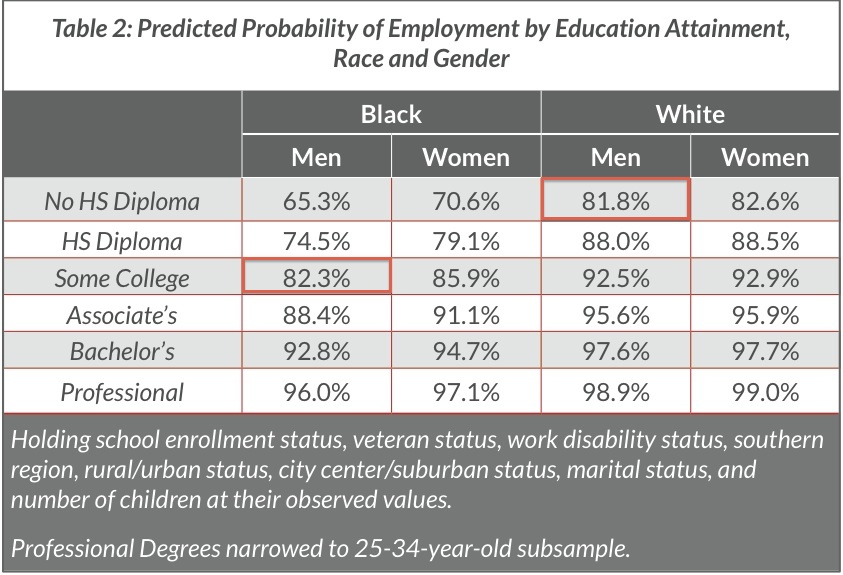
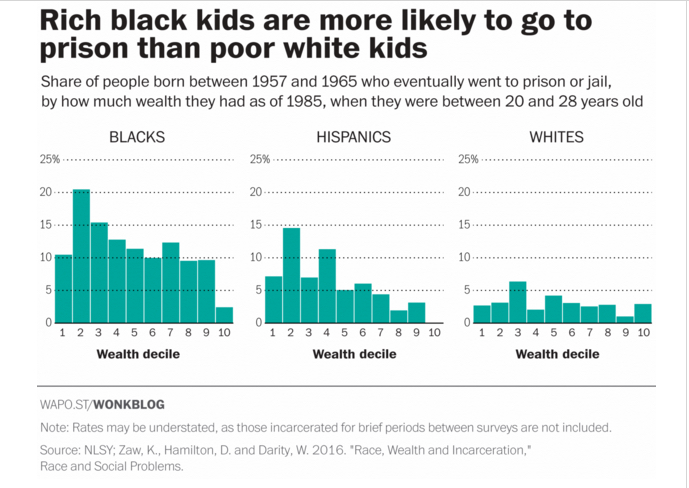
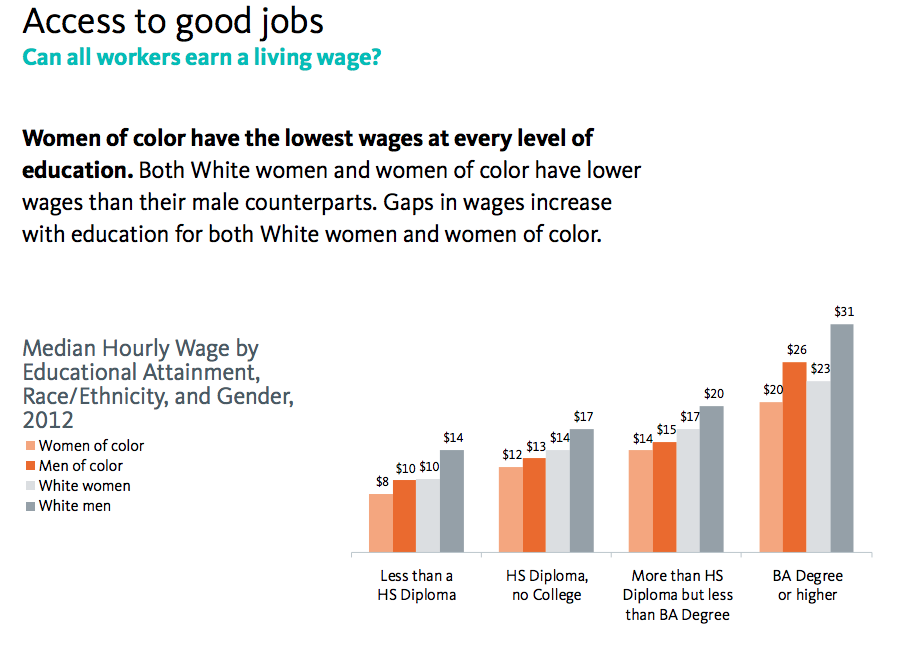
The very ugly consequence of championing “grit” with uncritical missionary zeal is that the students most often targeted—racial minorities and the poor—are soon to learn that their “grit” will get them less than the gift of white privilege for other people who show even less effort and engagement as they have worked to acquire:

fig_2
Table 2 copy

rich black poor white prison


access to good jobs race gender

The “grit” movement is racist, classist, and counter to the very effort we seem to be making to support the value of effort and engagement in a meritocracy (which isn’t even close to existing).

However, in admitting these facts, we must not then slip into an equally corrosive fatalism that allows teachers and students simply to throw up their collective hands and give up.

While rejecting the “grit” movement, all educators and anyone working with children must remain committed to giving the young a fair and honest perspective on the inherent value in effort and engagement while resisting the urge to make promises we cannot keep about the outcomes of effort and engagement in an inequitable society.


[1] See Ethan Ris at The Answer Sheet and his Grit: A Short History of a Useful Concept, in which he details:

This paper seeks to apply longitudinal discourse analysis to the AngloAmerican conversation about grit. Examining the history of grit reveals more than the simple fact that this character trait has had a long life. The “usefulness” noted in this paper’s title refers to the way in which language and rhetoric are employed to “legitimize relations of organized power” (Habermas, 1967, in Wodak and Meyer, 2009, p. 10). In other words, the grit discourse allows privileged socioeconomic groups to preserve their position under the guise of creative pedagogy. This phenomenon does not require malevolence on the part of its enactors. In fact, it can coexist with perfectly benign intentions.

While I think his claim that a historical analysis of the use of the term “grit” discounts arguments the term has racist implications is flawed, his analysis is excellent and important in this discussion.

2016 Furman University Graduation Speeches

I am no fan of ceremony—especially ones that trap you for hours in a false setting of formality—and I am equally no fan of what is often a hollow part of the graduation ceremony experience, the graduation speech.

I am a fan of one of the masters of graduation speech as satire and brilliance, Kurt Vonnegut.

At the 2016 Furman University graduation, however, I witnessed two wonderful addresses—one by a student and one by a university board member. I invite you below to read the transcripts:

Read W. Randy Eaddy’s address

Regardless of the activity, the key questions are these:  Who will you call (or text) to invite?  Who will accept the invitation and come?  Who will not?  And, in each case, Why?

Will you invite, for example, any of the following people who may work at your company, or who may be enrolled with you in same graduate program, or whom you otherwise see frequently and with whom you are cordial, but who are not part of your circle for personal social interactions:  the woman who wears a hijab?  The man who speaks with a thick foreign accent and is sometimes difficult to understand?  The woman whom you saw wearing a “Black Lives Matter” tee shirt?  The guy who has a buzz cut and likes to wear cowboy boots?

Imagine the answers if you are working, affirmatively and purposefully, to achieve a deep, first hand, understanding of the self-defining perspectives of other people.

I realize that interacting with people who appear to be different makes most of us uncomfortable and uneasy.  “What will my friends think?”  “How will they react to these unfamiliar other people?”  “How will they react to me for inviting these other people?”

Read student Nathan Thompson’s address

President Davis also suggested in her inaugural address that, “maybe it’s time to progress from the idea of service and service learning to equal partnerships and mutual stewardship of place.” Put simply, we must become women and men who are not just for others, but with them. Our work and service aren’t acts of resume building and self-congratulation; they are the foundation of relationships between equals.


See Also

My Speech to the Graduates: Don’t Listen to Graduation Speakers