Category Archives: race

Dabo Swinney and the White-Man No-Apology Apology

After a series of critical challenges to the highest paid college football coach in the U.S., Dabo Swinney, concerning weak responses to the uttering of racial slurs by a Clemson coach (and Swinney) and Swinney sporting a “Football Matters” shirt in the wake of George Floyd’s death underneath the knee of a police office, a calloused death sentence executed in 8:46, Swinney wants everyone to believe he is offended equally by the N-word and GD:

You see, Swinney’s racial awareness is as hollow as his Christianity, worn on his sleeve 24/7.

In a statement lasting about 5-plus minutes longer than Floyd’s last breaths, Swinney launches into the white-man no-apology apology.

Swinney isn’t the first, and won’t be the last, to practice the art of no-apology apologies, but he hits all the key elements.

We weren’t there, and we don’t understand.

There were no racial slurs directed at players, but simply uttered near players.

All the white men in charge took care of the situations, and since we weren’t there, we simply don’t know, and can’t understand.

The assistant coach in question is a fine man, Swinney assures us, as all white men are when they have power and are inexplicably held accountable.

We have watched this play out fairly recently, in gross relief from any kind of decency at Penn State, another fine university where Football Matters, but not the humanity of those consumed in the process.

Swinney, like some of his fellow elite-coaches such as Nick Saban and Mike Krzyzewski, has made his millions and built his authority mostly on the backs of unpaid Black labor. And while, yes, a small percentage of these amateur athletes reap huge salaries as pros and a fair share of them receive mostly reduced college degrees, the elite-coach fraternity is where the real power and money are.

This college football monstrosity of abuse and hypocrisy is dwarfed only by the Holy Grail waiting at the end of some players’ rainbow—the NFL.

An important lesson that seems less obvious during the current wave of civil unrest and calls for racial equity—for an end to racism and white privilege—is that if you are surprised at the corruption and hypocrisy in policing in the U.S., wait until you take a similar critical look at coaching—from the pee-wee leagues all the way through professional leagues.

Like Swinney, coaches are the least likely people to accept accountability, and they rarely embody the principals they demand of the players who have no power in their charge.

Take one of the stumbles in Swinney’s no-apology apology concerning whether or not he banned players from participating in racial protests at Clemson several years ago when See the Stripes and other groups called for the renaming of Tillman Hall.

Once again, Swinney explains that we weren’t there, and that he didn’t ban players from attending the rallies. Swinney did warn in his most Christian fatherly role that athletes at Clemson have lofty statuses and that they should be careful about what they associate themselves with and consider how their presence at the rallies could be interpreted.

[Note: Swinney determines who plays and when on the team, and someone with Swinney’s power need not directly ban player behavior in order to effectively ban player behavior.]

Of course, this is the same Swinney who just recently wore a Football Matters shirt directly in the moments of civil unrest focusing on #BlackLivesMatter, a movement not well supported in the state of South Carolina, where Clemson resides.

Swinney’s supporters are often the Blue Lives Matter and All Lives Matter folk.

Clemson University, we must note, is a public university whose founding and funding originated from one of the most notorious racists in the state’s history, Ben Tillman, and has until recently also included the honors college being named for another virulent SC racist, John C. Calhoun.

Not insignificant, Clemson University is funded in a state including a population that is nearly 30% Black, but out of the top 100 universities in the U.S., the university ranks 98th in diversity with under 7% of undergraduates identified as Black.

Swinney wants us to believe that for him Black lives matter, but as he so eloquently warned his players, his high profile actions suggest that Black doesn’t matter as much as white or, especially, green.

Since Swinney’s no-apology apology, “hotbed of reality” Don Lemon was taken to task by Dave Chappelle in his 8:46:

Chappelle is not the first to challenge Lemon’s role as a prominent Black voice in the media, but Lemon’s measured, calm response to criticism serves as a powerful contrast to the white-man no-apology apology from Swinney.

Lemon doesn’t tell us we weren’t there, that we don’t understand. Lemon accepts Chappelle’s criticism but also takes responsibility for his own words without denying them or gaslighting his audience.

Lemon makes a strong point about two high-profile Black men agreeing and disagreeing in a very public forum. And unless I am being naive, I have been watching Lemon evolve during the Trump years in a way that stands in stark contrast to the stubborn sameness we watch in Swinney or the “rigid refusal” that seems to have finally begun to crumble in Roger Goodell and Jim Harbaugh.

Swinney’s white-man no-apology apology sits in a long tradition in the South where honor and tradition allow men with power to cling to the rotting corpses of the region’s past without acknowledging that it is far past time to do the right thing, not the thing we have always done.

Like the perpetual gaslighter in the White House, Swinney cannot walk the talk, cannot embody the ethics or behavior he demands of his players; and he will not because he doesn’t have to.

One of the few completely honest things Swinney has done recently is the shirt, Football Matters.

I wouldn’t expect anything more because Swinney has no reason to be the man he demands his players to be.
A Reader for Confronting Whiteness, Supporting #BLM: “How Do I Open Their Eyes?”

A former student and current college student sent me an email with the subject line “How Do I Open Their Eyes?”

Their story is one that resonates with me since they have found themselves quarantined during Covid-19 “with my parents and neighbors, all of which I would say are very religiously right leaning.” During the more recent re-energized #BlackLivesMatter movement, they have experienced yet another challenge as they confronted those around them to support #BLM, but “was unable to get a word in because I was simply outnumbered by conservative white men.”

This is a journey that fits into this racism scale that details the challenges facing white people who genuinely seek to rise to the level of allyship/abolitionist:

Racism scale copy

The work of dismantling racism includes confronting whiteness and white privilege in order to eradicate both—and this is the work of white people in confrontation with white people.

There is a sizable faction of “conservative white men” who will not listen, will never listen, and will never move beyond their white fragility and white denial.

But racism cannot be overcome in a state of fatalism.

Here then is a reader, some resources for doing the work by white people and for white people who aspire to allyship/abolitionist:

“Science of Reading” Advocacy Stumbles, Falls

First, the stumble.

Yet another education journalist (also identified as a novelist and historian), Natalie Wexler, has weighed in on the “science of reading” (SoR). Wexler isn’t an educator, and she seems to suffer from the Columbus Syndrome far too common among journalists covering education.

I am not linking to the article, but it has already been updated since Wexler has received strong challenges to her tactics in this over-stated and misleading article

Accompanying the standard misrepresentations about teaching reading in the U.S., Wexler attempts to cast an accusatory shadow—invoking racism—over teaching reading by joining the “science of reading” propaganda movement.

However, Zaretta Hammond set the record straight on Twitter. In brief, Hammond challenges Wexler’s jumbled attempts at calling out racism and misguided references to recent racist police violence as well as implicating Hammond’s work in Wexler’s claims.

As Hammond notes, Wexler’s failure exposes the problems with fanning a Reading War that, once again, keeps our gaze on so-called failed students and failing teachers instead of systemic inequity and racism.

Wexler is wrong about reading and racism, but the criticism her article prompted has only nudged her to retract the racism stumbles, whitewashing her mistakes by apologizing on Twitter and revising her article.

Now, the fall.

One of the most damaging aspects of the “science of reading” movement has been how swiftly advocates of SoR and dyslexia have translated their movement into state-level reading legislation.

While I have been helping literacy educators and activists resist these efforts to change state education laws, some of us saw at least a pause in the SoR momentum with the Covid-19 pandemic, an unfortunate consequence that now seems to have had unintended positive outcomes for education (flawed reading legislation not passing for financial stress prompted by the pandemic).

For example, “A bid to improve Louisiana’s dismal reading skills for its youngest students died near the legislative finish line, leaving backers baffled on just what happened,” writes Will Sentell.

The surprise at this defeat comes, as Sentell explains, because “[t]he proposal, House Bill 559, had led something of a charmed life until it wilted at the end.”

However, as with other state-level reading legislation agendas across the U.S., this bill was grounded in misinformation about reading achievement as well as claims about the “science” they claim is missing in reading instruction.

Advocacy for the SoR has a fatal flaw found in both Wexler’s article and the “charmed” but failed bill in Louisiana—a “rigid refusal” to address first and fully the systemic inequity that is at the root of all educational measurements, including reading achievement.

SoR advocacy is grounded in a deficit lens that sees only individuals (students, teachers) and measures them against very reduced and narrow ideas of what counts as “normal.”

This advocacy also falls victim to silver-bullet solutions, reducing teaching to “all students must” and suggesting that this program is better than that program (without recognizing that the problem is reducing reading instruction to any program).

SoR advocacy is a misuse of “science” and a misunderstanding of human nature and the teaching/learning dynamic.

There is a powerful relationship among measurable reading achievement by students, reading instruction provided students in formal schooling, and the corrosive persistence of racism and systemic inequity in U.S. society and schools—systemic racism and inequity.

Since the SoR playbook is wrong on all of that, as Hammond ends her Twitter thread, “Know the difference.”

See Also

NEW: How to End the Reading War and Serve the Literacy Needs of All Students: A Primer for Parents, Policy Makers, and People Who Care (IAP)

Policy Statement on the “Science of Reading”


All White People Must Confront How the System Only Works in Total Whiteness

I was born in 1961, after Brown v. Board but before the Civil Rights Act.

My childhood in the upstate of South Carolina included the assassination of John F. Kennedy, Martin Luther King Jr., Malcolm X, and Robert Kennedy as well as vivid memories of my mother’s family living through the racial unrest in nearby Asheville, North Carolina and my uncle being shipped off to the Vietnam War.

My parents had been raised in the 1940s and 1950s throughout North and South Carolina; they were among the white Americans who disapproved of King, and I recall vividly my parents’ animosity for Muhammad Ali that sat next to their anger at the mainstream media for bringing down Richard Nixon.

I was born in 1961, but I was baptized and washed daily in whiteness.

I believed in whiteness even as I was conditioned never to see it because my accusatory gaze was trained on blackness, and any racial identity not white.

These were the lessons of my home, my community, my school, and nearly every moment of the media I was consuming through news or entertainment.

My history books, TV shows, movies, novels, and comic books were filled with white saviors—and all that was wrong with the world shaded in darkness, blackness.

By the time I entered college during the fall of Jimmy Carter and the rise of Ronald Reagan, I believed entirely in the reverse racism narrative that buoyed Reagan’s ascent.

Despite the challenges of growing up in a working class family in the South at mid-twentieth century, I had been afforded tremendous privileges of race, gender, and more that, once again, were rendered invisible to me, and in that un-self-aware blindness, I was allowed to pity myself at every perceived disadvantage.

College, however, was a paradox; it was my ticket out of white denial even as it helped intensify my white privilege.

In 2020, I am the small percentage of people with a doctorate, and my salary as a tenured professor places me in a life of comfort and leisure that is well beyond what I have earned, what I deserve by the mere content of my character.

My working-class roots certainly contributed to my work ethic, but they also allowed me to believe the rewards I garnered were mostly about effort, even as white privilege supported me at every turn.

For about 40 years, then, I have been on a journey to confront not only my whiteness but also all whiteness.

Here is what I can confess at this moment on that journey.

Even as I did not create racism and white privilege, even as I have come to denounce the forces at the root of both (the enslavement of Black people, capitalism, etc.), I have daily benefitted from racism and white privilege.

Daily.

Moment by moment.

To be white in the U.S. is never to be neutral about race. Whiteness has a lift and momentum that carry me and all white people unless we actively resist it—and even then, at best, we are applying meager brakes, merely slowing that incessant force.

A person of the rural South, I know in my bones what Southern white poverty and ignorance look and sound like. I know they are real, and I have heard and still hear the voices of that angry whiteness who feel cheated by life, who can only exist in white denial because of the inability to confront their whiteness.

Systemic racism and white privilege can work invisibly to those who benefit from it. The mythologies of America have come out of racism and white privilege, working to maintain them and keep them invisible.

Rugged individualism and individual freedom implore us all to think about the individual person, and maintain a lie about individuality that keeps in place blinders hiding how the system only works in total whiteness.

Whiteness is the most powerful vaccination in the U.S., but like even the best vaccination, it isn’t universally effective.

White people fail, and white people struggle—while some Black people succeed, and some Black people seem to rise effortlessly above the barriers of racism and white privilege.

Confronting racism and white privilege, however, means coming to recognize that when white people fail and struggle, it isn’t because of their whiteness, but in spite of their whiteness.

Black people are daily, moment by moment, living under the weight their blackness because of racism and white privilege.

Despite the ever-trivialized manipulation of King’s “content of their character” message, in the U.S. whiteness trumps character and blackness renders character irrelevant.

In my journey confronting whiteness, then, I cannot be complacent simply in that confronting. White people created racism and white privilege; white people maintain racism and white privilege, both actively and in naive neutrality.

Only white people can dismantle racism and white privilege.

The very things that have allowed my success must be eradicated, and I must lend my hand to the dismantling.

Two acknowledgements sustain me in that quest.

Howard Zinn explored his life through a metaphor for understanding whiteness, warning that you cannot be neutral on a moving train.

And James Baldwin offered possibly the best discrediting of white denial in 1979:

Every white person in this country—and I do not care what he or she says—knows one thing. They may not know, as they put it, “what I want,” but they know they would not like to be black here [emphasis in original]. If they know that, then they know everything they need to know, and whatever else they say is a lie.

The system only works in total whiteness.

The system must change.


U.S. Policing a Systemic, not a “Bad Apple” Problem

Here are the two foundational and enduring problems with policing in the U.S.:

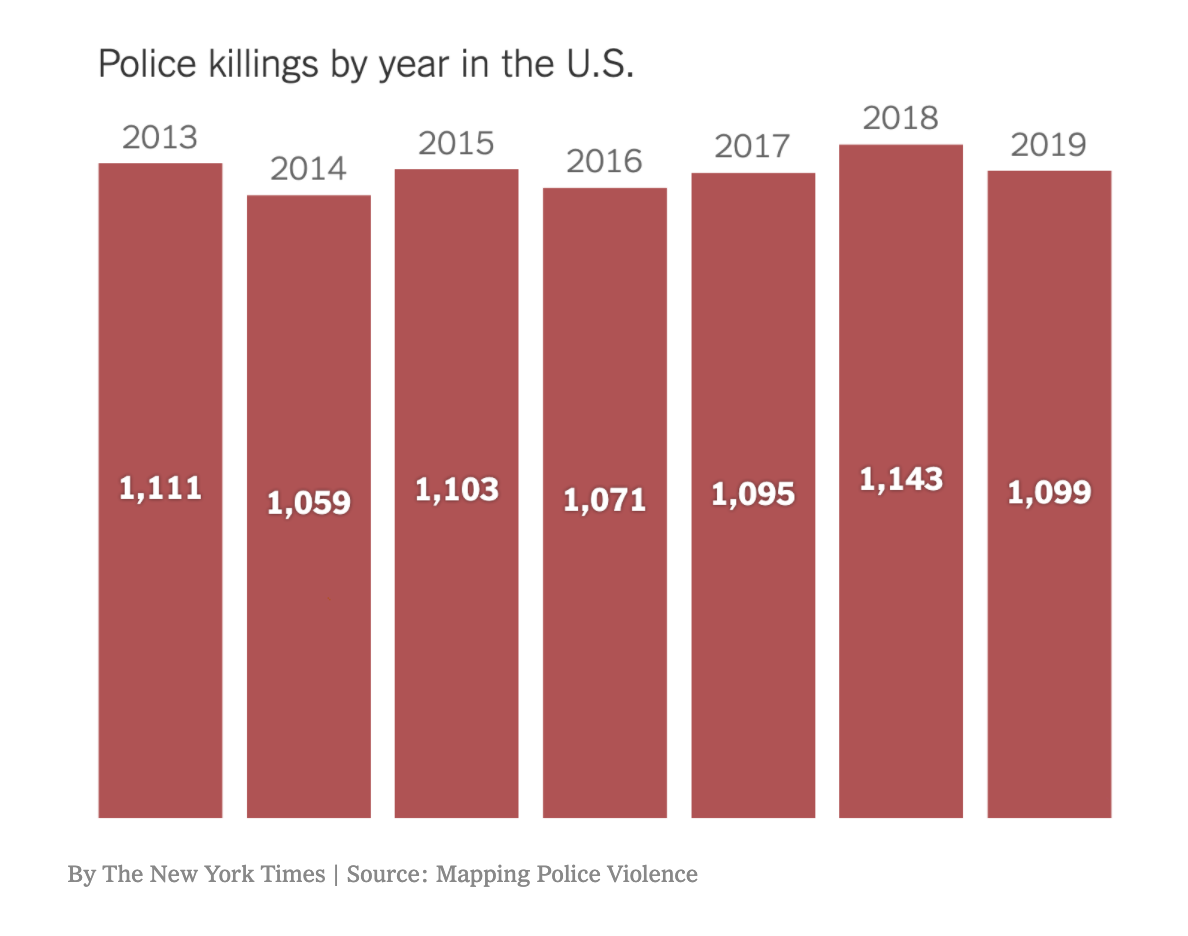
(1) U.S. police forces are hypermilitarized and have been killing 1000+ people a year since 2013 (other countries do not have these numbers or rates for police killing citizens; see Germany).

police kill 1000 per year
The New York Times

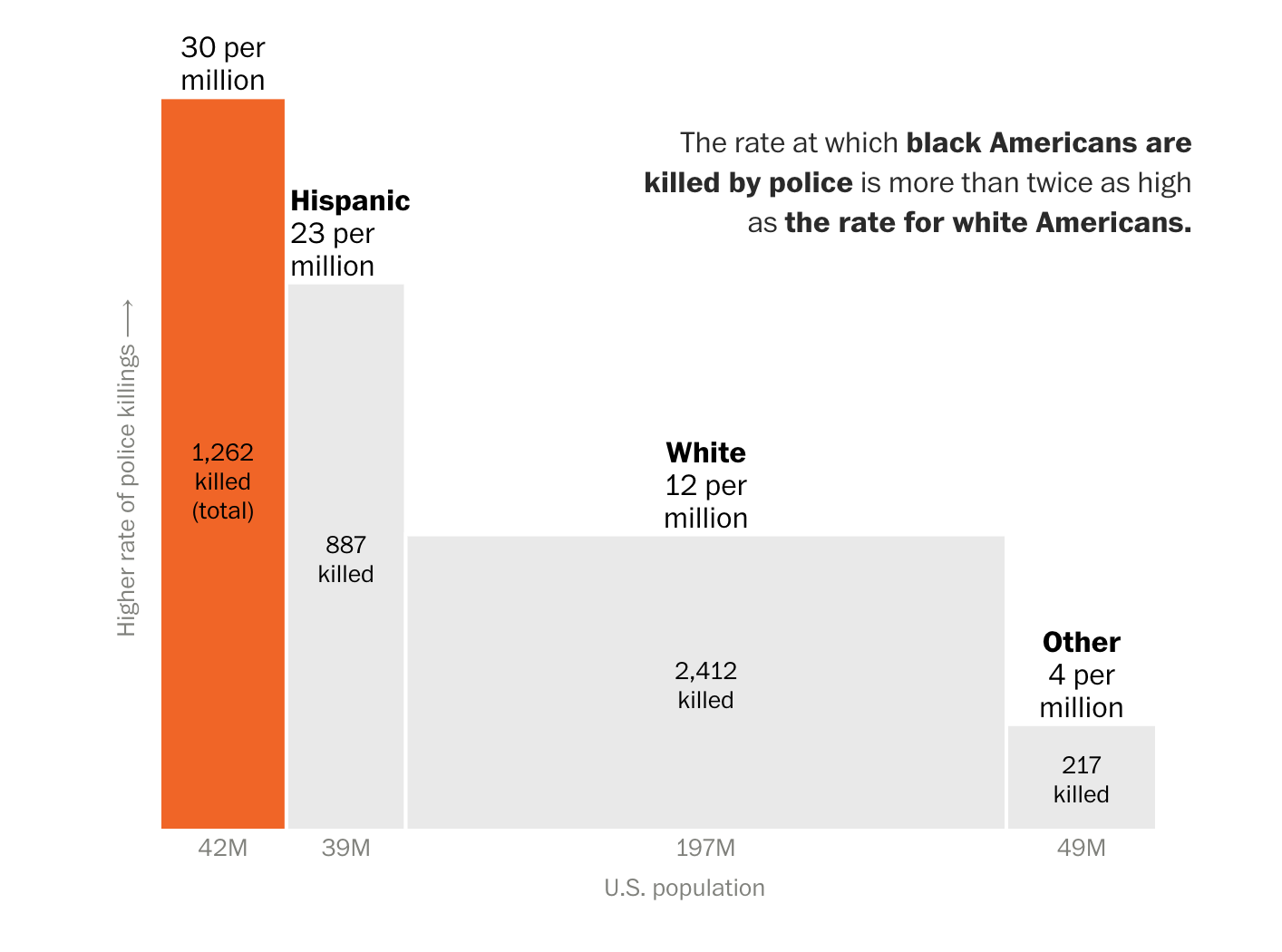
(2) Black people are killed at disproportionate rates compared to whites (Black people at a rate of 30/million v. white people at 12/million) even though in the U.S. there are 5-6 white people for every Black person.

police kill Blacks at higher rate
The Washington Post

These are not “bad apple” problems, but systemic problems.

Imagine a Unites States …

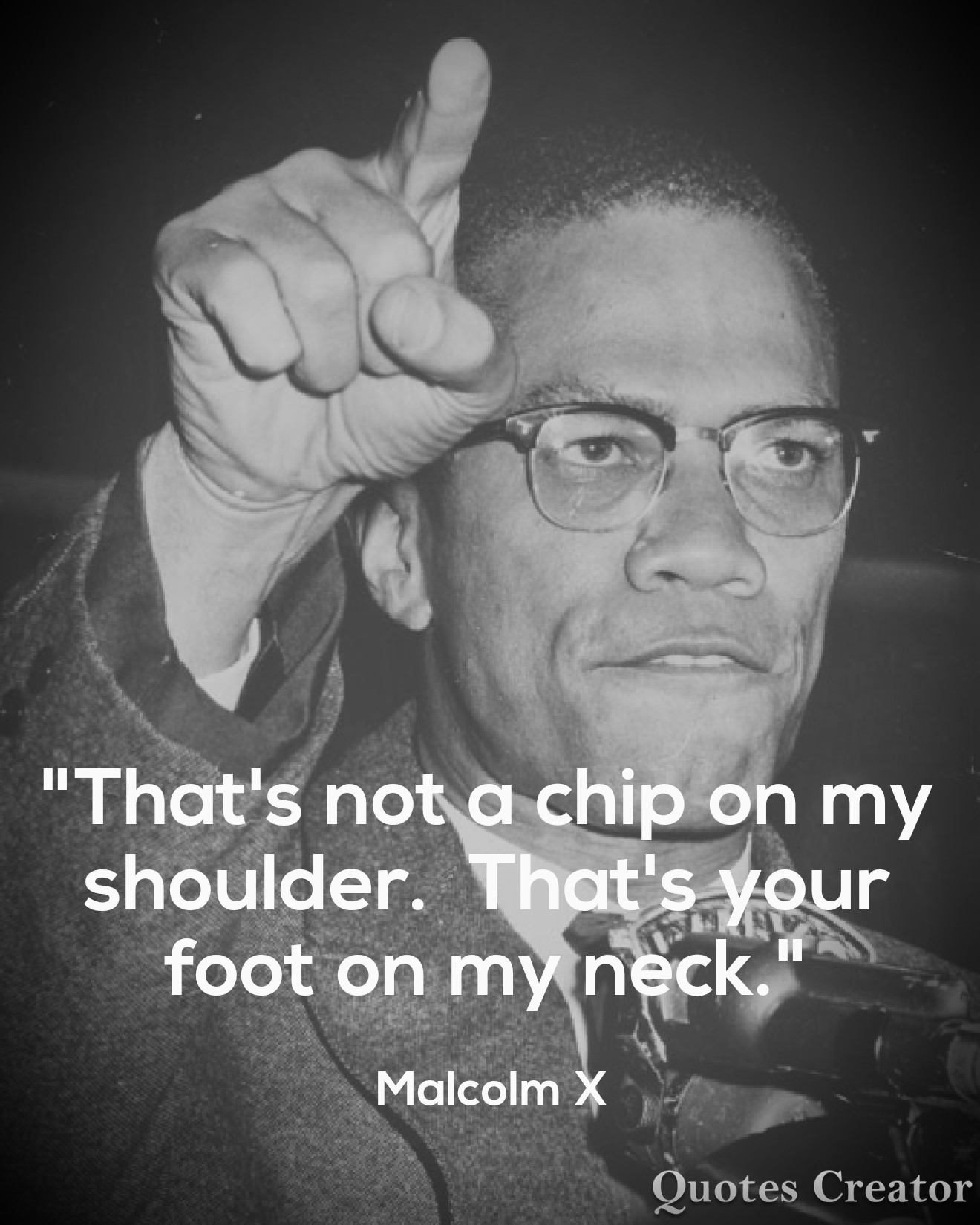
Malcolm X knee

People often either over-idealize or reject as a “bad” song the lyrics to John Lennon’s “Imagine,” but the concept serves a useful purpose.

Imagine a United States where the public and political leadership took seriously Colin Kaepernick’s peaceful protests against the racially inequitable policing and justice system in the US.

Imagine white America taking action because they listened, believed, and truly wanted an equitable and just country.

Imagine the many Black lives that would be with us today, alive and mostly anonymous in those lives.

Imagine no marches, no protests or signs emblazoned with “George Floyd” or “Black Lives Matter.”

But, instead, white America attacked Kaepernick, retreated into their comfortable white denial.

But, instead, white America today points accusatory fingers at “riots” and laments the loss of property, proving that for many whites, Black lives in fact do not matter.

White America created this, and only white America can end it.

Baldwin law

Now.

Imagine a country where the police protect and serve.

To make that real, white America must admit that the police protect and serve white interests at the expense of those lives that do not matter.

If you suffer white denial, if you are fretting over the protests and not the blue knee that took George Floyd’s Black life, I am providing a reader below.

But this is not a place for your white denial or white arguments.

“There is never time in the future in which we will work out our salvation. The challenge is in the moment, the time is always now,” James Baldwin, Nobody Knows My Name (“Faulkner and Desegregation”)

Reader

James Baldwin: “the time is always now”

False Equivalence in Black and White

James Baldwin: “It’s a trauma because it’s such a traumatized society”

Understanding Racism as Systemic and about Power

All Lives Matter as a response to #BlackLivesMatter is offensive because…

James Baldwin’s “They Can’t Turn Back” (1960): “On such small signs and symbols does the southern cabala depend”

The “White Gaze” and the Arrogance of Good Intentions

This Is U.S.: “To be a Negro in this country…”

“The Other America,” Martin Luther King Jr. 14 March 1968

“Every white person in this country…knows one thing,” James Baldwin (1979)

Sounds about White

All Lives Matter

“Karen” is the same as the “N” word

We value diversity but will hire the most qualified candidate

I don’t see color, race

I grew up poor and built this from hard work

Heritage, not hate

Traditional family values

Just follow the law/rules, and you don’t have anything to worry about

Blue Lives Matter

Make America Great Again

To quote Martin Luther King Jr. …

There are a lot of different kinds of diversity

There is only one race, the human race

Build the wall

Breaking Bad

Black-on-black crime

Second Amendment

Open carry

Face masks

Dick Cavett


Better Call Saul: On the High Art of Centering Whiteness

Among the pantheon of white-man art, including the Coen brothers and David Lynch for me, the creators of Better Call Saul offer a finely crafted and deeply flawed series that is really hard not to look at and enjoy.

This prequel to Breaking Bad shares many of the strengths (beautifully and finely filmed, nuanced and morally ambiguous characters) and most of the flaws (centering whiteness, ignoring or running roughshod over brown and black characters) with its source. As I am nearing the end of the series on Netflix (with the newest season on AMC), I often find Saul better than the original, in part because I think it unpacks extremely well being a lawyer against the moral ambiguity of many compelling characters (even as I have no real expertise in whether or not the series captures the law in any sort of valid way).

Saul fits into my fascination with moral ambiguity, notably Andy Sipowicz in NYPD Blue as one example. But I have to admit that I am primarily drawn to how well made the series is; as TV, it is just damned compelling to look at. (I often find myself seeing comic book panels, still camera shots that do as much as the acting or dialogue.)

As I noted above, I have this affection for Lynch and the Coen brothers, although I would put the creators of Saul closer to the latter.

Well into my 20s and my young teaching and writing career, I was an uncritical (and self-contradictory) devotee of a sort of John Gardner “craft idealism” that had too much grounding in modernism and white-man art arguments that posed craft over (for example) diversity of characters and voices in the name of “universal”—a humanities/fine art veneer like “objectivity” to protect the status of white men.

In those formative years, I wasn’t paying very close attention to the tension among my love and admiration for Ernest Hemingway, Alice Walker, John Gardner, Ralph Ellison, e.e. cummings, Langston Hughes, and Adrienne Rich (just to offer a brief array).

I recognized some of that tension directly, then, in Season 3, Episode 10, Lantern, of Saul, when Kim Wexler, hyper-ambitious romantic partner of Jimmy/Saul, is left injured after a car accident.

Wexler, distracted by her newest client’s case while driving on a dangerous highway, crosses three lanes of traffic and crashes into rocks on an embankment. After returning home battered and with a broken right arm, the law office assistant, Francesca, brings Wexler her law files and has rearranged her schedule so that Wexler can salvage a deadline with the new client and maintain her commitment to her main client.

We watch as Wexler immediately drops into her Type A self-sacrificing persona. But Wexler pauses, freezes in fact, before telling Francesca to cancel the new client rescheduling and push forward her commitments with her main client.

The next time we see them together, Francesca is on her cell talking to the new client, and recommending a different law firm, while Wexler grabs a couple handfuls of DVDs.

Later when Jimmy/Saul returns to the newly relaxed Wexler on her couch, Kim asks Jimmy what he wants to watch next, handing him Monty Python before musing about watching To Kill a Mockingbird, “again.”

Jimmy and Kim then have what I imagine to be a conversation with a much different meaning than intended.

In the popular consciousness, the film Mockingbird is an iconic moment for the actor Gregory Peck but also a window (like the novel it is based on) into the white savior narrative that few in the U.S. are willing or able to confront.

There is much to unpack in Wexler saying she was motivated as a child to be Atticus Finch, but to the show’s credit, Kim does make fun of her idealism when she responds to Jimmy’s dig about becoming a lawyer to change the world; she acknowledges she is working herself almost literally to death to make a successful local bank into a successful regional bank.

Again, where I think Saul excels is in the many types of lawyers the show explores, knocking the sort of idealistic and hokey shine off the Finch iconic lawyer myth.

Yet, Saul for all the craft and care isn’t much different than Mockingbird for its inability to avoid possibly the most common flaw in pop culture in the U.S., centering whiteness.

While Walter White in Break Bad can be seen as something of a twisted Finch white savior, Jimmy/Saul is certainly not that, but remains the center of a morally ambiguous and morally corrupt world where lawyers, police, and the Mexican cartel all intersect in ways that do not leave anyone in the best of light—even Jimmy/Saul’s Finch-like brother, Chuck.

By comparison, Saul is far more aware of and attentive to black and brown characters; on balance, characterization, along with camera work, is an admirable craft in both series, I think.

The Salamanca/Fring dichotomy is fascinating and tense even as those who watched Break Bad know where these men’s lives are leading.

Saul is rich with allusion and references as yet another hallmark of craft-focused art; yet, even as we may enjoy and value this craft, I think we must remain vigilant to set that aside and recognize that while care is taken in many of the elements of making a series, there is enough carelessness to take the series to task.

Mike and Nacho are fascinating ancillary characters (although many of these types of characters often feel as important as Jimmy/Saul)—the former yet another centered white man and the latter, a powerful example of the type of diversity that deserves more than it receives.

With Saul, I am torn, but I think it unintentionally makes a case against itself (the use of Mockingbird, for example) that suggests centering whiteness is a feature and a flaw of this sort of film-making craft, but to acknowledge that doesn’t mean this flaw has to be fatal.

The Politics of Capitalism in Trumplandia

In the idealism of youth, I came to believe deeply in the power of education to transform not only individuals (as it had done for me) but also society. More than a decade before I discovered my intellectual home, critical pedagogy, I was compelled by John Dewey’s philosophy of education, democracy, and their relationship.

This idealism was tinted with a naive lack of awareness about my own privilege and the corrosive power of systemic inequities driving racism, sexism, classism, and many other social biases. I was raised in a home, community, and region of the country steeped in rugged individualism and bootstrap narratives among working-class (and racist) whites.

Over the course of my first decade-plus of teaching, I certainly could see that I was shaping individual lives, but I grew increasingly skeptical of the revolutionary power of education to transform society.

By the spring of 2005, then, after I had secured my doctorate and moved from K-12 to higher education, I sat in a hotel room in New Orleans watching George Carlin talk about being a non-voter. I recognized that day my skepticism had turned into full-blown cynicism, and I then joined the ranks of non-voters who argued there was little discernible difference between the two major political parties in the U.S.—and that the U.S. had no real organized Left with political power.

I had spent nearly all of my adult life as an impotent voter since I lived in South Carolina, a monolithically Republican state where many Republican candidates run unopposed. Very few people I voted for were ever elected, and almost all of those “for” were in fact more votes “against” Republicans and conservatives.

Soon after I became a non-voter, the U.S. elected Barack Obama. I conceded that Obama’s election had very important symbolic power since he stood as the country’s first Black president, but I spent a great deal of scholarship and public writing criticizing the failures of the Obama administration that were indistinguishable from the George W. Bush era.

The election of Trump, however, and the sudden and awful deaths of both my parents brought into full relief that voting has the most dire consequence, even when the two political parties are nearly identical.

In hindsight, I began to recognize that while Obama’s policies were often inadequate (the Affordable Care Act) and even regressive or harmful (most the of the education agenda), the Obama years did create the atmosphere in which the country became demonstrably more progressive—expanding marriage to gay Americans and allowing the decriminalization/legalizing of marijuana, for example.

But the most profound evidence I witnessed for recognizing the consequences of the democratic process was my parents, lifelong Republicans who voted repeatedly against their own self-interests as working-class and aging (chronically ill) people.

I am not sure if they were avid supporters of Trump, but I am certain they would easily be counted among those more than tolerating Trump, mostly to stick it to the liberals.

I also know that their political commitments brought them early and truly awful deaths in an uncaring system they refused to challenge.

While I am not and have never been a Democrat, I have been more partisan politically active during this primary season, advocating for voting for women as well as calling for anyone with moral grounding to abandon Trump and his Republican base. In the wake of the South Carolina Primary and Super Tuesday, however, I find myself creeping back to the cynicism I recognized in 2005.

I have watched as large groups of people have continued, like my parents, to vote against their self-interests and even against their stated policy commitments. For example, the exit polls from Super Tuesday show the following:


Yet, Joe Biden, distinctly not supporting Medicare for All or anything like universal health care, garnered similar support percentages to the contradictory level of support for abandoning private insurance (which Biden endorses).

Much of these contradictions lie in the South, which I have long described as self-defeating. And even as Biden’s record on race and racism are deeply scarred by his rhetoric and his support for harmful, racist policies (such as mass incarceration and the war on drugs), voters who are Black have significantly supported Biden and reveled on social media that Sanders got burned on Super Tuesday.

My critical pedagogy calls for me to resist fatalism, but the hope expressed in Paulo Freire and others is often very hard to hold onto. As an academic, then, I am left with trying to understand and not simply, once again, to abandon our democratic process.

What are our choices? Here is my analysis as best as I can offer now:

  • Elizabeth Warren is a Capitalism Idealist (Active). Her position is that we must repair the damage we have done to capitalism. This idealistic view of capitalism holds that when it works properly, capitalism works for all people in a free society, and her belief in capitalism requires an academic (and legal) approach to repair and maintain the best capitalism has to offer (a rising tide lifts all boats).
  • Joe Biden is a Capitalism Idealist (laissez-faire). His stance is that capitalism will correct itself if leaders are decent people (“decent” as code for idealized paternalism). He and his supporters are arguing not really for policy, but for replacing Trump (not a decent leader) with Biden (because he is, they claim, decent). This position concedes that capitalism needs some sort of moral rudder, but Biden’s “nothing will change” claim reflects his laissez-faire approach to leadership in a capitalist society.
  • Mike Bloomberg is a Capitalism Individualist (authoritarian like Trump). Billionaires by virtue of their enormous wealth are uniquely qualified to manage capitalism (like a rodeo cowboy who can ride a bull the longest). This perspective also concedes a “bull in the china shop” possibility for capitalism when it isn’t well managed by those with expertise in strong-handed management.
  • Bernie Sanders is a Social Democrat (but not a socialist). His skepticism of capitalism holds that it is inherently amoral/flawed. Citizens in a democracy must protect themselves against capitalism, and protect capitalism from itself, with robust public institutions. This is a public before private stance.
  • Barack Obama is a Capitalism Pragmatist. In many ways, his approach to capitalism and leadership is a blend of Warren and Biden’s idealism, but Obama is uniquely likable. Capitalism and government can, it seems, be judiciously guided by charism and personality—as long as the biggest boats enjoying the rising tide are not rocked too much (see Biden).

Smarter people than me in terms of political science have noted that a great deal of voting is driven by fear, both fear cultivated by politicians (see Trump) and existential fear experienced by voters who are more comfortable with the known bad than the unknown that may be better (this includes the worst aspects of racist voters embracing the known of their racial hierarchies).

Sanders and his policies are not as likable as Obama nor as known as Biden’s. Warren has proven in the wake of Hillary Clinton that women have a tremendous hurdle to jump in presidential politics; Kamala Harris and Cory Booker highlighted that race and gender are enormous hurdles as well.

Among these candidates we can see the corrosive impact of fear grounded both in ideology (the unknown and misunderstood specter of “socialism”) and bigotry (sexism and racism).

But there is more as well, I think, in terms of the cult of personality in politics. Too often we become trapped in supporting and voting for candidates while not focusing on policy.

I am weary of participating in the partisan politics of personalities, but I am trying to resolve myself to remain committed to the politics of policy, advocating and using my privilege in the service of the following policies:

  • Universal single-payer health care
  • Student loan forgiveness and universal publicly funded K-16 education
  • Protecting and expanding women’s reproductive rights
  • Marijuana legalization/decriminalization (reparations to those incarcerated and released)
  • Ending mass incarceration
  • Reversing Trumpism 
  • Expanding workers’ rights

I am certain that re-electing Trump works against these commitments, but I am hard pressed to imagine how electing Biden serves them much better.

Clarifications: Greenville desegregation: Academic achievement gap slowly closing, but inequities persist

Ariel Gilreath offers a strong overview in her Greenville desegregation: Academic achievement gap slowly closing, but inequities persist. A key point in this look at desegregation confronts the disturbing consequences of South Carolina’s libertarian streak:

The public school district in Greenville County became the last major district in South Carolina to integrate in 1970. South Carolina was the second-to-last state in the nation. On Feb. 17, Greenville schools will mark 50 years since the district was integrated.

In those 50 years, though policies and tests have changed, the academic achievement gap has persisted, and so has inequity.

Desegregation of schools in SC spurred the growth of private schools (white racists fleeing public schools) and provided the foundation for what would become known as the Corridor of Shame, a label that captures the historical political negligence in the state that has failed black, brown, and poor students in weak economic communities across the state.

Academic achievement, usually test scores, is strongly correlated with socioeconomic statuses of students homes and communities as well as with race (as the article notes, so-called racial minorities tend to be over-represented in poverty, and poverty is a key marker of low test scores).

Three aspects of the article deserve a bit of clarification and resources for better understanding them.

First, a growing number of scholars and advocates for public schools are rejecting the term “achievement gap” (a foundational concepts in No Child Left Behind), as Gilreath reports:

Paul Thomas bristles when he hears “academic achievement gap.” The education professor at Furman University doesn’t like the connotation, and he’s not alone.

“It’s an equity gap,” Thomas said. “Children are not given the same opportunities. They’re not given the same resources, either in their lives or in their schools. So the outcomes are inequitable because the input is inequitable — not because the children are different.”

By focusing on equity and opportunity, the gaze of blame moves away from the student (the agent of achievement) and toward the systemic forces that create the inequity of academic outcomes for students.

[See: School Rankings as Racist, Classist Propaganda; The Lingering, and Powerful, Legacy of “Scientific Racism” in America; Kristof, How Much Inequity Is the Right Balance?; Achievement Gap Misnomer for Equity Gap, pt. 1; Achievement Gap Misnomer for Equity Gap, pt. 2]

And thus, we must not be mislead by Teach for America’s effort to rebrand the floundering organization:

Teach for America, a nonprofit organization that funds additional educators for low-income schools, refers to the achievement gap as an “opportunity gap” to describe the different test outcomes between subgroups of students.

One of the greatest mechanisms of inequity by race and socioeconomic status in the U.S. is teacher assignment: Poor, black, and brown students; English language learners; and students with special needs are disproportionately assigned year after year to under-/un-certified and inexperienced teachers—the exact teaching pool TFA is offering to those populations of students.

[See: Listen to Gary Rubinstein: “TFA…thrives on greed, deception, and fear”; REVIEW: Teach For America and the Struggle for Urban School Reform, Crawford-Garrett; Teacher Quality: On Hyperbole and Anecdotes]

Second, along with rejecting the term “achievement gap” for “equity” or “opportunity gap,” we must avoid both deficit ideology and deficit language when referring to students who are the targets of that inequity:

Students in poverty are ‘at a deficit from the beginning’

Schools alone cannot fix poverty or issues at a student’s home, said Jason McCreary, director of accountability and quality assurance with Greenville County Schools….

But schools do serve as a central hub and identifier of the issues that typically trail a student living in poverty. If a student comes into a classroom hungry or dealing with trauma, it’s often reflected in behavior and performance, and schools are expected to identify those issues and address them.

While the points here about the power of systemic inequity in the lives of students outside of school and the inability of school alone to overcome those forces is important and well supported by research, it places the focus on the students to describe those conditions as “deficits.”

Differences should not be framed in evaluative ways, and certainly we should avoid putting the deficit gaze on the students themselves.

[See: Quitting Grit, Ditching Deficit Ideology, and Embracing an Equity and Justice Approach to Poverty and Education: A Conversation; From Deficiency to Strength: Shifting the Mindset about Education Inequality; Poverty and the ideological imperative: a call to unhook from deficit and grit ideology and to strive for structural ideology in teacher education]

Finally, but more about language and ideology, we must be careful about “culture”:

“There’s cultural gaps, opportunity gaps, community gaps, economic gaps, access gaps — it all leads to achievement gaps. So that’s why this is one of the most complex issues that I know,” McCreary said. “So it takes complex solutions to really make a dent, make a change.”

Most sociologists would caution against overly simplistic uses of the term “culture,” but to suggest there are “cultural gaps” is again to blame not only the students but their communities and families for the systemic inequities that are reflected in their academic outcomes.

To suggest there is a cultural gap is to privilege whiteness as an unspoken and unacknowledged “norm” against which all other races are measured; this at its roots is racism and the driving force behind white nationalism.

As I note in the article, desegregating schools is the ethical process for a democracy, but the proximity of all students of many different races is not enough.

Our language must change, as noted above, but until our policies and behaviors change, the rhetorical shifts will be hollow gestures.