Category Archives: sexism

Black Widow Underestimated: “I Am What I Am”

In the Marvel Universe(s), including the MCU, Black Widow has endured just about every compelling and nonsensical plot line and character development that represent the larger sub-genre of superhero comic books. As I have been documenting, however, Marvel and even their best creative teams find ways to underestimate (and, of course, hypersexualize) Natasha/Black Widow.

With Marvel committing more issues and superstar teams in v.5 and v.6, readers may have held out hope that the fate of Black Widow (both inside the comic book universe and more broadly as a character Marvel would develop more substantially) had turned a corner. However, v.7 ultimately is a regression with only 5 issues, and then, the Web of Black Widow offers another brief 5-issue run after that.

Black Widow v.7, issue 1 (cover art by Clayton Crain) and Web of Black Widow issue 3 (cover art by Jung-Geun Yoon) remind us that too often Black Widow is hypersexualized with her outfits and the relentless urge to show her bound.

Since we have the benefit of hindsight—this post sitting as it does after one of the best (if not the best) run on Black Widow, v.8 (thanks to Kelly Thompson, Elena Casagrande, and others)—many of us are now dealing with both the afterglow of a stellar 15-issue run and the recurring disappointment of Black Widow once again trapped in publishing limbo.

Here, I want to consider v.7 and Web as a stumbling journey to that excellent Thompson series, holding onto the hope that at some point Marvel will overcome underestimating and hypersexualizing Natasha/Black Widow.

Black Widow, Lost and Found

The creative team of Jen Soska and Sylvia Soska, writers, and Flaviano Armentaro, artist, are tasked with v.7 in the wake of Natasha Black Widow’s death in Secret Empire issue 7.

Cover art by Max Brooks.

The opening of v.7 issue 1 establishes, again, the double-identity and secret identity motifs very common in superhero comics, but especially in Black Widow narratives. Here, the dual Captain Americas (one of which has killed Black Widow in Secret Empire before she is resurrected through cloning and memory implants) face off again as Natasha helps—while trying to maintain the veil of people believing she is dead.

While Black Widow and the real Captain America fight the evil Captain America, this volume returns to considerations of dual and secret identities as well as the tensions at the core of being a superhero—fighting for good while trying to honor human life.
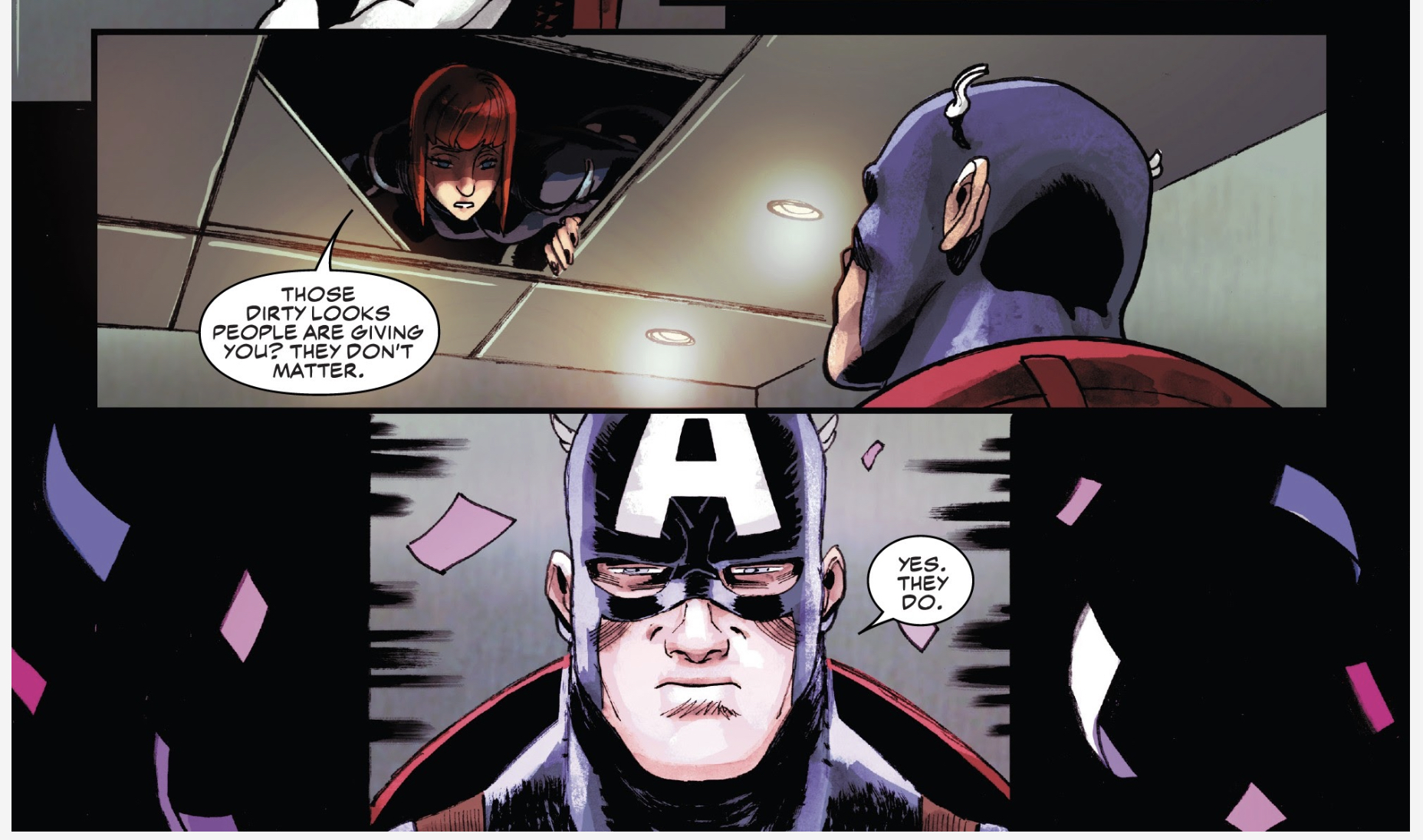
Natasha is a perfect pairing for Captain America’s identity crisis since she has long suffered doubt and suspicious about her loyalties despite her heroism.

The dynamic between Black Widow and Captain America works well here, but once again, sexual banter returns in a way that feel reductive and unneeded:
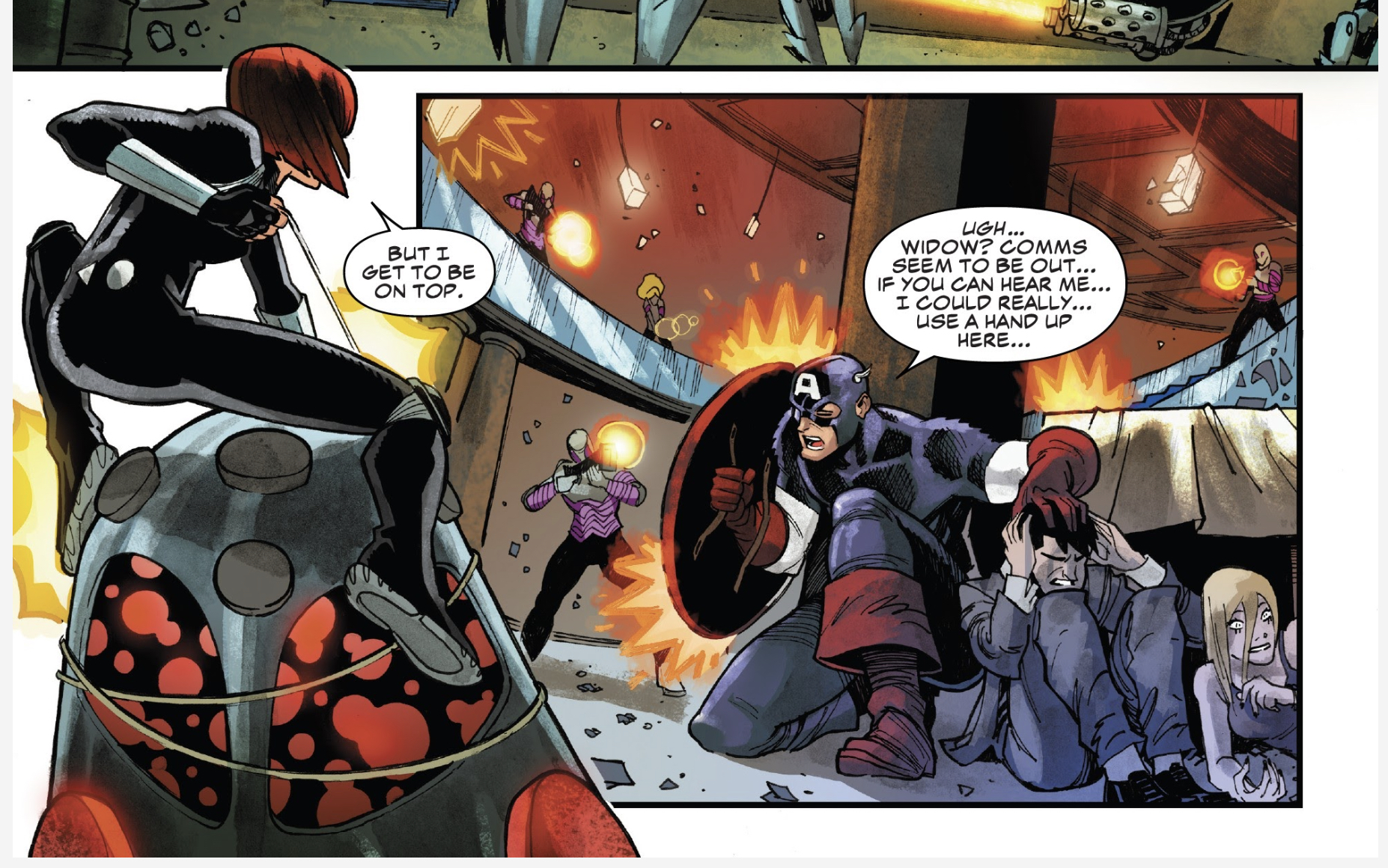
Hypersexualized Black Widow would not seem as abrupt in v.7 if not for the more nuanced and fuller explorations of the character in v.5 and v.6.

The core tension of this issue is one of the most enduring elements of the superhero subgenre, one that includes the problematic aspects of vigilanteism, embodied by Black Widow and Captain America arguing over taking a life:
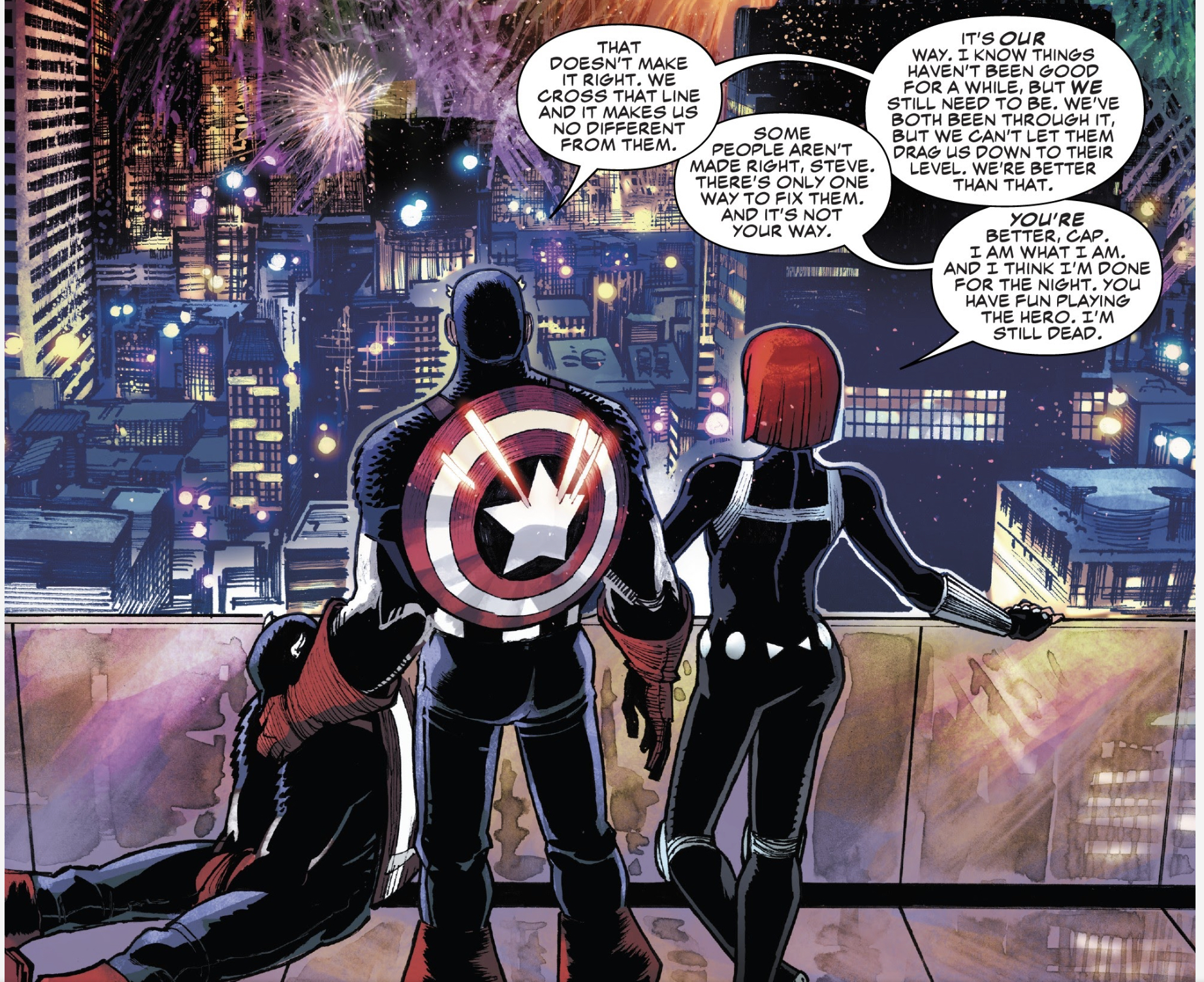
Black Widow, cold and practical, resists Captain America’s idealism with “I am what I am.”

And Natasha remains vividly aware of who she is: “The violence. The rage”:
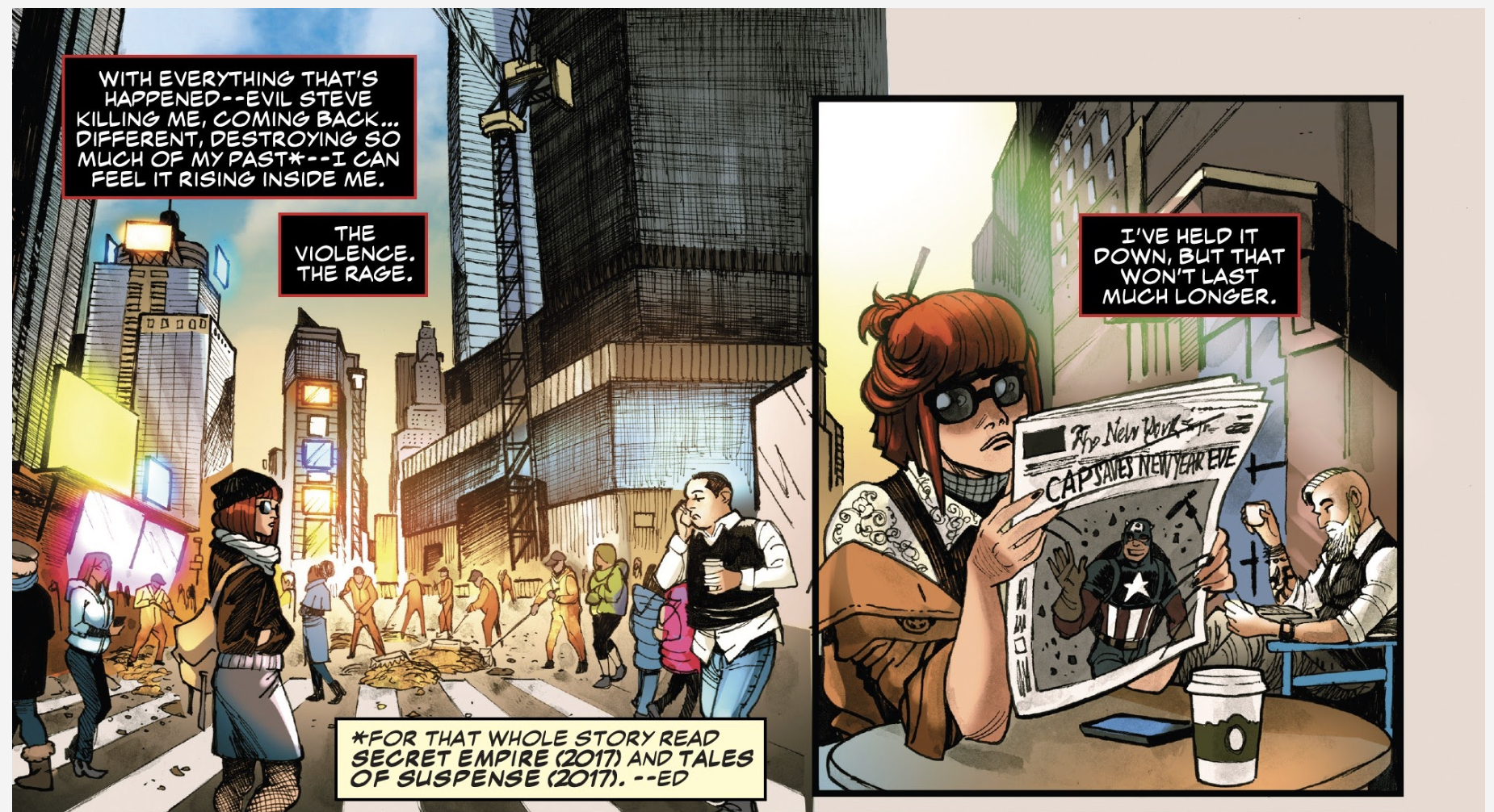
Ominous beginnings for v.7 highlight what likely are the strongest elements of the Black Widow narrative, a woman fighting herself because of the injustices she has suffered even as she seeks to fights for other people’s justice.

For v.7, the Soska sisters explain the are committed to “Black Widow … unleashed,” and placing Natasha motivated by avenging child sex trafficking provides fertile soil for just that—as Black Widow herself revels in the opportunity:
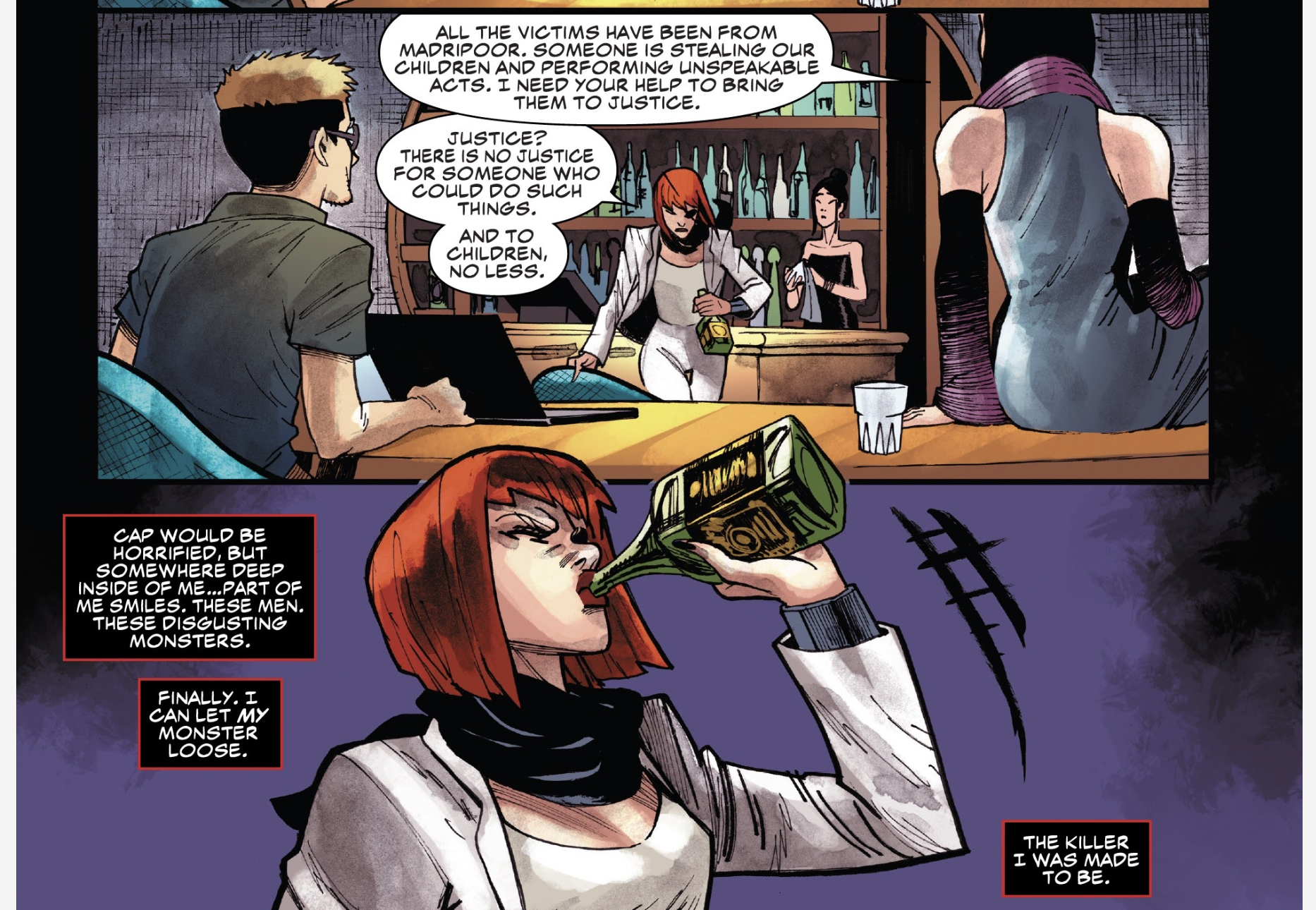
Natasha’s passionate resolve stand in contrast to Captain America’s naive view of the ugliest aspects of humanity.

And Black Widow unleashed shifts the reader’s gaze away from Natasha’s body (when creators underestimate the character) and highlights the violence she has embraced, and justifies. We must confront the allure along with the problems of ends-justify-the-means justice:

Placed side-by-side with Wilson Fisk’s infamous car door scene in Netflix’s Daredevil, v.7, issue 2 allows Black Widow to take no prisoners.

The focus of v.7 maintains the “unleashed” commitment of the writers, and much of the action involves several women characters—Black Widow, Tyger Tiger, Madame Masque—against the backdrop of the most horrific child sex trafficking (including a child recovered who had her hands cut off).

Throughout this series, I struggle with Flaviano’s artwork, however. Too often the style leans to the cartoon side, unlike the dynamic and even hyperrealism of previous artists such as Phil Noto and Chris Samnee. These concerns are more about my tastes than quality, I think, because Flaviano’s work suits well the “unleashed” tone throughout.

As one example, the creators of v.7 turn the tables on one of the most reductive ways Black Widow is portrayed—bound (and often nude or semi-nude):
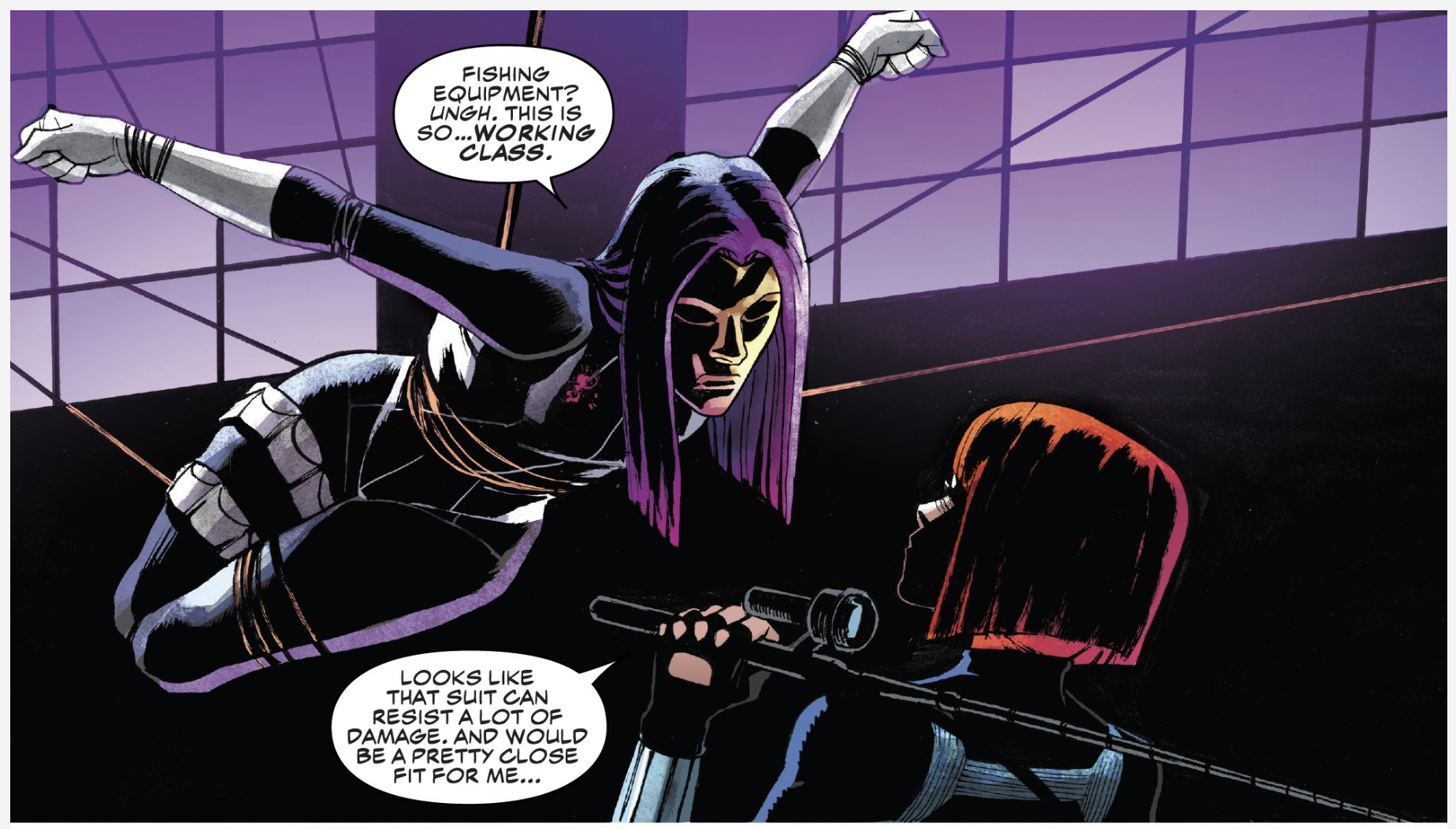
A great deal is at work here in v.7, issue 3—a twist on the bound motif, the working-class slur, and extended scenes between two women in what is too often a misogynistic media.

However, after Natasha takes on Madame Masque’s identity to infiltrate the child trafficking ring, issue 3 slips right back into old habits—Natasha exposed, and bound:
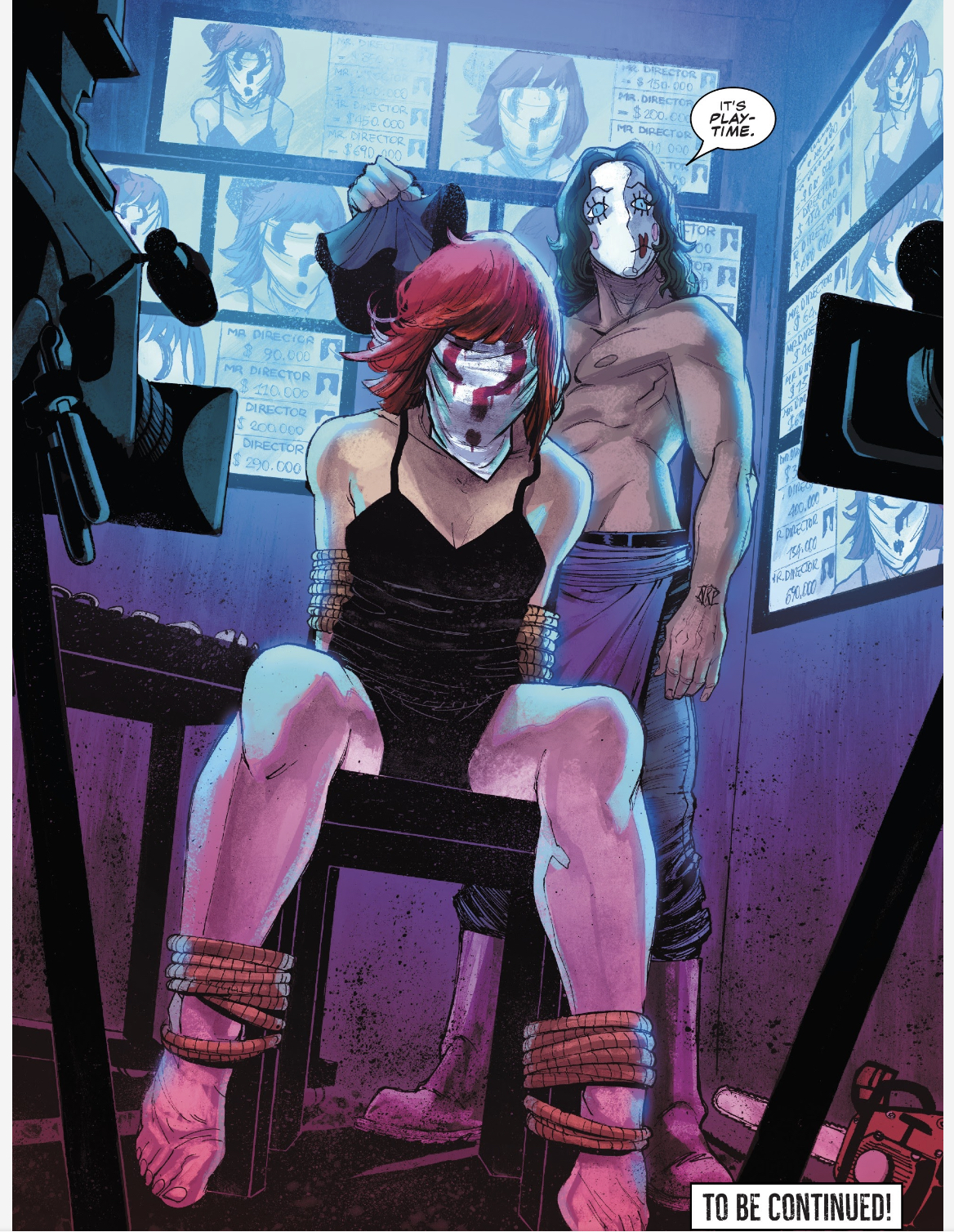
It is hard not to be disappointed when creative teams cannot resist Natasha returning to the role of victim and almost always finding herself bound, helpless, and exposed.

By issue 4, “unleashed” becomes hyperviolent and cathartic for Black Widow, and likely readers. Despite my concerns raised above, Flaviano’s paneling and design lend a powerfully dynamic look that reinforces the narrative.

And at the center of it all, the weight of Natasha’s past remains at the heart of Black Widow, super-agent, and Natasha, deeply traumatized woman:
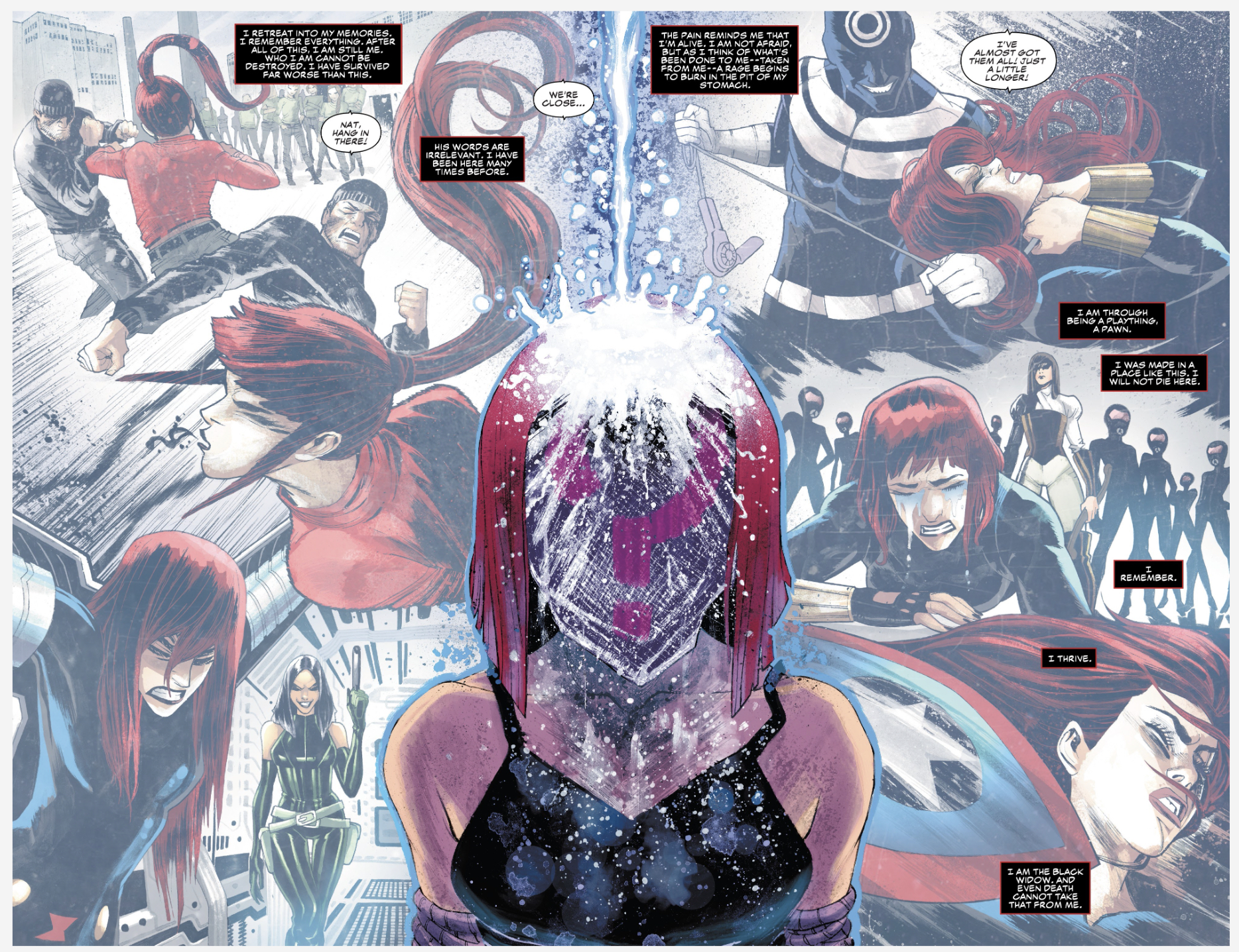
“I am through being a plaything, a pawn”—this refrain drives v.7, but also speaks to the essence of my series, raising concerns about underestimating and hypersexualizing this important character.

Identity and rebirth open the last issue of this series with Black Widow surviving a blast, portrayed with subtle phoenix imagery:
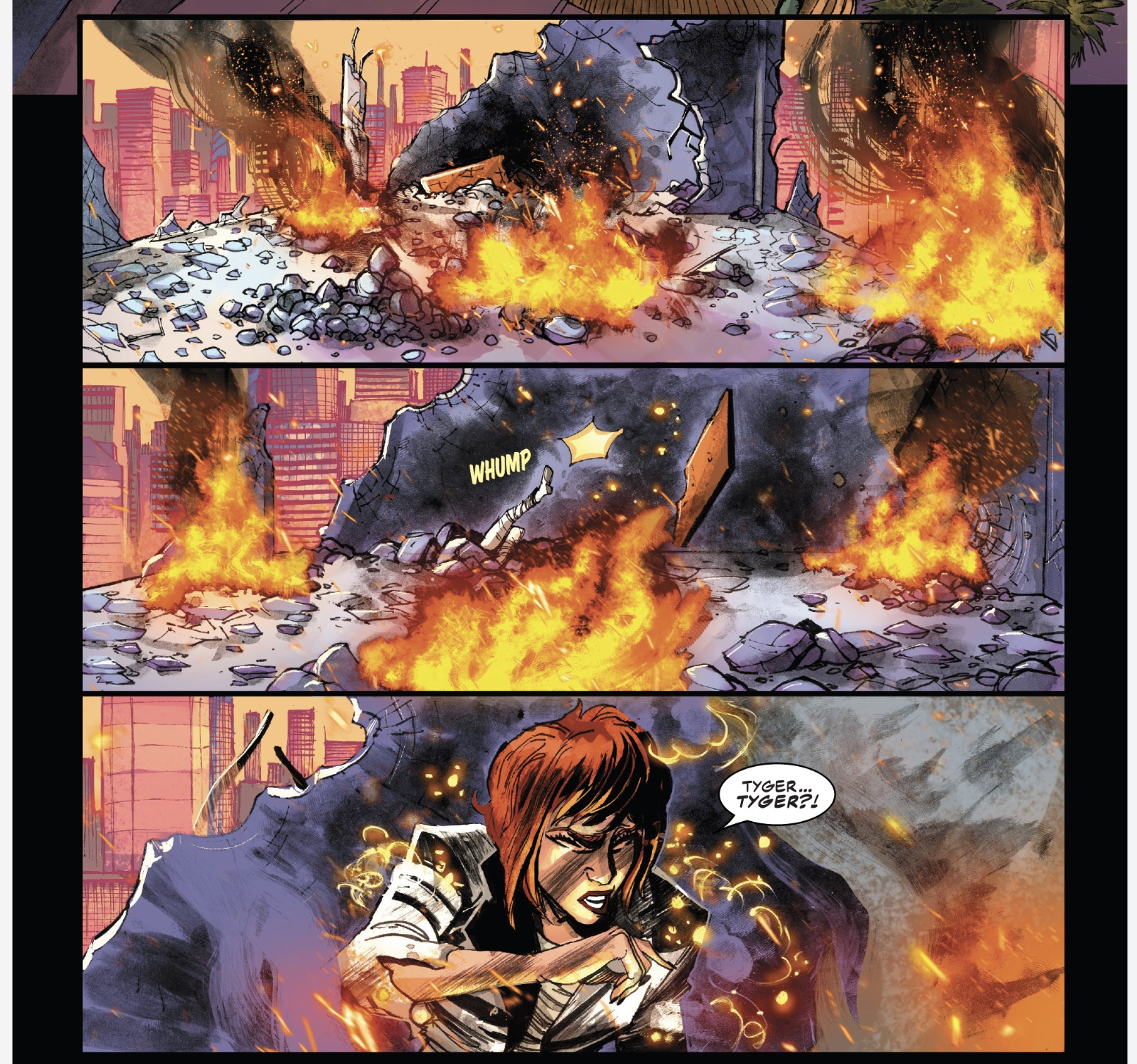
Survival and rebirth sits at the center of who Natasha is a woman and as a superhero.

The volume ends with some of the strongest aspects of this too-short series. Natasha/Black Widow imposes her world view—not Captain America’s—on her revenge, exposing the emptiness of the sex traffickers and fulfilling her own resolve to enact justice (even as that takes life).

The final pages reveal Natasha providing Winter Soldier-like hands to the mutilated girl and reuniting with Steve Rogers: “It doesn’t matter how our story started. It’s up to us how it’s going to end.”

This series becomes a story of power with the gender roles reversed—Natasha taking control of her world and urging Steve to let go of his fatalistic worldview.

Black Widow ends, again, yet the rage remains:
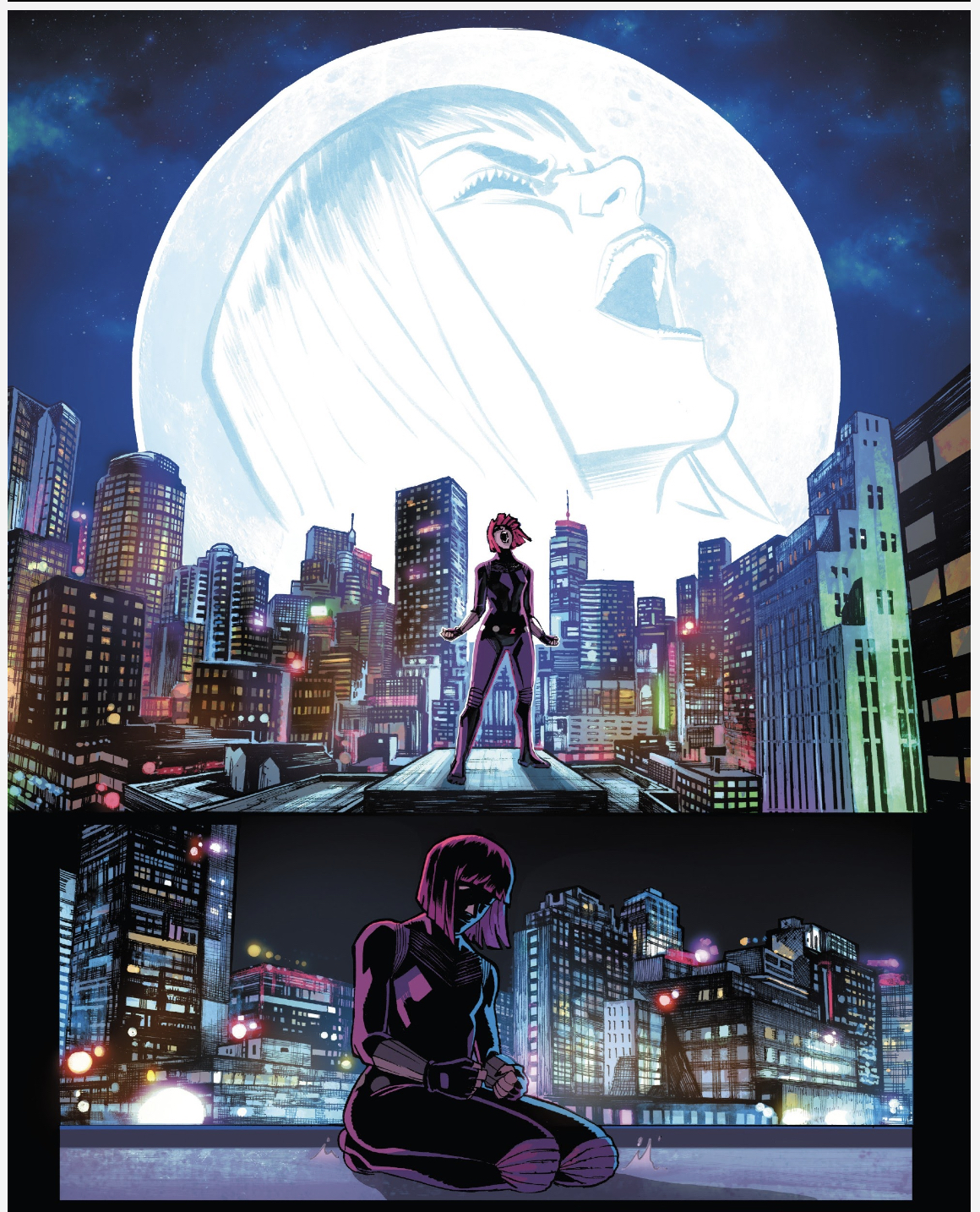
One of the best pages of v.7 occurs at the very end.

O, What a Tangled Web…

Marvel released a limited solo series, Web of Black Widow, after v.7 and before v.8, the celebrated Thompson run.

Web, regretfully, immediately introduces Tony Stark, and of course, Natasha’s cleavage:
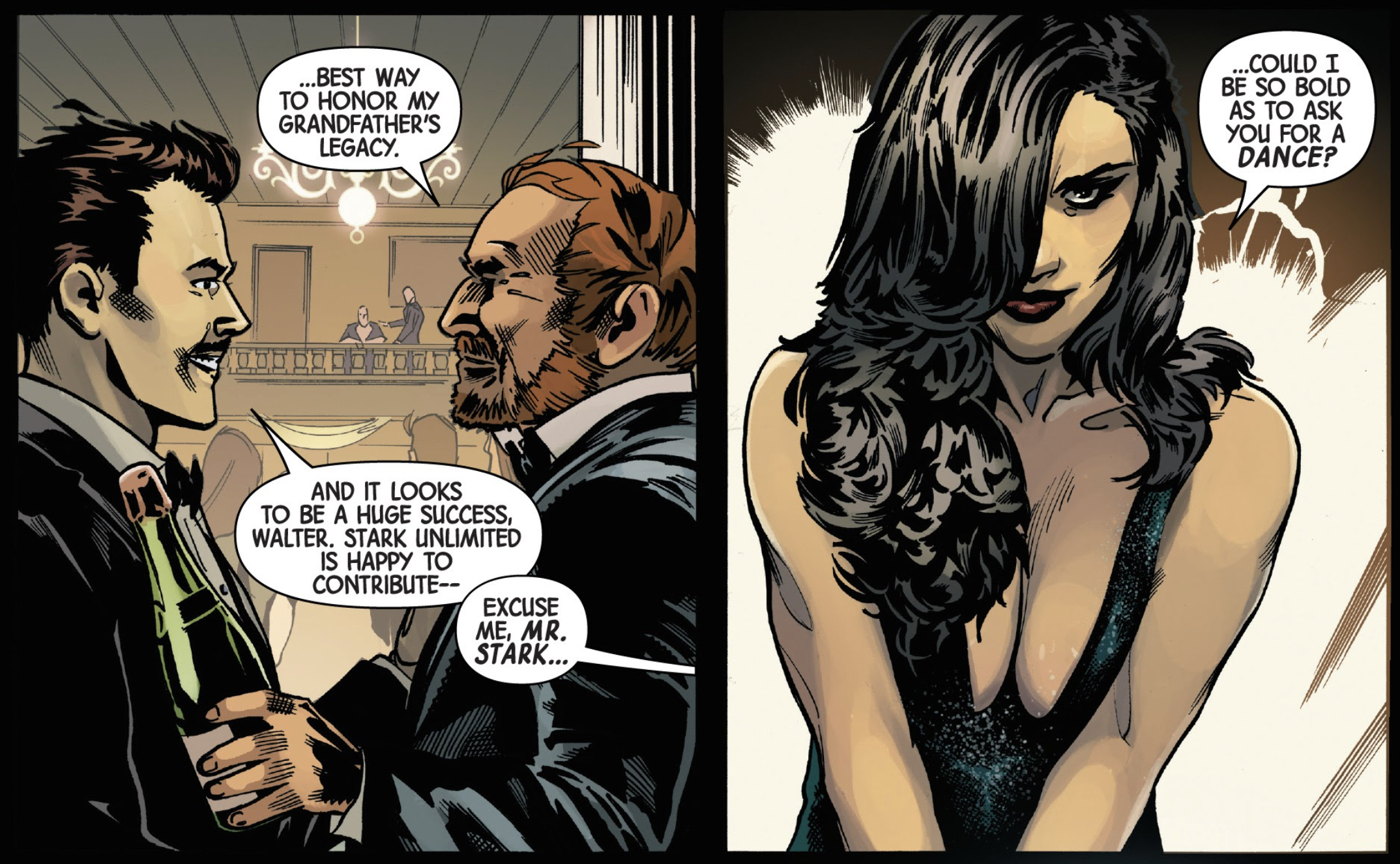
Web is written by Jody Houser with artwork by Stephen Mooney. Issue 1 doesn’t suggest another brief series, 5 issues, will rise above well-worn ground.

While issue 1 too often remains reductive and derivative, Mooney’s artwork soars none the less:
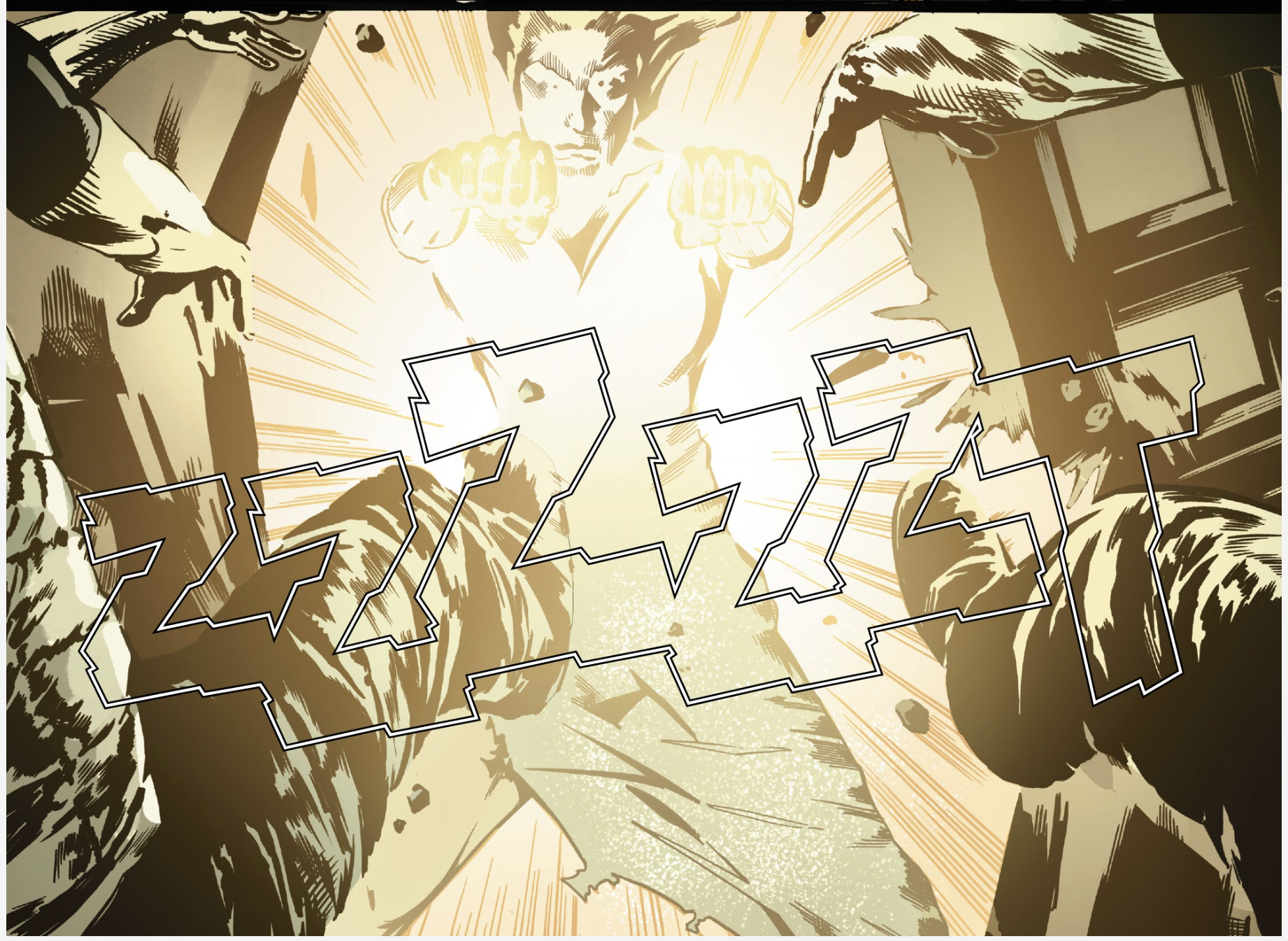
Mooney captures many of the best qualities found in superior runs of Black Widow.

Noted above, v.7 built to an issue of power; Web establishes the issue of history, switching the tension from between Natasha and Captain America to between Natasha and Iron Man.
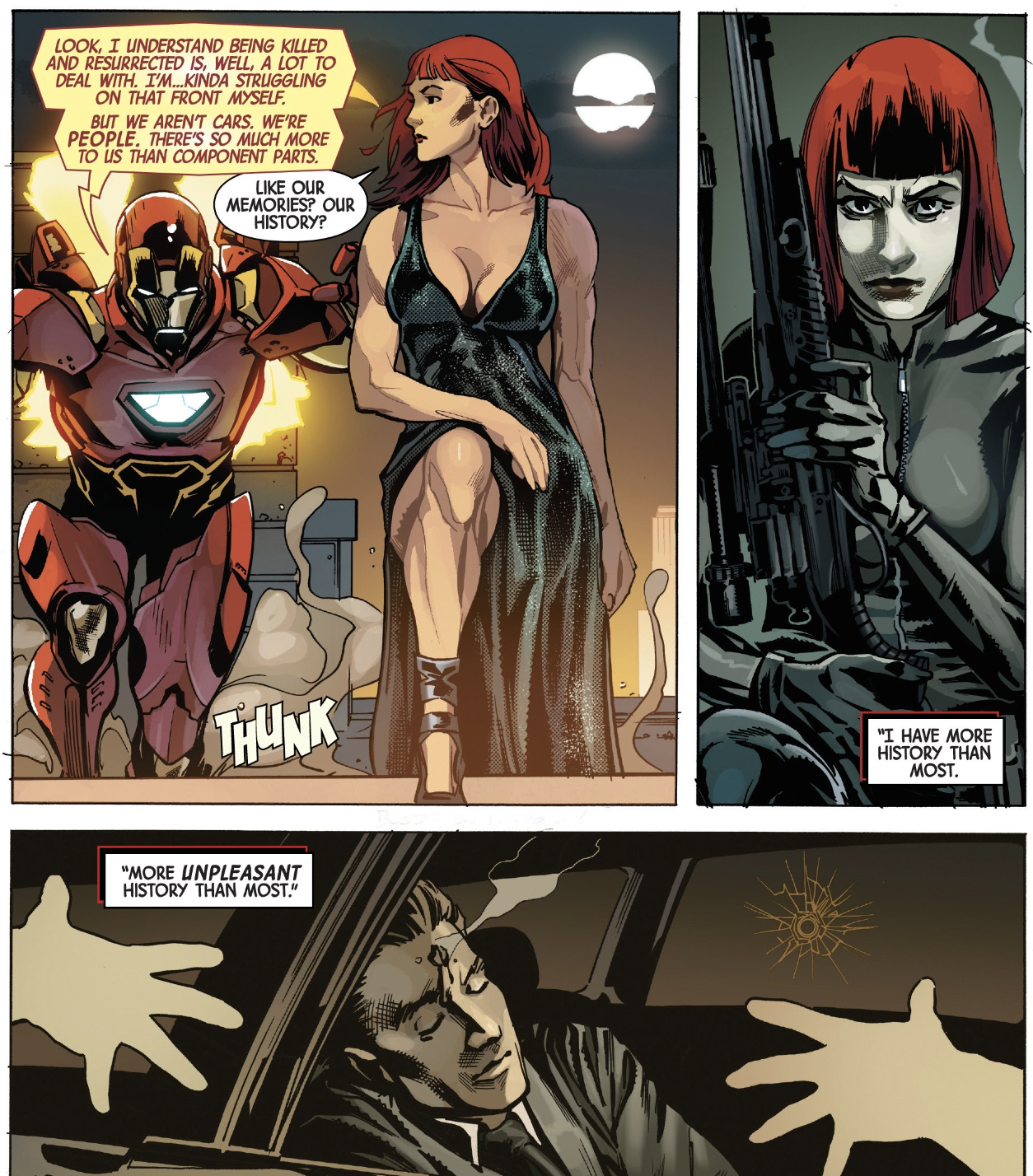
Natasha continues to build who she is on who she has been, and how her history has often been what others do to her.

Web is intended as a noir take on Black Widow, and as acknowledged earlier, the artwork certainly aspires to the very best of previous Black Widow series, but too much of this solo run falls back into the underestimated and especially the hypersexualized:
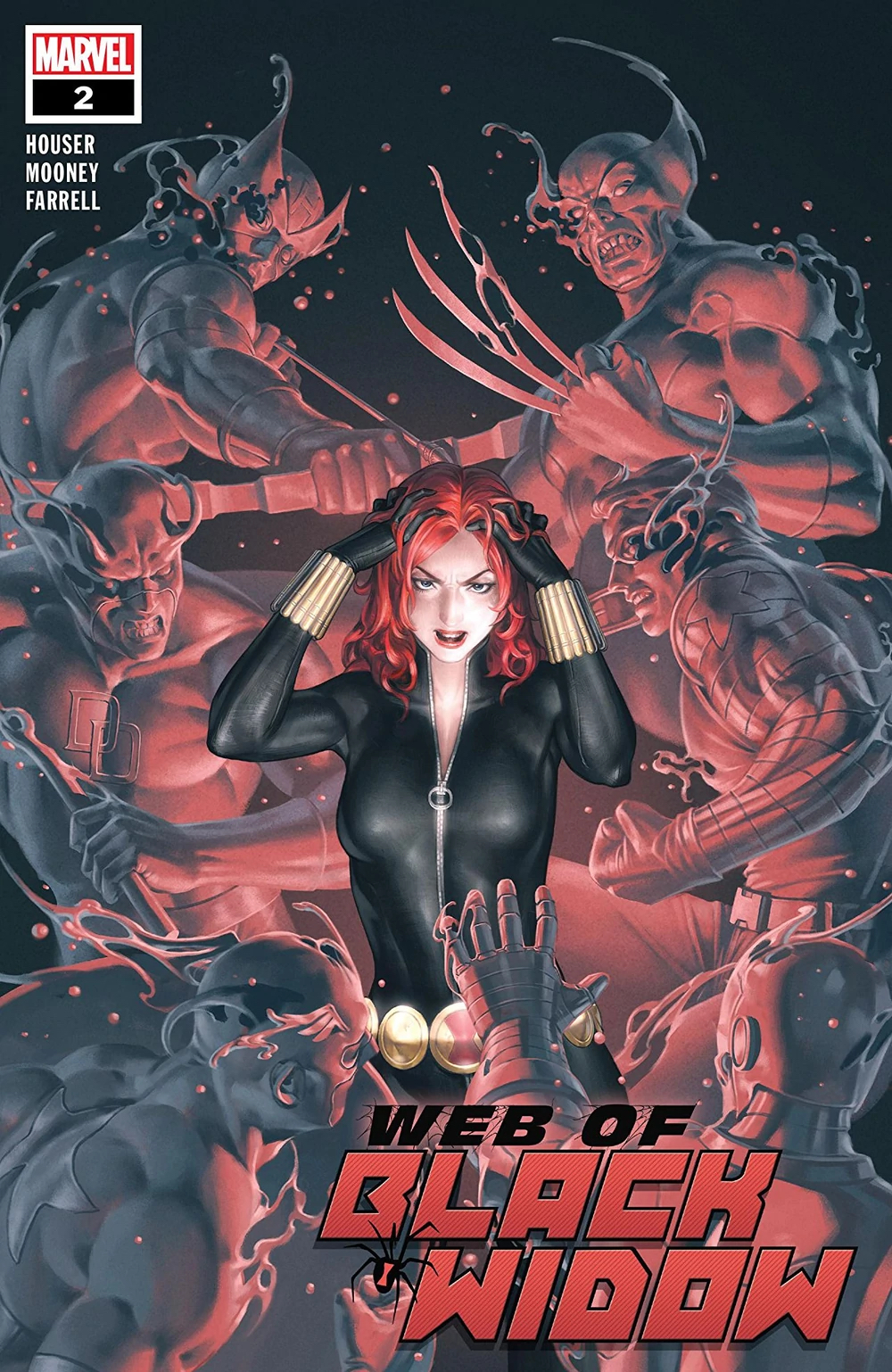
Cover art by Jung-Geun Yoon

Comic books have long suffered the misleading, unnecessarily provocative covers. Throughout Web, we are confronted not with Natasha’s cleavage, but the possibility of her cleavage behind that zipper. I am reminded of a scene in The Handmaid’s Tale: “They wore blouses with buttons down the front that suggested the possibilities of the word undone. These women could be undone; or not. They seemed to be able to choose” (p. 25).

I am unable to trust what choices are allowed for Natasha in Web, genuine power and autonomy, against the objectification of her throughout. But I do sense a strong grounding of Web in all that has come before, not just Natasha’s backstory but the many series I have been covering:

Issue 2 alludes to v.6, issue 9 as the Winter Soldier is introduced to this plot line.

Ultimately, Web proves to be a mildly interesting thought experiment, Black Widow noir, and it looks good while muddling through being mostly derivative.

Worse things can be said about a comic book series, but I continue to hope for better, and with my last post coming next, I can assure you that v.8 is better—if not the best.
Black Widow Underestimated: “I Reap What I Sow”

[NOTE: This is the next installment of a series begun at Comics Bookcase, which has made some changes; therefore, I am completing the series here, with this and then two final posts. I also hope to develop these posts into a book proposal because I think Black Widow deserves a deep dive into how the character has been underestimated (and hypersexualized) throughout Marvel’s less-than-adequate handling of the character.]


After Nathan Edmondson, writer, and Phil Noto, artist, set the bar very high in v.5 of Black Widow—avoiding the pitfalls of underestimating and hypersexualizing her—another all-star team took over with v.6, Chris Samnee handling pencils and co-writing with Mark Waid. This reboot repeats many aspects of previous volumes: a Daredevil team trying their hands at Natasha Romanov and portraying Natasha as possibly disloyal because of the ghosts of her abusive past that cannot be exorcized.

Yet, Samnee and Waid maintain the momentum set by Edmondson and Noto, especially with a visually compelling 12-issue run that also does not stoop to focusing on exposed cleavage and Black Widow bound by chains or rope.

A couple covers do involve Black Widow embraced—although these portrayals fit well into the tone and imagery of the run without reducing Black Widow’s agency as a character and a woman.

Covers for issue 002 and 009 feature Black Widow embraced. Pencil by Chris Samnee and ink by Matthew Wilson.

Enemy of S.H.I.E.L.D. (Again?)

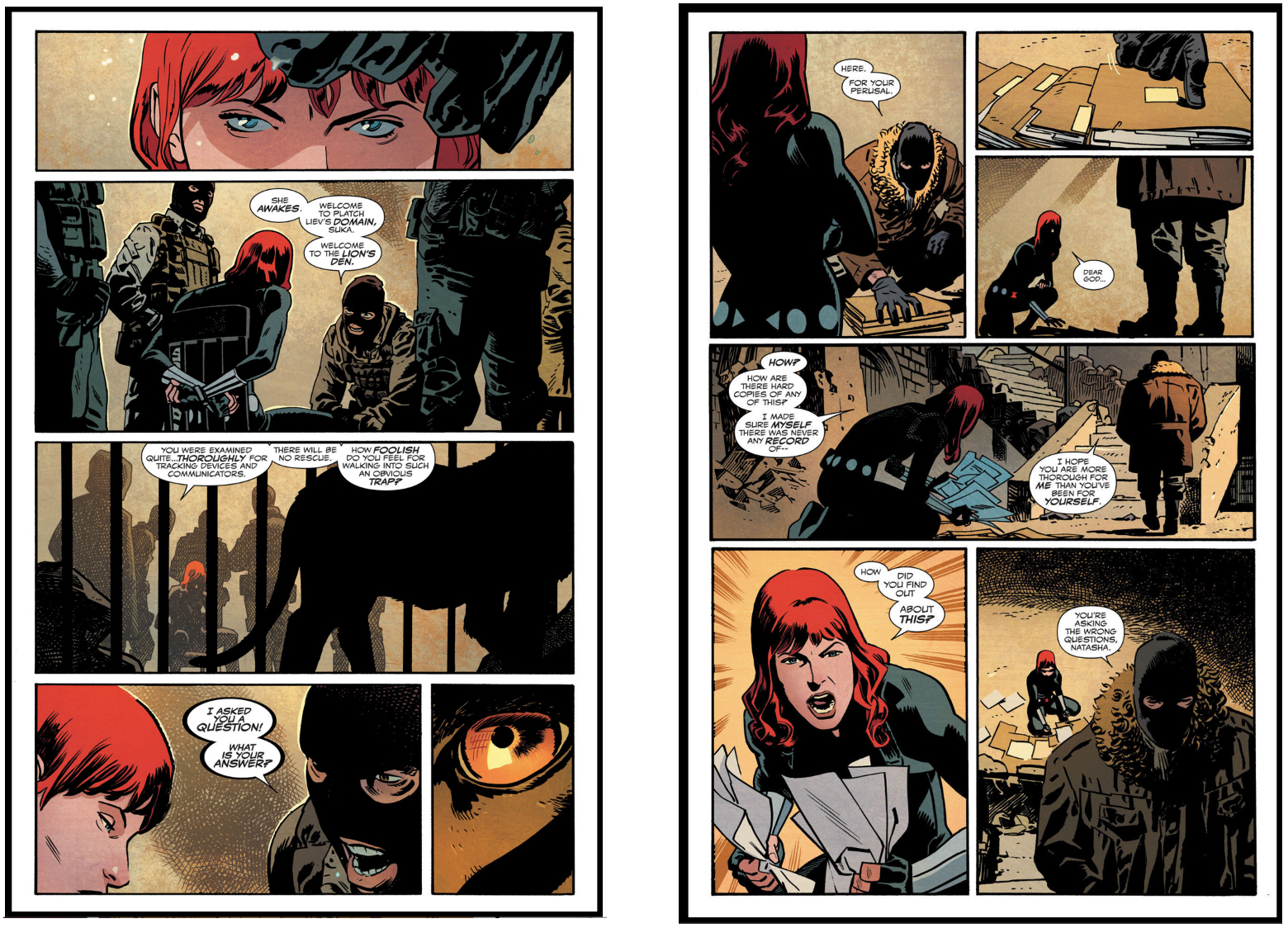
Issue 001 opens with dynamic action and panels; Samnee (pencil and ink) and Wilson (colors) set the tone for the series by centering Black Widow’s athleticism and intelligence. However, once again, readers are in for another exploration of Natasha’s trustworthiness and how damaged she remains because of the trauma of her childhood training as an assassin.

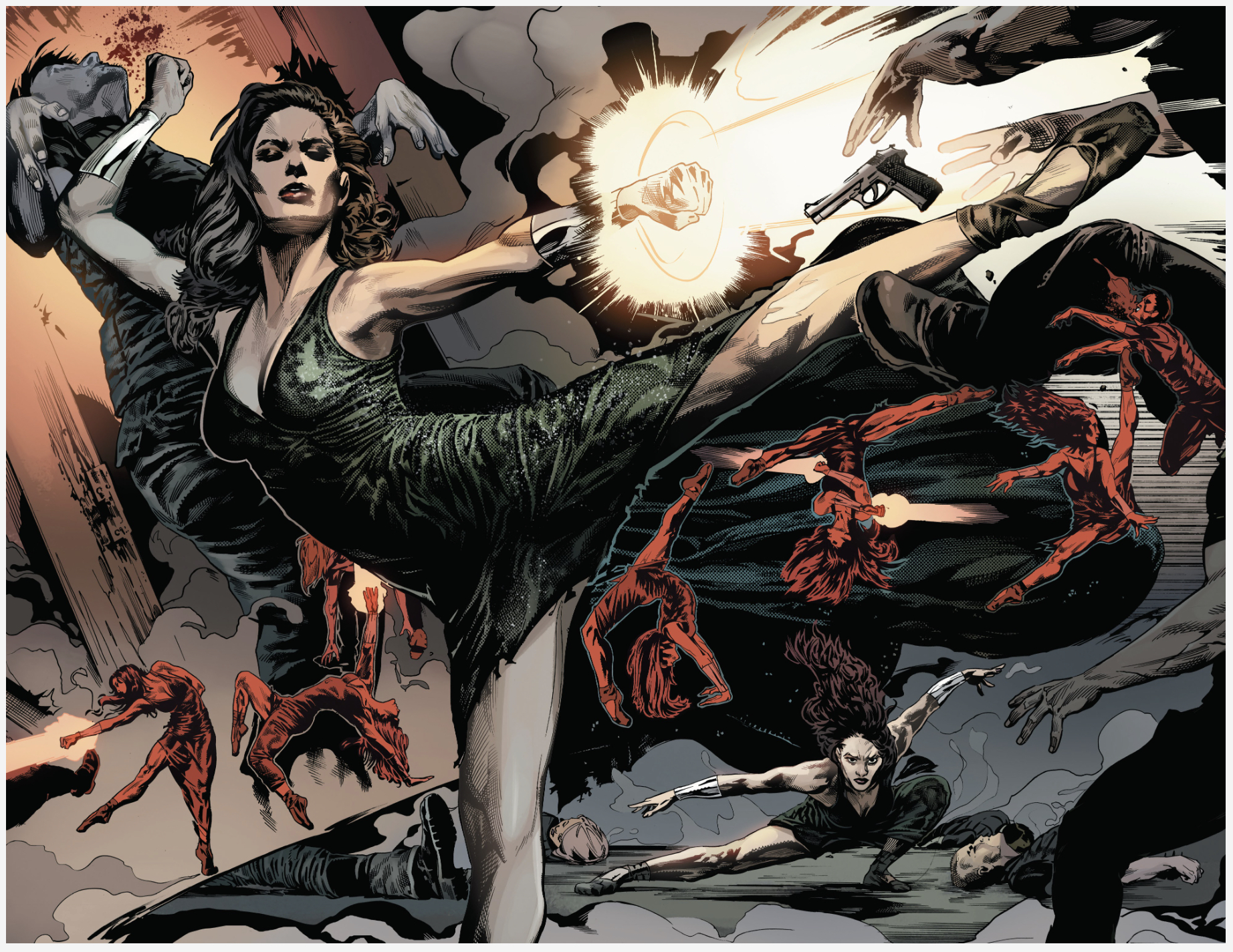
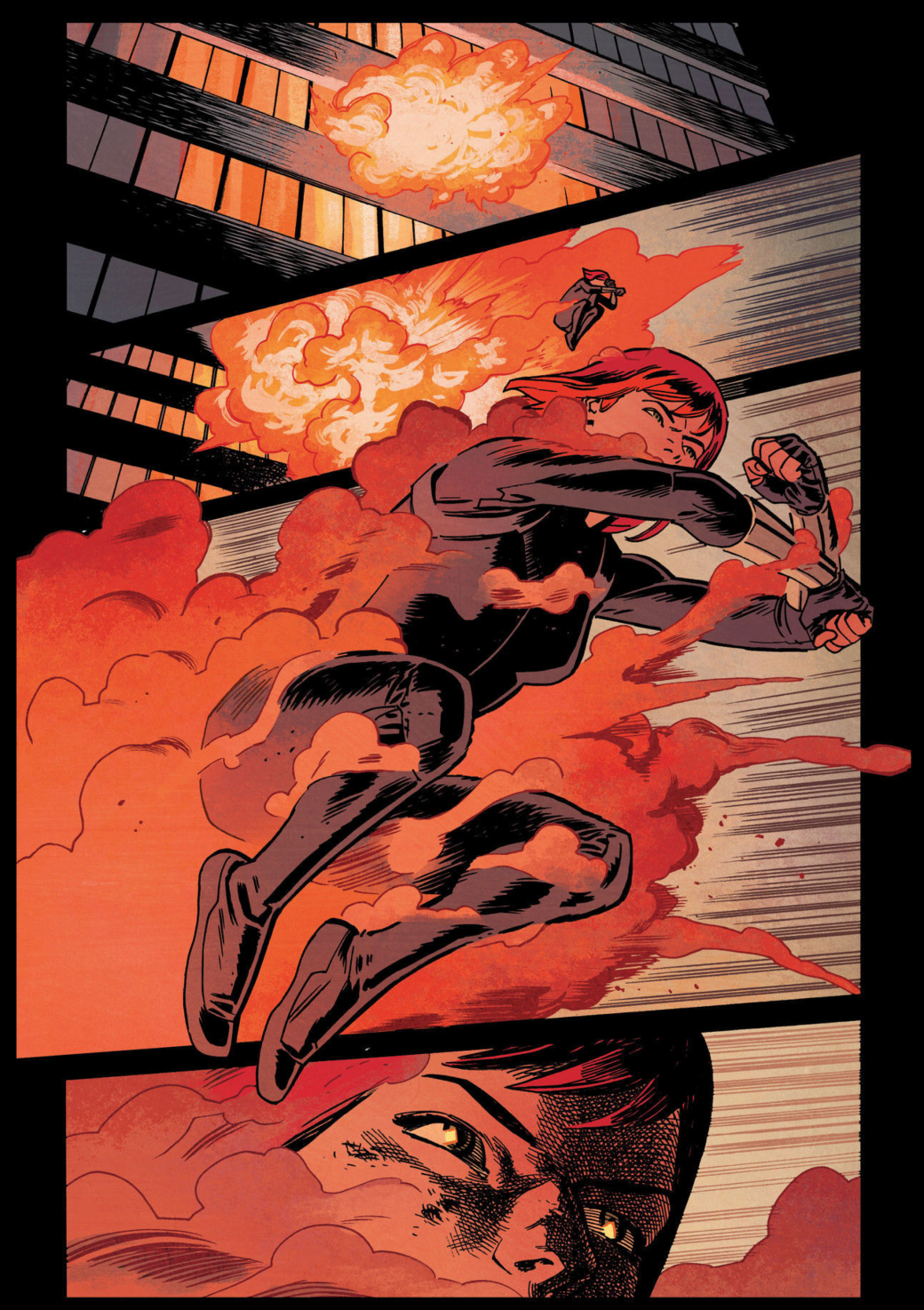
Samnee and Wilson build to Black Widow’s dramatic escape in the opening pages of issue 001 in v.6, highlighting Samnee’s panel designs and Wilson’s brilliant coloring.

Similar to Noto, Samnee carries the narrative through textless panels and creates a film effect for much of the volume. After her dramatic escape from S.H.I.E.L.D., Natasha finds her foe for the volume in issue 002, Weeping Lion, and is again threatened with having her deepest secrets revealed. In many ways the focus of this series feels overworked already, but visually Samnee and Wilson maintain a compelling narrative.

Samnee and Waid also craft a smart approach to old topics because they clearly honor the complexity of Natasha/Black Widow as a rich and complicated human as well as superhero.

Once again, Black Widow finds herself bound and threatened in issue 002, but Samnee and Waid never stumble into the hypersexualized and reductive patterns in early volumes.

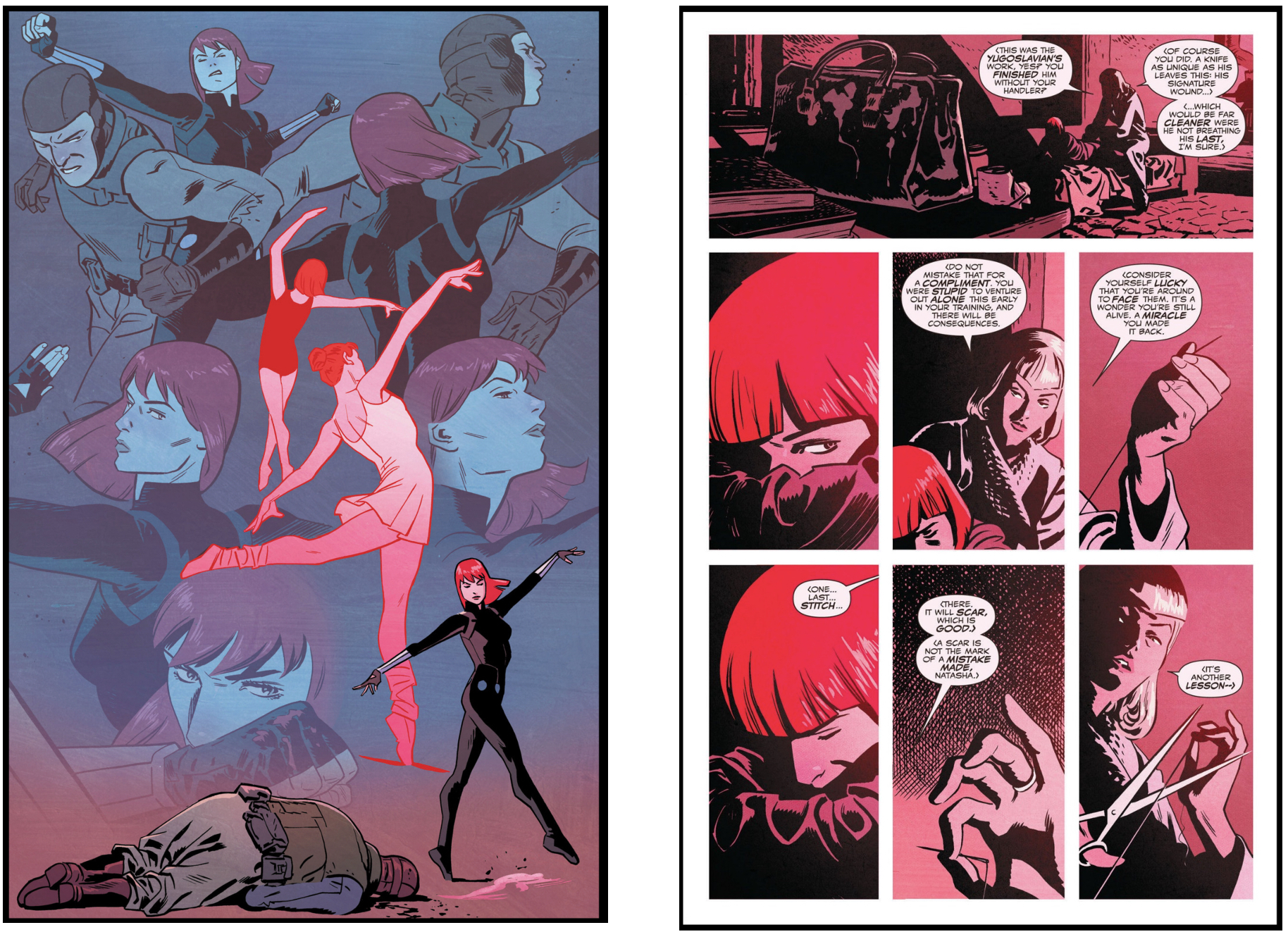
Instead of focusing on Natasha’s exposed body, Samnee depicts Black Widow in the context of images as a ballerina through the use of pastel colors and emphatic shading. As well, Natasha remains physically vulnerable, often battered, stabbed, and brought to exhaustion through a relentless parade of battles for her life.

A perfect scene for Natasha/Black Widow, in fact, in issue 003 involves her being stitched up in a flashback mixed in with her actual return to the Catacombs in the Red Room Academy. Natasha is told: “It will scar, which is good. A scar is not the mark of a mistake made, Natasha. It’s another lesson.”

Natasha as Black Widow is a life lived among scars, pain, and seemingly lessons that never end.

Issue 003 offers powerful uses of pastels—blues, pinks—contrasted with black shade and faded images.

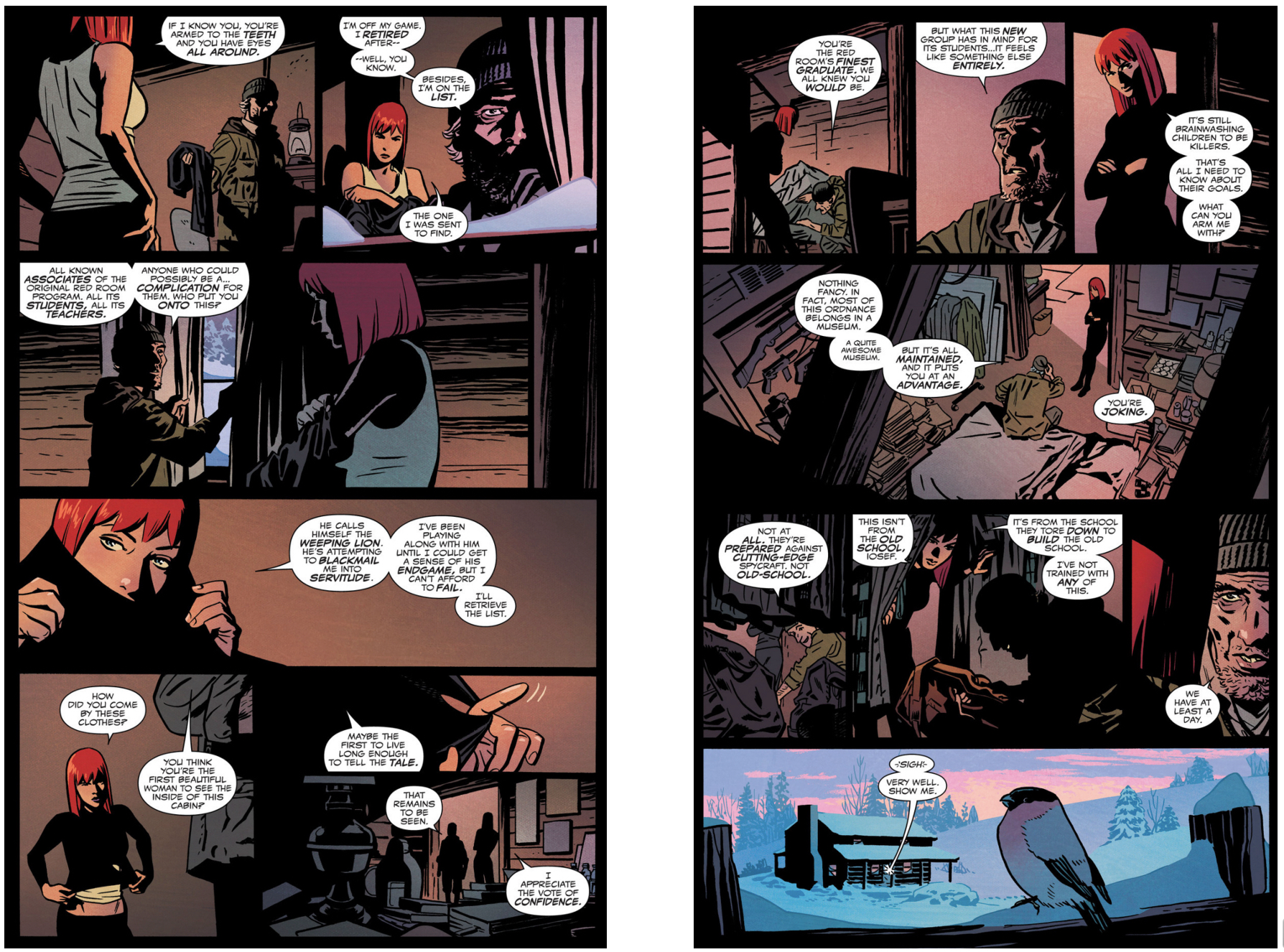
Natasha is badly wounded and finds the help of Iosef in issue 004. Caught between the Weeping Lion and S.H.I.E.L.D., Natasha must secure the tools, old weapons from Iosef, to confront the Headmistress and Recluse in the Dark Room Academy, a replacement of the Red Room Academy, where young girls continue to be trained as assassins like Natasha was.

Samnee and Waid use parallel narratives—present and flashback—and motifs well despite this being overworked ground with Black Widow. The issues continue to be visually dynamic and compelling, breathing life into stories and conflicts we have read again and again.

Natasha and Iosef are one of the better pairings used in Black Widow series, at times playful but absent the empty sexual banter and tension too often present in Natasha’s relationship with men.

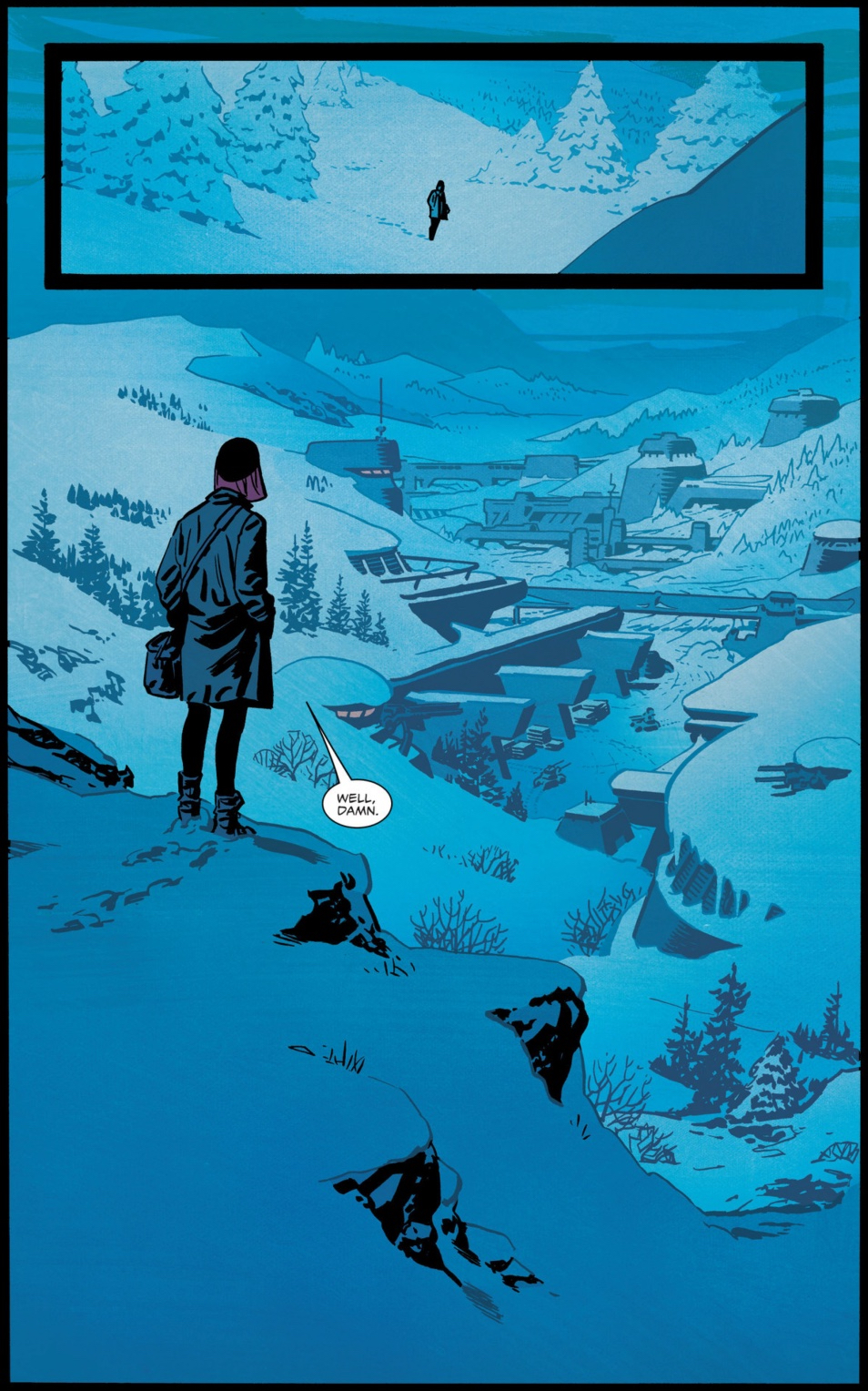
Issue 004 also highlights the power of images, the use of color and dynamic paneling, and either textless or sparse-text full-page spreads. Samnee gives this volume the same presence and visual weight that Noto provided in v.5.

The use of blue on this full-page panel and the simple “Well, damn” captures the vastness of Nastasha living in the present while continuing to fight the past.

The Arc of Black Widow’s Universe

After parallel stabbings—from her past and in the present, returning to the Catacombs—Natasha confronts the Red Room Headmistress and Recluse, complicating the main narrative involving S.H.I.E.L.D. and Weeping Lion. After recovering with Iosef’s help, Natasha moves to her mission to recover intel for Weeping Lion, which goes wrong, dramatically and violently with S.H.I.E.L.D. involved. The lingering question of Natasha’s loyalty is left in the balance.

The next test is Tony Stark/Iron Man joining issue 006, mixed with another flashback of Natasha’s life as a ruthless assassin. The Stark scene shows Natasha manipulating Stark: “Makeup and acting, Tony. You’ve always been a sucker for both. Thanks for the access.”

The “former lover” motif is a return to a pattern found in many Black Widow series; however, Samnee and Waid insert a power shift and portray Stark as the weaker of the two instead of hypersexualizing or reducing Natasha to stereotypes that do not suite her character.

The access she secures leads to Natasha discovering that Weeping Lion is part of a duo, including the telepath brother Ilija Knezevic in issue 006. Black Widow now turns the focus of the plot to her confronting the Headmistress and Recluse to rescue the girls from the Dark Room.

“No one gets into my head unless I let them,” Natasha informs Ilija Knezevic after turning Stark’s weapon on him. “And I rarely let them.”

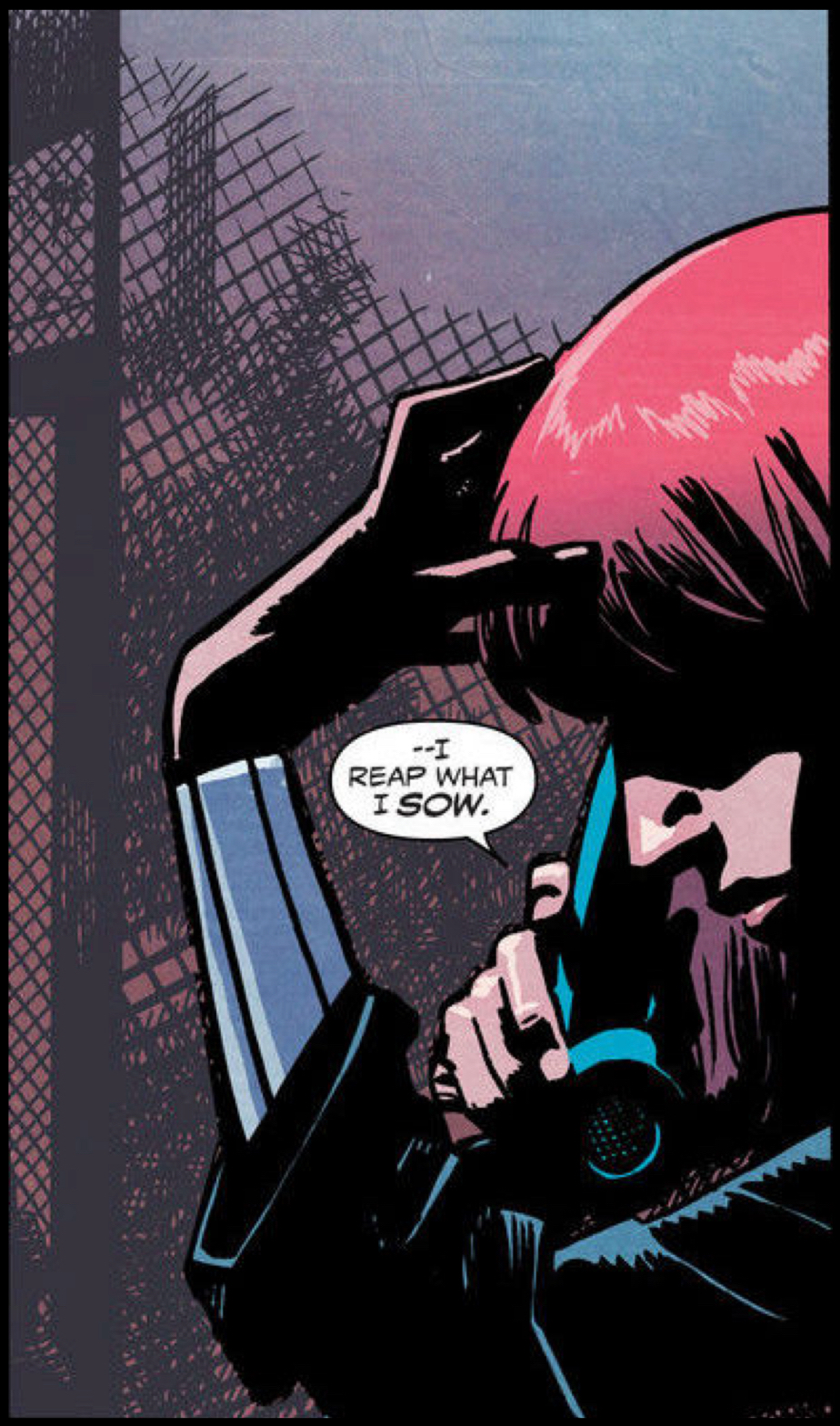
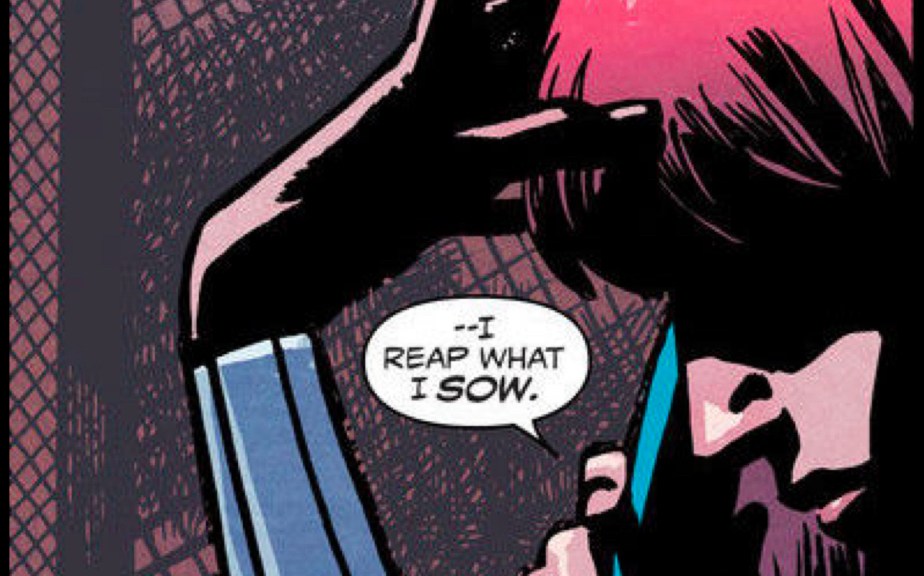
Possibly the perfect tagline for Natasha/Black Widow is found in issue 006: “I reap what I sow.”

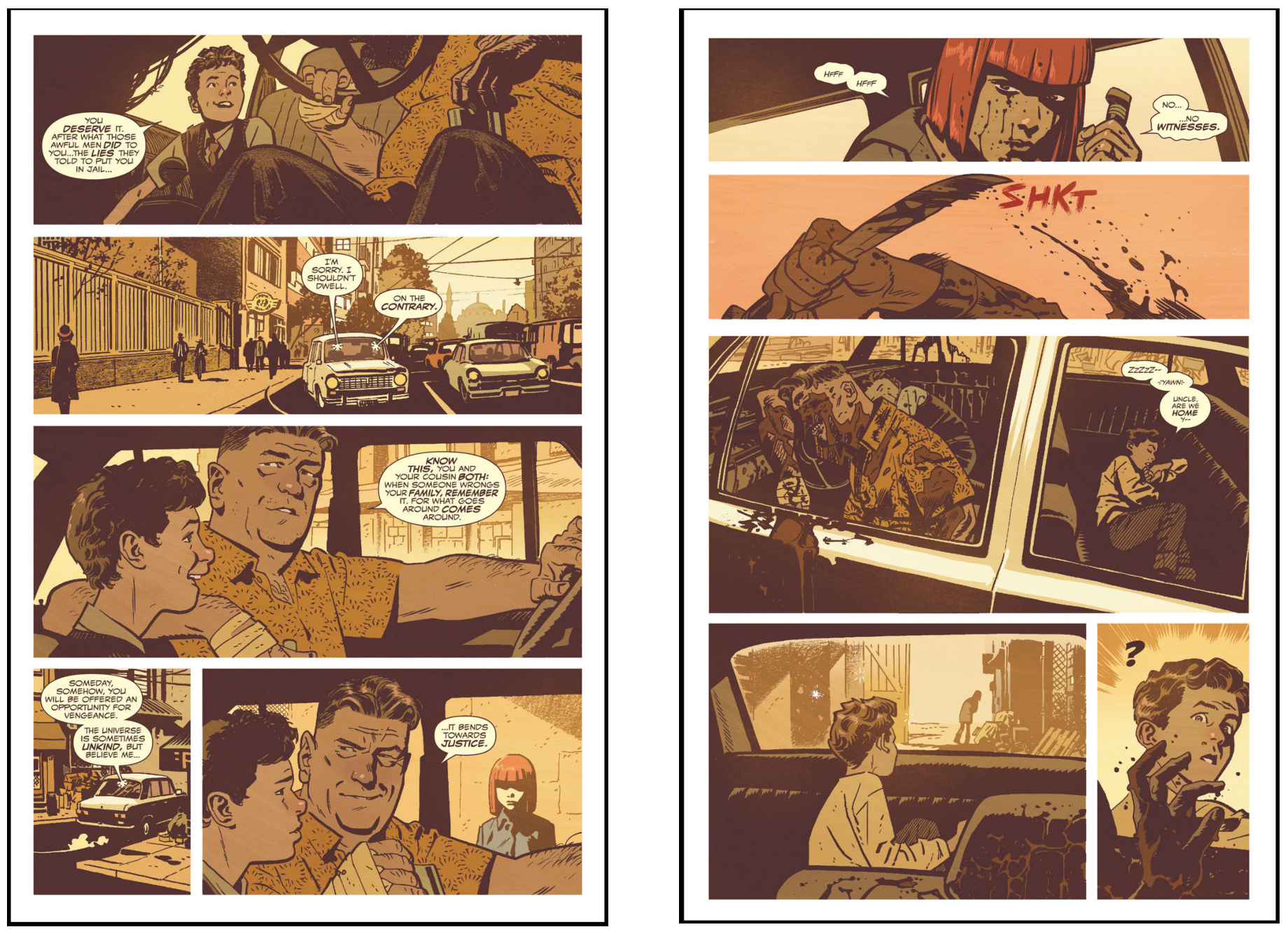
In issue 007, “No More Secrets,” readers witness a truly violent and disturbing flashback that centers both this series and Natasha/Black Widow by alluding to Martin Luther King Jr.’s “the arc of the moral universe is long but it bends toward justice.”

Natasha as a child assassin was supremely dedicated to her mission, a sort of moral code that is graphically displayed in the flashbacks depicting cold and calculated violence even in the face of innocence, notably other children—more of the weight of Natasha reaping what she has sown.

Issue 007 forces the reader to consider “justice” but also reveals the moral tension of the assassin’s mandate to leave no witnesses.

Natasha, the duo that is Weeping Lion, the Headmistress, and Recluse are all entangled by the end of issue 007 in a web of violence and an urge to seek justice warped by revenge and under the dark cloud of their pasts because Natasha failed to follow the full mandate of her assassin’s creed. After Headmistress’s death, Natasha claims, “…her mother did just die. I am not a monster.” The issue ends with Knezevic’s ominous, “Right.”

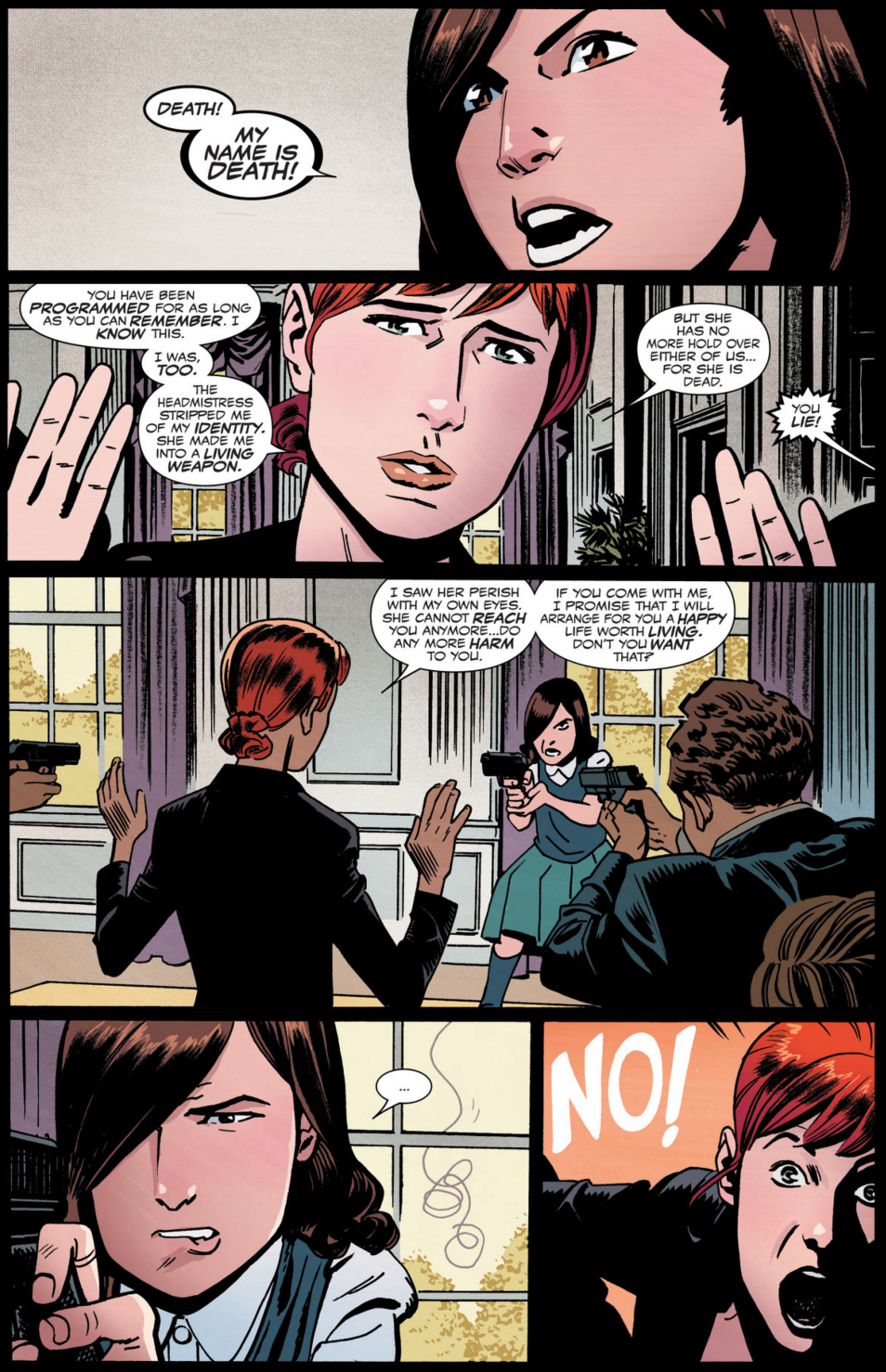
Issue 008 involves current-day child assassins in the White House with Natasha undercover. When the child assassins are exposed, Natasha confronts the girl calling herself “Death” with “You have been programmed for as long as you can remember. I know this. I was too.” Natasha adds that the Headmistress made her a “living weapon.”

Here, an important question about who is culpable and for how long when the actions are extreme, but the person is only a child, a child behaving in ways that they have been indoctrinated to believe and act upon.

Black Widow seeking to save these child assassins foreshadows later issues with Bucky Barnes involving tensions of savior and sacrifice.

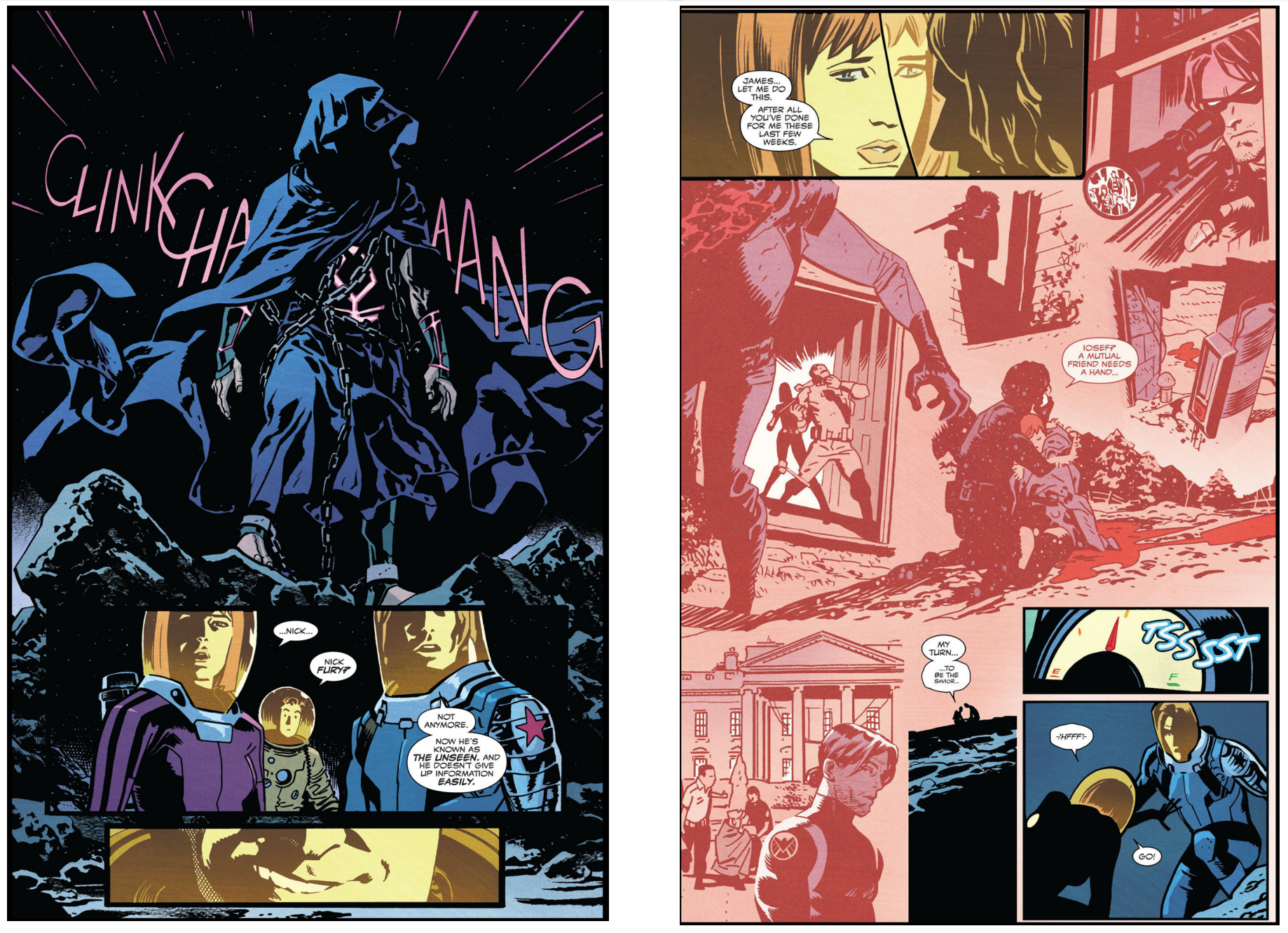
The killing of Iosef in issue 009 adds to Natasha’s fear of death in the wake of anyone knowing her, and sets up her confrontation with Recluse, who has captured Bucky Barnes. Natsha chastises Barnes for wanting to protect her, but Barnes has another mission, bringing Black Widow to Nick Fury, now The Unseen.

On the moon in issue 010, Black Widow, Weeping Lion (telepath), and Bucky meet Fury/The Unseen. This dense issue includes the death of the telepath, a child assassin stowaway, and a familiar plot element, Natasha demanding that she be sacrificed: “My turn…to be the savior.”

Paneling and color continue to stand out as some of the most powerful work on v.6.

In the final two issues, Natasha must subvert the plan of a group of child assassins, charged with destroying S.H.I.E.L.D. and eventually confront Recluse.

The determination and skill of Natsha/Black Widow are highlighted in v.6.

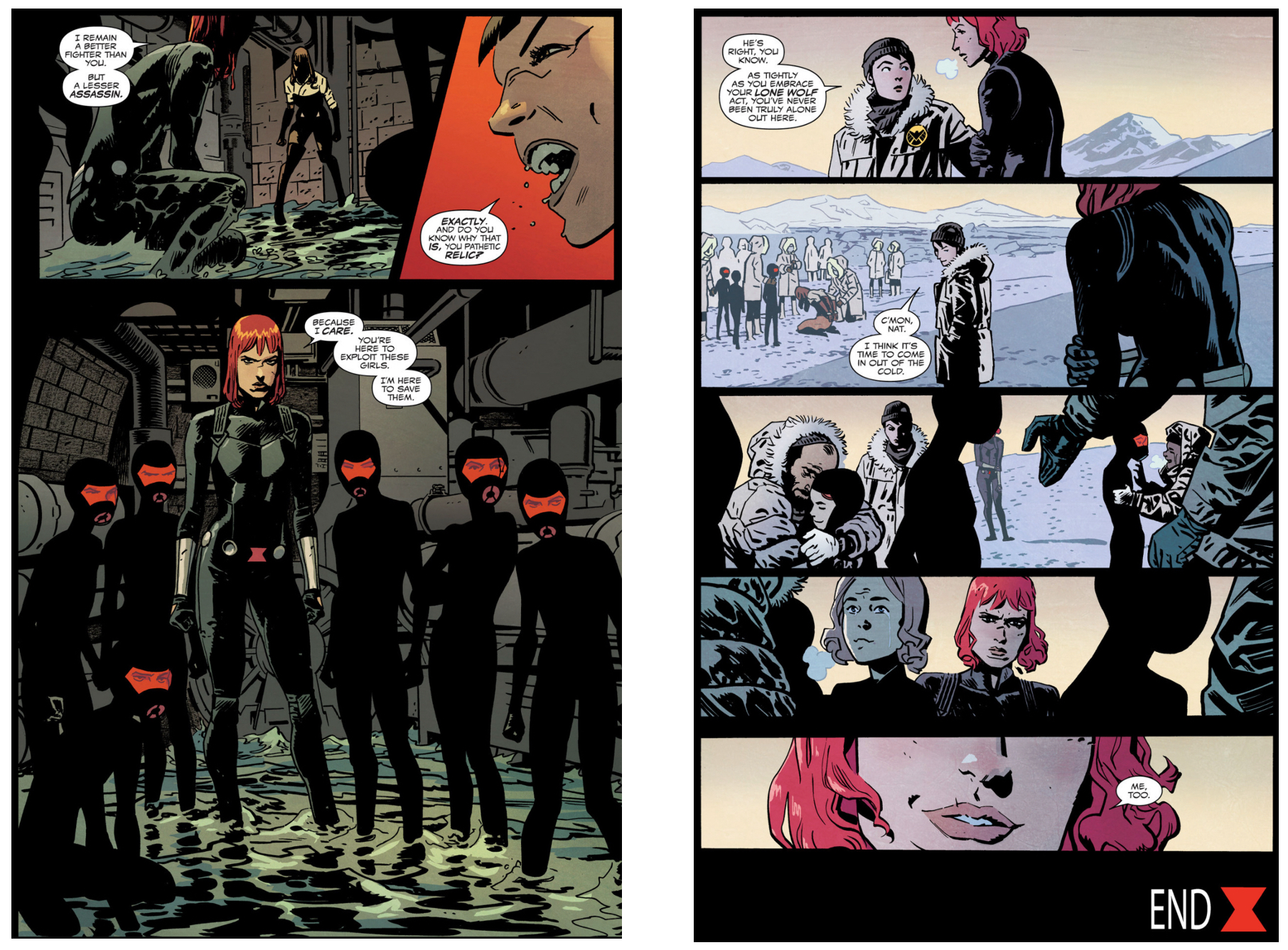
The series ends with a climactic battle between Black Widow and Recluse, displaying some of Samnee’s finest work. The issue is also well written by Samnee/Waid as the plot builds to Natasha surrounded by the child assassins stating to Recluse, “I remain a better fighter than you. But a lesser assassin.”

Here is Natasha as savior without being sacrificed.

Yet, when all is said and done (including another scene with Stark), Natasha is asked to confront that her “lone wolf act” doesn’t mean she is alone. To that, Natasha agrees to “come in out of the cold.”

Samnee and Waid’s run on Black Widow fulfills the message of the universe bending toward justice, at least momentarily, at least for some.

Regretfully, Marvel abandons Black Widow again, until v.7 in 2019, a brief 5-issue run that regresses to early, weaker runs and breaks the excellent momentum created by Edmondson/Noto and Samnee/Waid.

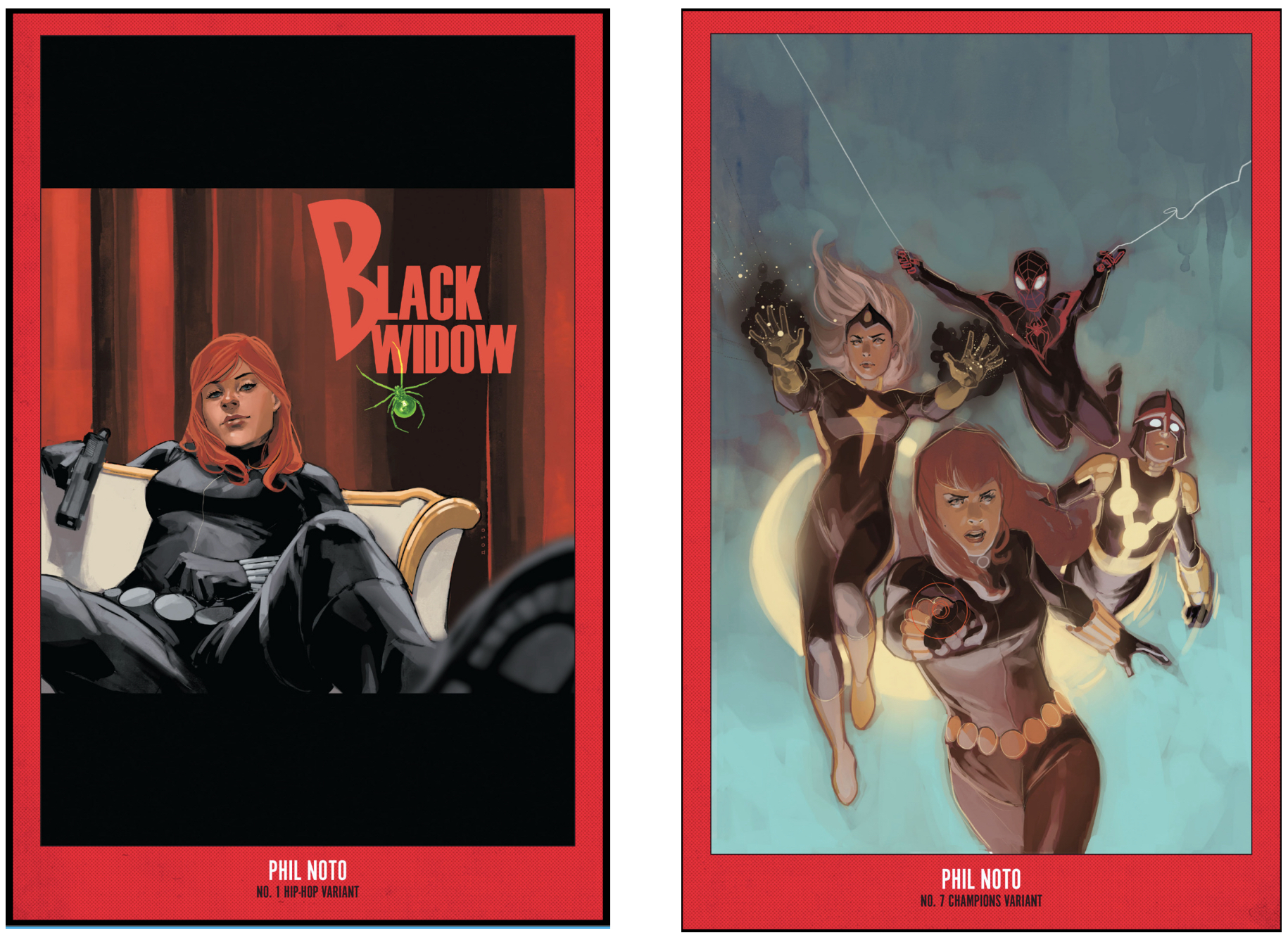
Noto variant covers for v.6.

Black Widow Series

[Header image property of Marvel and artist(s)]

Please read and follow my Black Widow series posting at Comics Bookcase (blogs 1-5) and here (6-8).

The series will be updated below as each post is published.

Blog 1: Black Widow Underestimated – An Introduction (24 February 2022)

Blog 2: Black Widow Underestimated – Tortured Beginnings and Solo Black Widow (24 March 2022)

Blog 3: Black Widow Underestimated: A New Start? – ‘He Underestimates Me’ (28 April 2022)

Blog 4: Black Widow Underestimated: ‘It’s Not the Length of Life that Matters…’ (12 May 2022)

Blog 5: Black Widow Underestimated: Black Widow Unbound – Past, Present, Future (26 May 2022)

Blog 6: Black Widow Underestimated: “I Reap What I Sow” (15 August 2022)

Blog 7: Black Widow Underestimated: “I Am What I Am” (4 September 2022)

Blog 8: Black Widow Underestimated: “I Remember Everything” (3 October 2022)


See Also

The Unintended Multiverse of Black Widow’s Origin

Just in Time: Wonder Woman Historia: The Amazons

[See repost: Wonder Woman Historia: The Amazons…arrives just in time]

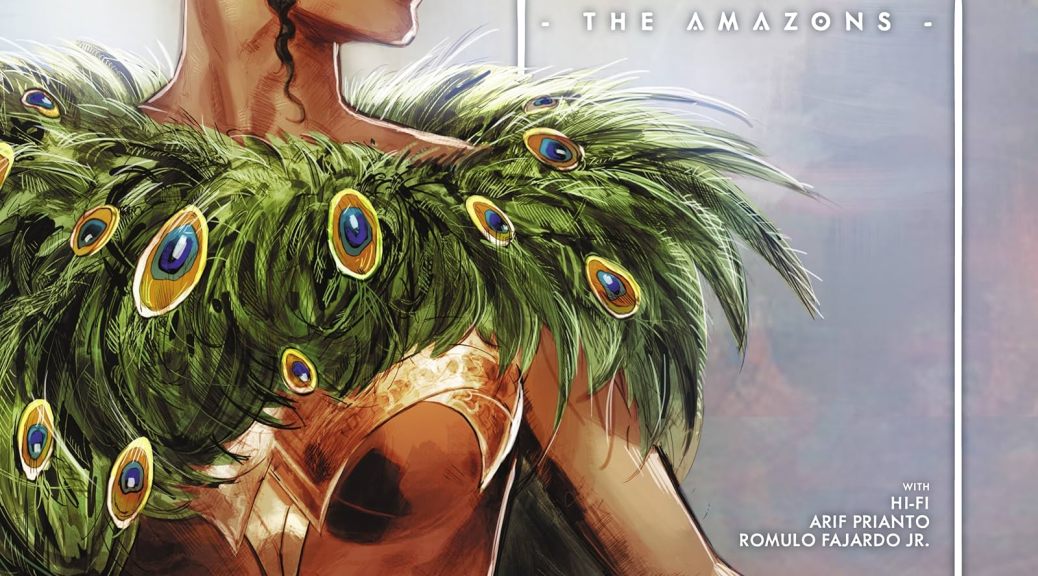
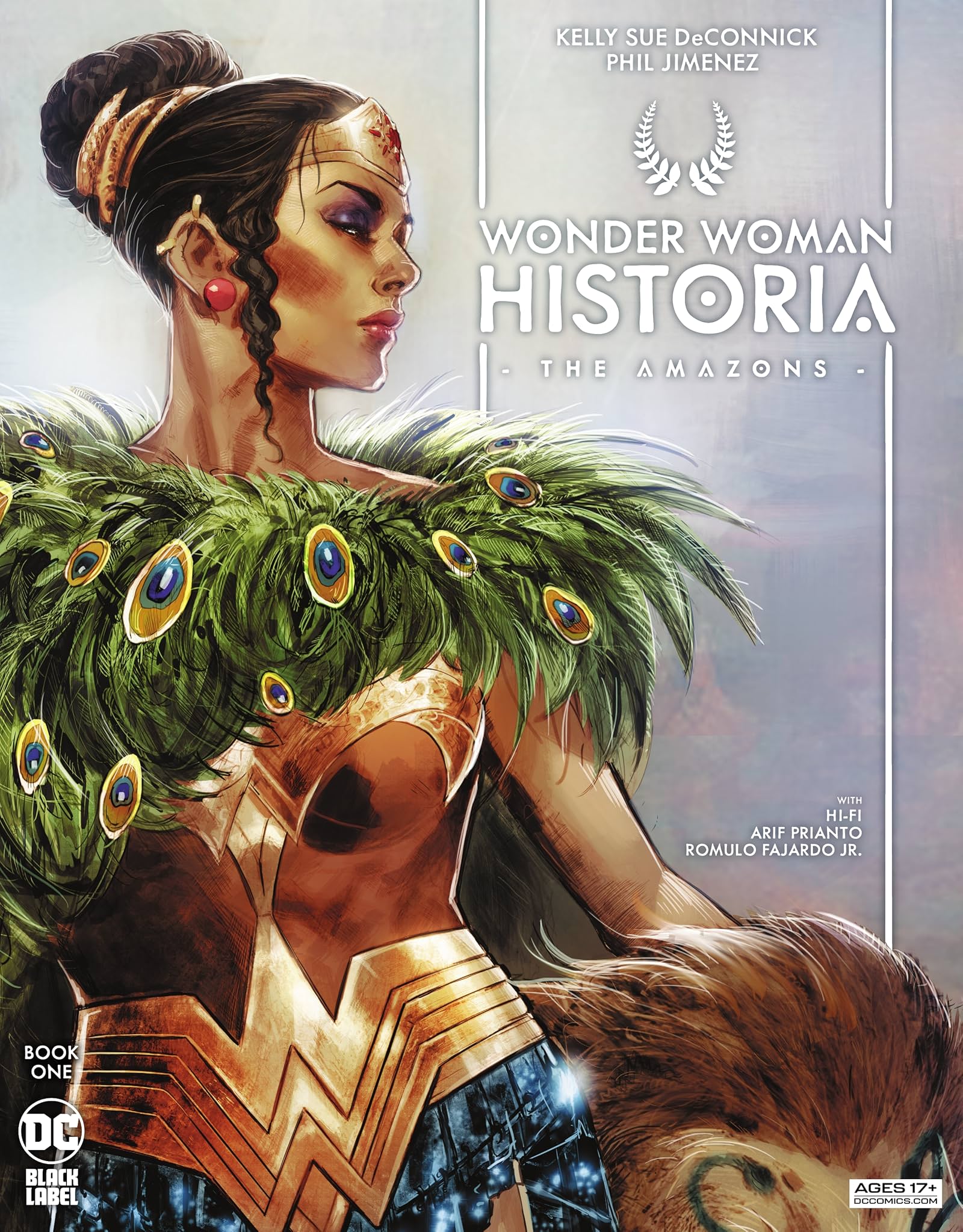
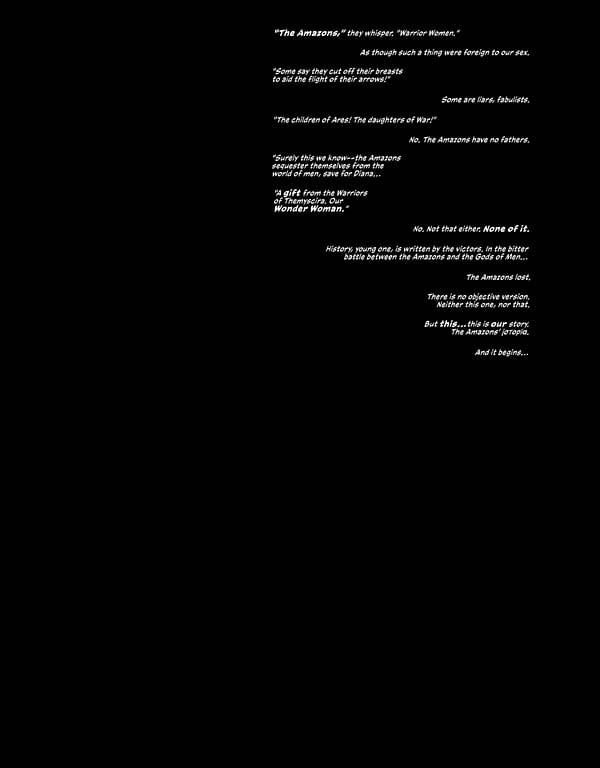
The oversized format and stunning cover by Phil Jimenez and Romulo Fajardo Jr. suggest something special from DC Black Label, but the black text-only first page signals Kelly Sue DeConnick’s Wonder Woman Historia: The Amazons has arrived just in time:

Wonder Woman Historia: The Amazons (2021-) #1 - Comics by comiXology
Interior preview page from WONDER WOMAN HISTORIA THE AMAZONS #1 (OF 3) CVR A PHIL JIMENEZ (MR)

Available December 1, 2021, Historia Book One on its first page speaks into a darkness begun in the waning days of the Trump administration, a ham-fisted attack on the 1619 Project that has escalated into state-level legislation by Republicans across the U.S. banning books and canceling the teaching of history.

The “Some say…” reply of “Some are liars, fabulists” can be read as a critique of the Trump-poisoned Right today. But the most powerful lines speak to the exact source of why conservatives in 2021 are seeking to control what children are taught and how, echoing the essence of Critical Race Theory and vilified historians such as Howard Zinn:

History, young one, is written by the victors. In the bitter battle between the Amazons and the Gods of Men…

The Amazons lost.

There is no objective version. Neither this one, nor that.

But this…this is our story.

Wonder Woman Historia: The Amazons (Book One)

The creative team of DeConnick (writer); Jimenez (artist); Hi-Fi, Arif Prianto, and Fajardo (colorists); and Clayton Cowles (letterer) remind me of J.H. Williams III and Kelly Thompson’s run on Black Widow—although in many ways, Historia proves to be dramatically unique.

Occasionally calling a work a feminist read on a topic can seem reductive, or insubstantial—how many feminist reads [1] has there been of Wonder Woman?—but in a world darkened by censorship and the looming threat of overturning women’s reproductive rights nearly 50 years after Roe v. Wade, a feminist manifesto is not just in time, but essential.

“For the Institutions of Men Care Not for the Weal of Women“: Just in Time?

After a beautifully rendered introduction of Goddesses, the narrator admits, “The subjugations and abuses of not-men by men are too numerous to catalog in a library…let alone a book.”

This powerful refrain not only sets the focus of Historia, but carries an eerie weight in a time of book censorship—books ripped from classrooms and libraries, school board members calling for book burnings—as well as the threat of of the State denying women reproductive rights, “the subjugations and abuses of not-men by men” and the women who do men’s bidding.

Next, an admission more sober: “For the institutions of men care not for the weal of women. You don’t have to be the Queen of Gods to recognize injustice.”

Book One moves from introduction to an exchange between Hera and Zeus, where Hera requests the elimination of not humankind but all men.

“The history of men is a chronicle of crimes against women,” Hera proclaims to protestations that history too includes “tales of love and beauty,” followed by:

“Herodotus 1.93. Every daughter of Lydia will work as a prostitute until she has raised sufficient money for a dowry and can secure a husband.”

Wonder Woman Historia: The Amazons (Book One)

To which, Aphrodite counters:

The indignity lies not in the commerce of love, goat…

…but in the irony of whoring yourself to many to earn the privilege of whoring yourself to one.

Wonder Woman Historia: The Amazons (Book One)

The arguments are an excellent dramatization of concepts such as justice as well as privilege. Hera, indignant, asks, “Do you mean to suggest that women have done something to deserve this station?” Zeus concedes, condescendingly, “You’ve made your point, girls. Women do suffer—historically and undeniably—at the hands of men. But their world is not justice.”

Finally, the main narrative of Book One focuses on childbirth and vividly portrays Hera’s protestations—in short, “Hell is a state of being,” and we can add for women.

An unwanted girl is birthed, an excessively bloody event confirming:

In every birth, there is risk and pain. This is true of creatures, ideas, and tragedies.

Mortal births are particularly gruesome. They enter the world unprotected, screaming, suited for inevitable suffering.

Wonder Woman Historia: The Amazons (Book One)

But the birth itself is not the only “pain”; Hippolyta is tasked with discarding the unwanted baby girl.

DC First Look: Wonder Woman Historia: The Amazons • AIPT

After leaving the baby in the river—”‘The Gods will decide, as they decide the fates of us all. They will choose wisely. Yes.'”—Hippolyta balks on that faith and runs until collapsing in hopes of saving the child.

This tale of the burden of women and the inescapable fate of women as self-sacrificing builds to her being saved by the Amazons, setting up Book Two in a dramatic final page:

Wonder Woman Historia: The Amazons review: Every page of DC's comic is epic  - Polygon

Historia is beautiful and compelling as another contribution to the long history of Wonder Woman, but this is a work that speaks to “not-men” and “men” in the U.S. during the final month of 2021. It is a call to confront the “the institutions of men [that] care not for the weal of women.”

Just in time?


[1] Thomas, P.L. (2018). Wonder Woman: Reading and teaching feminism with an Amazonian princess in an era of Jessica Jones. In S. Eckard (ed.), Comic connections: Reflecting on women in popular culture (pp. 21-37). New York, NY: Rowman and Littlefield.

Punch Line

Beyond my face-to-face life, few people have impacted my development more than comedian George Carlin. Along with Richard Pryor (and indirectly, Lenny Bruce), Carlin entered my consciousness while I was a teenager in the 1970s, a redneck mired in the racist provincialism of rural upstate South Carolina.

Of course, teachers and writers—along with a wide array of artists, thinkers, etc.—shaped my Self and my mind, but Carlin and Pryor were essential doorways into critical thought. Notably, Carlin and Pryor taught me the importance of language and its relationship to power, foundational concepts that would in many ways lead to Paulo Freire as well as my careers as a teacher and writer.

So when Carlin was trending recently—a video clip of him talking on Larry King with many people connecting Carlin’s comments about comedian Andrew Dice Clay to the current controversies around Dave Chappelle—I felt I had to explore the Tweets and how people were navigating Carlin today:

First, I believe it is important to stress that Carlin clearly begins these comments by supporting Andrew Dice Clay’s right to be the sort of comedian who people found to be deeply offensive, offensive in ways that were not funny (homophobia and misogyny, specifically). Carlin is weighing in but distinguishing between “can” and “should.”

As well, Carlin checked King about “we” laughing at Clay, suggesting that Carlin did not find Clay funny even as he supported something like free speech for comedians.

In many ways, Carlin was way ahead of his time and this on-air discussion fits well into the larger “cancel culture” debate among comedians (see the Jerry Seinfeld/Bobcat Goldthwait situation, for example); but of course, Carlin’s tempered comments also match perfectly the Chappelle controversy.

The world of the comedian is filled with violent-adjacent language—”punch line” and the common claim that comedians “kill” when jokes or sets work really well. (Carlin has brilliant, early jokes from the 1970s about replacing “kill” with “fuck” in movie dialogue, highlighting the essential violent nature of American culture.)

But Carlin makes a case for the importance that comedians punch up, using comedy to challenge power, and that Clay tended to punch down, specifically at the expense of marginalized groups such as homosexuals and women.

I think, as many on Twitter claimed, that Carlin’s comments are relevant to Chappelle even as some try to justify Chappelle’s trans-phobic rants as attacks on outsized influence by what Chappelle and his supporters see as misguided trans-rights activists. Chappelle apologists, then, seem to believe Chappelle is punching up.

That argument is nonsense, missing a bigger point, one also made by Carlin but somewhat glossed over.

At its core, the problem with Clay and Chappelle is less with them, and more with their audience. One common justification expressed for Chappelle’s recent comedy special is that his garbled perspective on trans people is embraced by his audience and that those he criticizes (trans-rights activists) are the ones out of the mainstream.

Chappelle apologists argue that the court of public opinion supports Chappelle, and thus Chappelle is justified, if not right.

As Carlin notes, Clay had an audience, many white males who, as Carlin notes, were deeply insecure and prone to a wide array of bigotry (that likely would have included anti-semitism, Carlin adds since Clay is Jewish).

If we set aside whether or not Clay and Chappelle crafted funny jokes, if we set aside whether or not Chappelle is punching down or up, we cannot set aside that Chappelle is speaking into and directly fueling environments of hate and exclusivity.

Trans people live delicate lives and their margins are frail, thin, and Chappelle is being cavalier and calloused, placing his right to free speech (in wrong-headed ways) above the lives and rights of marginalized and oppressed people.

Chappelle is certainly aware that there was a fairly recent world where white comedians made their livelihoods on racist jokes and the most aggressive and offensive use of racial slurs; maybe they had the right to that language, and yes, they certainly had audiences who agreed.

But mainstream acceptance of racist jokes and racial slurs were contributing to environments of hate that directly impacted Black people in negative and horrible ways.

Clay and Chappelle should be bright and perceptive enough not to need these comparisons to their own potential frailties, but these points do highlight that comedy is not in some sort of joke vacuum; there are consequences for jokes told and the laughter that often occurs about the Others used in the pursuit of those jokes.

Chappelle’s doubling down on trans-phobia isn’t funny and it isn’t inconsequential.

Finally, while I do support Carlin’s video clip going viral, and I do agree Carlin’s perceptive analysis of punching up and the audience for comedy is directly applicable to the Chappelle debate as well as the current discourse around “cancel culture” (where I side with Goldthwait, not Seinfeld), I have a huge caveat for the added belief that we need Carlin alive today since he would be a solid and powerful voice in this situations.

As much as it pains me to write this, I am certain that given time and space, Carlin would, in fact, disappoint us now. There is a bittersweet advantage to having the ability to cherry pick from Carlin’s brilliance (a real thing, in my opinion) and to ignore that as he grew older, Carlin lived up to his standard less and less.

The Carlin of my teen years, the 1970s, is a sort of peak Carlin, one I tend to idealize; the Carlin of the King interview is the mostly sober and mature Carlin of 1990 (Carlin was being interviewed, not on stage performing).

Carlin tended to devolve into the angry old man, and his comedy content and targets became sloppier and sloppier even as his delivery and craft remained impressive.

I think Carlin alive now would slip and fall on his face right before us—similar to the recent crumbling of the ways some of us have idealized Margaret Atwood.

Carlin’s comments on Clay are worth highlighting, and his analysis speaks to how we can and should navigate Chappelle and cancel culture.

But this is also a lesson in the dangers of idealizing and idolizing.

In my own way, I love Carlin and am eternally grateful for his contribution to my mind.

Carlin was, ultimately, a man, a human, frail and flawed. He occasionally said some really stupid shit.

We don’t need him alive now to recognize that he is right about the direction of punch lines. And we would all be better off if we simply used his words from 1990 to recognize the importance of everyone’s humanity.

There is no punch line more valuable than our collective humanity—and about that, even if he would fail us today, I feel certain Carlin would agree if he were still alive.


See Also

Comedy Is Not Pretty: In Black and White

Canceled?: The Day Comedy Died

“I’m Just an Old Fart, Leave Me Alone”: On Kurt Vonnegut and George Carlin

Black Widow: Underestimating and Hypersexualizing Women in the Marvel Universe

As a teen I had two experiences that have shaped my entire life, being diagnosed with scoliosis (resulting in wearing a full-body brace throughout high school) and subsequently falling in love with comic books and science fiction.

This was the 1970s, and I was captivated by a much different Marvel Universe than people recognize now with the rise of the MCU.

As a comic book collector and fan of superhero comics, I was drawn to Spider-Man (of course), but I also developed an affinity for so-called second-tier characters and sidekicks.

One of my favorite characters was the Falcon, who shared the cover title with Captain America starting with issue 134 and lasting until issue 222:

The most enduring characters, however, were Daredevil and Black Widow, who co-titled Daredevil from issue 92 until issue 107:

In the MCU era, Black Widow is associated with the Avengers, but for me, the connection is Daredevil.

Also, in the MCU, Black Widow has suffered a double death—her character killed off (and then given an after-the-fact solo film), and the high-profile actor playing the role, Scarlett Johansson, breaking ties with Disney and Marvel.

The end of the Johansson/Black Widow run in the MCU often contrasts with the jumbled ways Marvel has handled Black Widow in the comic books (see below where Black Widow has had 8 volumes, often running only 3 issues, with a total of 50 issues and running) beginning with her introduction in 1964.

But there is one significant similarity, identified by Johansson in an article for Salon:

All of that is related to that move away from the kind of hyper-sexualization of this character and, I mean, you look back at ‘Iron Man 2’ and while it was really fun and had a lot of great moments in it, the character is so sexualized, you know? Really talked about like she’s a piece of something, like a possession or a thing or whatever — like a piece of ass, really. And Tony even refers to her as something like that at one point.

Scarlett Johansson says Black Widow was hypersexualized when first entering the MCU

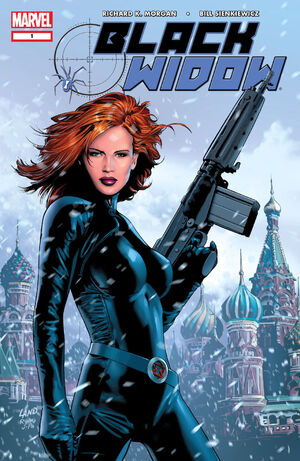
Consider as one extreme case, the MAX series from 2002:

But this reductive hypersexualization goes back to the 1960s and 1970s as well, with the artwork of Gene Colan:

Brown confronts that hypersexualization and exoticizing marginalized (by race and/or gender) characters are standard practices in superhero comics:

Black women in the media, especially within the superhero genre, are still constructed as exotic sexual spectacles, as erotic racial “Others.”… Female superheroines…are primarily depicted as scantily clad and erotically posed fetish objects. (pp. 134, 135)

Black Comics: Politics of Race and Representation

Black Widow, although white, fits into the pattern of hypersexuality and othering as exotic (her Russian and mysterious as well as isolated background). Brown’s recognition that female superheroes are often reduced to “purely symbolic images,” especially noting “the way that superheroines are portrayed as sexual objects on comic book covers” (p. 144):

“[T]he superhero genre of comic books continues to reply heavily on stereotypes of all kinds,” Brown concludes—and throughout her solo career in Marvel comics, Black Widow represents the irony found directly in a central motif of her characterization:

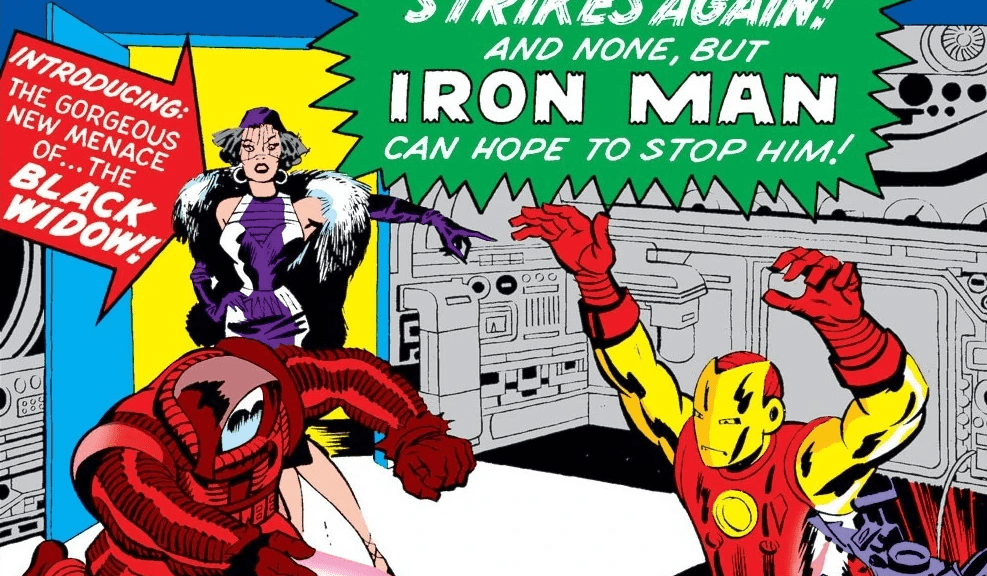
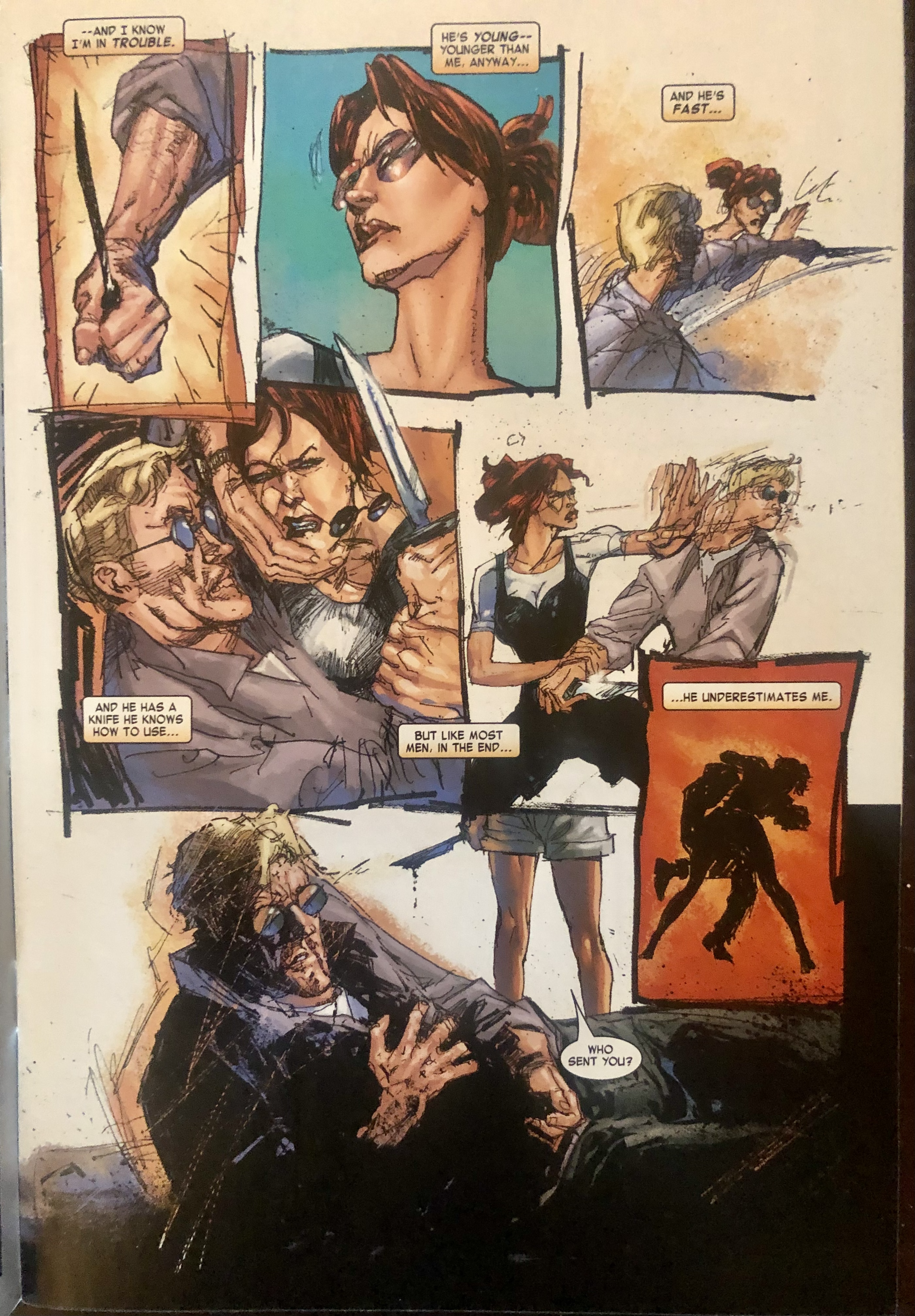
“But like most men, in the end,” Natalia Romanova observes, “he underestimates me.”

Throughout her years in the print Marvel Universe, Black Widow has far too often been underestimated by the (mostly) men who write her story and draw her life into action—men hypersexualizing and Othering her along the way.

There is another layer to these problems, however, since there have been and currently are powerful and far less problematic versions of Black Widow along the way; regardless of the quality, it seems, of how creative teams deal with Black Widow, the Men (the Industry) continue to underestimate, and fail the character.

The current run, volume 8, has been a stellar and beautiful rendering of Black Widow, not surprisingly in the hands of women—Kelly Thompson (writer), Elena Casagrande (artist), and others:

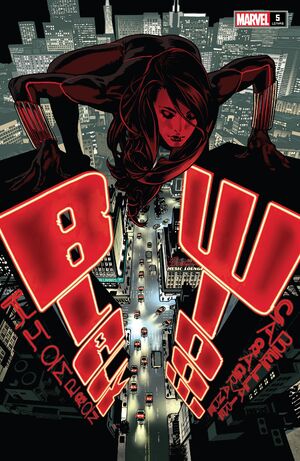
Black Widow v8 issue 5 (cover artist: Adam Hughes)

There remains a noir quality to this version of Black Widow, and certainly, Black Widow continues to be sexual and physically compelling. But the rich humanity and complexity of being Black Widow / Natalie Grey (Natasha Romanoff) is more fully realized in this volume, often to critical acclaim.

With the track record behind the character of Black Widow, time will ultimately tell if Marvel and superhero comics can finally stop underestimating this character, can allow the full and complex humanity to exist beyond the reductive hypersexualizing.

Black Widow represents that too many have failed superhero comics even though comic book universes allow a nearly endless opportunity to imagine and reimagine again and again.

Doing it right, I believe in that too.


Sources

Jeffrey A. Brown, “Panthers and Vixens: Black Superheroines, Sexuality, and Stereotypes in Contemporary Comic Books,” in Black Comics: Politics of Race and Representation, ed. Sheena C. Howard and Ronald L. Jackson II (New York: Bloomsbury Academic, 2013).

Appendix: Black Widow Comics, an Overview

Black Widow

Vol. 1 (1999) – Grayson, Jones “Itsy-Bitsy Spider”

Vol. 2 (2001) – Grayson, Rucka, Hampton

Graphic Novels V1-2:

Black Widow MAX (2002) – Rucka

Vol. 3 (2004-2005) – Morgan, Sienkiewicz, Parlov

Graphic Novel V3:

Vol. 4 (2010-2011) – Liu, Acuna, Swierczynski, Garcia

Graphic Novel V4:

Vol. 5 (2014-2015) – Edmondson, Noto

Graphic Novel V5:

Vol. 6 (2016-2017) – Waid, Samnee

Graphic Novel V6:

Vol. 7 (2019) – Soska, Armentaro

Graphic Novel V7:

Web of Black Widow (2019-2020) – Houser, Mooney

Graphic Novel:

Vol. 8 (2020- ) – Thompson, Casagrande, De Latorre

Graphic Novel V8:

Black Widow by Kelly Thompson Vol. 1: The Ties That Bind

There Can Be No Equity without Community and Empathy

[D]espite overwhelmingly good intentions, most of what passes for intercultural education practice, particularly in the US,
accentuates rather than undermines existing social and political hierarchies.

Paul Gorski, Good intentions are not enough: a decolonizing intercultural education

A split second of awareness kept me from stepping into my apartment’s elevator, the floor covered in vomit, recently.

I thought about this moment yesterday while standing in that same elevator filled with an unpleasant smell as I also noticed a new orange-brown stain on the floor.

A week or so ago, I was unloading two bicycles from my car rack, going up and down the elevator and walking through the enclosed garage of the complex a couple of times. I encountered twice a women with her small dog on a lease, and in both cases, she paused while the dog urinated on a steel beam in the garage.

It isn’t uncommon to see dog droppings scattered down the hallway carpet in this complex either.

Having lived almost four decades in my own homes before becoming an apartment dweller, these experiences are new but not shocking, and they remind me of the general lack of concern for others I experienced in dorm life in college. I also recognize these behaviors are typical of the American character, one grounded in rugged individualism and lacking any real sense of community.

It is the trash carelessly tossed out of car windows or dropped on the sidewalk.

It is the “I got mine so you get yours!” ethos of the good ol’ U.S. of A.

As I stepped out of the elevator yesterday, I was thinking about #TransDayofVisibility and about why people are so antagonistic about diverse sexualities and races, about gender fluidity and transexuality.

A type of awareness for me that helped move me past the bigotry and intolerance of my upbringing was coming to peace with my own self-awareness, being able to articulate that I did not make choices about my gender identification or sexuality but that I came to recognize my gender identification and sexuality.

To be blunt, I cannot fathom denying other people that recognition because I want my awareness to be honored. I also had to come to terms with differences being simply different and having nothing to do with right or wrong, or normal or abnormal.

What is “right” or “normal” for me is not in any way a template or commentary on anyone else, and vice versa.

While this may not be uniquely American, it is certainly true of Americans that we have a fatal lack of community and empathy.

And that “we” is statistically white Americans who exist in a sort of fear that if the “normal” white America has constructed isn’t the only way of being then maybe it isn’t “right.”

Rugged individualism is a significant part of the enduring presence of racism, sexism, homo-/trans-phobia, and all sorts of bigotry in the U.S.

But the negative consequences of rugged individualism are more than the narcissism inherent in racism and other types of bigotry (the provincialism that leads a person to see themselves as “right” and “normal” and people unlike them as “Other”).

What may be worse is that a society that centers the individual maintains inequity even when trying to expand diversity, equity, and inclusion (DEI) if the centering remains.

I have been involved in DEI initiatives at my university for many years, and since I actively incorporate anti-racism/anti-bias elements in my scholarly and public work, I find myself regularly confronting the misguided “good intentions” of my colleagues, my progressive white colleagues.

My first rude awakening about DEI in colleges and universities came early on when I discovered that my department and DEI structures across campus used the strongly debunked “framework of poverty” promoted by Ruby Payne.

Payne’s work is steeped in racist and classist stereotyping, and it suffers from the centering of whiteness and an idealized middle-class “normal.” When I challenged using Payne’s workbooks, I also encountered the other level of centering: “But it works,” I was told, “with our population of students.”

“Our population of students” happens to privileged and white.

Almost twenty years later, I faced the same situation and same justification again.

An event was held for students examining the storming of the U.S. Capitol in January 2021. The featured speaker was a former white nationalist. When I raised concerns about centering a former white nationalist, I heard the exact same justification I heard in my first weeks of coming to my university—but our (white) students.

What if we created opportunities for growth in DEI by centering those people experiencing the unfair weight of inequity? What if we considered a Black student sitting in the audience while a former white nationalist was given center stage and honored as an authority?

If we were organizing an event on sexual assault would we invite a former rapist to speak to that audience? If not, I imagine some of that decision is grounded in considering those people who have experienced sexual assault.

I included the central point from Gorski above this blog because I am disheartened by DEI efforts; I am witnessing Gorski’s recognition that “good intentions” often still perpetuate inequity by refusing to confront it, not resisting the urge to center whiteness and privilege.

While I no longer see Payne’s materials around campus, many still eagerly guide students through poverty simulations, poverty tours, and “pretend to be a minority” activities; these are all dehumanizing and offensive approaches that are grounded in stereotyping while continuing to center the sensibilities of the “normalized” group.

No one needs to pretend to be poor or minoritized is they are willing and eager to listen to people with lived experiences in poverty or being a minority.

Days ago I avoided stepping into that elevator because I was looking beyond myself instead of assuming the world was centered on me.

That elevator would have been clean and safe to enter, however, if everyone else lived with a sense of community and empathy.

Being an American, Christian, or Both: A Fundamental Problem of “Can” v. “Should”

March is a harbinger of spring.

March 2021 has also been an harbinger for some sort of return to normal after a year of living through a pandemic in the U.S. and across the world.

Mid-March now may force us to reconsider what we have wished for since the return to normal in U.S. includes two mass shootings in a week—8 murdered around Atlanta, GA followed by a mass shooting at a grocery store in Boulder, CO leaving 10 dead.

Mass shootings are so normal in the U.S. that they very much define what it means to be “American,” what it means to be a “Christian Nation,” routinely and darkly emphasized after every bloody event: ‘No Way To Prevent This,’ Says Only Nation Where This Regularly Happens.

After the Atlanta shooting and the predictable debates about racism, hate crimes, and gun control, one meme proclaimed “You can’t be a Christian if” by detailing the contradictions between racism and Christian values.

The problem with this claim is that many people in the U.S. do in fact identify as Christian while also actively expressing racism or passively ignoring and allowing racism (see the history of the KKK and Southern Baptists).

The Boulder shooting prompted a similar refrain; “You can’t be pro life and be pro gun,” some posted.

Again, of course you can since the people who identify as “pro life” (a stance that is actually anti-abortion and pro forced birth) are often the exact same people who are pro gun rights.

And here is a fundamental problem in the U.S. that is often lost behind the partisan and angry debates over guns as well as reproductive rights.

Anti-abortion and pro-gun advocates are typically joined, not by ethics or logic, but by fundamentalism—a simplistic and black-and-white approach to issues grounded in authoritarianism.

Trying to unpack or refute this ideological marriage through logic, then, is doomed to failure.

Fundamentalism demands that beliefs remain simple: All life matters, and gun ownership is essential for individual freedom.

That simplicity need not be internally consistent or even consistent from issue to issue. Pro-life advocates do not extend that slogan to plants or animals, and often support the death penalty; thus, their embracing guns as fundamental to individual freedom is not illogical within their fundamentalism.

“All life” and “all guns” are fundamentalism at its core—both in the lack of logic and lack of ethical consistency between the two.

Anti-abortion advocates and pro-gun defenders fetishize the fetus and guns; it then is the fundamentalism that becomes the problem since it necessarily lifts the fundamental truths above everything or anything else.

As fundamentalists, anti-abortion and pro-gun advocates are not motivated at all, ironically, by policies and practices that would actually protect life or improve living. All that matters are the black-and-white causes that have become ends unto themselves.

Banning abortion, for example, doesn’t decrease abortions or unwanted pregnancies; but that ban does erode women’s health and even the lives and living of unborn fetuses.

Those facts are far too complex for fundamentalists, and thus, this never serves as a compelling argument to change their minds. No legal abortions becomes the singular goal regardless of the impact of that law on lives or living.

The same holds for gun regulation. Logic fails against the singular belief that gun ownership of any or all guns is essential for individual freedom.

Guns do not serve as protection (home invasions are incredibly rare, and people are quite bad at using guns, even trained police officers); good guys with guns rarely save the day (a policeman, good guy with a gun, died in the Boulder shooting); and the U.S. is unique in the world for mass shootings although all countries have citizens with mental illness, have access to violent pop culture, and have all types of racism, homophobia, and sexism present in the U.S.

Mass shootings in the U.S. are very clearly most strongly connected to the amount and types of guns available and the ease of access to those guns, especially in terms of the types of guns available (such as the AR-15). Countries that have addressed these situations with policies have greatly reduced and eradicated mass shootings.

But in the U.S., gun fundamentalism prevents a reasonable discussion of gun control.

Like the too often reposted The Onion articles on mass shootings, the ugly truth is that you can be an American, a Christian, or both and act in ways that completely contradict the ideal of either.

We are left with the often fruitless task of arguing that people shouldn’t live contradictions to aspirational ideals (the American Dream, Christian love).

Fundamentalism corrupts entirely everything it touches because fundamentalism becomes its own purpose, self-righteous blinders that shield too many in the U.S. from the bodies piling up around them.

The Woody Allen Problem Is Our Problem

I should have never read E. E. Cummings: A Life by Susan Cheever, but I did.

My doctoral dissertation was a biography of English educator Lou LaBrant so much of my scholarly work while in that program was focused on biography, specifically guided by feminism as a lens because I was a man writing a woman’s life.

During the mid-1990s, I read dozens of biographies, often on writers I loved. One notable reading was Dreams in the Mirror: A Biography of E.E. Cummings by Richard Kennedy (who had edited one of my favorite collections of poems by cummings).

My doctoral program was a relatively late-in-life awakening for me, intellectually and personally, so this biography was one of my first experiences with coming to grips with trying to separate the artist from their art.

The more I found out about cummings, the less I felt compelled to cling to his poetry; in many ways, the person he was contrasted too significantly from the ideologies his poetry seemed to represent.

Biographies of Kurt Vonnegut, however, while exposing the many warts and flaws in Vonnegut, have never presented such a vast contradiction that I still wrestle with about cummings.

It’s my fault, then, that I found myself in Chapter 12 of Cheever’s really well done biography, titled “‘I think I am falling in love with you.'”

The chapter is about Nancy Thayer, the daughter of cummings who was raised not knowing he was her father. In the summer of 1946, there is a reunion between cummings and Nancy. Followed by cummings painting a portrait of Nancy in 1948—where the story becomes disturbing:

Nancy was almost 30 years old, and with some distress she realized that she was obsessed with, falling in love with, the charming fifty-four-year-old man who was painting her portrait. (p. 157)

E. E. Cummings: A Life

I couldn’t help thinking about this awful real-life scene—when cummings had to tell Nancy he was her father once she confessed her falling in love—filled with negligent parenthood, dysfunctional family dynamics, and the specter of incest while watching the four-part series Allen v. Farrow (HBO).

This mini-series has rekindled a horrible and complex story of power, art/artist, and white male privilege, including giving much greater space to Mia Farrow and Dylan Farrow than had been allowed throughout the first two decades (before Dylan spoke again and openly about her charges starting about 2014).

While the series seeks to present new and more nuanced details and examinations of Allen’s abuse of Dylan and his controversial relationship with Soon-Yi Previn, there has also been the expected re-energizing of those supporting and defending Allen, including a number of high-profile women actresses in Hollywood.

To say that the documentary is damning for Allen is an understatement, but the series also proves that there is much to be concerned about in terms of the American public and the moral character of our country (if such a thing exists).

The Allen/Dylan abuse is related to but not entirely the same as the Allen/Soon-Yi relationship; both have elements of very disturbing behavior by Allen, but they simply are not the same thing, except for the common element of Allen.

That connection, however, is put into a really ugly relief in the series because viewers are allowed to see and hear Allen with the children (including Soon-Yi as a child) and Mia as well as in taped phone calls with Mia. The duplicity and intimidation are aspects of Allen mostly absent in the hero-worshipping portrayals he has managed in pop culture and fashioned through his on-screen personas.

Mia Farrow remains afraid of Allen, and she physically expresses an incredible weight of guilt for having brought Allen into her family. Dylan finds herself shaking uncontrollably even as she sits holding hands with her husband (who seems to be a wonderful and loving person in her life) while discussing the lingering impact of the abuse on her life.

I am not sure how anyone watches this and remains an apologist for Allen. Much of the documentary is difficult to watch without crying, without taking breaks.

We are left with uncertainty about this detail or that; we also likely recognize that very few adults in this mess are completely sinners or completely saints. Like the awkward and disturbing moment for cummings and Nancy, this is a story of dysfunction as it intersects celebrity and power.

The series briefly walks viewers through the recent list of men appropriately snared in the #MeToo movement—Weinstein, Cosby, etc. But the light now again shining brightly on Allen must make us pause at how many more men live with almost no consequences while abusing and assaulting women.

Allen’s “woman scorned” and “parental alienation” defense is directly identified in the series as a successful strategy now used in divorces by men who gain custody of their children and then often abuse again.

And here is the real issue for anyone still unsure about the specifics of the Allen v. Farrow controversy and its impact on Dylan: The undeniable fact of all this is that women and children remain ignored in the U.S.

False sexual harassment and sexual assault claims are incredibly rare; the problem is that most sexual assault is never reported (see here); note that despite overwhelming evidence to the contrary, Allen was not charged. Dylan and Mia Farrow represent the silencing and ignoring of women’s and children’s voices especially against the power of men’s voices.

Lorraine Ali offers a chilling point at the end of her recent piece about the criticism she has received for reviewing the series positively: “Perhaps these Allen diehards are upset because ‘Allen v. Farrow’ finally exposes the other side of the story, and they’re used to a world where women were simply told to shut up.”

We remain too often offended that a woman or child has the audacity to confront the audacity of men.